and Its Development
Al Maahira Junior High
School
Cell
8th Grade
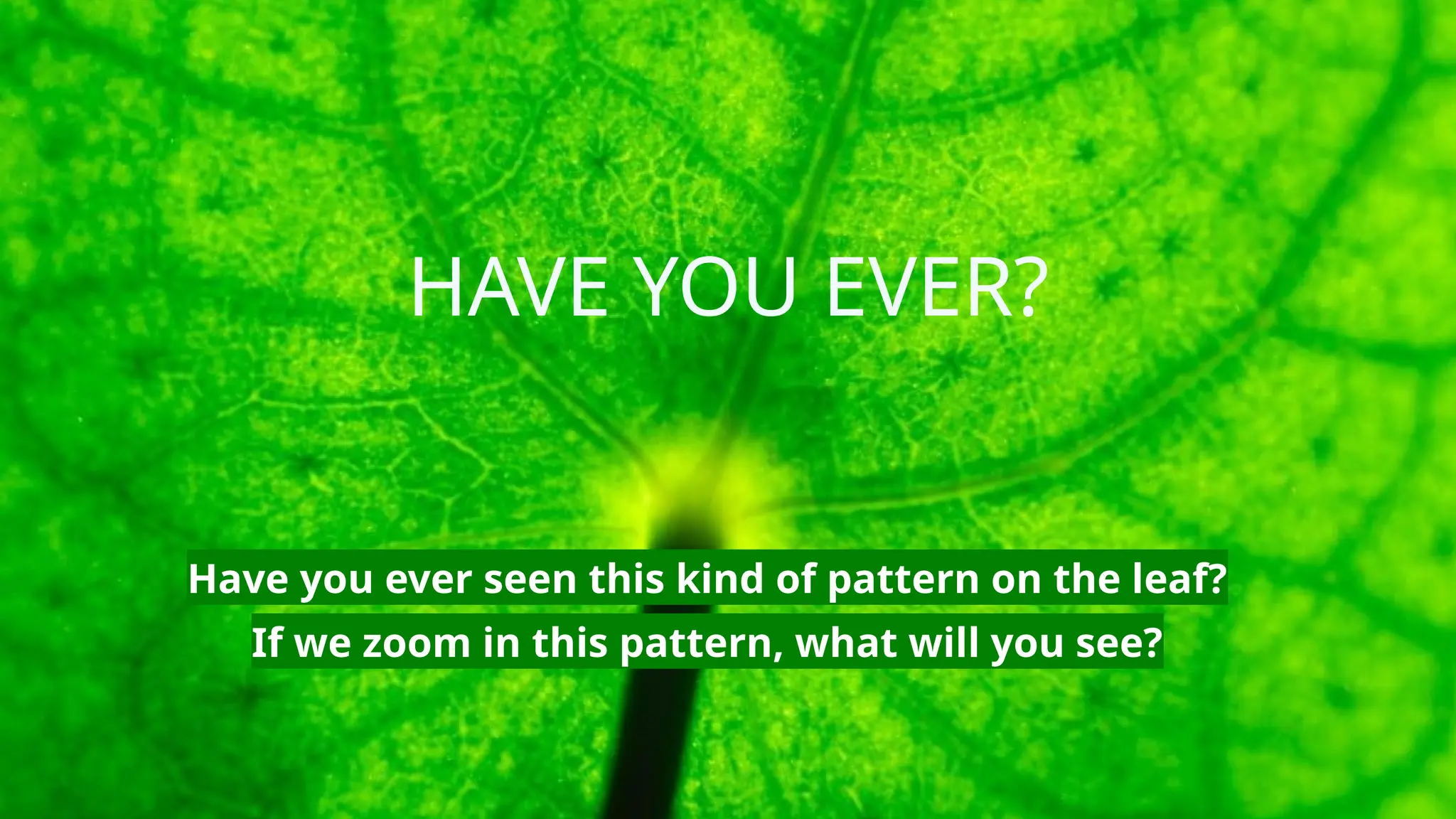
Have you ever seen this kind of pattern on the leaf?
If we zoom in this pattern, what will you see?
HAVE YOU EVER?
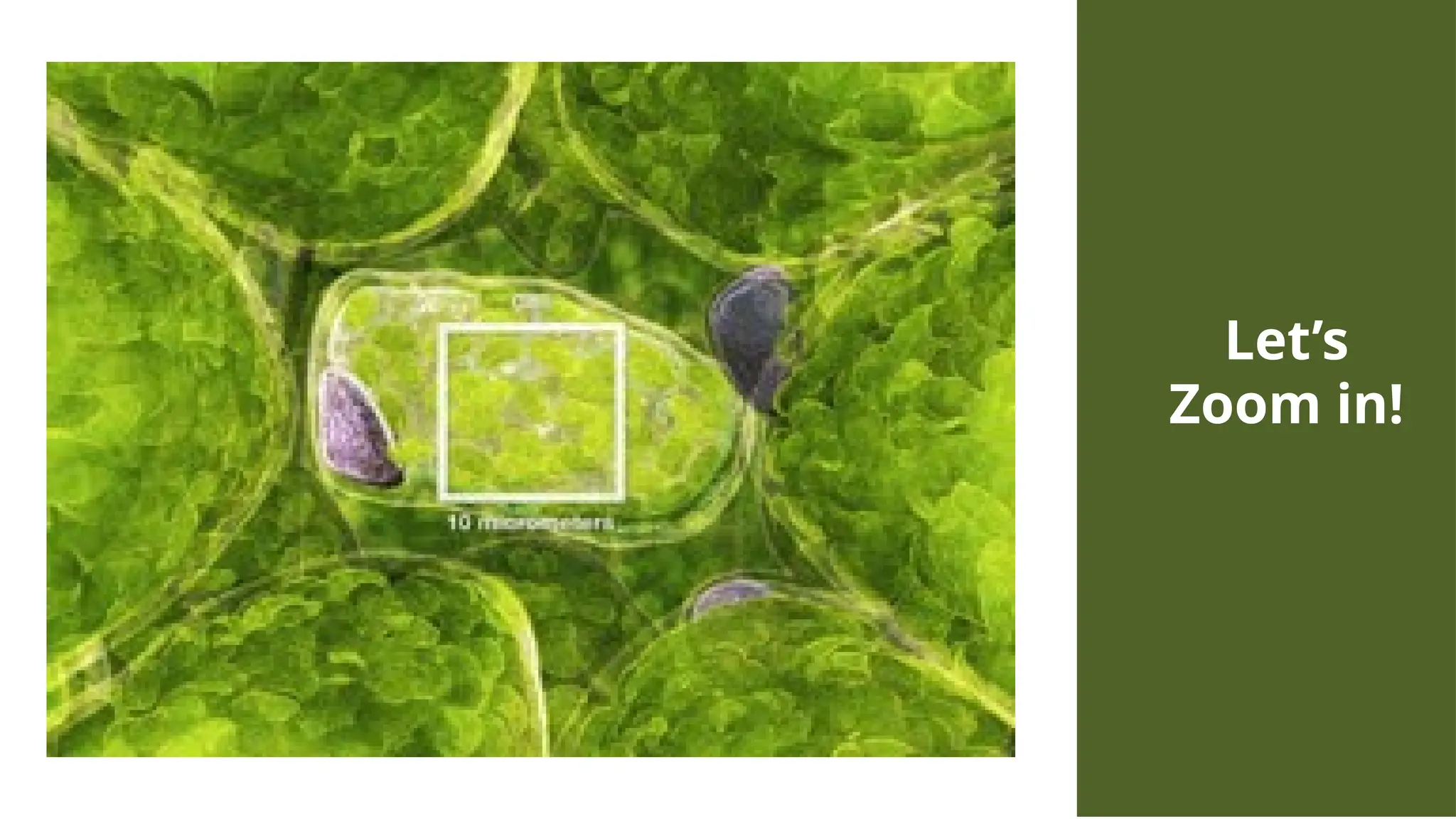
Let’s
Zoom in!
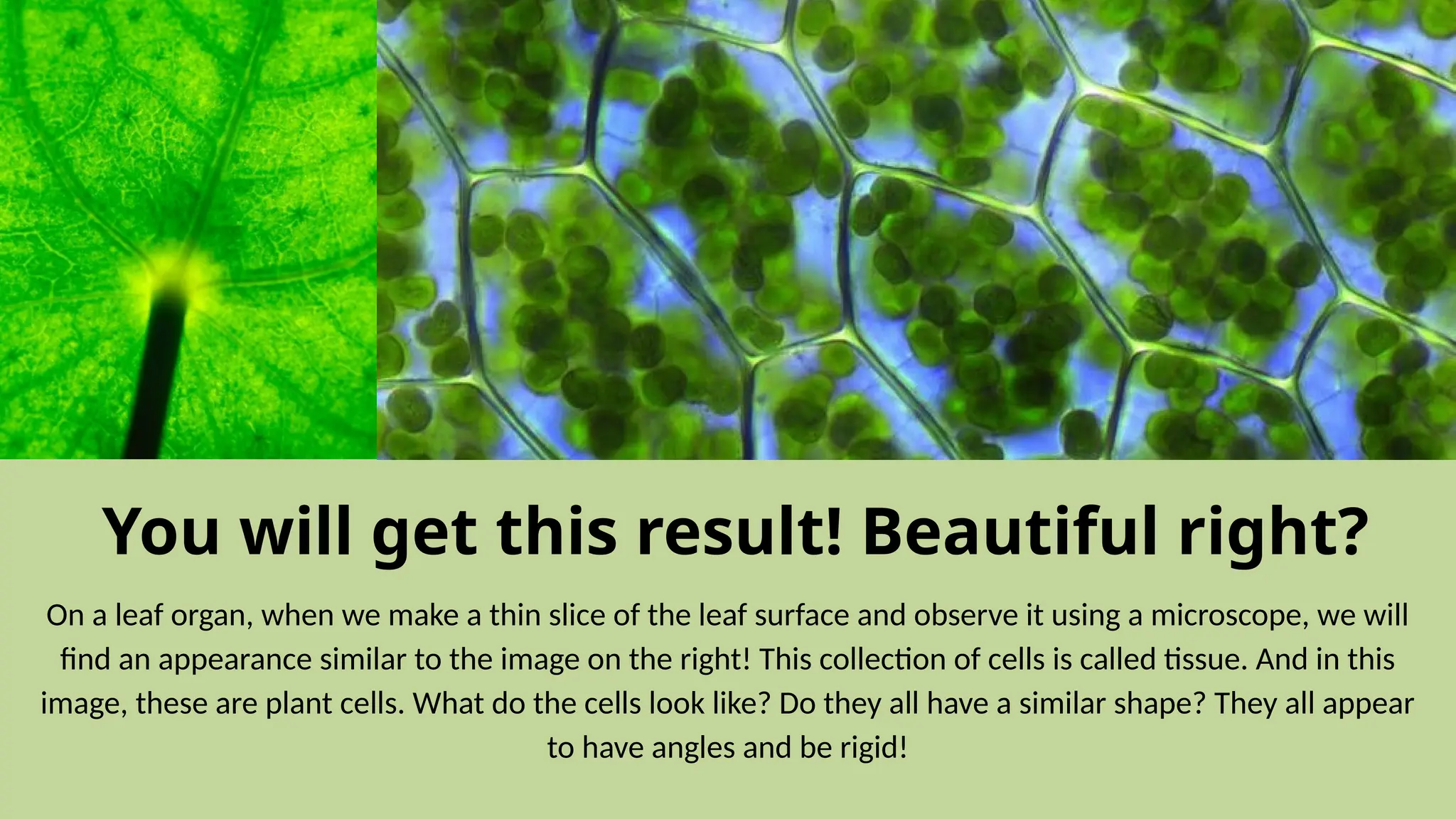
On a leaf organ, when we make a thin slice of the leaf surface and observe it using a microscope, we will
find an appearance similar to the image on the right! This collection of cells is called tissue. And in this
image, these are plant cells. What do the cells look like? Do they all have a similar shape? They all appear
to have angles and be rigid!
You will get this result! Beautiful right?
HOW ABOUT IN HUMAN OR ANIMAL?
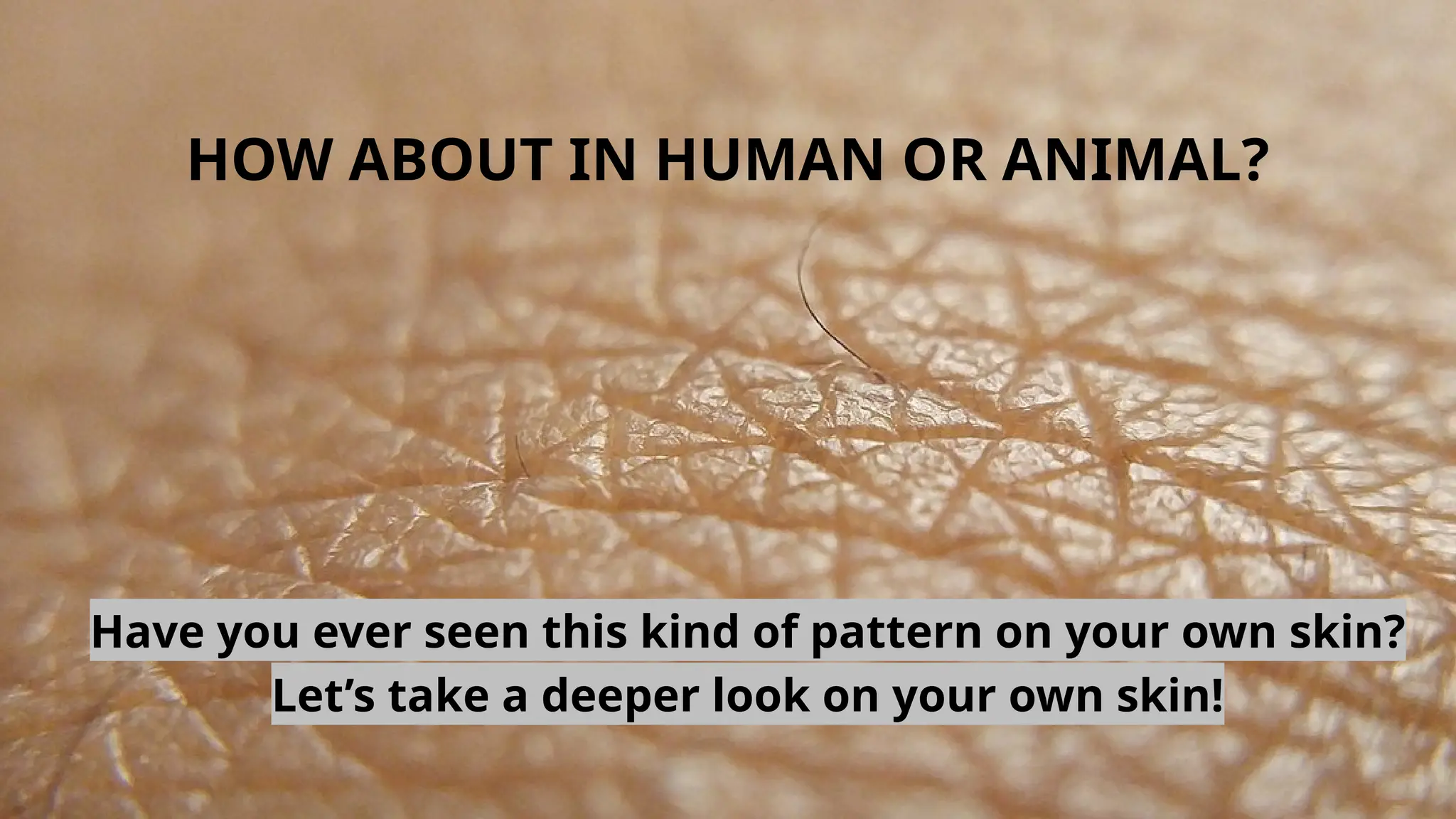
Have you ever seen this kind of pattern on your own skin?
Let’s take a deeper look on your own skin!
HOW ABOUT IN HUMAN OR ANIMAL?
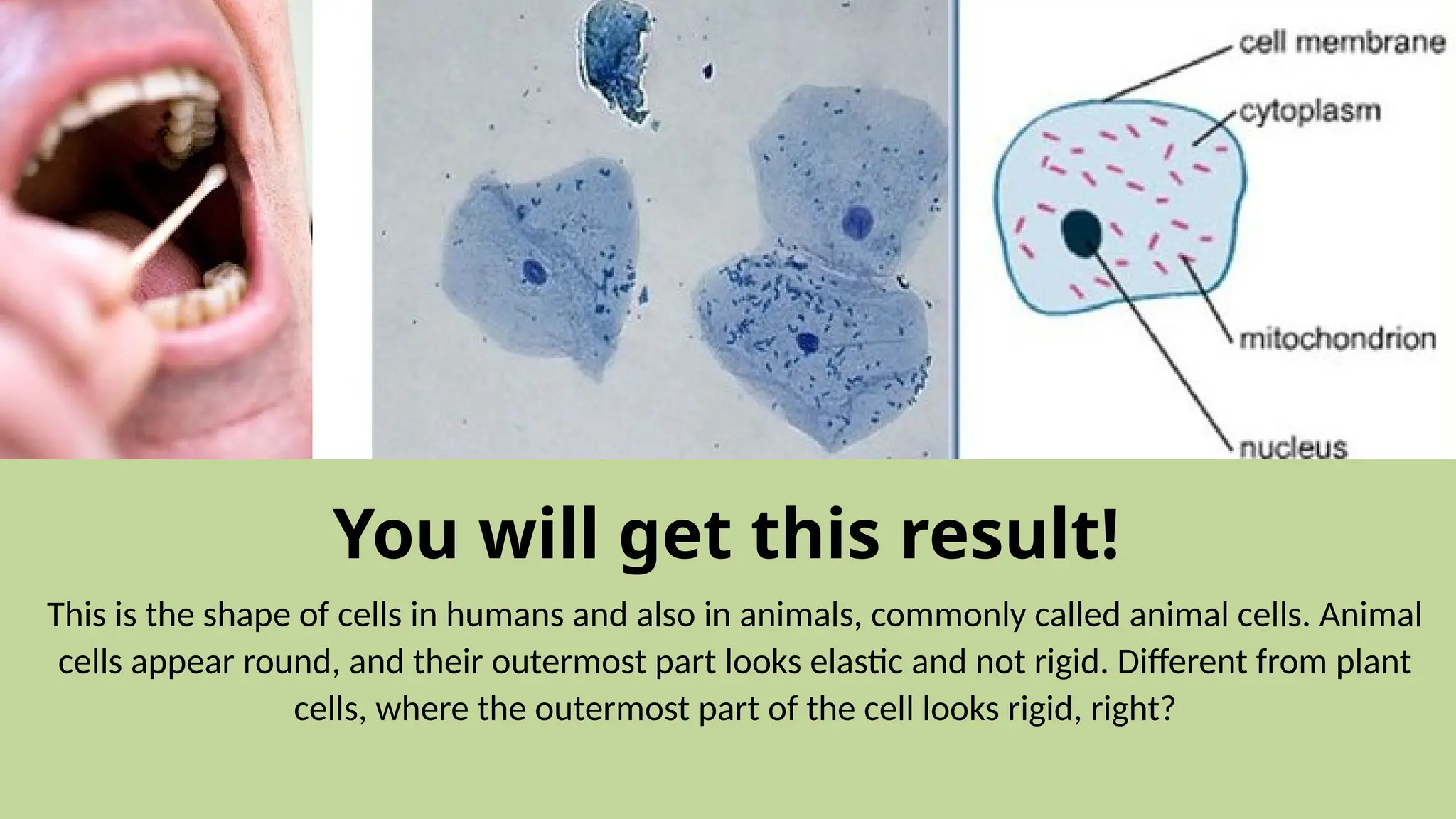
Let's try rubbing that skin with a cotton bud, then we observe our skin cells
under a microscope!
Have you ever heard the term 'dead skin cells'? Our skin cells can indeed die and be
replaced with new skin cells approximately every 2 weeks. Therefore, let's try to observe
our skin. The outermost layer of skin cells is quite easy to observe because they are easily
detached when rubbed. An example is the skin on the inside of the mouth.
This is the shape of cells in humans and also in animals, commonly called animal cells. Animal
cells appear round, and their outermost part looks elastic and not rigid. Different from plant
cells, where the outermost part of the cell looks rigid, right?
You will get this result!
Have you ever used microscope before?
It’s Time for Observation !
01
CELL
CELL
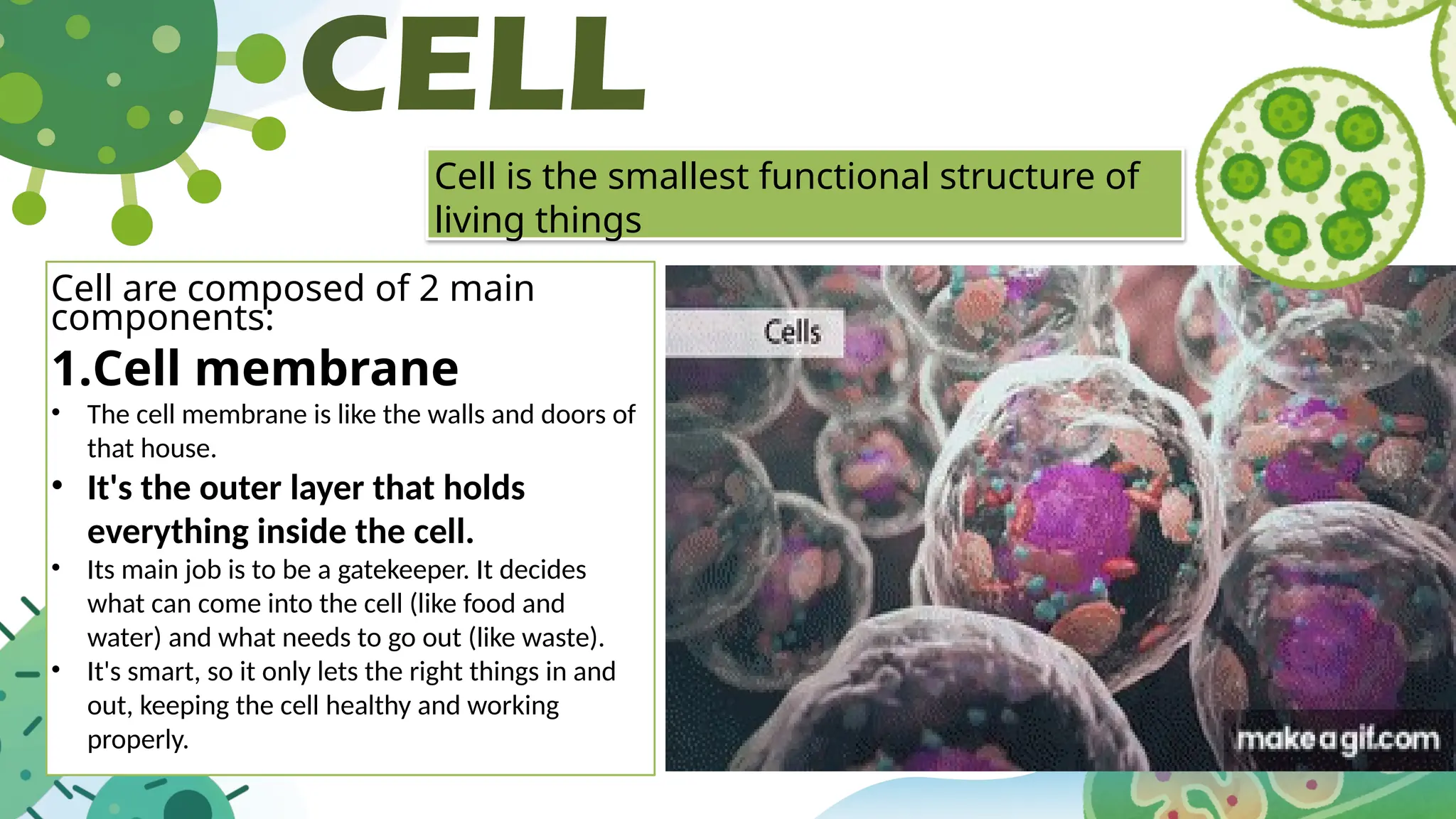
Cell is the smallest functional structure of
living things
Cell are composed of 2 main
components:
1.Cell membrane
• The cell membrane is like the walls and doors of
that house.
• It's the outer layer that holds
everything inside the cell.
• Its main job is to be a gatekeeper. It decides
what can come into the cell (like food and
water) and what needs to go out (like waste).
• It's smart, so it only lets the right things in and
out, keeping the cell healthy and working
properly.
CELL
Cell is the smallest functional structure of
living things
2. Protoplasm
Protoplasm is all the living material inside a
cell, enclosed by the cell membrane. It
consist of :
a) Cytoplasm (sitoplasma)
The jelly-like substance and all the
organelles suspended within it (excluding
the nucleus). Many metabolism reaction
happen in this part
b) Organelles (organel)
Organ of cell that have specific function
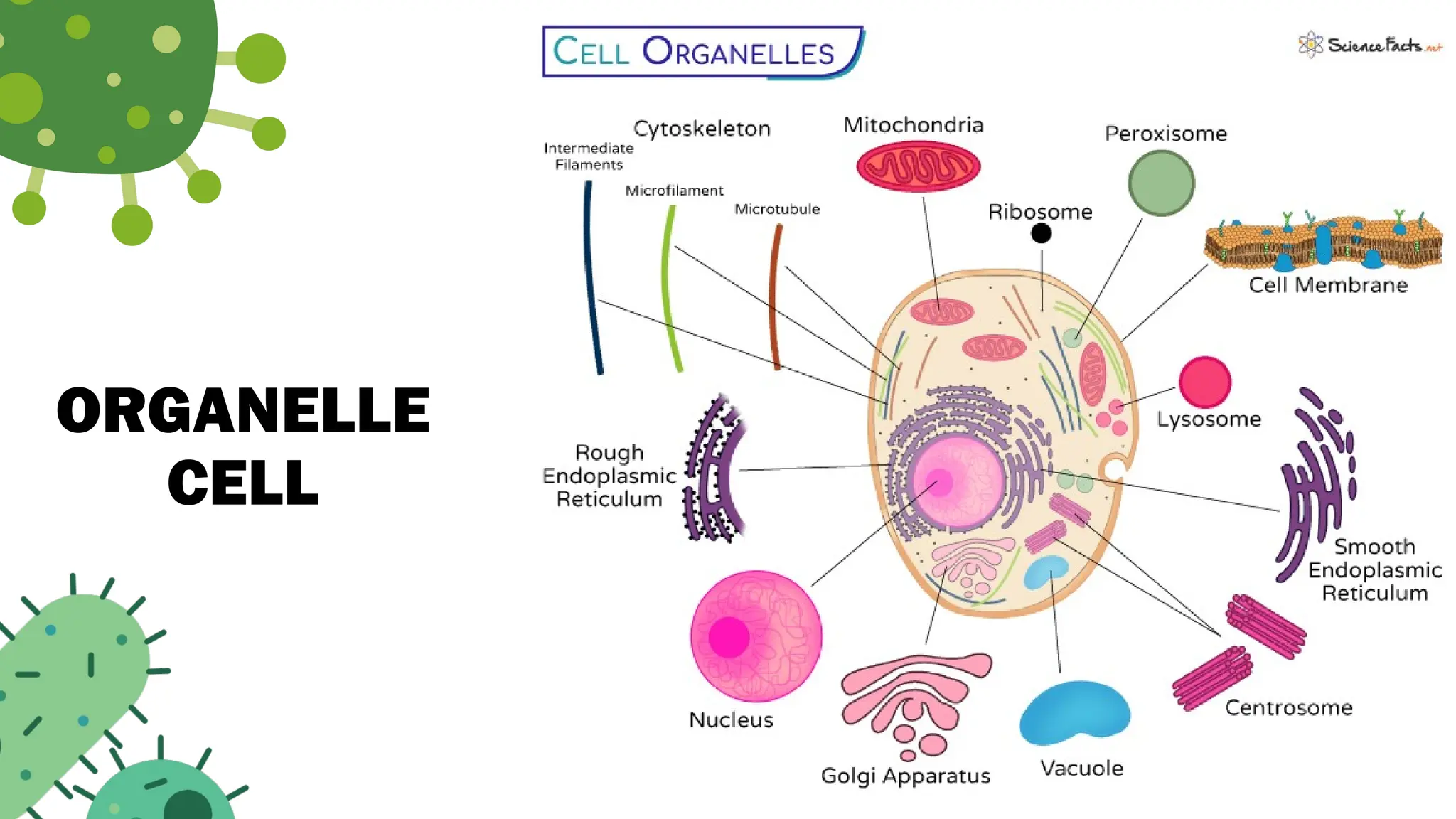
ORGANELLE
CELL
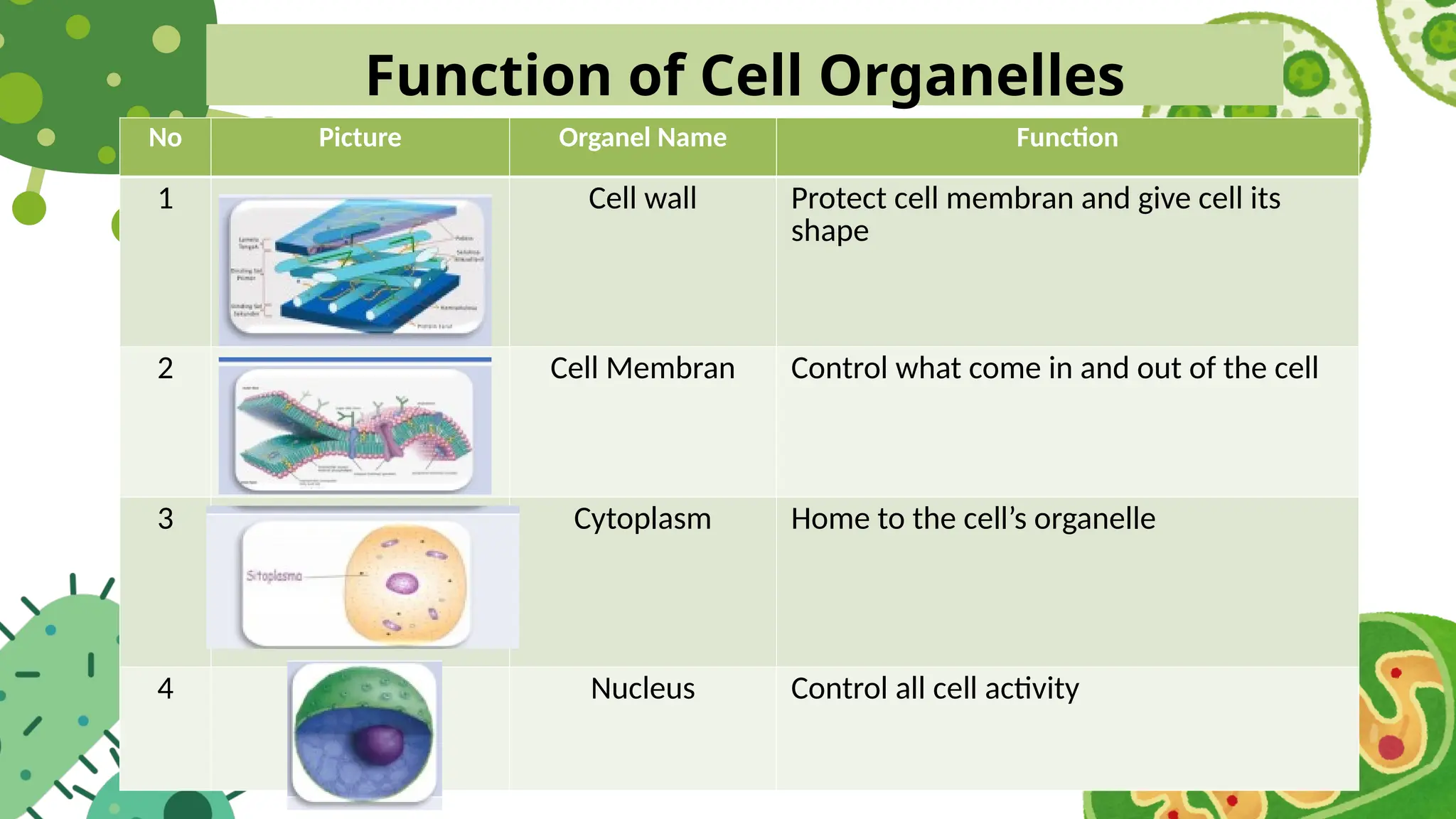
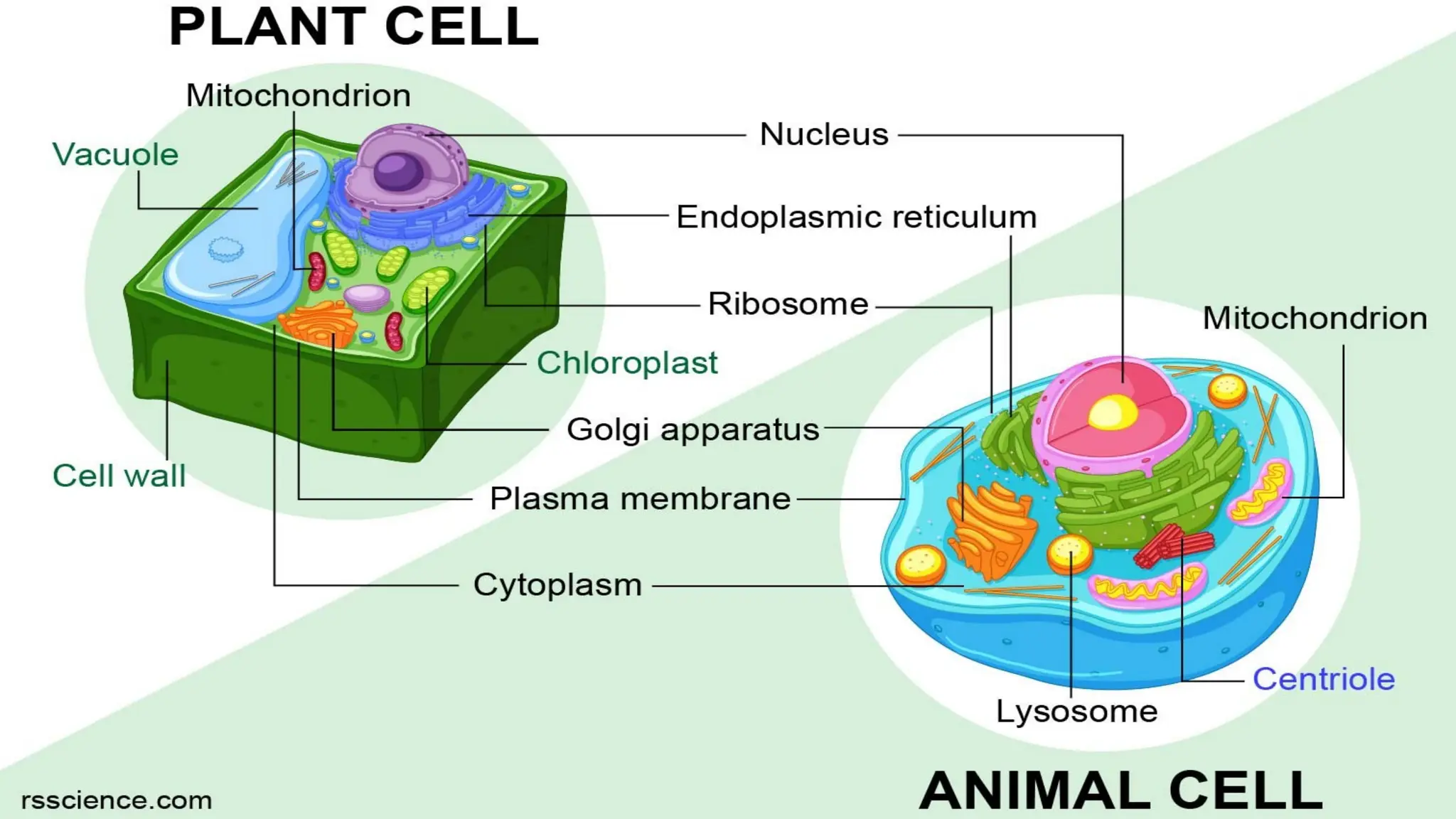
Function of Cell Organelles
No Picture Organel Name Function
1 Cell wall Protect cell membran and give cell its
shape
2 Cell Membran Control what come in and out of the cell
3 Cytoplasm Home to the cell’s organelle
4 Nucleus Control all cell activity
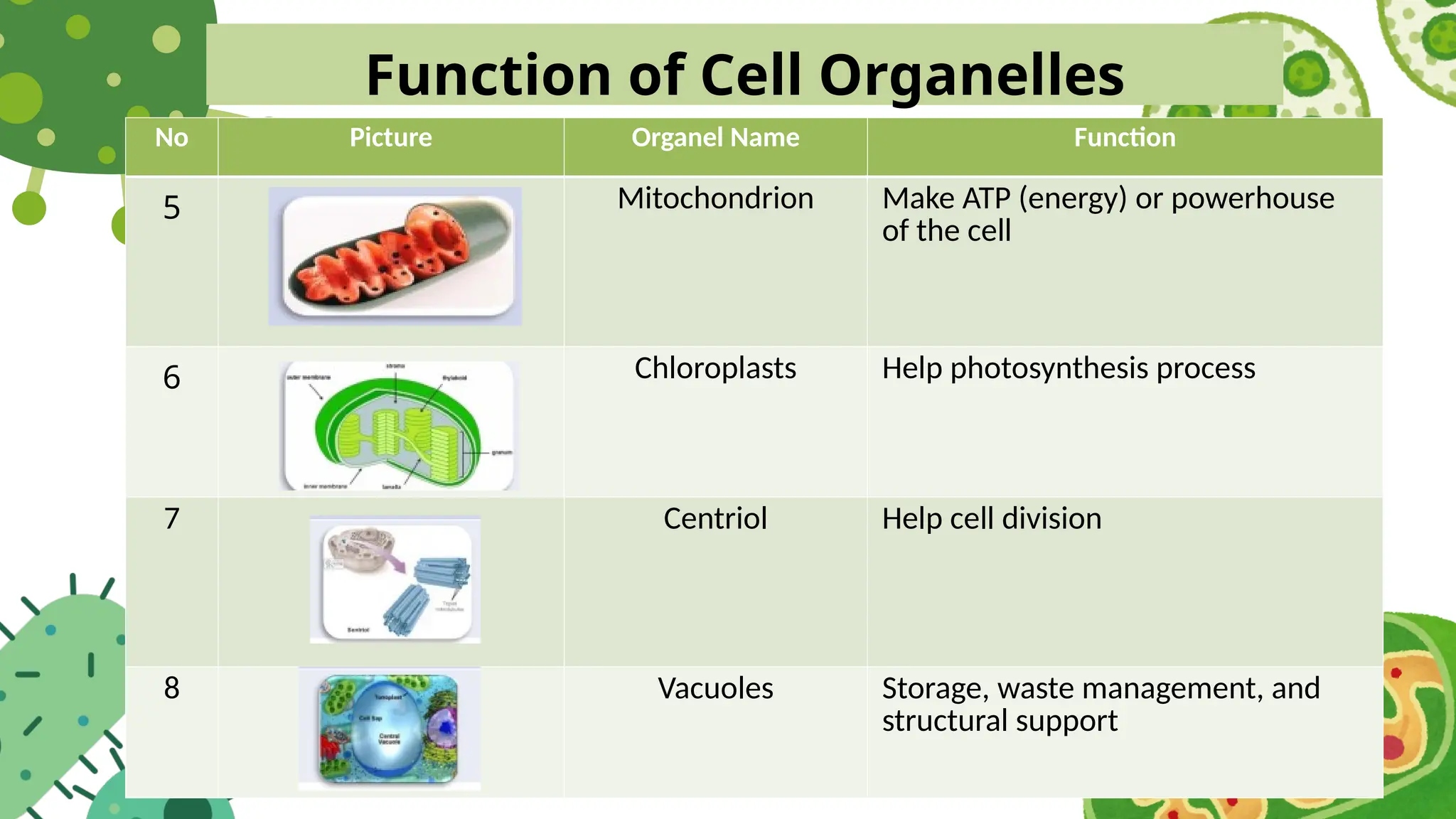
Function of Cell Organelles
No Picture Organel Name Function
5 Mitochondrion Make ATP (energy) or powerhouse
of the cell
6 Chloroplasts Help photosynthesis process
7 Centriol Help cell division
8 Vacuoles Storage, waste management, and
structural support
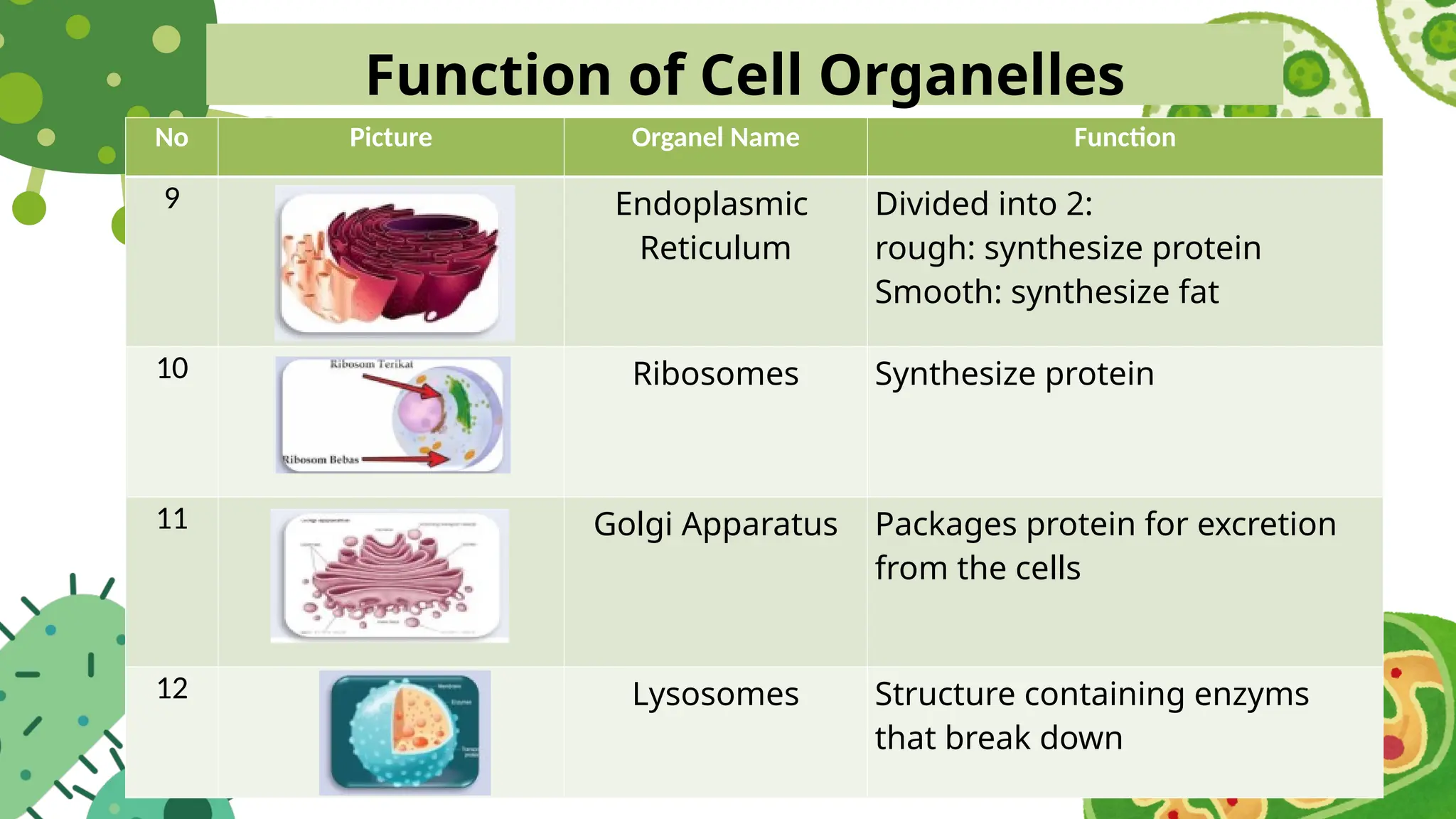
Function of Cell Organelles
No Picture Organel Name Function
9 Endoplasmic
Reticulum
Divided into 2:
rough: synthesize protein
Smooth: synthesize fat
10 Ribosomes Synthesize protein
11 Golgi Apparatus Packages protein for excretion
from the cells
12 Lysosomes Structure containing enzyms
that break down
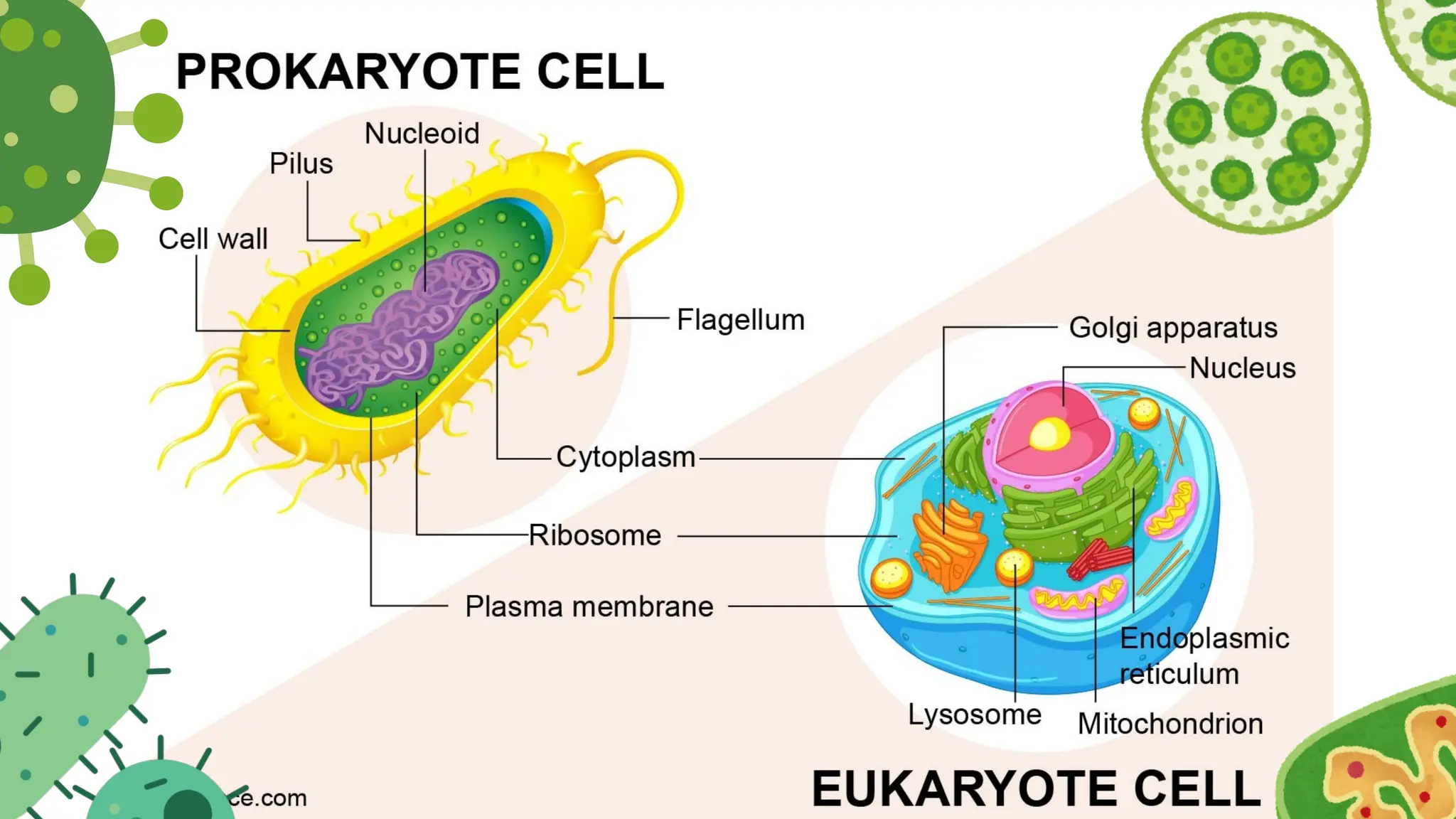
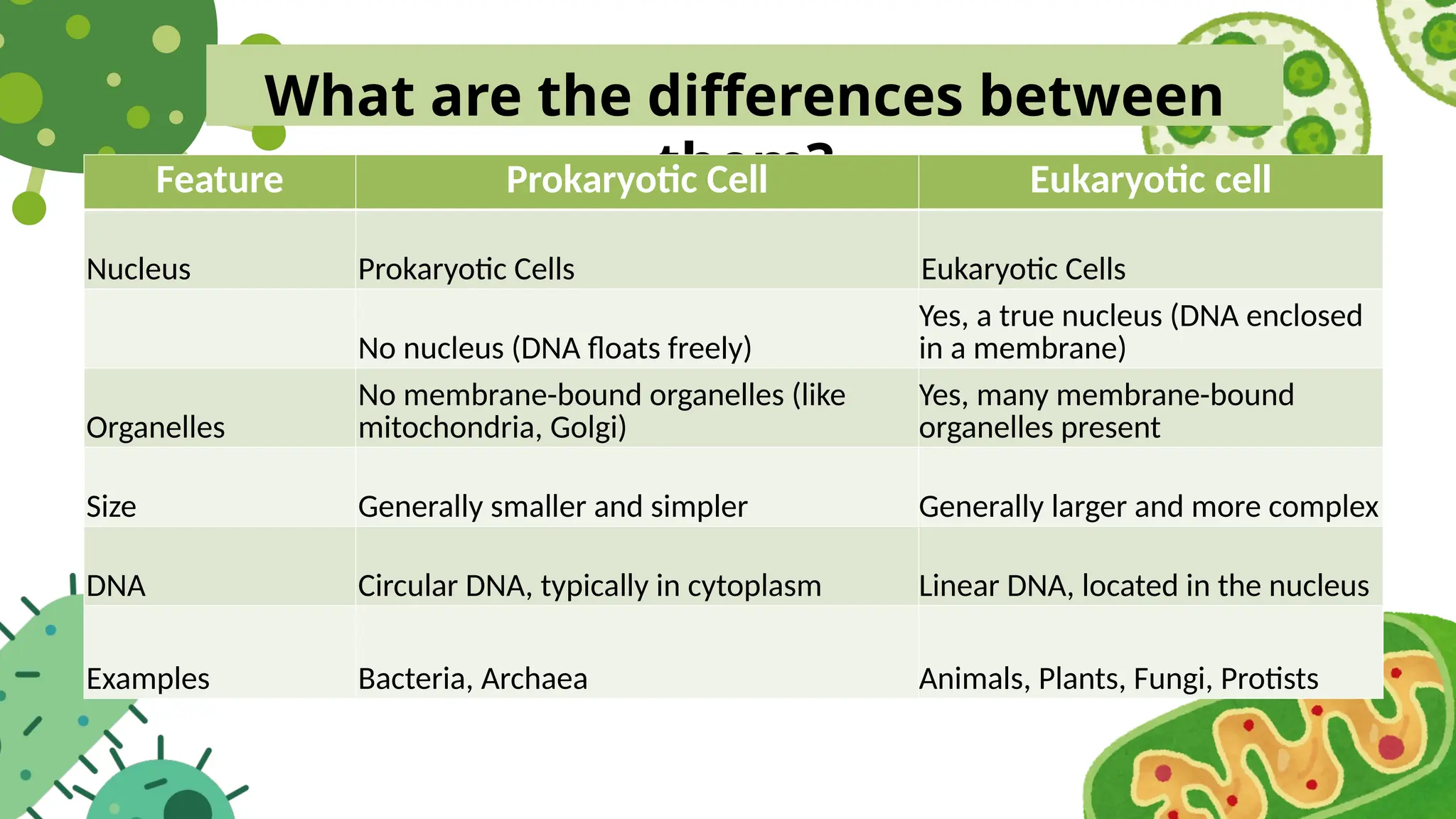
What are the differences between
them?
Feature Prokaryotic Cell Eukaryotic cell
Nucleus Prokaryotic Cells Eukaryotic Cells
No nucleus (DNA floats freely)
Yes, a true nucleus (DNA enclosed
in a membrane)
Organelles
No membrane-bound organelles (like
mitochondria, Golgi)
Yes, many membrane-bound
organelles present
Size Generally smaller and simpler Generally larger and more complex
DNA Circular DNA, typically in cytoplasm Linear DNA, located in the nucleus
Examples Bacteria, Archaea Animals, Plants, Fungi, Protists
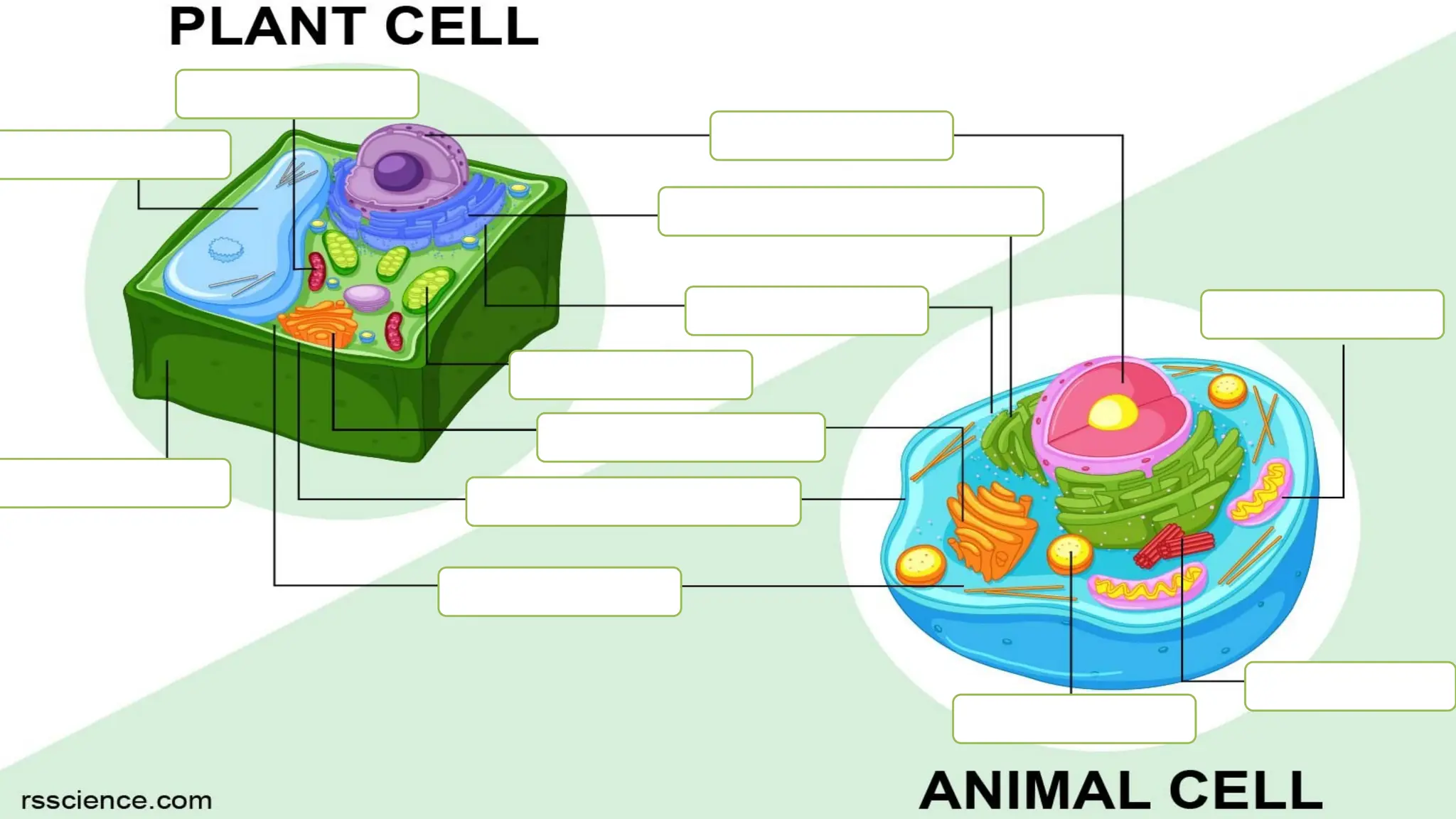
What are the differences between
them?
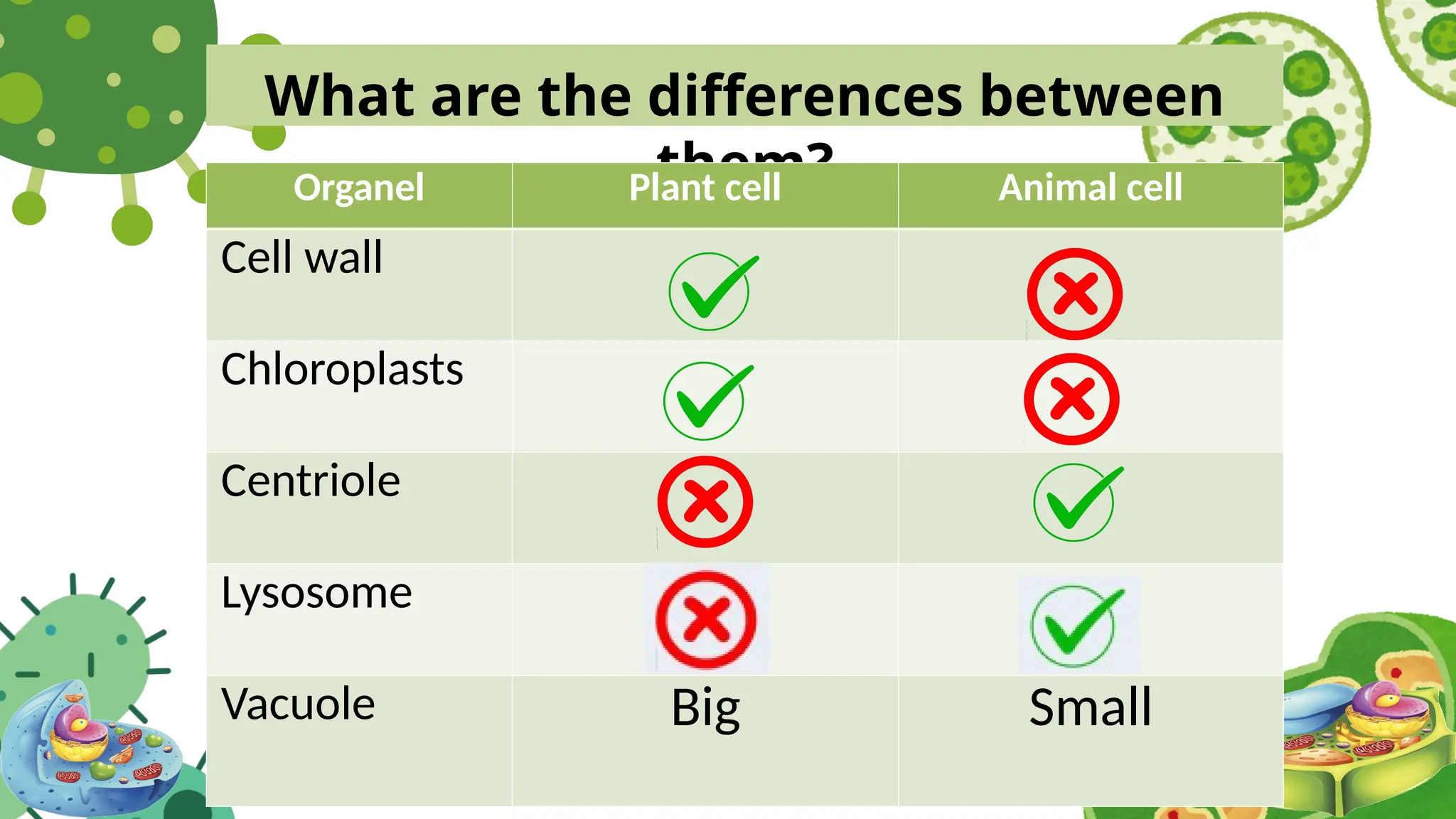
Organel Plant cell Animal cell
Cell wall
Chloroplasts
Centriole
Lysosome
Vacuole Big Small
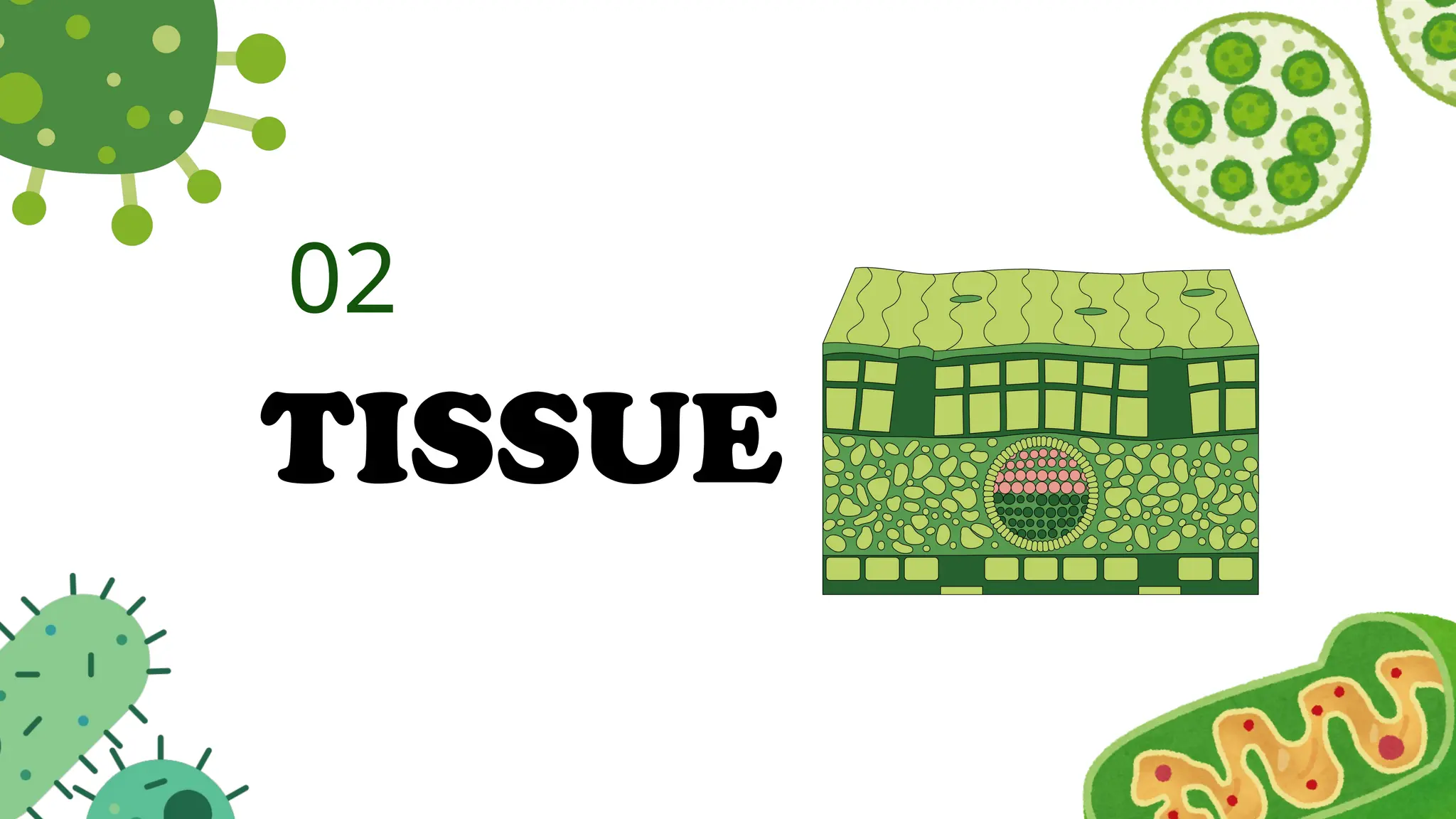
02
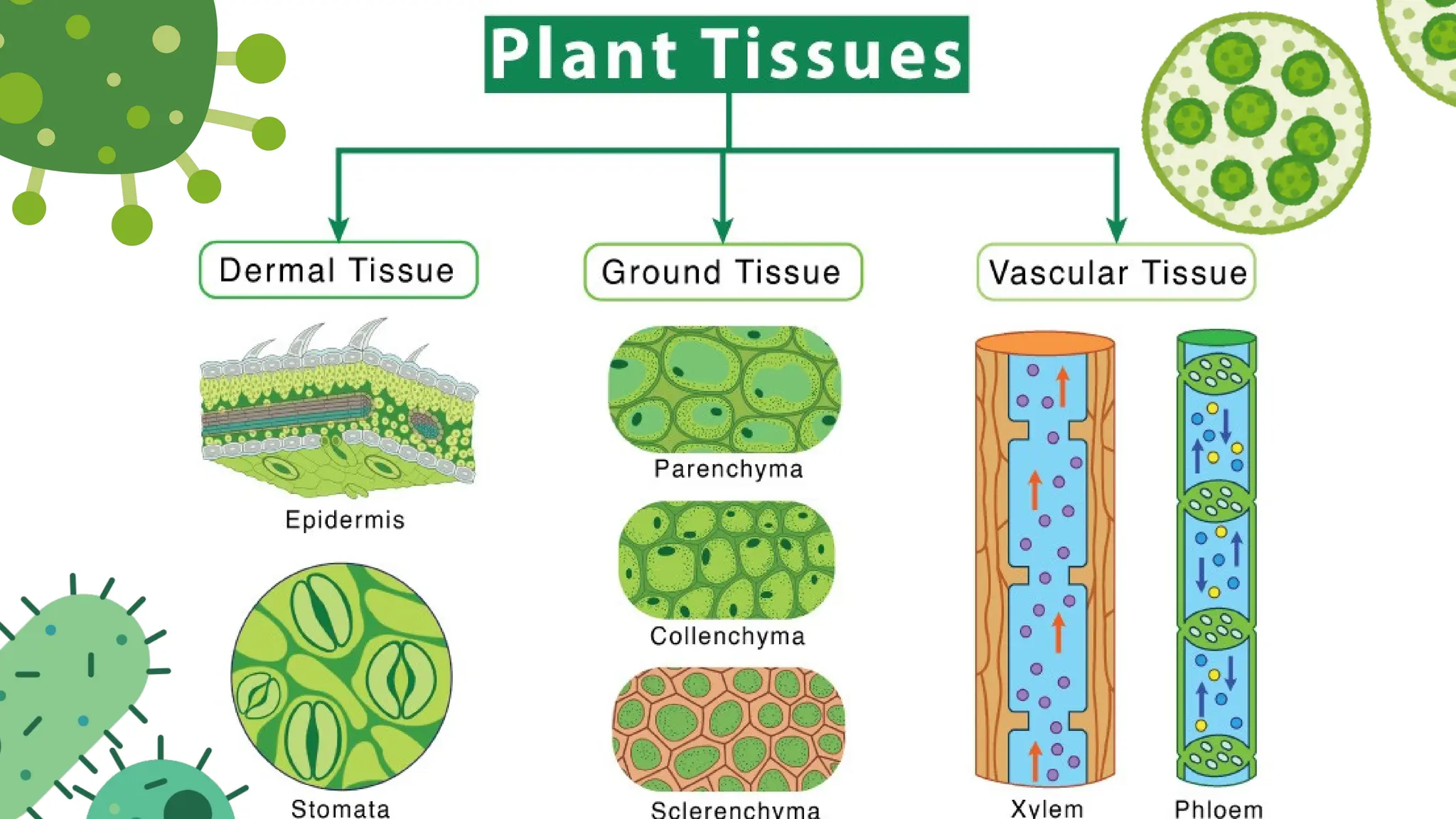
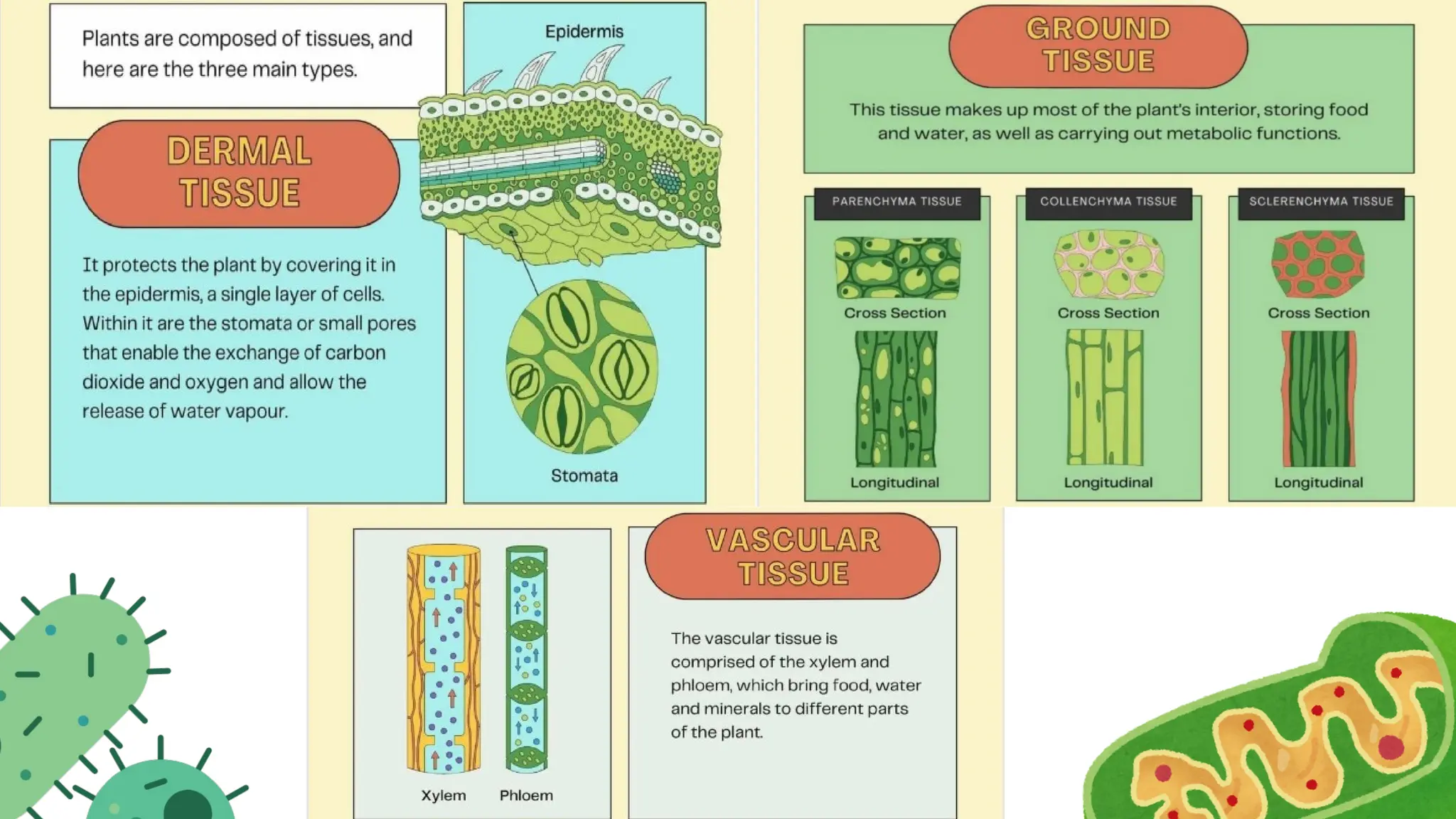
TISSUE
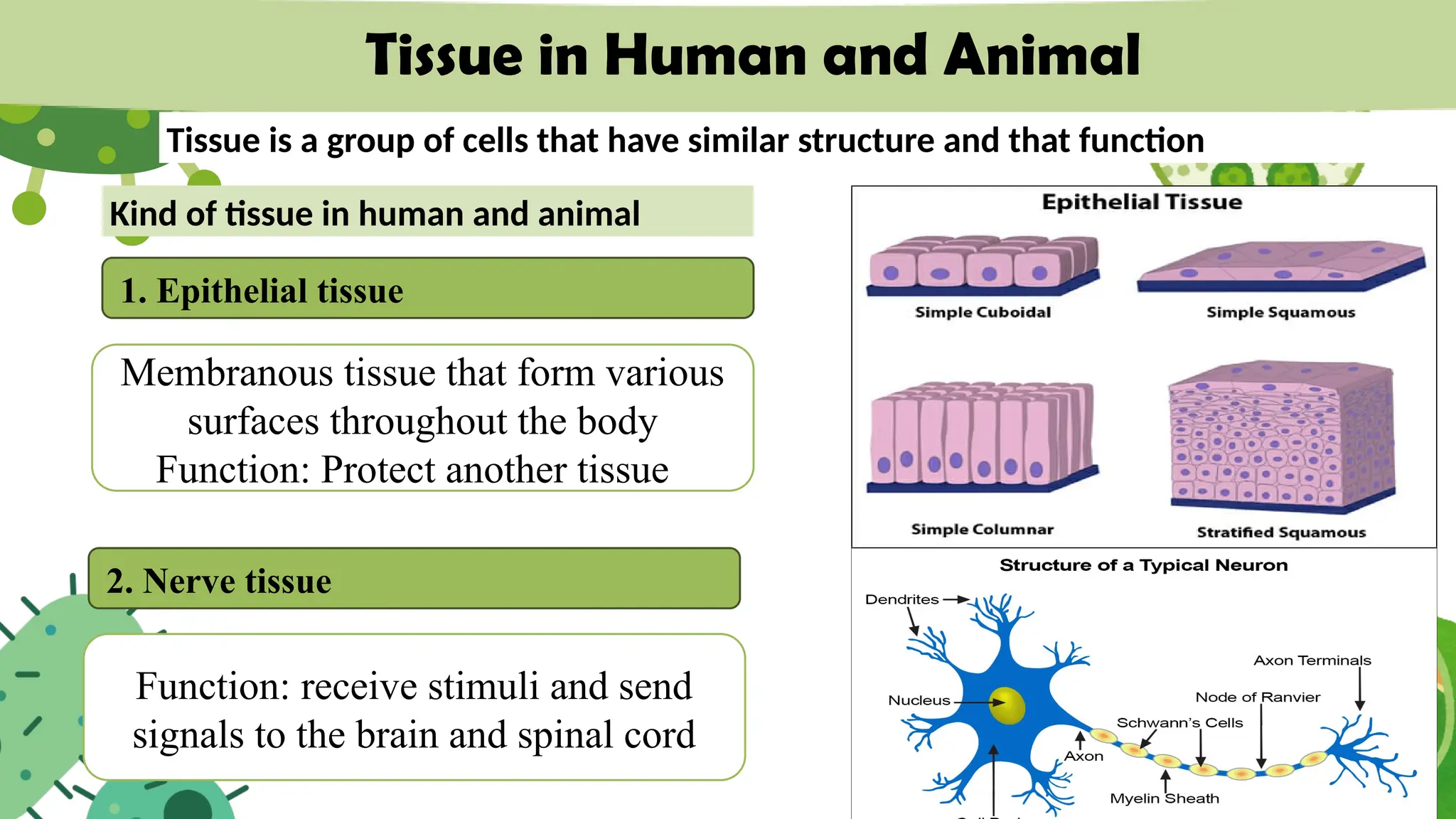
Tissue in Human and Animal
Tissue is a group of cells that have similar structure and that function
Kind of tissue in human and animal
1. Epithelial tissue
Membranous tissue that form various
surfaces throughout the body
Function: Protect another tissue
2. Nerve tissue
Function: receive stimuli and send
signals to the brain and spinal cord
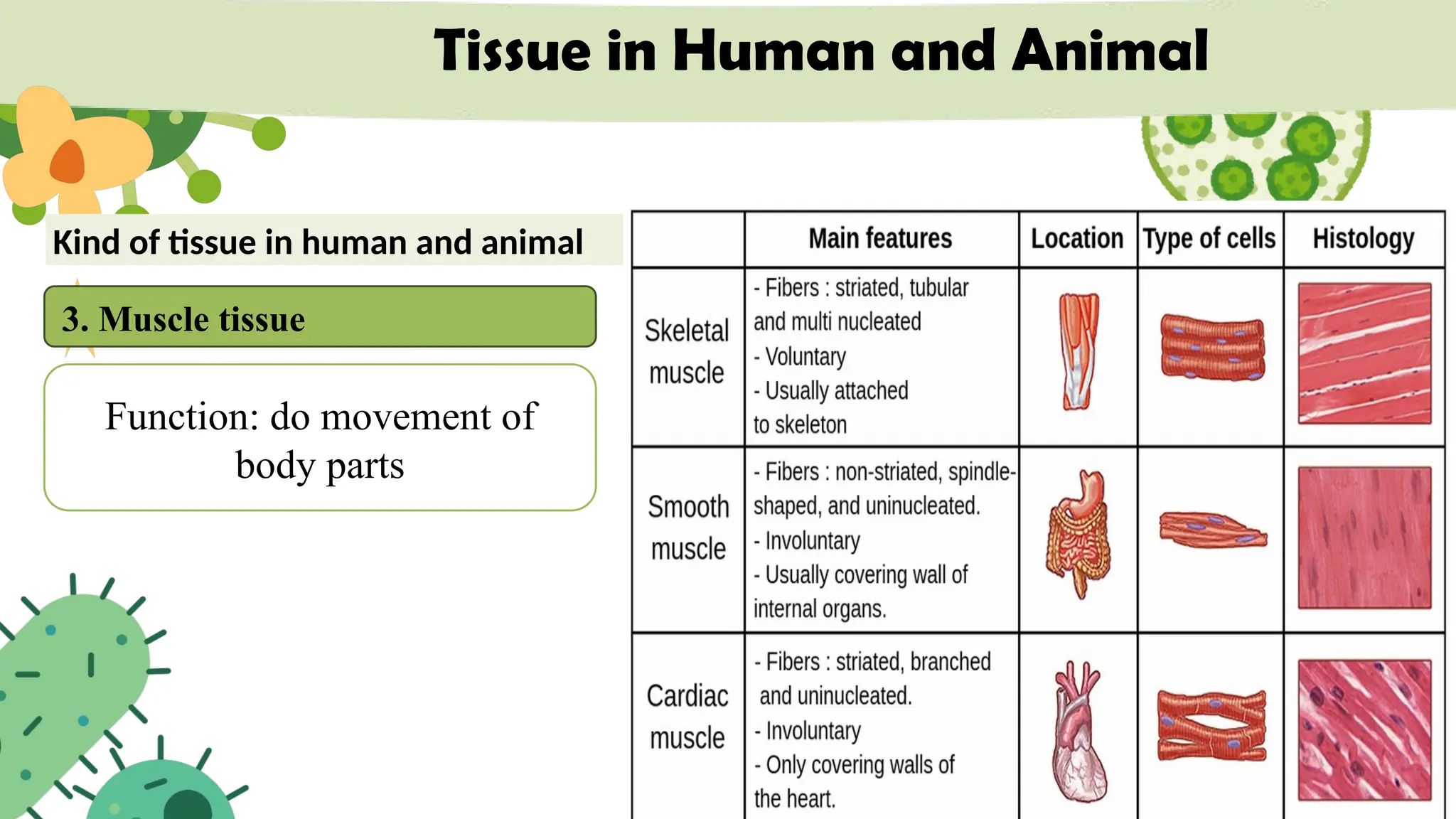
Tissue in Human and Animal
Kind of tissue in human and animal
3. Muscle tissue
Function: do movement of
body parts
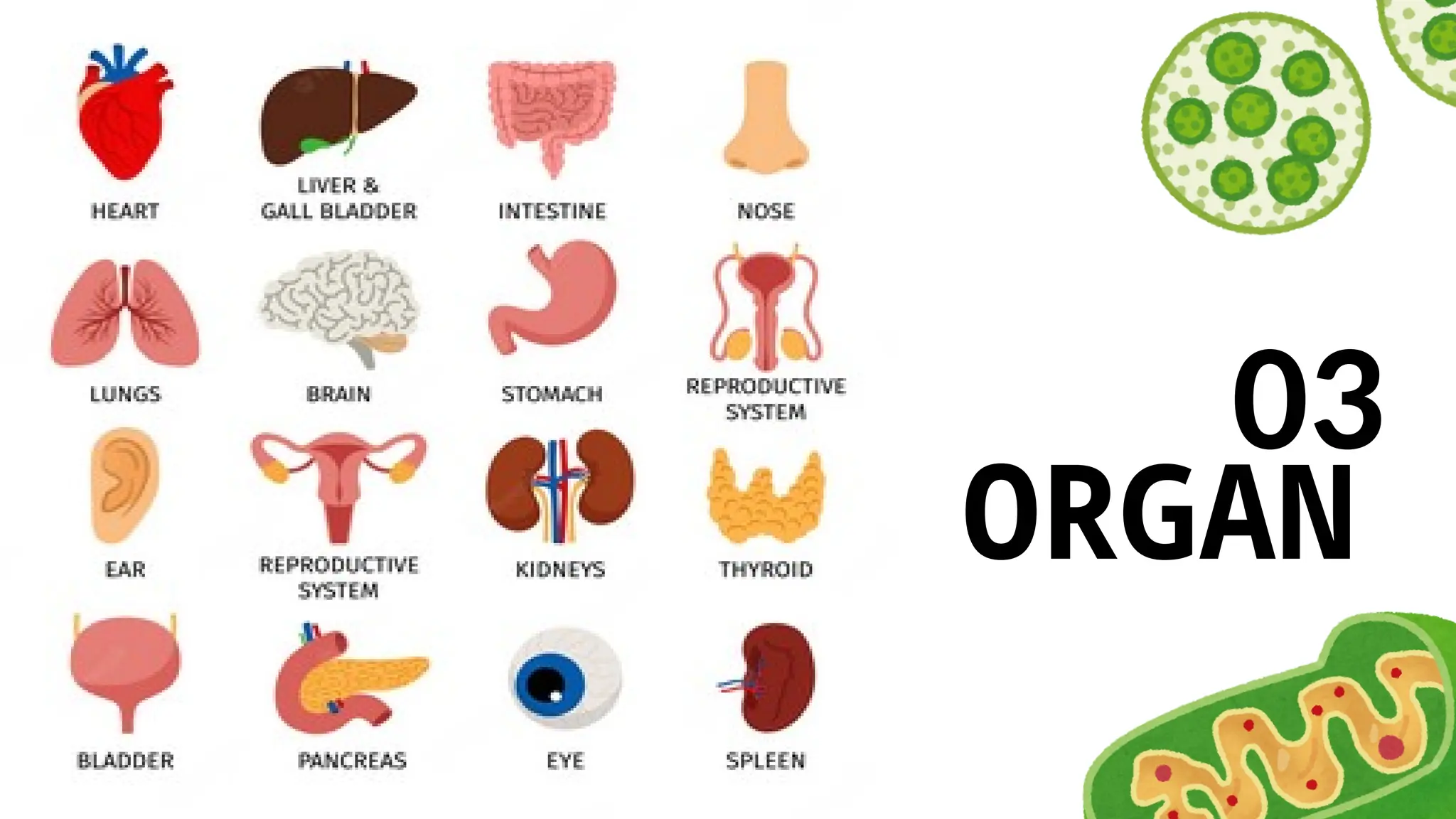
ORGAN
03
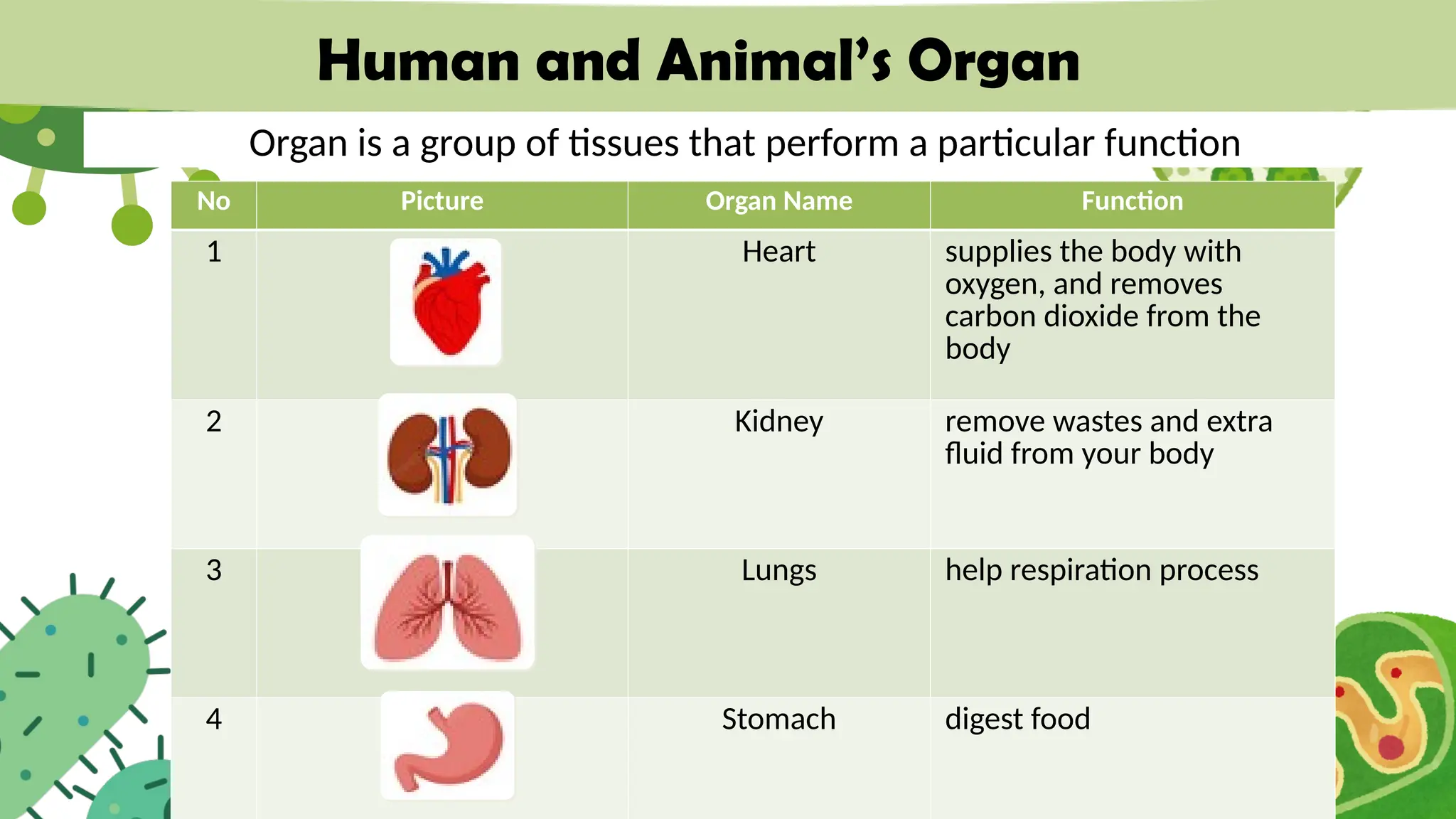
Human and Animal’s Organ
Organ is a group of tissues that perform a particular function
No Picture Organ Name Function
1 Heart supplies the body with
oxygen, and removes
carbon dioxide from the
body
2 Kidney remove wastes and extra
fluid from your body
3 Lungs help respiration process
4 Stomach digest food
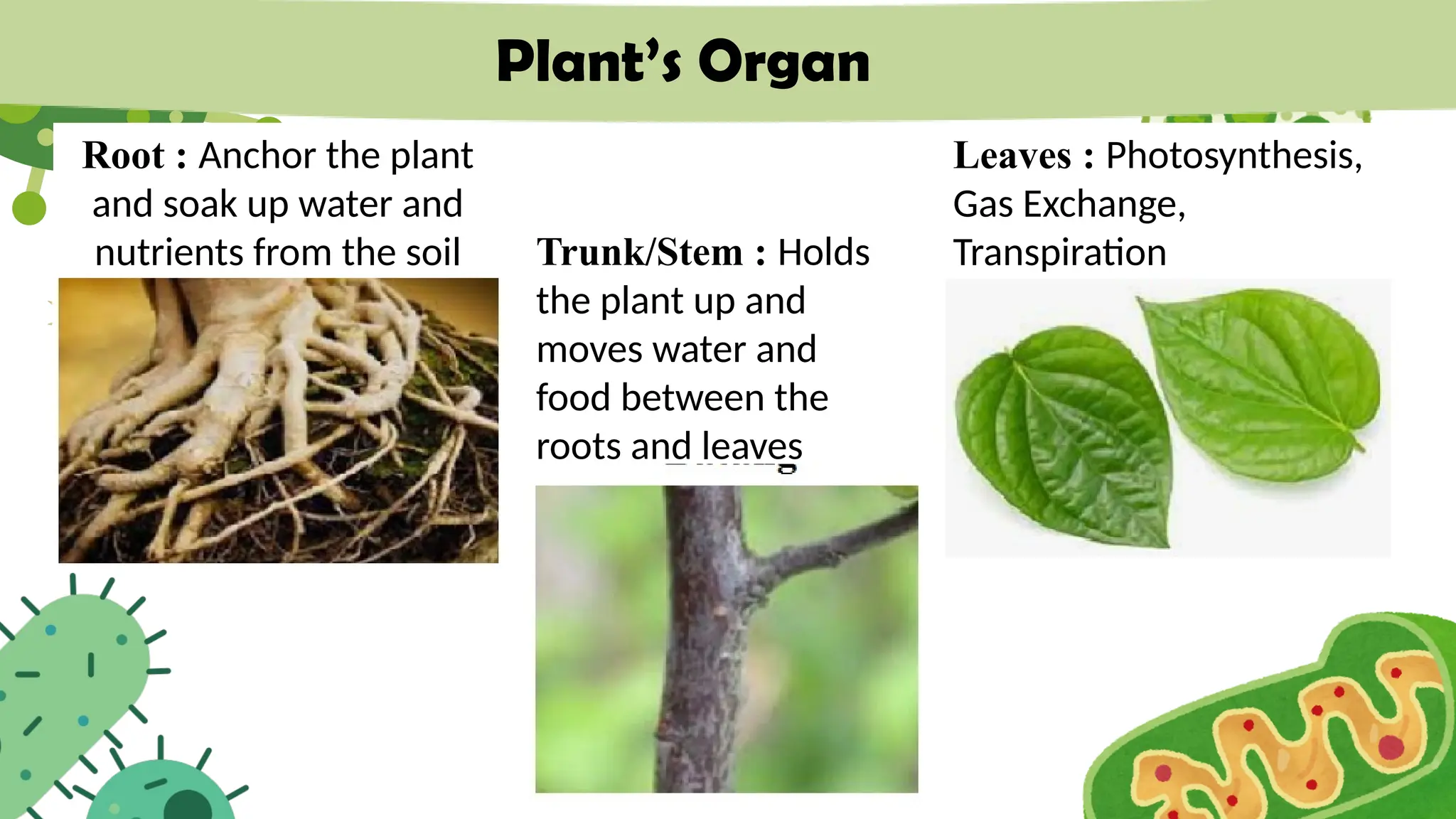
Plant’s Organ
Root : Anchor the plant
and soak up water and
nutrients from the soil Trunk/Stem : Holds
the plant up and
moves water and
food between the
roots and leaves
Leaves : Photosynthesis,
Gas Exchange,
Transpiration
ORGAN
SYSTEM
04
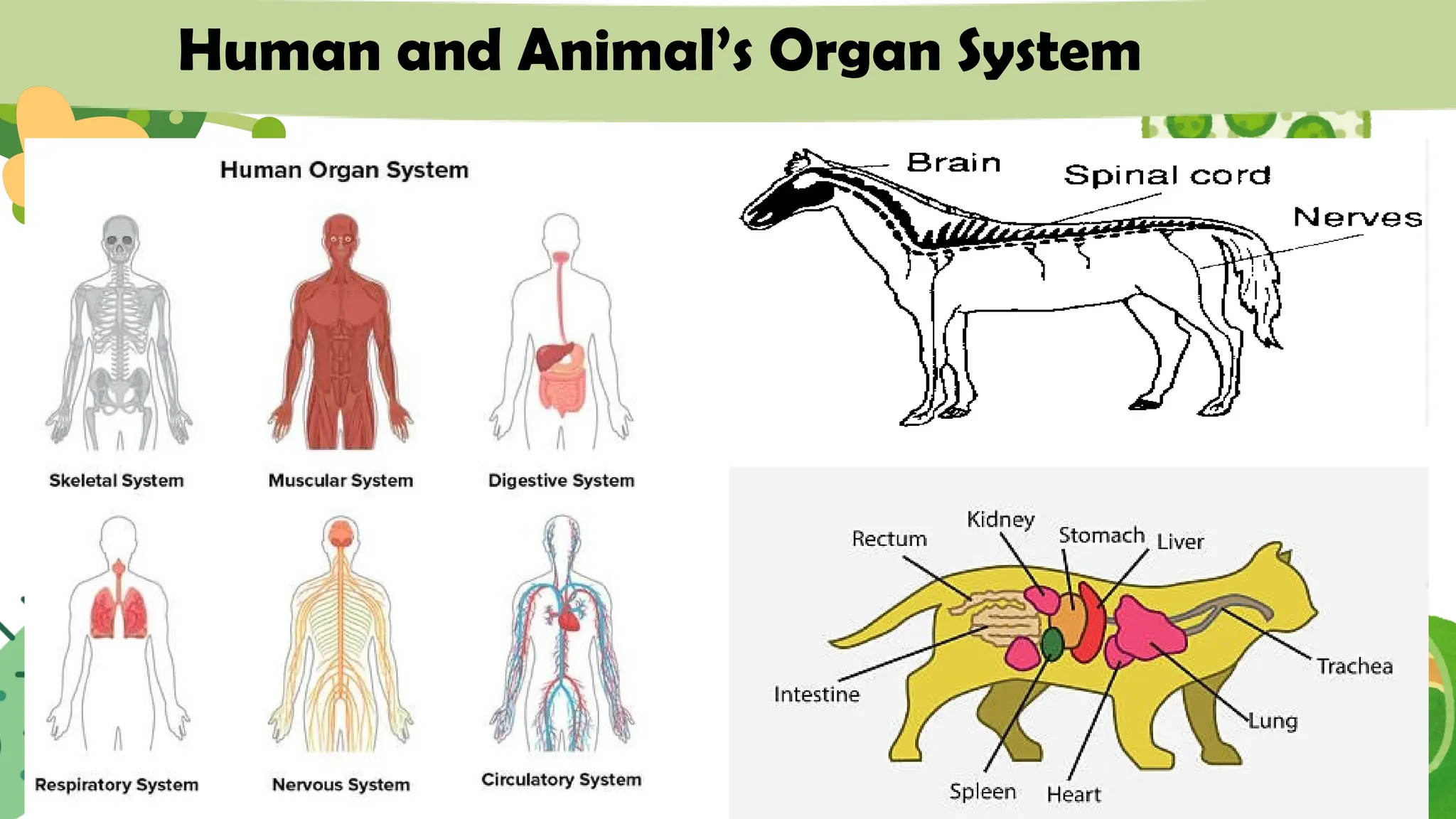
Human and Animal’s Organ System
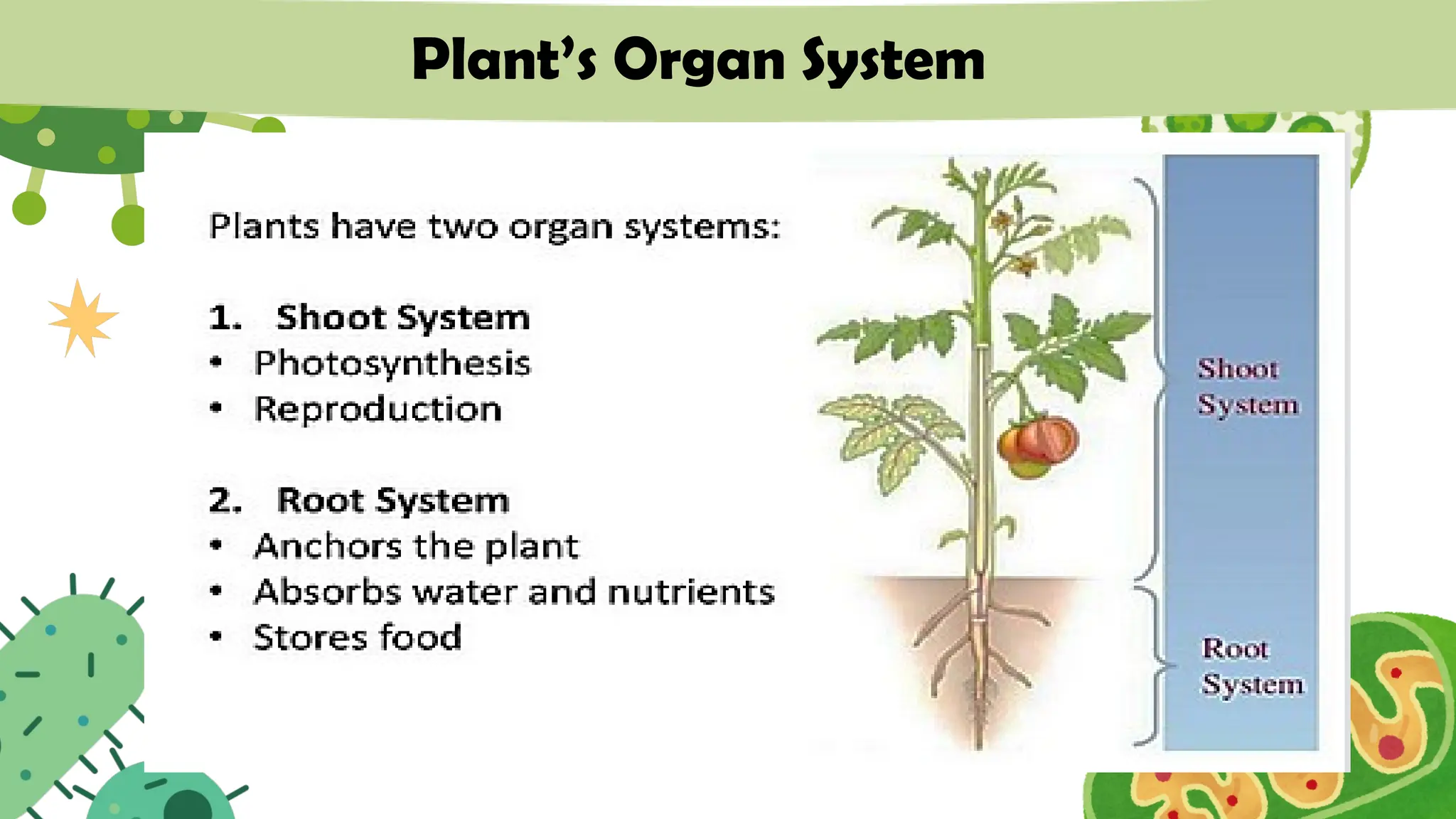
Plant’s Organ System
Thank You

CELL AND ITS DEVELOPMEN CELL AND ITS DEVELOPMEN

  • 1.
    and Its Development AlMaahira Junior High School Cell 8th Grade
  • 2.
    Have you everseen this kind of pattern on the leaf? If we zoom in this pattern, what will you see? HAVE YOU EVER?
  • 3.
  • 4.
    On a leaforgan, when we make a thin slice of the leaf surface and observe it using a microscope, we will find an appearance similar to the image on the right! This collection of cells is called tissue. And in this image, these are plant cells. What do the cells look like? Do they all have a similar shape? They all appear to have angles and be rigid! You will get this result! Beautiful right?
  • 5.
    HOW ABOUT INHUMAN OR ANIMAL? Have you ever seen this kind of pattern on your own skin? Let’s take a deeper look on your own skin!
  • 6.
    HOW ABOUT INHUMAN OR ANIMAL? Let's try rubbing that skin with a cotton bud, then we observe our skin cells under a microscope! Have you ever heard the term 'dead skin cells'? Our skin cells can indeed die and be replaced with new skin cells approximately every 2 weeks. Therefore, let's try to observe our skin. The outermost layer of skin cells is quite easy to observe because they are easily detached when rubbed. An example is the skin on the inside of the mouth.
  • 7.
    This is theshape of cells in humans and also in animals, commonly called animal cells. Animal cells appear round, and their outermost part looks elastic and not rigid. Different from plant cells, where the outermost part of the cell looks rigid, right? You will get this result!
  • 8.
    Have you everused microscope before? It’s Time for Observation !
  • 9.
  • 10.
    CELL Cell is thesmallest functional structure of living things Cell are composed of 2 main components: 1.Cell membrane • The cell membrane is like the walls and doors of that house. • It's the outer layer that holds everything inside the cell. • Its main job is to be a gatekeeper. It decides what can come into the cell (like food and water) and what needs to go out (like waste). • It's smart, so it only lets the right things in and out, keeping the cell healthy and working properly.
  • 11.
    CELL Cell is thesmallest functional structure of living things 2. Protoplasm Protoplasm is all the living material inside a cell, enclosed by the cell membrane. It consist of : a) Cytoplasm (sitoplasma) The jelly-like substance and all the organelles suspended within it (excluding the nucleus). Many metabolism reaction happen in this part b) Organelles (organel) Organ of cell that have specific function
  • 12.
  • 13.
    Function of CellOrganelles No Picture Organel Name Function 1 Cell wall Protect cell membran and give cell its shape 2 Cell Membran Control what come in and out of the cell 3 Cytoplasm Home to the cell’s organelle 4 Nucleus Control all cell activity
  • 14.
    Function of CellOrganelles No Picture Organel Name Function 5 Mitochondrion Make ATP (energy) or powerhouse of the cell 6 Chloroplasts Help photosynthesis process 7 Centriol Help cell division 8 Vacuoles Storage, waste management, and structural support
  • 15.
    Function of CellOrganelles No Picture Organel Name Function 9 Endoplasmic Reticulum Divided into 2: rough: synthesize protein Smooth: synthesize fat 10 Ribosomes Synthesize protein 11 Golgi Apparatus Packages protein for excretion from the cells 12 Lysosomes Structure containing enzyms that break down
  • 17.
    What are thedifferences between them? Feature Prokaryotic Cell Eukaryotic cell Nucleus Prokaryotic Cells Eukaryotic Cells No nucleus (DNA floats freely) Yes, a true nucleus (DNA enclosed in a membrane) Organelles No membrane-bound organelles (like mitochondria, Golgi) Yes, many membrane-bound organelles present Size Generally smaller and simpler Generally larger and more complex DNA Circular DNA, typically in cytoplasm Linear DNA, located in the nucleus Examples Bacteria, Archaea Animals, Plants, Fungi, Protists
  • 20.
    What are thedifferences between them? Organel Plant cell Animal cell Cell wall Chloroplasts Centriole Lysosome Vacuole Big Small
  • 21.
  • 22.
    Tissue in Humanand Animal Tissue is a group of cells that have similar structure and that function Kind of tissue in human and animal 1. Epithelial tissue Membranous tissue that form various surfaces throughout the body Function: Protect another tissue 2. Nerve tissue Function: receive stimuli and send signals to the brain and spinal cord
  • 23.
    Tissue in Humanand Animal Kind of tissue in human and animal 3. Muscle tissue Function: do movement of body parts
  • 26.
  • 27.
    Human and Animal’sOrgan Organ is a group of tissues that perform a particular function No Picture Organ Name Function 1 Heart supplies the body with oxygen, and removes carbon dioxide from the body 2 Kidney remove wastes and extra fluid from your body 3 Lungs help respiration process 4 Stomach digest food
  • 28.
    Plant’s Organ Root :Anchor the plant and soak up water and nutrients from the soil Trunk/Stem : Holds the plant up and moves water and food between the roots and leaves Leaves : Photosynthesis, Gas Exchange, Transpiration
  • 29.
  • 30.
  • 31.
  • 32.