Mayo Clinic Nicotine Dependence Center  Residential Treatment Program
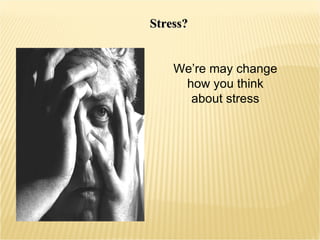
Stress? We’re may change how you think about stress
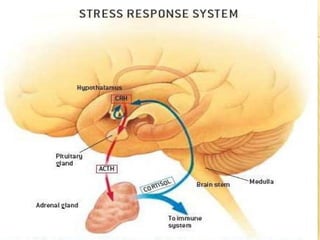
Stress is the system by which resources and energy are allocated to meet demands and challenges in the environment
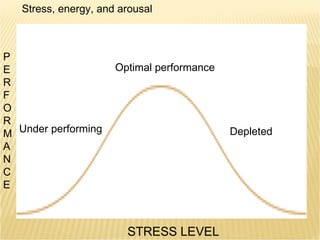
P E R F O R M A N C E STRESS LEVEL Optimal performance Under performing Depleted Stress, energy, and arousal
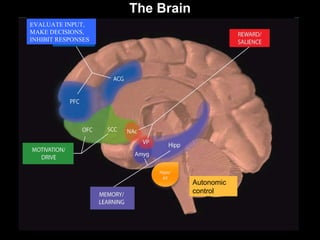
EVALUATE INPUT, MAKE DECISIONS, INHIBIT RESPONSES Autonomic control The Brain Hypo/pit
 
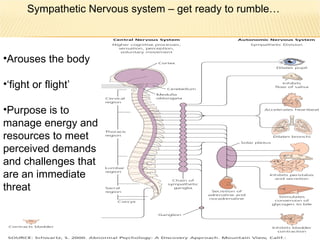
Arouses the body  ‘fight or flight’ Purpose is to manage energy and resources to meet  perceived demands and challenges that are an immediate threat Sympathetic Nervous system – get ready to rumble…
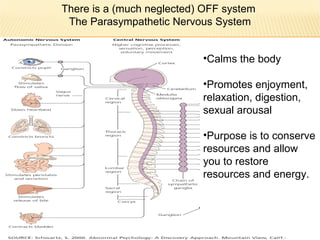
There is a (much neglected) OFF system  The Parasympathetic Nervous System Calms the body Promotes enjoyment, relaxation, digestion, sexual arousal Purpose is to conserve resources and allow you to restore resources and energy.
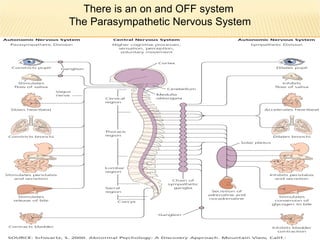
There is an on and OFF system  The Parasympathetic Nervous System
The Sympathetic nervous system is built to meet immediate and life threatening demands Most of the demands we face today are not immediate We get chronically stuck in the  on  position
Lowered immune response Coronary artery disease Insulin resistance Type II Diabetes Obesity Insomnia Chronic fatigue and chronic pain ……..
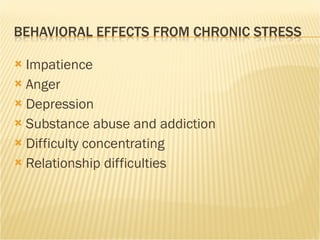
Impatience Anger Depression Substance abuse and addiction Difficulty concentrating Relationship difficulties
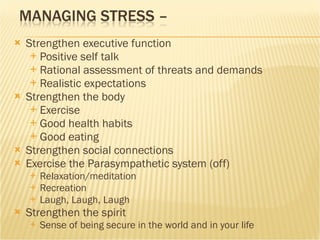
Strengthen executive function Positive self talk Rational assessment of threats and demands Realistic expectations Strengthen the body Exercise Good health habits Good eating Strengthen social connections Exercise the Parasympathetic system (off)  Relaxation/meditation Recreation Laugh, Laugh, Laugh Strengthen the spirit Sense of being secure in the world and in your life
Healthy activity Healthy thinking Social support Practiced relaxation Spiritual connection
Let’s get started

Stresspresent5 10

  • 1.
    Mayo Clinic NicotineDependence Center Residential Treatment Program
  • 2.
    Stress? We’re maychange how you think about stress
  • 3.
    Stress is thesystem by which resources and energy are allocated to meet demands and challenges in the environment
  • 4.
    P E RF O R M A N C E STRESS LEVEL Optimal performance Under performing Depleted Stress, energy, and arousal
  • 5.
    EVALUATE INPUT, MAKEDECISIONS, INHIBIT RESPONSES Autonomic control The Brain Hypo/pit
  • 6.
  • 7.
    Arouses the body ‘fight or flight’ Purpose is to manage energy and resources to meet perceived demands and challenges that are an immediate threat Sympathetic Nervous system – get ready to rumble…
  • 8.
    There is a(much neglected) OFF system The Parasympathetic Nervous System Calms the body Promotes enjoyment, relaxation, digestion, sexual arousal Purpose is to conserve resources and allow you to restore resources and energy.
  • 9.
    There is anon and OFF system The Parasympathetic Nervous System
  • 10.
    The Sympathetic nervoussystem is built to meet immediate and life threatening demands Most of the demands we face today are not immediate We get chronically stuck in the on position
  • 11.
    Lowered immune responseCoronary artery disease Insulin resistance Type II Diabetes Obesity Insomnia Chronic fatigue and chronic pain ……..
  • 12.
    Impatience Anger DepressionSubstance abuse and addiction Difficulty concentrating Relationship difficulties
  • 13.
    Strengthen executive functionPositive self talk Rational assessment of threats and demands Realistic expectations Strengthen the body Exercise Good health habits Good eating Strengthen social connections Exercise the Parasympathetic system (off) Relaxation/meditation Recreation Laugh, Laugh, Laugh Strengthen the spirit Sense of being secure in the world and in your life
  • 14.
    Healthy activity Healthythinking Social support Practiced relaxation Spiritual connection
  • 15.

Editor's Notes

  • #6 Brain circuits are affected by drug abuse and addiction . The areas depicted contain the circuits that underlie feelings of reward, learning and memory, motivation and drive, and inhibitory control. Each of these brain areas and the behaviors they control must be considered when developing strategies to treat drug addiction. PFC – prefrontal cortex; ACG – anterior cingulate gyrus; OFC – orbitofrontal cortex; SCC – subcallosal cortex; NAcc – nucleus accumbens; VP – ventral pallidum; Hipp – hippocampus; Amyg – amygdala