

Welcome to our
Presentation
Lets watch a video interview of some
“Street Food Vendor”
 What is Street Food?
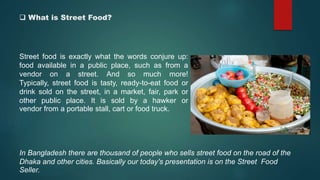
Street food is exactly what the words conjure up:
food available in a public place, such as from a
vendor on a street. And so much more!
Typically, street food is tasty, ready-to-eat food or
drink sold on the street, in a market, fair, park or
other public place. It is sold by a hawker or
vendor from a portable stall, cart or food truck.
In Bangladesh there are thousand of people who sells street food on the road of the
Dhaka and other cities. Basically our today's presentation is on the Street Food
Seller.
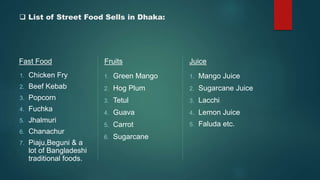
 List of Street Food Sells in Dhaka:
Fast Food
1. Chicken Fry
2. Beef Kebab
3. Popcorn
4. Fuchka
5. Jhalmuri
6. Chanachur
7. Piaju,Beguni & a
lot of Bangladeshi
traditional foods.
Fruits
1. Green Mango
2. Hog Plum
3. Tetul
4. Guava
5. Carrot
6. Sugarcane
Juice
1. Mango Juice
2. Sugarcane Juice
3. Lacchi
4. Lemon Juice
5. Faluda etc.
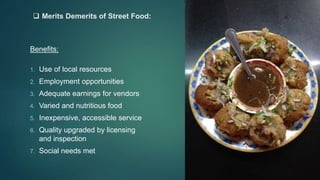
 Merits Demerits of Street Food:
Benefits:
1. Use of local resources
2. Employment opportunities
3. Adequate earnings for vendors
4. Varied and nutritious food
5. Inexpensive, accessible service
6. Quality upgraded by licensing
and inspection
7. Social needs met
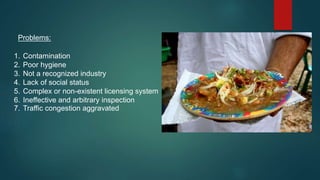
Problems:
1. Contamination
2. Poor hygiene
3. Not a recognized industry
4. Lack of social status
5. Complex or non-existent licensing system
6. Ineffective and arbitrary inspection
7. Traffic congestion aggravated
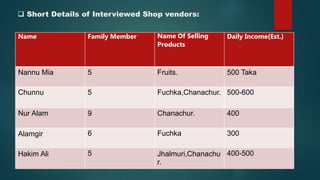
 Short Details of Interviewed Shop vendors:
Name Family Member Name Of Selling
Products
Daily Income(Est.)
Nannu Mia 5 Fruits. 500 Taka
Chunnu 5 Fuchka,Chanachur. 500-600
Nur Alam 9 Chanachur. 400
Alamgir 6 Fuchka 300
Hakim Ali 5 Jhalmuri,Chanachu
r.
400-500
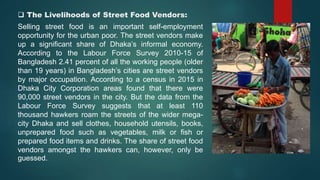
 The Livelihoods of Street Food Vendors:
Selling street food is an important self-employment
opportunity for the urban poor. The street vendors make
up a significant share of Dhaka’s informal economy.
According to the Labour Force Survey 2010-15 of
Bangladesh 2.41 percent of all the working people (older
than 19 years) in Bangladesh’s cities are street vendors
by major occupation. According to a census in 2015 in
Dhaka City Corporation areas found that there were
90,000 street vendors in the city. But the data from the
Labour Force Survey suggests that at least 110
thousand hawkers roam the streets of the wider mega-
city Dhaka and sell clothes, household utensils, books,
unprepared food such as vegetables, milk or fish or
prepared food items and drinks. The share of street food
vendors amongst the hawkers can, however, only be
guessed.
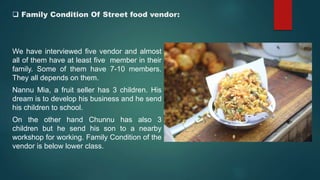
 Family Condition Of Street food vendor:
We have interviewed five vendor and almost
all of them have at least five member in their
family. Some of them have 7-10 members.
They all depends on them.
Nannu Mia, a fruit seller has 3 children. His
dream is to develop his business and he send
his children to school.
On the other hand Chunnu has also 3
children but he send his son to a nearby
workshop for working. Family Condition of the
vendor is below lower class.
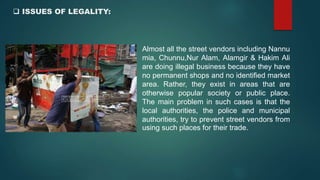
 ISSUES OF LEGALITY:
Almost all the street vendors including Nannu
mia, Chunnu,Nur Alam, Alamgir & Hakim Ali
are doing illegal business because they have
no permanent shops and no identified market
area. Rather, they exist in areas that are
otherwise popular society or public place.
The main problem in such cases is that the
local authorities, the police and municipal
authorities, try to prevent street vendors from
using such places for their trade.
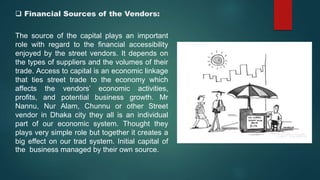
 Financial Sources of the Vendors:
The source of the capital plays an important
role with regard to the financial accessibility
enjoyed by the street vendors. It depends on
the types of suppliers and the volumes of their
trade. Access to capital is an economic linkage
that ties street trade to the economy which
affects the vendors’ economic activities,
profits, and potential business growth. Mr
Nannu, Nur Alam, Chunnu or other Street
vendor in Dhaka city they all is an individual
part of our economic system. Thought they
plays very simple role but together it creates a
big effect on our trad system. Initial capital of
the business managed by their own source.
 Problems of Street vendors:
1. Those that don’t have their own van or shop; they have to pay a
limited amount of money for this.
2. The Point of view, since these are the street foods, only particular
amount of people eat this
3. On many occasions when schools, colleges or universities are off
they cannot sell their product.
4. For the reason of different weather, it also effect to the sell.
5. Stream risk. If they can’t sell their product fully they have a great
chance to have risk.
6. They earn only a little profit.
7. Limited number of product purchase and sell.
What ever they sell or what ever the quality of their foods, they are a
part of our society and we cant deny them. Street Vendors workers
hard to live a happy life. We respect their works. Government and
Non-governmental organization should help them to improve their
living standards.
Thank you

Street Food Vendor

  • 1.
  • 2.
    Lets watch avideo interview of some “Street Food Vendor”
  • 3.
     What isStreet Food? Street food is exactly what the words conjure up: food available in a public place, such as from a vendor on a street. And so much more! Typically, street food is tasty, ready-to-eat food or drink sold on the street, in a market, fair, park or other public place. It is sold by a hawker or vendor from a portable stall, cart or food truck. In Bangladesh there are thousand of people who sells street food on the road of the Dhaka and other cities. Basically our today's presentation is on the Street Food Seller.
  • 4.
     List ofStreet Food Sells in Dhaka: Fast Food 1. Chicken Fry 2. Beef Kebab 3. Popcorn 4. Fuchka 5. Jhalmuri 6. Chanachur 7. Piaju,Beguni & a lot of Bangladeshi traditional foods. Fruits 1. Green Mango 2. Hog Plum 3. Tetul 4. Guava 5. Carrot 6. Sugarcane Juice 1. Mango Juice 2. Sugarcane Juice 3. Lacchi 4. Lemon Juice 5. Faluda etc.
  • 5.
     Merits Demeritsof Street Food: Benefits: 1. Use of local resources 2. Employment opportunities 3. Adequate earnings for vendors 4. Varied and nutritious food 5. Inexpensive, accessible service 6. Quality upgraded by licensing and inspection 7. Social needs met
  • 6.
    Problems: 1. Contamination 2. Poorhygiene 3. Not a recognized industry 4. Lack of social status 5. Complex or non-existent licensing system 6. Ineffective and arbitrary inspection 7. Traffic congestion aggravated
  • 7.
     Short Detailsof Interviewed Shop vendors: Name Family Member Name Of Selling Products Daily Income(Est.) Nannu Mia 5 Fruits. 500 Taka Chunnu 5 Fuchka,Chanachur. 500-600 Nur Alam 9 Chanachur. 400 Alamgir 6 Fuchka 300 Hakim Ali 5 Jhalmuri,Chanachu r. 400-500
  • 8.
     The Livelihoodsof Street Food Vendors: Selling street food is an important self-employment opportunity for the urban poor. The street vendors make up a significant share of Dhaka’s informal economy. According to the Labour Force Survey 2010-15 of Bangladesh 2.41 percent of all the working people (older than 19 years) in Bangladesh’s cities are street vendors by major occupation. According to a census in 2015 in Dhaka City Corporation areas found that there were 90,000 street vendors in the city. But the data from the Labour Force Survey suggests that at least 110 thousand hawkers roam the streets of the wider mega- city Dhaka and sell clothes, household utensils, books, unprepared food such as vegetables, milk or fish or prepared food items and drinks. The share of street food vendors amongst the hawkers can, however, only be guessed.
  • 9.
     Family ConditionOf Street food vendor: We have interviewed five vendor and almost all of them have at least five member in their family. Some of them have 7-10 members. They all depends on them. Nannu Mia, a fruit seller has 3 children. His dream is to develop his business and he send his children to school. On the other hand Chunnu has also 3 children but he send his son to a nearby workshop for working. Family Condition of the vendor is below lower class.
  • 10.
     ISSUES OFLEGALITY: Almost all the street vendors including Nannu mia, Chunnu,Nur Alam, Alamgir & Hakim Ali are doing illegal business because they have no permanent shops and no identified market area. Rather, they exist in areas that are otherwise popular society or public place. The main problem in such cases is that the local authorities, the police and municipal authorities, try to prevent street vendors from using such places for their trade.
  • 11.
     Financial Sourcesof the Vendors: The source of the capital plays an important role with regard to the financial accessibility enjoyed by the street vendors. It depends on the types of suppliers and the volumes of their trade. Access to capital is an economic linkage that ties street trade to the economy which affects the vendors’ economic activities, profits, and potential business growth. Mr Nannu, Nur Alam, Chunnu or other Street vendor in Dhaka city they all is an individual part of our economic system. Thought they plays very simple role but together it creates a big effect on our trad system. Initial capital of the business managed by their own source.
  • 12.
     Problems ofStreet vendors: 1. Those that don’t have their own van or shop; they have to pay a limited amount of money for this. 2. The Point of view, since these are the street foods, only particular amount of people eat this 3. On many occasions when schools, colleges or universities are off they cannot sell their product. 4. For the reason of different weather, it also effect to the sell. 5. Stream risk. If they can’t sell their product fully they have a great chance to have risk. 6. They earn only a little profit. 7. Limited number of product purchase and sell.
  • 13.
    What ever theysell or what ever the quality of their foods, they are a part of our society and we cant deny them. Street Vendors workers hard to live a happy life. We respect their works. Government and Non-governmental organization should help them to improve their living standards. Thank you