1
Presented By
Shashidhar
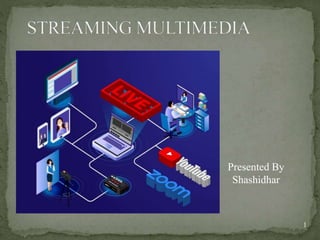
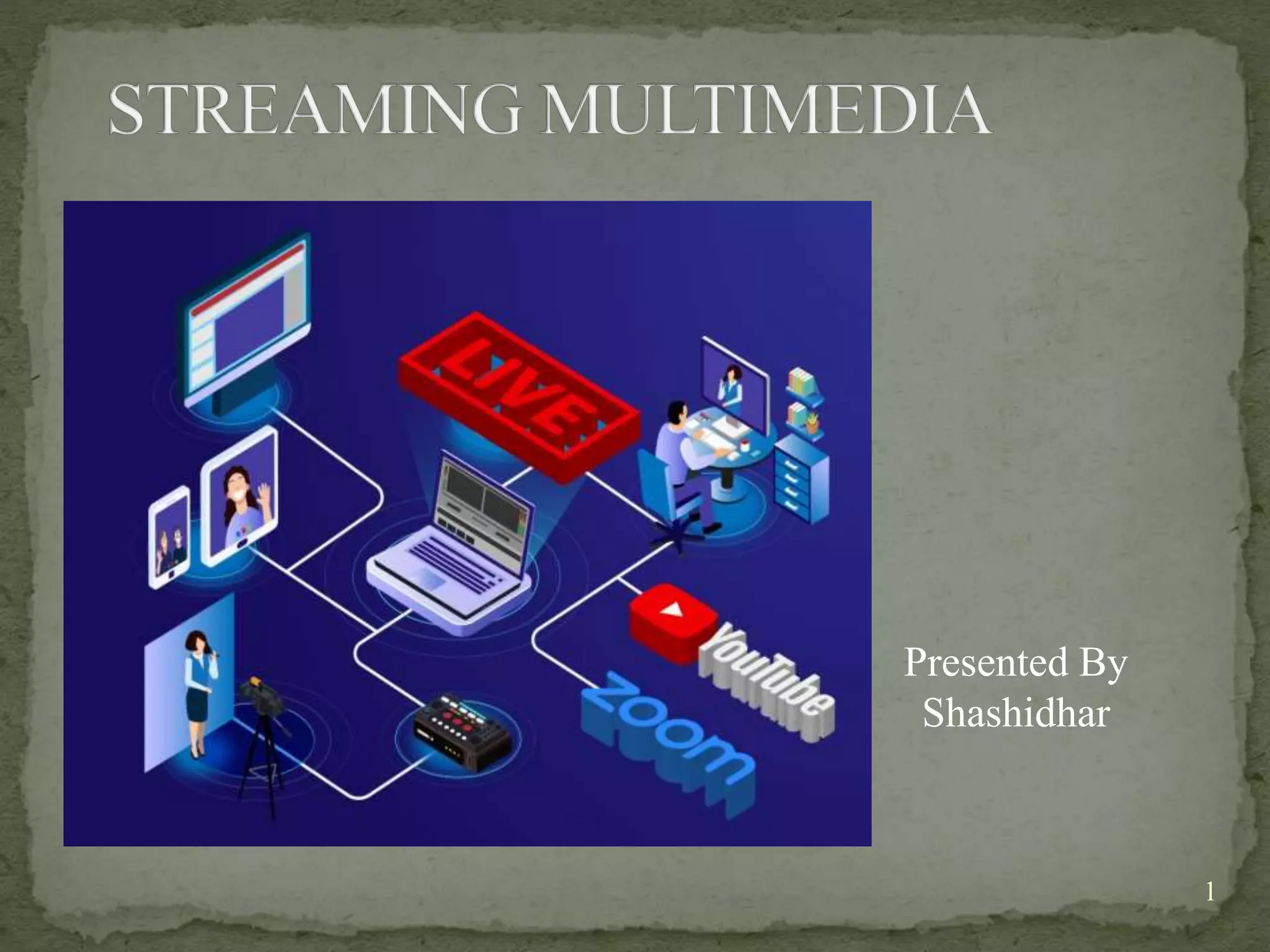
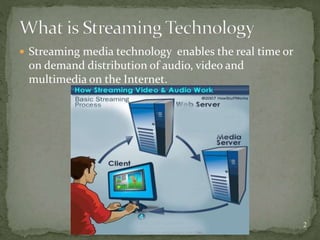
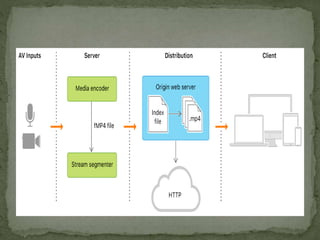
 Streaming media technology enables the real time or
on demand distribution of audio, video and
multimedia on the Internet.
2
 Streamed data is transmitted by a server application
and received and displayed in real-time by client
applications.
 These applications can start displaying video or
playing back audio as soon as enough data has been
received and stored in the receiving station’s buffer.
4
 It provides steady service
 Slower systems can take advantage of streaming technology
 Provide service on demand
Disadvantages
 It is difficult to keep the service steady if the
bandwidth is low.
 The maintenance of streaming server is relatively
expensive
 Packet loss may occur during the transmission
5
 Streaming Stored Audio and Video
 Streaming Live Audio and Video
 Real-Time Interactive Audio and Video
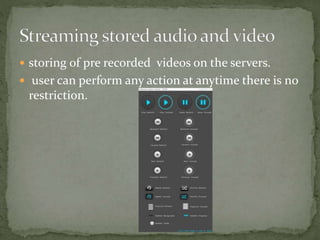
 storing of pre recorded videos on the servers.
 user can perform any action at anytime there is no
restriction.
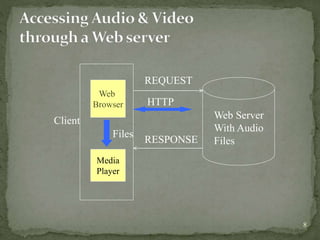
 It consists 4 different ways of approaches
1. Using a web server.
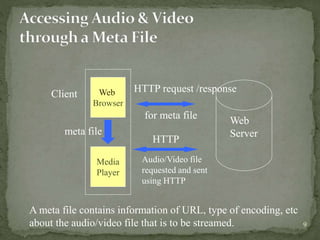
2. Using a web server metafile.
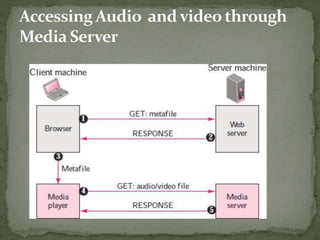
3. Using a media server
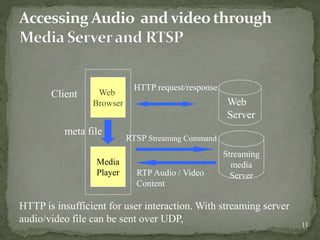
4. Using a media server and RTSP.
7
8
Web
Browser
Media
Player
Client
Web Server
With Audio
Files
HTTP
Files
RESPONSE
REQUEST
9
Web
Browser
Media
Player
Client
Web
Server
HTTP
Audio/Video file
requested and sent
using HTTP
HTTP request /response
for meta file
meta file
A meta file contains information of URL, type of encoding, etc
about the audio/video file that is to be streamed.
11
Web
Browser
Media
Player
Client
Web
Server
Streaming
media
Server
RTSP Streaming Command
HTTP request/response
meta file
HTTP is insufficient for user interaction. With streaming server
audio/video file can be sent over UDP,
RTP Audio / Video
Content
12
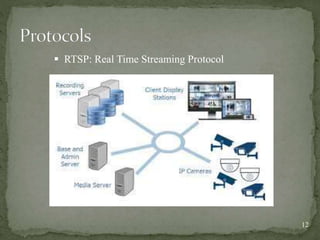
 RTSP: Real Time Streaming Protocol
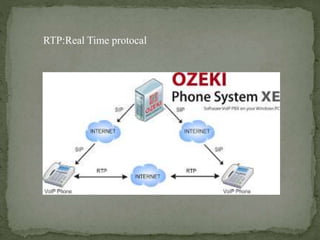
RTP:Real Time protocal
14
 RTSP is a industry standard Internet application level
protocol
 RTSP is a framework for delivering and
transmission of multicast data stream
 RTSP is a protocol that allows a media player to
control the transmission of a media stream for
exchanging control information
 Broadcasting of audio and video by radio and TV
stations
 All the stations broadcast through the internet
 Retransmission is not possible and it is multicast.
 Live streaming is better suited to the multicast
services of IP and the use of protocols such as UDP
and RTP.
 In real-time interactive audio/video, people
communicate with one another in real time.
 The online meetings and video conferences comes
under this category.
 Ex:
Zoom, google meet, goto meeting etc..
18
Start Line
Message Header
……
Message Header
CRLF
[message body]
Method SP Request-URI SP RTSP-Version CRLF
RTSP-Version SP Status Code SP Reason Phrase CRLF
Request-Line
Status-Line
Field-name : field-value CRLF
Header
19
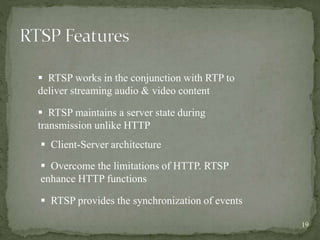
 RTSP works in the conjunction with RTP to
deliver streaming audio & video content
 RTSP maintains a server state during
transmission unlike HTTP
 Client-Server architecture
 Overcome the limitations of HTTP. RTSP
enhance HTTP functions
 RTSP provides the synchronization of events
20
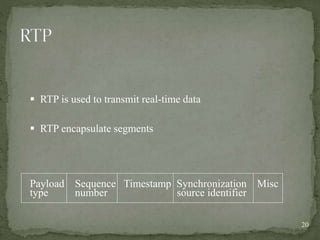
Payload Sequence Timestamp Synchronization Misc
type number source identifier
 RTP is used to transmit real-time data
 RTP encapsulate segments
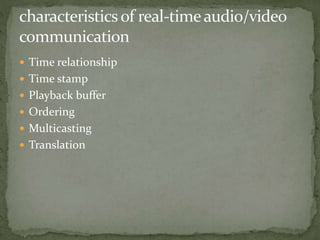
 Time relationship
 Time stamp
 Playback buffer
 Ordering
 Multicasting
 Translation
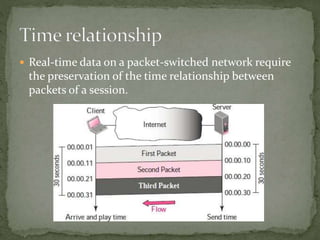
 Real-time data on a packet-switched network require
the preservation of the time relationship between
packets of a session.
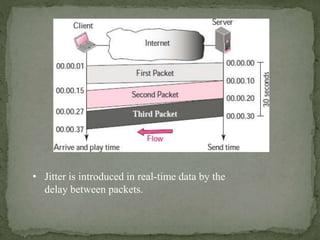
• Jitter is introduced in real-time data by the
delay between packets.
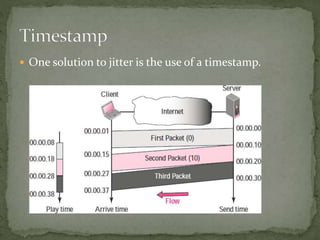
 One solution to jitter is the use of a timestamp.
 Ordering:
it provides sequence number of each packet
and helps in informing about lost in recievers
packet.
 Multicasting:
two way communication between the senders
and recievers.
 Translation:
required for changing high bandwidth signal to
low quality narrow band width signal
Streaming multimedia

Streaming multimedia

  • 1.
  • 2.
     Streaming mediatechnology enables the real time or on demand distribution of audio, video and multimedia on the Internet. 2
  • 3.
     Streamed datais transmitted by a server application and received and displayed in real-time by client applications.  These applications can start displaying video or playing back audio as soon as enough data has been received and stored in the receiving station’s buffer.
  • 4.
    4  It providessteady service  Slower systems can take advantage of streaming technology  Provide service on demand Disadvantages  It is difficult to keep the service steady if the bandwidth is low.  The maintenance of streaming server is relatively expensive  Packet loss may occur during the transmission
  • 5.
    5  Streaming StoredAudio and Video  Streaming Live Audio and Video  Real-Time Interactive Audio and Video
  • 6.
     storing ofpre recorded videos on the servers.  user can perform any action at anytime there is no restriction.
  • 7.
     It consists4 different ways of approaches 1. Using a web server. 2. Using a web server metafile. 3. Using a media server 4. Using a media server and RTSP. 7
  • 8.
  • 9.
    9 Web Browser Media Player Client Web Server HTTP Audio/Video file requested andsent using HTTP HTTP request /response for meta file meta file A meta file contains information of URL, type of encoding, etc about the audio/video file that is to be streamed.
  • 11.
    11 Web Browser Media Player Client Web Server Streaming media Server RTSP Streaming Command HTTPrequest/response meta file HTTP is insufficient for user interaction. With streaming server audio/video file can be sent over UDP, RTP Audio / Video Content
  • 12.
    12  RTSP: RealTime Streaming Protocol
  • 13.
  • 14.
    14  RTSP isa industry standard Internet application level protocol  RTSP is a framework for delivering and transmission of multicast data stream  RTSP is a protocol that allows a media player to control the transmission of a media stream for exchanging control information
  • 15.
     Broadcasting ofaudio and video by radio and TV stations  All the stations broadcast through the internet  Retransmission is not possible and it is multicast.  Live streaming is better suited to the multicast services of IP and the use of protocols such as UDP and RTP.
  • 17.
     In real-timeinteractive audio/video, people communicate with one another in real time.  The online meetings and video conferences comes under this category.  Ex: Zoom, google meet, goto meeting etc..
  • 18.
    18 Start Line Message Header …… MessageHeader CRLF [message body] Method SP Request-URI SP RTSP-Version CRLF RTSP-Version SP Status Code SP Reason Phrase CRLF Request-Line Status-Line Field-name : field-value CRLF Header
  • 19.
    19  RTSP worksin the conjunction with RTP to deliver streaming audio & video content  RTSP maintains a server state during transmission unlike HTTP  Client-Server architecture  Overcome the limitations of HTTP. RTSP enhance HTTP functions  RTSP provides the synchronization of events
  • 20.
    20 Payload Sequence TimestampSynchronization Misc type number source identifier  RTP is used to transmit real-time data  RTP encapsulate segments
  • 21.
     Time relationship Time stamp  Playback buffer  Ordering  Multicasting  Translation
  • 22.
     Real-time dataon a packet-switched network require the preservation of the time relationship between packets of a session.
  • 23.
    • Jitter isintroduced in real-time data by the delay between packets.
  • 24.
     One solutionto jitter is the use of a timestamp.
  • 25.
     Ordering: it providessequence number of each packet and helps in informing about lost in recievers packet.  Multicasting: two way communication between the senders and recievers.  Translation: required for changing high bandwidth signal to low quality narrow band width signal