What is Strategy?
Handout 1

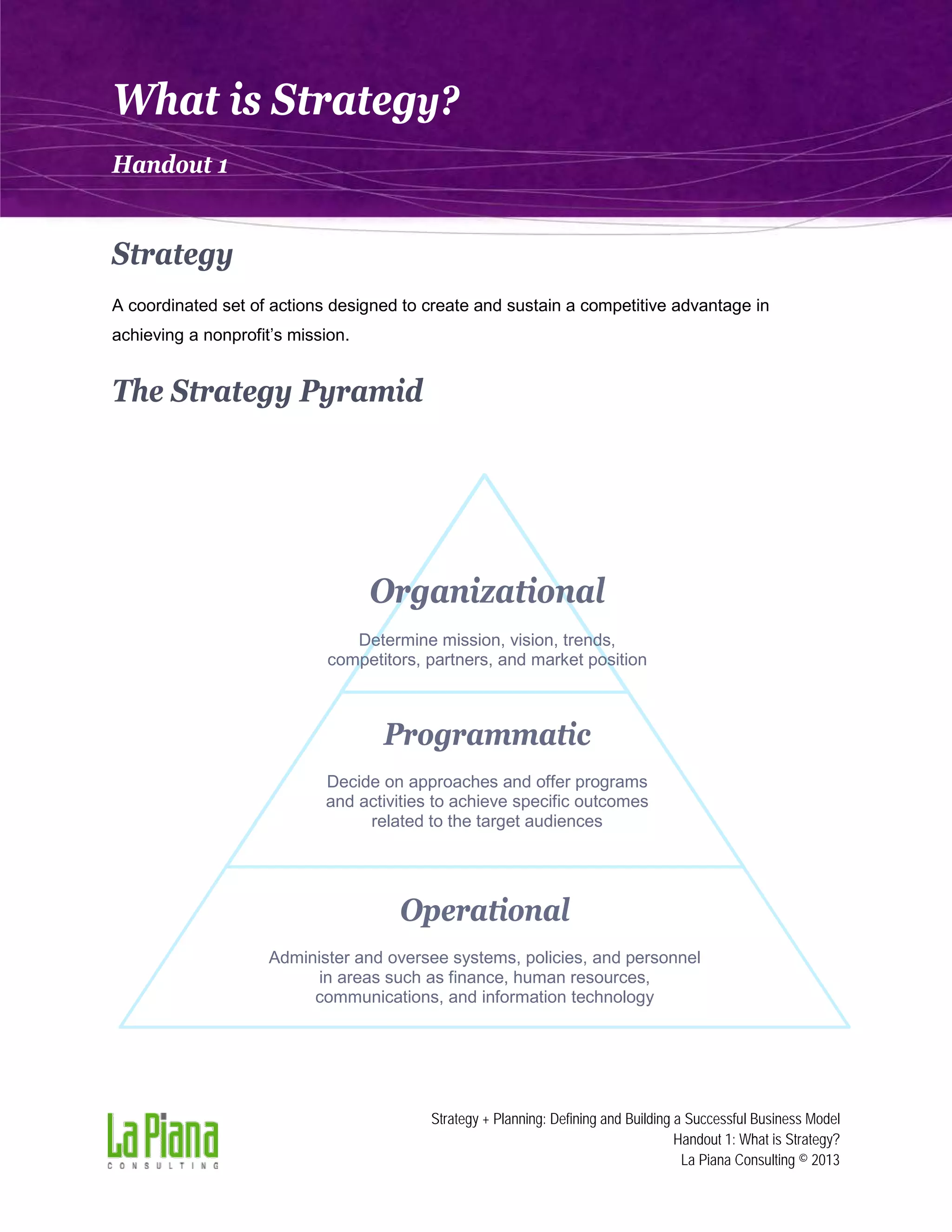
Strategy
A coordinated set of actions designed to create and sustain a competitive advantage in
achieving a nonprofit’s mission.

The Strategy Pyramid

Organizational
Determine mission, vision, trends,
competitors, partners, and market position

Programmatic
Decide on approaches and offer programs
and activities to achieve specific outcomes
related to the target audiences

Operational
Administer and oversee systems, policies, and personnel
in areas such as finance, human resources,
communications, and information technology

Strategy + Planning: Defining and Building a Successful Business Model
Handout 1: What is Strategy?
La Piana Consulting © 2013
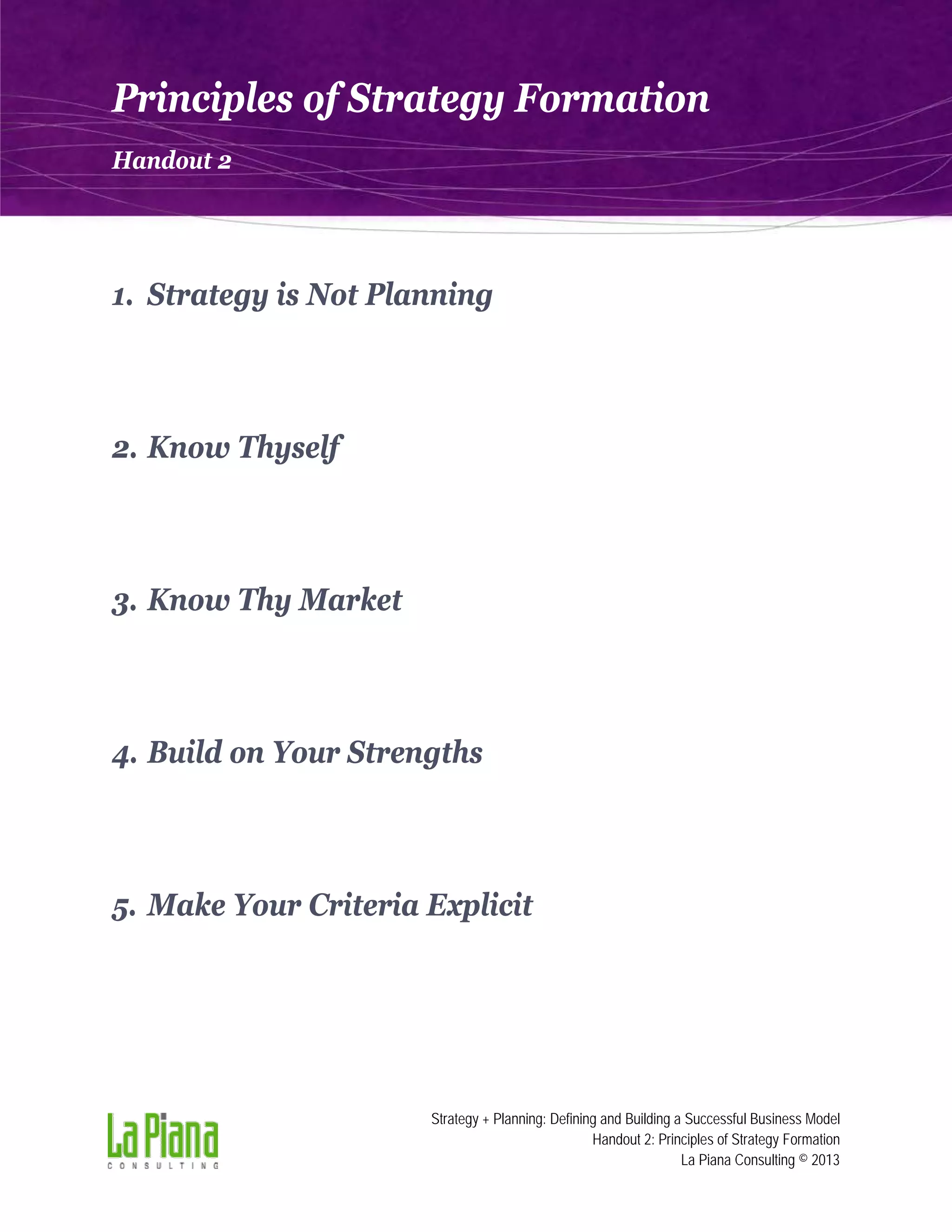
Principles of Strategy Formation
Handout 2

1. Strategy is Not Planning

2. Know Thyself

3. Know Thy Market

4. Build on Your Strengths

5. Make Your Criteria Explicit

Strategy + Planning: Defining and Building a Successful Business Model
Handout 2: Principles of Strategy Formation
La Piana Consulting © 2013
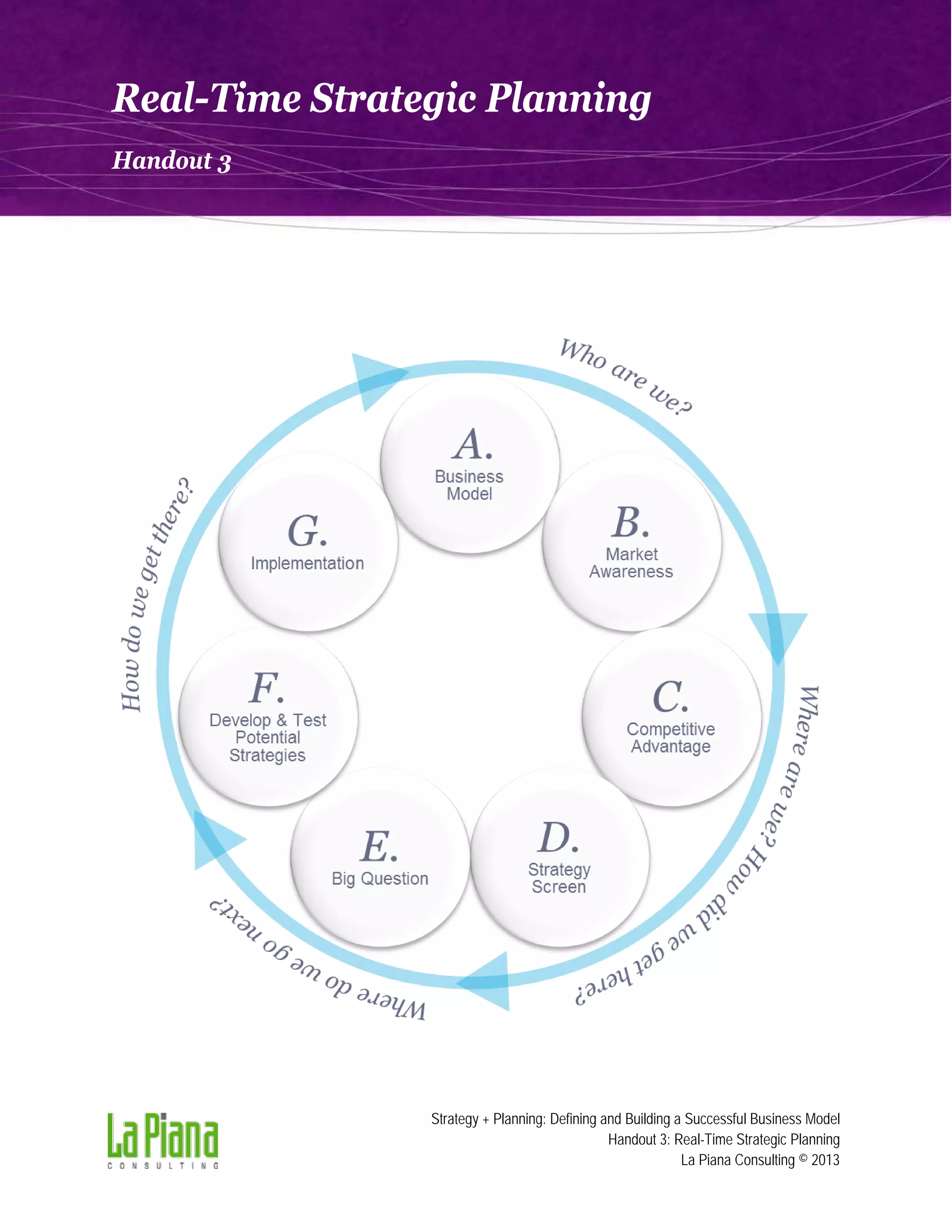
Real-Time Strategic Planning
Handout 3

Strategy + Planning: Defining and Building a Successful Business Model
Handout 3: Real-Time Strategic Planning
La Piana Consulting © 2013
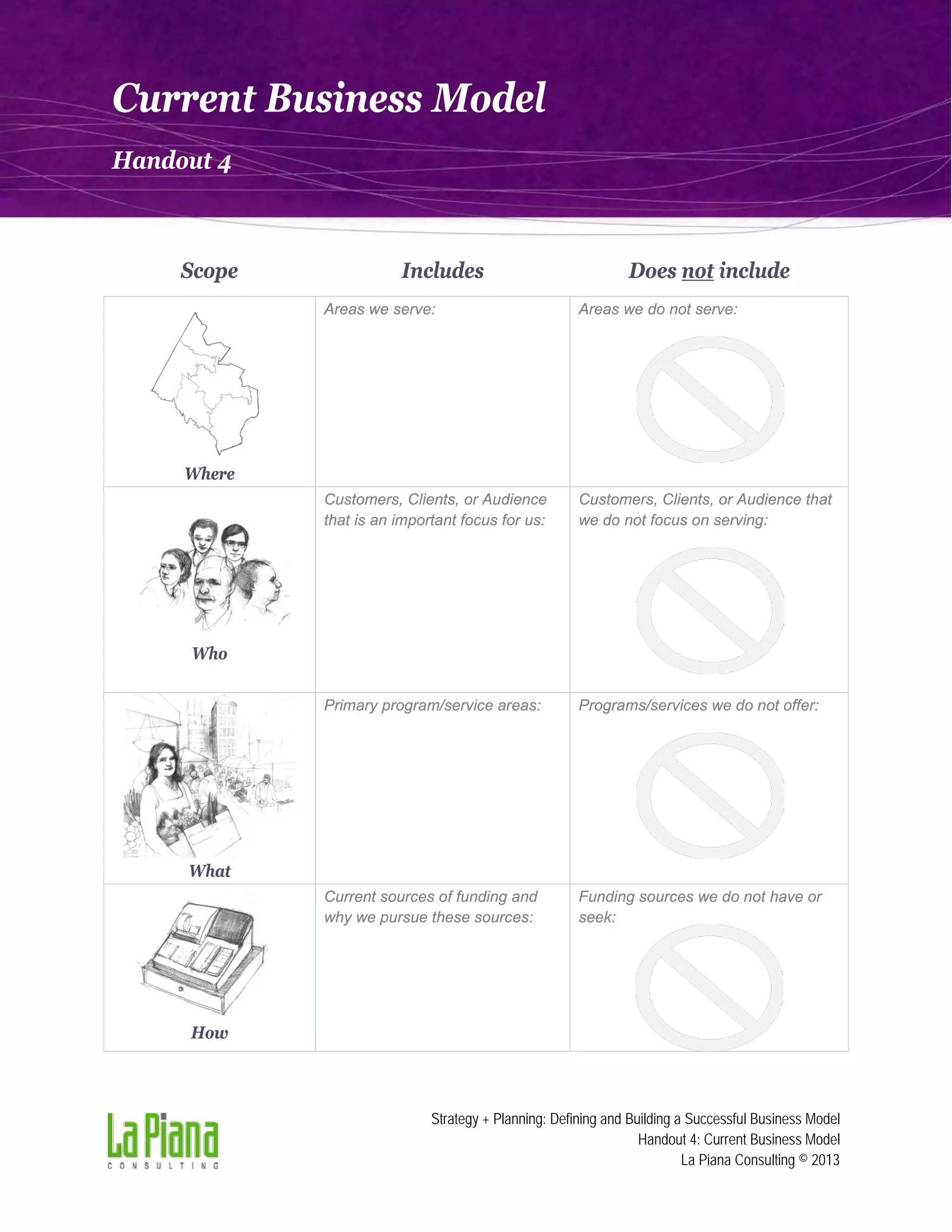
Current Business Model
Handout 4

Scope

Includes

Does not include

Areas we serve:

Areas we do not serve:

Customers, Clients, or Audience
that is an important focus for us:

Customers, Clients, or Audience that
we do not focus on serving:

Primary program/service areas:

Programs/services we do not offer:

Current sources of funding and
why we pursue these sources:

Funding sources we do not have or
seek:

Where

Who

What

How

Strategy + Planning: Defining and Building a Successful Business Model
Handout 4: Current Business Model
La Piana Consulting © 2013
Market Awareness
Handout 5

Trends
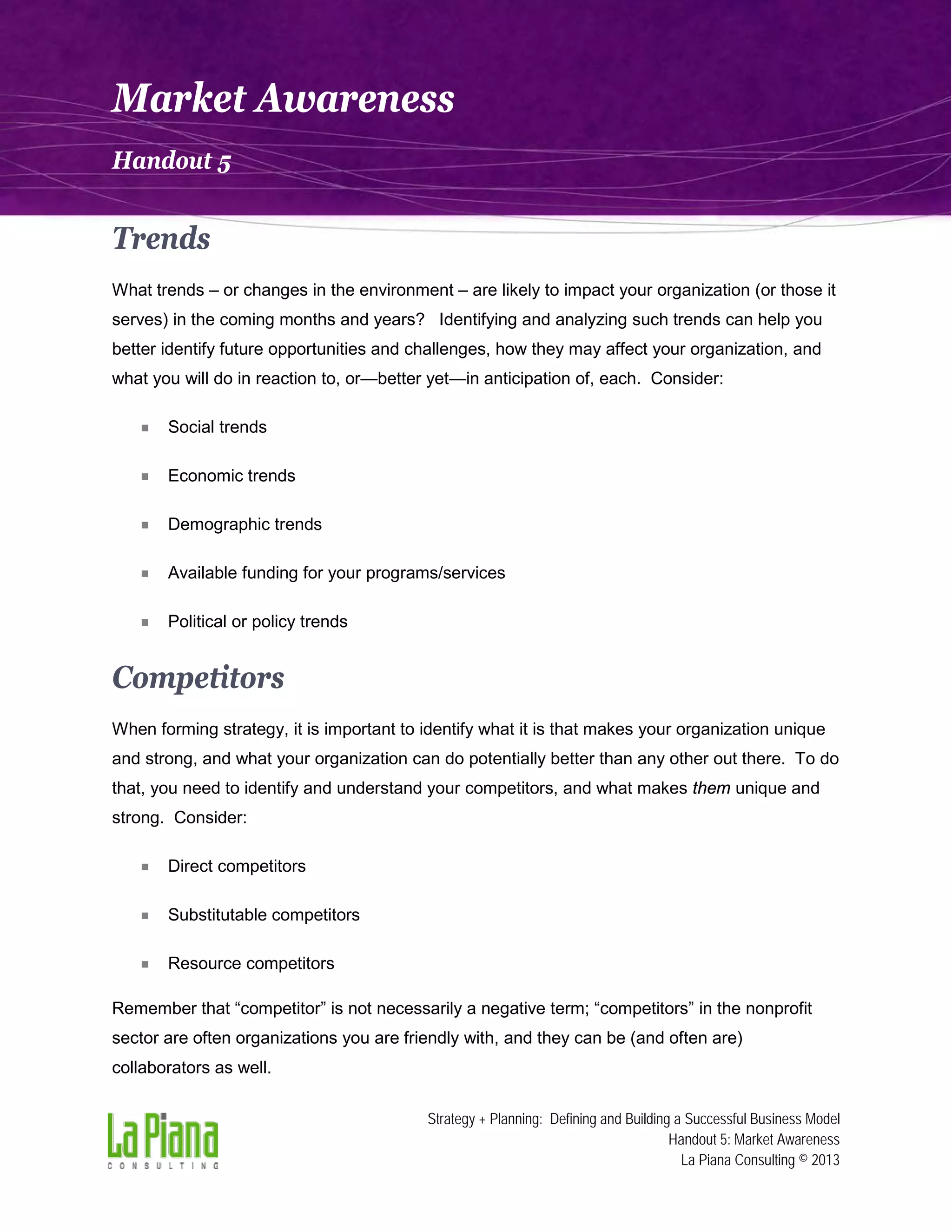
What trends – or changes in the environment – are likely to impact your organization (or those it
serves) in the coming months and years? Identifying and analyzing such trends can help you
better identify future opportunities and challenges, how they may affect your organization, and
what you will do in reaction to, or—better yet—in anticipation of, each. Consider:



Social trends



Economic trends



Demographic trends



Available funding for your programs/services



Political or policy trends

Competitors
When forming strategy, it is important to identify what it is that makes your organization unique
and strong, and what your organization can do potentially better than any other out there. To do
that, you need to identify and understand your competitors, and what makes them unique and
strong. Consider:



Direct competitors



Substitutable competitors



Resource competitors

Remember that “competitor” is not necessarily a negative term; “competitors” in the nonprofit
sector are often organizations you are friendly with, and they can be (and often are)
collaborators as well.
Strategy + Planning: Defining and Building a Successful Business Model
Handout 5: Market Awareness
La Piana Consulting © 2013
Outcomes
Handout 6

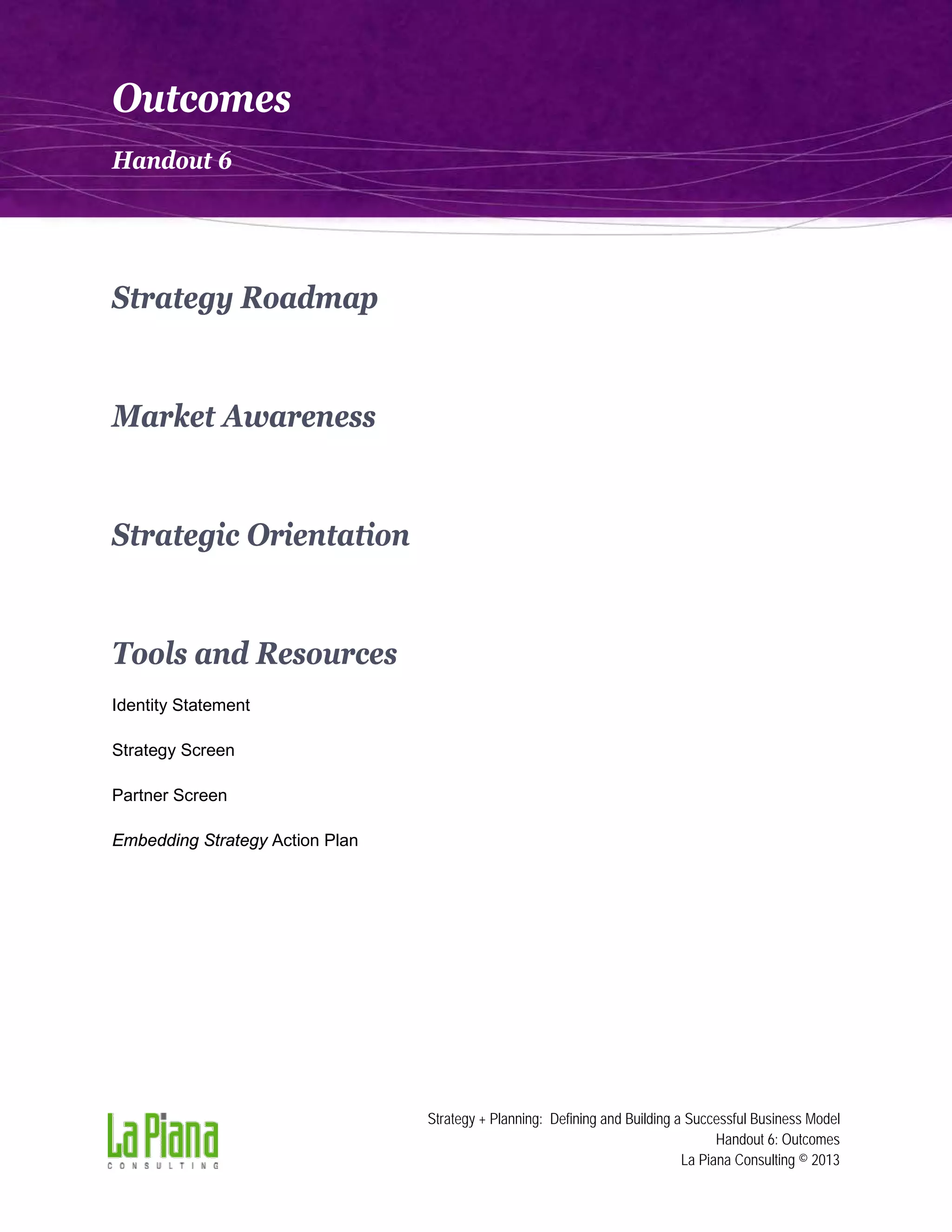
Strategy Roadmap

Market Awareness

Strategic Orientation

Tools and Resources
Identity Statement
Strategy Screen
Partner Screen
Embedding Strategy Action Plan

Strategy + Planning: Defining and Building a Successful Business Model
Handout 6: Outcomes
La Piana Consulting © 2013
Business Planning
Handout 7

Business Planning
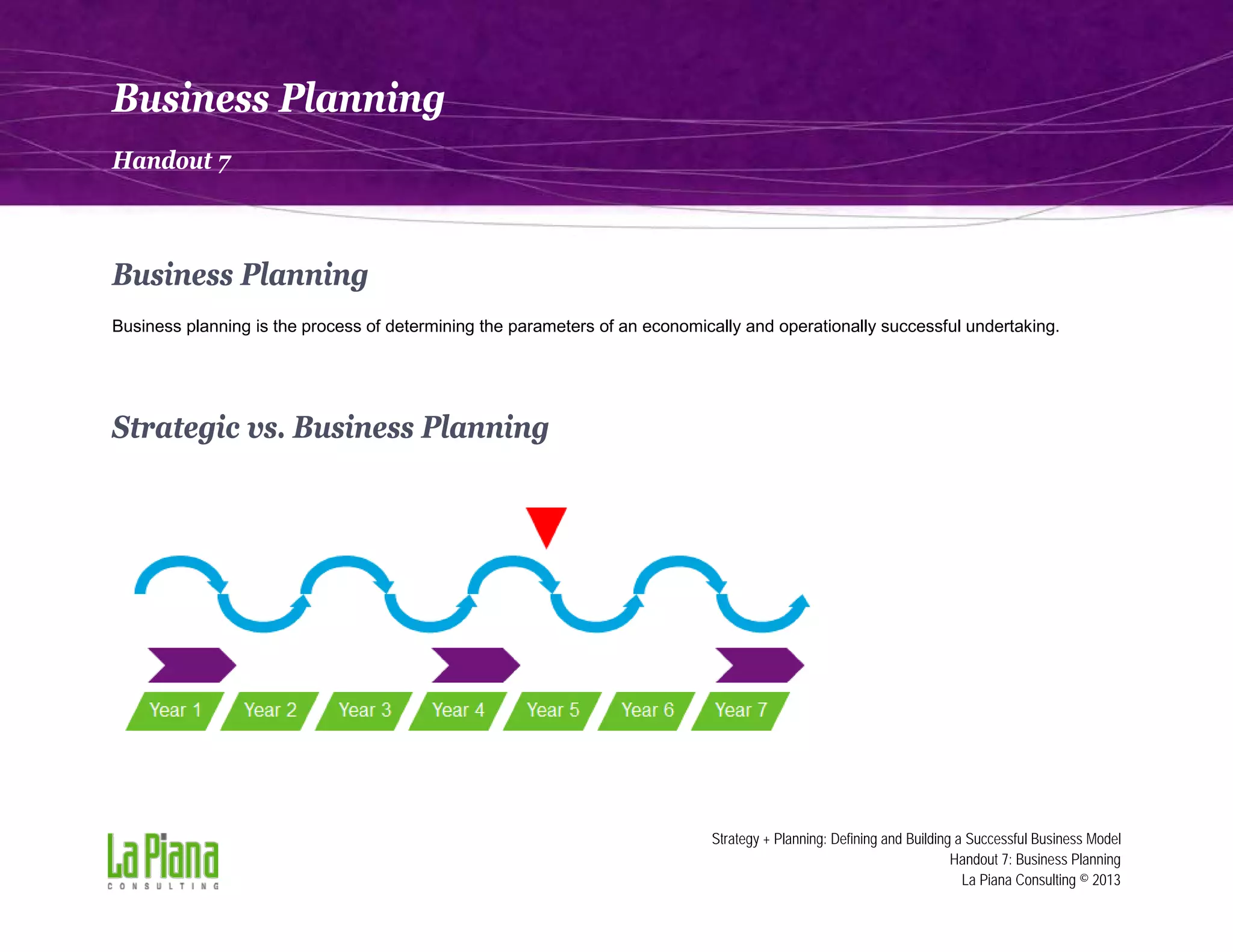
Business planning is the process of determining the parameters of an economically and operationally successful undertaking.

Strategic vs. Business Planning

Strategy + Planning: Defining and Building a Successful Business Model
Handout 7: Business Planning
La Piana Consulting © 2013
Business Planning
Handout 7

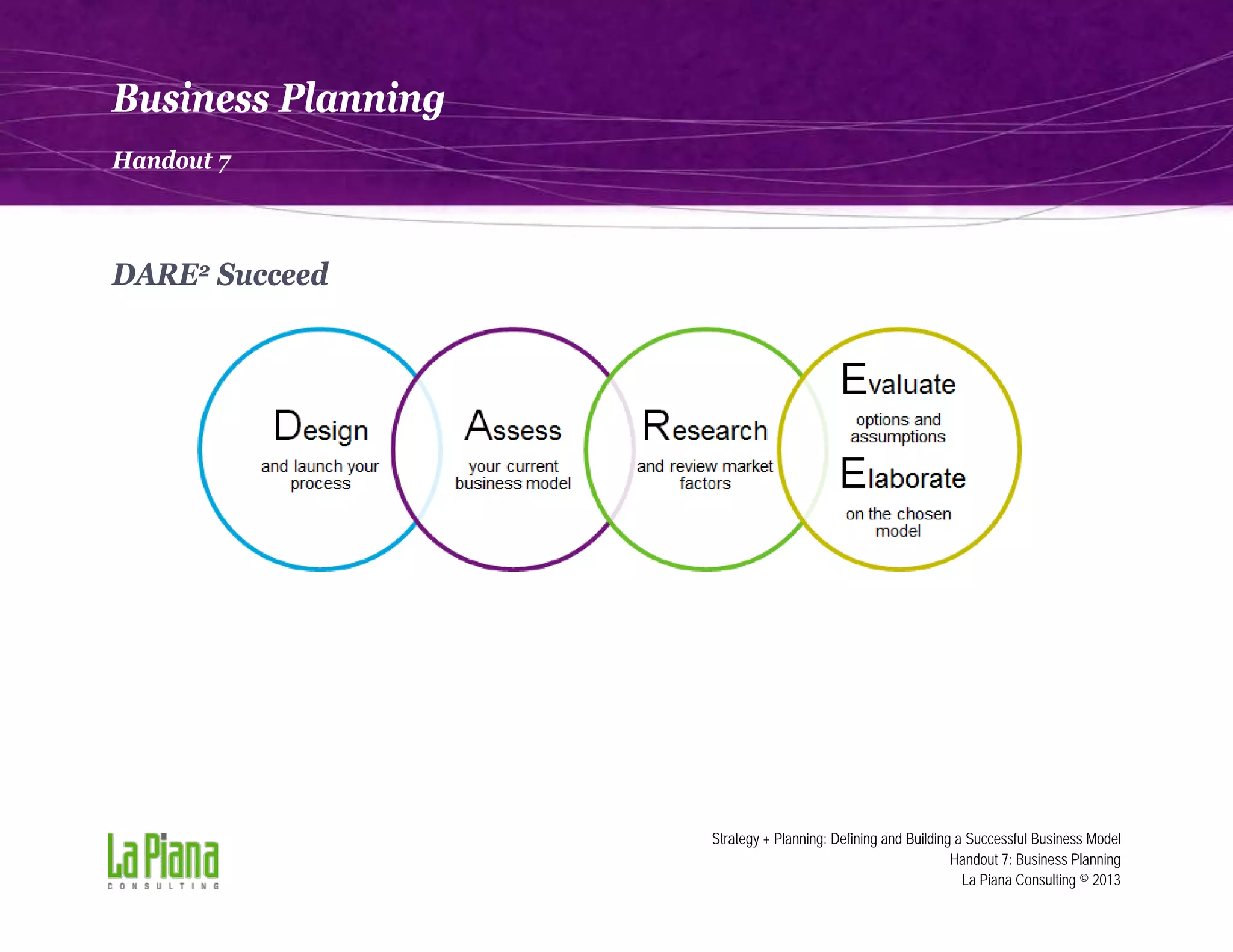
DARE2 Succeed

Strategy + Planning: Defining and Building a Successful Business Model
Handout 7: Business Planning
La Piana Consulting © 2013
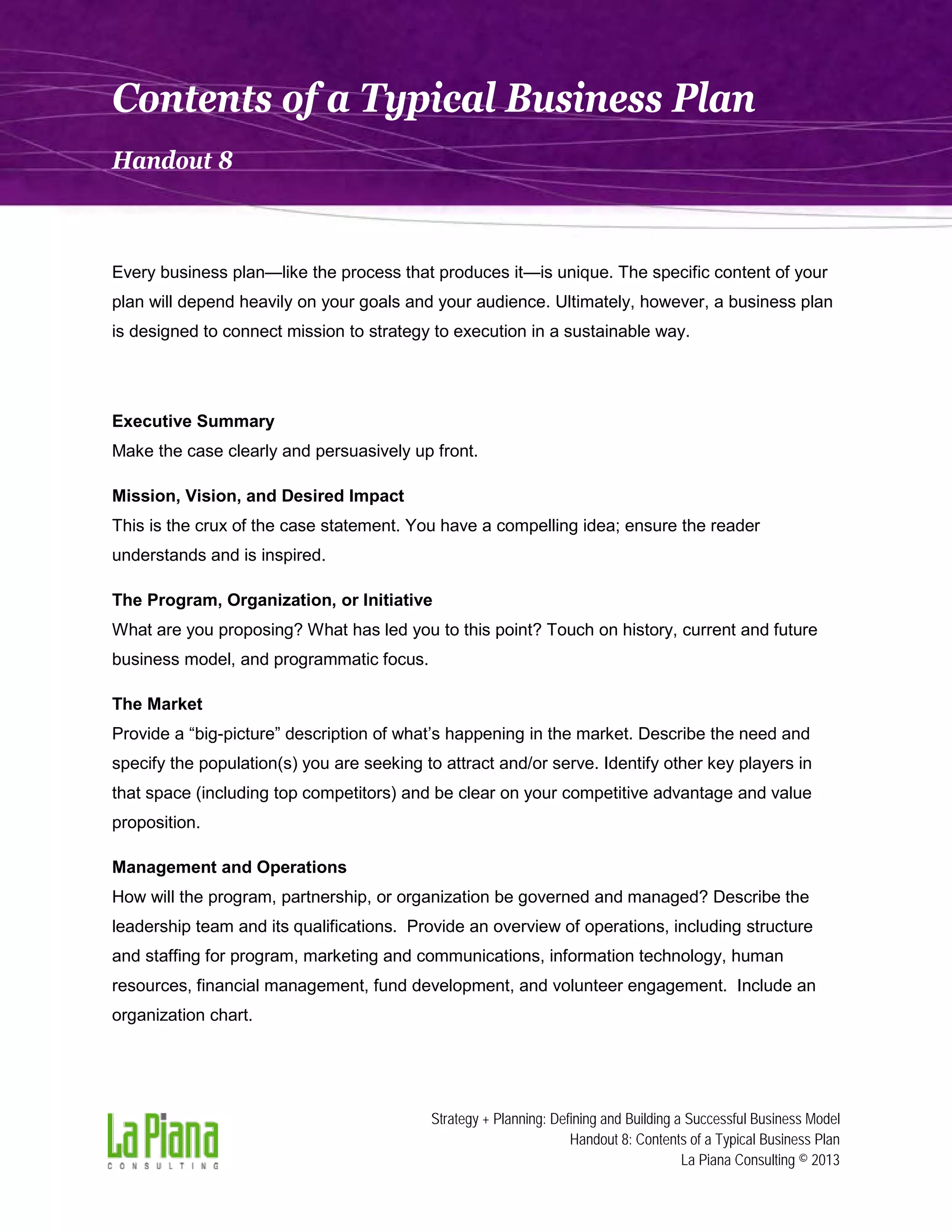
Contents of a Typical Business Plan
Handout 8

Every business plan—like the process that produces it—is unique. The specific content of your
plan will depend heavily on your goals and your audience. Ultimately, however, a business plan
is designed to connect mission to strategy to execution in a sustainable way.

Executive Summary
Make the case clearly and persuasively up front.
Mission, Vision, and Desired Impact
This is the crux of the case statement. You have a compelling idea; ensure the reader
understands and is inspired.
The Program, Organization, or Initiative
What are you proposing? What has led you to this point? Touch on history, current and future
business model, and programmatic focus.
The Market
Provide a “big-picture” description of what’s happening in the market. Describe the need and
specify the population(s) you are seeking to attract and/or serve. Identify other key players in
that space (including top competitors) and be clear on your competitive advantage and value
proposition.
Management and Operations
How will the program, partnership, or organization be governed and managed? Describe the
leadership team and its qualifications. Provide an overview of operations, including structure
and staffing for program, marketing and communications, information technology, human
resources, financial management, fund development, and volunteer engagement. Include an
organization chart.

Strategy + Planning: Defining and Building a Successful Business Model
Handout 8: Contents of a Typical Business Plan
La Piana Consulting © 2013
Contents of a Typical Business Plan
Handout 8

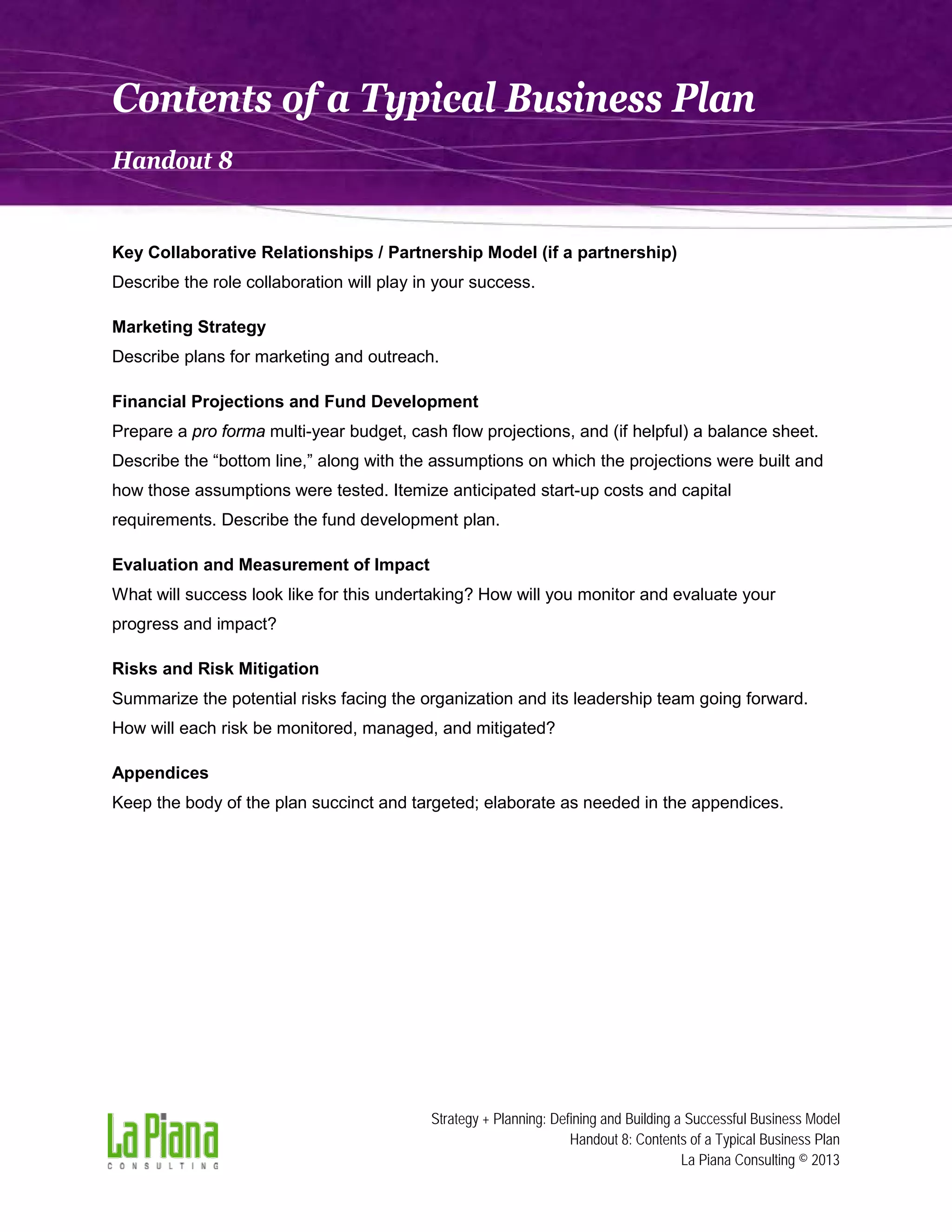
Key Collaborative Relationships / Partnership Model (if a partnership)
Describe the role collaboration will play in your success.
Marketing Strategy
Describe plans for marketing and outreach.
Financial Projections and Fund Development
Prepare a pro forma multi-year budget, cash flow projections, and (if helpful) a balance sheet.
Describe the “bottom line,” along with the assumptions on which the projections were built and
how those assumptions were tested. Itemize anticipated start-up costs and capital
requirements. Describe the fund development plan.
Evaluation and Measurement of Impact
What will success look like for this undertaking? How will you monitor and evaluate your
progress and impact?
Risks and Risk Mitigation
Summarize the potential risks facing the organization and its leadership team going forward.
How will each risk be monitored, managed, and mitigated?
Appendices
Keep the body of the plan succinct and targeted; elaborate as needed in the appendices.

Strategy + Planning: Defining and Building a Successful Business Model
Handout 8: Contents of a Typical Business Plan
La Piana Consulting © 2013

Strategy & planning gowdy1

  • 1.
    What is Strategy? Handout1 Strategy A coordinated set of actions designed to create and sustain a competitive advantage in achieving a nonprofit’s mission. The Strategy Pyramid Organizational Determine mission, vision, trends, competitors, partners, and market position Programmatic Decide on approaches and offer programs and activities to achieve specific outcomes related to the target audiences Operational Administer and oversee systems, policies, and personnel in areas such as finance, human resources, communications, and information technology Strategy + Planning: Defining and Building a Successful Business Model Handout 1: What is Strategy? La Piana Consulting © 2013
  • 2.
    Principles of StrategyFormation Handout 2 1. Strategy is Not Planning 2. Know Thyself 3. Know Thy Market 4. Build on Your Strengths 5. Make Your Criteria Explicit Strategy + Planning: Defining and Building a Successful Business Model Handout 2: Principles of Strategy Formation La Piana Consulting © 2013
  • 3.
    Real-Time Strategic Planning Handout3 Strategy + Planning: Defining and Building a Successful Business Model Handout 3: Real-Time Strategic Planning La Piana Consulting © 2013
  • 4.
    Current Business Model Handout4 Scope Includes Does not include Areas we serve: Areas we do not serve: Customers, Clients, or Audience that is an important focus for us: Customers, Clients, or Audience that we do not focus on serving: Primary program/service areas: Programs/services we do not offer: Current sources of funding and why we pursue these sources: Funding sources we do not have or seek: Where Who What How Strategy + Planning: Defining and Building a Successful Business Model Handout 4: Current Business Model La Piana Consulting © 2013
  • 5.
    Market Awareness Handout 5 Trends Whattrends – or changes in the environment – are likely to impact your organization (or those it serves) in the coming months and years? Identifying and analyzing such trends can help you better identify future opportunities and challenges, how they may affect your organization, and what you will do in reaction to, or—better yet—in anticipation of, each. Consider:  Social trends  Economic trends  Demographic trends  Available funding for your programs/services  Political or policy trends Competitors When forming strategy, it is important to identify what it is that makes your organization unique and strong, and what your organization can do potentially better than any other out there. To do that, you need to identify and understand your competitors, and what makes them unique and strong. Consider:  Direct competitors  Substitutable competitors  Resource competitors Remember that “competitor” is not necessarily a negative term; “competitors” in the nonprofit sector are often organizations you are friendly with, and they can be (and often are) collaborators as well. Strategy + Planning: Defining and Building a Successful Business Model Handout 5: Market Awareness La Piana Consulting © 2013
  • 6.
    Outcomes Handout 6 Strategy Roadmap MarketAwareness Strategic Orientation Tools and Resources Identity Statement Strategy Screen Partner Screen Embedding Strategy Action Plan Strategy + Planning: Defining and Building a Successful Business Model Handout 6: Outcomes La Piana Consulting © 2013
  • 7.
    Business Planning Handout 7 BusinessPlanning Business planning is the process of determining the parameters of an economically and operationally successful undertaking. Strategic vs. Business Planning Strategy + Planning: Defining and Building a Successful Business Model Handout 7: Business Planning La Piana Consulting © 2013
  • 8.
    Business Planning Handout 7 DARE2Succeed Strategy + Planning: Defining and Building a Successful Business Model Handout 7: Business Planning La Piana Consulting © 2013
  • 9.
    Contents of aTypical Business Plan Handout 8 Every business plan—like the process that produces it—is unique. The specific content of your plan will depend heavily on your goals and your audience. Ultimately, however, a business plan is designed to connect mission to strategy to execution in a sustainable way. Executive Summary Make the case clearly and persuasively up front. Mission, Vision, and Desired Impact This is the crux of the case statement. You have a compelling idea; ensure the reader understands and is inspired. The Program, Organization, or Initiative What are you proposing? What has led you to this point? Touch on history, current and future business model, and programmatic focus. The Market Provide a “big-picture” description of what’s happening in the market. Describe the need and specify the population(s) you are seeking to attract and/or serve. Identify other key players in that space (including top competitors) and be clear on your competitive advantage and value proposition. Management and Operations How will the program, partnership, or organization be governed and managed? Describe the leadership team and its qualifications. Provide an overview of operations, including structure and staffing for program, marketing and communications, information technology, human resources, financial management, fund development, and volunteer engagement. Include an organization chart. Strategy + Planning: Defining and Building a Successful Business Model Handout 8: Contents of a Typical Business Plan La Piana Consulting © 2013
  • 10.
    Contents of aTypical Business Plan Handout 8 Key Collaborative Relationships / Partnership Model (if a partnership) Describe the role collaboration will play in your success. Marketing Strategy Describe plans for marketing and outreach. Financial Projections and Fund Development Prepare a pro forma multi-year budget, cash flow projections, and (if helpful) a balance sheet. Describe the “bottom line,” along with the assumptions on which the projections were built and how those assumptions were tested. Itemize anticipated start-up costs and capital requirements. Describe the fund development plan. Evaluation and Measurement of Impact What will success look like for this undertaking? How will you monitor and evaluate your progress and impact? Risks and Risk Mitigation Summarize the potential risks facing the organization and its leadership team going forward. How will each risk be monitored, managed, and mitigated? Appendices Keep the body of the plan succinct and targeted; elaborate as needed in the appendices. Strategy + Planning: Defining and Building a Successful Business Model Handout 8: Contents of a Typical Business Plan La Piana Consulting © 2013