Staging Your NonProfit 
Strategic Planning 
Creative Solutions & Innovations | www.creative-si.com | 404.325.7031
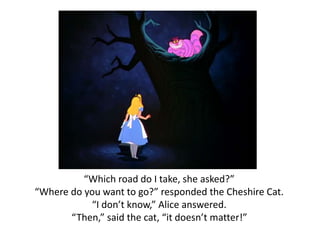
“Which road do I take, she asked?” 
“Where do you want to go?” responded the Cheshire Cat. 
“I don’t know,” Alice answered. 
“Then,” said the cat, “it doesn’t matter!”
“The primary benefit of the planning 
process is the process itself, not a plan.” 
George A Steiner
Strategic Planning answers the 
4 big questions 
1. Where are we? 
2. Where do we want to be in the future? 
3. What part of the status quo do we need to 
change to get us where we want to be in the 
future? 
4. How do we make it happen?
Why do strategic planning? 
 Stimulates ingenuity & new approaches 
 Increases everyone's investment in the organization 
 Develops a common vision 
 Clarifies values & beliefs 
 Anticipates opportunities & obstacles 
 Provides a framework for day-to-day decisions 
 Answers stakeholders questions 
 Develops a blueprint for growth 
 Gives you the ability to say no to new ideas that 
don’t fit (at this time) and to focus on those actions 
and programs that drive you toward your goals
Major Reason for 
Strategic Planning 
There is an expectation from stakeholders that 
well run nonprofits have a 3-5 year strategic 
plan.
4 Main Planning Modalities 
1. A strategic plan is a tool that provides guidance in 
fulfilling a mission with maximum efficiency and 
impact. 
2. An operating plan is a coordinated set of tasks for 
carrying out the goals delineated in a strategic plan. 
3. A business plan focuses on the actions and investment 
necessary to generate income from a specific program 
or service. 
4. A case statement is geared toward marketing and 
fundraising rather than planning. Its purpose is to 
secure contributions and grants.
The Strategic Planning Process 
Phase I 
Write or Revisit Mission Statement 
 Draft a Vision Statement 
Identify Organizational Values
Mission Statement 
Your raison d’être 
A mission statement is a brief expression of 
your organization’s purpose. 
It answers the question – “Why do we exist?” 
and “What, at the most basic level do we do?” 
Summarizes the What, How and Why of your 
organization’s work.
Vision Statement 
A description of your desired future state. 
An organizational vision statement is internally 
focused: It projects the future in terms of the 
program, budget or staff size, answering the question 
“where do we want to be?” 
A societal vision articulates the desired influence of 
your work on your target community or constituency. 
This type of vision statement answers the question 
“What is the impact of our work?
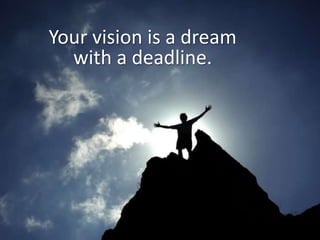
Your vision is a dream 
with a deadline.
Vision vs. Mission 
Your organization's vision is all about what is 
possible, all about that potential. The mission 
is what it takes to make that vision come true. 
Your “mission gap” is the motivator to move 
your organization forward.
Characteristics of strong 
Vision Statements 
Imaginable – conveys a picture of what the future 
will look like. 
Desirable 
Feasible – comprises realistic, attainable goals 
Focused – clear enough to effect decision making. 
Flexible – allows individual initiative 
Communicable – easy to understand & 
communicate
Why is a Vision 
Important? 
Shape your future, or someone else will!
Visioning Exercise 
• Everyone pair up with someone to create 2 
groups. 
• Take a few minutes to share your visions of 
your organization in the future. There is no 
deadline for this exercise. 
• Write down your small group vision. Don’t 
worry about complete sentences or syntax. 
• Trust your emotions – don’t try to be logical!
Values – 
The Talk you want to Walk 
The principles on which your organization are 
built, and that guides its planning, operations 
and programs. It answers the question “What do 
we believe in?” 
Further, if your goal is to create the future of your 
community then you will want to ensure your 
work reflects the values you want to see in your 
community.
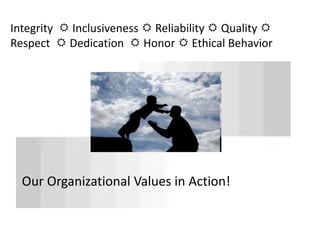
Integrity  Inclusiveness  Reliability  Quality  
Respect  Dedication  Honor  Ethical Behavior 
Our Organizational Values in Action!
The Strategic Planning Process 
Phase II 
Assessing The Environment with SWOT 
Internal Strengths 
[List here] anything you 
can think of that makes 
your organization 
amazing! What can you 
rely on to deliver your 
services? 
External Opportunities 
[List here] any potential 
opportunities to really 
push your npo forward. 
Internal Weaknesses 
[List here] what isn’t quite 
the way it should be yet? 
What is missing? 
External Threats 
List here anything that 
might get in your way of 
achieving your goals.
Opportunities Threats 
INVEST - Clear matches 
of strengths & 
opportunities through 
which you can leverage 
your strengths to take 
advantage of 
opportunities. 
DEFEND- Mobilize your 
resources, either alone 
or through a network, 
to avert a possible 
threat. 
DECIDE - Opportunities 
matched with 
weaknesses require you 
to make a judgment call 
– Invest, Divest, 
Collaborate 
DAMAGE CONTROL - 
Threat matched by 
weaknesses indicate the 
need for damage 
control. 
SWOT 
Interplay 
Strengths 
Weaknesses 
Adapted from 
Comparative 
Advantage to 
Damage Control. 
Kevin Kearns
Why are SWOT & 
SWOT Interplay Important? 
The time and energy you spend on your SWOT 
& SWOT Interplay will be paid back ten-fold 
when you develop your Marketing & 
Communications Plan.
The Strategic Planning Process 
Phase III 
Identify Future Core Priorities 
Create Goals to fulfill Priorities 
Define Strategies to reach Goals
Sample Strategic Goals 
 Program Goals 
 Management Operations Goals 
Building awareness Goals 
Resource development Goals
Strategic Planning 
Elements 
• A goal is a broad primary outcome. 
• A strategy is the approach you take to achieve 
a goal. 
• An objective is a measurable step you take to 
achieve a strategy. 
• A tactic is a tool you use in pursuing an 
objective associated with a strategy.
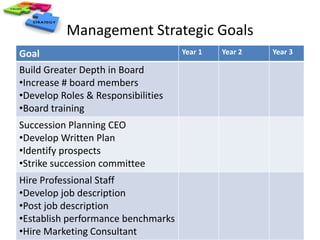
Management Strategic Goals 
Goal Year 1 Year 2 Year 3 
Build Greater Depth in Board 
•Increase # board members 
•Develop Roles & Responsibilities 
•Board training 
Succession Planning CEO 
•Develop Written Plan 
•Identify prospects 
•Strike succession committee 
Hire Professional Staff 
•Develop job description 
•Post job description 
•Establish performance benchmarks 
•Hire Marketing Consultant
Board’s Role in Fundraising: 
A strategic approach 
1) Set Fundraising Targets 
2) Monitor Fundraising Outputs & 
Achievements – regularly review progress 
against plan 
3) Offer Guidance on Priorities – part of 
governance role 
4) Leverage Their Connections 
5) Raise Money for the Organization
Build Awareness – 
Strategic Communications 
• Let your mission ground you & provide focus as 
you develop ways to tell your story. 
• Know the what and why of what you want to 
accomplish. 
• Examine where you are and where you want to 
go. What do you already have going for you? 
What challenges must you overcome? 
• Create overall marketing messages & 
supplementary messages for each market. 
• Stay on message.
Strategic Marketing & 
Communications Plan 
In today’s marketplace, no nonprofit 
organization can be effective without a 
communications plan. The plan provides 
needed structure and information for 
addressing critical issues that affect the 
organization today. It also provides a structure 
for adapting communications initiatives to the 
future.
Don’t forget – Money Follows 
Communication 
“Any group that does not have an effective 
communication program will raise only a 
fraction of the money they would 
otherwise attract.” 
– Fundraising Guru Roger Craver 
Strategic Communications for Nonprofits
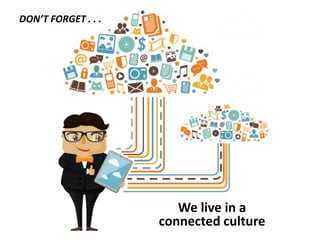
We live in a 
connected culture 
DON’T FORGET . . .
Integrate your mix… 
… don’t die solo in the silo. Integrate your efforts!
Thank you! 
Please contact me with any 
questions, suggestions or 
ideas! 
Creative Solutions & Innovations |deborah@creative-si.com | 
404.325.7031| 404.372-1870

Staging your Nonprofit Strategic Planning

  • 1.
    Staging Your NonProfit Strategic Planning Creative Solutions & Innovations | www.creative-si.com | 404.325.7031
  • 2.
    “Which road doI take, she asked?” “Where do you want to go?” responded the Cheshire Cat. “I don’t know,” Alice answered. “Then,” said the cat, “it doesn’t matter!”
  • 3.
    “The primary benefitof the planning process is the process itself, not a plan.” George A Steiner
  • 4.
    Strategic Planning answersthe 4 big questions 1. Where are we? 2. Where do we want to be in the future? 3. What part of the status quo do we need to change to get us where we want to be in the future? 4. How do we make it happen?
  • 5.
    Why do strategicplanning?  Stimulates ingenuity & new approaches  Increases everyone's investment in the organization  Develops a common vision  Clarifies values & beliefs  Anticipates opportunities & obstacles  Provides a framework for day-to-day decisions  Answers stakeholders questions  Develops a blueprint for growth  Gives you the ability to say no to new ideas that don’t fit (at this time) and to focus on those actions and programs that drive you toward your goals
  • 6.
    Major Reason for Strategic Planning There is an expectation from stakeholders that well run nonprofits have a 3-5 year strategic plan.
  • 7.
    4 Main PlanningModalities 1. A strategic plan is a tool that provides guidance in fulfilling a mission with maximum efficiency and impact. 2. An operating plan is a coordinated set of tasks for carrying out the goals delineated in a strategic plan. 3. A business plan focuses on the actions and investment necessary to generate income from a specific program or service. 4. A case statement is geared toward marketing and fundraising rather than planning. Its purpose is to secure contributions and grants.
  • 9.
    The Strategic PlanningProcess Phase I Write or Revisit Mission Statement  Draft a Vision Statement Identify Organizational Values
  • 10.
    Mission Statement Yourraison d’être A mission statement is a brief expression of your organization’s purpose. It answers the question – “Why do we exist?” and “What, at the most basic level do we do?” Summarizes the What, How and Why of your organization’s work.
  • 11.
    Vision Statement Adescription of your desired future state. An organizational vision statement is internally focused: It projects the future in terms of the program, budget or staff size, answering the question “where do we want to be?” A societal vision articulates the desired influence of your work on your target community or constituency. This type of vision statement answers the question “What is the impact of our work?
  • 12.
    Your vision isa dream with a deadline.
  • 13.
    Vision vs. Mission Your organization's vision is all about what is possible, all about that potential. The mission is what it takes to make that vision come true. Your “mission gap” is the motivator to move your organization forward.
  • 14.
    Characteristics of strong Vision Statements Imaginable – conveys a picture of what the future will look like. Desirable Feasible – comprises realistic, attainable goals Focused – clear enough to effect decision making. Flexible – allows individual initiative Communicable – easy to understand & communicate
  • 15.
    Why is aVision Important? Shape your future, or someone else will!
  • 16.
    Visioning Exercise •Everyone pair up with someone to create 2 groups. • Take a few minutes to share your visions of your organization in the future. There is no deadline for this exercise. • Write down your small group vision. Don’t worry about complete sentences or syntax. • Trust your emotions – don’t try to be logical!
  • 17.
    Values – TheTalk you want to Walk The principles on which your organization are built, and that guides its planning, operations and programs. It answers the question “What do we believe in?” Further, if your goal is to create the future of your community then you will want to ensure your work reflects the values you want to see in your community.
  • 18.
    Integrity  Inclusiveness Reliability  Quality  Respect  Dedication  Honor  Ethical Behavior Our Organizational Values in Action!
  • 19.
    The Strategic PlanningProcess Phase II Assessing The Environment with SWOT Internal Strengths [List here] anything you can think of that makes your organization amazing! What can you rely on to deliver your services? External Opportunities [List here] any potential opportunities to really push your npo forward. Internal Weaknesses [List here] what isn’t quite the way it should be yet? What is missing? External Threats List here anything that might get in your way of achieving your goals.
  • 20.
    Opportunities Threats INVEST- Clear matches of strengths & opportunities through which you can leverage your strengths to take advantage of opportunities. DEFEND- Mobilize your resources, either alone or through a network, to avert a possible threat. DECIDE - Opportunities matched with weaknesses require you to make a judgment call – Invest, Divest, Collaborate DAMAGE CONTROL - Threat matched by weaknesses indicate the need for damage control. SWOT Interplay Strengths Weaknesses Adapted from Comparative Advantage to Damage Control. Kevin Kearns
  • 21.
    Why are SWOT& SWOT Interplay Important? The time and energy you spend on your SWOT & SWOT Interplay will be paid back ten-fold when you develop your Marketing & Communications Plan.
  • 22.
    The Strategic PlanningProcess Phase III Identify Future Core Priorities Create Goals to fulfill Priorities Define Strategies to reach Goals
  • 23.
    Sample Strategic Goals  Program Goals  Management Operations Goals Building awareness Goals Resource development Goals
  • 24.
    Strategic Planning Elements • A goal is a broad primary outcome. • A strategy is the approach you take to achieve a goal. • An objective is a measurable step you take to achieve a strategy. • A tactic is a tool you use in pursuing an objective associated with a strategy.
  • 26.
    Management Strategic Goals Goal Year 1 Year 2 Year 3 Build Greater Depth in Board •Increase # board members •Develop Roles & Responsibilities •Board training Succession Planning CEO •Develop Written Plan •Identify prospects •Strike succession committee Hire Professional Staff •Develop job description •Post job description •Establish performance benchmarks •Hire Marketing Consultant
  • 27.
    Board’s Role inFundraising: A strategic approach 1) Set Fundraising Targets 2) Monitor Fundraising Outputs & Achievements – regularly review progress against plan 3) Offer Guidance on Priorities – part of governance role 4) Leverage Their Connections 5) Raise Money for the Organization
  • 28.
    Build Awareness – Strategic Communications • Let your mission ground you & provide focus as you develop ways to tell your story. • Know the what and why of what you want to accomplish. • Examine where you are and where you want to go. What do you already have going for you? What challenges must you overcome? • Create overall marketing messages & supplementary messages for each market. • Stay on message.
  • 29.
    Strategic Marketing & Communications Plan In today’s marketplace, no nonprofit organization can be effective without a communications plan. The plan provides needed structure and information for addressing critical issues that affect the organization today. It also provides a structure for adapting communications initiatives to the future.
  • 30.
    Don’t forget –Money Follows Communication “Any group that does not have an effective communication program will raise only a fraction of the money they would otherwise attract.” – Fundraising Guru Roger Craver Strategic Communications for Nonprofits
  • 31.
    We live ina connected culture DON’T FORGET . . .
  • 32.
    Integrate your mix… … don’t die solo in the silo. Integrate your efforts!
  • 33.
    Thank you! Pleasecontact me with any questions, suggestions or ideas! Creative Solutions & Innovations |deborah@creative-si.com | 404.325.7031| 404.372-1870

Editor's Notes

  • #33 …don’t die solo in the silo.