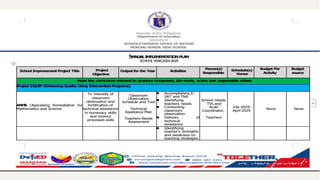
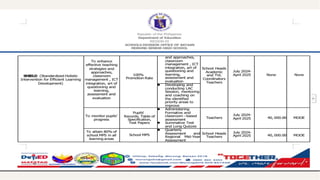
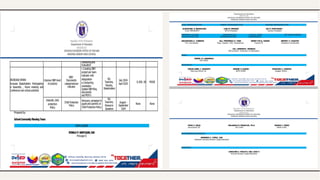
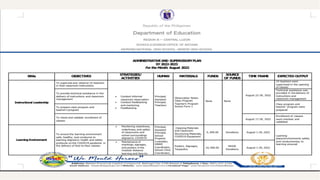
Will you give
up if your plan
fails like this
again and
again ?
What makes
our plan
achievable
and realistic?
MAIN CAMPUS
GRADUATE SCHOOL
City of Balanga 2100 Bataan
Telefax: (6347) 2376658
www.bpsu.edu.ph
gs_mc@bpsu.edu.ph
BATAAN PENINSULA STATE
UNIVERSITY
From Vision to Action:
Developing Strategic, Tactical, and
Operational Plans for Success
LYDAV.BANTUGAN,MAED,
MBA EdDStudent
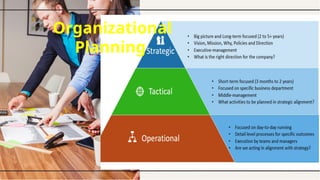
Organizational
Planning
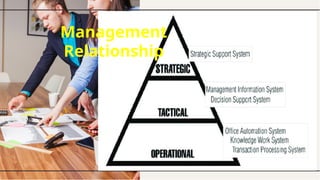
Management
Relationship
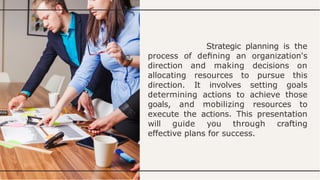
Strategic planning is the
process of defining an organization's
direction and making decisions on
allocating resources to pursue this
direction. It involves setting goals
determining actions to achieve those
goals, and mobilizing resources to
execute the actions. This presentation
will guide you through crafting
effective plans for success.
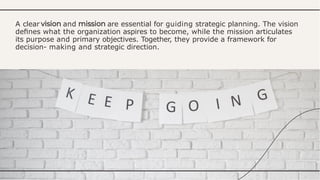
A clear and are essential for guiding strategic planning. The vision
defines what the organization aspires to become, while the mission articulates
its purpose and primary objectives. Together, they provide a framework for
decision- making and strategic direction.
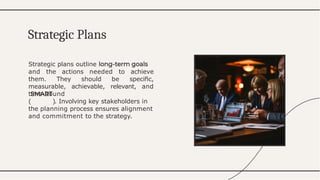
Strategic plans outline
and the actions needed to achieve
them. They should be specific,
measurable, achievable, relevant, and
time-bound
( ). Involving key stakeholders in
the planning process ensures alignment
and commitment to the strategy.
Strategic Plans
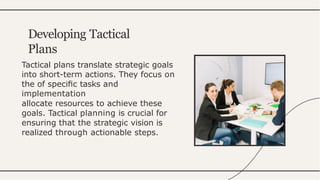
Tactical plans translate strategic goals
into short-term actions. They focus on
the of specific tasks and
implementation
allocate resources to achieve these
goals. Tactical planning is crucial for
ensuring that the strategic vision is
realized through actionable steps.
Developing Tactical
Plans
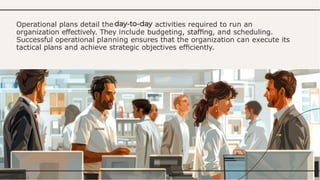
Operational plans detail the activities required to run an
organization effectively. They include budgeting, staffing, and scheduling.
Successful operational planning ensures that the organization can execute its
tactical plans and achieve strategic objectives efficiently.
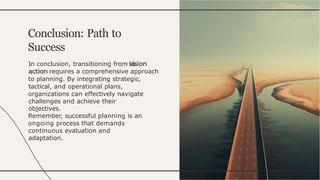
In conclusion, transitioning from to
requires a comprehensive approach
to planning. By integrating strategic,
tactical, and operational plans,
organizations can effectively navigate
challenges and achieve their
objectives.
Remember, successful planning is an
ongoing process that demands
continuous evaluation and
adaptation.
Conclusion: Path to
Success

Thanks!

Strategic, Tactical & Operational Plan.pptx

  • 1.
    Will you give upif your plan fails like this again and again ?
  • 3.
  • 4.
    MAIN CAMPUS GRADUATE SCHOOL Cityof Balanga 2100 Bataan Telefax: (6347) 2376658 www.bpsu.edu.ph gs_mc@bpsu.edu.ph BATAAN PENINSULA STATE UNIVERSITY From Vision to Action: Developing Strategic, Tactical, and Operational Plans for Success LYDAV.BANTUGAN,MAED, MBA EdDStudent
  • 5.
  • 6.
  • 16.
    Strategic planning isthe process of defining an organization's direction and making decisions on allocating resources to pursue this direction. It involves setting goals determining actions to achieve those goals, and mobilizing resources to execute the actions. This presentation will guide you through crafting effective plans for success.
  • 17.
    A clear andare essential for guiding strategic planning. The vision defines what the organization aspires to become, while the mission articulates its purpose and primary objectives. Together, they provide a framework for decision- making and strategic direction.
  • 18.
    Strategic plans outline andthe actions needed to achieve them. They should be specific, measurable, achievable, relevant, and time-bound ( ). Involving key stakeholders in the planning process ensures alignment and commitment to the strategy. Strategic Plans
  • 19.
    Tactical plans translatestrategic goals into short-term actions. They focus on the of specific tasks and implementation allocate resources to achieve these goals. Tactical planning is crucial for ensuring that the strategic vision is realized through actionable steps. Developing Tactical Plans
  • 20.
    Operational plans detailthe activities required to run an organization effectively. They include budgeting, staffing, and scheduling. Successful operational planning ensures that the organization can execute its tactical plans and achieve strategic objectives efficiently.
  • 21.
    In conclusion, transitioningfrom to requires a comprehensive approach to planning. By integrating strategic, tactical, and operational plans, organizations can effectively navigate challenges and achieve their objectives. Remember, successful planning is an ongoing process that demands continuous evaluation and adaptation. Conclusion: Path to Success

  • 22.