




The document discusses goals, objectives, and organizational capabilities for strategic planning. It defines goals as qualitative and objectives as quantitative and specific. Objectives provide the basis for strategic decision making and performance appraisal. Organizational capabilities include financial, marketing, operations, personnel, information management, and general management factors. Methods for assessing capabilities include internal analysis using the VRIO framework, value chain analysis, quantitative analysis like ratios and benchmarks, and comprehensive analysis using tools like the balanced scorecard.
Explains the distinction between goals (future aspirations) and objectives (specific means). Highlights the role of objectives in strategic decision-making.
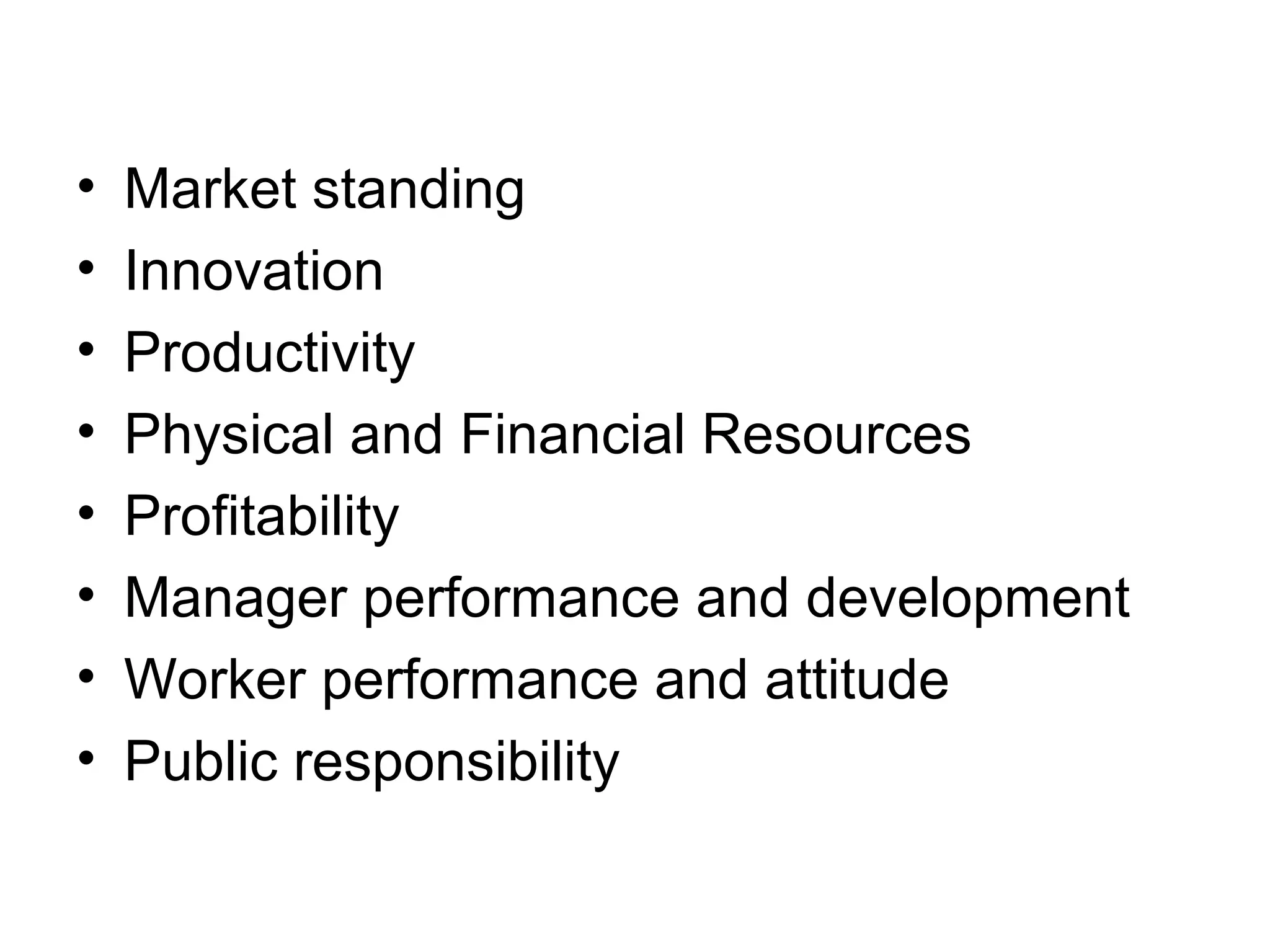
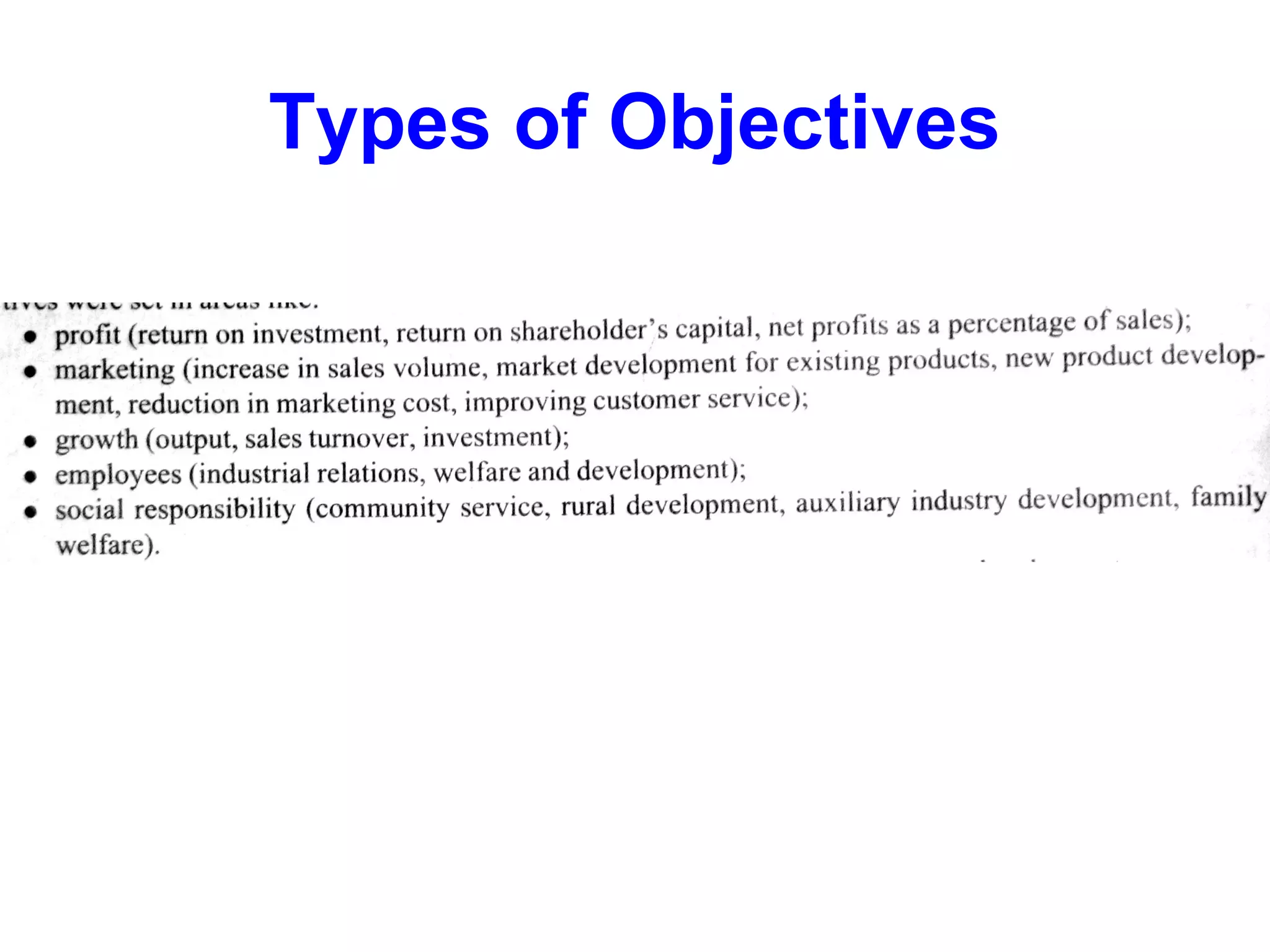
Discusses key areas for setting objectives: market standing, innovation, productivity, and resource management. Outlines environmental and internal factors influencing objectives.
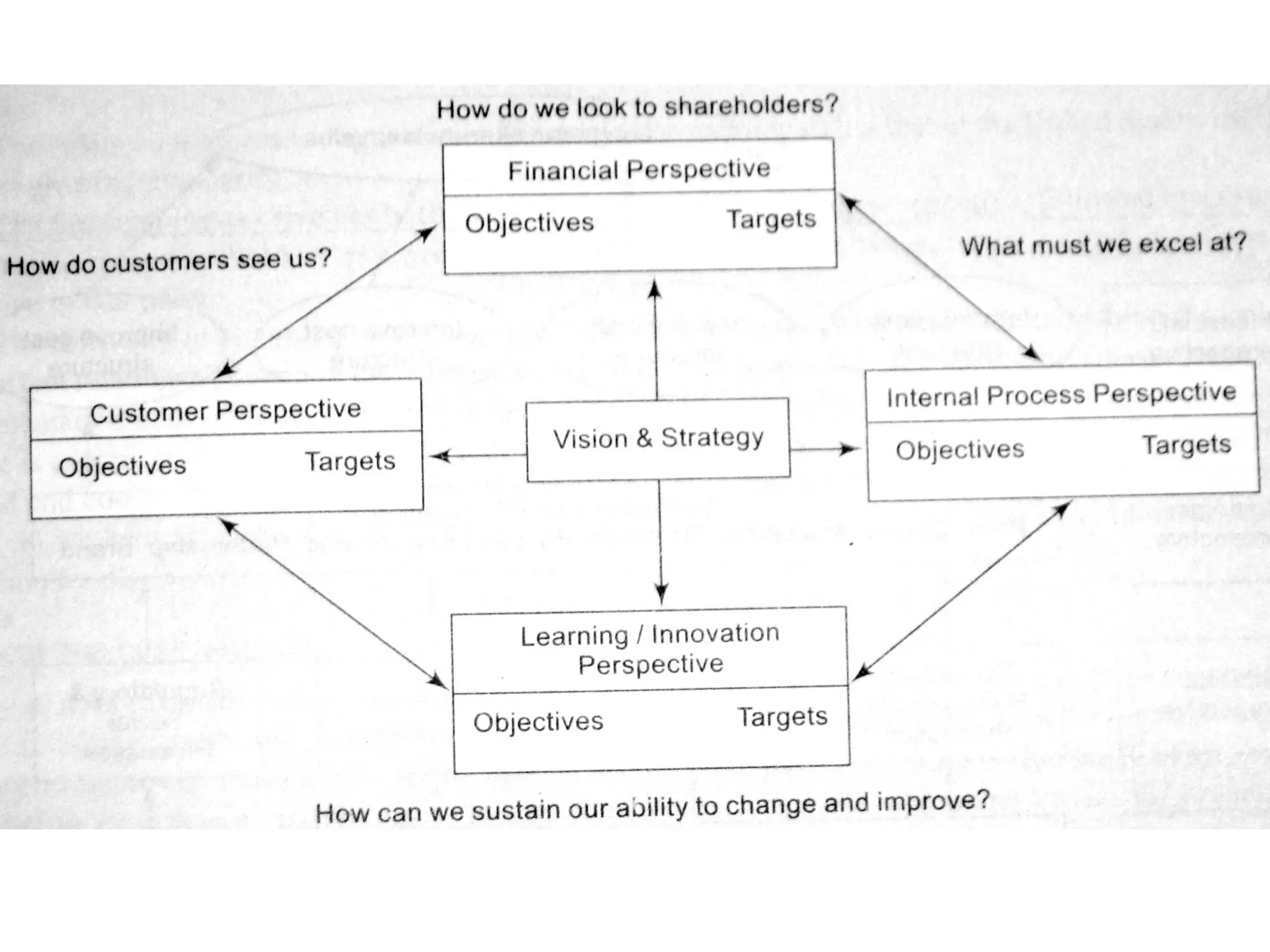
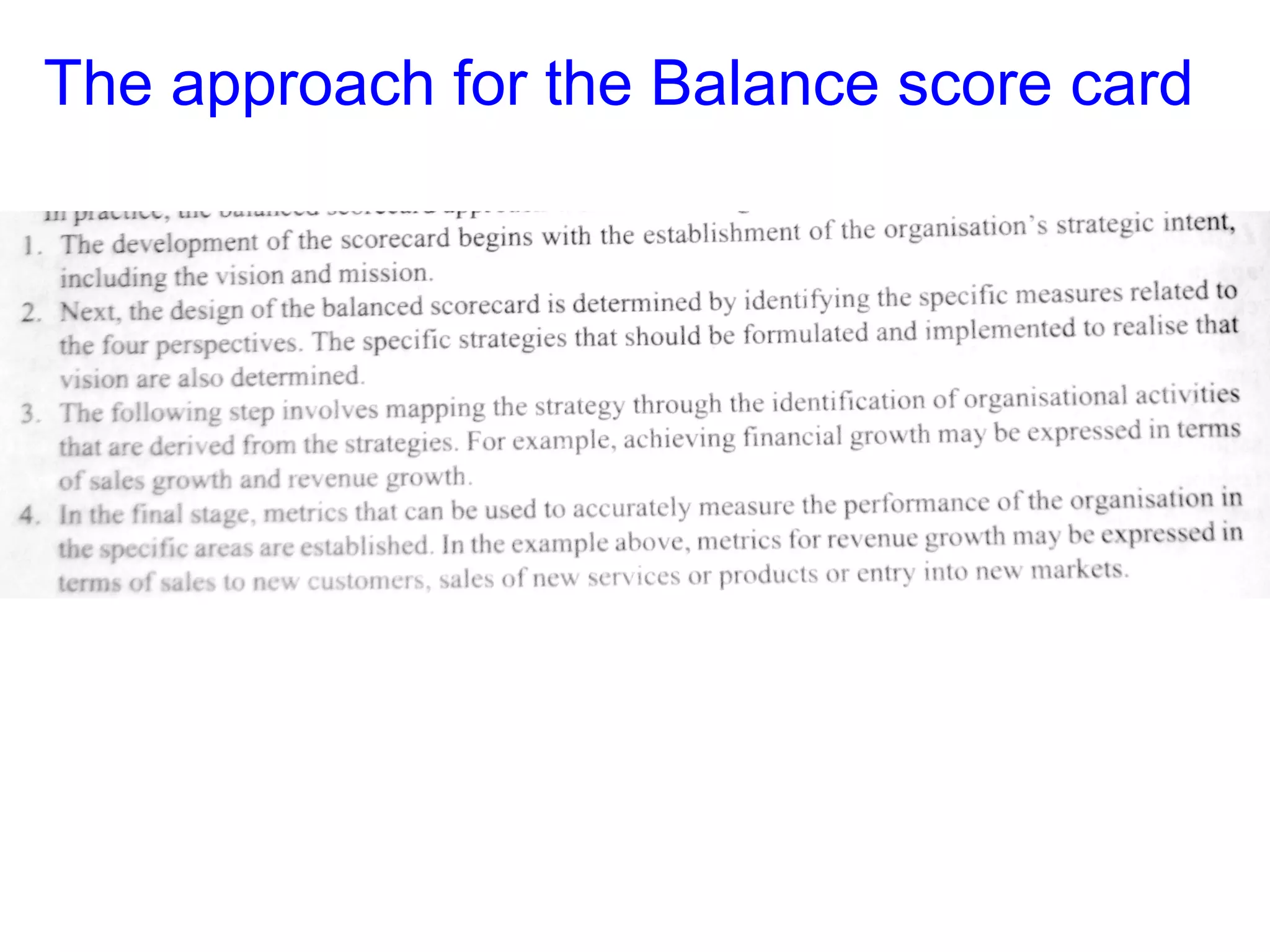
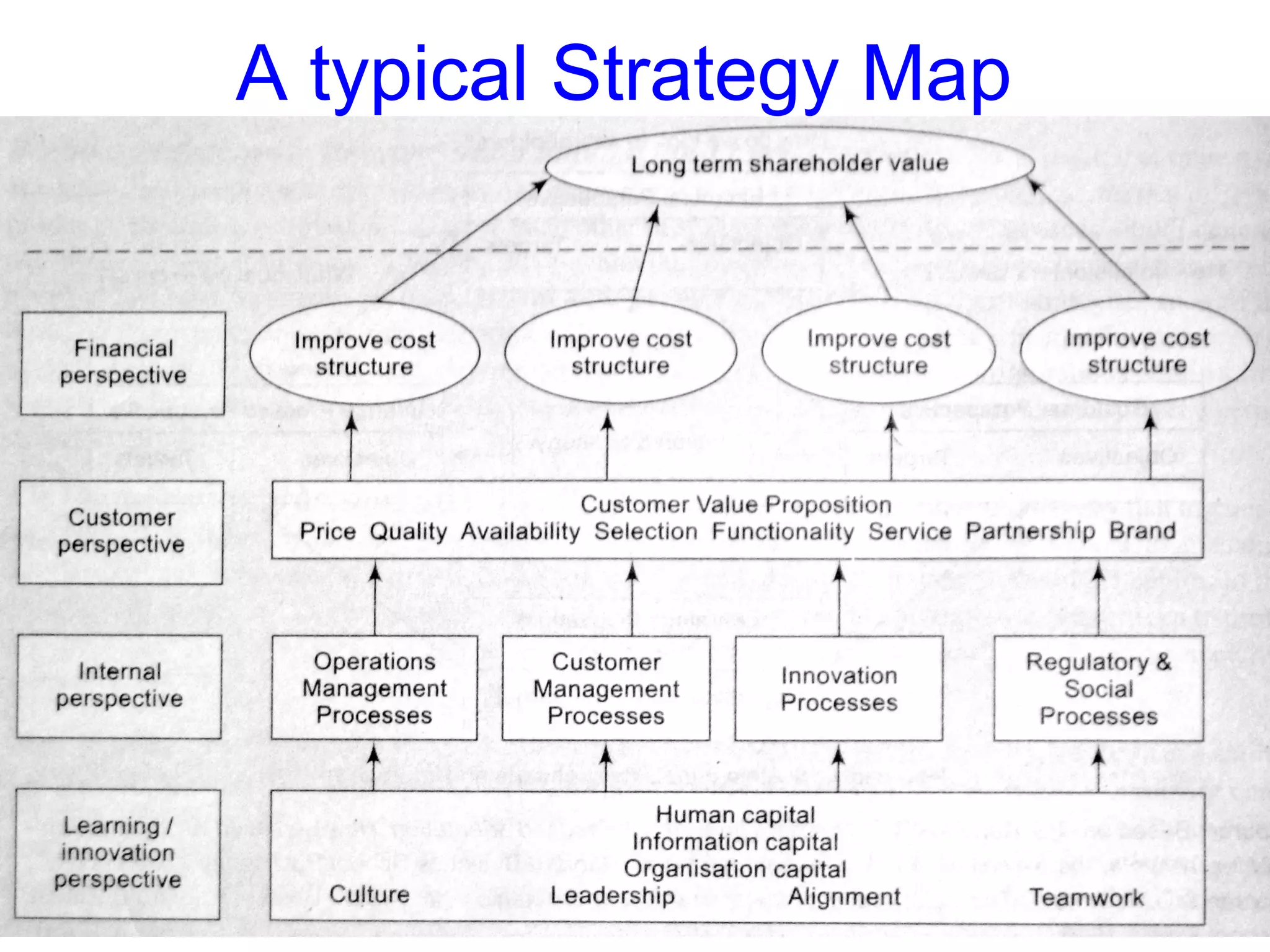
Introduces the Balanced Scorecard as a strategic planning tool and the approach to building a strategy map.
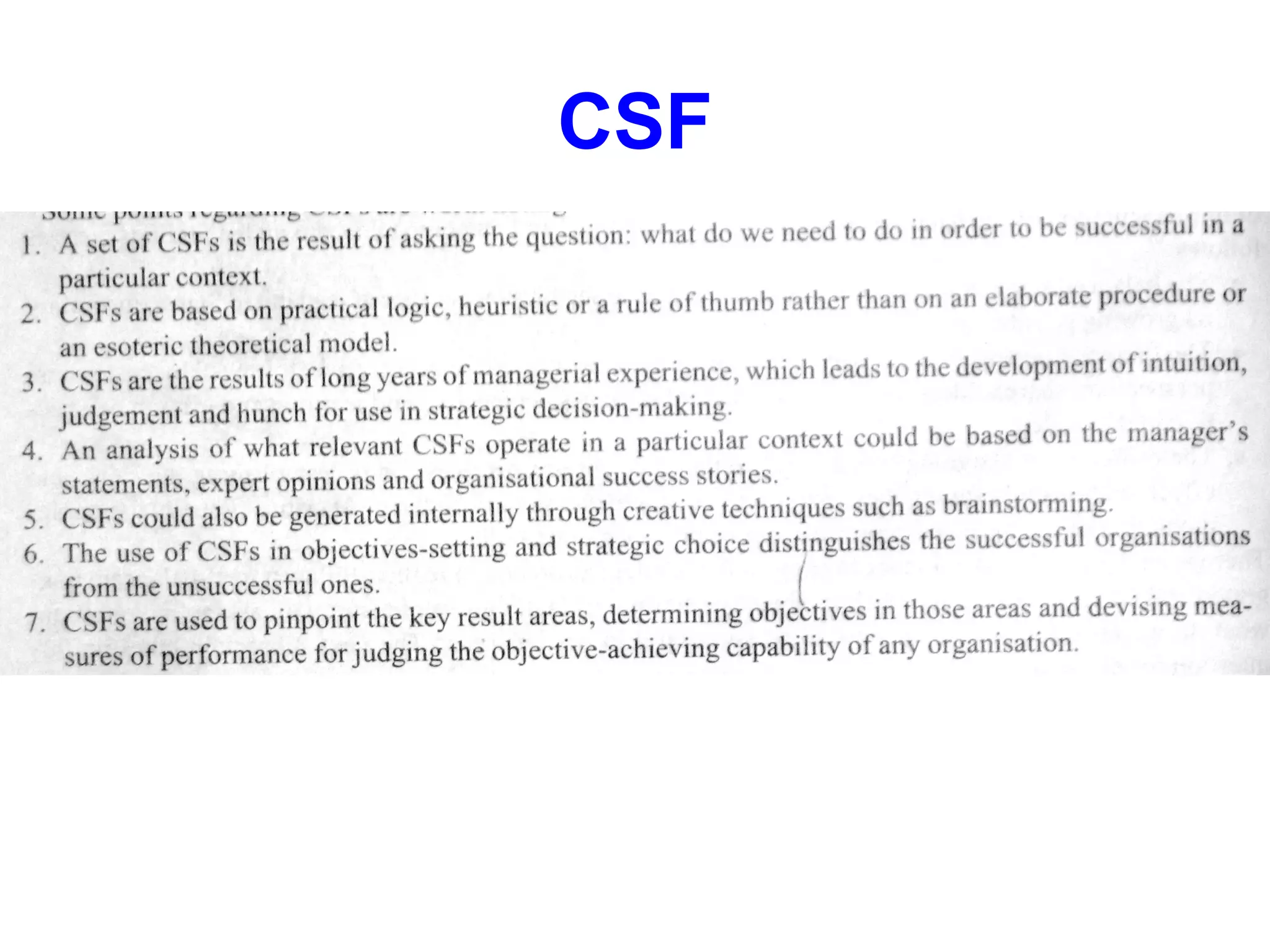
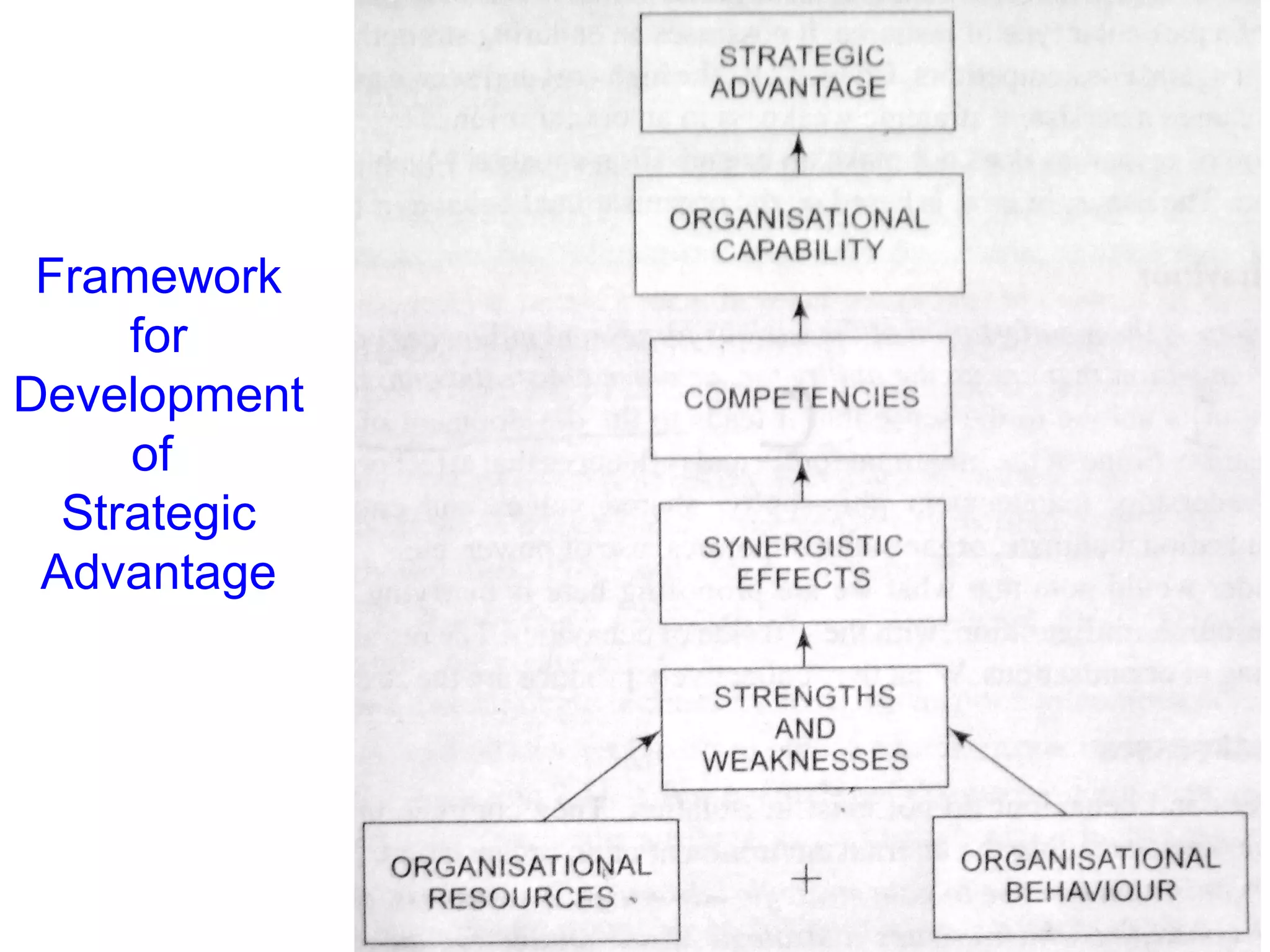
Explains critical success factors (CSFs) necessary for achieving objectives and explores the framework for organizational appraisal.
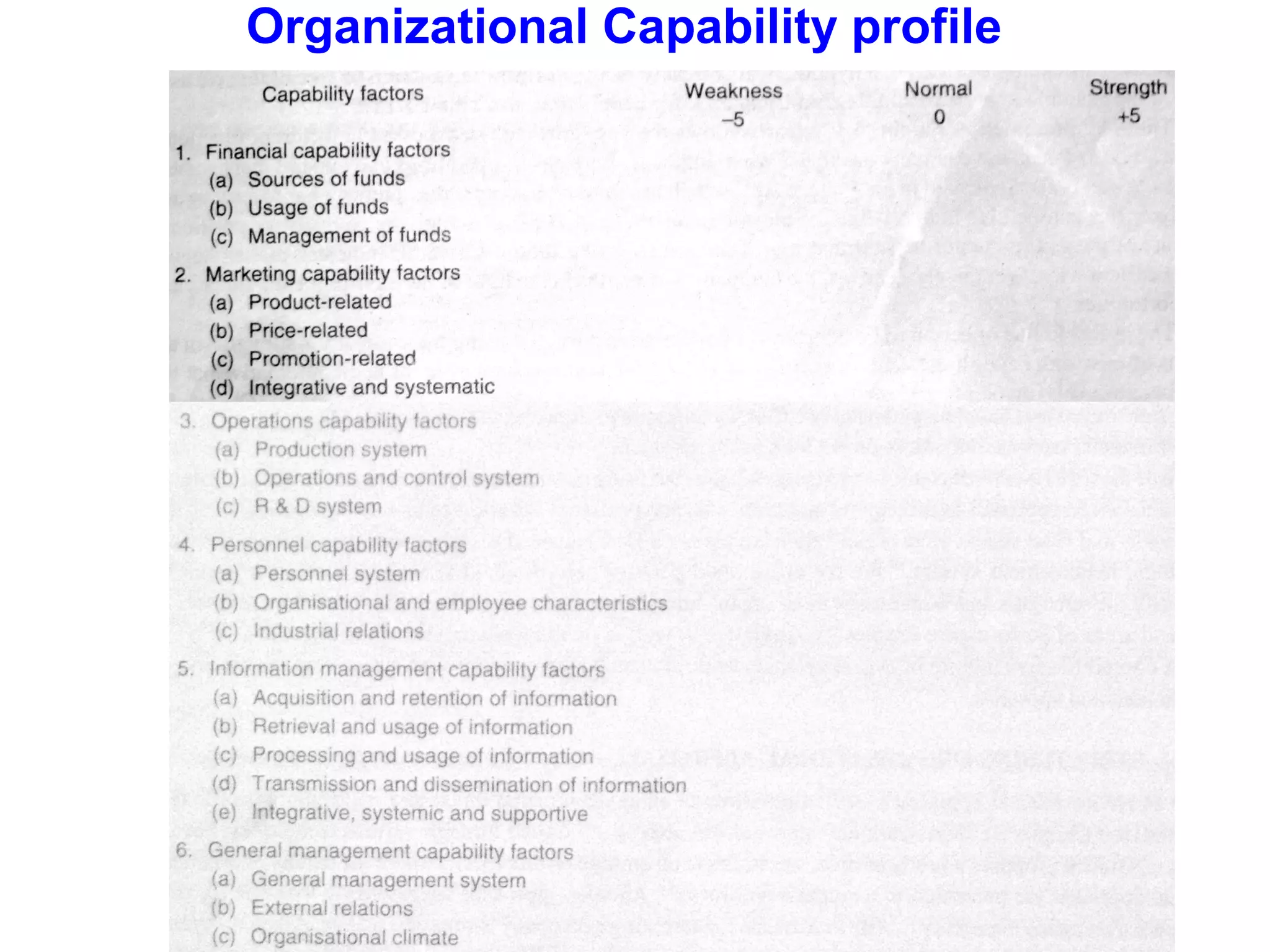
Focuses on organizational capability factors crucial for strategy formulation, highlighting strengths and weaknesses across functional areas.
Details financial capability factors, including sources, usage, and management of funds essential for strategic planning.
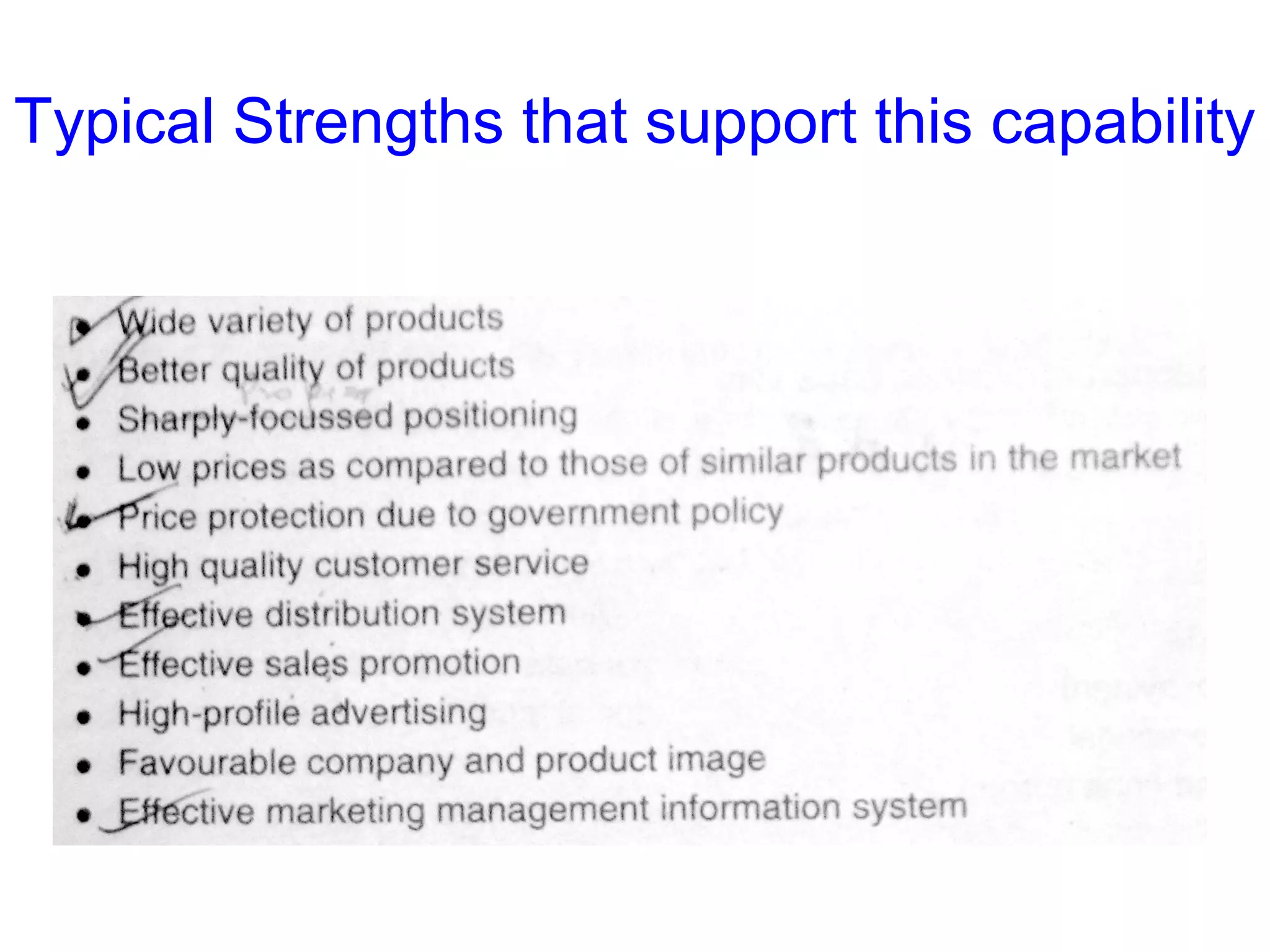
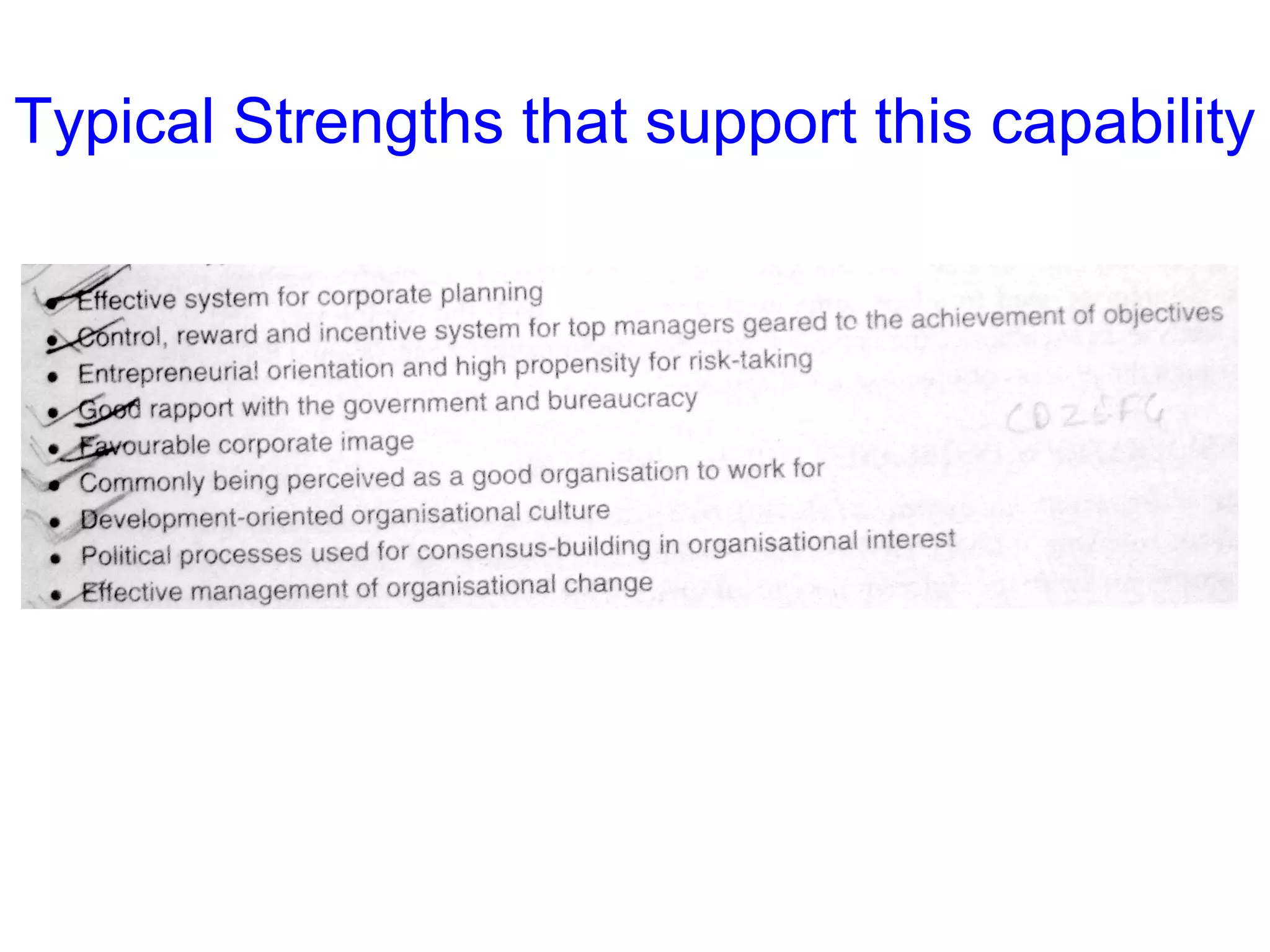
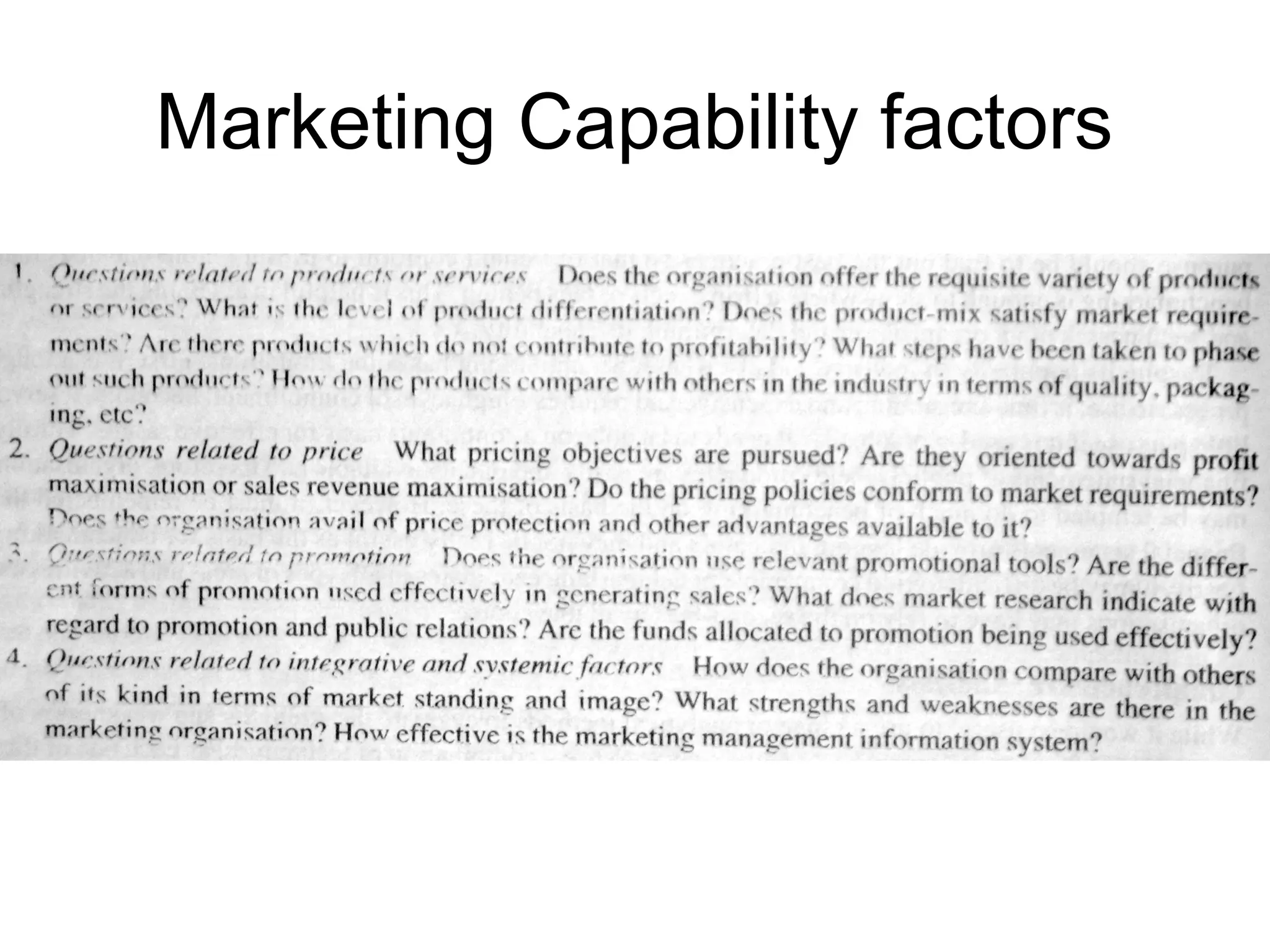
Examines marketing capabilities covering product, pricing, place, and promotion strategies with typical strengths.
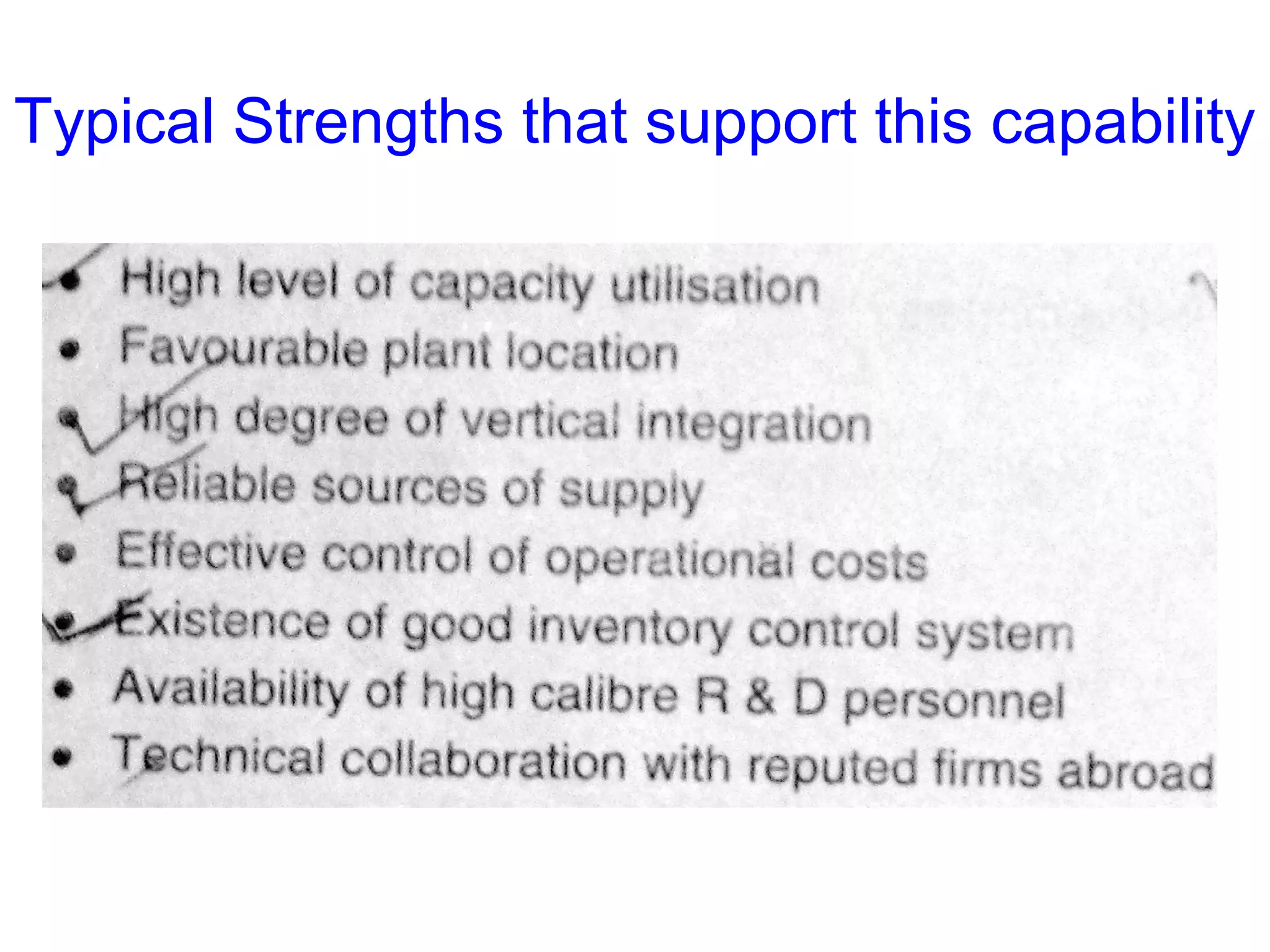
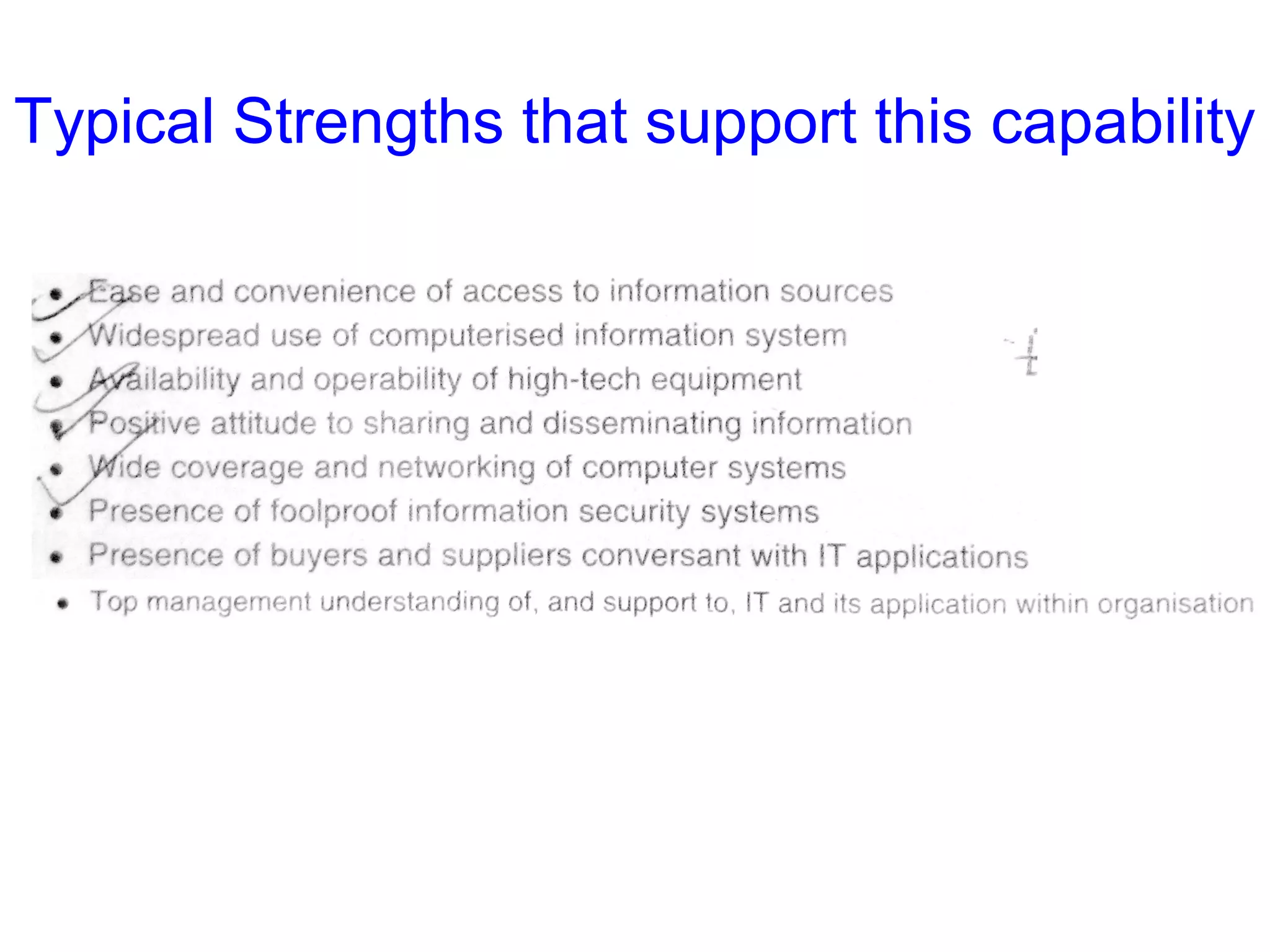
Overviews operational capabilities, including production systems, planning, and R&D with focus on strengths supporting operations.
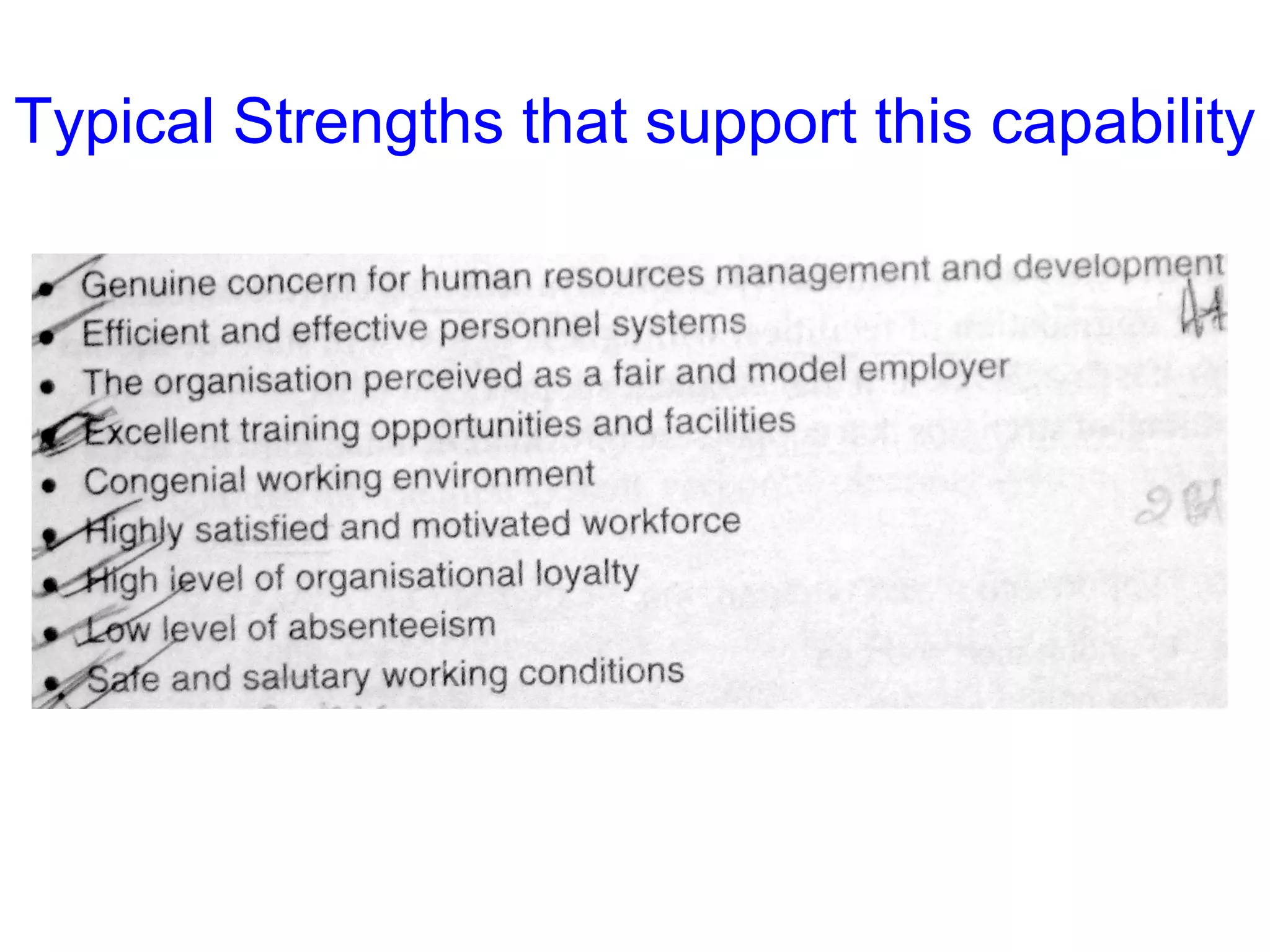
Discusses elements of personnel capability, including manpower planning, organizational characteristics, and industrial relations.
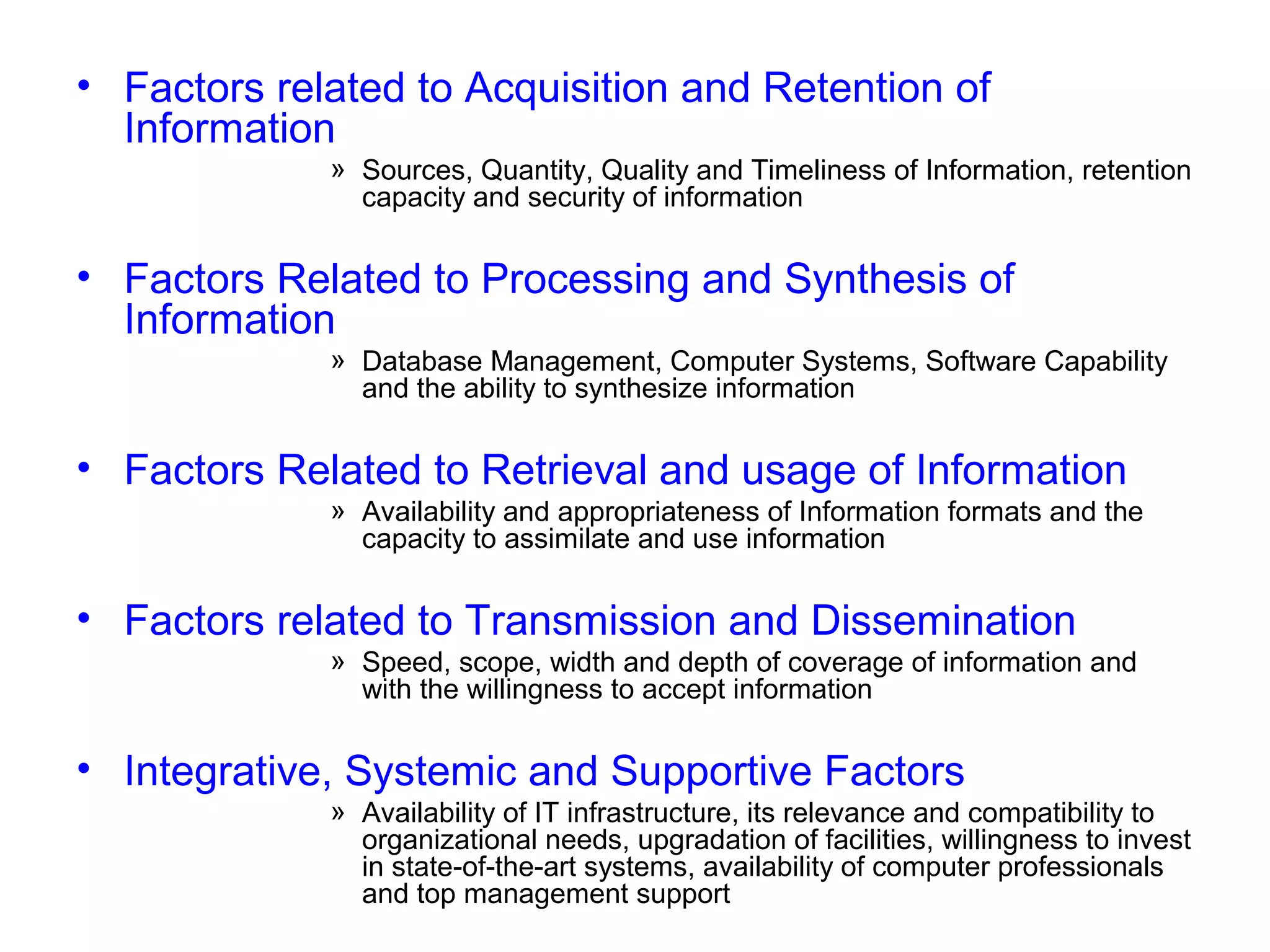
Outlines factors involved in information management including acquisition, processing, retrieval, and dissemination of information.
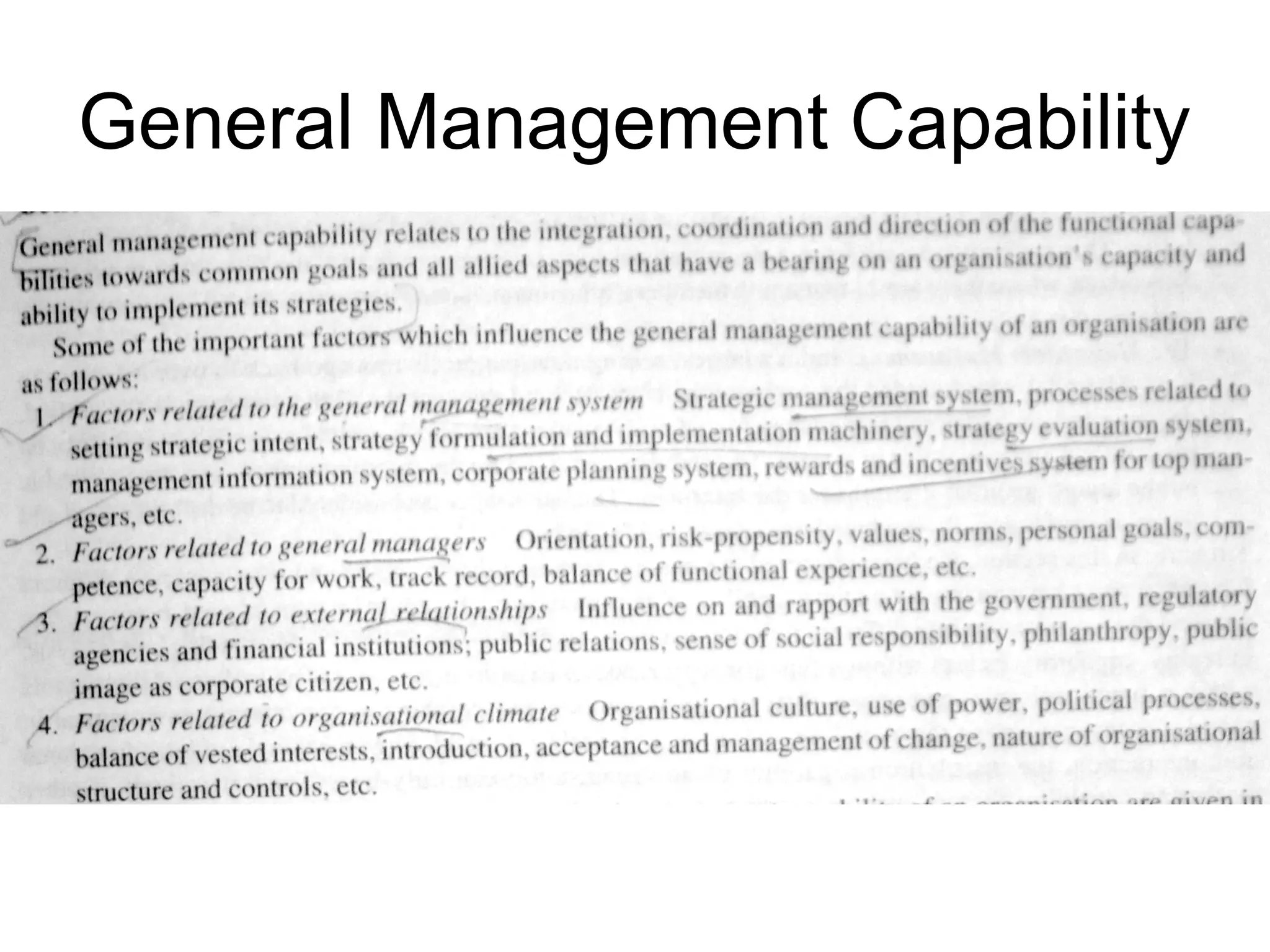
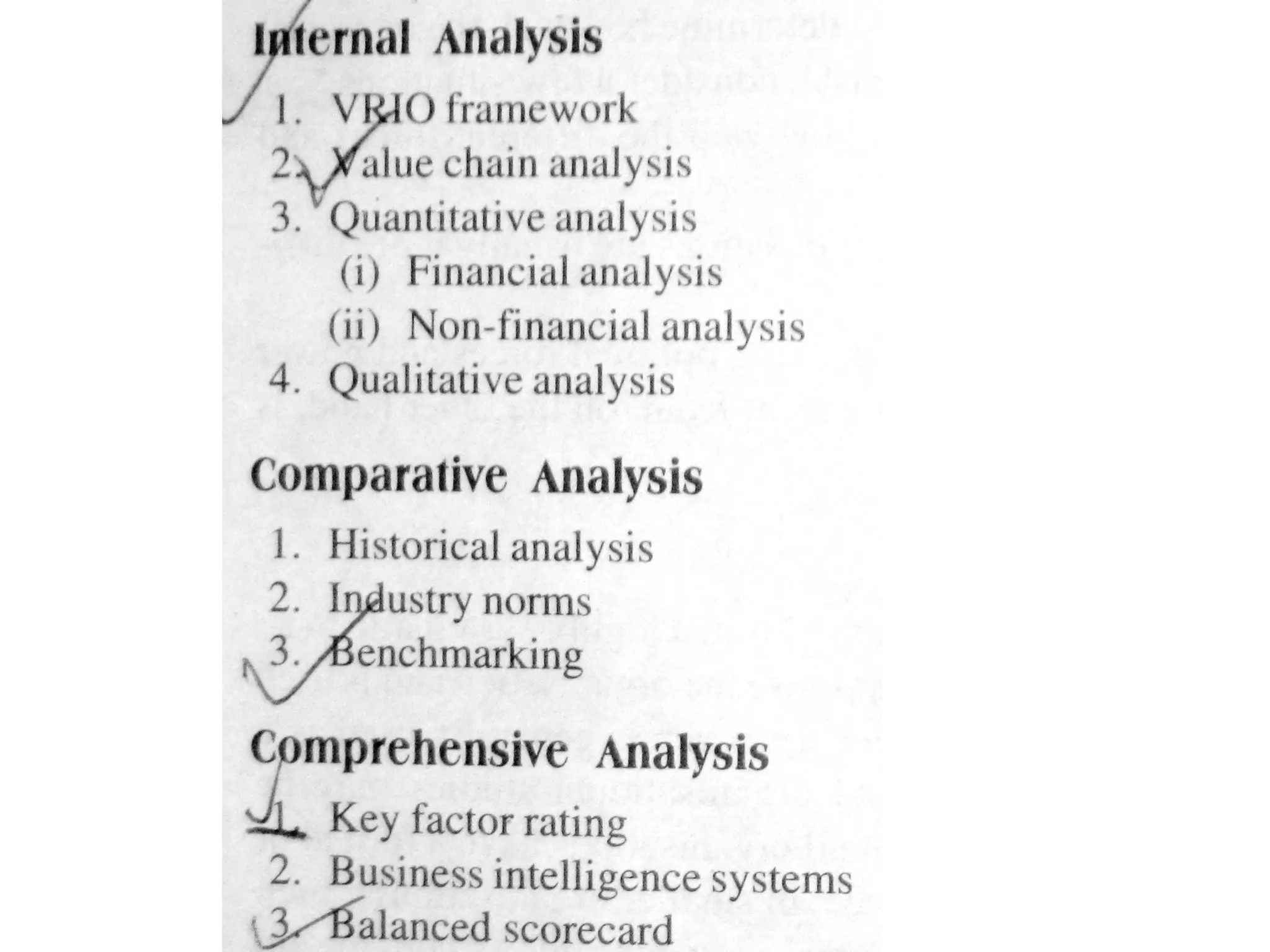
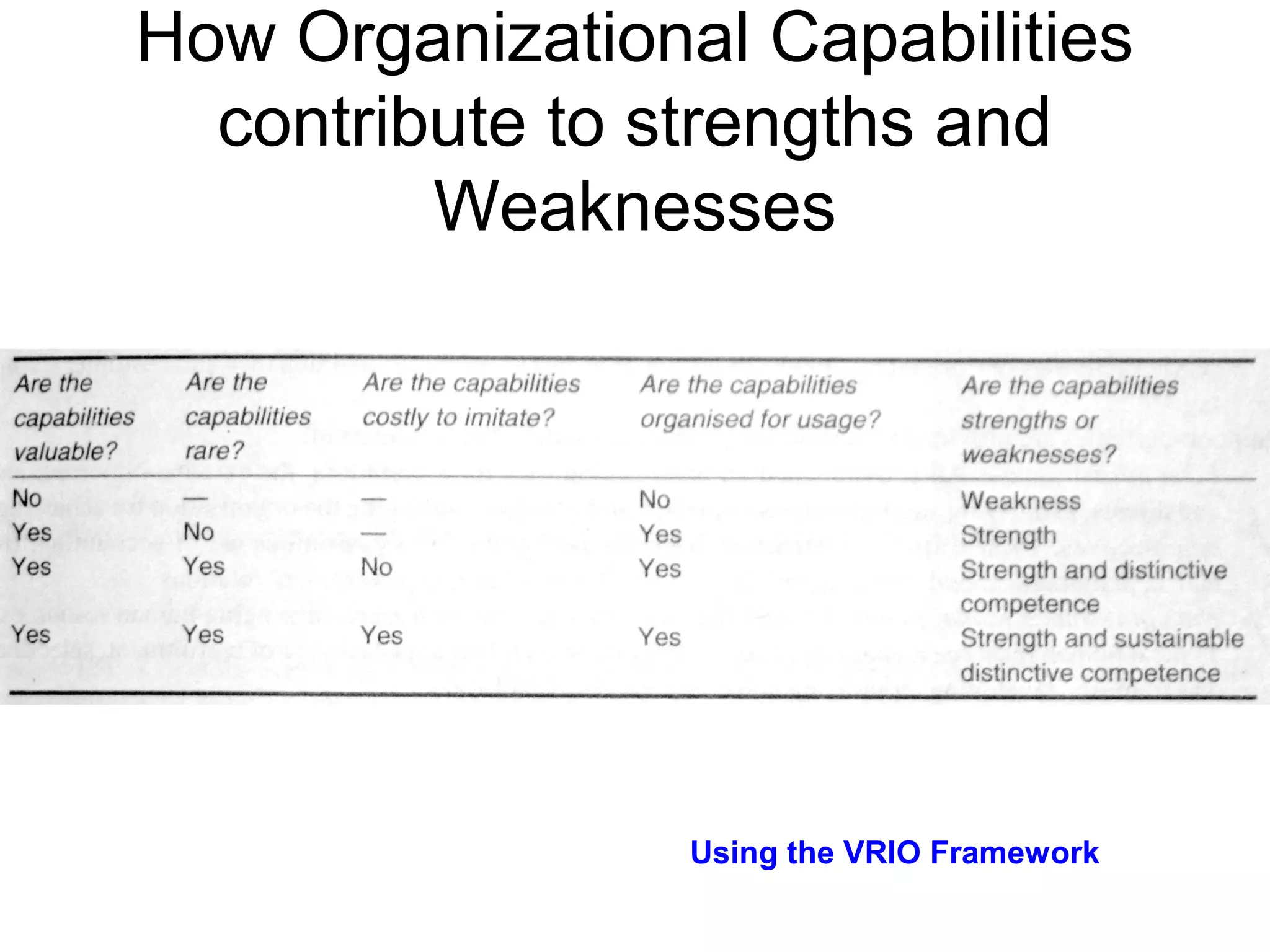
Focuses on general management capabilities and various methods for organizational appraisal including internal analysis.
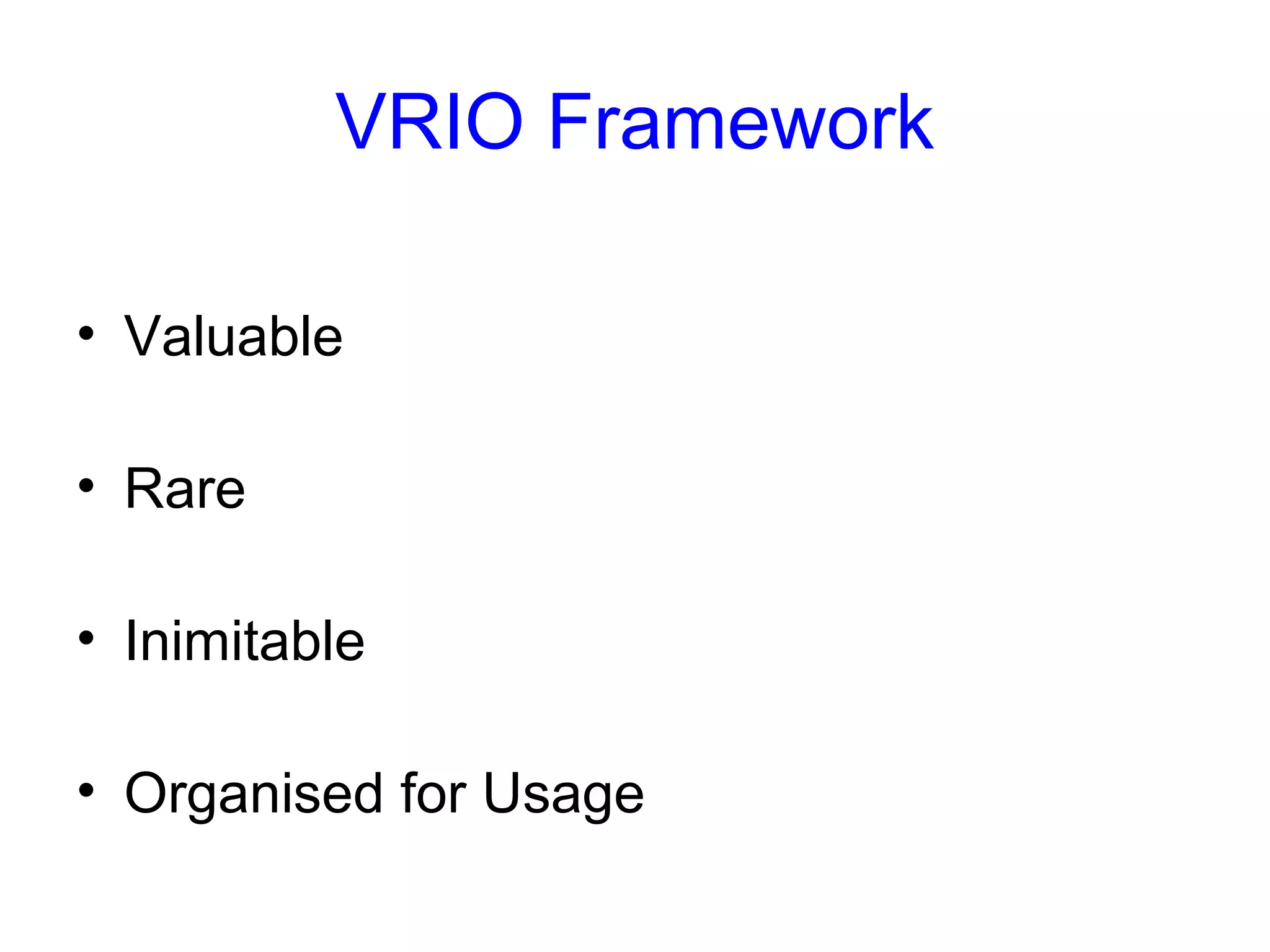
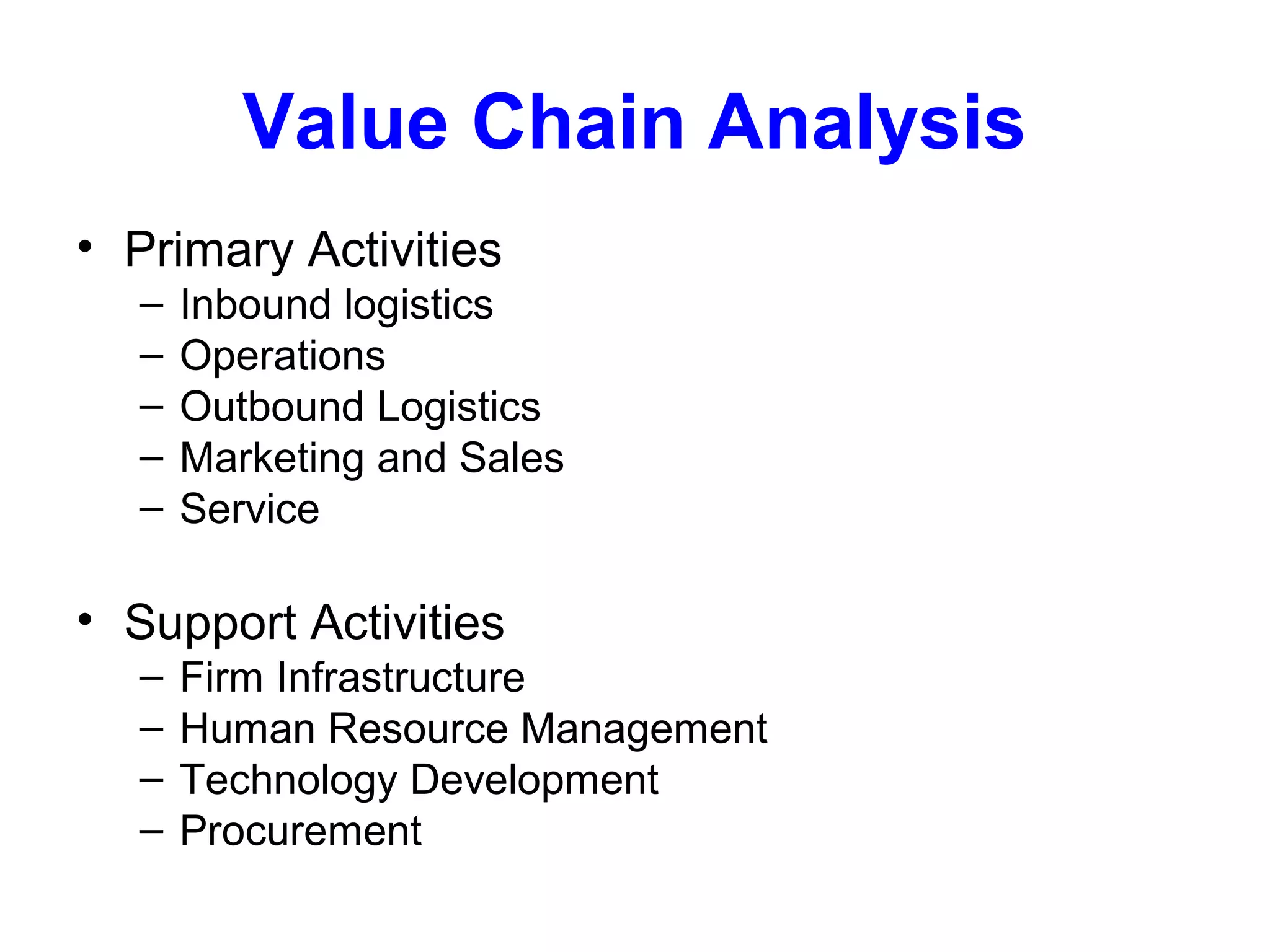
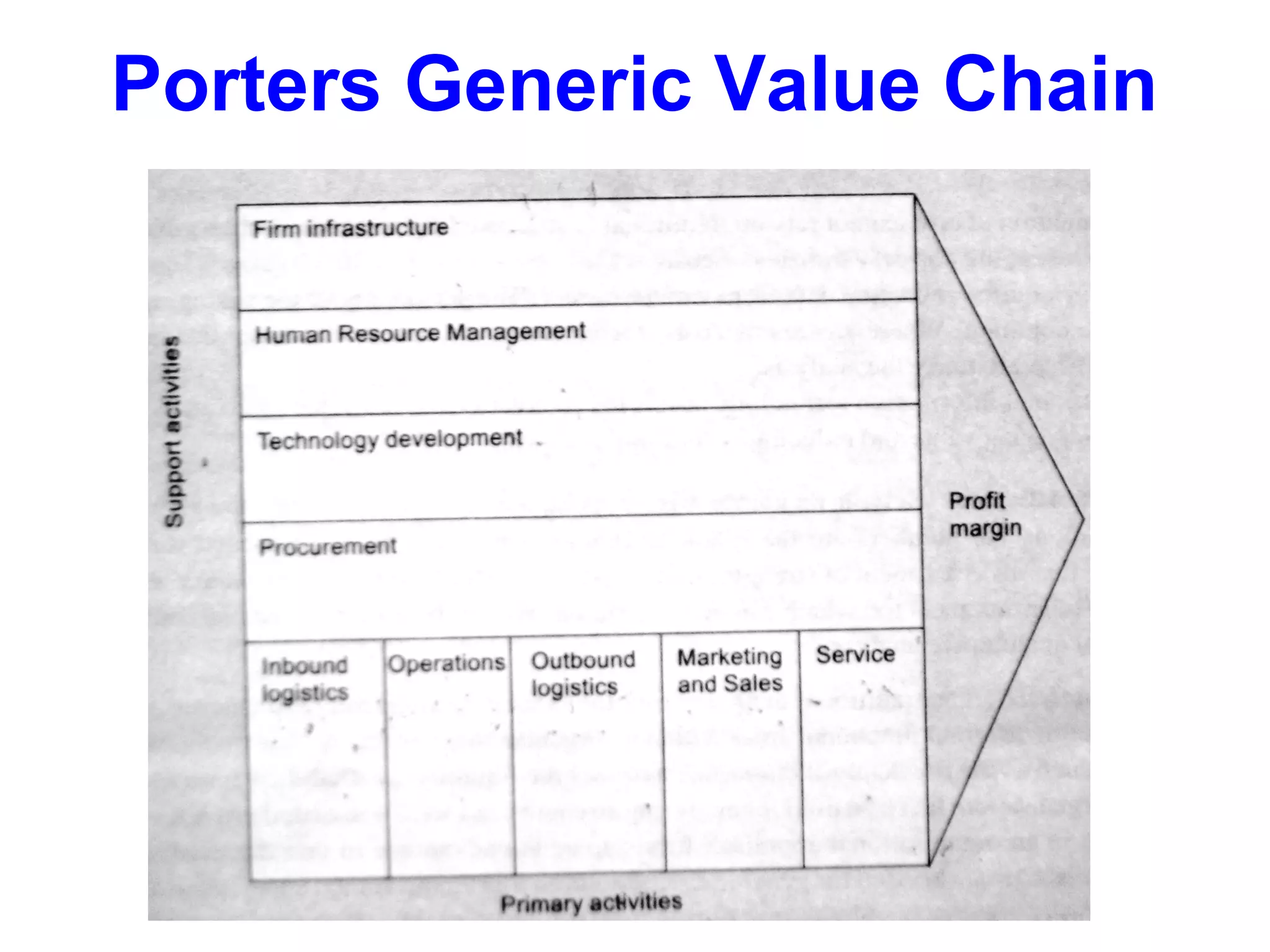
Explains VRIO framework and value chain analysis, emphasizing primary and support activities for assessing organizational capabilities.
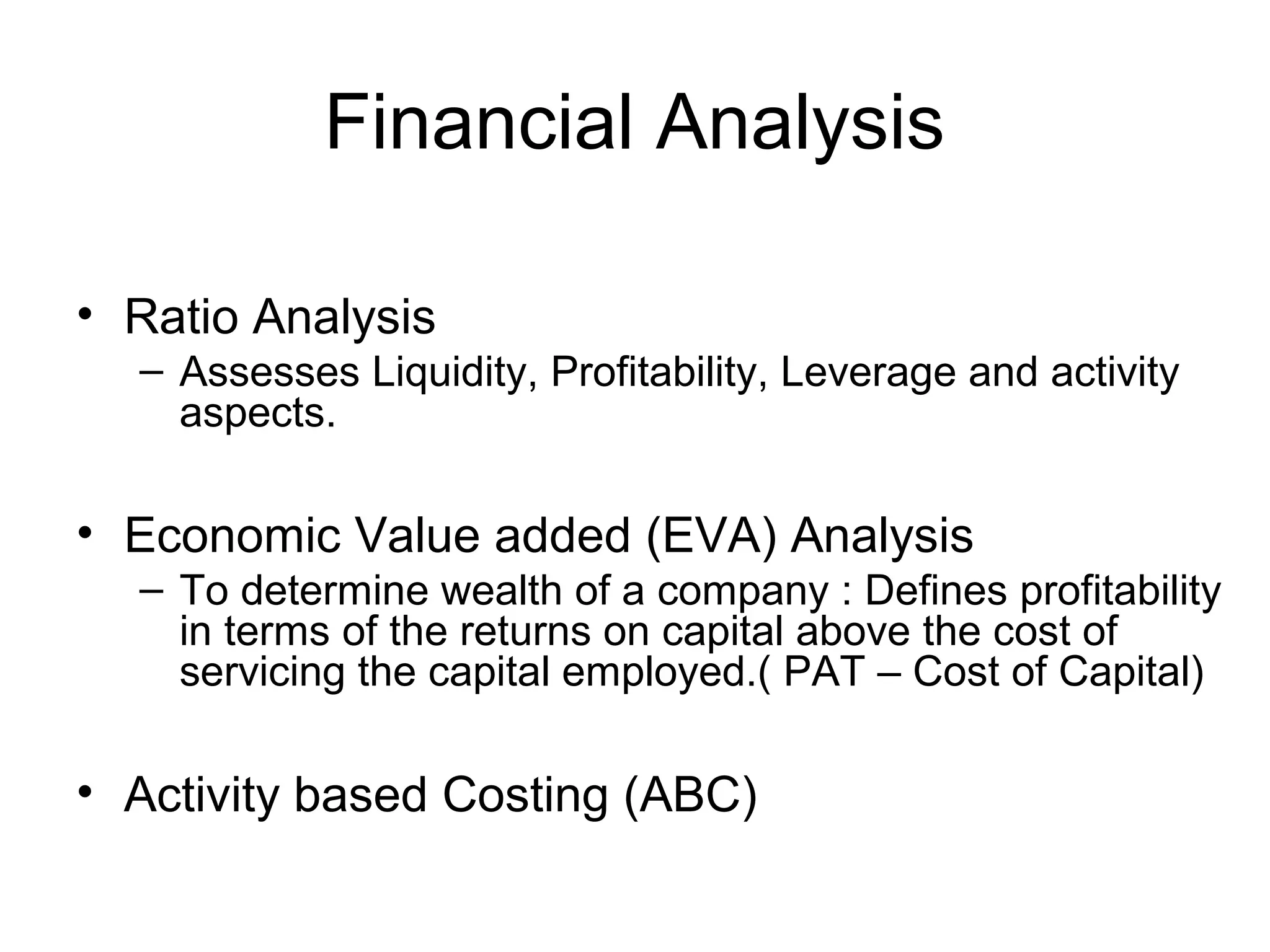
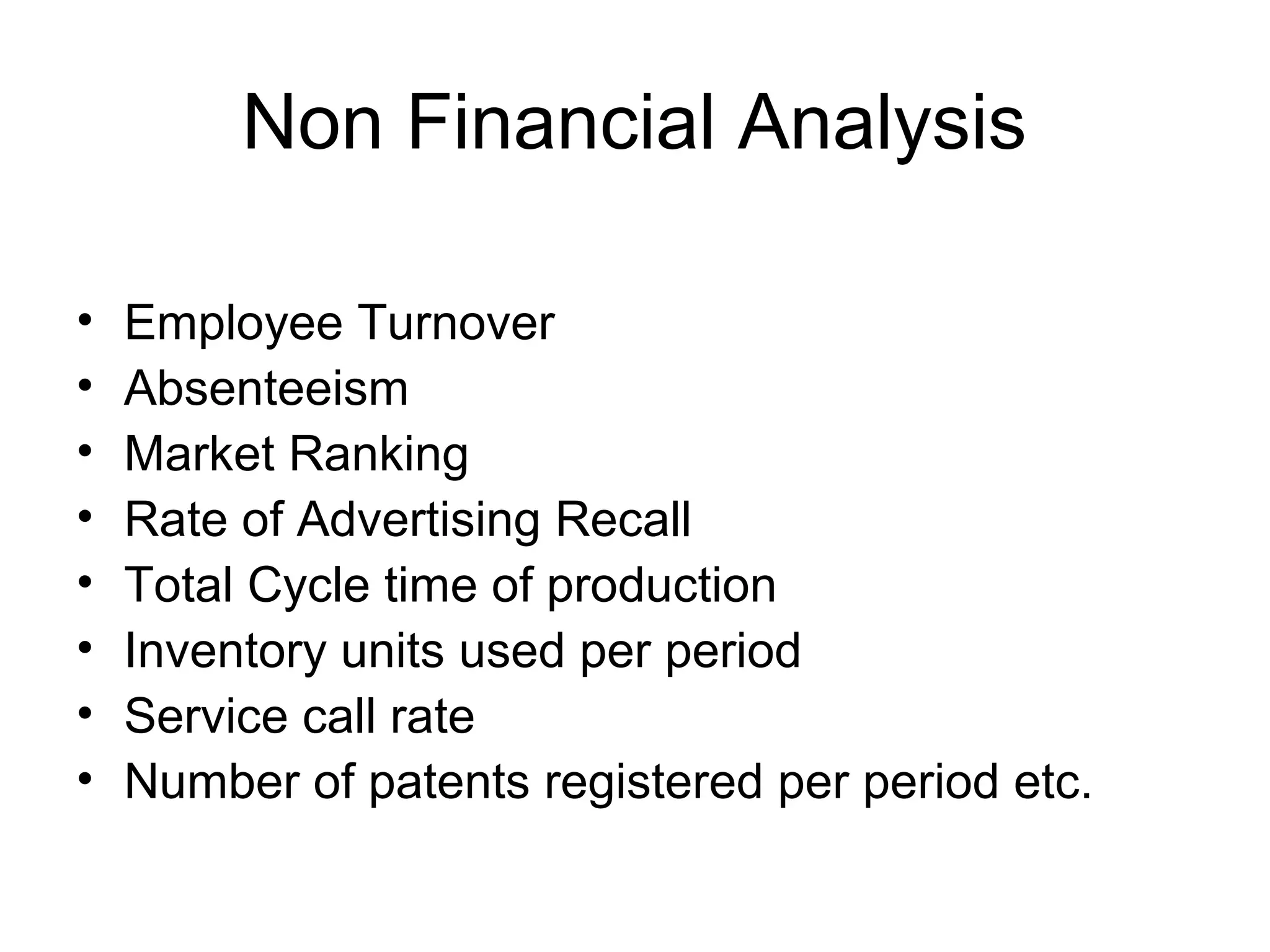
Highlights quantitative analysis methods including financial and non-financial measures as well as comparative analysis techniques.
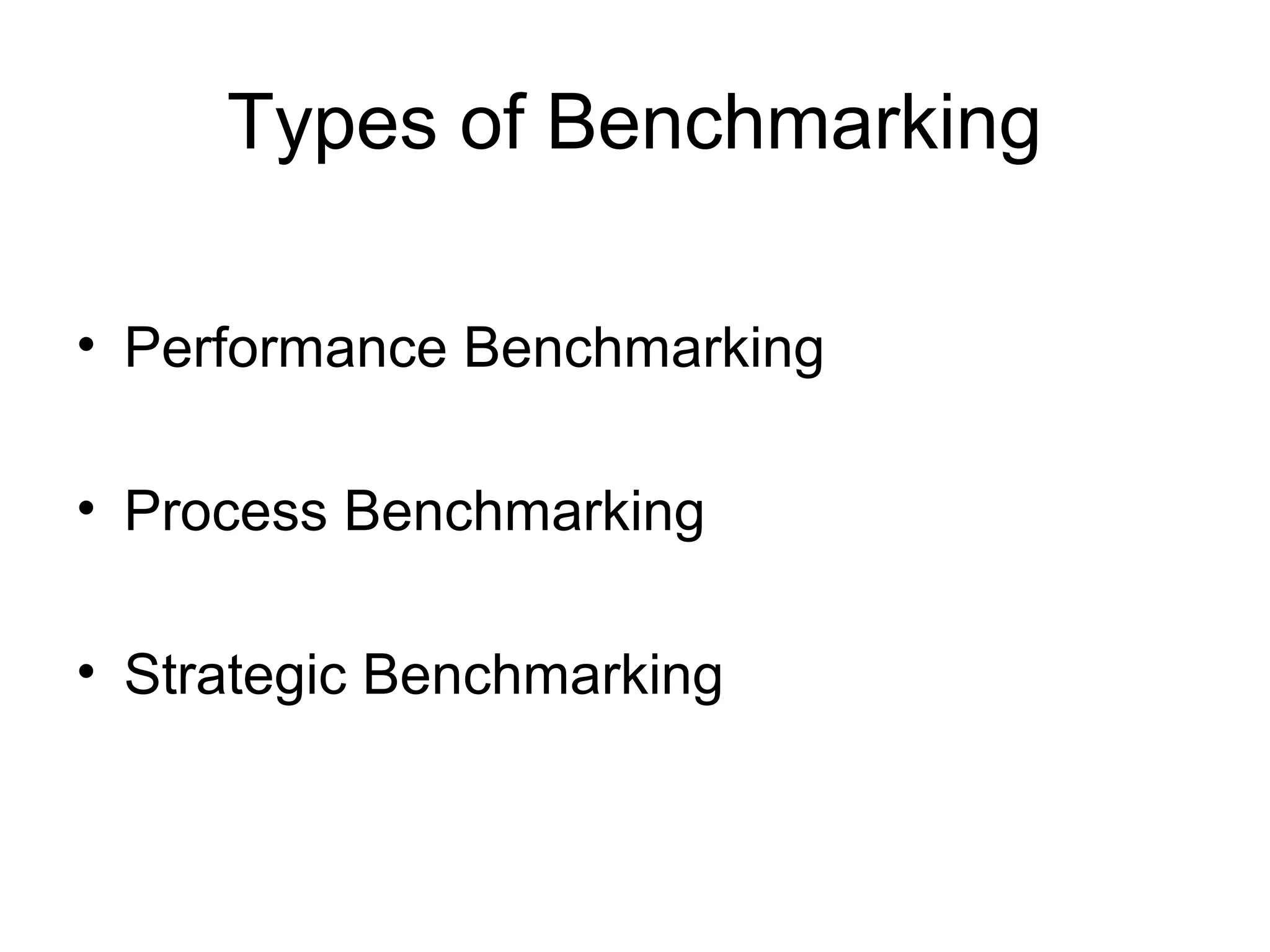
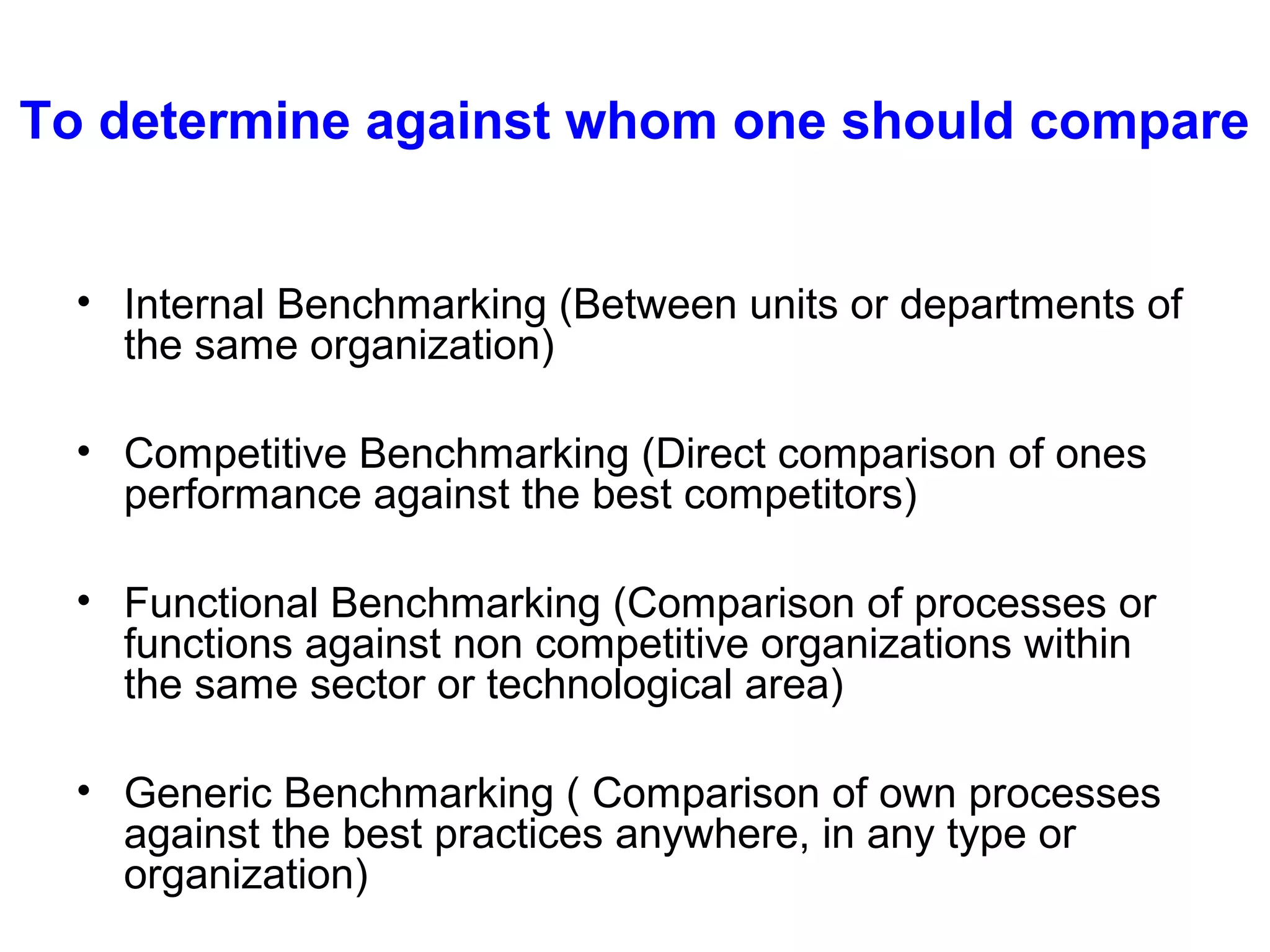
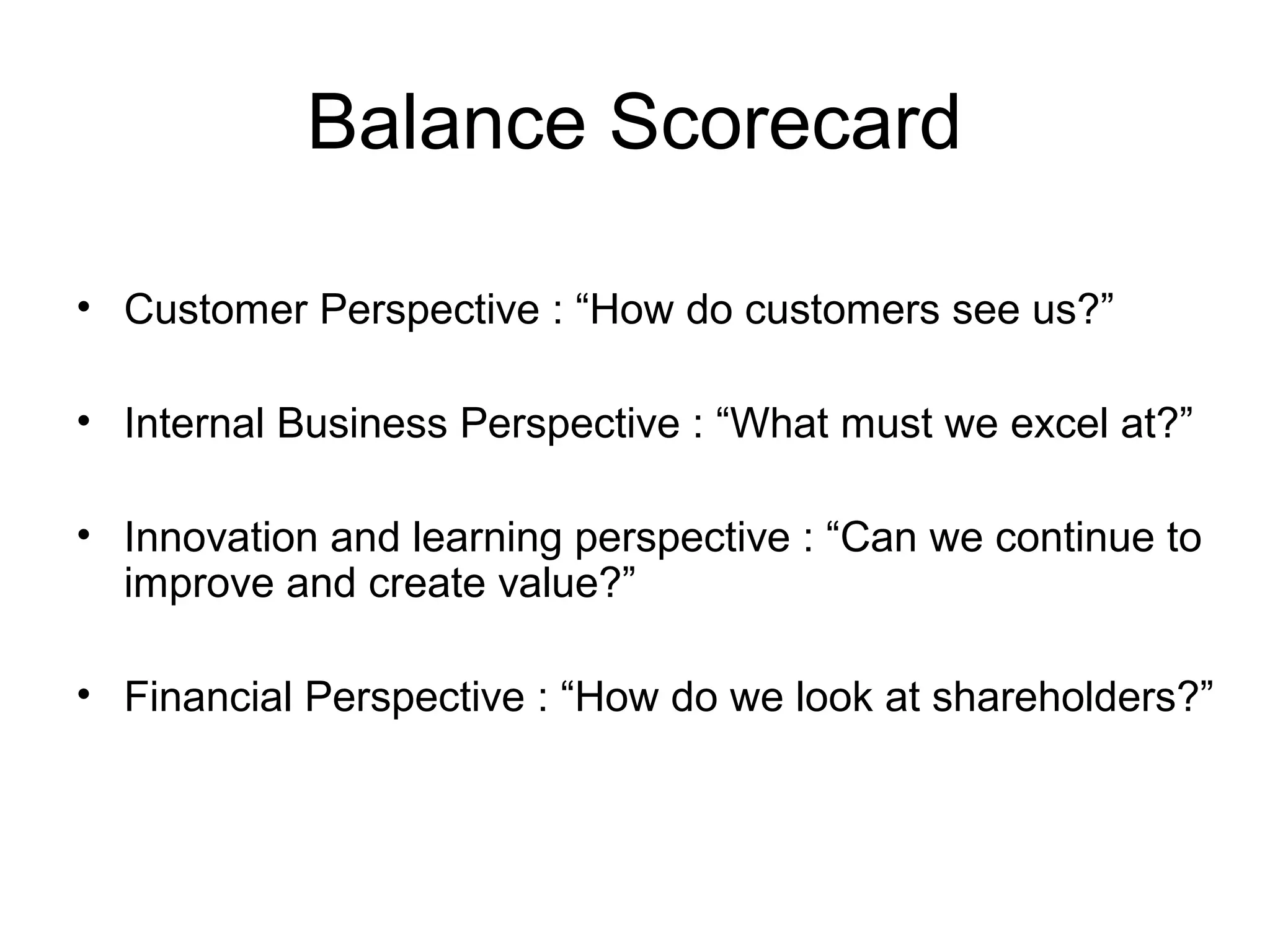
Discusses types of benchmarking, key factor rating, business intelligence, and the use of balance scorecard for a comprehensive analysis.
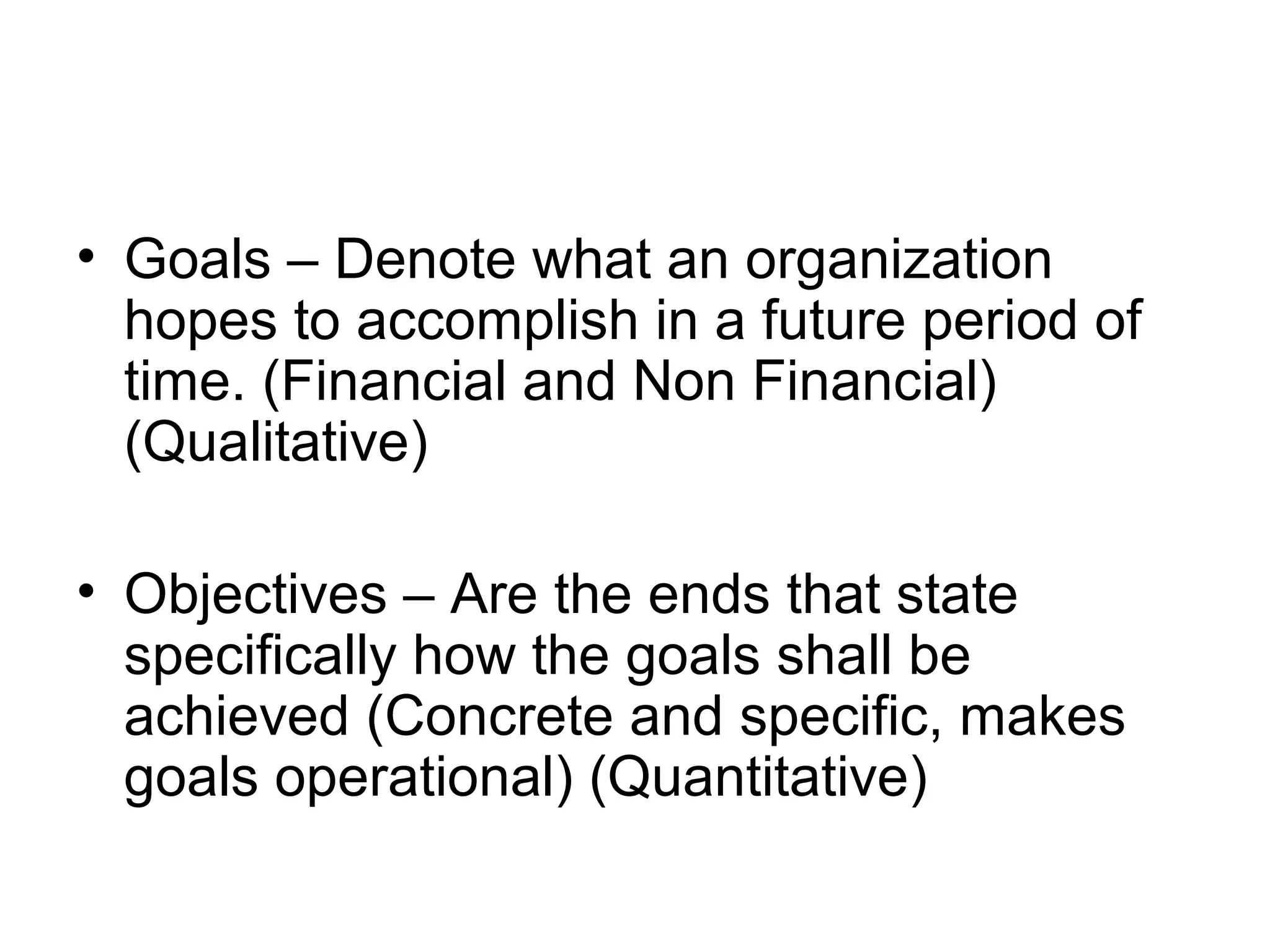
• Goals –Denote what an organization
hopes to accomplish in a future period of
time. (Financial and Non Financial)
(Qualitative)
• Objectives – Are the ends that state
specifically how the goals shall be
achieved (Concrete and specific, makes
goals operational) (Quantitative)
3.
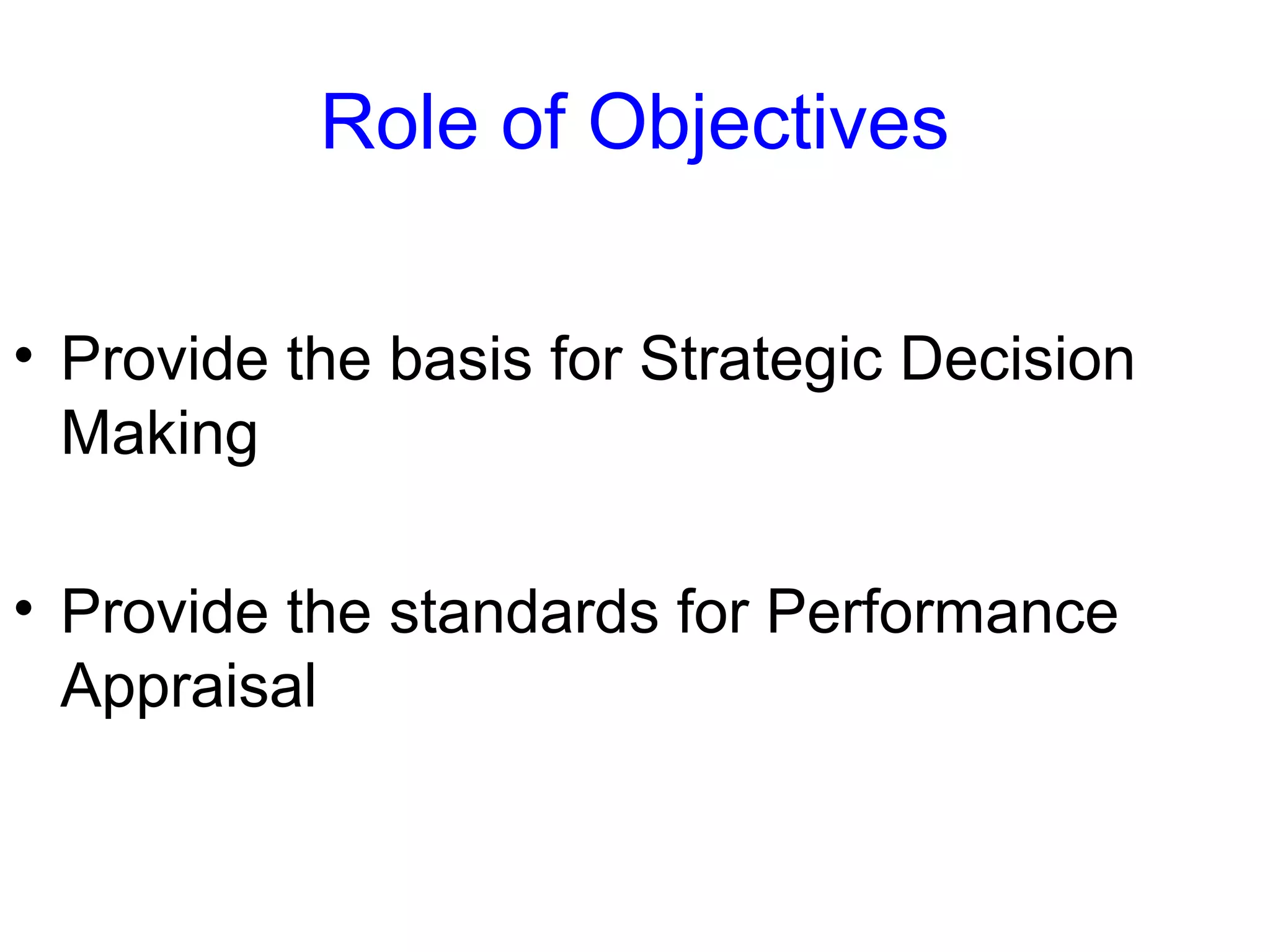
Role of Objectives
•Provide the basis for Strategic Decision
Making
• Provide the standards for Performance
Appraisal
4.
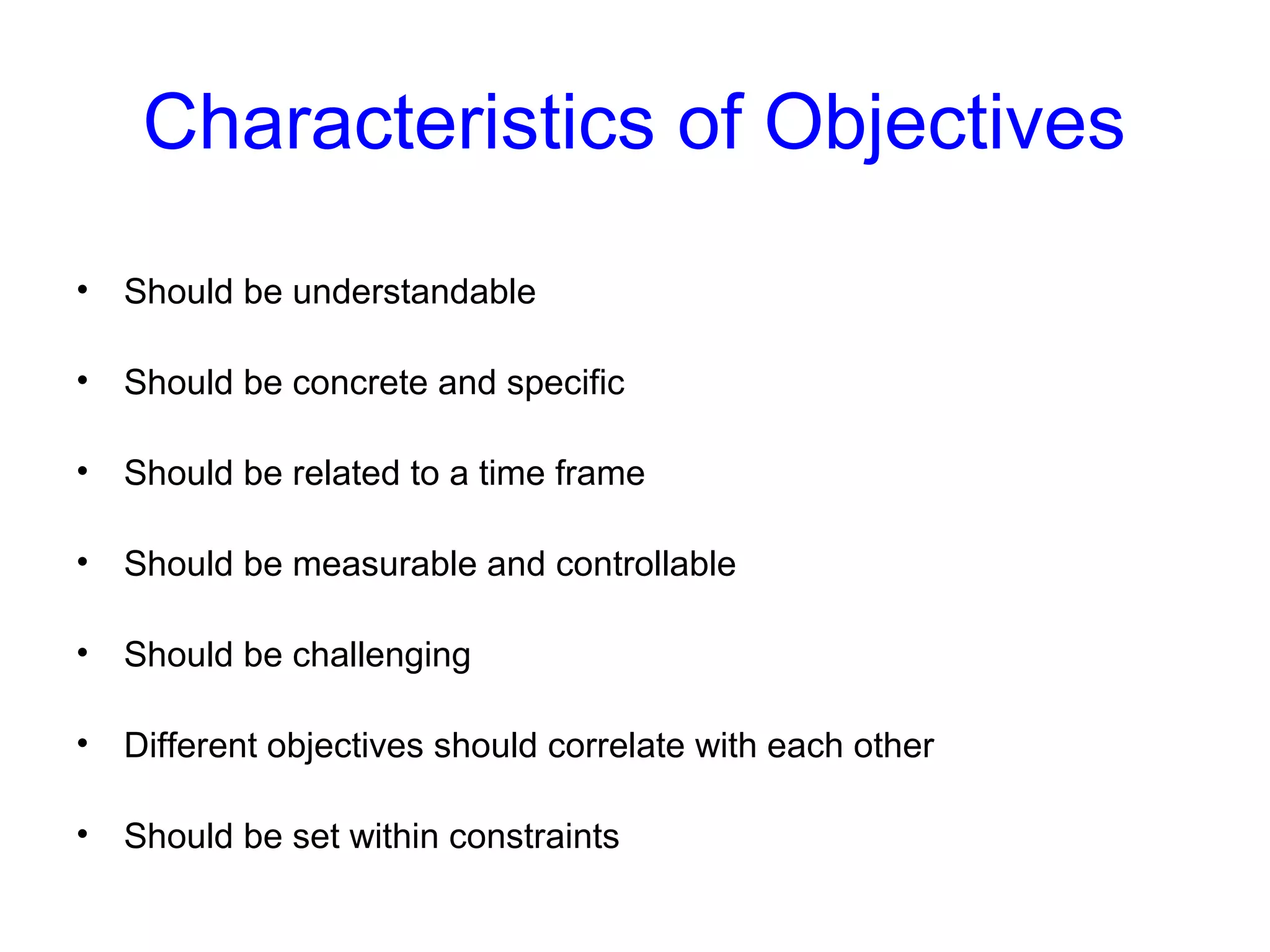
Characteristics of Objectives
•
Shouldbe understandable
•
Should be concrete and specific
•
Should be related to a time frame
•
Should be measurable and controllable
•
Should be challenging
•
Different objectives should correlate with each other
•
Should be set within constraints
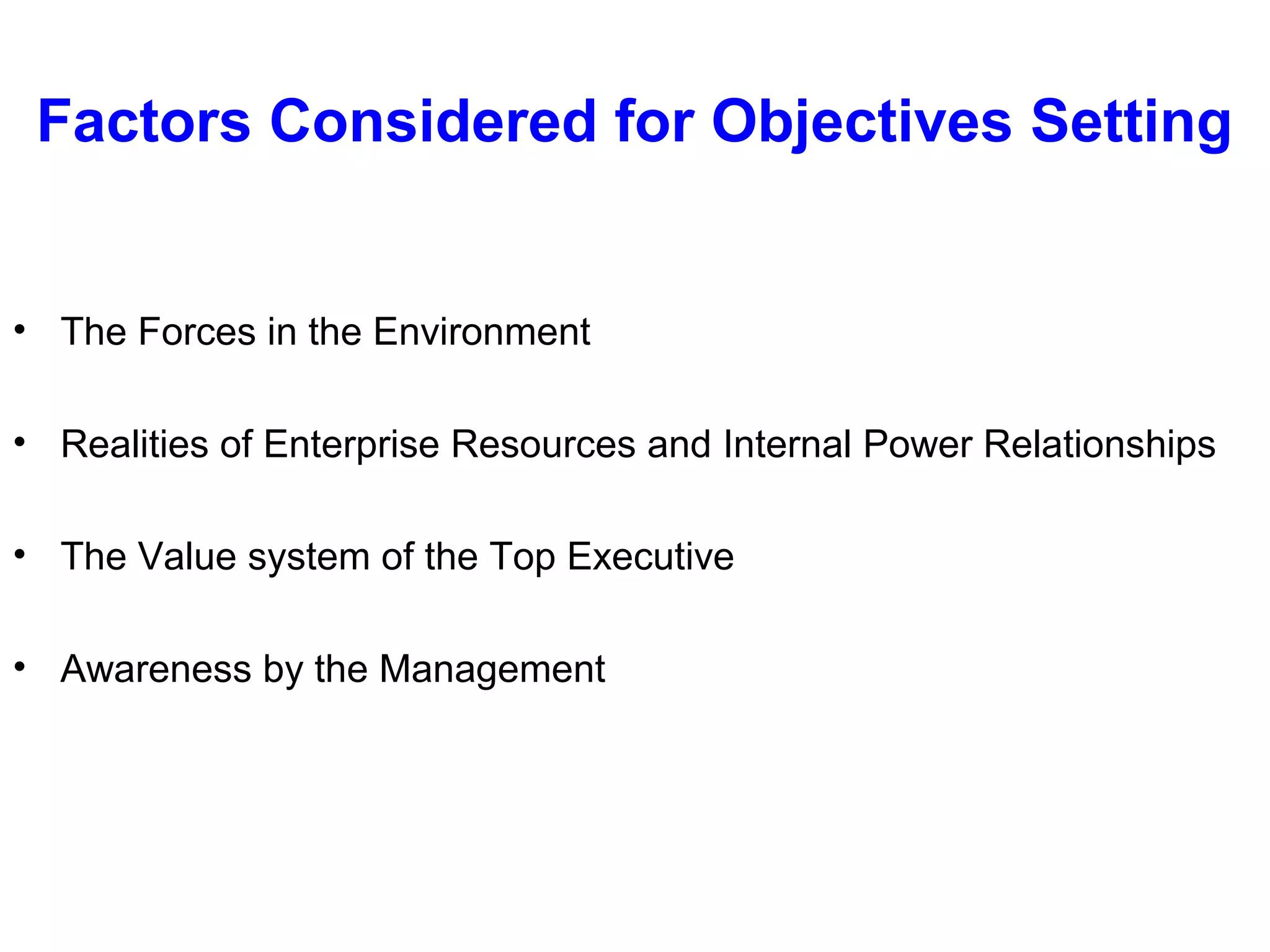
Factors Considered forObjectives Setting
• The Forces in the Environment
• Realities of Enterprise Resources and Internal Power Relationships
• The Value system of the Top Executive
• Awareness by the Management
“Organizational capability factorsare the
strategic strengths and weaknesses
existing in different functional areas within
an organization, which are of crucial
importance to strategy formulation and
implementation.”
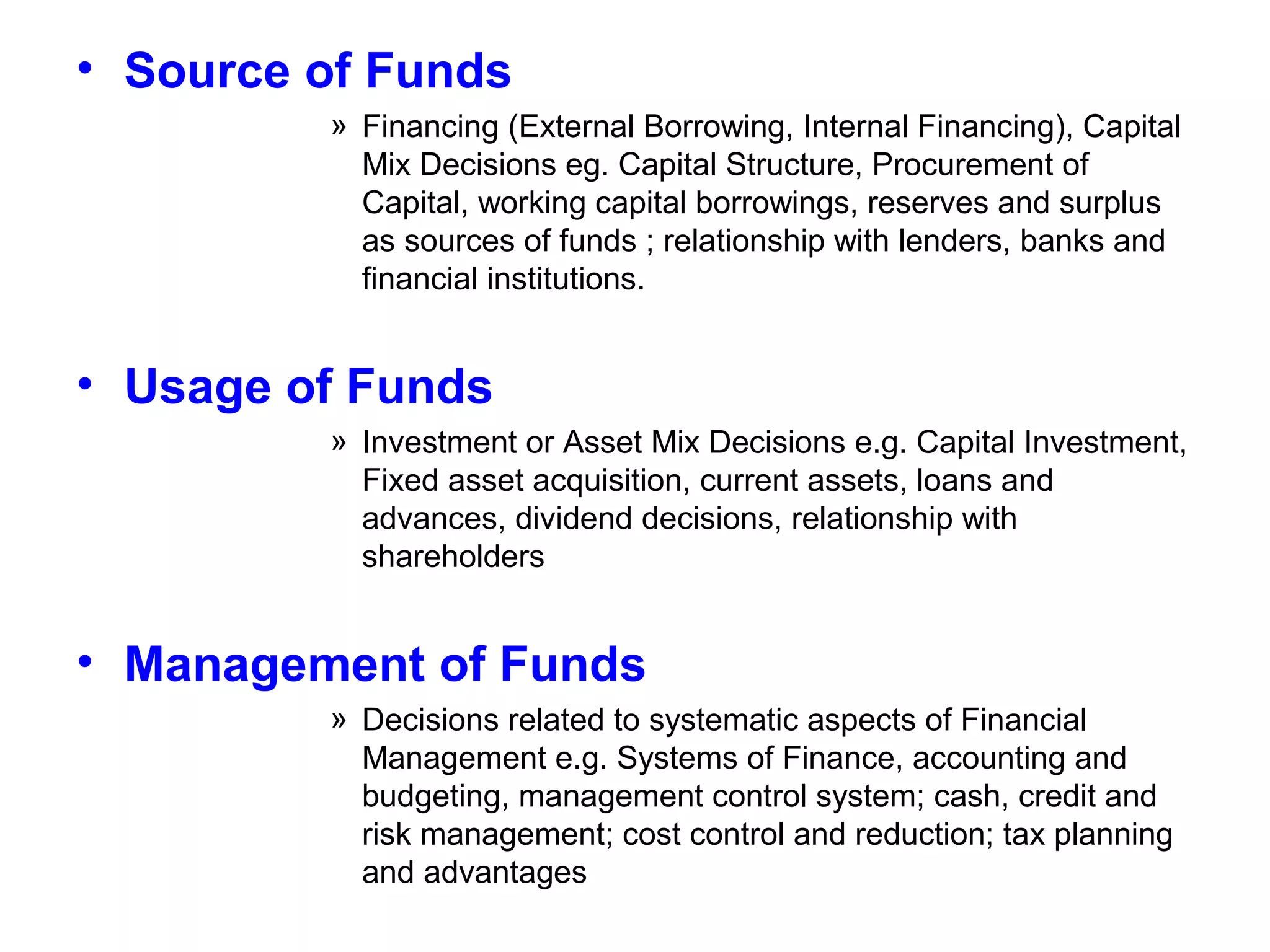
• Source ofFunds
» Financing (External Borrowing, Internal Financing), Capital
Mix Decisions eg. Capital Structure, Procurement of
Capital, working capital borrowings, reserves and surplus
as sources of funds ; relationship with lenders, banks and
financial institutions.
• Usage of Funds
» Investment or Asset Mix Decisions e.g. Capital Investment,
Fixed asset acquisition, current assets, loans and
advances, dividend decisions, relationship with
shareholders
• Management of Funds
» Decisions related to systematic aspects of Financial
Management e.g. Systems of Finance, accounting and
budgeting, management control system; cash, credit and
risk management; cost control and reduction; tax planning
and advantages
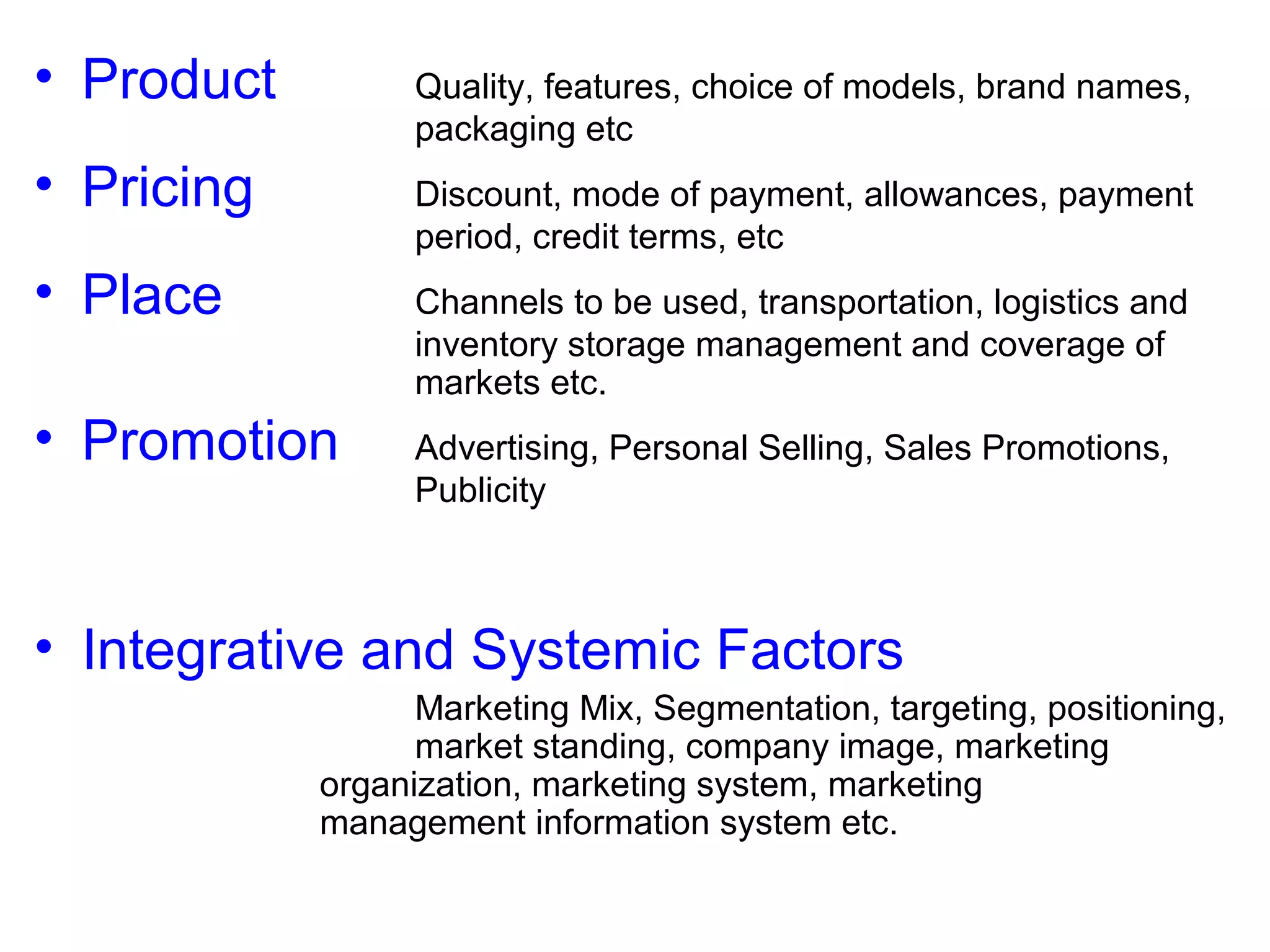
• Product
Quality, features,choice of models, brand names,
packaging etc
• Pricing
Discount, mode of payment, allowances, payment
period, credit terms, etc
• Place
Channels to be used, transportation, logistics and
inventory storage management and coverage of
markets etc.
• Promotion
Advertising, Personal Selling, Sales Promotions,
Publicity
• Integrative and Systemic Factors
Marketing Mix, Segmentation, targeting, positioning,
market standing, company image, marketing
organization, marketing system, marketing
management information system etc.
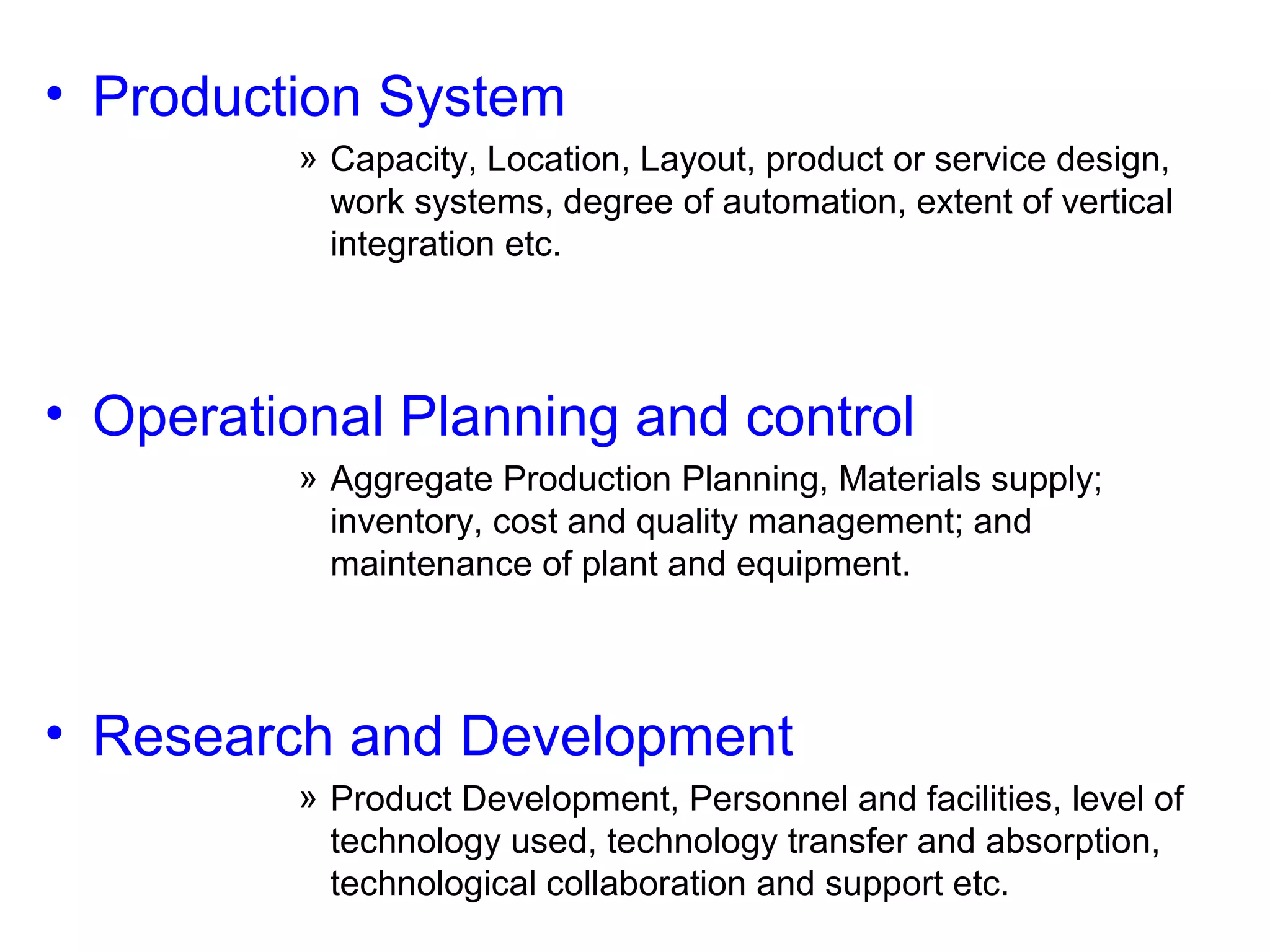
• Production System
»Capacity, Location, Layout, product or service design,
work systems, degree of automation, extent of vertical
integration etc.
• Operational Planning and control
» Aggregate Production Planning, Materials supply;
inventory, cost and quality management; and
maintenance of plant and equipment.
• Research and Development
» Product Development, Personnel and facilities, level of
technology used, technology transfer and absorption,
technological collaboration and support etc.
• Personnel System
»Manpower Planning, Selection, Development,
Compensation, Communication and appraisal
• Organizational and employee characteristics
» Corporate image, Quality of Managers, Staff and
workers, perception about the image of the organization
as an employer, availability of development opportunities
for employees, working conditions etc.
• Industrial Relations
» Union Management Relationships, Collective Bargaining,
safety, welfare and security, employee satisfaction and
Morale etc.
• Factors relatedto Acquisition and Retention of
Information
» Sources, Quantity, Quality and Timeliness of Information, retention
capacity and security of information
• Factors Related to Processing and Synthesis of
Information
» Database Management, Computer Systems, Software Capability
and the ability to synthesize information
• Factors Related to Retrieval and usage of Information
» Availability and appropriateness of Information formats and the
capacity to assimilate and use information
• Factors related to Transmission and Dissemination
» Speed, scope, width and depth of coverage of information and
with the willingness to accept information
• Integrative, Systemic and Supportive Factors
» Availability of IT infrastructure, its relevance and compatibility to
organizational needs, upgradation of facilities, willingness to invest
in state-of-the-art systems, availability of computer professionals
and top management support
Financial Analysis
• RatioAnalysis
– Assesses Liquidity, Profitability, Leverage and activity
aspects.
• Economic Value added (EVA) Analysis
– To determine wealth of a company : Defines profitability
in terms of the returns on capital above the cost of
servicing the capital employed.( PAT – Cost of Capital)
• Activity based Costing (ABC)
48.
Non Financial Analysis
•
•
•
•
•
•
•
•
EmployeeTurnover
Absenteeism
Market Ranking
Rate of Advertising Recall
Total Cycle time of production
Inventory units used per period
Service call rate
Number of patents registered per period etc.
Types of Benchmarking
•Performance Benchmarking
• Process Benchmarking
• Strategic Benchmarking
51.
To determine againstwhom one should compare
• Internal Benchmarking (Between units or departments of
the same organization)
• Competitive Benchmarking (Direct comparison of ones
performance against the best competitors)
• Functional Benchmarking (Comparison of processes or
functions against non competitive organizations within
the same sector or technological area)
• Generic Benchmarking ( Comparison of own processes
against the best practices anywhere, in any type or
organization)
Balance Scorecard
• CustomerPerspective : “How do customers see us?”
• Internal Business Perspective : “What must we excel at?”
• Innovation and learning perspective : “Can we continue to
improve and create value?”
• Financial Perspective : “How do we look at shareholders?”