TOWARDS A STRATEGY FOR DEVELOPING AND IMPLEMENTING
LANGUAGE EDUCATION POLICIES IN SERBIA (STRALED)


                  The Employability of Language Professionals

                                                     Jelena Gledić

                              November 13th, 2012
                                   Belgrade
The Employability of Language Professionals

 Who are language professionals?

 Where do they seek employment?

 What type of employment is offered?

 How are they assessed in job interviews?

 How easily can they seek jobs outside their primary professional field?

 Should university studies be aimed towards employability?
Who are language professionals?

 Persons who have a degree in languages
 People who work in translation, interpreting, teaching etc.


 REFLESS Project study: 1826 respondents
       827 students
        236 unemployed graduate philologists
        171 employed graduate philologists
        526 companies
        66 univesity teachers


 Are they satisfied?
 Why did they choose philology?
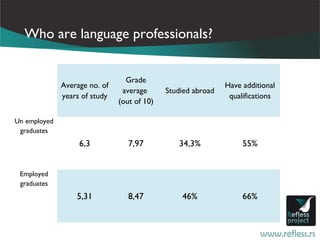
Who are language professionals?


                                 Grade
              Average no. of                                  Have additional
                                average      Studied abroad
              years of study                                   qualifications
                               (out of 10)

Un employed
 graduates
                   6,3            7,97          34,3%              55%


 Employed
 graduates
                  5,31            8,47           46%               66%
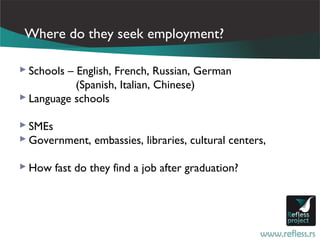
Where do they seek employment?

 Schools – English, French, Russian, German
            (Spanish, Italian, Chinese)
 Language schools

 SMEs
 Government, embassies, libraries, cultural centers,

 How fast do they find a job after graduation?
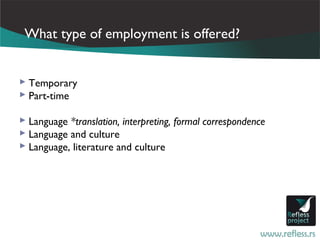
What type of employment is offered?


 Temporary
 Part-time

 Language *translation, interpreting, formal correspondence
 Language and culture
 Language, literature and culture
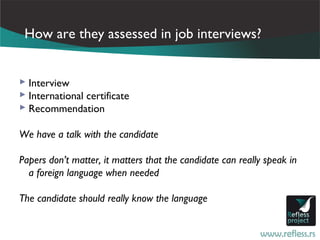
How are they assessed in job interviews?


 Interview
 International certificate
 Recommendation

We have a talk with the candidate

Papers don’t matter, it matters that the candidate can really speak in
  a foreign language when needed

The candidate should really know the language
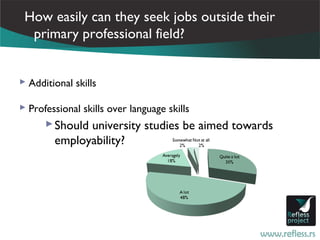
How easily can they seek jobs outside their
  primary professional field?


 Additional skills

 Professional skills over language skills
       Should university studies be aimed towards
        employability?

Straled 2012 Jelena Gledic

  • 1.
    TOWARDS A STRATEGYFOR DEVELOPING AND IMPLEMENTING LANGUAGE EDUCATION POLICIES IN SERBIA (STRALED) The Employability of Language Professionals Jelena Gledić November 13th, 2012 Belgrade
  • 2.
    The Employability ofLanguage Professionals  Who are language professionals?  Where do they seek employment?  What type of employment is offered?  How are they assessed in job interviews?  How easily can they seek jobs outside their primary professional field?  Should university studies be aimed towards employability?
  • 3.
    Who are languageprofessionals?  Persons who have a degree in languages  People who work in translation, interpreting, teaching etc.  REFLESS Project study: 1826 respondents  827 students  236 unemployed graduate philologists  171 employed graduate philologists  526 companies  66 univesity teachers  Are they satisfied?  Why did they choose philology?
  • 4.
    Who are languageprofessionals? Grade Average no. of Have additional average Studied abroad years of study qualifications (out of 10) Un employed graduates 6,3 7,97 34,3% 55% Employed graduates 5,31 8,47 46% 66%
  • 5.
    Where do theyseek employment?  Schools – English, French, Russian, German (Spanish, Italian, Chinese)  Language schools  SMEs  Government, embassies, libraries, cultural centers,  How fast do they find a job after graduation?
  • 6.
    What type ofemployment is offered?  Temporary  Part-time  Language *translation, interpreting, formal correspondence  Language and culture  Language, literature and culture
  • 7.
    How are theyassessed in job interviews?  Interview  International certificate  Recommendation We have a talk with the candidate Papers don’t matter, it matters that the candidate can really speak in a foreign language when needed The candidate should really know the language
  • 8.
    How easily canthey seek jobs outside their primary professional field?  Additional skills  Professional skills over language skills  Should university studies be aimed towards employability?