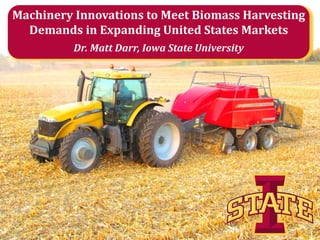
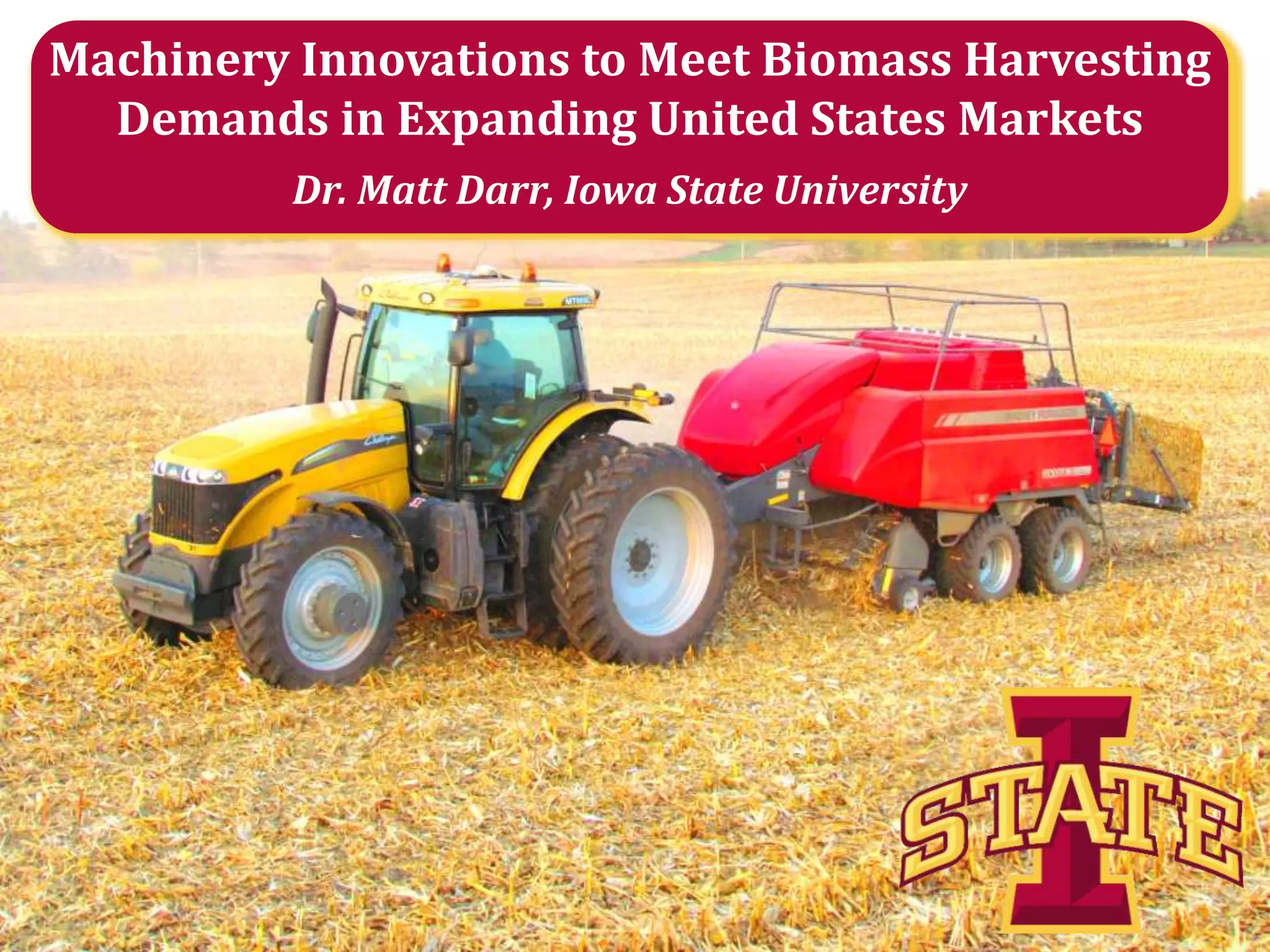
Machinery Innovations to Meet Biomass Harvesting
Demands in Expanding United States Markets
Dr. Matt Darr, Iowa State University
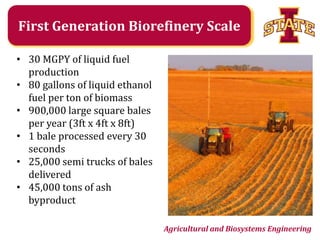
First Generation Biorefinery Scale
• 30 MGPY of liquid fuel
production
• 80 gallons of liquid ethanol
fuel per ton of biomass
• 900,000 large square bales
per year (3ft x 4ft x 8ft)
• 1 bale processed every 30
seconds
• 25,000 semi trucks of bales
delivered
• 45,000 tons of ash
byproduct
Agricultural and Biosystems Engineering
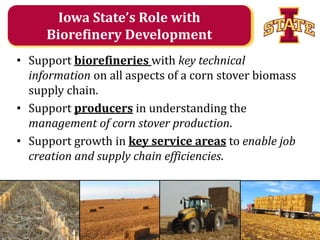
Iowa State’s Role with
Biorefinery Development
• Support biorefineries with key technical
information on all aspects of a corn stover biomass
supply chain.
• Support producers in understanding the
management of corn stover production.
• Support growth in key service areas to enable job
creation and supply chain efficiencies.

Agricultural and Biosystems Engineering
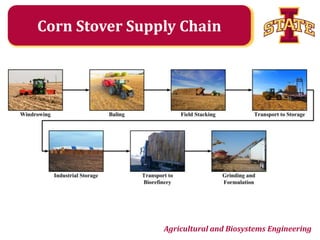
Corn Stover Supply Chain

Agricultural and Biosystems Engineering
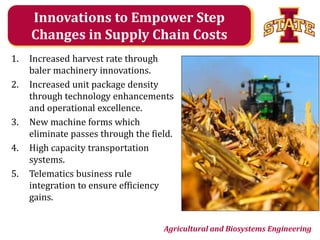
Innovations to Empower Step
Changes in Supply Chain Costs
1.
2.

3.
4.
5.

Increased harvest rate through
baler machinery innovations.
Increased unit package density
through technology enhancements
and operational excellence.
New machine forms which
eliminate passes through the field.
High capacity transportation
systems.
Telematics business rule
integration to ensure efficiency
gains.
Agricultural and Biosystems Engineering
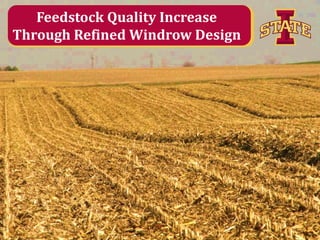
Feedstock Quality Increase
Through Refined Windrow Design

Agricultural and Biosystems Engineering
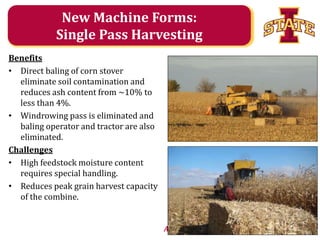
New Machine Forms:
Single Pass Harvesting
Benefits
• Direct baling of corn stover
eliminate soil contamination and
reduces ash content from ~10% to
less than 4%.
• Windrowing pass is eliminated and
baling operator and tractor are also
eliminated.
Challenges
• High feedstock moisture content
requires special handling.
• Reduces peak grain harvest capacity
of the combine.
Agricultural and Biosystems Engineering
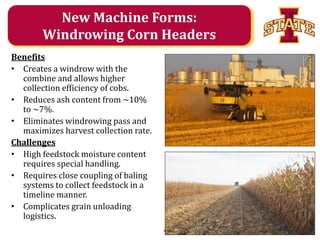
New Machine Forms:
Windrowing Corn Headers
Benefits
• Creates a windrow with the
combine and allows higher
collection efficiency of cobs.
• Reduces ash content from ~10%
to ~7%.
• Eliminates windrowing pass and
maximizes harvest collection rate.
Challenges
• High feedstock moisture content
requires special handling.
• Requires close coupling of baling
systems to collect feedstock in a
timeline manner.
• Complicates grain unloading
logistics.
Agricultural and Biosystems Engineering
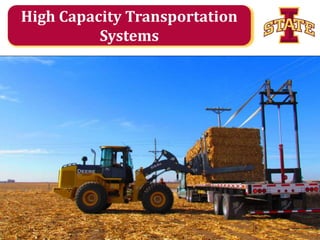
High Capacity Transportation
Systems

Agricultural and Biosystems Engineering
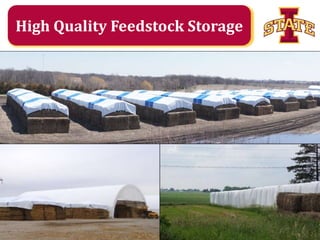
High Quality Feedstock Storage

Agricultural and Biosystems Engineering
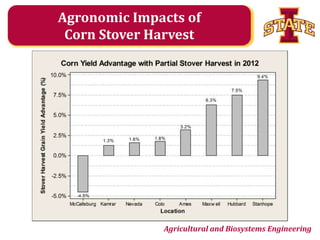
Agronomic Impacts of
Corn Stover Harvest

Agricultural and Biosystems Engineering
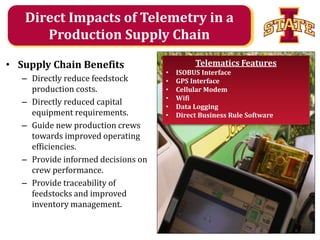
Direct Impacts of Telemetry in a
Production Supply Chain
• Supply Chain Benefits
– Directly reduce feedstock
production costs.
– Directly reduced capital
equipment requirements.
– Guide new production crews
towards improved operating
efficiencies.
– Provide informed decisions on
crew performance.
– Provide traceability of
feedstocks and improved
inventory management.

Telematics Features
•
•
•
•
•
•

ISOBUS Interface
GPS Interface
Cellular Modem
Wifi
Data Logging
Direct Business Rule Software

Agricultural and Biosystems Engineering
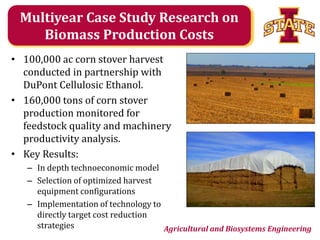
Multiyear Case Study Research on
Biomass Production Costs
• 100,000 ac corn stover harvest
conducted in partnership with
DuPont Cellulosic Ethanol.
• 160,000 tons of corn stover
production monitored for
feedstock quality and machinery
productivity analysis.
• Key Results:
– In depth technoeconomic model
– Selection of optimized harvest
equipment configurations
– Implementation of technology to
directly target cost reduction
strategies
Agricultural and Biosystems Engineering
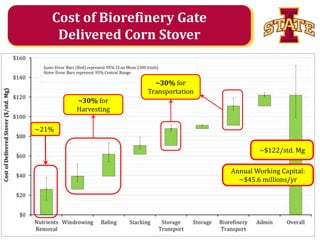
Cost of Biorefinery Gate
Delivered Corn Stover

~30% for
Transportation
~30% for
Harvesting
~21%

~$122/std. Mg
Annual Working Capital:
~$45.6 millions/yr

Agricultural and Biosystems Engineering
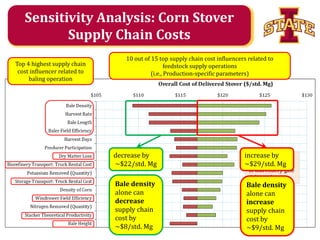
Sensitivity Analysis: Corn Stover
Supply Chain Costs
Top 4 highest supply chain
cost influencer related to
baling operation

10 out of 15 top supply chain cost influencers related to
feedstock supply operations
(i.e., Production-specific parameters)

decrease by
~$22/std. Mg
Bale density
alone can
decrease
supply chain
cost by
~$8/std. Mg

increase by
~$29/std. Mg
Bale density
alone can
increase
supply chain
cost by
~$9/std. Mg
Agricultural and Biosystems Engineering
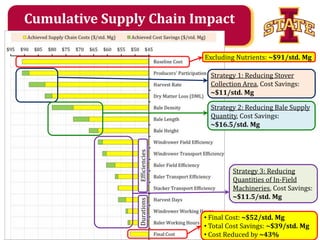
Cumulative Supply Chain Impact
Excluding Nutrients: ~$91/std. Mg
Strategy 1: Reducing Stover
Collection Area, Cost Savings:
~$11/std. Mg

Durations

Efficiencies

Strategy 2: Reducing Bale Supply
Quantity, Cost Savings:
~$16.5/std. Mg

Strategy 3: Reducing
Quantities of In-Field
Machineries, Cost Savings:
~$11.5/std. Mg
• Final Cost: ~$52/std. Mg
• and Biosystems Engineering
AgriculturalTotal Cost Savings: ~$39/std. Mg
• Cost Reduced by ~43%
Questions

Department of Agricultural and
Biosystems Engineering

Stover Update 3

  • 1.
    Machinery Innovations toMeet Biomass Harvesting Demands in Expanding United States Markets Dr. Matt Darr, Iowa State University
  • 2.
    First Generation BiorefineryScale • 30 MGPY of liquid fuel production • 80 gallons of liquid ethanol fuel per ton of biomass • 900,000 large square bales per year (3ft x 4ft x 8ft) • 1 bale processed every 30 seconds • 25,000 semi trucks of bales delivered • 45,000 tons of ash byproduct Agricultural and Biosystems Engineering
  • 3.
    Iowa State’s Rolewith Biorefinery Development • Support biorefineries with key technical information on all aspects of a corn stover biomass supply chain. • Support producers in understanding the management of corn stover production. • Support growth in key service areas to enable job creation and supply chain efficiencies. Agricultural and Biosystems Engineering
  • 4.
    Corn Stover SupplyChain Agricultural and Biosystems Engineering
  • 5.
    Innovations to EmpowerStep Changes in Supply Chain Costs 1. 2. 3. 4. 5. Increased harvest rate through baler machinery innovations. Increased unit package density through technology enhancements and operational excellence. New machine forms which eliminate passes through the field. High capacity transportation systems. Telematics business rule integration to ensure efficiency gains. Agricultural and Biosystems Engineering
  • 6.
    Feedstock Quality Increase ThroughRefined Windrow Design Agricultural and Biosystems Engineering
  • 7.
    New Machine Forms: SinglePass Harvesting Benefits • Direct baling of corn stover eliminate soil contamination and reduces ash content from ~10% to less than 4%. • Windrowing pass is eliminated and baling operator and tractor are also eliminated. Challenges • High feedstock moisture content requires special handling. • Reduces peak grain harvest capacity of the combine. Agricultural and Biosystems Engineering
  • 8.
    New Machine Forms: WindrowingCorn Headers Benefits • Creates a windrow with the combine and allows higher collection efficiency of cobs. • Reduces ash content from ~10% to ~7%. • Eliminates windrowing pass and maximizes harvest collection rate. Challenges • High feedstock moisture content requires special handling. • Requires close coupling of baling systems to collect feedstock in a timeline manner. • Complicates grain unloading logistics. Agricultural and Biosystems Engineering
  • 9.
  • 10.
    High Quality FeedstockStorage Agricultural and Biosystems Engineering
  • 11.
    Agronomic Impacts of CornStover Harvest Agricultural and Biosystems Engineering
  • 12.
    Direct Impacts ofTelemetry in a Production Supply Chain • Supply Chain Benefits – Directly reduce feedstock production costs. – Directly reduced capital equipment requirements. – Guide new production crews towards improved operating efficiencies. – Provide informed decisions on crew performance. – Provide traceability of feedstocks and improved inventory management. Telematics Features • • • • • • ISOBUS Interface GPS Interface Cellular Modem Wifi Data Logging Direct Business Rule Software Agricultural and Biosystems Engineering
  • 13.
    Multiyear Case StudyResearch on Biomass Production Costs • 100,000 ac corn stover harvest conducted in partnership with DuPont Cellulosic Ethanol. • 160,000 tons of corn stover production monitored for feedstock quality and machinery productivity analysis. • Key Results: – In depth technoeconomic model – Selection of optimized harvest equipment configurations – Implementation of technology to directly target cost reduction strategies Agricultural and Biosystems Engineering
  • 14.
    Cost of BiorefineryGate Delivered Corn Stover ~30% for Transportation ~30% for Harvesting ~21% ~$122/std. Mg Annual Working Capital: ~$45.6 millions/yr Agricultural and Biosystems Engineering
  • 15.
    Sensitivity Analysis: CornStover Supply Chain Costs Top 4 highest supply chain cost influencer related to baling operation 10 out of 15 top supply chain cost influencers related to feedstock supply operations (i.e., Production-specific parameters) decrease by ~$22/std. Mg Bale density alone can decrease supply chain cost by ~$8/std. Mg increase by ~$29/std. Mg Bale density alone can increase supply chain cost by ~$9/std. Mg Agricultural and Biosystems Engineering
  • 16.
    Cumulative Supply ChainImpact Excluding Nutrients: ~$91/std. Mg Strategy 1: Reducing Stover Collection Area, Cost Savings: ~$11/std. Mg Durations Efficiencies Strategy 2: Reducing Bale Supply Quantity, Cost Savings: ~$16.5/std. Mg Strategy 3: Reducing Quantities of In-Field Machineries, Cost Savings: ~$11.5/std. Mg • Final Cost: ~$52/std. Mg • and Biosystems Engineering AgriculturalTotal Cost Savings: ~$39/std. Mg • Cost Reduced by ~43%
  • 17.
    Questions Department of Agriculturaland Biosystems Engineering