Childhood Obesity

         Jennifer Tran
The Facts
   In the last 30 years, childhood obesity has more than
    tripled.

   In 2008, more than 1/3 of children and adolescents
    were overweight or obese.

   Childhood obesity now affects 17% of all children
    and adolescents.

   70% of obese children had at least 1 cardiovascular
    disease risk factor , and 30% had 2 or more.
How is Obesity Measured?
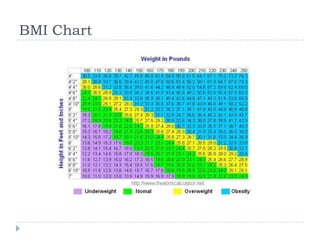
   Body Mass Index(BMI)- Measure used to determine
    overweight and obesity.

   Calculated using weight and height.

   Child is not considered obese until the weight is 10%
    higher than what is recommended for the child’s
    height and body type
BMI Chart
Health Risks
   Obese children are more likely to…
       Have high blood pressure, and high cholesterol
       Have diabetes
       Breathing problems
           Ex. Asthma, sleep apnea
       Social and psychological problems
           Ex. Discrimination, low self-esteem
       Become obese adults
           Adult obesity is associated with more serious health problems
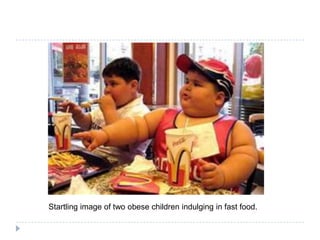
Startling image of two obese children indulging in fast food.
Causes
   Poor eating habits
       Ex. Junk food, fast food, overeating
   Lack of exercise
       Children who do not get a lot of physical activity
   Family history of obesity
   Health problems
   Low self esteem
   Depression
How to Prevent Obesity
   Plan meals and make better food choices
       Control food portions and calories
       Add variety of fruits and vegetables on the blate
   Give children healthier snack alternatives
   Let the children have more active activity
   Set an example for your child
       Eat healthy meals with your child
       Participate in physical activity with your child
•The food pyramid we have
all been used to has now
been replaced with a food
plate. This is how your meal
plate should look.
Healthier Alternatives
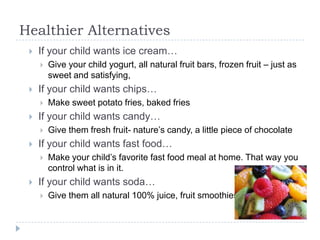
    If your child wants ice cream…
        Give your child yogurt, all natural fruit bars, frozen fruit – just as
         sweet and satisfying,
    If your child wants chips…
        Make sweet potato fries, baked fries
    If your child wants candy…
        Give them fresh fruit- nature’s candy, a little piece of chocolate
    If your child wants fast food…
        Make your child’s favorite fast food meal at home. That way you
         control what is in it.
    If your child wants soda…
        Give them all natural 100% juice, fruit smoothies
Physical Activities
   Let the children run around outside
       Let them play tag
   Enroll them in sports
       Football, soccer, basketball, track, dance, etc.
   Instead of taking elevators take your kids up the
    stairs for a fun adventure
   Take your children out for a nice walk around the
    neighborhood.
       This will allow you to bond with your child, get your child
        away from all the electronic devices, and get to know your
        child more.
What will this program do?
   This program will provide parents with all the
    knowledge provided.

   Give parents ideas on how to help their children stay
    away from obesity.

   If their children are obese we can help counsel the
    parents, and show them how to get their child out of
    obesity.

Childhood obesity-Proposal

  • 1.
    Childhood Obesity Jennifer Tran
  • 2.
    The Facts  In the last 30 years, childhood obesity has more than tripled.  In 2008, more than 1/3 of children and adolescents were overweight or obese.  Childhood obesity now affects 17% of all children and adolescents.  70% of obese children had at least 1 cardiovascular disease risk factor , and 30% had 2 or more.
  • 3.
    How is ObesityMeasured?  Body Mass Index(BMI)- Measure used to determine overweight and obesity.  Calculated using weight and height.  Child is not considered obese until the weight is 10% higher than what is recommended for the child’s height and body type
  • 4.
  • 5.
    Health Risks  Obese children are more likely to…  Have high blood pressure, and high cholesterol  Have diabetes  Breathing problems  Ex. Asthma, sleep apnea  Social and psychological problems  Ex. Discrimination, low self-esteem  Become obese adults  Adult obesity is associated with more serious health problems
  • 6.
    Startling image oftwo obese children indulging in fast food.
  • 7.
    Causes  Poor eating habits  Ex. Junk food, fast food, overeating  Lack of exercise  Children who do not get a lot of physical activity  Family history of obesity  Health problems  Low self esteem  Depression
  • 8.
    How to PreventObesity  Plan meals and make better food choices  Control food portions and calories  Add variety of fruits and vegetables on the blate  Give children healthier snack alternatives  Let the children have more active activity  Set an example for your child  Eat healthy meals with your child  Participate in physical activity with your child
  • 9.
    •The food pyramidwe have all been used to has now been replaced with a food plate. This is how your meal plate should look.
  • 10.
    Healthier Alternatives  If your child wants ice cream…  Give your child yogurt, all natural fruit bars, frozen fruit – just as sweet and satisfying,  If your child wants chips…  Make sweet potato fries, baked fries  If your child wants candy…  Give them fresh fruit- nature’s candy, a little piece of chocolate  If your child wants fast food…  Make your child’s favorite fast food meal at home. That way you control what is in it.  If your child wants soda…  Give them all natural 100% juice, fruit smoothies
  • 11.
    Physical Activities  Let the children run around outside  Let them play tag  Enroll them in sports  Football, soccer, basketball, track, dance, etc.  Instead of taking elevators take your kids up the stairs for a fun adventure  Take your children out for a nice walk around the neighborhood.  This will allow you to bond with your child, get your child away from all the electronic devices, and get to know your child more.
  • 12.
    What will thisprogram do?  This program will provide parents with all the knowledge provided.  Give parents ideas on how to help their children stay away from obesity.  If their children are obese we can help counsel the parents, and show them how to get their child out of obesity.