Childhood Obesity: An
Epidemic
Tatum Pennington
10/9/13
Childhood Obesity: Key Facts
• Throughout the past thirty years, children and adolescents with childhood
obesity have doubled and tripled
• In 2010 over one third of all children and adolescents in the United States
were overweight or obese
• An overweight child can be defined as a child with a BMI between the
85th and 95th percentile
• An obese child can be defined as a child that is above the 95th percentile
for children of the same age and gender
Current Obesity Trends
• In general, the entire United States population
has grown considerably over the past 30 years
15%
19%
25%
36%
0%
5%
10%
15%
20%
25%
30%
35%
40%
1990 1997 2004 2010
Obesity Rates in the United States
What is causing this epidemic in
children and adolescents?
• Scientists argue that there are many causes for the current overweight
and obesity rates in children and adolescents including fast food, lack of
exercise, soda, and larger portion sizes
The true cause of the epidemic
• Parents.
Parents are the primary cause for
multiple reasons
• When children live with their parents they typically share
meals and form the same eating habits
• Studies show that what parents eat, will greatly impact the
type of foods that their children consume
• American eating habits are poor
• According to a recent survey, every eight in ten individuals eat
fast food monthly, with more than half reporting that they eat
it weekly
Why does it matter?
• Childhood obesity greatly impacts America’s future generation
• If not stopped could be the first generation to live sicker and die at a
younger age than parent’s generation
• Leads to multiple diseases such as:
– Pre-diabetes
– Type 2 diabetes
– Cardiovascular disease
– High blood pressure
– High cholesterol
– Asthma
• Direct and indirect obesity-related medical costs are increasing
exponentially approximately $147 billion in 2008
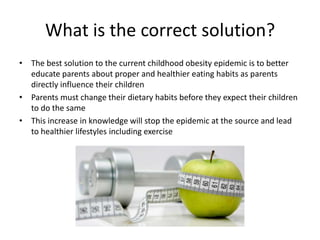
What is the correct solution?
• The best solution to the current childhood obesity epidemic is to better
educate parents about proper and healthier eating habits as parents
directly influence their children
• Parents must change their dietary habits before they expect their children
to do the same
• This increase in knowledge will stop the epidemic at the source and lead
to healthier lifestyles including exercise
Some more suggested solutions
• Tax breaks for organic and healthy foods at
grocery stores and restaurants to make it
easier for parents to obtain better food for
themselves and their children
• Mandatory classes for healthy eating and
cooking at schools that involve parental
attendance
Other steps taken to stop the epidemic
• Michelle Obama’s “Let’s Move”
– The program focuses a majority of efforts on improving the school
environment
– Providing healthier food options
– Promoting more physical activity
– Strives to make healthy food more readily available and affordable in
low-income communities
What can you do?
• Be aware of the childhood obesity epidemic
• Realize that your food choices influences the
younger generation
• Promote healthy living including dieting and
exercise

Childhood Obesity Presentation

  • 1.
  • 2.
    Childhood Obesity: KeyFacts • Throughout the past thirty years, children and adolescents with childhood obesity have doubled and tripled • In 2010 over one third of all children and adolescents in the United States were overweight or obese • An overweight child can be defined as a child with a BMI between the 85th and 95th percentile • An obese child can be defined as a child that is above the 95th percentile for children of the same age and gender
  • 3.
    Current Obesity Trends •In general, the entire United States population has grown considerably over the past 30 years 15% 19% 25% 36% 0% 5% 10% 15% 20% 25% 30% 35% 40% 1990 1997 2004 2010 Obesity Rates in the United States
  • 4.
    What is causingthis epidemic in children and adolescents? • Scientists argue that there are many causes for the current overweight and obesity rates in children and adolescents including fast food, lack of exercise, soda, and larger portion sizes
  • 5.
    The true causeof the epidemic • Parents.
  • 6.
    Parents are theprimary cause for multiple reasons • When children live with their parents they typically share meals and form the same eating habits • Studies show that what parents eat, will greatly impact the type of foods that their children consume • American eating habits are poor • According to a recent survey, every eight in ten individuals eat fast food monthly, with more than half reporting that they eat it weekly
  • 7.
    Why does itmatter? • Childhood obesity greatly impacts America’s future generation • If not stopped could be the first generation to live sicker and die at a younger age than parent’s generation • Leads to multiple diseases such as: – Pre-diabetes – Type 2 diabetes – Cardiovascular disease – High blood pressure – High cholesterol – Asthma • Direct and indirect obesity-related medical costs are increasing exponentially approximately $147 billion in 2008
  • 8.
    What is thecorrect solution? • The best solution to the current childhood obesity epidemic is to better educate parents about proper and healthier eating habits as parents directly influence their children • Parents must change their dietary habits before they expect their children to do the same • This increase in knowledge will stop the epidemic at the source and lead to healthier lifestyles including exercise
  • 9.
    Some more suggestedsolutions • Tax breaks for organic and healthy foods at grocery stores and restaurants to make it easier for parents to obtain better food for themselves and their children • Mandatory classes for healthy eating and cooking at schools that involve parental attendance
  • 10.
    Other steps takento stop the epidemic • Michelle Obama’s “Let’s Move” – The program focuses a majority of efforts on improving the school environment – Providing healthier food options – Promoting more physical activity – Strives to make healthy food more readily available and affordable in low-income communities
  • 11.
    What can youdo? • Be aware of the childhood obesity epidemic • Realize that your food choices influences the younger generation • Promote healthy living including dieting and exercise