Intestinal Stomas
Dr Manoj kumar
Introduction
• Stoma is an opening of intestinal tract onto
abdominal wall.
• Can be temporary or permanent
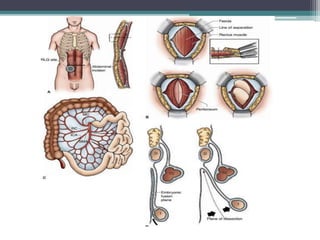
Selection of stoma site
• The location must be carefully selected
preoperatively.
• It should avoid any deep folds of fat, scars, and
bony prominences of the abdominal wall.
• The site is chosen by evaluating the patient in
the standing, sitting, and supine positions.
• Right lower quadrant for ileostomy and
• Left lower quadrant for colostomy is ideal.
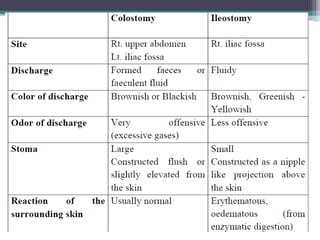
Colostomy
• The most common indication for fashioning a
colostomy is cancer of the rectum.
• Other indications are distal colorectal
anastomosis and perforations
Types
• By duration
1. Temporary
2. Permanent
• By anatomic location
▫ End sigmoid
▫ End descending
▫ Transverse colon
▫ Cecostomy
• By type of function
▫ To provide decompression of the large
intestine
▫ To provide diversion of the feces.
Decompressing colostomy
• Bridge to definitive operation.
• May not provide complete diversion.
• Types :
1. Blow-hole
2. Tube cecostomy
3. Loop colotomy
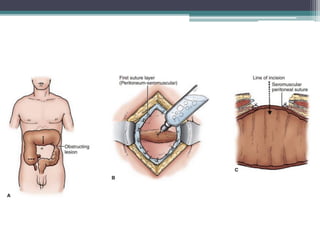
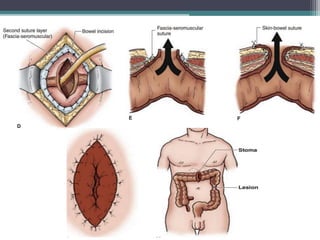
Blow-hole colostomy
• Rarely done.
• Reserved in critically ill patients.
• Small incision.
• Temperory.
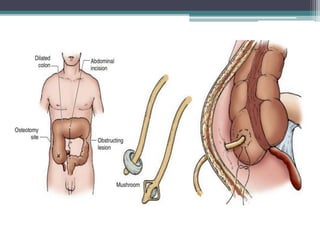
Tube cecostomy
• Similar to blow hole.
• Less prolapse, but usually blocked with feces.
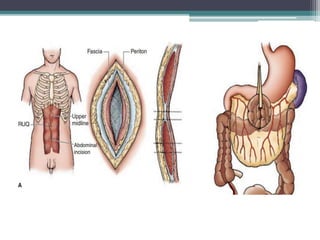
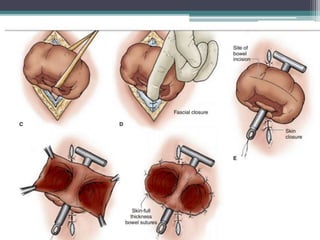
Loop colostomy
• Can be done using transverse or descending
colon.
• Can serve as long term stoma.
• If this stoma is properly constructed, the
posterior wall will bulge upward, providing the
desired diversion as well as decompression.
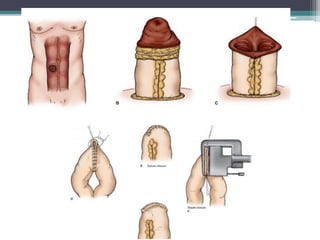
• If there is a possibility that the colostomy may
become permanent, it may be advantageous to
divide the colon with a stapler and create a
“divided end-loop” stoma
Diversion colostomy
• It is performed when
1. The distal segment of bowel has been completely
resected.
2. Perforation or obstruction of the distal bowel
3. Destruction or infection of the distal colon,
rectum, or anus (eg, Crohn’s disease or failed
anal sphincter reconstruction).
• Only made by complete transection of colon.
• A well constructed loop colostomy may serve as
diverting colostomy.
• The distal limb may be closed or brought out to
make mucous fistula depending upon the
underlying condition.
Irrigation
• Can be done in properly constructed and well
functioning colostomy.
• Improved quality of life.
• Poor results in some patients.
Ileostomy
• Construction should be more precise than for a
colostomy.
• Can be temporary or permanent.
1. End ileostomy
2. Loop ileostomy
3. Loop end ileostomy
4. Continent ileostomy
End ileostomy
• Mostly permanent.
• Done in ulcerative colitis, familial polyposis.
• Loop ileostomy becoming more common.
• Distal end of ileum is preferred.
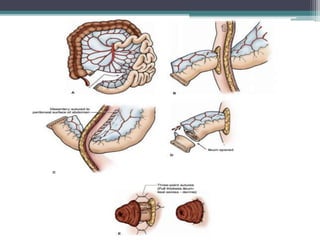
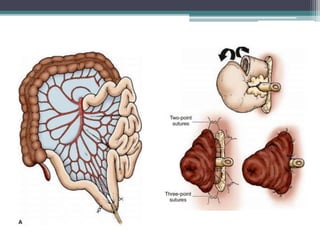
Loop ileostomy
• Mostly temporary
• Serves both diversion and decompression
• For complete diversion divided end loop method
is used.
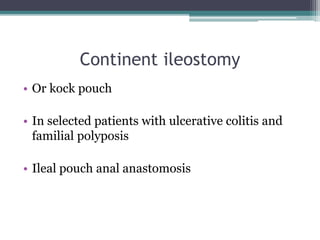
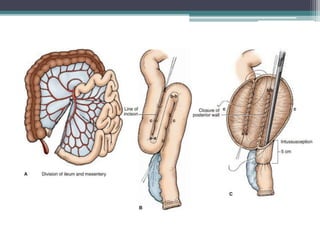
Continent ileostomy
• Or kock pouch
• In selected patients with ulcerative colitis and
familial polyposis
• Ileal pouch anal anastomosis
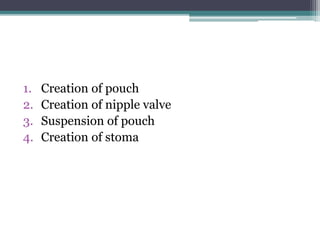
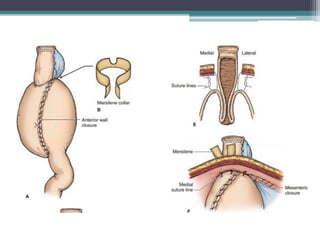
1. Creation of pouch
2. Creation of nipple valve
3. Suspension of pouch
4. Creation of stoma
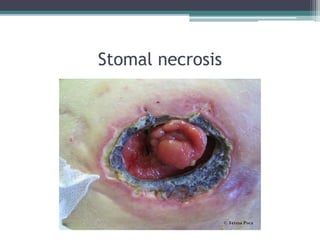
Stomal necrosis
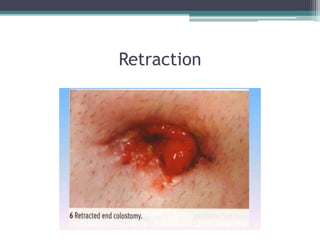
Retraction
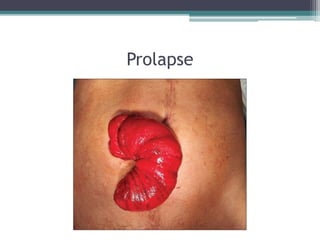
Prolapse
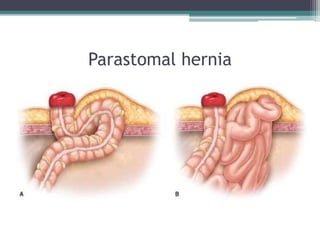
Parastomal hernia
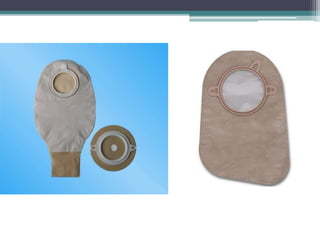
Stoma bags
• Closed end bags
• Open end bags
• One piece system
• Two piece system
Closure of stoma
• Important to decide when to close.
1. Distal integrity
2. Adequacy of sphincter
3. Primary cause
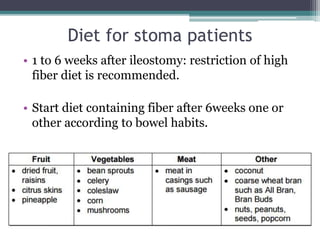
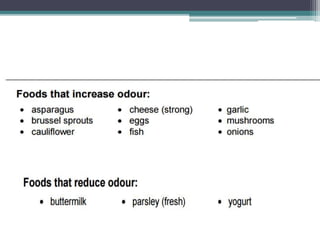
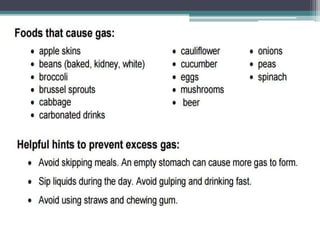
Diet for stoma patients
• 1 to 6 weeks after ileostomy: restriction of high
fiber diet is recommended.
• Start diet containing fiber after 6weeks one or
other according to bowel habits.
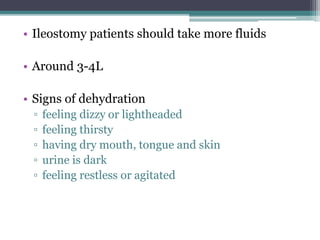
• Ileostomy patients should take more fluids
• Around 3-4L
• Signs of dehydration
▫ feeling dizzy or lightheaded
▫ feeling thirsty
▫ having dry mouth, tongue and skin
▫ urine is dark
▫ feeling restless or agitated
Appendicular stoma
• Mitrofanoff appendico vesicostomy
• Malone antegrade enema
Thank you

stoma-170724172245 (1).pdf

  • 1.
  • 2.
    Introduction • Stoma isan opening of intestinal tract onto abdominal wall. • Can be temporary or permanent
  • 3.
    Selection of stomasite • The location must be carefully selected preoperatively. • It should avoid any deep folds of fat, scars, and bony prominences of the abdominal wall. • The site is chosen by evaluating the patient in the standing, sitting, and supine positions.
  • 4.
    • Right lowerquadrant for ileostomy and • Left lower quadrant for colostomy is ideal.
  • 5.
    Colostomy • The mostcommon indication for fashioning a colostomy is cancer of the rectum. • Other indications are distal colorectal anastomosis and perforations
  • 6.
    Types • By duration 1.Temporary 2. Permanent
  • 7.
    • By anatomiclocation ▫ End sigmoid ▫ End descending ▫ Transverse colon ▫ Cecostomy
  • 8.
    • By typeof function ▫ To provide decompression of the large intestine ▫ To provide diversion of the feces.
  • 9.
    Decompressing colostomy • Bridgeto definitive operation. • May not provide complete diversion. • Types : 1. Blow-hole 2. Tube cecostomy 3. Loop colotomy
  • 10.
    Blow-hole colostomy • Rarelydone. • Reserved in critically ill patients. • Small incision. • Temperory.
  • 13.
    Tube cecostomy • Similarto blow hole. • Less prolapse, but usually blocked with feces.
  • 15.
    Loop colostomy • Canbe done using transverse or descending colon. • Can serve as long term stoma.
  • 18.
    • If thisstoma is properly constructed, the posterior wall will bulge upward, providing the desired diversion as well as decompression. • If there is a possibility that the colostomy may become permanent, it may be advantageous to divide the colon with a stapler and create a “divided end-loop” stoma
  • 19.
    Diversion colostomy • Itis performed when 1. The distal segment of bowel has been completely resected. 2. Perforation or obstruction of the distal bowel 3. Destruction or infection of the distal colon, rectum, or anus (eg, Crohn’s disease or failed anal sphincter reconstruction).
  • 20.
    • Only madeby complete transection of colon. • A well constructed loop colostomy may serve as diverting colostomy. • The distal limb may be closed or brought out to make mucous fistula depending upon the underlying condition.
  • 21.
    Irrigation • Can bedone in properly constructed and well functioning colostomy. • Improved quality of life. • Poor results in some patients.
  • 22.
    Ileostomy • Construction shouldbe more precise than for a colostomy. • Can be temporary or permanent. 1. End ileostomy 2. Loop ileostomy 3. Loop end ileostomy 4. Continent ileostomy
  • 23.
    End ileostomy • Mostlypermanent. • Done in ulcerative colitis, familial polyposis. • Loop ileostomy becoming more common.
  • 24.
    • Distal endof ileum is preferred.
  • 27.
    Loop ileostomy • Mostlytemporary • Serves both diversion and decompression • For complete diversion divided end loop method is used.
  • 29.
    Continent ileostomy • Orkock pouch • In selected patients with ulcerative colitis and familial polyposis • Ileal pouch anal anastomosis
  • 30.
    1. Creation ofpouch 2. Creation of nipple valve 3. Suspension of pouch 4. Creation of stoma
  • 35.
  • 36.
  • 37.
  • 38.
  • 39.
    Stoma bags • Closedend bags • Open end bags • One piece system • Two piece system
  • 41.
    Closure of stoma •Important to decide when to close. 1. Distal integrity 2. Adequacy of sphincter 3. Primary cause
  • 43.
    Diet for stomapatients • 1 to 6 weeks after ileostomy: restriction of high fiber diet is recommended. • Start diet containing fiber after 6weeks one or other according to bowel habits.
  • 44.
    • Ileostomy patientsshould take more fluids • Around 3-4L • Signs of dehydration ▫ feeling dizzy or lightheaded ▫ feeling thirsty ▫ having dry mouth, tongue and skin ▫ urine is dark ▫ feeling restless or agitated
  • 49.
    Appendicular stoma • Mitrofanoffappendico vesicostomy • Malone antegrade enema
  • 50.