Steroids
Presented By
Vijay S
MSc chemistry 1st yr
Organic
Chemistry
T.W. GRAHAM SOLOMONS
CRAIG B. FRYHLE
Steroids
• Steroids are important “biological
regulators” that nearly always show
dramatic physiological effects when they
are administrated to living organisms
• that include cholesterol, male and female
sex hormones, adrenocortical hormones,
D vitamins, the bile acids
Structure and systematic Nomenclature
of steroids
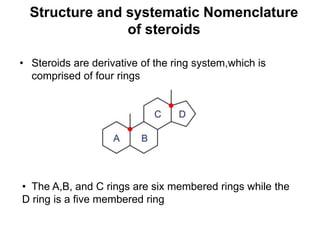
• Steroids are derivative of the ring system,which is
comprised of four rings
• The A,B, and C rings are six membered rings while the
D ring is a five membered ring
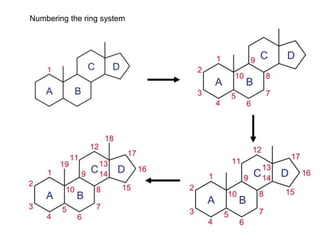
Numbering the ring system
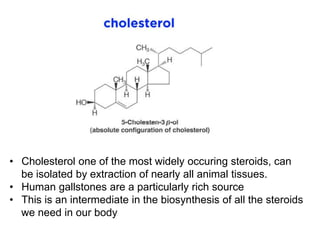
• Cholesterol one of the most widely occuring steroids, can
be isolated by extraction of nearly all animal tissues.
• Human gallstones are a particularly rich source
• This is an intermediate in the biosynthesis of all the steroids
we need in our body
• Cholesterol has eight sterocentres which means 256
different stereoisomers of this structure are possible, but
only this specific one is cholesterol.
• Although we often consume cholesterol, we don’t need to
because we also make it ourselves, So we will typically
have more cholesterol than we need, and too much
cholesterol in the diet leads to clogged arteries and heart
problems.
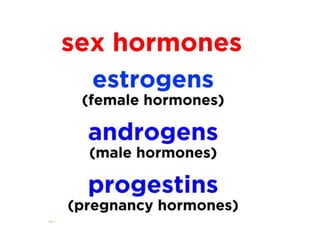
• The female hormones, These are estrone and
estradiol, which differ only in the level of oxidation at
carbon-17
• Estradiol is secreted by the Ovaries and Kicks off the
changes that occur during puberty,and also causes
development of the mammary glands during
pregnancy
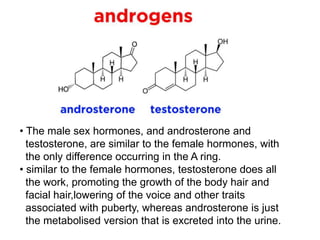
• The male sex hormones, and androsterone and
testosterone, are similar to the female hormones, with
the only difference occurring in the A ring.
• similar to the female hormones, testosterone does all
the work, promoting the growth of the body hair and
facial hair,lowering of the voice and other traits
associated with puberty, whereas androsterone is just
the metabolised version that is excreted into the urine.
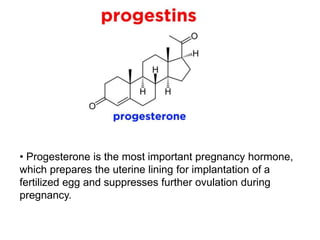
• Progesterone is the most important pregnancy hormone,
which prepares the uterine lining for implantation of a
fertilized egg and suppresses further ovulation during
pregnancy.
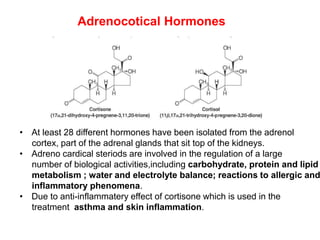
Adrenocotical Hormones
• At least 28 different hormones have been isolated from the adrenol
cortex, part of the adrenal glands that sit top of the kidneys.
• Adreno cardical steriods are involved in the regulation of a large
number of biological activities,including carbohydrate, protein and lipid
metabolism ; water and electrolyte balance; reactions to allergic and
inflammatory phenomena.
• Due to anti-inflammatery effect of cortisone which is used in the
treatment asthma and skin inflammation.
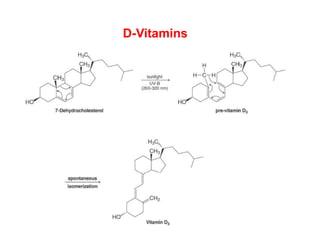
D-Vitamins
• The demonstratrion in 1919, the sunlight helps to
cure rickets- a childhood disease characterized by
poor bone growth.
• Vitamin D3 is the curative factor.
• vitamin D3 is required for good health because it is
essential in the process by which calcium (as Ca2+)
is absorbed from the intestine so as to allow for
proper bone growth.
• Vitamin D3 is formed in the in skin from
7- dehydrocholesterol by two reactions.
Bile Acids
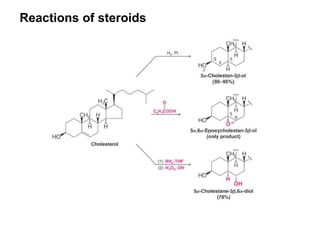
Reactions of steroids
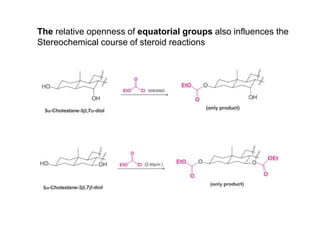
The relative openness of equatorial groups also influences the
Stereochemical course of steroid reactions

Steroids

  • 1.
    Steroids Presented By Vijay S MScchemistry 1st yr Organic Chemistry T.W. GRAHAM SOLOMONS CRAIG B. FRYHLE
  • 2.
  • 3.
    • Steroids areimportant “biological regulators” that nearly always show dramatic physiological effects when they are administrated to living organisms • that include cholesterol, male and female sex hormones, adrenocortical hormones, D vitamins, the bile acids
  • 4.
    Structure and systematicNomenclature of steroids • Steroids are derivative of the ring system,which is comprised of four rings • The A,B, and C rings are six membered rings while the D ring is a five membered ring
  • 5.
  • 10.
    • Cholesterol oneof the most widely occuring steroids, can be isolated by extraction of nearly all animal tissues. • Human gallstones are a particularly rich source • This is an intermediate in the biosynthesis of all the steroids we need in our body
  • 11.
    • Cholesterol haseight sterocentres which means 256 different stereoisomers of this structure are possible, but only this specific one is cholesterol. • Although we often consume cholesterol, we don’t need to because we also make it ourselves, So we will typically have more cholesterol than we need, and too much cholesterol in the diet leads to clogged arteries and heart problems.
  • 13.
    • The femalehormones, These are estrone and estradiol, which differ only in the level of oxidation at carbon-17 • Estradiol is secreted by the Ovaries and Kicks off the changes that occur during puberty,and also causes development of the mammary glands during pregnancy
  • 14.
    • The malesex hormones, and androsterone and testosterone, are similar to the female hormones, with the only difference occurring in the A ring. • similar to the female hormones, testosterone does all the work, promoting the growth of the body hair and facial hair,lowering of the voice and other traits associated with puberty, whereas androsterone is just the metabolised version that is excreted into the urine.
  • 15.
    • Progesterone isthe most important pregnancy hormone, which prepares the uterine lining for implantation of a fertilized egg and suppresses further ovulation during pregnancy.
  • 16.
    Adrenocotical Hormones • Atleast 28 different hormones have been isolated from the adrenol cortex, part of the adrenal glands that sit top of the kidneys. • Adreno cardical steriods are involved in the regulation of a large number of biological activities,including carbohydrate, protein and lipid metabolism ; water and electrolyte balance; reactions to allergic and inflammatory phenomena. • Due to anti-inflammatery effect of cortisone which is used in the treatment asthma and skin inflammation.
  • 17.
  • 18.
    • The demonstratrionin 1919, the sunlight helps to cure rickets- a childhood disease characterized by poor bone growth. • Vitamin D3 is the curative factor. • vitamin D3 is required for good health because it is essential in the process by which calcium (as Ca2+) is absorbed from the intestine so as to allow for proper bone growth. • Vitamin D3 is formed in the in skin from 7- dehydrocholesterol by two reactions.
  • 19.
  • 20.
  • 22.
    The relative opennessof equatorial groups also influences the Stereochemical course of steroid reactions