Steps to a Successful Solar Request for Proposal (RFP)
 Procurement officers play an increasingly key and leadership-oriented role in the efficient and effective functioning of
 the local governments they serve. They are responsible for leveraging money to acquire the goods and services local
 governments require to meet not only their own operational needs, but also the needs of the citizens they serve.
 Additionally, these officials are relied on more and more to assume a leadership role in streamlining procurement
 efforts with an eye toward improving efficiency (both in terms of processes and costs) and focusing on outcomes.1
 Meeting these objectives can prove challenging when purchasing goods and commodities with which procurement
 officers are already familiar; these difficulties are compounded when novel acquisitions need to be made. For many
 procurement officers, the purchase of a solar energy system falls into the latter of these two categories. Solicitations
 for these systems require that technical or otherwise unfamiliar information be collected, and necessitate the inclusion
 of a number of unique considerations.

 This issue brief has been designed for those individuals overseeing procurement for the local government they serve
 with the specific goal of helping them develop successful Requests for Proposals (RFPs) for solar energy systems.
 Readers will learn about the essential elements of a solar RFP, receive introductory guidance on how to evaluate any
 proposals received, and be directed toward tools, resources, and sample documents that can help maximize the
 effectiveness of their solar procurement efforts.

 Solar Procurement: A Tale of Two Cities

 Relying solely or too heavily on existing, non-solar specific RFPs or excluding certain key elements from your local
 government’s solar RFP template can have a negative impact on the number and quality of responses received. The
 two cases that follow illustrate how procurement of a solar energy system (or services) can be seriously hampered by
 overly restrictive or otherwise inadequate solar RFPs.

 Milwaukee Shines: Solar Water Heating System Procurement

 In 2007, the City of Milwaukee, Wisconsin sought to install solar water heating (SWH) systems on nine municipal fire
 houses through its city-run solar program, Milwaukee Shines. Prior to this effort, the City had limited experience in
 contracting for solar and, as such, had no pre-existing solar-only RFP template. In order to find and contract with a
 qualified bidder, the City had to rely on existing RFP practices. However, different City departments used different
 procurement processes, with levels of detail in these RFP templates varying widely across departments, thus making it
 difficult for Milwaukee Shines staff to know the proper level of detail to include in their RFP for solar. Once the RFP was
 developed and issued and proposals were received, the City found the bids it received to be double the cost of what
 had been budgeted for the installations. Feedback from contractors showed that the RFP was too restrictive for the
 available budget. The City had overdesigned the systems, including too many specific equipment requirements in an
 attempt to ensure maximum system quality.


www.TheSolarFoundation.org                                                                                   October 10, 2012
Having learned from this mistake, Milwaukee Shines rewrote the RFP to make it more outcome-based, specifying
desired levels of system output, rather than prescribed equipment requirements. Through the improved RFP, the City
received a proposal that met its needs and was able to award a contract to the bidder. However, it was soon
discovered that the second RFP was still too specific; many of the nine site locations indicated in the RFP were
structurally inadequate to host a SWH system without significant upgrades that would jeopardize the project’s
economic viability. Additionally, the City included no requirements for system operations and maintenance (O&M) in
the RFP, incorrectly assuming fire department staff would assume these responsibilities.

Under the guidance of City engineering staff, the program conducted site assessments to identify which properties
could structurally support SWH systems. During this time, the City was awarded a Special Projects Grant through the
U.S. Department of Energy’s Solar America Cities program, which attracted a donation of $200,000 worth of SWH
equipment from a local manufacturer (Caleffi). The City then drafted a third RFP to include this information, along with
a requirement that the successful respondent conduct on-site training sessions, a result of the City adopting a
secondary focus on using these installations to train new installers. Milwaukee Shines issued this final RFP in early 2010
and ultimately found one installer that met all of its criteria.2

City of San Jose, California: Contracting for a Power Purchase Agreement

As part of its effort to meet the electricity needs of its municipal properties solely through renewable resources, while
simultaneously reducing energy costs, the City of San Jose, California, issued an RFP for a Power Purchase Agreement
(PPA). Under a PPA, the customer (in this case the City of San Jose) hosts a solar energy system and purchases the
electricity it produces at a fixed rate through a long-term contract (usually around 20 years) with the system developer,
who retains ownership of the system and typically assumes responsibility for system financing and O&M. i Two of the
City’s initial RFPs were unsuccessful. The first, an RFP for a one megawatt (MW) system at the municipal airport,
received bids that were three times what the City paid for electricity from the utility. In an effort to identify the cause
of these unacceptably high bids, the City solicited feedback from the respondents, who cited some overly restrictive
elements in the RFP (e.g., restrictions on site access, bonding requirements, mutual indemnification clauses, and
making payments contingent on annual appropriations) as the cause for the high bids.

The City attempted to incorporate this feedback into a second RFP for a different location, but was limited legally in
what they could change. Only one proposal was received under this RFP, with the respondent failing to meet the
minimum requirements. In response to this, the City issued a Request for Information and convened stakeholder
meetings to allow installers and vendors the opportunity to provide input for the RFP development process. Based on
this feedback, the City was able to develop a more flexible (and ultimately successful) RFP, which it was then able to
use as a template for obtaining PPAs for 28 municipal facilities.3


i
 Power Purchase Agreements are a specific form of what are known as Third-Party Ownership Models, which also include solar leases.
For a discussion of the advantages and disadvantages of PPAs, see the National Renewable Energy Laboratory (NREL) report entitled
Solar Photovoltaic Financing: Deployment on Public Property by State and Local Governments, available at
www.nrel.gov/docs/fy08osti/43115.pdf; a similar discussion on the pros and cons of solar leases can be found in the NREL report, Solar
PV Project Financing: Regulatory and Legislative Challenges for Third-Party PPA System Owners, available at
www.nrel.gov/docs/fy10osti/46723.pdf                                                                                             Page 2

                                                        The Solar Foundation
     th
505 9 Street NW, Suite 800               Washington, DC 20004          (202) 469-3750                www.TheSolarFoundation.org
Developing a Successful Solar RFP

Through these examples and others like them, it is possible to derive a number of general best practices for developing
a quality solar-specific RFP.

Start with a Clear, Well-Defined Goal

Perhaps more than any other factor, the reason for purchasing a solar energy system or pursuing a PPA will dictate the
nature of the proposals received and the installer or vendor who is ultimately awarded a contract. 4 The Milwaukee
Shines case provides a great example of how starting with a goal in mind can influence the outcome of the
procurement process. In the third and final RFP, the City altered its reason for pursuing SWH systems to include a
secondary focus on using these installations to train the City’s next generation of solar thermal installers. By including
this as a goal, the City excluded from eligibility those respondents who were unable to design and host these training
sessions. Similarly, the purpose behind San Jose’s desire to enter into solar PPAs was not only to derive the electricity
used by municipal facilities from renewable sources, but to do so in a manner that resulted in cost savings for the City.
Other possible reasons for a local government to go solar include, but are not limited to: having the system serve as a
demonstration project, creating local solar jobs, or reducing greenhouse gas emissions – each of which will influence
the outcome of the procurement process.

Early Involvement of a Broad Set of Stakeholders

Purchasing a solar energy system or services requires the expertise of a number of internal stakeholders outside of the
procurement division.5 Including these stakeholders in the early stages of the RFP development process will enhance
the success of the RFP that is finally issued. Local government staff with expertise in financial analysis will be required
to advise on best practices for ensuring the proposals received will describe systems that are economically viable and
that maximize the county’s or municipality’s return on investment. As illustrated by Milwaukee’s experience with solar
procurement, engineering staff will be needed to advise on a site’s structural suitability for solar, and facilities staff can
offer advice or identify any knowledge gaps (to be addressed by additional training or resources from the installer)
regarding operations and maintenance requirements. Support from legal staff will be essential for ensuring the new
solar RFP meets the requirements of applicable procurement laws and for the review of any PPA proposals. Because
processes and priorities vary across jurisdictions, it is difficult to provide an exhaustive list of internal stakeholders.
Each local government should reach out to the various departments of which it is composed to determine who should
be included in the RFP development process.

San Jose’s experience with pursuing a PPA shows the value of including external stakeholders as well. By issuing
Requests for Information and hosting stakeholder meetings, local governments can obtain valuable feedback from
installers and vendors throughout the RFP development process.


                                                                                                                       Page 3


                                                     The Solar Foundation
     th
505 9 Street NW, Suite 800            Washington, DC 20004          (202) 469-3750            www.TheSolarFoundation.org
Outcome-Based Requests for Proposals

Both the Milwaukee and San Jose examples illustrate how an overly restrictive RFP can thwart the procurement
process. One remedy to this challenge is to develop outcome-based RFPs, focused on system output requirements
rather than specific system-design criteria.6 Doing so will provide respondents the flexibility to design a system that will
lead to the desired output at the local government’s desired cost.

In designing an outcome-based solar RFP, however, it is important that this information be reported in a standard
format that facilitates easy proposal review. Requiring all respondents to report system performance in terms of
kilowatt-hours (kWh) of electricity generated annually over the system’s lifetime or in the number of kilowatts (kW) of
installed solar capacity will make the local government’s review of these proposals much more efficient. To further
improve the simplicity and accuracy of the comparison-making process, respondents should be encouraged to use the
same methods or tools to estimate system output. See Table 1 below for a list of some commonly used tools. Finally,
this “common metrics” standard should be applied to as much of the other information requested from respondents
as possible (e.g., contractor experience, equipment specifications, emissions reductions, etc.).7

Table 1: Tools for Estimating Solar Energy System Output
Tool and Description                                                                   Link
RETScreen International: Clean Energy Project Analysis provides output estimates for
photovoltaic and solar heating and cooling systems worldwide.                          www.retscreen.net/ang/home.php

NREL: In My Backyard (IMBY) PV System Analysis is a graphics-based tool that uses
system size, location, and other variables to predict system output for PV systems.    maps.nrel.gov/imby


NREL PVWatts Calculator provides photovoltaic output estimates for a wider range of    www.nrel.gov/rredc/pvwatts/ (PVWatts)
system array types than the IMBY tool. Can receive data exported from the graphics-    gisatnrel.nrel.gov/PVWatts_Viewer/index.html
based PVWatts Viewer.                                                                  (PVWatts Viewer)
NREL’s System Advisor Model (SAM) uses data on system cost and design to predict
system performance and estimate the price of electricity produced by grid-connected    sam.nrel.gov
power systems.


Provide Site Information and Conduct Site Assessments

As much as possible, local governments should provide potential respondents with as much information regarding
relevant site characteristics as is technically or financially feasible. Such information can include aerial photography or
topographic maps,8 facility energy load information,9 building plans, as well as shading, electrical, and structural
analyses of the site.10 However, a local government’s ability to conduct some of these analyses may be limited by
financial constraints or the availability of in-house expertise. In some cases, the county or municipality may be able to
pass some of these responsibilities (e.g., shading analyses) off to the respondent, who can recoup these costs in their
bids or the PPA rates they offer. If your local government decides to delegate some of these assessments to the
installer or project developer, it is essential to ensure these respondents have easy and adequate site access to gather
this information.11
                                                                                                                            Page 4


                                                           The Solar Foundation
      th
505 9 Street NW, Suite 800                  Washington, DC 20004          (202) 469-3750          www.TheSolarFoundation.org
Consider Hiring a Consultant or Owner’s Agent

Given the complexity and the negotiations involved in solar procurement, many cities and town have found it
advantageous to hire a consultant or owner’s agent to guide them (and advocate for them) throughout the
procurement process. Some states may even provide funding opportunities for municipalities to hire a consultant or
owner’s agent. For example, the Massachusetts Department of Energy Resources (DOER) has begun providing funding
for owner’s agent services,12 and the Merrimack Valley Planning Commission retains an energy management
consultant to assist its member communities with solar procurement and to develop a set of shared standardized
procurement documents including RFPs and model contracts.13

Key Solar RFP Elements

In addition to the considerations listed in the previous section, local governments developing a solar-only RFP should
include as many of the following RFP elements as feasible or applicable to their unique circumstances, along with those
elements required by law in their jurisdiction. Note that this is not meant to be an exhaustive list of RFP elements.
Many jurisdictions will likely want to include more elements than those listed on the following pages.

Roof Integrity and Warranties

For rooftop SWH or photovoltaic (PV) installations, it is necessary to ensure that the building is structurally sound
enough to support a solar energy system and that it will continue to be during the project’s estimated useful lifetime. A
general rule is to select only roofs that will not require replacement for at least 15 years.14 In addition, roofs should be
generally south-facing, avoid excessive shading from vegetation or nearby buildings,15 remain within acceptable ranges
for wind and snow loads,16 have enough space to support a solar energy system of the size desired, provide for easy
and tasteful electrical or plumbing connection, and have no significant aesthetic concerns preventing installation.17

Respondents should also be required to ensure that the installation of rooftop solar energy systems will not adversely
impact roof integrity or violate existing roof warranties. Contractors should be required to obtain written certification
from the parties issuing or overseeing the roof warranty that the proposed solar installation will not nullify or void this
warranty, or else provide their own warranty for the roof.18 The National Renewable Energy Laboratory developed the
SolOpt Optimization Tool to assist installers and solar customers in calculating the optimal size for rooftop PV or SWH,
available for download at www4.eere.energy.gov/solar/sunshot/resource_center/resources/solopt_optimization_tool.

Financial Requirements

Respondents should be required to submit documents that adequately and accurately demonstrate their financial
capacity to cover any applicable up-front design and installation costs, any administrative or other costs associated
with development, and any costs associated with recurring responsibilities, such as operations and maintenance.19, 20
These financial capabilities can be certified through statements from financial institutions, business references, annual
reports, credit ratings, or other documents deemed an acceptable substitute.

                                                                                                                     Page 5


                                                    The Solar Foundation
     th
505 9 Street NW, Suite 800           Washington, DC 20004          (202) 469-3750           www.TheSolarFoundation.org
Permitting and Interconnection Responsibility

It is common practice for local governments to make the successful respondent fully and solely responsible for
obtaining - and covering all costs associated with - any required permits (e.g., building, construction, electrical,
plumbing, environmental, zoning, etc.) and utility interconnection agreements.

Team Qualifications and Solar Project Experience

Local governments should request that respondents submit information indicating their qualifications to undertake the
project in question. Company profiles, lists of relevant state licenses and industry certifications, proof of insurance,
bonding safety ratings, project team background and qualifications, business references, and any solar project
experience (e.g., total number and capacity of systems installed, differentiated by installation type; experience with
certain technology brands; experience with grid interconnection) will help procurement staff identify the most
qualified candidate for the contract.21

Technical Specifications

This section should outline information on respondents’ proposed technical approach and further information on the
system equipment to be used. For a PV system, this can include information on module type (including brand name,
model numbers, and technology), inverters (brand, type, and efficiency), monitoring and data acquisition systems, and
balance of system components.22 However, in an effort to not be overly prescriptive, it is often advised that this
section be completed by the respondent.

Operations and Maintenance

Although solar is relatively O&M free, the RFP developed by your procurement team should be cognizant of the
operations and maintenance needs that do exist and either contract with the solar developer or another party to
handle these responsibilities, or ensure that local government staff has the training and resources they need to
perform this function internally. If your jurisdiction chooses the latter option, your solar RFP should specify that the
successful respondent is responsible for either providing the relevant personnel with O&M manuals or onsite training,
or both.23, 24

Performance Monitoring and Performance Guarantees

An essential component for ensuring that local governments receive the product or service contracted through an
outcome-based solar RFP is the monitoring of system performance. Such monitoring can accomplish a number of
project goals besides merely ensuring system quality, such as tracking production for the purposes of calculating the
number of renewable energy credits generated25 or demonstrating the benefits of the system to the community.26 At
its most basic, system performance can be monitored through inverter kWh displays (for solar PV) or using flow meters
and temperature sensors (for SWH).27 Similarly, given the relative predictability of solar PV output over time, it is not
unreasonable to ask the respondent to provide some form of performance guarantee, especially when entering into a
power purchase agreement.                                                                                         Page 6


                                                   The Solar Foundation
     th
505 9 Street NW, Suite 800          Washington, DC 20004          (202) 469-3750          www.TheSolarFoundation.org
Milestones with Completion Dates

To ensure the project proceeds as planned, respondents can be required to submit detailed project plans, listing major
milestones and anticipated completion dates.28 Such milestones might include: obtaining required permits, equipment
purchasing, organizing project finance, commencement of construction/installation and system operation, and
approval of interconnection requests.29 Some local governments have placed a premium on the value of these
milestones, making payment for the project contingent on the contractor’s ability to successfully adhere to his or her
proposed schedule.30

Equipment or Labor Origin Requirements and Community Benefits

Jurisdictions wishing to stimulate a local solar market or ensure that as many of the project benefits as possible are
retained in the area can include requirements that respondents use local materials and/or labor.31 Similarly, local
governments can include requirements within the RFP directing respondents to identify and describe any community
benefits associated with the project being proposed.32

Sample Solar RFPs

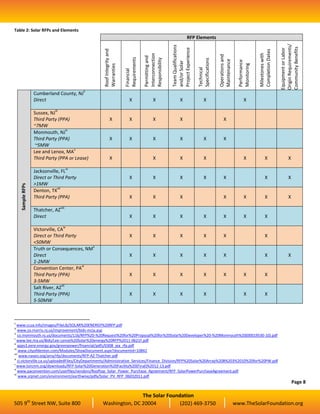
Table 2 on the following page contains a list of solar-specific RFPs that were collected and reviewed for the
development of this guide. Each row references the RFP name, the ownership type sought (direct or third-party), and
system size (if applicable), with links to these documents provided in the footnotes. The solar RFP elements discussed
in the previous section are listed in the columns; with an ‘X’ indicating which of the RFPs listed contains sample
language related to that element.

Weighing Criteria and Evaluating Bids

Determining how the aforementioned criteria are evaluated, weighed, and scored is equally as important as making
sure this information is collected in the first place. Despite this, there is no standard method for allocating points; each
element will be weighed according to the project goals identified at the beginning of the RFP development process.
However, there are some standard practices that can help local governments develop weights that will allow them to
properly score the proposals received.

In general, procurement staff should begin by assigning initial weights to each of the evaluative criteria included in the
RFP. Once assigned, these initial weights should be submitted to the internal stakeholder group, whose feedback
should be used to reassign weights as necessary. Once these weights have been determined, a scorecard should be
developed that simply and clearly shows all the elements under consideration and how much each contributes to the
final score assigned.33 An example of such a scorecard is provided in Figure 1 on page 9.


                                                                                                                     Page 7


                                                    The Solar Foundation
     th
505 9 Street NW, Suite 800           Washington, DC 20004          (202) 469-3750           www.TheSolarFoundation.org
Table 2: Solar RFPs and Elements
                                                                                                                              RFP Elements


                                                                                                                                                                                                           Origin Requirements/
                                                                                                                Team Qualifications


                                                                                                                                                                                                           Community Benefits
                                                                                                                Project Experience


                                                                                                                                                                                                           Equipment or Labor
                                                          Roof Integrity and


                                                                                                                                                                                        Completion Dates
                                                                                                                                                                                        Milestones with
                                                                                              Interconnection


                                                                                                                                                       Operations and
                                                                                              Permitting and
                                                                               Requirements


                                                                                              Responsibility


                                                                                                                                      Specifications


                                                                                                                                                       Maintenance

                                                                                                                                                                          Performance
                                                                                                                and/or Solar


                                                                                                                                                                          Monitoring
                                                          Warranties


                                                                                                                                      Technical
                                                                               Financial
                                                     ii
                         Cumberland County, NJ
                         Direct                                                    X                 X                 X                    X                                 X
                                   iii
                         Sussex, NJ
                         Third Party (PPA)                       X                 X                 X                 X                                   X
                         ~7MW
                                        iv
                         Monmouth, NJ
                         Third Party (PPA)                       X                 X                 X                 X                    X              X
                          ~5MW
                                            v
                         Lee and Lenox, MA
                         Third Party (PPA or Lease)              X                                   X                 X                    X                                 X                X                   X

                                                vi
                         Jacksonville, FL
                         Direct or Third Party                                     X                 X                 X                    X              X                                   X                   X
                         >1MW
      Sample RFPs


                                     vii
                         Denton, TX
                         Third Party (PPA)                                         X                 X                 X                                   X                  X                X                   X
                                         viii
                         Thatcher, AZ
                         Direct                                                    X                 X                 X                    X              X                  X                X

                                           ix
                         Victorville, CA
                         Direct or Third Party                                     X                 X                 X                    X              X                                   X
                         <50MW
                                                   x
                         Truth or Consequences, NM
                         Direct                                                    X                 X                 X                    X              X                                   X                   X
                         1-2MW
                                               xi
                         Convention Center, PA
                         Third Party (PPA)                                         X                 X                 X                    X              X                  X                X
                         3-5MW
                                        xii
                         Salt River, AZ
                         Third Party (PPA)                                         X                 X                 X                    X                                 X                X
                         5-50MW


ii
   www.ccua.info/images/FileLib/SOLAR%20ENERGY%20RFP.pdf
iii
    www.co.morris.nj.us/improvement/bids-mcia.asp
iv
    co.monmouth.nj.us/documents/116/RFP%20-%20Request%20for%20Proposal%20for%20Solar%20Developer%20-%20Monmouth%20(00019530-10).pdf
v
   www.lee.ma.us/Bids/Lee-Lenox%20Solar%20energy%20RFP%2011-0621F.pdf
vi
    apps3.eere.energy.gov/greenpower/financial/pdfs/0308_jea_rfp.pdf
vii
     www.cityofdenton.com/Modules/ShowDocument.aspx?documentid=10842
viii
     www.naseo.org/arra/rfp/documents/RFP-AZ-Thatcher.pdf
ix
    ci.victorville.ca.us/uploadedFiles/CityDepartments/Administrative_Services/Finance_Division/RFP%20Solar%20Array%208%203%2010%20for%20PW.pdf
x
   www.torcnm.org/downloads/RFP-Solar%20Generation%20Facility%20(Final)%2012-13.pdf
xi
    www.paconvention.com/userfiles/vendors/Rooftop_Solar_Power_Purchase_Agreement/RFP_SolarPowerPurchaseAgreement.pdf
xii
     www.srpnet.com/environment/earthwise/pdfx/Solar_PV_RFP_06032011.pdf
                                                                                                                                                                                                                       Page 8

                                                                         The Solar Foundation
                    th
505 9 Street NW, Suite 800                                Washington, DC 20004          (202) 469-3750                                                                  www.TheSolarFoundation.org
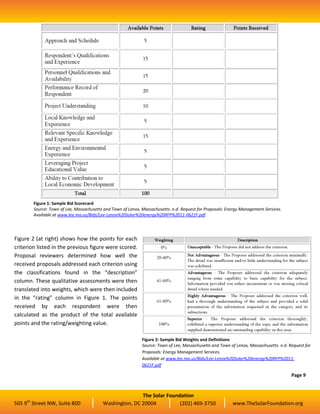
Figure 1: Sample Bid Scorecard
          Source: Town of Lee, Massachusetts and Town of Lenox, Massachusetts. n.d. Request for Proposals: Energy Management Services.
          Available at www.lee.ma.us/Bids/Lee-Lenox%20Solar%20energy%20RFP%2011-0621F.pdf


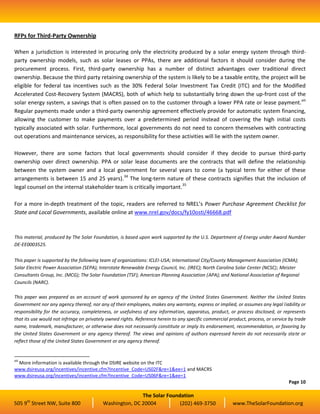
Figure 2 (at right) shows how the points for each
criterion listed in the previous figure were scored.
Proposal reviewers determined how well the
received proposals addressed each criterion using
the classifications found in the “description”
column. These qualitative assessments were then
translated into weights, which were then included
in the “rating” column in Figure 1. The points
received by each respondent were then
calculated as the product of the total available
points and the rating/weighting value.

                                                                Figure 2: Sample Bid Weights and Definitions
                                                                Source: Town of Lee, Massachusetts and Town of Lenox, Massachusetts. n.d. Request for
                                                                Proposals: Energy Management Services.
                                                                Available at www.lee.ma.us/Bids/Lee-Lenox%20Solar%20energy%20RFP%2011-
                                                                0621F.pdf

                                                                                                                                           Page 9


                                                           The Solar Foundation
     th
505 9 Street NW, Suite 800                  Washington, DC 20004          (202) 469-3750                     www.TheSolarFoundation.org
RFPs for Third-Party Ownership

When a jurisdiction is interested in procuring only the electricity produced by a solar energy system through third-
party ownership models, such as solar leases or PPAs, there are additional factors it should consider during the
procurement process. First, third-party ownership has a number of distinct advantages over traditional direct
ownership. Because the third party retaining ownership of the system is likely to be a taxable entity, the project will be
eligible for federal tax incentives such as the 30% Federal Solar Investment Tax Credit (ITC) and for the Modified
Accelerated Cost-Recovery System (MACRS), both of which help to substantially bring down the up-front cost of the
solar energy system, a savings that is often passed on to the customer through a lower PPA rate or lease payment.xiii
Regular payments made under a third-party ownership agreement effectively provide for automatic system financing,
allowing the customer to make payments over a predetermined period instead of covering the high initial costs
typically associated with solar. Furthermore, local governments do not need to concern themselves with contracting
out operations and maintenance services, as responsibility for these activities will lie with the system owner.

However, there are some factors that local governments should consider if they decide to pursue third-party
ownership over direct ownership. PPA or solar lease documents are the contracts that will define the relationship
between the system owner and a local government for several years to come (a typical term for either of these
arrangements is between 15 and 25 years). 34 The long-term nature of these contracts signifies that the inclusion of
legal counsel on the internal stakeholder team is critically important.35

For a more in-depth treatment of the topic, readers are referred to NREL’s Power Purchase Agreement Checklist for
State and Local Governments, available online at www.nrel.gov/docs/fy10osti/46668.pdf


This material, produced by The Solar Foundation, is based upon work supported by the U.S. Department of Energy under Award Number
DE-EE0003525.


This paper is supported by the following team of organizations: ICLEI-USA; International City/County Management Association (ICMA);
Solar Electric Power Association (SEPA); Interstate Renewable Energy Council, Inc. (IREC); North Carolina Solar Center (NCSC); Meister
Consultants Group, Inc. (MCG); The Solar Foundation (TSF); American Planning Association (APA); and National Association of Regional
Councils (NARC).

This paper was prepared as an account of work sponsored by an agency of the United States Government. Neither the United States
Government nor any agency thereof, nor any of their employees, makes any warranty, express or implied, or assumes any legal liability or
responsibility for the accuracy, completeness, or usefulness of any information, apparatus, product, or process disclosed, or represents
that its use would not infringe on privately owned rights. Reference herein to any specific commercial product, process, or service by trade
name, trademark, manufacturer, or otherwise does not necessarily constitute or imply its endorsement, recommendation, or favoring by
the United States Government or any agency thereof. The views and opinions of authors expressed herein do not necessarily state or
reflect those of the United States Government or any agency thereof.


xiii
 More information is available through the DSIRE website on the ITC
www.dsireusa.org/incentives/incentive.cfm?Incentive_Code=US02F&re=1&ee=1 and MACRS
www.dsireusa.org/incentives/incentive.cfm?Incentive_Code=US06F&re=1&ee=1
                                                                                                                                   Page 10

                                                         The Solar Foundation
       th
505 9 Street NW, Suite 800                Washington, DC 20004          (202) 469-3750                  www.TheSolarFoundation.org
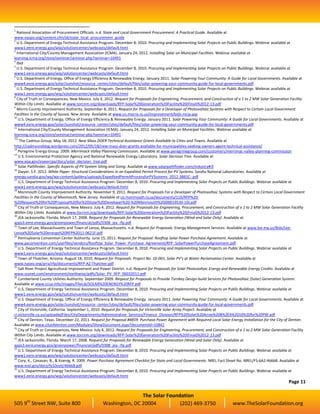
1
  National Association of Procurement Officials. n.d. State and Local Government Procurement: A Practical Guide. Available at
www.naspo.org/content.cfm/id/state_local_procurement_guide
2
  U.S. Department of Energy Technical Assistance Program. December 8, 2010. Procuring and Implementing Solar Projects on Public Buildings. Webinar available at
www1.eere.energy.gov/wip/solutioncenter/webcasts/default.html
3
  International City/County Management Association (ICMA). January 24, 2012. Installing Solar on Municipal Facilities. Webinar available at
learning.icma.org/store/seminar/seminar.php?seminar=10491
4
  Ibid
5
  U.S. Department of Energy Technical Assistance Program. December 8, 2010. Procuring and Implementing Solar Projects on Public Buildings. Webinar available at
www1.eere.energy.gov/wip/solutioncenter/webcasts/default.html
6
  U.S. Department of Energy, Office of Energy Efficiency & Renewable Energy. January 2011. Solar Powering Your Community: A Guide for Local Governments. Available at
www4.eere.energy.gov/solar/sunshot/resource_center/sites/default/files/solar-powering-your-community-guide-for-local-governments.pdf
7
  U.S. Department of Energy Technical Assistance Program. December 8, 2010. Procuring and Implementing Solar Projects on Public Buildings. Webinar available at
www1.eere.energy.gov/wip/solutioncenter/webcasts/default.html
8
  City of Truth or Consequences, New Mexico. July 4, 2012. Request for Proposals for Engineering, Procurement, and Construction of a 1 to 2 MW Solar Generation Facility
Within City Limits. Available at www.torcnm.org/downloads/RFP-Solar%20Generation%20Facility%20(Final)%2012-13.pdf
9
  Morris County Improvement Authority. September 8, 2011. Request for Proposals for a Developer of Photovoltaic Systems with Respect to Certain Local Government
Facilities in the County of Sussex, New Jersey. Available at www.co.morris.nj.us/improvement/bids-mcia.asp
10
   U.S. Department of Energy, Office of Energy Efficiency & Renewable Energy. January 2011. Solar Powering Your Community: A Guide for Local Governments. Available at
www4.eere.energy.gov/solar/sunshot/resource_center/sites/default/files/solar-powering-your-community-guide-for-local-governments.pdf
11
   International City/County Management Association (ICMA). January 24, 2012. Installing Solar on Municipal Facilities. Webinar available at
learning.icma.org/store/seminar/seminar.php?seminar=10491
12
    The Cadmus Group. May 18, 2012. New Mass DOER Technical Assistance Grants Available to Cities and Towns. Available at
http://cadmusreblog.wordpress.com/2012/05/18/new-mass-doer-grants-available-for-municipalities-seeking-owners-agent-technical-assistance/
13
   Peregrine Energy Group. 2009. Merrimack Valley Planning Commission. Available at www.peregrinegroup.com/customers/merrimac-valley-planning-commission
14
   U.S. Environmental Protection Agency and National Renewable Energy Laboratory. Solar Decision Tree. Available at
www.epa.gov/oswercpa/docs/solar_decision_tree.pdf
15
   Solar Pathfinder. Specific Aspects of PV System Siting and Sizing. Available at www.solarpathfinder.com/industry#i3
16
   Dwyer, S.F. 2012. White Paper: Structural Considerations in an Expedited Permit Process for PV Systems. Sandia National Laboratories. Available at
energy.sandia.gov/wp/wp-content/gallery/uploads/ExpeditedPermitProcessforPVSystems_2012-3865C-.pdf
17
   U.S. Department of Energy Technical Assistance Program. December 8, 2010. Procuring and Implementing Solar Projects on Public Buildings. Webinar available at
www1.eere.energy.gov/wip/solutioncenter/webcasts/default.html
18
   Monmouth County Improvement Authority. November 9, 2011. Request for Proposals For a Developer of Photovoltaic Systems with Respect to Certain Local Government
Facilities in the County of Monmouth, New Jersey. Available at co.monmouth.nj.us/documents/116/RFP%20-
%20Request%20for%20Proposal%20for%20Solar%20Developer%20-%20Monmouth%20(00019530-10).pdf
19
   City of Truth or Consequences, New Mexico. July 4, 2012. Request for Proposals for Engineering, Procurement, and Construction of a 1 to 2 MW Solar Generation Facility
Within City Limits. Available at www.torcnm.org/downloads/RFP-Solar%20Generation%20Facility%20(Final)%2012-13.pdf
20
   JEA Jacksonville, Florida. March 17, 2008. Request for Proposals for Renewable Energy Generation (Wind and Solar Only). Available at
apps3.eere.energy.gov/greenpower/financial/pdfs/0308_jea_rfp.pdf
21
   Town of Lee, Massachusetts and Town of Lenox, Massachusetts. n.d. Request for Proposals: Energy Management Services. Available at www.lee.ma.us/Bids/Lee-
Lenox%20Solar%20energy%20RFP%2011-0621F.pdf
22
   Pennsylvania Convention Center Authority. June 15, 2011. Request for Proposal: Rooftop Solar Power Purchase Agreement. Available at
www.paconvention.com/userfiles/vendors/Rooftop_Solar_Power_Purchase_Agreement/RFP_SolarPowerPurchaseAgreement.pdf
23
   U.S. Department of Energy Technical Assistance Program. December 8, 2010. Procuring and Implementing Solar Projects on Public Buildings. Webinar available at
www1.eere.energy.gov/wip/solutioncenter/webcasts/default.html
24
   Town of Thatcher, Arizona. August 18, 2010. Request for Proposals: Project No. 10-001, Solar PV’s at Water Reclamation Center. Available at
www.naseo.org/arra/rfp/documents/RFP-AZ-Thatcher.pdf
25
   Salt River Project Agricultural Improvement and Power District. n.d. Request for Proposals for Solar Photovoltaic Energy and Renewable Energy Credits. Available at
www.srpnet.com/environment/earthwise/pdfx/Solar_PV_RFP_06032011.pdf
26
   Cumberland County Utilities Authority. September 2009. Request for Proposals to Provide Turnkey Design-build Services for Photovoltaic (Solar) Generation System.
Available at www.ccua.info/images/FileLib/SOLAR%20ENERGY%20RFP.pdf
27
   U.S. Department of Energy Technical Assistance Program. December 8, 2010. Procuring and Implementing Solar Projects on Public Buildings. Webinar available at
www1.eere.energy.gov/wip/solutioncenter/webcasts/default.html
28
   U.S. Department of Energy, Office of Energy Efficiency & Renewable Energy. January 2011. Solar Powering Your Community: A Guide for Local Governments. Available at
www4.eere.energy.gov/solar/sunshot/resource_center/sites/default/files/solar-powering-your-community-guide-for-local-governments.pdf
29
   City of Victorville, California. September 1, 2010. Request for Proposals for Victorville Solar Array Project. Available at
ci.victorville.ca.us/uploadedFiles/CityDepartments/Administrative_Services/Finance_Division/RFP%20Solar%20Array%208%203%2010%20for%20PW.pdf
30
   City of Denton, Texas. December 22, 2011. Request for Proposal #4859: Purchase Power Agreement with Required Local Solar Energy Installation for the City of Denton.
Available at www.cityofdenton.com/Modules/ShowDocument.aspx?documentid=10842
31
   City of Truth or Consequences, New Mexico. July 4, 2012. Request for Proposals for Engineering, Procurement, and Construction of a 1 to 2 MW Solar Generation Facility
Within City Limits. Available at www.torcnm.org/downloads/RFP-Solar%20Generation%20Facility%20(Final)%2012-13.pdf
32
   JEA Jacksonville, Florida. March 17, 2008. Request for Proposals for Renewable Energy Generation (Wind and Solar Only). Available at
apps3.eere.energy.gov/greenpower/financial/pdfs/0308_jea_rfp.pdf
33
   U.S. Department of Energy Technical Assistance Program. December 8, 2010. Procuring and Implementing Solar Projects on Public Buildings. Webinar available at
www1.eere.energy.gov/wip/solutioncenter/webcasts/default.html
34
   Cory, K., Canavan, B., & Koenig, R. 2009. Power Purchase Agreement Checklist for State and Local Governments. NREL Fact Sheet No. NREL/FS-6A2-46668. Available at
www.nrel.gov/docs/fy10osti/46668.pdf
35
   U.S. Department of Energy Technical Assistance Program. December 8, 2010. Procuring and Implementing Solar Projects on Public Buildings. Webinar available at
www1.eere.energy.gov/wip/solutioncenter/webcasts/default.html
                                                                                                                                                               Page 11

                                                                  The Solar Foundation
       th
505 9 Street NW, Suite 800                         Washington, DC 20004          (202) 469-3750                                www.TheSolarFoundation.org

Steps to a Successful Solar RFP

  • 1.
    Steps to aSuccessful Solar Request for Proposal (RFP) Procurement officers play an increasingly key and leadership-oriented role in the efficient and effective functioning of the local governments they serve. They are responsible for leveraging money to acquire the goods and services local governments require to meet not only their own operational needs, but also the needs of the citizens they serve. Additionally, these officials are relied on more and more to assume a leadership role in streamlining procurement efforts with an eye toward improving efficiency (both in terms of processes and costs) and focusing on outcomes.1 Meeting these objectives can prove challenging when purchasing goods and commodities with which procurement officers are already familiar; these difficulties are compounded when novel acquisitions need to be made. For many procurement officers, the purchase of a solar energy system falls into the latter of these two categories. Solicitations for these systems require that technical or otherwise unfamiliar information be collected, and necessitate the inclusion of a number of unique considerations. This issue brief has been designed for those individuals overseeing procurement for the local government they serve with the specific goal of helping them develop successful Requests for Proposals (RFPs) for solar energy systems. Readers will learn about the essential elements of a solar RFP, receive introductory guidance on how to evaluate any proposals received, and be directed toward tools, resources, and sample documents that can help maximize the effectiveness of their solar procurement efforts. Solar Procurement: A Tale of Two Cities Relying solely or too heavily on existing, non-solar specific RFPs or excluding certain key elements from your local government’s solar RFP template can have a negative impact on the number and quality of responses received. The two cases that follow illustrate how procurement of a solar energy system (or services) can be seriously hampered by overly restrictive or otherwise inadequate solar RFPs. Milwaukee Shines: Solar Water Heating System Procurement In 2007, the City of Milwaukee, Wisconsin sought to install solar water heating (SWH) systems on nine municipal fire houses through its city-run solar program, Milwaukee Shines. Prior to this effort, the City had limited experience in contracting for solar and, as such, had no pre-existing solar-only RFP template. In order to find and contract with a qualified bidder, the City had to rely on existing RFP practices. However, different City departments used different procurement processes, with levels of detail in these RFP templates varying widely across departments, thus making it difficult for Milwaukee Shines staff to know the proper level of detail to include in their RFP for solar. Once the RFP was developed and issued and proposals were received, the City found the bids it received to be double the cost of what had been budgeted for the installations. Feedback from contractors showed that the RFP was too restrictive for the available budget. The City had overdesigned the systems, including too many specific equipment requirements in an attempt to ensure maximum system quality. www.TheSolarFoundation.org October 10, 2012
  • 2.
    Having learned fromthis mistake, Milwaukee Shines rewrote the RFP to make it more outcome-based, specifying desired levels of system output, rather than prescribed equipment requirements. Through the improved RFP, the City received a proposal that met its needs and was able to award a contract to the bidder. However, it was soon discovered that the second RFP was still too specific; many of the nine site locations indicated in the RFP were structurally inadequate to host a SWH system without significant upgrades that would jeopardize the project’s economic viability. Additionally, the City included no requirements for system operations and maintenance (O&M) in the RFP, incorrectly assuming fire department staff would assume these responsibilities. Under the guidance of City engineering staff, the program conducted site assessments to identify which properties could structurally support SWH systems. During this time, the City was awarded a Special Projects Grant through the U.S. Department of Energy’s Solar America Cities program, which attracted a donation of $200,000 worth of SWH equipment from a local manufacturer (Caleffi). The City then drafted a third RFP to include this information, along with a requirement that the successful respondent conduct on-site training sessions, a result of the City adopting a secondary focus on using these installations to train new installers. Milwaukee Shines issued this final RFP in early 2010 and ultimately found one installer that met all of its criteria.2 City of San Jose, California: Contracting for a Power Purchase Agreement As part of its effort to meet the electricity needs of its municipal properties solely through renewable resources, while simultaneously reducing energy costs, the City of San Jose, California, issued an RFP for a Power Purchase Agreement (PPA). Under a PPA, the customer (in this case the City of San Jose) hosts a solar energy system and purchases the electricity it produces at a fixed rate through a long-term contract (usually around 20 years) with the system developer, who retains ownership of the system and typically assumes responsibility for system financing and O&M. i Two of the City’s initial RFPs were unsuccessful. The first, an RFP for a one megawatt (MW) system at the municipal airport, received bids that were three times what the City paid for electricity from the utility. In an effort to identify the cause of these unacceptably high bids, the City solicited feedback from the respondents, who cited some overly restrictive elements in the RFP (e.g., restrictions on site access, bonding requirements, mutual indemnification clauses, and making payments contingent on annual appropriations) as the cause for the high bids. The City attempted to incorporate this feedback into a second RFP for a different location, but was limited legally in what they could change. Only one proposal was received under this RFP, with the respondent failing to meet the minimum requirements. In response to this, the City issued a Request for Information and convened stakeholder meetings to allow installers and vendors the opportunity to provide input for the RFP development process. Based on this feedback, the City was able to develop a more flexible (and ultimately successful) RFP, which it was then able to use as a template for obtaining PPAs for 28 municipal facilities.3 i Power Purchase Agreements are a specific form of what are known as Third-Party Ownership Models, which also include solar leases. For a discussion of the advantages and disadvantages of PPAs, see the National Renewable Energy Laboratory (NREL) report entitled Solar Photovoltaic Financing: Deployment on Public Property by State and Local Governments, available at www.nrel.gov/docs/fy08osti/43115.pdf; a similar discussion on the pros and cons of solar leases can be found in the NREL report, Solar PV Project Financing: Regulatory and Legislative Challenges for Third-Party PPA System Owners, available at www.nrel.gov/docs/fy10osti/46723.pdf Page 2 The Solar Foundation th 505 9 Street NW, Suite 800 Washington, DC 20004 (202) 469-3750 www.TheSolarFoundation.org
  • 3.
    Developing a SuccessfulSolar RFP Through these examples and others like them, it is possible to derive a number of general best practices for developing a quality solar-specific RFP. Start with a Clear, Well-Defined Goal Perhaps more than any other factor, the reason for purchasing a solar energy system or pursuing a PPA will dictate the nature of the proposals received and the installer or vendor who is ultimately awarded a contract. 4 The Milwaukee Shines case provides a great example of how starting with a goal in mind can influence the outcome of the procurement process. In the third and final RFP, the City altered its reason for pursuing SWH systems to include a secondary focus on using these installations to train the City’s next generation of solar thermal installers. By including this as a goal, the City excluded from eligibility those respondents who were unable to design and host these training sessions. Similarly, the purpose behind San Jose’s desire to enter into solar PPAs was not only to derive the electricity used by municipal facilities from renewable sources, but to do so in a manner that resulted in cost savings for the City. Other possible reasons for a local government to go solar include, but are not limited to: having the system serve as a demonstration project, creating local solar jobs, or reducing greenhouse gas emissions – each of which will influence the outcome of the procurement process. Early Involvement of a Broad Set of Stakeholders Purchasing a solar energy system or services requires the expertise of a number of internal stakeholders outside of the procurement division.5 Including these stakeholders in the early stages of the RFP development process will enhance the success of the RFP that is finally issued. Local government staff with expertise in financial analysis will be required to advise on best practices for ensuring the proposals received will describe systems that are economically viable and that maximize the county’s or municipality’s return on investment. As illustrated by Milwaukee’s experience with solar procurement, engineering staff will be needed to advise on a site’s structural suitability for solar, and facilities staff can offer advice or identify any knowledge gaps (to be addressed by additional training or resources from the installer) regarding operations and maintenance requirements. Support from legal staff will be essential for ensuring the new solar RFP meets the requirements of applicable procurement laws and for the review of any PPA proposals. Because processes and priorities vary across jurisdictions, it is difficult to provide an exhaustive list of internal stakeholders. Each local government should reach out to the various departments of which it is composed to determine who should be included in the RFP development process. San Jose’s experience with pursuing a PPA shows the value of including external stakeholders as well. By issuing Requests for Information and hosting stakeholder meetings, local governments can obtain valuable feedback from installers and vendors throughout the RFP development process. Page 3 The Solar Foundation th 505 9 Street NW, Suite 800 Washington, DC 20004 (202) 469-3750 www.TheSolarFoundation.org
  • 4.
    Outcome-Based Requests forProposals Both the Milwaukee and San Jose examples illustrate how an overly restrictive RFP can thwart the procurement process. One remedy to this challenge is to develop outcome-based RFPs, focused on system output requirements rather than specific system-design criteria.6 Doing so will provide respondents the flexibility to design a system that will lead to the desired output at the local government’s desired cost. In designing an outcome-based solar RFP, however, it is important that this information be reported in a standard format that facilitates easy proposal review. Requiring all respondents to report system performance in terms of kilowatt-hours (kWh) of electricity generated annually over the system’s lifetime or in the number of kilowatts (kW) of installed solar capacity will make the local government’s review of these proposals much more efficient. To further improve the simplicity and accuracy of the comparison-making process, respondents should be encouraged to use the same methods or tools to estimate system output. See Table 1 below for a list of some commonly used tools. Finally, this “common metrics” standard should be applied to as much of the other information requested from respondents as possible (e.g., contractor experience, equipment specifications, emissions reductions, etc.).7 Table 1: Tools for Estimating Solar Energy System Output Tool and Description Link RETScreen International: Clean Energy Project Analysis provides output estimates for photovoltaic and solar heating and cooling systems worldwide. www.retscreen.net/ang/home.php NREL: In My Backyard (IMBY) PV System Analysis is a graphics-based tool that uses system size, location, and other variables to predict system output for PV systems. maps.nrel.gov/imby NREL PVWatts Calculator provides photovoltaic output estimates for a wider range of www.nrel.gov/rredc/pvwatts/ (PVWatts) system array types than the IMBY tool. Can receive data exported from the graphics- gisatnrel.nrel.gov/PVWatts_Viewer/index.html based PVWatts Viewer. (PVWatts Viewer) NREL’s System Advisor Model (SAM) uses data on system cost and design to predict system performance and estimate the price of electricity produced by grid-connected sam.nrel.gov power systems. Provide Site Information and Conduct Site Assessments As much as possible, local governments should provide potential respondents with as much information regarding relevant site characteristics as is technically or financially feasible. Such information can include aerial photography or topographic maps,8 facility energy load information,9 building plans, as well as shading, electrical, and structural analyses of the site.10 However, a local government’s ability to conduct some of these analyses may be limited by financial constraints or the availability of in-house expertise. In some cases, the county or municipality may be able to pass some of these responsibilities (e.g., shading analyses) off to the respondent, who can recoup these costs in their bids or the PPA rates they offer. If your local government decides to delegate some of these assessments to the installer or project developer, it is essential to ensure these respondents have easy and adequate site access to gather this information.11 Page 4 The Solar Foundation th 505 9 Street NW, Suite 800 Washington, DC 20004 (202) 469-3750 www.TheSolarFoundation.org
  • 5.
    Consider Hiring aConsultant or Owner’s Agent Given the complexity and the negotiations involved in solar procurement, many cities and town have found it advantageous to hire a consultant or owner’s agent to guide them (and advocate for them) throughout the procurement process. Some states may even provide funding opportunities for municipalities to hire a consultant or owner’s agent. For example, the Massachusetts Department of Energy Resources (DOER) has begun providing funding for owner’s agent services,12 and the Merrimack Valley Planning Commission retains an energy management consultant to assist its member communities with solar procurement and to develop a set of shared standardized procurement documents including RFPs and model contracts.13 Key Solar RFP Elements In addition to the considerations listed in the previous section, local governments developing a solar-only RFP should include as many of the following RFP elements as feasible or applicable to their unique circumstances, along with those elements required by law in their jurisdiction. Note that this is not meant to be an exhaustive list of RFP elements. Many jurisdictions will likely want to include more elements than those listed on the following pages. Roof Integrity and Warranties For rooftop SWH or photovoltaic (PV) installations, it is necessary to ensure that the building is structurally sound enough to support a solar energy system and that it will continue to be during the project’s estimated useful lifetime. A general rule is to select only roofs that will not require replacement for at least 15 years.14 In addition, roofs should be generally south-facing, avoid excessive shading from vegetation or nearby buildings,15 remain within acceptable ranges for wind and snow loads,16 have enough space to support a solar energy system of the size desired, provide for easy and tasteful electrical or plumbing connection, and have no significant aesthetic concerns preventing installation.17 Respondents should also be required to ensure that the installation of rooftop solar energy systems will not adversely impact roof integrity or violate existing roof warranties. Contractors should be required to obtain written certification from the parties issuing or overseeing the roof warranty that the proposed solar installation will not nullify or void this warranty, or else provide their own warranty for the roof.18 The National Renewable Energy Laboratory developed the SolOpt Optimization Tool to assist installers and solar customers in calculating the optimal size for rooftop PV or SWH, available for download at www4.eere.energy.gov/solar/sunshot/resource_center/resources/solopt_optimization_tool. Financial Requirements Respondents should be required to submit documents that adequately and accurately demonstrate their financial capacity to cover any applicable up-front design and installation costs, any administrative or other costs associated with development, and any costs associated with recurring responsibilities, such as operations and maintenance.19, 20 These financial capabilities can be certified through statements from financial institutions, business references, annual reports, credit ratings, or other documents deemed an acceptable substitute. Page 5 The Solar Foundation th 505 9 Street NW, Suite 800 Washington, DC 20004 (202) 469-3750 www.TheSolarFoundation.org
  • 6.
    Permitting and InterconnectionResponsibility It is common practice for local governments to make the successful respondent fully and solely responsible for obtaining - and covering all costs associated with - any required permits (e.g., building, construction, electrical, plumbing, environmental, zoning, etc.) and utility interconnection agreements. Team Qualifications and Solar Project Experience Local governments should request that respondents submit information indicating their qualifications to undertake the project in question. Company profiles, lists of relevant state licenses and industry certifications, proof of insurance, bonding safety ratings, project team background and qualifications, business references, and any solar project experience (e.g., total number and capacity of systems installed, differentiated by installation type; experience with certain technology brands; experience with grid interconnection) will help procurement staff identify the most qualified candidate for the contract.21 Technical Specifications This section should outline information on respondents’ proposed technical approach and further information on the system equipment to be used. For a PV system, this can include information on module type (including brand name, model numbers, and technology), inverters (brand, type, and efficiency), monitoring and data acquisition systems, and balance of system components.22 However, in an effort to not be overly prescriptive, it is often advised that this section be completed by the respondent. Operations and Maintenance Although solar is relatively O&M free, the RFP developed by your procurement team should be cognizant of the operations and maintenance needs that do exist and either contract with the solar developer or another party to handle these responsibilities, or ensure that local government staff has the training and resources they need to perform this function internally. If your jurisdiction chooses the latter option, your solar RFP should specify that the successful respondent is responsible for either providing the relevant personnel with O&M manuals or onsite training, or both.23, 24 Performance Monitoring and Performance Guarantees An essential component for ensuring that local governments receive the product or service contracted through an outcome-based solar RFP is the monitoring of system performance. Such monitoring can accomplish a number of project goals besides merely ensuring system quality, such as tracking production for the purposes of calculating the number of renewable energy credits generated25 or demonstrating the benefits of the system to the community.26 At its most basic, system performance can be monitored through inverter kWh displays (for solar PV) or using flow meters and temperature sensors (for SWH).27 Similarly, given the relative predictability of solar PV output over time, it is not unreasonable to ask the respondent to provide some form of performance guarantee, especially when entering into a power purchase agreement. Page 6 The Solar Foundation th 505 9 Street NW, Suite 800 Washington, DC 20004 (202) 469-3750 www.TheSolarFoundation.org
  • 7.
    Milestones with CompletionDates To ensure the project proceeds as planned, respondents can be required to submit detailed project plans, listing major milestones and anticipated completion dates.28 Such milestones might include: obtaining required permits, equipment purchasing, organizing project finance, commencement of construction/installation and system operation, and approval of interconnection requests.29 Some local governments have placed a premium on the value of these milestones, making payment for the project contingent on the contractor’s ability to successfully adhere to his or her proposed schedule.30 Equipment or Labor Origin Requirements and Community Benefits Jurisdictions wishing to stimulate a local solar market or ensure that as many of the project benefits as possible are retained in the area can include requirements that respondents use local materials and/or labor.31 Similarly, local governments can include requirements within the RFP directing respondents to identify and describe any community benefits associated with the project being proposed.32 Sample Solar RFPs Table 2 on the following page contains a list of solar-specific RFPs that were collected and reviewed for the development of this guide. Each row references the RFP name, the ownership type sought (direct or third-party), and system size (if applicable), with links to these documents provided in the footnotes. The solar RFP elements discussed in the previous section are listed in the columns; with an ‘X’ indicating which of the RFPs listed contains sample language related to that element. Weighing Criteria and Evaluating Bids Determining how the aforementioned criteria are evaluated, weighed, and scored is equally as important as making sure this information is collected in the first place. Despite this, there is no standard method for allocating points; each element will be weighed according to the project goals identified at the beginning of the RFP development process. However, there are some standard practices that can help local governments develop weights that will allow them to properly score the proposals received. In general, procurement staff should begin by assigning initial weights to each of the evaluative criteria included in the RFP. Once assigned, these initial weights should be submitted to the internal stakeholder group, whose feedback should be used to reassign weights as necessary. Once these weights have been determined, a scorecard should be developed that simply and clearly shows all the elements under consideration and how much each contributes to the final score assigned.33 An example of such a scorecard is provided in Figure 1 on page 9. Page 7 The Solar Foundation th 505 9 Street NW, Suite 800 Washington, DC 20004 (202) 469-3750 www.TheSolarFoundation.org
  • 8.
    Table 2: SolarRFPs and Elements RFP Elements Origin Requirements/ Team Qualifications Community Benefits Project Experience Equipment or Labor Roof Integrity and Completion Dates Milestones with Interconnection Operations and Permitting and Requirements Responsibility Specifications Maintenance Performance and/or Solar Monitoring Warranties Technical Financial ii Cumberland County, NJ Direct X X X X X iii Sussex, NJ Third Party (PPA) X X X X X ~7MW iv Monmouth, NJ Third Party (PPA) X X X X X X ~5MW v Lee and Lenox, MA Third Party (PPA or Lease) X X X X X X X vi Jacksonville, FL Direct or Third Party X X X X X X X >1MW Sample RFPs vii Denton, TX Third Party (PPA) X X X X X X X viii Thatcher, AZ Direct X X X X X X X ix Victorville, CA Direct or Third Party X X X X X X <50MW x Truth or Consequences, NM Direct X X X X X X X 1-2MW xi Convention Center, PA Third Party (PPA) X X X X X X X 3-5MW xii Salt River, AZ Third Party (PPA) X X X X X X 5-50MW ii www.ccua.info/images/FileLib/SOLAR%20ENERGY%20RFP.pdf iii www.co.morris.nj.us/improvement/bids-mcia.asp iv co.monmouth.nj.us/documents/116/RFP%20-%20Request%20for%20Proposal%20for%20Solar%20Developer%20-%20Monmouth%20(00019530-10).pdf v www.lee.ma.us/Bids/Lee-Lenox%20Solar%20energy%20RFP%2011-0621F.pdf vi apps3.eere.energy.gov/greenpower/financial/pdfs/0308_jea_rfp.pdf vii www.cityofdenton.com/Modules/ShowDocument.aspx?documentid=10842 viii www.naseo.org/arra/rfp/documents/RFP-AZ-Thatcher.pdf ix ci.victorville.ca.us/uploadedFiles/CityDepartments/Administrative_Services/Finance_Division/RFP%20Solar%20Array%208%203%2010%20for%20PW.pdf x www.torcnm.org/downloads/RFP-Solar%20Generation%20Facility%20(Final)%2012-13.pdf xi www.paconvention.com/userfiles/vendors/Rooftop_Solar_Power_Purchase_Agreement/RFP_SolarPowerPurchaseAgreement.pdf xii www.srpnet.com/environment/earthwise/pdfx/Solar_PV_RFP_06032011.pdf Page 8 The Solar Foundation th 505 9 Street NW, Suite 800 Washington, DC 20004 (202) 469-3750 www.TheSolarFoundation.org
  • 9.
    Figure 1: SampleBid Scorecard Source: Town of Lee, Massachusetts and Town of Lenox, Massachusetts. n.d. Request for Proposals: Energy Management Services. Available at www.lee.ma.us/Bids/Lee-Lenox%20Solar%20energy%20RFP%2011-0621F.pdf Figure 2 (at right) shows how the points for each criterion listed in the previous figure were scored. Proposal reviewers determined how well the received proposals addressed each criterion using the classifications found in the “description” column. These qualitative assessments were then translated into weights, which were then included in the “rating” column in Figure 1. The points received by each respondent were then calculated as the product of the total available points and the rating/weighting value. Figure 2: Sample Bid Weights and Definitions Source: Town of Lee, Massachusetts and Town of Lenox, Massachusetts. n.d. Request for Proposals: Energy Management Services. Available at www.lee.ma.us/Bids/Lee-Lenox%20Solar%20energy%20RFP%2011- 0621F.pdf Page 9 The Solar Foundation th 505 9 Street NW, Suite 800 Washington, DC 20004 (202) 469-3750 www.TheSolarFoundation.org
  • 10.
    RFPs for Third-PartyOwnership When a jurisdiction is interested in procuring only the electricity produced by a solar energy system through third- party ownership models, such as solar leases or PPAs, there are additional factors it should consider during the procurement process. First, third-party ownership has a number of distinct advantages over traditional direct ownership. Because the third party retaining ownership of the system is likely to be a taxable entity, the project will be eligible for federal tax incentives such as the 30% Federal Solar Investment Tax Credit (ITC) and for the Modified Accelerated Cost-Recovery System (MACRS), both of which help to substantially bring down the up-front cost of the solar energy system, a savings that is often passed on to the customer through a lower PPA rate or lease payment.xiii Regular payments made under a third-party ownership agreement effectively provide for automatic system financing, allowing the customer to make payments over a predetermined period instead of covering the high initial costs typically associated with solar. Furthermore, local governments do not need to concern themselves with contracting out operations and maintenance services, as responsibility for these activities will lie with the system owner. However, there are some factors that local governments should consider if they decide to pursue third-party ownership over direct ownership. PPA or solar lease documents are the contracts that will define the relationship between the system owner and a local government for several years to come (a typical term for either of these arrangements is between 15 and 25 years). 34 The long-term nature of these contracts signifies that the inclusion of legal counsel on the internal stakeholder team is critically important.35 For a more in-depth treatment of the topic, readers are referred to NREL’s Power Purchase Agreement Checklist for State and Local Governments, available online at www.nrel.gov/docs/fy10osti/46668.pdf This material, produced by The Solar Foundation, is based upon work supported by the U.S. Department of Energy under Award Number DE-EE0003525. This paper is supported by the following team of organizations: ICLEI-USA; International City/County Management Association (ICMA); Solar Electric Power Association (SEPA); Interstate Renewable Energy Council, Inc. (IREC); North Carolina Solar Center (NCSC); Meister Consultants Group, Inc. (MCG); The Solar Foundation (TSF); American Planning Association (APA); and National Association of Regional Councils (NARC). This paper was prepared as an account of work sponsored by an agency of the United States Government. Neither the United States Government nor any agency thereof, nor any of their employees, makes any warranty, express or implied, or assumes any legal liability or responsibility for the accuracy, completeness, or usefulness of any information, apparatus, product, or process disclosed, or represents that its use would not infringe on privately owned rights. Reference herein to any specific commercial product, process, or service by trade name, trademark, manufacturer, or otherwise does not necessarily constitute or imply its endorsement, recommendation, or favoring by the United States Government or any agency thereof. The views and opinions of authors expressed herein do not necessarily state or reflect those of the United States Government or any agency thereof. xiii More information is available through the DSIRE website on the ITC www.dsireusa.org/incentives/incentive.cfm?Incentive_Code=US02F&re=1&ee=1 and MACRS www.dsireusa.org/incentives/incentive.cfm?Incentive_Code=US06F&re=1&ee=1 Page 10 The Solar Foundation th 505 9 Street NW, Suite 800 Washington, DC 20004 (202) 469-3750 www.TheSolarFoundation.org
  • 11.
    1 NationalAssociation of Procurement Officials. n.d. State and Local Government Procurement: A Practical Guide. Available at www.naspo.org/content.cfm/id/state_local_procurement_guide 2 U.S. Department of Energy Technical Assistance Program. December 8, 2010. Procuring and Implementing Solar Projects on Public Buildings. Webinar available at www1.eere.energy.gov/wip/solutioncenter/webcasts/default.html 3 International City/County Management Association (ICMA). January 24, 2012. Installing Solar on Municipal Facilities. Webinar available at learning.icma.org/store/seminar/seminar.php?seminar=10491 4 Ibid 5 U.S. Department of Energy Technical Assistance Program. December 8, 2010. Procuring and Implementing Solar Projects on Public Buildings. Webinar available at www1.eere.energy.gov/wip/solutioncenter/webcasts/default.html 6 U.S. Department of Energy, Office of Energy Efficiency & Renewable Energy. January 2011. Solar Powering Your Community: A Guide for Local Governments. Available at www4.eere.energy.gov/solar/sunshot/resource_center/sites/default/files/solar-powering-your-community-guide-for-local-governments.pdf 7 U.S. Department of Energy Technical Assistance Program. December 8, 2010. Procuring and Implementing Solar Projects on Public Buildings. Webinar available at www1.eere.energy.gov/wip/solutioncenter/webcasts/default.html 8 City of Truth or Consequences, New Mexico. July 4, 2012. Request for Proposals for Engineering, Procurement, and Construction of a 1 to 2 MW Solar Generation Facility Within City Limits. Available at www.torcnm.org/downloads/RFP-Solar%20Generation%20Facility%20(Final)%2012-13.pdf 9 Morris County Improvement Authority. September 8, 2011. Request for Proposals for a Developer of Photovoltaic Systems with Respect to Certain Local Government Facilities in the County of Sussex, New Jersey. Available at www.co.morris.nj.us/improvement/bids-mcia.asp 10 U.S. Department of Energy, Office of Energy Efficiency & Renewable Energy. January 2011. Solar Powering Your Community: A Guide for Local Governments. Available at www4.eere.energy.gov/solar/sunshot/resource_center/sites/default/files/solar-powering-your-community-guide-for-local-governments.pdf 11 International City/County Management Association (ICMA). January 24, 2012. Installing Solar on Municipal Facilities. Webinar available at learning.icma.org/store/seminar/seminar.php?seminar=10491 12 The Cadmus Group. May 18, 2012. New Mass DOER Technical Assistance Grants Available to Cities and Towns. Available at http://cadmusreblog.wordpress.com/2012/05/18/new-mass-doer-grants-available-for-municipalities-seeking-owners-agent-technical-assistance/ 13 Peregrine Energy Group. 2009. Merrimack Valley Planning Commission. Available at www.peregrinegroup.com/customers/merrimac-valley-planning-commission 14 U.S. Environmental Protection Agency and National Renewable Energy Laboratory. Solar Decision Tree. Available at www.epa.gov/oswercpa/docs/solar_decision_tree.pdf 15 Solar Pathfinder. Specific Aspects of PV System Siting and Sizing. Available at www.solarpathfinder.com/industry#i3 16 Dwyer, S.F. 2012. White Paper: Structural Considerations in an Expedited Permit Process for PV Systems. Sandia National Laboratories. Available at energy.sandia.gov/wp/wp-content/gallery/uploads/ExpeditedPermitProcessforPVSystems_2012-3865C-.pdf 17 U.S. Department of Energy Technical Assistance Program. December 8, 2010. Procuring and Implementing Solar Projects on Public Buildings. Webinar available at www1.eere.energy.gov/wip/solutioncenter/webcasts/default.html 18 Monmouth County Improvement Authority. November 9, 2011. Request for Proposals For a Developer of Photovoltaic Systems with Respect to Certain Local Government Facilities in the County of Monmouth, New Jersey. Available at co.monmouth.nj.us/documents/116/RFP%20- %20Request%20for%20Proposal%20for%20Solar%20Developer%20-%20Monmouth%20(00019530-10).pdf 19 City of Truth or Consequences, New Mexico. July 4, 2012. Request for Proposals for Engineering, Procurement, and Construction of a 1 to 2 MW Solar Generation Facility Within City Limits. Available at www.torcnm.org/downloads/RFP-Solar%20Generation%20Facility%20(Final)%2012-13.pdf 20 JEA Jacksonville, Florida. March 17, 2008. Request for Proposals for Renewable Energy Generation (Wind and Solar Only). Available at apps3.eere.energy.gov/greenpower/financial/pdfs/0308_jea_rfp.pdf 21 Town of Lee, Massachusetts and Town of Lenox, Massachusetts. n.d. Request for Proposals: Energy Management Services. Available at www.lee.ma.us/Bids/Lee- Lenox%20Solar%20energy%20RFP%2011-0621F.pdf 22 Pennsylvania Convention Center Authority. June 15, 2011. Request for Proposal: Rooftop Solar Power Purchase Agreement. Available at www.paconvention.com/userfiles/vendors/Rooftop_Solar_Power_Purchase_Agreement/RFP_SolarPowerPurchaseAgreement.pdf 23 U.S. Department of Energy Technical Assistance Program. December 8, 2010. Procuring and Implementing Solar Projects on Public Buildings. Webinar available at www1.eere.energy.gov/wip/solutioncenter/webcasts/default.html 24 Town of Thatcher, Arizona. August 18, 2010. Request for Proposals: Project No. 10-001, Solar PV’s at Water Reclamation Center. Available at www.naseo.org/arra/rfp/documents/RFP-AZ-Thatcher.pdf 25 Salt River Project Agricultural Improvement and Power District. n.d. Request for Proposals for Solar Photovoltaic Energy and Renewable Energy Credits. Available at www.srpnet.com/environment/earthwise/pdfx/Solar_PV_RFP_06032011.pdf 26 Cumberland County Utilities Authority. September 2009. Request for Proposals to Provide Turnkey Design-build Services for Photovoltaic (Solar) Generation System. Available at www.ccua.info/images/FileLib/SOLAR%20ENERGY%20RFP.pdf 27 U.S. Department of Energy Technical Assistance Program. December 8, 2010. Procuring and Implementing Solar Projects on Public Buildings. Webinar available at www1.eere.energy.gov/wip/solutioncenter/webcasts/default.html 28 U.S. Department of Energy, Office of Energy Efficiency & Renewable Energy. January 2011. Solar Powering Your Community: A Guide for Local Governments. Available at www4.eere.energy.gov/solar/sunshot/resource_center/sites/default/files/solar-powering-your-community-guide-for-local-governments.pdf 29 City of Victorville, California. September 1, 2010. Request for Proposals for Victorville Solar Array Project. Available at ci.victorville.ca.us/uploadedFiles/CityDepartments/Administrative_Services/Finance_Division/RFP%20Solar%20Array%208%203%2010%20for%20PW.pdf 30 City of Denton, Texas. December 22, 2011. Request for Proposal #4859: Purchase Power Agreement with Required Local Solar Energy Installation for the City of Denton. Available at www.cityofdenton.com/Modules/ShowDocument.aspx?documentid=10842 31 City of Truth or Consequences, New Mexico. July 4, 2012. Request for Proposals for Engineering, Procurement, and Construction of a 1 to 2 MW Solar Generation Facility Within City Limits. Available at www.torcnm.org/downloads/RFP-Solar%20Generation%20Facility%20(Final)%2012-13.pdf 32 JEA Jacksonville, Florida. March 17, 2008. Request for Proposals for Renewable Energy Generation (Wind and Solar Only). Available at apps3.eere.energy.gov/greenpower/financial/pdfs/0308_jea_rfp.pdf 33 U.S. Department of Energy Technical Assistance Program. December 8, 2010. Procuring and Implementing Solar Projects on Public Buildings. Webinar available at www1.eere.energy.gov/wip/solutioncenter/webcasts/default.html 34 Cory, K., Canavan, B., & Koenig, R. 2009. Power Purchase Agreement Checklist for State and Local Governments. NREL Fact Sheet No. NREL/FS-6A2-46668. Available at www.nrel.gov/docs/fy10osti/46668.pdf 35 U.S. Department of Energy Technical Assistance Program. December 8, 2010. Procuring and Implementing Solar Projects on Public Buildings. Webinar available at www1.eere.energy.gov/wip/solutioncenter/webcasts/default.html Page 11 The Solar Foundation th 505 9 Street NW, Suite 800 Washington, DC 20004 (202) 469-3750 www.TheSolarFoundation.org