Submitted By- Under the Guidance of
Satendra Verma Mrs.Preeti Saini
XII A(BIO) P.G.T BIOLOGY
CBSE Roll No- JNV PANNA
It is hereby to certify that, the original and
genuine investigation work has been carried
outto investigate aboutthe subject matter and
the related data collection and investigation
has been completed solely, sincerely and
satisfactorily by Satendra Kumar Verma of
CLASS. XII A, JAWAHAR NAVODAYA
VIDYALAYA PANNA M.P
regarding his project titled“STUDY OF
HIV(AIDS)”.
Teacher In Charge External Examiner
I have taken efforts in this project. However, it would
not have been possible without the kind support and
help of many individuals.
I would like to thank my principal
Vidhu Khare (mam) i/c .
.
I am highly indebted to my Biology teacher, Mrs.
Preeti Saini (mam) for her invaluable guidance
which has sustained my efforts in all the stages of
this project work.
I would also like to thank my parents for their
continuous support and encouragement.
My thanks and appreciations also go to my fellow
classmates and the laboratory assistant in
developing the project and to the people who have
willingly helped me out with their abilities.
1. Introduction ………………..
2) Cause………………………...
3) Main Types………………….
4) Diagnosis……………………
5) Study of HIV AIDS………...
6) Transmission of HIV……....
7) Types and Myths ofHIV…..
8) Pathogenesis of HIVAIDS…
9) StagesofHIVwiththeirsymptoms
10) Diagnosis of HIV…………....
11) Treatment…………………....
12) Prevention…………………..
13) Conclusion…………………..
14) Bibliography………………..
Sexually transmitted diseases (STD), also referred
to as sexually transmitted infections (STI) and
venereal diseases (VD), are infections that are
commonly spread by sex, especially vaginal
intercourse, anal sex and oral sex. Most STDs
initially do not cause symptoms. This results in a
greater risk of passing the disease on to others.
Symptoms and signs of disease may include:
vaginal discharge, penile discharge, ulcers on or
around the genitals, and pelvic pain. STDs
acquired before or during birth may result in poor
outcomes for the baby. Some STIs may cause
problems with the ability to get pregnant. More
than 30 different bacteria, viruses, and parasites
can cause STDs. Bacterial STDs include Chlamydia,
gonorrhea, and syphilis among others. Viral STDs
include genital herpes, HIV/AIDS, and genital
warts among others. Parasitic STDs include
Trichomoniasis among others. While usually
spread by sex, some STDs can also be spread by
non-sexual contact with contaminated blood and
tissues, breastfeeding, or
during childbirth. STD diagnostic tests are easily
available in the developed world, but this is often
not the case in the developing world. The most
effective way of preventing STDs is by not having
sex. Some vaccinations may also decrease the risk
of certain infections including hepatitis B and
some types of HPV. Safer sex practices such as use
of condoms, having a smaller number of sexual
partners, and being in a relationship where each
person only has sex with the other also decreases
the risk.
Circumcision in males may be effective to prevent
some infections. Most STIs are treatable or
curable. Of the most common infections, syphilis,
gonorrhea, Chlamydia, Trichomoniasis are
curable, while herpes, hepatitis B, HIV/AIDS, and
HPV are treatable but not curable. Resistance to
certain antibiotics is developing among some
organisms such as gonorrhea.
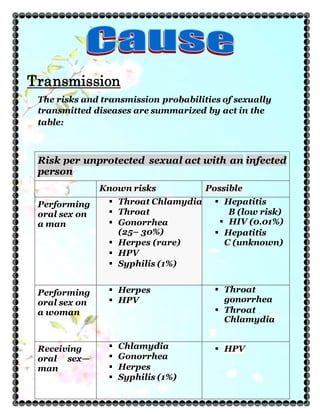
Transmission
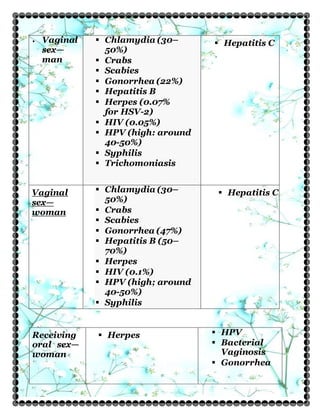
The risks and transmission probabilities of sexually
transmitted diseases are summarized by act in the
table:
Risk per unprotected sexual act with an infected
person
Known risks Possible
Performing
oral sex on
a man
 Throat Chlamydia
 Throat
 Gonorrhea
(25– 30%)
 Herpes (rare)
 HPV
 Syphilis (1%)
 Hepatitis
B (low risk)
 HIV (0.01%)
 Hepatitis
C (unknown)
Performing
oral sex on
a woman
 Herpes
 HPV
 Throat
gonorrhea
 Throat
Chlamydia
Receiving
oral sex—
man
 Chlamydia
 Gonorrhea
 Herpes
 Syphilis (1%)
 HPV
 Vaginal
sex—
man
 Chlamydia (30–
50%)
 Crabs
 Scabies
 Gonorrhea (22%)
 Hepatitis B
 Herpes (0.07%
for HSV-2)
 HIV (0.05%)
 HPV (high: around
40-50%)
 Syphilis
 Trichomoniasis
 Hepatitis C
Vaginal
sex—
woman
 Chlamydia (30–
50%)
 Crabs
 Scabies
 Gonorrhea (47%)
 Hepatitis B (50–
70%)
 Herpes
 HIV (0.1%)
 HPV (high; around
40-50%)
 Syphilis
 Hepatitis C
Receiving
oral sex—
woman
 Herpes  HPV
 Bacterial
Vaginosis
 Gonorrhea
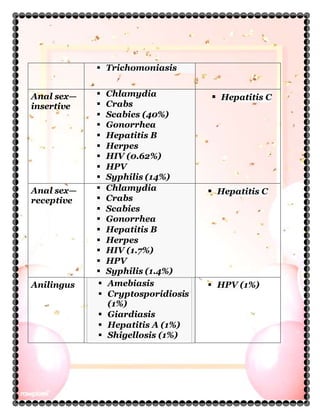
 Trichomoniasis
Anal sex—
insertive
 Chlamydia
 Crabs
 Scabies (40%)
 Gonorrhea
 Hepatitis B
 Herpes
 HIV (0.62%)
 HPV
 Syphilis (14%)
 Hepatitis C
Anal sex—
receptive
 Chlamydia
 Crabs
 Scabies
 Gonorrhea
 Hepatitis B
 Herpes
 HIV (1.7%)
 HPV
 Syphilis (1.4%)
 Hepatitis C
Anilingus  Amebiasis
 Cryptosporidiosis
(1%)
 Giardiasis
 Hepatitis A (1%)
 Shigellosis (1%)
 HPV (1%)
Sexually transmitted infections include
Chlamydia is a sexually transmitted infection caused by the
bacterium Chlamydia trachomatis. In women, symptoms may include
abnormal vaginal discharge, burning during urination, and bleeding
in between periods, although most women do not experience any
symptoms. Symptoms in men include pain when urinating, and
abnormal discharge from their penis. If left untreated in both men and
women, Chlamydia can infect the urinary tract and potentially lead to
pelvic inflammatory disease (PID). PID can cause serious problems
during pregnancy and even has the potential to cause infertility. It
can cause a woman to have a potentially deadly ectopic pregnancy, in
which the child is born outside of the uterus. However, Chlamydia can
be cured with antibiotics.
 The two most common forms of herpes are caused by
infection with herpes simplex virus (HSV). HSV-1 is typically
acquired orally and causes cold sores, HSV-2 is usually
acquired during sexual contact and affects the genitals,
however either strain may affect either site.[31]
Some people are
asymptomatic or have very mild symptoms. Those that do
experience symptoms usually notice them 2 to 20 days after
exposure which last 2 to 4 weeks. Symptoms can include
:
small fluid-filled blisters, headaches, backaches, itching or
tingling sensations in the genital or anal area, and pain
During urination, Flu like symptoms, swollen glands, or fever.
Herpes is spread through skin contact with a person infected with
the virus. The virus affects the areas where it entered the body. This
can occur through kissing, vaginal intercourse, oral sex or anal sex.
The virus is most infectious during times when there are visible
symptoms; however those who are asymptomatic can still spread
the virus through skin contact. The primary attack is the most
severe because the body does not have any antibodies built up. After
the primary attack, one might have recurring attacks that are
milder or might not even have future attacks. There is no cure for
the disease but there are antiviral medications that treat its
symptoms and lower the risk of transmission (Valtrex).
 Although HSV-1 is typically the "oral" version of the
virus and HSV-2 is typically the "genital" version of the virus, a
person with HSV-1 orally CAN transmit that virus to their
partner genitally. The virus, either type, will settle into a nerve
bundle either at the top of the spine, producing the "oral"
outbreak, or a second nerve bundle at the base of the spine,
producing the genital outbreak.
 The human papillomavirus (HPV) is the most common
STI in the United States. There are more than 40
different strands of HPV and many do not cause any
health problems. In 90% of cases the body’s immune
system clears the infection naturally within 2 years.[34]
Some cases may not be cleared and can lead to genital
warts (bumps around the genitals that can be small or
large, raised or flat, or shaped like cauliflower) or
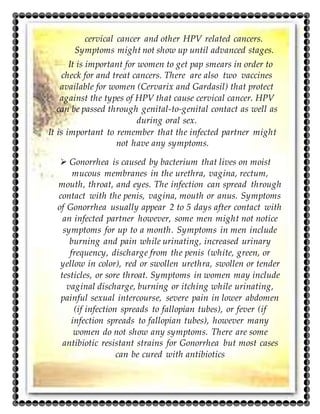
cervical cancer and other HPV related cancers.
Symptoms might not show up until advanced stages.
It is important for women to get pap smears in order to
check for and treat cancers. There are also two vaccines
available for women (Cervarix and Gardasil) that protect
against the types of HPV that cause cervical cancer. HPV
can be passed through genital-to-genital contact as well as
during oral sex.
It is important to remember that the infected partner might
not have any symptoms.
 Gonorrhea is caused by bacterium that lives on moist
mucous membranes in the urethra, vagina, rectum,
mouth, throat, and eyes. The infection can spread through
contact with the penis, vagina, mouth or anus. Symptoms
of Gonorrhea usually appear 2 to 5 days after contact with
an infected partner however, some men might not notice
symptoms for up to a month. Symptoms in men include
burning and pain while urinating, increased urinary
frequency, discharge from the penis (white, green, or
yellow in color), red or swollen urethra, swollen or tender
testicles, or sore throat. Symptoms in women may include
vaginal discharge, burning or itching while urinating,
painful sexual intercourse, severe pain in lower abdomen
(if infection spreads to fallopian tubes), or fever (if
infection spreads to fallopian tubes), however many
women do not show any symptoms. There are some
antibiotic resistant strains for Gonorrhea but most cases
can be cured with antibiotics
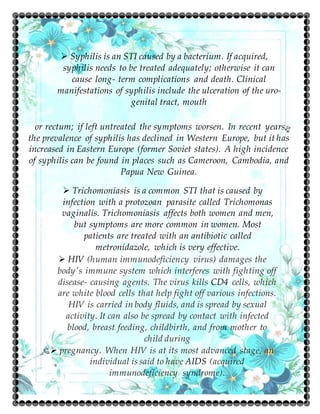
 Syphilis is an STI caused by a bacterium. If acquired,
syphilis needs to be treated adequately; otherwise it can
cause long- term complications and death. Clinical
manifestations of syphilis include the ulceration of the uro-
genital tract, mouth
or rectum; if left untreated the symptoms worsen. In recent years,
the prevalence of syphilis has declined in Western Europe, but it has
increased in Eastern Europe (former Soviet states). A high incidence
of syphilis can be found in places such as Cameroon, Cambodia, and
Papua New Guinea.
 Trichomoniasis is a common STI that is caused by
infection with a protozoan parasite called Trichomonas
vaginalis. Trichomoniasis affects both women and men,
but symptoms are more common in women. Most
patients are treated with an antibiotic called
metronidazole, which is very effective.
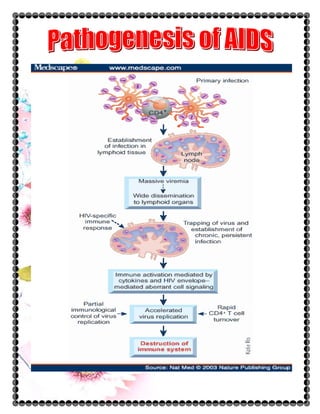
 HIV (human immunodeficiency virus) damages the
body's immune system which interferes with fighting off
disease- causing agents. The virus kills CD4 cells, which
are white blood cells that help fight off various infections.
HIV is carried in body fluids, and is spread by sexual
activity. It can also be spread by contact with infected
blood, breast feeding, childbirth, and from mother to
child during
 pregnancy. When HIV is at its most advanced stage, an
individual is said to have AIDS (acquired
immunodeficiency syndrome).
 Testing may be for a single infection, or consist of a
number of tests for a range of STIs, including tests for
syphilis, trichomonas, gonorrhea, Chlamydia, herpes,
hepatitis and HIV. No procedure tests for all infectious
agents.
STI tests may be used for a number of
reasons:
as a diagnostic test to determine the cause of symptoms
or illness
as a screening test to detect asymptomatic or
presymptomatic infections
As a check that prospective sexual partners are free of
disease before they engage in sex without safer sex
precautions (for example, when starting a long term
mutually monogamous sexual relationship, in fluid
bonding, or for procreation).
as a check prior to or during pregnancy, to prevent
harm to the baby
as a check after birth, to check that the baby has not
caught an STI from the mother
to prevent the use of infected donated blood or organs
as part of the process of contact tracing from a
known infected individual
as part of mass epidemiological surveillance
Early identification and treatment results in less
chance to spread disease and for some conditions may
improve the outcomes of treatment. There is often a
window period after initial infection during which an
STI test will be negative. During this period the
infection may be transmissible. The duration of this
period varies depending on the infection and the test.
Diagnosis may also be delayed by reluctance of the
infected person to seek a medical professional. One
report indicated that people turn to the Internet rather
than to a medical professional for information on STIs
to a higher degree than for other sexual problems.
HIV- (Human Immunodeficiency Virus) The virus compromises the
body’s ability to handle disease and causes AIDS.
AIDS- (Acquired Immune Deficiency Syndrome) it
is related to HIV, but they are not one in the same. A
person has AIDS only in the final stages of HIV, after
the immune system becomes unable to defend itself
against foreign invaders like bacteria, other viruses,
and allows the development of certain cancers. AIDS
is caused bythe human immunodeficiency virus
(HIV). HIV destroys a type of defense cell in the body
called a CD4 helper lymphocyte. These lymphocytes
are part of the body's immune system, the defense
system that fights infectious diseases. But as HIV
destroys these lymphocytes, people with the virus
begin to get serious infections that they normally
wouldn't that is, they become immune deficient
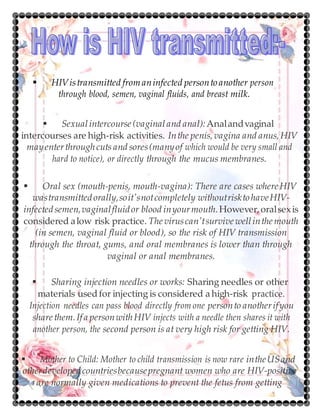
 HIVistransmitted fromaninfected persontoanother person
through blood, semen, vaginal fluids, and breast milk.
 Sexualintercourse (vaginaland anal):Analandvaginal
intercourses are high-risk activities. Inthe penis,vagina and anus,HIV
mayenterthroughcuts and sores(manyof which would be very small and
hard to notice), or directly through the mucus membranes.
 Oral sex (mouth-penis, mouth-vagina): There are cases whereHIV
wastransmittedorally,soit'snotcompletely withoutrisktohaveHIV-
infectedsemen,vaginalfluidor blood inyourmouth.However,oralsexis
considered alow risk practice. The viruscan'tsurvive wellinthe mouth
(in semen, vaginal fluid or blood), so the risk of HIV transmission
through the throat, gums, and oral membranes is lower than through
vaginal or anal membranes.
 Sharing injection needles or works: Sharing needles or other
materials usedfor injecting is considered a high-risk practice.
Injection needles can pass blood directly from one personto anotherifyou
share them.Ifa personwithHIV injects with a needle then shares it with
another person, the second person is at very high risk for getting HIV.
 Mother to Child: Mother to child transmission is now rare intheUSand
otherdevelopedcountriesbecausepregnant women who are HIV-positive
are normally given medications to prevent the fetus from getting
infected. However, it is possible for an HIV-infected mother to pass the virus
directlybeforeorduringbirth,orthrough breast milk. Breast milk contains
HIV, and while small amounts of breast milk do not pose significant threat of
infection to adults, it is a risk forinfants.
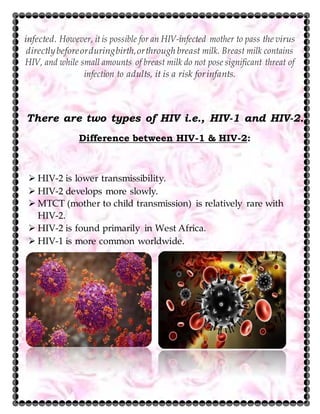
There are two types of HIV i.e., HIV-1 and HIV-2.
Difference between HIV-1 & HIV-2:
 HIV-2 is lower transmissibility.
 HIV-2 develops more slowly.
 MTCT (mother to child transmission) is relatively rare with
HIV-2.
 HIV-2 is found primarily in West Africa.
 HIV-1 is more common worldwide.
YOUCANGETHIVIFYOUHUGSOMEONE WHO IS
INFECTED
Itisnotpossible tobecomeinfectedwithHIV
from everyday casual contact such as sharing
food, shaking hands or touching the same
objects.
MOSQUITOS CAN GIVE YOU HIV
Insects cannot transmit HIV. When taking
blood fromsomeone mosquitoes donotinject
blood from any previous person. The only thing
thatamosquito injectsis saliva, which is used asa
lubricantandenablesittofeedmore efficiently.
YOU CAN GET HIV FROM KISSING SOMEONE WHO IS
INFECTED
Saliva does contain HIV, but the virus is only
present inverysmallquantitiesandassuch
cannot cause HIV infection. Unless both partners have
largeopen sores intheirmouths, or severely bleeding
gums, there is no transmission risk from mouth-to-
mouth kissing.
Risk factors of HIV
Have unprotected sex (do not use condoms).
Is a man who has sex with other men.
Have or have recently had a sexually
transmitted disease suchashepatitis B & C.
People who inject drugs or steroids, especially if they
share needles.
Babieswhoareborntomothers whoareinfected with
HIV.
st
st
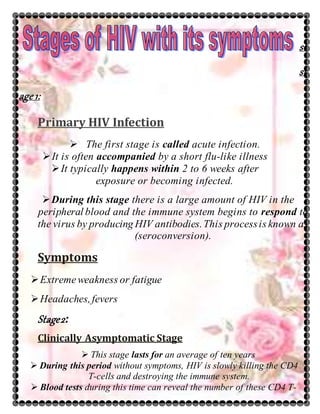
age 1:
Primary HIV Infection
 The first stage is called acute infection.
It is often accompanied by a short flu-like illness
It typically happens within 2 to 6 weeks after
exposure or becoming infected.
During this stage there is a large amount of HIV in the
peripheral blood and the immune system begins to respond to
the virus by producing HIV antibodies.This processis known as
(seroconversion).
Symptoms
Extremeweakness or fatigue
Headaches,fevers
Stage2:
Clinically Asymptomatic Stage
 This stage lasts for an average of ten years
 During this period without symptoms, HIV is slowly killing the CD4
T-cells and destroying the immune system.
 Blood tests during this time can reveal the number of these CD4 T-
cells. For an HIV-infected person, the number of CD4 T-cells
steadily drops.
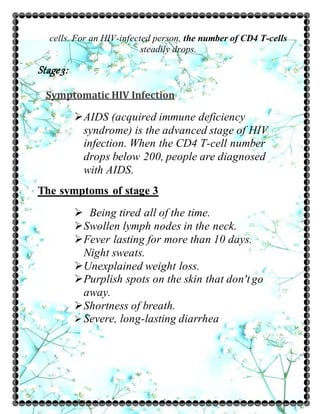
Stage3:
Symptomatic HIV Infection
AIDS (acquired immune deficiency
syndrome) is the advanced stage of HIV
infection. When the CD4 T-cell number
drops below 200, people are diagnosed
with AIDS.
The symptoms of stage 3
 Being tired all of the time.
Swollen lymph nodes in the neck.
Fever lasting for more than 10 days.
Night sweats.
Unexplained weight loss.
Purplish spots on the skin that don't go
away.
Shortness of breath.
 Severe, long-lasting diarrhea
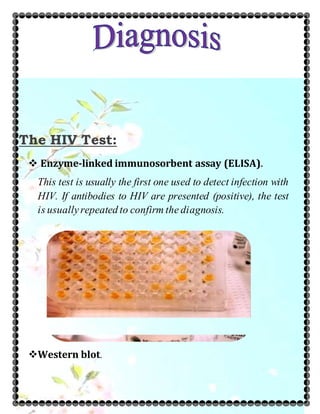
The HIV Test:
 Enzyme-linked immunosorbent assay (ELISA).
This test is usually the first one used to detect infection with
HIV. If antibodies to HIV are presented (positive), the test
is usuallyrepeated to confirm the diagnosis.
Western blot.
This test is moredifficultthan the ELISA to perform.
 Polymerase chain reaction (PCR).
This test findseitherthe RNA of the HIV virus or the HIV
DNA in white blood cells infectedwith the virus. If you
receivea diagnosisof HIV/AIDS,several types of tests
can help your doctor determinewhat stageof the disease
you have. These tests include:
 CD4 count.
- CD4 cells are a type of white blood cell that's
specificallytargetedand destroyedby HIV.
- CD4 count vary from 500 to more than 1,000=
healthy person.
- CD4 count becomes less than 200 =HIV infection
progresses to AIDS.
 Viral load
- This test measuresthe amountof virus in your blood.
Baby’s investigation of HIV after birth
 Most HIV tests look for antibodies to HIV, not the
virus itself. But these tests aren’t very useful for babies
born to HIV-positive mothers.
WHY?
 That’s because the mother’s HIV antibodies get into
the baby’s blood during pregnancy. If the mother is
HIV-positive, the regular HIV test will show that the
baby is HIV-positive, even when that isn’t true.
Treatment
 Anti-retroviral medicines work by stopping
the HIV from making copies of itself.
- To strengthen the immune system.
- The amount of virus in your body (viral
load) is decreased.
- Allows your body to make more CD4 T cells.
 Commonly three different types of medicines
are taken together. This is called combination
therapy. And that helps to prevent the virus from
becoming resistant to the medicines. These
medicines are usually taken for life.
The classes of anti-HIV drugs include
 Non-nucleoside reverse transcriptase
inhibitors (NNRTIs).
It disables a protein needed by HIV to make
copies of itself.
 Nucleoside reverse transcriptase inhibitors
(NRTIs).
They are faulty versions of building blocks
that HIV needs to make copies of itself.
 Protease inhibitors (PIs).
It disables protease, another protein that
HIV needs to make copies of itself.
 Entry or fusion inhibitors.
These drugs block HIV's entry into CD4
cells.
 Integrase inhibitors.
Raltegravir (Isentress) works by disabling
integrase, a protein that HIV uses to insert its
genetic material into CD4 cells.
How to protect your baby from getting HIV:
 Mother-to-child transmission of HIV can be prevented
by using antiretroviral drugs, which reduce the chances
of a child becoming infected with HIV from 20% to less
than 5%.
 How to prevent men and women from getting HIV
 Don't have sex with multiple partners.
 Don't use drugs or alcohol with sex.
 If you inject drugs, use a new sterile needle each time to
significantly reduce the risk of HIV transmission.
 Use a condom.
In general, the studies reported similAR
low levels of knowledge and awareness
of sexually Transmitted diseases, with
the exception of HIV/AIDS. Although, as
shown by some of the findings on
condom use, knowledge does not always
translate into behaviour chANge,
Adolescents' sex education is important
for STD prevention, AND the school
setting plays An important role. Beyond
HIV/AIDS, attention should be paid to
infections such as CHLAMYDIA,
GONORRHEA AND SYPHILIS.
 www.google.com
 www.wikipedia.com
 Ncert Biology textbook
 www.wikipedia.org
 Biology today
 India today
 Discovery
 www.WHO.com

CLASS 12 BEST BIOLOGY PROJECT AIDS

  • 1.
    Submitted By- Underthe Guidance of Satendra Verma Mrs.Preeti Saini XII A(BIO) P.G.T BIOLOGY CBSE Roll No- JNV PANNA
  • 3.
    It is herebyto certify that, the original and genuine investigation work has been carried outto investigate aboutthe subject matter and the related data collection and investigation has been completed solely, sincerely and satisfactorily by Satendra Kumar Verma of CLASS. XII A, JAWAHAR NAVODAYA VIDYALAYA PANNA M.P regarding his project titled“STUDY OF HIV(AIDS)”. Teacher In Charge External Examiner
  • 4.
    I have takenefforts in this project. However, it would not have been possible without the kind support and help of many individuals. I would like to thank my principal Vidhu Khare (mam) i/c . . I am highly indebted to my Biology teacher, Mrs. Preeti Saini (mam) for her invaluable guidance which has sustained my efforts in all the stages of this project work. I would also like to thank my parents for their continuous support and encouragement. My thanks and appreciations also go to my fellow classmates and the laboratory assistant in developing the project and to the people who have willingly helped me out with their abilities.
  • 5.
    1. Introduction ……………….. 2)Cause………………………... 3) Main Types…………………. 4) Diagnosis…………………… 5) Study of HIV AIDS………... 6) Transmission of HIV…….... 7) Types and Myths ofHIV….. 8) Pathogenesis of HIVAIDS… 9) StagesofHIVwiththeirsymptoms 10) Diagnosis of HIV…………....
  • 6.
    11) Treatment………………….... 12) Prevention………………….. 13)Conclusion………………….. 14) Bibliography………………..
  • 7.
    Sexually transmitted diseases(STD), also referred to as sexually transmitted infections (STI) and venereal diseases (VD), are infections that are commonly spread by sex, especially vaginal intercourse, anal sex and oral sex. Most STDs initially do not cause symptoms. This results in a greater risk of passing the disease on to others. Symptoms and signs of disease may include: vaginal discharge, penile discharge, ulcers on or around the genitals, and pelvic pain. STDs acquired before or during birth may result in poor outcomes for the baby. Some STIs may cause problems with the ability to get pregnant. More than 30 different bacteria, viruses, and parasites can cause STDs. Bacterial STDs include Chlamydia, gonorrhea, and syphilis among others. Viral STDs include genital herpes, HIV/AIDS, and genital warts among others. Parasitic STDs include Trichomoniasis among others. While usually spread by sex, some STDs can also be spread by non-sexual contact with contaminated blood and tissues, breastfeeding, or
  • 8.
    during childbirth. STDdiagnostic tests are easily available in the developed world, but this is often not the case in the developing world. The most effective way of preventing STDs is by not having sex. Some vaccinations may also decrease the risk of certain infections including hepatitis B and some types of HPV. Safer sex practices such as use of condoms, having a smaller number of sexual partners, and being in a relationship where each person only has sex with the other also decreases the risk. Circumcision in males may be effective to prevent some infections. Most STIs are treatable or curable. Of the most common infections, syphilis, gonorrhea, Chlamydia, Trichomoniasis are curable, while herpes, hepatitis B, HIV/AIDS, and HPV are treatable but not curable. Resistance to certain antibiotics is developing among some organisms such as gonorrhea.
  • 9.
    Transmission The risks andtransmission probabilities of sexually transmitted diseases are summarized by act in the table: Risk per unprotected sexual act with an infected person Known risks Possible Performing oral sex on a man  Throat Chlamydia  Throat  Gonorrhea (25– 30%)  Herpes (rare)  HPV  Syphilis (1%)  Hepatitis B (low risk)  HIV (0.01%)  Hepatitis C (unknown) Performing oral sex on a woman  Herpes  HPV  Throat gonorrhea  Throat Chlamydia Receiving oral sex— man  Chlamydia  Gonorrhea  Herpes  Syphilis (1%)  HPV
  • 10.
     Vaginal sex— man  Chlamydia(30– 50%)  Crabs  Scabies  Gonorrhea (22%)  Hepatitis B  Herpes (0.07% for HSV-2)  HIV (0.05%)  HPV (high: around 40-50%)  Syphilis  Trichomoniasis  Hepatitis C Vaginal sex— woman  Chlamydia (30– 50%)  Crabs  Scabies  Gonorrhea (47%)  Hepatitis B (50– 70%)  Herpes  HIV (0.1%)  HPV (high; around 40-50%)  Syphilis  Hepatitis C Receiving oral sex— woman  Herpes  HPV  Bacterial Vaginosis  Gonorrhea
  • 11.
     Trichomoniasis Anal sex— insertive Chlamydia  Crabs  Scabies (40%)  Gonorrhea  Hepatitis B  Herpes  HIV (0.62%)  HPV  Syphilis (14%)  Hepatitis C Anal sex— receptive  Chlamydia  Crabs  Scabies  Gonorrhea  Hepatitis B  Herpes  HIV (1.7%)  HPV  Syphilis (1.4%)  Hepatitis C Anilingus  Amebiasis  Cryptosporidiosis (1%)  Giardiasis  Hepatitis A (1%)  Shigellosis (1%)  HPV (1%)
  • 12.
    Sexually transmitted infectionsinclude Chlamydia is a sexually transmitted infection caused by the bacterium Chlamydia trachomatis. In women, symptoms may include abnormal vaginal discharge, burning during urination, and bleeding in between periods, although most women do not experience any symptoms. Symptoms in men include pain when urinating, and abnormal discharge from their penis. If left untreated in both men and women, Chlamydia can infect the urinary tract and potentially lead to pelvic inflammatory disease (PID). PID can cause serious problems during pregnancy and even has the potential to cause infertility. It can cause a woman to have a potentially deadly ectopic pregnancy, in which the child is born outside of the uterus. However, Chlamydia can be cured with antibiotics.  The two most common forms of herpes are caused by infection with herpes simplex virus (HSV). HSV-1 is typically acquired orally and causes cold sores, HSV-2 is usually acquired during sexual contact and affects the genitals, however either strain may affect either site.[31] Some people are asymptomatic or have very mild symptoms. Those that do experience symptoms usually notice them 2 to 20 days after exposure which last 2 to 4 weeks. Symptoms can include :
  • 13.
    small fluid-filled blisters,headaches, backaches, itching or tingling sensations in the genital or anal area, and pain During urination, Flu like symptoms, swollen glands, or fever. Herpes is spread through skin contact with a person infected with the virus. The virus affects the areas where it entered the body. This can occur through kissing, vaginal intercourse, oral sex or anal sex. The virus is most infectious during times when there are visible symptoms; however those who are asymptomatic can still spread the virus through skin contact. The primary attack is the most severe because the body does not have any antibodies built up. After the primary attack, one might have recurring attacks that are milder or might not even have future attacks. There is no cure for the disease but there are antiviral medications that treat its symptoms and lower the risk of transmission (Valtrex).  Although HSV-1 is typically the "oral" version of the virus and HSV-2 is typically the "genital" version of the virus, a person with HSV-1 orally CAN transmit that virus to their partner genitally. The virus, either type, will settle into a nerve bundle either at the top of the spine, producing the "oral" outbreak, or a second nerve bundle at the base of the spine, producing the genital outbreak.  The human papillomavirus (HPV) is the most common STI in the United States. There are more than 40 different strands of HPV and many do not cause any health problems. In 90% of cases the body’s immune system clears the infection naturally within 2 years.[34] Some cases may not be cleared and can lead to genital warts (bumps around the genitals that can be small or large, raised or flat, or shaped like cauliflower) or
  • 14.
    cervical cancer andother HPV related cancers. Symptoms might not show up until advanced stages. It is important for women to get pap smears in order to check for and treat cancers. There are also two vaccines available for women (Cervarix and Gardasil) that protect against the types of HPV that cause cervical cancer. HPV can be passed through genital-to-genital contact as well as during oral sex. It is important to remember that the infected partner might not have any symptoms.  Gonorrhea is caused by bacterium that lives on moist mucous membranes in the urethra, vagina, rectum, mouth, throat, and eyes. The infection can spread through contact with the penis, vagina, mouth or anus. Symptoms of Gonorrhea usually appear 2 to 5 days after contact with an infected partner however, some men might not notice symptoms for up to a month. Symptoms in men include burning and pain while urinating, increased urinary frequency, discharge from the penis (white, green, or yellow in color), red or swollen urethra, swollen or tender testicles, or sore throat. Symptoms in women may include vaginal discharge, burning or itching while urinating, painful sexual intercourse, severe pain in lower abdomen (if infection spreads to fallopian tubes), or fever (if infection spreads to fallopian tubes), however many women do not show any symptoms. There are some antibiotic resistant strains for Gonorrhea but most cases can be cured with antibiotics
  • 15.
     Syphilis isan STI caused by a bacterium. If acquired, syphilis needs to be treated adequately; otherwise it can cause long- term complications and death. Clinical manifestations of syphilis include the ulceration of the uro- genital tract, mouth or rectum; if left untreated the symptoms worsen. In recent years, the prevalence of syphilis has declined in Western Europe, but it has increased in Eastern Europe (former Soviet states). A high incidence of syphilis can be found in places such as Cameroon, Cambodia, and Papua New Guinea.  Trichomoniasis is a common STI that is caused by infection with a protozoan parasite called Trichomonas vaginalis. Trichomoniasis affects both women and men, but symptoms are more common in women. Most patients are treated with an antibiotic called metronidazole, which is very effective.  HIV (human immunodeficiency virus) damages the body's immune system which interferes with fighting off disease- causing agents. The virus kills CD4 cells, which are white blood cells that help fight off various infections. HIV is carried in body fluids, and is spread by sexual activity. It can also be spread by contact with infected blood, breast feeding, childbirth, and from mother to child during  pregnancy. When HIV is at its most advanced stage, an individual is said to have AIDS (acquired immunodeficiency syndrome).
  • 16.
     Testing maybe for a single infection, or consist of a number of tests for a range of STIs, including tests for syphilis, trichomonas, gonorrhea, Chlamydia, herpes, hepatitis and HIV. No procedure tests for all infectious agents. STI tests may be used for a number of reasons: as a diagnostic test to determine the cause of symptoms or illness as a screening test to detect asymptomatic or presymptomatic infections As a check that prospective sexual partners are free of disease before they engage in sex without safer sex precautions (for example, when starting a long term mutually monogamous sexual relationship, in fluid bonding, or for procreation). as a check prior to or during pregnancy, to prevent harm to the baby as a check after birth, to check that the baby has not caught an STI from the mother
  • 17.
    to prevent theuse of infected donated blood or organs as part of the process of contact tracing from a known infected individual as part of mass epidemiological surveillance Early identification and treatment results in less chance to spread disease and for some conditions may improve the outcomes of treatment. There is often a window period after initial infection during which an STI test will be negative. During this period the infection may be transmissible. The duration of this period varies depending on the infection and the test. Diagnosis may also be delayed by reluctance of the infected person to seek a medical professional. One report indicated that people turn to the Internet rather than to a medical professional for information on STIs to a higher degree than for other sexual problems.
  • 19.
    HIV- (Human ImmunodeficiencyVirus) The virus compromises the body’s ability to handle disease and causes AIDS. AIDS- (Acquired Immune Deficiency Syndrome) it is related to HIV, but they are not one in the same. A person has AIDS only in the final stages of HIV, after the immune system becomes unable to defend itself against foreign invaders like bacteria, other viruses, and allows the development of certain cancers. AIDS is caused bythe human immunodeficiency virus (HIV). HIV destroys a type of defense cell in the body called a CD4 helper lymphocyte. These lymphocytes are part of the body's immune system, the defense system that fights infectious diseases. But as HIV destroys these lymphocytes, people with the virus begin to get serious infections that they normally wouldn't that is, they become immune deficient
  • 20.
     HIVistransmitted fromaninfectedpersontoanother person through blood, semen, vaginal fluids, and breast milk.  Sexualintercourse (vaginaland anal):Analandvaginal intercourses are high-risk activities. Inthe penis,vagina and anus,HIV mayenterthroughcuts and sores(manyof which would be very small and hard to notice), or directly through the mucus membranes.  Oral sex (mouth-penis, mouth-vagina): There are cases whereHIV wastransmittedorally,soit'snotcompletely withoutrisktohaveHIV- infectedsemen,vaginalfluidor blood inyourmouth.However,oralsexis considered alow risk practice. The viruscan'tsurvive wellinthe mouth (in semen, vaginal fluid or blood), so the risk of HIV transmission through the throat, gums, and oral membranes is lower than through vaginal or anal membranes.  Sharing injection needles or works: Sharing needles or other materials usedfor injecting is considered a high-risk practice. Injection needles can pass blood directly from one personto anotherifyou share them.Ifa personwithHIV injects with a needle then shares it with another person, the second person is at very high risk for getting HIV.  Mother to Child: Mother to child transmission is now rare intheUSand otherdevelopedcountriesbecausepregnant women who are HIV-positive are normally given medications to prevent the fetus from getting
  • 21.
    infected. However, itis possible for an HIV-infected mother to pass the virus directlybeforeorduringbirth,orthrough breast milk. Breast milk contains HIV, and while small amounts of breast milk do not pose significant threat of infection to adults, it is a risk forinfants. There are two types of HIV i.e., HIV-1 and HIV-2. Difference between HIV-1 & HIV-2:  HIV-2 is lower transmissibility.  HIV-2 develops more slowly.  MTCT (mother to child transmission) is relatively rare with HIV-2.  HIV-2 is found primarily in West Africa.  HIV-1 is more common worldwide.
  • 22.
    YOUCANGETHIVIFYOUHUGSOMEONE WHO IS INFECTED ItisnotpossibletobecomeinfectedwithHIV from everyday casual contact such as sharing food, shaking hands or touching the same objects. MOSQUITOS CAN GIVE YOU HIV Insects cannot transmit HIV. When taking blood fromsomeone mosquitoes donotinject blood from any previous person. The only thing thatamosquito injectsis saliva, which is used asa lubricantandenablesittofeedmore efficiently. YOU CAN GET HIV FROM KISSING SOMEONE WHO IS INFECTED Saliva does contain HIV, but the virus is only present inverysmallquantitiesandassuch
  • 23.
    cannot cause HIVinfection. Unless both partners have largeopen sores intheirmouths, or severely bleeding gums, there is no transmission risk from mouth-to- mouth kissing. Risk factors of HIV Have unprotected sex (do not use condoms). Is a man who has sex with other men. Have or have recently had a sexually transmitted disease suchashepatitis B & C. People who inject drugs or steroids, especially if they share needles. Babieswhoareborntomothers whoareinfected with HIV.
  • 25.
    st st age 1: Primary HIVInfection  The first stage is called acute infection. It is often accompanied by a short flu-like illness It typically happens within 2 to 6 weeks after exposure or becoming infected. During this stage there is a large amount of HIV in the peripheral blood and the immune system begins to respond to the virus by producing HIV antibodies.This processis known as (seroconversion). Symptoms Extremeweakness or fatigue Headaches,fevers Stage2: Clinically Asymptomatic Stage  This stage lasts for an average of ten years  During this period without symptoms, HIV is slowly killing the CD4 T-cells and destroying the immune system.  Blood tests during this time can reveal the number of these CD4 T-
  • 26.
    cells. For anHIV-infected person, the number of CD4 T-cells steadily drops. Stage3: Symptomatic HIV Infection AIDS (acquired immune deficiency syndrome) is the advanced stage of HIV infection. When the CD4 T-cell number drops below 200, people are diagnosed with AIDS. The symptoms of stage 3  Being tired all of the time. Swollen lymph nodes in the neck. Fever lasting for more than 10 days. Night sweats. Unexplained weight loss. Purplish spots on the skin that don't go away. Shortness of breath.  Severe, long-lasting diarrhea
  • 27.
    The HIV Test: Enzyme-linked immunosorbent assay (ELISA). This test is usually the first one used to detect infection with HIV. If antibodies to HIV are presented (positive), the test is usuallyrepeated to confirm the diagnosis. Western blot.
  • 28.
    This test ismoredifficultthan the ELISA to perform.  Polymerase chain reaction (PCR). This test findseitherthe RNA of the HIV virus or the HIV DNA in white blood cells infectedwith the virus. If you receivea diagnosisof HIV/AIDS,several types of tests can help your doctor determinewhat stageof the disease you have. These tests include:  CD4 count. - CD4 cells are a type of white blood cell that's specificallytargetedand destroyedby HIV. - CD4 count vary from 500 to more than 1,000= healthy person. - CD4 count becomes less than 200 =HIV infection progresses to AIDS.  Viral load - This test measuresthe amountof virus in your blood.
  • 29.
    Baby’s investigation ofHIV after birth  Most HIV tests look for antibodies to HIV, not the virus itself. But these tests aren’t very useful for babies born to HIV-positive mothers. WHY?  That’s because the mother’s HIV antibodies get into the baby’s blood during pregnancy. If the mother is HIV-positive, the regular HIV test will show that the baby is HIV-positive, even when that isn’t true. Treatment  Anti-retroviral medicines work by stopping the HIV from making copies of itself. - To strengthen the immune system.
  • 30.
    - The amountof virus in your body (viral load) is decreased. - Allows your body to make more CD4 T cells.  Commonly three different types of medicines are taken together. This is called combination therapy. And that helps to prevent the virus from becoming resistant to the medicines. These medicines are usually taken for life. The classes of anti-HIV drugs include  Non-nucleoside reverse transcriptase inhibitors (NNRTIs). It disables a protein needed by HIV to make copies of itself.  Nucleoside reverse transcriptase inhibitors (NRTIs). They are faulty versions of building blocks that HIV needs to make copies of itself.  Protease inhibitors (PIs). It disables protease, another protein that HIV needs to make copies of itself.
  • 31.
     Entry orfusion inhibitors. These drugs block HIV's entry into CD4 cells.  Integrase inhibitors. Raltegravir (Isentress) works by disabling integrase, a protein that HIV uses to insert its genetic material into CD4 cells.
  • 32.
    How to protectyour baby from getting HIV:  Mother-to-child transmission of HIV can be prevented by using antiretroviral drugs, which reduce the chances of a child becoming infected with HIV from 20% to less than 5%.  How to prevent men and women from getting HIV  Don't have sex with multiple partners.  Don't use drugs or alcohol with sex.  If you inject drugs, use a new sterile needle each time to significantly reduce the risk of HIV transmission.  Use a condom.
  • 33.
    In general, thestudies reported similAR low levels of knowledge and awareness of sexually Transmitted diseases, with the exception of HIV/AIDS. Although, as shown by some of the findings on condom use, knowledge does not always translate into behaviour chANge, Adolescents' sex education is important for STD prevention, AND the school setting plays An important role. Beyond HIV/AIDS, attention should be paid to infections such as CHLAMYDIA, GONORRHEA AND SYPHILIS.
  • 34.
     www.google.com  www.wikipedia.com Ncert Biology textbook  www.wikipedia.org  Biology today  India today  Discovery  www.WHO.com