Latvia: 
State of the libraries 
2014 
Uldis Zariņš 
National Library of Latvia
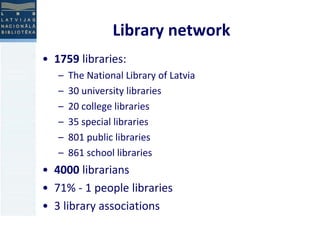
Library network 
• 1759 libraries: 
– The National Library of Latvia 
– 30 university libraries 
– 20 college libraries 
– 35 special libraries 
– 801 public libraries 
– 861 school libraries 
• 4000 librarians 
• 71% - 1 people libraries 
• 3 library associations
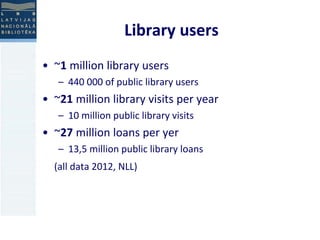
Library users 
• ~1 million library users 
– 440 000 of public library users 
• ~21 million library visits per year 
– 10 million public library visits 
• ~27 million loans per yer 
– 13,5 million public library loans 
(all data 2012, NLL)
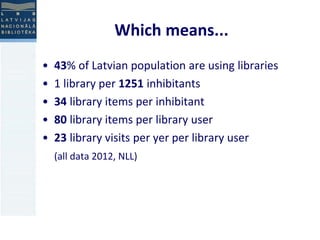
Which means... 
• 43% of Latvian population are using libraries 
• 1 library per 1251 inhibitants 
• 34 library items per inhibitant 
• 80 library items per library user 
• 23 library visits per yer per library user 
(all data 2012, NLL)
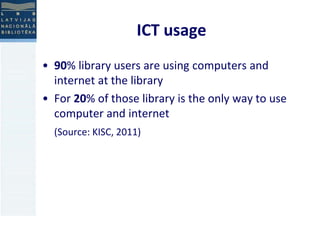
ICT usage 
• 90% library users are using computers and 
internet at the library 
• For 20% of those library is the only way to use 
computer and internet 
(Source: KISC, 2011)
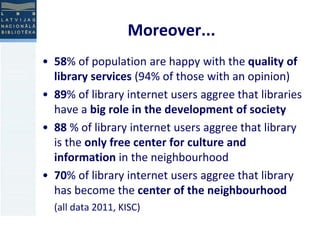
Moreover... 
• 58% of population are happy with the quality of 
library services (94% of those with an opinion) 
• 89% of library internet users aggree that libraries 
have a big role in the development of society 
• 88 % of library internet users aggree that library 
is the only free center for culture and 
information in the neighbourhood 
• 70% of library internet users aggree that library 
has become the center of the neighbourhood 
(all data 2011, KISC)
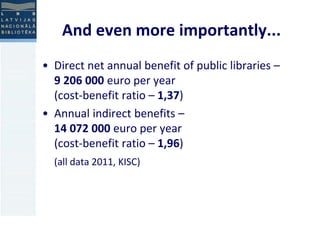
And even more importantly... 
• Direct net annual benefit of public libraries – 
9 206 000 euro per year 
(cost-benefit ratio – 1,37) 
• Annual indirect benefits – 
14 072 000 euro per year 
(cost-benefit ratio – 1,96) 
(all data 2011, KISC)
How did we get there 
• Strong soviet heritage 
• Strong co-operation with Nordic countries 
• State unified library information system project 
as a catalyst for change 
• Support of the Bill and Melinda Gates 
Foundation as a multiplicator of impact 
• Continuous support by the National Library and 
Cultural Information Systems Center
Results 
• 4000 computers installed in 874 libraries 
• All libraries connected to internet and provide 
free access to internet, including Wi-Fi 
• 10 regional educational centers 
• 1800 librarians have received each 140 hours of 
training 
• Training in library advocacy
Trends (1) 
• Number of readers and loans shrink, number of 
visits – grow 
• The budgets are increasing 
• The number of librarians and their wages are 
growing 
• Renovations of new libraries continue 
• Participation in local and international projects
Trends (2) 
• Research and digitisation of local history 
• ICT training for all groups of users 
• Remote services 
• New forms of events – creative workshops, 
poetry slam dunks, sports and recreational 
activities, involvement in bigger cultural events 
• Use of social media and video 
• Non-traditional services can become a burden 
too...
Points for discussion 
• Where do we go from here? 
• What can we do more (and less) and better? 
• How do we respond to societal needs? 
• How do we respond to outside challenges? 
• How do we raise the visibility of libraries and it 
services? 
• How do we measure impact of libraries? 
• How do we prove our worth?
In short... 
• What are the most imporant challenges for 
libraries and how can they be met? 
• To what societal challenges can libraries 
respond and how?
Thank you!

Latvia: State of the librares 2014

  • 1.
    Latvia: State ofthe libraries 2014 Uldis Zariņš National Library of Latvia
  • 2.
    Library network •1759 libraries: – The National Library of Latvia – 30 university libraries – 20 college libraries – 35 special libraries – 801 public libraries – 861 school libraries • 4000 librarians • 71% - 1 people libraries • 3 library associations
  • 3.
    Library users •~1 million library users – 440 000 of public library users • ~21 million library visits per year – 10 million public library visits • ~27 million loans per yer – 13,5 million public library loans (all data 2012, NLL)
  • 4.
    Which means... •43% of Latvian population are using libraries • 1 library per 1251 inhibitants • 34 library items per inhibitant • 80 library items per library user • 23 library visits per yer per library user (all data 2012, NLL)
  • 5.
    ICT usage •90% library users are using computers and internet at the library • For 20% of those library is the only way to use computer and internet (Source: KISC, 2011)
  • 6.
    Moreover... • 58%of population are happy with the quality of library services (94% of those with an opinion) • 89% of library internet users aggree that libraries have a big role in the development of society • 88 % of library internet users aggree that library is the only free center for culture and information in the neighbourhood • 70% of library internet users aggree that library has become the center of the neighbourhood (all data 2011, KISC)
  • 7.
    And even moreimportantly... • Direct net annual benefit of public libraries – 9 206 000 euro per year (cost-benefit ratio – 1,37) • Annual indirect benefits – 14 072 000 euro per year (cost-benefit ratio – 1,96) (all data 2011, KISC)
  • 8.
    How did weget there • Strong soviet heritage • Strong co-operation with Nordic countries • State unified library information system project as a catalyst for change • Support of the Bill and Melinda Gates Foundation as a multiplicator of impact • Continuous support by the National Library and Cultural Information Systems Center
  • 9.
    Results • 4000computers installed in 874 libraries • All libraries connected to internet and provide free access to internet, including Wi-Fi • 10 regional educational centers • 1800 librarians have received each 140 hours of training • Training in library advocacy
  • 10.
    Trends (1) •Number of readers and loans shrink, number of visits – grow • The budgets are increasing • The number of librarians and their wages are growing • Renovations of new libraries continue • Participation in local and international projects
  • 11.
    Trends (2) •Research and digitisation of local history • ICT training for all groups of users • Remote services • New forms of events – creative workshops, poetry slam dunks, sports and recreational activities, involvement in bigger cultural events • Use of social media and video • Non-traditional services can become a burden too...
  • 12.
    Points for discussion • Where do we go from here? • What can we do more (and less) and better? • How do we respond to societal needs? • How do we respond to outside challenges? • How do we raise the visibility of libraries and it services? • How do we measure impact of libraries? • How do we prove our worth?
  • 13.
    In short... •What are the most imporant challenges for libraries and how can they be met? • To what societal challenges can libraries respond and how?
  • 14.