So you have an idea… Adam L.K. Philipp [email_address]
… and it might be worth something Adam L.K. Philipp [email_address]
How can you  protect  an idea? Trade Secret Unlimited time (in theory) Easy to lose Constant vigilance Patent Limited time Hard to challenge Easy to maintain
Trade Secrets Generally require a binding agreement… … with nondisclosure language (NDA)… … that nobody wants to sign… …  and that nobody ever reads.
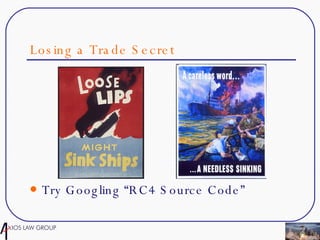
Losing a Trade Secret Try Googling “RC4 Source Code”
Trade Secret Summary Use in limited circumstances Use for manageable periods of time
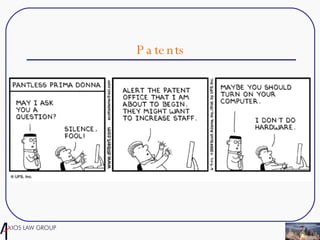
Patents
What can be Patented “Anything under the sun made by man.” U.S. Supreme Court in Diamond v. Chakrabarty However, the invention must be: New Useful Not obvious
Patents are Exclusive Infringers cannot: Make Use Sell (or offer to sell) Import Last for 20 years from filing date
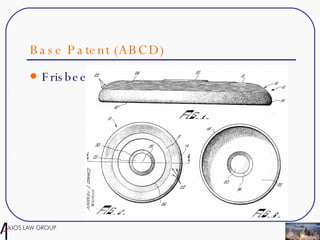
Base Patent (ABCD) Frisbee
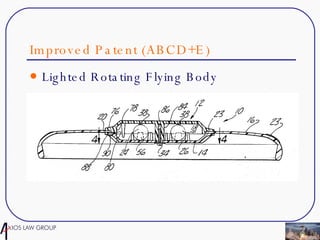
Improved Patent (ABCD+E) Lighted Rotating Flying Body
Why Obtain Patents? A. Exclusivity in the marketplace B. Revenue from licensing C. Access to other IP/markets via cross-licensing D. All of the above
Parts of a Patent Application Written description Drawing(s) Claim(s)
Provisional Patent Applications  No claims needed Not examined “ Option to buy“ a utility application in one year Useful for: Rush filings or when disclosure is imminent When the funds for a full utility application can be better used for something else
Patent Coverage Territorial Patents cover only the region/country they are issued in. First to invent in the U.S. Foreign countries: First to file “ Absolute novelty“ International/Regional filing: Less up front costs Potential cost savings with less prosecution in individual countries
Good Patent Practices Keep Records: Conception date and details Reduction to practice date and details Diligence until filing patent application Preserve U.S. and foreign filing rights by: Early filing of a U.S. application Maintaining work in confidence until U.S. application is filed Binding  nondisclosure agreements
Questions? Adam L.K. Philipp [email_address]

StartPad Countdown 3 - (Patent Pending)

  • 1.
    So you havean idea… Adam L.K. Philipp [email_address]
  • 2.
    … and itmight be worth something Adam L.K. Philipp [email_address]
  • 3.
    How can you protect an idea? Trade Secret Unlimited time (in theory) Easy to lose Constant vigilance Patent Limited time Hard to challenge Easy to maintain
  • 4.
    Trade Secrets Generallyrequire a binding agreement… … with nondisclosure language (NDA)… … that nobody wants to sign… … and that nobody ever reads.
  • 5.
    Losing a TradeSecret Try Googling “RC4 Source Code”
  • 6.
    Trade Secret SummaryUse in limited circumstances Use for manageable periods of time
  • 7.
  • 8.
    What can bePatented “Anything under the sun made by man.” U.S. Supreme Court in Diamond v. Chakrabarty However, the invention must be: New Useful Not obvious
  • 9.
    Patents are ExclusiveInfringers cannot: Make Use Sell (or offer to sell) Import Last for 20 years from filing date
  • 10.
  • 11.
    Improved Patent (ABCD+E)Lighted Rotating Flying Body
  • 12.
    Why Obtain Patents?A. Exclusivity in the marketplace B. Revenue from licensing C. Access to other IP/markets via cross-licensing D. All of the above
  • 13.
    Parts of aPatent Application Written description Drawing(s) Claim(s)
  • 14.
    Provisional Patent Applications No claims needed Not examined “ Option to buy“ a utility application in one year Useful for: Rush filings or when disclosure is imminent When the funds for a full utility application can be better used for something else
  • 15.
    Patent Coverage TerritorialPatents cover only the region/country they are issued in. First to invent in the U.S. Foreign countries: First to file “ Absolute novelty“ International/Regional filing: Less up front costs Potential cost savings with less prosecution in individual countries
  • 16.
    Good Patent PracticesKeep Records: Conception date and details Reduction to practice date and details Diligence until filing patent application Preserve U.S. and foreign filing rights by: Early filing of a U.S. application Maintaining work in confidence until U.S. application is filed Binding nondisclosure agreements
  • 17.
    Questions? Adam L.K.Philipp [email_address]