Unit 1.4
Stakeholders
Stakeholders
• Any person or organization that has a direct
interest in and is affected by the performance of a
business
• Internal Stakeholders – members of the
organization (employees, shareholders, managers
and directors)
• External Stakeholders – do not form part of the
business but have a direct interest or involvement
in the actions of the organization (customers,
suppliers and the government)
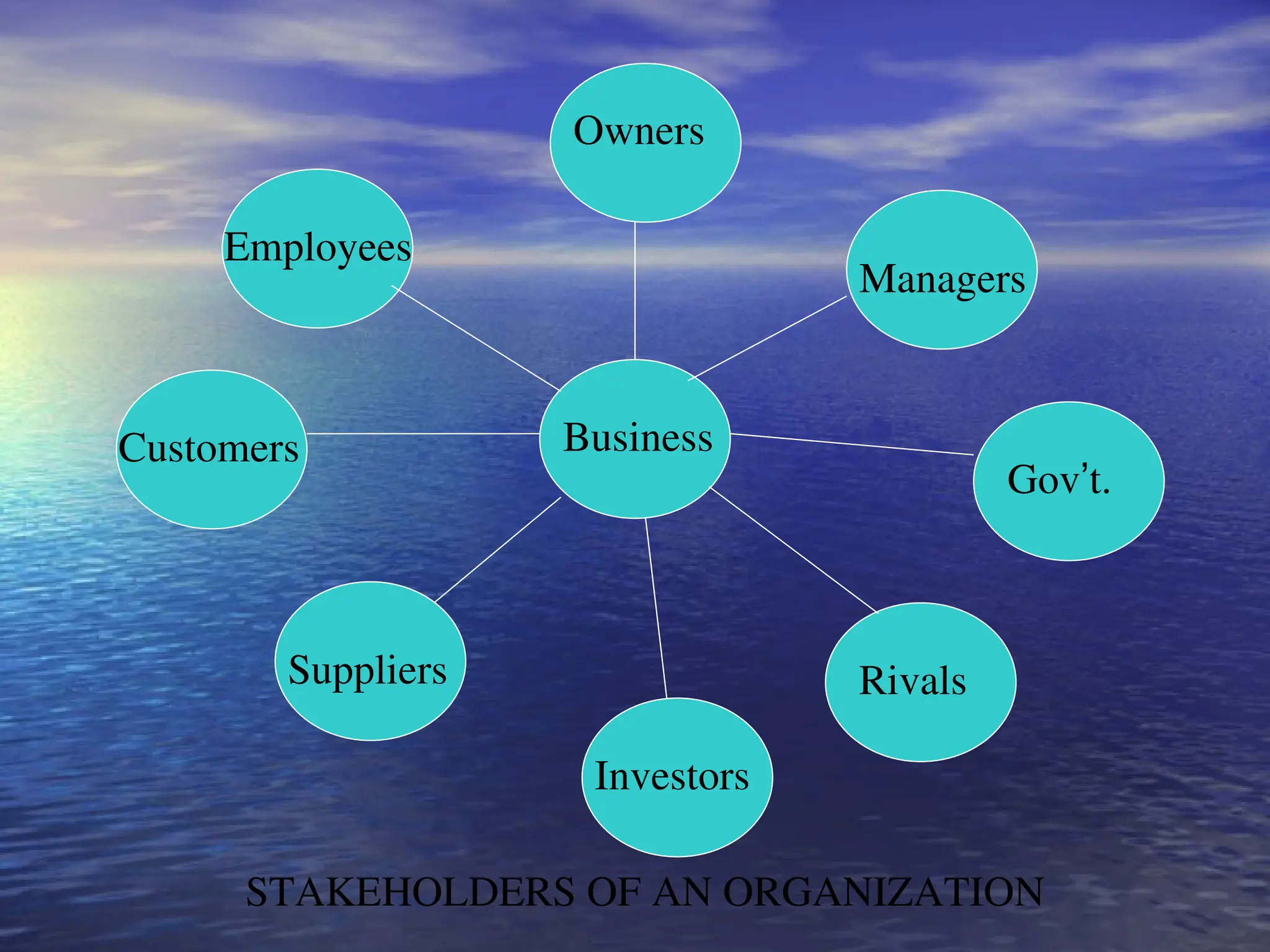
Business
Employees
Customers
Suppliers
Investors
Rivals
Gov’t.
Managers
Owners
STAKEHOLDERS OF AN ORGANIZATION
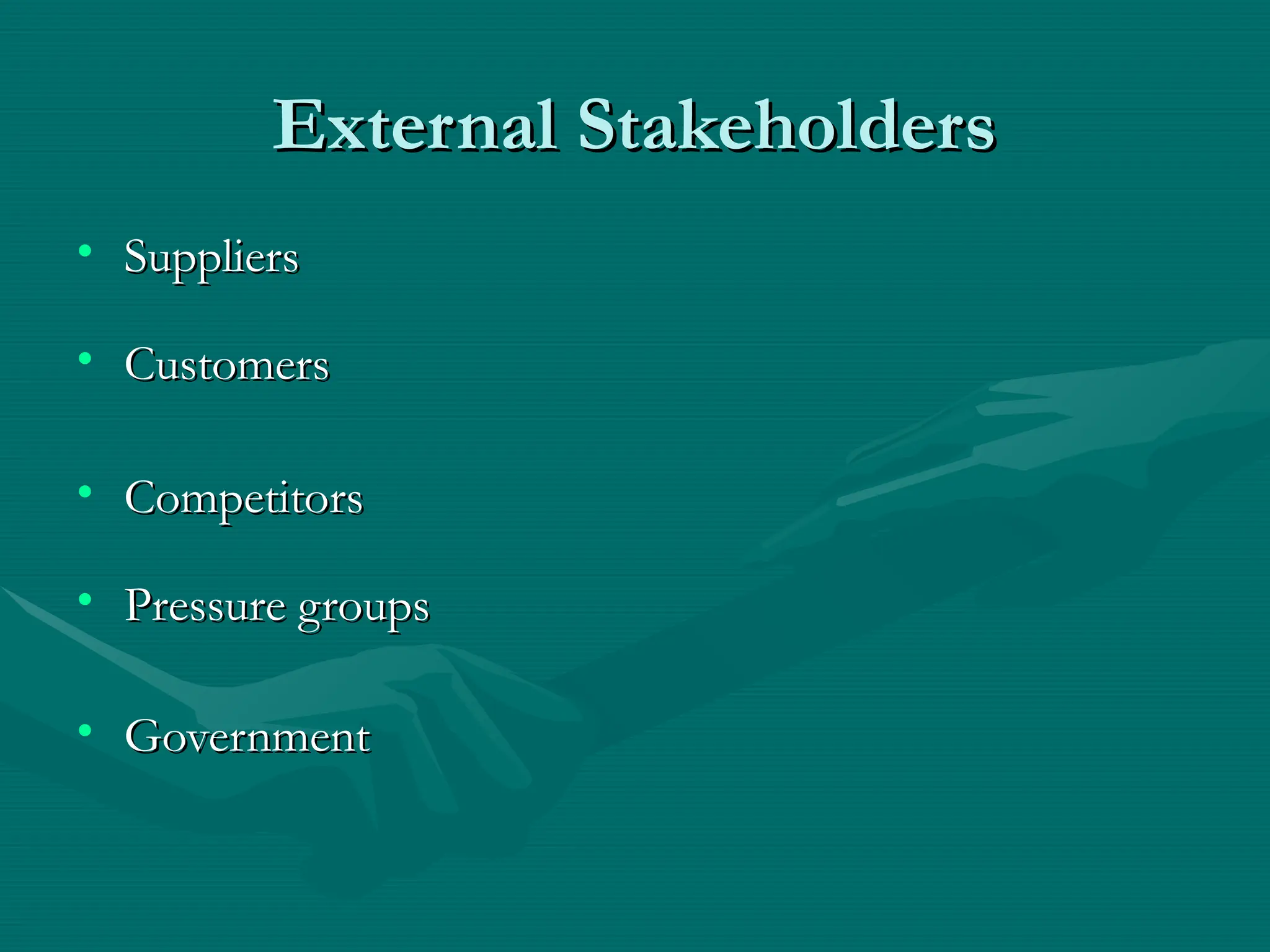
Internal Stakeholders
• Employees
Employees
• Shareholders
Shareholders
• Managers
Managers
• Directors
Directors
External Stakeholders
• Suppliers
Suppliers
• Customers
Customers
• Competitors
Competitors
• Pressure groups
Pressure groups
• Government
Government
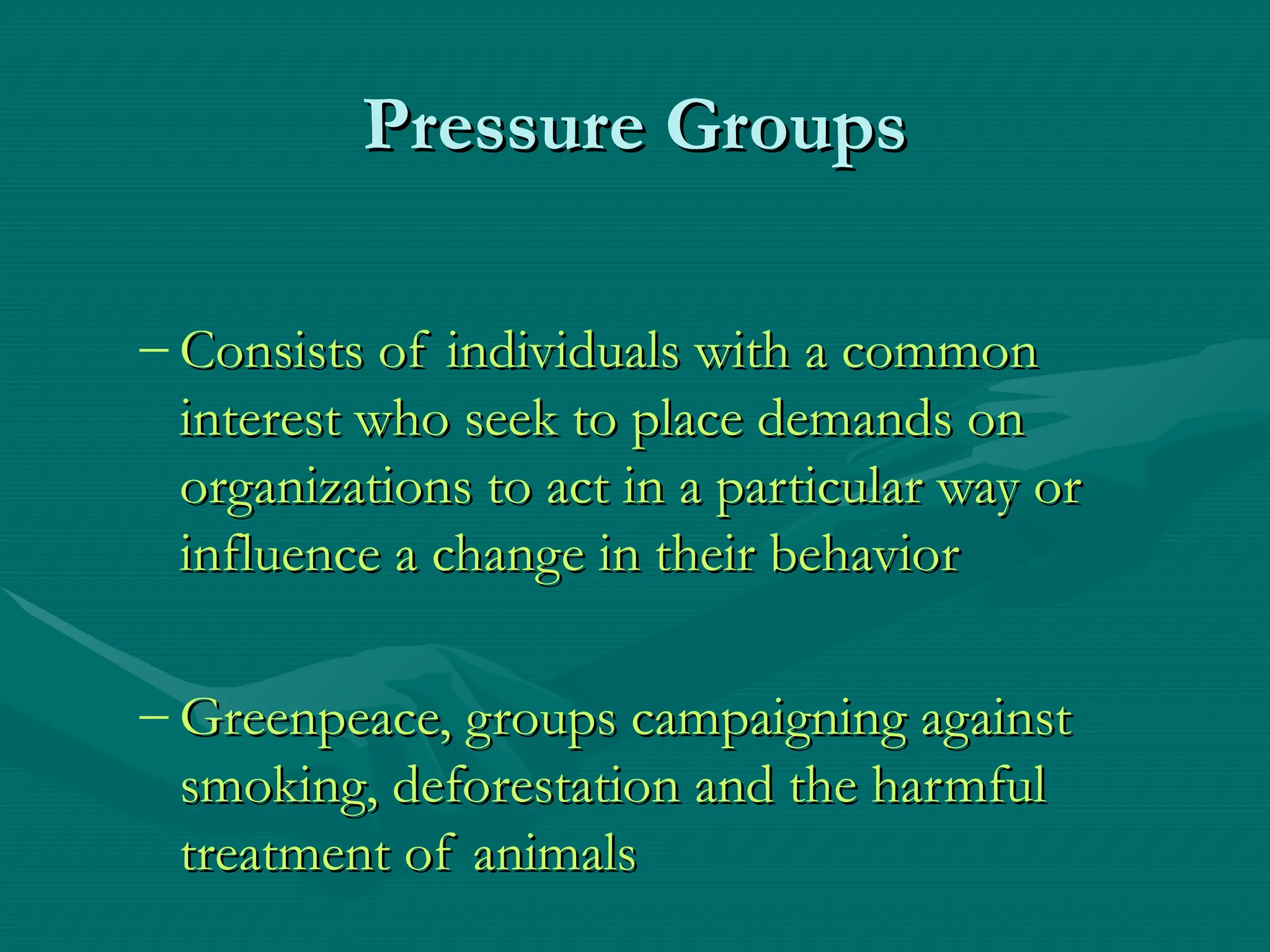
Pressure Groups
Pressure Groups
– Consists of individuals with a common
Consists of individuals with a common
interest who seek to place demands on
organizations to act in a particular way or
influence a change in their behavior
– Greenpeace, groups campaigning against
Greenpeace, groups campaigning against
smoking, deforestation and the harmful
treatment of animals
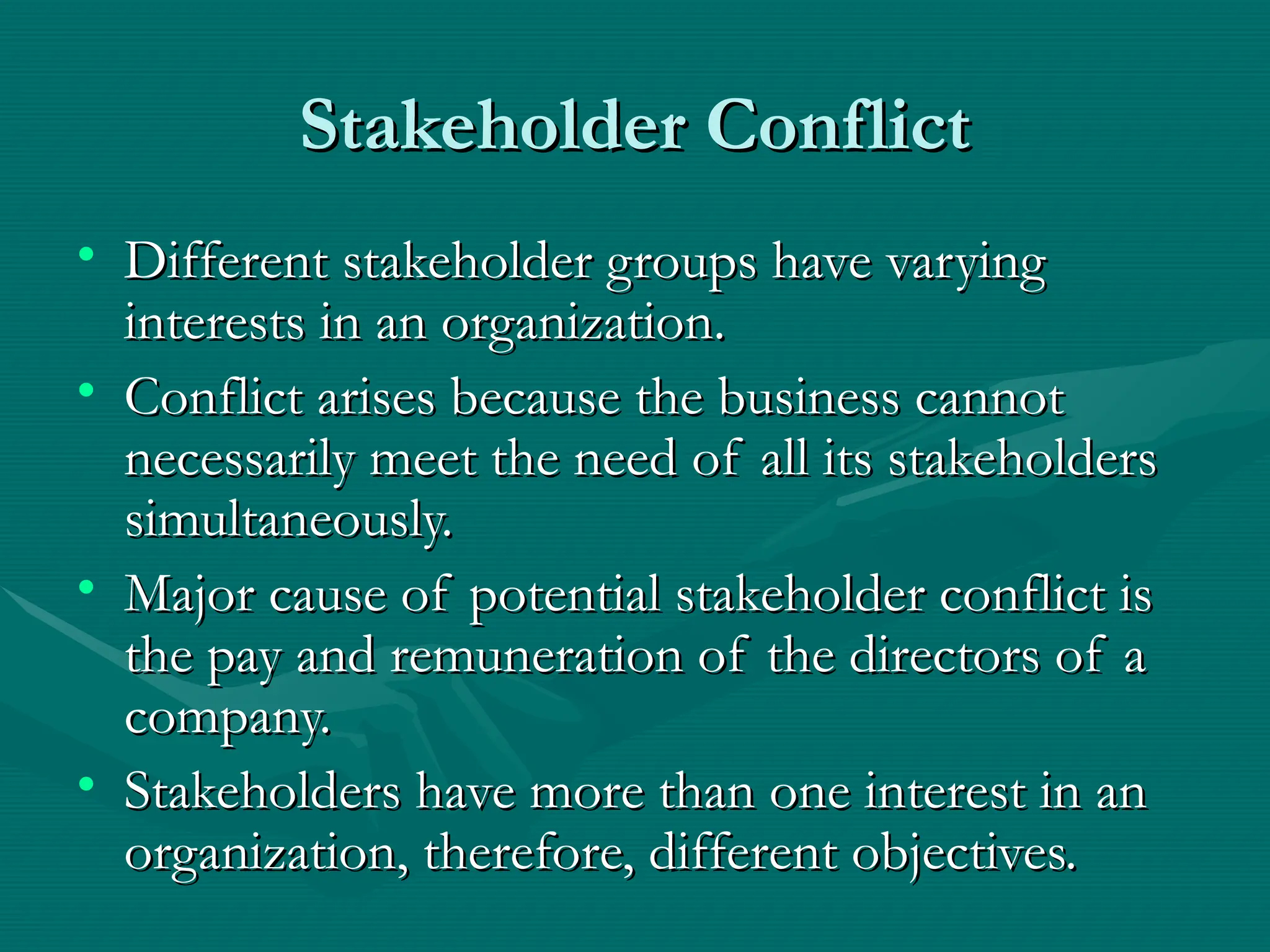
Stakeholder Conflict
• Different stakeholder groups have varying
Different stakeholder groups have varying
interests in an organization.
• Conflict arises because the business cannot
Conflict arises because the business cannot
necessarily meet the need of all its stakeholders
simultaneously.
simultaneously.
• Major cause of potential stakeholder conflict is
Major cause of potential stakeholder conflict is
the pay and remuneration of the directors of a
company.
company.
• Stakeholders have more than one interest in an
Stakeholders have more than one interest in an
organization, therefore, different objectives.
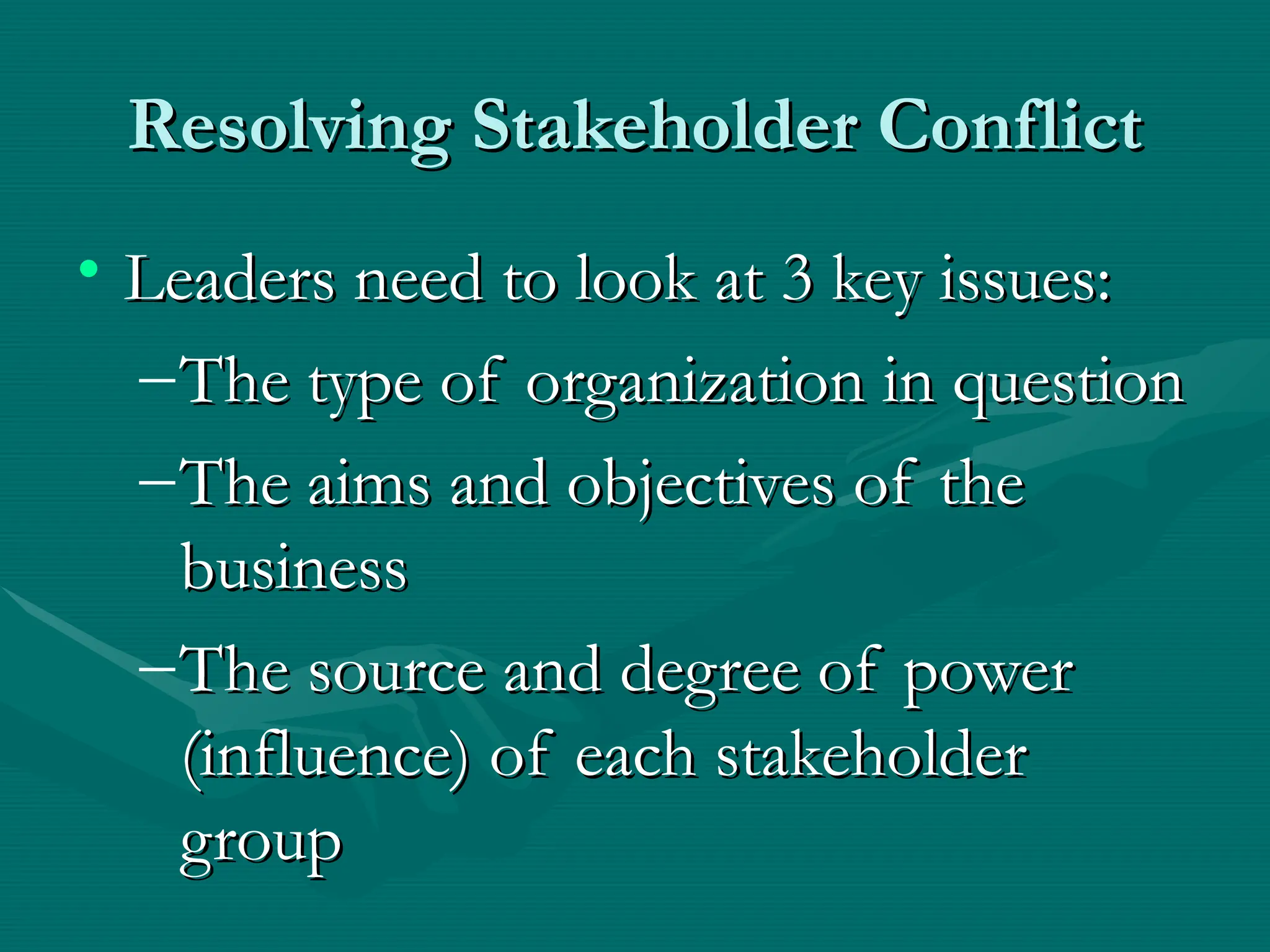
Resolving Stakeholder Conflict
• Leaders need to look at 3 key issues:
Leaders need to look at 3 key issues:
–The type of organization in question
The type of organization in question
–The aims and objectives of the
The aims and objectives of the
business
business
–The source and degree of power
The source and degree of power
(influence) of each stakeholder
group
group
Read organization
Read organization
objectives and the
objectives and the
CUEGIS concepts
CUEGIS concepts
Pages 53-54
Pages 53-54
Key Terms
Key Terms
REVIEW
REVIEW
Conflict
• Refers to situations where
stakeholders have disagreements on
certain matters due to differences in
their opinions. This can lead to
arguments and tension between the
various stakeholder groups.
External Stakeholders
• Are individuals and organizations not
part of the organization but have a
direct interest in its activities and
performance, e.g. customers,
suppliers, pressure groups and the
government.
Internal Stakeholders
• Are members of the organization,
e.g. the employees, managers,
directors and shareholders of the
organization.
Pressure Groups
• Consist of individuals with a common
concern (such as environmental
protection) who seek to place
demands on organizations to act in a
particular way or to influence a
change in their behavior.
Shareholders
(or stockholders)
• Are the owners of a limited liability
company. Shares in a company can be
held by individuals and other
organizations.
Stakeholders
• Are individuals or organizations with
a direct interest (known as a stake)
in the activities and performance of
a business, e.g. shareholders,
employees, customers and suppliers.

Stake Holders meaning and explanation in

  • 1.
  • 2.
    Stakeholders • Any personor organization that has a direct interest in and is affected by the performance of a business • Internal Stakeholders – members of the organization (employees, shareholders, managers and directors) • External Stakeholders – do not form part of the business but have a direct interest or involvement in the actions of the organization (customers, suppliers and the government)
  • 3.
  • 4.
    Internal Stakeholders Internal Stakeholders •Employees Employees • Shareholders Shareholders • Managers Managers • Directors Directors
  • 5.
    External Stakeholders External Stakeholders •Suppliers Suppliers • Customers Customers • Competitors Competitors • Pressure groups Pressure groups • Government Government
  • 6.
    Pressure Groups Pressure Groups –Consists of individuals with a common Consists of individuals with a common interest who seek to place demands on interest who seek to place demands on organizations to act in a particular way or organizations to act in a particular way or influence a change in their behavior influence a change in their behavior – Greenpeace, groups campaigning against Greenpeace, groups campaigning against smoking, deforestation and the harmful smoking, deforestation and the harmful treatment of animals treatment of animals
  • 7.
    Stakeholder Conflict Stakeholder Conflict •Different stakeholder groups have varying Different stakeholder groups have varying interests in an organization. interests in an organization. • Conflict arises because the business cannot Conflict arises because the business cannot necessarily meet the need of all its stakeholders necessarily meet the need of all its stakeholders simultaneously. simultaneously. • Major cause of potential stakeholder conflict is Major cause of potential stakeholder conflict is the pay and remuneration of the directors of a the pay and remuneration of the directors of a company. company. • Stakeholders have more than one interest in an Stakeholders have more than one interest in an organization, therefore, different objectives. organization, therefore, different objectives.
  • 8.
    Resolving Stakeholder Conflict ResolvingStakeholder Conflict • Leaders need to look at 3 key issues: Leaders need to look at 3 key issues: –The type of organization in question The type of organization in question –The aims and objectives of the The aims and objectives of the business business –The source and degree of power The source and degree of power (influence) of each stakeholder (influence) of each stakeholder group group
  • 9.
    Read organization Read organization objectivesand the objectives and the CUEGIS concepts CUEGIS concepts Pages 53-54 Pages 53-54
  • 10.
  • 11.
    Conflict • Refers tosituations where stakeholders have disagreements on certain matters due to differences in their opinions. This can lead to arguments and tension between the various stakeholder groups.
  • 12.
    External Stakeholders • Areindividuals and organizations not part of the organization but have a direct interest in its activities and performance, e.g. customers, suppliers, pressure groups and the government.
  • 13.
    Internal Stakeholders • Aremembers of the organization, e.g. the employees, managers, directors and shareholders of the organization.
  • 14.
    Pressure Groups • Consistof individuals with a common concern (such as environmental protection) who seek to place demands on organizations to act in a particular way or to influence a change in their behavior.
  • 15.
    Shareholders (or stockholders) • Arethe owners of a limited liability company. Shares in a company can be held by individuals and other organizations.
  • 16.
    Stakeholders • Are individualsor organizations with a direct interest (known as a stake) in the activities and performance of a business, e.g. shareholders, employees, customers and suppliers.

Editor's Notes

  • #5 Pressure groups – are non profit organizations established by their members to address a special interest of the group. Example: trade unions, animal rights activist groups, environmental protection groups