Employee Engagement is Not Enough;
Creating Health
and Well-Being in
Organizations
BROUGHT TO YOU BY
CLICK THIS BUTTON TO
TWEET SLIDE INFORMATION
TWEET
As a business organization, you’re seeking to create
great products or deliver services that will produce a
profit. But is it also your responsibility to improve the
health and well-being of your employees?
ACTUALLY,
YES.
Your organization’s
efforts should improve
the lives of your customers,
your employees, and the
communities you serve.
Businesses that are unable to
show how they add any value to
society are unlikely to survive in
the future.
TWEET
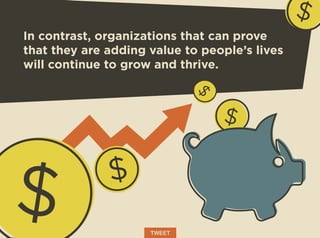
In contrast, organizations that can prove
that they are adding value to people’s lives
will continue to grow and thrive.
TWEET
So where
does it start?
4 EASY STEPS
TO HELP YOU FOCUS
ON THE WELL-BEING
OF YOUR ORGANIZATION:
1: Acknowledge that we are all in this together
Every single person who works within an organization has a
direct interest in having colleagues with more energy and higher
levels of well-being. In addition, the organization has a direct
interest in employees who are healthy and productive.
TWEET
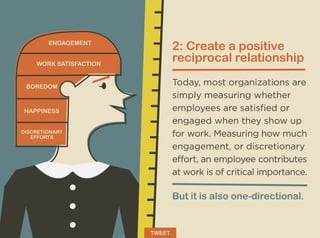
DISCRETIONARY
EFFORTS
HAPPINESS
BOREDOM
WORK SATISFACTION
ENGAGEMENT
2: Create a positive
reciprocal relationship
Today, most organizations are
simply measuring whether
employees are satisfied or
engaged when they show up
for work. Measuring how much
engagement, or discretionary
effort, an employee contributes
at work is of critical importance.
But it is also one-directional.
TWEET
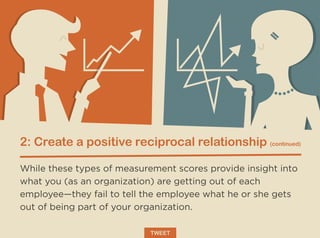
2: Create a positive reciprocal relationship (continued)
While these types of measurement scores provide insight into
what you (as an organization) are getting out of each
employee—they fail to tell the employee what he or she gets
out of being part of your organization.
TWEET
2: Create a positive reciprocal relationship (continued)
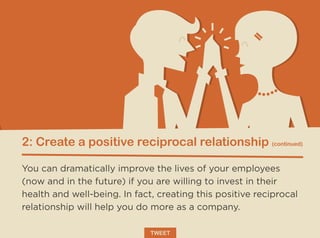
You can dramatically improve the lives of your employees
(now and in the future) if you are willing to invest in their
health and well-being. In fact, creating this positive reciprocal
relationship will help you do more as a company.
TWEET
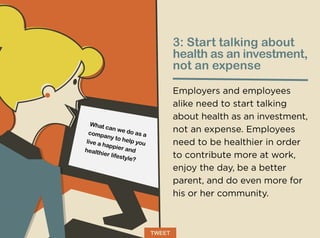
3: Start talking about
health as an investment,
not an expense
Employers and employees
alike need to start talking
about health as an investment,
not an expense. Employees
need to be healthier in order
to contribute more at work,
enjoy the day, be a better
parent, and do even more for
his or her community.
What can we do as acompany to help youlive a happier andhealthier lifestyle?
TWEET
3: Health as an investment, not an expense (continued)
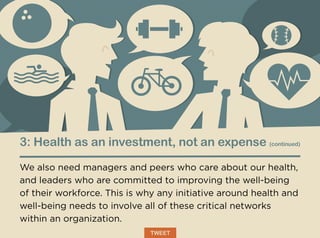
We also need managers and peers who care about our health,
and leaders who are committed to improving the well-being
of their workforce. This is why any initiative around health and
well-being needs to involve all of these critical networks
within an organization.
TWEET
3: Health as an investment, not an expense (continued)
This investment produces both direct and indirect returns. In
addition to the obvious advantages—such as decreasing
healthcare costs, absences, and employee turnover—the less
tangible benefits of investing in well-being are even greater.
TWEET
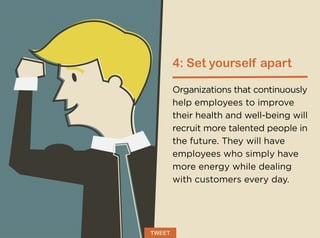
4: Set yourself apart
Organizations that continuously
help employees to improve
their health and well-being will
recruit more talented people in
the future. They will have
employees who simply have
more energy while dealing
with customers every day.
TWEET
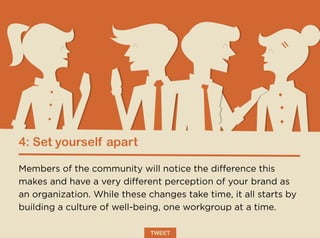
4: Set yourself apart
Members of the community will notice the difference this
makes and have a very different perception of your brand as
an organization. While these changes take time, it all starts by
building a culture of well-being, one workgroup at a time.
TWEET
This Information is based on the New York Times bestseller, Eat Move
Sleep by Tom Rath, which offers research-backed insights into how the
small choices we make every day have a huge impact on our longevity and
quality of life. Check out eatmovesleep.org for more information.
In Eat Move Sleep, Rath also talks about O.C. Tanner’s revolutionary app,
Welbe. With Welbe, people can track how they eat, move, and sleep in on
central place.
If your organization is interested in participating in our enterprise pilot of
Welbe, visit https://www.welbe.com/news today.

Creating Health and Well-Being in Organizations

  • 1.
    Employee Engagement isNot Enough; Creating Health and Well-Being in Organizations
  • 2.
  • 3.
    CLICK THIS BUTTONTO TWEET SLIDE INFORMATION TWEET
  • 4.
    As a businessorganization, you’re seeking to create great products or deliver services that will produce a profit. But is it also your responsibility to improve the health and well-being of your employees?
  • 5.
    ACTUALLY, YES. Your organization’s efforts shouldimprove the lives of your customers, your employees, and the communities you serve. Businesses that are unable to show how they add any value to society are unlikely to survive in the future. TWEET
  • 6.
    In contrast, organizationsthat can prove that they are adding value to people’s lives will continue to grow and thrive. TWEET
  • 7.
    So where does itstart? 4 EASY STEPS TO HELP YOU FOCUS ON THE WELL-BEING OF YOUR ORGANIZATION:
  • 8.
    1: Acknowledge thatwe are all in this together Every single person who works within an organization has a direct interest in having colleagues with more energy and higher levels of well-being. In addition, the organization has a direct interest in employees who are healthy and productive. TWEET
  • 9.
    DISCRETIONARY EFFORTS HAPPINESS BOREDOM WORK SATISFACTION ENGAGEMENT 2: Createa positive reciprocal relationship Today, most organizations are simply measuring whether employees are satisfied or engaged when they show up for work. Measuring how much engagement, or discretionary effort, an employee contributes at work is of critical importance. But it is also one-directional. TWEET
  • 10.
    2: Create apositive reciprocal relationship (continued) While these types of measurement scores provide insight into what you (as an organization) are getting out of each employee—they fail to tell the employee what he or she gets out of being part of your organization. TWEET
  • 11.
    2: Create apositive reciprocal relationship (continued) You can dramatically improve the lives of your employees (now and in the future) if you are willing to invest in their health and well-being. In fact, creating this positive reciprocal relationship will help you do more as a company. TWEET
  • 12.
    3: Start talkingabout health as an investment, not an expense Employers and employees alike need to start talking about health as an investment, not an expense. Employees need to be healthier in order to contribute more at work, enjoy the day, be a better parent, and do even more for his or her community. What can we do as acompany to help youlive a happier andhealthier lifestyle? TWEET
  • 13.
    3: Health asan investment, not an expense (continued) We also need managers and peers who care about our health, and leaders who are committed to improving the well-being of their workforce. This is why any initiative around health and well-being needs to involve all of these critical networks within an organization. TWEET
  • 14.
    3: Health asan investment, not an expense (continued) This investment produces both direct and indirect returns. In addition to the obvious advantages—such as decreasing healthcare costs, absences, and employee turnover—the less tangible benefits of investing in well-being are even greater. TWEET
  • 15.
    4: Set yourselfapart Organizations that continuously help employees to improve their health and well-being will recruit more talented people in the future. They will have employees who simply have more energy while dealing with customers every day. TWEET
  • 16.
    4: Set yourselfapart Members of the community will notice the difference this makes and have a very different perception of your brand as an organization. While these changes take time, it all starts by building a culture of well-being, one workgroup at a time. TWEET
  • 17.
    This Information isbased on the New York Times bestseller, Eat Move Sleep by Tom Rath, which offers research-backed insights into how the small choices we make every day have a huge impact on our longevity and quality of life. Check out eatmovesleep.org for more information. In Eat Move Sleep, Rath also talks about O.C. Tanner’s revolutionary app, Welbe. With Welbe, people can track how they eat, move, and sleep in on central place. If your organization is interested in participating in our enterprise pilot of Welbe, visit https://www.welbe.com/news today.