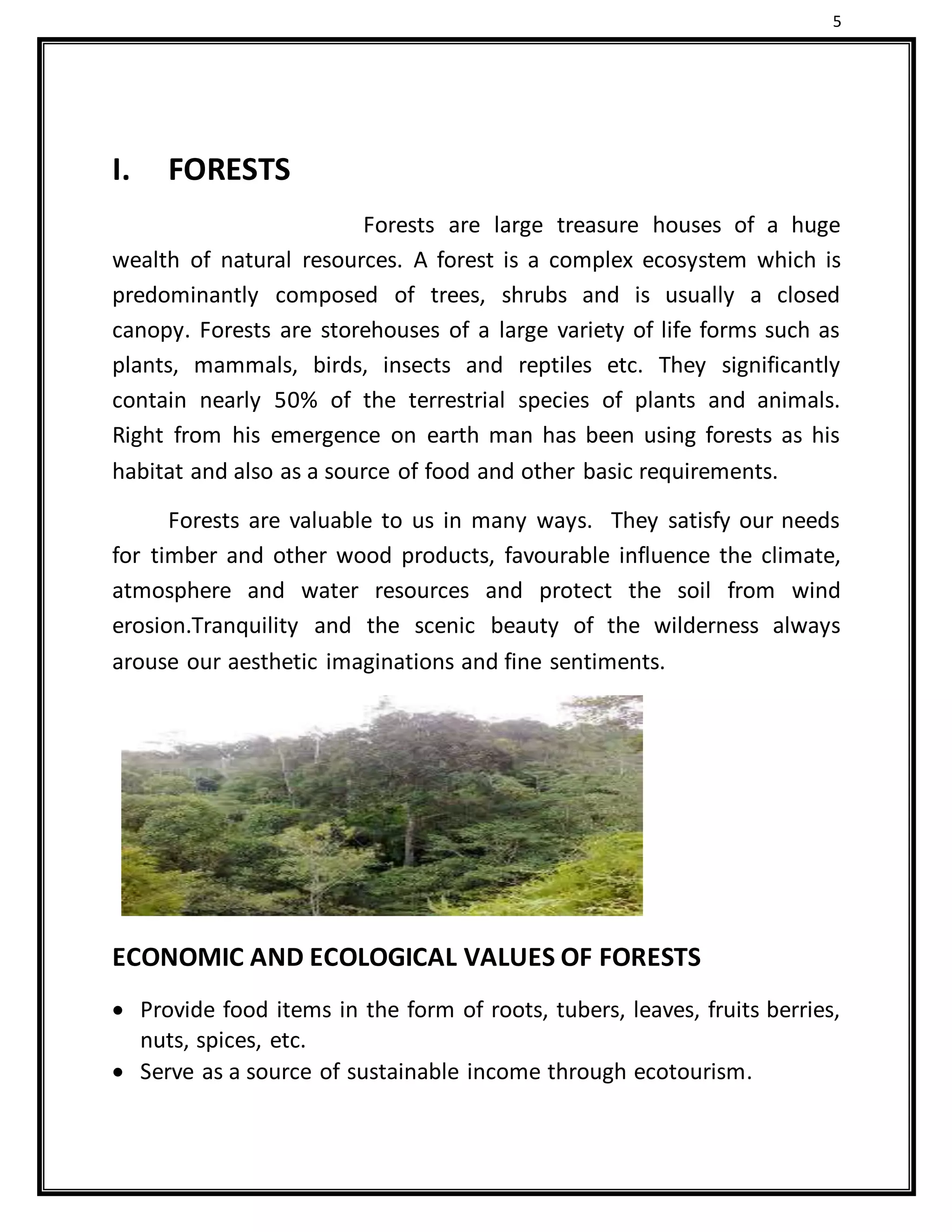
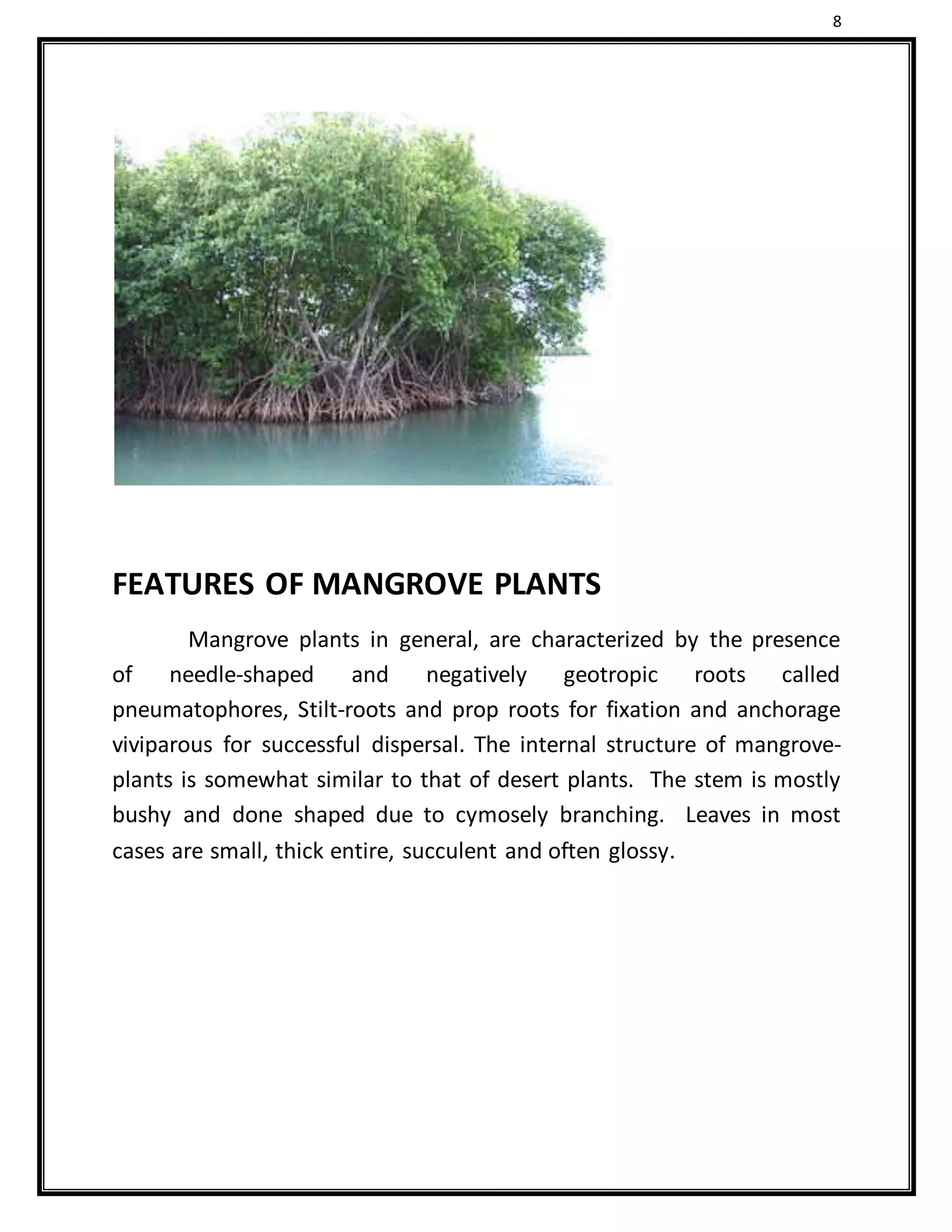
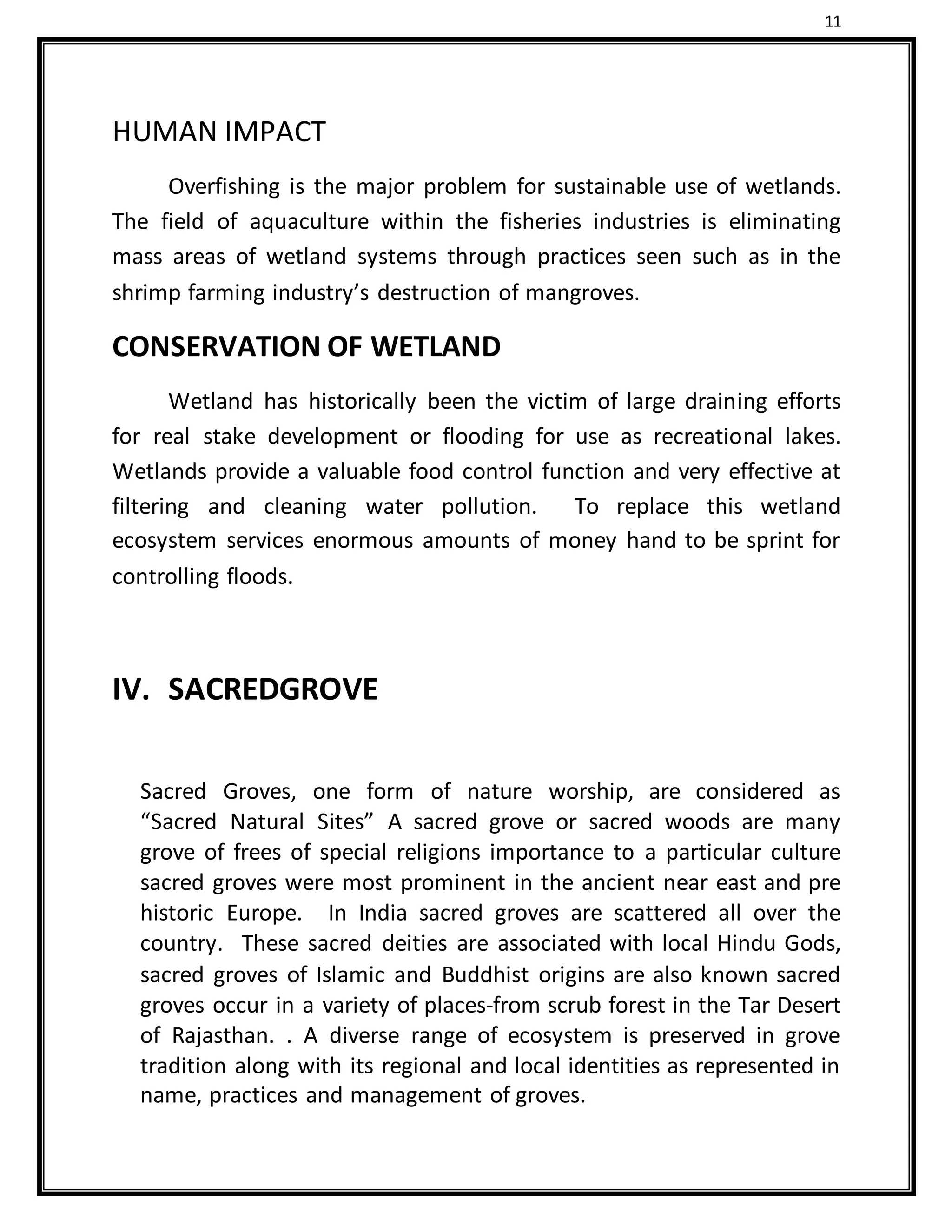
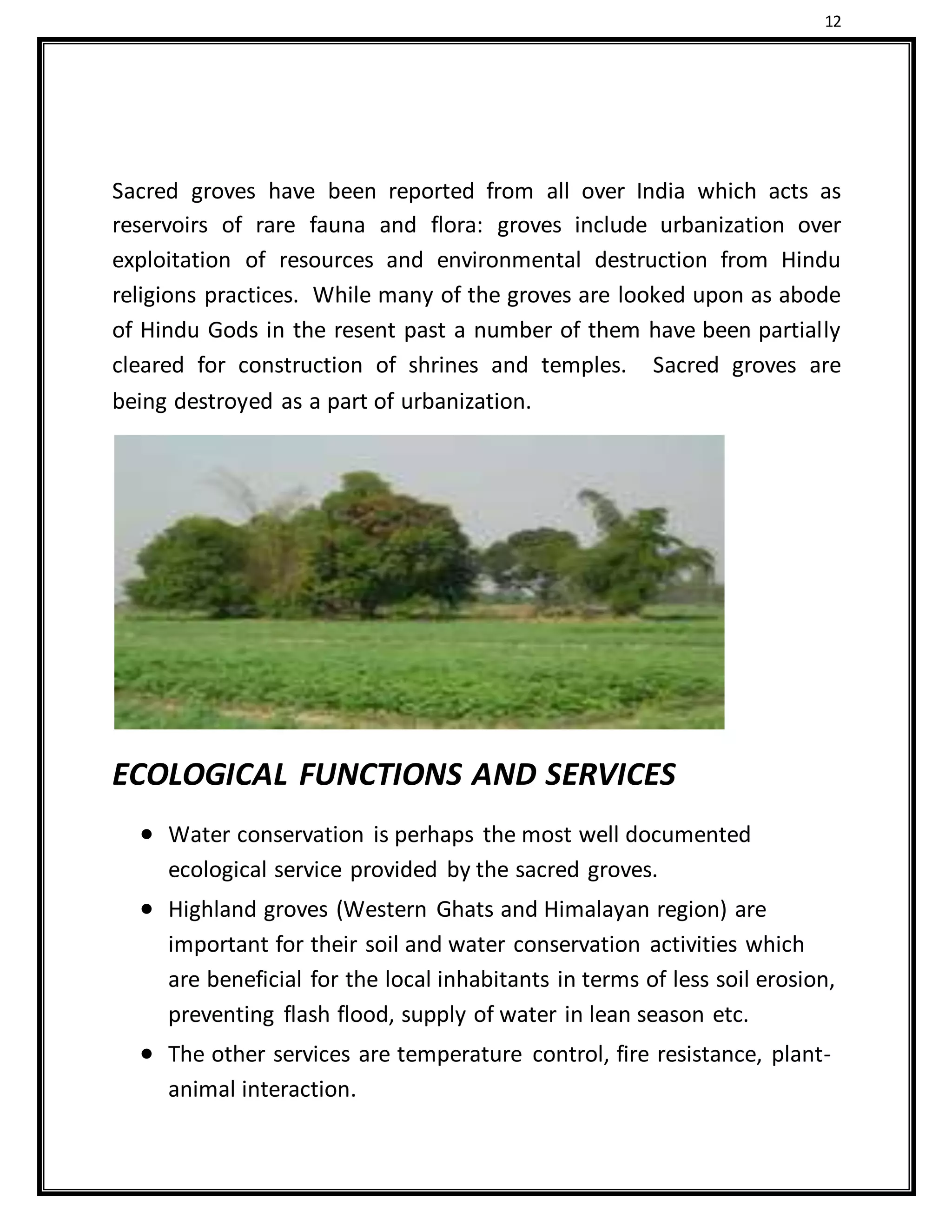
This document discusses the importance of natural resources like forests, mangroves, wetlands, and sacred groves for science teaching and learning. It provides details on the definition, features, economic and ecological values of each resource. Forests store a large variety of life and provide timber, influence climate, and protect soil. Mangroves are salt-tolerant trees found along coasts that provide wood, filter water, and support wildlife. Wetlands are home to many species and store floodwater and filter pollution. Sacred groves are forests protected for religious significance that conserve biodiversity and support local communities. Conserving these natural resources through practices like reforestation and restricting development is important for environmental protection.