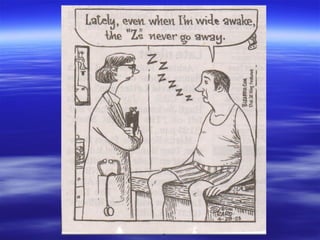
The ABCs of Catching Zzzzzzs Presented by T. “Massey” Arrington, RPSGT, MBA Director, Covenant Sleep Centers
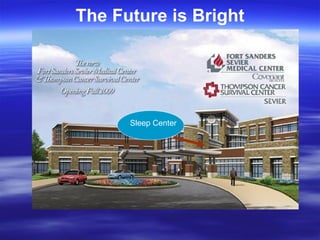
The Future is Bright Sleep Center
Definition of Sleep Wakefulness Awareness of the environment Ability to respond rapidly to external stimuli Sleep Sleep is a reversible complex state Actively generated by specific neuronal system Characteristics: Unresponsiveness to the environment. Recumbence Quiescence Closed eyes
Light & deep sleep REM (dreaming) and non-REM Sleep Stages
Amount of Sleep Changes with age Quantity Infant (14-16 hours) Young Adults (7-8 hours) Elderly (7 hours) Quality Elderly Young Sleep accounts one third of our life time Sleep is essential for life
Sleep Deprivation Types of sleep deprivation Acute and total sleep loss Chronic and Partial sleep loss Insufficient sleep time  Fragmented sleep
Consequences of Sleep Loss Acute and total sleep loss Death Experimental Animal Familial Insomnia
Consequences of Sleep Loss Chronic partial sleep loss Decrease quality of life Decreased concentration and memory Fatigue and sleepiness in the day Depression and anxiety Safety Accidents Cardiovascular risks: Increased diabetes, hypertension, CVD, strokes, and pain
Sleep Deprivation In Society Americans sleep 1.5 hours less than our ancestors 100 years ago. We need the same amount as they did. Factors:  Travel, electric lights, shift work, all night TV and computers Misperception that sleep is negotiable…wasted time.  Sleeping less is “macho” and desirable.
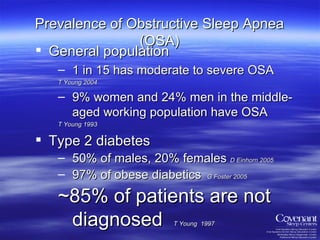
General population 1 in 15 has moderate to severe OSA  T Young 2004 9% women and 24% men in the middle-aged working population have OSA  T Young 1993 Type 2 diabetes 50% of males, 20% females  D Einhorn 2005 97% of obese diabetics  G Foster 2005 ~85% of patients are   not diagnosed  T Young  1997 Prevalence of Obstructive Sleep Apnea (OSA)
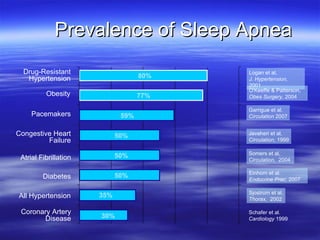
Prevalence of Sleep Apnea   80% 50% 35% 50% Diabetes Obesity All Hypertension Atrial Fibrillation Congestive Heart Failure Drug-Resistant Hypertension Sjostrom et al, Thorax,  2002 Logan et al, J. Hypertension,  2001 Javaheri et al, Circulation,  1999 O'Keeffe & Patterson,  Obes Surgery,  2004 Einhorn et al. Endocrine Prac,  2007 50% Somers et al, Circulation,  2004  77% Coronary Artery Disease 30% 59% Pacemakers Garrigue et al. Circulation  2007 Schafer et al. Cardiology  1999
Sleep Apnea Affects about 10% of all adults over 18 Over age 65, affects about 25% of adults Risk factor include: Family history Obesity Thyroid disease Age History of smoking
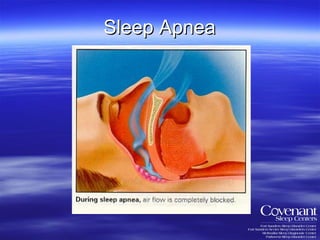
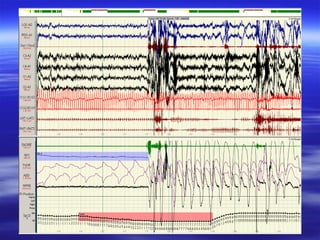
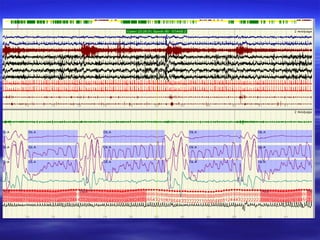
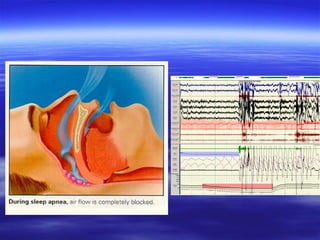
Sleep Disordered Breathing The Apnea Cycle: Breathing stops. Blood oxygen level drops.  Waking  briefly occurs to resume breathing. Repeat many times per night. Snoring is never normal! 25% of apnea patients do not snore
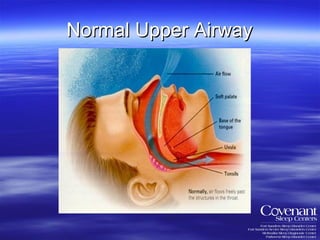
Normal Upper Airway
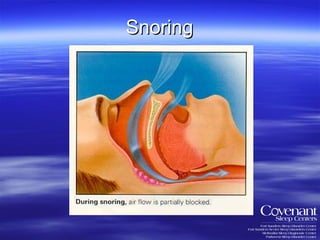
Snoring
Sleep Apnea
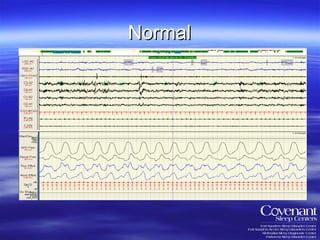
Normal


Consequences of OSA Decrease quality of life Fatigue and sleepiness in the day Decreased concentration and memory Depression and anxiety Safety Accidents Cardiovascular risks: Increased diabetes, hypertension, CVD, strokes, and pain
Symptoms of Sleep-disordered Breathing Symptoms   Tired Run-down No energy Fatigued Fall asleep when not trying (Sleepiness) Snoring  Witnessed apneas  Gasping for breath during sleep  Frequent trips to bathroom at night (Nocturia)  Mood, memory, or learning problems  Impotence  Morning headache  Dry mouth or dry throat in the morning
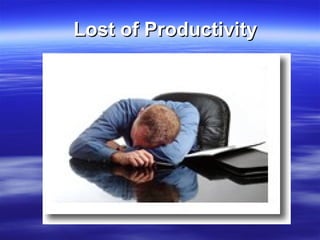
Lost of Productivity
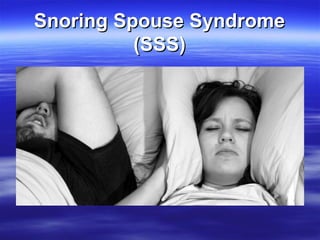
Snoring Spouse Syndrome (SSS)
 
 
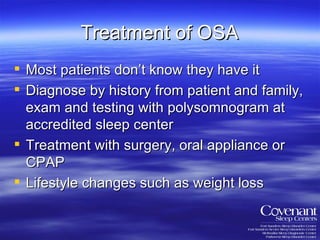
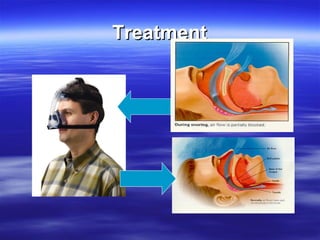
Treatment of OSA Most patients don’t know they have it Diagnose by history from patient and family, exam and testing with polysomnogram at accredited sleep center Treatment with surgery, oral appliance or CPAP Lifestyle changes such as weight loss
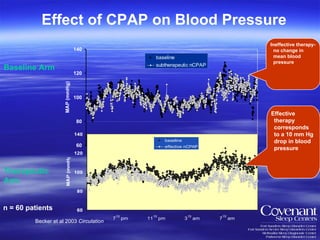
Baseline Arm Therapeutic  Arm  Effect of CPAP on Blood Pressure n = 60 patients Becker et al 2003  Circulation Ineffective therapy- no change in mean blood pressure  Effective therapy corresponds to a 10 mm Hg drop in blood pressure
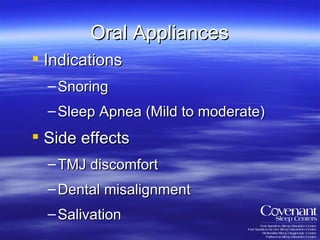
Oral Appliances Indications Snoring Sleep Apnea (Mild to moderate) Side effects TMJ discomfort Dental misalignment Salivation
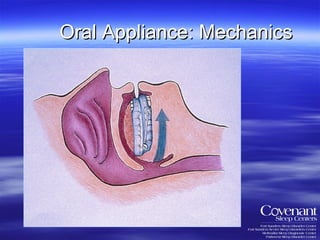
Oral Appliance: Mechanics
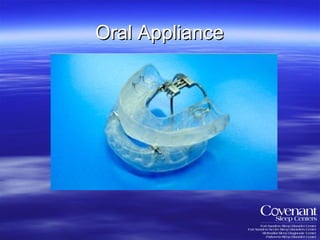
Oral Appliance
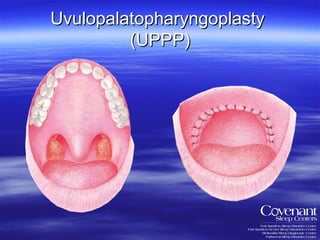
Uvulopalatopharyngoplasty  (UPPP)
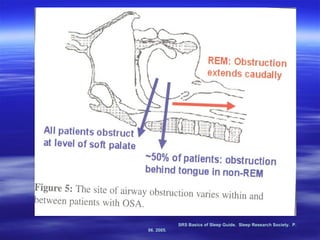
SRS Basics of Sleep Guide.  Sleep Research Society.  P. 96. 2005.
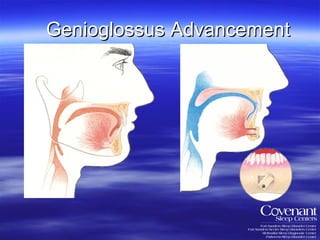
Genioglossus Advancement
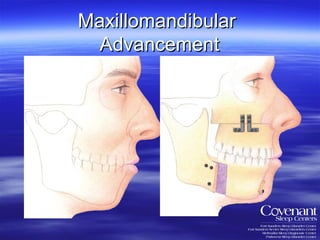
Maxillomandibular  Advancement
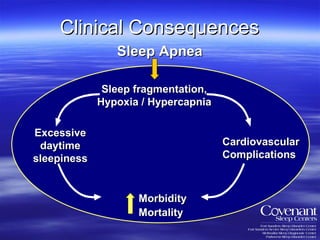
Clinical Consequences Sleep Apnea Excessive daytime sleepiness Sleep fragmentation, Hypoxia / Hypercapnia Cardiovascular Complications Morbidity Mortality
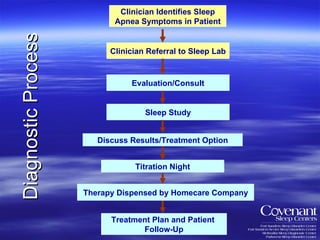
Diagnostic Process Evaluation/Consult Treatment Plan and Patient  Follow-Up Clinician Referral to Sleep Lab Sleep Study Titration Night Therapy Dispensed by Homecare Company Clinician Identifies Sleep Apnea Symptoms in Patient Discuss Results/Treatment Option
Treatment
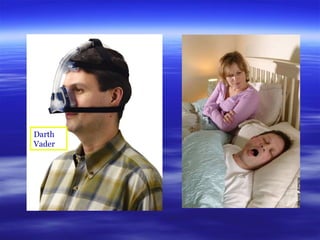
Darth Vader
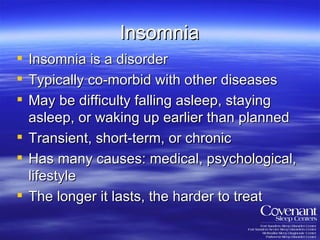
Insomnia Insomnia is a disorder Typically co-morbid with other diseases May be difficulty falling asleep, staying asleep, or waking up earlier than planned Transient, short-term, or chronic Has many causes: medical, psychological, lifestyle The longer it lasts, the harder to treat
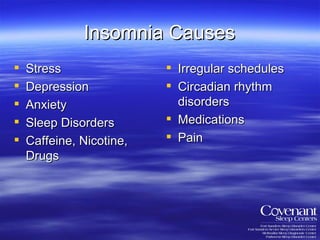
Insomnia Causes Stress Depression Anxiety Sleep Disorders Caffeine, Nicotine, Drugs Irregular schedules Circadian rhythm disorders Medications Pain
Restless Legs and Periodic Limb Movement Disorder PLMD: Repeated leg jerks every 5-90 seconds in sleep RLS: Uncomfortable sensations at rest while awake with compulsion to move to relieve this Diagnosed by history and PSG Treat with dopamine agents, iron, caffeine avoidance
Others Hypersomnias Narcolopsy Idiopathic hypersomnia Circadian rhythm disorders Parasomnias REM related NREM related
Sleep Changes as We Age Sleep architecture changes with age Nighttime sleep is more likely to be disturbed, especially late teens and again after age 35. Persons 55+ tend to experience more conditions that reduce sleep quality and quantity Older people tend to nap more
Normal Sleep Non-REM Sleep Stage 1, drowsiness Stage 2, light sleep Stage 3 and 4, deep sleep (delta or slow wave) REM Sleep “ dream” sleep
Other Sleep Changes with Age Less deep sleep, especially men Total sleep time increases slightly Takes longer to fall asleep (13% men and 36% women take >30 minutes after age 45 REM sleep is stable Men have more passive, inward dreams Women have active, outward dreams
Changes in Sleep Quantity Less melatonin and growth hormone Flattening of the temperature cycles Less exposure to natural light Changes in diet Less exercise Insufficient mental stimulation
Changes in Sleep Quality More shallow, fragmented sleep More awakenings More trips to the bathroom to void However, many healthy people do sleep quite well!
When To Get Help Some age-related changes mask sleep disorders Insomnia or daytime drowsiness is never normal or acceptable regardless of age. Differentiating the cause of these problems often requires a sleep specialist to determine cause and treatment Many people do not seek help…assume  poor sleep is inevitable
Medical Problems Affecting Sleep Arthritis Osteoporosis Heartburn Cancer Parkinson’s Disease Dementia Alzheimer’s Disease Incontinence GERD Heart Disease COPD CHF Peripheral Vascular Disease
Pain in Sleep Arthritis pain at night occurs in 30%, 60% over age 50 Arthritis patients lose over 20 hours of sleep per month from pain Common night pain:  back, headaches, muscles, leg cramps, sinuses 44-56%
Menopause and Sleep Hot flashes occur in 75% of women for average of 5 years Sharp increase in sleep apnea More daytime fatigue and sleepiness
Owls and Larks Advanced sleep phase syndrome: early bedtime and rise-time Delayed sleep phase syndrome: late bedtime and rise-time Treated with light boxes, medication, and chronotherapy
Sleep and Dementia Differentiate Alzheimer’s and senile dementia from symptoms of sleep apnea and other sleep disorders which affect mood and mentation Sleep is affected adversely by degenerative CNS disorders with nocturnal confusion and wandering then daytime sleepiness.
Medications Which Affect Sleep Antidepressants Anxiolytics Benzodiazepines Hypnotics Antihypertensives Heart meds Bronchodilators Nicotine Caffeine Allergy meds Prednisone Thyroid medications Alcohol Stimulants
Behavioral Treatment:  Sleep Hygiene Regularize sleep / wake schedule Avoid stimulants and stimulating behavior Establish relaxing bedtime routine Provide conducive sleep environment Limit daytime naps Reduce or eliminate alcohol and caffeine Obtain regular exercise Avoid clock watching
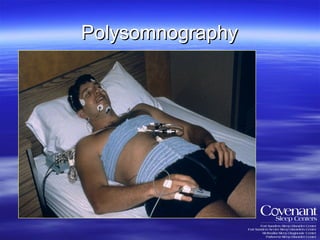
Polysomnography
 
Conclusions Sleeping enough and well is essential to our mental and physical health at any age It takes more thoughtful effort as adults to be sure we get the sleep we need. With current sleep evaluation and treatment, there is help available for anyone needing better sleep! SLEEP IS A NECESSITY, NOT A LUXURY…SLEEP WELL!
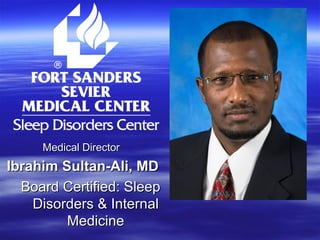
Medical Director  Ibrahim Sultan-Ali, MD Board Certified: Sleep Disorders & Internal Medicine
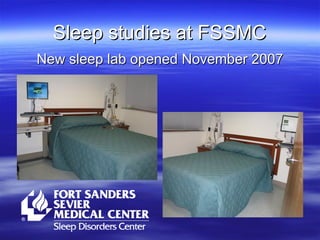
Sleep studies at FSSMC New sleep lab opened November 2007
How to Make an Appointment Call 865.429.8042 to schedule an appointment with Dr. Sultan-Ali Visit us online for more information www.fssevier.com/fss-sleepcenter

Sr Ctr Sleep Talk 6202008

  • 1.
    The ABCs ofCatching Zzzzzzs Presented by T. “Massey” Arrington, RPSGT, MBA Director, Covenant Sleep Centers
  • 2.
    The Future isBright Sleep Center
  • 3.
    Definition of SleepWakefulness Awareness of the environment Ability to respond rapidly to external stimuli Sleep Sleep is a reversible complex state Actively generated by specific neuronal system Characteristics: Unresponsiveness to the environment. Recumbence Quiescence Closed eyes
  • 4.
    Light & deepsleep REM (dreaming) and non-REM Sleep Stages
  • 5.
    Amount of SleepChanges with age Quantity Infant (14-16 hours) Young Adults (7-8 hours) Elderly (7 hours) Quality Elderly Young Sleep accounts one third of our life time Sleep is essential for life
  • 6.
    Sleep Deprivation Typesof sleep deprivation Acute and total sleep loss Chronic and Partial sleep loss Insufficient sleep time Fragmented sleep
  • 7.
    Consequences of SleepLoss Acute and total sleep loss Death Experimental Animal Familial Insomnia
  • 8.
    Consequences of SleepLoss Chronic partial sleep loss Decrease quality of life Decreased concentration and memory Fatigue and sleepiness in the day Depression and anxiety Safety Accidents Cardiovascular risks: Increased diabetes, hypertension, CVD, strokes, and pain
  • 9.
    Sleep Deprivation InSociety Americans sleep 1.5 hours less than our ancestors 100 years ago. We need the same amount as they did. Factors: Travel, electric lights, shift work, all night TV and computers Misperception that sleep is negotiable…wasted time. Sleeping less is “macho” and desirable.
  • 10.
    General population 1in 15 has moderate to severe OSA T Young 2004 9% women and 24% men in the middle-aged working population have OSA T Young 1993 Type 2 diabetes 50% of males, 20% females D Einhorn 2005 97% of obese diabetics G Foster 2005 ~85% of patients are not diagnosed T Young 1997 Prevalence of Obstructive Sleep Apnea (OSA)
  • 11.
    Prevalence of SleepApnea 80% 50% 35% 50% Diabetes Obesity All Hypertension Atrial Fibrillation Congestive Heart Failure Drug-Resistant Hypertension Sjostrom et al, Thorax, 2002 Logan et al, J. Hypertension, 2001 Javaheri et al, Circulation, 1999 O'Keeffe & Patterson, Obes Surgery, 2004 Einhorn et al. Endocrine Prac, 2007 50% Somers et al, Circulation, 2004 77% Coronary Artery Disease 30% 59% Pacemakers Garrigue et al. Circulation 2007 Schafer et al. Cardiology 1999
  • 12.
    Sleep Apnea Affectsabout 10% of all adults over 18 Over age 65, affects about 25% of adults Risk factor include: Family history Obesity Thyroid disease Age History of smoking
  • 13.
    Sleep Disordered BreathingThe Apnea Cycle: Breathing stops. Blood oxygen level drops. Waking briefly occurs to resume breathing. Repeat many times per night. Snoring is never normal! 25% of apnea patients do not snore
  • 14.
  • 15.
  • 16.
  • 17.
  • 18.
  • 19.
  • 20.
  • 21.
    Consequences of OSADecrease quality of life Fatigue and sleepiness in the day Decreased concentration and memory Depression and anxiety Safety Accidents Cardiovascular risks: Increased diabetes, hypertension, CVD, strokes, and pain
  • 22.
    Symptoms of Sleep-disorderedBreathing Symptoms Tired Run-down No energy Fatigued Fall asleep when not trying (Sleepiness) Snoring Witnessed apneas Gasping for breath during sleep Frequent trips to bathroom at night (Nocturia) Mood, memory, or learning problems Impotence Morning headache Dry mouth or dry throat in the morning
  • 23.
  • 24.
  • 25.
  • 26.
  • 27.
    Treatment of OSAMost patients don’t know they have it Diagnose by history from patient and family, exam and testing with polysomnogram at accredited sleep center Treatment with surgery, oral appliance or CPAP Lifestyle changes such as weight loss
  • 28.
    Baseline Arm Therapeutic Arm Effect of CPAP on Blood Pressure n = 60 patients Becker et al 2003 Circulation Ineffective therapy- no change in mean blood pressure Effective therapy corresponds to a 10 mm Hg drop in blood pressure
  • 29.
    Oral Appliances IndicationsSnoring Sleep Apnea (Mild to moderate) Side effects TMJ discomfort Dental misalignment Salivation
  • 30.
  • 31.
  • 32.
  • 33.
    SRS Basics ofSleep Guide. Sleep Research Society. P. 96. 2005.
  • 34.
  • 35.
  • 36.
    Clinical Consequences SleepApnea Excessive daytime sleepiness Sleep fragmentation, Hypoxia / Hypercapnia Cardiovascular Complications Morbidity Mortality
  • 37.
    Diagnostic Process Evaluation/ConsultTreatment Plan and Patient Follow-Up Clinician Referral to Sleep Lab Sleep Study Titration Night Therapy Dispensed by Homecare Company Clinician Identifies Sleep Apnea Symptoms in Patient Discuss Results/Treatment Option
  • 38.
  • 39.
  • 40.
    Insomnia Insomnia isa disorder Typically co-morbid with other diseases May be difficulty falling asleep, staying asleep, or waking up earlier than planned Transient, short-term, or chronic Has many causes: medical, psychological, lifestyle The longer it lasts, the harder to treat
  • 41.
    Insomnia Causes StressDepression Anxiety Sleep Disorders Caffeine, Nicotine, Drugs Irregular schedules Circadian rhythm disorders Medications Pain
  • 42.
    Restless Legs andPeriodic Limb Movement Disorder PLMD: Repeated leg jerks every 5-90 seconds in sleep RLS: Uncomfortable sensations at rest while awake with compulsion to move to relieve this Diagnosed by history and PSG Treat with dopamine agents, iron, caffeine avoidance
  • 43.
    Others Hypersomnias NarcolopsyIdiopathic hypersomnia Circadian rhythm disorders Parasomnias REM related NREM related
  • 44.
    Sleep Changes asWe Age Sleep architecture changes with age Nighttime sleep is more likely to be disturbed, especially late teens and again after age 35. Persons 55+ tend to experience more conditions that reduce sleep quality and quantity Older people tend to nap more
  • 45.
    Normal Sleep Non-REMSleep Stage 1, drowsiness Stage 2, light sleep Stage 3 and 4, deep sleep (delta or slow wave) REM Sleep “ dream” sleep
  • 46.
    Other Sleep Changeswith Age Less deep sleep, especially men Total sleep time increases slightly Takes longer to fall asleep (13% men and 36% women take >30 minutes after age 45 REM sleep is stable Men have more passive, inward dreams Women have active, outward dreams
  • 47.
    Changes in SleepQuantity Less melatonin and growth hormone Flattening of the temperature cycles Less exposure to natural light Changes in diet Less exercise Insufficient mental stimulation
  • 48.
    Changes in SleepQuality More shallow, fragmented sleep More awakenings More trips to the bathroom to void However, many healthy people do sleep quite well!
  • 49.
    When To GetHelp Some age-related changes mask sleep disorders Insomnia or daytime drowsiness is never normal or acceptable regardless of age. Differentiating the cause of these problems often requires a sleep specialist to determine cause and treatment Many people do not seek help…assume poor sleep is inevitable
  • 50.
    Medical Problems AffectingSleep Arthritis Osteoporosis Heartburn Cancer Parkinson’s Disease Dementia Alzheimer’s Disease Incontinence GERD Heart Disease COPD CHF Peripheral Vascular Disease
  • 51.
    Pain in SleepArthritis pain at night occurs in 30%, 60% over age 50 Arthritis patients lose over 20 hours of sleep per month from pain Common night pain: back, headaches, muscles, leg cramps, sinuses 44-56%
  • 52.
    Menopause and SleepHot flashes occur in 75% of women for average of 5 years Sharp increase in sleep apnea More daytime fatigue and sleepiness
  • 53.
    Owls and LarksAdvanced sleep phase syndrome: early bedtime and rise-time Delayed sleep phase syndrome: late bedtime and rise-time Treated with light boxes, medication, and chronotherapy
  • 54.
    Sleep and DementiaDifferentiate Alzheimer’s and senile dementia from symptoms of sleep apnea and other sleep disorders which affect mood and mentation Sleep is affected adversely by degenerative CNS disorders with nocturnal confusion and wandering then daytime sleepiness.
  • 55.
    Medications Which AffectSleep Antidepressants Anxiolytics Benzodiazepines Hypnotics Antihypertensives Heart meds Bronchodilators Nicotine Caffeine Allergy meds Prednisone Thyroid medications Alcohol Stimulants
  • 56.
    Behavioral Treatment: Sleep Hygiene Regularize sleep / wake schedule Avoid stimulants and stimulating behavior Establish relaxing bedtime routine Provide conducive sleep environment Limit daytime naps Reduce or eliminate alcohol and caffeine Obtain regular exercise Avoid clock watching
  • 57.
  • 58.
  • 59.
    Conclusions Sleeping enoughand well is essential to our mental and physical health at any age It takes more thoughtful effort as adults to be sure we get the sleep we need. With current sleep evaluation and treatment, there is help available for anyone needing better sleep! SLEEP IS A NECESSITY, NOT A LUXURY…SLEEP WELL!
  • 60.
    Medical Director Ibrahim Sultan-Ali, MD Board Certified: Sleep Disorders & Internal Medicine
  • 61.
    Sleep studies atFSSMC New sleep lab opened November 2007
  • 62.
    How to Makean Appointment Call 865.429.8042 to schedule an appointment with Dr. Sultan-Ali Visit us online for more information www.fssevier.com/fss-sleepcenter