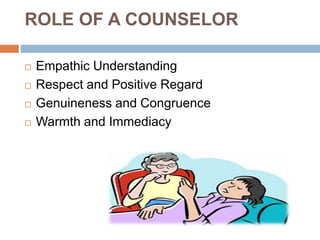
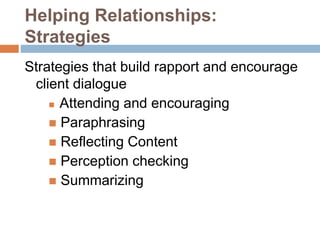
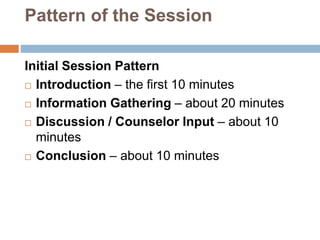
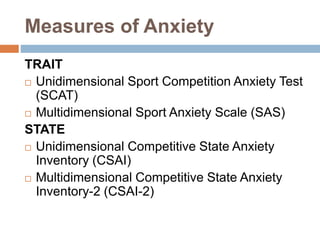
The document discusses sport psychology and the role of a sports counselor, outlining topics such as goal setting, self-confidence, anxiety, coping strategies, relaxation techniques, arousal strategies, and burnout prevention. Sport psychology aims to apply psychological principles to athletic performance and development, focusing on how psychological factors influence sport involvement and performance outcomes. A sports counselor helps athletes build self-awareness and life skills through empathic listening, rapport building, and guidance on mental strategies.