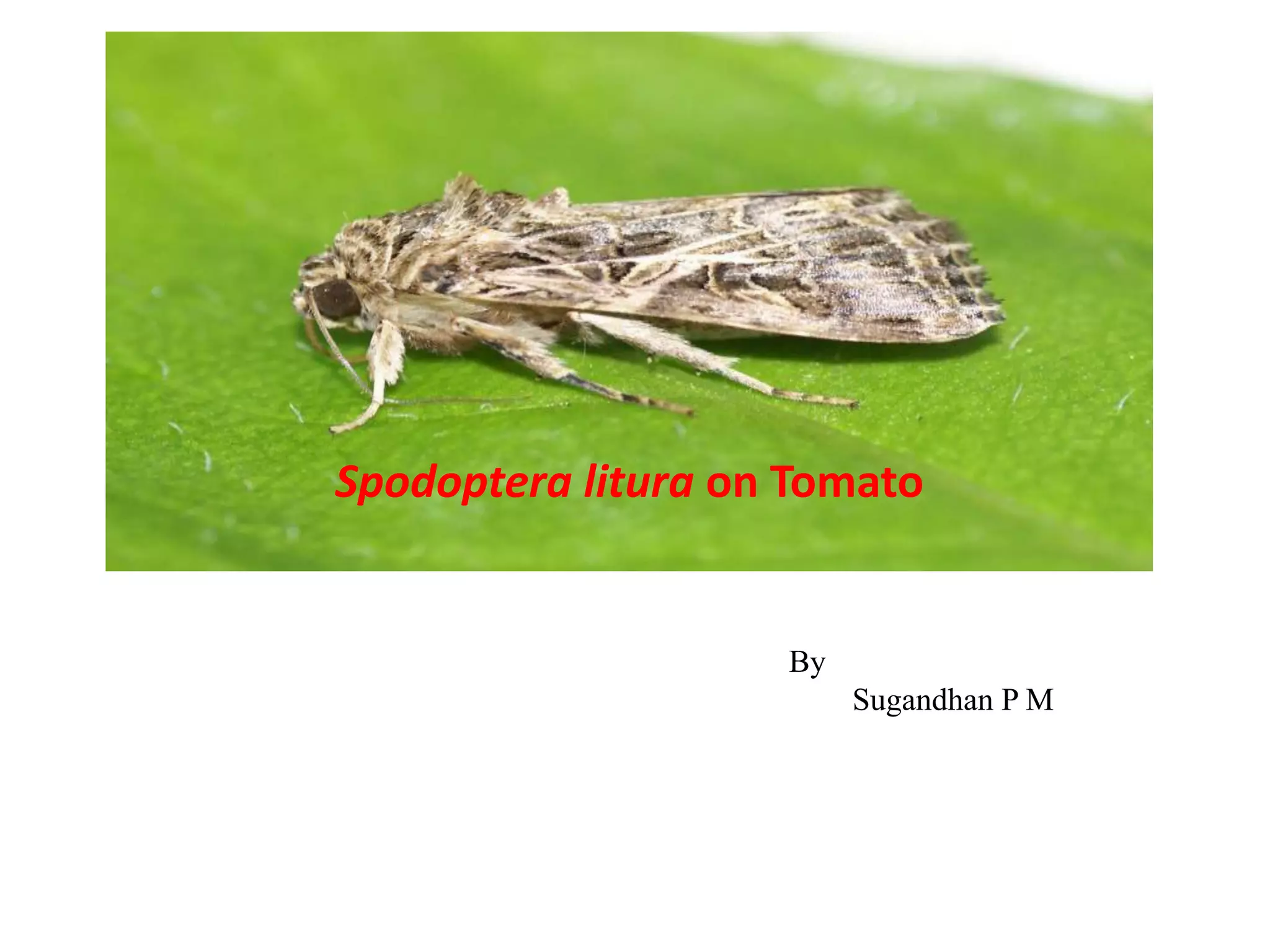
Spodoptera litura on Tomato
By
Sugandhan P M
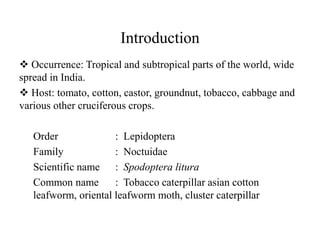
Introduction
 Occurrence: Tropical and subtropical parts of the world, wide
spread in India.
 Host: tomato, cotton, castor, groundnut, tobacco, cabbage and
various other cruciferous crops.
Order : Lepidoptera
Family : Noctuidae
Scientific name : Spodoptera litura
Common name : Tobacco caterpillar asian cotton
leafworm, oriental leafworm moth, cluster caterpillar
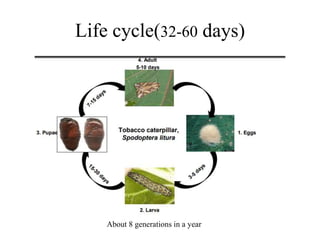
Life cycle(32-60 days)
About 8 generations in a year
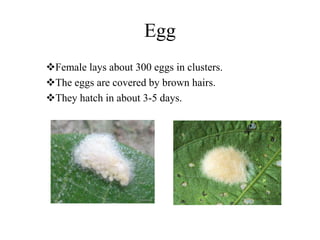
Egg
Female lays about 300 eggs in clusters.
The eggs are covered by brown hairs.
They hatch in about 3-5 days.
Larva
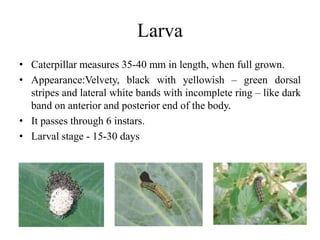
• Caterpillar measures 35-40 mm in length, when full grown.
• Appearance:Velvety, black with yellowish – green dorsal
stripes and lateral white bands with incomplete ring – like dark
band on anterior and posterior end of the body.
• It passes through 6 instars.
• Larval stage - 15-30 days
Pupa
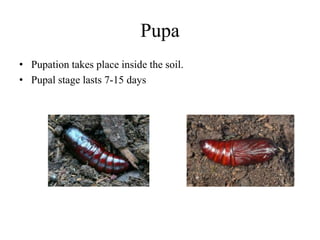
• Pupation takes place inside the soil.
• Pupal stage lasts 7-15 days
Moth
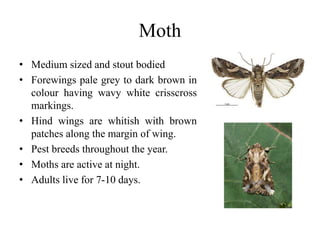
• Medium sized and stout bodied
• Forewings pale grey to dark brown in
colour having wavy white crisscross
markings.
• Hind wings are whitish with brown
patches along the margin of wing.
• Pest breeds throughout the year.
• Moths are active at night.
• Adults live for 7-10 days.
Damage symptoms
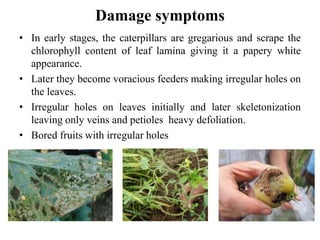
• In early stages, the caterpillars are gregarious and scrape the
chlorophyll content of leaf lamina giving it a papery white
appearance.
• Later they become voracious feeders making irregular holes on
the leaves.
• Irregular holes on leaves initially and later skeletonization
leaving only veins and petioles heavy defoliation.
• Bored fruits with irregular holes
CULTURAL PRACTICES
• Deep ploughing.
• Summer ploughing.
• Proper spacing.
• Intercropping
• Collect and destroy crop debris
• Provide irrigation at critical stages of the crop .
• Avoid water logging
• Avoid water stress during flowering stage
• Field sanitation
MECHANICAL PRACTICES
 Collection and destruction of eggs and early stages of larvae.
 Handpick the older larvae during early stages of plant .
 The infested shoots be collected and destroyed .
 Handpick the gregarious caterpillars and the cocoons which are
found on stem and destroy them in kerosene mixed water.
 Use light trap @ 1/acre and operate between 6 pm and 10 pm.
 Install pheromone traps @ 4-5/acre for monitoring adult moths
activity (replace the lures with fresh lures after every 2-3 weeks).
 Erecting of bird perches @ 20/acre for encouraging predatory
birds such as King crow, common mynah etc.
Ecological Engineering of Tomato
• Intercrops :Cowpea, onion, maize, coriander, urdbean
• Guard/barrier crop:Grow 4 rows of maize/sorghum/bajra
around the field
• Repellant crop : Basil
• Attractant plants : Carrot, sunflower, buck wheat, alfalfa,
corn, shrubs (minute pirate bug and lacewing) nectar rich
plants with small flowers ie anise, caraway, dill, parsely,
mustard, sunflower, buck wheat and cowpea (wasp).
+ + + + + + + + + + + +
+ $ $ $ $ $ $ $ $ $ $ $
+ $ # * * * * # * * * *
+ $ # * * * * # * * * *
+ $ # * * * * # * * * *
+ $ # * * * * # * * * *
+ $ # * * * * # * * * *
+ $ # * * * * # * * * *
+ $ # * * * * # * * * *
+ $ $ $ $ $ $ $ $ $ $ $
+ + + + + + + + + + + +
+ + + + + + + + + + + + +
$ $ $ $ $ $ $ $ $ $ $ $ +
# * * * * # * * * * # $ +
# * * * * # * * * * # $ +
# * * * * # * * * * # $ +
# * * * * # * * * * # $ +
# * * * * # * * * * # $ +
# * * * * # * * * * # $ +
# * * * * # * * * * # $ +
$ $ $ $ $ $ $ $ $ $ $ $ +
+ + + + + + + + + + + + +
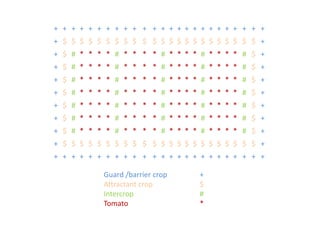
Guard /barrier crop +
Attractant crop $
Intercrop #
Tomato *
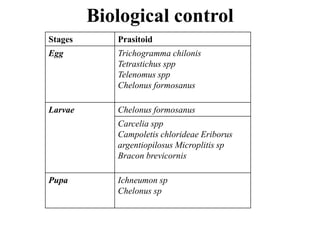
Biological control
Stages Prasitoid
Egg Trichogramma chilonis
Tetrastichus spp
Telenomus spp
Chelonus formosanus
Larvae Chelonus formosanus
Carcelia spp
Campoletis chlorideae Eriborus
argentiopilosus Microplitis sp
Bracon brevicornis
Pupa Ichneumon sp
Chelonus sp
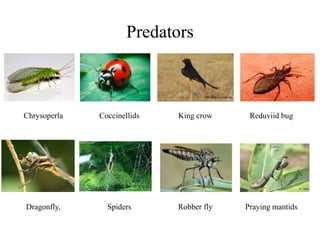
Chrysoperla Coccinellids King crow Reduviid bug
Dragonfly, Spiders Robber fly Praying mantids
Predators
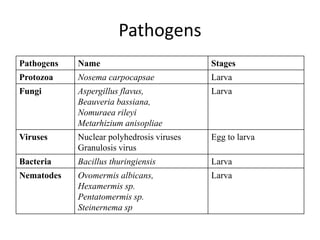
Pathogens
Pathogens Name Stages
Protozoa Nosema carpocapsae Larva
Fungi Aspergillus flavus,
Beauveria bassiana,
Nomuraea rileyi
Metarhizium anisopliae
Larva
Viruses Nuclear polyhedrosis viruses
Granulosis virus
Egg to larva
Bacteria Bacillus thuringiensis Larva
Nematodes Ovomermis albicans,
Hexamermis sp.
Pentatomermis sp.
Steinernema sp
Larva
THANK YOU

Spodoptera litura on tomato

  • 1.
    Spodoptera litura onTomato By Sugandhan P M
  • 2.
    Introduction  Occurrence: Tropicaland subtropical parts of the world, wide spread in India.  Host: tomato, cotton, castor, groundnut, tobacco, cabbage and various other cruciferous crops. Order : Lepidoptera Family : Noctuidae Scientific name : Spodoptera litura Common name : Tobacco caterpillar asian cotton leafworm, oriental leafworm moth, cluster caterpillar
  • 3.
    Life cycle(32-60 days) About8 generations in a year
  • 4.
    Egg Female lays about300 eggs in clusters. The eggs are covered by brown hairs. They hatch in about 3-5 days.
  • 5.
    Larva • Caterpillar measures35-40 mm in length, when full grown. • Appearance:Velvety, black with yellowish – green dorsal stripes and lateral white bands with incomplete ring – like dark band on anterior and posterior end of the body. • It passes through 6 instars. • Larval stage - 15-30 days
  • 6.
    Pupa • Pupation takesplace inside the soil. • Pupal stage lasts 7-15 days
  • 7.
    Moth • Medium sizedand stout bodied • Forewings pale grey to dark brown in colour having wavy white crisscross markings. • Hind wings are whitish with brown patches along the margin of wing. • Pest breeds throughout the year. • Moths are active at night. • Adults live for 7-10 days.
  • 8.
    Damage symptoms • Inearly stages, the caterpillars are gregarious and scrape the chlorophyll content of leaf lamina giving it a papery white appearance. • Later they become voracious feeders making irregular holes on the leaves. • Irregular holes on leaves initially and later skeletonization leaving only veins and petioles heavy defoliation. • Bored fruits with irregular holes
  • 9.
    CULTURAL PRACTICES • Deepploughing. • Summer ploughing. • Proper spacing. • Intercropping • Collect and destroy crop debris • Provide irrigation at critical stages of the crop . • Avoid water logging • Avoid water stress during flowering stage • Field sanitation
  • 10.
    MECHANICAL PRACTICES  Collectionand destruction of eggs and early stages of larvae.  Handpick the older larvae during early stages of plant .  The infested shoots be collected and destroyed .  Handpick the gregarious caterpillars and the cocoons which are found on stem and destroy them in kerosene mixed water.  Use light trap @ 1/acre and operate between 6 pm and 10 pm.  Install pheromone traps @ 4-5/acre for monitoring adult moths activity (replace the lures with fresh lures after every 2-3 weeks).  Erecting of bird perches @ 20/acre for encouraging predatory birds such as King crow, common mynah etc.
  • 11.
    Ecological Engineering ofTomato • Intercrops :Cowpea, onion, maize, coriander, urdbean • Guard/barrier crop:Grow 4 rows of maize/sorghum/bajra around the field • Repellant crop : Basil • Attractant plants : Carrot, sunflower, buck wheat, alfalfa, corn, shrubs (minute pirate bug and lacewing) nectar rich plants with small flowers ie anise, caraway, dill, parsely, mustard, sunflower, buck wheat and cowpea (wasp).
  • 12.
    + + ++ + + + + + + + + + $ $ $ $ $ $ $ $ $ $ $ + $ # * * * * # * * * * + $ # * * * * # * * * * + $ # * * * * # * * * * + $ # * * * * # * * * * + $ # * * * * # * * * * + $ # * * * * # * * * * + $ # * * * * # * * * * + $ $ $ $ $ $ $ $ $ $ $ + + + + + + + + + + + + + + + + + + + + + + + + + $ $ $ $ $ $ $ $ $ $ $ $ + # * * * * # * * * * # $ + # * * * * # * * * * # $ + # * * * * # * * * * # $ + # * * * * # * * * * # $ + # * * * * # * * * * # $ + # * * * * # * * * * # $ + # * * * * # * * * * # $ + $ $ $ $ $ $ $ $ $ $ $ $ + + + + + + + + + + + + + + Guard /barrier crop + Attractant crop $ Intercrop # Tomato *
  • 13.
    Biological control Stages Prasitoid EggTrichogramma chilonis Tetrastichus spp Telenomus spp Chelonus formosanus Larvae Chelonus formosanus Carcelia spp Campoletis chlorideae Eriborus argentiopilosus Microplitis sp Bracon brevicornis Pupa Ichneumon sp Chelonus sp
  • 14.
    Chrysoperla Coccinellids Kingcrow Reduviid bug Dragonfly, Spiders Robber fly Praying mantids Predators
  • 15.
    Pathogens Pathogens Name Stages ProtozoaNosema carpocapsae Larva Fungi Aspergillus flavus, Beauveria bassiana, Nomuraea rileyi Metarhizium anisopliae Larva Viruses Nuclear polyhedrosis viruses Granulosis virus Egg to larva Bacteria Bacillus thuringiensis Larva Nematodes Ovomermis albicans, Hexamermis sp. Pentatomermis sp. Steinernema sp Larva
  • 16.