A case study of
                                             dr’s cultural
                                            heritage project

                                     Exploring
                                      cultural
                                    heritage and
                                   value creation
                                                    Master
                                                    Thesis


The IT-University of Copenhagen
Master Thesis, August, 2011

Written by:

Tobias Golodnoff
E-Business
10.07.1973 – tobiasg

Miriam Lerkenfeld Smith
Digital Design & Communication
14.04.1982 – mlsm

Supervisor: Leif Block Rasmussen
Thank you and much respect Authors Statement
Leif Block Rasmussen, Supervisor and       This thesis is based on a joint effort
Associated professor at Department of      and an equal partnership. We have
Informatics, CBS and Ebuss at the IT-      delegated responsibilities along the
University of Copenhagen.                  way, but in the writing process, we
For being an excellent supervisor,         let the chapters and sections circular
inspriring us. Helping us in right         between us. Naturally, we follow the
direction, discussing our findings         IT University examination rules and
and prioritising us when we needed         divides the article as follows:
guidance.
                                           Abstract: Miriam & Tobias. Introducing
Peter Looms, co-supervisor and             the thesis and its objectives: Miriam &
External associate professor at the IT-    Tobias: Ontology of the project: Tobias.
University of Copenhagen. For the early    Scentific aproach and description
discussion, and support.                   methods: Miriam. The network in
Mads Bødker, Adjunkt at Department of      relation to DR’s Cultural Heritage
Informatics, CBS and Ebuss at the IT-      Project: Tobias. The processes of the
University of Copenhagen. And Simeon       project: Miriam. An analysis of DR’s
Keates, Associate Professor at the IT-     Cultural Heritage Project - Part one:
University of Denmark. For inspirational   From An analysis of DR’s Cultural
talks.                                     Heritage Project to Diffusion: Tobias.
                                           Part two: From Diffusion to the end
Christina Paludan Sheikh. For helping      of the chapter: Miriam. Conclusions:
us with excellent inputs and academic      Miriam & Tobias. Guiding Principles:
guidance on the thesis. And for being      Miriam & Tobias
the most wonderful mother and wife! I      Thoughts and reflections: Miriam &
could not have done it without all your    Tobias
support and trust – I love you! - Tobias
                                           The thesis consists of approximately
At the Danish Broadcasting                 86 normal pages that is 198,104
Corporation. Nicolai Porsbo, former        characters and 11 figures.
Head of New Media at dr.dk, Merethe
Echardt, former vice director og DR        This thesis is licensed under a Creative
Medier and Jonas Iversen, vice director    Commons Attribution-NonCommercial-
of DR Medier for supporting us while       ShareAlike 3.0 Unported (CC BY-NC-
the idea about the thesis was growing      SA 3.0). Read more
and making it possible.

The fantastic team at DR who works
with the Cultural Heritage Project for
being such a wonderful and inspirering
                                           Contact information
group of people and doing an excellent     We love talking about the project,
job.                                       getting inspiration and making new
                                           connections. Do not hesitate to contact
And off course our amazing families        if you need a additioal information or
and beautiful friends…                     are interested in collaborating.

                                           Miriam Lerkenfeld mles@dr.dk, twitter
                                           @lerkenfeld

                                           Tobias Golodnoff togo@dr.dk, twitter
                                           @tgolodnoff

                                           Read more at danskkulturarv.dk or
                                           dr.dk/kulturarv


2
Abstract
The objective of the research is to give a theoretical understanding of the value
created when digitising a cultural heritage.

This research is grounded in a case study of the Danish Broadcasting
Corporation’s Cultural Heritage Project. The project deals with the digitisation
of an analogue radio and television collection of more than 500.000 hours of
content, and with the work being done after digitisation ensuring archive content
in collaboration with other public cultural institutions and the research community
becomes available to the public. The project group is an inter-organisational team
combining expertise from many places within the organisation.

When establishing a project of this kind, some aspects have significance on the
value creation. Findings are, that flexibility is key, and hence, the use of resources
within the budget should not be too specific, because it is unpredictable where
cost can be cut, or where extra resources will be needed. Also, a scanning process
is essential for defining the objectives of future tasks, and focus should not be
to solve one problem, but exploring challenges that can be useful for different
scenarios.

In addition, findings are that collaboration is a good tool for diffusing digitised
cultural heritage, and these collaborations should have a variable, decentralised
structure, in order to facilitate different needs and objectives. Another emphasis
should be put on the openness towards collaboration partners, so shared value
can be created and utilised - benefiting not just the organisations, but society
in general. Conclusively, the overall goal when digitising the cultural heritage is
always to make it accessible for the users. The conclusion leads to four principle
guidelines which are: use is value, transparent boxes, open source collective,
flexible frameworks, and project economy.

Finally, a vision is presented, a society where public service is substituted for public
resources, constructing a all-encompassing cultural production system with fluid
borders and autonomous projects based on a set of clearly defined objectives.


Keywords
Digitisation, Digitising, Digitization, Digitizing, Cultural Heritage, Heritage,
Strategy, Innovation, Value, Value creation, Network, Research, Technology,
Danish Broadcasting Corporation, DR, DR’s Cultural Heritage Project, Public
Service, Data, Information, Knowledge, Knowledge Sharing. Resources, Process,
Optimisation, Optimization, Use = Value, Use is Value, Transparent Boxes,
Flexible Resources, Open Source Collective,Digitalisering, Kulturarv, DR’s
Kulturarvsprojekt, Værdi, Netværk, Strategi, Data, Information, Viden, brug = værdi,
brug er lig værdi, Dansk Kulturarv, LARM, Europeana, EUscreen, FIAT/IFTA,
Memnon


                                                                                           3
index

4
Abstract	3
Keywords	3
Introducing the thesis and its objective	 9                                 and Description of
Ontology of the                                                             Methods questions	 21
                                                                                               	20
project	10 11
                                                                            research & Working
                                                                            Working questions	        21
                                                                            Delimitations	22

Political Background	                                                       Criticala reflection upon the method	 22
                                                                            Case studies –
                                                                                           Realism as a Scientific Approach	22
The case – DR’s Cultural Heritage Project	13
The Danish Broadcasting Corporation and the Cultural Heritage Project	 13
                                                                            Project Design – Switching Between Empirical Data and Theory	 23
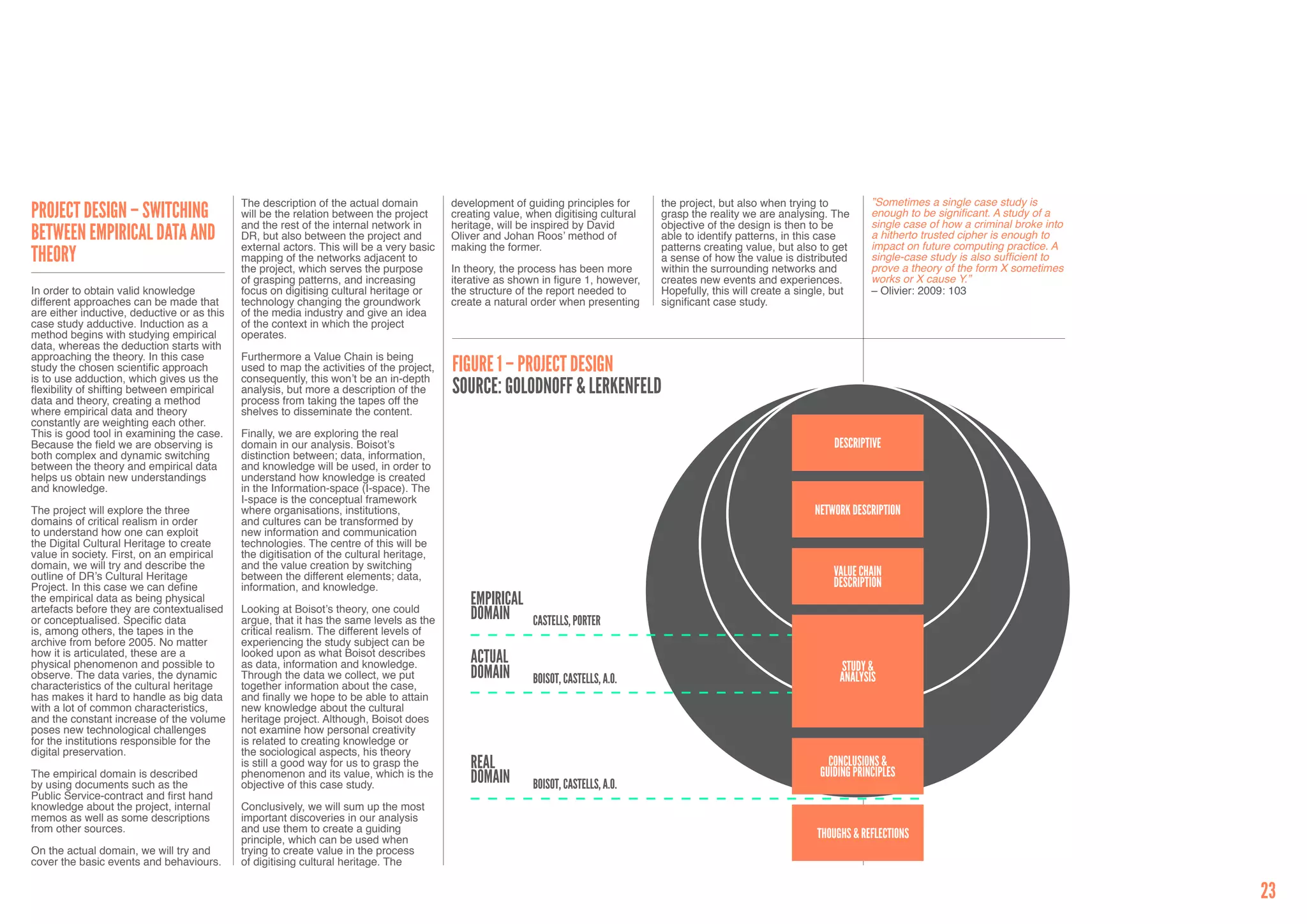
                                                                            FigurE 1 – PROJECT DESIGN	 23
                                                                            Theoretical foundation	24
Historical outline 	   13                                                   Empirical Data and Role as a Participant Observer	 24
The DR departments related to the project	                                  Definitions	25
14objective of the project	 14
The
The financial framework	    16
The cultural heritage content in DR	 16
                                             The Networks in
The Public Service Obligations and Value 	19 relation to DR’s
The archives 	    16


Scientific Approach Cultural Heritage
                                                                                                                                               5
Project	26
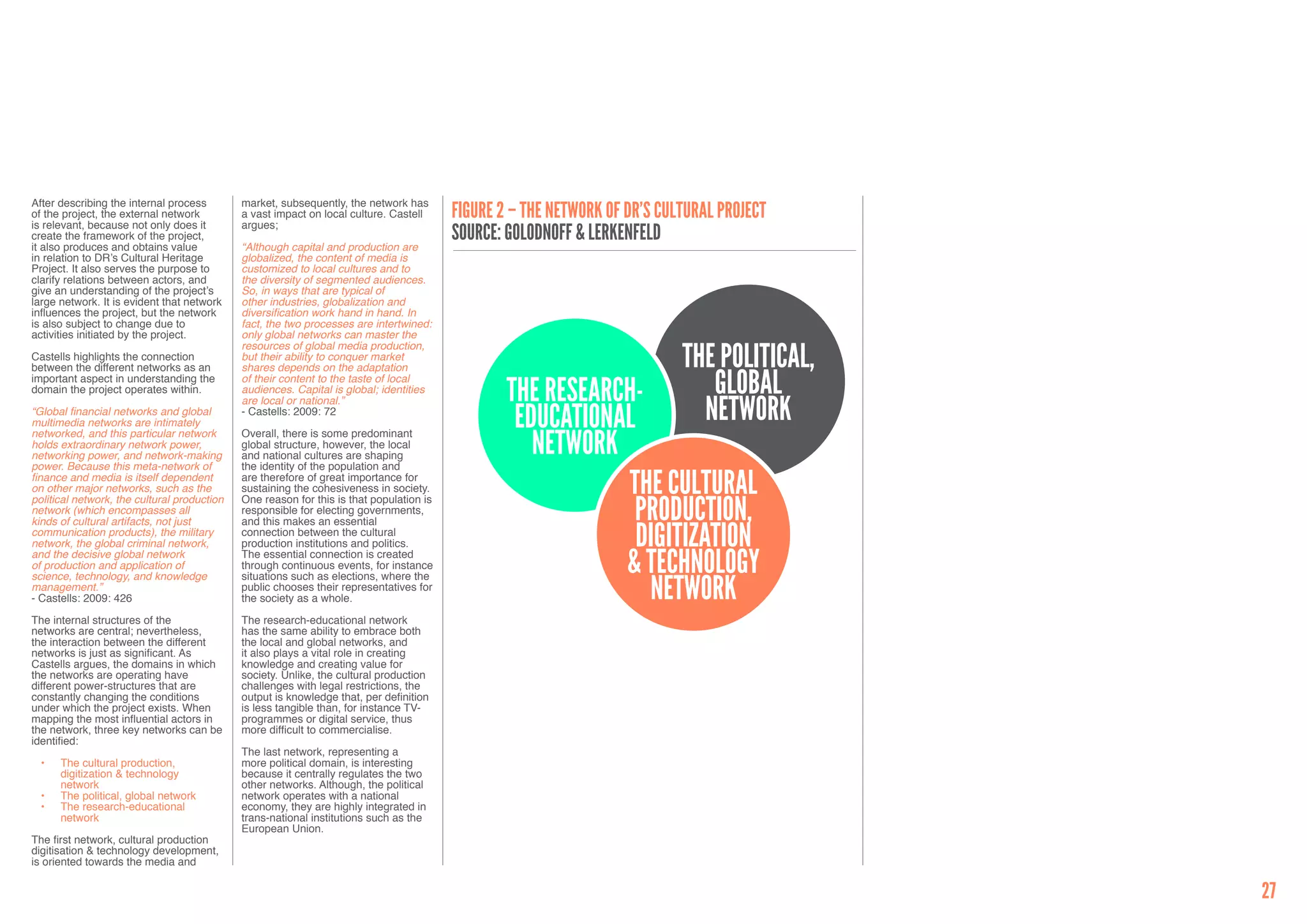
FigurE 2 – the network OF DR’S CULTURAL PROJECT	 27
                                                                                              Value Chain Analysis by Michael Porter	 35
                                                                                              Preparation, Inbound logistics	 36
                                                                                              No selection in the preparation process	 36
                                                                                              Digitisation of the content	 36
                                                                                              Securing, Outbound logistics	 36
Cultural production, digitisation and                                                         Two copies of the digitised content	36
                                                                                              Collaboration, Marketing & Sales	 36
technicalDansk Kulturarv	 29 29
                  development	                                                                Dissemination, Services 	     36
The Collaboration                                                                             Reflection upon the process	 36
                                                                                              An Analysis of DR’s
Memnon	29
The Research-Educational Network	29
The Research Project LARM	 29
The Politicalthe Danish Ministry of Culture	 30
                         Global Network	30
The Danish Government &
The European Union	 30
FIAT/IFTA	30                                                                                  Cultural Heritage
                                                                                              Project	38 and
Changing the Conditions of the Project via the Network – A short study of Copy-Dan and IPR	
33
The Interaction Between the Networks	 33


The processes of                                                                              Max Boisot – Data, Information
the project	34 Cultural
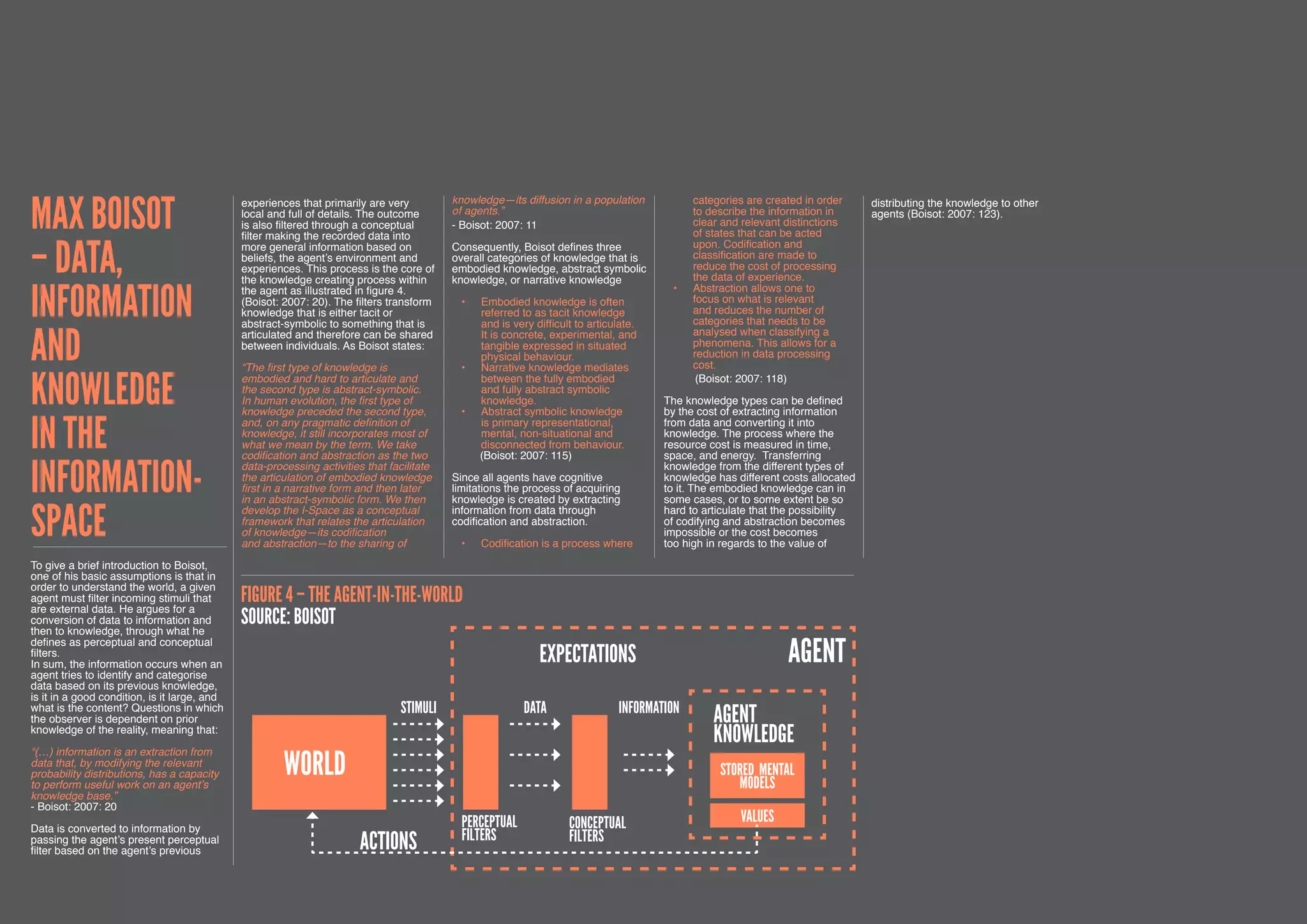
                                                                                              Knowledge in the Information-space	 39
                                                                                              Figure 4 – THE AGENT-IN-THE-WORLD	 39
                                                                                              Data, Information & Knowledge in the Case Study	   40
                                                                                              Figure 5 – THE INFORMATION SPACE	 40
The digitization workflow in DR’s                                                             The Social Learning Curve in Information
Heritage Project PROJECT	 35
Figure 3 – VALUE CHAIN OF DR’S CULTURAL
                                        	 35                                                  Space	The1metadata project	 41
                                                                                              Scanning –
                                                                                                         4
The Overall Process of Digitising, Preserving, Disseminating, and Collaborating	   35         Problem-solving – The Film Pilot	 43
                                                                                              Abstraction – archiving for future use	 44
6
for DR’s Cultural
Diffusion – The Collaboration of Dansk Kulturarv	 44
Absorption – LARM Research Project	 45
Impacting – the Creation of the Online Archive Bonanza	     45
Figure 6 – Bonanza’s first month	 45
The value of knowledge creation	47
The Market Value of Digitising Cultural
Heritage	47VALUE	 47
FigurE 7 – THE PARADOX OF
                                                                                               Heritage project	52
                                                                                               Thoughts and reflections	 55
FIGURe: 8: VALUE OF CULTURAL HERITAGE
FIGURe: 9: KNOWLEDGE, SOURCE: BOISOT.	     48                                                  References	55
FIGURe: 10: ACCESS TO AND USE OF CULTURAL HERITAGE	   48
The Cultural Production Value 	 49
Public Service Value of Digital Cultural
Heritage in Society	 49
The Value and I-space	 49
Conclusions	50
Guiding Principles for Exploring the Digitisation of Cultural Heritage and Creating Value	51
A brief introduction to guiding principles	
52 11 - STRATEGIC GUIDELINES	 52
FIGURE


Guiding principles
                                                                                                                              7
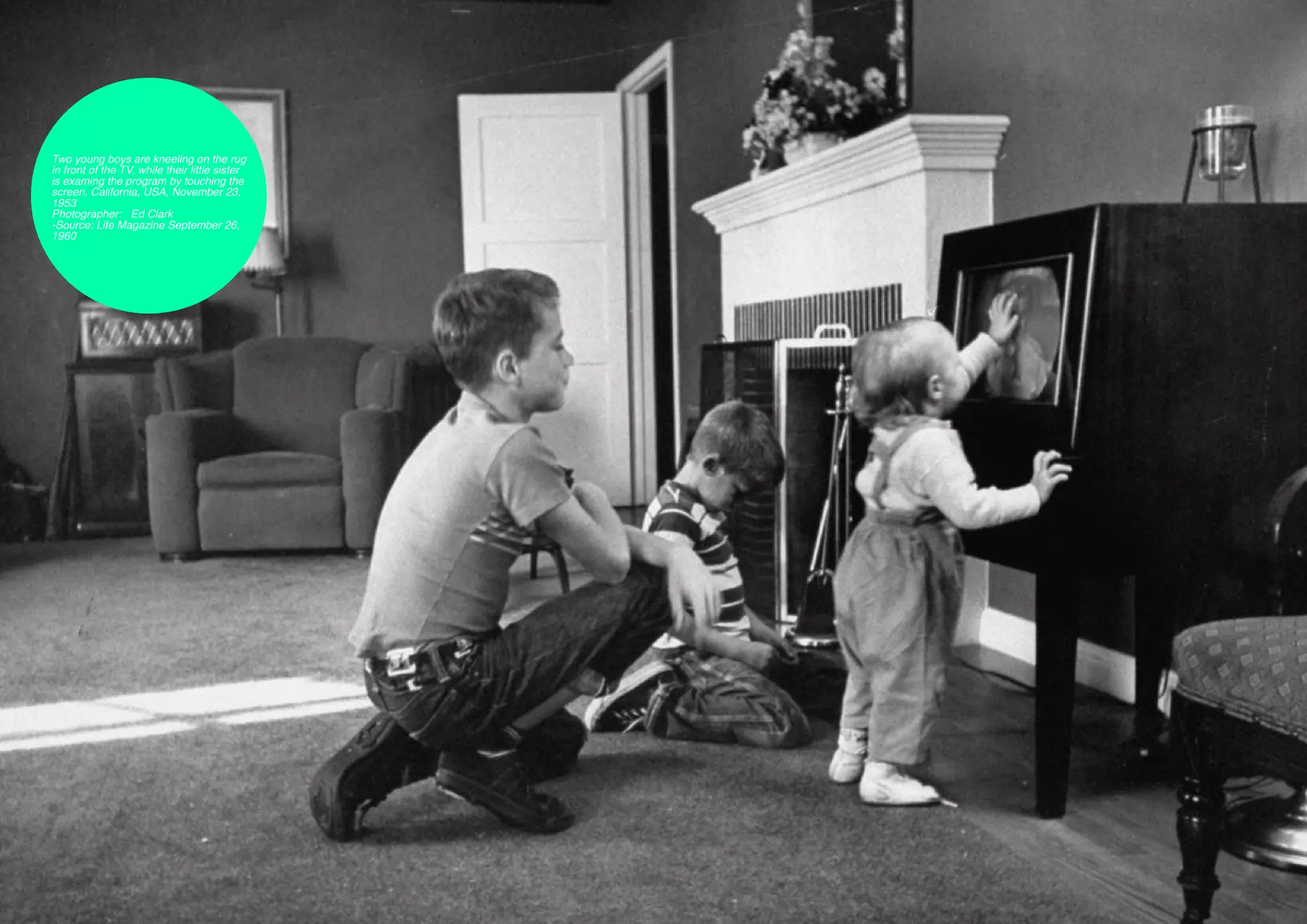
Two young boys are kneeling on the rug
    in front of the TV, while their little sister
    is examing the program by touching the
    screen. California, USA, November 23,
    1953
    Photographer:	 Ed Clark
    -Source: Life Magazine September 26,
    1960


8
Introducing the thesis and its objective
Copenhagen, August 2011                        also comme il faut within the Danish         First and foremost the essential criteria
                                               Broadcasting Corporation and how the         for justifying investing in new services
You are reading the master’s thesis            project considers value.                     and solutions is that the project can
written by Miriam Lerkenfeld and Tobias        This exploration of the term value,          enrich the existing environment and the
Golodnoff. It is a study of digitisation       we envision to drive to a better             public. This is to make sure that the final
and valorisation of the Danish                 understanding of the possibilities of        products that will enrich the users and
Broadcasting Corporation’s cultural            cultural heritage, when meeting the          support an understanding of our shared
heritage which is the archive containing       demand in the Public-service contract        history and cultural heritage and thereby
content dating from 1896 to 2005.              of 2011-2014:                                expand the overall level of knowledge
                                                                                            and future success in society.
We are both employees in DR as                 ”DR skal blandt andet af
well as master’s students at the IT-           kulturarvmæssige hensyn bevare               Conclusively, the knowledge we have
University of Copenhagen. Both of us           sine programarkiver. DR skal fremme          acquired in our work with the thesis,
have been working on DR’s Cultural             digitaliseringen af programarkiverne for     has given us new ideas regarding how
Heritage Project. Hence it seems like          bl.a. på denne måde at give borgerne         one can ensure a better and less costly
a natural thing to examine the project         adgang til sine programarkiver,              production for the prerequisites for
as a case study and make this the              dog med de begrænsninger, der                future use. This, we hope, will inspire
foundation of our thesis, and try to           følger af lovgivning mv., herunder           us and others to create more and better
grasp possibilities and challenges at          ophavsretsloven. DR skal aktivt arbejde      products and services for disseminating
hand. We would also like to dive into          for i videst muligt omfang at kunne gøre     the valuable archive content. Content
the project on a theoretic note; a luxury      DR’s programarkiver tilgængelige for         DR and others hold, be it in exhibitions,
we don’t have in our day-to-day work.          befolkningen og forskermiljøerne.”           audiovisual programs, research at
                                               - DR’s Public Service-kontrakt for 2011-     libraries and in the state’s archives, or
The objective of DR’s Cultural Heritage        2014                                         in the digital domain, where the content
Project has been and still is maximising                                                    can engage the users in new ways.
the digitisation output of the granted         In English:
budget of 75 million DKK. Preferably in        “DR must preserve its archives due
a manner that supports value creation          to cultural heritage considerations.         We sincerely hope you will enjoy
for the end users. But first and foremost      DR shall promote the digitisation            reading the report.
within the traditional value chain of          of programme archives in order to
the project, with a focus on creating          provide access to the citizens, under        All the best,
a margin, which will allow more of the         the limitations imposed by legislation,      Miriam Lerkenfeld & Tobias Golodnoff
archive to be digitised.                       etcetera, including copyright laws. DR
                                               must work actively to ensure access
Since the project began in 2007,               and availability of the programme
significant results have been                  archives in its fullest extent for both to
accomplished. Some of the                      the public and research community. “.
accomplishments have been fostering            - DR’s Public Service Contract for 2011
new learning, inspiring the network            – 2014
around the project to optimise
workflows and use of their content,            There are numerous opportunities in
but it has also had a role in changing         connecting existing collections, new
how public service is perceived. One           content and technologies, which today
of the key activities is the development       have the potential to create synergies
new processes and standards for                and explore a contemporary approach
digitisation, dissemination and                to public service. We are envisioning
collaboration that has created value for       this and are trying to facilitate value
the institution, but also its collaborators.   creation as a process with the
Additionally, a new way of structuring         participation of DR, the users and
projects has been developed both               society.
in terms of cultural heritage, but


                                                                                                                                          9
1
CHApTER
          Ontology of
          the project
          So, what is the ontology of the study?
          Fundamentally, it can take many forms,
          and in this case it is interesting to
          define cultural heritage’s role in society
          as well as in DR, and understand
          its characteristics and purpose. The
          outcome will be the ability to choose the
          right tools and methods for analysing
          the case.

          Unfolding the ontology also suits the
          purpose of understanding how the
          internal organisation will benefit from
          the digital cultural heritage, which
          differs from the political, but also how
          they both are creators and users of
          a generated value. When we use the
          term “value” we have an explorative
          way of using it. Generally, we believe
          it as a description of an object or
          phenomenon’s potential for creating or
          utilising its elementary conditions, but
          it can also be value in the neoclassical
          economic sense.


10
Political                                   was that cultural heritage was also             ”The Culture Heritage must be alive,        Ministry of Science, in collaboration,
                                            bridging the gap between different              and therefore it must digital and our       prioritised four projects, which in total
                                            cultural institutions such as libraries,        focus is to make the Danish culture         were supported with 21 million DKK;
                                            archives, museums, and public services          history and natural history accessible      among the most important projects


Background                                  broadcasters, on an international scale-        via/on the internet. A culture heritage     was the establishment of the Heritage
                                            -because the materials seem more                that is alive creates a common              Agency of Denmark in 2002, and a DKK
                                            valuable when they were contextualised          framework within the society and            75 mill grant to the Danish Broadcasting
                                            by materials from other sources.                ensure that coming generations are          Corporation in 2007.
                                                                                            aware of our history. Without this
During the end of the 20th century and      Naturally, another point was the                awareness the common sense of               The grant was central for the Danish
the beginning of the 21st there has         diffusion of cultural heritage. Since,          responsibility and the basis to have        Broadcasting Corporation because
been an increased political interest in     digitised content is easier to spread, a        a varied view of the development of         it resulted in the establishment of a
digitising cultural heritage, not only on   digitisation of cultural heritage made          society will crumble.”                      project - DR’s Cultural Heritage Project
the national agenda, but also trans-        it geographically independent and               - Per Stig Møller, The Danish Minister of   – that was solely dedicated to digitising
nationally. Institutions such as the EU     multipliable. Therefore, the digitisation       Culture: April 2010                         and disseminating the cultural heritage
have emphasised the significance of         was found attractive, because it                                                            from the public broadcasters archives.
cultural heritage in society as well.       became feasible to disseminate digitally        Because of the importance of cultural
                                            rather than in its original form. Also, it      heritage, the government set up a
“If one word should encompass and           is a more flexible format for preparing         committee in 2006, whose purpose
summarise the vision of the Comité des      the content to be consumed through              was to explore cultural heritage. The
Sages, it would be “access”. When it        future new media channels, which                final physical product was the report
comes to our common cultural heritage,      potential and use currently cannot be           ‘Digitalisering af Kulturarven’ published
there is no bigger challenge; there         comprehended.                                   by the Danish Ministry of Culture in
is no more urgent question than to                                                          2009. The report suggested that there
secure the access of current and future     The task of creating cultural products          should be an increased focus on
generations to this heritage. Access for    and preserving them seem more                   preserving Danish cultural heritage.
the largest population, both European       relevant than ever. However, the
and non-European. And access to one         task could not be given solely to a             A national digitisation would serve one
of the richest cultural heritages in the    commercial market. The reason is that it        purpose. It would secure and preserve
world, a universal common good”             such an essential good for a democracy          the national heritage, and it could
- European Commission: 2011: 9              that it should be undertaken by the             also be used in the digital domain to
                                            state. In most countries the digitisation       generate national value by enriching
The access to cultural heritage was         of cultural heritage was made                   the public by making the digital cultural
officially prioritised on the political     mandatory for cultural institutions, and        heritage accessible. The rapport
agenda. Ideologically, it was also          libraries, archives and public service          outlined three scenarios for future
becoming a political solution for           broadcasters became key players in              digitisation and development if the
sustaining national culture and             the process. In 2011, the European              assigned budget would be: no funding,
cohesiveness in a globalised world,         Commission formulated some                      DKK 300 or DKK 500 mill over a ten-
where local culture was challenged          suggestions for the actors that could be        year period (Digitising of the Cultural
by technology development. A topic          drivers in digitising cultural heritage:        Heritage: 2009).
theorists like Manuel Castells also
discuss:                                    ”We are of the opinion that the public          Because of the international financial
                                            sector has the primary responsibility for       crisis the report was not finished until
 “Research has shown that audiences         making our cultural heritage accessible         2009 and the digitising budged of DKK
are more sensitive to content that is       and preserving it for future generations.       300 mill or DKK 500 was not granted.
specific to their culture (Miller 2007).    This responsibility for and control over        Consequently, the political priority
So, while there is a layer of global        Europe’s heritage cannot be left to             of digitising cultural heritage was on
culture in all media industries, most       one or a few market players, although           hold, and given this, the use of cultural
cultural products are local rather than     we strongly encourage the idea of               heritage has yet to be defined both
global. Indeed, a study by Tubella          bringing more private investments and           politically and practically.
(2004) has shown decisive importance        companies into the digitisation arena
of television in constructing a national    through a fair and balanced partnership”        As cultural heritage has and still plays
identity under the conditions of cultural   - European Commission: 2011: 4                  a significant role in society, the Danish
domination by another nation (…)”                                                           government has, since the 1990s, been
- Castells: 2009:124                        In Denmark, the digitisation of cultural        funding different initiatives with the
                                            heritage is significant part of the political   purpose of supporting the development
The intentions behind political focus       agenda. It is the same argument as              of a digital cultural heritage. The
on digital cultural heritage were           heard internationally: there is an urgent       political wish is still present, and in
many. However, preservation and             need for preserving and disseminating           2010 smaller grants were allocated to
accessibility seem to be the dominating     the Danish cultural heritage. In 2010 the       specified projects within the cultural
objectives. A more general approach         Minister of Culture stated:                     sector. The Ministry of Culture and the


                                                                                                                                                                                    11
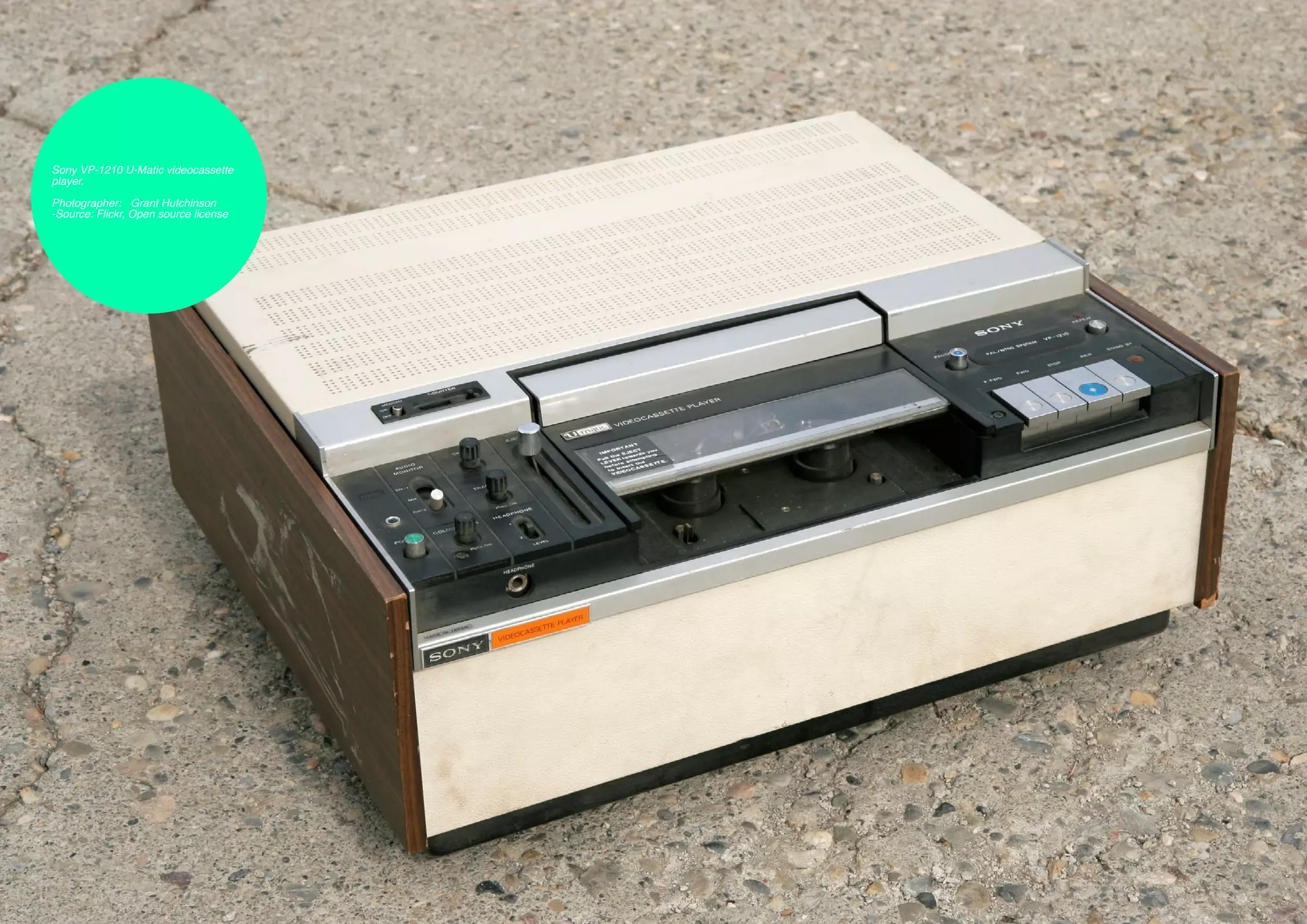
Sony VP-1210 U-Matic videocassette
     player.

     Photographer:	 Grant Hutchinson
     -Source: Flickr, Open source license


12
The case –                                    when digitising cultural heritage, and                                                     (Internal Memo DR ØU: Appendix 1:
                                              subsequently, how this is distributed          Historical outline                          01.11.2007).
                                              into organisation and network, thus
                                              society. However, the case has a quite                                                     Finally, in 2007, the political


DR’s Cultural                                 complex structure, which requires an in        At the same time, digitisation of the       negotiations resulted in a DKK 75 mill
                                              depth description.                             national heritage was was debated           funding for DR to digitalise its archive.
                                                                                             intensely in the Ministry of Culture.       The money was given as a one-time
                                                                                             All the larger cultural institutions, the   funding in order for DR to start the


Heritage                                                                                     Heritage Agency of Denmark and              digitisation and preservation process.
                                              The Danish Broadcasting                        the Ministry Of Culture were keen on        The ministerial aspiration was to secure
                                                                                             using new technology to preserve the        funds from the fiscal budget, through
                                              Corporation and the                            collections and to enrich the Danes         the yearly-agreed Finanslov (the


Project                                                                                      with access to the cultural heritage. But   national budget), hoping the Ministry of
                                              Cultural Heritage Project                      despite the national focus on digital       Culture could secure new funds for a
                                                                                             cultural heritage and the need for a        series of activities. The funds should be
                                                                                             digitisation of the broadcast archives,     used for a national mass digitisation of
                                              DR’s Cultural Heritage Project is a part       DR--together with TV2 and the State         cultural heritage.
DR’s Cultural Heritage Project is an          of the Danish Broadcasting Corporation         and University Library - lost an earlier
interesting case, because it is the only      (DR), which is the home organization           agreed upon budget post of DKK 80           In relation to the grant of DKK 75 mill,
project among the Danish cultural             of the project. DR is an independent,          mill, when the Media Agreement of           the government decided to constitute
institutions that receives substantial        license-financed public institution, and       2011-2014 was decided. (Mediepolitisk       DR’s obligations in terms of cultural
funding with the single purpose of            Denmark’s largest media corporation            aftale 2011-2014).                          heritage in the Media Agreement
digitising the Danish cultural heritage.      (dr.dk). The company is organized in                                                       for 2007-2010. It was considered
Additionally, the project has a unique        seven divisions, which all have different      In 2005, while DR continued the             a necessity to digitise Danish
structure for a project in a public           responsibilities from corporate and            work of obtaining funding to digitise       Broadcasting Corporation’s entire
organisation, because it is politically       strategic, to production and supportive.       the archives, there was still a wish        archive. However, the funding received
obliged to collaborate autonomously                                                          for optimising the digital production       only covered 25% of the expected
with external partners outside the            The workforce is dedicated to creating         facilities and making better use of the     economic needs, primarily to ensure
traditional organisation of DR.               public-service content for the six             content. The wish for a digitisation of     that the most perishable parts of the
                                              national TV-channels, the ten radio            the archives had increased with the         archive were not lost.
An aspect that makes the project an           channels, (where three are FM-based            establishment of DR-Byen’s digital
interesting case is its ability to innovate   and seven are DAB-channels) and the            production system, even though the          A more concrete prerequisite was that
and its openness toward external              website www.dr.dk. The website is the          cultural institutions did not receive       DR should also increase its offerings to
partners, that has made the project           largest content website in Denmark,            additional funding for digitising in the    the public by developing new concepts
internationally recognised for fostering      and it is currently undergoing a               first round.                                and programmes; and by doing this,
sustainable innovation, e.g., processes       revitalisation, and it plays a vital role in                                               increase its market share. It was also
for digitising and collaborating. By doing    disseminating digital cultural heritage, a     A workgroup in DR produced the              articulated that there was a need
this the project has been pushing the         role that will be discussed later on.          internal report called ‘Plan for            for a functioning archive with user-
external environment both on a national                                                      Digitalisering af DR’s Kulturarv’ (Plan     friendly interface and the possibility
scale, but also on an international           In the beginning of the 21th century DR        for the Digitisation of DR’s Cultural       of self-service when requesting more
scale.                                        was building its new headquarters and          Heritage) in august 2005. The report        popular content (Internal Memo DR
                                              re-organising both the spatial locations       analysed and seized the challenge of        ØU: Appendix 1: 01.11.2007). In sum,
The expectation of the project is that        and organisational set-up.                     digitalising the content of DR’s physical   it was the focus on the digitisation of
it should be creating value for society                                                      archives. One of the conclusions was        the part of the archive that contained
by making cultural content accessible.        The purpose of creating a new                  that DR’s archives were challenged,         programmes along with the creation
This value of cultural heritage is,           headquarters, DR-Byen (DR-City),               and that they would deteriorate if          of specific products like programmes,
however, yet to be defined. This is           was to bring all of DR’s employees             nothing was done to preserve it, and a      services, etc. In conclusion, this
key issue when discussing cultural            in the Copenhagen area together,               substantial part would be lost by 2015.     became the commission for DR’s
heritage, because there is no universal       whereas they formerly had been                 It also estimated that the total cost of    Cultural Heritage Project.
concrete description of what the value        scattered around town at more than 20          digitising the whole archive would be
actually is, instead the general focus        different addresses. In DR-Byen every          DKK 284 mill.
has primarily been simply the digitising      production facility would be connected
and dissemination of cultural heritage.       and online, and the physical state of the      DR articulated that the main objective
However we have an assumption to              archive would therefore not serve the          of the Cultural Heritage Project was to
what the value could be, and what we          editorial teams in the same favourable         ensure DR’s archive content against
primarily think of when using it on a         way. Consequently, the relocation of           crumbling in order to make use of them
broad scale, which will be examined           DR also began to impact the need for           in future productions. Furthermore, the
throughout the thesis.                        digitising the program archives in order       need for making the cultural heritage
                                              for DR to become a high-tech media             accessible was also touched upon,
The case then serves the purpose              corporation.                                   constituting the need for pilot projects
of exploring how value is created                                                            such as www.danskkulturarv.dk.


                                                                                                                                                                                     13
The DR departments related to
the project
DR JPS - Jura, Politik &                       DR Bånd & Film                              DR TU Innovation                                                                        This ideology was, and is, still shared
Strategi                                                                                                                              The objective of the project                 by DR and the political establishment,
                                               Carriers and Film                           Innovation and Development                                                              but now also formulated in Public
                                                                                                                                                                                   Service agreement for 2011-2014. It
Law, Policy & Strategy                         DR Bånd & Film (B&F) is organized           DR’s Cultural Heritage Project has,                                                     states that:
                                               as a part of the A&R. It has existed for    since its start, been working closely      Today, DR’s Cultural Heritage Project
DR JPS is the department of DR’s legal,        more than fifty years and helps produce     with DR’s departments of technical         is a digitising and innovation project       “DR must preserve its programme
policy, and strategy advisers which,           and run programs on modern technical        development and innovation. The            whose purpose it is to digitise the          archives for reasons of cultural
as part of the General Director’s staff,       equipment. The department is highly         department’s focus is on on technology-    Danish cultural heritage, in this case       heritage. DR must promote the
is concerned with strategy within DR.          specialized and acts as the digitising      supported innovation in the digitisation   the Danish Broadcasting Corporation’s        digitising of its program archives and in
The department supports the project            unit and consultant in the digitisation     process, and the external cooperation      programme archive, and actively to           this way make them accessible to the
primarily in two areas: communication          of the archive. At the beginning of         within the project.                        make the archive content available for       public, observing/respecting the legal
with the Ministry of Culture, where the        the DR’s Cultural Heritage project                                                     the public and research community. Key       limitations in force, e.g. the interlectual
department oversees and handles the            the department normally handled             This is work in progress, so to ensure     objective is to give the public access to    property rights law. DR must work
legal framework; and legal counselling,        digitisation tasks on demand, but during    optimum use of resources, both             the cultural heritage by:                    activeily to make DR’s program
when the project is involved in                the early years of the project they have    in digitising & preserving, but also                                                    archives widely available to the public
dissemination and collaboration                participated and shared knowledge           mediation, TU Innovation has lead and        •	   Digitising DR’s TV and radio          and research environment.”
projects.                                      within the field which has changed the      developed the Culture Heritage Archive            broadcasts and to work actively       - DK’s Public Service Contract 2011-
                                               digitisation process to facilitate a much   Open System called CHAOS. The                     to create visible value for the       2014: 15
The department handled the negotiation         more industrialized process.                platform uses open-source principles              public
of Arkivpakke 1&2, which are used as                                                       about contributing communities, and          •	   Avoid the selection of the            This means that DR is now obliged
the legal foundation for creating online                                                   DR’s Cultural Heritage Project has                archive and work to secure and        to not only the digitisation and
access to the content and broadcasting                                                     contracted with a number of external              digitise all the unique archive,      preservation of archives but DR must
it in TV or radio. This will be explained                                                  partners, primarily from the cultural             so DR’s share of the overall          also has to engage actively in the
further, when organisation Copy-Dan is
described.
                                               DR TU IT Infrastruktur /                    community and they are all contributing
                                                                                           in developing the system. The common
                                                                                                                                             safeguarding of the heritage for
                                                                                                                                             the future is secured
                                                                                                                                                                                   dissemination of the digital content –
                                                                                                                                                                                   creating value for the public and the
                                               Produktionsystemer                          use, ensure low cost operation and
                                                                                           further development of the system’s        The project is inter-organisational,
                                                                                                                                                                                   research environment. The obligation
                                                                                                                                                                                   does not demand full access, but
                                               Infrastructure and Production               core.                                      where colleagues from different areas        acknowledges that the dissemination
                                               systems                                                                                of DR are working together in order to       has to be viewed within the legal
DR Arkiv & Research                                                                                                                   digitise and disseminate the cultural        framework DR operates under. The
                                               The departments of Infrastructure and                                                  heritage. The project is in contact with     reasoning for not specifying full access
                                               Production Systems has collaborated                                                    every element of the process from            is that the project has some challenges
Archive and Research                           with the project and put a great deal of                                               carriers, the metadata or descriptions of    in terms of intellectual property rights,
                                               effort into securing the preservation and                                              the content, the digitisation, storage and   which result in some legal restrictions of
DR Arkiv & Research (A&R) consists             usability once the digital content has                                                 distribution technologies, intellectual      how the project can use the content.
of DR’s archives and library. The              been produced.                                                                         property rights, as well as managing
department operates the library, and                                                                                                  and disseminating the content. It is a       Furthermore, DR’s Cultural Heritage
“owns” the physical program archive            Infrastructure has led the expansion of                                                unique constellation in DR because           has made it an objective to act on
of all the historic DR productions.            the filing capacity, in order to prepare                                               it spans the entire value chain from         and exploit the newest knowledge
Employees have access to everything            the Mediearkiv for the extensive amount                                                handling the earlier hard-to-use content     and technologies that support a
from TV-programs, radio broadcasts,            of new data files which is constantly                                                  through the digitalisation process, to       maximisation of the outcome. Insights
sound-effects and photographs, as well         expanding. And the Production systems                                                  production of new content, which is          are mostly gathered through the
as books, newspapers, journals and             department has worked on securing                                                      seen or used by new users.                   engagement in external collaborations
magazines. A&R does research in DR’s           the interest of DR’s original archive-                                                                                              and networks with other broadcasters
collection for internal use, and facilitates   metadata in order to ensure that the                                                   The success criteria of the project is       and audiovisual archives, which are
the people working in the production.          data files are organized correctly in one                                              now determined by the management             faced with similar challenges in relation
Furthermore, A&R sells its services to         place with the correct metadata. Both                                                  to be the project’s ability to take full     to digitisation, technological and market
people outside DR.                             tasks have been finalised with success.                                                advantage of the funding, being              development. In reality this has resulted
                                                                                                                                      digitising as much content as possible       in a clear focus on documenting
In terms of the Cultural Heritage                                                                                                     at a DR specified and authorised file        and communicating new insight and
project, A&R specifically process the                                                                                                 quality. Furthermore, collaborating          knowledge in the field of digitisation,
preparation and transportation of                                                                                                     with other national cultural archives        technology development, and cultural
tapes to the external partner Memnon                                                                                                  to increase the synergy between              heritage.
as well as random testing and quality                                                                                                 the collections, and by thus adding
assurance of digital files.                                                                                                           value for the users, was a criterion of
They participate and share knowledge                                                                                                  success. This is what is referred to as
in the development of optimised                                                                                                       ‘use equals value’, meaning that the
metadata workflows and are                                                                                                            users utilisation of the content is the
responsible for the practical part of                                                                                                 value. One could even argue that the
handling the files in the Mediearkivet                                                                                                digitisation is the means to that end.
(media archive).
14
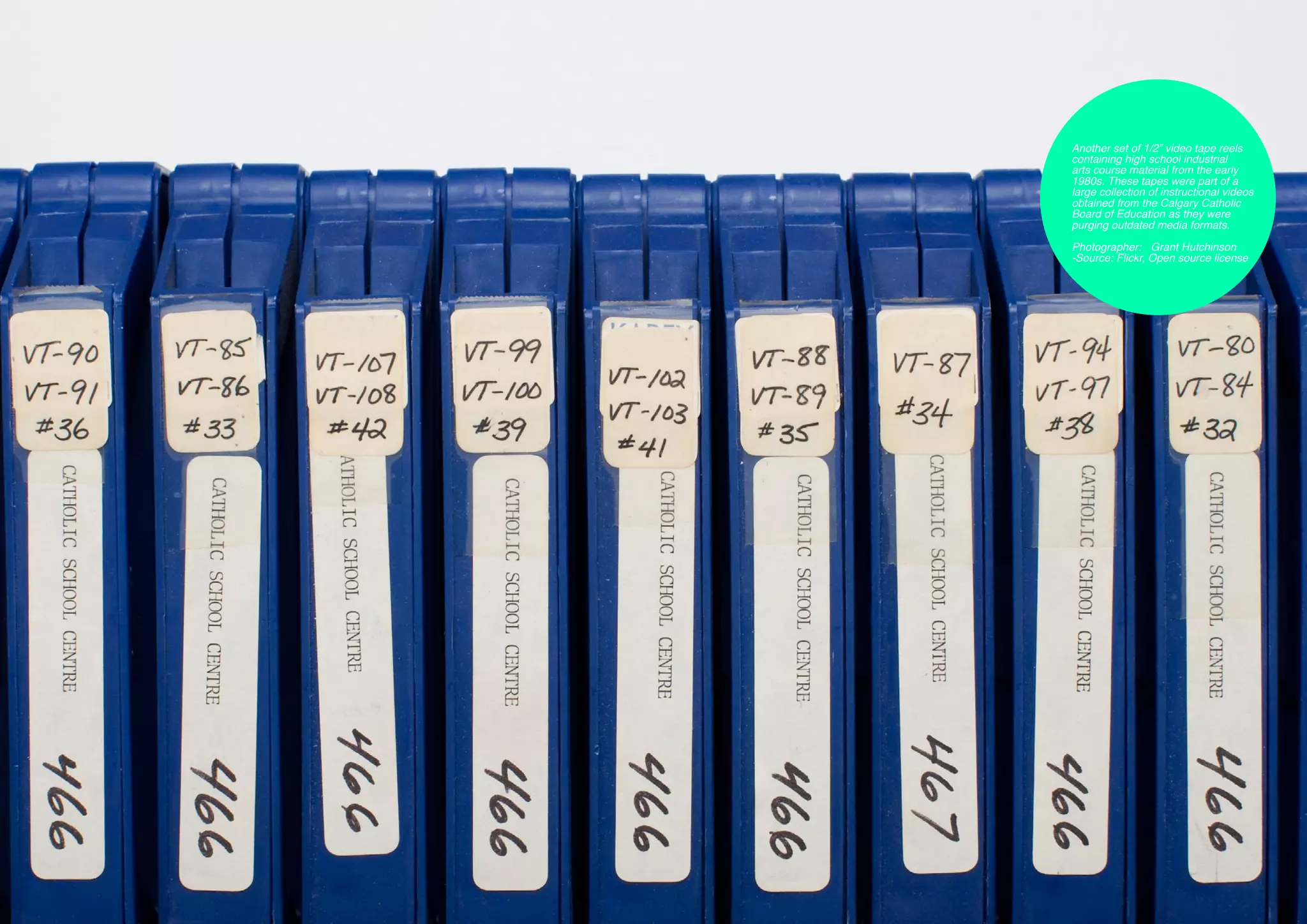
Another set of 1/2” video tape reels
     containing high school industrial
     arts course material from the early
     1980s. These tapes were part of a
     large collection of instructional videos
     obtained from the Calgary Catholic
     Board of Education as they were
     purging outdated media formats.

     Photographer:	 Grant Hutchinson
     -Source: Flickr, Open source license


15
Dissemination and Collaboration             was calculated in 2007. It was decided      Another source of error is doubles,          The news archive was considered
The financial framework                                                                 that the project would cover the cost       where the same content is saved on           to be of great importance because
                                            tasks                                       of the first LTO data-tape to store the     two or more carriers. Experts have           archival footage traditionally was and
                                            The costs of disseminating and              digital content, because an expansion       estimated that in the radio archive,         still is extremely valuable for the news
In DR, the process of digitisation and      collaborating are established in order      of DR’s main system Mediearkivet was        there is significant overlap in parts        production team.
dissemination has been running since        to work across the cultural sector.         not expected or covered in any of the       of the radio collection that is both
the funds were granted in 2007. It was      The goal is to create additional value      approved budgets in DR. The cost of         stored on 1/4-inch reel tape from the
decided in the earlier stages that the      when combining the content from DR          running Mediearkivet: updating software     production archive and on DAT tape
objective for the project should be to:     with other collections of art, pictures     and exchanging hardware and the             from broadcast archive.
                                            or books, etcetera, in order to give        LTO-tapes when they become obsolete
 •	   Maximise the output of the            better access to and contextualisation      is covered in DR’s technical yearly
      digitisation                          of cultural heritage. Furthermore, the      budget.
 •	   Collaborate with external,            collaboration helps enrich the content                                                  The archives
      mainly cultural, partners to          by provided new or better metadata,


                                                                                        The cultural
      create value for DR’s users           along with the development of a
                                            new media assets management that                                                        Digitalisation and preservation of
To secure a successful project process,     supports online archiving and cross-                                                    DR’s archive content have always
a set of rules for the use of the funds     organisational collaboration. The                                                       been with the purpose of enriching


                                                                                        heritage
was decided by the board of directors       EU has emphasised this matter in a                                                      the public. Some parts of the content
of DR in 2007. These rules have led to      digitisation report stating that:                                                       DR’s Cultural Heritage Project aims to
a division of the budget in three areas:                                                                                            digitise have been outside the reach
                                            “Cultural institutions add considerable                                                 of the public for a long period of time.


                                                                                        content in DR
 1.	 Administration 9 %                     amounts of information to digitised                                                     Content, which has been stored in
 2.	 Digitisation & Preservation 79 %       objects (metadata), describing for                                                      aged physical formats, is therefore only
 3.	 Dissemination and                      example the author, the provenance                                                      consumable for a small exclusive group
     Collaboration 12 %                     and age of the work, giving contextual                                                  of manufacturers. Today, technology
                                            information, as well as technical                                                       has changed our production capabilities
A budget structure and financial            information on the formats used and         Part of the digitization task is an         and enabled a previously unthinkable
allocation was accepted by the Ministry     characteristics allowing search engines     ongoing examination of the content,         degree of dissemination and usability.
of Culture. The three areas all cover       to locate the object. This metadata is      in order to ensure that as much of          Because of the technology, DR is now
different sets of tasks and objectives.     essential to provide the user with a        the unique radio, television and film       able to exploit the cultural heritage in a
                                            useful background to the work, and          materials are being preserved as            new extensive degree.
                                            also to allow search-engines such           possible. The collections is believed
Administration tasks                        as Europeana to locate the digitised        to hold about 478,000 hours of radio,       The importance of making cultural
The administration budget is used by        objects relevant in the context of a        68,000 hours of TV and 17,500 hours of      heritage accessible has previously been
the project management team to ensure       specific search.”                           film. Film was used in the early years as   highlighted. This has since been an
that the funds spent on the other budget    -European Commission: 2011: 33              the broadcast medium and was used as        essential part of the political argument
posts are in line with the given set of                                                 the primary part of content in the news     that the content should be activated.
rules and the project agreement with                                                    production up to the mid-eighties.
the Ministry of Culture. In addition to                                                                                             The archive is a series of produced
the managerial task, the administration     Project Costs, Not Running Cost             The archive volume is believed to be        programs and production materials
work also covers the needed research        The overall project budget has been         563,500 hours in total. It does not hold    that can be divided into smaller sub-
and documentation tasks.                    approved by the Ministry of Culture and     a complete collection of what DR has        collections from various departments
                                            is handled under another regulation         broadcasted since its establishment         and external sources. One of the
                                            than DR’s overall four years financial      in 1925. The volume is estimated            collections is ‘Politikens Film’-journals;
Digitisation & Preservation tasks           agreement. This means that funding          and holds some uncertainty, because         they were showed in the cinemas as
The digitisation budget holds the largest   does not have to be spent within a          metadata or descriptions from DR’s          a form of news from the world before
sum of money. It covers the complex         yearly given timeframe – giving the         archive do not contain the information      television became the news media.
task of digitalising or converting the      project a flexibility that is crucial for   about the duration for many of the
content from the physical carriers to       optimising the spending related to the      collections.                                The most complete collection is the
the needed digital file formats, and        digitisation work.                                                                      television news, which is more or less
afterwards preserving them.                                                             The volume has been estimated by            complete. It consists of 16mm films
                                            As a result of this flexible economy        counting the 35-kilometers of shelves       with all the content pieces from the
The budget also covers some technical       the project is not allowed to hold fixed    of materials, grouping them into            mid-fifties to the mid-eighties. DR does
hardware and development, because           cost, so if activities require a running    sub-collections and then--based on          not have a copy of the anchorman
there has been a need for expanding         investment, it must be approved by          comprehensive sampling--calculating         introducing the news, because the
the storage in order for DR to handle       the board of directors and then the         the expected duration of each group         actual broadcast was not recorded,
the new tasks related to preserving the     cost is transferred to other areas in the   of materials. An error of five minutes      but from 1984 and on the production
archive material digitally.                 DR organisation. To illustrate: what is     per carrier for the television part would   flow changed and a copy of the aired
                                            considered a project cost and running       change the collection with around 5600      news broadcast are from this time on
                                            cost in the project, the storage cost       hours, or just over eight percent of its    stored on U-Matic; a digital videotape.
                                                                                        volume.
16
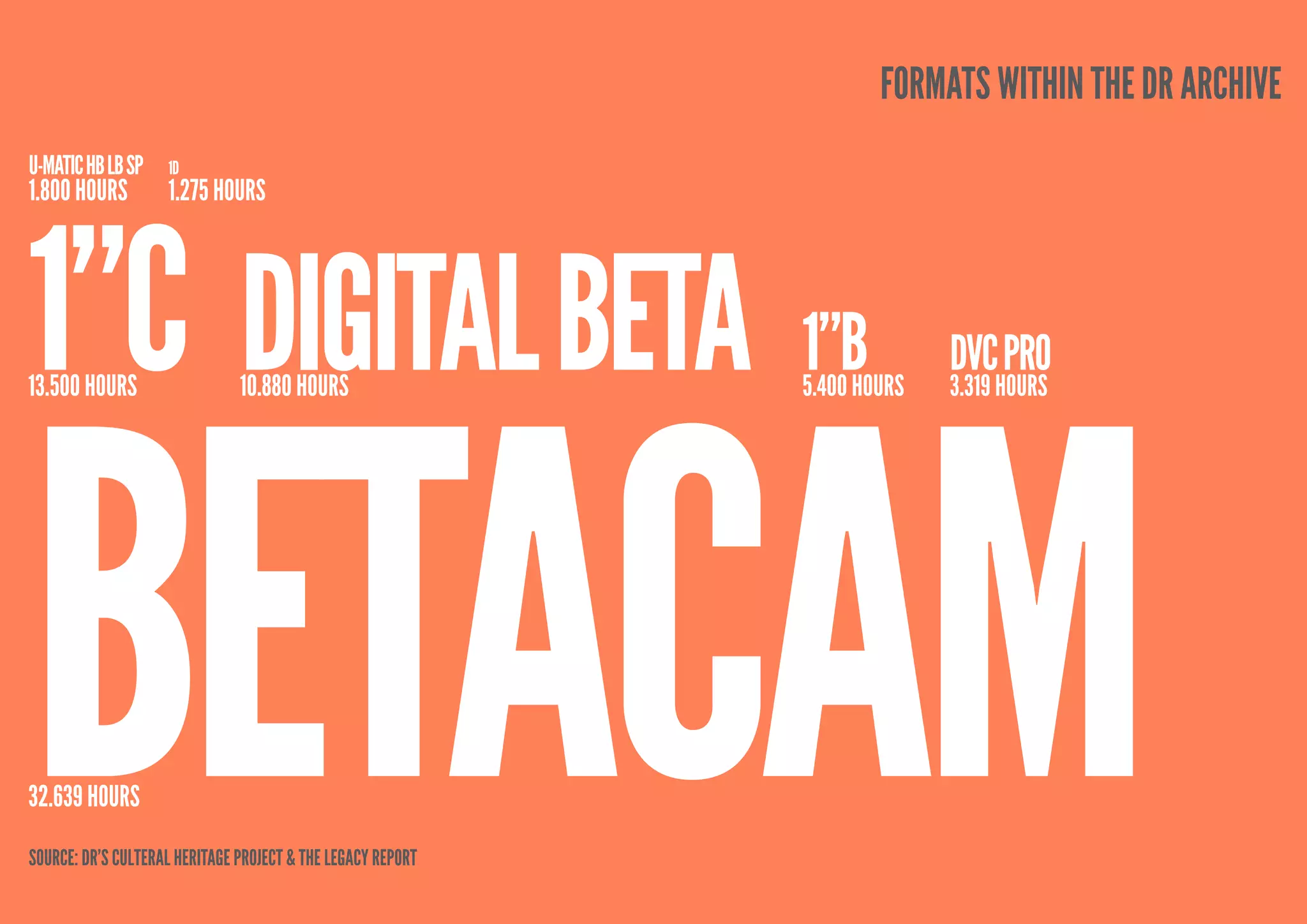
FOrmats within the DR ARCHIVe
U-Matic HB LB SP    1D
1.800 Hours         1.275 Hours


1”C digital beta                                             1”B           DVC pro


betacam
13.500 Hours                   10.880 HOURS                  5.400 Hours   3.319 HOURS


32.639 HOURS

Source: DR’s Culteral Heritage project & the legacy report
17
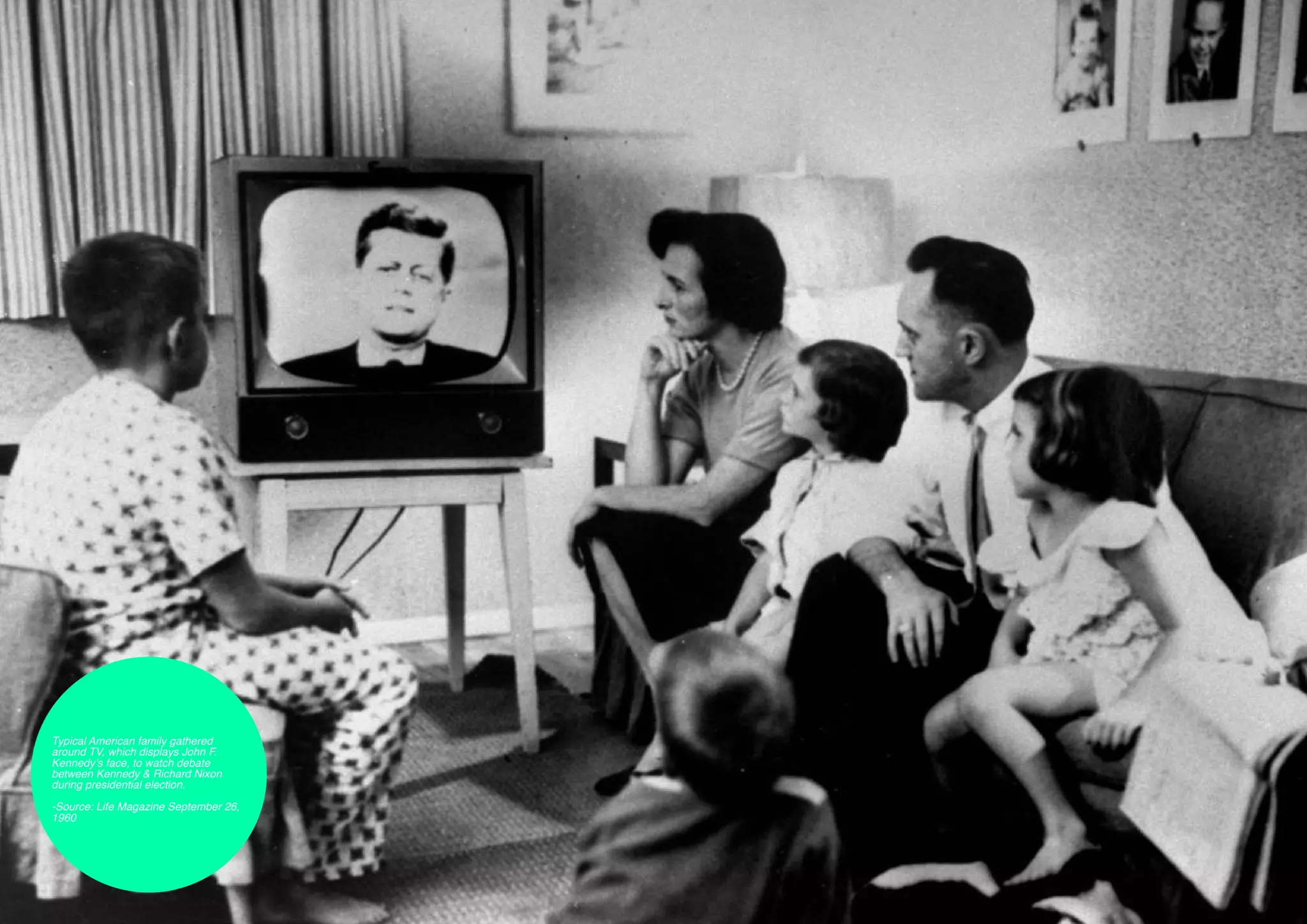
Typical American family gathered
     around TV, which displays John F.
     Kennedy’s face, to watch debate
     between Kennedy & Richard Nixon
     during presidential election.

     -Source: Life Magazine September 26,
     1960


18
The Public
                                              legitimised in terms of frequency             because cultural heritage today has         It is only a tool for measuring             public cultural institutions operate
                                              scarcity, its justification lies in its       become a general public concern,            something abstract, and it will only        within. Value is therefore a cornerstone
                                              superiority to the market as a means          however, the definition, of what it         be approximation in order to explain        in digitising the cultural heritage,
                                              of providing all citizens, whatever           actually is, are numerous. One way          the reality of cultural heritage that       represented by the phrase “Use equals


Service
                                              their wealth or geographical location,        the Danish Government defines its           cannot fully be grasped. Historically       value”. The phrase establishes a strong
                                              equal access to a wide range of high          importance is as being essential for        the definition of value has always been     dedication to ensuring that the users
                                              quality entertainment, information and        the value of giving citizens a cultural     difficult to calculate when the objects     are the ones benefiting from the value.
                                              education, and as a means of ensuring         foundation and a national identity in a     analysed did not fit into neoclassical      This mindset is key throughout the


Obligations
                                              that the aim of the programme producer        globalised world.                           economic way of describing the world.       process, from digitisation to the actual
                                              is the satisfaction of a range of                                                                                                     consuming of the cultural heritage.
                                              audience tastes rather than only those        “Regeringen vil fortsat arbejde for         Manuel Castells is trying to defy this
                                              tastes that show the largest profit.”         at styrke og udvikle det frie danske        traditional thinking about value:


and Value                                     - Garnham: 1986:12-13                         kulturliv i de kommende år. Det gælder
                                                                                            såvel i forhold til at udvikle kunstens      “The old question of industrial
                                              Hence, in order to be successful as           internationalisering og kunstens rolle      society – indeed, the cornerstone of
                                              a public service broadcaster, DR has          som formidler af danske demokratiske        classical political economy – namely,
                                              to balance its obligations as a public        værdier som i forhold til at sikre          “what is value?,” has no definite
When analysing the objective of the           service institution set by the politicians,   kendskabet til kulturarven og den           answer in the global network society.
project, it is important to emphasize         with the user demands and market              værdi, som ligger i at virke på et stærkt   Value is what is processed in every
the context that DR operates in. The          mechanisms. DR Cultural Heritage              kulturelt fundament. Kulturarven har        predominant network at every time in
importance of making cultural heritage        Project inherits this challenging             væsentlig betydning for danskernes          every space according to the hierarchy
accessible has previously been                foundation, and furthermore there are         identitetsfølelse i en globaliseret         programmed in the network by the
highlighted, but currently an essential       added complexities by its obligation          verden, og kunst og kultur får i disse år   actors upon the network. Capitalism
part of the political argument is that the    to collaborate with external projects         en stigende betydning. Regeringen vil       has not disappeared. Indeed, it is
content should be activated and used          and partners with different sets of           derfor fortsætte arbejdet med formidling    more pervasive than ever. But it is
by the public. As previously touched          objectives. However, the common               af den danske kulturarv nationalt og        not, against a common ideological
upon, the role as a public service            goal is still to supply society with          internationalt.”                            perception, the only game in the global
broadcaster, as well as a producer of         quality information that increases the        - Mulighedernes samfund,                    town.”
culture have been widely discussed.           knowledge of the population, and              Regeringsgrundlag 2007                      - Castells: 2009: 29
Nevertheless, use is crucial, as Castell      this separates public service from
argues:                                       commercial approach to the market. As         In political terms, this means that         Max Boisot argues that the notions
                                              Goodman argues:                               identity and culture has value,             of “in the beginning was the market”
“Moreover, the range of investment                                                          especially when we are discussing           do not convincingly answer many of
of these global multimedia business           “This emphasis on quality and                 democratic value. Also, this value          society’s questions because information
networks increases with new                   excellence connects public service            is considered to be proportionally          and data are not free commodities in
possibilities of interactive, multi-modal     media to the notion of “merit goods.”         important with increased globalisation,     society. He argues, the ability in agents
communication, particularly the Internet      Often used in connection with the             thus, the need for disseminating cultural   to create a codification and abstraction
and wireless communication networks.          performing and fine arts, merit goods         heritage should not only be national,       and thereby transform and create
In this case, the programming of              refer to products that the market would       but also international.                     knowledge from data and information
the networks is less about content            not produce but should be made                                                            is at the core of value creation. When
than about format. The Internet only          available because they do people              The goal of DR’s Heritage Project is to     this has happened he argues can a
becomes profitable if people use it,          good.”                                        create value by distributing the Danish     diffusion of knowledge happen which
and people would use it less if it lost its   - Goodman: 2004: 26                           cultural heritage. But, how is the public   would be a market vaporization of a
fundamental features: interactivity and                                                     service value constructed? A good           product or a service. A process that’s
unfettered communication, regardless          This creates a natural question about         way to observe value is to assume           happening in what he defines as the
of how surveilled it is.”                     the foundation of the Cultural Heritage       that value is flows of information in       Information Space. (Boisot et al: 2007)
- Castells: 2009: 421                         Project: is cultural heritage merit           society that the public translates into
                                              goods? The answer is in this case,            knowledge by consuming it. One              This brings us closer to the value of
In Denmark the political framework            yes. Given that cultural heritage is          cannot measure the value or the             cultural heritage. Larger actors in
for public service broadcasting is            knowledge about society, it is not a          consumption, but it can be assumed          networks adjacent to DR’s Cultural
articulated in the law ‘Radio- og             scarcity good, one can share it without       that the information is accessible and      Heritage project are acknowledging
Fjernsynsloven’ and Medieforliget,            having less.                                  disseminated in order to be used.           the value of the archives and cultural
which is negotiated between DR                                                              When digitising the cultural heritage the   heritage, making room for definition
and the politicians every fourth year.        The cultural heritage can therefore have      technology makes us able to measure         of value based on other criteria than
Nicholas Garnhams analysis of public          value for everyone in the society, what       the use of the available content, thus      economics. The abstract value of
service in the article ‘Public Service        prevents it from being shared will in this    making us able to determine value by        cultural heritage is the reason that
versus the market’ sets a clear outline       case be the availability or accessibility.    measuring the use. Hence, there is          today it is being prioritised in the
of the reality DR manoeuvres in.              Cultural heritage is an abstract              an interesting and close relationship       political budgets and the different
                                              phenomenon that makes it difficult to         between cultural heritage, value and        framework agreements, which the
“For the truth is that while the public       grasp, hence, also to commercialise.          use.
regulation of broadcasting has been           This creates an interesting issue,


                                                                                                                                                                                                                               19
2
CHApTER

          Scientific
          Approach
          and
          Description
          of Methods

20
research                                     Project exploit the digitisation of          defined as different networks around
                                             Cultural Heritage so digitisation            the project, that relates to both local      Working questions
                                             creates value within the organisation        and global actors. Their interactions,
                                             and in society?                              fusions and environments create              1.	 What is DR’s Cultural Heritage


& Working                                                                                 society. The networks and society are            Project? This is a brief description
                                             We have chosen the word ‘how’ in             able to create and absorb value within           of the case and the foundation for
                                             order to create explorative approach,        a given context, hence always been               establishing the project in 2007,
                                             where an explanation of DR’s Cultural        dynamic entities that change over time.          which have already been presented


questions                                    Heritage Project could be given with         It should be emphasised that there is a      2.	 Which networks is the project
                                             the purpose of connecting previous           relationship between the digital cultural        involved in, and what are the
                                             events to the current phenomenon, and        heritage and the society, because they           characteristics of the key players?
                                             through this examine the case. The           are related and influence each other.        3.	 What activities is the project
                                             approach of asking how is one of the                                                          involved in, and how are they
The objective of this thesis is to give      preferred methods for case studies. As       This means that society and culture              creating value? Through a value
a theoretical understanding of the           Yin explains:                                is made of processes, which are                  chain analysis we will try to
value created when digitising cultural                                                    constantly changing and affecting each           describe the different workflows,
heritage, but also the more pragmatic        “In contrast, “how” and “why” questions      other. An assumption--which is the               the production and output of the
aspects such as how one can facilitate       are more explanatory and likely to lead      foundation of the project--given that            Cultural Heritage Project
innovation and change the conditions         to the use of case studies, histories,       work within the project has the ability to   4.	 How are data, information, and
of a project by interacting with different   and experiments as the preferred             change society. Additionally, we want to         knowledge constructed in the
adjacent networks.                           research methods. This is because            emphasise ‘the value of communication’           different networks, and how does
                                             such questions deal with operational         as a hypothesis, leaning towards a               this effect what Boisot calls the
In fact, the final product will be           links needing to be traced over time,        Castells argument that is:                       information-space? This is an
conclusions on the value creation            rather than mere frequencies and                                                              analysis of the knowledge and
and utilisation and a set of strategic       incidence.”                                  “The common culture of the global                value of the project, how is it
guidelines that is developed for the         -Yin:2009:9                                  network society is a culture of                  created and how can we explore
thesis, but can be used as general                                                        protocols of communication enabling              the process of sharing and
guidelines that are for digitising           When we observe the operational              communication between different                  absorbing value.
cultural heritage. Furthermore, we           links in the project, the different          cultures on the basis not of shared          5.	 What are the guiding principle for
present reflections upon how value is        players in the research question             values but of the sharing of the value of        creating and sharing value, when
created for the Danish Broadcasting          should be explained. We have chosen          communication.”                                  digitising cultural heritage?
Corporation and in society.                  to highlight three key players; the          - Castells: 2009: 38
                                             Danish Broadcasting Corporation
When discussing digital cultural             (DR), DR’s Cultural Heritage Project,        The hypothesis puts great importance
heritage the key focus will be the           and Society. We will not explore the         in the value of being able to
digitised audiovisual content from DR’s      question ‘why’, however, because the         communicate by establishing common
archives dating 2005 and back to 1896,       Danish Broadcasting Corporation and          codes for interacting. However, creating
since this was the physical object that      the Danish government have already           shared value is not a necessary goal.
resulted in the grant of DKK 75 mill to      defined this, and answer to ‘why’ is         In relation to cultural heritage this is
DR. The grant was only given because         already handled in prerequisites that        quite important, because it gives an
the archive was and still is considered      initiated the project.                       objective to diffuse cultural heritage
to be highly valuable, not only for DR,                                                   with an emphasis on communication,
but for society.                             DR’s Cultural Heritage Project, in this      and not the establishment of a shared
                                             also referred to as ‘the project’, which     value that could be viewed in this case
Focusing on the added value that DR’s        is a small organisation within DR,           as nationalism or cultural domination.
Cultural Heritage Project is creating,       responsible for the actual processes         Instead the digital technology opens
the processes in the project and the         and activities. If you compare DRs           towards sharing culture, between
network seems like key elements in           organisation to the project, DR is the       the masses but also between the
the analysis. Also, we try to explain        established organisation that sets the       subcultures, thus not making any
how generated value can and should           framework for digitising cultural heritage   selection in which content is more
be distributed in the organisation, the      by initiating the project. However, the      important than the other.
network, and society. In this case the       two players are quite different, one
relation between value and knowledge         being a major media corporation and          Based on the research question, the
is established, but also a modulation of     bureaucracy with many objectives, the        case’s entities should be explored,
value; meaning is not only value in the      other the project itself, a temporary        making room for sub-questions. The
terms of neoclassical economics. The         project with concrete goals – to digitise    function of these is to explore the
case study is based on the research          and disseminate the archive content          research question by answering the
question:                                    within DR.                                   sub-questions, subsequently the sub-
                                                                                          questions cover.
How can the Danish Broadcasting              Another aspect or type of player is the
Corporation’s Cultural Heritage              society. The society will in this case be


                                                                                                                                                                                  21
no longer a part of the project activities.   analysis tomorrow (Jespersen: 2004).          primarily be research documents from         cases? Does it have bearing on any
Boundaries                                    The project therefore contributes to the      A condition that will shape our work          Danish and European institutions, but        other cases?”
                                              concept development and strategy, but         process, because our thesis is written        also more political and legislative texts    - Olivier: 2009: 98
                                              other departments are responsible for         over time, at some point we have to           such as the media agreements.
Additionally, we need delimitations           the actual design and dissemination.          decide on a reality, which has already                                                     Olivier makes an argument that a
to establish the field in which we            However, the project still has a              changed as soon as we try to describe         The purpose of using the documents           case study is in danger of becoming
are operating, constituting some              consultant role and feels ownership of        in on paper. Although, time is changing       combined with practical work is to           too specified, making it hard to draw
natural borders. Despite the fact, we         the actual products it has participated in    the reality, the outcome will still have      try to grasp the causal relationships        conclusions valid in other scenarios.
are operating with an open system,            developing.                                   value tomorrow, much will be the same         between the digital cultural heritage, the   For that reason the thesis is focusing
grasping everything is an impossible                                                        and the results of our analyses and           networks around it and the value that is     on how a digitisation can create added
task. Since it is a socio-economic field      Following the discussion of the               guiding principles should still have          being created.                               value, putting an emphasis on the
we are operating in, all the knowledge        interaction between the users and DR          guiding value and provide insights.                                                        process and not the specific project.
we can obtain is contextual, the goal         is the public service definition. The                                                                                                    Hopefully, the product of the thesis will
is then to strive toward ‘justified true      thesis will not analyse the public service    Critical realism describes that reality       Case studies – a reflection                  be knowledge, hence, useful research
belief’, because the absolute truth           term, but it is used as a reference and       consists of three domains – the                                                            that can be applied to practical work.
cannot be reached (Jespersen: 2004:           a framework for the decisions in the          empirical domain, the actual domain,          upon the method                              In our case study five components
160). Therefore, we are using the             project.                                      and the real domain (Jespersen:                                                            in designing the research have, for
limitation to examine the field and come                                                    2004:148-149). On the empirical                                                            that reason, been key: Taking an
closer to an understanding of the reality,    Lastly, the analysis is focusing on           domain data is experienced, and all the       The case study purpose is not to control     approach inspired by Robert Yin case
but the conclusion will be limited by it      the processes and network, which              data is accessible for the observer. The      behavioural, events etc. the objective       study design and methods. These
being based on “all other things being        doesn’t give us the opportunity to            two other levels exist independently          is to examine contemporary events.           components are:
equal”-principle.                             describe human resources and lead             of the observer, the second being the         This prioritisation of ‘what is’ fit into
                                              management in detail even though they         actual domain containing events and           the philosophy of the critical realism         1.	 a study’s questions
In fact, this means the thesis will not       are influencing the project on a daily        experience, and finally, the third being      (Yin:2009:8). Still, we want to elaborate      2.	 its propositions, if any
give a description of all agents related      basis. Instead we focus on the team’s         the real domain where these events            why the case study approach has been           3.	 its unit(s) of analysis
to the case. Neither will we be dealing       results, making their work the key in our     and experiences are supplemented by           taken, and the arguments for taken             4.	 the logic linking the data to the
with the political and legal environment,     analysis.                                     mechanisms. Both the actual and the           this approach. A definition of the case            propositions
although areas such as Intellectual                                                         real domain existst independently of the      study is therefore needed, and we have         5.	 the criteria for interpreting the
Property Rights and political priorities                                                    observer, hence the observer cannot           decided to use Schramm definition:                 findings


                                              Critical
(IPR) are briefly touched upon. In                                                          grasp them (Jespersen: 2007: 148).                                                               (Yin: 2009: 27)
relation to the agents the interactions                                                     Consequently, we can only aim for             “The essence of a case study, the
between them will only be described,                                                        grasping how the world is taken to be.        central tendency among all types of          The study’s question has already been
if the interaction serves a considerable                                                                                                  case study, is that it tries to illuminate   presented, as well as the propositions


                                              Realism as
emphasis for the case study.                                                                The critical realism is useful when we        a decision or a set of decisions: why        described in the introductory chapter.
                                                                                            can observe an anomaly or something           they were taken, how they were               The units we are analysing are primarily
The interactions between the public,                                                        unexpected: in this case the funding          implemented, and with what result.”          a limited part of the network around
DR and the project will be quite                                                            for digitising from the politicians are       - Schramm, 1971, quoted by Yin: 2009:        project, the value chain activities and


                                              a Scientific
superficial. The public and its demands                                                     observable in the empirical domain.           17                                           process and finally the areas where
and ways of influencing the project are                                                     However, the mechanism and events                                                          the project can create value. The
only briefly discussed beause it would                                                      on the other domains are far more             So far, many have studied the                logic linking the proposition will be
require large analysis and quantitative                                                     interesting to observe. It is not the         cultural heritages impact on society,        to use different models for collecting


                                              Approach
research to understand the relation.                                                        actual funding that is interesting to         digitisation and value creation, and a       and explaining the various data, but
This is something the department of                                                         analyse, it is the relationships being        study combining the areas have also          also to look for patterns, in order to
DR Medieforskning is working with on a                                                      made and the mechanisms that                  been explored. On the other hand             give some guidelines for how an ideal
regular basis with significant resources                                                    shape the outcome of the political            an analysis of the individual projects       process could be. We are operating in
and thus covering this sufficiently.                                                        prioritisation.                               handling everything from digitisation        a trans-disciplinary field with financial,
                                              This thesis is based in critical realism,                                                   to dissemination have rarely been            sociological and abstract linkages
Additionally, the project has not             which is a philosophy of science that         Key is that the perception of reality         examined in detail. DR Cultural              creating difficulties for grasping the
explored the user interaction in a            prioritizes ontology (i.e. the study of       decides the method that should be             Heritage has within the last couple          actual value of transactions and assets.
substantial way, making it hard for           being or existence) over epistemology         used to grasp reality. In this case we        of years experienced an increasing
the case to explore the interaction           (i.e. study of the way knowledge is           are looking at a trans-disciplinary field,    interest for the project, because it made    Finally, we will have some criteria for
between the project as a public service       obtained) in the sense that, for critical     which affects the approach to acquiring       results that previously haven’t been         interpreting the findings. In this case
object and the users being the Danes.         realists, the way the world is should         new knowledge. The approach we                seen. This made us strive towards a          these will be finding and highlighting
Although, the goal of the project is          guide the way knowledge of it can be          are using is quite pragmatic, because         case study that could give insights to       activities and principles for the project
to focus more on the users being the          obtained (Fleetwood: 2007). In this           we have been working on the project           other projects, although:                    to operate after. Based on the findings
public in the future, it is still quite new   case we are operating with an open            ourselves, the real expert insight will                                                    these should give reason to assume
in this field. Should an analysis be          system, which is constantly changing.         be firsthand experience. Interpreted by       “The challenge of a case study is to         that they create added value for a given
made, the product Bonanza initiated by        Given this dynamic nature, the ontology       us as both informants and researchers.        obtain knowledge that is useful and          organisation and/or society.
DR’s Cultural Heritage Project would          will change over time, and therefore          To balance the pragmatic approach             not merely interesting. Who says
probably be more interesting. Bonanza         the conclusion today will not be the          more qualitative data is needed from          information obtained from a few cases
is now part of DR’s online offerings and      same, if we decided to make a similar         other sources, and in this thesis this will   has been any bearing on any other

22
The description of the actual domain         development of guiding principles for      the project, but also when trying to          ”Sometimes a single case study is
Project Design – Switching                   will be the relation between the project     creating value, when digitising cultural   grasp the reality we are analysing. The       enough to be significant. A study of a
                                                                                                                                                                                   single case of how a criminal broke into
                                             and the rest of the internal network in      heritage, will be inspired by David        objective of the design is then to be
Between Empirical Data and                   DR, but also between the project and         Oliver and Johan Roos’ method of           able to identify patterns, in this case       a hitherto trusted cipher is enough to
                                                                                                                                                                                   impact on future computing practice. A
                                             external actors. This will be a very basic   making the former.                         patterns creating value, but also to get
Theory                                       mapping of the networks adjacent to                                                     a sense of how the value is distributed       single-case study is also sufficient to
                                                                                                                                                                                   prove a theory of the form X sometimes
                                             the project, which serves the purpose        In theory, the process has been more       within the surrounding networks and
                                             of grasping patterns, and increasing         iterative as shown in figure 1, however,   creates new events and experiences.           works or X cause Y.”
In order to obtain valid knowledge           focus on digitising cultural heritage or     the structure of the report needed to      Hopefully, this will create a single, but     – Olivier: 2009: 103
different approaches can be made that        technology changing the groundwork           create a natural order when presenting     significant case study.
are either inductive, deductive or as this   of the media industry and give an idea
case study adductive. Induction as a         of the context in which the project
method begins with studying empirical        operates.
data, whereas the deduction starts with
approaching the theory. In this case         Furthermore a Value Chain is being
study the chosen scientific approach
is to use adduction, which gives us the
                                             used to map the activities of the project,
                                             consequently, this won’t be an in-depth
                                                                                          FigurE 1 – PROJECT DESIGN
flexibility of shifting between empirical
data and theory, creating a method
                                             analysis, but more a description of the
                                             process from taking the tapes off the
                                                                                          Source: Golodnoff & Lerkenfeld
where empirical data and theory              shelves to disseminate the content.
constantly are weighting each other.
This is good tool in examining the case.     Finally, we are exploring the real
Because the field we are observing is        domain in our analysis. Boisot’s                                                                                             Descriptive
both complex and dynamic switching           distinction between; data, information,
between the theory and empirical data        and knowledge will be used, in order to
helps us obtain new understandings           understand how knowledge is created
and knowledge.                               in the Information-space (I-space). The
                                             I-space is the conceptual framework
The project will explore the three           where organisations, institutions,                                                                                       Network description
domains of critical realism in order         and cultures can be transformed by
to understand how one can exploit            new information and communication
the Digital Cultural Heritage to create      technologies. The centre of this will be
value in society. First, on an empirical     the digitisation of the cultural heritage,
domain, we will try and describe the         and the value creation by switching
outline of DR’s Cultural Heritage            between the different elements; data,                                                                                        Value chain
Project. In this case we can define          information, and knowledge.                                                                                                  description
the empirical data as being physical
artefacts before they are contextualised     Looking at Boisot’s theory, one could
                                                                                              EMPIRICAL
or conceptualised. Specific data             argue, that it has the same levels as the        DOMAIN       CASTELLS, PORTER
is, among others, the tapes in the           critical realism. The different levels of
archive from before 2005. No matter          experiencing the study subject can be
how it is articulated, these are a           looked upon as what Boisot describes
physical phenomenon and possible to          as data, information and knowledge.              ACTUAL                                                                       study &
observe. The data varies, the dynamic        Through the data we collect, we put              DOMAIN       BOISOT, CASTELLS, A.O.                                          Analysis
characteristics of the cultural heritage     together information about the case,
has makes it hard to handle as big data      and finally we hope to be able to attain
with a lot of common characteristics,        new knowledge about the cultural
and the constant increase of the volume      heritage project. Although, Boisot does
poses new technological challenges           not examine how personal creativity
for the institutions responsible for the     is related to creating knowledge or
digital preservation.                        the sociological aspects, his theory
                                             is still a good way for us to grasp the          REAL                                                                       conclusions &
                                                                                                                                                                       Guiding principles
The empirical domain is described            phenomenon and its value, which is the           DOMAIN
by using documents such as the               objective of this case study.                                 BOISOT, CASTELLS, A.O.
Public Service-contract and first hand
knowledge about the project, internal        Conclusively, we will sum up the most
memos as well as some descriptions           important discoveries in our analysis
from other sources.                          and use them to create a guiding
                                             principle, which can be used when                                                                                        Thoughs & Reflections
On the actual domain, we will try and        trying to create value in the process
cover the basic events and behaviours.       of digitising cultural heritage. The


                                                                                                                                                                                                                              23
governing agreement between the              However, in this case, the role as           the case the best, but the theories that
Theoretical foundation                       government and the public-service            an observer is not a complete term           highlighted relevant aspects of the
                                             institutions within the media sector in      for our method. As employees, we             case and forced us to think in different
                                             Denmark. In the 2007-2011 agreement          have participated in many of the core        ways than we would do in our daily
In trying to understand and answering        the funding for the beginning of             discussions about the strategies for         work. We envision that the conclusions
the research question we are using           digitisation of DR’s archives is given.      the project, deliverables or contractual     can be used for future work, where
different theories. The value chain          Along with the outline of the political      matters. These issues, decisions,            new empirical studies can be made
analysis made by Michael Porter              wish that has become part of DR’s            and elements have affected the field         for acquiring insights into the aspects
explores competitive advantages when         Cultural Heritage Projects objectives.       of study and development within the          found to be crucial.
optimising activities in the value chains.                                                project, making it hard to argue the
Porter’s theory is used to understand        In the agreement for 2011-2014 it is         case that we have been taking the
the basics of the most costly part of        stated that the content of the archives      role of an observer with the purpose of
the project digitisation workflow. We        should be made available in the widest       doing research.
consider Porter to be a part of the          possible way.
neoclassical economical paradigm, a                                                       This challenges the role of the
framework that we are trying to argue        DR’s Public service-kontrakt for 2011-       researcher because, some might argue
against in this thesis, that value is not    2014. The contract is based upon the         that it is problematic both be part of
only scarcity and utilisation. However,      Mediepolitisk aftale for 2011-2014 and       the field study and maintain ability to
we will use Porter’s theory, not to          specifies DR’s public service objectives     perform a good social science practice.
analyse competitive advantages, but          during this period. In this agreement        Additionally, it can be problematic for us
to get a method for structuring the          the accessibility of the archives for the    to be critical when examining the field
description of the project activities.       users is stressed and it is stated that      of study, a fact that we are aware of.
                                             DR is to work actively in order to secure    Trade-offs between opportunities and
Our other theoretical framework, which       this.                                        problems one must consider because
is the foundation of the analysis, is                                                     in some circumstances this method can
based in a different paradigm. Our           Internal memos in DR regarding the           be the only way of gaining access to the
arguments place us in a paradigm             strategy, the principles, objectives,        needed case study material.
with a broader definition of value and       focus and progress of the project.           - Yin: 2009: 113
value creation; given that we do not         Classified internal documents, that
classify value as equal to an increase       have been presented to the Financial         In short, the danger of being
in income, for instance consider             Board and the Board of Directors in          informants ourselves is the risk of
knowledge to have value. The theories        order to discuss project details and get     being too influenced, and hence
are however not in our specific              authorisation for dispositions.              not objective enough. Nonetheless,
research field, but they share the same                                                   being a participant observer has great
perspective as us. Value has more            Official documents from a variety of         advantages. As Olivier explains:
numerous forms, and can be measured          relevant source as EU, and EU funded
from other approaches such as social         project as Presto Space & Presto             “The roles a researcher plays during
and psychological. We argue that             center, Europeana and EuScreen. And          a case study may range from that
Castell, Boisot, Oliver, and Roos agree      FIAT/IFTA.                                   of a participant observer to totally
that value is not just in a neoclassical                                                  unobtrusive observer. The benefit of
sense, it something more abstract than       Lectures and presentations from              being a participant observer is that it
that.                                        various national and international           allows you to gather information that
                                             conferences.                                 would not otherwise be possible.”
                                                                                          - Olivier: 2009: 101
Empirical Data and Role as a                 Participant observation. Both analysts
                                             are part of the project management           Furthermore, we are using information
Participant Observer                         team and have, as part of their
                                             professional role in DR’s Cultural
                                                                                          based on others’ interpretation of data,
                                                                                          which could be somewhat problematic.
                                             Heritage Project, engaged in the work        It can be beneficial if the interpreter
The study has used many different            within most of the projects in the case      holds greater knowledge for the
sources in order to describe the             study.                                       interpretation. On the other hand it
case. The case being DR’s Cultural                                                        can be difficult to get the most relevant
Heritage Project and the many projects,      One of the key sources of information        interpretation of the data, seen in
collaborators and networks it engages        in this case study is the participant        terms of the research, for our particular
in.                                          observations. As a participatory             field of study. For this reason we have
                                             observer, one participates or engages        chosen sources that are either experts
The empirical data that are used in the      with the field of study and becomes          within the field or represent public
case study include:                          part of the field. This gives the observer   organisations, institutions, business etc.
                                             access to otherwise unavailable
Media political agreements for 2007-         information and knowledge about              When selecting the theories, the goal
2011 & 2011-2014. The overall                the focus of study (Yin: 2009: 112).         has not been to find the one that suited


24
Definitions
VALUE a term used to describe,               CULTURAL HERITAGE                          Public service term we use when              Digitisation process of converting Division describes what in DR is known
                                                                                                                                                                        Division
Value is                                     Cultural heritage is the (national)        Public services is a                         Digitisation is the
understand and access how, when, and         legacy of physical and digital artefacts   addressing the service provided to           the content from the carriers into a         as a “Direktør område” It is the largest
why something is contributing positively     and intangible attributes of a group       the citizens by the government, either       file-based format that can be handled        unit type within DR. DR holds seven
to a given thing, product, individual,       of people or a society, which are          directly through the public sector           by the digital archives, so that it can be   of these. The Directors of these are
situation, process, society etc.             inherited through the society constant     or by financing private provision of         stored on a server. This process, used       all part of the Board of Directors. A
                                             reproduction.                              services. We address public services         by DR’s Cultural Heritage Project, is        Division has typically between 400-450
We use the term in an explorative                                                       as television, museums, libraries,           often referred to as retro-digitisation,     employees.
way, analysing both the asset within         A very concrete definition of cultural     schools etc. Organisations and services      which means the digitisation of
an object or henomenon which has             heritage has been made by the Ministry     secure a given level of access and           analogue content. DR and the project
the potential of creating or utilising       of Culture in 2009:                        availability to a good that the state        have, since the beginning, defined
elementary conditions, but it can also                                                  defines as being necessary for society       digitisation as a synonym for retro-         Internal Memo
be value in a neoclassical economic          “Kulturarv kan være et flygtig begreb,     to give access to. Hence, the reason         digitisation, and/or digital conversion.     Used as a broad term in this thesis
sense, measure in quantitative               men kulturarven er også helt fysisk og     for making public service is to ensure                                                    covering internal and classified
definitions such as price, ratings, etc.     konkret, i form a arkiver, bogsamlinger,   equality and a broader spectrum of           Although, some of the content consists       documents that are presented in this
                                             pladesamlinger, kunstsamlinger,            offerings than a commercial market           of digital files, these will originally      thesis. Primarily from memos presented
                                             filmsamlinger, museumssamlinger og         would do, due to lack of financial           have been produced in a format that          to the Financial Board on the meetings
                                             meget mere. Kulturarven er således         possibilities in serving the areas.          the current production system cannot         of Economic Affairs (ØU) or for the
USEterm is being applied to describe         ikke blot fysisk til stede, men har                                                     recognise or handle technically.             Board of Directors (DM). The purpose
The                                          som helt konkret fysisk materialer et                                                                                                of the memos is to get authorisation of
two kinds of use. One type of use            overvældende omfang.”                                                                   DR’s Cultural Heritage Project is            objectives and or focus areas.
is when DR or its collaborators are          - Digitalisering af Kulturarven: 2009: 7   Mediaagreement made by the
                                                                                                agreements                           therefore obliged to push the retro-
using content in order to create new                                                    Are the                                      digitisation as well as converting           The internal documents are only
products and services or knowledge           Which translated means:                    government and DR, TV2 and other             digitalised material into usable formats.    displayed as quotes in this thesis.
that can lead to development of new          “The cultural heritage can be an elusive   Media enterprises who specifies the                                                       Should one wish to see the documents,
product or service. Products and             concept, but cultural heritage is also     deliverables within the sector. It is made                                                authors can be asked for permission.
service could be objects such as radio-      very physical and concrete, in form of     every four years	 In Danish it referred to
                                                                                                         .
and tv-programmes, online services,          archives, libraries, record collections,   as: Mediepolitisk aftale.                    Items used as synonym for the
applications or exhibitions, and other       art collections, movie collections,                                                     Primarily
installations displaying content.            museum collections, and more. Our                                                       DR’s Cultural Project. Can also be
                                             cultural heritage is not only physically                                                an organisational structure related to
The other is when DR’s users are             present, it also as a very concrete and    DR’sPublic service kontrakt
                                                                                             Public service kontrakt                 solving often smaller defined objectives.
using the content. This can be either        physically overwhelming scale”             DR’s
through the viewing of broadcast                                                        The contract that specifies DR’s
offerings, or online. It can be through      In DR, all materials of the programme      deliverables in regards to the Media
DR’s productions or in collaboration         archive, which have been broadcasted       Agreement.                                   Projectused as synonym for the
with other partners. It can be more or       prior to 2005 and are unique and are                                                    Primarily
less interactive. Through broadcast          considered DR’s part of the Cultural                                                    DR’s Cultural Project. Can also be
offerings, in exhibitions on locations, on   Heritage. After 2005 materials have to                                                  an organisational structure related to
demand, or in more interactive ways as       be selected by the archive or an editor    Content                                      solving often smaller defined objectives.
Bonanza’s voting system or the LARM-         to be preserved. The selection criteria    Content is any audio-visual materials;
projects, tagging and metadata applying      are cultural value, uniqueness, etc.       programs, shows, music, raw footage,
features.                                    in relation to DR’s own re-use of the      or sounds. Content is considered either
                                             materials on their own platforms.          non-digital or digital. The digitised        Department
                                                                                        non-digital content is a part of DR’s        A type of organisational construct in
Danish Broadcasting                          The national obligation for preserving
                                             the (new) audio-visual cultural heritage
                                                                                        Cultural Heritage collection, given this     the Danish Broadcasting Corporation,
                                                                                        is the only content it is responsible for    typically between 6 and 80 people.
Corporation’s users media-
Users are the payers of the
                                             - Statens Mediesamling – has, since
                                             1987, been a part of The State and
                                                                                        digitising and preserving.
license fee. In Denmark, more or less        University Library’s responsibility.
everyone is obliged to pay the fee,                                                                                                  Unit
because it is mandatory if a citizen has
a household with either a television, a
                                                                                         Carrier
                                                                                        Is used as a common description of
                                                                                                                                     An organisational term used to define a
                                                                                                                                     team, workgroup or alike.
radio, a computer, or a device that can                                                 the videotapes, audiotapes or other
access the internet such as a smart                                                     physical “containers” for content.
phone.                                                                                  Carriers contain content that one can
                                                                                        watch, use, or digitise. A carrier could
                                                                                        be a: DAT, Betacam and a U-MATIC, in
                                                                                        general, it is tapes or cassettes.


                                                                                                                                                                                                                             25
3
CHApTER

          The
          Networks
          in relation
          to DR’s
          Cultural
          Heritage
          Project
26
After describing the internal process        market, subsequently, the network has
of the project, the external network         a vast impact on local culture. Castell     FigurE 2 – the network OF DR’S CULTURAL PROJECT
is relevant, because not only does it        argues;
create the framework of the project,                                                     Source: Golodnoff & Lerkenfeld
it also produces and obtains value           “Although capital and production are
in relation to DR’s Cultural Heritage        globalized, the content of media is
Project. It also serves the purpose to       customized to local cultures and to
clarify relations between actors, and        the diversity of segmented audiences.
give an understanding of the project’s       So, in ways that are typical of
large network. It is evident that network    other industries, globalization and
influences the project, but the network      diversification work hand in hand. In
is also subject to change due to             fact, the two processes are intertwined:
activities initiated by the project.         only global networks can master the

                                                                                                                           The political,
                                             resources of global media production,
Castells highlights the connection           but their ability to conquer market
between the different networks as an         shares depends on the adaptation
important aspect in understanding the
domain the project operates within.
                                             of their content to the taste of local
                                             audiences. Capital is global; identities
                                                                                                 The research-                global
“Global financial networks and global
multimedia networks are intimately
                                             are local or national.”
                                             - Castells: 2009: 72
                                                                                                  educational                network
                                                                                                    network
networked, and this particular network       Overall, there is some predominant
holds extraordinary network power,           global structure, however, the local
networking power, and network-making         and national cultures are shaping
power. Because this meta-network of          the identity of the population and
finance and media is itself dependent
on other major networks, such as the
                                             are therefore of great importance for
                                             sustaining the cohesiveness in society.                        The cultural
                                                                                                             production,
political network, the cultural production   One reason for this is that population is
network (which encompasses all               responsible for electing governments,
kinds of cultural artifacts, not just        and this makes an essential
communication products), the military
network, the global criminal network,
                                             connection between the cultural
                                             production institutions and politics.                            digitization
and the decisive global network
of production and application of
science, technology, and knowledge
                                             The essential connection is created
                                             through continuous events, for instance
                                             situations such as elections, where the
                                                                                                            & technology
management.”
- Castells: 2009: 426
                                             public chooses their representatives for
                                             the society as a whole.                                           network
The internal structures of the               The research-educational network
networks are central; nevertheless,          has the same ability to embrace both
the interaction between the different        the local and global networks, and
networks is just as significant. As          it also plays a vital role in creating
Castells argues, the domains in which        knowledge and creating value for
the networks are operating have              society. Unlike, the cultural production
different power-structures that are          challenges with legal restrictions, the
constantly changing the conditions           output is knowledge that, per definition
under which the project exists. When         is less tangible than, for instance TV-
mapping the most influential actors in       programmes or digital service, thus
the network, three key networks can be       more difficult to commercialise.
identified:
                                             The last network, representing a
  •	   The cultural production,              more political domain, is interesting
       digitization & technology             because it centrally regulates the two
       network                               other networks. Although, the political
  •	   The political, global network         network operates with a national
  •	   The research-educational              economy, they are highly integrated in
       network                               trans-national institutions such as the
                                             European Union.
The first network, cultural production
digitisation & technology development,
is oriented towards the media and


                                                                                                                                            27
Television broadcast on election night.
     New York, NY, US

     -Source: Life Magazine November
     1952. Photo taken by Al Fenn.


28
Cultural                                                                                    The Research-
                                                Heritage Project has been to support                                                      The University of Copenhagen,
                                                domestic cultural cooperation and                                                         Roskilde University, The University
                                                ensure that the value of the individual                                                   of Southern Denmark, Aalborg
                                                collections is optimised for public                                                       University, The Royal School of Library


production,                                                                                 Educational
                                                use. The collaboration is organised                                                       and Information Science, The State
                                                around the network, Danish Cultural                                                       and University Library, The Danish
                                                Heritage, and also the domain www.                                                        Research Network, Kolding School of
                                                danskkulturarv.dk. DR owns the domain                                                     Design, The Museum of Media, and


digitisation                                                                                Network
                                                and runs the project secretariat for the                                                  The Danish Broadcasting Corporation.
                                                co-operation.
                                                                                                                                          In the beginning of 2010 the consortium
                                                                                                                                          received a grant of DKK 25 mill


and technical                                                                                                                             from the national fund of research
                                                Memnon                                      The research-educational network is           infrastructures. Within three years
                                                                                            like the other networks regulated by          LARM will build a new technical
                                                                                            politics and the primary funding for the      infrastructure for research, which

development                                     Memnon is a Belgian company that            activities in this network is from the        will give researchers access to more
                                                digitises physical formats, so content      government through different public           than one million hours of radio from
                                                can be preserved and become                 institutions.                                 the archives of the State Library – a
                                                available on digital platforms. Memnon                                                    significant portion of these will be radio-
                                                collaborates with a wide range              In the report ‘Beneficial                     program, aired by DR, saved on the
The cultural production, digitisation and       of archive-owners; among those              Commercialisation of the Public               DAT carriers which just recently were
technical development network consists          are cultural institutions, libraries,       Research for Society’ research by the         digitalised through the special funds in
of public cultural institutions, the internal   universities, record companies and          Danish Ministry of Science, Technology        DR’s Cultural Heritage Project.Through
divisions in the Danish Broadcasting            private collectors. The company has         and Innovation emphasises that one            LARM, DR will get access to additional
Corporation, as well as private                 developed various software tools to         of the main objectives is that Denmark        metadata from the scientists, develop
companies working with digitisation,            support the digitisation and digital        shall be among the best to translate          the technical platform together with
media and technology. In general, the           processes, and today it is one of the       new research findings and knowledge           the State and University Library further
nodes in the network are characterized          leading digitisation companies in           from research and education to new            and understand the needs of research
by being in the spectrum between                Europe.                                     technologies, processes, products and         environment better. The unifications of
public regulations and the rapid                                                            services (’Bedre kommercialisering            the collections from DR and the State
changing markets with commercial                In 2008 Memnon won the request for          af offentlig forskning til gavn for           Library have created a unique online
actors. Hence, there is a fine balance          proposal (RFP) issued by DR. The            samfundet’: 2006).                            research archive, which is the only one
between servicing user needs and                company has been responsible for the                                                      of its kind.
wants, using new technologies                   digitisation of all DAT-tapes in DR’s       The research is interesting because it
and achieving the goals set by the              collection, which is approximately          can contribute to the development of          The project creates value for DR
politicians and organization, which             362,000 hours radiobroadcast from           the society with a commercial agenda.         by giving scientists access to DR-
means that public broadcasters are              1989 to 2005. The digitisation started in   Thus, it is interesting, but also an          content; the organization is stimulating
challenged continuously in satisfying           2008 and was completed in the summer        obligation for a public service institution   the development of a new field of
all. The key-players in this network            of 2011.                                    such as the Danish Broadcasting               research and has its archive enriched
are some Danish cultural institutions                                                       Corporation to transfer value to              by the content getting new metadata.
represented by the collaboration Dansk                                                      the research and educational field            Furthermore, DR obtains value in
Kulturarv and the digitisation firm                                                         (Medieaftalen 2011-2014). Currently,          terms of newly developed interaction
Memnon.                                                                                     the key collaboration between DR and          techniques and funding for a technical
                                                                                            the Research-Educational network is           system to handle the digital archive
                                                                                            driven through one research project           content. This is why Porter emphasises
The Collaboration Dansk                                                                     called LARM.                                  shared value as a way to increase the
                                                                                                                                          value of all involved partners, as he
Kulturarv                                                                                                                                 argues:

                                                                                            The Research Project LARM                     “If all companies individually pursued
Dansk Kulturarv (DKA) is a national                                                                                                       shared value connected to their
collaboration between the Danish                                                                                                          particular business, society’s overall
Broadcasting Corporation, The Danish                                                        The Danish Research and Education             interest would be served. And
Film Institute, The National Museum,                                                        institutions that are collaborating           companies would acquire legitimacy in
The Royal Library, The Danish State                                                         with DR’s Cultural Heritage project is        the eyes of the communities in which
Archives, National Gallery of Denmark,                                                      predominantly represented through the         they operated, which would allow
The State and University Library and                                                        research project LARM. The vision of          democracy to work as a governments
The Heritage Agency of Denmark.                                                             LARM is to build an infrastructure for        set policies that fostered and supported
                                                                                            research on one million hours of radio.       business.”
A part of the obligation of DR’s Cultural                                                   The project is a collaboration between        - Porter & Kramer: 2011: 17


                                                                                                                                                                                        29
The Political                                 education, and training in the areas        institutions like BBC, The Swedish
                                              of art and culture. Furthermore, its        Royal Library and Utrecht University        FIAT/IFTA
                                              responsibilities include popular culture,   (euscreen.eu).
                                              intellectual property rights, radio and


Global                                        TV, sport and international cultural        The purpose is to exchange                  Fédération Internationale des Archives
                                              cooperation, which include the EU and       experiences and jointly develop a           de Télévision / The International
                                              the Nordic Council of Ministers (kum.       platform by bringing together up to         Federation of Television Archives
                                              dk). The ministry operates in the same      30,000 materials by those involved          (FIAT/IFTA) represents more than 250


Network                                       areas as the project, and this makes it a   in archives. The materials are partly       members. Among its members are
                                              natural actor in changing some factors      exposed on a freely accessible portal       television archives, multimedia and
                                              that are influencing the project.           on the domain www.euscreen.eu.              audiovisual archives and libraries, and
                                                                                                                                      all those engaged in the preservation
                                              Besides the Danish Ministry of Culture,     DR is involved in the project as a          and exploitation of moving image
The political network is interesting          the Danish Ministry of Science,             content partner, and the reasoning          and recorded-sound materials and
because it enforces regulations and           Technology and Innovation also              behind entering an international project    associated documentation (fiatifta.org).
sets goals for the project, but also funds    operates in the domain, because of the      was to obtain insight and to create
different activities.                         ministry’s responsibility for research,     actual added value in the following         Some of FIAT/IFTA’ s main objectives
                                              information technology (IT), innovation,    areas:                                      is to provide a forum for exchange of
The political network consists of both        telecommunications, university                                                          knowledge and experience between
national and international actors. The        educations and internationalisation           •	   Technical enabling of                its members, to promote the study of
national actors are represented by the        of education and training in Denmark               dissemination of cultural            any topic relevant to the development
Danish Government, but the Danish             (vtu.dk). Funding from the Ministry of             heritage                             and use of audiovisual archives and
Ministry of Culture and the Danish            Science, Technology and Innovation            •	   Re-usable technical                  to establish international standards
Ministry of Science, Technology and           has been allocated to the project;                 infrastructures                      on key issues regarding all aspects of
Innovation are also connected to the          however, the main source of income is         •	   Re-usable digital content            audiovisual media archive management
project.                                      from the Ministry of Culture.                      creation of English metadata         (fiatifta.org).
                                                                                            •	   Experience with the standard
On an international scale three                                                                  Open Archive Initiative (OAI)        In 2011 FIAT/IFTA, DR among others
collaborations are key; two in relation
to the European Union – EUscreen and
                                              The European Union                            •	   Insights into user interaction       launched a pilot project that should
                                                                                                 with cultural heritage               investigate the feasibility of using
Europeana – but, also the cooperation                                                       •	   Collaboration to participate in a    technology to give the broadcasters
between international broadcasters            The European Union (EU) is an                      European best-practice network       access to each other’s content. The
called FIAT/IFTA.                             economic and political union of 27                                                      pilot is using DR’s system CHAOS
                                              member states, which are located                                                        for the project, and the collaboration
                                              primarily in Europe. The EU has             Europeana                                   enriches the project by giving the
                                              developed a single market through a                                                     knowledge about how the system can
The Danish Government & the                   standardised system of laws, which          Through Euscreen, the cultural heritage     be improved when collaborating.
                                              apply in all member states. The EU          project is involved in a high level EU-
Danish Ministry of Culture                    operates through a hybrid system of         project called Europeana, which was         Besides DR, Belgian VRT and RTBF,
                                              supranational independent institutions      funded by European Commission in            Austrian ORF, Dutch B & G and Arab
                                              and intergovernmentally made                2008. The goal of the project is to make    MBC (Al Arabiya) are a part of the pilot
The foundation of the project is, as          decisions negotiated by the member          Europe’s cultural and scientific heritage   that will run until September 2011. In
previously mentioned, the allocation          states (wikipedia.org). Important           accessible to the public (europeana.eu).    September it will be decided if FIAT/
of DKK 75 mill to DR from the Danish          institutions of the EU include the                                                      IFTA should push trans-national archive
Minstry of Culture. Therefore the project     European Commission, but the key            Europeana is considered to be a             sharing even further.
has been placed under the Ministry            actors for the project are currently the    European cultural heritage prestige
of Culture’s leadership and this is           collaboration-projects EUscreen and         project that EU has invested three-
legislatively established in the Media-       Europeana.                                  digit million Euros in; resulting in the
Agreement 2007-2010 (Medieforlig                                                          establishment of different projects
2007-2010). The project management            EUscreen                                    aggregating cultural content, among
refers to DR on a daily basis but the                                                     these is the project EUscreen. The
outline and goals of DR’s Cultural            DR’s Heritage Project is currently          mission is to make www.europeana.eu
Heritage Project are given by the             involved in a European project called       a platform for cultural heritage content,
ministry.                                     EUscreen, an international ‘best            where it will become possible to search
                                              practice’ project with 26 partners from     more than ten million materials from
The Danish Ministry of Culture is             Europe. The project is funded within        1500 cultural institutions throughout
responsible for a number of policy            the eContentplus-program of the             Europe (The New Renaissance: 2011).
areas: creative arts, music, theatre, film,   European Commission and runs as
libraries, archives, museums, protection      a three-year project, which began in
and preservation of buildings and             October 2009. The network consists of
monuments, archaeology and higher             archives, broadcasters, and educational

30
Alberto Manzi, TV Instructor on
     Educational program for illiterates, in
     studio of Italian network. Rome, Italy.
     February 1961
     Photographer:	 David Lees.
     -Source: Life Magazine


31
From the studio intercom. From
 Trøndelagsutstillingen 1930.

 Photo credit: Municipal Archives of
 Trondheim


32
be elaborated underneath when we
Changing the Conditions of                  Although the agreement only covers           The Interaction Between the                  discuss some of the keynotes in the
                                            streaming content on the domains                                                          political-global network.
the Project via the Network                 www.dr.dk and www.danskkulturarv.dk,         Networks
                                            and the materials have to be subject to                                                   This also explains the paradox in the
– A short study of Copy-Dan                 DR’s editorial control and responsibility,                                                project: on one hand, it is shaped and
                                            it has still has given DR the possibility    Since, the project is a part of a media      established by a political network in
and IPR                                     to publish materials that previously         corporation and a public service             cooperation with a cultural productive
                                            was considered almost impossible to          institution, it has multiple networks        network that operates on a national
                                            use due to lack of rights or missing         affecting it. These different networks       scale; on the other hand, the project is
Copy-Dan is an association, which           information about the right-holders.         have different goals and are rooted in       part of an international network, where
manages copyrights for a number of                                                       larger more international agendas that       it is constantly expanding by entering
rights holders. Rights management is        The extended license model is a Nordic       are affecting the project indirectly. As     different collaborations with global
to collect and distribute fees for use of   invention, which is furthest developed       Castells argues, these networks are          actors that operate under different
intellectual property rights under the      in Denmark. It has increased the             closely linked, and posses great power.      legislations and rule-sets. In order to
licenses (wikipedia.org).In the period      value of public service organizations’                                                    maximize the use of its networks, the
up to 2008, the Ministry of Culture paid    archives and works as an inspiration         To sum up the importance of the              value must be documented to a national
great attention to the talks between        for other countries. This means what         network for the project, the flexible        network, althought its actual value has
the DR and Copy-Dan to ensure that          other broadcasters are trying to get it      structure is essential. The reason           the greatest potential when you can
the digitised materials in DR’s archives    implemented in their local legislation.      for this is that because a large             collaborate on a larger scale.
could be used in the future. In late        European Broadcast Union (EBU) is            bureaucratic organisation’s ability to
2007 DR and Copy-Dan reached an             currently cooperating with DR and            handle constantly changing interest          As relations are another way of
agreement on an expanded license,           other Nordic broadcasters to inspire         and values is impracticable, making a        understanding power, meaning it is not
so that DR could include content            the European Commission and its              more autonomic project structure more        only the government that changes the
streaming, which it was previously          member states to implement this model        beneficial.                                  legislation and terms of the project.
prohibited from doing (Copy-Dan             in the rest of the European Union. It is                                                  Instead it is the relations between
Årsrapport: 2009).                          assessed that the Nordic model can           Since the project is between different       different actors in a network that
                                            simplified the complex IPR-legislation       networks it becomes a switch that            give the actual power to change the
Concretely, DR pays Copy-Dan an             and create a unified solution across         connects different networks. By nature       framework. Examining the project
annual sum for streaming the content,       Europe with the goal of enhancing the        the project is created as a mutual           with Castells network-mindset, some
and in return DR is obliged to report       opportunities for European cultural          project between a political network and      characteristics should be emphasized.
data back to Copy-Dan. Copy-Dan             heritage and increase transnational          a cultural production network, and later     First of all, the project:
then distributes the money between          collaborations. As Castells explains:        this has expanded into other networks.
the rights holders. The solution is quite                                                This fusion between the political domain      •	   Has a natural ability to
unique, because it turns the established    “Other institutional and cultural            and the media is also a theme Castells             cooperate
process of rights clearing upside down.     contexts appear more prone to direct         discusses.                                    •	   Works with public and private
The solution is known as ‘The Extended      government control of the media.                                                                organizations
Licensing Model’.Earlier DR used a lot      Indeed, this is the case for most            “Thus, media politics is not just politics    •	   Is a switch
of resources on finding the individual      countries in the world. Governments          in general, and it is not the politics of
rights-holders in order to pay them.        tend to combine various strategies:          the media: it is the dynamic interface       Basically, increasing globalisation is
The previous process had a negative         political control over public media          between political networks and media         altering the premises of the project,
impact on the use of archival content,      (often the most influential); government     networks. I call the management of           that being either political change of
because it became costly to clear the       pressure on media owners; legislation        this interface between two or more           the conditions for cultural production
rights compared to the actual use of the    empowering government control over           networks, network switching. The             being public service. But, also the
content.                                    all forms of communication; (…) This         control of this switching capacity           more market related conditions are
                                            is critical in the attempts to control       defines a fundamental form of power in       changing areas such as digitisation,
The new model consists of two parts         Internet-based communication in              the network society: switching power.        media, and technical development, and
- a financial element and reporting         countries in which the state is the          I call the holders of switching power,       thus constantly changing the project’s
aspect. Now, DR pays a yearly a non-        dominant instance of society.”               switchers.”                                  conditions for value creation. A natural
disclosed lump sum. The lump sum            - Castells: 2009: 267                        - Castells: 2009: 423                        step forward is then to examine the
makes it possible to use most parts                                                                                                   activities that are creating value.
of the archive, if DR reports back the      Consequently, the network of public          One might argue that the project
metadata related to the content along       broadcasters has to focus on getting         becomes a switch because it exists
with the statistics of the actual usage.    the government to change the restraints      on the border of different networks.
Copy-Dan then has the responsibility of     for making the digitised content             This gives the project power to change
distributing the funds, and of keeping      accessible for the user, because they        the terms that the national public
and updated register of rights-holders.     are setting the framework by controlling     service institutions operate under by
This model generates, an earlier not        in terms of legislation and specified        cooperating with international partners
possible, income to the right-holders by    prioritisation when giving funding to the    and through this it becomes easier
lowering of the broadcasters transaction    public service broadcasters.                 to change national legislation. It will
costs.


                                                                                                                                                                                 33
4
CHApTER

          The
          processes
          of the
          project


34
traditional way of using the value chain      •	   Dissemination & Collaboration


The                                                                                                                                   Value Chain
                                          seems to be a bit out of date and                  – getting the digital content
                                          commercial when applying it directly to            to users via different media
                                          this case study.                                   channels such as TV and the
                                                                                             internet or collaborations with


digitization                                                                                                                          Analysis
                                          Instead this description takes the value           other players
                                          chain activities and translates them
                                          into new categories that are applicable     The processes are not an isolated
                                          to DR’s Cultural Heritage Project.          value creation within DR, it is an open


workflow in                                                                                                                           by Michael
                                          However, the purpose is still to describe   system where different actors from the
                                          how the project creates value through a     networks can add external value or
                                          process involving different actors.         obtain it. A visualisation of this particular
                                                                                      process is illustrated in figure 3.


DR’s Cultural                             The Overall Process of
                                                                                      Because we have simplified the
                                                                                      process it is relevant to desribe the
                                                                                      different parts in the detail required to
                                                                                                                                      Porter
Heritage                                                                              understand the value in each step of
                                          Digitising, Preserving,                     the process.                                    According to Michael E. Porter, the
                                                                                                                                      value chain can be regarded as the
                                          Disseminating, and                          The supporting activities should be             framework in which a company can

Project                                                                               mentioned briefly. These, in particular,        analyse and understand its value
                                          Collaborating                               are a part of the general operations in
                                                                                      the Danish Broadcasting Corporation,
                                                                                                                                      propositions. The value chain holds
                                                                                                                                      insights that can secure a company’s
                                                                                      and not a part of this study’s ontology.        financial value and profitability in the
                                          In order to understand and ensure           Although, they still play an interlinked        marketplace.
The value creating activities, hence, a   cost-reductions and efficient workflow      role and support the primary activities,
model for describing these is needed.     the Cultural Heritage Project               they are quite similar to other large           “The value a company creates is
Michael Porter’s model Value Chain        spends a great deal of resources in         organisations, and not so relevant at           measured by the amount that buyers
Analysis can enable an understanding      understanding various aspects of the        this time in value creation within the          are willing to pay for a product or
of the value creating processes in DR’s   production and workflow process.            project. Instead the focus is put on            service. A business is profitable if the
Cultural Heritage Project.                The value chain can be divided into         preparation, digitisation, preservation,        value of it creates exceeds the cost of
                                          two processes that correspond to the        collaboration, and dissemination.               performing the value activities.”
The overall objective of a value          original outline of the project namely:                                                     - Porter & Miller: 1985: 150
chain description is to understand
the production process and products        •	    Digitisation & Preservation –                                                        The value chain defines and
that create sustainable competitive              dealing with the process of                                                          categorizes the organizations generic
advantages and have as high a profit             taking analogue tapes and                                                            work. The primary activities are the
margin as possible. However, Porter’s            creating digital content                                                             value adding activities, where the
                                                                                                                                      product or service during the practical
                                                                                                                                      and, or, physical work are enriched the
                                                                                                                                      by new and added value in the creation
                                                                                                                                      process. The supporting activities are
                                                                                                                                      other company inputs and infrastructure
                                                                                                                                      that allows the value adding events
Figure 3 – VALUE CHAIN OF DR’S CULTURAL PROJECT                                                                                       in the primary activities to take place
                                                                                                                                      (Porter & Miller: 1985).
Source: INSPIRED BY PORTER GOLODNOFF & LERKENFELD                                                                                     Linkages management is often
                                                                                                                                      a powerful source of competitive
                                                                                                                                      advantages, which is a way of
                                                                                                                                      enhancing and controlling added value.
  ACTIVITIES                                                                                                                          Analysing the interdependent activities,
                                                                                                                                      which are connected by linkages, can
                                                                                                                                      help enhance and control the value.
                                                                                                                                      Linkage is when the performances
                                                                                                                                      or design of one activity affects the
           PREPARATION            DIGITISATION          PRESERVATION             COLLABORATION         DISSEMINATION                  efficiency of other activities. Thereby,
                                                                                                                                      linkage creates a trade-off, which
                                                                                                                                      should be optimised accordingly to the
                                                                                                                                      decided strategy (Porter & Miller: 1985).


                                                                                                                                                                             35
different carriers are only digitalized     was chosen to perform the actual                                                           •	   An editorial network for sharing      orientated optimisation perspective.
Preparation, Inbound                        once and from the best source format        digitisation, focus is always on DR’s       Two copies of the digitised                    •	
                                                                                                                                                                                        ideas and inspiration
                                                                                                                                                                                        Work groups for new
                                                                                                                                                                                                                              Secondly, it is engaged in the value
                                            possible.                                   demands and needs, when it comes to                                                                                                   creation in the broader national sense.
logistics                                                                               quality of the output and the process of    content                                        •	
                                                                                                                                                                                        collaborations and projects
                                                                                                                                                                                        Knowledge sharing
                                                                                                                                                                                                                              To exemplify some of the activities that
                                            The budget also covers some technical       delivering and receiving the carriers and                                                                                             have created value for society or DR,
                                            development, because there has been         content files.                                                                                                                        the following three activities can be
The process begins with the lending         a need for expanding the storage in                                                     The digitisation includes the production     Activities related to DKA are performed      used:
of the actual archival content from DR.     order for DR to handle the new tasks        The department Bånd & Film solely           of two digital copies for each item: one     in the collaboration phase, and
There are some logistics related to the     related to preserving the archive           handles the internal digitisation           for preservation and future broadcast        these always support the individual           •	   Product and/or service
preparation of the digitisation process.    material digitally.                         process, that use the digitisation of       production, and one for collaborating        institution’s needs, and in this case, the         development in the
It is the physical tasks of:                                                            the television content. The department      with external partners.                      Danish Broadcasting Corporation’s.                 collaborative network Dansk
                                                                                        has, in collaboration with DR’s Cultural                                                                                                    Kulturarv for the domain www.
 •	   Organising the archive                                                            Heritage project, developed a new           Mediearkivet                                                                                    danskkulturarv.dk creating
      collections for digitisation          Digitisation of the content                 workflow process that has changed                                                                                                           value for the user
 •	   Registering the tapes within the                                                  best practice and is price competitive      The digital copy for preservation and        Dissemination, Services                       •	   New programs and or metadata
      different formats                                                                 in the market plance. A digitisation        broadcast production is stored in DR                                                            in DR’s collection through
 •	   Applying barcodes, if this is         The tasks related to the actual             schedule rotates a number of internal       digital production archive, The Media                                                           strategic co-productions as the
      needed. The barcodes are              digitisation are considered the             knowledge workers in a production plan      Archive; television items are stored in      In order to activate the value of                  Bjørn Nørgaard project creating
      used to keep track of content         “operations” of the value chain if you      that ensures maximum efficiency and a       DVCPRO 50, whereas radio-items are           embedded information and knowledge                 value for the cultural production
      and carriers, and support an          use Porter’s definitions. Normally, a       high output.                                stored in Broadcasts 16-bit PCM Audio.       in the project as well as in DR, pilot             in DR
      efficient digitisation and quality    company would produce the products                                                                                                   projects are initiated: in short these are    •	   New users as the collaboration
      control of the procedures             in this stage, but the products here,                                                   CHAOS                                        products and services for targeted end-            with the LARM consortium
 •	   A tendering process, if external      are actual digital files. These are                                                                                                  users, and these are developed with                where DR’s digitalized
      help is needed, e.g., system
      development, hardware or
                                            considered to be product or the files       Securing, Outbound logistics                The external collaboration requires          internal and external partners.                    collection of radio since 1989
                                            can also be a part of future products                                                   another format; because of this, it is                                                          has been made available for the
      external digitisation of an           and services. These future products                                                     stored in the format H264 5MB for            The strategically objective is to use              entire research environment in
      specific collection of a given        and services are developed when the         The securing phase includes all tasks       television and MP3 for radio.                DR’s Cultural Heritage Projects position           Denmark creating value through
      format                                files are combined with other content,      regarding the handling of the digital                                                    to develop and test new engaging                   increasing knowledge about
 •	   Packaging tapes and handling          editorial work and/or technological         content once the files have been                                                         services, where the user interactions              and in society
      the shipping process, if carriers     services.                                   produced. In Porters value chain, the                                                    and participation creates new insight.
      are to be digitalised at external
      facilities by other vendors. Also,
                                                                                        tasks are considered as the outbound        Collaboration, Marketing &                   This has the potential to become new         However, DR’s Cultural Heritage
                                            Depending on the actual format,             logistics. This task covers:                                                             added value in the different collections.    Project does not have the ability to
      picked up carriers at external
      locations for internal digitisation
                                            many different tasks are part of the                                                    Sales                                        Experience, which can create a               create financial value in the traditional
                                            operations in the value chain. In order      •	   Ingesting files to the                                                             foundation of knowledge and secure           market sense, but it can optimise
                                            to maximise the output the, project               DR’s production archive                                                            better services and products in the          and create financial room, or profit
A good example of a digitisation            focuses on developing and supporting              (Mediearkivet) and the Cultural       In Innovation Economist Michael              future.                                      margins for more digitisation and/or
procedure is the preparation of DAT-        an industrialised digitisation processes.         Heritage Media Assets                 Porters terminology, marketing and                                                        better processes in digitisation and
tapes, where every tape is manually                                                           Management system (i.e., hard         sales normally focus on developed                                                         project portfolio, which is considered


                                                                                                                                                                                 Reflection
registered and a barcode is applied,        The actual digitisation process covers            drives from the external vendor       product, but this being cultural heritage,                                                as value in the project and by DR’s
before the tapes are packed in boxes        the following tasks:                              or internally from DR’s own           focus is on creating the prerequisites                                                    overall management in accordance with
and shipped to an external vendor.                                                            servers and systems),                 for future use.                                                                           the original mandate of digitalising as
                                            •	   The digitisation of the content on      •	   Quality control of files and                                                                                                    much as possible for the given financial


                                                                                                                                                                                 upon the
                                                 the carriers. Two formats are trans-         assigned metadata, when               The use and dissemination of DR’s                                                         framework.
                                                 coded from the archive content               the files are stored in there         cultural heritage content is driven
No selection in the                              - one for preservation and a low-            respective systems                    through a series of collaborations, both                                                  Yet, the value chain management,
                                                 resolution copy for dissemination                                                  internally and externally, nationally and                                                 and the fine-tuning of the underlining
preparation process
                                                                                                                                                                                 process
                                                 and collaboration                      Depending upon the chosen                   internationally. The collaborations are,                                                  processes, are regarded as part of the
                                            •	   Quality and content control,           digitisation process the handling of        for a large part organised in a network                                                   core task in the project. The work has
                                                 examining if the content has usable    the ingest process varies, currently        of cultural institutions, called Dansk                                                    proven not only to enhance productivity
From the beginning, the strategy has             quality, and actually contains the     this function has been undertaken by        Kulturarv, which all are subsidised by                                                    due to shared and understood
been to digitise all the unique content          content that the attached metadata     both Memnon and DR Bånd & Film.             the Danish Ministry of Culture.                                                           agreements and transparency in both
in the program archive, thus, DR does            describes, data collection during      The external digitised content can be                                                    The activities within the framework of       tasks and financial structure, but also
not support any selection within the             the process, if possible. For          ingested from either hard drives or         The work is based on institution’s           DR’s Cultural Heritage Project have          to generate unforeseen innovation.
different parts or format groups of the          instance enriching the content         data tapes. The internally digitalised      separate editorial focus, strategy and       been described by using Michael E.           Both also play a vital part in realising
archive. Since all of the content in DR’s        during the digitisation process        content is transferred through the          contract with the Danish Ministry of         Porter’s value chain model.                  the potential and value of the project,
collection is valued, the sequence in            without additional or excessive        internal network. Basically, the overall    Culture. The institutions and Ministry                                                    because the development of a strong
which the digitisation is conducted              costs; a good examples is screen       process is the same, however, different     of Culture but also the Agency of            The value chain can be viewed as             and clear transaction-process between
is by selecting the most endangered              dumps for thumbnails.                  departments carry out each of the           Cultural Heritage have agreed on some        supporting two objectives in the             the phases - preparation, digitisation,
formats and organising them into easy                                                   processes.                                  deliverables requiring both editorial and    project. First it deals with the objective   and securing – creates a more
and workable collections. Programs          With regard to the DAT-digitisation                                                     technical development, these are:            of maximising the activities in the          industrialised process, where less
or materials that are archived twice on     project where an external vendor                                                                                                     beginning of the project from a market-      resources are spent.


36
T.V. Quiz Show, Roundup. 1957
     Photographer:	 James Burke
     -Source: Life Magazine


37
5
CHApTER

          An Analysis
          of DR’s
          Cultural
          Heritage
          Project

38
Max Boisot                                    experiences that primarily are very          knowledge—its diffusion in a population            categories are created in order     distributing the knowledge to other
                                              local and full of details. The outcome       of agents.”                                        to describe the information in      agents (Boisot: 2007: 123).
                                              is also filtered through a conceptual        - Boisot: 2007: 11                                 clear and relevant distinctions
                                              filter making the recorded data into                                                            of states that can be acted


– Data,                                       more general information based on            Consequently, Boisot defines three                 upon. Codification and
                                              beliefs, the agent’s environment and         overall categories of knowledge that is            classification are made to
                                              experiences. This process is the core of     embodied knowledge, abstract symbolic              reduce the cost of processing
                                              the knowledge creating process within        knowledge, or narrative knowledge                  the data of experience.


Information                                   the agent as illustrated in figure 4.                                                      •	   Abstraction allows one to
                                              (Boisot: 2007: 20). The filters transform     •	   Embodied knowledge is often                  focus on what is relevant
                                              knowledge that is either tacit or                  referred to as tacit knowledge               and reduces the number of
                                              abstract-symbolic to something that is             and is very difficult to articulate.         categories that needs to be


and                                           articulated and therefore can be shared            It is concrete, experimental, and            analysed when classifying a
                                              between individuals. As Boisot states:             tangible expressed in situated               phenomena. This allows for a
                                                                                                 physical behaviour.                          reduction in data processing
                                              “The first type of knowledge is               •	   Narrative knowledge mediates                 cost.


Knowledge                                     embodied and hard to articulate and                between the fully embodied                    (Boisot: 2007: 118)
                                              the second type is abstract-symbolic.              and fully abstract symbolic
                                              In human evolution, the first type of              knowledge.                             The knowledge types can be defined
                                              knowledge preceded the second type,           •	   Abstract symbolic knowledge            by the cost of extracting information

in the                                        and, on any pragmatic definition of                is primary representational,           from data and converting it into
                                              knowledge, it still incorporates most of           mental, non-situational and            knowledge. The process where the
                                              what we mean by the term. We take                  disconnected from behaviour.           resource cost is measured in time,
                                              codification and abstraction as the two            (Boisot: 2007: 115)                    space, and energy. Transferring

Information-                                  data-processing activities that facilitate                                                knowledge from the different types of
                                              the articulation of embodied knowledge       Since all agents have cognitive              knowledge has different costs allocated
                                              first in a narrative form and then later     limitations the process of acquiring         to it. The embodied knowledge can in
                                              in an abstract-symbolic form. We then        knowledge is created by extracting           some cases, or to some extent be so

space                                         develop the I-Space as a conceptual          information from data through                hard to articulate that the possibility
                                              framework that relates the articulation      codification and abstraction.                of codifying and abstraction becomes
                                              of knowledge—its codification                                                             impossible or the cost becomes
                                              and abstraction—to the sharing of             •	   Codification is a process where        too high in regards to the value of

To give a brief introduction to Boisot,
one of his basic assumptions is that in
order to understand the world, a given
agent must filter incoming stimuli that       Figure 4 – THE AGENT-IN-THE-WORLD
are external data. He argues for a
conversion of data to information and         Source: boisot
then to knowledge, through what he
defines as perceptual and conceptual
filters.
In sum, the information occurs when an
                                                                                                              EXPECTATIONS                                       AGENT
agent tries to identify and categorise
data based on its previous knowledge,
is it in a good condition, is it large, and
what is the content? Questions in which                                          STIMULI                   DATA                 INFORMATION
the observer is dependent on prior                                                                                                                AGENT
knowledge of the reality, meaning that:
                                                                                                                                                  KNOWLEDGE
“(…) information is an extraction from
data that, by modifying the relevant
probability distributions, has a capacity
to perform useful work on an agent’s
                                                       WORLD                                                                                       STORED MENTAL
                                                                                                                                                      MODELS
knowledge base.”
- Boisot: 2007: 20
                                                                                             PERCEPTUAL              CONCEPTUAL                        VALUES
Data is converted to information by
                                                                                             FILTERS                 FILTERS
passing the agent’s present perceptual
filter based on the agent’s previous                                    ACTIONS
                                                                                                                                                                                                                        39
In this analysis, the project is examined   impossible for an agent to grasp in           The objective is to facilitate an
using Boisot’s theoretical framework.       its real form. However, it is a way to        improvement of search tools in DR
First Boisot is presented in brief,         approach the underlying structures,           and in the external collaborations and     Figure 5 – THE INFORMATION SPACE
followed by a discussion of data,           mechanisms, relations, events,                enhance the usability of the archive by
information, and knowledge in relation      behaviour, and experiences existing           making it possible to research across      Source: Boisot
to the project. Then a couple of            in the actual domain. In concrete, the        numerous databases of different
examples of how knowledge is created        outcome of the interpretation of reality      formats and with various metadata.
in an information-space is presented        will be the development of a set of           It requires a critical mass of digitised
with examples that illustrate Boisot’s      principal guidelines as a solution to         content, so the users actually perceive
different phases when knowledge             how to exploit the value when digitising      it as they can move freely between the
is developed. This is a part of the         cultural heritage.                            different collections (Digitalisering af
description of a value-creating and                                                       Kulturarven: 2009).
-utilising process that happens via a                                                                                                    CODIFIED         4                     5
Social Learning Cycle-curve (SLC)                                                         Knowledge can, in this case, be linked
within a conceptual framework known         Data, Information &                           to the different departments in DR –
as the Information-space.                                                                 and because of that the aggregation
                                            Knowledge in the Case Study                   of knowledge and the sharing hereof
As Critical Realism operates in three                                                     becomes essential for the organisation.
                                                                                                                                                     3


                                                                                                                                                                   CODIFIED
domains, Boisot’s distinction between
the three terms--data, information,         Initially, the government has seen            To understand the new task and
and knowledge--are used as a                the digitisation of data in a broader         acquire the needed knowledge
method to describe different domains        perspective, being analogue produced          regarding the process and workflows
in which the project operates. This         materials predominantly from the              within the objective of industrialised
gives a framework for developing a          national cultural institutions. The data      digitisation, DR needed to collect,                                                       6
method of understanding the domains         in a broad perspective is therefore           organise, and develop a lot of different
interdependent relations, but it also       cultural artefacts in different categories,   new knowledge. Knowledge that
provides the context for a discussion       i.e., moving pictures, text (books,           was in different places - physical,


                                                                                                                                                                   UNCODIFIED
of the various forms of value within the    newspapers, journals), archive, sound,        geographical, and cognitive- and both
project as they appear in the different     etc., but also catalogues, directories        internal and external. The overall             Abstract             2                     1   DIFFUSED
phases.                                     and museum artefacts were considered          objective was to create a plan for the
                                            to be cultural heritage (Danish Ministry      digitisation of the most endangered
This requires an introduction to Boisot’s   of Culture: 2009: 4). Unfortunately, a        formats, which DR could act upon in
use of data, information and knowledge      large part of the cultural heritage is        order to have the top management
in relation to changing and agent           unique and fragile, and until now it has      authorise the digitisation start.                                   Concrete UNDIFFUSED
knowledge base and behaviour. In            been difficult to provide general public
short:                                      access to the materials (Fælles Arv til
                                            Fælles Brug: 2009).
  •	   Data characterised by being
       perceptible by the senses and        The information in DR can be defined
       are describable in space, time,      as the process of making the data
       and energy.                          available for use by adding new
  •	   Information is the meaning           systems and categories to the content,
       agents can try to extract from       so that digital content not only becomes
       the significant regularities who     accessible, but also identifiable and
       resides in data.                     searchable. This process is a part the
  •	   Knowledge is an agent                objective of the metadata-project
       expectations who are
       modified by the arrival of new       Theoretically, the content would be
       information.                         converted into usable information
  •	   Data will be observable in the       instead of being a huge collection of
       empirical domain, being the          unknown analogue data. But, even
       case studies represented in the      though the exact sum and the content
       I-space, and information will        of the data was unknown, it has, since
       be seen as a part of the actual      the beginning of the project, always
       domain representing insight to       been considered to be a collection
       how the different examples are       of high value, and thus a great asset
       interrelated and are a part of a     for DR. Nevertheless, the task of
       value creating process.              standardising and creating sufficient
                                            metadata was, and still is, quite
In this analysis, knowledge will be         demanding for the Danish Broadcasting
a part of the real domain, being            Corporation.

40
The Social
                                                abstraction from the scanning        process, was DR’s Metadata Project.          archive and choose the right carrier        which only the personnel in Arkiv and
                                                process, but it is also a process    The focus of the project was to              to digitise from. This was necessary        Research was trained for.
                                                of conflict because earlier          reconstruct and homogenise DR’s              because some of the content could be
                                                codification can be challenged       metadata based on earlier descriptions       stored on more than one type of carrier,    Also, editorial insights in the prior


Learning
                                                by new insights.                     of the productions in the archive.           and DR wanted to avoid digitising           productions and content of the archive
                                          3.	   Abstraction: A process where                                                      items twice, since it would be a waste      require some embedded knowledge
                                                the new codification and             Before 2007, the metadata was                of money, furthermore two copies of         in the organisation. And the ability to
                                                abstraction are generalized in       organized in a number of different           the same item would be considered           create new and attractive content and


Curve in
                                                order to focus in the essential      tools. The principal one was an online       a deterioration of the data quality in      services based on the archive material
                                                parts of the problem. Are often      search-tool, which combined more             Mediearkivet.                               such as was crucial.
                                                done in conjunction with the         than thirty different databases with
                                                Problem-solving process.             archivist produced descriptions of the       In order to gather the needed               One could argue that unless all


Information
                                          4.	   Diffusion: A process where           content. Additional search-tools were a      knowledge, a group of specialists           workers can search the content without
                                                the new knowledge is shared          number of paper-based archives with          from DR was gathered, and the group         intensive training, the objective of
                                                with the target group who            puns-cards, programme guides from            had to combine, share and organise          creating a functioning archive with user-
                                                can understand it due to the         newspapers and original contracts.           their individual knowledge, data and        friendly interface and the possibility of


Space
                                                codification of the knowledge.       The search-tools were mainly used by         information to create new knowledge         self-service is not fulfilled.
                                                Target groups with the same          the archivists when they did research        and then articulate it. Creating a cross-
                                                contextual knowledge as the          and guided people from production            organisational work group was crucial,      It took more than twelve months to
                                                agents do not need codification      divisions, so the content in the archive     since a lot of the knowledge was            secure the objectives. In this period the
                                                as others do.                        could be utilised.                           disbursed in different departments, but     most important work of the group was
In order to understand the process        5.	   Absorption: A process where                                                       also embodied and tacit.                    to research the complex field and the
of knowledge created from data and              new knowledge is absorbed            Consequently, datasets had to be                                                         development of a needed codification
information Boisot has developed the            by practical application and         merged in order to correspond with the       The working group consisted                 and abstraction to use a foundation
Social Learning Curve in Information            learning-by-doing.                   forthcoming digitisation project, and        of members from the following               for DR’s Cultural Heritage Project.
Space. A conceptual framework where       6.	   Impacting: A process where           make secure the needed knowledge             departments: Arkiv & Research, Bånd         The most debated and analysed
the evolution of new knowledge is               abstract knowledge is                within the area of content, carriers         & Film, TU Innovation, TU production        single question was how to organise
described.                                      embedded in concrete praxis          and metadata was available when the          systems and DR’s Cultural Heritage          the earlier and different datasets to
                                                in products, the organization,       project was moving to the next phase.        project. All the participants in the        match the newer metadata format that
In the Information Space the data is            behaviour, etc.; is often done in                                                 working group had a different but           had very strict rules embedded in the
represented in a three dimensional              conjunction with Absorption.         The main objective was then to create        complex knowledge of the archive and        software and thesaurus in Mediearkivet.
space. The dimension data is                    (Boisot: 1998: 60)                   a dataset, which had the needed              the problem at hand, which made for         Hence, this particular question required
organised/categorized under is:                                                      codification and abstraction level so        a workgroup of highly skilled people.       a intensive scanning-phase before it
                                         A given project does not need to follow     it could be more widely diffused and         People whose common interest in             could go into the problem-solving.
 •	   Concrete or Abstract               the ideal SLC-curve, but it would follow    also get the ability to serve multiple       the field but with different knowledge
 •	   Uncodified or Codified             a curve, where the process to some          purposes for different parts of the          helped solve the task. But in order to      This question also made the project
 •	   Undiffused or Diffused             extent is present. Ideally however, a       organisation. Because of this, the           solve the task it was crucial that they     a costly affair, but the new knowledge
                                         project would follow the ideal curve        datasets from earlier databases had to       understood each other and each of           created gave DR the ability to
In this space the development of new     in order to maximize the production         be combined and serve new needs:             the others individual concerns, hence       continue the process and in many
knowledge would ideally follow the       and impact of new knowledge and                                                          striving towards an abstraction and         ways it became a cornerstone in
depicted Social Learning Curve.          value. To understand the conceptual           •	   Easier for the production people      codification all of them could make use     the development. Additionally, the
                                         framework 6 projects are presented,                to search DR’s archive, and in        of.                                         resources invested in the scanning
The evolution of new knowledge would     which have been or are part of the DR’s            time also to use it once it had                                                   process was profitable in a long
happen trough a data transformation in   Cultural Heritage project. These cases             been digitised in one and the         In DR, many departments had different       perspective, and the future success
six phases:                              will help us understand the important              same system as Mediearkivet.          interpretations of, how the content         was an optimised use of the archive
                                         phases in the SLC-curve and illustrate        •	   Secure digitised content could        should be organised and utilised. For       materials both in terms of the
 1.	 Scanning: A process where           how different tasks need different                 be stored in Mediearkivet. As         instance the archivists had historically    digitisation, but also in general for DR.
     opportunities and threats are       approaches. The cases then serve as                a production archive ingestion        been responsible for the categorisation
     identified with data patterns       empirical data that helps to describe the          of digital files could not happen     of DR’s archive content, and
     which provides insight. A           empirical domain.                                  before certified metadata in          consequently, they held great control
     process, which can provide                                                             relation to a given item was          of the information, but also possessed
     codification and abstraction                                                           present.                              high knowledge about the archive.
     for which tempo is dependent                                                      •	   Create a tool to control and
     on the fields complexity; also      Scanning                                           guide the digitisation of the         The abstraction and codification
     known as the codification and                                                          cultural heritage for the project     of the archive had as a thumb rule
     abstraction of the objectified      - The metadata project                             managers and archivists.              primarily been codified by Arkiv &
     field.                                                                                                                       Research. It should be emphasised
 2.	 Problem-solving: A process                                                      In relation to the last need it should be    that the archivists also possessed great
     where the uncertainty is            An example of a project, where              mentioned that the outcome was the           knowledge of how to use the system.
     lowered through the structuring     scanning played a key role in creating      creation of a “digitisation list” that now   A reason for this was that it required
     of the codification and             knowledge, in this case in the work         is used to find unique content in the        prerequisites for searching the archive,


                                                                                                                                                                                                                          41
BASF Beta Video Cassettes

     Photographer:	 Grant Hutchinson
     -Source: Flickr, Open source license


42
any experience with. DR primarily             challenge in organisations because          insights; such as that innovating the
Problem-solving                             used scanners of the type telecine.           there is a risk aversion in many firms’     digitisation process can lower market
                                            Telecine scanners playback the content        knowledge management processes              prices and increase quality of the
- The Film Pilot                            while copying it and saves it as a file,      where the focus is on exploitation          outcome. Furthermore, that if the
                                            whereas the new scanner copies every          rather than exploration. When working       market cannot deliver a satisfactory
                                            frame of the film one by one and then         with innovation and the creation of         solution, it is also a reasonable
The pilot project was initiated in 2010     compiles them into a complete film.           new knowledge Boisot suggests that          possibility to internalise the digitisation.
with the purpose to digitise and secure                                                   a more balanced approach with more          This creates a justifiable probability
DR’s large collection of 16 mm film.        The pilot project did an extensive            explorative and entrepreneurial projects    that the project can guide itself when
The collection was estimated to have        sampling of content and found that the        will lead to new knowledge in the           it is faced with digitising other formats.
a volume of 28,000 hours equal to a         16 mm film collection was in a good           organisations. In order to succeed, one     For that reason the result is replicable,
digitisation cost of approximately DKK      condition, considering that some of           has to go through the phase of both         because it can be applied to multiple
100 mill.                                   the content dates as far back as 1896.        scanning and problem-solving.               future scenarios and this gives the
                                            The collection was estimated to have                                                      project potential for creating added
The actual work of digitisation             a volume of 17,500 hours instead of           The way DR’s Cultural Heritage Project      value and fewer resources on the
encompasses many different                  28,000 hours. The analysis showed             deals with the risk and the uncertainty     empirical testing is spent than the first
processes, and the film pilot is an         that the collection could be divided into     of being explorative is to lower the        time a digitisation pilot was made.
interesting example of the process          fourteen sub-collections with different       hazard by testing within an open, but
of problem solving. DR’s Cultural           characteristics, in conditions, length,       small, targeted pilot, where the use of     At this point in time, the second part
Heritage project needed to examine the      colour casts etc. The samplings,              external and internal knowledge and         of the film pilot project is expected
process of digitising 16mm film, so that    hundred hours in total, were digitised on     inputs were combined to create value.       to reach its conclusion in October
it could challenge the existing prices      the data scanner. During the digitisation     In neoclassical terms, an additional        2011 and the results so far have
in the commercial market. In general        various optimisation processes in the         value was also created, given that          been promising. It is too early to say
the technologies often depend on the        manual workflow and postproduction of         the digitisation of the 4,500 hours of      whether the new knowledge will lead
carrier format, the age of the carrier or   the digital files was tested with the goal    16mm film initially was estimated to        to a reduction in digitisation cost in the
content and the machinery and process       of reaching the best possible solution        cost DKK 60 mill. However, by the           estimated area of saving more than 80
for converting the content to the needed    for digitising 16mm.                          end of the pilot, the cost came to only     %, but the work has already established
production format. Because of this the                                                    DKK 10 mill because of the use of new       new and valuable knowledge for DR
objectives in the film pilot was twofold:   The result of the film pilot was quite        technology and development of the           and their partner FIAT/IFTA and other
                                            promising. It showed that the new             process. Not only did the film pilot give   players in the international network of
 •	   First a thorough analysis of          technology had potential for optimising       new knowledge about how DR could            archive holders. Furthermore, external
      the content in the archive and        the digitisation and workflow, because        develop better methods for digitising,      commercial vendors in the market of
      its physical state would be           it was possible to explore the field and      it also resulted in a savings of DKK 50     digitisation and potential partners show
      conducted.                            find an abstraction and codification          mill. As Boisot elaborates:                 an increasing interest in collaborating
 •	   Secondly a market test of             that could be utilised to generate value                                                  and sharing knowledge with DR.
      a recent development in               within DR as well as in the market            “Through empirical testing and
      technology would be tested.           place.                                        replication the outcomes can be
      A new film scanner seemed to                                                        replicated and a probability distribution
      provide a new valuable way            The result was initiation of a second         assigned, thus creating socially
      of digitalising 16 mm film had        pilot with a new objective to test            justifiable probabilities. The challenge
      emerged, but no broadcast             whether an internal process could be          for the agent is to recognize the
      archive had tested it so far.         developed where the manual and digital        potential for creating value from some
                                            workflow when digitising the 4,500-hour       subset of probabilities by making risk-
In order to fully explore the market        collection of news could be changed.          adjusted investments, which create
development, an external consulting         This was due to an abstraction, if            the potential for normal profits. The
firm with knowledge of film digitisation    altering some basics in the process           kind of replicable empirical knowledge
from the commercial market was hired.       could optimise the digitisation of 16mm       available in probable worlds allows for
The firm worked with a team of internal     film, the digitisation of other collections   the application of a socially derived
experts from the department of Arkiv        could have the same potential.                discount rate; it thus has an objective
& Research in order to answer the                                                         net present value. Framed in terms of
questions regarding the collection.         The pilot project is an example of the        action, an agent will probably get what
The actual digitisation of the film was     benefits new knowledge possesses if a         it pays for. Much scientific knowledge
examined through a collaboration            company can create a good problem-            is of this type, not indubitable, but, on
between the consulting firm and the         solving process on top of successful          account of systematically recorded
department Bånd & Film along an             codification and abstraction process.         repetitions and replicated tests,
external partner who had developed          The process often challenged by               highly corroborated and hence, highly
one of the new scanners on the market.      internal value sets which already are         probable.”
                                            in place with prior codified beliefs          - Boisot: 2007: 153
The scanner, which was going to be          where individuals do not see the
tested, was a data scanner that used        potential in the new, but rather the risk     The empirical testing, in this case the
a technology that DR did not have           of the unknown. This is a common              film pilot, has given the project crucial


                                                                                                                                                                                     43
Mediearkivet is a centralised system,        had to be able to handle content from        and problem-solving processes in the           financiers such as private funds.            When innovation is called for, however,
Abstraction                                  which is used to store DR’s production,      partners outside of DR.                      SLC in the Information-space with                                                           it makes less sense. We need to be
                                                                                                                                                                                                                                   aware of our options.”
                                             and support the production department                                                     the purpose of being able to connect           The earlier vehicle for the collaboration,
– archiving for future use                   in their production of new content. It       Additionally, the system was developed       to the internal systems of potential           the website www.danskkulturarv.              - Boisot: 2007: 216
                                             is the online platform available for the     on the principles of open source in          collaborators.                                 dk, quickly lost its stamina, since the
                                             staff in DR, which makes them able to        a community with external partners                                                          responsibility and tasks were not            The conclusion is that a developing a
                                             work on the same content from different      among those were the LARM                    Prior learning from the international          officially nor politically divided between   project such as Dansk Kulturarv creates
In the process of abstraction in the         workstations. Mediearkivet has been          consortium, the National Gallery of          community, technical development               the institutions. Although, DR financed      an experimental sharing-environment to
SLC, the codification and abstraction of     developed specifically for DR, and           Denmark and FIAT/IFTA, and apart             and the metadata project in DR have            and developed the website in 2007, in        foster an innovative take on the Danish
the knowledge reaches a level, where         consequently it is unfeasible for the        from these, also function within the         led to the development of a system             cooperation with a few other cultural        cultural heritage. Thus, the partners
it is generalized and ordered in such a      system to work with a rapid changing         collaboration, Dansk Kulturarv. The          with flexible metadata structure.              institutions, it was not successful in       should reject the daily, conservative
way that it becomes possible to focus        technology.                                  open source format forced the system         The structure in CHAOS can handle              driving the interests for the process of     managerial approach and instead enter
on solving a category of similar tasks                                                    to store the files in a different format,    numerous types and designs of                  digitising the national cultural heritage.   the collaboration on a foundation of
instead of focusing on one problem.          When storing new files in Mediearkivet,      being H264 5 MB copy of the digitised        metadata and thesauruses. Instead of           In 2008 and 2009 the content of              decentralisation and flexibility and serve
                                             it is important to divide the programmes     files. This format was chosen to             organizing within a predefined structure,      the website was primarily a window           multiple purposes while supporting the
This can be exemplified in regards to        into small components, so it is feasible     integrate and develop synergies with         the massive data or metadata-set is            for showcasing outdated shared               individual needs of the organisation.
DR’s Cultural Heritage project when          to re-use these in future programmes.        the external partners’ collections without   indexed using SolR open sourced                dissemination projects, about previous
looking at the two systems where the         One can describe this as a codification      putting restrains on DR’s internal           search engine.                                 visions for the digitisation of national     In reality, however, this period of low
digitised content is stored and used         and abstraction process, where specific      production system, Mediearkivet.                                                            cultural heritage. The missing activity      activity helped the partners involved
in future productions. The internal          clips are being prepared for usage in        Restrains were, in this, case, caused                                                       and development of the site was most         discover that Dansk Kulturarv should
production system, Mediearkivet and
the additional developed system, the
                                             other contexts, and a more general
                                             contextualisation besides the actual
                                                                                          by the internal system, but rules and
                                                                                          procedures are, in general, based on
                                                                                                                                       Diffusion - The Collaboration                  likely the reason for the website’s lack
                                                                                                                                                                                      of success, and the use is today quite
                                                                                                                                                                                                                                   resume the dialogue and begin to
                                                                                                                                                                                                                                   collaborate on a more entrepreneurial
Cultural Heritage Archive Open System,
CHAOS, can be seen as a result of a
                                             programme, is needed. Besides being
                                             able to run productions, it is also trans-
                                                                                          previous schemes or models, which
                                                                                          can be obstacle when sharing. Boisot
                                                                                                                                       of Dansk Kulturarv                             low.                                         foundation. This has resulted in a new
                                                                                                                                                                                                                                   foundation that makes sense according
codification and abstraction process         medial, which makes it possible to           argues that:                                                                                In 2009, when the previously                 to the institutions’ individual strategies
happening in DR during 2008 and              extract sound from a video clip, and use                                                  Accordingly, the collaboration Dansk           mentioned national report about the          for it-development, digitisation,
2009. As:                                    it in radio broadcast or on the Internet.    ”How far we are aligned in our               Kulturarv has evolved over the                 Danish cultural heritage was finally         exhibitions, and dissemination purposes
                                                                                          information-extraction strategies will       years toward active engagement                 published, it failed to raise the needed     etc.
“Both codification and abstraction           The foundation of Mediearkivet is the        depend on how far our respective             and participation from the different           governmental support for digitisation.
involve selecting from alternatives—         structure of the different components,       expectations are shaped by                   institutions. The example of Dansk             The result was that the cultural             Consequently, in the winter of 2010,
from noisy data-sets in the case of          so it is highly searchable and can be        conventions, that is, socially shared        Kulturarv illustrates, how the process         institutions in the collaboration had to     DR’s Cultural Heritage project proposed
codification; from competing categories      used in infinite combinations. This is       encoding rules and contextualizing           of diffusion is a way to start the             favour other priorities, and neglected       a plan for revitalizing the collaboration.
in the case of abstraction. Where            done by a thesaurus, which can extract       procedures, or by idiosyncratic              capitalization of the organisational or        the collaboration. On the theoretical        A plan, that invited them to participate in
managers constitute an organization’s        and combine different metadata in an         circumstances— codes and contexts            project-based knowledge.                       level, in terms of Boisot, the support or    a virtual organizational structure, where
dominant coalition, their codification       intelligent manner. The stored format for    that are not widely shared. The act                                                         possibility for the needed codification      the network to some extent was opened
and abstraction choices will shape its       preservation and broadcast production        of extracting information from data          Since its beginning, DR’s Cultural             and abstraction in order to engage in        to collaborators within the cultural
epistemic practices, its goals, its rules,   is for television items DVCPRO 50,           constitutes an interpretation of the         Heritage project has had an obligation         collaborative sharing environment for        sector. The Directors from the cultural
its routines, and through all these, its     whereas radio-items are stored in            data. It involves an assignment of the       to collaborate with the public institutions    diffusing the cultural heritage were not     institutions immediately supported the
dominant logic.”                             Broadcasts 16-bit PCM Audio. Files           data to existing categories according to     in the cultural sector with the goal of        available. This resulted in a long period    plan, and at this time the collaboration
- Boisot: 2007: 99                           are storage redundant and in different       some set of pre-established schemas          sharing knowledge. In addition, the            of low activity within the collaboration.    is being prioritised and a new phase of
                                             locations for security reasons.              or models that shape expectations. For       collaboration should facilitate the                                                         actively engaging the members seems
Given this, Mediearkivet is developed                                                     this to be possible, such schemas or         process of creating and increasing the         An explanation of the fatigueness            to be running.
through a codification and abstraction       With regard to the retro digitisation of     models must already exist in some form       value of national cultural heritage, and       Dansk Kulturarv had for a period of time
process based on the needs of the            the Cultural Heritage materials, the         or other.”                                   by this, the value for the users, i.e. eller   could be the managerial approach that        The revitalisation plan is based on DR’s
people producing broadcasting,               content is most often archived from          - Boisot: 2007: 29                           namely the public.                             is dominant, when public institutions are    strategy for activating the collections,
whereas CHAOS is based on making             the copy of the broadcasted program                                                                                                      entering collaborative projects outside      creating synergies and user value, by
the digitised archive content accessible     making it impossible or financially          The reasoning for developing and             In the fall of 2010, DR wanted to utilise      the organisation, hindering flexibility      encompassing knowledge about the
through newer platforms, being the           unfeasible to divide the programs into       maintaining CHAOS was to create a            the results of the digitisation project and    and exploration.                             partners’ operations and priorities.
internet and mobile phones, and adding       smaller components within the project        new system with a completely different       massive collection of digital content.                                                      The goal today is to create a self-
content from external collaborators and      budget.                                      infrastructure and architectural design.     Throughout the years the project               “Simply put, an entrepreneur will act        sustaining network, which works
users. The reasoning for the abstraction                                                  In Boisot’s point of view CHAOS              had developed an understanding                 sooner, and on the basis of more shaky       together in different dissemination
and codification process that happened       Because Mediearkivet was not viable          becomes a facilitator for serving            of its collaborating partners and              experiential data than a manager will.       projects based on need and wants from
in terms of creating Mediearkivet differs    for working with external partners and       a broader and more conventional              although substantial funding from the          Our arguments, if accepted, have both        the participants. One can say the plan
from the one for CHAOS, and a short          collaborating, along with integrating        established idea of how technology and       government was not dedicated to the            theoretical and practical implications.      operates on three levels:
description of the different logics is       open source technology, CHAOS                internal systems should be configured,       sector, the institutions continuously          Our institutions and their governance
therefore needed. It is relevant because     was developed. The objective was to          when making archive content                  digitised their collections. The digitised     structures are strongly biased in favour       •	   An editorial forum, where the
a significant part of the project has been   create new value by collaborating with       accessible for the users. Accordingly,       content, however, was created and              of managerial epistemologies, often                 individual organisations outline
the collaboration between digitising and     national cultural institutions; hence a      the features of the system can be            used in more individual ways according         at the expense of entrepreneurial                   their strategic objectives and
adding existing files to Mediearkivet as     tool for sharing content fostered the        viewed as a result of a successful           to individual institution’s strategies and     ones. Managerial epistemologies are                 create a shared and common
well as building CHAOS.                      development of a new Media Asset             abstraction process based on the             contract agreements with the Ministry of       conservative, something which makes                 understanding of priorities and
                                             Management system. The system                result of different modes of scanning        Culture, National Agencies and/or other        sense under conditions of stability.                future needs.


44
•	   A number of ad-hoc working            capitalise on the knowledge in relation   teams, designers from Kolding School         instantly became a smash hit as DR’s               by FIAT / IFTA (The International
       groups that coordinate specific       to the framework set for the individual   of Design and DR’s developers are            first big online commitment to heritage            Federation of Television Archives) as
       projects within the framework of      institution.                              trying to absorb the codified and            materials. This success attracted                  the winner of the best online archive
       cooperation. Purely established                                                 abstract information from the collections    considerable national and international            project. The price is distributed every
       and driven by individual              DR’s Cultural Heritage Project has        with the involved knowledge in order to      interest.                                          year at international conference for
       organisational needs or wishes        a continued responsibility for driving    develop new and shared knowledge.                                                               broadcast archives. Bonanza received
       in order to secure financial          forward the collaboration on these        Processes where practical applications       The concept was to involve users in                the prize because of its innovative
       funds are covered by the              levels. Developing a website where        for exploring cultural heritage are          a dialogue with DR and each other                  approach to communication and
       participants themselves.              the knowledge and projects can            tested and discussed. While discussing       about what materials to digitise within            digitisation of archive content.
  •	   An informal knowledge-                be disseminated or distributed and        sound search, a study was conducted          DR first. The conclusions were that the
       sharing network between the           thereby securing the products of the      where the user would work in a three         users loved the dialogue and access                Today, the website is still considered a
       participants about ongoing            collaborative diffusion process, where    dimensional installation where the radio     to the archive materials, hence the                success within DR given its more than
       efforts within the institutions.      both collaborators meet and understand    content was displayed as trees, and          use created value. Basically, the users            65,000 monthly users. The site has a
                                             the potential of the collection, and      there length and position displayed on       got to choose ten programmes, series               broad user group and attracts all ages,
The editorial forum is hold together by      users are enriched by contextualisation   the walls of the installation as a product   or shows from a hundred different                  but surprisingly, 55 percent of users are
series of meetings organised around          and dissemination projects based on       of their metadata, while the content of      pre-selected items. Each item was                  between 12-39 years old, with a small
both technical issues and thematic           knowledge, and work within the entire     the files was played back as part of the     illustrated by a short snippet. In total           bias of the 20-39 year olds. On each
wishes. For example, the year 2014 will      cultural sector.                          installations sound-scape.                   a thousand snippets were online                    visit the average user spends more
mark the 150 year anniversary of the                                                   These learning-by-doing techniques           as part of the launch process in ten               than 16 minutes on viewing archive
wars for the Duchesses of Schleswig                                                    are key components in the project. The       different categories, released one by              content, a visit duration that is quite
and Holstein with the armies of Prussia                                                project has created many insights while      one over a period of twelve weeks.                 high when looking at other websites on
and Austria in 1864. This event makes
it relevant for different institutions to
                                             Absorption                                absorbing the results of the practical
                                                                                       applications.
                                                                                                                                    More than 100,000 voted. The ten
                                                                                                                                    items, which received the most votes in
                                                                                                                                                                                       the Internet.

use others institutions content related
to the theme. The potential of bringing
                                             – LARM Research Project                   Currently one of the new discussions
                                                                                                                                    each category, were then digitised and
                                                                                                                                    made available the following week in a
                                                                                                                                                                                       In theoretical terms, the ability to
                                                                                                                                                                                       discover and/or rediscover the content
artefacts from different Danish cultural                                               in the project is related to research        high resolution and full-length edition            of earlier times has become a part
institutions together in a digital domain    The research consortium LARM              data. Who are responsible for the            viewable by a full-screen player.                  of regular users media consumption,
and enrich the users with experiences        clearly illustrates some very             future preservation of these? Data and                                                          hence increasing the diffusion. The
is a new take on cultural heritage in        interesting examples of the absorption    knowledge, which helps codify and            Bonanza was a great success, not only              knowledge that is absorbed through
Denmark. Boisot explains this way of         process that can take place once          abstract the cultural heritage for better    did the Danes watch more than seven                Bonanza is changing habits for media
collaborating and sharing:                   the codification and abstraction are      diffusion and understanding. Questions,      million programmes or excerpts from                consumption of when users are looking
                                             diffused. The objective with LARM         not foreseen before engaging in the          programmes within the first six months,            at DR’s services.
“The epistemic heterogeneity that            is, among others, to develop an           practical issues of the LARM project.        but in 2009 the concept was honoured
characterizes agents in general,             infrastructure for one million hours      An issue potent enough that two of
when viewed from the perspective             of radio for research purposes and        the research partners have asked DR
of evolutionary epistemology, is a           needed services to facilitate the new     to use part of their funding within the
source of intelligence and of strategic      interdisciplinary research area.          LARM project to develop something
opportunity. Applying this point at the
level of the knowledge-based firmly has
                                                                                       that can be used in facilitating this new    Figure 6 – Bonanza’s first month
                                             User driven innovation is one of the      discussion and create new knowledge
the effect of shifting the emphasis from
a concern with knowledge sharing— an
                                             key elements in this. The interfaces      which might lead to a new impacting          Source: dr.dk
                                             and infrastructure are based on           that can help change the field.
activity that facilitates decentralization   researchers’ needs and are developed      change the field.
based on the commonality of                  in close collaboration with designers
knowledge—to one focused on                  and technicians. The applications are
distributed processing—an activity that      tested on a series of cases where         Impacting – the Creation of
facilitates self-organization based on
knowledge differences (Tsoukas 1996).”
                                             radio broadcasts are analysed from
                                             a variety of perspectives. DR has         the Online Archive Bonanza                     Visits                   viewings                       Average

                                                                                                                                      82.000 1.9mio 7 clip
- Boisot: 2007: 216                          the responsibility of managing the
                                             development process of CHAOS in
In other words, the differences between      collaboration with technicians from       A website and archive service which
the collaborators are an advantage,          The State and University Library which    has provided the most successful
and a source of intelligence and             is going to receive the copy of DR’s      access to DR’s content so far, as              every week               from jan. 16th to feb          per user
possibilities. The knowledge and             DAT digitisation project in order to      well as in the SLC terms, illustrates                                   7th 2008
value of one cultural institution makes      give access to the Danish research        the process of impacting, resulting in
the total amount of knowledge and            environment.                              knowledge being embedded in agents
value grow. In addition, the shift from                                                through a product. Over time this
being concerned about knowledge-             DR’s technical team from the TU           this particular product has changed
sharing to focusing on distributing the      Innovation are responsible for            user-behaviour and their practice of
processes between the institutions. This     developing the front-end services for     consuming DR’s services. In 2007 DR’s
creates room for the representatives in      the researchers. This i a complex task    Cultural Heritage Project developed
Dansk Kulturarv to self-organise and         where various humanistic research         the concept of Bonanza. Bonanza

                                                                                                                                                                                                                                   45
View during a college football game.
     USA, October 1958
     Photographer:	 George Silk
     -Source: Life Magazine


46
to the value creation. Fulfilling the          that was compatible with the market           processes and digitisation techniques       failed tapes could not have been            international network FIAT/IFTA, thus,


The value of                                 objectives in one part of the SLC lays         price.                                        in the organisation. This was done to       identified.                                 giving more broadcasters the ability to
                                             the foundation for fulfilling the next part.                                                 capitalize on market knowledge. The                                                     digitise film more economically.
                                             Some of the processes are event-               In order to ensure a feasible price, and      vendors were then asked to propose          The close collaboration with Memnon
                                             correlated in such a manner that they          a price within the budget constraints,        a number of solutions and ideas that        and the transparent box strategy have       In summary, DR’s Cultural Heritage


knowledge                                    are regarded to work in tandem (Boisot:        a number of discussions took place            was to be debated in a personal forum       given the project crucial insights to       Project has created a flexible
                                             1998: 61).                                     within in 2007. One particular subject        with the project management. And            the process of digitising. Hence newer      organisational structure, based on
                                                                                            was, how DR could benefit from market         finally, after this longer procedure, DR    collaborations have traces of the first     both explorative and exploitative
                                             The value of a goods can be defined            vendors’ knowledge and secure the             chose the vendor for digitising the DAT-    proof of concept. In the film pilot, a      working principles. This means that


creation                                     by measuring the utility and scarcity          needed industrialised process. The            collection.                                 similar idea for digitising has been        DR’s digitisation results creates new
                                             of the goods. The goods utility is             industrialised process was needed                                                         used. However, during the evaluation        knowledge and develops workflows,
                                             defined by the level codification and          in order to obtain an estimated “real”        One Belgium vendor - Memnon -               process the external vendor was             which will lower the price for digitisation.
                                             abstraction and its scarcity in the            market price. Whereas the market price        invented an industrialised process,         reluctant to lower prices in the market.    In 2014 the given funding will have
                                             diffusion. The value distribution in           for much smaller digitisation projects        where one operator, after a slow            Instead DR decided to continue to           digitised and preserved more than 80%
Upon examination of the phases in the        I-Space is illustrated figure 7, where the     previously had been around EUR 50             preparation phase, became able              test, hence moving from outsourcing         of DR’s archive for the grant of DKK
Social Learning Cycle illustrated by         maximum value and the minimum value            per hour, DR only had the budget for          to control forty DAT-recorders, and         to internalising. Internalising seems       75 mill. Furthermore, it is estimated
different cases, the empirical domain        are depicted as V-Max and V-Min. This          paying a price less than one tenth of         software, which would automate              to be less expensive, than waiting          that the project has lowered the cost of
has been described. A natural step           fits with the traditional understanding        that.                                         the quality assurance process to a          for the market to develop the needed        digitising the entire archive from DKK
forward is to grasp the actual domain,       of value in the market.It can be viewed                                                      large extent. Memnon was one of             knowledge. Because the industrialised       284 mill, estimated in 2005 (Internal
constituting events and experiences.         and analysed, as well as improved              The solution was to create a                  the world’s leading companies within        processes are not absorbed, hence           Memo, DR DM: 08.2005), to under DKK
Here, the actual series of events            through the creation of related new            transparent box, a term used within the       the restoration and digitisation of         impacting the industry, the project         150 mill estimated today.
is examined with the purpose of              knowledge from the projects within             project for describing an outsourcing         sound, and because of their previous        cannot push the market that digitises
understanding the processes of how           the project, which can continue the            process. In contrast to a black box, the      experience, the workflow was well           film. Consequently, this particular
value is created and utilised, but also to   optimisation of the over all value chain.      transparent box is a method, where the        designed. They presented a trustworthy      network will not create maximum value
aid in understanding the real domain,                                                       project and the collaboration partner         case and offered a price of just            for the archive holders of film, unless
where mechanisms are activated, thus,                                                       define a future collaboration through a       EUR 3.03 per hour, a price that was         DR or other innovators decide to share


                                             The Market
influencing the two other domains.                                                          clear, shared understanding of some           significantly lower than any other of the   the knowledge, and therefore lower the
                                                                                            given tasks for a specified project. The      bids.                                       prices. However, the goal of the project
In the analysis of the framework of                                                         transparent box therefore becomes                                                         is to share the process through the
knowledge, creation is understood                                                           an outsourcing of a specific part of the      To summarize, the transparent box is


                                             Value of
through the projects within DR’s                                                            value chain, but still assuring that the      a balance between defining tasks and
Cultural Heritage Project. As already                                                       labour division and responsibility is well-   not having too strict borders for the
illustrated, there are different processes                                                  defined. The benefits of making it a very     exploration. Still, in cases, where the
constituting the ideal Social Learning                                                      transparent process is to ensure that         linkages between the tasks are very         FigurE 7 – THE PARADOX OF VALUE
                                             Digitising
Cycle, which is where new knowledge                                                         trust can be built within the partnership.    interdependent, it is important to allow
is developed through a transformation
of unstructured data to new behaviors
                                                                                            Furthermore, it allows the individual
                                                                                            partners to develop the most optimised
                                                                                                                                          the vendor to discuss the borders of
                                                                                                                                          input and outcome to fully exploit the
                                                                                                                                                                                      Source Boisot
and praxis within the agents; be it the                                                     processes without DR interfering.             limits of potential.


                                             Cultural
organization or the individual.
                                                                                            In the EU-tender regarding the                In the DAT-case, Memnon argued
Following the exemplification of the                                                        DAT-digitisation, DR gave as much             that DR should apply barcodes,
different phases in the SLC, the notion                                                     information as possible, such as              while registering the tapes prior to        CODIFIED
                                             Heritage
of an ideal SLC for the entire project is                                                   information about the collection, tape        shipment; a task not anticipated by
explored and sought illustrated. This                                                       brands, condition of archive and usage,       DR. In return Memnon would raise the                     V-MAX
leads to a discussion of the different                                                      expected volume and pre-known                 security profile and check the data in
kinds of values that are influencing                                                        issues. A set of fixed demands was            the digitisation process, making sure
the project. Finally, an argument for                                                       given and these had to be met by any          the tapes were registered correctly


                                                                                                                                                                                                                     CODIFIED
the complex term “value” is presented.       The project of digitising the content of       potential vendor in the bidding. For          on the tape as well as combined with
This will be divided in to three different   the Cultural Heritage can be measured          example, the file formats and quality         the right metadata-XML. Furthermore,
types of value; organizational value         in regular financial terms. The finances       was fixed, and a set of criteria related      it would allow Memnon to scan and
in production; organisational value in       can be seen as a value chain margin or         to the transportation was designed            trace the carrier throughout the entire
public service production including          profit, but in DR it is seen as financial      in order to avoid endangering larger          digitisation process. This was key, if
diffusion/dissemination; followed by a       possibility to digitise and preserve of        volumes of the collection at the same         and when problems arose, for instance
more general public service value in         DR’s content.                                  time.                                         if Memnon had to re-digitise. An error                                                              V-MIN
society. The values, however, do not         A good example of this type of value is        Ultimately, a maximum price for               occurred in 2010, where DR’s quality


                                                                                                                                                                                                                     UNCODIFIED
necessarily correlate due to different       the digitisation of DR’s DAT-collection.       every hour digitised was given; in this       control detected issues with a specific
agendas.                                     In order to digitise the DAT-tapes a EU-       particular case around 3.5 EUR, which         tape. The system could then identify        Abstract                                                        DIFFUSED
                                             tender was issued in 2008. DR did not          was substantially far from the market         the actual recorder, which had failed
With regard to the cases already             have the competences or the hardware           price of 50 EUR. In return vendors            because of issues with a tone head,
presented in the SLC, the I-Space            to complete the world’s largest DAT-           were engaged in DR’s procedures,              and 140 tapes had to be checked.
creates new knowledge that is related        digitisation project within a price range      opening up for sharing the existing           Without the tracing system the potential                             Concrete UNDIFFUSED
                                                                                                                                                                                                                                                                          47
THE VALUE FROM CODIFIED
AND DIFFUSED TO DIGITAL
AND ACCESSIBLE
FIGURe: 8: VALUE OF CULTURAL HERITAGE, SOURCE: INSPIRED BY BOISOT, GOLODNOFF & LERKENFELD.
FIGURe: 9: KNOWLEDGE, SOURCE: BOISOT.
FIGURe: 10: ACCESS TO AND USE OF CULTURAL HERITAGE, SOURCE: GOLODNOFF & LERKENFELD


CODIFIED                                                         CODIFIED                                                ACCESSIBLE
                         CPV                                                                                                                                            USE = Value

            MV                                                                       DIFFUSION
                            CODIFIED


                                                                                                         ABSORPTION


                                                PSV
                                                                                       PROBLEM-SOLVING
                            UNCODIFIED


abstract                                              DIFFUSED                                             SCANNING
                                                                                                                                                  Decreasing scarcity
                                                                 UNCODIFIED
                      Concrete UNDIFFUSED                                     UNDIFFUSED                      DIFFUSED                No access                           DIGITISED


value of Cultural                                                knowledge                                               access to and use of
heritage                                                                                                                 Cultural heritage
48
The Cultural                                                                                                                                                                                                                    The Value and
                                              synergies are created while solving the     The process of scanning, problem-           large organisations such as DR,             agreement for 2011-2014 (see quote
                                              primary objectives within the different     solving, diffusion, and absorption can      drive this development. The result          from the introduction). The public
                                              partnerships; the new feature can be        be viewed as an additional layer of the     is that “television remains a mass          access and use of DR’s content is
                                              distributed back to the existing and        function as illustrated in figure 9. When   communication medium from the               today quite restricted. However, if a


Production                                                                                                                                                                                                                      I-space
                                              coming members of the technology            looking at the technical development        perspective of the transmitter, but it      theoretical discussion is risen, the
                                              collective.                                 and public service broadcasting, one        is often a personal communication           diffusion, absorption and impact of
                                                                                          can argue that culture is consumed          medium from the point of view of            cultural heritage depends on the
                                                                                          when agents are moving around the           the receiver”, (Castells: 2009: 60);        availability of the content. Looking


Value        Public                                                                       coordinates within the figure.              hence, the demand and the structure         at the C-space the importance of
                                                                                                                                      of broadcasting are contradicting           digitisation and accessibility can be         The three kinds of values can be placed
                                                                                          The movement is interesting because         each other. The political opinion is        explained. The X-axis represents the          in a single I-Space that illustrates the
                                                                                          it can explain how technology and           that digitising cultural heritage creates   diffusion, but should instead be viewed       different drivers in the value creation.


             Service Value                                                                content is constantly changing in           knowledge that is very valuable, but        as accessibility, whereas the Y-axis          The market value is generated in the
The value in terms of cultural                                                            the minds of the agent. If one looks        not suited for commercialisation, and       represents the digitisation, being the        first part of the project’s value chain.
production is created like the value in                                                   at traditional broadcasting, being          thus remains a public service. The          more content that is digitised, the more      The process starts with the scanning
neoclassical economics, however the                                                       television and radio, the absorptions       neoclassical approach with transaction      cultural heritage is codified and then        and problem-solving, and it ends the


             of Digital
objective is not to create a financial                                                    of the new digital platforms are            costs and utilising scarcity-logics         easier to diffuse. Because of this, there     abstraction with delivering digitised
surplus for the participants and/or                                                       changing the consumption patterns.          therefore seems unfeasible, when the        is a proportional increase and the more       content to both the Mediearkiv and
collaborators in the process. Instead the                                                 The understanding of technology in          value for - and knowledge in - society      digitised material DR gives access            CHAOS. The content that is created is
surplus relates to production of valuable                                                 DR has traditionally been considered        is created. The reason for this is that     to, the more likely it is to be diffused,     the basis for future value exploitation


             Cultural
products and or services that supports                                                    as more than a tool for production.         neoclassical economics reduces users’       illustrated in figure 10. Diffusion is also   for DR. The process is illustrated as the
diffusion of goods; that is public service.                                               For example, previously, part of the        value and commercialises access.            equal to use, supporting the mantra in        green curve in figure 9. The financial
                                                                                          internal education in becoming a radio-     Boisot argues, that:                        the project - use equals value.               value is gathered through innovation
The values of these productions are                                                       operator in DR, was learning how to                                                     For value to be realized, it must             and optimisations are represented as


             Heritage in
measured in numbers of collaborations,                                                    build a radio console. The technology       “Knowledge itself is not subject to the     support DR’s mission to bring together,       market value (MV).
products and users. Each of which,                                                        and its functionalities were part of        natural scarcities of physical objects      challenge, and inform the public. In the
contribute to the diffusion and support                                                   the product of public service. Today,       (Arrow 1962; Parker 1978). If you have      short term, the focus is digitising the       The value of the cultural production
of knowledge absorption in different                                                      technology is, for many workers, only       the candy then I cannot have the same       content, but in a longer perspective the      is the process from abstraction to


             Society
ways.                                                                                     considered a tool, or a black box that      candy. If you have the knowledge, by        project should also work on making            diffusion, either through DR’s traditional
                                                                                          conveys the public service product. The     contrast, then if you transfer it to me     all the digitised content available           broadcast channels and offerings,
For instance, CHAOS was created                                                           Internet and new media are changing         you still have the knowledge. Where         on digital platforms for the public,          or through the collaborations such
to handle other cultural institutions’                                                    in society, technology is pervasive         knowledge can be readily transferred        particularly for it to be used fulfilling     as Dansk Kulturarv (illustrated in
archive collections, in order to secure                                                   and multifunctional, and most people        from one party to another in this way,      the new, and transformed user-needs.          red). Here the value is measured as
distribution and dissemination. DR            The use and knowledge of technology         are able to consume content through         it escapes the condition of natural         Simultaneously with the digitisation of       cultural production value (CPV), which
developed the basic functionalities,          have always been part of the Danish         different technologies and or devices.      scarcity that forms the physical basis of   new cultural heritage, the right access       is defined by the framework set in
such as the handling of media files from      Broadcasting Corporation’s foundation.      Hence, people’s attitude toward media       our current understanding of property       to the materials should provide users         the public service agreement. In the
the digitised content. CHAOS quickly          Looking at Boisot ‘s culture-space          and public service are changing by          rights; namely, that a physical object      with important insights which enhance         case of DR’s Cultural Heritage Project
showed potential for collaborating, and       (C-space) can give some insights            moving around in an infinite process.       cannot be in two places at the same         their interpersonal understanding             this is measured in the amount of
the system evolved into an open source        to, how tacit competencies can be           Castells elaborates the change in a         time. Consumption of a “knowledge           through the process of absorption.            collaborations, products, and users
collective. The technology collective         accessed through cultural heritage          more detailed way, saying that:             good” under certain circumstances, is                                                     on equal terms with the commercial
supports different needs, while being         digitisation; ultimately making it                                                      thus non-antagonistic (Grant 1996).         One can assume that the more codified         market, however, there are different
financed by all the members, and              accessible although it posses some          “Throughout the 1980s and 1990s,            Since the main purpose of property          knowledge is, the more diffused it is in      criteria for quality, content, and
concrete features are being developed         abstract value as an asset. In short;       broadcast evolved along a trajectory        rights is to establish an acceptable        a given network. This can be related to       dissemination.
based on each member’s individual                                                         that emphasized continuity in the form      procedure for the allocation of             digitisation of cultural heritage, meaning
needs.                                         “The C-Space is a conceptual               of communication, while increasing          resources under conditions of natural       the more digital content that is created,     The public service value of the digital
                                              framework which focuses on the              the diversity of delivery platforms and     scarcity and of rivalry—they entitle the    the more available it can become              cultural heritage for society is created
Recently the largest development              structuring and flow of information         the concentration of media ownership.       owner of a good to exclude others from      to the public, and benefit society.           by availability and access for the public.
has been within the area of handling          within and between organisations. It        Broadcasting and the print press            the consumption of that good where this     Nevertheless, the curve is affected by        The measurement of this is a very
radio and sound files. This project           consists of two dimensions: codification,   remained, by and large, mass media.         would diminish the utility that he or she   other factors such as IPR, and as a           complex, and will not be fully examined
is initiated by a large grant from the        the extent to which information can         By contrast, computer networking            would derive from it—why, some have         result of the curve can be pushed down        here, although it is key in the process
National Programme for Research               be compressed and expressed on              and telecommunications rapidly              argued, do we need property rights for      or up depending on how the global and         of embedding knowledge in society.
Infrastructure. A part of the grant also      paper - simple text is typically more       exploited the potential of digitisation     knowledge goods where these lack            local networks change the legislation         The public service value is situated in
covers the development of CHAOS               codified than images and quantitative       and open source software to generate        natural scarcity?”                          of intellectual property rights. If one       the blue area and covers the process of
to handle a new online service for            information is more codified than           new forms of local/global interactive       - Boisot: 2007: 172                         takes the argument that the archive           diffusion, absorption and impacting.
user-generated metadata and tagging,          discourse - and diffusion, the extent to    communication, often initiated by the                                                   and digitisation is funded by the public
which the researchers of LARM                 which information is shared by a given      users of the networks.”                     Since, the knowledge and value of a         through the media-license fee, and
needed to study the content. The grant        population of agents. This population       - Castells: 2009: 58                        digital cultural heritage per se is not     consequently belongs to the public,
was a way of sharing the cost of the          can consist of either employees or                                                      a scarcity good, making the content         demands that the digital archive should
infrastructure, to secure the needed          firms.”                                     The many platforms are altering the         available for the public seems like         be accessible for everyone. It is also
tools for the research environment,           - Griffits, Boisot a.o: 1998: 531           production and broadcast of public          a natural step – and hence it also          in connection with users the materials
thus benefiting society. In this way,                                                     service, and often the users, not           emphasised in the latest media              should be enriched and developed to
                                                                                                                                                                                  create a future cultural heritage.

                                                                                                                                                                                                                                                                       49
6
CHApTER

          Conclusions


50
In the theory of new knowledge              organisation, technology, or other, it     of synergy as being successful when          - Oliver & Roos: 2005: 908
development, it is shown that the           becomes a dynamic process. A process       merging networks, but it is crucial not to
knowledge is created through the            where pre-established knowledge            integrate the property horizontally.         The objective of the guiding principle
agents ability to codify and abstract       and the new collected data and                                                          is in this case to create narratives for
meaning within the movement in the          information creates a new knowledge        “The key is synergy. Synergy is based        understanding the mechanisms and
SLC. We argue that given this, the          that changes the knowledge source of       on the compatibility of the merging          experiences in the project, thus make
users ability to engage and work with       the involved agent; this is an on-going    networks. Production merges, not             them a tool for decision-making when
the content will increase/enhance the       process where one’s knowledge and          property. Networked organisations            digitising cultural heritage. Ideally,
diffusion, absorption, and impacting        actions continuously are evaluated         appear to be more successful business        this will be a method for creating and
process and in the I-Space and              and generate input that challenges         models in contemporary multi-media           sustaining value, and will hopefully be
accelerate the knowledge production;        the status quo of the process in order     conglomerates than horizontal property       beneficial for other agents faced with
hence creating more value; a challenge      to make the most of the work, based        integrations.”                               the same challenges. However, the
which will need to be solved in the IPR     on data and information. Six insights      - Castells: 2009: 83                         guiding principles match DR’s Cultural
and technical fields--not the editorial     can be found from the examples of the                                                   Heritage project, because they are
field.                                      individual phases within the SLC, they     Following the ideas of Castells, a           based on discoveries and narratives
                                            are:                                       flexible and collaborating project can       developed through the description and
Knowledge is often produced                                                            turn out to be extremely valuable, and       analysis of the project.
when cultural heritage becomes               •	   Insight 1 - Putting resources        focus should then be on establishing a
searchable, viewable, and usable.                 and time into scanning is fruitful   clear division of labour and describing      The knowledge constructed in the
This often happens through a                      for the future process               the different areas of responsibility, and   thesis then serves the framework
shared infrastructure or standardized        •	   Insight 2 - Problem-solving          then supporting an open collaboration.       of the narratives, so the decision-
processes and/or a set of easily usable           should be approached as a trial      On the other hand, this increases            making becomes easier, sincere, and
guidelines - mainly, in the interaction           and error process, making the        the need for coordinating and                spontaneous. Furthermore, using too
between the cultural heritage and the             abstraction that the project does    communication, which can be obtained         many resources or crucial time when
users. Another part of the knowledge              not solve one problem, instead       by making the right abstraction and          facing choices is avoided. As Oliver and
creation is the linking of content and            it comes up with a solution          codification, as some of the examples        Roos explain:
new metadata in the digital domain.               applicable to more than one          showed. An emphasis should also be
Given that generating new metadata                scenario.                            made on the optimisation of workflows        “Guiding principles are fundamental
is equally important to preserving the       •	   Insight 3 - Abstraction and          and value-chain management based             justifications for rules and judgements
cultural heritage through digitisation.           codification should always           by the organisational knowledge and          (Kessels 2001) that differ from norms
This is due to the fact that part of              leave room for some flexibility,     previous innovations.                        (e.g. Harrison 1987) or interpretive
the cultural heritage content do not              especially when fashioning                                                        schemes (e.g. Bartunek 1984), in that
have sufficient metadata, and or                  different schemes.                                                                they embed self-referential storylines to
new metadata constituted use who
potentially increases future use.
                                             •	   Insight 4 - Diffusion and
                                                  collaboration require a flexible
                                                                                       Guiding Principles for                       which team members feel emotionally
                                                                                                                                    attached (Oliver and Roos 2003) (see
New metadata are a codification and
abstraction process that creates the
                                                  and decentralised structure;
                                                  making room for initiatives and
                                                                                       Exploring the Digitisation                   Table 1 for an illustration of how each
                                                                                                                                    guiding principle was applied).”
possibility for diffusion and absorption
and impacting, within a broader
                                                  improvisation in order to merge
                                                  with the external objective.
                                                                                       of Cultural Heritage and                     - (Oliver & Roos: 2005: 908)

community.                                   •	   Insight 5 - Absorption
                                                  should happen in a broader
                                                                                       Creating Value                               Based on the observations from
                                                                                                                                    examining the case and analysing the
“(…) a key factor for productivity growth         perspective, meaning not just                                                     knowledge- and value creation four
in this knowledge-intensive, networked            in the organisation, but that the    How can the new acquired knowledge           guiding principles can be identified:
economy is innovation, or the capacity            related networks should also         be transformed into daily use, so the
to recombine factors of production in             be targets for absorbing by          value creation for society and DR              •	   Use is value
a more efficient way, and/or produce              practical application in order to    is ensured when digitising cultural            •	   Transparent boxes
higher value added in the process or in           have value-exchanges between         heritage? An approach is to create             •	   Open source collective
product. Innovators depend on cultural            different knowledge-holders.         guiding principles, inspired by David          •	   Flexible resources
creativity, on institutional openness to     •	   Insight 6 - Access and               Oliver & Johan Roos. The essence is
entrepreneurship, on labor autonomy               interaction fosters impact.          that:                                        The different guiding principles will
in the labor process, and on the                  By making attractive content                                                      be explained, focusing on the guiding
appropriate kind of financing for this            accessible, larger groups of         “Guiding principles call to mind             principle itself, the heuristic guidance,
innovation-driven economy.”                       users are mobilised.                 deeper narratives shared within a            emotional mandate, followed by one of
- Castells: 2009: 33                                                                   management team which, when                  two articulations within the abstraction.
                                            A key in the success seems to be           invoked, provide access to far richer
When the project worked on digitisation     the establishment of an attractive         guidance on effective courses of action.
of material a number of process             independent project structure. However,    Such narratives helped managers we
innovations were created and these can      the understanding of synergies between     observed keep track of and consolidate
be seen as knowledge developments.          the different networks and partners is     their experiences, making them
In this case knowledge, be it knowledge     crucial, because it can create shared      available both at the time and in the
about the archive, the content, the         value. Castells has an explanation         future.”

                                                                                                                                                                                51
A brief
                                                                                                                   Guiding
                                             •	   •	 Heuristic reasoning.
                                             •	   •	 Narrative mode.
                                             •	   •	 Emotional content.


introduction                                Each of them affects the other. The
                                            members of the organisations will


                                                                                                                   principles
                                            then base their decision-making on
                                            shared heuristic reasoning. A heuristic


to guiding                                  reasoning that draws upon some
                                            organisational narratives, where
                                            important values or key elements were
                                            expressed in stories. Hence, narratives


principles                                  become a part of the organisational


                                                                                                                   for DR’s
                                            environment and embedded in the
                                            workers as emotional content.

                                            The emotional content, Oliver and
The researchers David Oliver and            Roos describe its not just a state of
Johan Roos have, in an organisational       feeling god or bad, but include delight,
case study, developed a method for          motivation, serenity, anger, sadness,


                                                                                                                   Cultural
understanding decision making in high-      fear, and other more complex feelings.
velocity environments. Their research       The process between them being
shows that organisations’ decision-         dynamic, and when the heuristic
making processes often are based on         reasoning, narrative mode and
some guiding principles which play          emotional content affect each other,
a key role, when an agent is faced          they create the basis for second level
with choices. These principles should,      concept: Guiding Principles. (Oliver &


                                                                                                                   Heritage
from Oliver and Roos’ perspective,          Roos: 2005).
be understood as a kind of heuristic
reasoning or rule of thumb--within the
organisation or business unit--which the
agent can refer when making a choice.
Key in heuristic reasoning is that they
are developed and articulated by the
                                            FIGURE 11 - STRATEGIC GUIDELINES            second-order concept
                                            Source oliver & Roos                              Guiding


                                                                                                                   project
agents within the organisation, and also
represent values, norms, knowledge,
and experiences that is embedded
in the individual, hence the guiding
                                                                                            proiinciples
principles have emotional content.

In the studied companies, the
managers and team members
appeared to make frequent decisions
based on a shared and often articulated
understanding of the objectives and/
or the environment. These shared
understandings set a mental framework                                                         #1 HEURISTIC
or concept, which were not based                                                               REASONING
on orders or other organisational
templates. Instead they provided an
explicit probability decision-making
guideline. Thus, Oliver and Roos argue
that guiding principles is a good method
                                                                                       #2 Narrative #3 Emotionel
for governing the developing and/or
                                                                                          Mode        content
controlling of the units path and work in
high velocity environments.

The findings in their empirical study can
be divided into three:
                                                                                             3 findings

52
Guiding                                      Guiding                                      Guiding                                     Guiding
principle 1:                                 principle 2:                                 principle 3:                                principle 4:
Use is value                                 Transparent                                  Open Source                                 Flexible
                                             boxes	                                       Collective                                  resources
Heuristic guidance                           Heuristic guidance                           Heuristic guidance                          Heuristic guidance
Always keep a focus on the users             Principle for outsourcing, hence             A sense of sharing is key, creating         Flexible project economy. Manpower,
and make sure similar tasks are only         optimising different processes. Key          shared value. Synergies can be              funding, and resources can always
performed once, but can be used N            is understanding the process and             created by fusion, for instance             be found for projects with potential.
amount of times.                             therefore also control of the price level.   merging collections with other cultural     Support the belief of dynamic, agile
                                             Optimising in transparent boxes should       institutions.                               organisation, changing along with the
Re-defining a new public service, the        benefit partners or industries.                                                          different stages of the project
project is not only working with new                                                      Facilitating an open organisation where
technology, but also adding value to                                                      bureaucracy and different goals do not
the traditional broadcasting. Strive         Emotional content:                           restrict valuable collaboration.            Emotional content:
to challenge the lack of innovative
thinking in terms of using new               The management of the project defines                                                    People that work on the project are
technology.	                                 an input and outcome of a project, and       Emotional content:                          always flexible in terms of their tasks
                                             then collaborates with external partners                                                 and involvement. Furthermore, they are
                                             to optimise the process in a given box.      The organisation is trained to expect       not fixated on sustaining such things as
Emotional content:                           If there is the potential of creating a      partners to collaborate. Because of this,   estimated cost, if the reality changes.
                                             better process, both partners acquire        trust is a important key in cooperating,
The team feels a personal responsibility     value by, for example, a lowering cost.      making the staff prepared to establish,     Articulation:
for the user interaction and utilises                                                     personal and long relationships with
the potential of the archive. The team                                                    new potential partners.                     Resources are not bound to fiscal years
wants to be drivers for changing             Articulation:                                                                            or specific activities, staff and financial
existing restrictions that are inhibiting                                                                                             funding is fluid, and resources are going
the possibilities of creating value for                                                   The team feels they have a mandate to       where they are needed. Internal memo,
the users, so they are a part of creating    “The major focus on cost reduction           invite new partners, spirit is based on     DR DM. Appendix 1: 10.09.2010
access by developing concepts and            through the digitisation of very             1+1 = 3.
change the framework if necessary.           extensive collections also means that
                                             styles are analysed and offered for                                                      “DR Cultural Heritage Project is working
                                             external digitisation, where there is        Articulation:                               from the thesis that “Use equals value”
Articulation:                                money to spare. An example of this                                                       and therefore sees Dissemination
                                             is the DR DAT tape collection that                                                       & Collaboration as an important
                                             represents the world’s largest DAT.”         “DR must work actively to ensure            activity in line with the digitisation and
“To ensure this work, DR is focused on       - dr.dk/kulturarv                            access and availability of the              preservation.”
sesuring the materials so they are and                                                    programme archives, in its fullest          - Internal memo, DR DM. Appendix 1:
continue to be used - by DR and DR’s                                                      extent--for both the public and the         10.09.2010
users; the Danes.”                                                                        research community.”
Internal memo, DR DM. Appendix 1:                                                         - Mediepolitisk aftale 2011-2014
10.09.2010
                                                                                          “The purpose of this collaboration is
                                                                                          to ensure the overall national cultural
“DR Cultural Heritage Project is working                                                  heritage through the exploitation of
from the thesis that “Use equals value”                                                   synergy affects across collections
and therefore sees Dissemination                                                          and institutions so that the common
& Collaboration as an important                                                           knowledge can benefit all in the
activity in line with the digitisation and                                                cooperation of goods and materials
preservation.”                                                                            from the different institutions could be
- Internal memo, DR DM. Appendix 1:                                                       disseminated through their interaction
10.09.2010                                                                                for the benefit and happiness of the
                                                                                          Danes and Denmark.”
                                                                                          - Internal memo, DR DM. Appendix 1:
                                                                                          10.09.2010
                                                                                                                                                                                    53
Full frame of movie audience wearing
     special 3D glasses to view the film
     Bwana Devil which was shot with new
     natural vision 3 dimensional technology.
     USA, 1952.
     Photo by J. R. Eyerman
     Source: Life Magazine


54
Thoughts and                                be fluid. In reality, this would result in   society. If use is value, we are instantly
                                            a network, where the people working          prioritising the users. The framework
                                            would include the public in cultural         should not be based on former,
                                            production; where researchers and            obsolete prerequisites. Thus, we should


reflections                                 scientists can move freely between the       move from public service to public
                                            public service institutions and thereby      resources.
                                            create more and better products and
                                            services, thus more knowledge and
                                            value.
New insights and learning from the
theoretical reflections have created a      For instance a public servant could be
momentum, and pushed us to probe the        hired at The National Gallery of Art,
way we think about public service and       but periodically be located at DR to
project organisations.                      prepare an exhibition, an interactive
                                            feature and documentary. In addition
Public service is a vision – an idea        to the dynamic workplaces, the way
about how to develop the good society       we approach ownership and rights in
where things such as education,             terms of public collections should be
knowledge, and access to cultural           changed. Everyone could prosper from
heritage are considered public benefits,    a fluid cultural heritage collection; the
just as clean water and minimum             institutions, the users, and--if handled
wages.                                      appropriately--the rights owners.

We believe that the cultural sectors        It seems evident that collaborations
have potential to something even            could offer insights, knowledge, and
greater if a mandate is given. The          services, but also add value within the
challenges are, among other things,         area of technology. Since technology
embedded in the way we define               is changing rapidly, the experts are not
ownership, organisational borders, and      a fixed or mastered by a specific work
control finances.                           force. Consequently, public service
                                            institutions cannot attract and sustain
In the digital domain, we see a massive     the best technicians and developers on
potential for creating new use, which       the market. Instead the solution should
can make the cultural heritage grow.        be to create transparent boxes, defining
One of the foundations could be what        an input and output in relation to a need
we define as open source collectives.       and find the best people or organisation
Sharing, collaborating, and giving          in the market to optimise the process
responsibility is key when utilising the    within the box.
valuable cultural heritage. While sharing
in collectives, the political agenda        Consequently, public service institutions
should emphasise and prioritise the         should concentrate on content, thus,
need for engaging the users. Users are      still have an understanding of what
key, and should therefore be drivers for    the technology could and should do,
a new approach to cultural heritage, but    when outsourcing the actual production
also cultural production.                   of it. Open modules for external
                                            integrations, user input and design
The Danish Broadcasting Corporation,        could foster innovation within the fields
its fellow public service institutions,     of dissemination, product development,
and the public should always inspire        and service. Some products or services
and enrich each other. The goal is to       could also have general open access,
develop one collection, and, along          so the users could develop their own
with it, a common cultural heritage, in     products and services, supporting
order to produce new and better public      the idea of a remix- and participatory
service products.                           culture.

We call for a new society - a society       Basically, technology does not hinder
where public service becomes public         or restrict development, as such things
resources. An idea we want to push to       as intellectual property rights, control,
the extreme. Resources are no longer        centralisation and ‘procedure as
bound to one institution, but to the        usual’ restrict development. Changing
dynamic society. Hence they should          these circumstances, would improve


                                                                                                                                      55
References

56
Boisot, M. H. (1999). Knowledge Assets: Securing Competitive Advantage in the         Fælles Arv til Fælles Brug (2009)
Information Economy. Oxford University Press, Oxford.                                 http://www.danskkulturarv.dk/pdf/DKA_folder.pdf

Boisot M. & Canals A. (2003). Data, information and knowledge: have we got it         Mediepolitisk aftale 2007-2010 & 2011-2014
right? UOC.                                                                           http://kum.dk/kulturpolitik/medier/medieaftalen/

Boisot a.o. (2007). Explorations in Information Space, Knowledge, Agents and          Per Stig Møller, Minister of Cultur: April 2010.
Organisations. Oxford University Press.                                               http://kum.dk/nyheder-og-presse/pressemeddelelser/2010/maj/21-mio-kr-til-
                                                                                      digitalisering-af-danmarks-kulturarv/
Castells M. (2009). Commnication Power. Oxford University Press.
                                                                                      DR Internal Memos, classified:
Fleetwood S. (2007). A Note on Critical Realism in Organisational and
Management Studies. Manuscript, University of Strathclyde, workandsociety.org.        Internal Memo, DR: Legacy: 08.2005:
                                                                                      The original plan for the digitisation of DR’s archive
Garnham, N. (1986). Public service versus the market. Screen, 24 (1): 6-27.
                                                                                      Internal Memo, DR ØU: Appendix 1: 01.11.2007:
Goodman E. P. (2004) Media Policy out of the Box: Content Abundance, Attention        First memo about the launch of first tenders for the Cultural Heritage Project
Scarcity, and the Failures of Digital Markets. The Berkeley Electronic Press.
                                                                                      Internal memo, DR DM: 10.09.2010:
Griffits a.o. (1998). Strategies for managing knowledge assets: a tale of two         Status of Digitisation, and new strategy for expanding the collaboration strategy.
companies. Pergamon, Elsevier Science Ltd.
                                                                                      Internal memo, DR DM. Appendix 1: 10.09.2010:
Jespersen J. (2004). Kritisk realisme, article in: Videnskabsteori i                  Status of Digitisation, and new strategy for expanding the collaboration strategy,
Samfundsvidenskaberne, på tværs af fagkulturer og paradigmer. Roskilde                explained in details.
Universitetsforlag.

Oliver D. & Roos J. (2005), Decision-Making in High-Velocity Environments: The        Presentations from DR’s Cultural Heritage Project
Importance of Guiding Principles. Organization Studies. SAGE
                                                                                      DR & Memnon at Presto Center conference 15.03.2010:
Olivier M. S. (2009). Information Technology Research, A practical guide for          Building Workflows For Digitisation and Digital Preservation
computer science and informatics.                                                     http://www.prestocentre.eu/

Porter, M.E. & Kramer, M. R. (2011). Creating Shared Value. Harvard Business          24.05.2011: Presentation EBU, European Broadcast Union event:
Review.                                                                               UNLOCKING THE ARCHIVE, Lessons learned: USE=VALUE

Porter M. E. & Miller V. E. (1985). How Information Gives You a Competitive           24.06.2011: Lecture at FRAME, Future for Restoration of Audiovisual Memory in
Advantages. Harvard Business Review.                                                  Europe:
                                                                                      DR’s CULTURAL HERITAGE PROJECT
Yin R. K. (2009). Case Study Research, Design and Methods. SAGE.                      http://www.ina-sup.com/en/about-ina-sup/frame-future-restoration-audiovisual-
                                                                                      memory-europe

References, other                                                                     12:07:2011:DR at internal strategy seminar in ORF, Österreichischer Rundfunk:
                                                                                      Strategy and Results in DR
Bedre kommercialisering af offentlig forskning til gavn for samfundet (2006)
http://vtu.dk/publikationer/2006/bedre-kommercialisering-af-offentlig-forskning/
                                                                                      Websites
Copy-Dan Årsrapport (2009)
                                                                                      www.dr.dk
Digitalisering af Kulturarven (2009).                                                 www.kum.dk
http://www.kum.dk/Servicemenu/Publikationer/2009/Digitalisering-af-kulturarven/       www.vtu.dk

DR’s Public Service Contract for 2011 – 2014 and
DR’s Public service-kontrakt for 2011-2014                                            Thank you to the two typography artists; Andy Mangold who created Pompadour
http://kum.dk/Documents/Kulturpolitik/medier/DR/public_servicekontrakt.PDF            and Morris Fuller Benton the creator of League Gothic. Thank god for websites like
                                                                                      ‘‘Lost Type and ‘The League of Moveble Types’ that make our written work even
European Commission (2011) The New Renaissance. http://ec.europa.eu/                  better!
information_society/activities/digital_libraries/doc/reflection_group/final-report-
cdS3.pdf


                                                                                                                                                                           57

Exploring Cultural Heritage and Value creation - A Case Study of DR’s Cultural Heritage Project

  • 1.
    A case studyof dr’s cultural heritage project Exploring cultural heritage and value creation Master Thesis The IT-University of Copenhagen Master Thesis, August, 2011 Written by: Tobias Golodnoff E-Business 10.07.1973 – tobiasg Miriam Lerkenfeld Smith Digital Design & Communication 14.04.1982 – mlsm Supervisor: Leif Block Rasmussen
  • 2.
    Thank you andmuch respect Authors Statement Leif Block Rasmussen, Supervisor and This thesis is based on a joint effort Associated professor at Department of and an equal partnership. We have Informatics, CBS and Ebuss at the IT- delegated responsibilities along the University of Copenhagen. way, but in the writing process, we For being an excellent supervisor, let the chapters and sections circular inspriring us. Helping us in right between us. Naturally, we follow the direction, discussing our findings IT University examination rules and and prioritising us when we needed divides the article as follows: guidance. Abstract: Miriam & Tobias. Introducing Peter Looms, co-supervisor and the thesis and its objectives: Miriam & External associate professor at the IT- Tobias: Ontology of the project: Tobias. University of Copenhagen. For the early Scentific aproach and description discussion, and support. methods: Miriam. The network in Mads Bødker, Adjunkt at Department of relation to DR’s Cultural Heritage Informatics, CBS and Ebuss at the IT- Project: Tobias. The processes of the University of Copenhagen. And Simeon project: Miriam. An analysis of DR’s Keates, Associate Professor at the IT- Cultural Heritage Project - Part one: University of Denmark. For inspirational From An analysis of DR’s Cultural talks. Heritage Project to Diffusion: Tobias. Part two: From Diffusion to the end Christina Paludan Sheikh. For helping of the chapter: Miriam. Conclusions: us with excellent inputs and academic Miriam & Tobias. Guiding Principles: guidance on the thesis. And for being Miriam & Tobias the most wonderful mother and wife! I Thoughts and reflections: Miriam & could not have done it without all your Tobias support and trust – I love you! - Tobias The thesis consists of approximately At the Danish Broadcasting 86 normal pages that is 198,104 Corporation. Nicolai Porsbo, former characters and 11 figures. Head of New Media at dr.dk, Merethe Echardt, former vice director og DR This thesis is licensed under a Creative Medier and Jonas Iversen, vice director Commons Attribution-NonCommercial- of DR Medier for supporting us while ShareAlike 3.0 Unported (CC BY-NC- the idea about the thesis was growing SA 3.0). Read more and making it possible. The fantastic team at DR who works with the Cultural Heritage Project for being such a wonderful and inspirering Contact information group of people and doing an excellent We love talking about the project, job. getting inspiration and making new connections. Do not hesitate to contact And off course our amazing families if you need a additioal information or and beautiful friends… are interested in collaborating. Miriam Lerkenfeld mles@dr.dk, twitter @lerkenfeld Tobias Golodnoff togo@dr.dk, twitter @tgolodnoff Read more at danskkulturarv.dk or dr.dk/kulturarv 2
  • 3.
    Abstract The objective ofthe research is to give a theoretical understanding of the value created when digitising a cultural heritage. This research is grounded in a case study of the Danish Broadcasting Corporation’s Cultural Heritage Project. The project deals with the digitisation of an analogue radio and television collection of more than 500.000 hours of content, and with the work being done after digitisation ensuring archive content in collaboration with other public cultural institutions and the research community becomes available to the public. The project group is an inter-organisational team combining expertise from many places within the organisation. When establishing a project of this kind, some aspects have significance on the value creation. Findings are, that flexibility is key, and hence, the use of resources within the budget should not be too specific, because it is unpredictable where cost can be cut, or where extra resources will be needed. Also, a scanning process is essential for defining the objectives of future tasks, and focus should not be to solve one problem, but exploring challenges that can be useful for different scenarios. In addition, findings are that collaboration is a good tool for diffusing digitised cultural heritage, and these collaborations should have a variable, decentralised structure, in order to facilitate different needs and objectives. Another emphasis should be put on the openness towards collaboration partners, so shared value can be created and utilised - benefiting not just the organisations, but society in general. Conclusively, the overall goal when digitising the cultural heritage is always to make it accessible for the users. The conclusion leads to four principle guidelines which are: use is value, transparent boxes, open source collective, flexible frameworks, and project economy. Finally, a vision is presented, a society where public service is substituted for public resources, constructing a all-encompassing cultural production system with fluid borders and autonomous projects based on a set of clearly defined objectives. Keywords Digitisation, Digitising, Digitization, Digitizing, Cultural Heritage, Heritage, Strategy, Innovation, Value, Value creation, Network, Research, Technology, Danish Broadcasting Corporation, DR, DR’s Cultural Heritage Project, Public Service, Data, Information, Knowledge, Knowledge Sharing. Resources, Process, Optimisation, Optimization, Use = Value, Use is Value, Transparent Boxes, Flexible Resources, Open Source Collective,Digitalisering, Kulturarv, DR’s Kulturarvsprojekt, Værdi, Netværk, Strategi, Data, Information, Viden, brug = værdi, brug er lig værdi, Dansk Kulturarv, LARM, Europeana, EUscreen, FIAT/IFTA, Memnon 3
  • 4.
  • 5.
    Abstract 3 Keywords 3 Introducing the thesisand its objective 9 and Description of Ontology of the Methods questions 21 20 project 10 11 research & Working Working questions 21 Delimitations 22 Political Background Criticala reflection upon the method 22 Case studies – Realism as a Scientific Approach 22 The case – DR’s Cultural Heritage Project 13 The Danish Broadcasting Corporation and the Cultural Heritage Project 13 Project Design – Switching Between Empirical Data and Theory 23 FigurE 1 – PROJECT DESIGN 23 Theoretical foundation 24 Historical outline 13 Empirical Data and Role as a Participant Observer 24 The DR departments related to the project Definitions 25 14objective of the project 14 The The financial framework 16 The cultural heritage content in DR 16 The Networks in The Public Service Obligations and Value 19 relation to DR’s The archives 16 Scientific Approach Cultural Heritage 5
  • 6.
    Project 26 FigurE 2 –the network OF DR’S CULTURAL PROJECT 27 Value Chain Analysis by Michael Porter 35 Preparation, Inbound logistics 36 No selection in the preparation process 36 Digitisation of the content 36 Securing, Outbound logistics 36 Cultural production, digitisation and Two copies of the digitised content 36 Collaboration, Marketing & Sales 36 technicalDansk Kulturarv 29 29 development Dissemination, Services 36 The Collaboration Reflection upon the process 36 An Analysis of DR’s Memnon 29 The Research-Educational Network 29 The Research Project LARM 29 The Politicalthe Danish Ministry of Culture 30 Global Network 30 The Danish Government & The European Union 30 FIAT/IFTA 30 Cultural Heritage Project 38 and Changing the Conditions of the Project via the Network – A short study of Copy-Dan and IPR 33 The Interaction Between the Networks 33 The processes of Max Boisot – Data, Information the project 34 Cultural Knowledge in the Information-space 39 Figure 4 – THE AGENT-IN-THE-WORLD 39 Data, Information & Knowledge in the Case Study 40 Figure 5 – THE INFORMATION SPACE 40 The digitization workflow in DR’s The Social Learning Curve in Information Heritage Project PROJECT 35 Figure 3 – VALUE CHAIN OF DR’S CULTURAL 35 Space The1metadata project 41 Scanning – 4 The Overall Process of Digitising, Preserving, Disseminating, and Collaborating 35 Problem-solving – The Film Pilot 43 Abstraction – archiving for future use 44 6
  • 7.
    for DR’s Cultural Diffusion– The Collaboration of Dansk Kulturarv 44 Absorption – LARM Research Project 45 Impacting – the Creation of the Online Archive Bonanza 45 Figure 6 – Bonanza’s first month 45 The value of knowledge creation 47 The Market Value of Digitising Cultural Heritage 47VALUE 47 FigurE 7 – THE PARADOX OF Heritage project 52 Thoughts and reflections 55 FIGURe: 8: VALUE OF CULTURAL HERITAGE FIGURe: 9: KNOWLEDGE, SOURCE: BOISOT. 48 References 55 FIGURe: 10: ACCESS TO AND USE OF CULTURAL HERITAGE 48 The Cultural Production Value 49 Public Service Value of Digital Cultural Heritage in Society 49 The Value and I-space 49 Conclusions 50 Guiding Principles for Exploring the Digitisation of Cultural Heritage and Creating Value 51 A brief introduction to guiding principles 52 11 - STRATEGIC GUIDELINES 52 FIGURE Guiding principles 7
  • 8.
    Two young boysare kneeling on the rug in front of the TV, while their little sister is examing the program by touching the screen. California, USA, November 23, 1953 Photographer: Ed Clark -Source: Life Magazine September 26, 1960 8
  • 9.
    Introducing the thesisand its objective Copenhagen, August 2011 also comme il faut within the Danish First and foremost the essential criteria Broadcasting Corporation and how the for justifying investing in new services You are reading the master’s thesis project considers value. and solutions is that the project can written by Miriam Lerkenfeld and Tobias This exploration of the term value, enrich the existing environment and the Golodnoff. It is a study of digitisation we envision to drive to a better public. This is to make sure that the final and valorisation of the Danish understanding of the possibilities of products that will enrich the users and Broadcasting Corporation’s cultural cultural heritage, when meeting the support an understanding of our shared heritage which is the archive containing demand in the Public-service contract history and cultural heritage and thereby content dating from 1896 to 2005. of 2011-2014: expand the overall level of knowledge and future success in society. We are both employees in DR as ”DR skal blandt andet af well as master’s students at the IT- kulturarvmæssige hensyn bevare Conclusively, the knowledge we have University of Copenhagen. Both of us sine programarkiver. DR skal fremme acquired in our work with the thesis, have been working on DR’s Cultural digitaliseringen af programarkiverne for has given us new ideas regarding how Heritage Project. Hence it seems like bl.a. på denne måde at give borgerne one can ensure a better and less costly a natural thing to examine the project adgang til sine programarkiver, production for the prerequisites for as a case study and make this the dog med de begrænsninger, der future use. This, we hope, will inspire foundation of our thesis, and try to følger af lovgivning mv., herunder us and others to create more and better grasp possibilities and challenges at ophavsretsloven. DR skal aktivt arbejde products and services for disseminating hand. We would also like to dive into for i videst muligt omfang at kunne gøre the valuable archive content. Content the project on a theoretic note; a luxury DR’s programarkiver tilgængelige for DR and others hold, be it in exhibitions, we don’t have in our day-to-day work. befolkningen og forskermiljøerne.” audiovisual programs, research at - DR’s Public Service-kontrakt for 2011- libraries and in the state’s archives, or The objective of DR’s Cultural Heritage 2014 in the digital domain, where the content Project has been and still is maximising can engage the users in new ways. the digitisation output of the granted In English: budget of 75 million DKK. Preferably in “DR must preserve its archives due a manner that supports value creation to cultural heritage considerations. We sincerely hope you will enjoy for the end users. But first and foremost DR shall promote the digitisation reading the report. within the traditional value chain of of programme archives in order to the project, with a focus on creating provide access to the citizens, under All the best, a margin, which will allow more of the the limitations imposed by legislation, Miriam Lerkenfeld & Tobias Golodnoff archive to be digitised. etcetera, including copyright laws. DR must work actively to ensure access Since the project began in 2007, and availability of the programme significant results have been archives in its fullest extent for both to accomplished. Some of the the public and research community. “. accomplishments have been fostering - DR’s Public Service Contract for 2011 new learning, inspiring the network – 2014 around the project to optimise workflows and use of their content, There are numerous opportunities in but it has also had a role in changing connecting existing collections, new how public service is perceived. One content and technologies, which today of the key activities is the development have the potential to create synergies new processes and standards for and explore a contemporary approach digitisation, dissemination and to public service. We are envisioning collaboration that has created value for this and are trying to facilitate value the institution, but also its collaborators. creation as a process with the Additionally, a new way of structuring participation of DR, the users and projects has been developed both society. in terms of cultural heritage, but 9
  • 10.
    1 CHApTER Ontology of the project So, what is the ontology of the study? Fundamentally, it can take many forms, and in this case it is interesting to define cultural heritage’s role in society as well as in DR, and understand its characteristics and purpose. The outcome will be the ability to choose the right tools and methods for analysing the case. Unfolding the ontology also suits the purpose of understanding how the internal organisation will benefit from the digital cultural heritage, which differs from the political, but also how they both are creators and users of a generated value. When we use the term “value” we have an explorative way of using it. Generally, we believe it as a description of an object or phenomenon’s potential for creating or utilising its elementary conditions, but it can also be value in the neoclassical economic sense. 10
  • 11.
    Political was that cultural heritage was also ”The Culture Heritage must be alive, Ministry of Science, in collaboration, bridging the gap between different and therefore it must digital and our prioritised four projects, which in total cultural institutions such as libraries, focus is to make the Danish culture were supported with 21 million DKK; archives, museums, and public services history and natural history accessible among the most important projects Background broadcasters, on an international scale- via/on the internet. A culture heritage was the establishment of the Heritage -because the materials seem more that is alive creates a common Agency of Denmark in 2002, and a DKK valuable when they were contextualised framework within the society and 75 mill grant to the Danish Broadcasting by materials from other sources. ensure that coming generations are Corporation in 2007. aware of our history. Without this During the end of the 20th century and Naturally, another point was the awareness the common sense of The grant was central for the Danish the beginning of the 21st there has diffusion of cultural heritage. Since, responsibility and the basis to have Broadcasting Corporation because been an increased political interest in digitised content is easier to spread, a a varied view of the development of it resulted in the establishment of a digitising cultural heritage, not only on digitisation of cultural heritage made society will crumble.” project - DR’s Cultural Heritage Project the national agenda, but also trans- it geographically independent and - Per Stig Møller, The Danish Minister of – that was solely dedicated to digitising nationally. Institutions such as the EU multipliable. Therefore, the digitisation Culture: April 2010 and disseminating the cultural heritage have emphasised the significance of was found attractive, because it from the public broadcasters archives. cultural heritage in society as well. became feasible to disseminate digitally Because of the importance of cultural rather than in its original form. Also, it heritage, the government set up a “If one word should encompass and is a more flexible format for preparing committee in 2006, whose purpose summarise the vision of the Comité des the content to be consumed through was to explore cultural heritage. The Sages, it would be “access”. When it future new media channels, which final physical product was the report comes to our common cultural heritage, potential and use currently cannot be ‘Digitalisering af Kulturarven’ published there is no bigger challenge; there comprehended. by the Danish Ministry of Culture in is no more urgent question than to 2009. The report suggested that there secure the access of current and future The task of creating cultural products should be an increased focus on generations to this heritage. Access for and preserving them seem more preserving Danish cultural heritage. the largest population, both European relevant than ever. However, the and non-European. And access to one task could not be given solely to a A national digitisation would serve one of the richest cultural heritages in the commercial market. The reason is that it purpose. It would secure and preserve world, a universal common good” such an essential good for a democracy the national heritage, and it could - European Commission: 2011: 9 that it should be undertaken by the also be used in the digital domain to state. In most countries the digitisation generate national value by enriching The access to cultural heritage was of cultural heritage was made the public by making the digital cultural officially prioritised on the political mandatory for cultural institutions, and heritage accessible. The rapport agenda. Ideologically, it was also libraries, archives and public service outlined three scenarios for future becoming a political solution for broadcasters became key players in digitisation and development if the sustaining national culture and the process. In 2011, the European assigned budget would be: no funding, cohesiveness in a globalised world, Commission formulated some DKK 300 or DKK 500 mill over a ten- where local culture was challenged suggestions for the actors that could be year period (Digitising of the Cultural by technology development. A topic drivers in digitising cultural heritage: Heritage: 2009). theorists like Manuel Castells also discuss: ”We are of the opinion that the public Because of the international financial sector has the primary responsibility for crisis the report was not finished until “Research has shown that audiences making our cultural heritage accessible 2009 and the digitising budged of DKK are more sensitive to content that is and preserving it for future generations. 300 mill or DKK 500 was not granted. specific to their culture (Miller 2007). This responsibility for and control over Consequently, the political priority So, while there is a layer of global Europe’s heritage cannot be left to of digitising cultural heritage was on culture in all media industries, most one or a few market players, although hold, and given this, the use of cultural cultural products are local rather than we strongly encourage the idea of heritage has yet to be defined both global. Indeed, a study by Tubella bringing more private investments and politically and practically. (2004) has shown decisive importance companies into the digitisation arena of television in constructing a national through a fair and balanced partnership” As cultural heritage has and still plays identity under the conditions of cultural - European Commission: 2011: 4 a significant role in society, the Danish domination by another nation (…)” government has, since the 1990s, been - Castells: 2009:124 In Denmark, the digitisation of cultural funding different initiatives with the heritage is significant part of the political purpose of supporting the development The intentions behind political focus agenda. It is the same argument as of a digital cultural heritage. The on digital cultural heritage were heard internationally: there is an urgent political wish is still present, and in many. However, preservation and need for preserving and disseminating 2010 smaller grants were allocated to accessibility seem to be the dominating the Danish cultural heritage. In 2010 the specified projects within the cultural objectives. A more general approach Minister of Culture stated: sector. The Ministry of Culture and the 11
  • 12.
    Sony VP-1210 U-Maticvideocassette player. Photographer: Grant Hutchinson -Source: Flickr, Open source license 12
  • 13.
    The case – when digitising cultural heritage, and (Internal Memo DR ØU: Appendix 1: subsequently, how this is distributed Historical outline 01.11.2007). into organisation and network, thus society. However, the case has a quite Finally, in 2007, the political DR’s Cultural complex structure, which requires an in At the same time, digitisation of the negotiations resulted in a DKK 75 mill depth description. national heritage was was debated funding for DR to digitalise its archive. intensely in the Ministry of Culture. The money was given as a one-time All the larger cultural institutions, the funding in order for DR to start the Heritage Heritage Agency of Denmark and digitisation and preservation process. The Danish Broadcasting the Ministry Of Culture were keen on The ministerial aspiration was to secure using new technology to preserve the funds from the fiscal budget, through Corporation and the collections and to enrich the Danes the yearly-agreed Finanslov (the Project with access to the cultural heritage. But national budget), hoping the Ministry of Cultural Heritage Project despite the national focus on digital Culture could secure new funds for a cultural heritage and the need for a series of activities. The funds should be digitisation of the broadcast archives, used for a national mass digitisation of DR’s Cultural Heritage Project is a part DR--together with TV2 and the State cultural heritage. DR’s Cultural Heritage Project is an of the Danish Broadcasting Corporation and University Library - lost an earlier interesting case, because it is the only (DR), which is the home organization agreed upon budget post of DKK 80 In relation to the grant of DKK 75 mill, project among the Danish cultural of the project. DR is an independent, mill, when the Media Agreement of the government decided to constitute institutions that receives substantial license-financed public institution, and 2011-2014 was decided. (Mediepolitisk DR’s obligations in terms of cultural funding with the single purpose of Denmark’s largest media corporation aftale 2011-2014). heritage in the Media Agreement digitising the Danish cultural heritage. (dr.dk). The company is organized in for 2007-2010. It was considered Additionally, the project has a unique seven divisions, which all have different In 2005, while DR continued the a necessity to digitise Danish structure for a project in a public responsibilities from corporate and work of obtaining funding to digitise Broadcasting Corporation’s entire organisation, because it is politically strategic, to production and supportive. the archives, there was still a wish archive. However, the funding received obliged to collaborate autonomously for optimising the digital production only covered 25% of the expected with external partners outside the The workforce is dedicated to creating facilities and making better use of the economic needs, primarily to ensure traditional organisation of DR. public-service content for the six content. The wish for a digitisation of that the most perishable parts of the national TV-channels, the ten radio the archives had increased with the archive were not lost. An aspect that makes the project an channels, (where three are FM-based establishment of DR-Byen’s digital interesting case is its ability to innovate and seven are DAB-channels) and the production system, even though the A more concrete prerequisite was that and its openness toward external website www.dr.dk. The website is the cultural institutions did not receive DR should also increase its offerings to partners, that has made the project largest content website in Denmark, additional funding for digitising in the the public by developing new concepts internationally recognised for fostering and it is currently undergoing a first round. and programmes; and by doing this, sustainable innovation, e.g., processes revitalisation, and it plays a vital role in increase its market share. It was also for digitising and collaborating. By doing disseminating digital cultural heritage, a A workgroup in DR produced the articulated that there was a need this the project has been pushing the role that will be discussed later on. internal report called ‘Plan for for a functioning archive with user- external environment both on a national Digitalisering af DR’s Kulturarv’ (Plan friendly interface and the possibility scale, but also on an international In the beginning of the 21th century DR for the Digitisation of DR’s Cultural of self-service when requesting more scale. was building its new headquarters and Heritage) in august 2005. The report popular content (Internal Memo DR re-organising both the spatial locations analysed and seized the challenge of ØU: Appendix 1: 01.11.2007). In sum, The expectation of the project is that and organisational set-up. digitalising the content of DR’s physical it was the focus on the digitisation of it should be creating value for society archives. One of the conclusions was the part of the archive that contained by making cultural content accessible. The purpose of creating a new that DR’s archives were challenged, programmes along with the creation This value of cultural heritage is, headquarters, DR-Byen (DR-City), and that they would deteriorate if of specific products like programmes, however, yet to be defined. This is was to bring all of DR’s employees nothing was done to preserve it, and a services, etc. In conclusion, this key issue when discussing cultural in the Copenhagen area together, substantial part would be lost by 2015. became the commission for DR’s heritage, because there is no universal whereas they formerly had been It also estimated that the total cost of Cultural Heritage Project. concrete description of what the value scattered around town at more than 20 digitising the whole archive would be actually is, instead the general focus different addresses. In DR-Byen every DKK 284 mill. has primarily been simply the digitising production facility would be connected and dissemination of cultural heritage. and online, and the physical state of the DR articulated that the main objective However we have an assumption to archive would therefore not serve the of the Cultural Heritage Project was to what the value could be, and what we editorial teams in the same favourable ensure DR’s archive content against primarily think of when using it on a way. Consequently, the relocation of crumbling in order to make use of them broad scale, which will be examined DR also began to impact the need for in future productions. Furthermore, the throughout the thesis. digitising the program archives in order need for making the cultural heritage for DR to become a high-tech media accessible was also touched upon, The case then serves the purpose corporation. constituting the need for pilot projects of exploring how value is created such as www.danskkulturarv.dk. 13
  • 14.
    The DR departmentsrelated to the project DR JPS - Jura, Politik & DR Bånd & Film DR TU Innovation This ideology was, and is, still shared Strategi The objective of the project by DR and the political establishment, Carriers and Film Innovation and Development but now also formulated in Public Service agreement for 2011-2014. It Law, Policy & Strategy DR Bånd & Film (B&F) is organized DR’s Cultural Heritage Project has, states that: as a part of the A&R. It has existed for since its start, been working closely Today, DR’s Cultural Heritage Project DR JPS is the department of DR’s legal, more than fifty years and helps produce with DR’s departments of technical is a digitising and innovation project “DR must preserve its programme policy, and strategy advisers which, and run programs on modern technical development and innovation. The whose purpose it is to digitise the archives for reasons of cultural as part of the General Director’s staff, equipment. The department is highly department’s focus is on on technology- Danish cultural heritage, in this case heritage. DR must promote the is concerned with strategy within DR. specialized and acts as the digitising supported innovation in the digitisation the Danish Broadcasting Corporation’s digitising of its program archives and in The department supports the project unit and consultant in the digitisation process, and the external cooperation programme archive, and actively to this way make them accessible to the primarily in two areas: communication of the archive. At the beginning of within the project. make the archive content available for public, observing/respecting the legal with the Ministry of Culture, where the the DR’s Cultural Heritage project the public and research community. Key limitations in force, e.g. the interlectual department oversees and handles the the department normally handled This is work in progress, so to ensure objective is to give the public access to property rights law. DR must work legal framework; and legal counselling, digitisation tasks on demand, but during optimum use of resources, both the cultural heritage by: activeily to make DR’s program when the project is involved in the early years of the project they have in digitising & preserving, but also archives widely available to the public dissemination and collaboration participated and shared knowledge mediation, TU Innovation has lead and • Digitising DR’s TV and radio and research environment.” projects. within the field which has changed the developed the Culture Heritage Archive broadcasts and to work actively - DK’s Public Service Contract 2011- digitisation process to facilitate a much Open System called CHAOS. The to create visible value for the 2014: 15 The department handled the negotiation more industrialized process. platform uses open-source principles public of Arkivpakke 1&2, which are used as about contributing communities, and • Avoid the selection of the This means that DR is now obliged the legal foundation for creating online DR’s Cultural Heritage Project has archive and work to secure and to not only the digitisation and access to the content and broadcasting contracted with a number of external digitise all the unique archive, preservation of archives but DR must it in TV or radio. This will be explained partners, primarily from the cultural so DR’s share of the overall also has to engage actively in the further, when organisation Copy-Dan is described. DR TU IT Infrastruktur / community and they are all contributing in developing the system. The common safeguarding of the heritage for the future is secured dissemination of the digital content – creating value for the public and the Produktionsystemer use, ensure low cost operation and further development of the system’s The project is inter-organisational, research environment. The obligation does not demand full access, but Infrastructure and Production core. where colleagues from different areas acknowledges that the dissemination systems of DR are working together in order to has to be viewed within the legal DR Arkiv & Research digitise and disseminate the cultural framework DR operates under. The The departments of Infrastructure and heritage. The project is in contact with reasoning for not specifying full access Production Systems has collaborated every element of the process from is that the project has some challenges Archive and Research with the project and put a great deal of carriers, the metadata or descriptions of in terms of intellectual property rights, effort into securing the preservation and the content, the digitisation, storage and which result in some legal restrictions of DR Arkiv & Research (A&R) consists usability once the digital content has distribution technologies, intellectual how the project can use the content. of DR’s archives and library. The been produced. property rights, as well as managing department operates the library, and and disseminating the content. It is a Furthermore, DR’s Cultural Heritage “owns” the physical program archive Infrastructure has led the expansion of unique constellation in DR because has made it an objective to act on of all the historic DR productions. the filing capacity, in order to prepare it spans the entire value chain from and exploit the newest knowledge Employees have access to everything the Mediearkiv for the extensive amount handling the earlier hard-to-use content and technologies that support a from TV-programs, radio broadcasts, of new data files which is constantly through the digitalisation process, to maximisation of the outcome. Insights sound-effects and photographs, as well expanding. And the Production systems production of new content, which is are mostly gathered through the as books, newspapers, journals and department has worked on securing seen or used by new users. engagement in external collaborations magazines. A&R does research in DR’s the interest of DR’s original archive- and networks with other broadcasters collection for internal use, and facilitates metadata in order to ensure that the The success criteria of the project is and audiovisual archives, which are the people working in the production. data files are organized correctly in one now determined by the management faced with similar challenges in relation Furthermore, A&R sells its services to place with the correct metadata. Both to be the project’s ability to take full to digitisation, technological and market people outside DR. tasks have been finalised with success. advantage of the funding, being development. In reality this has resulted digitising as much content as possible in a clear focus on documenting In terms of the Cultural Heritage at a DR specified and authorised file and communicating new insight and project, A&R specifically process the quality. Furthermore, collaborating knowledge in the field of digitisation, preparation and transportation of with other national cultural archives technology development, and cultural tapes to the external partner Memnon to increase the synergy between heritage. as well as random testing and quality the collections, and by thus adding assurance of digital files. value for the users, was a criterion of They participate and share knowledge success. This is what is referred to as in the development of optimised ‘use equals value’, meaning that the metadata workflows and are users utilisation of the content is the responsible for the practical part of value. One could even argue that the handling the files in the Mediearkivet digitisation is the means to that end. (media archive). 14
  • 15.
    Another set of1/2” video tape reels containing high school industrial arts course material from the early 1980s. These tapes were part of a large collection of instructional videos obtained from the Calgary Catholic Board of Education as they were purging outdated media formats. Photographer: Grant Hutchinson -Source: Flickr, Open source license 15
  • 16.
    Dissemination and Collaboration was calculated in 2007. It was decided Another source of error is doubles, The news archive was considered The financial framework that the project would cover the cost where the same content is saved on to be of great importance because tasks of the first LTO data-tape to store the two or more carriers. Experts have archival footage traditionally was and The costs of disseminating and digital content, because an expansion estimated that in the radio archive, still is extremely valuable for the news In DR, the process of digitisation and collaborating are established in order of DR’s main system Mediearkivet was there is significant overlap in parts production team. dissemination has been running since to work across the cultural sector. not expected or covered in any of the of the radio collection that is both the funds were granted in 2007. It was The goal is to create additional value approved budgets in DR. The cost of stored on 1/4-inch reel tape from the decided in the earlier stages that the when combining the content from DR running Mediearkivet: updating software production archive and on DAT tape objective for the project should be to: with other collections of art, pictures and exchanging hardware and the from broadcast archive. or books, etcetera, in order to give LTO-tapes when they become obsolete • Maximise the output of the better access to and contextualisation is covered in DR’s technical yearly digitisation of cultural heritage. Furthermore, the budget. • Collaborate with external, collaboration helps enrich the content The archives mainly cultural, partners to by provided new or better metadata, The cultural create value for DR’s users along with the development of a new media assets management that Digitalisation and preservation of To secure a successful project process, supports online archiving and cross- DR’s archive content have always a set of rules for the use of the funds organisational collaboration. The been with the purpose of enriching heritage was decided by the board of directors EU has emphasised this matter in a the public. Some parts of the content of DR in 2007. These rules have led to digitisation report stating that: DR’s Cultural Heritage Project aims to a division of the budget in three areas: digitise have been outside the reach “Cultural institutions add considerable of the public for a long period of time. content in DR 1. Administration 9 % amounts of information to digitised Content, which has been stored in 2. Digitisation & Preservation 79 % objects (metadata), describing for aged physical formats, is therefore only 3. Dissemination and example the author, the provenance consumable for a small exclusive group Collaboration 12 % and age of the work, giving contextual of manufacturers. Today, technology information, as well as technical has changed our production capabilities A budget structure and financial information on the formats used and Part of the digitization task is an and enabled a previously unthinkable allocation was accepted by the Ministry characteristics allowing search engines ongoing examination of the content, degree of dissemination and usability. of Culture. The three areas all cover to locate the object. This metadata is in order to ensure that as much of Because of the technology, DR is now different sets of tasks and objectives. essential to provide the user with a the unique radio, television and film able to exploit the cultural heritage in a useful background to the work, and materials are being preserved as new extensive degree. also to allow search-engines such possible. The collections is believed Administration tasks as Europeana to locate the digitised to hold about 478,000 hours of radio, The importance of making cultural The administration budget is used by objects relevant in the context of a 68,000 hours of TV and 17,500 hours of heritage accessible has previously been the project management team to ensure specific search.” film. Film was used in the early years as highlighted. This has since been an that the funds spent on the other budget -European Commission: 2011: 33 the broadcast medium and was used as essential part of the political argument posts are in line with the given set of the primary part of content in the news that the content should be activated. rules and the project agreement with production up to the mid-eighties. the Ministry of Culture. In addition to The archive is a series of produced the managerial task, the administration Project Costs, Not Running Cost The archive volume is believed to be programs and production materials work also covers the needed research The overall project budget has been 563,500 hours in total. It does not hold that can be divided into smaller sub- and documentation tasks. approved by the Ministry of Culture and a complete collection of what DR has collections from various departments is handled under another regulation broadcasted since its establishment and external sources. One of the than DR’s overall four years financial in 1925. The volume is estimated collections is ‘Politikens Film’-journals; Digitisation & Preservation tasks agreement. This means that funding and holds some uncertainty, because they were showed in the cinemas as The digitisation budget holds the largest does not have to be spent within a metadata or descriptions from DR’s a form of news from the world before sum of money. It covers the complex yearly given timeframe – giving the archive do not contain the information television became the news media. task of digitalising or converting the project a flexibility that is crucial for about the duration for many of the content from the physical carriers to optimising the spending related to the collections. The most complete collection is the the needed digital file formats, and digitisation work. television news, which is more or less afterwards preserving them. The volume has been estimated by complete. It consists of 16mm films As a result of this flexible economy counting the 35-kilometers of shelves with all the content pieces from the The budget also covers some technical the project is not allowed to hold fixed of materials, grouping them into mid-fifties to the mid-eighties. DR does hardware and development, because cost, so if activities require a running sub-collections and then--based on not have a copy of the anchorman there has been a need for expanding investment, it must be approved by comprehensive sampling--calculating introducing the news, because the the storage in order for DR to handle the board of directors and then the the expected duration of each group actual broadcast was not recorded, the new tasks related to preserving the cost is transferred to other areas in the of materials. An error of five minutes but from 1984 and on the production archive material digitally. DR organisation. To illustrate: what is per carrier for the television part would flow changed and a copy of the aired considered a project cost and running change the collection with around 5600 news broadcast are from this time on cost in the project, the storage cost hours, or just over eight percent of its stored on U-Matic; a digital videotape. volume. 16
  • 17.
    FOrmats within theDR ARCHIVe U-Matic HB LB SP 1D 1.800 Hours 1.275 Hours 1”C digital beta 1”B DVC pro betacam 13.500 Hours 10.880 HOURS 5.400 Hours 3.319 HOURS 32.639 HOURS Source: DR’s Culteral Heritage project & the legacy report 17
  • 18.
    Typical American familygathered around TV, which displays John F. Kennedy’s face, to watch debate between Kennedy & Richard Nixon during presidential election. -Source: Life Magazine September 26, 1960 18
  • 19.
    The Public legitimised in terms of frequency because cultural heritage today has It is only a tool for measuring public cultural institutions operate scarcity, its justification lies in its become a general public concern, something abstract, and it will only within. Value is therefore a cornerstone superiority to the market as a means however, the definition, of what it be approximation in order to explain in digitising the cultural heritage, of providing all citizens, whatever actually is, are numerous. One way the reality of cultural heritage that represented by the phrase “Use equals Service their wealth or geographical location, the Danish Government defines its cannot fully be grasped. Historically value”. The phrase establishes a strong equal access to a wide range of high importance is as being essential for the definition of value has always been dedication to ensuring that the users quality entertainment, information and the value of giving citizens a cultural difficult to calculate when the objects are the ones benefiting from the value. education, and as a means of ensuring foundation and a national identity in a analysed did not fit into neoclassical This mindset is key throughout the Obligations that the aim of the programme producer globalised world. economic way of describing the world. process, from digitisation to the actual is the satisfaction of a range of consuming of the cultural heritage. audience tastes rather than only those “Regeringen vil fortsat arbejde for Manuel Castells is trying to defy this tastes that show the largest profit.” at styrke og udvikle det frie danske traditional thinking about value: and Value - Garnham: 1986:12-13 kulturliv i de kommende år. Det gælder såvel i forhold til at udvikle kunstens “The old question of industrial Hence, in order to be successful as internationalisering og kunstens rolle society – indeed, the cornerstone of a public service broadcaster, DR has som formidler af danske demokratiske classical political economy – namely, to balance its obligations as a public værdier som i forhold til at sikre “what is value?,” has no definite When analysing the objective of the service institution set by the politicians, kendskabet til kulturarven og den answer in the global network society. project, it is important to emphasize with the user demands and market værdi, som ligger i at virke på et stærkt Value is what is processed in every the context that DR operates in. The mechanisms. DR Cultural Heritage kulturelt fundament. Kulturarven har predominant network at every time in importance of making cultural heritage Project inherits this challenging væsentlig betydning for danskernes every space according to the hierarchy accessible has previously been foundation, and furthermore there are identitetsfølelse i en globaliseret programmed in the network by the highlighted, but currently an essential added complexities by its obligation verden, og kunst og kultur får i disse år actors upon the network. Capitalism part of the political argument is that the to collaborate with external projects en stigende betydning. Regeringen vil has not disappeared. Indeed, it is content should be activated and used and partners with different sets of derfor fortsætte arbejdet med formidling more pervasive than ever. But it is by the public. As previously touched objectives. However, the common af den danske kulturarv nationalt og not, against a common ideological upon, the role as a public service goal is still to supply society with internationalt.” perception, the only game in the global broadcaster, as well as a producer of quality information that increases the - Mulighedernes samfund, town.” culture have been widely discussed. knowledge of the population, and Regeringsgrundlag 2007 - Castells: 2009: 29 Nevertheless, use is crucial, as Castell this separates public service from argues: commercial approach to the market. As In political terms, this means that Max Boisot argues that the notions Goodman argues: identity and culture has value, of “in the beginning was the market” “Moreover, the range of investment especially when we are discussing do not convincingly answer many of of these global multimedia business “This emphasis on quality and democratic value. Also, this value society’s questions because information networks increases with new excellence connects public service is considered to be proportionally and data are not free commodities in possibilities of interactive, multi-modal media to the notion of “merit goods.” important with increased globalisation, society. He argues, the ability in agents communication, particularly the Internet Often used in connection with the thus, the need for disseminating cultural to create a codification and abstraction and wireless communication networks. performing and fine arts, merit goods heritage should not only be national, and thereby transform and create In this case, the programming of refer to products that the market would but also international. knowledge from data and information the networks is less about content not produce but should be made is at the core of value creation. When than about format. The Internet only available because they do people The goal of DR’s Heritage Project is to this has happened he argues can a becomes profitable if people use it, good.” create value by distributing the Danish diffusion of knowledge happen which and people would use it less if it lost its - Goodman: 2004: 26 cultural heritage. But, how is the public would be a market vaporization of a fundamental features: interactivity and service value constructed? A good product or a service. A process that’s unfettered communication, regardless This creates a natural question about way to observe value is to assume happening in what he defines as the of how surveilled it is.” the foundation of the Cultural Heritage that value is flows of information in Information Space. (Boisot et al: 2007) - Castells: 2009: 421 Project: is cultural heritage merit society that the public translates into goods? The answer is in this case, knowledge by consuming it. One This brings us closer to the value of In Denmark the political framework yes. Given that cultural heritage is cannot measure the value or the cultural heritage. Larger actors in for public service broadcasting is knowledge about society, it is not a consumption, but it can be assumed networks adjacent to DR’s Cultural articulated in the law ‘Radio- og scarcity good, one can share it without that the information is accessible and Heritage project are acknowledging Fjernsynsloven’ and Medieforliget, having less. disseminated in order to be used. the value of the archives and cultural which is negotiated between DR When digitising the cultural heritage the heritage, making room for definition and the politicians every fourth year. The cultural heritage can therefore have technology makes us able to measure of value based on other criteria than Nicholas Garnhams analysis of public value for everyone in the society, what the use of the available content, thus economics. The abstract value of service in the article ‘Public Service prevents it from being shared will in this making us able to determine value by cultural heritage is the reason that versus the market’ sets a clear outline case be the availability or accessibility. measuring the use. Hence, there is today it is being prioritised in the of the reality DR manoeuvres in. Cultural heritage is an abstract an interesting and close relationship political budgets and the different phenomenon that makes it difficult to between cultural heritage, value and framework agreements, which the “For the truth is that while the public grasp, hence, also to commercialise. use. regulation of broadcasting has been This creates an interesting issue, 19
  • 20.
    2 CHApTER Scientific Approach and Description of Methods 20
  • 21.
    research Project exploit the digitisation of defined as different networks around Cultural Heritage so digitisation the project, that relates to both local Working questions creates value within the organisation and global actors. Their interactions, and in society? fusions and environments create 1. What is DR’s Cultural Heritage & Working society. The networks and society are Project? This is a brief description We have chosen the word ‘how’ in able to create and absorb value within of the case and the foundation for order to create explorative approach, a given context, hence always been establishing the project in 2007, where an explanation of DR’s Cultural dynamic entities that change over time. which have already been presented questions Heritage Project could be given with It should be emphasised that there is a 2. Which networks is the project the purpose of connecting previous relationship between the digital cultural involved in, and what are the events to the current phenomenon, and heritage and the society, because they characteristics of the key players? through this examine the case. The are related and influence each other. 3. What activities is the project approach of asking how is one of the involved in, and how are they The objective of this thesis is to give preferred methods for case studies. As This means that society and culture creating value? Through a value a theoretical understanding of the Yin explains: is made of processes, which are chain analysis we will try to value created when digitising cultural constantly changing and affecting each describe the different workflows, heritage, but also the more pragmatic “In contrast, “how” and “why” questions other. An assumption--which is the the production and output of the aspects such as how one can facilitate are more explanatory and likely to lead foundation of the project--given that Cultural Heritage Project innovation and change the conditions to the use of case studies, histories, work within the project has the ability to 4. How are data, information, and of a project by interacting with different and experiments as the preferred change society. Additionally, we want to knowledge constructed in the adjacent networks. research methods. This is because emphasise ‘the value of communication’ different networks, and how does such questions deal with operational as a hypothesis, leaning towards a this effect what Boisot calls the In fact, the final product will be links needing to be traced over time, Castells argument that is: information-space? This is an conclusions on the value creation rather than mere frequencies and analysis of the knowledge and and utilisation and a set of strategic incidence.” “The common culture of the global value of the project, how is it guidelines that is developed for the -Yin:2009:9 network society is a culture of created and how can we explore thesis, but can be used as general protocols of communication enabling the process of sharing and guidelines that are for digitising When we observe the operational communication between different absorbing value. cultural heritage. Furthermore, we links in the project, the different cultures on the basis not of shared 5. What are the guiding principle for present reflections upon how value is players in the research question values but of the sharing of the value of creating and sharing value, when created for the Danish Broadcasting should be explained. We have chosen communication.” digitising cultural heritage? Corporation and in society. to highlight three key players; the - Castells: 2009: 38 Danish Broadcasting Corporation When discussing digital cultural (DR), DR’s Cultural Heritage Project, The hypothesis puts great importance heritage the key focus will be the and Society. We will not explore the in the value of being able to digitised audiovisual content from DR’s question ‘why’, however, because the communicate by establishing common archives dating 2005 and back to 1896, Danish Broadcasting Corporation and codes for interacting. However, creating since this was the physical object that the Danish government have already shared value is not a necessary goal. resulted in the grant of DKK 75 mill to defined this, and answer to ‘why’ is In relation to cultural heritage this is DR. The grant was only given because already handled in prerequisites that quite important, because it gives an the archive was and still is considered initiated the project. objective to diffuse cultural heritage to be highly valuable, not only for DR, with an emphasis on communication, but for society. DR’s Cultural Heritage Project, in this and not the establishment of a shared also referred to as ‘the project’, which value that could be viewed in this case Focusing on the added value that DR’s is a small organisation within DR, as nationalism or cultural domination. Cultural Heritage Project is creating, responsible for the actual processes Instead the digital technology opens the processes in the project and the and activities. If you compare DRs towards sharing culture, between network seems like key elements in organisation to the project, DR is the the masses but also between the the analysis. Also, we try to explain established organisation that sets the subcultures, thus not making any how generated value can and should framework for digitising cultural heritage selection in which content is more be distributed in the organisation, the by initiating the project. However, the important than the other. network, and society. In this case the two players are quite different, one relation between value and knowledge being a major media corporation and Based on the research question, the is established, but also a modulation of bureaucracy with many objectives, the case’s entities should be explored, value; meaning is not only value in the other the project itself, a temporary making room for sub-questions. The terms of neoclassical economics. The project with concrete goals – to digitise function of these is to explore the case study is based on the research and disseminate the archive content research question by answering the question: within DR. sub-questions, subsequently the sub- questions cover. How can the Danish Broadcasting Another aspect or type of player is the Corporation’s Cultural Heritage society. The society will in this case be 21
  • 22.
    no longer apart of the project activities. analysis tomorrow (Jespersen: 2004). primarily be research documents from cases? Does it have bearing on any Boundaries The project therefore contributes to the A condition that will shape our work Danish and European institutions, but other cases?” concept development and strategy, but process, because our thesis is written also more political and legislative texts - Olivier: 2009: 98 other departments are responsible for over time, at some point we have to such as the media agreements. Additionally, we need delimitations the actual design and dissemination. decide on a reality, which has already Olivier makes an argument that a to establish the field in which we However, the project still has a changed as soon as we try to describe The purpose of using the documents case study is in danger of becoming are operating, constituting some consultant role and feels ownership of in on paper. Although, time is changing combined with practical work is to too specified, making it hard to draw natural borders. Despite the fact, we the actual products it has participated in the reality, the outcome will still have try to grasp the causal relationships conclusions valid in other scenarios. are operating with an open system, developing. value tomorrow, much will be the same between the digital cultural heritage, the For that reason the thesis is focusing grasping everything is an impossible and the results of our analyses and networks around it and the value that is on how a digitisation can create added task. Since it is a socio-economic field Following the discussion of the guiding principles should still have being created. value, putting an emphasis on the we are operating in, all the knowledge interaction between the users and DR guiding value and provide insights. process and not the specific project. we can obtain is contextual, the goal is the public service definition. The Hopefully, the product of the thesis will is then to strive toward ‘justified true thesis will not analyse the public service Critical realism describes that reality Case studies – a reflection be knowledge, hence, useful research belief’, because the absolute truth term, but it is used as a reference and consists of three domains – the that can be applied to practical work. cannot be reached (Jespersen: 2004: a framework for the decisions in the empirical domain, the actual domain, upon the method In our case study five components 160). Therefore, we are using the project. and the real domain (Jespersen: in designing the research have, for limitation to examine the field and come 2004:148-149). On the empirical that reason, been key: Taking an closer to an understanding of the reality, Lastly, the analysis is focusing on domain data is experienced, and all the The case study purpose is not to control approach inspired by Robert Yin case but the conclusion will be limited by it the processes and network, which data is accessible for the observer. The behavioural, events etc. the objective study design and methods. These being based on “all other things being doesn’t give us the opportunity to two other levels exist independently is to examine contemporary events. components are: equal”-principle. describe human resources and lead of the observer, the second being the This prioritisation of ‘what is’ fit into management in detail even though they actual domain containing events and the philosophy of the critical realism 1. a study’s questions In fact, this means the thesis will not are influencing the project on a daily experience, and finally, the third being (Yin:2009:8). Still, we want to elaborate 2. its propositions, if any give a description of all agents related basis. Instead we focus on the team’s the real domain where these events why the case study approach has been 3. its unit(s) of analysis to the case. Neither will we be dealing results, making their work the key in our and experiences are supplemented by taken, and the arguments for taken 4. the logic linking the data to the with the political and legal environment, analysis. mechanisms. Both the actual and the this approach. A definition of the case propositions although areas such as Intellectual real domain existst independently of the study is therefore needed, and we have 5. the criteria for interpreting the Property Rights and political priorities observer, hence the observer cannot decided to use Schramm definition: findings Critical (IPR) are briefly touched upon. In grasp them (Jespersen: 2007: 148). (Yin: 2009: 27) relation to the agents the interactions Consequently, we can only aim for “The essence of a case study, the between them will only be described, grasping how the world is taken to be. central tendency among all types of The study’s question has already been if the interaction serves a considerable case study, is that it tries to illuminate presented, as well as the propositions Realism as emphasis for the case study. The critical realism is useful when we a decision or a set of decisions: why described in the introductory chapter. can observe an anomaly or something they were taken, how they were The units we are analysing are primarily The interactions between the public, unexpected: in this case the funding implemented, and with what result.” a limited part of the network around DR and the project will be quite for digitising from the politicians are - Schramm, 1971, quoted by Yin: 2009: project, the value chain activities and a Scientific superficial. The public and its demands observable in the empirical domain. 17 process and finally the areas where and ways of influencing the project are However, the mechanism and events the project can create value. The only briefly discussed beause it would on the other domains are far more So far, many have studied the logic linking the proposition will be require large analysis and quantitative interesting to observe. It is not the cultural heritages impact on society, to use different models for collecting Approach research to understand the relation. actual funding that is interesting to digitisation and value creation, and a and explaining the various data, but This is something the department of analyse, it is the relationships being study combining the areas have also also to look for patterns, in order to DR Medieforskning is working with on a made and the mechanisms that been explored. On the other hand give some guidelines for how an ideal regular basis with significant resources shape the outcome of the political an analysis of the individual projects process could be. We are operating in and thus covering this sufficiently. prioritisation. handling everything from digitisation a trans-disciplinary field with financial, This thesis is based in critical realism, to dissemination have rarely been sociological and abstract linkages Additionally, the project has not which is a philosophy of science that Key is that the perception of reality examined in detail. DR Cultural creating difficulties for grasping the explored the user interaction in a prioritizes ontology (i.e. the study of decides the method that should be Heritage has within the last couple actual value of transactions and assets. substantial way, making it hard for being or existence) over epistemology used to grasp reality. In this case we of years experienced an increasing the case to explore the interaction (i.e. study of the way knowledge is are looking at a trans-disciplinary field, interest for the project, because it made Finally, we will have some criteria for between the project as a public service obtained) in the sense that, for critical which affects the approach to acquiring results that previously haven’t been interpreting the findings. In this case object and the users being the Danes. realists, the way the world is should new knowledge. The approach we seen. This made us strive towards a these will be finding and highlighting Although, the goal of the project is guide the way knowledge of it can be are using is quite pragmatic, because case study that could give insights to activities and principles for the project to focus more on the users being the obtained (Fleetwood: 2007). In this we have been working on the project other projects, although: to operate after. Based on the findings public in the future, it is still quite new case we are operating with an open ourselves, the real expert insight will these should give reason to assume in this field. Should an analysis be system, which is constantly changing. be firsthand experience. Interpreted by “The challenge of a case study is to that they create added value for a given made, the product Bonanza initiated by Given this dynamic nature, the ontology us as both informants and researchers. obtain knowledge that is useful and organisation and/or society. DR’s Cultural Heritage Project would will change over time, and therefore To balance the pragmatic approach not merely interesting. Who says probably be more interesting. Bonanza the conclusion today will not be the more qualitative data is needed from information obtained from a few cases is now part of DR’s online offerings and same, if we decided to make a similar other sources, and in this thesis this will has been any bearing on any other 22
  • 23.
    The description ofthe actual domain development of guiding principles for the project, but also when trying to ”Sometimes a single case study is Project Design – Switching will be the relation between the project creating value, when digitising cultural grasp the reality we are analysing. The enough to be significant. A study of a single case of how a criminal broke into and the rest of the internal network in heritage, will be inspired by David objective of the design is then to be Between Empirical Data and DR, but also between the project and Oliver and Johan Roos’ method of able to identify patterns, in this case a hitherto trusted cipher is enough to impact on future computing practice. A external actors. This will be a very basic making the former. patterns creating value, but also to get Theory mapping of the networks adjacent to a sense of how the value is distributed single-case study is also sufficient to prove a theory of the form X sometimes the project, which serves the purpose In theory, the process has been more within the surrounding networks and of grasping patterns, and increasing iterative as shown in figure 1, however, creates new events and experiences. works or X cause Y.” In order to obtain valid knowledge focus on digitising cultural heritage or the structure of the report needed to Hopefully, this will create a single, but – Olivier: 2009: 103 different approaches can be made that technology changing the groundwork create a natural order when presenting significant case study. are either inductive, deductive or as this of the media industry and give an idea case study adductive. Induction as a of the context in which the project method begins with studying empirical operates. data, whereas the deduction starts with approaching the theory. In this case Furthermore a Value Chain is being study the chosen scientific approach is to use adduction, which gives us the used to map the activities of the project, consequently, this won’t be an in-depth FigurE 1 – PROJECT DESIGN flexibility of shifting between empirical data and theory, creating a method analysis, but more a description of the process from taking the tapes off the Source: Golodnoff & Lerkenfeld where empirical data and theory shelves to disseminate the content. constantly are weighting each other. This is good tool in examining the case. Finally, we are exploring the real Because the field we are observing is domain in our analysis. Boisot’s Descriptive both complex and dynamic switching distinction between; data, information, between the theory and empirical data and knowledge will be used, in order to helps us obtain new understandings understand how knowledge is created and knowledge. in the Information-space (I-space). The I-space is the conceptual framework The project will explore the three where organisations, institutions, Network description domains of critical realism in order and cultures can be transformed by to understand how one can exploit new information and communication the Digital Cultural Heritage to create technologies. The centre of this will be value in society. First, on an empirical the digitisation of the cultural heritage, domain, we will try and describe the and the value creation by switching outline of DR’s Cultural Heritage between the different elements; data, Value chain Project. In this case we can define information, and knowledge. description the empirical data as being physical artefacts before they are contextualised Looking at Boisot’s theory, one could EMPIRICAL or conceptualised. Specific data argue, that it has the same levels as the DOMAIN CASTELLS, PORTER is, among others, the tapes in the critical realism. The different levels of archive from before 2005. No matter experiencing the study subject can be how it is articulated, these are a looked upon as what Boisot describes physical phenomenon and possible to as data, information and knowledge. ACTUAL study & observe. The data varies, the dynamic Through the data we collect, we put DOMAIN BOISOT, CASTELLS, A.O. Analysis characteristics of the cultural heritage together information about the case, has makes it hard to handle as big data and finally we hope to be able to attain with a lot of common characteristics, new knowledge about the cultural and the constant increase of the volume heritage project. Although, Boisot does poses new technological challenges not examine how personal creativity for the institutions responsible for the is related to creating knowledge or digital preservation. the sociological aspects, his theory is still a good way for us to grasp the REAL conclusions & Guiding principles The empirical domain is described phenomenon and its value, which is the DOMAIN by using documents such as the objective of this case study. BOISOT, CASTELLS, A.O. Public Service-contract and first hand knowledge about the project, internal Conclusively, we will sum up the most memos as well as some descriptions important discoveries in our analysis from other sources. and use them to create a guiding principle, which can be used when Thoughs & Reflections On the actual domain, we will try and trying to create value in the process cover the basic events and behaviours. of digitising cultural heritage. The 23
  • 24.
    governing agreement betweenthe However, in this case, the role as the case the best, but the theories that Theoretical foundation government and the public-service an observer is not a complete term highlighted relevant aspects of the institutions within the media sector in for our method. As employees, we case and forced us to think in different Denmark. In the 2007-2011 agreement have participated in many of the core ways than we would do in our daily In trying to understand and answering the funding for the beginning of discussions about the strategies for work. We envision that the conclusions the research question we are using digitisation of DR’s archives is given. the project, deliverables or contractual can be used for future work, where different theories. The value chain Along with the outline of the political matters. These issues, decisions, new empirical studies can be made analysis made by Michael Porter wish that has become part of DR’s and elements have affected the field for acquiring insights into the aspects explores competitive advantages when Cultural Heritage Projects objectives. of study and development within the found to be crucial. optimising activities in the value chains. project, making it hard to argue the Porter’s theory is used to understand In the agreement for 2011-2014 it is case that we have been taking the the basics of the most costly part of stated that the content of the archives role of an observer with the purpose of the project digitisation workflow. We should be made available in the widest doing research. consider Porter to be a part of the possible way. neoclassical economical paradigm, a This challenges the role of the framework that we are trying to argue DR’s Public service-kontrakt for 2011- researcher because, some might argue against in this thesis, that value is not 2014. The contract is based upon the that it is problematic both be part of only scarcity and utilisation. However, Mediepolitisk aftale for 2011-2014 and the field study and maintain ability to we will use Porter’s theory, not to specifies DR’s public service objectives perform a good social science practice. analyse competitive advantages, but during this period. In this agreement Additionally, it can be problematic for us to get a method for structuring the the accessibility of the archives for the to be critical when examining the field description of the project activities. users is stressed and it is stated that of study, a fact that we are aware of. DR is to work actively in order to secure Trade-offs between opportunities and Our other theoretical framework, which this. problems one must consider because is the foundation of the analysis, is in some circumstances this method can based in a different paradigm. Our Internal memos in DR regarding the be the only way of gaining access to the arguments place us in a paradigm strategy, the principles, objectives, needed case study material. with a broader definition of value and focus and progress of the project. - Yin: 2009: 113 value creation; given that we do not Classified internal documents, that classify value as equal to an increase have been presented to the Financial In short, the danger of being in income, for instance consider Board and the Board of Directors in informants ourselves is the risk of knowledge to have value. The theories order to discuss project details and get being too influenced, and hence are however not in our specific authorisation for dispositions. not objective enough. Nonetheless, research field, but they share the same being a participant observer has great perspective as us. Value has more Official documents from a variety of advantages. As Olivier explains: numerous forms, and can be measured relevant source as EU, and EU funded from other approaches such as social project as Presto Space & Presto “The roles a researcher plays during and psychological. We argue that center, Europeana and EuScreen. And a case study may range from that Castell, Boisot, Oliver, and Roos agree FIAT/IFTA. of a participant observer to totally that value is not just in a neoclassical unobtrusive observer. The benefit of sense, it something more abstract than Lectures and presentations from being a participant observer is that it that. various national and international allows you to gather information that conferences. would not otherwise be possible.” - Olivier: 2009: 101 Empirical Data and Role as a Participant observation. Both analysts are part of the project management Furthermore, we are using information Participant Observer team and have, as part of their professional role in DR’s Cultural based on others’ interpretation of data, which could be somewhat problematic. Heritage Project, engaged in the work It can be beneficial if the interpreter The study has used many different within most of the projects in the case holds greater knowledge for the sources in order to describe the study. interpretation. On the other hand it case. The case being DR’s Cultural can be difficult to get the most relevant Heritage Project and the many projects, One of the key sources of information interpretation of the data, seen in collaborators and networks it engages in this case study is the participant terms of the research, for our particular in. observations. As a participatory field of study. For this reason we have observer, one participates or engages chosen sources that are either experts The empirical data that are used in the with the field of study and becomes within the field or represent public case study include: part of the field. This gives the observer organisations, institutions, business etc. access to otherwise unavailable Media political agreements for 2007- information and knowledge about When selecting the theories, the goal 2011 & 2011-2014. The overall the focus of study (Yin: 2009: 112). has not been to find the one that suited 24
  • 25.
    Definitions VALUE a termused to describe, CULTURAL HERITAGE Public service term we use when Digitisation process of converting Division describes what in DR is known Division Value is Cultural heritage is the (national) Public services is a Digitisation is the understand and access how, when, and legacy of physical and digital artefacts addressing the service provided to the content from the carriers into a as a “Direktør område” It is the largest why something is contributing positively and intangible attributes of a group the citizens by the government, either file-based format that can be handled unit type within DR. DR holds seven to a given thing, product, individual, of people or a society, which are directly through the public sector by the digital archives, so that it can be of these. The Directors of these are situation, process, society etc. inherited through the society constant or by financing private provision of stored on a server. This process, used all part of the Board of Directors. A reproduction. services. We address public services by DR’s Cultural Heritage Project, is Division has typically between 400-450 We use the term in an explorative as television, museums, libraries, often referred to as retro-digitisation, employees. way, analysing both the asset within A very concrete definition of cultural schools etc. Organisations and services which means the digitisation of an object or henomenon which has heritage has been made by the Ministry secure a given level of access and analogue content. DR and the project the potential of creating or utilising of Culture in 2009: availability to a good that the state have, since the beginning, defined elementary conditions, but it can also defines as being necessary for society digitisation as a synonym for retro- Internal Memo be value in a neoclassical economic “Kulturarv kan være et flygtig begreb, to give access to. Hence, the reason digitisation, and/or digital conversion. Used as a broad term in this thesis sense, measure in quantitative men kulturarven er også helt fysisk og for making public service is to ensure covering internal and classified definitions such as price, ratings, etc. konkret, i form a arkiver, bogsamlinger, equality and a broader spectrum of Although, some of the content consists documents that are presented in this pladesamlinger, kunstsamlinger, offerings than a commercial market of digital files, these will originally thesis. Primarily from memos presented filmsamlinger, museumssamlinger og would do, due to lack of financial have been produced in a format that to the Financial Board on the meetings meget mere. Kulturarven er således possibilities in serving the areas. the current production system cannot of Economic Affairs (ØU) or for the USEterm is being applied to describe ikke blot fysisk til stede, men har recognise or handle technically. Board of Directors (DM). The purpose The som helt konkret fysisk materialer et of the memos is to get authorisation of two kinds of use. One type of use overvældende omfang.” DR’s Cultural Heritage Project is objectives and or focus areas. is when DR or its collaborators are - Digitalisering af Kulturarven: 2009: 7 Mediaagreement made by the agreements therefore obliged to push the retro- using content in order to create new Are the digitisation as well as converting The internal documents are only products and services or knowledge Which translated means: government and DR, TV2 and other digitalised material into usable formats. displayed as quotes in this thesis. that can lead to development of new “The cultural heritage can be an elusive Media enterprises who specifies the Should one wish to see the documents, product or service. Products and concept, but cultural heritage is also deliverables within the sector. It is made authors can be asked for permission. service could be objects such as radio- very physical and concrete, in form of every four years In Danish it referred to . and tv-programmes, online services, archives, libraries, record collections, as: Mediepolitisk aftale. Items used as synonym for the applications or exhibitions, and other art collections, movie collections, Primarily installations displaying content. museum collections, and more. Our DR’s Cultural Project. Can also be cultural heritage is not only physically an organisational structure related to The other is when DR’s users are present, it also as a very concrete and DR’sPublic service kontrakt Public service kontrakt solving often smaller defined objectives. using the content. This can be either physically overwhelming scale” DR’s through the viewing of broadcast The contract that specifies DR’s offerings, or online. It can be through In DR, all materials of the programme deliverables in regards to the Media DR’s productions or in collaboration archive, which have been broadcasted Agreement. Projectused as synonym for the with other partners. It can be more or prior to 2005 and are unique and are Primarily less interactive. Through broadcast considered DR’s part of the Cultural DR’s Cultural Project. Can also be offerings, in exhibitions on locations, on Heritage. After 2005 materials have to an organisational structure related to demand, or in more interactive ways as be selected by the archive or an editor Content solving often smaller defined objectives. Bonanza’s voting system or the LARM- to be preserved. The selection criteria Content is any audio-visual materials; projects, tagging and metadata applying are cultural value, uniqueness, etc. programs, shows, music, raw footage, features. in relation to DR’s own re-use of the or sounds. Content is considered either materials on their own platforms. non-digital or digital. The digitised Department non-digital content is a part of DR’s A type of organisational construct in Danish Broadcasting The national obligation for preserving the (new) audio-visual cultural heritage Cultural Heritage collection, given this the Danish Broadcasting Corporation, is the only content it is responsible for typically between 6 and 80 people. Corporation’s users media- Users are the payers of the - Statens Mediesamling – has, since 1987, been a part of The State and digitising and preserving. license fee. In Denmark, more or less University Library’s responsibility. everyone is obliged to pay the fee, Unit because it is mandatory if a citizen has a household with either a television, a Carrier Is used as a common description of An organisational term used to define a team, workgroup or alike. radio, a computer, or a device that can the videotapes, audiotapes or other access the internet such as a smart physical “containers” for content. phone. Carriers contain content that one can watch, use, or digitise. A carrier could be a: DAT, Betacam and a U-MATIC, in general, it is tapes or cassettes. 25
  • 26.
    3 CHApTER The Networks in relation to DR’s Cultural Heritage Project 26
  • 27.
    After describing theinternal process market, subsequently, the network has of the project, the external network a vast impact on local culture. Castell FigurE 2 – the network OF DR’S CULTURAL PROJECT is relevant, because not only does it argues; create the framework of the project, Source: Golodnoff & Lerkenfeld it also produces and obtains value “Although capital and production are in relation to DR’s Cultural Heritage globalized, the content of media is Project. It also serves the purpose to customized to local cultures and to clarify relations between actors, and the diversity of segmented audiences. give an understanding of the project’s So, in ways that are typical of large network. It is evident that network other industries, globalization and influences the project, but the network diversification work hand in hand. In is also subject to change due to fact, the two processes are intertwined: activities initiated by the project. only global networks can master the The political, resources of global media production, Castells highlights the connection but their ability to conquer market between the different networks as an shares depends on the adaptation important aspect in understanding the domain the project operates within. of their content to the taste of local audiences. Capital is global; identities The research- global “Global financial networks and global multimedia networks are intimately are local or national.” - Castells: 2009: 72 educational network network networked, and this particular network Overall, there is some predominant holds extraordinary network power, global structure, however, the local networking power, and network-making and national cultures are shaping power. Because this meta-network of the identity of the population and finance and media is itself dependent on other major networks, such as the are therefore of great importance for sustaining the cohesiveness in society. The cultural production, political network, the cultural production One reason for this is that population is network (which encompasses all responsible for electing governments, kinds of cultural artifacts, not just and this makes an essential communication products), the military network, the global criminal network, connection between the cultural production institutions and politics. digitization and the decisive global network of production and application of science, technology, and knowledge The essential connection is created through continuous events, for instance situations such as elections, where the & technology management.” - Castells: 2009: 426 public chooses their representatives for the society as a whole. network The internal structures of the The research-educational network networks are central; nevertheless, has the same ability to embrace both the interaction between the different the local and global networks, and networks is just as significant. As it also plays a vital role in creating Castells argues, the domains in which knowledge and creating value for the networks are operating have society. Unlike, the cultural production different power-structures that are challenges with legal restrictions, the constantly changing the conditions output is knowledge that, per definition under which the project exists. When is less tangible than, for instance TV- mapping the most influential actors in programmes or digital service, thus the network, three key networks can be more difficult to commercialise. identified: The last network, representing a • The cultural production, more political domain, is interesting digitization & technology because it centrally regulates the two network other networks. Although, the political • The political, global network network operates with a national • The research-educational economy, they are highly integrated in network trans-national institutions such as the European Union. The first network, cultural production digitisation & technology development, is oriented towards the media and 27
  • 28.
    Television broadcast onelection night. New York, NY, US -Source: Life Magazine November 1952. Photo taken by Al Fenn. 28
  • 29.
    Cultural The Research- Heritage Project has been to support The University of Copenhagen, domestic cultural cooperation and Roskilde University, The University ensure that the value of the individual of Southern Denmark, Aalborg collections is optimised for public University, The Royal School of Library production, Educational use. The collaboration is organised and Information Science, The State around the network, Danish Cultural and University Library, The Danish Heritage, and also the domain www. Research Network, Kolding School of danskkulturarv.dk. DR owns the domain Design, The Museum of Media, and digitisation Network and runs the project secretariat for the The Danish Broadcasting Corporation. co-operation. In the beginning of 2010 the consortium received a grant of DKK 25 mill and technical from the national fund of research Memnon The research-educational network is infrastructures. Within three years like the other networks regulated by LARM will build a new technical politics and the primary funding for the infrastructure for research, which development Memnon is a Belgian company that activities in this network is from the will give researchers access to more digitises physical formats, so content government through different public than one million hours of radio from can be preserved and become institutions. the archives of the State Library – a available on digital platforms. Memnon significant portion of these will be radio- collaborates with a wide range In the report ‘Beneficial program, aired by DR, saved on the The cultural production, digitisation and of archive-owners; among those Commercialisation of the Public DAT carriers which just recently were technical development network consists are cultural institutions, libraries, Research for Society’ research by the digitalised through the special funds in of public cultural institutions, the internal universities, record companies and Danish Ministry of Science, Technology DR’s Cultural Heritage Project.Through divisions in the Danish Broadcasting private collectors. The company has and Innovation emphasises that one LARM, DR will get access to additional Corporation, as well as private developed various software tools to of the main objectives is that Denmark metadata from the scientists, develop companies working with digitisation, support the digitisation and digital shall be among the best to translate the technical platform together with media and technology. In general, the processes, and today it is one of the new research findings and knowledge the State and University Library further nodes in the network are characterized leading digitisation companies in from research and education to new and understand the needs of research by being in the spectrum between Europe. technologies, processes, products and environment better. The unifications of public regulations and the rapid services (’Bedre kommercialisering the collections from DR and the State changing markets with commercial In 2008 Memnon won the request for af offentlig forskning til gavn for Library have created a unique online actors. Hence, there is a fine balance proposal (RFP) issued by DR. The samfundet’: 2006). research archive, which is the only one between servicing user needs and company has been responsible for the of its kind. wants, using new technologies digitisation of all DAT-tapes in DR’s The research is interesting because it and achieving the goals set by the collection, which is approximately can contribute to the development of The project creates value for DR politicians and organization, which 362,000 hours radiobroadcast from the society with a commercial agenda. by giving scientists access to DR- means that public broadcasters are 1989 to 2005. The digitisation started in Thus, it is interesting, but also an content; the organization is stimulating challenged continuously in satisfying 2008 and was completed in the summer obligation for a public service institution the development of a new field of all. The key-players in this network of 2011. such as the Danish Broadcasting research and has its archive enriched are some Danish cultural institutions Corporation to transfer value to by the content getting new metadata. represented by the collaboration Dansk the research and educational field Furthermore, DR obtains value in Kulturarv and the digitisation firm (Medieaftalen 2011-2014). Currently, terms of newly developed interaction Memnon. the key collaboration between DR and techniques and funding for a technical the Research-Educational network is system to handle the digital archive driven through one research project content. This is why Porter emphasises The Collaboration Dansk called LARM. shared value as a way to increase the value of all involved partners, as he Kulturarv argues: The Research Project LARM “If all companies individually pursued Dansk Kulturarv (DKA) is a national shared value connected to their collaboration between the Danish particular business, society’s overall Broadcasting Corporation, The Danish The Danish Research and Education interest would be served. And Film Institute, The National Museum, institutions that are collaborating companies would acquire legitimacy in The Royal Library, The Danish State with DR’s Cultural Heritage project is the eyes of the communities in which Archives, National Gallery of Denmark, predominantly represented through the they operated, which would allow The State and University Library and research project LARM. The vision of democracy to work as a governments The Heritage Agency of Denmark. LARM is to build an infrastructure for set policies that fostered and supported research on one million hours of radio. business.” A part of the obligation of DR’s Cultural The project is a collaboration between - Porter & Kramer: 2011: 17 29
  • 30.
    The Political education, and training in the areas institutions like BBC, The Swedish of art and culture. Furthermore, its Royal Library and Utrecht University FIAT/IFTA responsibilities include popular culture, (euscreen.eu). intellectual property rights, radio and Global TV, sport and international cultural The purpose is to exchange Fédération Internationale des Archives cooperation, which include the EU and experiences and jointly develop a de Télévision / The International the Nordic Council of Ministers (kum. platform by bringing together up to Federation of Television Archives dk). The ministry operates in the same 30,000 materials by those involved (FIAT/IFTA) represents more than 250 Network areas as the project, and this makes it a in archives. The materials are partly members. Among its members are natural actor in changing some factors exposed on a freely accessible portal television archives, multimedia and that are influencing the project. on the domain www.euscreen.eu. audiovisual archives and libraries, and all those engaged in the preservation Besides the Danish Ministry of Culture, DR is involved in the project as a and exploitation of moving image The political network is interesting the Danish Ministry of Science, content partner, and the reasoning and recorded-sound materials and because it enforces regulations and Technology and Innovation also behind entering an international project associated documentation (fiatifta.org). sets goals for the project, but also funds operates in the domain, because of the was to obtain insight and to create different activities. ministry’s responsibility for research, actual added value in the following Some of FIAT/IFTA’ s main objectives information technology (IT), innovation, areas: is to provide a forum for exchange of The political network consists of both telecommunications, university knowledge and experience between national and international actors. The educations and internationalisation • Technical enabling of its members, to promote the study of national actors are represented by the of education and training in Denmark dissemination of cultural any topic relevant to the development Danish Government, but the Danish (vtu.dk). Funding from the Ministry of heritage and use of audiovisual archives and Ministry of Culture and the Danish Science, Technology and Innovation • Re-usable technical to establish international standards Ministry of Science, Technology and has been allocated to the project; infrastructures on key issues regarding all aspects of Innovation are also connected to the however, the main source of income is • Re-usable digital content audiovisual media archive management project. from the Ministry of Culture. creation of English metadata (fiatifta.org). • Experience with the standard On an international scale three Open Archive Initiative (OAI) In 2011 FIAT/IFTA, DR among others collaborations are key; two in relation to the European Union – EUscreen and The European Union • Insights into user interaction launched a pilot project that should with cultural heritage investigate the feasibility of using Europeana – but, also the cooperation • Collaboration to participate in a technology to give the broadcasters between international broadcasters The European Union (EU) is an European best-practice network access to each other’s content. The called FIAT/IFTA. economic and political union of 27 pilot is using DR’s system CHAOS member states, which are located for the project, and the collaboration primarily in Europe. The EU has Europeana enriches the project by giving the developed a single market through a knowledge about how the system can The Danish Government & the standardised system of laws, which Through Euscreen, the cultural heritage be improved when collaborating. apply in all member states. The EU project is involved in a high level EU- Danish Ministry of Culture operates through a hybrid system of project called Europeana, which was Besides DR, Belgian VRT and RTBF, supranational independent institutions funded by European Commission in Austrian ORF, Dutch B & G and Arab and intergovernmentally made 2008. The goal of the project is to make MBC (Al Arabiya) are a part of the pilot The foundation of the project is, as decisions negotiated by the member Europe’s cultural and scientific heritage that will run until September 2011. In previously mentioned, the allocation states (wikipedia.org). Important accessible to the public (europeana.eu). September it will be decided if FIAT/ of DKK 75 mill to DR from the Danish institutions of the EU include the IFTA should push trans-national archive Minstry of Culture. Therefore the project European Commission, but the key Europeana is considered to be a sharing even further. has been placed under the Ministry actors for the project are currently the European cultural heritage prestige of Culture’s leadership and this is collaboration-projects EUscreen and project that EU has invested three- legislatively established in the Media- Europeana. digit million Euros in; resulting in the Agreement 2007-2010 (Medieforlig establishment of different projects 2007-2010). The project management EUscreen aggregating cultural content, among refers to DR on a daily basis but the these is the project EUscreen. The outline and goals of DR’s Cultural DR’s Heritage Project is currently mission is to make www.europeana.eu Heritage Project are given by the involved in a European project called a platform for cultural heritage content, ministry. EUscreen, an international ‘best where it will become possible to search practice’ project with 26 partners from more than ten million materials from The Danish Ministry of Culture is Europe. The project is funded within 1500 cultural institutions throughout responsible for a number of policy the eContentplus-program of the Europe (The New Renaissance: 2011). areas: creative arts, music, theatre, film, European Commission and runs as libraries, archives, museums, protection a three-year project, which began in and preservation of buildings and October 2009. The network consists of monuments, archaeology and higher archives, broadcasters, and educational 30
  • 31.
    Alberto Manzi, TVInstructor on Educational program for illiterates, in studio of Italian network. Rome, Italy. February 1961 Photographer: David Lees. -Source: Life Magazine 31
  • 32.
    From the studiointercom. From Trøndelagsutstillingen 1930. Photo credit: Municipal Archives of Trondheim 32
  • 33.
    be elaborated underneathwhen we Changing the Conditions of Although the agreement only covers The Interaction Between the discuss some of the keynotes in the streaming content on the domains political-global network. the Project via the Network www.dr.dk and www.danskkulturarv.dk, Networks and the materials have to be subject to This also explains the paradox in the – A short study of Copy-Dan DR’s editorial control and responsibility, project: on one hand, it is shaped and it has still has given DR the possibility Since, the project is a part of a media established by a political network in and IPR to publish materials that previously corporation and a public service cooperation with a cultural productive was considered almost impossible to institution, it has multiple networks network that operates on a national use due to lack of rights or missing affecting it. These different networks scale; on the other hand, the project is Copy-Dan is an association, which information about the right-holders. have different goals and are rooted in part of an international network, where manages copyrights for a number of larger more international agendas that it is constantly expanding by entering rights holders. Rights management is The extended license model is a Nordic are affecting the project indirectly. As different collaborations with global to collect and distribute fees for use of invention, which is furthest developed Castells argues, these networks are actors that operate under different intellectual property rights under the in Denmark. It has increased the closely linked, and posses great power. legislations and rule-sets. In order to licenses (wikipedia.org).In the period value of public service organizations’ maximize the use of its networks, the up to 2008, the Ministry of Culture paid archives and works as an inspiration To sum up the importance of the value must be documented to a national great attention to the talks between for other countries. This means what network for the project, the flexible network, althought its actual value has the DR and Copy-Dan to ensure that other broadcasters are trying to get it structure is essential. The reason the greatest potential when you can the digitised materials in DR’s archives implemented in their local legislation. for this is that because a large collaborate on a larger scale. could be used in the future. In late European Broadcast Union (EBU) is bureaucratic organisation’s ability to 2007 DR and Copy-Dan reached an currently cooperating with DR and handle constantly changing interest As relations are another way of agreement on an expanded license, other Nordic broadcasters to inspire and values is impracticable, making a understanding power, meaning it is not so that DR could include content the European Commission and its more autonomic project structure more only the government that changes the streaming, which it was previously member states to implement this model beneficial. legislation and terms of the project. prohibited from doing (Copy-Dan in the rest of the European Union. It is Instead it is the relations between Årsrapport: 2009). assessed that the Nordic model can Since the project is between different different actors in a network that simplified the complex IPR-legislation networks it becomes a switch that give the actual power to change the Concretely, DR pays Copy-Dan an and create a unified solution across connects different networks. By nature framework. Examining the project annual sum for streaming the content, Europe with the goal of enhancing the the project is created as a mutual with Castells network-mindset, some and in return DR is obliged to report opportunities for European cultural project between a political network and characteristics should be emphasized. data back to Copy-Dan. Copy-Dan heritage and increase transnational a cultural production network, and later First of all, the project: then distributes the money between collaborations. As Castells explains: this has expanded into other networks. the rights holders. The solution is quite This fusion between the political domain • Has a natural ability to unique, because it turns the established “Other institutional and cultural and the media is also a theme Castells cooperate process of rights clearing upside down. contexts appear more prone to direct discusses. • Works with public and private The solution is known as ‘The Extended government control of the media. organizations Licensing Model’.Earlier DR used a lot Indeed, this is the case for most “Thus, media politics is not just politics • Is a switch of resources on finding the individual countries in the world. Governments in general, and it is not the politics of rights-holders in order to pay them. tend to combine various strategies: the media: it is the dynamic interface Basically, increasing globalisation is The previous process had a negative political control over public media between political networks and media altering the premises of the project, impact on the use of archival content, (often the most influential); government networks. I call the management of that being either political change of because it became costly to clear the pressure on media owners; legislation this interface between two or more the conditions for cultural production rights compared to the actual use of the empowering government control over networks, network switching. The being public service. But, also the content. all forms of communication; (…) This control of this switching capacity more market related conditions are is critical in the attempts to control defines a fundamental form of power in changing areas such as digitisation, The new model consists of two parts Internet-based communication in the network society: switching power. media, and technical development, and - a financial element and reporting countries in which the state is the I call the holders of switching power, thus constantly changing the project’s aspect. Now, DR pays a yearly a non- dominant instance of society.” switchers.” conditions for value creation. A natural disclosed lump sum. The lump sum - Castells: 2009: 267 - Castells: 2009: 423 step forward is then to examine the makes it possible to use most parts activities that are creating value. of the archive, if DR reports back the Consequently, the network of public One might argue that the project metadata related to the content along broadcasters has to focus on getting becomes a switch because it exists with the statistics of the actual usage. the government to change the restraints on the border of different networks. Copy-Dan then has the responsibility of for making the digitised content This gives the project power to change distributing the funds, and of keeping accessible for the user, because they the terms that the national public and updated register of rights-holders. are setting the framework by controlling service institutions operate under by This model generates, an earlier not in terms of legislation and specified cooperating with international partners possible, income to the right-holders by prioritisation when giving funding to the and through this it becomes easier lowering of the broadcasters transaction public service broadcasters. to change national legislation. It will costs. 33
  • 34.
    4 CHApTER The processes of the project 34
  • 35.
    traditional way ofusing the value chain • Dissemination & Collaboration The Value Chain seems to be a bit out of date and – getting the digital content commercial when applying it directly to to users via different media this case study. channels such as TV and the internet or collaborations with digitization Analysis Instead this description takes the value other players chain activities and translates them into new categories that are applicable The processes are not an isolated to DR’s Cultural Heritage Project. value creation within DR, it is an open workflow in by Michael However, the purpose is still to describe system where different actors from the how the project creates value through a networks can add external value or process involving different actors. obtain it. A visualisation of this particular process is illustrated in figure 3. DR’s Cultural The Overall Process of Because we have simplified the process it is relevant to desribe the different parts in the detail required to Porter Heritage understand the value in each step of Digitising, Preserving, the process. According to Michael E. Porter, the value chain can be regarded as the Disseminating, and The supporting activities should be framework in which a company can Project mentioned briefly. These, in particular, analyse and understand its value Collaborating are a part of the general operations in the Danish Broadcasting Corporation, propositions. The value chain holds insights that can secure a company’s and not a part of this study’s ontology. financial value and profitability in the In order to understand and ensure Although, they still play an interlinked marketplace. The value creating activities, hence, a cost-reductions and efficient workflow role and support the primary activities, model for describing these is needed. the Cultural Heritage Project they are quite similar to other large “The value a company creates is Michael Porter’s model Value Chain spends a great deal of resources in organisations, and not so relevant at measured by the amount that buyers Analysis can enable an understanding understanding various aspects of the this time in value creation within the are willing to pay for a product or of the value creating processes in DR’s production and workflow process. project. Instead the focus is put on service. A business is profitable if the Cultural Heritage Project. The value chain can be divided into preparation, digitisation, preservation, value of it creates exceeds the cost of two processes that correspond to the collaboration, and dissemination. performing the value activities.” The overall objective of a value original outline of the project namely: - Porter & Miller: 1985: 150 chain description is to understand the production process and products • Digitisation & Preservation – The value chain defines and that create sustainable competitive dealing with the process of categorizes the organizations generic advantages and have as high a profit taking analogue tapes and work. The primary activities are the margin as possible. However, Porter’s creating digital content value adding activities, where the product or service during the practical and, or, physical work are enriched the by new and added value in the creation process. The supporting activities are other company inputs and infrastructure that allows the value adding events Figure 3 – VALUE CHAIN OF DR’S CULTURAL PROJECT in the primary activities to take place (Porter & Miller: 1985). Source: INSPIRED BY PORTER GOLODNOFF & LERKENFELD Linkages management is often a powerful source of competitive advantages, which is a way of enhancing and controlling added value. ACTIVITIES Analysing the interdependent activities, which are connected by linkages, can help enhance and control the value. Linkage is when the performances or design of one activity affects the PREPARATION DIGITISATION PRESERVATION COLLABORATION DISSEMINATION efficiency of other activities. Thereby, linkage creates a trade-off, which should be optimised accordingly to the decided strategy (Porter & Miller: 1985). 35
  • 36.
    different carriers areonly digitalized was chosen to perform the actual • An editorial network for sharing orientated optimisation perspective. Preparation, Inbound once and from the best source format digitisation, focus is always on DR’s Two copies of the digitised • ideas and inspiration Work groups for new Secondly, it is engaged in the value possible. demands and needs, when it comes to creation in the broader national sense. logistics quality of the output and the process of content • collaborations and projects Knowledge sharing To exemplify some of the activities that The budget also covers some technical delivering and receiving the carriers and have created value for society or DR, development, because there has been content files. the following three activities can be The process begins with the lending a need for expanding the storage in The digitisation includes the production Activities related to DKA are performed used: of the actual archival content from DR. order for DR to handle the new tasks The department Bånd & Film solely of two digital copies for each item: one in the collaboration phase, and There are some logistics related to the related to preserving the archive handles the internal digitisation for preservation and future broadcast these always support the individual • Product and/or service preparation of the digitisation process. material digitally. process, that use the digitisation of production, and one for collaborating institution’s needs, and in this case, the development in the It is the physical tasks of: the television content. The department with external partners. Danish Broadcasting Corporation’s. collaborative network Dansk has, in collaboration with DR’s Cultural Kulturarv for the domain www. • Organising the archive Heritage project, developed a new Mediearkivet danskkulturarv.dk creating collections for digitisation Digitisation of the content workflow process that has changed value for the user • Registering the tapes within the best practice and is price competitive The digital copy for preservation and Dissemination, Services • New programs and or metadata different formats in the market plance. A digitisation broadcast production is stored in DR in DR’s collection through • Applying barcodes, if this is The tasks related to the actual schedule rotates a number of internal digital production archive, The Media strategic co-productions as the needed. The barcodes are digitisation are considered the knowledge workers in a production plan Archive; television items are stored in In order to activate the value of Bjørn Nørgaard project creating used to keep track of content “operations” of the value chain if you that ensures maximum efficiency and a DVCPRO 50, whereas radio-items are embedded information and knowledge value for the cultural production and carriers, and support an use Porter’s definitions. Normally, a high output. stored in Broadcasts 16-bit PCM Audio. in the project as well as in DR, pilot in DR efficient digitisation and quality company would produce the products projects are initiated: in short these are • New users as the collaboration control of the procedures in this stage, but the products here, CHAOS products and services for targeted end- with the LARM consortium • A tendering process, if external are actual digital files. These are users, and these are developed with where DR’s digitalized help is needed, e.g., system development, hardware or considered to be product or the files Securing, Outbound logistics The external collaboration requires internal and external partners. collection of radio since 1989 can also be a part of future products another format; because of this, it is has been made available for the external digitisation of an and services. These future products stored in the format H264 5MB for The strategically objective is to use entire research environment in specific collection of a given and services are developed when the The securing phase includes all tasks television and MP3 for radio. DR’s Cultural Heritage Projects position Denmark creating value through format files are combined with other content, regarding the handling of the digital to develop and test new engaging increasing knowledge about • Packaging tapes and handling editorial work and/or technological content once the files have been services, where the user interactions and in society the shipping process, if carriers services. produced. In Porters value chain, the and participation creates new insight. are to be digitalised at external facilities by other vendors. Also, tasks are considered as the outbound Collaboration, Marketing & This has the potential to become new However, DR’s Cultural Heritage Depending on the actual format, logistics. This task covers: added value in the different collections. Project does not have the ability to picked up carriers at external locations for internal digitisation many different tasks are part of the Sales Experience, which can create a create financial value in the traditional operations in the value chain. In order • Ingesting files to the foundation of knowledge and secure market sense, but it can optimise to maximise the output the, project DR’s production archive better services and products in the and create financial room, or profit A good example of a digitisation focuses on developing and supporting (Mediearkivet) and the Cultural In Innovation Economist Michael future. margins for more digitisation and/or procedure is the preparation of DAT- an industrialised digitisation processes. Heritage Media Assets Porters terminology, marketing and better processes in digitisation and tapes, where every tape is manually Management system (i.e., hard sales normally focus on developed project portfolio, which is considered Reflection registered and a barcode is applied, The actual digitisation process covers drives from the external vendor product, but this being cultural heritage, as value in the project and by DR’s before the tapes are packed in boxes the following tasks: or internally from DR’s own focus is on creating the prerequisites overall management in accordance with and shipped to an external vendor. servers and systems), for future use. the original mandate of digitalising as • The digitisation of the content on • Quality control of files and much as possible for the given financial upon the the carriers. Two formats are trans- assigned metadata, when The use and dissemination of DR’s framework. coded from the archive content the files are stored in there cultural heritage content is driven No selection in the - one for preservation and a low- respective systems through a series of collaborations, both Yet, the value chain management, resolution copy for dissemination internally and externally, nationally and and the fine-tuning of the underlining preparation process process and collaboration Depending upon the chosen internationally. The collaborations are, processes, are regarded as part of the • Quality and content control, digitisation process the handling of for a large part organised in a network core task in the project. The work has examining if the content has usable the ingest process varies, currently of cultural institutions, called Dansk proven not only to enhance productivity From the beginning, the strategy has quality, and actually contains the this function has been undertaken by Kulturarv, which all are subsidised by due to shared and understood been to digitise all the unique content content that the attached metadata both Memnon and DR Bånd & Film. the Danish Ministry of Culture. agreements and transparency in both in the program archive, thus, DR does describes, data collection during The external digitised content can be The activities within the framework of tasks and financial structure, but also not support any selection within the the process, if possible. For ingested from either hard drives or The work is based on institution’s DR’s Cultural Heritage Project have to generate unforeseen innovation. different parts or format groups of the instance enriching the content data tapes. The internally digitalised separate editorial focus, strategy and been described by using Michael E. Both also play a vital part in realising archive. Since all of the content in DR’s during the digitisation process content is transferred through the contract with the Danish Ministry of Porter’s value chain model. the potential and value of the project, collection is valued, the sequence in without additional or excessive internal network. Basically, the overall Culture. The institutions and Ministry because the development of a strong which the digitisation is conducted costs; a good examples is screen process is the same, however, different of Culture but also the Agency of The value chain can be viewed as and clear transaction-process between is by selecting the most endangered dumps for thumbnails. departments carry out each of the Cultural Heritage have agreed on some supporting two objectives in the the phases - preparation, digitisation, formats and organising them into easy processes. deliverables requiring both editorial and project. First it deals with the objective and securing – creates a more and workable collections. Programs With regard to the DAT-digitisation technical development, these are: of maximising the activities in the industrialised process, where less or materials that are archived twice on project where an external vendor beginning of the project from a market- resources are spent. 36
  • 37.
    T.V. Quiz Show,Roundup. 1957 Photographer: James Burke -Source: Life Magazine 37
  • 38.
    5 CHApTER An Analysis of DR’s Cultural Heritage Project 38
  • 39.
    Max Boisot experiences that primarily are very knowledge—its diffusion in a population categories are created in order distributing the knowledge to other local and full of details. The outcome of agents.” to describe the information in agents (Boisot: 2007: 123). is also filtered through a conceptual - Boisot: 2007: 11 clear and relevant distinctions filter making the recorded data into of states that can be acted – Data, more general information based on Consequently, Boisot defines three upon. Codification and beliefs, the agent’s environment and overall categories of knowledge that is classification are made to experiences. This process is the core of embodied knowledge, abstract symbolic reduce the cost of processing the knowledge creating process within knowledge, or narrative knowledge the data of experience. Information the agent as illustrated in figure 4. • Abstraction allows one to (Boisot: 2007: 20). The filters transform • Embodied knowledge is often focus on what is relevant knowledge that is either tacit or referred to as tacit knowledge and reduces the number of abstract-symbolic to something that is and is very difficult to articulate. categories that needs to be and articulated and therefore can be shared It is concrete, experimental, and analysed when classifying a between individuals. As Boisot states: tangible expressed in situated phenomena. This allows for a physical behaviour. reduction in data processing “The first type of knowledge is • Narrative knowledge mediates cost. Knowledge embodied and hard to articulate and between the fully embodied (Boisot: 2007: 118) the second type is abstract-symbolic. and fully abstract symbolic In human evolution, the first type of knowledge. The knowledge types can be defined knowledge preceded the second type, • Abstract symbolic knowledge by the cost of extracting information in the and, on any pragmatic definition of is primary representational, from data and converting it into knowledge, it still incorporates most of mental, non-situational and knowledge. The process where the what we mean by the term. We take disconnected from behaviour. resource cost is measured in time, codification and abstraction as the two (Boisot: 2007: 115) space, and energy. Transferring Information- data-processing activities that facilitate knowledge from the different types of the articulation of embodied knowledge Since all agents have cognitive knowledge has different costs allocated first in a narrative form and then later limitations the process of acquiring to it. The embodied knowledge can in in an abstract-symbolic form. We then knowledge is created by extracting some cases, or to some extent be so space develop the I-Space as a conceptual information from data through hard to articulate that the possibility framework that relates the articulation codification and abstraction. of codifying and abstraction becomes of knowledge—its codification impossible or the cost becomes and abstraction—to the sharing of • Codification is a process where too high in regards to the value of To give a brief introduction to Boisot, one of his basic assumptions is that in order to understand the world, a given agent must filter incoming stimuli that Figure 4 – THE AGENT-IN-THE-WORLD are external data. He argues for a conversion of data to information and Source: boisot then to knowledge, through what he defines as perceptual and conceptual filters. In sum, the information occurs when an EXPECTATIONS AGENT agent tries to identify and categorise data based on its previous knowledge, is it in a good condition, is it large, and what is the content? Questions in which STIMULI DATA INFORMATION the observer is dependent on prior AGENT knowledge of the reality, meaning that: KNOWLEDGE “(…) information is an extraction from data that, by modifying the relevant probability distributions, has a capacity to perform useful work on an agent’s WORLD STORED MENTAL MODELS knowledge base.” - Boisot: 2007: 20 PERCEPTUAL CONCEPTUAL VALUES Data is converted to information by FILTERS FILTERS passing the agent’s present perceptual filter based on the agent’s previous ACTIONS 39
  • 40.
    In this analysis,the project is examined impossible for an agent to grasp in The objective is to facilitate an using Boisot’s theoretical framework. its real form. However, it is a way to improvement of search tools in DR First Boisot is presented in brief, approach the underlying structures, and in the external collaborations and Figure 5 – THE INFORMATION SPACE followed by a discussion of data, mechanisms, relations, events, enhance the usability of the archive by information, and knowledge in relation behaviour, and experiences existing making it possible to research across Source: Boisot to the project. Then a couple of in the actual domain. In concrete, the numerous databases of different examples of how knowledge is created outcome of the interpretation of reality formats and with various metadata. in an information-space is presented will be the development of a set of It requires a critical mass of digitised with examples that illustrate Boisot’s principal guidelines as a solution to content, so the users actually perceive different phases when knowledge how to exploit the value when digitising it as they can move freely between the is developed. This is a part of the cultural heritage. different collections (Digitalisering af description of a value-creating and Kulturarven: 2009). -utilising process that happens via a CODIFIED 4 5 Social Learning Cycle-curve (SLC) Knowledge can, in this case, be linked within a conceptual framework known Data, Information & to the different departments in DR – as the Information-space. and because of that the aggregation Knowledge in the Case Study of knowledge and the sharing hereof As Critical Realism operates in three becomes essential for the organisation. 3 CODIFIED domains, Boisot’s distinction between the three terms--data, information, Initially, the government has seen To understand the new task and and knowledge--are used as a the digitisation of data in a broader acquire the needed knowledge method to describe different domains perspective, being analogue produced regarding the process and workflows in which the project operates. This materials predominantly from the within the objective of industrialised gives a framework for developing a national cultural institutions. The data digitisation, DR needed to collect, 6 method of understanding the domains in a broad perspective is therefore organise, and develop a lot of different interdependent relations, but it also cultural artefacts in different categories, new knowledge. Knowledge that provides the context for a discussion i.e., moving pictures, text (books, was in different places - physical, UNCODIFIED of the various forms of value within the newspapers, journals), archive, sound, geographical, and cognitive- and both project as they appear in the different etc., but also catalogues, directories internal and external. The overall Abstract 2 1 DIFFUSED phases. and museum artefacts were considered objective was to create a plan for the to be cultural heritage (Danish Ministry digitisation of the most endangered This requires an introduction to Boisot’s of Culture: 2009: 4). Unfortunately, a formats, which DR could act upon in use of data, information and knowledge large part of the cultural heritage is order to have the top management in relation to changing and agent unique and fragile, and until now it has authorise the digitisation start. Concrete UNDIFFUSED knowledge base and behaviour. In been difficult to provide general public short: access to the materials (Fælles Arv til Fælles Brug: 2009). • Data characterised by being perceptible by the senses and The information in DR can be defined are describable in space, time, as the process of making the data and energy. available for use by adding new • Information is the meaning systems and categories to the content, agents can try to extract from so that digital content not only becomes the significant regularities who accessible, but also identifiable and resides in data. searchable. This process is a part the • Knowledge is an agent objective of the metadata-project expectations who are modified by the arrival of new Theoretically, the content would be information. converted into usable information • Data will be observable in the instead of being a huge collection of empirical domain, being the unknown analogue data. But, even case studies represented in the though the exact sum and the content I-space, and information will of the data was unknown, it has, since be seen as a part of the actual the beginning of the project, always domain representing insight to been considered to be a collection how the different examples are of high value, and thus a great asset interrelated and are a part of a for DR. Nevertheless, the task of value creating process. standardising and creating sufficient metadata was, and still is, quite In this analysis, knowledge will be demanding for the Danish Broadcasting a part of the real domain, being Corporation. 40
  • 41.
    The Social abstraction from the scanning process, was DR’s Metadata Project. archive and choose the right carrier which only the personnel in Arkiv and process, but it is also a process The focus of the project was to to digitise from. This was necessary Research was trained for. of conflict because earlier reconstruct and homogenise DR’s because some of the content could be codification can be challenged metadata based on earlier descriptions stored on more than one type of carrier, Also, editorial insights in the prior Learning by new insights. of the productions in the archive. and DR wanted to avoid digitising productions and content of the archive 3. Abstraction: A process where items twice, since it would be a waste require some embedded knowledge the new codification and Before 2007, the metadata was of money, furthermore two copies of in the organisation. And the ability to abstraction are generalized in organized in a number of different the same item would be considered create new and attractive content and Curve in order to focus in the essential tools. The principal one was an online a deterioration of the data quality in services based on the archive material parts of the problem. Are often search-tool, which combined more Mediearkivet. such as was crucial. done in conjunction with the than thirty different databases with Problem-solving process. archivist produced descriptions of the In order to gather the needed One could argue that unless all Information 4. Diffusion: A process where content. Additional search-tools were a knowledge, a group of specialists workers can search the content without the new knowledge is shared number of paper-based archives with from DR was gathered, and the group intensive training, the objective of with the target group who puns-cards, programme guides from had to combine, share and organise creating a functioning archive with user- can understand it due to the newspapers and original contracts. their individual knowledge, data and friendly interface and the possibility of Space codification of the knowledge. The search-tools were mainly used by information to create new knowledge self-service is not fulfilled. Target groups with the same the archivists when they did research and then articulate it. Creating a cross- contextual knowledge as the and guided people from production organisational work group was crucial, It took more than twelve months to agents do not need codification divisions, so the content in the archive since a lot of the knowledge was secure the objectives. In this period the as others do. could be utilised. disbursed in different departments, but most important work of the group was In order to understand the process 5. Absorption: A process where also embodied and tacit. to research the complex field and the of knowledge created from data and new knowledge is absorbed Consequently, datasets had to be development of a needed codification information Boisot has developed the by practical application and merged in order to correspond with the The working group consisted and abstraction to use a foundation Social Learning Curve in Information learning-by-doing. forthcoming digitisation project, and of members from the following for DR’s Cultural Heritage Project. Space. A conceptual framework where 6. Impacting: A process where make secure the needed knowledge departments: Arkiv & Research, Bånd The most debated and analysed the evolution of new knowledge is abstract knowledge is within the area of content, carriers & Film, TU Innovation, TU production single question was how to organise described. embedded in concrete praxis and metadata was available when the systems and DR’s Cultural Heritage the earlier and different datasets to in products, the organization, project was moving to the next phase. project. All the participants in the match the newer metadata format that In the Information Space the data is behaviour, etc.; is often done in working group had a different but had very strict rules embedded in the represented in a three dimensional conjunction with Absorption. The main objective was then to create complex knowledge of the archive and software and thesaurus in Mediearkivet. space. The dimension data is (Boisot: 1998: 60) a dataset, which had the needed the problem at hand, which made for Hence, this particular question required organised/categorized under is: codification and abstraction level so a workgroup of highly skilled people. a intensive scanning-phase before it A given project does not need to follow it could be more widely diffused and People whose common interest in could go into the problem-solving. • Concrete or Abstract the ideal SLC-curve, but it would follow also get the ability to serve multiple the field but with different knowledge • Uncodified or Codified a curve, where the process to some purposes for different parts of the helped solve the task. But in order to This question also made the project • Undiffused or Diffused extent is present. Ideally however, a organisation. Because of this, the solve the task it was crucial that they a costly affair, but the new knowledge project would follow the ideal curve datasets from earlier databases had to understood each other and each of created gave DR the ability to In this space the development of new in order to maximize the production be combined and serve new needs: the others individual concerns, hence continue the process and in many knowledge would ideally follow the and impact of new knowledge and striving towards an abstraction and ways it became a cornerstone in depicted Social Learning Curve. value. To understand the conceptual • Easier for the production people codification all of them could make use the development. Additionally, the framework 6 projects are presented, to search DR’s archive, and in of. resources invested in the scanning The evolution of new knowledge would which have been or are part of the DR’s time also to use it once it had process was profitable in a long happen trough a data transformation in Cultural Heritage project. These cases been digitised in one and the In DR, many departments had different perspective, and the future success six phases: will help us understand the important same system as Mediearkivet. interpretations of, how the content was an optimised use of the archive phases in the SLC-curve and illustrate • Secure digitised content could should be organised and utilised. For materials both in terms of the 1. Scanning: A process where how different tasks need different be stored in Mediearkivet. As instance the archivists had historically digitisation, but also in general for DR. opportunities and threats are approaches. The cases then serve as a production archive ingestion been responsible for the categorisation identified with data patterns empirical data that helps to describe the of digital files could not happen of DR’s archive content, and which provides insight. A empirical domain. before certified metadata in consequently, they held great control process, which can provide relation to a given item was of the information, but also possessed codification and abstraction present. high knowledge about the archive. for which tempo is dependent • Create a tool to control and on the fields complexity; also Scanning guide the digitisation of the The abstraction and codification known as the codification and cultural heritage for the project of the archive had as a thumb rule abstraction of the objectified - The metadata project managers and archivists. primarily been codified by Arkiv & field. Research. It should be emphasised 2. Problem-solving: A process In relation to the last need it should be that the archivists also possessed great where the uncertainty is An example of a project, where mentioned that the outcome was the knowledge of how to use the system. lowered through the structuring scanning played a key role in creating creation of a “digitisation list” that now A reason for this was that it required of the codification and knowledge, in this case in the work is used to find unique content in the prerequisites for searching the archive, 41
  • 42.
    BASF Beta VideoCassettes Photographer: Grant Hutchinson -Source: Flickr, Open source license 42
  • 43.
    any experience with.DR primarily challenge in organisations because insights; such as that innovating the Problem-solving used scanners of the type telecine. there is a risk aversion in many firms’ digitisation process can lower market Telecine scanners playback the content knowledge management processes prices and increase quality of the - The Film Pilot while copying it and saves it as a file, where the focus is on exploitation outcome. Furthermore, that if the whereas the new scanner copies every rather than exploration. When working market cannot deliver a satisfactory frame of the film one by one and then with innovation and the creation of solution, it is also a reasonable The pilot project was initiated in 2010 compiles them into a complete film. new knowledge Boisot suggests that possibility to internalise the digitisation. with the purpose to digitise and secure a more balanced approach with more This creates a justifiable probability DR’s large collection of 16 mm film. The pilot project did an extensive explorative and entrepreneurial projects that the project can guide itself when The collection was estimated to have sampling of content and found that the will lead to new knowledge in the it is faced with digitising other formats. a volume of 28,000 hours equal to a 16 mm film collection was in a good organisations. In order to succeed, one For that reason the result is replicable, digitisation cost of approximately DKK condition, considering that some of has to go through the phase of both because it can be applied to multiple 100 mill. the content dates as far back as 1896. scanning and problem-solving. future scenarios and this gives the The collection was estimated to have project potential for creating added The actual work of digitisation a volume of 17,500 hours instead of The way DR’s Cultural Heritage Project value and fewer resources on the encompasses many different 28,000 hours. The analysis showed deals with the risk and the uncertainty empirical testing is spent than the first processes, and the film pilot is an that the collection could be divided into of being explorative is to lower the time a digitisation pilot was made. interesting example of the process fourteen sub-collections with different hazard by testing within an open, but of problem solving. DR’s Cultural characteristics, in conditions, length, small, targeted pilot, where the use of At this point in time, the second part Heritage project needed to examine the colour casts etc. The samplings, external and internal knowledge and of the film pilot project is expected process of digitising 16mm film, so that hundred hours in total, were digitised on inputs were combined to create value. to reach its conclusion in October it could challenge the existing prices the data scanner. During the digitisation In neoclassical terms, an additional 2011 and the results so far have in the commercial market. In general various optimisation processes in the value was also created, given that been promising. It is too early to say the technologies often depend on the manual workflow and postproduction of the digitisation of the 4,500 hours of whether the new knowledge will lead carrier format, the age of the carrier or the digital files was tested with the goal 16mm film initially was estimated to to a reduction in digitisation cost in the content and the machinery and process of reaching the best possible solution cost DKK 60 mill. However, by the estimated area of saving more than 80 for converting the content to the needed for digitising 16mm. end of the pilot, the cost came to only %, but the work has already established production format. Because of this the DKK 10 mill because of the use of new new and valuable knowledge for DR objectives in the film pilot was twofold: The result of the film pilot was quite technology and development of the and their partner FIAT/IFTA and other promising. It showed that the new process. Not only did the film pilot give players in the international network of • First a thorough analysis of technology had potential for optimising new knowledge about how DR could archive holders. Furthermore, external the content in the archive and the digitisation and workflow, because develop better methods for digitising, commercial vendors in the market of its physical state would be it was possible to explore the field and it also resulted in a savings of DKK 50 digitisation and potential partners show conducted. find an abstraction and codification mill. As Boisot elaborates: an increasing interest in collaborating • Secondly a market test of that could be utilised to generate value and sharing knowledge with DR. a recent development in within DR as well as in the market “Through empirical testing and technology would be tested. place. replication the outcomes can be A new film scanner seemed to replicated and a probability distribution provide a new valuable way The result was initiation of a second assigned, thus creating socially of digitalising 16 mm film had pilot with a new objective to test justifiable probabilities. The challenge emerged, but no broadcast whether an internal process could be for the agent is to recognize the archive had tested it so far. developed where the manual and digital potential for creating value from some workflow when digitising the 4,500-hour subset of probabilities by making risk- In order to fully explore the market collection of news could be changed. adjusted investments, which create development, an external consulting This was due to an abstraction, if the potential for normal profits. The firm with knowledge of film digitisation altering some basics in the process kind of replicable empirical knowledge from the commercial market was hired. could optimise the digitisation of 16mm available in probable worlds allows for The firm worked with a team of internal film, the digitisation of other collections the application of a socially derived experts from the department of Arkiv could have the same potential. discount rate; it thus has an objective & Research in order to answer the net present value. Framed in terms of questions regarding the collection. The pilot project is an example of the action, an agent will probably get what The actual digitisation of the film was benefits new knowledge possesses if a it pays for. Much scientific knowledge examined through a collaboration company can create a good problem- is of this type, not indubitable, but, on between the consulting firm and the solving process on top of successful account of systematically recorded department Bånd & Film along an codification and abstraction process. repetitions and replicated tests, external partner who had developed The process often challenged by highly corroborated and hence, highly one of the new scanners on the market. internal value sets which already are probable.” in place with prior codified beliefs - Boisot: 2007: 153 The scanner, which was going to be where individuals do not see the tested, was a data scanner that used potential in the new, but rather the risk The empirical testing, in this case the a technology that DR did not have of the unknown. This is a common film pilot, has given the project crucial 43
  • 44.
    Mediearkivet is acentralised system, had to be able to handle content from and problem-solving processes in the financiers such as private funds. When innovation is called for, however, Abstraction which is used to store DR’s production, partners outside of DR. SLC in the Information-space with it makes less sense. We need to be aware of our options.” and support the production department the purpose of being able to connect The earlier vehicle for the collaboration, – archiving for future use in their production of new content. It Additionally, the system was developed to the internal systems of potential the website www.danskkulturarv. - Boisot: 2007: 216 is the online platform available for the on the principles of open source in collaborators. dk, quickly lost its stamina, since the staff in DR, which makes them able to a community with external partners responsibility and tasks were not The conclusion is that a developing a work on the same content from different among those were the LARM Prior learning from the international officially nor politically divided between project such as Dansk Kulturarv creates In the process of abstraction in the workstations. Mediearkivet has been consortium, the National Gallery of community, technical development the institutions. Although, DR financed an experimental sharing-environment to SLC, the codification and abstraction of developed specifically for DR, and Denmark and FIAT/IFTA, and apart and the metadata project in DR have and developed the website in 2007, in foster an innovative take on the Danish the knowledge reaches a level, where consequently it is unfeasible for the from these, also function within the led to the development of a system cooperation with a few other cultural cultural heritage. Thus, the partners it is generalized and ordered in such a system to work with a rapid changing collaboration, Dansk Kulturarv. The with flexible metadata structure. institutions, it was not successful in should reject the daily, conservative way that it becomes possible to focus technology. open source format forced the system The structure in CHAOS can handle driving the interests for the process of managerial approach and instead enter on solving a category of similar tasks to store the files in a different format, numerous types and designs of digitising the national cultural heritage. the collaboration on a foundation of instead of focusing on one problem. When storing new files in Mediearkivet, being H264 5 MB copy of the digitised metadata and thesauruses. Instead of In 2008 and 2009 the content of decentralisation and flexibility and serve it is important to divide the programmes files. This format was chosen to organizing within a predefined structure, the website was primarily a window multiple purposes while supporting the This can be exemplified in regards to into small components, so it is feasible integrate and develop synergies with the massive data or metadata-set is for showcasing outdated shared individual needs of the organisation. DR’s Cultural Heritage project when to re-use these in future programmes. the external partners’ collections without indexed using SolR open sourced dissemination projects, about previous looking at the two systems where the One can describe this as a codification putting restrains on DR’s internal search engine. visions for the digitisation of national In reality, however, this period of low digitised content is stored and used and abstraction process, where specific production system, Mediearkivet. cultural heritage. The missing activity activity helped the partners involved in future productions. The internal clips are being prepared for usage in Restrains were, in this, case, caused and development of the site was most discover that Dansk Kulturarv should production system, Mediearkivet and the additional developed system, the other contexts, and a more general contextualisation besides the actual by the internal system, but rules and procedures are, in general, based on Diffusion - The Collaboration likely the reason for the website’s lack of success, and the use is today quite resume the dialogue and begin to collaborate on a more entrepreneurial Cultural Heritage Archive Open System, CHAOS, can be seen as a result of a programme, is needed. Besides being able to run productions, it is also trans- previous schemes or models, which can be obstacle when sharing. Boisot of Dansk Kulturarv low. foundation. This has resulted in a new foundation that makes sense according codification and abstraction process medial, which makes it possible to argues that: In 2009, when the previously to the institutions’ individual strategies happening in DR during 2008 and extract sound from a video clip, and use Accordingly, the collaboration Dansk mentioned national report about the for it-development, digitisation, 2009. As: it in radio broadcast or on the Internet. ”How far we are aligned in our Kulturarv has evolved over the Danish cultural heritage was finally exhibitions, and dissemination purposes information-extraction strategies will years toward active engagement published, it failed to raise the needed etc. “Both codification and abstraction The foundation of Mediearkivet is the depend on how far our respective and participation from the different governmental support for digitisation. involve selecting from alternatives— structure of the different components, expectations are shaped by institutions. The example of Dansk The result was that the cultural Consequently, in the winter of 2010, from noisy data-sets in the case of so it is highly searchable and can be conventions, that is, socially shared Kulturarv illustrates, how the process institutions in the collaboration had to DR’s Cultural Heritage project proposed codification; from competing categories used in infinite combinations. This is encoding rules and contextualizing of diffusion is a way to start the favour other priorities, and neglected a plan for revitalizing the collaboration. in the case of abstraction. Where done by a thesaurus, which can extract procedures, or by idiosyncratic capitalization of the organisational or the collaboration. On the theoretical A plan, that invited them to participate in managers constitute an organization’s and combine different metadata in an circumstances— codes and contexts project-based knowledge. level, in terms of Boisot, the support or a virtual organizational structure, where dominant coalition, their codification intelligent manner. The stored format for that are not widely shared. The act possibility for the needed codification the network to some extent was opened and abstraction choices will shape its preservation and broadcast production of extracting information from data Since its beginning, DR’s Cultural and abstraction in order to engage in to collaborators within the cultural epistemic practices, its goals, its rules, is for television items DVCPRO 50, constitutes an interpretation of the Heritage project has had an obligation collaborative sharing environment for sector. The Directors from the cultural its routines, and through all these, its whereas radio-items are stored in data. It involves an assignment of the to collaborate with the public institutions diffusing the cultural heritage were not institutions immediately supported the dominant logic.” Broadcasts 16-bit PCM Audio. Files data to existing categories according to in the cultural sector with the goal of available. This resulted in a long period plan, and at this time the collaboration - Boisot: 2007: 99 are storage redundant and in different some set of pre-established schemas sharing knowledge. In addition, the of low activity within the collaboration. is being prioritised and a new phase of locations for security reasons. or models that shape expectations. For collaboration should facilitate the actively engaging the members seems Given this, Mediearkivet is developed this to be possible, such schemas or process of creating and increasing the An explanation of the fatigueness to be running. through a codification and abstraction With regard to the retro digitisation of models must already exist in some form value of national cultural heritage, and Dansk Kulturarv had for a period of time process based on the needs of the the Cultural Heritage materials, the or other.” by this, the value for the users, i.e. eller could be the managerial approach that The revitalisation plan is based on DR’s people producing broadcasting, content is most often archived from - Boisot: 2007: 29 namely the public. is dominant, when public institutions are strategy for activating the collections, whereas CHAOS is based on making the copy of the broadcasted program entering collaborative projects outside creating synergies and user value, by the digitised archive content accessible making it impossible or financially The reasoning for developing and In the fall of 2010, DR wanted to utilise the organisation, hindering flexibility encompassing knowledge about the through newer platforms, being the unfeasible to divide the programs into maintaining CHAOS was to create a the results of the digitisation project and and exploration. partners’ operations and priorities. internet and mobile phones, and adding smaller components within the project new system with a completely different massive collection of digital content. The goal today is to create a self- content from external collaborators and budget. infrastructure and architectural design. Throughout the years the project “Simply put, an entrepreneur will act sustaining network, which works users. The reasoning for the abstraction In Boisot’s point of view CHAOS had developed an understanding sooner, and on the basis of more shaky together in different dissemination and codification process that happened Because Mediearkivet was not viable becomes a facilitator for serving of its collaborating partners and experiential data than a manager will. projects based on need and wants from in terms of creating Mediearkivet differs for working with external partners and a broader and more conventional although substantial funding from the Our arguments, if accepted, have both the participants. One can say the plan from the one for CHAOS, and a short collaborating, along with integrating established idea of how technology and government was not dedicated to the theoretical and practical implications. operates on three levels: description of the different logics is open source technology, CHAOS internal systems should be configured, sector, the institutions continuously Our institutions and their governance therefore needed. It is relevant because was developed. The objective was to when making archive content digitised their collections. The digitised structures are strongly biased in favour • An editorial forum, where the a significant part of the project has been create new value by collaborating with accessible for the users. Accordingly, content, however, was created and of managerial epistemologies, often individual organisations outline the collaboration between digitising and national cultural institutions; hence a the features of the system can be used in more individual ways according at the expense of entrepreneurial their strategic objectives and adding existing files to Mediearkivet as tool for sharing content fostered the viewed as a result of a successful to individual institution’s strategies and ones. Managerial epistemologies are create a shared and common well as building CHAOS. development of a new Media Asset abstraction process based on the contract agreements with the Ministry of conservative, something which makes understanding of priorities and Management system. The system result of different modes of scanning Culture, National Agencies and/or other sense under conditions of stability. future needs. 44
  • 45.
    A number of ad-hoc working capitalise on the knowledge in relation teams, designers from Kolding School instantly became a smash hit as DR’s by FIAT / IFTA (The International groups that coordinate specific to the framework set for the individual of Design and DR’s developers are first big online commitment to heritage Federation of Television Archives) as projects within the framework of institution. trying to absorb the codified and materials. This success attracted the winner of the best online archive cooperation. Purely established abstract information from the collections considerable national and international project. The price is distributed every and driven by individual DR’s Cultural Heritage Project has with the involved knowledge in order to interest. year at international conference for organisational needs or wishes a continued responsibility for driving develop new and shared knowledge. broadcast archives. Bonanza received in order to secure financial forward the collaboration on these Processes where practical applications The concept was to involve users in the prize because of its innovative funds are covered by the levels. Developing a website where for exploring cultural heritage are a dialogue with DR and each other approach to communication and participants themselves. the knowledge and projects can tested and discussed. While discussing about what materials to digitise within digitisation of archive content. • An informal knowledge- be disseminated or distributed and sound search, a study was conducted DR first. The conclusions were that the sharing network between the thereby securing the products of the where the user would work in a three users loved the dialogue and access Today, the website is still considered a participants about ongoing collaborative diffusion process, where dimensional installation where the radio to the archive materials, hence the success within DR given its more than efforts within the institutions. both collaborators meet and understand content was displayed as trees, and use created value. Basically, the users 65,000 monthly users. The site has a the potential of the collection, and there length and position displayed on got to choose ten programmes, series broad user group and attracts all ages, The editorial forum is hold together by users are enriched by contextualisation the walls of the installation as a product or shows from a hundred different but surprisingly, 55 percent of users are series of meetings organised around and dissemination projects based on of their metadata, while the content of pre-selected items. Each item was between 12-39 years old, with a small both technical issues and thematic knowledge, and work within the entire the files was played back as part of the illustrated by a short snippet. In total bias of the 20-39 year olds. On each wishes. For example, the year 2014 will cultural sector. installations sound-scape. a thousand snippets were online visit the average user spends more mark the 150 year anniversary of the These learning-by-doing techniques as part of the launch process in ten than 16 minutes on viewing archive wars for the Duchesses of Schleswig are key components in the project. The different categories, released one by content, a visit duration that is quite and Holstein with the armies of Prussia project has created many insights while one over a period of twelve weeks. high when looking at other websites on and Austria in 1864. This event makes it relevant for different institutions to Absorption absorbing the results of the practical applications. More than 100,000 voted. The ten items, which received the most votes in the Internet. use others institutions content related to the theme. The potential of bringing – LARM Research Project Currently one of the new discussions each category, were then digitised and made available the following week in a In theoretical terms, the ability to discover and/or rediscover the content artefacts from different Danish cultural in the project is related to research high resolution and full-length edition of earlier times has become a part institutions together in a digital domain The research consortium LARM data. Who are responsible for the viewable by a full-screen player. of regular users media consumption, and enrich the users with experiences clearly illustrates some very future preservation of these? Data and hence increasing the diffusion. The is a new take on cultural heritage in interesting examples of the absorption knowledge, which helps codify and Bonanza was a great success, not only knowledge that is absorbed through Denmark. Boisot explains this way of process that can take place once abstract the cultural heritage for better did the Danes watch more than seven Bonanza is changing habits for media collaborating and sharing: the codification and abstraction are diffusion and understanding. Questions, million programmes or excerpts from consumption of when users are looking diffused. The objective with LARM not foreseen before engaging in the programmes within the first six months, at DR’s services. “The epistemic heterogeneity that is, among others, to develop an practical issues of the LARM project. but in 2009 the concept was honoured characterizes agents in general, infrastructure for one million hours An issue potent enough that two of when viewed from the perspective of radio for research purposes and the research partners have asked DR of evolutionary epistemology, is a needed services to facilitate the new to use part of their funding within the source of intelligence and of strategic interdisciplinary research area. LARM project to develop something opportunity. Applying this point at the level of the knowledge-based firmly has that can be used in facilitating this new Figure 6 – Bonanza’s first month User driven innovation is one of the discussion and create new knowledge the effect of shifting the emphasis from a concern with knowledge sharing— an key elements in this. The interfaces which might lead to a new impacting Source: dr.dk and infrastructure are based on that can help change the field. activity that facilitates decentralization researchers’ needs and are developed change the field. based on the commonality of in close collaboration with designers knowledge—to one focused on and technicians. The applications are distributed processing—an activity that tested on a series of cases where Impacting – the Creation of facilitates self-organization based on knowledge differences (Tsoukas 1996).” radio broadcasts are analysed from a variety of perspectives. DR has the Online Archive Bonanza Visits viewings Average 82.000 1.9mio 7 clip - Boisot: 2007: 216 the responsibility of managing the development process of CHAOS in In other words, the differences between collaboration with technicians from A website and archive service which the collaborators are an advantage, The State and University Library which has provided the most successful and a source of intelligence and is going to receive the copy of DR’s access to DR’s content so far, as every week from jan. 16th to feb per user possibilities. The knowledge and DAT digitisation project in order to well as in the SLC terms, illustrates 7th 2008 value of one cultural institution makes give access to the Danish research the process of impacting, resulting in the total amount of knowledge and environment. knowledge being embedded in agents value grow. In addition, the shift from through a product. Over time this being concerned about knowledge- DR’s technical team from the TU this particular product has changed sharing to focusing on distributing the Innovation are responsible for user-behaviour and their practice of processes between the institutions. This developing the front-end services for consuming DR’s services. In 2007 DR’s creates room for the representatives in the researchers. This i a complex task Cultural Heritage Project developed Dansk Kulturarv to self-organise and where various humanistic research the concept of Bonanza. Bonanza 45
  • 46.
    View during acollege football game. USA, October 1958 Photographer: George Silk -Source: Life Magazine 46
  • 47.
    to the valuecreation. Fulfilling the that was compatible with the market processes and digitisation techniques failed tapes could not have been international network FIAT/IFTA, thus, The value of objectives in one part of the SLC lays price. in the organisation. This was done to identified. giving more broadcasters the ability to the foundation for fulfilling the next part. capitalize on market knowledge. The digitise film more economically. Some of the processes are event- In order to ensure a feasible price, and vendors were then asked to propose The close collaboration with Memnon correlated in such a manner that they a price within the budget constraints, a number of solutions and ideas that and the transparent box strategy have In summary, DR’s Cultural Heritage knowledge are regarded to work in tandem (Boisot: a number of discussions took place was to be debated in a personal forum given the project crucial insights to Project has created a flexible 1998: 61). within in 2007. One particular subject with the project management. And the process of digitising. Hence newer organisational structure, based on was, how DR could benefit from market finally, after this longer procedure, DR collaborations have traces of the first both explorative and exploitative The value of a goods can be defined vendors’ knowledge and secure the chose the vendor for digitising the DAT- proof of concept. In the film pilot, a working principles. This means that creation by measuring the utility and scarcity needed industrialised process. The collection. similar idea for digitising has been DR’s digitisation results creates new of the goods. The goods utility is industrialised process was needed used. However, during the evaluation knowledge and develops workflows, defined by the level codification and in order to obtain an estimated “real” One Belgium vendor - Memnon - process the external vendor was which will lower the price for digitisation. abstraction and its scarcity in the market price. Whereas the market price invented an industrialised process, reluctant to lower prices in the market. In 2014 the given funding will have diffusion. The value distribution in for much smaller digitisation projects where one operator, after a slow Instead DR decided to continue to digitised and preserved more than 80% Upon examination of the phases in the I-Space is illustrated figure 7, where the previously had been around EUR 50 preparation phase, became able test, hence moving from outsourcing of DR’s archive for the grant of DKK Social Learning Cycle illustrated by maximum value and the minimum value per hour, DR only had the budget for to control forty DAT-recorders, and to internalising. Internalising seems 75 mill. Furthermore, it is estimated different cases, the empirical domain are depicted as V-Max and V-Min. This paying a price less than one tenth of software, which would automate to be less expensive, than waiting that the project has lowered the cost of has been described. A natural step fits with the traditional understanding that. the quality assurance process to a for the market to develop the needed digitising the entire archive from DKK forward is to grasp the actual domain, of value in the market.It can be viewed large extent. Memnon was one of knowledge. Because the industrialised 284 mill, estimated in 2005 (Internal constituting events and experiences. and analysed, as well as improved The solution was to create a the world’s leading companies within processes are not absorbed, hence Memo, DR DM: 08.2005), to under DKK Here, the actual series of events through the creation of related new transparent box, a term used within the the restoration and digitisation of impacting the industry, the project 150 mill estimated today. is examined with the purpose of knowledge from the projects within project for describing an outsourcing sound, and because of their previous cannot push the market that digitises understanding the processes of how the project, which can continue the process. In contrast to a black box, the experience, the workflow was well film. Consequently, this particular value is created and utilised, but also to optimisation of the over all value chain. transparent box is a method, where the designed. They presented a trustworthy network will not create maximum value aid in understanding the real domain, project and the collaboration partner case and offered a price of just for the archive holders of film, unless where mechanisms are activated, thus, define a future collaboration through a EUR 3.03 per hour, a price that was DR or other innovators decide to share The Market influencing the two other domains. clear, shared understanding of some significantly lower than any other of the the knowledge, and therefore lower the given tasks for a specified project. The bids. prices. However, the goal of the project In the analysis of the framework of transparent box therefore becomes is to share the process through the knowledge, creation is understood an outsourcing of a specific part of the To summarize, the transparent box is Value of through the projects within DR’s value chain, but still assuring that the a balance between defining tasks and Cultural Heritage Project. As already labour division and responsibility is well- not having too strict borders for the illustrated, there are different processes defined. The benefits of making it a very exploration. Still, in cases, where the constituting the ideal Social Learning transparent process is to ensure that linkages between the tasks are very FigurE 7 – THE PARADOX OF VALUE Digitising Cycle, which is where new knowledge trust can be built within the partnership. interdependent, it is important to allow is developed through a transformation of unstructured data to new behaviors Furthermore, it allows the individual partners to develop the most optimised the vendor to discuss the borders of input and outcome to fully exploit the Source Boisot and praxis within the agents; be it the processes without DR interfering. limits of potential. Cultural organization or the individual. In the EU-tender regarding the In the DAT-case, Memnon argued Following the exemplification of the DAT-digitisation, DR gave as much that DR should apply barcodes, different phases in the SLC, the notion information as possible, such as while registering the tapes prior to CODIFIED Heritage of an ideal SLC for the entire project is information about the collection, tape shipment; a task not anticipated by explored and sought illustrated. This brands, condition of archive and usage, DR. In return Memnon would raise the V-MAX leads to a discussion of the different expected volume and pre-known security profile and check the data in kinds of values that are influencing issues. A set of fixed demands was the digitisation process, making sure the project. Finally, an argument for given and these had to be met by any the tapes were registered correctly CODIFIED the complex term “value” is presented. The project of digitising the content of potential vendor in the bidding. For on the tape as well as combined with This will be divided in to three different the Cultural Heritage can be measured example, the file formats and quality the right metadata-XML. Furthermore, types of value; organizational value in regular financial terms. The finances was fixed, and a set of criteria related it would allow Memnon to scan and in production; organisational value in can be seen as a value chain margin or to the transportation was designed trace the carrier throughout the entire public service production including profit, but in DR it is seen as financial in order to avoid endangering larger digitisation process. This was key, if diffusion/dissemination; followed by a possibility to digitise and preserve of volumes of the collection at the same and when problems arose, for instance more general public service value in DR’s content. time. if Memnon had to re-digitise. An error V-MIN society. The values, however, do not A good example of this type of value is Ultimately, a maximum price for occurred in 2010, where DR’s quality UNCODIFIED necessarily correlate due to different the digitisation of DR’s DAT-collection. every hour digitised was given; in this control detected issues with a specific agendas. In order to digitise the DAT-tapes a EU- particular case around 3.5 EUR, which tape. The system could then identify Abstract DIFFUSED tender was issued in 2008. DR did not was substantially far from the market the actual recorder, which had failed With regard to the cases already have the competences or the hardware price of 50 EUR. In return vendors because of issues with a tone head, presented in the SLC, the I-Space to complete the world’s largest DAT- were engaged in DR’s procedures, and 140 tapes had to be checked. creates new knowledge that is related digitisation project within a price range opening up for sharing the existing Without the tracing system the potential Concrete UNDIFFUSED 47
  • 48.
    THE VALUE FROMCODIFIED AND DIFFUSED TO DIGITAL AND ACCESSIBLE FIGURe: 8: VALUE OF CULTURAL HERITAGE, SOURCE: INSPIRED BY BOISOT, GOLODNOFF & LERKENFELD. FIGURe: 9: KNOWLEDGE, SOURCE: BOISOT. FIGURe: 10: ACCESS TO AND USE OF CULTURAL HERITAGE, SOURCE: GOLODNOFF & LERKENFELD CODIFIED CODIFIED ACCESSIBLE CPV USE = Value MV DIFFUSION CODIFIED ABSORPTION PSV PROBLEM-SOLVING UNCODIFIED abstract DIFFUSED SCANNING Decreasing scarcity UNCODIFIED Concrete UNDIFFUSED UNDIFFUSED DIFFUSED No access DIGITISED value of Cultural knowledge access to and use of heritage Cultural heritage 48
  • 49.
    The Cultural The Value and synergies are created while solving the The process of scanning, problem- large organisations such as DR, agreement for 2011-2014 (see quote primary objectives within the different solving, diffusion, and absorption can drive this development. The result from the introduction). The public partnerships; the new feature can be be viewed as an additional layer of the is that “television remains a mass access and use of DR’s content is distributed back to the existing and function as illustrated in figure 9. When communication medium from the today quite restricted. However, if a Production I-space coming members of the technology looking at the technical development perspective of the transmitter, but it theoretical discussion is risen, the collective. and public service broadcasting, one is often a personal communication diffusion, absorption and impact of can argue that culture is consumed medium from the point of view of cultural heritage depends on the when agents are moving around the the receiver”, (Castells: 2009: 60); availability of the content. Looking Value Public coordinates within the figure. hence, the demand and the structure at the C-space the importance of of broadcasting are contradicting digitisation and accessibility can be The three kinds of values can be placed The movement is interesting because each other. The political opinion is explained. The X-axis represents the in a single I-Space that illustrates the it can explain how technology and that digitising cultural heritage creates diffusion, but should instead be viewed different drivers in the value creation. Service Value content is constantly changing in knowledge that is very valuable, but as accessibility, whereas the Y-axis The market value is generated in the The value in terms of cultural the minds of the agent. If one looks not suited for commercialisation, and represents the digitisation, being the first part of the project’s value chain. production is created like the value in at traditional broadcasting, being thus remains a public service. The more content that is digitised, the more The process starts with the scanning neoclassical economics, however the television and radio, the absorptions neoclassical approach with transaction cultural heritage is codified and then and problem-solving, and it ends the of Digital objective is not to create a financial of the new digital platforms are costs and utilising scarcity-logics easier to diffuse. Because of this, there abstraction with delivering digitised surplus for the participants and/or changing the consumption patterns. therefore seems unfeasible, when the is a proportional increase and the more content to both the Mediearkiv and collaborators in the process. Instead the The understanding of technology in value for - and knowledge in - society digitised material DR gives access CHAOS. The content that is created is surplus relates to production of valuable DR has traditionally been considered is created. The reason for this is that to, the more likely it is to be diffused, the basis for future value exploitation Cultural products and or services that supports as more than a tool for production. neoclassical economics reduces users’ illustrated in figure 10. Diffusion is also for DR. The process is illustrated as the diffusion of goods; that is public service. For example, previously, part of the value and commercialises access. equal to use, supporting the mantra in green curve in figure 9. The financial internal education in becoming a radio- Boisot argues, that: the project - use equals value. value is gathered through innovation The values of these productions are operator in DR, was learning how to For value to be realized, it must and optimisations are represented as Heritage in measured in numbers of collaborations, build a radio console. The technology “Knowledge itself is not subject to the support DR’s mission to bring together, market value (MV). products and users. Each of which, and its functionalities were part of natural scarcities of physical objects challenge, and inform the public. In the contribute to the diffusion and support the product of public service. Today, (Arrow 1962; Parker 1978). If you have short term, the focus is digitising the The value of the cultural production of knowledge absorption in different technology is, for many workers, only the candy then I cannot have the same content, but in a longer perspective the is the process from abstraction to Society ways. considered a tool, or a black box that candy. If you have the knowledge, by project should also work on making diffusion, either through DR’s traditional conveys the public service product. The contrast, then if you transfer it to me all the digitised content available broadcast channels and offerings, For instance, CHAOS was created Internet and new media are changing you still have the knowledge. Where on digital platforms for the public, or through the collaborations such to handle other cultural institutions’ in society, technology is pervasive knowledge can be readily transferred particularly for it to be used fulfilling as Dansk Kulturarv (illustrated in archive collections, in order to secure and multifunctional, and most people from one party to another in this way, the new, and transformed user-needs. red). Here the value is measured as distribution and dissemination. DR The use and knowledge of technology are able to consume content through it escapes the condition of natural Simultaneously with the digitisation of cultural production value (CPV), which developed the basic functionalities, have always been part of the Danish different technologies and or devices. scarcity that forms the physical basis of new cultural heritage, the right access is defined by the framework set in such as the handling of media files from Broadcasting Corporation’s foundation. Hence, people’s attitude toward media our current understanding of property to the materials should provide users the public service agreement. In the the digitised content. CHAOS quickly Looking at Boisot ‘s culture-space and public service are changing by rights; namely, that a physical object with important insights which enhance case of DR’s Cultural Heritage Project showed potential for collaborating, and (C-space) can give some insights moving around in an infinite process. cannot be in two places at the same their interpersonal understanding this is measured in the amount of the system evolved into an open source to, how tacit competencies can be Castells elaborates the change in a time. Consumption of a “knowledge through the process of absorption. collaborations, products, and users collective. The technology collective accessed through cultural heritage more detailed way, saying that: good” under certain circumstances, is on equal terms with the commercial supports different needs, while being digitisation; ultimately making it thus non-antagonistic (Grant 1996). One can assume that the more codified market, however, there are different financed by all the members, and accessible although it posses some “Throughout the 1980s and 1990s, Since the main purpose of property knowledge is, the more diffused it is in criteria for quality, content, and concrete features are being developed abstract value as an asset. In short; broadcast evolved along a trajectory rights is to establish an acceptable a given network. This can be related to dissemination. based on each member’s individual that emphasized continuity in the form procedure for the allocation of digitisation of cultural heritage, meaning needs. “The C-Space is a conceptual of communication, while increasing resources under conditions of natural the more digital content that is created, The public service value of the digital framework which focuses on the the diversity of delivery platforms and scarcity and of rivalry—they entitle the the more available it can become cultural heritage for society is created Recently the largest development structuring and flow of information the concentration of media ownership. owner of a good to exclude others from to the public, and benefit society. by availability and access for the public. has been within the area of handling within and between organisations. It Broadcasting and the print press the consumption of that good where this Nevertheless, the curve is affected by The measurement of this is a very radio and sound files. This project consists of two dimensions: codification, remained, by and large, mass media. would diminish the utility that he or she other factors such as IPR, and as a complex, and will not be fully examined is initiated by a large grant from the the extent to which information can By contrast, computer networking would derive from it—why, some have result of the curve can be pushed down here, although it is key in the process National Programme for Research be compressed and expressed on and telecommunications rapidly argued, do we need property rights for or up depending on how the global and of embedding knowledge in society. Infrastructure. A part of the grant also paper - simple text is typically more exploited the potential of digitisation knowledge goods where these lack local networks change the legislation The public service value is situated in covers the development of CHAOS codified than images and quantitative and open source software to generate natural scarcity?” of intellectual property rights. If one the blue area and covers the process of to handle a new online service for information is more codified than new forms of local/global interactive - Boisot: 2007: 172 takes the argument that the archive diffusion, absorption and impacting. user-generated metadata and tagging, discourse - and diffusion, the extent to communication, often initiated by the and digitisation is funded by the public which the researchers of LARM which information is shared by a given users of the networks.” Since, the knowledge and value of a through the media-license fee, and needed to study the content. The grant population of agents. This population - Castells: 2009: 58 digital cultural heritage per se is not consequently belongs to the public, was a way of sharing the cost of the can consist of either employees or a scarcity good, making the content demands that the digital archive should infrastructure, to secure the needed firms.” The many platforms are altering the available for the public seems like be accessible for everyone. It is also tools for the research environment, - Griffits, Boisot a.o: 1998: 531 production and broadcast of public a natural step – and hence it also in connection with users the materials thus benefiting society. In this way, service, and often the users, not emphasised in the latest media should be enriched and developed to create a future cultural heritage. 49
  • 50.
    6 CHApTER Conclusions 50
  • 51.
    In the theoryof new knowledge organisation, technology, or other, it of synergy as being successful when - Oliver & Roos: 2005: 908 development, it is shown that the becomes a dynamic process. A process merging networks, but it is crucial not to knowledge is created through the where pre-established knowledge integrate the property horizontally. The objective of the guiding principle agents ability to codify and abstract and the new collected data and is in this case to create narratives for meaning within the movement in the information creates a new knowledge “The key is synergy. Synergy is based understanding the mechanisms and SLC. We argue that given this, the that changes the knowledge source of on the compatibility of the merging experiences in the project, thus make users ability to engage and work with the involved agent; this is an on-going networks. Production merges, not them a tool for decision-making when the content will increase/enhance the process where one’s knowledge and property. Networked organisations digitising cultural heritage. Ideally, diffusion, absorption, and impacting actions continuously are evaluated appear to be more successful business this will be a method for creating and process and in the I-Space and and generate input that challenges models in contemporary multi-media sustaining value, and will hopefully be accelerate the knowledge production; the status quo of the process in order conglomerates than horizontal property beneficial for other agents faced with hence creating more value; a challenge to make the most of the work, based integrations.” the same challenges. However, the which will need to be solved in the IPR on data and information. Six insights - Castells: 2009: 83 guiding principles match DR’s Cultural and technical fields--not the editorial can be found from the examples of the Heritage project, because they are field. individual phases within the SLC, they Following the ideas of Castells, a based on discoveries and narratives are: flexible and collaborating project can developed through the description and Knowledge is often produced turn out to be extremely valuable, and analysis of the project. when cultural heritage becomes • Insight 1 - Putting resources focus should then be on establishing a searchable, viewable, and usable. and time into scanning is fruitful clear division of labour and describing The knowledge constructed in the This often happens through a for the future process the different areas of responsibility, and thesis then serves the framework shared infrastructure or standardized • Insight 2 - Problem-solving then supporting an open collaboration. of the narratives, so the decision- processes and/or a set of easily usable should be approached as a trial On the other hand, this increases making becomes easier, sincere, and guidelines - mainly, in the interaction and error process, making the the need for coordinating and spontaneous. Furthermore, using too between the cultural heritage and the abstraction that the project does communication, which can be obtained many resources or crucial time when users. Another part of the knowledge not solve one problem, instead by making the right abstraction and facing choices is avoided. As Oliver and creation is the linking of content and it comes up with a solution codification, as some of the examples Roos explain: new metadata in the digital domain. applicable to more than one showed. An emphasis should also be Given that generating new metadata scenario. made on the optimisation of workflows “Guiding principles are fundamental is equally important to preserving the • Insight 3 - Abstraction and and value-chain management based justifications for rules and judgements cultural heritage through digitisation. codification should always by the organisational knowledge and (Kessels 2001) that differ from norms This is due to the fact that part of leave room for some flexibility, previous innovations. (e.g. Harrison 1987) or interpretive the cultural heritage content do not especially when fashioning schemes (e.g. Bartunek 1984), in that have sufficient metadata, and or different schemes. they embed self-referential storylines to new metadata constituted use who potentially increases future use. • Insight 4 - Diffusion and collaboration require a flexible Guiding Principles for which team members feel emotionally attached (Oliver and Roos 2003) (see New metadata are a codification and abstraction process that creates the and decentralised structure; making room for initiatives and Exploring the Digitisation Table 1 for an illustration of how each guiding principle was applied).” possibility for diffusion and absorption and impacting, within a broader improvisation in order to merge with the external objective. of Cultural Heritage and - (Oliver & Roos: 2005: 908) community. • Insight 5 - Absorption should happen in a broader Creating Value Based on the observations from examining the case and analysing the “(…) a key factor for productivity growth perspective, meaning not just knowledge- and value creation four in this knowledge-intensive, networked in the organisation, but that the How can the new acquired knowledge guiding principles can be identified: economy is innovation, or the capacity related networks should also be transformed into daily use, so the to recombine factors of production in be targets for absorbing by value creation for society and DR • Use is value a more efficient way, and/or produce practical application in order to is ensured when digitising cultural • Transparent boxes higher value added in the process or in have value-exchanges between heritage? An approach is to create • Open source collective product. Innovators depend on cultural different knowledge-holders. guiding principles, inspired by David • Flexible resources creativity, on institutional openness to • Insight 6 - Access and Oliver & Johan Roos. The essence is entrepreneurship, on labor autonomy interaction fosters impact. that: The different guiding principles will in the labor process, and on the By making attractive content be explained, focusing on the guiding appropriate kind of financing for this accessible, larger groups of “Guiding principles call to mind principle itself, the heuristic guidance, innovation-driven economy.” users are mobilised. deeper narratives shared within a emotional mandate, followed by one of - Castells: 2009: 33 management team which, when two articulations within the abstraction. A key in the success seems to be invoked, provide access to far richer When the project worked on digitisation the establishment of an attractive guidance on effective courses of action. of material a number of process independent project structure. However, Such narratives helped managers we innovations were created and these can the understanding of synergies between observed keep track of and consolidate be seen as knowledge developments. the different networks and partners is their experiences, making them In this case knowledge, be it knowledge crucial, because it can create shared available both at the time and in the about the archive, the content, the value. Castells has an explanation future.” 51
  • 52.
    A brief Guiding • • Heuristic reasoning. • • Narrative mode. • • Emotional content. introduction Each of them affects the other. The members of the organisations will principles then base their decision-making on shared heuristic reasoning. A heuristic to guiding reasoning that draws upon some organisational narratives, where important values or key elements were expressed in stories. Hence, narratives principles become a part of the organisational for DR’s environment and embedded in the workers as emotional content. The emotional content, Oliver and The researchers David Oliver and Roos describe its not just a state of Johan Roos have, in an organisational feeling god or bad, but include delight, case study, developed a method for motivation, serenity, anger, sadness, Cultural understanding decision making in high- fear, and other more complex feelings. velocity environments. Their research The process between them being shows that organisations’ decision- dynamic, and when the heuristic making processes often are based on reasoning, narrative mode and some guiding principles which play emotional content affect each other, a key role, when an agent is faced they create the basis for second level with choices. These principles should, concept: Guiding Principles. (Oliver & Heritage from Oliver and Roos’ perspective, Roos: 2005). be understood as a kind of heuristic reasoning or rule of thumb--within the organisation or business unit--which the agent can refer when making a choice. Key in heuristic reasoning is that they are developed and articulated by the FIGURE 11 - STRATEGIC GUIDELINES second-order concept Source oliver & Roos Guiding project agents within the organisation, and also represent values, norms, knowledge, and experiences that is embedded in the individual, hence the guiding proiinciples principles have emotional content. In the studied companies, the managers and team members appeared to make frequent decisions based on a shared and often articulated understanding of the objectives and/ or the environment. These shared understandings set a mental framework #1 HEURISTIC or concept, which were not based REASONING on orders or other organisational templates. Instead they provided an explicit probability decision-making guideline. Thus, Oliver and Roos argue that guiding principles is a good method #2 Narrative #3 Emotionel for governing the developing and/or Mode content controlling of the units path and work in high velocity environments. The findings in their empirical study can be divided into three: 3 findings 52
  • 53.
    Guiding Guiding Guiding Guiding principle 1: principle 2: principle 3: principle 4: Use is value Transparent Open Source Flexible boxes Collective resources Heuristic guidance Heuristic guidance Heuristic guidance Heuristic guidance Always keep a focus on the users Principle for outsourcing, hence A sense of sharing is key, creating Flexible project economy. Manpower, and make sure similar tasks are only optimising different processes. Key shared value. Synergies can be funding, and resources can always performed once, but can be used N is understanding the process and created by fusion, for instance be found for projects with potential. amount of times. therefore also control of the price level. merging collections with other cultural Support the belief of dynamic, agile Optimising in transparent boxes should institutions. organisation, changing along with the Re-defining a new public service, the benefit partners or industries. different stages of the project project is not only working with new Facilitating an open organisation where technology, but also adding value to bureaucracy and different goals do not the traditional broadcasting. Strive Emotional content: restrict valuable collaboration. Emotional content: to challenge the lack of innovative thinking in terms of using new The management of the project defines People that work on the project are technology. an input and outcome of a project, and Emotional content: always flexible in terms of their tasks then collaborates with external partners and involvement. Furthermore, they are to optimise the process in a given box. The organisation is trained to expect not fixated on sustaining such things as Emotional content: If there is the potential of creating a partners to collaborate. Because of this, estimated cost, if the reality changes. better process, both partners acquire trust is a important key in cooperating, The team feels a personal responsibility value by, for example, a lowering cost. making the staff prepared to establish, Articulation: for the user interaction and utilises personal and long relationships with the potential of the archive. The team new potential partners. Resources are not bound to fiscal years wants to be drivers for changing Articulation: or specific activities, staff and financial existing restrictions that are inhibiting funding is fluid, and resources are going the possibilities of creating value for The team feels they have a mandate to where they are needed. Internal memo, the users, so they are a part of creating “The major focus on cost reduction invite new partners, spirit is based on DR DM. Appendix 1: 10.09.2010 access by developing concepts and through the digitisation of very 1+1 = 3. change the framework if necessary. extensive collections also means that styles are analysed and offered for “DR Cultural Heritage Project is working external digitisation, where there is Articulation: from the thesis that “Use equals value” Articulation: money to spare. An example of this and therefore sees Dissemination is the DR DAT tape collection that & Collaboration as an important represents the world’s largest DAT.” “DR must work actively to ensure activity in line with the digitisation and “To ensure this work, DR is focused on - dr.dk/kulturarv access and availability of the preservation.” sesuring the materials so they are and programme archives, in its fullest - Internal memo, DR DM. Appendix 1: continue to be used - by DR and DR’s extent--for both the public and the 10.09.2010 users; the Danes.” research community.” Internal memo, DR DM. Appendix 1: - Mediepolitisk aftale 2011-2014 10.09.2010 “The purpose of this collaboration is to ensure the overall national cultural “DR Cultural Heritage Project is working heritage through the exploitation of from the thesis that “Use equals value” synergy affects across collections and therefore sees Dissemination and institutions so that the common & Collaboration as an important knowledge can benefit all in the activity in line with the digitisation and cooperation of goods and materials preservation.” from the different institutions could be - Internal memo, DR DM. Appendix 1: disseminated through their interaction 10.09.2010 for the benefit and happiness of the Danes and Denmark.” - Internal memo, DR DM. Appendix 1: 10.09.2010 53
  • 54.
    Full frame ofmovie audience wearing special 3D glasses to view the film Bwana Devil which was shot with new natural vision 3 dimensional technology. USA, 1952. Photo by J. R. Eyerman Source: Life Magazine 54
  • 55.
    Thoughts and be fluid. In reality, this would result in society. If use is value, we are instantly a network, where the people working prioritising the users. The framework would include the public in cultural should not be based on former, production; where researchers and obsolete prerequisites. Thus, we should reflections scientists can move freely between the move from public service to public public service institutions and thereby resources. create more and better products and services, thus more knowledge and value. New insights and learning from the theoretical reflections have created a For instance a public servant could be momentum, and pushed us to probe the hired at The National Gallery of Art, way we think about public service and but periodically be located at DR to project organisations. prepare an exhibition, an interactive feature and documentary. In addition Public service is a vision – an idea to the dynamic workplaces, the way about how to develop the good society we approach ownership and rights in where things such as education, terms of public collections should be knowledge, and access to cultural changed. Everyone could prosper from heritage are considered public benefits, a fluid cultural heritage collection; the just as clean water and minimum institutions, the users, and--if handled wages. appropriately--the rights owners. We believe that the cultural sectors It seems evident that collaborations have potential to something even could offer insights, knowledge, and greater if a mandate is given. The services, but also add value within the challenges are, among other things, area of technology. Since technology embedded in the way we define is changing rapidly, the experts are not ownership, organisational borders, and a fixed or mastered by a specific work control finances. force. Consequently, public service institutions cannot attract and sustain In the digital domain, we see a massive the best technicians and developers on potential for creating new use, which the market. Instead the solution should can make the cultural heritage grow. be to create transparent boxes, defining One of the foundations could be what an input and output in relation to a need we define as open source collectives. and find the best people or organisation Sharing, collaborating, and giving in the market to optimise the process responsibility is key when utilising the within the box. valuable cultural heritage. While sharing in collectives, the political agenda Consequently, public service institutions should emphasise and prioritise the should concentrate on content, thus, need for engaging the users. Users are still have an understanding of what key, and should therefore be drivers for the technology could and should do, a new approach to cultural heritage, but when outsourcing the actual production also cultural production. of it. Open modules for external integrations, user input and design The Danish Broadcasting Corporation, could foster innovation within the fields its fellow public service institutions, of dissemination, product development, and the public should always inspire and service. Some products or services and enrich each other. The goal is to could also have general open access, develop one collection, and, along so the users could develop their own with it, a common cultural heritage, in products and services, supporting order to produce new and better public the idea of a remix- and participatory service products. culture. We call for a new society - a society Basically, technology does not hinder where public service becomes public or restrict development, as such things resources. An idea we want to push to as intellectual property rights, control, the extreme. Resources are no longer centralisation and ‘procedure as bound to one institution, but to the usual’ restrict development. Changing dynamic society. Hence they should these circumstances, would improve 55
  • 56.
  • 57.
    Boisot, M. H.(1999). Knowledge Assets: Securing Competitive Advantage in the Fælles Arv til Fælles Brug (2009) Information Economy. Oxford University Press, Oxford. http://www.danskkulturarv.dk/pdf/DKA_folder.pdf Boisot M. & Canals A. (2003). Data, information and knowledge: have we got it Mediepolitisk aftale 2007-2010 & 2011-2014 right? UOC. http://kum.dk/kulturpolitik/medier/medieaftalen/ Boisot a.o. (2007). Explorations in Information Space, Knowledge, Agents and Per Stig Møller, Minister of Cultur: April 2010. Organisations. Oxford University Press. http://kum.dk/nyheder-og-presse/pressemeddelelser/2010/maj/21-mio-kr-til- digitalisering-af-danmarks-kulturarv/ Castells M. (2009). Commnication Power. Oxford University Press. DR Internal Memos, classified: Fleetwood S. (2007). A Note on Critical Realism in Organisational and Management Studies. Manuscript, University of Strathclyde, workandsociety.org. Internal Memo, DR: Legacy: 08.2005: The original plan for the digitisation of DR’s archive Garnham, N. (1986). Public service versus the market. Screen, 24 (1): 6-27. Internal Memo, DR ØU: Appendix 1: 01.11.2007: Goodman E. P. (2004) Media Policy out of the Box: Content Abundance, Attention First memo about the launch of first tenders for the Cultural Heritage Project Scarcity, and the Failures of Digital Markets. The Berkeley Electronic Press. Internal memo, DR DM: 10.09.2010: Griffits a.o. (1998). Strategies for managing knowledge assets: a tale of two Status of Digitisation, and new strategy for expanding the collaboration strategy. companies. Pergamon, Elsevier Science Ltd. Internal memo, DR DM. Appendix 1: 10.09.2010: Jespersen J. (2004). Kritisk realisme, article in: Videnskabsteori i Status of Digitisation, and new strategy for expanding the collaboration strategy, Samfundsvidenskaberne, på tværs af fagkulturer og paradigmer. Roskilde explained in details. Universitetsforlag. Oliver D. & Roos J. (2005), Decision-Making in High-Velocity Environments: The Presentations from DR’s Cultural Heritage Project Importance of Guiding Principles. Organization Studies. SAGE DR & Memnon at Presto Center conference 15.03.2010: Olivier M. S. (2009). Information Technology Research, A practical guide for Building Workflows For Digitisation and Digital Preservation computer science and informatics. http://www.prestocentre.eu/ Porter, M.E. & Kramer, M. R. (2011). Creating Shared Value. Harvard Business 24.05.2011: Presentation EBU, European Broadcast Union event: Review. UNLOCKING THE ARCHIVE, Lessons learned: USE=VALUE Porter M. E. & Miller V. E. (1985). How Information Gives You a Competitive 24.06.2011: Lecture at FRAME, Future for Restoration of Audiovisual Memory in Advantages. Harvard Business Review. Europe: DR’s CULTURAL HERITAGE PROJECT Yin R. K. (2009). Case Study Research, Design and Methods. SAGE. http://www.ina-sup.com/en/about-ina-sup/frame-future-restoration-audiovisual- memory-europe References, other 12:07:2011:DR at internal strategy seminar in ORF, Österreichischer Rundfunk: Strategy and Results in DR Bedre kommercialisering af offentlig forskning til gavn for samfundet (2006) http://vtu.dk/publikationer/2006/bedre-kommercialisering-af-offentlig-forskning/ Websites Copy-Dan Årsrapport (2009) www.dr.dk Digitalisering af Kulturarven (2009). www.kum.dk http://www.kum.dk/Servicemenu/Publikationer/2009/Digitalisering-af-kulturarven/ www.vtu.dk DR’s Public Service Contract for 2011 – 2014 and DR’s Public service-kontrakt for 2011-2014 Thank you to the two typography artists; Andy Mangold who created Pompadour http://kum.dk/Documents/Kulturpolitik/medier/DR/public_servicekontrakt.PDF and Morris Fuller Benton the creator of League Gothic. Thank god for websites like ‘‘Lost Type and ‘The League of Moveble Types’ that make our written work even European Commission (2011) The New Renaissance. http://ec.europa.eu/ better! information_society/activities/digital_libraries/doc/reflection_group/final-report- cdS3.pdf 57