Speaking with our Hands:
Introduction to Basic Sign
        Language

            Ms. Kathryn M. Medina
 Sped Teacher III, Philippine School for the Deaf
          Level 4- Interpreter, PRID
               PNASLI, Member
What is Deafness
 Deafness, hearing impairment, or hearing
  loss is a partial or total inability to hear.
 Hearing loss exists when there is diminished
  sensitivity to the sounds normally heard
 Deafness is defined as a degree of impairment
  such that a person is unable to understand
  speech even in the presence of amplification
Causes
 Age                 Syndrome
 Noise             • Neurological
 Genetic             disorders
                       Multiple sclerosis
 Illness
                       Stroke
   Measles
                     Medication
   Meningitis
                     Chemicals
   Mumps            Head trauma
• HIV/ AIDS
• Premature birth
• Fetal Alcohol
Level of Deafness
 . Hearing impairment may be ranked as mild,
  moderate, moderately severe, severe or profound
  as defined below:
 Mild:
   for adults: between 26 and 40 dB HL
   for children: between 20 and 40 dB HL
 Moderate: between 41 and 54 dB HL
 Moderately severe: between 55 and 70 dB HL
 Severe: between 71 and 90 dB HL
 Profound: 91 dB HL or greater
 Totally Deaf: Have no hearing at all.
Methods in Communicating with the
Deaf
 Communication methods for communicating with
 deaf and hard of hearng people (and language
 development) including:
  auditory verbal,
  cued speech,
  sign language, (ASL and /or FSL)
  signed exact english,
  speech therapy,
  speechreading/lipreading,
  and total communication.
What is Sign Language and how can
we use this to our Deaf students / Deaf
loved ones?

 We can use the following:
   American Sign Language
   Sign Exact English
   Filipino Sign Language
Things we have to remember in
signing
There are five distinct elements to correctly
  using Sign Language . They are:
 Hand Shape
 Hand Position
 Hand Orientation
 Hand Movement
 Facial Expression
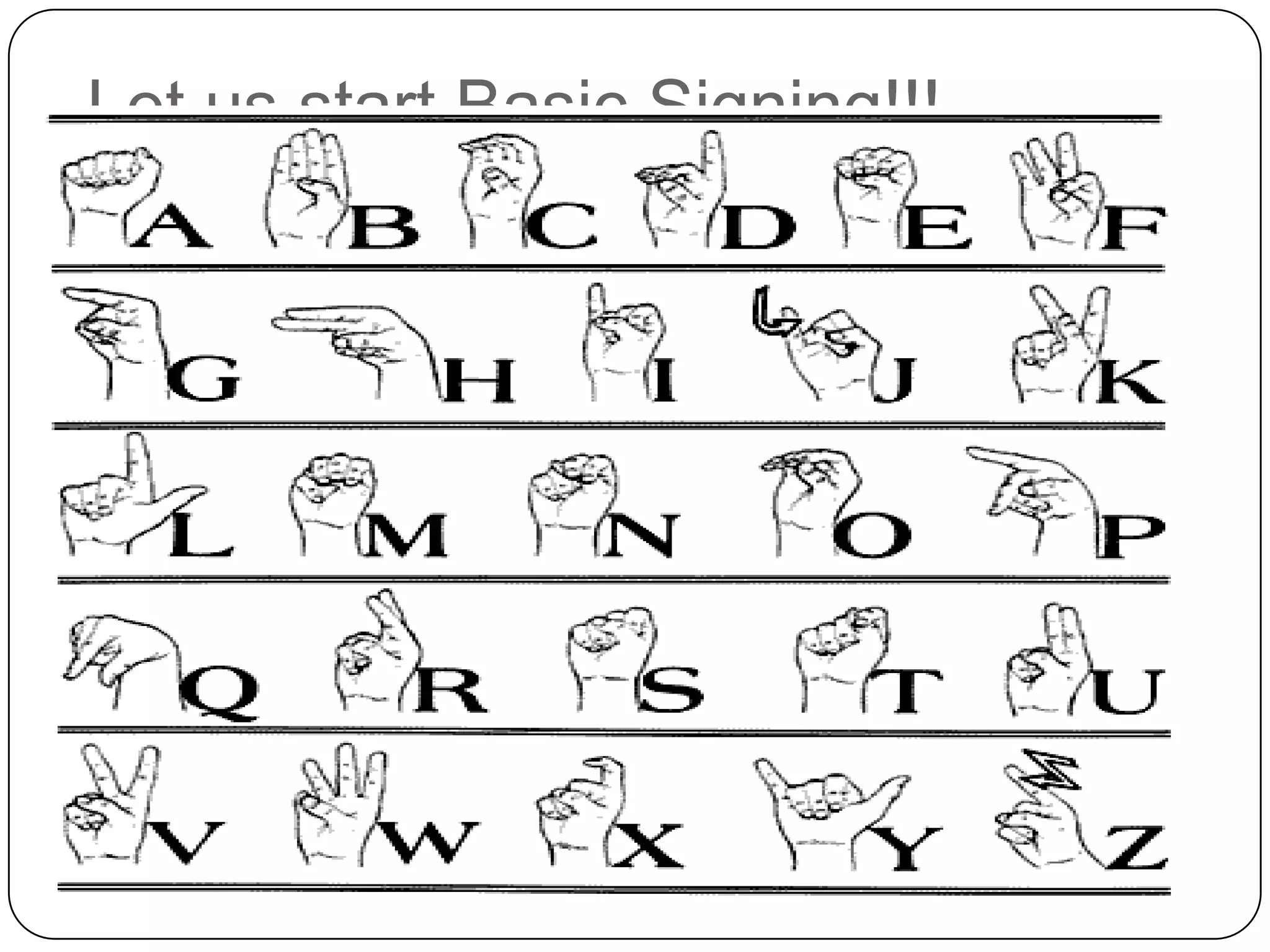
Let us start Basic Signing!!!
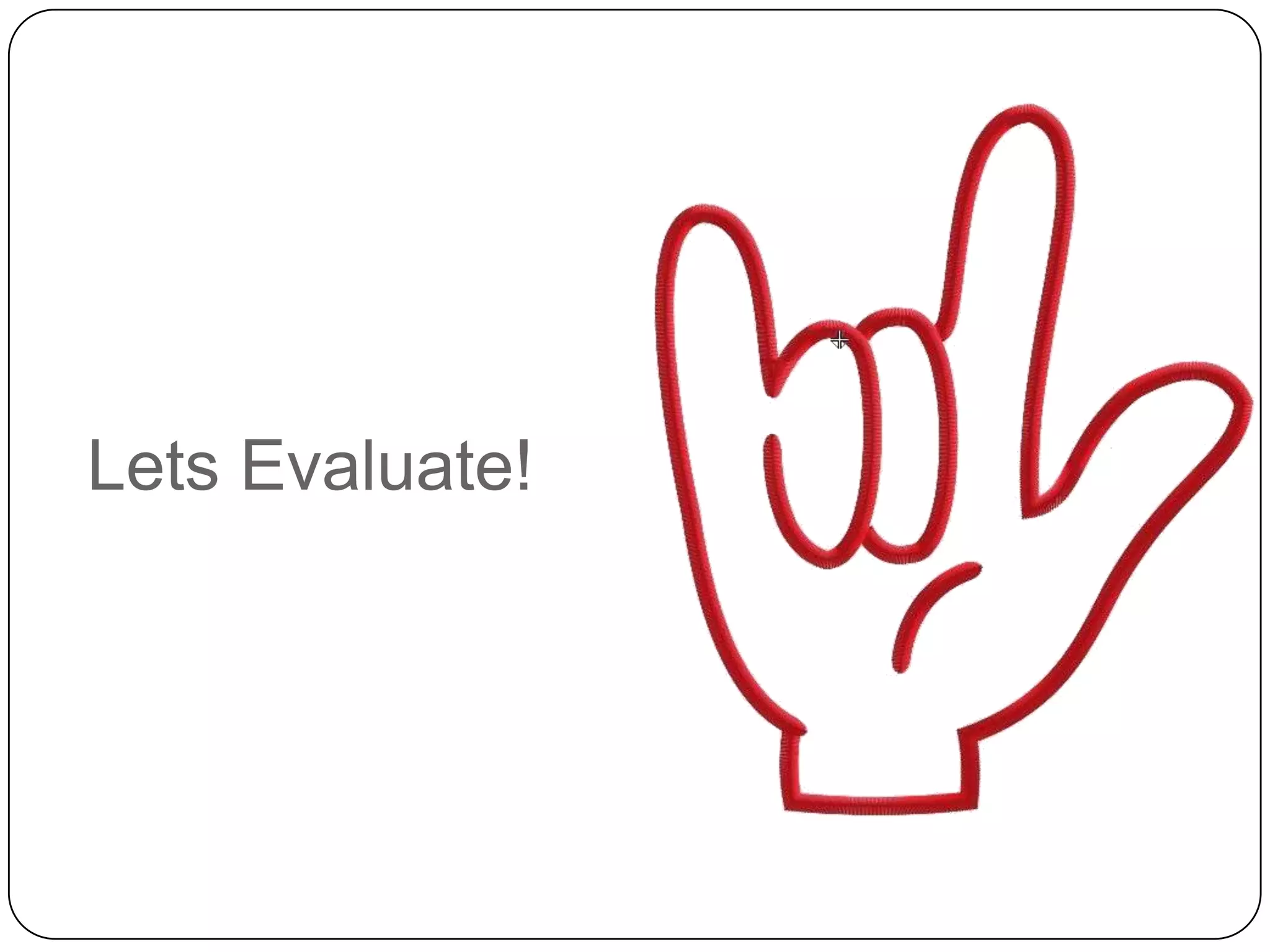
Lets Evaluate!
Now lets try another one!
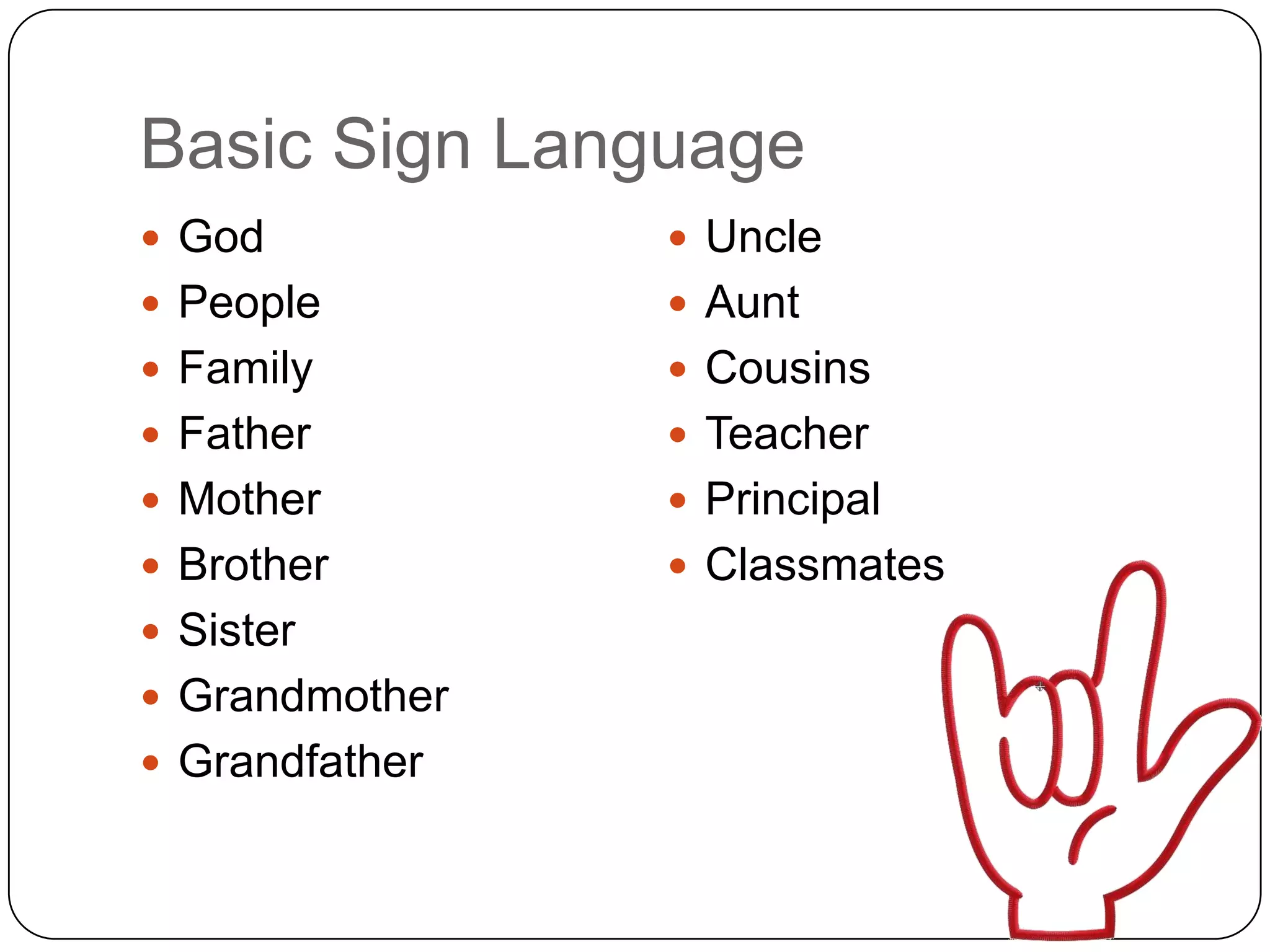
Basic Sign Language
 God            Uncle
 People         Aunt
 Family         Cousins
 Father         Teacher
 Mother         Principal
 Brother        Classmates
 Sister
 Grandmother
 Grandfather
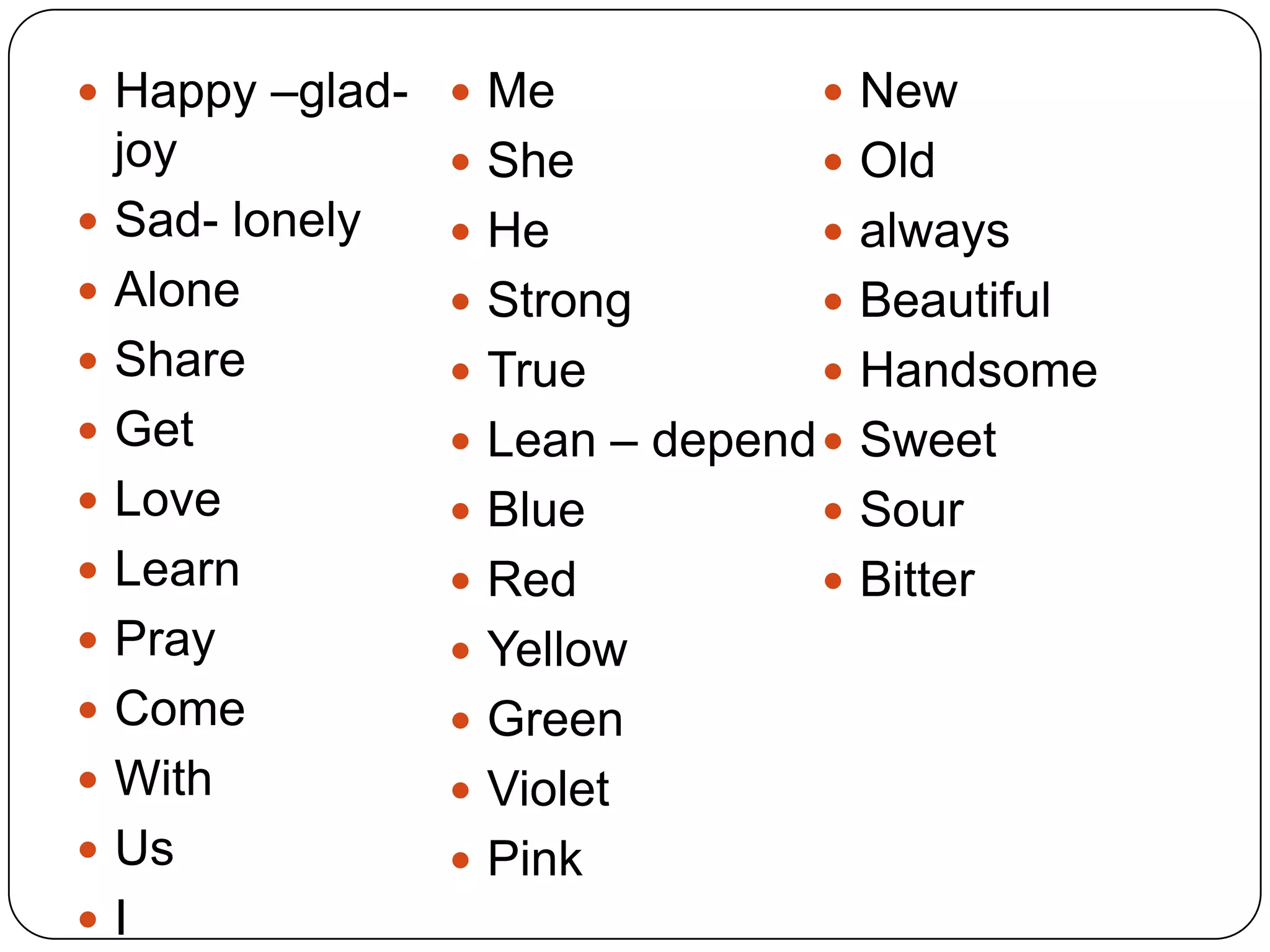
 Happy –glad-  Me               New
    joy            She           Old
   Sad- lonely    He            always
   Alone          Strong        Beautiful
   Share          True          Handsome
   Get            Lean – depend  Sweet
   Love           Blue          Sour
   Learn          Red           Bitter
   Pray           Yellow
   Come           Green
   With           Violet
   Us             Pink
   I
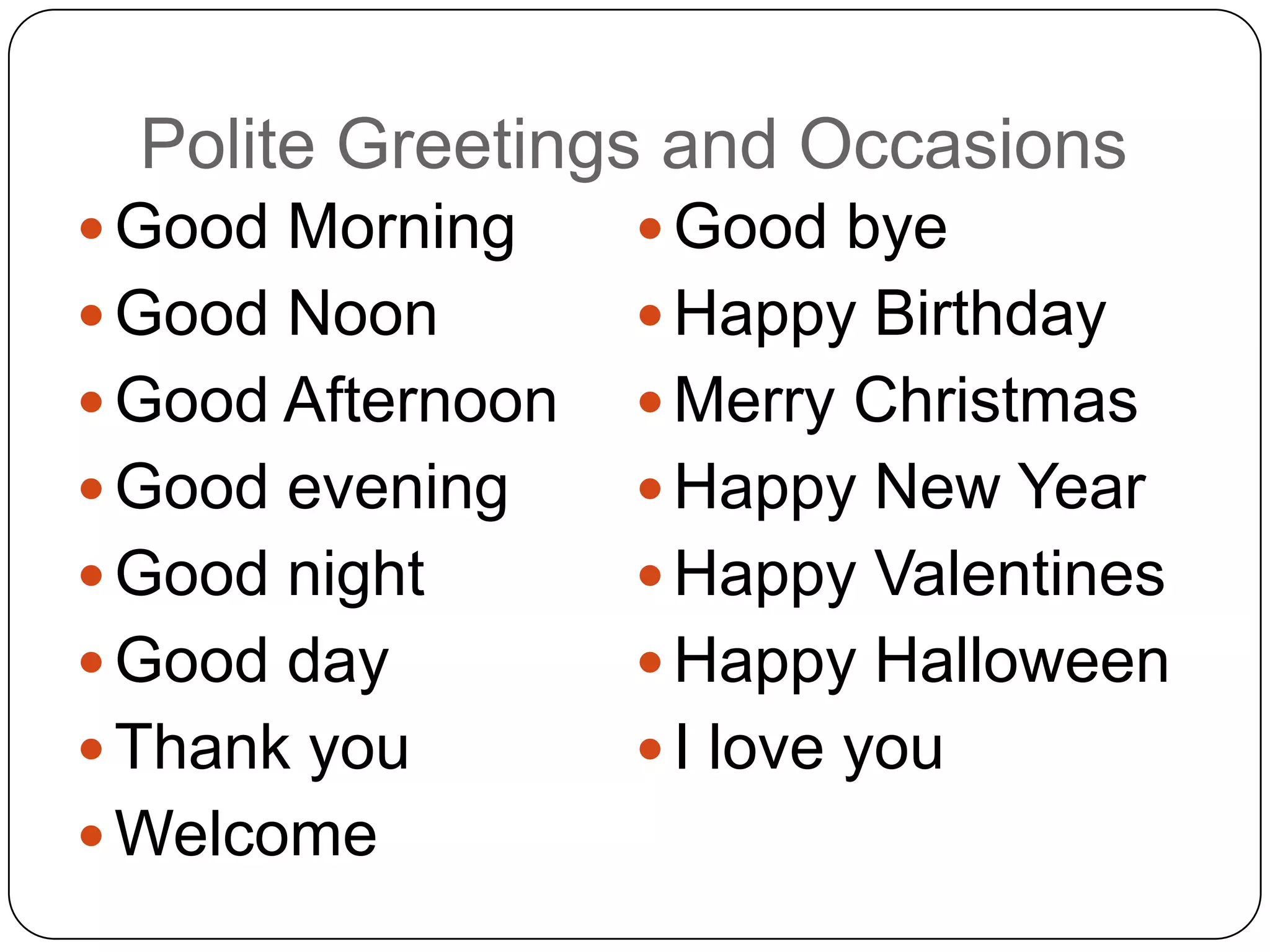
Polite Greetings and Occasions
 Good Morning      Good bye
 Good Noon         Happy Birthday
 Good Afternoon    Merry Christmas
 Good evening      Happy New Year
 Good night        Happy Valentines
 Good day          Happy Halloween
 Thank you         I love you
 Welcome
Lets try to sign a song!
References
 Philippine Registry of Interpreter (PRID) Basic
  Sign Language Manual
 Elements of American Sign Language |
  Suite101 http://suite101.com/article/elements-of-
  american-sign-language-
  a108755#ixzz2H4dWgqPG
 http://en.wikipedia.org/wiki/Deafness#Classificatio
  n
 http://deafness.about.com/od/cuedspeech/Cued_
  Speech.htm

Speaking with our hands

  • 1.
    Speaking with ourHands: Introduction to Basic Sign Language Ms. Kathryn M. Medina Sped Teacher III, Philippine School for the Deaf Level 4- Interpreter, PRID PNASLI, Member
  • 2.
    What is Deafness Deafness, hearing impairment, or hearing loss is a partial or total inability to hear.  Hearing loss exists when there is diminished sensitivity to the sounds normally heard  Deafness is defined as a degree of impairment such that a person is unable to understand speech even in the presence of amplification
  • 3.
    Causes  Age Syndrome  Noise • Neurological  Genetic disorders  Multiple sclerosis  Illness  Stroke  Measles  Medication  Meningitis  Chemicals  Mumps  Head trauma • HIV/ AIDS • Premature birth • Fetal Alcohol
  • 4.
    Level of Deafness . Hearing impairment may be ranked as mild, moderate, moderately severe, severe or profound as defined below:  Mild:  for adults: between 26 and 40 dB HL  for children: between 20 and 40 dB HL  Moderate: between 41 and 54 dB HL  Moderately severe: between 55 and 70 dB HL  Severe: between 71 and 90 dB HL  Profound: 91 dB HL or greater  Totally Deaf: Have no hearing at all.
  • 5.
    Methods in Communicatingwith the Deaf  Communication methods for communicating with deaf and hard of hearng people (and language development) including:  auditory verbal,  cued speech,  sign language, (ASL and /or FSL)  signed exact english,  speech therapy,  speechreading/lipreading,  and total communication.
  • 6.
    What is SignLanguage and how can we use this to our Deaf students / Deaf loved ones?  We can use the following:  American Sign Language  Sign Exact English  Filipino Sign Language
  • 7.
    Things we haveto remember in signing There are five distinct elements to correctly using Sign Language . They are:  Hand Shape  Hand Position  Hand Orientation  Hand Movement  Facial Expression
  • 8.
    Let us startBasic Signing!!!
  • 9.
  • 11.
    Now lets tryanother one!
  • 12.
    Basic Sign Language God  Uncle  People  Aunt  Family  Cousins  Father  Teacher  Mother  Principal  Brother  Classmates  Sister  Grandmother  Grandfather
  • 13.
     Happy –glad- Me  New joy  She  Old  Sad- lonely  He  always  Alone  Strong  Beautiful  Share  True  Handsome  Get  Lean – depend  Sweet  Love  Blue  Sour  Learn  Red  Bitter  Pray  Yellow  Come  Green  With  Violet  Us  Pink  I
  • 14.
    Polite Greetings andOccasions  Good Morning  Good bye  Good Noon  Happy Birthday  Good Afternoon  Merry Christmas  Good evening  Happy New Year  Good night  Happy Valentines  Good day  Happy Halloween  Thank you  I love you  Welcome
  • 15.
    Lets try tosign a song!
  • 16.
    References  Philippine Registryof Interpreter (PRID) Basic Sign Language Manual  Elements of American Sign Language | Suite101 http://suite101.com/article/elements-of- american-sign-language- a108755#ixzz2H4dWgqPG  http://en.wikipedia.org/wiki/Deafness#Classificatio n  http://deafness.about.com/od/cuedspeech/Cued_ Speech.htm