SPARKING Interest:
Engineering and Robotics in the Classroom


                            Joshua Neudel
                              edJewcon
                             April30, 2012
The Big Questions
• Why is it valuable to teach Engineering and
  Robotics
• What hurdles are there to implement these
  programs
• What skills will students learn?
• How do you assess student work?
A little about myself…
• Gann Academy Science Chair
     • Grades 9th-12th
     • Chemistry, Physics, Engineering


• Boston University College of Engineering
     • Udesign RoboAlley
     • Grades 6th-9th
Common Experiences
• Existing Programs at our            • Benefits of Rob./Eng.
  schools                               Program
   – Use KINEX to teach simple           –   Application of Science
     machines                            –   Problem Solving
   – Building Rube Goldberg              –   Creativity
     Machines- Simple Machines           –   Logical Thinking
   – Build a roller coaster              –   Engineering Design Process
     (cardboard, duct tape, plastic
     tubing                              –   Collaborative Working
   – Whizball and Lego Digital           –   Developing Physical Skills
     Designer                            –   Working with tools
   – Lego Mindstorm(programmig
     RoboLab, Scratch, wedo, NXC,
     RobotC)
   – Earthquake Building
     Resistance Design
Why teach Engineering?
• Why is this a subject area worth including?
• What does it take to be successful?
• What skills are we trying to teach students
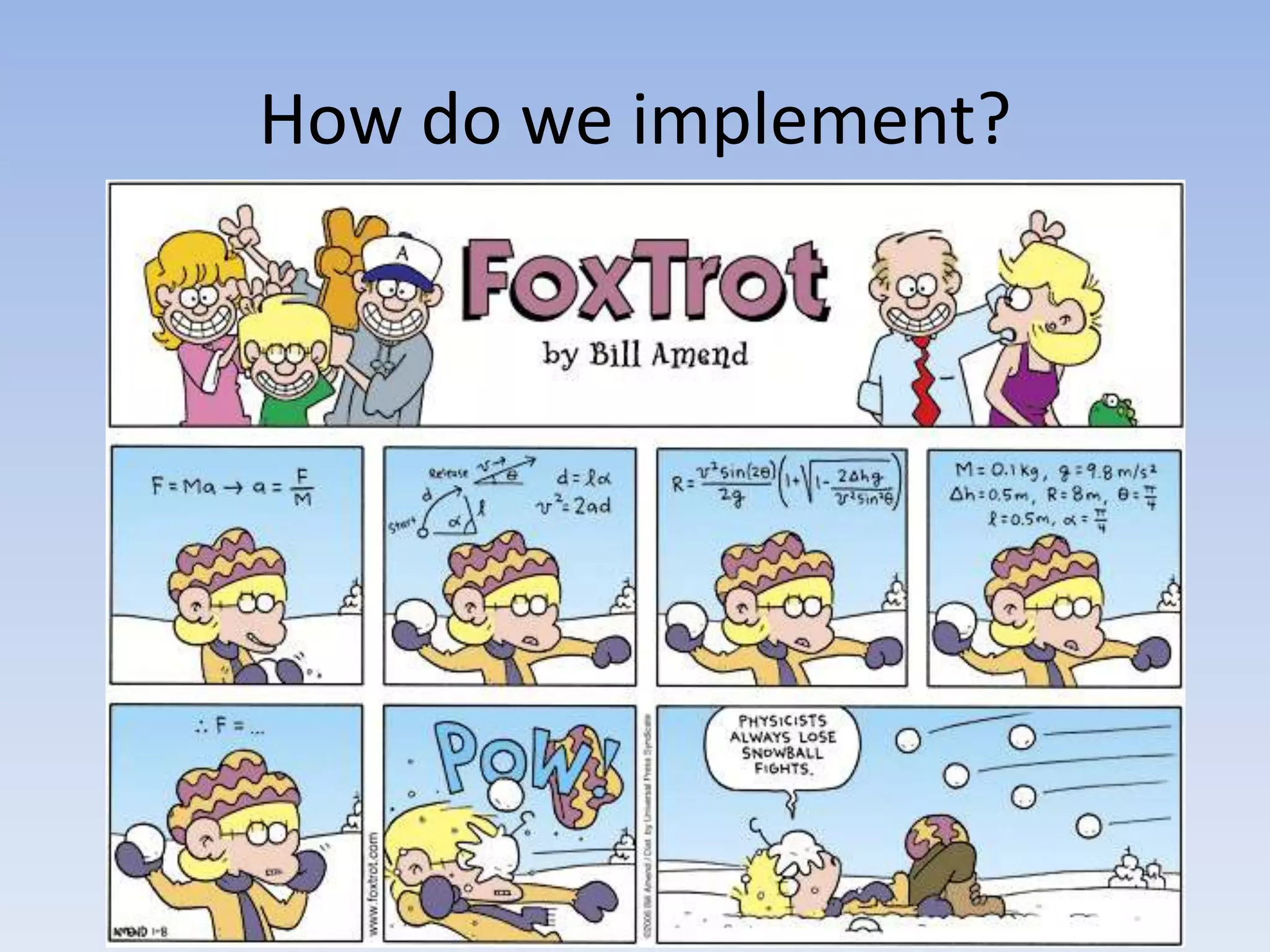
How do we implement?
• What are the challenges to implement?
     • Costs involved?
        – Use community resources to help support programs
     • Types of programs/activities
     • How do you staff?
     • What are your department’s goals
How Do We Assess
•   What are the challenges of grading projects?
•   How do you grade creativity?
•   What types of rubrics are needed?
•   What are you assessing?
Some Resources
• Supply Resources:
      •   McMaster-Carr: www.mcmaster.com
      •   Jameco: www.jameco.com
      •   SparkFun: www.sparkfun.com
      •   Lego Mindstorms: http://mindstorms.lego.com
• Programmatic Resources:
      •   USFIRST: www.usfirst.org
      •   VEX Robotics: www.vexrobotics.com
      •   Invent America: www.inventamerica.org
      •   Rocketry: www.nar.org/competition/index.html
      •   NASA Sites:
            – http://www.nasa.gov/audience/foreducators/rocketry/multimedia/index
              .html
            – www.grc.nasa.gov/WWW/K-12/aerores.htm
Things to Think About
•   The work is in the preparation…
•   Are you willing to give up control…
•   The teachable moments are in the mistakes…
•   The value is in the process…
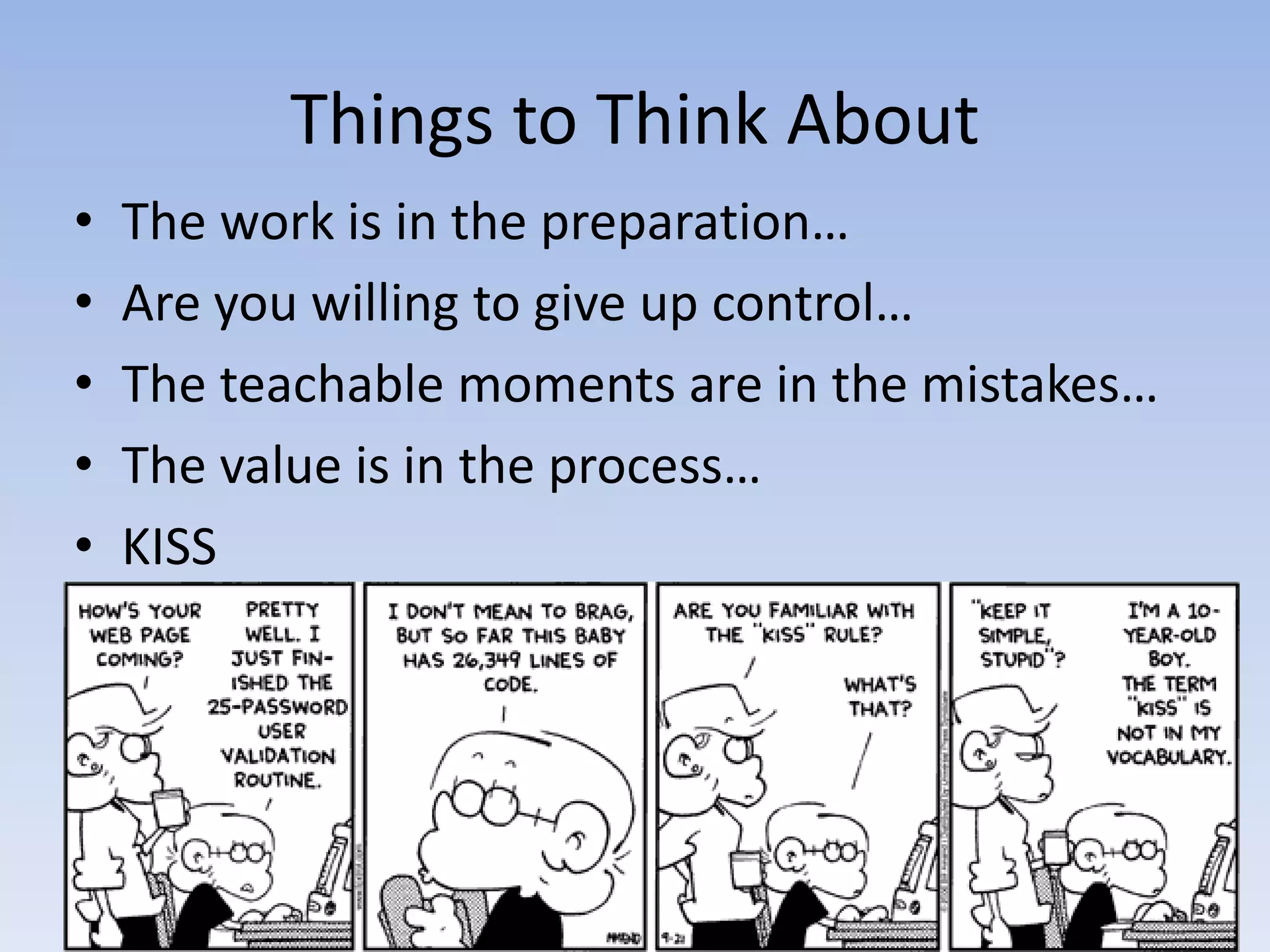
•   KISS

Sparking interest engineering and robotics in the classro

  • 1.
    SPARKING Interest: Engineering andRobotics in the Classroom Joshua Neudel edJewcon April30, 2012
  • 2.
    The Big Questions •Why is it valuable to teach Engineering and Robotics • What hurdles are there to implement these programs • What skills will students learn? • How do you assess student work?
  • 3.
    A little aboutmyself… • Gann Academy Science Chair • Grades 9th-12th • Chemistry, Physics, Engineering • Boston University College of Engineering • Udesign RoboAlley • Grades 6th-9th
  • 5.
    Common Experiences • ExistingPrograms at our • Benefits of Rob./Eng. schools Program – Use KINEX to teach simple – Application of Science machines – Problem Solving – Building Rube Goldberg – Creativity Machines- Simple Machines – Logical Thinking – Build a roller coaster – Engineering Design Process (cardboard, duct tape, plastic tubing – Collaborative Working – Whizball and Lego Digital – Developing Physical Skills Designer – Working with tools – Lego Mindstorm(programmig RoboLab, Scratch, wedo, NXC, RobotC) – Earthquake Building Resistance Design
  • 6.
    Why teach Engineering? •Why is this a subject area worth including? • What does it take to be successful? • What skills are we trying to teach students
  • 7.
    How do weimplement?
  • 8.
    How do weimplement? • What are the challenges to implement? • Costs involved? – Use community resources to help support programs • Types of programs/activities • How do you staff? • What are your department’s goals
  • 9.
    How Do WeAssess • What are the challenges of grading projects? • How do you grade creativity? • What types of rubrics are needed? • What are you assessing?
  • 10.
    Some Resources • SupplyResources: • McMaster-Carr: www.mcmaster.com • Jameco: www.jameco.com • SparkFun: www.sparkfun.com • Lego Mindstorms: http://mindstorms.lego.com • Programmatic Resources: • USFIRST: www.usfirst.org • VEX Robotics: www.vexrobotics.com • Invent America: www.inventamerica.org • Rocketry: www.nar.org/competition/index.html • NASA Sites: – http://www.nasa.gov/audience/foreducators/rocketry/multimedia/index .html – www.grc.nasa.gov/WWW/K-12/aerores.htm
  • 11.
    Things to ThinkAbout • The work is in the preparation… • Are you willing to give up control… • The teachable moments are in the mistakes… • The value is in the process… • KISS