By: Gloria Allen
       &
Anne Hathaway
 Location
 Climate
 Animals
 Plants
 Soil
 Landforms
 References
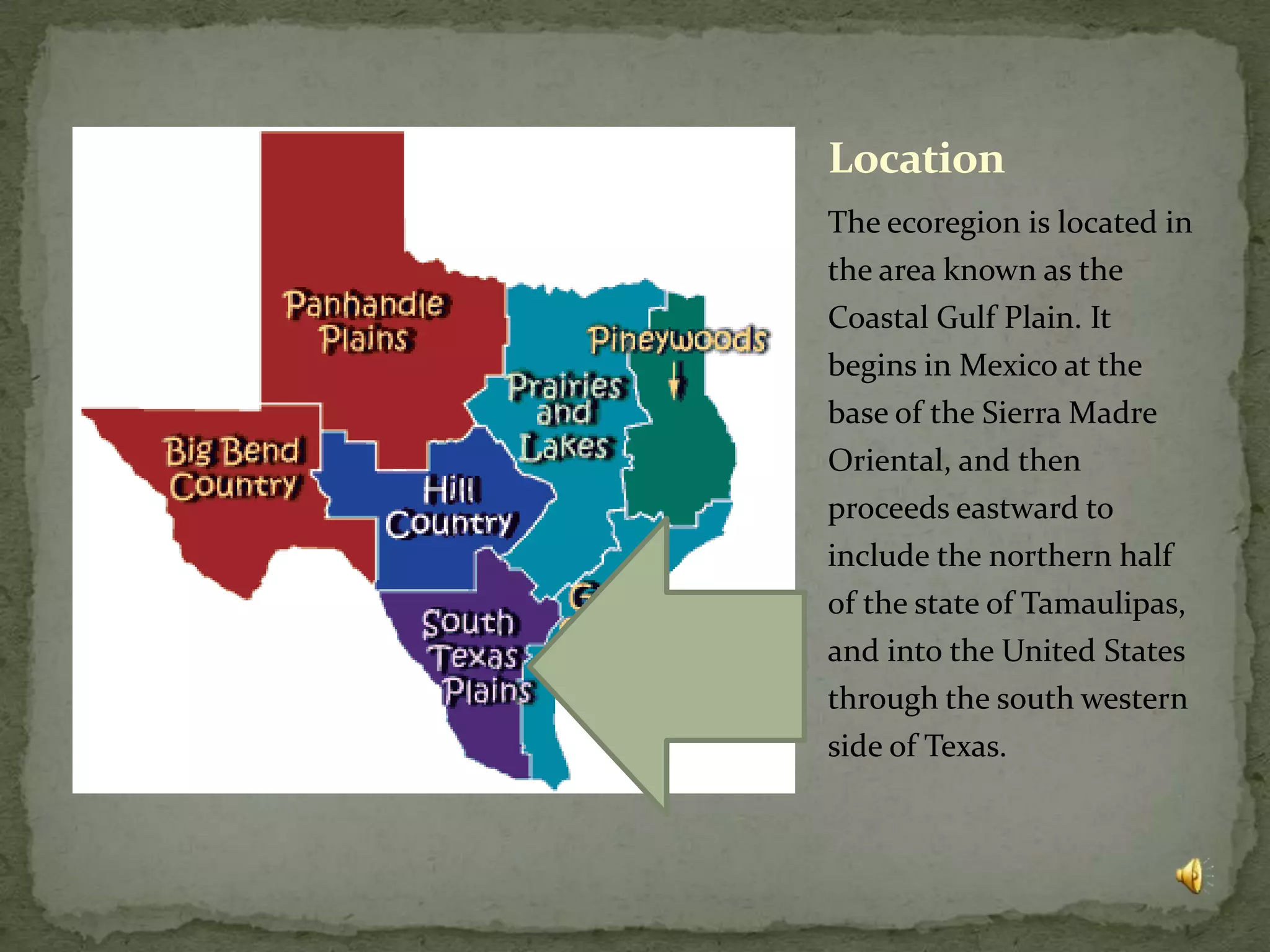
Location
The ecoregion is located in
the area known as the
Coastal Gulf Plain. It
begins in Mexico at the
base of the Sierra Madre
Oriental, and then
proceeds eastward to
include the northern half
of the state of Tamaulipas,
and into the United States
through the south western
side of Texas.
Climate
The summer temperatures are high with very high evaporation rates . This leads to dry
soil.
The average monthly
rainfall is lowest
during winter, and
highest during spring
and fall. Some of the
catastrophic events
that happen here are
frequent flooding and
wildfires.
The average annual
rainfall is 16 to 35
inches and increases
from west to east.
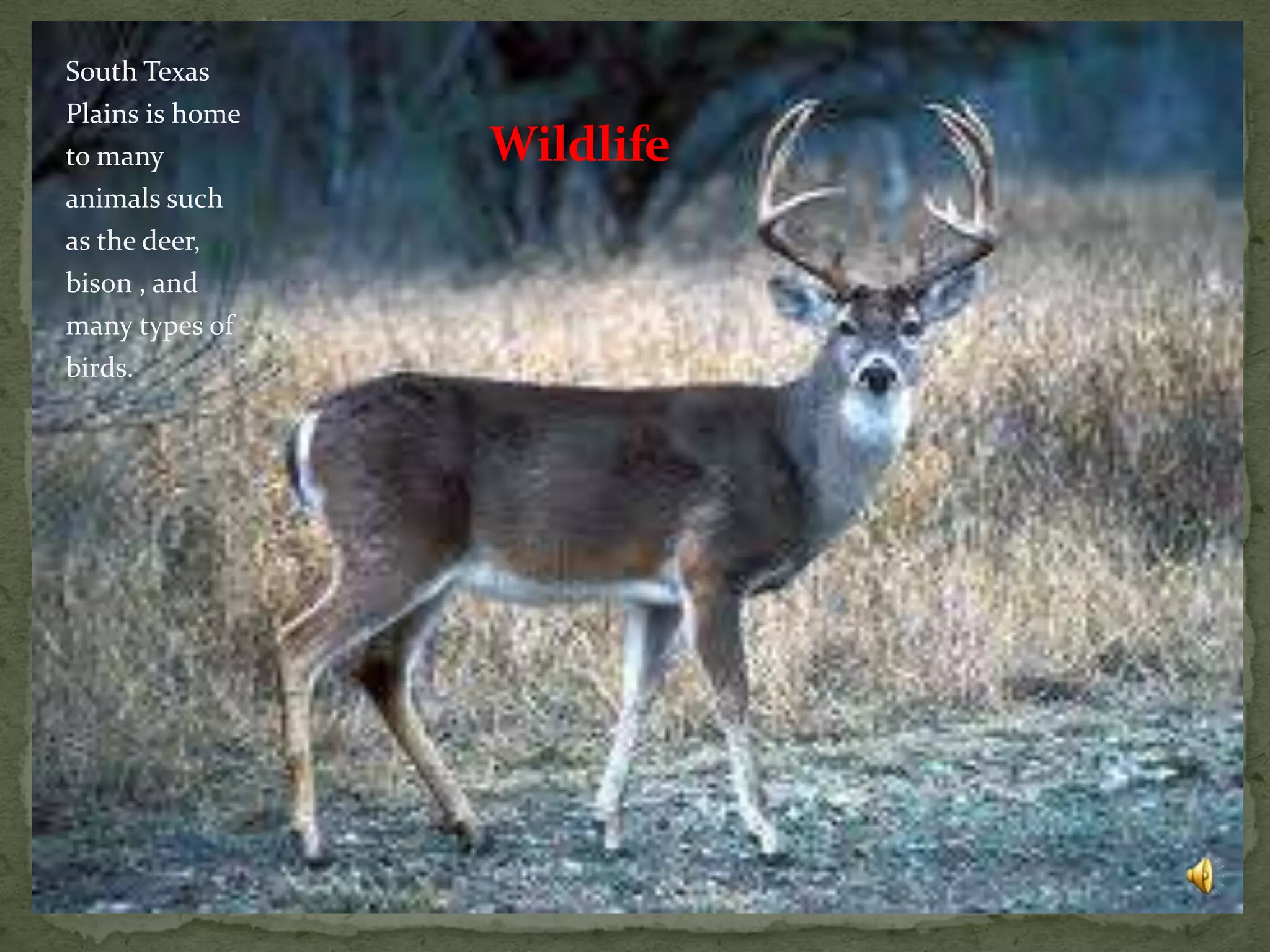
South Texas
Plains is home
to many          Wildlife
animals such
as the deer,
bison , and
many types of
birds.
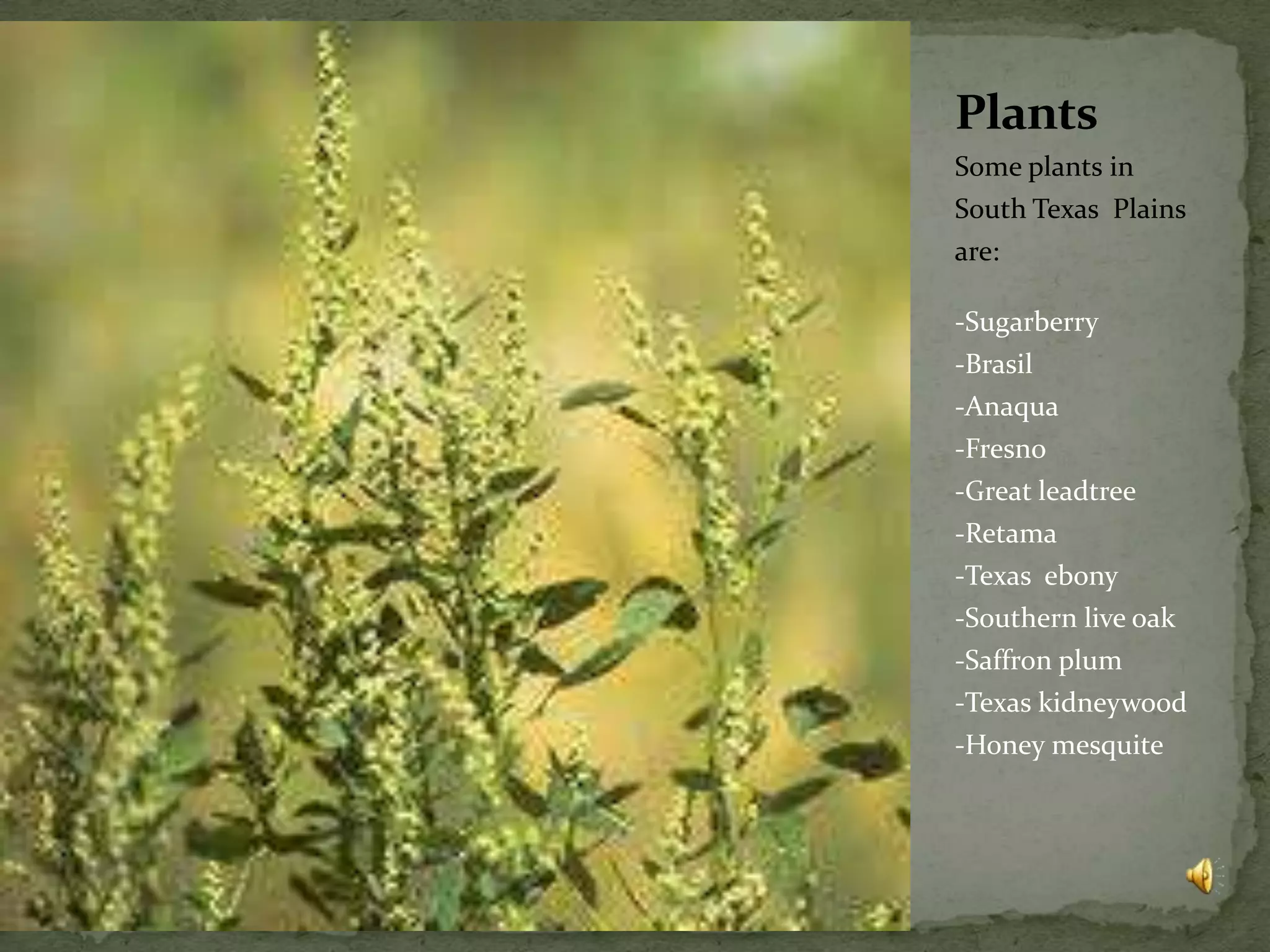
Plants
Some plants in
South Texas Plains
are:

-Sugarberry
-Brasil
-Anaqua
-Fresno
-Great leadtree
-Retama
-Texas ebony
-Southern live oak
-Saffron plum
-Texas kidneywood
-Honey mesquite
 -Texas wild olive
 -Desert yaupon
 -Fiddlewood Duckweed
 -Saltmarsh spikerush
 -Common cattail
 -Smartweed
 -Wax myrtle
 -Plantain
 -Silverleaf sunflower
 -Panic grass
Soil
The soil is
alkaline to
slightly
acidic clays
and clay
loams and
shallow
caliche
soils.
Landforms
The South Texas Plains are
characterized by plains of
thorny shrubs and trees and
scattered patches of palms
and woodlands in the Rio
Grande Valley. The plains
were once covered with open
grasslands and a scattering of
trees, and the valley
woodlands once covered large
areas. Today, the primary
vegetation consists of thorny
brush such as mesquite,
acacia, and prickly pear mixed
with areas of grassland.
   Ecoregions of Texas,
    http://www.google.com/url?sa=t&rct=j&q=&esrc=s&source=web&cd=13&ved=0CEYQFjACOAo&url=h
    ttp%3A%2F%2Fwww.caddomillsisd.org%2F10092081091028363%2Flib%2F10092081091028363%2F_file
    s%2FEcoregions_of_Texas_PP.ppt&ei=kFHdTtnpJoODtgfTwfWWCw&usg=AFQjCNFMybAbVcfCS0M
    LfLaRHd7D_1XG1w&sig2=d-SB0EOsfpRlK3fChxyCwQ
   South Texas Plains, http://www.tpwd.state.tx.us/kids/about_texas/regions/south_texas/big_kids/
   DATA TABLE Catastrophic Event Texas Regions,
    http://campuses.fortbendisd.com/campuses/documents/Teacher/2011%5Cteacher_20110908_0942.pd
    f
   Texas Beyond History South Texas Plains, http://www.texasbeyondhistory.net/st-
    plains/nature/plants.html
   World Wildlife Tamaulipan mezquital,
    http://www.worldwildlife.org/wildworld/profiles/terrestrial/na/na1312_full.html
   Google images

South texas plains

  • 1.
    By: Gloria Allen & Anne Hathaway
  • 2.
     Location  Climate Animals  Plants  Soil  Landforms  References
  • 3.
    Location The ecoregion islocated in the area known as the Coastal Gulf Plain. It begins in Mexico at the base of the Sierra Madre Oriental, and then proceeds eastward to include the northern half of the state of Tamaulipas, and into the United States through the south western side of Texas.
  • 4.
    Climate The summer temperaturesare high with very high evaporation rates . This leads to dry soil. The average monthly rainfall is lowest during winter, and highest during spring and fall. Some of the catastrophic events that happen here are frequent flooding and wildfires. The average annual rainfall is 16 to 35 inches and increases from west to east.
  • 5.
    South Texas Plains ishome to many Wildlife animals such as the deer, bison , and many types of birds.
  • 6.
    Plants Some plants in SouthTexas Plains are: -Sugarberry -Brasil -Anaqua -Fresno -Great leadtree -Retama -Texas ebony -Southern live oak -Saffron plum -Texas kidneywood -Honey mesquite
  • 7.
     -Texas wildolive -Desert yaupon -Fiddlewood Duckweed -Saltmarsh spikerush -Common cattail -Smartweed -Wax myrtle -Plantain -Silverleaf sunflower -Panic grass
  • 8.
    Soil The soil is alkalineto slightly acidic clays and clay loams and shallow caliche soils.
  • 9.
    Landforms The South TexasPlains are characterized by plains of thorny shrubs and trees and scattered patches of palms and woodlands in the Rio Grande Valley. The plains were once covered with open grasslands and a scattering of trees, and the valley woodlands once covered large areas. Today, the primary vegetation consists of thorny brush such as mesquite, acacia, and prickly pear mixed with areas of grassland.
  • 10.
    Ecoregions of Texas, http://www.google.com/url?sa=t&rct=j&q=&esrc=s&source=web&cd=13&ved=0CEYQFjACOAo&url=h ttp%3A%2F%2Fwww.caddomillsisd.org%2F10092081091028363%2Flib%2F10092081091028363%2F_file s%2FEcoregions_of_Texas_PP.ppt&ei=kFHdTtnpJoODtgfTwfWWCw&usg=AFQjCNFMybAbVcfCS0M LfLaRHd7D_1XG1w&sig2=d-SB0EOsfpRlK3fChxyCwQ  South Texas Plains, http://www.tpwd.state.tx.us/kids/about_texas/regions/south_texas/big_kids/  DATA TABLE Catastrophic Event Texas Regions, http://campuses.fortbendisd.com/campuses/documents/Teacher/2011%5Cteacher_20110908_0942.pd f  Texas Beyond History South Texas Plains, http://www.texasbeyondhistory.net/st- plains/nature/plants.html  World Wildlife Tamaulipan mezquital, http://www.worldwildlife.org/wildworld/profiles/terrestrial/na/na1312_full.html  Google images