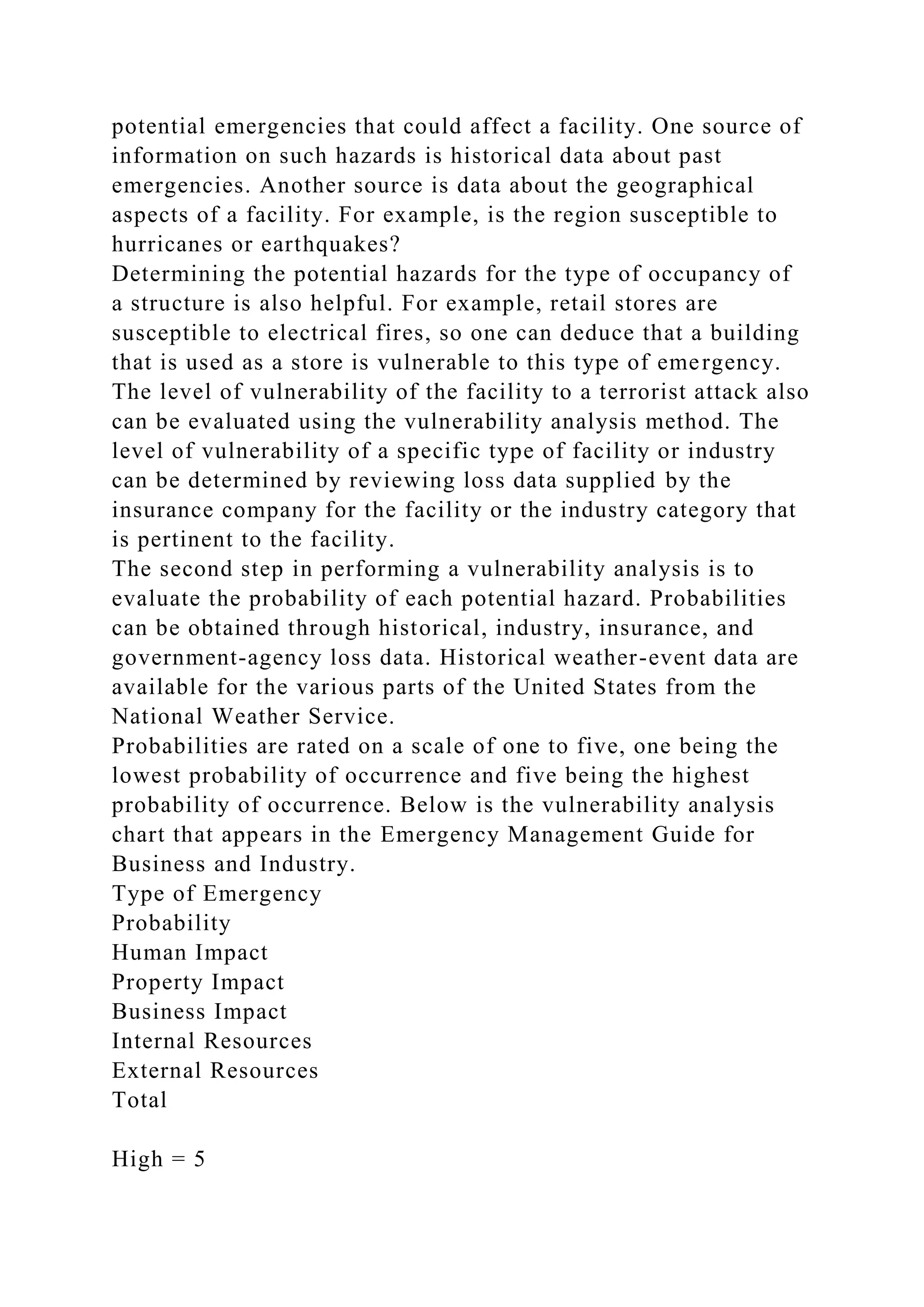
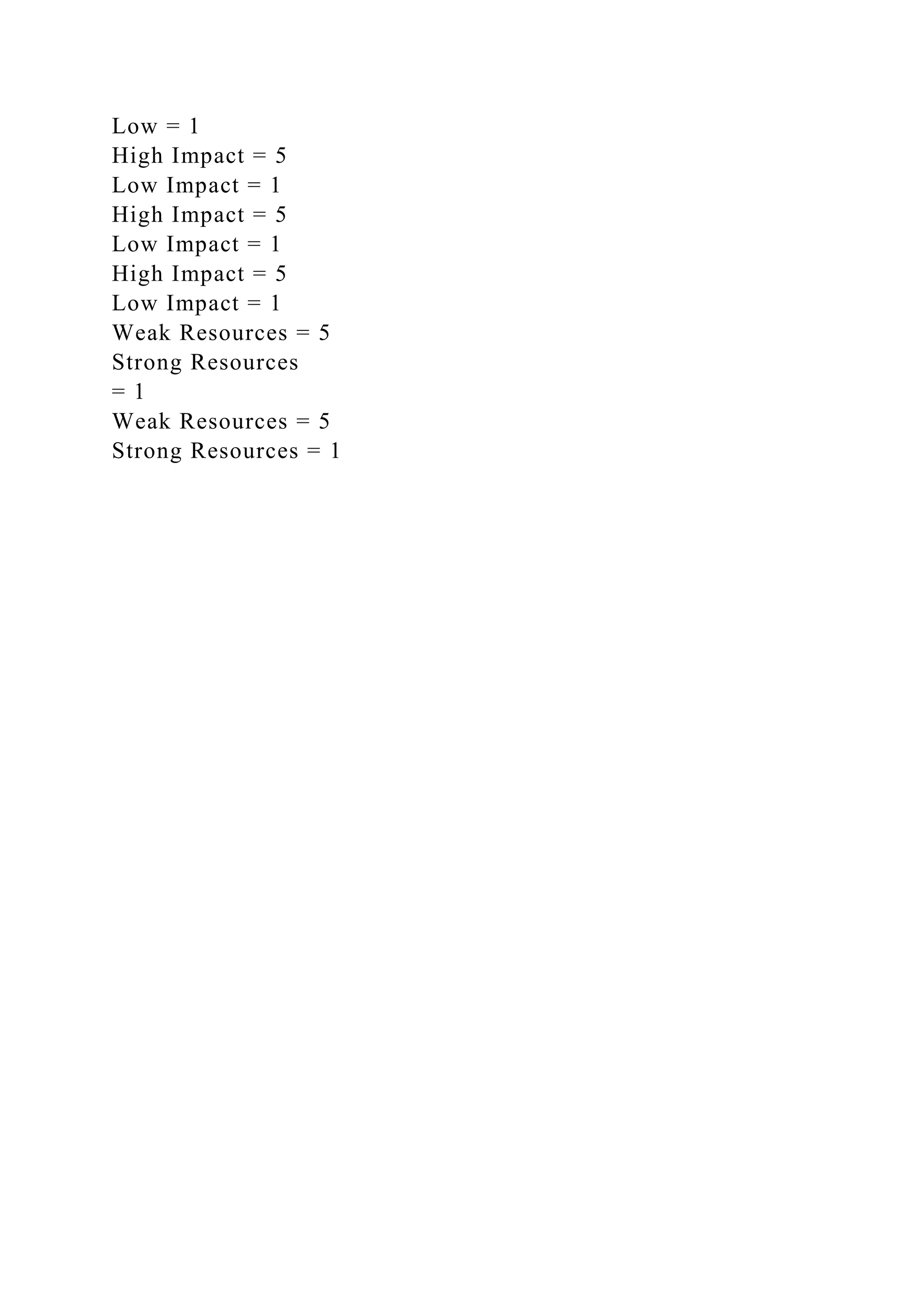
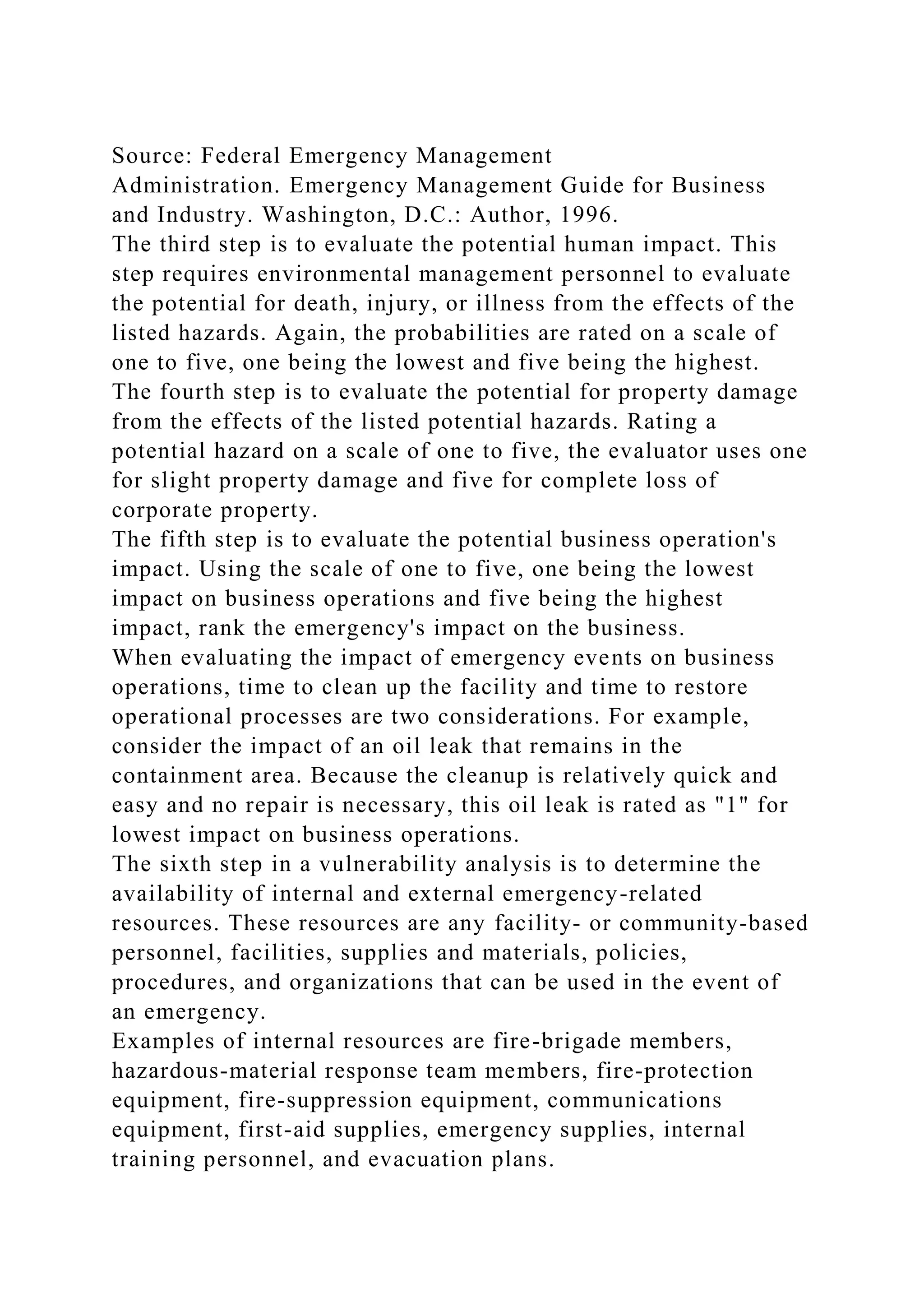
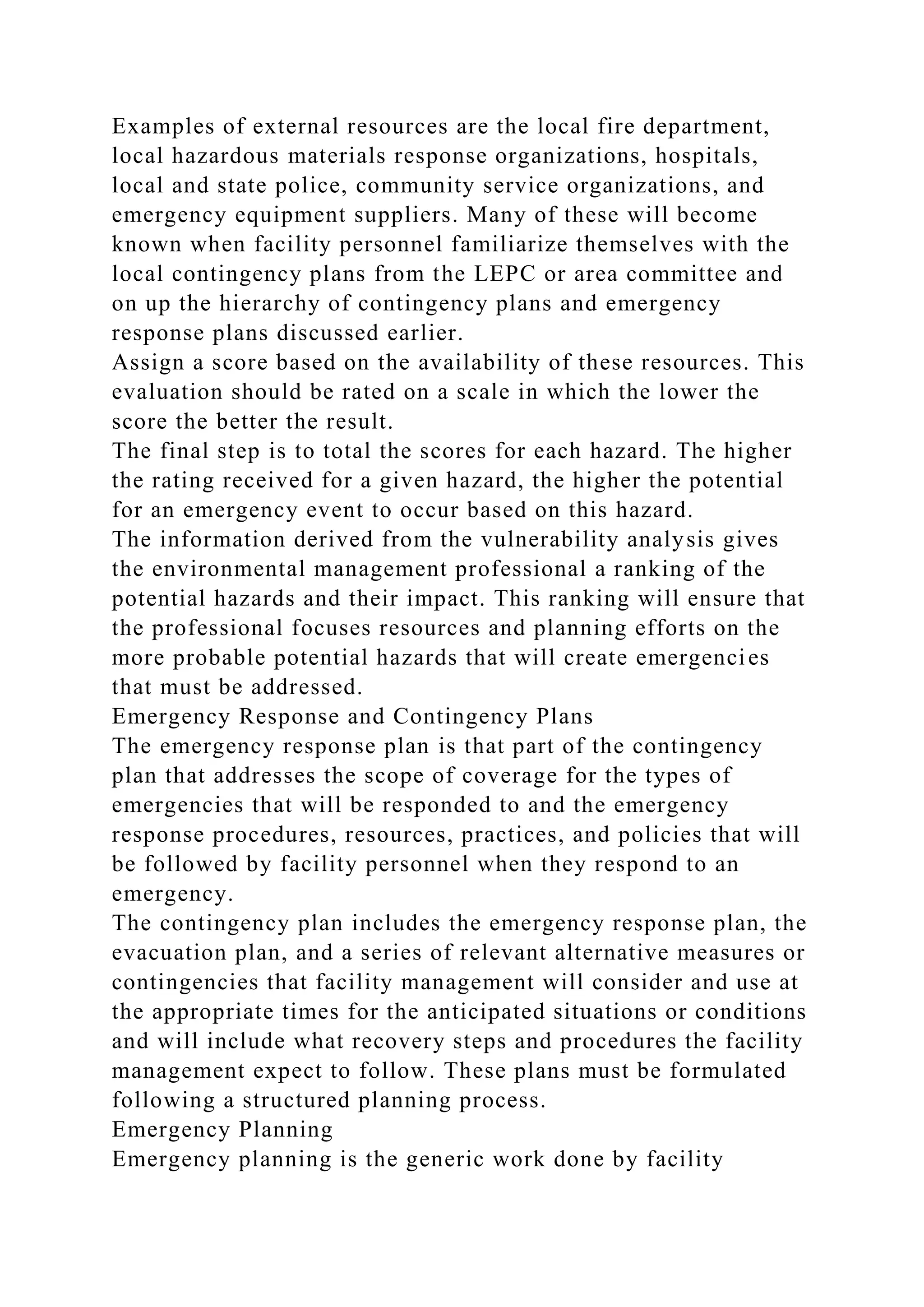
Sources:
“Inequality and the American Dream.” The Economist.com, 15
Jun 2016, www.economist.com/leaders/2006/06/15/inequality-
and-the-american-dream.
Kornbulh, Karen. “Win-Win Flexibility: A Policy Proposal.”
NewAmerican.org, New America Foundation, June 2005,
www.newamerica.org/documents/356/win-win-flexibility-a-
policy-proposal.
Suroowiecki, James. “A Fair Days Wage.” NewYorker.com¸ 9
Feb. 2015, www.newyorker.com/magazine/2015/02/09/fair-
days-wage.
Prompt
The Economist editorial discusses the general trend in America
of increasing economic inequality and its relationship to the
American Dream of making it big, ending with suggestions for
government safety-net programs. The Kornbluh and Surowiecki
essays also note increasing inequality and propose or argue for
specific policies on the part of companies to aid in the lives of
their employees.
Basing your response on the readings, answer the following
question: To what extent do you think that employers or the
government should intervene to improve the lives of ordinary
Americans? Which of the proposed remedies do you think will
have the most positive effects on people and best address
economic inequality? What other consequences might any of
these remedies have? You may also argue for a different
proposal after first arguing against the ones proposed in the
readings. Be sure that your resulting essay includes and
addresses ideas from all three of the sources and cites them
appropriately.
Follow these guidelines below in completing your response
1) Write on regular notebook paper. Your instructor will inform
you how to format the exam in terms of where to place your
MSU ID number and course section number.
2) Strive to produce a 400- to 500-word response.
3) Write on one side of the paper and skip every other line.
4) Write in ink only. Should you need to make changes in your
draft, draw two or three lines through any changes/deletions you
wish to make. Arrows indicating insertions are acceptable
provided their path is easy to follow.
5) Demonstrate your understanding of MLA citation form by
using in-text citations (Number the pages “1” and “2” to
indicate the front and back of an article if necessary).
Construct a Works Cited page based upon the citations at the
top of the first page of the test prompt under the title of the
article. Instead of copying the long url, you are permitted to
shorten it to the elements in blue bold face.
6) You may make use of a dictionary and thesaurus during the
exam period
Module 1: Introduction to Emergency Management
Topics
I. What Is Emergency Management?
II. The Contingency Plan
III. Introduction to Federal and State Government Emergency
Management Programs and Emergency Response Plans
IV. Federal Emergency Management Plans
V. State and Local Plans
VI. Facility or Employer Plans
VII. Federal Disaster Investigative Agencies
VIII. Brief Introduction to National Voluntary Standards, Trade
Associations' Programs, and International Programs
IX. International Programs
X. Hazard Analysis, Risk Analysis, and Risk Management
XI. The DOT Emergency Response Guidebook
In this module, we introduce the basic elements of emergency
management and discuss briefly the breadth and depth of
emergency planning and preparedness. We will use the
term preplan to refer to the preparedness and prevention plan.
Emergency management involves management preparations for
anticipated emergencies that include a pre-emergency planning
document called a contingency plan. The contingency plan
describes how to deal with
· potential man-made hazards, such as fires, explosions,
terrorist attacks, or vessel failures that release hazardous
materials
· potential hazards caused by nature, including those caused by
weather, such as floods, or those caused by natural phenomena,
such as erupting volcanoes
I. What Is Emergency Management?
For our purposes in this course, we can define emergency as an
unplanned or unintended event, terrorist incident, or disaster
that creates a hazard. Emergency management is the art and
practice of assessing or evaluating these hazards and
implementing methods called controls to protect people,
property, and the environment.
The assessment and evaluation of serious hazards should be
systematic, and the steps taken should be documented
appropriately. Emergency management staff convert this
documentation into a contingency plan for these events. The
objective of the plan is to keep people, the community, the
business, and the environment safe even if a disaster or near-
disaster occurs that could harm them. Out of the formal
emergency management plan emerges a contingency plan, which
details the steps for mitigating the consequences of exposure to
serious hazards.
The first part of the contingency plan is a preplan describing the
pre-positioning of emergency equipment and supplies and
strategies for handling anticipated emergencies.
The second part of the contingency plan describes the handling
of the actual emergency and states clearly who is in charge of
an emergency, for example at a facility site. This part of the
plan details who does what during the actual emergency and
lists the procedures to be followed to protect the emergency
responders, the property, and environment during the actual
emergency.
The recovery plan is the second part of the emergency
management plan but it is often overlooked when the emergency
management plan or the contingency plan is assembled. The
recovery plan describes how to provide relief for those who are
adversely affected by the release or the harmful event and to get
the business or entity back in operation.
The graphic below gives a general idea of what constitutes a
contingency plan.
II. The Contingency Plan
The principle document of emergency management is the
contingency plan, which includes various contingencies to
address specific types of emergencies anticipated by the
organization or planning group. These plans must be as simple
as possible while providing adequate guidance to those in
charge of handling the emergency. A simple plan is much easier
to implement during an emergency than a complex one.
The contingency plan for each facility should be coordinated
with the contingency plan for the local community to better
assure that community assets for emergencies are made more
readily available to the facility if and when emergency strikes.
This is also true for larger emergencies and disasters up to and
including states coordinating their plans with the federal
regional plans.
Each contingency plan must include a chapter or section
addressing the emergency response so that all the necessary
notifications are made, the means for obtaining the resources
required to control the event are clear, and the line authority is
established for managing the emergency event. The plan must
also describe what recovery efforts will be undertaken, the ways
in which victims will be cared for in the aftermath, and the
means for restoring the business or other entity.
Priorities of Emergency Management
The contingency plan has several priorities that are ranked
hierarchically. They are
1. protecting the lives of people and animals
2. protecting property
3. protecting the environment
We will discuss each of these below.
First Priority—Protecting the Lives of People and Animals
The most important priority of emergency management is
protecting lives. When there is an emergency incident and a loss
of life, the contingency plan must include the steps emergency
responders are expected to take to handle the situation.
Human lives must be protected and saved if at all possible,
short of sacrificing the lives of rescuers for the lives of the
victims of the incident. Humans are naturally motivated to
protect themselves, their families, and their friends from harm.
This motivation often expands to include protecting one's
neighbors and communities. Some of this protection is
government mandated. The goal is for all involved parties to
work together, following the contingency plan and using
available resources to handle emergencies to protect the
community, the company, and themselves. A related goal is to
prevent the disaster from spreading to nearby areas.
When the recovery of human remains is involved, personnel
must respect the dignity of the victims and the victims' families
and friends. It is critical for emergency response personnel to be
professional and mindful of how their recovery actions may be
perceived by the family, the media, and the general public.
A subpriority is saving the lives of companion animals or pets.
If present, the protection of other animals such as farm animals,
zoo animals, and wildlife should also be addressed in this
section or chapter of the contingency plan.
Second Priority—Protecting Property
The second most important priority is to protect property and
other physical assets from destruction or damage. The objective
of this priority is to describe within the contingency plan the
steps to be taken to protect property from harm, whether it be an
original copy of the Declaration of Independence or a business's
computer network, machinery, or inventory. (This property-
protection priority builds on the self-protection and self-
preservation motivation.)
Property should not, however, be protected at the expense of
lives or the environment. Remember that protecting wildlife—
including life in bodies of water—is part of the first priority.
This property-protection element of the contingency plan should
describe cooperative efforts and laws and regulations requiring
private and public enterprises to contribute to the overall level
of preparedness to help protect the community at large.
Building and fire codes are examples of government regulations
designed to help protect property as well as lives. Each entity
should help the community to better handle anticipated
emergencies.
Third Priority—Protecting the Environment
The last priority discussed in the contingency plan is protection
of the environment. Again, various laws require private and
public enterprises to work together to protect sensitive
environmental areas or to minimize any harm to the
environment in general. These laws and regulations also
mandate emergency response and recovery planning to better
assure quick, effective response to minimize potential
environmental damage if and when an emergency incident
occurs.
Within the environmental protection priority are the following
subpriorities:
1. protecting sensitive wilderness areas
2. protecting areas in which people make a living, such as
waterways in which shellfish or fish are caught
3. protecting the overall environment of the local or larger
community
Applying the Priorities
All three of these basic elements of emergency management—
the protection of lives, property, and the environment—must be
considered fully in every major emergency that occurs within
the local community, and so these basic elements must be
addressed in the contingency plan.
Small emergencies that may occur within a plant or building
may have little effect on the environment. Those emergencies
that begin in or spread to the external environment require
emergency management staff to consider their impact on the
environment as well as on life and property. Emergency
management responsibilities include anticipating realistic
extensions of a given emergency and planning for them. Such
extensions must be addressed in the contingency plan when it is
first written and when it is revised.
To put these basic priorities and their subpriorities into a
meaningful hierarchy, the planner must evaluate systematically
those hazards or events the contingency plan is to address.
Planners must know how to identify the types of emergencies
that must be addressed and the hazardous characteristics of
materials, equipment, or processes that are present. They must
also be able to make hazard and risk assessments of these
hazardous situations. The location of people and property in
relationship to the hazard being evaluated must also be
considered.
An assessment analysis must be performed for each man-made
hazard and for harmful nature-caused events such as floods,
tornadoes, or hurricanes. In determining the potential man-made
hazards or acts of nature that could cause an emergency,
planners should also assess systematically their effects on life,
property, and the environment, including private enterprise, the
local community, and government. You will find more detail in
module 3.
Accident Prevention
Integrated as part of the safety and health management or risk-
management program, emergency management programs are
intended to prevent emergencies if possible, as well as to
prepare for them if they do occur.
As the name implies, accident prevention efforts should be used
to the fullest extent possible to prevent the harmful event from
ever occurring. It's difficult, however, to prevent terrorist
events and nature-caused disasters. The primary goal of
accident prevention is to keep people from being injured and the
harmful event from happening by implementing a variety of
control measures. These measures may not be totally effective,
however, and the business must develop a contingency plan for
handling harmful events. When a disaster does occur,
emergency management is applied to bring the event to the most
successful conclusion feasible in terms of protecting life,
property, and the environment.
III. Introduction to Federal and State Government Emergency
Management Programs and Emergency Response Plans
Some of the federally and state-mandated plans address only the
employer's or local government's obligation to provide
emergency response and recovery services during and after an
emergency. These plans may not address other issues that a
good emergency management program or plan should address.
Emergency response planning efforts are typically constrained
by how much authority the government possesses.
We will look at some of the federal laws, regulations, and
programs that federal and state agencies are implementing to
improve emergency management practices and programs. You
will find more details in module 5.
Most of the major cabinet-level departments and independent
federal agencies now have some involvement in emergency
management. The security changes in the past decade that
culminated in the creation of the U.S. Department of Homeland
Security in 2003 have enhanced the roles of federal, state, and
local governments in preventing terrorist attacks and in
preparedness and emergency management. These changes have
improved capabilities for emergency prevention, response, and
recovery. We will discuss two examples of this new federal
effort, the USA Patriot Actand the Office of Domestic
Preparedness (ODP) Emergency Responder Guidelines.
The USA Patriot Act
The USA Patriot Act (P.L. 107-56) requires the Department of
Transportation (DOT) and the Department of Homeland Security
to use the Federal Bureau of Investigation (FBI) to do
background checks on every applicant for a commercial driver's
license (CDL) for hazardous materials transport.
The DOT's Federal Motor Carrier Safety Administration has
issued regulations (49 CFR 383) for licensing CDL drivers that
prohibits any state from issuing, renewing, transferring, or
upgrading a license to operate a motor vehicle transporting a
hazardous material until certain evaluations are completed.
When someone applies to a state department of transportation
for a CDL for hazardous materials transport, the following
actions are taken in the order listed below.
1. The state agency forwards the truck driver's licensing request
to DOT.
2. The DOT Federal Motor Carrier Safety Administration asks
the FBI to conduct a background records check of the applicant.
3. The results of the FBI records check are sent to the
Department of Homeland Security's Transportation Security
Administration to ensure that the applicant does not pose a
security threat that would otherwise warrant a denial of the
hazardous materials endorsement.
4. The secretary of transportation officially determines whether
the applicant does or does not pose a security risk and informs
the state licensing agency.
Evaluating drivers before issuing CDLs is only one of the new
policies. Approved drivers must now meet additional safety
training requirements. Among these requirements are the
following:
· drivers must be familiar with the general provisions of the
hazardous materials regulations (HMR) and able to recognize
and identify hazardous materials
· drivers must know about specific HMR requirements
applicable to the driver's functions
· drivers must be familiar with emergency-response information,
self-protection measures, and accident-prevention methods
· companies must provide security-awareness training that
includes company security objectives, specific security
procedures, employee responsibilities, and actions to take in the
event of a security breach
For additional information on security plans, go to the U.S.
Department of Homeland Security Web site and search for the
terms preparedness, response, recovery, and cybersecurity. (See
the Relevant URLs list in the Additional Information section of
the syllabus.)
ODP Emergency Responder Guidelines
The second example of new federal efforts are the guidelines
issued by the federal Office of Domestic Preparedness (ODP),
which is now part of the Department of Homeland Security,
having moved from the Department of Justice. The
ODP Emergency Responder Guidelines are not regulations but
have been published to enhance the capabilities of state and
local jurisdictions to prepare for and respond to incidents of
domestic terrorism involving chemical and biological agents
and nuclear, radioactive, and explosive devices.
These guidelines address the training, skills, and knowledge
that law enforcement, fire service, emergency medical service,
emergency management, hazardous materials, and public works
personnel should have to deal with events involving weapons of
mass destruction.
ODP provides grant funds to enable state and local agencies to
purchase specialized equipment for emergency response
agencies, provides critical training to emergency response
personnel, supports state and local emergency-response
exercises, and provides technical assistance to state and local
emergency response agencies and public officials. For
additional information on ODP programs, go to the Web site of
the Department of Homeland Security, Office of Domestic
Preparedness.
IV. Federal Emergency Management Plans
Two principal federal emergency management plans are in use
today:
1. National Oil and Hazardous Substances Pollution
Contingency Plan (NCP)
2. National Response Framework (NRF)
We will discuss each of these below.
National Oil and Hazardous Substances Pollution Contingency
Plan
The National Oil and Hazardous Substances Pollution
Contingency Plan (the short title is National Contingency Plan)
is operated by the National Response Team (NRT). It was
created from various environmental laws, including the
Comprehensive Environmental Response, Compensation and
Liability Act (Superfund Act) and the Oil Pollution Act (OPA).
The NRT comprises the 16-plus federal agencies with major
responsibilities for programs that affect the emergency
management field. The NRT is co-chaired by the U.S. Coast
Guard (USCG), now part of the Department of Homeland
Security, and the Environmental Protection Agency (EPA).
The USCG and the EPA have a lead role in helping state and
local agencies handle emergencies, principally those involving
chemical hazardous materials and oil-related product spills. The
USCG is the lead federal agency for helping with waterborne
spills in navigable waters. EPA is the lead for all others, and
each agency has trained federal on-scene emergency
coordinators who will respond to an incident under the authority
of their agency. If the emergency responders are not doing a
proper job, the federal on-scene coordinator may take control of
the incident.
Each of the 10 federal regions has a response team that operates
under the overall direction of the NRT. These teams comprise
representatives of federal agencies in the region who help the
states within the region. For more information on the National
Contingency Plan and the NRT, go to the EPA Web site and
search for National Contingency Plan (see the Relevant URLs
list in the Additional Information section of the syllabus).
National Response Framework
The second federal emergency management document is the
National Response Framework (NRF), which details how the
federal government will conduct response activities to
nonmilitary domestic emergencies. The NRF, which integrates
emergency response and law enforcement elements into a
national strategy, builds on and supersedes the U.S. Government
Interagency Domestic Terrorism Concept of Operations Plan
and the Federal Radiological Emergency Response Plan. As the
core operational plan for national incident management, the
NRF establishes national-level coordinating structures,
processes, and protocols that are incorporated into existing
federal interagency incident or hazard-specific plans like the
NCP and the emergency response assistance mandated by the
Robert T. Stafford Disaster Relief and Emergency Assistance
Act (P.L. 93-288, as amended). The Federal Emergency
Management Agency (FEMA), which is part of the Department
of Homeland Security (DHS), is the primary coordinating
agency for disaster response and recovery activities under the
Stafford Act for DHS. FEMA has signed agreements to
implement mandates under the Stafford Act with 27 federal
departments and agencies and the American Red Cross.
The American Red Cross functions as a federal agency in
coordinating the use of federal mass-care resources in a
presidentially declared disaster or emergency. Under the
Stafford Act, a governor may ask the president to declare a
major disaster or an emergency if an event is beyond the
combined response capabilities of the state and affected local
governments.
Based on the findings of a joint federal-state-local Preliminary
Damage Assessment indicating the damage is of sufficient
severity and magnitude to warrant assistance under this act,
assistance is then implemented by presidential declaration. No
direct federal assistance is authorized prior to this declaration.
In making a declaration to render federal assistance, the
president designates a federal coordinating official (FCO) to
coordinate the federal response.
If there is an event involving weapons of mass destruction or
some other terrorist incident, those who caused the event have
committed a federal criminal act. Under the Stafford Act, the
president can declare an emergency and offer assistance without
being asked to do so by a state governor. In this situation, the
FBI representative on the scene will usually be designated the
FCO to work with all of the agencies and organizations that
respond to help with the emergency, the investigation of the
event, and the recovery.
The NRF has emergency planning relationships with
· the National Contingency Plan
· the federal radiological emergency response plan
· the Department of Health and Human Services (HHS) Health
and Medical Services Support Plan for the Federal Response to
Acts of Chemical and Biological (CB) Terrorism
· the National Plan for Telecommunications Support in Non-
Wartime Emergencies
· other federal, state, and local plans
The NRF is divided into two parts: the Basic Plan and the
Emergency Support Function and Other Annexes. Regional
support teams help implement the federal assistance programs
and distribute supplies along with the emergency response team
that supports the FCO in coordinating the overall federal
disaster operation.
V. State and Local Plans
SARA Title III
Creation of SERCs and LEPCs
The Union Carbide plant disaster in Bhopal, India, in 1984
resulted in action in the United States to review what
emergency response capabilities were available at the local
level. The Superfund Amendments and Reauthorization Act
(SARA) was passed in 1986. Title III of this act is known as the
Emergency Planning and Community Right-to-Know Act
(EPCRA). SARA and EPCRA are major pieces of federal
legislation that authorized EPA and other federal agencies to
issue regulations addressing emergency management needs.
They have moved the United States ahead in preplanning for
anticipated emergencies.
SARA, through EPCRA, requires every state to set up an
infrastructure for preplanning for emergencies at the local level.
The EPA regulations under EPCRA require each governor to
appoint a state emergency response commission (SERC). After
some difficulties in a few states, all states now have a SERC.
The SERC divides the state into local planning districts. In most
states, but not all, the existing counties or, in the case of
Louisiana, the existing parishes, have been designated as the
local planning districts.
What Is a Local Emergency Planning Committee?
The Local Emergency Planning Committee (LEPC) is to be the
local source of information for its citizens on chemical hazards
and related information within the community. An LEPC
comprises representatives from every major organization that
has anything to do with handling emergencies within the
planning district. These representatives include
· local government officials
· firefighters
· hospital and emergency medical staff
· police
· business leaders
· Red Cross volunteers and staff
· staff from similar nonprofit organizations involved with relief
work
It is anticipated that by working together to develop an
emergency response plan for their community, better
coordination among these diverse groups will occur, and they
will better understand each organization's role in helping the
community in a disaster or other emergency.
Functions of LEPCs
The major cities have also been named as planning districts.
Each district has its own LEPC, and each LEPC has a number of
goals it is expected to meet under EPCRA. These include
developing, with public involvement, an emergency response
plan. Each plan must
· identify the facilities that contain extremely hazardous
substances and the routes used to transport them (many LEPCs
have used the hazardous materials placarding of transportation
vehicles as a base of information)
· describe the emergency response procedures to be followed
and designate a community coordinator to help implement the
plan
· include the emergency notification procedures, the methods
for determining the occurrence of a release, the probable
affected area and population, and the emergency-related
equipment and facilities available for emergency use from the
community and the industries in it
· include the evacuation plans, the training program for
emergency responders, and the methods and schedules for
exercising the LEPC plan
More information on EPA's role is available on the EPA Web
site and its "RCRA, Superfund & EPCRA Call Center" page (see
the Relevant URLs list in the Additional Information section of
the syllabus).
To suggest what chemical hazards to plan for, EPA published a
list of substances that are extremely hazardous based on toxicity
to humans. EPA also required employers that had such
chemicals above the threshold quantities to report this fact to
the LEPC and to the local fire department, using prescribed
forms or listings.
LEPCs also received Tier One and Tier Two forms from
businesses that had hazardous materials or hazardous substances
requiring an OSHA material-safety data sheet (MSDS) when
such materials were above the threshold planning quantity.
OSHA has changed its hazard communication standard, and now
the MSDS is known as a safety data sheet in the revised
standard. Most businesses used the Tier Two form so they could
report once instead of twice. (Businesses were required to
report on a Tier One form that they had the materials. Then if
the LEPC wanted additional information, it could request the
Tier Two form, which had the location and other relevant
information about the materials. So most businesses that had to
send in a Tier One form just opted to send in the Tier Two and
be done with the required reporting. Thus, they didn't have to
wait for the LEPC to come back with a second request. The Tier
Two had everything the Tier One had, plus the additional
information on location.) Recently, EPA has requested
additional information on Tier Two reports, including the
number of people working at the facility, whether the facility is
covered by the EPA Risk Management Rule Plan (RMP), and
the current contact phone numbers and email addresses for
facility contact persons.
Some SERCs also compiled a list of chemicals and where they
were stored on plant sites, which is part of the Tier-Two form.
The state SERC received the information and compiled a
complete list of all the chemicals and which firms had them.
This list would be used by state agencies and LEPCs. Some
states, such as Maryland, require plant sites to update this list
of chemicals every two years and send it to the State
Department of the Environment.
To improve their overall effectiveness, LEPCs, in conducting
the training drills and exercises described in their plans,
coordinate with other agencies such as hospitals, which also
must participate in training drills to keep their emergency room
certifications from the Joint Commission on Accreditation of
Healthcare Organizations.
At the federal level, a support structure has been put in place to
help SERCs and LEPCs and for other purposes. The NRT's
regional response team structure follows the structure
established by the federal government in providing services to
the public through the 10 federal regions. The NRT's National
Contingency Plan that was discussed earlier was created to
coordinate the federal agencies' preparedness, planning, and
response responsibilities on a national level.
SARA required the NRT to develop and publish guidance
documents to help LEPCs develop, improve, and implement the
emergency response plans for which they are responsible. In
addition, several documents such as
· NRT-1: Hazardous Materials Emergency Planning Guide,
· NRT-2: Developing a Hazardous Materials Exercise Program,
and
· NRT-1A: Criteria for Review of Hazardous Materials
Emergency Plans
provide a mechanism by which the SERC and the Federal
Regional Response Team can review each LEPC plan. The
LEPC is required to conduct an annual review of its emergency
response plan. Find out more about EPA's emergency
preparedness by going to its Web site and searching
for LEPC (see the Relevant URLs list in the Additional
Information section of the syllabus).
National Response Center
The National Response Center, which USCG operates 24 hours
a day, seven days a week, receives reports of accidental oil-and-
hazardous-substance and hazardous-materials incidents from
across the nation. Some of these reports may trigger federal
responses. Every spiller of a chemical at or above the reportable
quantity has only 24 hours to report the spill to the National
Response Center. Several EPA, USCG, and DOT regulations
mandate the reporting of hazardous substance releases. The
National Response Center compiles its reporting data and shares
it with the public.
VI. Facility or Employer Plans
We will discuss the following facility or employer plans:
· National Response Team's One Plan
· EPA and USCG
· U.S. Department of Homeland Security and FEMA
· National Oceanographic and Atmospheric Administration
(NOAA)
National Response Team's One Plan
Recently the NRT has developed the Integrated Contingency
Plan Guidance (the One Plan), which integrates multiple federal
regulatory requirements into one document. The One Plan is
intended to be used by private enterprises to prepare emergency
response plans for responding to releases of oil and
nonradiological hazardous substances. The NRT is thus
providing a mechanism for consolidating the multiple plans
businesses may have prepared to comply with various federal
and state regulations into one functional emergency response
plan or integrated contingency plan (ICP).
The ICP brings together into one guidance document the
following emergency response planning regulations:
· EPA's Oil Pollution Prevention Regulation (Spill Prevention
Control and Countermeasure, or SPCC, and Facility Response
Plan requirements)—40 CFR 112.7(d), 112.20, and 112.21
· Department of the Interior—the old Mineral Management
Service was replaced after October 2011 by three separate
agencies, with the Bureau of Safety and Environmental
Enforcement requiring the Facility Response Plan regulation—
30 CFR 254
· Department of Transportation (DOT), Research and Special
Programs Administration's (RSPA) Pipeline Response Plan
regulation – 49 CFR 194
· USCG's Facility Response Plan regulation—33 CFR 154,
Subpart F
· EPA's Risk Management Programs regulation—40 CFR 68
· Occupational Safety and Health Administration's (OSHA)
Emergency Action Plan regulation—29 CFR 1910.38; Process
Safety Management Standard—29 CFR 1910.119; and
Hazardous Waste Operations and Emergency Response
(HAZWOPER) regulation—29 CFR 1910.120
· EPA's Resource Conservation and Recovery Act (RCRA)
Contingency Planning requirements—40 CFR 264, Subpart D,
40 CFR 265, Subpart D, and 40 CFR 279.52
For further details about these regulations on emergency
response planning or to obtain copies, go to the EPA Web site
and search for One Plan (see the Relevant URLs list in the
Additional Information section of the syllabus).
The One Plan is organized into three major sections, "Plan
Introduction Elements," "Core Plan Elements," and "Annexes,"
which are described below.
1. "Plan Introduction Elements" includes the purpose and scope
of the plan; the table of contents; general identification
information about the location, owner, mailing address, and
phone and fax numbers; key contacts for the plan; and other
information.
2. "Core Plan Elements" covers the initial actions to be taken by
those who discover an emergency, the initial emergency
response procedures for internal and external notifications, and
the procedures for preliminary assessment of the emergency
scene, such as type of hazard, magnitude, and areas threatened
by the emergency. This section also covers the procedures for
setting objectives and priorities for response, such as
· immediate goals for protecting employees and the public
· mitigating actions to control release
· containment and recovery as needed
· identification of personnel and equipment needed to handle the
response
· procedures for implementing the tactical plan
· procedures for mobilizing resources
· termination and follow-up actions
This section's guidance for private enterprises also must be
interfaced with the LEPC's plan and, if appropriate, the Area
Committee's Contingency Plan created under the Oil Pollution
Act of 1990 (OPA) section 4202(a)(6).
3. "Annexes" contains a number of annexes that address the
emergency response management system, including the
command structure for managing an emergency incident or
event. Most emergency response plans use the Incident
Command System (ICS) or the National Incident Management
System (NIMS). Both traditionally have a single incident
commander supported by a command staff.
The NIMS includes both the ICS and the Unified Command
System used for larger emergency responses in which
representatives from the federal and state on-scene coordinators
and the responsible party work together as the command
structure. The Unified Command System allows all parties who
have jurisdictional or functional responsibility for the incident
to develop jointly a common set of objectives and strategies and
to work together to carry them to conclusion. The Unified
Command System is recognized in the National Contingency
Plan developed by the NRT. Section III also covers salvage
plans, waste management, financial aspects for the cost of the
response, incident documentation, training and exercises or
drills, and other subjects.
EPA and USCG
The EPA co-chairs the NRT and has many other emergency
management responsibilities. The Chemical Emergency
Preparedness and Prevention Office is EPA's lead office for
helping with emergency management issues. It has developed
fact sheets, guidance documents, newsletters, and other
materials to help interested organizations and individuals
improve the level of emergency preparedness and planning. For
more information on this office, go to the EPA Web site and
search for Chemical Emergency Preparedness and Prevention
Office (see the Relevant URLs list in the Additional
Information section of the syllabus).
EPA has promulgated emergency management plan requirements
for facilities to comply with under the following laws:
· Clean Water Act: 40 CFR 112.1 through 112.7 requires Spill
Prevention, Control and Countermeasure (SPCC) and storm-
water plans
· Clean Air Act: 40 CFR 68 requires Risk Management Plans for
Fixed Facilities, including a worst-case scenario as part of the
planning process
· Resource Conservation and Recovery Act (RCRA): 40 CFR
264 and 265 requires a Contingency Plan for Hazardous Waste
Spills or Accidental Releases
· Oil Pollution Act: 40 CFR 112.20 to 112.21 requires Facility
Response Plans
More details on the EPA's role in emergency management will
be presented in modules 3 and 5.
The USCG, which is now a major part of DHS, is co-chair of
the NRT and has many other emergency management
responsibilities, including helping to protect American ports
from terrorist attacks and saving lives on navigable waterways.
The USCG, as mentioned earlier, operates the National
Response Center, which receives all federally required reports
of spills and accidental releases of hazardous materials,
hazardous waste, oil and related products, chemicals, and so
forth. It provides a toll-free number nationwide for persons to
use in making their reports of releases at or above the
established reportable quantity limits for the material in
question. The responsible party must make the report within 24
hours of the release. For additional information on this center,
go to the USCG Web site and search for National Response
Center (see the Relevant URLs list in the Additional
Information section of the syllabus).
The USCG is responsible for implementing the Oil Pollution
Act requirements for the protection of U.S. waterways and
ports. As part of the implementation efforts, area committees
have been established for the major U.S. domestic ports, and
each area committee performs duties similar to those of LEPCs.
For more information on domestic port emergency planning, go
to the USCG Web site and search for Area Committees (see the
Relevant URLs list in the Additional Information section of the
syllabus).
In addition to the area committees’ activities, the USCG has
promulgated requirements for vessel owners to develop and
implement vessel response plans; security measures for ships
and ports; and requirements for port facility owners to develop
and implement facility emergency response plans, including
security measures.
U.S. Department of Homeland Security and FEMA
The U.S. Department of Homeland Security (DHS) was created
in 2003 and was given cabinet-level status. FEMA, which had
been an independent federal agency that coordinated the federal
government's role in helping the states prepare for natural
disasters and some man-made disasters, such as terrorist
incidents or dam failures, has been merged completely into this
new department. FEMA had taken over the role of the old Civil
Defense Preparedness Program. State and local governments
have created similar coordinating agencies.
Now DHS, using FEMA, serves as the lead agency in organizing
assistance to other countries when a natural disaster occurs and
the host country requests assistance from the United States.
DHS established and maintains the National Response
Framework document for the federal government mentioned
earlier. DHS and FEMA provide some hazard mitigation
planning and grant programs for prevention measures under the
Stafford Act. DHS has also issued mandatory rules for Chemical
Facility Anti-Terrorism Standards to enhance the security of
chemical plant and oil refinery facilities (6 CFR 27, April
2007). These standards require facility owners to conduct
security vulnerability assessments, develop site security plans,
perform background checks on staff members, perform
inspections and audits, and carry out other measures. For more
details, go to the DHS Web site and search for chemical
security (see the Relevant URLs list in the Additional
Information section of the syllabus).
The National Fire Academy and Emergency Management
Institute
The Department of Homeland Security and FEMA support
emergency management efforts through training programs. The
National Fire Academy (NFA) and the Emergency Management
Institute (EMI), both based in Emmitsburg, Maryland, provide
training for emergency responders. The National Fire Academy
and the National Fire Administration of FEMA train the nation's
fire service officer corps. The Emergency Management Institute
trains emergency managers and law enforcement officials
involved in handling emergencies in their local jurisdictions.
For more information on the NFA and the EMI, go to the FEMA
Web site and search for those terms (see the Relevant URLs list
in the Additional Information section of the syllabus).
National Oceanographic and Atmospheric Administration
The National Oceanographic and Atmospheric Administration
(NOAA) is the lead federal agency in tracking weather events
that have the potential to destroy lives and property. The
National Weather Service, an agency within NOAA, provides
the weather watches and warning designations for potentially
harmful weather events. For additional information, go to the
NOAA Web site and click on the weather icon (see the Relevant
URLs list in the Additional Information section of the syllabus).
NOAA has the past weather database that can be useful in
determining what types of emergencies to cover in a
contingency plan. NOAA helps directly in the emergency
management arena because it supports emergency responders in
several ways. First, it develops databases for chemical hazards
and the necessary software to use them. This system is known as
CAMEO II. For more information, go to the NOAA Web site
and search for CAMEO (see the Relevant URLs list in the
Additional Information section of the syllabus).
Second, NOAA can provide plume modeling for hazardous
releases into the air or onto a waterway. This modeling can help
determine the direction and hazard level of a vapor cloud or
contaminant. NOAA's software to display the plume over
relevant maps and the airborne software is called ALOHA. For
more information, go to the NOAA Web site and search
for ALOHA (see the Relevant URLs list in the Additional
Information section of the syllabus).
Third, NOAA has relevant maps for each county in the country
that can be downloaded and used by emergency responder
organizations. These maps are in a software program known as
MARPLOT. For more information, go to the NOAA Web site
and search for MARPLOT (see the Relevant URLs list in the
Additional Information section of the syllabus).
VII. Federal Disaster Investigative Agencies
Two independent federal agencies have the authority to
investigate man-made disasters or incidents and to publish
reports of their findings. Each is composed of a five-member
board with a staff and teams that can be sent out to investigate
incidents under their authority. These two agencies are
1. the National Transportation Safety Board
2. the Chemical Safety and Hazard Investigation Board
We will discuss each of these below.
National Transportation Safety Board
The National Transportation Safety Board (NTSB) has the
authority to investigate any transportation incidents or disasters
such as airplane crashes, train derailments, pipeline ruptures,
and shipping incidents. The NTSB provides some transportation
disaster assistance to victims and families that have been
affected by a transportation incident. For information on NTSB
investigations and their disaster assistance, go to the NTSB
Web site (see the Relevant URLs list in the Additional
Information section of the syllabus).
Chemical Safety and Hazard Investigation Board
The Chemical Safety and Hazard Investigation Board (the
Chemical Board) has authority to investigate industrial and
commercial non-transportation disasters or incidents. The
Chemical Board's mission and reports can be found at its Web
site (see the Relevant URLs list in the Additional Information
section of the syllabus).
These investigative bodies send their representatives and
investigators to the scene of an emergency incident. If any
criminal activity is suspected, the FBI responds along with local
authorities. The Bureau of Alcohol, Tobacco, Firearms and
Explosives, now part of the U.S. Department of
Justice, responds if explosives are thought to be involved in the
event in some manner.
VIII. Brief Introduction to National Voluntary Standards, Trade
Associations' Programs, and International Programs
Several national consensus-writing and standards-adopting
organizations address topics related to emergency management.
We will now describe these organizations.
National Voluntary Standards
National Fire Protection Association
The National Fire Protection Association (NFPA) in Quincy,
Massachusetts, has developed and published a variety of
documents useful in the emergency management arena. These
include emergency responder training standards, a model
building code and fire prevention code, a standard on
emergency services, an incident management system,
disaster/emergency management and business-continuity
programs, a recommended practice of pre-incident planning, and
others. These documents have been made available to members
of NFPA and others for voluntary use, and some have been used
for regulatory purposes by government agencies. For additional
information on NFPA, go to its Web site (see the Relevant
URLs list in the Additional Information section of the syllabus).
American National Standards Institute
Another national consensus standards-writing and -adopting
organization is the American National Standards Institute
(ANSI). It has adopted a variety of safety standards and
mechanical safety codes such as those for elevators and boilers
that were developed by the American Society of Mechanical
Engineers. ANSI serves as the U.S. representative to the
International Standards Organization (ISO), which works on
developing worldwide standards for industrialized nations on a
variety of topics including the ISO 14001 standard for
Environmental Management Systems.
State and local governmental authorities do adopt as mandatory
regulations many of the ANSI standards and NFPA codes for
public safety that affect emergency preparedness and prevention
requirements.
International Code Council
The International Code Council (ICC) was created by various
model building code groups that wanted to develop a single
model building code for the whole country to replace the old
regional model building codes that were used in the last
century. The Building Officials and Code Administrators
International, Inc., the Southern Building Code Council, and
others came together to develop the International Building
Code, the International Fire Code, and other building code-
related documents for use by building officials and code
administrators at the local and state levels of government. The
NFPA did not support some of the types of changes that were
being made by the ICC in its development of the International
Building Code, so it developed its own model building code and
other building code support documents, which are mentioned
above. For more information on the ICC, go to its Web site (see
the Relevant URLs list in the Additional Information section of
the syllabus).
Trade Association Programs
Many trade associations give their members guidelines and
assistance to help them prepare to handle emergencies on their
premises and to protect the general public. One such
organization is the American Chemistry Council (ACC), which
represents more than 90 percent of U.S. commercial chemical
producers. It established and runs the Chemtrec 24-hour
emergency response communication service that is recognized
in the DOT Emergency Response Guidebook. Chemtrec is one
of the primary sources of accurate and current chemical hazard
information that is widely used by emergency responders across
the United States.
Responsible Care Management System Program
The ACC initiated the Responsible Care Management System
Program (Responsible Care) in the United States in 1988. The
council requires all its members to implement this program, and
it has been shared with other chemical manufacturing industries
worldwide.
The Responsible Care Program has been expanded to include
the transportation of chemicals. The ACC provides the
Chemtrec system to support emergency responders, as well as
the Transcaer program, which supports chemical transportation
safety. Transcaer is a voluntary national outreach effort that
helps communities that have major transportation routes within
their jurisdictions, and the Chemtrec system provides
emergency responders with information on members' chemical
hazards, as well as other relevant information to enhance
transportation safety. Transcaer assists in planning, assessing,
and revising a community’s hazardous-materials emergency
response plan, and it can help with the training exercises that
are used to evaluate the community plan. For more information,
visit the ACC Web site and search for Responsible Care
Program, or click the Safety tab to learn more about
transportation safety and other safety topics (see the Relevant
URLs list in the Additional Information section of the syllabus).
IX. International Programs
The United Nations (UN) has a number of programs that involve
emergency management of man-made and natural disasters. The
Organisation for Economic Co-operation and Development
(OECD) and the International Labour Organization (ILO) have
both developed documents to assist member nations in handling
man-made emergencies. The OECD published the Guiding
Principles for Chemical Accident Prevention, Preparedness and
Response in 1992 as guidance for governments, industry, labor,
and others in establishing programs and policies related to
prevention of, preparedness for, and response to emergencies
involving hazardous substances.
The ILO has developed and published convention No.
C174, The Prevention of Major Industrial Accidents, which
addresses the preplanning for and the response to major
industrial disasters. This document also provides guidance for
incidents that cross national borders. It establishes roles for
government, industry representatives, and workers in handling
on-site and off-site emergencies, among other subjects. This
convention is written so that it can be adopted as a national
code by the member states of the ILO. It is the first ILO
convention to address public safety issues and environmental
issues along with workplace issues. The ILO has developed and
adopted other conventions, such as the C170 Chemicals
Convention in 1990, the C155 Occupational Safety and Health
Convention in 1981, and others, to assist ILO member states.
The EPA Risk Management Program, under 40 CFR 68, and the
OSHA Process Safety Management Program, under 29 CFR
1910.119, address the major components of the ILO C174
Convention for the United States.
The UN also adopted a convention on the "Transboundary
Effects of Industrial Accidents" in 1992. This convention was
developed to assist member nations in establishing formal
governmental codes stating the procedures for handling
emergencies involving unwanted hazardous chemical releases
and other emergencies, with special emphasis on cross-border
incidents to enhance greater cooperation and coordination
among nations that share common borders. Additional
information is available on the UN Web site (search for OECD).
Also see the ILO Web site (see the Relevant URLs list in the
Additional Information section of the syllabus).
The UN has many other activities involving
· nuclear safety
· international transportation of dangerous goods (hazardous
materials in the U.S.)
· biological and chemical weapons that could be used in a
terrorism incident
· major weather-related events (see World Meteorology
Organization)
You can find more information on these topics by going to the
UN Web site and searching for relevant terms.
Many of the UN efforts addressing these subjects have been put
into a convention for the UN members to adopt as law for each
member's nation. Complementary organizations such as the
International Red Cross and the Red Crescent also provide their
services during some of these related emergency events.
Additional information on these voluntary international
organizations will be provided in module 6.
X. Hazard Analysis, Risk Analysis, and Risk Management
Hazard Analysis
A hazard is something such as a chemical or process or weather
event that can harm people, property, and/or the environment.
The more serious the hazard, the greater its capacity to cause
serious harm. The level of hazard depends on the characteristics
or properties of the material, process, or event. These properties
cannot typically be changed, but the severity of the exposure to
them and the harm caused by them can be measured and must be
controlled.
Hazard analysis is the process by which one evaluates those
serious hazards that are present on the site and prioritizes them
according to when they will be addressed and what means or
methods are available or could be available to control them.
Hazard analysis has three basic steps:
1. identifying or recognizing the hazard and its location on the
site
2. understanding or assessing the hazard and its potential for
harming people, property, and the environment (this step does
not include any calculations on the frequency or probability of
the event happening, only that it is present on the site and has
the potential to cause serious harm to people, property or the
environment)
3. identifying readily available or obtainable controls that could
reduce the severity of the exposure or contribute to mitigation
of the hazard to people, property, or the environment
Various methodologies have been developed to systematize the
approach to hazard analyses, ranging from somewhat
unsophisticated methods to extremely complex models. Some
examples of recognized methodologies are:
· hazard and operability study
· failure mode and effects analysis
· fault-tree analysis
· what-if
· what-if and checklist
OSHA has required employers to use hazard analysis methods
through its Process Safety Management standard, which was
required by the Clean Air Act Amendments of 1990 (CAAA).
EPA has used hazard analysis in selecting chemicals to
designate as extremely hazardous substances under SARA and
EPCRA. The list of extremely hazardous substances has been
used as the starting point to collect information on the serious
chemical hazards present in the local community and to begin
developing the local emergency response plan, as was
mentioned earlier. EPA has also used hazard analysis in
implementing the Comprehensive Environmental Response,
Compensation and Liability Act (CERCLA) for determining
which sites to include on the National Priorities List and for
determining cleanup criteria for selected sites.
Risk Analysis
A risk differs conceptually from a hazard. Risk is the chance or
probability of a hazardous event occurring. The more likely a
hazardous event is to occur or the more frequent the occurrence,
the greater the chance that people, property, or the environment
will be adversely affected by the event. The two types of risk
are acute and chronic risks. Acute risks normally have the
potential to cause life-threatening harm to people at the
beginning of the event. Chronic risk may only be a periodic
equipment failure that disrupts a process because it occurs
frequently.
Risk analysis is the process used to measure the probability of a
hazardous event occurring. It includes the step of making a risk
assessment, which, for example, separates the intrinsic
properties of the chemical from the risk associated with some
exposure level and its duration. The exposure level and time-of-
exposure measurements may be based on estimates by experts in
the field or on quantitative data collected over many years. No
matter how well designed and reliable a control measure is, it is
subject to some level of failure.
Risk Management
Risk management is the ranking of serious hazards to people,
property, or the environment, and the use of risk analysis in
making decisions about the cost effectiveness of instituting one
control measure over another to help prevent or mitigate the
hazardous event. Risk management evaluates available control
measures to prevent the incident or to reduce the level of
potential damage that could result from an incident.
The first priority in risk management is to prevent the
hazardous event. If prevention is unsuccessful or impossible,
then minimizing the potential damage becomes the priority. In
conducting a risk analysis, risk management must consider both
internal and external factors in recommending to management a
course of action to follow to control the level of risk. Examples
of internal risk factors are employee or public exposure levels
and downtime resulting from a response to the emergency.
External factors include the public's response (either positive or
negative) to a hazardous event and the effect that response has
on the organization's public image.
Risk management helps an organization's managers determine
the sequence for controlling hazards and the control measures to
implement given the available resources. Every private and
public enterprise wants to get the most benefit for each dollar
spent on hazard-control measures. When the controls fail and
the alarms are sounded—whether they are automatic or manual
procedural steps—emergency management is activated to bring
the emergency event to the most satisfactory conclusion
possible.
For information on the government mandates for risk
management programs, see the EPA Risk Management Program
requirements in 40 CFR 68, issued under the CAAA. Also, DHS
has mandated (in 6 CFR 27) risk management programs for
chemical facilities, as mentioned earlier. Go to the DHS Web
site and search for chemical security for more details (see the
Relevant URLs list in the Additional Information section of the
syllabus). EPA is also using risk management in implementing
CERCLA and RCRA cleanup strategies and for determining the
ranking of clean-up sites on the National Priorities List.
XI. The DOT Emergency Response Guidebook
The United States has entered into a treaty with Canada and
Mexico, known as the North American Free Trade Agreement
(NAFTA). Among other things, it addresses issues regarding the
transportation of hazardous materials across borders.
Emergencies that may occur at the borders are also part of an
expanded understanding among the three nations about how they
will cooperate to protect people, property, and the environment.
For many years, USCG and Canadian authorities have
cooperated in controlling waterborne spills in the Great Lakes,
waterways between Washington state and British Columbia, and
those on the east coast of Maine. The NAFTA treaty has also
formalized this cooperative effort between these two countries.
All three countries have also contributed to the creation of
the Emergency Response Guidebook, published by DOT's
Research and Special Programs Administration. This guidebook
is an essential reference used by emergency responders to
chemical spills and transportation incidents involving hazardous
materials in all three countries. It has been published in French,
Spanish, and English and is typically updated every three years.
A number of federal regulations require the use of
the Emergency Response Guidebook, and it has become one of
the basic tools for emergency responders and those involved in
transporting hazardous materials. For example, under the OSHA
rule for Hazardous Waste Operations and Emergency Response
(HAZWOPER) 29 CFR 1910.120, the first level of formal
emergency responder training requires an understanding of
the Emergency Response Guidebook and its use.
Congress mandated EPA to adopt the HAZWOPER rule as an
EPA rule (in 40 CFR 311) to cover other emergency responders
over whom OSHA has no jurisdiction.
Using the Emergency Response Guidebook
The DOT Emergency Response Guidebook is color-coded to
help first responders find essential information quickly in the
event of an incident involving the transportation of hazardous
materials.
The yellow-bordered pages list the names of hazardous
materials by ID numbers, given in numerical order, and give the
corresponding guide numbers to use to find the safety
recommendations. The names of hazardous materials that are
extremely toxic are highlighted, and more information is given
in the green-bordered pages.
The blue-bordered pages list the names of hazardous materials
in alphabetical order and give the corresponding guide numbers
to use to find the safety recommendations. The names of
hazardous materials that are extremely toxic are highlighted,
and more information is given in the green-bordered pages.
The orange-bordered pages give the safety recommendations
and emergency response information for each guide number
identified in the yellow-bordered and blue-bordered pages.
The green-bordered pages identify toxic materials by ID number
and recommend safe distances from these materials according to
whether the spill is large or small or whether it is night or day.
They provide an initial isolation distance and a protective
isolation distance.
Here is a brief summary of the steps to follow in using the ERG.
· Identify the material by its 4-digit ID number or by its name.
· Look up the ID number in the yellow-bordered pages or the
name in the blue-bordered pages to get the guide number for the
material.
· Use the guide number in the orange-bordered pages to find
safety recommendations and emergency response information.
The highest-ranked hazard to humans will be listed first.
· Find additional recommendations in the green pages by using
the ID number if a name was highlighted in either the yellow-
bordered or blue-bordered pages.
The Practical Applications component of this module has some
problem scenarios where you can practice using the
DOT Emergency Response Guidebook.
For additional information, go to the Web site of the
DOT Emergency Response Guidebook (see the Relevant URLs
list in the Additional Information section of the syllabus).
Module 5: Federal, State, and Local Government Emergency
Management Regulations and Programs
Topics
I. Federal Government Regulations and Programs Affecting
Emergency Planning and Preparedness
II. State and Local Government Regulations and Programs
Affecting Emergency Planning and Preparedness
In this module, we discuss the programs that various levels of
government have available to support the field of emergency
management. Some programs support efforts to develop
effective contingency plans and area and local emergency
response plans and their implementation. They also provide
funding for equipping and training the emergency response
community to become more proficient in handling specific types
of emergencies.
I. Federal Government Regulations and Programs Affecting
Emergency Planning and Preparedness
Office of Technology Assessment
Following the disasters in Bhopal, India, and in Chernobyl, the
U.S. Congress asked the Office of Technology Assessment
(OTA) to determine the readiness of U.S. emergency services to
handle hazardous materials emergencies. The OTA
report, Transportation of Hazardous Materials Summary (July
1986), found that the emergency response services lacked
training in handling hazardous materials emergencies.
According to the report,
· less than a quarter of the police and fire emergency services
have received adequate training to address a hazardous
materials emergency
· most local emergency response forces have insufficient
financial resources to take advantage of available training
· a national strategy to provide hazardous materials emergency
response training to local and regional personnel at either the
basic or advanced levels is an urgent national priority
As a result of this OTA report and others, the federal
government initiated efforts to enhance the training of the
emergency response community through grants, model training
programs, and other measures. Since 9/11, the federal
government has improved significantly its commitment to assist
state and local emergency responders.
Environmental Protection Agency (EPA)
EPA provides a number of educational documents to inform
employers, employees, and citizens of their rights and
obligations under the laws and regulations it administers. The
EPA Risk Management Program is one good example. The
National Safety Council's Environmental Health Center, in
cooperation with EPA, has developed several booklets to
educate the public about chemical hazards in their communities
and how to help plan for them. Two of these booklets are:
1. Guides to Chemical Risk Management—What Makes a
Hazard Hazardous: Working with Chemical Information (EPA
1999)
2. Guides to Chemical Risk Management—Chemical Safety in
Your Community: EPA's New Risk Management Program (EPA
1999)
For additional information on chemical safety in the
community, go to the EPA Web site and search
for LEPC or chemical emergency preparedness and
prevention or CEPPO (see the Relevant URLs list in the
Additional Information section of the syllabus).
The Risk Management Program rule requires that facilities it
covers develop worst-case scenarios for a chemical release, but
politicians and others fear that terrorists could use this
information. The original purpose of worst-case scenarios was
to help local emergency planning and response committees to be
better prepared by planning for such events. It was also hoped
that facilities would learn to conduct their business so as to
prevent such events.
Today, EPA is working with local authorities and others to
ensure that only authorized organizations and individuals can
gain access to the worst-case scenarios and that the information
is not released to the public at large. EPA, in cooperation with
state and local authorities, has established federal reading
rooms in every state where printed copies of the worst-case
scenarios and related offsite consequences analysis can be
reviewed. To keep this information from terrorist organizations,
these paper copies may not be removed, photocopied, or
otherwise reproduced, although note taking is allowed. For
additional information on these reading rooms, go to the EPA
Web site (see the Relevant URLs list in the Additional
Information section of the syllabus).
EPA has also developed a variety of documents to help facility
owners better understand their obligations in preventing
emergencies, plan and develop contingency plans for those
types of emergencies they anticipate could occur, and interface
their plans with the local emergency planning committee’s plans
for the community.
EPA has provided industry guidance for a variety of facilities
covered under the Risk Management Program such as ammonia
refrigeration plants, propane storage facilities, and others. For
more information on the EPA outreach to help facilities comply
with the Risk Management Program rule, go to the EPA Web
site and search for RMP or your topic of interest.
Occupational Safety and Health Administration (OSHA)
OSHA has published and made available to the public its field
enforcement directives to its field staff, as well as several
booklets to help organizations and employers that are
developing contingency plans and want to ensure that they are
meeting the relevant mandatory OSHA standards. OSHA has
provided further guidance on its Hazardous Waste Operations
and Emergency Response standard (HAZWOPER) 29 CFR
1910.120 through its directives CPL 02-02-071 and CPL 02-02-
073, addressing emergency planning. Two booklets that are
helpful are:
1. Fire Service Features of Buildings and Fire Protection
Systems (2006)
2. Preparing and Protecting Security Personnel in
Emergencies (2007)
OSHA was required by the Clean Air Act Amendments of 1990
to issue its Process Safety Management standard (PSM) as EPA
was required to issue its Risk Management Program rule (RMP),
as has been stated earlier. EPA has developed several booklets
on its Risk Management Plan and Program (RMP) regulation.
Some of the EPA Web sites present information that directly
addresses this regulation. The booklets will also help you
understand the OSHA Process Safety Management (PSM)
standard because EPA has adopted the OSHA PSM rule into its
own rule, calling it EPA Program 3. This Program 3 is the most
stringent level of regulation of the EPA RMP rule, and the EPA
guidance would also help you understand the OSHA PSM rule.
OSHA, too, has published helpful guidance on its PSM rule and
some field directives, including CPL 02-02-045 and CPL 2-
2.45A. These EPA and OSHA guidance documents will be
helpful to those preparing contingency plans and emergency
response procedures for facilities that are affected or covered by
these regulations.
OSHA has revised its Hazcom standard to be compatible with
the UN transport safety requirements for classification of
chemicals/materials and for labeling and warnings on chemical
packaging. OSHA has now adopted the 16-section format for all
safety data sheets for use in worker training. There are new
criteria for describing various types of hazards when workers or
emergency responders are exposed to such chemical hazards.
The revised Hazcom standard is found in 29 CFR 1910.1200, as
was mentioned in module 2.
For more information on PSM, HAZWOPER, and Hazcom
compliance issues, go to the OSHA Web site, click the
Enforcement tab, and search for the directive of interest.
U.S. Department of Transportation (DOT)
As a result of the OTA study discussed earlier, the Hazardous
Materials Transportation Act was revised to include a fee
schedule that was implemented by DOT to provide funds for the
Hazardous Materials Emergency Preparedness (HMEP) grants
program. This program supports hazardous material emergency
response planning and training activities and related measures
conducted by states, local governments, and Indian tribes.
Congress had intended that over 14 million dollars would be
made available annually from this grant program, but in early
2003, DOT had to make adjustments to the fee schedule to
assure this funding.
Amendments to this act require DOT to also develop a training
curriculum to accompany the HMEP training grants. An
assessment tool must accompany the curriculum to better assure
that public-sector employees can respond safely and effectively
to hazardous materials emergencies. The curriculum guidelines
were developed in cooperation with DOT, the Federal
Emergency Management Agency (FEMA), and others.
FEMA processes the grants to the states. These grants must be
spent on training those public employees involved with
prevention efforts, emergency response planning, and
emergency response operations. The curriculum has been
developed to ensure that the public emergency responders who
take this training are better able to meet the OSHA, EPA, and
DOT emergency planning and response training levels as stated
in their regulations. It is also written to meet the relevant
National Fire Protection Association standards addressing
emergency response to hazardous materials events, while also
meeting the requirements of Presidential Directive No. 5 and
the NIMS.
Department of Energy (DOE)
DOE has developed a program to remove hazardous transuranic
waste from temporary storage sites around the country to a
permanent site at the Waste Isolation Pilot Plant (WIPP) near
Carlsbad, New Mexico. Transuranic waste consists of clothing,
tools, equipment, and other such items that have been used in
research and other activities over the years that are
contaminated with trace amounts of man-made radioactive
elements, mostly plutonium, uranium, and so on. No high-level
waste or spent nuclear fuel is included in this waste. Most of
this waste comes from DOE and Department of Defense
research facilities that have been storing it on their sites.
The best way of moving this waste is in Trupact-II containers
on trucks. The Nuclear Regulatory Commission has certified
these containers, and they have passed a rigorous testing
protocol to demonstrate their ability to contain the waste under
extreme accident conditions.
In 1988, DOE initiated an emergency-response training program
to prepare for the beginning of shipments in 1999. The program
was offered at no cost to emergency response personnel along
the routes upon which the waste would be shipped to New
Mexico. The WIPP legislation required this training program,
and OSHA had to approve the curriculum before it could be
offered more widely.
OSHA assured that the program would help meet its
requirements for hazardous materials emergency response. The
training focused on ways of avoiding ionizing radiation and
related incidents, a major concern of DOE. DOE has covered the
cost of training thousands of emergency responders under this
program. The shipments of more than 83,000 containers made to
date have experienced no major incidents. For additional
information, go to the DOE Web site and search for WIPP.
Other Agencies
U.S. Department of Homeland Security
The Department of Homeland Security (DHS), which includes
FEMA, distributes grants to state and local governments to
enhance the emergency preparedness of first responders to
potential terrorist incidents. Grant monies are used to develop
emergency response plans and to purchase needed equipment,
supplies, and training to handle terrorist incidents.
DHS includes the U.S. Coast Guard (USCG), which is the co-
chair for the National Contingency Plan, and DHS maintains the
National Response Framework document. FEMA is the lead
agency for DHS in carrying out emergency response work under
the Robert T. Stafford Act. For more information on the DHS
programs and grant program, go to the DHS Web site and search
for your topic of interest.
National Institute for Occupational Safety and Health
The National Institute for Occupational Safety and Health
(NIOSH) is the research arm for OSHA and the Mine Safety and
Health Administration (MSHA). NIOSH is the approval agency
for testing and certifying respirators for inhalation protection
that are used to meet OSHA and MSHA requirements. NIOSH
has developed chemical data information sources on its Web
site, and it has established the Emergency Response Safety and
Health Database to assist emergency responders and emergency
planners in their work. This emergency response database
covers biotoxins, blister agents, nerve agents, lung-damaging
agents, and many other substances. For more information on
NIOSH, go to its Web site and search for Emergency Response
Safety and Health Database, or for other topics of interest.
Agency for Toxic Substances and Disease Registry
A small agency within the Centers for Disease Control (CDC) in
the Department of Health and Human Services, the Agency for
Toxic Substances and Disease Registry (ATSDR) supports the
emergency response community in a number of areas involving
medical care and air contaminant sampling and analysis.
ATSDR has:
· sent teams to assist with the emergency response to
bioterrorism incidents
· published medical management guidelines for mass casualties,
including recommendations for on-scene emergency care, pre-
hospital care, and hospital medical management of patients
exposed to hazardous materials
· worked with others to develop additional medical management
guidelines
· assisted the CDC emergency operations center
· worked through the federal regional response teams and the
Public Health Service Commissioned Corps Readiness Force to
assist state and local emergency response operations
· developed disaster response training documents and videos
based on lessons learned from actual incidents to assist local
communities in developing more effective disaster planning
documents
· developed an emergency medical planning guide, hospital
emergency planning guide for contaminated patients, and other
supporting videos and documents
ATSDR provides technical assistance to community emergency
planners in designing, implementing, and evaluating realistic
scenarios to test emergency response plans and contingency
plans. Such assistance is usually aimed at hospital emergency
staffs, on-scene emergency medical care professionals, public
health officials, and hazardous materials response teams.
After the World Trade Center disasters, ATSDR helped the New
York City Department of Health sample the air and dust in
residences in lower Manhattan. It developed a draft sampling
plan and conducted the technical review of the analytical results
from the sampling efforts to determine whether city residents
were being exposed to harmful substances. For more
information on these environmental testing efforts in lower
Manhattan, go to the ATSDR Web site (see the Relevant URLs
list in the Additional Information section of the syllabus).
ATSDR is just one of many agencies within the CDC. It and the
Public Health Service play the lead roles for the Department of
Health and Human Services in helping and cooperating with the
other federal agencies in supporting emergency planning and
response efforts to WMD events and other national medical
emergencies like the SARS, West Nile Virus, and influenza
emergencies.
II. State and Local Government Regulations and Programs
Affecting Emergency Planning and Preparedness
The flow of federal funds to state and local governments has
encouraged the development of contingency plans, the
assessment of the vulnerabilities of various buildings and public
assembly areas, and the equipping and training of first
responder units to better handle potential terrorist and other
events. These funds enable local emergency response units to
purchase:
· thermal imagers to better locate hot spots in buildings and
structures during fire or bomb emergencies
· test kits for nerve agents, gas monitors for oxygen and carbon
monoxide, and other gear
· hazardous materials response trailers equipped with chemical-
resistant suits, respirators, and other appropriate equipment that
could be needed in an emergency response to a hazardous
material or WMD incident
· bomb-detecting robots and bomb suits for personnel
We will now discuss some emergency planning and
preparedness programs in Maryland and New Jersey to give you
an idea of what states are doing in the field.
Maryland Programs
The governor of Maryland established an Office of Homeland
Security within the Maryland Emergency Management Agency
(MEMA) to serve as the direct liaison to the U.S. Department of
Homeland Security and to coordinate with all state departments
and agencies and local jurisdictions responsible for homeland
security and emergency preparedness. This office is involved
with the Maryland Terrorism Forum, which includes
representatives from the major Maryland state agencies such as
the state police and the departments of health, environment, and
transportation, as well as MEMA.
The office, coordinating with the federal Office of Domestic
Preparedness, offers training to emergency response
organizations in Maryland and distributes federal grant monies
to hazardous materials teams throughout the state. For more
information on Maryland's homeland security efforts, go to the
Maryland state Web site.
Working with local authorities, MEMA has developed disaster
evacuation plans and procedures for hurricanes and other
emergencies. It has provided to Maryland citizens hazard-
awareness information on a variety of nature-caused disasters
such as floods, tornadoes, and fires. It also provides emergency
management alerts and preparedness information and serves as
the liaison with FEMA. For more information on MEMA, go to
its Web site (see the Relevant URLs list in the Additional
Information section of the syllabus).
New Jersey Programs
The State Police, the Office of Emergency Management, and the
Hazardous Materials Emergency Response Planning Unit in
New Jersey cooperated to develop model training programs for
various levels of emergency response competency. They have
developed two levels of training for first responders to WMD
events. The first level of training focuses on awareness, and the
second focuses on operations. They have also developed model
training programs for New Jersey hazardous materials
emergency response that include the awareness, operations, and
technician levels.
These courses are being used statewide to help standardize the
level of training for various levels of emergency response and
to improve the quality, effectiveness, and safety of the
emergency responders. They are structured to help the local
emergency responders who complete them to meet the OSHA
and EPA regulatory training requirements for those responding
to hazardous materials emergency events.
These New Jersey agencies have also developed refresher
training courses to help New Jersey emergency responders
maintain their competencies.
Other State Efforts
All the states are now involved in advancing their emergency
planning efforts and emergency response capabilities to a higher
level of preparedness than before 9/11. They are now better able
to meet the requirements of SARA Title III—the Emergency
Planning and Community Right-to-Know requirements.
Continuing effort is required to keep contingency plans, LEPC
plans, and others current with existing and expected conditions
and to ensure that they address all types of potential
emergencies.
Module 4: Emergency Management Response Systems
Topics
I. Introduction to Command Systems
II. Weapons of Mass Destruction Events
III. Nature-Caused Disasters
IV. Cleanup and Recovery Operations after a Disaster
V. Business Recovery Planning
I. Introduction to Command Systems
The command and control of an emergency by teams of people
trained to work together goes back to Roman times. When
Rome's legions were conquering empires, Roman military
leaders used some of their best soldiers and unit leaders to fight
fires within cities and towns to minimize the property damage
to those they conquered. Military command structure has been
used for centuries for major fire-fighting teams or units
worldwide. In the United States, both volunteer and
professionally staffed fire departments continue to use military
command structures.
The U.S. Forest Service developed the National Interagency
Incident Management System (NIIMS), the first federal
government command and control system to manage major
wildfires in the Western states and other areas. It combines the
resources of federal, state, and local governments with private-
sector resources to combat major forest fires around the
country. Because large forest fires often cross state boundaries,
multiple levels of government must coordinate their efforts to
combat and extinguish them. The NIIMS is the basis for the
now-established National Incident Management System (NIMS)
that has been adopted under the NationalResponse Framework
(NRF), and is required training for all emergency responders
who may be called upon to help or assist with a national
emergency under the NRF.Presidential Directive No. 5
establishes the requirement for all emergency responders to be
trained in the NIMS.
The NIMS has established the foundation upon which the
incident command system and the unified command system are
built. Both the NIMS and the incident command system have the
organizational systems required to handle the emergency being
faced. These systems can be simple for small incidents and can
be expanded into more complex management structures to
handle massive incidents. Both the incident command system
and the unified command system are recognized as part of the
NIMS, as mentioned in module 1.
We will discuss both the incident command system and the
unified command system below.
Incident Command System
The incident command system (ICS), sometimes known as
the incident management system, is the major organizational
structure used for responding to and managing emergencies on
the scene in the United States. OSHA, when it promulgated the
HAZWOPER rule in 1989, mandated that an ICS be used to
manage hazardous-materials incident emergencies and to protect
emergency responders. That rule specified that one person
would manage the on-scene activities and bring the emergency
event to a successful conclusion.
The ICS, as it has evolved, has an incident commander, who
usually functions from the command post, and four functional
sections. Liaison officials from other organizations involved in
the emergency response, the public information official (PIO),
and the lead safety officer all report directly to the incident
commander.
The four functional sections—administrative, logistics,
planning, and operations—are on a somewhat equal level below
the incident commander. The head person for each of these
sections reports directly to the incident commander. For
additional information on the ICS, see the Relevant URLs list in
the Additional Information section of the syllabus.
Figure 4.1 is a simple organizational chart of the on-scene ICS.
Figure 4.1
Organizational Chart of the Incident Command System
We will now describe the four functional sections of the ICS.
Administrative Section
The administrative section is responsible for administrative and
financial obligations and tracking costs involved with the
incident. It will be involved with procurement actions in
support of the logistics section, such as purchasing equipment
and supplies called for by the IC. It will also track work hours
and expenditures, process insurance claims, and gather damage
estimates and costs.
When criminal acts may have been involved in creating the
emergency, the administrative section provides support for
gathering evidence and documenting the chain of custody of the
evidence until the emergency incident is over. Such
documentation helps ensure that the evidence is not tampered
with or altered so as to make it unusable in a criminal court
proceeding. The police have rigid rules for maintaining the
chain of custody, and proper documentation goes a long way to
verify that the evidence has been properly handled and
packaged. The administrative section turns all the evidence and
related documentation it has obtained during the emergency
back over to the law enforcement authorities.
Logistics Section
The logistics section is responsible for obtaining the supplies,
staff, equipment, and food required by the emergency
responders as authorized by the IC. It provides the facilities,
ground support, medical rehabilitation, and communications the
emergency responders need. Coordinating with the operations
section, it also provides the staging areas for emergency
response units that are called in to help, but that are not
dispatched directly to the incident scene immediately upon their
arrival. These staging areas are usually out of harm's way but
near the incident scene, which permits them to move promptly
to their assignment area once it is determined.
Planning Section
The planning section supports the IC in forming the strategy
and tactics to be used in controlling the emergency. It
documents the emergency response objectives and goals
established by the IC.
This section gathers the information needed by the emergency
responders. It also receives from the other functional areas
information on how well the strategy and tactics are working in
bringing the emergency to a successful conclusion. Such
information typically includes
· current safety data sheets
· chemical cards with information about the hazardous materials
that may be involved in the incident
· the wind direction and speed and current weather reports for
the immediate area of the incident
· a current topography map or layout of the emergency scene
area
The planning section also obtains the information the employer
for the site may have reported, such as the Tier 1 and Tier 2
forms addressing hazardous materials onsite, along with
building diagrams and floor plans.
The section, coordinating with the other sections under the IC's
leadership, develops the incident action plan. It helps the IC
obtain technical experts that are needed on the scene and helps
formulate the recovery plan. Finally, it helps in demobilizing
the emergency response units on the scene when they are no
longer needed.
Operations Section
The operations section implements the IC's incident action plan
or plans. It uses the tactics and follows the strategy that the IC
for the emergency has adopted, including fighting fires,
rescuing victims, and providing emergency medical assistance.
We will describe this section in greater detail later in the
module.
Unified Command System
The incident command system normally works well for most
emergency incidents. When such incidents become larger and
cross state or national borders, or involve multiple levels of
government agencies with specific responsibilities for the area
involved in the emergency scene, then the unified command
system provides a more functional management structure for all
concerned.
The unified command system brings together the assigned
leaders for each of the organizations that have responsibility for
some aspect of the area involved in the emergency scene. It
provides the structure for them to work as a team and to set
common objectives and strategies that all will support. This
system is responsible for the overall management of the
incident.
Typically, the unified command will include the federal on-
scene coordinator, a state on-scene coordinator, the IC (or ICs)
who manages emergencies in the locale, the facility or vessel
management official whose property is involved with the
emergency or the responsible party, and others.
Emergency Communications
Emergency communications, one of the functions of the
logistics section, is a critical element in determining the success
of an emergency response. All participants at all levels of an
emergency response must communicate clearly, concisely, and
effectively with each other.
Effective emergency communications are essential to protect
emergency responders and the general public. If conditions at
an emergency scene necessitate evacuation, effective emergency
communications can mean the difference between life and death
for both emergency responders and the public.
If it is anticipated that mutual-aid emergency responding units
that use different radio frequencies and terminologies will come
from other areas, the emergency communications setup should
be planned accordingly. Liaison officials may have to be
assigned to the IC's staff or stationed at the command post to
provide clear, accurate communications to these units. These
officials should use their radios to relay the IC's instructions to
their units, to keep them informed, and to relay communications
from the mutual aid units to the IC. Another option is to place
liaison officials at the station of the commander who heads the
operations section. As the NIMS training effort progresses
across the nation to all emergency responders, this type of
problem will diminish on emergency scenes.
As we have mentioned, in the World Trade Center tragedy,
emergency responders found that when they were inside the
buildings, their radios did not work very well when they tried to
communicate with outside units or with the alarm headquarters.
Using cell phones helped, but then those phone lines became
overloaded. Planning for situations such as this is essential for
effective emergency communications. Many large buildings
install repeaters for cell phone reception, but police and fire
department radio communications are not always considered or
included in the building design. The Federal Communications
Commission (FCC) is now addressing the public radio spectrum
to help improve police and fire department radio reception by
creating separate parts of the spectrum for police radio
communications in one range and fire department radios in a
different range, to help eliminate interference between them and
to exclude all others from using these specific parts of the
public spectrum for any other purpose.
One of the goals of every IC is for all of the emergency units
under his or her direction to use clear text and standard
terminology in all radio communications to prevent any
misunderstanding. This is one of the NIMS objectives as well.
In a massive emergency incident, the emergency operations
center (EOC) may coordinate with representatives from
involved cities and states and with federal agency
representatives to plan the community's emergency response
objectives, using the unified command system. The center is
usually a fixed facility that has computer networks, maps,
equipment, and supplies to help support a wide array of
emergency response scenarios.
In a large-scale event, the IC is the on-scene manager, but she
or he will report to the EOC and the lead official or officials in
charge of the overall emergency response effort. Unified
command structures generally will work from the EOC and not
from the actual emergency incident scene.
Large-scale events such as nature-caused disasters or WMD
events could have multiple emergency scenes over a wide area.
Each emergency scene would have an IC who would report back
to the EOC. It is the responsibility of each IC to keep EOC
officials abreast of the progress or lack of progress involved at
her or his scene so that a more comprehensive approach can be
applied to control the hazardous conditions at various locations
throughout the affected area.
The EOC, rather than individual ICs, will be the main conduit
of public information to keep the press and citizens abreast of
what actions they must take to protect themselves and their
families. The EOC, from its planning efforts, will have a variety
of ways to communicate with the press and public about the
status of emergencies and to dispel any misinformation that may
have been generated that could cause unwarranted fear among
local citizens.
The EOC, in coordination with ICs, should develop a media-
management plan and set up a joint information center as the
outlet for public information from all levels of government
involved with the EOC. The EOC is an ideal setup for use by a
unified command system for managing large emergency events.
Emergency Response Operations
The operations section, one of the basic parts of the incident
command system discussed above, serves as the main group of
responders implementing the strategy and using the tactics
adopted by the IC or the unified command. If the emergency
involves hazardous materials, the section commander or
operations officer will assign a safety officer to work in this
immediate area. This safety officer will report any findings or
problems to the overall safety officer designated by the IC, as
well as to the operations officer.
One of the first steps the IC and the operations officer take is to
size up the emergency scene to determine the nature and
location of the problem(s) and where the best route of entry is
to begin to control the hazard(s). This initial assessment is done
first from a distance. If necessary, a reconnaissance team will
be dispatched into the hazard area to better determine the nature
of the emergency. This team may take samples of materials for
further analysis.
The location of the hazard or hazardous material is called the
"hot zone," and it is deemed the most dangerous area on the
incident scene. The IC, after discussions with the operations
officer and others, will decide what course of action to take.
This course of action is called the incident action plan. An entry
team of two or more will enter the hot zone to begin to control
the hazard and implement the steps to achieve the IC's goals and
objectives.
The decontamination process is an important part of the
emergency response and is the responsibility of the operations
section. Typical decontamination efforts are conducted in the
zone next to the hot zone called the "warm zone."
On-Scene Hazard Zones
Under the incident command system, to control access to the
danger areas, the operations section establishes four zones at
hazardous materials incidents. They are the hot zone, the warm
zone, the cold zone, and the public zone. Figure 4.2 shows
emergency on-scene hazard zones and other related areas.
Figure 4.2
Hazard Zones
We will discuss each of these zones below.
The Hot Zone
The first zone is set up around the hazardous area and is called
the hot zone. To provide some margin for any spreading of the
material, the hot zone normally is larger than the actual area
that is thought to be highly contaminated. The perimeter of the
hot zone is known as the contamination perimeter.
The emergency responders entering the hot zone in the early
stages of the emergency response must be fully protected
against known and unknown hazards. The reconnaissance team
(recon team), composed of two or more persons wearing full
protective gear, should be the first group of emergency
responders to enter the hot zone. The IC will attempt to
minimize the exposure of the emergency responders to the
hazards and will use the smallest number that will be able to
survey the hot zone and take samples of materials.
Once the recon team presents the results to the IC and the
operations officer, the entry team's work routine will be
established. The entry team(s), working in pairs or larger
groups, will be instructed as to what work must be done inside
the hot zone. Then they will enter the hot zone to perform this
work. The recon team and the entry team are the only
emergency responders permitted in the hot zone during the
emergency.
The Warm Zone
The second zone outside of the hot zone is called the warm
zone. In it, a decontamination corridor is established that serves
as the entry and exit point from the hot zone to the warm zone.
All responders who enter the hot zone must come back through
this corridor to be decontaminated, which helps prevent the
spread of the hazard to areas outside of the hot zone. Medical
monitoring of hot-zone workers will be conducted in the warm
zone.
The hazardous materials safety officer will be in the warm zone
at times during the emergency response, along with the team
leader(s) for the recon and entry teams as they conduct their
work in the hot zone. The team leaders observe the work of
their teams and are in radio contact with them while they are in
the hot zone. Those emergency responders involved with the
decontamination process for the recon and entry team members
when they leave the hot zone will also be in the warm zone. The
perimeter around the warm zone is known as the safety
perimeter.
The Cold Zone
The third zone, called the cold zone, has the access or entry
point into the warm zone to control which responders enter into
the warm zone. The hazardous materials staging area will be in
the cold zone along with the tactical command post of the
operations section leader. The perimeter of the cold zone is
called the isolation perimeter and is used to keep the public,
press, and other persons not directly involved with handling the
emergency response away from the potentially contaminated
areas.
The Public Zone
The zone outside the cold zone is sometimes referred to as
the public zone. In it, the incident command post will be
positioned, usually upgrade and upwind from the hazard if
possible. The main staging area would be in this zone unless it
is in the cold zone because of the size of the zones that have
been set up. The public information officer would conduct the
news conferences within this zone.
Protecting Emergency Responders
OSHA and EPA regulations require that emergency responders
be protected. OSHA has promulgated two primary rules
affecting emergency responders.
1. The Fire Brigade standard: The Fire Brigades were
established in 1980 for those employees involved in fighting
fires on behalf of their employers. The Fire Brigade standard is
found in 29 CFR 1910.156.
2. The HAZWOPER rule published in 1989 was mentioned in
modules 1 and 2. EPA adopted this rule as its own in 1989. It is
found in 40 CFR 311.
The EPA rule covers those volunteer and career emergency
responders who are not otherwise covered under the OSHA
HAZWOPER rule.
These federal rules establish minimum protective clothing and
equipment criteria, training and refresher training criteria,
emergency planning requirements, competent trained leadership
to manage the emergency event, and emergency response
procedures that must be followed for the protection of the
emergency responders.
A number of National Fire Protection Association (NFPA)
voluntary standards have been developed in the last 15 years
that address a wide variety of emergency responder issues.
OSHA used NFPA standard 472 as a basis in developing
HAZWOPER. To assist the emergency response community to
be better prepared to carry out its work, NFPA has published
standards such as:
· NFPA 472 Competence of Responders to Hazardous
Materials/Weapons of Mass Destruction Incidents
· NFPA 1500 Fire Department Occupational Safety and Health
Program
· NFPA 1561 Emergency Services Incident Management System
· NFPA 1600 Disaster and Emergency Management
· NFPA 1620 Pre-Incident Planning
In addition, NFPA has published a number of standards that
address the qualifications and skills required of various
members of the emergency response community. Some examples
of these standards are:
· NFPA 473 Competencies for Emergency Medical Service
Personnel Responding to Hazardous Materials/Weapons of Mass
Destruction Incidents
· NFPA 1521 Fire Department Safety Officer
We will now describe the roles and qualifications for some of
these positions.
Role of Safety Officer
Safety officers play a critical role in the well-being of the
emergency responders on the scene. They and their deputies
provide extra eyes and ears on the emergency scene for the IC
to help ensure that the proper safety practices and procedures
are being followed in carrying out the assigned work.
The OSHA HAZWOPER rule requires that the IC appoint a
safety officer. It allows the IC to serve as the safety officer for
smaller incidents, if she or he wishes to do so.
The safety officer's primary duties on the emergency scene are
to report problems directly to the IC and to stop any job task or
assignment that is "immediately dangerous to life and health"
(IDLH) or that is creating an imminent danger to the emergency
responders. The safety officer checks to make sure all
emergency responders in the hot and warm zones are properly
wearing their personal protective clothing and equipment and
that they are following the safety procedures and practices they
have been trained to use in performing their work.
Role of Liaison Officials
Liaison officials are an important part of the overall emergency
response for both the incident command system and the unified
command system. Liaison officials provide a communication
link with their on-scene organization units by using their radios
at the command post to help the IC get the correct instructions
to all units on the scene.
Liaison officials represent their organizations at the command
post and should be authorized to speak on their behalf regarding
strategy and tactics, logistics, and finance.
Emergency Rescue Operations
Emergency rescue operations include the rescue of injured or
trapped victims who may be unable to escape the hazardous
conditions at the emergency scene. The IC, as the incident
action plan is developed, will place the emergency recovery of
victims at the top of the priority list if it is deemed possible
without sacrificing the lives of the emergency responders. No
IC, however, is required to sacrifice the lives of the emergency
responders in order to save victims' lives.
Among the many difficult decisions the IC must make, one of
the most difficult is the decision to stop trying to rescue
victims. The IC usually holds off on this decision until it is
inconceivable that any victims are still living because of lack of
water, temperature extremes, or other conditions inside the hot
zone.
The emergency rescue operations may also include saving the
lives of valuable animals or pets. It also includes removing, to
the extent feasible, the property that is deemed valuable such as
art objects, historical documents, and similar items.
The emergency recovery operations will continue while the IC
also attends to bringing the hazardous conditions on the
emergency scene under control and to a successful conclusion.
Termination Steps, Critiques, and Feedback
The IC terminates the emergency response when she or he
deems that the emergency is over and that the hazards are fully
controlled or eliminated. At this point, the IC will transfer
command and control of the former emergency scene over to the
property owner or other responsible authority and will allow the
emergency response units to return to their stations.
The termination step requires a substantial amount of
documentation, especially for large-scale events such as nature-
caused disasters and WMD events. Such documentation usually
covers:
· safety procedures followed at the scene
· site work operations
· hazards confronted by the responders
· lessons learned from all of the activities at the emergency
scene
· psychological counseling provided to emergency responders
and the IC
The termination process involves the following four steps:
1. documentation of the debriefing of the participants in the
emergency response
2. determination of which emergency responders and chief
officers should receive grief or other counseling to help them
handle the trauma they have endured in the emergency response
and to help them prepare to return to duty
3. analysis of what worked and what didn't
4. critique of the parties involved in the emergency response
Emergency responders will offer feedback during the emergency
incident on what needs to be done better, but the more
structured feedback is that documented during the termination
step. The documentation done during the debriefing of the
emergency response participants will be valuable for finding
ways of improving the emergency response.
Conducting a critique is important in properly terminating an
emergency incident. Representatives of all of the agencies
participating in the emergency response should take part in the
critique, although this is not always possible, especially for
large-scale events. The IC or her or his designee should chair
the critique. The incident safety officer and the four section
leaders, especially the operations-section head, should attend
the critique.
The critique should involve a discussion of the specifics of the
emergency incident. Everyone attending should be encouraged
to speak about all the issues relevant to the incident. The goal
of the critique is not fault finding, although the problems will
emerge if the critique is properly conducted.
The purpose of the critique is to find out from all participants
what worked well and where improvements must be made before
another emergency of this type occurs. From the critique, the
"lessons learned" should be developed and provided to all of the
participating agency representatives. Critiques are especially
helpful with those emergency events that were addressed using
the unified command system.
Some lessons learned can be applied across the board to all
emergency response activities, and some should be applied only
to a particular type of emergency such as a WMD event.
Training is one of the topics that will receive a lot of attention
in the critique for many large-scale emergency events as will
the need for grief or psychological counseling for those
emergency responders who are suffering from the trauma they
experienced.
II. Weapons of Mass Destruction Events
Emergency Response Operations
As we stated in module 2, a weapons of mass destruction
(WMD) emergency event is a federal crime scene, which makes
it different from other hazardous material emergency events. As
soon as it is determined to be a WMD event, the FBI will
dispatch an agent designated by the president as the federal
coordinating officer under the Federal Response Plan, which
was discussed in module 3.
Because the WMD emergency scene is a federal crime scene,
extra precautions must be taken not to disturb evidence on the
scene other than what is absolutely necessary to carry out the
emergency response activities.
Handling WMD events is more difficult than handling other
emergencies. Emergency responders need additional training to
not only handle the event itself, but to handle situations before
the event occurs.
Emergency responders must:
· know how to collect and forward intelligence regarding
potential terrorist actions before a WMD event occurs
· know the potential targets for terrorist attacks in their
communities and develop plans appropriate for these locations
· know which personal protective equipment must be used at
WMD events
Law enforcement emergency responders must know the
prescribed procedures for handling unknown packages thought
to be potential WMD devices. The potential for secondary
explosive devices being used against emergency responders will
have to be evaluated at each of these events for the protection
of the responders. The process of decontaminating evidence or
packaging it so it is not a hazard to those handling it must be
planned for in advance.
Federal and state investigation boards or agencies will also
respond to a WMD incident if it is a transportation event or if
explosives or chemicals have been involved at a fixed facility.
These boards will have procedures that the IC and the
emergency responders must accommodate to the best of their
abilities.
Mass Casualty Operations
Terrorists get their name from the fact that their goal is to cause
fear in the general population as well as to destroy property and
lives. Some of the materials that could be used to cause a WMD
event are made to create mass casualties among the public or
the targeted group. The term mass casualties means not just
deaths, but serious injuries requiring medical attention. Such
casualties create additional fear among the public. This is
especially true for biological hazards that can be spread from
victim to rescuer to another person or persons.
The normal hazardous materials emergency response can handle
a relatively low number of victims in an emergency incident.
When hundreds or thousands of people believe they are victims,
however, the decontamination process and procedures become
stressed. The emergency responders responsible for the
decontamination process and the emergency medical service and
local hospitals then become overloaded. Therefore, there must
be careful planning for events with the potential for a large
number of victims so that they can be treated promptly and
properly. Psychological and grief counseling for the victims and
their families who request it should also be planned for.
Emergency communications become as important as giving an
early warning to the emergency medical services and local
hospitals to gear up for the victims that will be coming in for
treatment. These services and hospitals may want to call in off-
duty staff to help handle the emergency overload of victims.
Plans must be developed for safely transporting victims to the
triage staging area first and then on to the hospitals and clinics.
Such plans should be coordinated with the law enforcement
agencies because of potential transportation and traffic issues.
Decontamination and Medical Maintenance
Decontamination Procedures
The decontamination process used for the emergency responders
may need to be altered so children, women, and elderly people
are more willing to go through it. Even an altered process
should still be effective in handling the victims, the transport
vehicles, and the hospital emergency rooms that treat the
victims. The decontamination supplies and equipment must be
planned for in advance in case large numbers of victims must be
processed.
Medical Maintenance
Medical maintenance of victims may require a substantial
supply of treatment materials and drugs. The federal Centers for
Disease Control and Prevention may be called upon to help with
treating the victims. Some treatment regimens may require that
drugs be taken for weeks or months, so these regimens must be
planned for.
Other treatments must be accompanied by iodine supplements,
for example, at nuclear power plants when the public is exposed
to radiation. Treatment regimens must also be planned for
potential chemical and biological agents that could be used in a
WMD event. Finally, there must be planning to ensure adequate
supplies of the longer-term treatments that will be dispensed by
clinics to the patients generated by a WMD event.
Termination Activities
Because the location of a WMD event is a federal crime scene,
greater security precautions must be taken with debriefing
information. Multiple law enforcement agency representatives
will most likely debrief the emergency responders. Likewise,
these representatives will probably also conduct and document
the critique. The administrative section's documentation and
recordkeeping may also contain data that the law enforcement
officials may want to control for future prosecution of those
who caused the WMD event.
The termination steps and the documentation generated may all
become part of the evidence-collection efforts of the law-
enforcement agencies. In this case, security concerns will most
likely prevent any public release and use of the documentation.
Materials and documents deemed important or relevant to the
criminal case being prepared by the law-enforcement agencies
will be placed in their custody until the case is closed.
III. Nature-Caused Disasters
Nature-caused disasters are large-scale events that can involve
large numbers of people and produce significant property and
environmental damage. Such a disaster may generate more
displaced persons than a WMD event because most potential
WMD targets are not typically residential buildings. Nature-
caused disasters can last for days or weeks.
These disasters often lead to downed power lines, obstructed
roadways, washed-out bridges, deep snowfalls, and other
obstacles, thus making it extremely difficult for emergency
responders to reach and help the victims. The loss of power to a
wide area causes other problems for the victims and the
emergency response community.
Emergency Response Operations
The problems nature-caused disasters create for the emergency
response community differ from those caused by hazardous
materials-type emergencies because they can last much longer,
have a greater impact on the community and its citizens, and
can impede the emergency response community in performing
its work. A further complication is that all levels of government
may play a role in the emergency response or recovery
operations or both.
In nature-caused disasters, the federal, state, and local
authorities and the private emergency response organizations
must cooperate to help the victims and return the affected area
back to normal as soon as possible. When multiple agencies are
involved, implementation of the unified command system is
normally required to effectively manage the emergency event.
Worst-case scenarios must be used in planning emergency
communication systems so that effective communication will be
available for all the involved agencies.
Those who lose their homes or whose homes have become
uninhabitable will need temporary housing. Because the
emergency response to a nature-caused disaster may go on for
some time, there must be a substantial pool of available
personnel to provide relief and backup to those involved in the
initial response. Food service, rest areas, shower facilities, and
other facilities and services, such as grief and psychological
counseling, therefore must be planned for so that emergency
responders can do their work as efficiently and effectively as
possible and remain on duty.
The National Weather Service, by providing early information
about the paths of various weather-related events, can and has
helped to reduce the number of deaths and injuries from these
events. In these events, then, the damage to property and the
environment becomes the greatest concern.
Support Services for Victims and Displaced Persons
The National Weather Service provides helpful information on
storm tracks, so that people in the path of the storm have time
to evacuate to a safer location. After the weather event occurs,
the police will usually assist people when they return to their
homes if the homes are badly damaged. Displaced persons will
need food, clothing, and shelter, and these items must all be
planned for in advance of the nature-caused disaster. Some
victims and their families may need grief counseling to help
them cope with the trauma they have been through.
The Federal Emergency Management Agency (FEMA), which is
part of the Department of Homeland Security (DHS), is the
primary federal agency designated under the Robert T. Stafford
Act that can provide assistance with housing and low-interest
loans to the victims to rebuild and to get their businesses back
up and running.
Recovery Steps
It can take months and years to recover after a nature-caused
disaster. No matter how long it takes, it is important to begin
the recovery effort as soon as the emergency has subsided. The
necessary and important but difficult task of body recovery is
the first step to be taken in recovery. It must be done with the
utmost care and sensitivity after the emergency has passed and
it is safe for emergency responders to enter the area. Those
engaged in this effort must understand that these victims have
loved ones who want to provide a proper burial for them.
The next step is to remove the hazardous materials and
containers that may have been displaced by the nature-caused
event and to remove other hazards that could harm other
emergency responders and the public as they reenter the
damaged area.
Federal and state officials and insurance adjusters will be out
reviewing the property and environmental damage to the
impacted area. Depending on their findings, these officials will
be able to provide some additional resources to help the
survivors recover some of their losses from the emergency
event.
Businesses in the impacted area should have their own
contingency plans, which should include the recovery steps
necessary to get their businesses back in operation to serve their
customers.
IV. Cleanup and Recovery Operations after a Disaster
Cleanup and recovery operations goals should include returning
the impacted area to its pre-disaster- event status, if that status
is desirable. Cleanup efforts might involve removing debris and
damaged goods that would otherwise cause hazards to those
returning to their properties and businesses after the disaster.
Another cleanup effort would be to evaluate the water-supply
system and the public health issues related to it. For example,
contaminated drinking water can cause a variety of diseases that
will create a worse disaster than the nature-caused disaster.
Other public health issues that might have to be addressed are
malfunctioning wastewater treatment facilities and dead farm
animals that must be removed. Other public utilities must be
checked to make sure they are safe for public use.
Cleanup can include removing sunken vessels that are
obstructing waterways so that boats and ships can pass through,
thereby helping businesses to return to normal.
Individuals will clean up their own properties as they see the
need and have the resources to do it. Businesses must do
whatever cleanup and decontamination are needed so that they
can meet the applicable government regulations to reopen their
businesses and again serve their customers.
Recovery operations are those steps that get survivors back to
the status they enjoyed before the disaster. In addition to food,
clothing, and shelter, some survivors may need additional help
such as psychological counseling. Some of the emergency
responders may also need such counseling to help them cope
with the trauma they have endured so it, too, must be planned
for in advance.
V. Business Recovery Planning
Business recovery planning is necessary to ensure that
businesses of all sizes prepare for continuity of services to their
customers after a disaster. To ensure that the business does not
lose customers to its competitors, the business leaders must
prepare to provide the same level of service that has been
provided prior to the disaster. These business leaders must
prepare their employees so that they will be aware of their
responsibilities with respect to reporting for work and other
duties related to continuity of services after a disaster has
adversely affected the place of business.
There are many ways to prepare a business recovery plan.
Insurance carriers and their loss prevention services can assist
policyholders with developing the necessary prevention and
recovery plans that can assist the business and its employees in
getting back to work as soon as possible. There are five basic
steps that any business recovery plan should address to ensure
continuity of service of the business to its customers. They are
discussed in detail below.
Step One: Develop a business recovery team.
Select those essential employees that have the skills necessary
to get the parts of the business back into operation. Assign these
employees to specific jobs that must be accomplished to set the
recovery into operation. Delegate responsibility and authority to
these employees so they can get their job done. Consider the
possibility that the employees on the recovery team may have
limited resources (human, financial, and/or physical) and plan
accordingly.
Step Two: Have an alternative work site available.
Be prepared to temporarily move your business location
elsewhere during recovery. Choose a location that can provide
the necessary utilities, physical size and layout, access to
transportation links for shipping and receiving as well as public
transportation for employees. If necessary, choose a facility that
has the necessary security protections to ensure the safety of
your employees and the company's inventory.
Step Three: Be prepared to contact all your business customers
immediately.
It is essential that the business have the capabilities to reach out
to each of its customers to let them know what is happening.
You should have a backup messaging system to get the
information about your business's disruption and loss to your
customers and suppliers. They need to know if your business
will be continuing to serve their needs. You need to know the
status of your customer's and vendor's current orders. You need
to know if such orders can be met. Make sure you know when
your new inventory will be available for future orders. Make
sure that all your customers know that, while there may be a
slight disruption in service, that your company is working to get
its supply chain back on line. Be reasonable with expectations.
Do not tell your customers something that you know your
business cannot possibly follow through with to get orders
done.
Step Four: Plan to work with other businesses providing goods
and services like yours.
Be prepared to contact other businesses providing similar goods
and services so that you can work with them to continue
providing your customers with needed goods and services.
Unless your business provides truly unique goods and services,
there most likely is a nearby business (competitor) that provides
similar goods and services. This is a difficult business practice
to negotiate because your business most likely will be dealing
with your competitors, and the other business will be anxious to
draw new customers from your established customers. Perhaps
there is a similar business beyond your immediate area, that can
work with your business to provide additional inventory until
you have built your business back to pre-disaster levels. Your
business must develop good relations with both your customers
and competitors to set up a temporary resolution to overcome
your business's losses.
Step Five: Be prepared to work with your wholesalers and other
vendors.
You should be prepared to work with other businesses to
provide your business's customers with the goods and services
that the other business has in inventory. Your business should
be prepared to serve as an "intermediate supplier" or "reseller"
to provide your customers with what they need by purchasing
goods and services directly from the other business. Also,
wholesalers, who are generally in the retail trade, may provide a
way to get the goods and services to your customers without
shipping directly to your business. Again, a tough area to
negotiate without the potential for losing customers. With your
business having limited resources, you may still be able to
contact customers, take their orders, and then contact another
business to ship directly to your customers bypassing the need
and time to ship through your facility in the short term. Again, a
difficult area, but depending upon your business and your
relationship you're your wholesaler and your own customers, it
may be a reasonable approach to the continuity of goods and
services as the business recovers from its disaster event.
Handling customer goods and services and ensuring long-term
recovery of a business is only one phase of an effective business
recovery plan. Company officials must also be prepared to
tackle their business infrastructure. The business needs to
address how its finances will be handled. The business needs to
consider how, with limited cash flow, it can address how bills
will be paid, business utilities restored and maintained, business
records recovered, employee's provided compensation and
insurance coverage, and rebuilding or replacing damaged
business property and equipment as required. Many businesses
carry business interruption insurance and it is important to
understand exactly what is covered by such policies.
Particularly where flooding is a risk. The government often
provides flood insurance rather than independent insurers. As
part of their customer service provisions, insurance companies
can be an important asset at the time of a disaster. Their
employees may have the skills and contacts necessary to get
your business back on the road to recovery and to be as fully
operational as it was before the disaster. So too do local, state,
and Federal government agencies have resources to aid a
business in disaster recovery such as small business loans,
business advice, clean-up, restoration of community
infrastructure, and recovery services, etc.
It is important to realize and understand the importance of
effective business recovery planning. It should be an integral
part of any emergency or disaster planning efforts. Having an
effective business recovery plan and putting it into use promptly
when disaster strikes can contribute to the overall recovery of
the local economy and well-being of the community. It can
reduce the loss of jobs and businesses in local communities and
regions.
Module 3: Basics of Emergency Response, Contingency, and
Recovery Plans
Topics
I. National Emergency Management Plans
II. State Emergency Response Commissions and Local
Emergency Planning Committees
III. Area Planning Committees
IV. Targeted Emergency Response Plans
V. Lessons Learned from the World Trade Center Tragedy
VI. Elements and Planning Considerations for Emergency Plans
VII. Facility Emergency Management Plans
In this module, we introduce the mechanics of constructing a
contingency plan with all of its elements, including the
emergency response and recovery elements, thus providing a
more complete introduction to the national and state emergency
management plans than was provided in module 1.
Emergency planning is the generic work of preparing for one or
more hazardous events that could harm people, property, the
environment, or all of these. Businesses and agencies usually
conduct such planning to address the types of emergencies that
they think are most likely to occur, such as terrorist attacks,
fires on business or agency property, or hackers getting access
to the business or agency computer network, Web site, or parts
of it.
Some emergency planning efforts address only the actions the
emergency responders will take when they respond to an
emergency call. A contingency plan, however, encompasses the
emergency response plan, the evacuation procedures necessary
for those who are not going to be emergency responders, and the
recovery procedures to be followed after the emergency is over.
A single contingency plan usually addresses all the potential
emergency events the business anticipates. It might be
organized by chapter for the different emergency events covered
in the plan, along with the basic criteria for reporting events,
notification of company staff, and other basic parts that would
apply across all or most of the planned emergency events.
I. National Emergency Management Plans
Two major national emergency management plans address
particular types of emergencies to which the federal government
is expected to respond by either participating independently or
by assisting state governments.
The two plans are
1. the National Oil and Hazardous Substances Pollution
Contingency Plan (National Contingency Plan)—operated by the
National Response Team
2. the National Response Framework—maintained by the
Department of Homeland Security (DHS)
Each of these plans is based on specific laws and Presidential
Directives that have been enacted, issued, and amended over the
last 20 years or so. These laws address areas where federal
governmental resources could be made available to the state and
local authorities or brought to bear on a specific type of
emergency that concerns federal authorities, such as a terrorist
event.
The federal government will, when requested, assist state and
local emergency responders and authorities in handling the
emergency itself as well as the recovery efforts after the
emergency portion of the event is concluded. Federal authorities
also can respond to and take control of an emergency scene for
some types of emergency events if the on-scene federal official
or officials believe the emergency is being handled improperly
or if national security is involved.
We will describe each of the two plans below.
National Contingency Plan and National Response Team (NRT)
The National Contingency Plan (NCP) is the short title for the
National Oil and Hazardous Substances Pollution Contingency
Plan, introduced in module 1, which was established under the
Clean Water Act of 1972 and the Comprehensive Environmental
Response, Compensation, and Liability Act (CERCLA) of 1980.
The purpose of this plan was to ensure that the resources and
expertise of the federal government would be immediately
available for those very serious incidents that require a national
or regional response. It would also promote overall coordination
among the hierarchy of emergency responders and contingency
plans.
As we mentioned in module 1, one of two federal regulatory
authorities responds to these very serious incidents. The U.S.
Coast Guard's (USCG) on-scene coordinators cover all spills on
navigable waterways, and the EPA on-scene coordinators
respond to hazardous materials spills not handled by the USCG.
Because the USCG is part of DHS, it is now the principle
cabinet-level agency involved with this federal emergency plan.
For additional information on the USCG role, go to its Web site
(see the Relevant URLs list in the Additional Information
section of the syllabus).
The NRT ensures that the emergency response roles of federal
agencies, as overseen by either the USCG for waterborne events
or the EPA for all other events under this plan, are defined
clearly in the NCP. After very serious incidents involving the
federal regional response teams, the NRT carefully evaluates
the effectiveness of the response. Using the information and
data gathered from the evaluations and assessments, the NRT
may make recommendations for improving the NCP or federal
regional response plans and procedures.
The NRT also reviews the federal Regional Response Plans and
Area Contingency Plans to determine whether they comply with
current federal policies on emergency response. For more
detailed information on the National Contingency Plan, go to
the Code of Federal Regulations in 40 CFR 300.110 through
300.355 to see the key provisions.
Two of the committees under the NCP play major roles
regarding emergency planning and training issues and help the
NRT perform its work. They are:
1. The NCP Response Committee—Chaired by EPA, this
committee addresses federal response operations, technology
employment during response operations, operational safety, and
interagency facilitation of response issues such as
transboundary issues and policy/program coordination and
capacity building.
2. The NCP Preparedness Committee—Chaired by the USCG,
this committee addresses preparedness training; the monitoring
of exercises and drills; and planning guidance, interoperability,
and consistency issues. Training is the key federal strategy for
preparing for oil spills and hazardous material releases at all
levels of emergency response.
Laws such as the Superfund Amendments and Reauthorization
Act (SARA) of 1986 further strengthened the role of the
National Response Team and the National Contingency Plan.
SARA laid the foundation in the Title III Emergency Planning
and Community Right-to-Know Act (EPCRA) for placing
responsibility for establishing organizations and preparing for
emergencies at the state and local government levels through
the State Emergency Response Commissions (SERCs) and the
Local Emergency Planning Committees (LEPCs). EPCRA was
also introduced in module 1.
The Clean Air Act Amendments of 1990 and the Oil Pollution
Act of 1990 complemented the work begun under EPCRA.
These laws require facilities and ship owners to improve their
safety practices and the way businesses manage hazardous
material risks. They all must work towards reducing hazardous
material spills or releases on land and in waterways. Under
these laws, EPA has a major role in regulating facilities, and
USCG has a major role in regulating ship owners.
National Response Framework
The National Response Framework (NRF) is administered by
DHS, with the Federal Emergency Management Agency (FEMA)
as the lead agency for natural disasters covered under the
Robert T. Stafford Disaster Relief and Emergency Assistance
Act (Public Law 93-288, as amended). This act authorizes the
federal government to respond to natural disasters and other
incidents, and to provide assistance to save lives and protect
public health, safety, and property. For additional information
on the role of FEMA under the Stafford Act and the NRF, go to
the FEMA Web site and search for Stafford Act or NRF
Resource Center (see the Relevant URLs list in the Additional
Information section of the Syllabus).
The NRF is based on the fundamental assumption that
significant disasters will occur that exceed state and local
governments' abilities to respond effectively on their own to
save lives and protect property. The NRF states that the federal
government agencies' resources and expertise will be made
available to help states that request such aid during a significant
disaster.
Under the NRF, federal departments and agencies having
various authorities and resources have been assigned primary
and backup responsibilities for various emergency support
functions. These departments and agencies have agreed to
develop and maintain emergency response planning efforts to
establish a coordinated federal response to assist states when
requested.
The NRF describes the basic means by which the federal
government will mobilize resources and conduct activities to
augment state and local government efforts to respond to natural
disasters. The NRF also addresses large-scale terrorist events
and how the federal government is to interface with state and
local law enforcement and response authorities. To facilitate
federal assistance, the NRF groups the types of federal
assistance a state is most likely to need into 15 emergency
support functional areas. Each area is headed by a primary
federal agency, based on the agency's responsibilities,
resources, and capabilities in that area.
Other federal agencies have been designated as support or
backup agencies for one or more of the functional areas based
on their resources and capabilities to support the functional
area. Federal assistance will be provided to the affected state
under the overall direction of a Federal Coordinating Officer
(FCO) appointed by the president.
The NRF has five basic components:
1. core document—describes the doctrine that guides the U.S.
national response, roles and responsibilities, response actions,
response organizations, and planning requirements to have
effective federal emergency response to any activity or disaster
that occurs
2. emergency support functional annexes—groups federal
resources and capabilities into functional areas that are most
frequently needed in national response operations; these would
include, among others, annexes for transportation,
communications, public health and medical services, search and
rescue, energy, and public safety and security
3. support annexes—describe the essential supporting areas that
are common to all incidents
4. incident annexes—describe the unique aspects of how federal
agencies will respond to biological incidents,
nuclear/radiological incidents, cyber incidents, and mass
evacuations
5. partner guides—provides references describing key roles and
actions at each level (local, tribal, state, federal, and private
sector)
To activate the NRF during natural disasters, the governor asks
the president to declare a major disaster or an emergency for the
state, and the president issues a declaration based on the
severity and magnitude of the emergency event. The president
appoints an FCO, as stated earlier, to coordinate the overall
activities under the declaration.
For certain situations, such as a terrorist attack, the president
may declare an emergency with or without the governor's
request. Under the law, the president may direct the provision
of emergency assistance, either at the request of the governor or
upon the determination by the president that an emergency
exists for which the primary responsibility for response rests
with the United States.
The National Incident Management System (NIMS) is a
companion document to the NRF. This is discussed in detail in
module 4.
II. State Emergency Response Commissions and Local
Emergency Planning Committees
Every governor has now appointed a state emergency response
commission (SERC), as was mentioned in module 1. Each SERC
has the following functions to perform under the EPCRA
legislation:
· set up local emergency planning districts and appoint the
members to the Local Emergency Planning Committee (LEPC)
that is required to develop and implement a local emergency
response plan
· supervise and coordinate the activities of the LEPCs within
the state
· review the local emergency response plans the LEPCs submit
to make sure they meet state and local needs for improved
coordination between the LEPCs and adjoining states' planning
districts
· along with the LEPC, receive and process required chemical
information from affected facilities within the communities
· along with LEPCs, implement the community right-to-know
portion of the law by providing information to planning district
citizens about the chemicals and chemical hazards in the
community (this information comes from the collected chemical
information that facilities are required to report to the SERC
and LEPC)
The LEPC will be composed of members from the local
community and planning district. Thus, local government
officials, business leaders, and the leaders of community
volunteer organizations will be involved with responding to and
helping with emergencies. Local hospital administrators are
examples of those expected to participate in the local
emergency planning efforts. The LEPC chairperson will be a
local community leader.
Most SERC members will be state government officials, but
some will be business leaders who, supposedly, have the whole
state as a concern. The SERC chairperson will be a state
government official. The SERC coordinates its state emergency
planning activities with the federal regional response teams in
their locale.
III. Area Planning Committees
Area planning committees are similar to LEPCs except that
forming them is a requirement of the Oil Pollution Act of 1990,
as mentioned in module 1. Each of these committees is required
to develop an area contingency plan for the port area or
waterway area under its jurisdiction. For information on area
contingency planning, go to the USCG Web site (see the
Relevant URLs list in the Additional Information section of the
syllabus).
An area planning committee is composed of members from
federal agencies such as the USCG, state government officials,
local business leaders involved in port or waterway commerce,
local government officials, and others. All committee members
will have responsibilities for water pollution issues, and the
chairperson will be a federal on-scene coordinator from the
USCG or EPA.
The territory covered by the area planning committee will be a
subregional geographic area that is connected with the
commercial activities on the waterway and at the ports. The
USCG commandant for coastal zone areas and the EPA
administrator for inland zone areas designate these territories,
appoint the area committee members, and review and approve
area contingency plans and related matters.
There are some regional area planning committees, for example,
the one created for the Great Lakes area of the United States
and Canada. This regional area planning effort is in addition to
the federal regional contingency plan that comprises only
federal agencies involved in emergency response to spills and
releases of hazardous materials. The area contingency plan that
is developed must be coordinated with the appropriate LEPC
and SERC plans to ensure there are no conflicts between the
plans. (See the Relevant URLs list for this module and for
module 1 in the Additional Information section of the syllabus
for additional information on area planning committees.)
IV. Targeted Emergency Response Plans
Targeted emergency response plans are those plans that are
required by a specific federal or state regulation. We will
address only two of the many examples to help you understand
some of the additional rules and regulations that could affect
the emergency planning efforts of the environmental
management professional. The first targeted emergency
response plan we will discuss is found in the Federal Pipeline
Safety Regulations, and the second is from the Federal Water
Pollution Control Act and the EPA-related regulations.
Federal Pipeline Emergency Plans
The Pipeline and Hazardous Materials Safety Administration in
DOT administers, under 49 CFR 192.615, the requirements for
emergency plans. Every interstate and intrastate pipeline
operator or owner must have an emergency plan, and each
operator must establish written procedures to minimize the
hazard resulting from a gas pipeline emergency. Among other
requirements, these procedures must
· establish and maintain adequate means of communication with
appropriate fire, police, and other public officials
· provide for a prompt and effective response to each type of
emergency, including gas detected inside or near a building, a
fire or explosion near or directly involving a pipeline facility,
and a natural disaster
· address the personnel, tools, materials, and equipment that
may be needed at the emergency scene
· address actions to protect people first and then property
· address emergency shutdown procedures
· make safe an actual or potential hazard to life and property
· address the provision of copies of the plan to supervisors who
are responsible for emergency actions
· provide the appropriate training to operating personnel
· verify that the training is effective
Federal Spill Prevention Control and Countermeasure Plan
The Spill Prevention Control and Countermeasure rule (SPCC)
is required by the EPA regulations in 40 CFR 112, and it
involves much more than just planning for emergency response.
It covers oil of all types, from petroleum products to mineral oil
to vegetable oil. The SPCC written plan must be developed by
the owner or operator of a facility that has in the past spilled
more than 1,000 gallons of oil in an incident; or has had two
spill events (each of more than 42 gallons of oil) within the past
12 months that went into navigable waters or adjoining
shoreline; or has above-ground oil storage capacity of more than
1,320 gallons of oil or more than 42,000 gallons of completely
buried storage of oil, with a possibility of an oil discharge into
or upon navigable waters of the United States or adjoining
shorelines. The plan must be reviewed and certified by a
registered professional engineer.
The SPCC plan must be submitted to the EPA regional
administrator and the state agency in charge of water pollution
control where the facility is located. A copy of the SPCC plan
must be kept onsite for review
The SPCC written plan plan must include
· plan approval, certification of plan, and review
· facility diagram, including topographical maps, description of
oil storage and potential discharge descriptions, and
descriptions of cause or causes of actual spills
· oil storage containers, secondary containment, facility
drainage, and oil spill controls
· inspections, testing, recordkeeping, personnel training, and
discharge prevention procedures, including corrective actions
and countermeasures to help prevent spills
· site security, emergency procedures, and notifications,
including National Response Center (NRC) notification
procedure
· SPCC spill reporting to be done within 60 days
· onshore facilities management (owner or operator) controls,
including records of repairs or replacements of oil-related
equipment
· loading and unloading rack requirements and procedures for
tank cars and tank trucks, and other measures
Any amendments to the SPCC plan must also be reviewed and
certified by a registered professional engineer. For additional
information on SPCC and facility response plans, go to the EPA
Region 3 Web site (see the Relevant URLs list in the Additional
Information section of the syllabus).
EPA regulations intend that the SPCC plan address in detail the
engineering controls and preventive spill systems such as dikes,
berms, weirs, spill diversion ponds, and retention ponds. A
strong oil-spill contingency plan should be part of the SPCC
plan.
V. Lessons Learned from the World Trade Center Tragedy
A number of lessons have been learned from the tragedies of
9/11/01. Before this infamous date, the approach taken for very
tall buildings was to have none of the occupants evacuate a
building when an emergency such as a fire occurred on a
specific floor. Building designers intended for occupants in the
danger or fire zone (the floor where the fire was located as well
as the two floors above it and below it) to evacuate this zone
but not the building. Those below the lowest floor evacuated for
the emergency were to go down and those above the floors
being evacuated were to climb up to a safe location. Everyone
else in the building would remain where they were unless and
until they were told differently. The designers thought that fire
sprinklers and fire fighters could handle any problems. Thus, a
hundred-story building would not be fully evacuated every time
a fire occurred within it. Since 9/11, people are not sure this is
the best procedure and are rethinking it.
It was believed that if the building's fire-structural integrity and
sprinkler and smoke-control systems were designed properly,
they would be sufficient to control the fire and prevent it from
spreading. The fire department would clean up whatever small
burning areas were left.
It was also thought that elevators should never be used to
evacuate ambulatory people from their floors and that everyone
should use the available exit stairways within the building to
move to the lower floors. We learned from the 1994 bombing of
the World Trade Center that it might take hours for all of the
occupants to evacuate a very tall building, and so the idea of
conducting building-wide fire drills was discouraged.
During the 9/11/01 event, many people on the upper floors of
the second World Trade Center tower immediately took the
high-speed elevators after the plane hit the first tower. They
credit the high-speed elevators for getting them down and out of
the second tower quickly before the second tower was hit and
immediately afterwards. A number of survivors have said that
they would never have made it down the exit stairs in time if
that had been the way they were to have evacuated the building.
Many people died in the elevators, however, because once the
planes hit the towers, the impact severed many of the upper-
floor elevator cables. Although the elevator-car safeties stopped
the elevators from falling, the flammable fuel came down the
open elevator shafts and destroyed the trapped elevators.
The impacts of the planes into the two towers severed the fire-
sprinkler systems and just about everything else. The emergency
responders did not think that a tower, once hit by a plane, would
actually collapse in on itself as it did. When the first tower
collapsed, there was an intense effort to get everyone out of the
second tower as quickly as possible. There is now an ongoing
debate about the use of elevators for ambulatory persons in
emergency evacuation planning for very tall buildings.
The National Institute for Science and Technology (NIST),
which is part of the U.S. Department of Commerce, along with
many other organizations, has been studying the structural
collapse of the Twin Towers. They indicate the steel
fireproofing material was not applied uniformly on all of the
structural steel members. Gaps in coverage would have allowed
the steel to be heated much faster, and it would have lost its
strength more quickly than previously thought.
Because of the World Trade Center tragedy, attention is being
focused on the whole area of communications. In that
unprecedented event, neither the fire department nor the police
department was able to communicate effectively by radio with
their alarm centers. New York City fire officers had to use their
cell phones to get messages back to their fire-alarm center
because their portable radios did not work well within the
building. When the cell phone lines became overloaded, they
were no longer an effective way to communicate among various
emergency response organizations. For more information on the
New York City Fire Department, go to its Web site (see the
Relevant URLs list in the Additional Information section of the
syllabus).
The result of this communication failure was poor coordination
among the New York City Police Department, the Port
Authority Police Department, and the New York City Fire
Department. Furthermore, neither tower had been provided with
radio communication repeater equipment, although equipment
had been provided that would allow cell phones to work
throughout both towers. Radio repeaters might have helped
emergency personnel to communicate better. An effective
communication system is essential for good coordination in an
emergency incident.
VI. Elements and Planning Considerations for Emergency Plans
The emergency planning of all the different levels of
government affects how you will develop an effective
contingency plan for the lowest level. Any business that is
going to develop a contingency plan must understand the
authority and role of the different levels of government in
emergency planning and must also know which agency the
business contingency plan must interface with to make it as
effective and practical as possible.
The levels of emergency planning, from the highest to the
lowest, are shown below.
Highest Level
international level
federal level
various regional contingency planning committees
state level
LEPC and area committees
Lowest Level
local government agency
facility owners
vessel owners
vessel operators
The international level involves adjoining countries developing
mutual assistance agreements to handle emergencies along their
shared borders This will be discussed in more detail in module
6.
This hierarchy of contingency planning requires good
coordination between the different levels of government and
places a burden on the facility or vessel owner at the lowest
level. The facility owner must consider the contingency plans of
the local or higher level of government emergency planning that
address the area where the facility is located. This will be
discussed in more detail in module 5. The owner must develop a
facility contingency plan that recognizes the potential impact
these government contingency plans will have on the facility's
preparedness and emergency response capabilities all the way
up the hierarchy, including the federal level, which would
include the international treaty obligations along the borders.
A facility owner must do the following three things when
creating and implementing a facility contingency plan:
1. determine where there are serious hazards in the facility and
the potential for an emergency to develop from each one and
analyze the risk for each hazard (see section VII of this module
for more details)
2. take the steps necessary to prevent an emergency situation
from occurring for each of the noted hazards at the facility
3. develop a hazard-mitigation strategy to protect the facility,
its people, and the adjacent environment if and when an
emergency results from any of the noted hazards
Chemical Facility Anti-Terrorism Standards
DHS has issued risk-based performance standards for the
security of selected chemical facilities that contain specific
chemicals at or above the screening threshold quantity
in pounds (6 CFR 27, April 2007), as mentioned in module
1. Each of the covered chemical facilities are required to
prepare Security Vulnerability Assessments, which
identify facility security vulnerabilities and then must develop
and implement Site Security Plans. These DHS rules were
issued with specific deadlines that facilities must meet. DHS
officials are authorized to conduct inspections and audits of the
covered facilities.
These DHS standards are to protect human life or health,
national security and critical economic assets of the United
States. They are targeted to potential terrorist attacks involving
chemical facilities that could result in significant adverse
consequences. This rule does not cover Department of Defense
facilities, Department of Energy facilities, facilities covered by
the Nuclear Regulatory Commission, those under the Maritime
Transportation Security Act and specific facilities under EPA
rules and regulations such as Safe Drinking Water Act, Federal
Water Pollution Control Act and others.
Hazard Mitigation
Hazard mitigation is the effective use of available resources to
minimize the impact of a given natural or man-made hazard.
These resources can be obtained and used by households,
businesses, communities, and all levels of government. Some
resources are used for one specific hazard, and some are used
for more than one. An example of a hazard-mitigation resource
is a fire truck. A community can buy a fire truck to respond to
fire incidents, but it can also be used to respond to hazardous
material or transportation crash incidents to carry tools and
equipment for clean-up and rescue operations.
Hazard mitigation resources can be grouped into the following
categories:
· prediction, forecast, and warning systems
· codes and standards
· engineering resources
· management programs and procedures
· insurance programs
· tools and equipment
We will now discuss these categories.
Prediction, Forecast, and Warning Systems
Predictions and forecasts can be made and warnings can be
issued for a number of natural and man-made hazards.
Predictions are useful when budgeting funds for internal
emergency preparedness and response resources. Historical data
and models are the basis for predictions. Based on the historical
data regarding chemical spills over the past 10 years, for
example, one can predict that X number of chemical spills will
occur in 2008. Prediction techniques are available for most
natural and man-made hazards except terrorist attacks.
Forecast techniques are used mainly for natural hazards such as
earthquakes, floods, hurricanes, and tornadoes. Data obtained
from the use of advanced radar, satellite, and seismological
systems are input into models to develop long-range forecasts.
The three levels of warning systems are
1. national
2. community based
3. facility based
They can be used for most natural and man-made hazards
including terrorism. The National Weather Service warning
system, which is operated by the National Oceanic and
Atmospheric Administration (NOAA), and the Emergency Alert
System are examples of national warning systems. They are
designed to warn the public of a weather event emergency or
other potential catastrophic events. For more information on the
National Weather Service warning system, go to the NOAA
Web site and click the Weather icon (see the Relevant URLs list
in the Additional Information section of the syllabus).
Warnings issued by the National Weather Service for weather-
related hazards are examples of regional or community-based
warning systems. These warnings are usually broadcast on radio
and television for the
Fire alarms are examples of facility-based warning systems. In
recent years, they have been designed not only to alert building
occupants through the use of bells, flashing lights, and sirens,
but also to have voice recordings that inform occupants of
proper procedures for evacuating the building or sheltering in
place or other helpful information.
Prediction, forecast, and warning systems can save lives and
property by alerting people to a potential hazard that could
occur within minutes or hours. Some warnings or alerts may
also last up to months in duration. Warnings should be issued
early enough for people to prepare to protect themselves.
Codes and Standards
Codes and standards can also be used to mitigate most natural
and man-made hazards and can be either mandatory or
recommended. Codes and standards that have mandatory
requirements usually have a legal basis for their requirements.
For example, a state adopts a building code so its requirements
are legally mandated.
Building codes and standards can also be written to prevent
various hazards. The typical building code addresses several
hazards related to both natural and man-made causes. For
example, a building code can specify both hazardous-material
storage requirements and the snow-load criteria for roofs. It can
also mandate various fire-protection elements based on the size
of the building and the type of occupancy.
Mandatory codes and standards usually indicate the minimum
level of protection that a building occupant or owner is
expected to meet. A recommended practice has design concepts
the design professional can use to provide some level of safety
above and beyond the mandatory code requirements. For
example, the insurance company that insures a facility may give
its clients design guidelines. These guidelines are not
mandatory but rather recommended practices.
There are three nationally recognized consensus standards-
writing organizations, which also develop guidelines to
supplement their standards. They are:
1. The American National Standards Institute (ANSI) in New
York City
2. The National Fire Protection Association (NFPA) in Quincy,
Massachusetts
3. The American Society for Testing and Materials (ASTM) in
Philadelphia
Government agencies sometimes adopt standards documents
from these organizations and make them mandatory. These
organizations also develop documents that can be used as
guidelines for good building practices or other emergency
safety practices. An example is the ASTM F 1656 Standard
Guide for Health and Safety Training of Oil Spill Responders in
the United States. This guide summarizes the course
components to be included in training programs for oil-spill
response personnel. Its purpose is to assist trainers in
developing curricula that address the health and safety risks
associated with oil-spill response.
A number of insurance companies also write standards to
prevent or mitigate the hazards caused by a variety of natural
and man-made events. Because insurance companies pay the
costs for an insured event (less the deductible), they have a
vested interest in developing guidelines on best practices for
hazard mitigation.
Several other organizations write codes and standards to
promote safe designs and equipment and machinery maintenance
and inspection practices that prevent or mitigate hazards. Below
are a few examples of organizations and the codes they
develop.
· NFPA develops codes and standards aimed at preventing the
loss of life and environmental and property damage caused by
fire.
· ANSI develops standards for products, machine processes, and
occupational safety subjects. The Occupational Safety and
Healthy Administration has adopted ANSI, NFPA and ASTM
standards to protect employees from various occupational
hazards.
· EPA develops standards to protect the environment from
different types of hazards.
· DOT develops standards that protect the various transportation
modes and routes from a number of different hazards for public
safety and health, as well as to protect transport workers.
Engineering Resources
Engineering offers another means for mitigating natural and
man-made hazards. Two engineering methods that are
appropriate for natural hazards are emergency shelters and dams
for flood control. Emergency shelters can be built into
commercial and other facilities and even homes. For example,
an emergency shelter for a tornado might be a room built
beneath a house to keep people safe from the effects of
damaging winds, whereas an emergency shelter for a hurricane
would not be built below ground because of the possibility of
flooding. As you can see, emergency shelters should be
designed and built for the specific natural or manmade hazard
that is common to the region or the facility.
Fire-protection and containment systems are other engineering
resources used to mitigate man-made hazards. Fire-protection
systems vary based on the type of fuel causing the fire. Below
are some examples of such systems.
· Fire sprinkler systems are used for many different fuel
hazards. A typical office building is an example of a facility
that is protected by a fire sprinkler system.
· Gaseous fire-protection systems using carbon dioxide are
appropriate for a flammable or combustible liquid fuel source.
One might install such a system in a flammable-liquid storage
room.
· Foam fire systems are usually used on fuel-oil storage tanks.
Containment is another engineering method for mitigating
hazardous-materials incidents. Three containment methods are
summarized below.
1. Dikes are walls made of concrete or other material that are
built around liquid-filled tanks or containers to hold the
contents, such as oil, in the event of a leak. A dike holds the
contents until they are removed to a safe vessel.
2. Double-hull oil tankers are used by the oil industry. If an
accident damages the exterior hull, the interior hull will still
contain the oil and prevent a spill.
3. Double-wall piping is commonly used in industrial facilities.
It is a pipe within a pipe that is often used to transmit hazardous
liquids and gases. Should either wall of the piping become
damaged or leak, the hazardous liquid or gas will not be
released into the area in which the pipe is contained. The
pressure contained in both of the void spaces is constantly
monitored. Any changes in pressure could indicate a pipe leak.
Management Programs and Procedures
Some management programs and procedures used to mitigate
natural and man-made hazards are contingency plans,
evacuation plans, fire-protection plans, safety programs, and
security procedures. Facility-based evacuation plans can be
used either to evacuate occupants from a facility because of a
fire or to relocate them to a safe area because of a flood or
tornado. Community-based evacuation plans can be used to
evacuate people in vehicles from an area that is under a
hurricane warning, for example.
Fire-protection plans can be categorized according to the
functions of facility personnel.
· Plans for the operations group involve the emergency response
team and describe the duties of and resources for emergency
responders.
· Plans for the maintenance group address the maintenance,
testing, and servicing of the fire-protection systems. A number
of mandatory standards require periodic inspection and testing
of various fire protection systems to keep them in serviceable
condition.
Safety programs are usually categorized according to the job
being performed and the hazards involved. Some examples are
fleet safety programs, construction safety programs, confined-
space entry procedures, hazardous-materials handling and
storage procedures, fall-protection programs, and industrial-
hygiene programs.
Security procedures have become an important part of facility
planning efforts for handling emergencies. Security procedures
are used to
· secure an area where emergency response or recovery
operations are occurring
· prevent entry by undesirables into a facility
· protect the public from being injured during an ongoing
emergency response incident
· protect a facility from terrorism
By preventing emergency events, these procedures help
minimize the use of valuable emergency response resources.
Management must ensure the use of appropriate materials
storage and handling practices to mitigate hazardous materials-
related hazards. Good storage practices are segregation and
physical damage protection of the containers. Segregation of
incompatible materials is an appropriate and necessary method
to prevent fires, explosions, and undesirable chemical reactions.
Protection of hazardous material containers from physical
damage by using barriers or reinforced storage areas prevents
accidental leaks, spills, and releases.
Examples of good handling practices are providing proper
labeling, following safety data sheet instructions on handling
and storage, using appropriate personal protective equipment,
and following the manufacturer's recommendations. Proper
labeling and reading the safety data sheet can help prevent fires,
explosions, and chemical reactions from accidentally mixing
unknown chemicals. Following the manufacturer's handling
recommendations on such items as personal protective
equipment helps to prevent injury to personnel.
Tools, Equipment, and Supplies
Facility management will provide various tools and equipment
to
· prevent hazardous events
· be used by those responding to such events for mitigation
purposes
· protect and sustain those being evacuated or sheltered in place
To prevent hazardous events, management might provide safety-
release devices such as safety valves, pressure gages, and
automatic dump valves. For use in hazardous events,
management might supply personal protective equipment, fire
extinguishers, and hand and portable power tools for use in
rescuing personnel. Finally, facility management might
stockpile foodstuffs and drinking water in case evacuations,
shelter-in-place conditions, or relocations resulting from a
hazardous event necessitate extended stays by employees or
members of the general public.
Insurance Programs
Insurance is a method of financially protecting a business or
individual from the effects of natural and man-made hazards.
Insurance policies usually contain the following items, which
determine the amount of coverage a business has, based on the
natural or man-made hazards:
· insuring agreement—states the basic duties of the insured and
the insurer
· deductibles section—describes the amount of the loss that the
company must pay before the insurance company begins
coverage
· definitions section—glossary of terms used in the policy
· declaration section—provides information such as the name
and address of the insured, the time and date when the policy
becomes effective, and the types and amounts of coverage
provided
· exclusionssection—lists the types of losses not covered by the
policy
· conditions section—defines specific rights and duties of the
insurer and insured
· endorsements section—lists any additional coverage the policy
provides to address specific needs of the insured
VII. Facility Emergency Management Plans
Facility emergency management plans usually are made at the
facility level, however, they may be made at the corporate level
if the corporation has multiple plants around the country or the
world.
The facility emergency management plan is the overall plan to
protect the business. It will include the contingency plan as well
as elements of hazard-mitigation plans that facility management
consider appropriate for protecting the business, its employees,
and the adjacent environment.
The facility emergency management plan will include the
insurance policy coverage, the interface with any corporate-
level policies that affect emergency management, and the
interfacing assignments for facility personnel with government
contingency plans such as those of the LEPC and the area
committee that covers the facility location.
The facility emergency management plan will address the
recordkeeping and reporting obligations the facility has if an
emergency were to occur on facility property. Decisions must be
made as to which types of hazards are to be planned for in case
of an emergency. A methodology must be established to classify
and prioritize the hazards that could result in an emergency on
facility grounds. One useful method is vulnerability analysis,
which can be used for natural, man-made, and terrorist event
emergencies.
Vulnerability Analysis
Vulnerability analysis is a systematic method of assessing the
impact of various emergencies on employees and corporate
assets. FEMA's Emergency Management Guide for Business and
Industry describes how to conduct such an analysis.
The first step in performing a vulnerability analysis is to list all
potential emergencies that could affect a facility. One source of
information on such hazards is historical data about past
emergencies. Another source is data about the geographical
aspects of a facility. For example, is the region susceptible to
hurricanes or earthquakes?
Determining the potential hazards for the type of occupancy of
a structure is also helpful. For example, retail stores are
susceptible to electrical fires, so one can deduce that a building
that is used as a store is vulnerable to this type of emergency.
The level of vulnerability of the facility to a terrorist attack also
can be evaluated using the vulnerability analysis method. The
level of vulnerability of a specific type of facility or industry
can be determined by reviewing loss data supplied by the
insurance company for the facility or the industry category that
is pertinent to the facility.
The second step in performing a vulnerability analysis is to
evaluate the probability of each potential hazard. Probabilities
can be obtained through historical, industry, insurance, and
government-agency loss data. Historical weather-event data are
available for the various parts of the United States from the
National Weather Service.
Probabilities are rated on a scale of one to five, one being the
lowest probability of occurrence and five being the highest
probability of occurrence. Below is the vulnerability analysis
chart that appears in the Emergency Management Guide for
Business and Industry.
Type of Emergency
Probability
Human Impact
Property Impact
Business Impact
Internal Resources
External Resources
Total
High = 5
Low = 1
High Impact = 5
Low Impact = 1
High Impact = 5
Low Impact = 1
High Impact = 5
Low Impact = 1
Weak Resources = 5
Strong Resources
= 1
Weak Resources = 5
Strong Resources = 1
Source: Federal Emergency Management
Administration. Emergency Management Guide for Business
and Industry. Washington, D.C.: Author, 1996.
The third step is to evaluate the potential human impact. This
step requires environmental management personnel to evaluate
the potential for death, injury, or illness from the effects of the
listed hazards. Again, the probabilities are rated on a scale of
one to five, one being the lowest and five being the highest.
The fourth step is to evaluate the potential for property damage
from the effects of the listed potential hazards. Rating a
potential hazard on a scale of one to five, the evaluator uses one
for slight property damage and five for complete loss of
corporate property.
The fifth step is to evaluate the potential business operation's
impact. Using the scale of one to five, one being the lowest
impact on business operations and five being the highest
impact, rank the emergency's impact on the business.
When evaluating the impact of emergency events on business
operations, time to clean up the facility and time to restore
operational processes are two considerations. For example,
consider the impact of an oil leak that remains in the
containment area. Because the cleanup is relatively quick and
easy and no repair is necessary, this oil leak is rated as "1" for
lowest impact on business operations.
The sixth step in a vulnerability analysis is to determine the
availability of internal and external emergency-related
resources. These resources are any facility- or community-based
personnel, facilities, supplies and materials, policies,
procedures, and organizations that can be used in the event of
an emergency.
Examples of internal resources are fire-brigade members,
hazardous-material response team members, fire-protection
equipment, fire-suppression equipment, communications
equipment, first-aid supplies, emergency supplies, internal
training personnel, and evacuation plans.
Examples of external resources are the local fire department,
local hazardous materials response organizations, hospitals,
local and state police, community service organizations, and
emergency equipment suppliers. Many of these will become
known when facility personnel familiarize themselves with the
local contingency plans from the LEPC or area committee and
on up the hierarchy of contingency plans and emergency
response plans discussed earlier.
Assign a score based on the availability of these resources. This
evaluation should be rated on a scale in which the lower the
score the better the result.
The final step is to total the scores for each hazard. The higher
the rating received for a given hazard, the higher the potential
for an emergency event to occur based on this hazard.
The information derived from the vulnerability analysis gives
the environmental management professional a ranking of the
potential hazards and their impact. This ranking will ensure that
the professional focuses resources and planning efforts on the
more probable potential hazards that will create emergencies
that must be addressed.
Emergency Response and Contingency Plans
The emergency response plan is that part of the contingency
plan that addresses the scope of coverage for the types of
emergencies that will be responded to and the emergency
response procedures, resources, practices, and policies that will
be followed by facility personnel when they respond to an
emergency.
The contingency plan includes the emergency response plan, the
evacuation plan, and a series of relevant alternative measures or
contingencies that facility management will consider and use at
the appropriate times for the anticipated situations or conditions
and will include what recovery steps and procedures the facility
management expect to follow. These plans must be formulated
following a structured planning process.
Emergency Planning
Emergency planning is the generic work done by facility
management to address emergency events that could occur in
their facility. Emergency response planning is one part of
emergency planning, and it is made a part of the facility
contingency plan. The contingency plan is the main plan created
during emergency planning and includes the topics mentioned
above in the contingency plan.
According to FEMA's Emergency Management Guide for
Business and Industry, the following four steps are used in the
emergency planning process:
1. establish a planning team—Include input from all functional
areas of the organization. Select a team leader to coordinate the
planning activities and establish a schedule of activities and a
timeline for the various steps in formulating the plan.
2. analyze capabilities and hazards—Perform and evaluate a
vulnerability analysis. In developing a plan, the team must
establish its basic contents and gather the information necessary
to write a draft.
3. develop the plan—Draft the plan and then review it, identify
challenges, prioritize activities, and include emergency
management elements and emergency response procedures.
Then develop a final plan and establish a training schedule.
Continue to coordinate with outside organizations and seek final
approval of the plan from facility management.
4. implement the plan—Implementation requires that employees
be trained in the use of the plan. During these training
exercises, obstacles to implementing the plan may emerge.
These obstacles should be identified and brought to the
attention of the planning team for evaluation. Revisions to the
plan may be necessary. Critiques of the training exercises need
to be conducted in order to discuss what went well and what did
not work well, and what needs to be changed to make it work
better the next time. Such critiques are required in the OSHA
HAZWOPER standard 29 CFR 1910.120(q)(2)(x), which was
presented in modules 1 and 2.
For more information on this planning process, go to
FEMA's Emergency Management Guide for Business and
Industry (see the Relevant URLs list in the Additional
Information section of the syllabus).
The plan should include the following components:
I. Purpose of the plan
II. Regulations addressed by the plan
III. Responsibilities of facility personnel
A. Organization and personnel responsibilities
B. Plan update
C. Plan distribution
1. General information
0. Facility description
0. Glossary of terms
0. Emergency supplies or resources
0. Facility safety inspections and audits
0. Vulnerability analysis
1. Emergency response actions
0. Emergency notifications
0. Regulatory notifications
0. Evacuation procedures
0. Incident handling procedures
0. Facility shutdown guidelines
0. Site security and control
0. Media relations policy
0. Emergency medical treatment and first aid
1. Terminating the incident
0. Recovery operations
0. Decontamination
0. Damage assessment
0. Post-emergency activities
1. Incident debriefing
2. Critique
0. Incident investigation
1. Training
0. Training procedures
0. Frequency of drills and exercises
The OSHA HAZWOPER rule requires some facilities to have an
emergency response plan, as was mentioned in modules 1 and 2.
EPA requires some facilities to have a contingency plan for
hazardous waste storage sites. Management at each kind of
facility must look at their legal obligations and their business
needs and develop the contingency plan that will meet all of
their needs and protect their employees, their business and
property, and the environment.
Emergency Action Plan
OSHA uses a unique term—emergency action plan—to refer to a
plan that sets forth the criteria for emergency evacuation of
employees and related matters. OSHA requires in its Process
Safety Management Standard that every facility covered by this
standard—that is, every facility that has hazardous materials
above the threshold quantity level—must develop and
implement a written emergency action plan. This plan must
include the following:
· facility reporting procedures that employees must use for a
fire or other emergency
· procedures for emergency evacuation, including the exit
pathways to be used out of the building or structure (building
floor plans can be used in meeting this requirement)
· procedures to be followed by those employees who remain
behind after the evacuation order is given to help shut down the
process or perform other duties before they can evacuate the
building or area
· procedures to be used to account for all employees after
completing the evacuation
· procedures to be followed by employees who are to provide
first aid, medical aid, or rescue
· name or job title of the person the facility management has
designated to be available to provide additional information or
to explain the emergency action plan
In addition to these requirements, the facility management must
provide training about the plan for all employees under the plan.
Management must also provide the means for sounding the
alarm or alerting employees so that all are notified that an
emergency has occurred and that the building must be evacuated
(29 CFR 1910.38).
Other Types of Emergency Plans
Businesses use several other types of plans to help them handle
or recover from emergencies. These include business continuity
plans and disaster recovery plans, both of which are aimed at
getting the core business services functioning again as quickly
as possible after the emergency or disaster.
Good planning in advance of an emergency or disaster is all-
important for prompt business recovery and business continuity.
A number of factors that must be addressed in such planning
efforts are discussed below.
Determining the Costs
The true cost of downtime for a business must be accurately
determined. Lost revenue and lost productivity are obvious
costs, but other costs are intangible, such as lost opportunity
cost for new customers, lost employees, and possibly some legal
costs. The recovery of business-critical systems could take
weeks or months, and the speed with which these systems return
to operational status may determine whether the business
survives the emergency or not.
Communications
Communication among the key members of a business during
and immediately following the emergency is essential to get the
recovery underway promptly and effectively. Planners must
consider that landline phone service will not be reliable for
emergencies caused by earthquakes or other major nature-
caused disasters. Cell phone service may also be overloaded, as
happened in the World Trade Center disaster discussed earlier.
Some companies, by surveying their employees, have found that
some are amateur radio operators and could serve as a useful
backup to facilitate effective communications among the
various business officials and departments.
All key people must have alternates that others can go to for
information and decisions if the key people are unavailable.
Developing a Worst-Case Scenario
In developing the planning basis for disaster-recovery and
business-continuity plans, it is important to focus on a worst-
case scenario. By doing so, the business will be in a better
position to make a prompt recovery, especially if the emergency
is less severe than the worst case.
Protecting Computer Data, Records, and Networks
Business data and records must be protected by being backed
up. The backups must be in a separate, secure location and
should themselves be backed up. With cyber terrorism a
possible risk, the business network as well as data must be
maintained in a backup mode, ready to use if hackers or
terrorists take down the primary systems.
Plan Organization and Timeliness
The plan should be organized so that information can be found
quickly in an emergency. It should not be too generic or too
detailed and should be kept up to date. An outdated plan with
old phone numbers is of no use. There must be a continuous
process of validating the contact information and keeping the
plan current.
Reference
Code of Federal Regulations. U.S. Department of Labor,
Occupational Safety and Health Administration, 29 CFR
1910.38 Emergency Action Plans. July 1, 2003.
2018 Fall Term Project Three Instructions and Scenario
You are to assume the role of the emergency coordinator, safety
officer, or loss prevention manager of a chemical plant
responsible for the safety and health of employees and the
control of hazardous materials and wastes in the facility and the
local community. You are to develop two emergency plans for
the industrial facility as set forth in the following scenario.
One plan must be an OSHA compliant Emergency Action Plan
for the facility and the second one must be an EPA compliant
Contingency Plan for the facility and its surrounding
community. There are specific OSHA and EPA regulations that
are found in the respective Code of Federal Regulations (CFR)
for each of the agencies. Part of the exercise for this project is
for you to show that you can identify and use the appropriate
regulations from the CFR. Since some of the requirements in
these regulations are duplicative between the agencies, you may
choose to develop and generate one comprehensive plan that
contains the required elements for each agency, as long as you
comply with all of the elements found in both of the agency
requirements.
It is expected that your plan(s) contain a cover page, a table of
contents tied into page numbering, the body of your plan(s), and
a bibliography. You will be provided with drawings of the
plant site and surrounding areas and a building plan for the
facility. Your plan(s) must address the hazards of the facility’s
site and building structure.
Since this is a hypothetical scenario, you may use your
imagination to name the facility, the staff members playing a
role in the plan, and any other information that is not formally
identified. The chemical’s involved are specifically identified
and their hazards must be identified and addressed.
Good luck, let your imagination take you where it may. There
are no restrictions on the length of your submission. But to get
full credit, you must make sure you address each element of the
OSHA Emergency Action Plan requirements and the EPA
Contingency Plan requirements. Please submit your completed
paper in MS Word format and place it in your assignment
folder.
Scenario
Your facility is a chemical plant that manufactures a viscous,
flammable, toxic end product called Methyl-Ethyl-Peanut
Butter. Raw materials are shipped in, mixed into the final
product, and shipped out to customers via multiple modes of
transportation. The plant is located on a site in a light
industrial park adjacent to an Interstate Highway and is
surrounded in the park by similar facilities. Outside the park
are private, residential buildings and a town with multiple
commercial properties. The town has a Level One Trauma
hospital and care facility along with a paid fire department
including a hazardous material response unit. The town also
has a paid local police department supported by a local State
Police substation. Please address the hazards of these
conditions and the use of these outside resources. If you have
questions, please contact me, but you are basically on your own.
YOUR FACILITY AND SITE PLANS
Office Building
River
Pier
Rail Line
Storage Tanks
Waste Tanks
Manufacturing Building
Interstate Highway
Entrance Road
Parking Lot
Pipelines
Figure 1- Layout of Plant Facility
Offices
QC Labs
Mixing and Production
Packaging
Shipping & Receiving
Mixed Storage
The manufacturing building contains five mixing/processing
tanks connected in-line to the packing machinery. Final
packages are moved to shipping and receiving for final
distribution. There is a mixed material storage area at the end
of the plant as well as offices and quality control labs.
Acetone
Sulfuric Acid
Magnesium Powder
Mixed Wastes
Finished Product
Tank Contents
Figure 2 – Manufacturing Building Layout

SourcesInequality and the American Dream.” The Economist.com, .docx

  • 1.
    Sources: “Inequality and theAmerican Dream.” The Economist.com, 15 Jun 2016, www.economist.com/leaders/2006/06/15/inequality- and-the-american-dream. Kornbulh, Karen. “Win-Win Flexibility: A Policy Proposal.” NewAmerican.org, New America Foundation, June 2005, www.newamerica.org/documents/356/win-win-flexibility-a- policy-proposal. Suroowiecki, James. “A Fair Days Wage.” NewYorker.com¸ 9 Feb. 2015, www.newyorker.com/magazine/2015/02/09/fair- days-wage. Prompt The Economist editorial discusses the general trend in America of increasing economic inequality and its relationship to the American Dream of making it big, ending with suggestions for government safety-net programs. The Kornbluh and Surowiecki essays also note increasing inequality and propose or argue for specific policies on the part of companies to aid in the lives of their employees. Basing your response on the readings, answer the following question: To what extent do you think that employers or the government should intervene to improve the lives of ordinary Americans? Which of the proposed remedies do you think will have the most positive effects on people and best address economic inequality? What other consequences might any of these remedies have? You may also argue for a different proposal after first arguing against the ones proposed in the readings. Be sure that your resulting essay includes and addresses ideas from all three of the sources and cites them appropriately. Follow these guidelines below in completing your response 1) Write on regular notebook paper. Your instructor will inform you how to format the exam in terms of where to place your
  • 2.
    MSU ID numberand course section number. 2) Strive to produce a 400- to 500-word response. 3) Write on one side of the paper and skip every other line. 4) Write in ink only. Should you need to make changes in your draft, draw two or three lines through any changes/deletions you wish to make. Arrows indicating insertions are acceptable provided their path is easy to follow. 5) Demonstrate your understanding of MLA citation form by using in-text citations (Number the pages “1” and “2” to indicate the front and back of an article if necessary). Construct a Works Cited page based upon the citations at the top of the first page of the test prompt under the title of the article. Instead of copying the long url, you are permitted to shorten it to the elements in blue bold face. 6) You may make use of a dictionary and thesaurus during the exam period Module 1: Introduction to Emergency Management Topics I. What Is Emergency Management? II. The Contingency Plan III. Introduction to Federal and State Government Emergency Management Programs and Emergency Response Plans IV. Federal Emergency Management Plans V. State and Local Plans VI. Facility or Employer Plans VII. Federal Disaster Investigative Agencies VIII. Brief Introduction to National Voluntary Standards, Trade Associations' Programs, and International Programs IX. International Programs X. Hazard Analysis, Risk Analysis, and Risk Management
  • 3.
    XI. The DOTEmergency Response Guidebook In this module, we introduce the basic elements of emergency management and discuss briefly the breadth and depth of emergency planning and preparedness. We will use the term preplan to refer to the preparedness and prevention plan. Emergency management involves management preparations for anticipated emergencies that include a pre-emergency planning document called a contingency plan. The contingency plan describes how to deal with · potential man-made hazards, such as fires, explosions, terrorist attacks, or vessel failures that release hazardous materials · potential hazards caused by nature, including those caused by weather, such as floods, or those caused by natural phenomena, such as erupting volcanoes I. What Is Emergency Management? For our purposes in this course, we can define emergency as an unplanned or unintended event, terrorist incident, or disaster that creates a hazard. Emergency management is the art and practice of assessing or evaluating these hazards and implementing methods called controls to protect people, property, and the environment. The assessment and evaluation of serious hazards should be systematic, and the steps taken should be documented appropriately. Emergency management staff convert this documentation into a contingency plan for these events. The objective of the plan is to keep people, the community, the business, and the environment safe even if a disaster or near- disaster occurs that could harm them. Out of the formal emergency management plan emerges a contingency plan, which details the steps for mitigating the consequences of exposure to serious hazards. The first part of the contingency plan is a preplan describing the pre-positioning of emergency equipment and supplies and strategies for handling anticipated emergencies.
  • 4.
    The second partof the contingency plan describes the handling of the actual emergency and states clearly who is in charge of an emergency, for example at a facility site. This part of the plan details who does what during the actual emergency and lists the procedures to be followed to protect the emergency responders, the property, and environment during the actual emergency. The recovery plan is the second part of the emergency management plan but it is often overlooked when the emergency management plan or the contingency plan is assembled. The recovery plan describes how to provide relief for those who are adversely affected by the release or the harmful event and to get the business or entity back in operation. The graphic below gives a general idea of what constitutes a contingency plan. II. The Contingency Plan The principle document of emergency management is the contingency plan, which includes various contingencies to address specific types of emergencies anticipated by the organization or planning group. These plans must be as simple as possible while providing adequate guidance to those in charge of handling the emergency. A simple plan is much easier to implement during an emergency than a complex one. The contingency plan for each facility should be coordinated with the contingency plan for the local community to better assure that community assets for emergencies are made more readily available to the facility if and when emergency strikes. This is also true for larger emergencies and disasters up to and including states coordinating their plans with the federal regional plans. Each contingency plan must include a chapter or section addressing the emergency response so that all the necessary notifications are made, the means for obtaining the resources required to control the event are clear, and the line authority is established for managing the emergency event. The plan must
  • 5.
    also describe whatrecovery efforts will be undertaken, the ways in which victims will be cared for in the aftermath, and the means for restoring the business or other entity. Priorities of Emergency Management The contingency plan has several priorities that are ranked hierarchically. They are 1. protecting the lives of people and animals 2. protecting property 3. protecting the environment We will discuss each of these below. First Priority—Protecting the Lives of People and Animals The most important priority of emergency management is protecting lives. When there is an emergency incident and a loss of life, the contingency plan must include the steps emergency responders are expected to take to handle the situation. Human lives must be protected and saved if at all possible, short of sacrificing the lives of rescuers for the lives of the victims of the incident. Humans are naturally motivated to protect themselves, their families, and their friends from harm. This motivation often expands to include protecting one's neighbors and communities. Some of this protection is government mandated. The goal is for all involved parties to work together, following the contingency plan and using available resources to handle emergencies to protect the community, the company, and themselves. A related goal is to prevent the disaster from spreading to nearby areas. When the recovery of human remains is involved, personnel must respect the dignity of the victims and the victims' families and friends. It is critical for emergency response personnel to be professional and mindful of how their recovery actions may be perceived by the family, the media, and the general public. A subpriority is saving the lives of companion animals or pets. If present, the protection of other animals such as farm animals, zoo animals, and wildlife should also be addressed in this section or chapter of the contingency plan. Second Priority—Protecting Property
  • 6.
    The second mostimportant priority is to protect property and other physical assets from destruction or damage. The objective of this priority is to describe within the contingency plan the steps to be taken to protect property from harm, whether it be an original copy of the Declaration of Independence or a business's computer network, machinery, or inventory. (This property- protection priority builds on the self-protection and self- preservation motivation.) Property should not, however, be protected at the expense of lives or the environment. Remember that protecting wildlife— including life in bodies of water—is part of the first priority. This property-protection element of the contingency plan should describe cooperative efforts and laws and regulations requiring private and public enterprises to contribute to the overall level of preparedness to help protect the community at large. Building and fire codes are examples of government regulations designed to help protect property as well as lives. Each entity should help the community to better handle anticipated emergencies. Third Priority—Protecting the Environment The last priority discussed in the contingency plan is protection of the environment. Again, various laws require private and public enterprises to work together to protect sensitive environmental areas or to minimize any harm to the environment in general. These laws and regulations also mandate emergency response and recovery planning to better assure quick, effective response to minimize potential environmental damage if and when an emergency incident occurs. Within the environmental protection priority are the following subpriorities: 1. protecting sensitive wilderness areas 2. protecting areas in which people make a living, such as waterways in which shellfish or fish are caught 3. protecting the overall environment of the local or larger community
  • 7.
    Applying the Priorities Allthree of these basic elements of emergency management— the protection of lives, property, and the environment—must be considered fully in every major emergency that occurs within the local community, and so these basic elements must be addressed in the contingency plan. Small emergencies that may occur within a plant or building may have little effect on the environment. Those emergencies that begin in or spread to the external environment require emergency management staff to consider their impact on the environment as well as on life and property. Emergency management responsibilities include anticipating realistic extensions of a given emergency and planning for them. Such extensions must be addressed in the contingency plan when it is first written and when it is revised. To put these basic priorities and their subpriorities into a meaningful hierarchy, the planner must evaluate systematically those hazards or events the contingency plan is to address. Planners must know how to identify the types of emergencies that must be addressed and the hazardous characteristics of materials, equipment, or processes that are present. They must also be able to make hazard and risk assessments of these hazardous situations. The location of people and property in relationship to the hazard being evaluated must also be considered. An assessment analysis must be performed for each man-made hazard and for harmful nature-caused events such as floods, tornadoes, or hurricanes. In determining the potential man-made hazards or acts of nature that could cause an emergency, planners should also assess systematically their effects on life, property, and the environment, including private enterprise, the local community, and government. You will find more detail in module 3. Accident Prevention Integrated as part of the safety and health management or risk- management program, emergency management programs are
  • 8.
    intended to preventemergencies if possible, as well as to prepare for them if they do occur. As the name implies, accident prevention efforts should be used to the fullest extent possible to prevent the harmful event from ever occurring. It's difficult, however, to prevent terrorist events and nature-caused disasters. The primary goal of accident prevention is to keep people from being injured and the harmful event from happening by implementing a variety of control measures. These measures may not be totally effective, however, and the business must develop a contingency plan for handling harmful events. When a disaster does occur, emergency management is applied to bring the event to the most successful conclusion feasible in terms of protecting life, property, and the environment. III. Introduction to Federal and State Government Emergency Management Programs and Emergency Response Plans Some of the federally and state-mandated plans address only the employer's or local government's obligation to provide emergency response and recovery services during and after an emergency. These plans may not address other issues that a good emergency management program or plan should address. Emergency response planning efforts are typically constrained by how much authority the government possesses. We will look at some of the federal laws, regulations, and programs that federal and state agencies are implementing to improve emergency management practices and programs. You will find more details in module 5. Most of the major cabinet-level departments and independent federal agencies now have some involvement in emergency management. The security changes in the past decade that culminated in the creation of the U.S. Department of Homeland Security in 2003 have enhanced the roles of federal, state, and local governments in preventing terrorist attacks and in preparedness and emergency management. These changes have improved capabilities for emergency prevention, response, and recovery. We will discuss two examples of this new federal
  • 9.
    effort, the USAPatriot Actand the Office of Domestic Preparedness (ODP) Emergency Responder Guidelines. The USA Patriot Act The USA Patriot Act (P.L. 107-56) requires the Department of Transportation (DOT) and the Department of Homeland Security to use the Federal Bureau of Investigation (FBI) to do background checks on every applicant for a commercial driver's license (CDL) for hazardous materials transport. The DOT's Federal Motor Carrier Safety Administration has issued regulations (49 CFR 383) for licensing CDL drivers that prohibits any state from issuing, renewing, transferring, or upgrading a license to operate a motor vehicle transporting a hazardous material until certain evaluations are completed. When someone applies to a state department of transportation for a CDL for hazardous materials transport, the following actions are taken in the order listed below. 1. The state agency forwards the truck driver's licensing request to DOT. 2. The DOT Federal Motor Carrier Safety Administration asks the FBI to conduct a background records check of the applicant. 3. The results of the FBI records check are sent to the Department of Homeland Security's Transportation Security Administration to ensure that the applicant does not pose a security threat that would otherwise warrant a denial of the hazardous materials endorsement. 4. The secretary of transportation officially determines whether the applicant does or does not pose a security risk and informs the state licensing agency. Evaluating drivers before issuing CDLs is only one of the new policies. Approved drivers must now meet additional safety training requirements. Among these requirements are the following: · drivers must be familiar with the general provisions of the hazardous materials regulations (HMR) and able to recognize and identify hazardous materials · drivers must know about specific HMR requirements
  • 10.
    applicable to thedriver's functions · drivers must be familiar with emergency-response information, self-protection measures, and accident-prevention methods · companies must provide security-awareness training that includes company security objectives, specific security procedures, employee responsibilities, and actions to take in the event of a security breach For additional information on security plans, go to the U.S. Department of Homeland Security Web site and search for the terms preparedness, response, recovery, and cybersecurity. (See the Relevant URLs list in the Additional Information section of the syllabus.) ODP Emergency Responder Guidelines The second example of new federal efforts are the guidelines issued by the federal Office of Domestic Preparedness (ODP), which is now part of the Department of Homeland Security, having moved from the Department of Justice. The ODP Emergency Responder Guidelines are not regulations but have been published to enhance the capabilities of state and local jurisdictions to prepare for and respond to incidents of domestic terrorism involving chemical and biological agents and nuclear, radioactive, and explosive devices. These guidelines address the training, skills, and knowledge that law enforcement, fire service, emergency medical service, emergency management, hazardous materials, and public works personnel should have to deal with events involving weapons of mass destruction. ODP provides grant funds to enable state and local agencies to purchase specialized equipment for emergency response agencies, provides critical training to emergency response personnel, supports state and local emergency-response exercises, and provides technical assistance to state and local emergency response agencies and public officials. For additional information on ODP programs, go to the Web site of the Department of Homeland Security, Office of Domestic Preparedness.
  • 11.
    IV. Federal EmergencyManagement Plans Two principal federal emergency management plans are in use today: 1. National Oil and Hazardous Substances Pollution Contingency Plan (NCP) 2. National Response Framework (NRF) We will discuss each of these below. National Oil and Hazardous Substances Pollution Contingency Plan The National Oil and Hazardous Substances Pollution Contingency Plan (the short title is National Contingency Plan) is operated by the National Response Team (NRT). It was created from various environmental laws, including the Comprehensive Environmental Response, Compensation and Liability Act (Superfund Act) and the Oil Pollution Act (OPA). The NRT comprises the 16-plus federal agencies with major responsibilities for programs that affect the emergency management field. The NRT is co-chaired by the U.S. Coast Guard (USCG), now part of the Department of Homeland Security, and the Environmental Protection Agency (EPA). The USCG and the EPA have a lead role in helping state and local agencies handle emergencies, principally those involving chemical hazardous materials and oil-related product spills. The USCG is the lead federal agency for helping with waterborne spills in navigable waters. EPA is the lead for all others, and each agency has trained federal on-scene emergency coordinators who will respond to an incident under the authority of their agency. If the emergency responders are not doing a proper job, the federal on-scene coordinator may take control of the incident. Each of the 10 federal regions has a response team that operates under the overall direction of the NRT. These teams comprise representatives of federal agencies in the region who help the states within the region. For more information on the National Contingency Plan and the NRT, go to the EPA Web site and search for National Contingency Plan (see the Relevant URLs
  • 12.
    list in theAdditional Information section of the syllabus). National Response Framework The second federal emergency management document is the National Response Framework (NRF), which details how the federal government will conduct response activities to nonmilitary domestic emergencies. The NRF, which integrates emergency response and law enforcement elements into a national strategy, builds on and supersedes the U.S. Government Interagency Domestic Terrorism Concept of Operations Plan and the Federal Radiological Emergency Response Plan. As the core operational plan for national incident management, the NRF establishes national-level coordinating structures, processes, and protocols that are incorporated into existing federal interagency incident or hazard-specific plans like the NCP and the emergency response assistance mandated by the Robert T. Stafford Disaster Relief and Emergency Assistance Act (P.L. 93-288, as amended). The Federal Emergency Management Agency (FEMA), which is part of the Department of Homeland Security (DHS), is the primary coordinating agency for disaster response and recovery activities under the Stafford Act for DHS. FEMA has signed agreements to implement mandates under the Stafford Act with 27 federal departments and agencies and the American Red Cross. The American Red Cross functions as a federal agency in coordinating the use of federal mass-care resources in a presidentially declared disaster or emergency. Under the Stafford Act, a governor may ask the president to declare a major disaster or an emergency if an event is beyond the combined response capabilities of the state and affected local governments. Based on the findings of a joint federal-state-local Preliminary Damage Assessment indicating the damage is of sufficient severity and magnitude to warrant assistance under this act, assistance is then implemented by presidential declaration. No direct federal assistance is authorized prior to this declaration. In making a declaration to render federal assistance, the
  • 13.
    president designates afederal coordinating official (FCO) to coordinate the federal response. If there is an event involving weapons of mass destruction or some other terrorist incident, those who caused the event have committed a federal criminal act. Under the Stafford Act, the president can declare an emergency and offer assistance without being asked to do so by a state governor. In this situation, the FBI representative on the scene will usually be designated the FCO to work with all of the agencies and organizations that respond to help with the emergency, the investigation of the event, and the recovery. The NRF has emergency planning relationships with · the National Contingency Plan · the federal radiological emergency response plan · the Department of Health and Human Services (HHS) Health and Medical Services Support Plan for the Federal Response to Acts of Chemical and Biological (CB) Terrorism · the National Plan for Telecommunications Support in Non- Wartime Emergencies · other federal, state, and local plans The NRF is divided into two parts: the Basic Plan and the Emergency Support Function and Other Annexes. Regional support teams help implement the federal assistance programs and distribute supplies along with the emergency response team that supports the FCO in coordinating the overall federal disaster operation. V. State and Local Plans SARA Title III Creation of SERCs and LEPCs The Union Carbide plant disaster in Bhopal, India, in 1984 resulted in action in the United States to review what emergency response capabilities were available at the local level. The Superfund Amendments and Reauthorization Act (SARA) was passed in 1986. Title III of this act is known as the Emergency Planning and Community Right-to-Know Act (EPCRA). SARA and EPCRA are major pieces of federal
  • 14.
    legislation that authorizedEPA and other federal agencies to issue regulations addressing emergency management needs. They have moved the United States ahead in preplanning for anticipated emergencies. SARA, through EPCRA, requires every state to set up an infrastructure for preplanning for emergencies at the local level. The EPA regulations under EPCRA require each governor to appoint a state emergency response commission (SERC). After some difficulties in a few states, all states now have a SERC. The SERC divides the state into local planning districts. In most states, but not all, the existing counties or, in the case of Louisiana, the existing parishes, have been designated as the local planning districts. What Is a Local Emergency Planning Committee? The Local Emergency Planning Committee (LEPC) is to be the local source of information for its citizens on chemical hazards and related information within the community. An LEPC comprises representatives from every major organization that has anything to do with handling emergencies within the planning district. These representatives include · local government officials · firefighters · hospital and emergency medical staff · police · business leaders · Red Cross volunteers and staff · staff from similar nonprofit organizations involved with relief work It is anticipated that by working together to develop an emergency response plan for their community, better coordination among these diverse groups will occur, and they will better understand each organization's role in helping the community in a disaster or other emergency. Functions of LEPCs The major cities have also been named as planning districts. Each district has its own LEPC, and each LEPC has a number of
  • 15.
    goals it isexpected to meet under EPCRA. These include developing, with public involvement, an emergency response plan. Each plan must · identify the facilities that contain extremely hazardous substances and the routes used to transport them (many LEPCs have used the hazardous materials placarding of transportation vehicles as a base of information) · describe the emergency response procedures to be followed and designate a community coordinator to help implement the plan · include the emergency notification procedures, the methods for determining the occurrence of a release, the probable affected area and population, and the emergency-related equipment and facilities available for emergency use from the community and the industries in it · include the evacuation plans, the training program for emergency responders, and the methods and schedules for exercising the LEPC plan More information on EPA's role is available on the EPA Web site and its "RCRA, Superfund & EPCRA Call Center" page (see the Relevant URLs list in the Additional Information section of the syllabus). To suggest what chemical hazards to plan for, EPA published a list of substances that are extremely hazardous based on toxicity to humans. EPA also required employers that had such chemicals above the threshold quantities to report this fact to the LEPC and to the local fire department, using prescribed forms or listings. LEPCs also received Tier One and Tier Two forms from businesses that had hazardous materials or hazardous substances requiring an OSHA material-safety data sheet (MSDS) when such materials were above the threshold planning quantity. OSHA has changed its hazard communication standard, and now the MSDS is known as a safety data sheet in the revised standard. Most businesses used the Tier Two form so they could report once instead of twice. (Businesses were required to
  • 16.
    report on aTier One form that they had the materials. Then if the LEPC wanted additional information, it could request the Tier Two form, which had the location and other relevant information about the materials. So most businesses that had to send in a Tier One form just opted to send in the Tier Two and be done with the required reporting. Thus, they didn't have to wait for the LEPC to come back with a second request. The Tier Two had everything the Tier One had, plus the additional information on location.) Recently, EPA has requested additional information on Tier Two reports, including the number of people working at the facility, whether the facility is covered by the EPA Risk Management Rule Plan (RMP), and the current contact phone numbers and email addresses for facility contact persons. Some SERCs also compiled a list of chemicals and where they were stored on plant sites, which is part of the Tier-Two form. The state SERC received the information and compiled a complete list of all the chemicals and which firms had them. This list would be used by state agencies and LEPCs. Some states, such as Maryland, require plant sites to update this list of chemicals every two years and send it to the State Department of the Environment. To improve their overall effectiveness, LEPCs, in conducting the training drills and exercises described in their plans, coordinate with other agencies such as hospitals, which also must participate in training drills to keep their emergency room certifications from the Joint Commission on Accreditation of Healthcare Organizations. At the federal level, a support structure has been put in place to help SERCs and LEPCs and for other purposes. The NRT's regional response team structure follows the structure established by the federal government in providing services to the public through the 10 federal regions. The NRT's National Contingency Plan that was discussed earlier was created to coordinate the federal agencies' preparedness, planning, and response responsibilities on a national level.
  • 17.
    SARA required theNRT to develop and publish guidance documents to help LEPCs develop, improve, and implement the emergency response plans for which they are responsible. In addition, several documents such as · NRT-1: Hazardous Materials Emergency Planning Guide, · NRT-2: Developing a Hazardous Materials Exercise Program, and · NRT-1A: Criteria for Review of Hazardous Materials Emergency Plans provide a mechanism by which the SERC and the Federal Regional Response Team can review each LEPC plan. The LEPC is required to conduct an annual review of its emergency response plan. Find out more about EPA's emergency preparedness by going to its Web site and searching for LEPC (see the Relevant URLs list in the Additional Information section of the syllabus). National Response Center The National Response Center, which USCG operates 24 hours a day, seven days a week, receives reports of accidental oil-and- hazardous-substance and hazardous-materials incidents from across the nation. Some of these reports may trigger federal responses. Every spiller of a chemical at or above the reportable quantity has only 24 hours to report the spill to the National Response Center. Several EPA, USCG, and DOT regulations mandate the reporting of hazardous substance releases. The National Response Center compiles its reporting data and shares it with the public. VI. Facility or Employer Plans We will discuss the following facility or employer plans: · National Response Team's One Plan · EPA and USCG · U.S. Department of Homeland Security and FEMA · National Oceanographic and Atmospheric Administration (NOAA) National Response Team's One Plan Recently the NRT has developed the Integrated Contingency
  • 18.
    Plan Guidance (theOne Plan), which integrates multiple federal regulatory requirements into one document. The One Plan is intended to be used by private enterprises to prepare emergency response plans for responding to releases of oil and nonradiological hazardous substances. The NRT is thus providing a mechanism for consolidating the multiple plans businesses may have prepared to comply with various federal and state regulations into one functional emergency response plan or integrated contingency plan (ICP). The ICP brings together into one guidance document the following emergency response planning regulations: · EPA's Oil Pollution Prevention Regulation (Spill Prevention Control and Countermeasure, or SPCC, and Facility Response Plan requirements)—40 CFR 112.7(d), 112.20, and 112.21 · Department of the Interior—the old Mineral Management Service was replaced after October 2011 by three separate agencies, with the Bureau of Safety and Environmental Enforcement requiring the Facility Response Plan regulation— 30 CFR 254 · Department of Transportation (DOT), Research and Special Programs Administration's (RSPA) Pipeline Response Plan regulation – 49 CFR 194 · USCG's Facility Response Plan regulation—33 CFR 154, Subpart F · EPA's Risk Management Programs regulation—40 CFR 68 · Occupational Safety and Health Administration's (OSHA) Emergency Action Plan regulation—29 CFR 1910.38; Process Safety Management Standard—29 CFR 1910.119; and Hazardous Waste Operations and Emergency Response (HAZWOPER) regulation—29 CFR 1910.120 · EPA's Resource Conservation and Recovery Act (RCRA) Contingency Planning requirements—40 CFR 264, Subpart D, 40 CFR 265, Subpart D, and 40 CFR 279.52 For further details about these regulations on emergency response planning or to obtain copies, go to the EPA Web site and search for One Plan (see the Relevant URLs list in the
  • 19.
    Additional Information sectionof the syllabus). The One Plan is organized into three major sections, "Plan Introduction Elements," "Core Plan Elements," and "Annexes," which are described below. 1. "Plan Introduction Elements" includes the purpose and scope of the plan; the table of contents; general identification information about the location, owner, mailing address, and phone and fax numbers; key contacts for the plan; and other information. 2. "Core Plan Elements" covers the initial actions to be taken by those who discover an emergency, the initial emergency response procedures for internal and external notifications, and the procedures for preliminary assessment of the emergency scene, such as type of hazard, magnitude, and areas threatened by the emergency. This section also covers the procedures for setting objectives and priorities for response, such as · immediate goals for protecting employees and the public · mitigating actions to control release · containment and recovery as needed · identification of personnel and equipment needed to handle the response · procedures for implementing the tactical plan · procedures for mobilizing resources · termination and follow-up actions This section's guidance for private enterprises also must be interfaced with the LEPC's plan and, if appropriate, the Area Committee's Contingency Plan created under the Oil Pollution Act of 1990 (OPA) section 4202(a)(6). 3. "Annexes" contains a number of annexes that address the emergency response management system, including the command structure for managing an emergency incident or event. Most emergency response plans use the Incident Command System (ICS) or the National Incident Management System (NIMS). Both traditionally have a single incident commander supported by a command staff. The NIMS includes both the ICS and the Unified Command
  • 20.
    System used forlarger emergency responses in which representatives from the federal and state on-scene coordinators and the responsible party work together as the command structure. The Unified Command System allows all parties who have jurisdictional or functional responsibility for the incident to develop jointly a common set of objectives and strategies and to work together to carry them to conclusion. The Unified Command System is recognized in the National Contingency Plan developed by the NRT. Section III also covers salvage plans, waste management, financial aspects for the cost of the response, incident documentation, training and exercises or drills, and other subjects. EPA and USCG The EPA co-chairs the NRT and has many other emergency management responsibilities. The Chemical Emergency Preparedness and Prevention Office is EPA's lead office for helping with emergency management issues. It has developed fact sheets, guidance documents, newsletters, and other materials to help interested organizations and individuals improve the level of emergency preparedness and planning. For more information on this office, go to the EPA Web site and search for Chemical Emergency Preparedness and Prevention Office (see the Relevant URLs list in the Additional Information section of the syllabus). EPA has promulgated emergency management plan requirements for facilities to comply with under the following laws: · Clean Water Act: 40 CFR 112.1 through 112.7 requires Spill Prevention, Control and Countermeasure (SPCC) and storm- water plans · Clean Air Act: 40 CFR 68 requires Risk Management Plans for Fixed Facilities, including a worst-case scenario as part of the planning process · Resource Conservation and Recovery Act (RCRA): 40 CFR 264 and 265 requires a Contingency Plan for Hazardous Waste Spills or Accidental Releases · Oil Pollution Act: 40 CFR 112.20 to 112.21 requires Facility
  • 21.
    Response Plans More detailson the EPA's role in emergency management will be presented in modules 3 and 5. The USCG, which is now a major part of DHS, is co-chair of the NRT and has many other emergency management responsibilities, including helping to protect American ports from terrorist attacks and saving lives on navigable waterways. The USCG, as mentioned earlier, operates the National Response Center, which receives all federally required reports of spills and accidental releases of hazardous materials, hazardous waste, oil and related products, chemicals, and so forth. It provides a toll-free number nationwide for persons to use in making their reports of releases at or above the established reportable quantity limits for the material in question. The responsible party must make the report within 24 hours of the release. For additional information on this center, go to the USCG Web site and search for National Response Center (see the Relevant URLs list in the Additional Information section of the syllabus). The USCG is responsible for implementing the Oil Pollution Act requirements for the protection of U.S. waterways and ports. As part of the implementation efforts, area committees have been established for the major U.S. domestic ports, and each area committee performs duties similar to those of LEPCs. For more information on domestic port emergency planning, go to the USCG Web site and search for Area Committees (see the Relevant URLs list in the Additional Information section of the syllabus). In addition to the area committees’ activities, the USCG has promulgated requirements for vessel owners to develop and implement vessel response plans; security measures for ships and ports; and requirements for port facility owners to develop and implement facility emergency response plans, including security measures. U.S. Department of Homeland Security and FEMA The U.S. Department of Homeland Security (DHS) was created
  • 22.
    in 2003 andwas given cabinet-level status. FEMA, which had been an independent federal agency that coordinated the federal government's role in helping the states prepare for natural disasters and some man-made disasters, such as terrorist incidents or dam failures, has been merged completely into this new department. FEMA had taken over the role of the old Civil Defense Preparedness Program. State and local governments have created similar coordinating agencies. Now DHS, using FEMA, serves as the lead agency in organizing assistance to other countries when a natural disaster occurs and the host country requests assistance from the United States. DHS established and maintains the National Response Framework document for the federal government mentioned earlier. DHS and FEMA provide some hazard mitigation planning and grant programs for prevention measures under the Stafford Act. DHS has also issued mandatory rules for Chemical Facility Anti-Terrorism Standards to enhance the security of chemical plant and oil refinery facilities (6 CFR 27, April 2007). These standards require facility owners to conduct security vulnerability assessments, develop site security plans, perform background checks on staff members, perform inspections and audits, and carry out other measures. For more details, go to the DHS Web site and search for chemical security (see the Relevant URLs list in the Additional Information section of the syllabus). The National Fire Academy and Emergency Management Institute The Department of Homeland Security and FEMA support emergency management efforts through training programs. The National Fire Academy (NFA) and the Emergency Management Institute (EMI), both based in Emmitsburg, Maryland, provide training for emergency responders. The National Fire Academy and the National Fire Administration of FEMA train the nation's fire service officer corps. The Emergency Management Institute trains emergency managers and law enforcement officials involved in handling emergencies in their local jurisdictions.
  • 23.
    For more informationon the NFA and the EMI, go to the FEMA Web site and search for those terms (see the Relevant URLs list in the Additional Information section of the syllabus). National Oceanographic and Atmospheric Administration The National Oceanographic and Atmospheric Administration (NOAA) is the lead federal agency in tracking weather events that have the potential to destroy lives and property. The National Weather Service, an agency within NOAA, provides the weather watches and warning designations for potentially harmful weather events. For additional information, go to the NOAA Web site and click on the weather icon (see the Relevant URLs list in the Additional Information section of the syllabus). NOAA has the past weather database that can be useful in determining what types of emergencies to cover in a contingency plan. NOAA helps directly in the emergency management arena because it supports emergency responders in several ways. First, it develops databases for chemical hazards and the necessary software to use them. This system is known as CAMEO II. For more information, go to the NOAA Web site and search for CAMEO (see the Relevant URLs list in the Additional Information section of the syllabus). Second, NOAA can provide plume modeling for hazardous releases into the air or onto a waterway. This modeling can help determine the direction and hazard level of a vapor cloud or contaminant. NOAA's software to display the plume over relevant maps and the airborne software is called ALOHA. For more information, go to the NOAA Web site and search for ALOHA (see the Relevant URLs list in the Additional Information section of the syllabus). Third, NOAA has relevant maps for each county in the country that can be downloaded and used by emergency responder organizations. These maps are in a software program known as MARPLOT. For more information, go to the NOAA Web site and search for MARPLOT (see the Relevant URLs list in the Additional Information section of the syllabus). VII. Federal Disaster Investigative Agencies
  • 24.
    Two independent federalagencies have the authority to investigate man-made disasters or incidents and to publish reports of their findings. Each is composed of a five-member board with a staff and teams that can be sent out to investigate incidents under their authority. These two agencies are 1. the National Transportation Safety Board 2. the Chemical Safety and Hazard Investigation Board We will discuss each of these below. National Transportation Safety Board The National Transportation Safety Board (NTSB) has the authority to investigate any transportation incidents or disasters such as airplane crashes, train derailments, pipeline ruptures, and shipping incidents. The NTSB provides some transportation disaster assistance to victims and families that have been affected by a transportation incident. For information on NTSB investigations and their disaster assistance, go to the NTSB Web site (see the Relevant URLs list in the Additional Information section of the syllabus). Chemical Safety and Hazard Investigation Board The Chemical Safety and Hazard Investigation Board (the Chemical Board) has authority to investigate industrial and commercial non-transportation disasters or incidents. The Chemical Board's mission and reports can be found at its Web site (see the Relevant URLs list in the Additional Information section of the syllabus). These investigative bodies send their representatives and investigators to the scene of an emergency incident. If any criminal activity is suspected, the FBI responds along with local authorities. The Bureau of Alcohol, Tobacco, Firearms and Explosives, now part of the U.S. Department of Justice, responds if explosives are thought to be involved in the event in some manner. VIII. Brief Introduction to National Voluntary Standards, Trade Associations' Programs, and International Programs Several national consensus-writing and standards-adopting organizations address topics related to emergency management.
  • 25.
    We will nowdescribe these organizations. National Voluntary Standards National Fire Protection Association The National Fire Protection Association (NFPA) in Quincy, Massachusetts, has developed and published a variety of documents useful in the emergency management arena. These include emergency responder training standards, a model building code and fire prevention code, a standard on emergency services, an incident management system, disaster/emergency management and business-continuity programs, a recommended practice of pre-incident planning, and others. These documents have been made available to members of NFPA and others for voluntary use, and some have been used for regulatory purposes by government agencies. For additional information on NFPA, go to its Web site (see the Relevant URLs list in the Additional Information section of the syllabus). American National Standards Institute Another national consensus standards-writing and -adopting organization is the American National Standards Institute (ANSI). It has adopted a variety of safety standards and mechanical safety codes such as those for elevators and boilers that were developed by the American Society of Mechanical Engineers. ANSI serves as the U.S. representative to the International Standards Organization (ISO), which works on developing worldwide standards for industrialized nations on a variety of topics including the ISO 14001 standard for Environmental Management Systems. State and local governmental authorities do adopt as mandatory regulations many of the ANSI standards and NFPA codes for public safety that affect emergency preparedness and prevention requirements. International Code Council The International Code Council (ICC) was created by various model building code groups that wanted to develop a single model building code for the whole country to replace the old regional model building codes that were used in the last
  • 26.
    century. The BuildingOfficials and Code Administrators International, Inc., the Southern Building Code Council, and others came together to develop the International Building Code, the International Fire Code, and other building code- related documents for use by building officials and code administrators at the local and state levels of government. The NFPA did not support some of the types of changes that were being made by the ICC in its development of the International Building Code, so it developed its own model building code and other building code support documents, which are mentioned above. For more information on the ICC, go to its Web site (see the Relevant URLs list in the Additional Information section of the syllabus). Trade Association Programs Many trade associations give their members guidelines and assistance to help them prepare to handle emergencies on their premises and to protect the general public. One such organization is the American Chemistry Council (ACC), which represents more than 90 percent of U.S. commercial chemical producers. It established and runs the Chemtrec 24-hour emergency response communication service that is recognized in the DOT Emergency Response Guidebook. Chemtrec is one of the primary sources of accurate and current chemical hazard information that is widely used by emergency responders across the United States. Responsible Care Management System Program The ACC initiated the Responsible Care Management System Program (Responsible Care) in the United States in 1988. The council requires all its members to implement this program, and it has been shared with other chemical manufacturing industries worldwide. The Responsible Care Program has been expanded to include the transportation of chemicals. The ACC provides the Chemtrec system to support emergency responders, as well as the Transcaer program, which supports chemical transportation safety. Transcaer is a voluntary national outreach effort that
  • 27.
    helps communities thathave major transportation routes within their jurisdictions, and the Chemtrec system provides emergency responders with information on members' chemical hazards, as well as other relevant information to enhance transportation safety. Transcaer assists in planning, assessing, and revising a community’s hazardous-materials emergency response plan, and it can help with the training exercises that are used to evaluate the community plan. For more information, visit the ACC Web site and search for Responsible Care Program, or click the Safety tab to learn more about transportation safety and other safety topics (see the Relevant URLs list in the Additional Information section of the syllabus). IX. International Programs The United Nations (UN) has a number of programs that involve emergency management of man-made and natural disasters. The Organisation for Economic Co-operation and Development (OECD) and the International Labour Organization (ILO) have both developed documents to assist member nations in handling man-made emergencies. The OECD published the Guiding Principles for Chemical Accident Prevention, Preparedness and Response in 1992 as guidance for governments, industry, labor, and others in establishing programs and policies related to prevention of, preparedness for, and response to emergencies involving hazardous substances. The ILO has developed and published convention No. C174, The Prevention of Major Industrial Accidents, which addresses the preplanning for and the response to major industrial disasters. This document also provides guidance for incidents that cross national borders. It establishes roles for government, industry representatives, and workers in handling on-site and off-site emergencies, among other subjects. This convention is written so that it can be adopted as a national code by the member states of the ILO. It is the first ILO convention to address public safety issues and environmental issues along with workplace issues. The ILO has developed and adopted other conventions, such as the C170 Chemicals
  • 28.
    Convention in 1990,the C155 Occupational Safety and Health Convention in 1981, and others, to assist ILO member states. The EPA Risk Management Program, under 40 CFR 68, and the OSHA Process Safety Management Program, under 29 CFR 1910.119, address the major components of the ILO C174 Convention for the United States. The UN also adopted a convention on the "Transboundary Effects of Industrial Accidents" in 1992. This convention was developed to assist member nations in establishing formal governmental codes stating the procedures for handling emergencies involving unwanted hazardous chemical releases and other emergencies, with special emphasis on cross-border incidents to enhance greater cooperation and coordination among nations that share common borders. Additional information is available on the UN Web site (search for OECD). Also see the ILO Web site (see the Relevant URLs list in the Additional Information section of the syllabus). The UN has many other activities involving · nuclear safety · international transportation of dangerous goods (hazardous materials in the U.S.) · biological and chemical weapons that could be used in a terrorism incident · major weather-related events (see World Meteorology Organization) You can find more information on these topics by going to the UN Web site and searching for relevant terms. Many of the UN efforts addressing these subjects have been put into a convention for the UN members to adopt as law for each member's nation. Complementary organizations such as the International Red Cross and the Red Crescent also provide their services during some of these related emergency events. Additional information on these voluntary international organizations will be provided in module 6. X. Hazard Analysis, Risk Analysis, and Risk Management Hazard Analysis
  • 29.
    A hazard issomething such as a chemical or process or weather event that can harm people, property, and/or the environment. The more serious the hazard, the greater its capacity to cause serious harm. The level of hazard depends on the characteristics or properties of the material, process, or event. These properties cannot typically be changed, but the severity of the exposure to them and the harm caused by them can be measured and must be controlled. Hazard analysis is the process by which one evaluates those serious hazards that are present on the site and prioritizes them according to when they will be addressed and what means or methods are available or could be available to control them. Hazard analysis has three basic steps: 1. identifying or recognizing the hazard and its location on the site 2. understanding or assessing the hazard and its potential for harming people, property, and the environment (this step does not include any calculations on the frequency or probability of the event happening, only that it is present on the site and has the potential to cause serious harm to people, property or the environment) 3. identifying readily available or obtainable controls that could reduce the severity of the exposure or contribute to mitigation of the hazard to people, property, or the environment Various methodologies have been developed to systematize the approach to hazard analyses, ranging from somewhat unsophisticated methods to extremely complex models. Some examples of recognized methodologies are: · hazard and operability study · failure mode and effects analysis · fault-tree analysis · what-if · what-if and checklist OSHA has required employers to use hazard analysis methods through its Process Safety Management standard, which was required by the Clean Air Act Amendments of 1990 (CAAA).
  • 30.
    EPA has usedhazard analysis in selecting chemicals to designate as extremely hazardous substances under SARA and EPCRA. The list of extremely hazardous substances has been used as the starting point to collect information on the serious chemical hazards present in the local community and to begin developing the local emergency response plan, as was mentioned earlier. EPA has also used hazard analysis in implementing the Comprehensive Environmental Response, Compensation and Liability Act (CERCLA) for determining which sites to include on the National Priorities List and for determining cleanup criteria for selected sites. Risk Analysis A risk differs conceptually from a hazard. Risk is the chance or probability of a hazardous event occurring. The more likely a hazardous event is to occur or the more frequent the occurrence, the greater the chance that people, property, or the environment will be adversely affected by the event. The two types of risk are acute and chronic risks. Acute risks normally have the potential to cause life-threatening harm to people at the beginning of the event. Chronic risk may only be a periodic equipment failure that disrupts a process because it occurs frequently. Risk analysis is the process used to measure the probability of a hazardous event occurring. It includes the step of making a risk assessment, which, for example, separates the intrinsic properties of the chemical from the risk associated with some exposure level and its duration. The exposure level and time-of- exposure measurements may be based on estimates by experts in the field or on quantitative data collected over many years. No matter how well designed and reliable a control measure is, it is subject to some level of failure. Risk Management Risk management is the ranking of serious hazards to people, property, or the environment, and the use of risk analysis in making decisions about the cost effectiveness of instituting one control measure over another to help prevent or mitigate the
  • 31.
    hazardous event. Riskmanagement evaluates available control measures to prevent the incident or to reduce the level of potential damage that could result from an incident. The first priority in risk management is to prevent the hazardous event. If prevention is unsuccessful or impossible, then minimizing the potential damage becomes the priority. In conducting a risk analysis, risk management must consider both internal and external factors in recommending to management a course of action to follow to control the level of risk. Examples of internal risk factors are employee or public exposure levels and downtime resulting from a response to the emergency. External factors include the public's response (either positive or negative) to a hazardous event and the effect that response has on the organization's public image. Risk management helps an organization's managers determine the sequence for controlling hazards and the control measures to implement given the available resources. Every private and public enterprise wants to get the most benefit for each dollar spent on hazard-control measures. When the controls fail and the alarms are sounded—whether they are automatic or manual procedural steps—emergency management is activated to bring the emergency event to the most satisfactory conclusion possible. For information on the government mandates for risk management programs, see the EPA Risk Management Program requirements in 40 CFR 68, issued under the CAAA. Also, DHS has mandated (in 6 CFR 27) risk management programs for chemical facilities, as mentioned earlier. Go to the DHS Web site and search for chemical security for more details (see the Relevant URLs list in the Additional Information section of the syllabus). EPA is also using risk management in implementing CERCLA and RCRA cleanup strategies and for determining the ranking of clean-up sites on the National Priorities List. XI. The DOT Emergency Response Guidebook The United States has entered into a treaty with Canada and Mexico, known as the North American Free Trade Agreement
  • 32.
    (NAFTA). Among otherthings, it addresses issues regarding the transportation of hazardous materials across borders. Emergencies that may occur at the borders are also part of an expanded understanding among the three nations about how they will cooperate to protect people, property, and the environment. For many years, USCG and Canadian authorities have cooperated in controlling waterborne spills in the Great Lakes, waterways between Washington state and British Columbia, and those on the east coast of Maine. The NAFTA treaty has also formalized this cooperative effort between these two countries. All three countries have also contributed to the creation of the Emergency Response Guidebook, published by DOT's Research and Special Programs Administration. This guidebook is an essential reference used by emergency responders to chemical spills and transportation incidents involving hazardous materials in all three countries. It has been published in French, Spanish, and English and is typically updated every three years. A number of federal regulations require the use of the Emergency Response Guidebook, and it has become one of the basic tools for emergency responders and those involved in transporting hazardous materials. For example, under the OSHA rule for Hazardous Waste Operations and Emergency Response (HAZWOPER) 29 CFR 1910.120, the first level of formal emergency responder training requires an understanding of the Emergency Response Guidebook and its use. Congress mandated EPA to adopt the HAZWOPER rule as an EPA rule (in 40 CFR 311) to cover other emergency responders over whom OSHA has no jurisdiction. Using the Emergency Response Guidebook The DOT Emergency Response Guidebook is color-coded to help first responders find essential information quickly in the event of an incident involving the transportation of hazardous materials. The yellow-bordered pages list the names of hazardous materials by ID numbers, given in numerical order, and give the corresponding guide numbers to use to find the safety
  • 33.
    recommendations. The namesof hazardous materials that are extremely toxic are highlighted, and more information is given in the green-bordered pages. The blue-bordered pages list the names of hazardous materials in alphabetical order and give the corresponding guide numbers to use to find the safety recommendations. The names of hazardous materials that are extremely toxic are highlighted, and more information is given in the green-bordered pages. The orange-bordered pages give the safety recommendations and emergency response information for each guide number identified in the yellow-bordered and blue-bordered pages. The green-bordered pages identify toxic materials by ID number and recommend safe distances from these materials according to whether the spill is large or small or whether it is night or day. They provide an initial isolation distance and a protective isolation distance. Here is a brief summary of the steps to follow in using the ERG. · Identify the material by its 4-digit ID number or by its name. · Look up the ID number in the yellow-bordered pages or the name in the blue-bordered pages to get the guide number for the material. · Use the guide number in the orange-bordered pages to find safety recommendations and emergency response information. The highest-ranked hazard to humans will be listed first. · Find additional recommendations in the green pages by using the ID number if a name was highlighted in either the yellow- bordered or blue-bordered pages. The Practical Applications component of this module has some problem scenarios where you can practice using the DOT Emergency Response Guidebook. For additional information, go to the Web site of the DOT Emergency Response Guidebook (see the Relevant URLs list in the Additional Information section of the syllabus). Module 5: Federal, State, and Local Government Emergency
  • 34.
    Management Regulations andPrograms Topics I. Federal Government Regulations and Programs Affecting Emergency Planning and Preparedness II. State and Local Government Regulations and Programs Affecting Emergency Planning and Preparedness In this module, we discuss the programs that various levels of government have available to support the field of emergency management. Some programs support efforts to develop effective contingency plans and area and local emergency response plans and their implementation. They also provide funding for equipping and training the emergency response community to become more proficient in handling specific types of emergencies. I. Federal Government Regulations and Programs Affecting Emergency Planning and Preparedness Office of Technology Assessment Following the disasters in Bhopal, India, and in Chernobyl, the U.S. Congress asked the Office of Technology Assessment (OTA) to determine the readiness of U.S. emergency services to handle hazardous materials emergencies. The OTA report, Transportation of Hazardous Materials Summary (July 1986), found that the emergency response services lacked training in handling hazardous materials emergencies. According to the report, · less than a quarter of the police and fire emergency services have received adequate training to address a hazardous materials emergency · most local emergency response forces have insufficient financial resources to take advantage of available training · a national strategy to provide hazardous materials emergency response training to local and regional personnel at either the basic or advanced levels is an urgent national priority As a result of this OTA report and others, the federal government initiated efforts to enhance the training of the
  • 35.
    emergency response communitythrough grants, model training programs, and other measures. Since 9/11, the federal government has improved significantly its commitment to assist state and local emergency responders. Environmental Protection Agency (EPA) EPA provides a number of educational documents to inform employers, employees, and citizens of their rights and obligations under the laws and regulations it administers. The EPA Risk Management Program is one good example. The National Safety Council's Environmental Health Center, in cooperation with EPA, has developed several booklets to educate the public about chemical hazards in their communities and how to help plan for them. Two of these booklets are: 1. Guides to Chemical Risk Management—What Makes a Hazard Hazardous: Working with Chemical Information (EPA 1999) 2. Guides to Chemical Risk Management—Chemical Safety in Your Community: EPA's New Risk Management Program (EPA 1999) For additional information on chemical safety in the community, go to the EPA Web site and search for LEPC or chemical emergency preparedness and prevention or CEPPO (see the Relevant URLs list in the Additional Information section of the syllabus). The Risk Management Program rule requires that facilities it covers develop worst-case scenarios for a chemical release, but politicians and others fear that terrorists could use this information. The original purpose of worst-case scenarios was to help local emergency planning and response committees to be better prepared by planning for such events. It was also hoped that facilities would learn to conduct their business so as to prevent such events. Today, EPA is working with local authorities and others to ensure that only authorized organizations and individuals can gain access to the worst-case scenarios and that the information is not released to the public at large. EPA, in cooperation with
  • 36.
    state and localauthorities, has established federal reading rooms in every state where printed copies of the worst-case scenarios and related offsite consequences analysis can be reviewed. To keep this information from terrorist organizations, these paper copies may not be removed, photocopied, or otherwise reproduced, although note taking is allowed. For additional information on these reading rooms, go to the EPA Web site (see the Relevant URLs list in the Additional Information section of the syllabus). EPA has also developed a variety of documents to help facility owners better understand their obligations in preventing emergencies, plan and develop contingency plans for those types of emergencies they anticipate could occur, and interface their plans with the local emergency planning committee’s plans for the community. EPA has provided industry guidance for a variety of facilities covered under the Risk Management Program such as ammonia refrigeration plants, propane storage facilities, and others. For more information on the EPA outreach to help facilities comply with the Risk Management Program rule, go to the EPA Web site and search for RMP or your topic of interest. Occupational Safety and Health Administration (OSHA) OSHA has published and made available to the public its field enforcement directives to its field staff, as well as several booklets to help organizations and employers that are developing contingency plans and want to ensure that they are meeting the relevant mandatory OSHA standards. OSHA has provided further guidance on its Hazardous Waste Operations and Emergency Response standard (HAZWOPER) 29 CFR 1910.120 through its directives CPL 02-02-071 and CPL 02-02- 073, addressing emergency planning. Two booklets that are helpful are: 1. Fire Service Features of Buildings and Fire Protection Systems (2006) 2. Preparing and Protecting Security Personnel in Emergencies (2007)
  • 37.
    OSHA was requiredby the Clean Air Act Amendments of 1990 to issue its Process Safety Management standard (PSM) as EPA was required to issue its Risk Management Program rule (RMP), as has been stated earlier. EPA has developed several booklets on its Risk Management Plan and Program (RMP) regulation. Some of the EPA Web sites present information that directly addresses this regulation. The booklets will also help you understand the OSHA Process Safety Management (PSM) standard because EPA has adopted the OSHA PSM rule into its own rule, calling it EPA Program 3. This Program 3 is the most stringent level of regulation of the EPA RMP rule, and the EPA guidance would also help you understand the OSHA PSM rule. OSHA, too, has published helpful guidance on its PSM rule and some field directives, including CPL 02-02-045 and CPL 2- 2.45A. These EPA and OSHA guidance documents will be helpful to those preparing contingency plans and emergency response procedures for facilities that are affected or covered by these regulations. OSHA has revised its Hazcom standard to be compatible with the UN transport safety requirements for classification of chemicals/materials and for labeling and warnings on chemical packaging. OSHA has now adopted the 16-section format for all safety data sheets for use in worker training. There are new criteria for describing various types of hazards when workers or emergency responders are exposed to such chemical hazards. The revised Hazcom standard is found in 29 CFR 1910.1200, as was mentioned in module 2. For more information on PSM, HAZWOPER, and Hazcom compliance issues, go to the OSHA Web site, click the Enforcement tab, and search for the directive of interest. U.S. Department of Transportation (DOT) As a result of the OTA study discussed earlier, the Hazardous Materials Transportation Act was revised to include a fee schedule that was implemented by DOT to provide funds for the Hazardous Materials Emergency Preparedness (HMEP) grants program. This program supports hazardous material emergency
  • 38.
    response planning andtraining activities and related measures conducted by states, local governments, and Indian tribes. Congress had intended that over 14 million dollars would be made available annually from this grant program, but in early 2003, DOT had to make adjustments to the fee schedule to assure this funding. Amendments to this act require DOT to also develop a training curriculum to accompany the HMEP training grants. An assessment tool must accompany the curriculum to better assure that public-sector employees can respond safely and effectively to hazardous materials emergencies. The curriculum guidelines were developed in cooperation with DOT, the Federal Emergency Management Agency (FEMA), and others. FEMA processes the grants to the states. These grants must be spent on training those public employees involved with prevention efforts, emergency response planning, and emergency response operations. The curriculum has been developed to ensure that the public emergency responders who take this training are better able to meet the OSHA, EPA, and DOT emergency planning and response training levels as stated in their regulations. It is also written to meet the relevant National Fire Protection Association standards addressing emergency response to hazardous materials events, while also meeting the requirements of Presidential Directive No. 5 and the NIMS. Department of Energy (DOE) DOE has developed a program to remove hazardous transuranic waste from temporary storage sites around the country to a permanent site at the Waste Isolation Pilot Plant (WIPP) near Carlsbad, New Mexico. Transuranic waste consists of clothing, tools, equipment, and other such items that have been used in research and other activities over the years that are contaminated with trace amounts of man-made radioactive elements, mostly plutonium, uranium, and so on. No high-level waste or spent nuclear fuel is included in this waste. Most of this waste comes from DOE and Department of Defense
  • 39.
    research facilities thathave been storing it on their sites. The best way of moving this waste is in Trupact-II containers on trucks. The Nuclear Regulatory Commission has certified these containers, and they have passed a rigorous testing protocol to demonstrate their ability to contain the waste under extreme accident conditions. In 1988, DOE initiated an emergency-response training program to prepare for the beginning of shipments in 1999. The program was offered at no cost to emergency response personnel along the routes upon which the waste would be shipped to New Mexico. The WIPP legislation required this training program, and OSHA had to approve the curriculum before it could be offered more widely. OSHA assured that the program would help meet its requirements for hazardous materials emergency response. The training focused on ways of avoiding ionizing radiation and related incidents, a major concern of DOE. DOE has covered the cost of training thousands of emergency responders under this program. The shipments of more than 83,000 containers made to date have experienced no major incidents. For additional information, go to the DOE Web site and search for WIPP. Other Agencies U.S. Department of Homeland Security The Department of Homeland Security (DHS), which includes FEMA, distributes grants to state and local governments to enhance the emergency preparedness of first responders to potential terrorist incidents. Grant monies are used to develop emergency response plans and to purchase needed equipment, supplies, and training to handle terrorist incidents. DHS includes the U.S. Coast Guard (USCG), which is the co- chair for the National Contingency Plan, and DHS maintains the National Response Framework document. FEMA is the lead agency for DHS in carrying out emergency response work under the Robert T. Stafford Act. For more information on the DHS programs and grant program, go to the DHS Web site and search for your topic of interest.
  • 40.
    National Institute forOccupational Safety and Health The National Institute for Occupational Safety and Health (NIOSH) is the research arm for OSHA and the Mine Safety and Health Administration (MSHA). NIOSH is the approval agency for testing and certifying respirators for inhalation protection that are used to meet OSHA and MSHA requirements. NIOSH has developed chemical data information sources on its Web site, and it has established the Emergency Response Safety and Health Database to assist emergency responders and emergency planners in their work. This emergency response database covers biotoxins, blister agents, nerve agents, lung-damaging agents, and many other substances. For more information on NIOSH, go to its Web site and search for Emergency Response Safety and Health Database, or for other topics of interest. Agency for Toxic Substances and Disease Registry A small agency within the Centers for Disease Control (CDC) in the Department of Health and Human Services, the Agency for Toxic Substances and Disease Registry (ATSDR) supports the emergency response community in a number of areas involving medical care and air contaminant sampling and analysis. ATSDR has: · sent teams to assist with the emergency response to bioterrorism incidents · published medical management guidelines for mass casualties, including recommendations for on-scene emergency care, pre- hospital care, and hospital medical management of patients exposed to hazardous materials · worked with others to develop additional medical management guidelines · assisted the CDC emergency operations center · worked through the federal regional response teams and the Public Health Service Commissioned Corps Readiness Force to assist state and local emergency response operations · developed disaster response training documents and videos based on lessons learned from actual incidents to assist local communities in developing more effective disaster planning
  • 41.
    documents · developed anemergency medical planning guide, hospital emergency planning guide for contaminated patients, and other supporting videos and documents ATSDR provides technical assistance to community emergency planners in designing, implementing, and evaluating realistic scenarios to test emergency response plans and contingency plans. Such assistance is usually aimed at hospital emergency staffs, on-scene emergency medical care professionals, public health officials, and hazardous materials response teams. After the World Trade Center disasters, ATSDR helped the New York City Department of Health sample the air and dust in residences in lower Manhattan. It developed a draft sampling plan and conducted the technical review of the analytical results from the sampling efforts to determine whether city residents were being exposed to harmful substances. For more information on these environmental testing efforts in lower Manhattan, go to the ATSDR Web site (see the Relevant URLs list in the Additional Information section of the syllabus). ATSDR is just one of many agencies within the CDC. It and the Public Health Service play the lead roles for the Department of Health and Human Services in helping and cooperating with the other federal agencies in supporting emergency planning and response efforts to WMD events and other national medical emergencies like the SARS, West Nile Virus, and influenza emergencies. II. State and Local Government Regulations and Programs Affecting Emergency Planning and Preparedness The flow of federal funds to state and local governments has encouraged the development of contingency plans, the assessment of the vulnerabilities of various buildings and public assembly areas, and the equipping and training of first responder units to better handle potential terrorist and other events. These funds enable local emergency response units to purchase: · thermal imagers to better locate hot spots in buildings and
  • 42.
    structures during fireor bomb emergencies · test kits for nerve agents, gas monitors for oxygen and carbon monoxide, and other gear · hazardous materials response trailers equipped with chemical- resistant suits, respirators, and other appropriate equipment that could be needed in an emergency response to a hazardous material or WMD incident · bomb-detecting robots and bomb suits for personnel We will now discuss some emergency planning and preparedness programs in Maryland and New Jersey to give you an idea of what states are doing in the field. Maryland Programs The governor of Maryland established an Office of Homeland Security within the Maryland Emergency Management Agency (MEMA) to serve as the direct liaison to the U.S. Department of Homeland Security and to coordinate with all state departments and agencies and local jurisdictions responsible for homeland security and emergency preparedness. This office is involved with the Maryland Terrorism Forum, which includes representatives from the major Maryland state agencies such as the state police and the departments of health, environment, and transportation, as well as MEMA. The office, coordinating with the federal Office of Domestic Preparedness, offers training to emergency response organizations in Maryland and distributes federal grant monies to hazardous materials teams throughout the state. For more information on Maryland's homeland security efforts, go to the Maryland state Web site. Working with local authorities, MEMA has developed disaster evacuation plans and procedures for hurricanes and other emergencies. It has provided to Maryland citizens hazard- awareness information on a variety of nature-caused disasters such as floods, tornadoes, and fires. It also provides emergency management alerts and preparedness information and serves as the liaison with FEMA. For more information on MEMA, go to its Web site (see the Relevant URLs list in the Additional
  • 43.
    Information section ofthe syllabus). New Jersey Programs The State Police, the Office of Emergency Management, and the Hazardous Materials Emergency Response Planning Unit in New Jersey cooperated to develop model training programs for various levels of emergency response competency. They have developed two levels of training for first responders to WMD events. The first level of training focuses on awareness, and the second focuses on operations. They have also developed model training programs for New Jersey hazardous materials emergency response that include the awareness, operations, and technician levels. These courses are being used statewide to help standardize the level of training for various levels of emergency response and to improve the quality, effectiveness, and safety of the emergency responders. They are structured to help the local emergency responders who complete them to meet the OSHA and EPA regulatory training requirements for those responding to hazardous materials emergency events. These New Jersey agencies have also developed refresher training courses to help New Jersey emergency responders maintain their competencies. Other State Efforts All the states are now involved in advancing their emergency planning efforts and emergency response capabilities to a higher level of preparedness than before 9/11. They are now better able to meet the requirements of SARA Title III—the Emergency Planning and Community Right-to-Know requirements. Continuing effort is required to keep contingency plans, LEPC plans, and others current with existing and expected conditions and to ensure that they address all types of potential emergencies. Module 4: Emergency Management Response Systems Topics
  • 44.
    I. Introduction toCommand Systems II. Weapons of Mass Destruction Events III. Nature-Caused Disasters IV. Cleanup and Recovery Operations after a Disaster V. Business Recovery Planning I. Introduction to Command Systems The command and control of an emergency by teams of people trained to work together goes back to Roman times. When Rome's legions were conquering empires, Roman military leaders used some of their best soldiers and unit leaders to fight fires within cities and towns to minimize the property damage to those they conquered. Military command structure has been used for centuries for major fire-fighting teams or units worldwide. In the United States, both volunteer and professionally staffed fire departments continue to use military command structures. The U.S. Forest Service developed the National Interagency Incident Management System (NIIMS), the first federal government command and control system to manage major wildfires in the Western states and other areas. It combines the resources of federal, state, and local governments with private- sector resources to combat major forest fires around the country. Because large forest fires often cross state boundaries, multiple levels of government must coordinate their efforts to combat and extinguish them. The NIIMS is the basis for the now-established National Incident Management System (NIMS) that has been adopted under the NationalResponse Framework (NRF), and is required training for all emergency responders who may be called upon to help or assist with a national emergency under the NRF.Presidential Directive No. 5 establishes the requirement for all emergency responders to be trained in the NIMS. The NIMS has established the foundation upon which the incident command system and the unified command system are built. Both the NIMS and the incident command system have the
  • 45.
    organizational systems requiredto handle the emergency being faced. These systems can be simple for small incidents and can be expanded into more complex management structures to handle massive incidents. Both the incident command system and the unified command system are recognized as part of the NIMS, as mentioned in module 1. We will discuss both the incident command system and the unified command system below. Incident Command System The incident command system (ICS), sometimes known as the incident management system, is the major organizational structure used for responding to and managing emergencies on the scene in the United States. OSHA, when it promulgated the HAZWOPER rule in 1989, mandated that an ICS be used to manage hazardous-materials incident emergencies and to protect emergency responders. That rule specified that one person would manage the on-scene activities and bring the emergency event to a successful conclusion. The ICS, as it has evolved, has an incident commander, who usually functions from the command post, and four functional sections. Liaison officials from other organizations involved in the emergency response, the public information official (PIO), and the lead safety officer all report directly to the incident commander. The four functional sections—administrative, logistics, planning, and operations—are on a somewhat equal level below the incident commander. The head person for each of these sections reports directly to the incident commander. For additional information on the ICS, see the Relevant URLs list in the Additional Information section of the syllabus. Figure 4.1 is a simple organizational chart of the on-scene ICS. Figure 4.1 Organizational Chart of the Incident Command System We will now describe the four functional sections of the ICS. Administrative Section
  • 46.
    The administrative sectionis responsible for administrative and financial obligations and tracking costs involved with the incident. It will be involved with procurement actions in support of the logistics section, such as purchasing equipment and supplies called for by the IC. It will also track work hours and expenditures, process insurance claims, and gather damage estimates and costs. When criminal acts may have been involved in creating the emergency, the administrative section provides support for gathering evidence and documenting the chain of custody of the evidence until the emergency incident is over. Such documentation helps ensure that the evidence is not tampered with or altered so as to make it unusable in a criminal court proceeding. The police have rigid rules for maintaining the chain of custody, and proper documentation goes a long way to verify that the evidence has been properly handled and packaged. The administrative section turns all the evidence and related documentation it has obtained during the emergency back over to the law enforcement authorities. Logistics Section The logistics section is responsible for obtaining the supplies, staff, equipment, and food required by the emergency responders as authorized by the IC. It provides the facilities, ground support, medical rehabilitation, and communications the emergency responders need. Coordinating with the operations section, it also provides the staging areas for emergency response units that are called in to help, but that are not dispatched directly to the incident scene immediately upon their arrival. These staging areas are usually out of harm's way but near the incident scene, which permits them to move promptly to their assignment area once it is determined. Planning Section The planning section supports the IC in forming the strategy and tactics to be used in controlling the emergency. It documents the emergency response objectives and goals established by the IC.
  • 47.
    This section gathersthe information needed by the emergency responders. It also receives from the other functional areas information on how well the strategy and tactics are working in bringing the emergency to a successful conclusion. Such information typically includes · current safety data sheets · chemical cards with information about the hazardous materials that may be involved in the incident · the wind direction and speed and current weather reports for the immediate area of the incident · a current topography map or layout of the emergency scene area The planning section also obtains the information the employer for the site may have reported, such as the Tier 1 and Tier 2 forms addressing hazardous materials onsite, along with building diagrams and floor plans. The section, coordinating with the other sections under the IC's leadership, develops the incident action plan. It helps the IC obtain technical experts that are needed on the scene and helps formulate the recovery plan. Finally, it helps in demobilizing the emergency response units on the scene when they are no longer needed. Operations Section The operations section implements the IC's incident action plan or plans. It uses the tactics and follows the strategy that the IC for the emergency has adopted, including fighting fires, rescuing victims, and providing emergency medical assistance. We will describe this section in greater detail later in the module. Unified Command System The incident command system normally works well for most emergency incidents. When such incidents become larger and cross state or national borders, or involve multiple levels of government agencies with specific responsibilities for the area involved in the emergency scene, then the unified command system provides a more functional management structure for all
  • 48.
    concerned. The unified commandsystem brings together the assigned leaders for each of the organizations that have responsibility for some aspect of the area involved in the emergency scene. It provides the structure for them to work as a team and to set common objectives and strategies that all will support. This system is responsible for the overall management of the incident. Typically, the unified command will include the federal on- scene coordinator, a state on-scene coordinator, the IC (or ICs) who manages emergencies in the locale, the facility or vessel management official whose property is involved with the emergency or the responsible party, and others. Emergency Communications Emergency communications, one of the functions of the logistics section, is a critical element in determining the success of an emergency response. All participants at all levels of an emergency response must communicate clearly, concisely, and effectively with each other. Effective emergency communications are essential to protect emergency responders and the general public. If conditions at an emergency scene necessitate evacuation, effective emergency communications can mean the difference between life and death for both emergency responders and the public. If it is anticipated that mutual-aid emergency responding units that use different radio frequencies and terminologies will come from other areas, the emergency communications setup should be planned accordingly. Liaison officials may have to be assigned to the IC's staff or stationed at the command post to provide clear, accurate communications to these units. These officials should use their radios to relay the IC's instructions to their units, to keep them informed, and to relay communications from the mutual aid units to the IC. Another option is to place liaison officials at the station of the commander who heads the operations section. As the NIMS training effort progresses across the nation to all emergency responders, this type of
  • 49.
    problem will diminishon emergency scenes. As we have mentioned, in the World Trade Center tragedy, emergency responders found that when they were inside the buildings, their radios did not work very well when they tried to communicate with outside units or with the alarm headquarters. Using cell phones helped, but then those phone lines became overloaded. Planning for situations such as this is essential for effective emergency communications. Many large buildings install repeaters for cell phone reception, but police and fire department radio communications are not always considered or included in the building design. The Federal Communications Commission (FCC) is now addressing the public radio spectrum to help improve police and fire department radio reception by creating separate parts of the spectrum for police radio communications in one range and fire department radios in a different range, to help eliminate interference between them and to exclude all others from using these specific parts of the public spectrum for any other purpose. One of the goals of every IC is for all of the emergency units under his or her direction to use clear text and standard terminology in all radio communications to prevent any misunderstanding. This is one of the NIMS objectives as well. In a massive emergency incident, the emergency operations center (EOC) may coordinate with representatives from involved cities and states and with federal agency representatives to plan the community's emergency response objectives, using the unified command system. The center is usually a fixed facility that has computer networks, maps, equipment, and supplies to help support a wide array of emergency response scenarios. In a large-scale event, the IC is the on-scene manager, but she or he will report to the EOC and the lead official or officials in charge of the overall emergency response effort. Unified command structures generally will work from the EOC and not from the actual emergency incident scene. Large-scale events such as nature-caused disasters or WMD
  • 50.
    events could havemultiple emergency scenes over a wide area. Each emergency scene would have an IC who would report back to the EOC. It is the responsibility of each IC to keep EOC officials abreast of the progress or lack of progress involved at her or his scene so that a more comprehensive approach can be applied to control the hazardous conditions at various locations throughout the affected area. The EOC, rather than individual ICs, will be the main conduit of public information to keep the press and citizens abreast of what actions they must take to protect themselves and their families. The EOC, from its planning efforts, will have a variety of ways to communicate with the press and public about the status of emergencies and to dispel any misinformation that may have been generated that could cause unwarranted fear among local citizens. The EOC, in coordination with ICs, should develop a media- management plan and set up a joint information center as the outlet for public information from all levels of government involved with the EOC. The EOC is an ideal setup for use by a unified command system for managing large emergency events. Emergency Response Operations The operations section, one of the basic parts of the incident command system discussed above, serves as the main group of responders implementing the strategy and using the tactics adopted by the IC or the unified command. If the emergency involves hazardous materials, the section commander or operations officer will assign a safety officer to work in this immediate area. This safety officer will report any findings or problems to the overall safety officer designated by the IC, as well as to the operations officer. One of the first steps the IC and the operations officer take is to size up the emergency scene to determine the nature and location of the problem(s) and where the best route of entry is to begin to control the hazard(s). This initial assessment is done first from a distance. If necessary, a reconnaissance team will be dispatched into the hazard area to better determine the nature
  • 51.
    of the emergency.This team may take samples of materials for further analysis. The location of the hazard or hazardous material is called the "hot zone," and it is deemed the most dangerous area on the incident scene. The IC, after discussions with the operations officer and others, will decide what course of action to take. This course of action is called the incident action plan. An entry team of two or more will enter the hot zone to begin to control the hazard and implement the steps to achieve the IC's goals and objectives. The decontamination process is an important part of the emergency response and is the responsibility of the operations section. Typical decontamination efforts are conducted in the zone next to the hot zone called the "warm zone." On-Scene Hazard Zones Under the incident command system, to control access to the danger areas, the operations section establishes four zones at hazardous materials incidents. They are the hot zone, the warm zone, the cold zone, and the public zone. Figure 4.2 shows emergency on-scene hazard zones and other related areas. Figure 4.2 Hazard Zones We will discuss each of these zones below. The Hot Zone The first zone is set up around the hazardous area and is called the hot zone. To provide some margin for any spreading of the material, the hot zone normally is larger than the actual area that is thought to be highly contaminated. The perimeter of the hot zone is known as the contamination perimeter. The emergency responders entering the hot zone in the early stages of the emergency response must be fully protected against known and unknown hazards. The reconnaissance team (recon team), composed of two or more persons wearing full protective gear, should be the first group of emergency responders to enter the hot zone. The IC will attempt to
  • 52.
    minimize the exposureof the emergency responders to the hazards and will use the smallest number that will be able to survey the hot zone and take samples of materials. Once the recon team presents the results to the IC and the operations officer, the entry team's work routine will be established. The entry team(s), working in pairs or larger groups, will be instructed as to what work must be done inside the hot zone. Then they will enter the hot zone to perform this work. The recon team and the entry team are the only emergency responders permitted in the hot zone during the emergency. The Warm Zone The second zone outside of the hot zone is called the warm zone. In it, a decontamination corridor is established that serves as the entry and exit point from the hot zone to the warm zone. All responders who enter the hot zone must come back through this corridor to be decontaminated, which helps prevent the spread of the hazard to areas outside of the hot zone. Medical monitoring of hot-zone workers will be conducted in the warm zone. The hazardous materials safety officer will be in the warm zone at times during the emergency response, along with the team leader(s) for the recon and entry teams as they conduct their work in the hot zone. The team leaders observe the work of their teams and are in radio contact with them while they are in the hot zone. Those emergency responders involved with the decontamination process for the recon and entry team members when they leave the hot zone will also be in the warm zone. The perimeter around the warm zone is known as the safety perimeter. The Cold Zone The third zone, called the cold zone, has the access or entry point into the warm zone to control which responders enter into the warm zone. The hazardous materials staging area will be in the cold zone along with the tactical command post of the operations section leader. The perimeter of the cold zone is
  • 53.
    called the isolationperimeter and is used to keep the public, press, and other persons not directly involved with handling the emergency response away from the potentially contaminated areas. The Public Zone The zone outside the cold zone is sometimes referred to as the public zone. In it, the incident command post will be positioned, usually upgrade and upwind from the hazard if possible. The main staging area would be in this zone unless it is in the cold zone because of the size of the zones that have been set up. The public information officer would conduct the news conferences within this zone. Protecting Emergency Responders OSHA and EPA regulations require that emergency responders be protected. OSHA has promulgated two primary rules affecting emergency responders. 1. The Fire Brigade standard: The Fire Brigades were established in 1980 for those employees involved in fighting fires on behalf of their employers. The Fire Brigade standard is found in 29 CFR 1910.156. 2. The HAZWOPER rule published in 1989 was mentioned in modules 1 and 2. EPA adopted this rule as its own in 1989. It is found in 40 CFR 311. The EPA rule covers those volunteer and career emergency responders who are not otherwise covered under the OSHA HAZWOPER rule. These federal rules establish minimum protective clothing and equipment criteria, training and refresher training criteria, emergency planning requirements, competent trained leadership to manage the emergency event, and emergency response procedures that must be followed for the protection of the emergency responders. A number of National Fire Protection Association (NFPA) voluntary standards have been developed in the last 15 years that address a wide variety of emergency responder issues. OSHA used NFPA standard 472 as a basis in developing
  • 54.
    HAZWOPER. To assistthe emergency response community to be better prepared to carry out its work, NFPA has published standards such as: · NFPA 472 Competence of Responders to Hazardous Materials/Weapons of Mass Destruction Incidents · NFPA 1500 Fire Department Occupational Safety and Health Program · NFPA 1561 Emergency Services Incident Management System · NFPA 1600 Disaster and Emergency Management · NFPA 1620 Pre-Incident Planning In addition, NFPA has published a number of standards that address the qualifications and skills required of various members of the emergency response community. Some examples of these standards are: · NFPA 473 Competencies for Emergency Medical Service Personnel Responding to Hazardous Materials/Weapons of Mass Destruction Incidents · NFPA 1521 Fire Department Safety Officer We will now describe the roles and qualifications for some of these positions. Role of Safety Officer Safety officers play a critical role in the well-being of the emergency responders on the scene. They and their deputies provide extra eyes and ears on the emergency scene for the IC to help ensure that the proper safety practices and procedures are being followed in carrying out the assigned work. The OSHA HAZWOPER rule requires that the IC appoint a safety officer. It allows the IC to serve as the safety officer for smaller incidents, if she or he wishes to do so. The safety officer's primary duties on the emergency scene are to report problems directly to the IC and to stop any job task or assignment that is "immediately dangerous to life and health" (IDLH) or that is creating an imminent danger to the emergency responders. The safety officer checks to make sure all emergency responders in the hot and warm zones are properly wearing their personal protective clothing and equipment and
  • 55.
    that they arefollowing the safety procedures and practices they have been trained to use in performing their work. Role of Liaison Officials Liaison officials are an important part of the overall emergency response for both the incident command system and the unified command system. Liaison officials provide a communication link with their on-scene organization units by using their radios at the command post to help the IC get the correct instructions to all units on the scene. Liaison officials represent their organizations at the command post and should be authorized to speak on their behalf regarding strategy and tactics, logistics, and finance. Emergency Rescue Operations Emergency rescue operations include the rescue of injured or trapped victims who may be unable to escape the hazardous conditions at the emergency scene. The IC, as the incident action plan is developed, will place the emergency recovery of victims at the top of the priority list if it is deemed possible without sacrificing the lives of the emergency responders. No IC, however, is required to sacrifice the lives of the emergency responders in order to save victims' lives. Among the many difficult decisions the IC must make, one of the most difficult is the decision to stop trying to rescue victims. The IC usually holds off on this decision until it is inconceivable that any victims are still living because of lack of water, temperature extremes, or other conditions inside the hot zone. The emergency rescue operations may also include saving the lives of valuable animals or pets. It also includes removing, to the extent feasible, the property that is deemed valuable such as art objects, historical documents, and similar items. The emergency recovery operations will continue while the IC also attends to bringing the hazardous conditions on the emergency scene under control and to a successful conclusion. Termination Steps, Critiques, and Feedback The IC terminates the emergency response when she or he
  • 56.
    deems that theemergency is over and that the hazards are fully controlled or eliminated. At this point, the IC will transfer command and control of the former emergency scene over to the property owner or other responsible authority and will allow the emergency response units to return to their stations. The termination step requires a substantial amount of documentation, especially for large-scale events such as nature- caused disasters and WMD events. Such documentation usually covers: · safety procedures followed at the scene · site work operations · hazards confronted by the responders · lessons learned from all of the activities at the emergency scene · psychological counseling provided to emergency responders and the IC The termination process involves the following four steps: 1. documentation of the debriefing of the participants in the emergency response 2. determination of which emergency responders and chief officers should receive grief or other counseling to help them handle the trauma they have endured in the emergency response and to help them prepare to return to duty 3. analysis of what worked and what didn't 4. critique of the parties involved in the emergency response Emergency responders will offer feedback during the emergency incident on what needs to be done better, but the more structured feedback is that documented during the termination step. The documentation done during the debriefing of the emergency response participants will be valuable for finding ways of improving the emergency response. Conducting a critique is important in properly terminating an emergency incident. Representatives of all of the agencies participating in the emergency response should take part in the critique, although this is not always possible, especially for large-scale events. The IC or her or his designee should chair
  • 57.
    the critique. Theincident safety officer and the four section leaders, especially the operations-section head, should attend the critique. The critique should involve a discussion of the specifics of the emergency incident. Everyone attending should be encouraged to speak about all the issues relevant to the incident. The goal of the critique is not fault finding, although the problems will emerge if the critique is properly conducted. The purpose of the critique is to find out from all participants what worked well and where improvements must be made before another emergency of this type occurs. From the critique, the "lessons learned" should be developed and provided to all of the participating agency representatives. Critiques are especially helpful with those emergency events that were addressed using the unified command system. Some lessons learned can be applied across the board to all emergency response activities, and some should be applied only to a particular type of emergency such as a WMD event. Training is one of the topics that will receive a lot of attention in the critique for many large-scale emergency events as will the need for grief or psychological counseling for those emergency responders who are suffering from the trauma they experienced. II. Weapons of Mass Destruction Events Emergency Response Operations As we stated in module 2, a weapons of mass destruction (WMD) emergency event is a federal crime scene, which makes it different from other hazardous material emergency events. As soon as it is determined to be a WMD event, the FBI will dispatch an agent designated by the president as the federal coordinating officer under the Federal Response Plan, which was discussed in module 3. Because the WMD emergency scene is a federal crime scene, extra precautions must be taken not to disturb evidence on the scene other than what is absolutely necessary to carry out the emergency response activities.
  • 58.
    Handling WMD eventsis more difficult than handling other emergencies. Emergency responders need additional training to not only handle the event itself, but to handle situations before the event occurs. Emergency responders must: · know how to collect and forward intelligence regarding potential terrorist actions before a WMD event occurs · know the potential targets for terrorist attacks in their communities and develop plans appropriate for these locations · know which personal protective equipment must be used at WMD events Law enforcement emergency responders must know the prescribed procedures for handling unknown packages thought to be potential WMD devices. The potential for secondary explosive devices being used against emergency responders will have to be evaluated at each of these events for the protection of the responders. The process of decontaminating evidence or packaging it so it is not a hazard to those handling it must be planned for in advance. Federal and state investigation boards or agencies will also respond to a WMD incident if it is a transportation event or if explosives or chemicals have been involved at a fixed facility. These boards will have procedures that the IC and the emergency responders must accommodate to the best of their abilities. Mass Casualty Operations Terrorists get their name from the fact that their goal is to cause fear in the general population as well as to destroy property and lives. Some of the materials that could be used to cause a WMD event are made to create mass casualties among the public or the targeted group. The term mass casualties means not just deaths, but serious injuries requiring medical attention. Such casualties create additional fear among the public. This is especially true for biological hazards that can be spread from victim to rescuer to another person or persons. The normal hazardous materials emergency response can handle
  • 59.
    a relatively lownumber of victims in an emergency incident. When hundreds or thousands of people believe they are victims, however, the decontamination process and procedures become stressed. The emergency responders responsible for the decontamination process and the emergency medical service and local hospitals then become overloaded. Therefore, there must be careful planning for events with the potential for a large number of victims so that they can be treated promptly and properly. Psychological and grief counseling for the victims and their families who request it should also be planned for. Emergency communications become as important as giving an early warning to the emergency medical services and local hospitals to gear up for the victims that will be coming in for treatment. These services and hospitals may want to call in off- duty staff to help handle the emergency overload of victims. Plans must be developed for safely transporting victims to the triage staging area first and then on to the hospitals and clinics. Such plans should be coordinated with the law enforcement agencies because of potential transportation and traffic issues. Decontamination and Medical Maintenance Decontamination Procedures The decontamination process used for the emergency responders may need to be altered so children, women, and elderly people are more willing to go through it. Even an altered process should still be effective in handling the victims, the transport vehicles, and the hospital emergency rooms that treat the victims. The decontamination supplies and equipment must be planned for in advance in case large numbers of victims must be processed. Medical Maintenance Medical maintenance of victims may require a substantial supply of treatment materials and drugs. The federal Centers for Disease Control and Prevention may be called upon to help with treating the victims. Some treatment regimens may require that drugs be taken for weeks or months, so these regimens must be planned for.
  • 60.
    Other treatments mustbe accompanied by iodine supplements, for example, at nuclear power plants when the public is exposed to radiation. Treatment regimens must also be planned for potential chemical and biological agents that could be used in a WMD event. Finally, there must be planning to ensure adequate supplies of the longer-term treatments that will be dispensed by clinics to the patients generated by a WMD event. Termination Activities Because the location of a WMD event is a federal crime scene, greater security precautions must be taken with debriefing information. Multiple law enforcement agency representatives will most likely debrief the emergency responders. Likewise, these representatives will probably also conduct and document the critique. The administrative section's documentation and recordkeeping may also contain data that the law enforcement officials may want to control for future prosecution of those who caused the WMD event. The termination steps and the documentation generated may all become part of the evidence-collection efforts of the law- enforcement agencies. In this case, security concerns will most likely prevent any public release and use of the documentation. Materials and documents deemed important or relevant to the criminal case being prepared by the law-enforcement agencies will be placed in their custody until the case is closed. III. Nature-Caused Disasters Nature-caused disasters are large-scale events that can involve large numbers of people and produce significant property and environmental damage. Such a disaster may generate more displaced persons than a WMD event because most potential WMD targets are not typically residential buildings. Nature- caused disasters can last for days or weeks. These disasters often lead to downed power lines, obstructed roadways, washed-out bridges, deep snowfalls, and other obstacles, thus making it extremely difficult for emergency responders to reach and help the victims. The loss of power to a wide area causes other problems for the victims and the
  • 61.
    emergency response community. EmergencyResponse Operations The problems nature-caused disasters create for the emergency response community differ from those caused by hazardous materials-type emergencies because they can last much longer, have a greater impact on the community and its citizens, and can impede the emergency response community in performing its work. A further complication is that all levels of government may play a role in the emergency response or recovery operations or both. In nature-caused disasters, the federal, state, and local authorities and the private emergency response organizations must cooperate to help the victims and return the affected area back to normal as soon as possible. When multiple agencies are involved, implementation of the unified command system is normally required to effectively manage the emergency event. Worst-case scenarios must be used in planning emergency communication systems so that effective communication will be available for all the involved agencies. Those who lose their homes or whose homes have become uninhabitable will need temporary housing. Because the emergency response to a nature-caused disaster may go on for some time, there must be a substantial pool of available personnel to provide relief and backup to those involved in the initial response. Food service, rest areas, shower facilities, and other facilities and services, such as grief and psychological counseling, therefore must be planned for so that emergency responders can do their work as efficiently and effectively as possible and remain on duty. The National Weather Service, by providing early information about the paths of various weather-related events, can and has helped to reduce the number of deaths and injuries from these events. In these events, then, the damage to property and the environment becomes the greatest concern. Support Services for Victims and Displaced Persons The National Weather Service provides helpful information on
  • 62.
    storm tracks, sothat people in the path of the storm have time to evacuate to a safer location. After the weather event occurs, the police will usually assist people when they return to their homes if the homes are badly damaged. Displaced persons will need food, clothing, and shelter, and these items must all be planned for in advance of the nature-caused disaster. Some victims and their families may need grief counseling to help them cope with the trauma they have been through. The Federal Emergency Management Agency (FEMA), which is part of the Department of Homeland Security (DHS), is the primary federal agency designated under the Robert T. Stafford Act that can provide assistance with housing and low-interest loans to the victims to rebuild and to get their businesses back up and running. Recovery Steps It can take months and years to recover after a nature-caused disaster. No matter how long it takes, it is important to begin the recovery effort as soon as the emergency has subsided. The necessary and important but difficult task of body recovery is the first step to be taken in recovery. It must be done with the utmost care and sensitivity after the emergency has passed and it is safe for emergency responders to enter the area. Those engaged in this effort must understand that these victims have loved ones who want to provide a proper burial for them. The next step is to remove the hazardous materials and containers that may have been displaced by the nature-caused event and to remove other hazards that could harm other emergency responders and the public as they reenter the damaged area. Federal and state officials and insurance adjusters will be out reviewing the property and environmental damage to the impacted area. Depending on their findings, these officials will be able to provide some additional resources to help the survivors recover some of their losses from the emergency event. Businesses in the impacted area should have their own
  • 63.
    contingency plans, whichshould include the recovery steps necessary to get their businesses back in operation to serve their customers. IV. Cleanup and Recovery Operations after a Disaster Cleanup and recovery operations goals should include returning the impacted area to its pre-disaster- event status, if that status is desirable. Cleanup efforts might involve removing debris and damaged goods that would otherwise cause hazards to those returning to their properties and businesses after the disaster. Another cleanup effort would be to evaluate the water-supply system and the public health issues related to it. For example, contaminated drinking water can cause a variety of diseases that will create a worse disaster than the nature-caused disaster. Other public health issues that might have to be addressed are malfunctioning wastewater treatment facilities and dead farm animals that must be removed. Other public utilities must be checked to make sure they are safe for public use. Cleanup can include removing sunken vessels that are obstructing waterways so that boats and ships can pass through, thereby helping businesses to return to normal. Individuals will clean up their own properties as they see the need and have the resources to do it. Businesses must do whatever cleanup and decontamination are needed so that they can meet the applicable government regulations to reopen their businesses and again serve their customers. Recovery operations are those steps that get survivors back to the status they enjoyed before the disaster. In addition to food, clothing, and shelter, some survivors may need additional help such as psychological counseling. Some of the emergency responders may also need such counseling to help them cope with the trauma they have endured so it, too, must be planned for in advance. V. Business Recovery Planning Business recovery planning is necessary to ensure that businesses of all sizes prepare for continuity of services to their customers after a disaster. To ensure that the business does not
  • 64.
    lose customers toits competitors, the business leaders must prepare to provide the same level of service that has been provided prior to the disaster. These business leaders must prepare their employees so that they will be aware of their responsibilities with respect to reporting for work and other duties related to continuity of services after a disaster has adversely affected the place of business. There are many ways to prepare a business recovery plan. Insurance carriers and their loss prevention services can assist policyholders with developing the necessary prevention and recovery plans that can assist the business and its employees in getting back to work as soon as possible. There are five basic steps that any business recovery plan should address to ensure continuity of service of the business to its customers. They are discussed in detail below. Step One: Develop a business recovery team. Select those essential employees that have the skills necessary to get the parts of the business back into operation. Assign these employees to specific jobs that must be accomplished to set the recovery into operation. Delegate responsibility and authority to these employees so they can get their job done. Consider the possibility that the employees on the recovery team may have limited resources (human, financial, and/or physical) and plan accordingly. Step Two: Have an alternative work site available. Be prepared to temporarily move your business location elsewhere during recovery. Choose a location that can provide the necessary utilities, physical size and layout, access to transportation links for shipping and receiving as well as public transportation for employees. If necessary, choose a facility that has the necessary security protections to ensure the safety of your employees and the company's inventory. Step Three: Be prepared to contact all your business customers immediately. It is essential that the business have the capabilities to reach out to each of its customers to let them know what is happening.
  • 65.
    You should havea backup messaging system to get the information about your business's disruption and loss to your customers and suppliers. They need to know if your business will be continuing to serve their needs. You need to know the status of your customer's and vendor's current orders. You need to know if such orders can be met. Make sure you know when your new inventory will be available for future orders. Make sure that all your customers know that, while there may be a slight disruption in service, that your company is working to get its supply chain back on line. Be reasonable with expectations. Do not tell your customers something that you know your business cannot possibly follow through with to get orders done. Step Four: Plan to work with other businesses providing goods and services like yours. Be prepared to contact other businesses providing similar goods and services so that you can work with them to continue providing your customers with needed goods and services. Unless your business provides truly unique goods and services, there most likely is a nearby business (competitor) that provides similar goods and services. This is a difficult business practice to negotiate because your business most likely will be dealing with your competitors, and the other business will be anxious to draw new customers from your established customers. Perhaps there is a similar business beyond your immediate area, that can work with your business to provide additional inventory until you have built your business back to pre-disaster levels. Your business must develop good relations with both your customers and competitors to set up a temporary resolution to overcome your business's losses. Step Five: Be prepared to work with your wholesalers and other vendors. You should be prepared to work with other businesses to provide your business's customers with the goods and services that the other business has in inventory. Your business should be prepared to serve as an "intermediate supplier" or "reseller"
  • 66.
    to provide yourcustomers with what they need by purchasing goods and services directly from the other business. Also, wholesalers, who are generally in the retail trade, may provide a way to get the goods and services to your customers without shipping directly to your business. Again, a tough area to negotiate without the potential for losing customers. With your business having limited resources, you may still be able to contact customers, take their orders, and then contact another business to ship directly to your customers bypassing the need and time to ship through your facility in the short term. Again, a difficult area, but depending upon your business and your relationship you're your wholesaler and your own customers, it may be a reasonable approach to the continuity of goods and services as the business recovers from its disaster event. Handling customer goods and services and ensuring long-term recovery of a business is only one phase of an effective business recovery plan. Company officials must also be prepared to tackle their business infrastructure. The business needs to address how its finances will be handled. The business needs to consider how, with limited cash flow, it can address how bills will be paid, business utilities restored and maintained, business records recovered, employee's provided compensation and insurance coverage, and rebuilding or replacing damaged business property and equipment as required. Many businesses carry business interruption insurance and it is important to understand exactly what is covered by such policies. Particularly where flooding is a risk. The government often provides flood insurance rather than independent insurers. As part of their customer service provisions, insurance companies can be an important asset at the time of a disaster. Their employees may have the skills and contacts necessary to get your business back on the road to recovery and to be as fully operational as it was before the disaster. So too do local, state, and Federal government agencies have resources to aid a business in disaster recovery such as small business loans, business advice, clean-up, restoration of community
  • 67.
    infrastructure, and recoveryservices, etc. It is important to realize and understand the importance of effective business recovery planning. It should be an integral part of any emergency or disaster planning efforts. Having an effective business recovery plan and putting it into use promptly when disaster strikes can contribute to the overall recovery of the local economy and well-being of the community. It can reduce the loss of jobs and businesses in local communities and regions. Module 3: Basics of Emergency Response, Contingency, and Recovery Plans Topics I. National Emergency Management Plans II. State Emergency Response Commissions and Local Emergency Planning Committees III. Area Planning Committees IV. Targeted Emergency Response Plans V. Lessons Learned from the World Trade Center Tragedy VI. Elements and Planning Considerations for Emergency Plans VII. Facility Emergency Management Plans In this module, we introduce the mechanics of constructing a contingency plan with all of its elements, including the emergency response and recovery elements, thus providing a more complete introduction to the national and state emergency management plans than was provided in module 1. Emergency planning is the generic work of preparing for one or more hazardous events that could harm people, property, the environment, or all of these. Businesses and agencies usually conduct such planning to address the types of emergencies that they think are most likely to occur, such as terrorist attacks, fires on business or agency property, or hackers getting access to the business or agency computer network, Web site, or parts of it.
  • 68.
    Some emergency planningefforts address only the actions the emergency responders will take when they respond to an emergency call. A contingency plan, however, encompasses the emergency response plan, the evacuation procedures necessary for those who are not going to be emergency responders, and the recovery procedures to be followed after the emergency is over. A single contingency plan usually addresses all the potential emergency events the business anticipates. It might be organized by chapter for the different emergency events covered in the plan, along with the basic criteria for reporting events, notification of company staff, and other basic parts that would apply across all or most of the planned emergency events. I. National Emergency Management Plans Two major national emergency management plans address particular types of emergencies to which the federal government is expected to respond by either participating independently or by assisting state governments. The two plans are 1. the National Oil and Hazardous Substances Pollution Contingency Plan (National Contingency Plan)—operated by the National Response Team 2. the National Response Framework—maintained by the Department of Homeland Security (DHS) Each of these plans is based on specific laws and Presidential Directives that have been enacted, issued, and amended over the last 20 years or so. These laws address areas where federal governmental resources could be made available to the state and local authorities or brought to bear on a specific type of emergency that concerns federal authorities, such as a terrorist event. The federal government will, when requested, assist state and local emergency responders and authorities in handling the emergency itself as well as the recovery efforts after the emergency portion of the event is concluded. Federal authorities also can respond to and take control of an emergency scene for some types of emergency events if the on-scene federal official
  • 69.
    or officials believethe emergency is being handled improperly or if national security is involved. We will describe each of the two plans below. National Contingency Plan and National Response Team (NRT) The National Contingency Plan (NCP) is the short title for the National Oil and Hazardous Substances Pollution Contingency Plan, introduced in module 1, which was established under the Clean Water Act of 1972 and the Comprehensive Environmental Response, Compensation, and Liability Act (CERCLA) of 1980. The purpose of this plan was to ensure that the resources and expertise of the federal government would be immediately available for those very serious incidents that require a national or regional response. It would also promote overall coordination among the hierarchy of emergency responders and contingency plans. As we mentioned in module 1, one of two federal regulatory authorities responds to these very serious incidents. The U.S. Coast Guard's (USCG) on-scene coordinators cover all spills on navigable waterways, and the EPA on-scene coordinators respond to hazardous materials spills not handled by the USCG. Because the USCG is part of DHS, it is now the principle cabinet-level agency involved with this federal emergency plan. For additional information on the USCG role, go to its Web site (see the Relevant URLs list in the Additional Information section of the syllabus). The NRT ensures that the emergency response roles of federal agencies, as overseen by either the USCG for waterborne events or the EPA for all other events under this plan, are defined clearly in the NCP. After very serious incidents involving the federal regional response teams, the NRT carefully evaluates the effectiveness of the response. Using the information and data gathered from the evaluations and assessments, the NRT may make recommendations for improving the NCP or federal regional response plans and procedures. The NRT also reviews the federal Regional Response Plans and Area Contingency Plans to determine whether they comply with
  • 70.
    current federal policieson emergency response. For more detailed information on the National Contingency Plan, go to the Code of Federal Regulations in 40 CFR 300.110 through 300.355 to see the key provisions. Two of the committees under the NCP play major roles regarding emergency planning and training issues and help the NRT perform its work. They are: 1. The NCP Response Committee—Chaired by EPA, this committee addresses federal response operations, technology employment during response operations, operational safety, and interagency facilitation of response issues such as transboundary issues and policy/program coordination and capacity building. 2. The NCP Preparedness Committee—Chaired by the USCG, this committee addresses preparedness training; the monitoring of exercises and drills; and planning guidance, interoperability, and consistency issues. Training is the key federal strategy for preparing for oil spills and hazardous material releases at all levels of emergency response. Laws such as the Superfund Amendments and Reauthorization Act (SARA) of 1986 further strengthened the role of the National Response Team and the National Contingency Plan. SARA laid the foundation in the Title III Emergency Planning and Community Right-to-Know Act (EPCRA) for placing responsibility for establishing organizations and preparing for emergencies at the state and local government levels through the State Emergency Response Commissions (SERCs) and the Local Emergency Planning Committees (LEPCs). EPCRA was also introduced in module 1. The Clean Air Act Amendments of 1990 and the Oil Pollution Act of 1990 complemented the work begun under EPCRA. These laws require facilities and ship owners to improve their safety practices and the way businesses manage hazardous material risks. They all must work towards reducing hazardous material spills or releases on land and in waterways. Under these laws, EPA has a major role in regulating facilities, and
  • 71.
    USCG has amajor role in regulating ship owners. National Response Framework The National Response Framework (NRF) is administered by DHS, with the Federal Emergency Management Agency (FEMA) as the lead agency for natural disasters covered under the Robert T. Stafford Disaster Relief and Emergency Assistance Act (Public Law 93-288, as amended). This act authorizes the federal government to respond to natural disasters and other incidents, and to provide assistance to save lives and protect public health, safety, and property. For additional information on the role of FEMA under the Stafford Act and the NRF, go to the FEMA Web site and search for Stafford Act or NRF Resource Center (see the Relevant URLs list in the Additional Information section of the Syllabus). The NRF is based on the fundamental assumption that significant disasters will occur that exceed state and local governments' abilities to respond effectively on their own to save lives and protect property. The NRF states that the federal government agencies' resources and expertise will be made available to help states that request such aid during a significant disaster. Under the NRF, federal departments and agencies having various authorities and resources have been assigned primary and backup responsibilities for various emergency support functions. These departments and agencies have agreed to develop and maintain emergency response planning efforts to establish a coordinated federal response to assist states when requested. The NRF describes the basic means by which the federal government will mobilize resources and conduct activities to augment state and local government efforts to respond to natural disasters. The NRF also addresses large-scale terrorist events and how the federal government is to interface with state and local law enforcement and response authorities. To facilitate federal assistance, the NRF groups the types of federal assistance a state is most likely to need into 15 emergency
  • 72.
    support functional areas.Each area is headed by a primary federal agency, based on the agency's responsibilities, resources, and capabilities in that area. Other federal agencies have been designated as support or backup agencies for one or more of the functional areas based on their resources and capabilities to support the functional area. Federal assistance will be provided to the affected state under the overall direction of a Federal Coordinating Officer (FCO) appointed by the president. The NRF has five basic components: 1. core document—describes the doctrine that guides the U.S. national response, roles and responsibilities, response actions, response organizations, and planning requirements to have effective federal emergency response to any activity or disaster that occurs 2. emergency support functional annexes—groups federal resources and capabilities into functional areas that are most frequently needed in national response operations; these would include, among others, annexes for transportation, communications, public health and medical services, search and rescue, energy, and public safety and security 3. support annexes—describe the essential supporting areas that are common to all incidents 4. incident annexes—describe the unique aspects of how federal agencies will respond to biological incidents, nuclear/radiological incidents, cyber incidents, and mass evacuations 5. partner guides—provides references describing key roles and actions at each level (local, tribal, state, federal, and private sector) To activate the NRF during natural disasters, the governor asks the president to declare a major disaster or an emergency for the state, and the president issues a declaration based on the severity and magnitude of the emergency event. The president appoints an FCO, as stated earlier, to coordinate the overall activities under the declaration.
  • 73.
    For certain situations,such as a terrorist attack, the president may declare an emergency with or without the governor's request. Under the law, the president may direct the provision of emergency assistance, either at the request of the governor or upon the determination by the president that an emergency exists for which the primary responsibility for response rests with the United States. The National Incident Management System (NIMS) is a companion document to the NRF. This is discussed in detail in module 4. II. State Emergency Response Commissions and Local Emergency Planning Committees Every governor has now appointed a state emergency response commission (SERC), as was mentioned in module 1. Each SERC has the following functions to perform under the EPCRA legislation: · set up local emergency planning districts and appoint the members to the Local Emergency Planning Committee (LEPC) that is required to develop and implement a local emergency response plan · supervise and coordinate the activities of the LEPCs within the state · review the local emergency response plans the LEPCs submit to make sure they meet state and local needs for improved coordination between the LEPCs and adjoining states' planning districts · along with the LEPC, receive and process required chemical information from affected facilities within the communities · along with LEPCs, implement the community right-to-know portion of the law by providing information to planning district citizens about the chemicals and chemical hazards in the community (this information comes from the collected chemical information that facilities are required to report to the SERC and LEPC) The LEPC will be composed of members from the local community and planning district. Thus, local government
  • 74.
    officials, business leaders,and the leaders of community volunteer organizations will be involved with responding to and helping with emergencies. Local hospital administrators are examples of those expected to participate in the local emergency planning efforts. The LEPC chairperson will be a local community leader. Most SERC members will be state government officials, but some will be business leaders who, supposedly, have the whole state as a concern. The SERC chairperson will be a state government official. The SERC coordinates its state emergency planning activities with the federal regional response teams in their locale. III. Area Planning Committees Area planning committees are similar to LEPCs except that forming them is a requirement of the Oil Pollution Act of 1990, as mentioned in module 1. Each of these committees is required to develop an area contingency plan for the port area or waterway area under its jurisdiction. For information on area contingency planning, go to the USCG Web site (see the Relevant URLs list in the Additional Information section of the syllabus). An area planning committee is composed of members from federal agencies such as the USCG, state government officials, local business leaders involved in port or waterway commerce, local government officials, and others. All committee members will have responsibilities for water pollution issues, and the chairperson will be a federal on-scene coordinator from the USCG or EPA. The territory covered by the area planning committee will be a subregional geographic area that is connected with the commercial activities on the waterway and at the ports. The USCG commandant for coastal zone areas and the EPA administrator for inland zone areas designate these territories, appoint the area committee members, and review and approve area contingency plans and related matters. There are some regional area planning committees, for example,
  • 75.
    the one createdfor the Great Lakes area of the United States and Canada. This regional area planning effort is in addition to the federal regional contingency plan that comprises only federal agencies involved in emergency response to spills and releases of hazardous materials. The area contingency plan that is developed must be coordinated with the appropriate LEPC and SERC plans to ensure there are no conflicts between the plans. (See the Relevant URLs list for this module and for module 1 in the Additional Information section of the syllabus for additional information on area planning committees.) IV. Targeted Emergency Response Plans Targeted emergency response plans are those plans that are required by a specific federal or state regulation. We will address only two of the many examples to help you understand some of the additional rules and regulations that could affect the emergency planning efforts of the environmental management professional. The first targeted emergency response plan we will discuss is found in the Federal Pipeline Safety Regulations, and the second is from the Federal Water Pollution Control Act and the EPA-related regulations. Federal Pipeline Emergency Plans The Pipeline and Hazardous Materials Safety Administration in DOT administers, under 49 CFR 192.615, the requirements for emergency plans. Every interstate and intrastate pipeline operator or owner must have an emergency plan, and each operator must establish written procedures to minimize the hazard resulting from a gas pipeline emergency. Among other requirements, these procedures must · establish and maintain adequate means of communication with appropriate fire, police, and other public officials · provide for a prompt and effective response to each type of emergency, including gas detected inside or near a building, a fire or explosion near or directly involving a pipeline facility, and a natural disaster · address the personnel, tools, materials, and equipment that may be needed at the emergency scene
  • 76.
    · address actionsto protect people first and then property · address emergency shutdown procedures · make safe an actual or potential hazard to life and property · address the provision of copies of the plan to supervisors who are responsible for emergency actions · provide the appropriate training to operating personnel · verify that the training is effective Federal Spill Prevention Control and Countermeasure Plan The Spill Prevention Control and Countermeasure rule (SPCC) is required by the EPA regulations in 40 CFR 112, and it involves much more than just planning for emergency response. It covers oil of all types, from petroleum products to mineral oil to vegetable oil. The SPCC written plan must be developed by the owner or operator of a facility that has in the past spilled more than 1,000 gallons of oil in an incident; or has had two spill events (each of more than 42 gallons of oil) within the past 12 months that went into navigable waters or adjoining shoreline; or has above-ground oil storage capacity of more than 1,320 gallons of oil or more than 42,000 gallons of completely buried storage of oil, with a possibility of an oil discharge into or upon navigable waters of the United States or adjoining shorelines. The plan must be reviewed and certified by a registered professional engineer. The SPCC plan must be submitted to the EPA regional administrator and the state agency in charge of water pollution control where the facility is located. A copy of the SPCC plan must be kept onsite for review The SPCC written plan plan must include · plan approval, certification of plan, and review · facility diagram, including topographical maps, description of oil storage and potential discharge descriptions, and descriptions of cause or causes of actual spills · oil storage containers, secondary containment, facility drainage, and oil spill controls · inspections, testing, recordkeeping, personnel training, and discharge prevention procedures, including corrective actions
  • 77.
    and countermeasures tohelp prevent spills · site security, emergency procedures, and notifications, including National Response Center (NRC) notification procedure · SPCC spill reporting to be done within 60 days · onshore facilities management (owner or operator) controls, including records of repairs or replacements of oil-related equipment · loading and unloading rack requirements and procedures for tank cars and tank trucks, and other measures Any amendments to the SPCC plan must also be reviewed and certified by a registered professional engineer. For additional information on SPCC and facility response plans, go to the EPA Region 3 Web site (see the Relevant URLs list in the Additional Information section of the syllabus). EPA regulations intend that the SPCC plan address in detail the engineering controls and preventive spill systems such as dikes, berms, weirs, spill diversion ponds, and retention ponds. A strong oil-spill contingency plan should be part of the SPCC plan. V. Lessons Learned from the World Trade Center Tragedy A number of lessons have been learned from the tragedies of 9/11/01. Before this infamous date, the approach taken for very tall buildings was to have none of the occupants evacuate a building when an emergency such as a fire occurred on a specific floor. Building designers intended for occupants in the danger or fire zone (the floor where the fire was located as well as the two floors above it and below it) to evacuate this zone but not the building. Those below the lowest floor evacuated for the emergency were to go down and those above the floors being evacuated were to climb up to a safe location. Everyone else in the building would remain where they were unless and until they were told differently. The designers thought that fire sprinklers and fire fighters could handle any problems. Thus, a hundred-story building would not be fully evacuated every time a fire occurred within it. Since 9/11, people are not sure this is
  • 78.
    the best procedureand are rethinking it. It was believed that if the building's fire-structural integrity and sprinkler and smoke-control systems were designed properly, they would be sufficient to control the fire and prevent it from spreading. The fire department would clean up whatever small burning areas were left. It was also thought that elevators should never be used to evacuate ambulatory people from their floors and that everyone should use the available exit stairways within the building to move to the lower floors. We learned from the 1994 bombing of the World Trade Center that it might take hours for all of the occupants to evacuate a very tall building, and so the idea of conducting building-wide fire drills was discouraged. During the 9/11/01 event, many people on the upper floors of the second World Trade Center tower immediately took the high-speed elevators after the plane hit the first tower. They credit the high-speed elevators for getting them down and out of the second tower quickly before the second tower was hit and immediately afterwards. A number of survivors have said that they would never have made it down the exit stairs in time if that had been the way they were to have evacuated the building. Many people died in the elevators, however, because once the planes hit the towers, the impact severed many of the upper- floor elevator cables. Although the elevator-car safeties stopped the elevators from falling, the flammable fuel came down the open elevator shafts and destroyed the trapped elevators. The impacts of the planes into the two towers severed the fire- sprinkler systems and just about everything else. The emergency responders did not think that a tower, once hit by a plane, would actually collapse in on itself as it did. When the first tower collapsed, there was an intense effort to get everyone out of the second tower as quickly as possible. There is now an ongoing debate about the use of elevators for ambulatory persons in emergency evacuation planning for very tall buildings. The National Institute for Science and Technology (NIST), which is part of the U.S. Department of Commerce, along with
  • 79.
    many other organizations,has been studying the structural collapse of the Twin Towers. They indicate the steel fireproofing material was not applied uniformly on all of the structural steel members. Gaps in coverage would have allowed the steel to be heated much faster, and it would have lost its strength more quickly than previously thought. Because of the World Trade Center tragedy, attention is being focused on the whole area of communications. In that unprecedented event, neither the fire department nor the police department was able to communicate effectively by radio with their alarm centers. New York City fire officers had to use their cell phones to get messages back to their fire-alarm center because their portable radios did not work well within the building. When the cell phone lines became overloaded, they were no longer an effective way to communicate among various emergency response organizations. For more information on the New York City Fire Department, go to its Web site (see the Relevant URLs list in the Additional Information section of the syllabus). The result of this communication failure was poor coordination among the New York City Police Department, the Port Authority Police Department, and the New York City Fire Department. Furthermore, neither tower had been provided with radio communication repeater equipment, although equipment had been provided that would allow cell phones to work throughout both towers. Radio repeaters might have helped emergency personnel to communicate better. An effective communication system is essential for good coordination in an emergency incident. VI. Elements and Planning Considerations for Emergency Plans The emergency planning of all the different levels of government affects how you will develop an effective contingency plan for the lowest level. Any business that is going to develop a contingency plan must understand the authority and role of the different levels of government in emergency planning and must also know which agency the
  • 80.
    business contingency planmust interface with to make it as effective and practical as possible. The levels of emergency planning, from the highest to the lowest, are shown below. Highest Level international level federal level various regional contingency planning committees state level LEPC and area committees Lowest Level local government agency facility owners vessel owners vessel operators The international level involves adjoining countries developing mutual assistance agreements to handle emergencies along their shared borders This will be discussed in more detail in module 6. This hierarchy of contingency planning requires good coordination between the different levels of government and places a burden on the facility or vessel owner at the lowest level. The facility owner must consider the contingency plans of the local or higher level of government emergency planning that address the area where the facility is located. This will be discussed in more detail in module 5. The owner must develop a facility contingency plan that recognizes the potential impact these government contingency plans will have on the facility's preparedness and emergency response capabilities all the way up the hierarchy, including the federal level, which would include the international treaty obligations along the borders. A facility owner must do the following three things when creating and implementing a facility contingency plan: 1. determine where there are serious hazards in the facility and the potential for an emergency to develop from each one and analyze the risk for each hazard (see section VII of this module
  • 81.
    for more details) 2.take the steps necessary to prevent an emergency situation from occurring for each of the noted hazards at the facility 3. develop a hazard-mitigation strategy to protect the facility, its people, and the adjacent environment if and when an emergency results from any of the noted hazards Chemical Facility Anti-Terrorism Standards DHS has issued risk-based performance standards for the security of selected chemical facilities that contain specific chemicals at or above the screening threshold quantity in pounds (6 CFR 27, April 2007), as mentioned in module 1. Each of the covered chemical facilities are required to prepare Security Vulnerability Assessments, which identify facility security vulnerabilities and then must develop and implement Site Security Plans. These DHS rules were issued with specific deadlines that facilities must meet. DHS officials are authorized to conduct inspections and audits of the covered facilities. These DHS standards are to protect human life or health, national security and critical economic assets of the United States. They are targeted to potential terrorist attacks involving chemical facilities that could result in significant adverse consequences. This rule does not cover Department of Defense facilities, Department of Energy facilities, facilities covered by the Nuclear Regulatory Commission, those under the Maritime Transportation Security Act and specific facilities under EPA rules and regulations such as Safe Drinking Water Act, Federal Water Pollution Control Act and others. Hazard Mitigation Hazard mitigation is the effective use of available resources to minimize the impact of a given natural or man-made hazard. These resources can be obtained and used by households, businesses, communities, and all levels of government. Some resources are used for one specific hazard, and some are used for more than one. An example of a hazard-mitigation resource is a fire truck. A community can buy a fire truck to respond to
  • 82.
    fire incidents, butit can also be used to respond to hazardous material or transportation crash incidents to carry tools and equipment for clean-up and rescue operations. Hazard mitigation resources can be grouped into the following categories: · prediction, forecast, and warning systems · codes and standards · engineering resources · management programs and procedures · insurance programs · tools and equipment We will now discuss these categories. Prediction, Forecast, and Warning Systems Predictions and forecasts can be made and warnings can be issued for a number of natural and man-made hazards. Predictions are useful when budgeting funds for internal emergency preparedness and response resources. Historical data and models are the basis for predictions. Based on the historical data regarding chemical spills over the past 10 years, for example, one can predict that X number of chemical spills will occur in 2008. Prediction techniques are available for most natural and man-made hazards except terrorist attacks. Forecast techniques are used mainly for natural hazards such as earthquakes, floods, hurricanes, and tornadoes. Data obtained from the use of advanced radar, satellite, and seismological systems are input into models to develop long-range forecasts. The three levels of warning systems are 1. national 2. community based 3. facility based They can be used for most natural and man-made hazards including terrorism. The National Weather Service warning system, which is operated by the National Oceanic and Atmospheric Administration (NOAA), and the Emergency Alert System are examples of national warning systems. They are designed to warn the public of a weather event emergency or
  • 83.
    other potential catastrophicevents. For more information on the National Weather Service warning system, go to the NOAA Web site and click the Weather icon (see the Relevant URLs list in the Additional Information section of the syllabus). Warnings issued by the National Weather Service for weather- related hazards are examples of regional or community-based warning systems. These warnings are usually broadcast on radio and television for the Fire alarms are examples of facility-based warning systems. In recent years, they have been designed not only to alert building occupants through the use of bells, flashing lights, and sirens, but also to have voice recordings that inform occupants of proper procedures for evacuating the building or sheltering in place or other helpful information. Prediction, forecast, and warning systems can save lives and property by alerting people to a potential hazard that could occur within minutes or hours. Some warnings or alerts may also last up to months in duration. Warnings should be issued early enough for people to prepare to protect themselves. Codes and Standards Codes and standards can also be used to mitigate most natural and man-made hazards and can be either mandatory or recommended. Codes and standards that have mandatory requirements usually have a legal basis for their requirements. For example, a state adopts a building code so its requirements are legally mandated. Building codes and standards can also be written to prevent various hazards. The typical building code addresses several hazards related to both natural and man-made causes. For example, a building code can specify both hazardous-material storage requirements and the snow-load criteria for roofs. It can also mandate various fire-protection elements based on the size of the building and the type of occupancy. Mandatory codes and standards usually indicate the minimum level of protection that a building occupant or owner is expected to meet. A recommended practice has design concepts
  • 84.
    the design professionalcan use to provide some level of safety above and beyond the mandatory code requirements. For example, the insurance company that insures a facility may give its clients design guidelines. These guidelines are not mandatory but rather recommended practices. There are three nationally recognized consensus standards- writing organizations, which also develop guidelines to supplement their standards. They are: 1. The American National Standards Institute (ANSI) in New York City 2. The National Fire Protection Association (NFPA) in Quincy, Massachusetts 3. The American Society for Testing and Materials (ASTM) in Philadelphia Government agencies sometimes adopt standards documents from these organizations and make them mandatory. These organizations also develop documents that can be used as guidelines for good building practices or other emergency safety practices. An example is the ASTM F 1656 Standard Guide for Health and Safety Training of Oil Spill Responders in the United States. This guide summarizes the course components to be included in training programs for oil-spill response personnel. Its purpose is to assist trainers in developing curricula that address the health and safety risks associated with oil-spill response. A number of insurance companies also write standards to prevent or mitigate the hazards caused by a variety of natural and man-made events. Because insurance companies pay the costs for an insured event (less the deductible), they have a vested interest in developing guidelines on best practices for hazard mitigation. Several other organizations write codes and standards to promote safe designs and equipment and machinery maintenance and inspection practices that prevent or mitigate hazards. Below are a few examples of organizations and the codes they develop.
  • 85.
    · NFPA developscodes and standards aimed at preventing the loss of life and environmental and property damage caused by fire. · ANSI develops standards for products, machine processes, and occupational safety subjects. The Occupational Safety and Healthy Administration has adopted ANSI, NFPA and ASTM standards to protect employees from various occupational hazards. · EPA develops standards to protect the environment from different types of hazards. · DOT develops standards that protect the various transportation modes and routes from a number of different hazards for public safety and health, as well as to protect transport workers. Engineering Resources Engineering offers another means for mitigating natural and man-made hazards. Two engineering methods that are appropriate for natural hazards are emergency shelters and dams for flood control. Emergency shelters can be built into commercial and other facilities and even homes. For example, an emergency shelter for a tornado might be a room built beneath a house to keep people safe from the effects of damaging winds, whereas an emergency shelter for a hurricane would not be built below ground because of the possibility of flooding. As you can see, emergency shelters should be designed and built for the specific natural or manmade hazard that is common to the region or the facility. Fire-protection and containment systems are other engineering resources used to mitigate man-made hazards. Fire-protection systems vary based on the type of fuel causing the fire. Below are some examples of such systems. · Fire sprinkler systems are used for many different fuel hazards. A typical office building is an example of a facility that is protected by a fire sprinkler system. · Gaseous fire-protection systems using carbon dioxide are appropriate for a flammable or combustible liquid fuel source. One might install such a system in a flammable-liquid storage
  • 86.
    room. · Foam firesystems are usually used on fuel-oil storage tanks. Containment is another engineering method for mitigating hazardous-materials incidents. Three containment methods are summarized below. 1. Dikes are walls made of concrete or other material that are built around liquid-filled tanks or containers to hold the contents, such as oil, in the event of a leak. A dike holds the contents until they are removed to a safe vessel. 2. Double-hull oil tankers are used by the oil industry. If an accident damages the exterior hull, the interior hull will still contain the oil and prevent a spill. 3. Double-wall piping is commonly used in industrial facilities. It is a pipe within a pipe that is often used to transmit hazardous liquids and gases. Should either wall of the piping become damaged or leak, the hazardous liquid or gas will not be released into the area in which the pipe is contained. The pressure contained in both of the void spaces is constantly monitored. Any changes in pressure could indicate a pipe leak. Management Programs and Procedures Some management programs and procedures used to mitigate natural and man-made hazards are contingency plans, evacuation plans, fire-protection plans, safety programs, and security procedures. Facility-based evacuation plans can be used either to evacuate occupants from a facility because of a fire or to relocate them to a safe area because of a flood or tornado. Community-based evacuation plans can be used to evacuate people in vehicles from an area that is under a hurricane warning, for example. Fire-protection plans can be categorized according to the functions of facility personnel. · Plans for the operations group involve the emergency response team and describe the duties of and resources for emergency responders. · Plans for the maintenance group address the maintenance, testing, and servicing of the fire-protection systems. A number
  • 87.
    of mandatory standardsrequire periodic inspection and testing of various fire protection systems to keep them in serviceable condition. Safety programs are usually categorized according to the job being performed and the hazards involved. Some examples are fleet safety programs, construction safety programs, confined- space entry procedures, hazardous-materials handling and storage procedures, fall-protection programs, and industrial- hygiene programs. Security procedures have become an important part of facility planning efforts for handling emergencies. Security procedures are used to · secure an area where emergency response or recovery operations are occurring · prevent entry by undesirables into a facility · protect the public from being injured during an ongoing emergency response incident · protect a facility from terrorism By preventing emergency events, these procedures help minimize the use of valuable emergency response resources. Management must ensure the use of appropriate materials storage and handling practices to mitigate hazardous materials- related hazards. Good storage practices are segregation and physical damage protection of the containers. Segregation of incompatible materials is an appropriate and necessary method to prevent fires, explosions, and undesirable chemical reactions. Protection of hazardous material containers from physical damage by using barriers or reinforced storage areas prevents accidental leaks, spills, and releases. Examples of good handling practices are providing proper labeling, following safety data sheet instructions on handling and storage, using appropriate personal protective equipment, and following the manufacturer's recommendations. Proper labeling and reading the safety data sheet can help prevent fires, explosions, and chemical reactions from accidentally mixing unknown chemicals. Following the manufacturer's handling
  • 88.
    recommendations on suchitems as personal protective equipment helps to prevent injury to personnel. Tools, Equipment, and Supplies Facility management will provide various tools and equipment to · prevent hazardous events · be used by those responding to such events for mitigation purposes · protect and sustain those being evacuated or sheltered in place To prevent hazardous events, management might provide safety- release devices such as safety valves, pressure gages, and automatic dump valves. For use in hazardous events, management might supply personal protective equipment, fire extinguishers, and hand and portable power tools for use in rescuing personnel. Finally, facility management might stockpile foodstuffs and drinking water in case evacuations, shelter-in-place conditions, or relocations resulting from a hazardous event necessitate extended stays by employees or members of the general public. Insurance Programs Insurance is a method of financially protecting a business or individual from the effects of natural and man-made hazards. Insurance policies usually contain the following items, which determine the amount of coverage a business has, based on the natural or man-made hazards: · insuring agreement—states the basic duties of the insured and the insurer · deductibles section—describes the amount of the loss that the company must pay before the insurance company begins coverage · definitions section—glossary of terms used in the policy · declaration section—provides information such as the name and address of the insured, the time and date when the policy becomes effective, and the types and amounts of coverage provided · exclusionssection—lists the types of losses not covered by the
  • 89.
    policy · conditions section—definesspecific rights and duties of the insurer and insured · endorsements section—lists any additional coverage the policy provides to address specific needs of the insured VII. Facility Emergency Management Plans Facility emergency management plans usually are made at the facility level, however, they may be made at the corporate level if the corporation has multiple plants around the country or the world. The facility emergency management plan is the overall plan to protect the business. It will include the contingency plan as well as elements of hazard-mitigation plans that facility management consider appropriate for protecting the business, its employees, and the adjacent environment. The facility emergency management plan will include the insurance policy coverage, the interface with any corporate- level policies that affect emergency management, and the interfacing assignments for facility personnel with government contingency plans such as those of the LEPC and the area committee that covers the facility location. The facility emergency management plan will address the recordkeeping and reporting obligations the facility has if an emergency were to occur on facility property. Decisions must be made as to which types of hazards are to be planned for in case of an emergency. A methodology must be established to classify and prioritize the hazards that could result in an emergency on facility grounds. One useful method is vulnerability analysis, which can be used for natural, man-made, and terrorist event emergencies. Vulnerability Analysis Vulnerability analysis is a systematic method of assessing the impact of various emergencies on employees and corporate assets. FEMA's Emergency Management Guide for Business and Industry describes how to conduct such an analysis. The first step in performing a vulnerability analysis is to list all
  • 90.
    potential emergencies thatcould affect a facility. One source of information on such hazards is historical data about past emergencies. Another source is data about the geographical aspects of a facility. For example, is the region susceptible to hurricanes or earthquakes? Determining the potential hazards for the type of occupancy of a structure is also helpful. For example, retail stores are susceptible to electrical fires, so one can deduce that a building that is used as a store is vulnerable to this type of emergency. The level of vulnerability of the facility to a terrorist attack also can be evaluated using the vulnerability analysis method. The level of vulnerability of a specific type of facility or industry can be determined by reviewing loss data supplied by the insurance company for the facility or the industry category that is pertinent to the facility. The second step in performing a vulnerability analysis is to evaluate the probability of each potential hazard. Probabilities can be obtained through historical, industry, insurance, and government-agency loss data. Historical weather-event data are available for the various parts of the United States from the National Weather Service. Probabilities are rated on a scale of one to five, one being the lowest probability of occurrence and five being the highest probability of occurrence. Below is the vulnerability analysis chart that appears in the Emergency Management Guide for Business and Industry. Type of Emergency Probability Human Impact Property Impact Business Impact Internal Resources External Resources Total High = 5
  • 91.
    Low = 1 HighImpact = 5 Low Impact = 1 High Impact = 5 Low Impact = 1 High Impact = 5 Low Impact = 1 Weak Resources = 5 Strong Resources = 1 Weak Resources = 5 Strong Resources = 1
  • 92.
    Source: Federal EmergencyManagement Administration. Emergency Management Guide for Business and Industry. Washington, D.C.: Author, 1996. The third step is to evaluate the potential human impact. This step requires environmental management personnel to evaluate the potential for death, injury, or illness from the effects of the listed hazards. Again, the probabilities are rated on a scale of one to five, one being the lowest and five being the highest. The fourth step is to evaluate the potential for property damage from the effects of the listed potential hazards. Rating a potential hazard on a scale of one to five, the evaluator uses one for slight property damage and five for complete loss of corporate property. The fifth step is to evaluate the potential business operation's impact. Using the scale of one to five, one being the lowest impact on business operations and five being the highest impact, rank the emergency's impact on the business. When evaluating the impact of emergency events on business operations, time to clean up the facility and time to restore operational processes are two considerations. For example, consider the impact of an oil leak that remains in the containment area. Because the cleanup is relatively quick and easy and no repair is necessary, this oil leak is rated as "1" for lowest impact on business operations. The sixth step in a vulnerability analysis is to determine the availability of internal and external emergency-related resources. These resources are any facility- or community-based personnel, facilities, supplies and materials, policies, procedures, and organizations that can be used in the event of an emergency. Examples of internal resources are fire-brigade members, hazardous-material response team members, fire-protection equipment, fire-suppression equipment, communications equipment, first-aid supplies, emergency supplies, internal training personnel, and evacuation plans.
  • 93.
    Examples of externalresources are the local fire department, local hazardous materials response organizations, hospitals, local and state police, community service organizations, and emergency equipment suppliers. Many of these will become known when facility personnel familiarize themselves with the local contingency plans from the LEPC or area committee and on up the hierarchy of contingency plans and emergency response plans discussed earlier. Assign a score based on the availability of these resources. This evaluation should be rated on a scale in which the lower the score the better the result. The final step is to total the scores for each hazard. The higher the rating received for a given hazard, the higher the potential for an emergency event to occur based on this hazard. The information derived from the vulnerability analysis gives the environmental management professional a ranking of the potential hazards and their impact. This ranking will ensure that the professional focuses resources and planning efforts on the more probable potential hazards that will create emergencies that must be addressed. Emergency Response and Contingency Plans The emergency response plan is that part of the contingency plan that addresses the scope of coverage for the types of emergencies that will be responded to and the emergency response procedures, resources, practices, and policies that will be followed by facility personnel when they respond to an emergency. The contingency plan includes the emergency response plan, the evacuation plan, and a series of relevant alternative measures or contingencies that facility management will consider and use at the appropriate times for the anticipated situations or conditions and will include what recovery steps and procedures the facility management expect to follow. These plans must be formulated following a structured planning process. Emergency Planning Emergency planning is the generic work done by facility
  • 94.
    management to addressemergency events that could occur in their facility. Emergency response planning is one part of emergency planning, and it is made a part of the facility contingency plan. The contingency plan is the main plan created during emergency planning and includes the topics mentioned above in the contingency plan. According to FEMA's Emergency Management Guide for Business and Industry, the following four steps are used in the emergency planning process: 1. establish a planning team—Include input from all functional areas of the organization. Select a team leader to coordinate the planning activities and establish a schedule of activities and a timeline for the various steps in formulating the plan. 2. analyze capabilities and hazards—Perform and evaluate a vulnerability analysis. In developing a plan, the team must establish its basic contents and gather the information necessary to write a draft. 3. develop the plan—Draft the plan and then review it, identify challenges, prioritize activities, and include emergency management elements and emergency response procedures. Then develop a final plan and establish a training schedule. Continue to coordinate with outside organizations and seek final approval of the plan from facility management. 4. implement the plan—Implementation requires that employees be trained in the use of the plan. During these training exercises, obstacles to implementing the plan may emerge. These obstacles should be identified and brought to the attention of the planning team for evaluation. Revisions to the plan may be necessary. Critiques of the training exercises need to be conducted in order to discuss what went well and what did not work well, and what needs to be changed to make it work better the next time. Such critiques are required in the OSHA HAZWOPER standard 29 CFR 1910.120(q)(2)(x), which was presented in modules 1 and 2.
  • 95.
    For more informationon this planning process, go to FEMA's Emergency Management Guide for Business and Industry (see the Relevant URLs list in the Additional Information section of the syllabus). The plan should include the following components: I. Purpose of the plan II. Regulations addressed by the plan III. Responsibilities of facility personnel A. Organization and personnel responsibilities B. Plan update C. Plan distribution 1. General information 0. Facility description 0. Glossary of terms 0. Emergency supplies or resources 0. Facility safety inspections and audits 0. Vulnerability analysis 1. Emergency response actions 0. Emergency notifications 0. Regulatory notifications 0. Evacuation procedures 0. Incident handling procedures 0. Facility shutdown guidelines 0. Site security and control 0. Media relations policy 0. Emergency medical treatment and first aid 1. Terminating the incident 0. Recovery operations 0. Decontamination 0. Damage assessment 0. Post-emergency activities 1. Incident debriefing 2. Critique 0. Incident investigation 1. Training 0. Training procedures
  • 96.
    0. Frequency ofdrills and exercises The OSHA HAZWOPER rule requires some facilities to have an emergency response plan, as was mentioned in modules 1 and 2. EPA requires some facilities to have a contingency plan for hazardous waste storage sites. Management at each kind of facility must look at their legal obligations and their business needs and develop the contingency plan that will meet all of their needs and protect their employees, their business and property, and the environment. Emergency Action Plan OSHA uses a unique term—emergency action plan—to refer to a plan that sets forth the criteria for emergency evacuation of employees and related matters. OSHA requires in its Process Safety Management Standard that every facility covered by this standard—that is, every facility that has hazardous materials above the threshold quantity level—must develop and implement a written emergency action plan. This plan must include the following: · facility reporting procedures that employees must use for a fire or other emergency · procedures for emergency evacuation, including the exit pathways to be used out of the building or structure (building floor plans can be used in meeting this requirement) · procedures to be followed by those employees who remain behind after the evacuation order is given to help shut down the process or perform other duties before they can evacuate the building or area · procedures to be used to account for all employees after completing the evacuation · procedures to be followed by employees who are to provide first aid, medical aid, or rescue · name or job title of the person the facility management has designated to be available to provide additional information or to explain the emergency action plan In addition to these requirements, the facility management must provide training about the plan for all employees under the plan.
  • 97.
    Management must alsoprovide the means for sounding the alarm or alerting employees so that all are notified that an emergency has occurred and that the building must be evacuated (29 CFR 1910.38). Other Types of Emergency Plans Businesses use several other types of plans to help them handle or recover from emergencies. These include business continuity plans and disaster recovery plans, both of which are aimed at getting the core business services functioning again as quickly as possible after the emergency or disaster. Good planning in advance of an emergency or disaster is all- important for prompt business recovery and business continuity. A number of factors that must be addressed in such planning efforts are discussed below. Determining the Costs The true cost of downtime for a business must be accurately determined. Lost revenue and lost productivity are obvious costs, but other costs are intangible, such as lost opportunity cost for new customers, lost employees, and possibly some legal costs. The recovery of business-critical systems could take weeks or months, and the speed with which these systems return to operational status may determine whether the business survives the emergency or not. Communications Communication among the key members of a business during and immediately following the emergency is essential to get the recovery underway promptly and effectively. Planners must consider that landline phone service will not be reliable for emergencies caused by earthquakes or other major nature- caused disasters. Cell phone service may also be overloaded, as happened in the World Trade Center disaster discussed earlier. Some companies, by surveying their employees, have found that some are amateur radio operators and could serve as a useful backup to facilitate effective communications among the various business officials and departments. All key people must have alternates that others can go to for
  • 98.
    information and decisionsif the key people are unavailable. Developing a Worst-Case Scenario In developing the planning basis for disaster-recovery and business-continuity plans, it is important to focus on a worst- case scenario. By doing so, the business will be in a better position to make a prompt recovery, especially if the emergency is less severe than the worst case. Protecting Computer Data, Records, and Networks Business data and records must be protected by being backed up. The backups must be in a separate, secure location and should themselves be backed up. With cyber terrorism a possible risk, the business network as well as data must be maintained in a backup mode, ready to use if hackers or terrorists take down the primary systems. Plan Organization and Timeliness The plan should be organized so that information can be found quickly in an emergency. It should not be too generic or too detailed and should be kept up to date. An outdated plan with old phone numbers is of no use. There must be a continuous process of validating the contact information and keeping the plan current. Reference Code of Federal Regulations. U.S. Department of Labor, Occupational Safety and Health Administration, 29 CFR 1910.38 Emergency Action Plans. July 1, 2003. 2018 Fall Term Project Three Instructions and Scenario You are to assume the role of the emergency coordinator, safety officer, or loss prevention manager of a chemical plant responsible for the safety and health of employees and the control of hazardous materials and wastes in the facility and the local community. You are to develop two emergency plans for the industrial facility as set forth in the following scenario. One plan must be an OSHA compliant Emergency Action Plan for the facility and the second one must be an EPA compliant
  • 99.
    Contingency Plan forthe facility and its surrounding community. There are specific OSHA and EPA regulations that are found in the respective Code of Federal Regulations (CFR) for each of the agencies. Part of the exercise for this project is for you to show that you can identify and use the appropriate regulations from the CFR. Since some of the requirements in these regulations are duplicative between the agencies, you may choose to develop and generate one comprehensive plan that contains the required elements for each agency, as long as you comply with all of the elements found in both of the agency requirements. It is expected that your plan(s) contain a cover page, a table of contents tied into page numbering, the body of your plan(s), and a bibliography. You will be provided with drawings of the plant site and surrounding areas and a building plan for the facility. Your plan(s) must address the hazards of the facility’s site and building structure. Since this is a hypothetical scenario, you may use your imagination to name the facility, the staff members playing a role in the plan, and any other information that is not formally identified. The chemical’s involved are specifically identified and their hazards must be identified and addressed. Good luck, let your imagination take you where it may. There are no restrictions on the length of your submission. But to get full credit, you must make sure you address each element of the OSHA Emergency Action Plan requirements and the EPA Contingency Plan requirements. Please submit your completed paper in MS Word format and place it in your assignment folder. Scenario Your facility is a chemical plant that manufactures a viscous, flammable, toxic end product called Methyl-Ethyl-Peanut Butter. Raw materials are shipped in, mixed into the final product, and shipped out to customers via multiple modes of transportation. The plant is located on a site in a light industrial park adjacent to an Interstate Highway and is
  • 100.
    surrounded in thepark by similar facilities. Outside the park are private, residential buildings and a town with multiple commercial properties. The town has a Level One Trauma hospital and care facility along with a paid fire department including a hazardous material response unit. The town also has a paid local police department supported by a local State Police substation. Please address the hazards of these conditions and the use of these outside resources. If you have questions, please contact me, but you are basically on your own. YOUR FACILITY AND SITE PLANS Office Building River Pier Rail Line Storage Tanks Waste Tanks Manufacturing Building Interstate Highway Entrance Road Parking Lot Pipelines Figure 1- Layout of Plant Facility Offices QC Labs Mixing and Production Packaging Shipping & Receiving Mixed Storage
  • 101.
    The manufacturing buildingcontains five mixing/processing tanks connected in-line to the packing machinery. Final packages are moved to shipping and receiving for final distribution. There is a mixed material storage area at the end of the plant as well as offices and quality control labs. Acetone Sulfuric Acid Magnesium Powder Mixed Wastes Finished Product Tank Contents Figure 2 – Manufacturing Building Layout