Sound
Film sound is as important and as carefully controlled as the visual elements of a
text. Although sound is often recorded on set, most film sound is added in post-
production
Film sound will be mixed very carefully to ensure that important sounds are
emphasised and that the correct atmosphere for a sequence is maintained
Selective sound is: is used to emphasise key sound elements within a sequence
Ambient sound is: is used to create a particular atmosphere or a sense of place
Other elements of sound design to look out for:
 Sound bridges – the use of sound to help transitions between sequences to
pass more fluidly
 Sound effects – used to create a sense of realism or to create some
psychological impact or effect
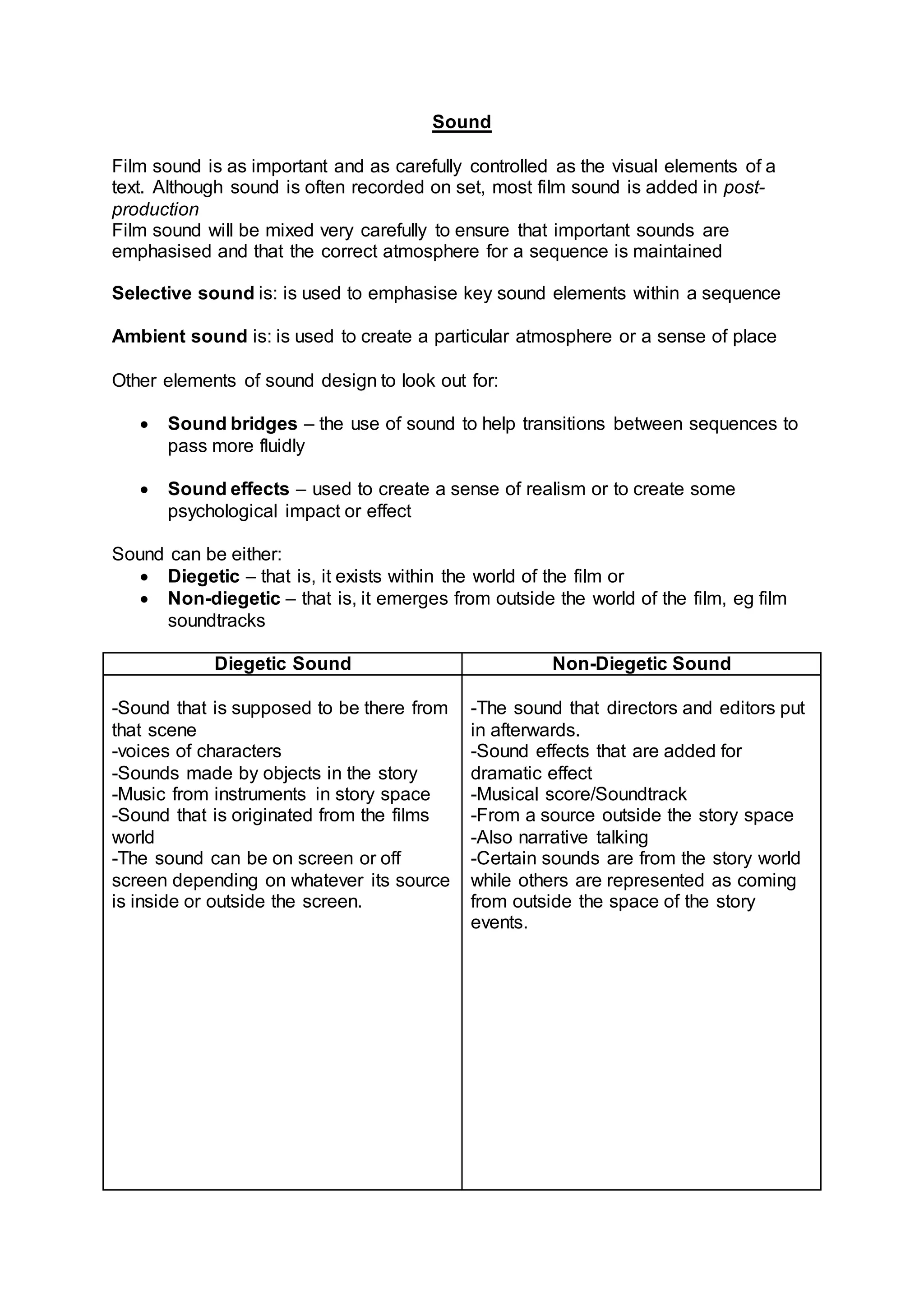
Sound can be either:
 Diegetic – that is, it exists within the world of the film or
 Non-diegetic – that is, it emerges from outside the world of the film, eg film
soundtracks
Diegetic Sound Non-Diegetic Sound
-Sound that is supposed to be there from
that scene
-voices of characters
-Sounds made by objects in the story
-Music from instruments in story space
-Sound that is originated from the films
world
-The sound can be on screen or off
screen depending on whatever its source
is inside or outside the screen.
-The sound that directors and editors put
in afterwards.
-Sound effects that are added for
dramatic effect
-Musical score/Soundtrack
-From a source outside the story space
-Also narrative talking
-Certain sounds are from the story world
while others are represented as coming
from outside the space of the story
events.
Film sound can be either:
 Synchronous – This is when a sound effect is matched with another
technical event or action-this reinforces the scene
 Asynchronous – This is when a sound originates from outside of the diegetic
reality of the film; musical soundtrack.
 Contrapuntal – Noise or sound effect which doesn’t match the visuals, often
juxtaposed to create alternative meaning.
Other elements of sound design to look out for:
 Voiceovers – This is the ‘voice’ of a character. This voice often guides or
informs the external audience nut can be used to push them in wrong
narrative direction.
 Theme music –This is the music that introduces, develops throughout and
ends the film. It often indicates the ‘personality’ and mode of address of the
movie
 Musical Score – Used to create atmosphere, to link shots or sequences, to
help create the narrative or to offer information about characters.
 Silence – Film/TV are very rarely completely silent, but this effect is to
provoke a reaction from the audience

Sound

  • 1.
    Sound Film sound isas important and as carefully controlled as the visual elements of a text. Although sound is often recorded on set, most film sound is added in post- production Film sound will be mixed very carefully to ensure that important sounds are emphasised and that the correct atmosphere for a sequence is maintained Selective sound is: is used to emphasise key sound elements within a sequence Ambient sound is: is used to create a particular atmosphere or a sense of place Other elements of sound design to look out for:  Sound bridges – the use of sound to help transitions between sequences to pass more fluidly  Sound effects – used to create a sense of realism or to create some psychological impact or effect Sound can be either:  Diegetic – that is, it exists within the world of the film or  Non-diegetic – that is, it emerges from outside the world of the film, eg film soundtracks Diegetic Sound Non-Diegetic Sound -Sound that is supposed to be there from that scene -voices of characters -Sounds made by objects in the story -Music from instruments in story space -Sound that is originated from the films world -The sound can be on screen or off screen depending on whatever its source is inside or outside the screen. -The sound that directors and editors put in afterwards. -Sound effects that are added for dramatic effect -Musical score/Soundtrack -From a source outside the story space -Also narrative talking -Certain sounds are from the story world while others are represented as coming from outside the space of the story events.
  • 2.
    Film sound canbe either:  Synchronous – This is when a sound effect is matched with another technical event or action-this reinforces the scene  Asynchronous – This is when a sound originates from outside of the diegetic reality of the film; musical soundtrack.  Contrapuntal – Noise or sound effect which doesn’t match the visuals, often juxtaposed to create alternative meaning. Other elements of sound design to look out for:  Voiceovers – This is the ‘voice’ of a character. This voice often guides or informs the external audience nut can be used to push them in wrong narrative direction.  Theme music –This is the music that introduces, develops throughout and ends the film. It often indicates the ‘personality’ and mode of address of the movie  Musical Score – Used to create atmosphere, to link shots or sequences, to help create the narrative or to offer information about characters.  Silence – Film/TV are very rarely completely silent, but this effect is to provoke a reaction from the audience