One of the key features that can make or break any
thriller is the sound. This title in and of itself has
various categories and sub-categories.
Digetic Sound (Actual Sound)
 This is sound that is presented as

originated from a source within a
film, including dialogue, source music
(music from instruments in the story
space), and sound effects.
 Digetic sound is considered on

screen when the source is visible within
the frame or off screen when it is outside
of the frame. The latter is called external
digetic sound.
 This is sound which comes from out of

frame, but is understood as belonging
within the story space.
Non-Digetic Sounds
 This is sound which is not recognised as part

of the film world, such as voice-over or
background music.
 This is when an image is projected, but the

voice heard is not being spoken in sync with
the characters speaking on screen. This tends
to be used to suggest a character’s thoughts or

recall information said previously, or to
provide objective narrative or commentary.
Special Effects and Music
 Sound effects include all sounds other

than dialogue and music.
 During recording, these sounds are

somewhat neglected by sound recordists
in favour of dialogue, and so Foley
Artists add them on in post-production
using props in a studio.
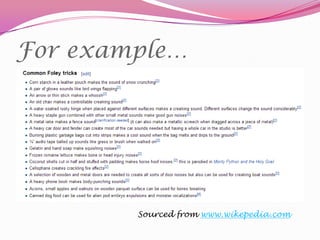
For example…

Sourced from www.wikepedia.com
Parallel and Contrapuntal
Sound
 An example of parallel sound is clear here…
 http://www.youtube.com/watch?v=5whe9XtdQg

w

 The sounds in the background as Harry

Potter finds the perfect wand are positive,

corresponding to the scene presented on
screen.
 An example of contrapuntal sound is

clear here…
 http://www.youtube.com/watch?v=P0EXHvbs

nJ8

 The music played for the duration of this

scene conflicts with the content of the
film.
What can we take from this?
 Whilst every technique is useful in its own

way, we need to think carefully about the
way we incorporate sound into our film.
Quality voice-overs can have a chilling
effect on the viewer, or make the audience
feel more relaxed and comfortable when
watching a scene. Although, we do not
intend to use this technique.
 Non-digetic music can be very industrious in

building suspense, which is essential to any
thriller. However, this also increases the
audience’s emotional involvement with the
visual imagery of the film and reflects the
characters’ moods.
 Digetic music is more active in presenting the

audience with he characters’ emotions, creating
realism and setting the scene.
 External digetic sound is particularly useful

in transitioning slides, as it makes the mood
from one scene to another much smoother.
 Special effects, such as the sound of a

crackling fire, or crunching leaves will be
crucial in creating realism within our film.
 We hope to include both contrapuntal and

parallel sounds in our film in order to build
tension to its maximum and scare our
audience, although I do note that as we will
be producing a psychological thriller,
contrapuntal sounds will be used more in
our film as Nicole and I believe they are
more effective.
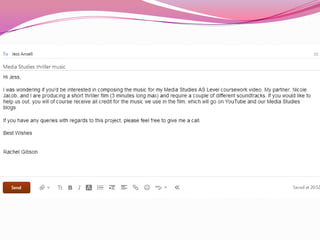
The Outcome…
Jessica Ansell is one of the most skilled
musicians I know personally.
Luckily for us, she kindly agreed to help us

out with music for our thriller, we will be
meeting her this week to discuss.
Wish us luck!

Sound

  • 1.
    One of thekey features that can make or break any thriller is the sound. This title in and of itself has various categories and sub-categories.
  • 2.
    Digetic Sound (ActualSound)  This is sound that is presented as originated from a source within a film, including dialogue, source music (music from instruments in the story space), and sound effects.
  • 3.
     Digetic soundis considered on screen when the source is visible within the frame or off screen when it is outside of the frame. The latter is called external digetic sound.  This is sound which comes from out of frame, but is understood as belonging within the story space.
  • 4.
    Non-Digetic Sounds  Thisis sound which is not recognised as part of the film world, such as voice-over or background music.  This is when an image is projected, but the voice heard is not being spoken in sync with the characters speaking on screen. This tends to be used to suggest a character’s thoughts or recall information said previously, or to provide objective narrative or commentary.
  • 5.
    Special Effects andMusic  Sound effects include all sounds other than dialogue and music.  During recording, these sounds are somewhat neglected by sound recordists in favour of dialogue, and so Foley Artists add them on in post-production using props in a studio.
  • 6.
    For example… Sourced fromwww.wikepedia.com
  • 7.
    Parallel and Contrapuntal Sound An example of parallel sound is clear here…  http://www.youtube.com/watch?v=5whe9XtdQg w  The sounds in the background as Harry Potter finds the perfect wand are positive, corresponding to the scene presented on screen.
  • 8.
     An exampleof contrapuntal sound is clear here…  http://www.youtube.com/watch?v=P0EXHvbs nJ8  The music played for the duration of this scene conflicts with the content of the film.
  • 9.
    What can wetake from this?  Whilst every technique is useful in its own way, we need to think carefully about the way we incorporate sound into our film. Quality voice-overs can have a chilling effect on the viewer, or make the audience feel more relaxed and comfortable when watching a scene. Although, we do not intend to use this technique.
  • 10.
     Non-digetic musiccan be very industrious in building suspense, which is essential to any thriller. However, this also increases the audience’s emotional involvement with the visual imagery of the film and reflects the characters’ moods.  Digetic music is more active in presenting the audience with he characters’ emotions, creating realism and setting the scene.
  • 11.
     External digeticsound is particularly useful in transitioning slides, as it makes the mood from one scene to another much smoother.  Special effects, such as the sound of a crackling fire, or crunching leaves will be crucial in creating realism within our film.
  • 12.
     We hopeto include both contrapuntal and parallel sounds in our film in order to build tension to its maximum and scare our audience, although I do note that as we will be producing a psychological thriller, contrapuntal sounds will be used more in our film as Nicole and I believe they are more effective.
  • 15.
    The Outcome… Jessica Ansellis one of the most skilled musicians I know personally. Luckily for us, she kindly agreed to help us out with music for our thriller, we will be meeting her this week to discuss. Wish us luck!