PREPARED BY
AKHIL.K
Electrical and electronics engineering
Roll no: 5
Register no: 13030580
1
CONTENT
 INTRODUCTION
 WHAT IS SOLAR TRACKERS
 NEED OF SOLAR TRACKERS
 TYPES OF SOLAR TRACKERS
 INTERNAL BIOCK DIAGREM
 WORKING PRINCIPLE
 HARDWARE COPONENTS OF SOLAR TRACKER
 COMPARISON OF STATIONARY VS TRACKED SOLAR ENERGY
 ADVANTAGES
 DISADVANTAGES
 CONCLUTION
 REFERENCE
2
INTRODUCTION
 Renewable energy solutions are becoming popular.
 Maximizing output from solar system increases efficiency.
 Presently solar panels are of fixed type which lower the efficiency.
 Maintaining vertical direction between light and panel maximizes
efficiency.
 Solar tracking system has 35% higher generating power than fixed.
 Solar tracking system based on PLC can adjust automatically
orientation of panel
3
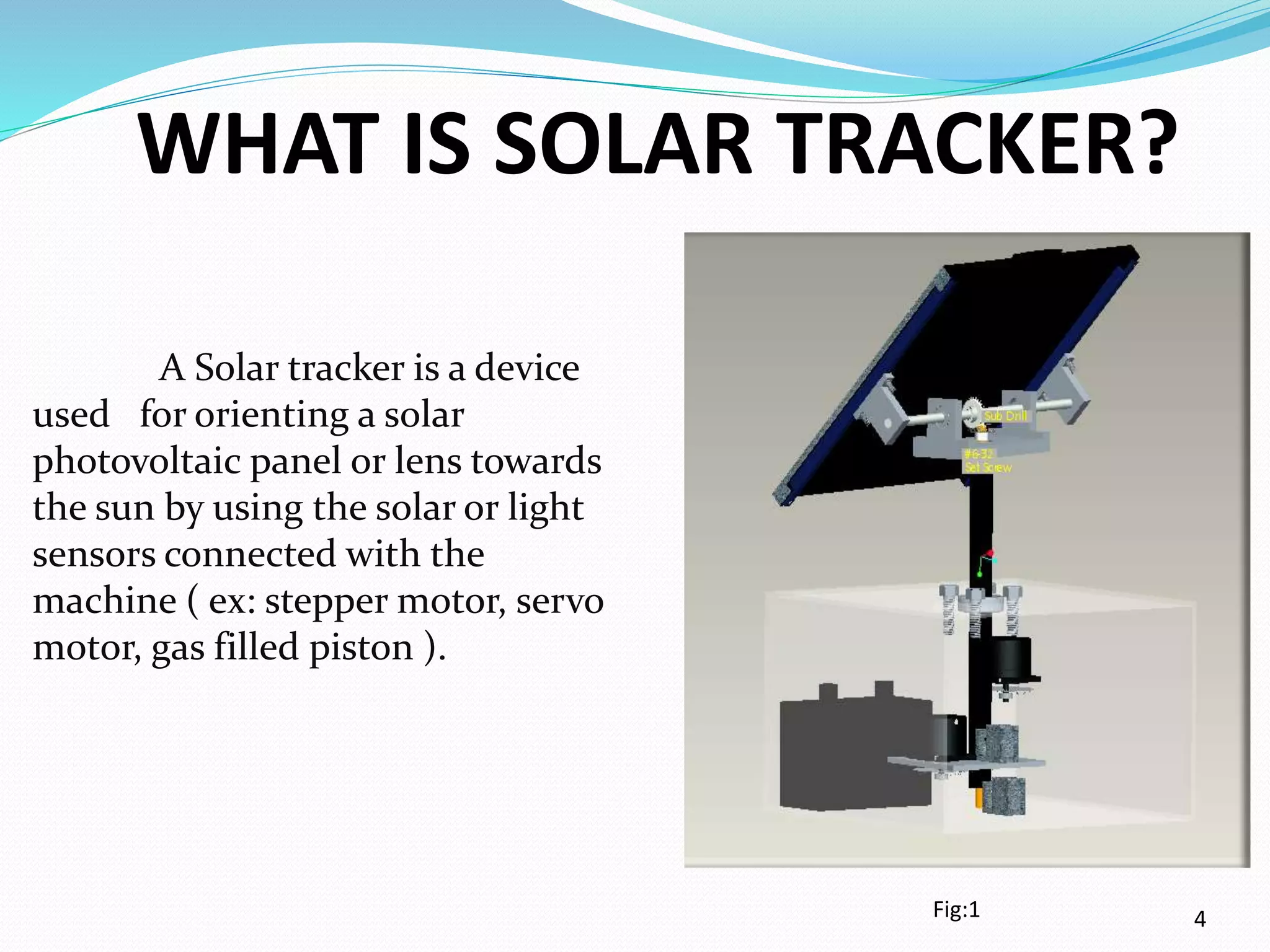
WHAT IS SOLAR TRACKER?
A Solar tracker is a device
used for orienting a solar
photovoltaic panel or lens towards
the sun by using the solar or light
sensors connected with the
machine ( ex: stepper motor, servo
motor, gas filled piston ).
4Fig:1
NEED OF SOLAR TRACKER
 Increase Solar Panel Output
 Max.efficency of the panel
 Maximize Power per unit Area
 Able to grab the energy through out the day
5Fig:2
TYPES OF SOLAR TRACKERS
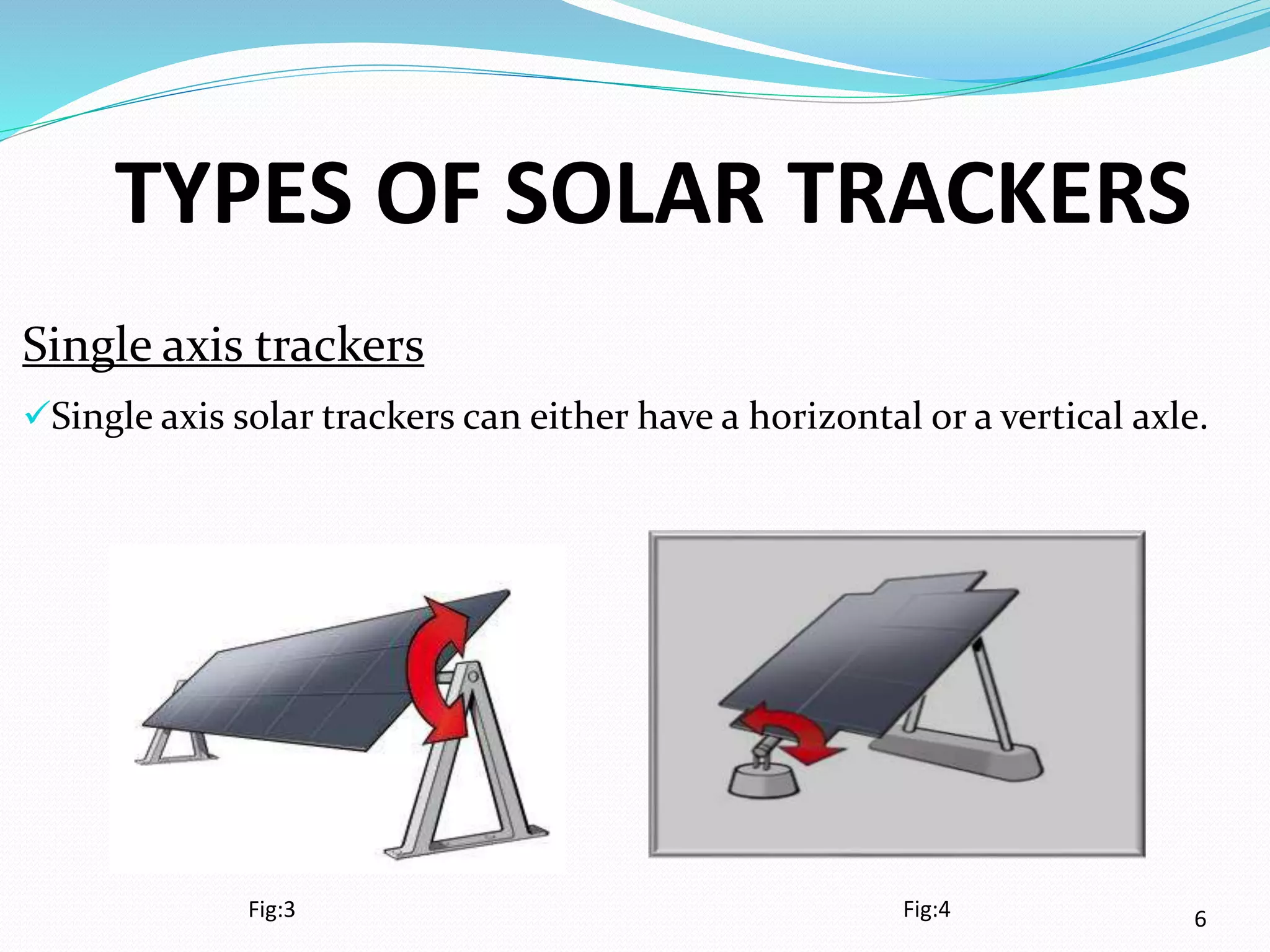
Single axis trackers
Single axis solar trackers can either have a horizontal or a vertical axle.
6Fig:3 Fig:4
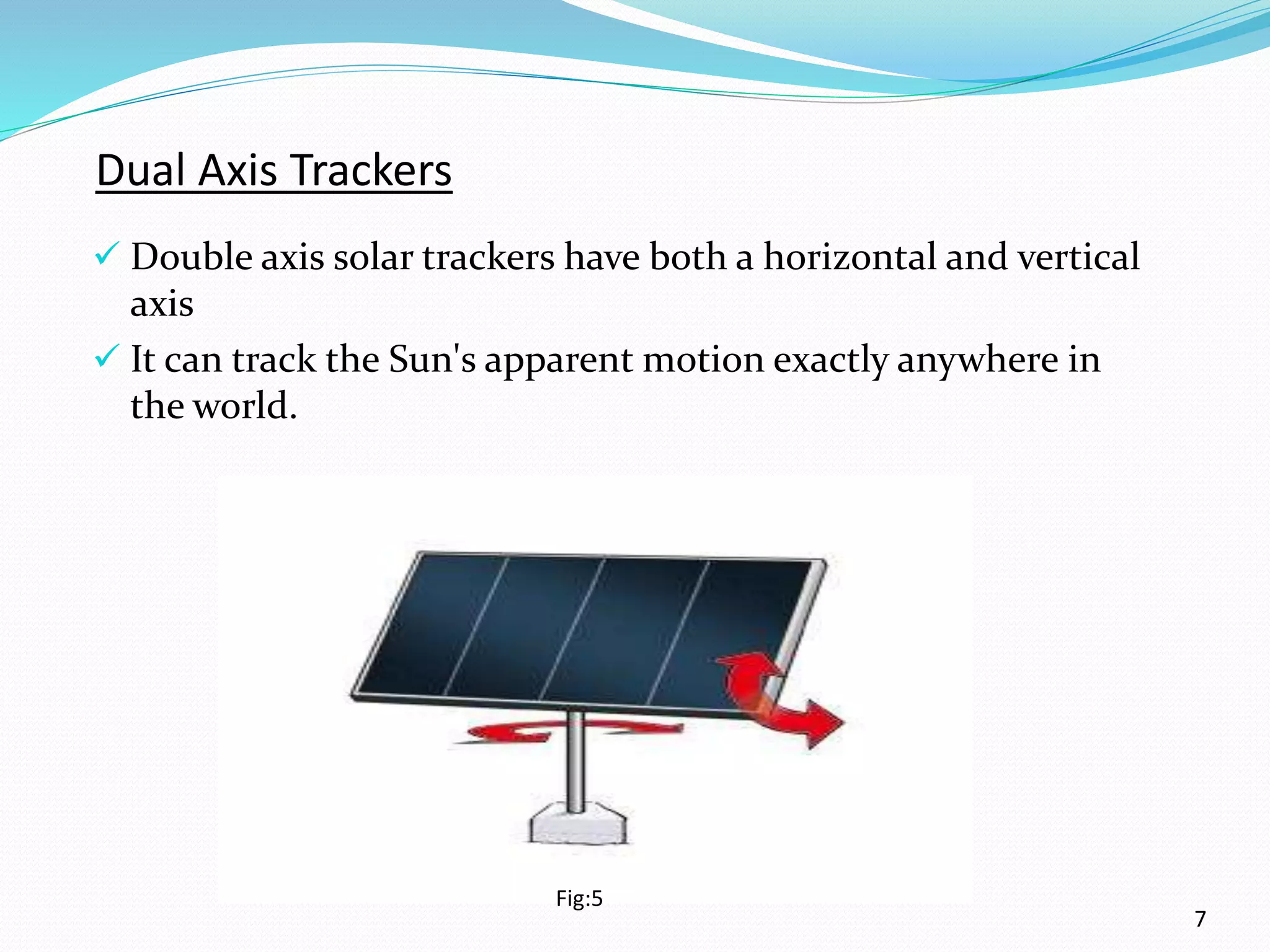
Dual Axis Trackers
 Double axis solar trackers have both a horizontal and vertical
axis
 It can track the Sun's apparent motion exactly anywhere in
the world.
7
Fig:5
OVERVIEW OF PRESENT
TRACKER DRIVE TYPES
8Fig:6
1. PASSIVE (GAS) TRACKERS
 Passive trackers use a compressed
gas fluid in two canisters .
 The mechanism is in such a way
that if one side cylinder is heated
other side piston rises causing the
panel to tilt over the sunny side.
9Fig:7
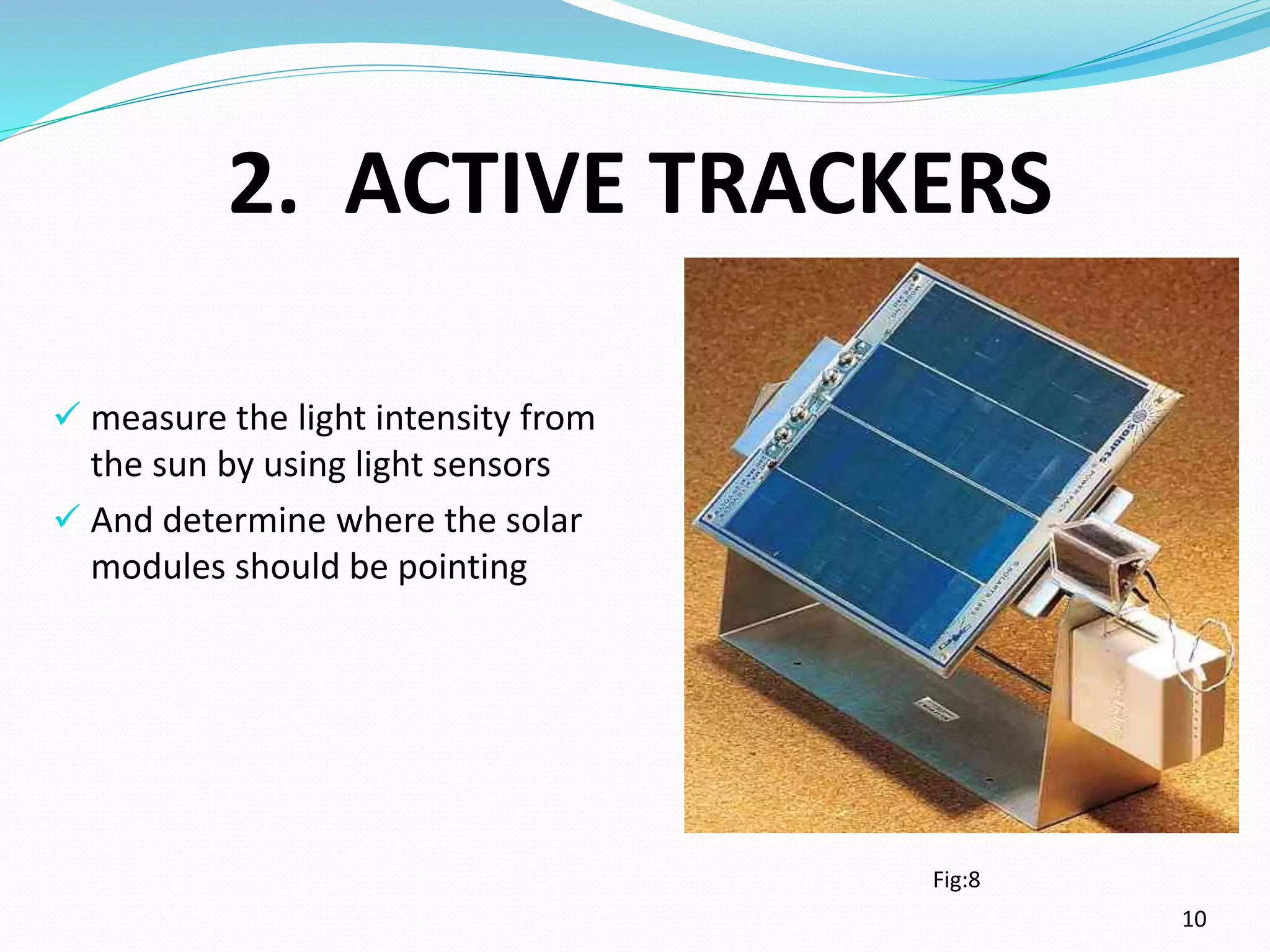
2. ACTIVE TRACKERS
Fig:8
10
 measure the light intensity from
the sun by using light sensors
 And determine where the solar
modules should be pointing
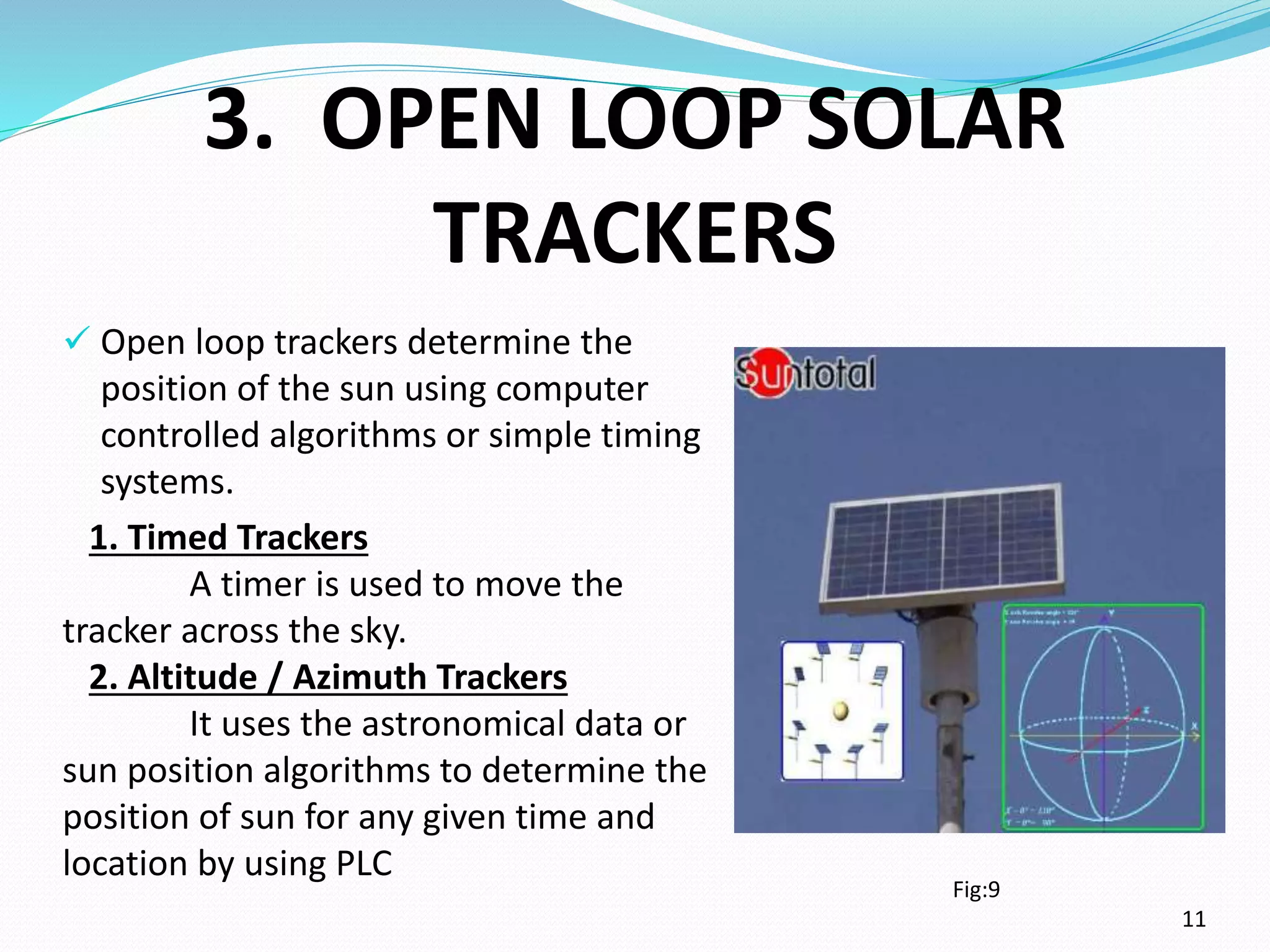
3. OPEN LOOP SOLAR
TRACKERS
 Open loop trackers determine the
position of the sun using computer
controlled algorithms or simple timing
systems.
1. Timed Trackers
A timer is used to move the
tracker across the sky.
2. Altitude / Azimuth Trackers
It uses the astronomical data or
sun position algorithms to determine the
position of sun for any given time and
location by using PLC
11
Fig:9
BLOCK DIAGRAM
12
Fig:10
WORKING PRINCIPLE
 Auto-tracking control system composed of PLC, sensors, signal
processing units, PV cells, electromagnetic and mechanical motion
control modules and power supply systems.
 Panel detects the sun light strength to sensors
 The sensors output is given to the PLC which compares it and
produces an equivalent output so as to rotate the motor and align
the panel in the direction of sun
13
HARDWARE COMPONENTS
 SOLAR PANEL
 LDR SENSORS
 STEPPER MOTOR
 RELAY
 PLC
14
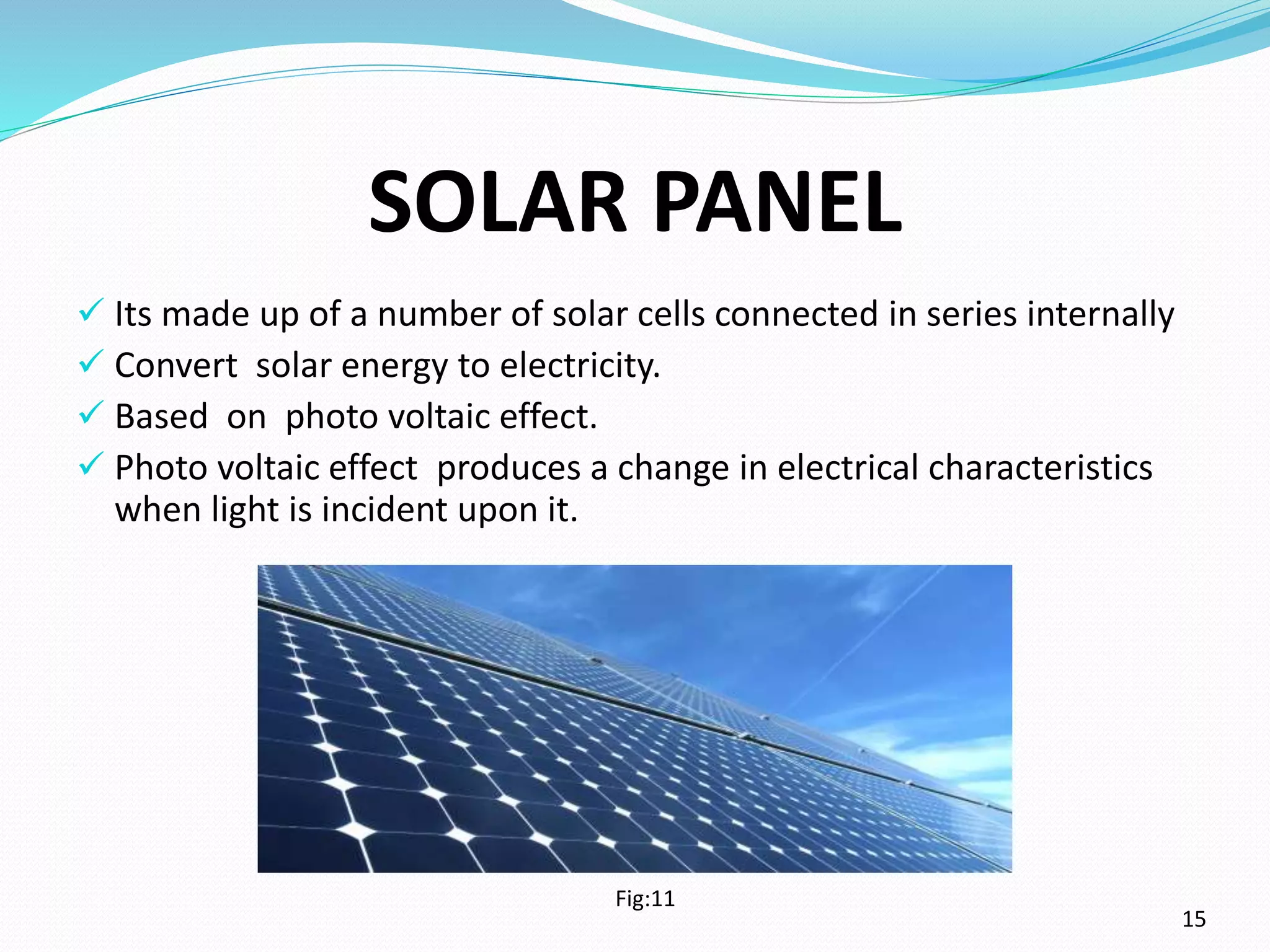
SOLAR PANEL
 Its made up of a number of solar cells connected in series internally
 Convert solar energy to electricity.
 Based on photo voltaic effect.
 Photo voltaic effect produces a change in electrical characteristics
when light is incident upon it.
15
Fig:11
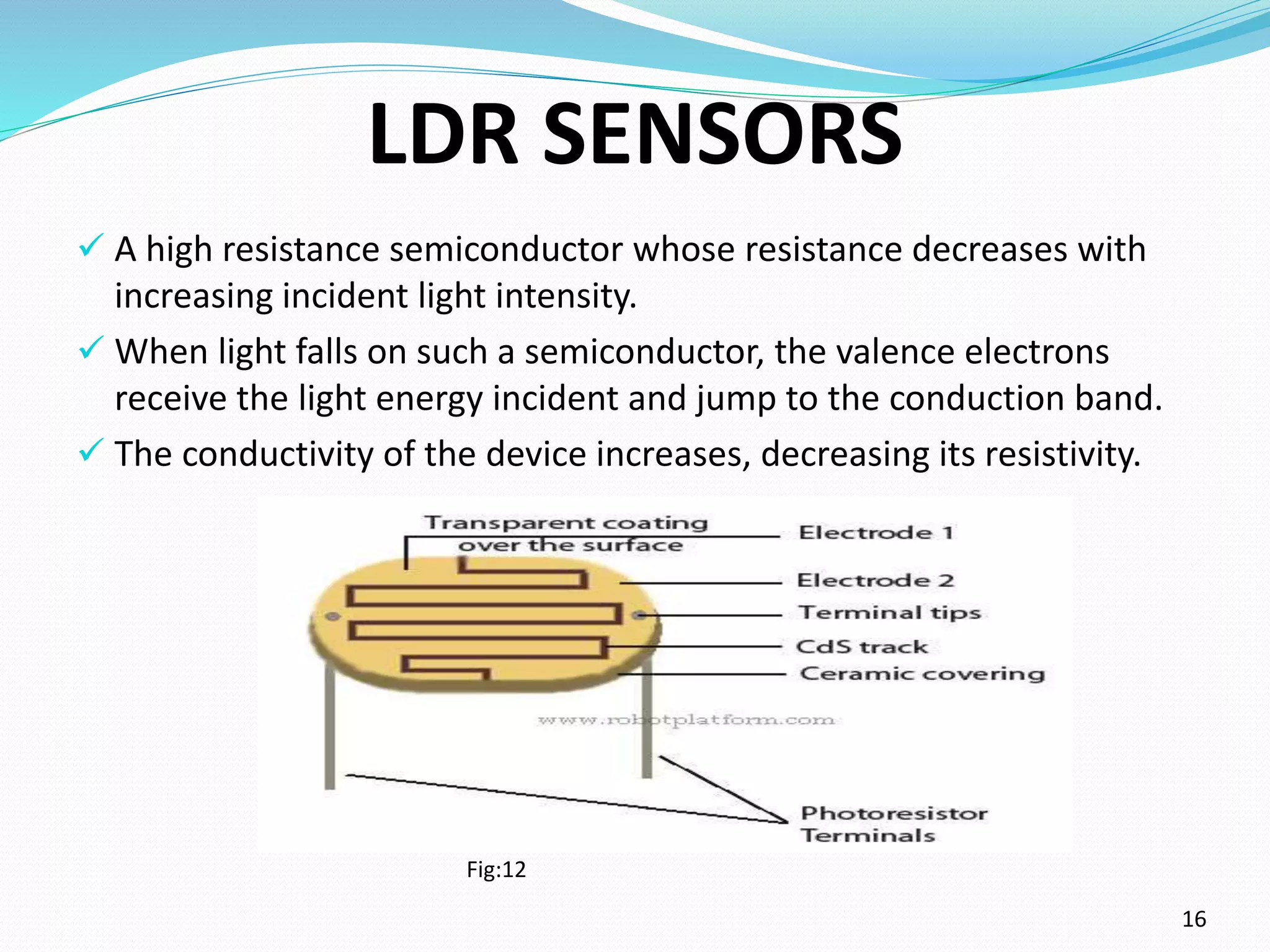
LDR SENSORS
 A high resistance semiconductor whose resistance decreases with
increasing incident light intensity.
 When light falls on such a semiconductor, the valence electrons
receive the light energy incident and jump to the conduction band.
 The conductivity of the device increases, decreasing its resistivity.
16
Fig:12
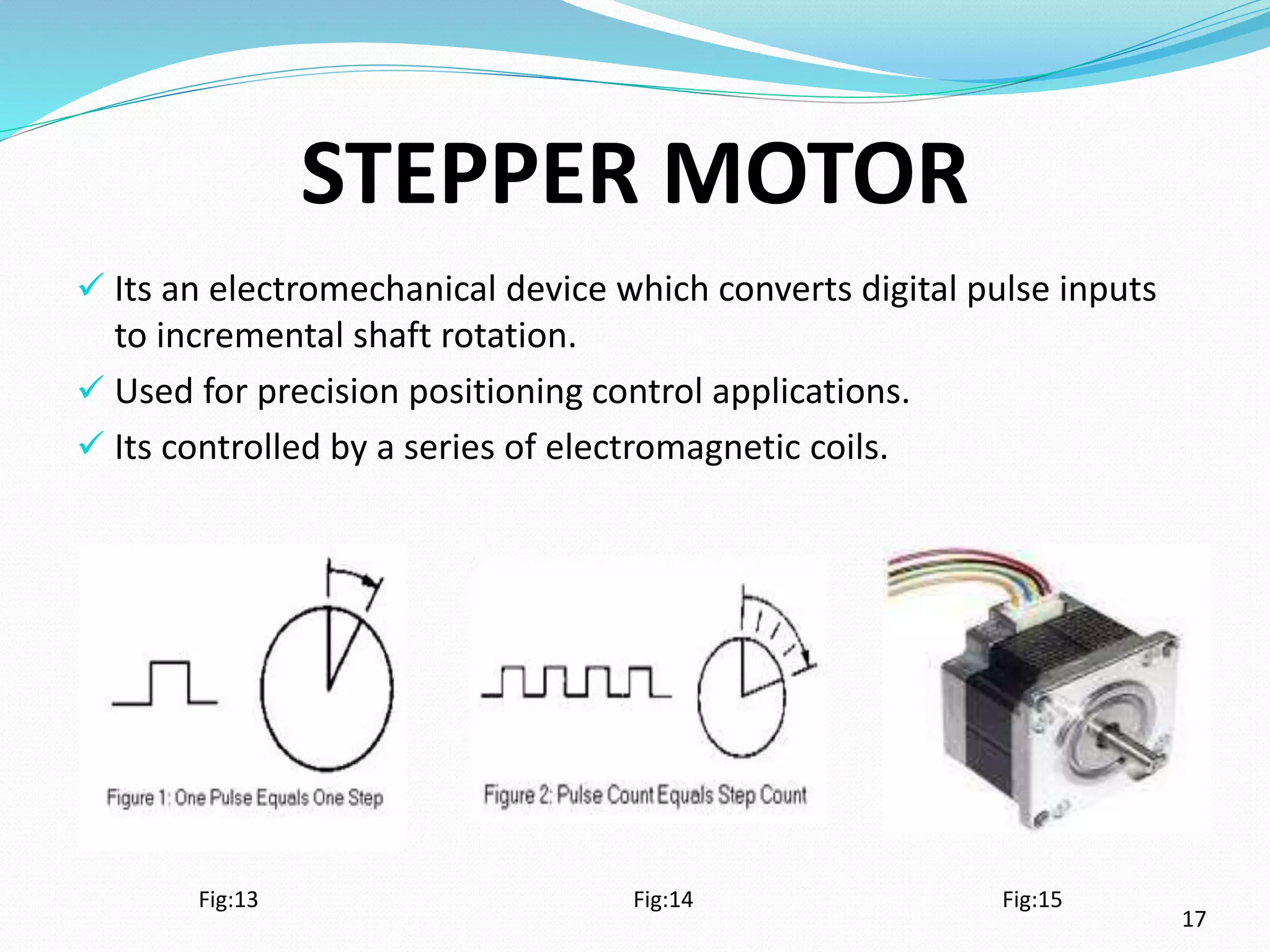
STEPPER MOTOR
 Its an electromechanical device which converts digital pulse inputs
to incremental shaft rotation.
 Used for precision positioning control applications.
 Its controlled by a series of electromagnetic coils.
17
Fig:13 Fig:14 Fig:15
RELAY
 Its an electrically operated switch used for switching of
large currents.
 Uses an electromagnet to operate a switching mechanism
mechanically
18Fig:16 Fig:17
PROGRAMMABLE
LOGIC CONTROLLER(PLC)
19
Fig:18
C0MPARISON OF SOLAR
ENERGY
20
Fig:19
ADVANTAGES
 Simple
 Low cost
 Eco-Friendly
 We can monitor directly using PC
 Tracking accuracy is more
 Reduce the usage of power from power grid
21
DISADVANTAGES
 Solar electricity is not available at night and is less available in
cloudy weather conditions. Therefore, a storage or complimentary
power system is required.
 Limited power density.
 Solar cells produce DC which must be converted to AC when used in
currently existing distribution grids
22
CONCLUSION
 The invention of Solar Tracking System helps us improve the
performance of PV solar system in a simple way
 Used relative method of sunlight strength.
 Established a model of automatic tracking system to keep vertical
contact between solar panels and sunlight.
 Improved the utilization rate of solar energy and efficiency of
photovoltaic power generation system.
23
REFERENCE
 http://www.alltronics.com/stpper _motor.html
 http://fsae.mae.cornell.edu/
 http://www.optimum-tracker.com/solartrackers/
24
25
26

Solar tracking system

  • 1.
    PREPARED BY AKHIL.K Electrical andelectronics engineering Roll no: 5 Register no: 13030580 1
  • 2.
    CONTENT  INTRODUCTION  WHATIS SOLAR TRACKERS  NEED OF SOLAR TRACKERS  TYPES OF SOLAR TRACKERS  INTERNAL BIOCK DIAGREM  WORKING PRINCIPLE  HARDWARE COPONENTS OF SOLAR TRACKER  COMPARISON OF STATIONARY VS TRACKED SOLAR ENERGY  ADVANTAGES  DISADVANTAGES  CONCLUTION  REFERENCE 2
  • 3.
    INTRODUCTION  Renewable energysolutions are becoming popular.  Maximizing output from solar system increases efficiency.  Presently solar panels are of fixed type which lower the efficiency.  Maintaining vertical direction between light and panel maximizes efficiency.  Solar tracking system has 35% higher generating power than fixed.  Solar tracking system based on PLC can adjust automatically orientation of panel 3
  • 4.
    WHAT IS SOLARTRACKER? A Solar tracker is a device used for orienting a solar photovoltaic panel or lens towards the sun by using the solar or light sensors connected with the machine ( ex: stepper motor, servo motor, gas filled piston ). 4Fig:1
  • 5.
    NEED OF SOLARTRACKER  Increase Solar Panel Output  Max.efficency of the panel  Maximize Power per unit Area  Able to grab the energy through out the day 5Fig:2
  • 6.
    TYPES OF SOLARTRACKERS Single axis trackers Single axis solar trackers can either have a horizontal or a vertical axle. 6Fig:3 Fig:4
  • 7.
    Dual Axis Trackers Double axis solar trackers have both a horizontal and vertical axis  It can track the Sun's apparent motion exactly anywhere in the world. 7 Fig:5
  • 8.
    OVERVIEW OF PRESENT TRACKERDRIVE TYPES 8Fig:6
  • 9.
    1. PASSIVE (GAS)TRACKERS  Passive trackers use a compressed gas fluid in two canisters .  The mechanism is in such a way that if one side cylinder is heated other side piston rises causing the panel to tilt over the sunny side. 9Fig:7
  • 10.
    2. ACTIVE TRACKERS Fig:8 10 measure the light intensity from the sun by using light sensors  And determine where the solar modules should be pointing
  • 11.
    3. OPEN LOOPSOLAR TRACKERS  Open loop trackers determine the position of the sun using computer controlled algorithms or simple timing systems. 1. Timed Trackers A timer is used to move the tracker across the sky. 2. Altitude / Azimuth Trackers It uses the astronomical data or sun position algorithms to determine the position of sun for any given time and location by using PLC 11 Fig:9
  • 12.
  • 13.
    WORKING PRINCIPLE  Auto-trackingcontrol system composed of PLC, sensors, signal processing units, PV cells, electromagnetic and mechanical motion control modules and power supply systems.  Panel detects the sun light strength to sensors  The sensors output is given to the PLC which compares it and produces an equivalent output so as to rotate the motor and align the panel in the direction of sun 13
  • 14.
    HARDWARE COMPONENTS  SOLARPANEL  LDR SENSORS  STEPPER MOTOR  RELAY  PLC 14
  • 15.
    SOLAR PANEL  Itsmade up of a number of solar cells connected in series internally  Convert solar energy to electricity.  Based on photo voltaic effect.  Photo voltaic effect produces a change in electrical characteristics when light is incident upon it. 15 Fig:11
  • 16.
    LDR SENSORS  Ahigh resistance semiconductor whose resistance decreases with increasing incident light intensity.  When light falls on such a semiconductor, the valence electrons receive the light energy incident and jump to the conduction band.  The conductivity of the device increases, decreasing its resistivity. 16 Fig:12
  • 17.
    STEPPER MOTOR  Itsan electromechanical device which converts digital pulse inputs to incremental shaft rotation.  Used for precision positioning control applications.  Its controlled by a series of electromagnetic coils. 17 Fig:13 Fig:14 Fig:15
  • 18.
    RELAY  Its anelectrically operated switch used for switching of large currents.  Uses an electromagnet to operate a switching mechanism mechanically 18Fig:16 Fig:17
  • 19.
  • 20.
  • 21.
    ADVANTAGES  Simple  Lowcost  Eco-Friendly  We can monitor directly using PC  Tracking accuracy is more  Reduce the usage of power from power grid 21
  • 22.
    DISADVANTAGES  Solar electricityis not available at night and is less available in cloudy weather conditions. Therefore, a storage or complimentary power system is required.  Limited power density.  Solar cells produce DC which must be converted to AC when used in currently existing distribution grids 22
  • 23.
    CONCLUSION  The inventionof Solar Tracking System helps us improve the performance of PV solar system in a simple way  Used relative method of sunlight strength.  Established a model of automatic tracking system to keep vertical contact between solar panels and sunlight.  Improved the utilization rate of solar energy and efficiency of photovoltaic power generation system. 23
  • 24.
    REFERENCE  http://www.alltronics.com/stpper _motor.html http://fsae.mae.cornell.edu/  http://www.optimum-tracker.com/solartrackers/ 24
  • 25.
  • 26.