Soil Classification Basics
Dr. Mohanad Alfach
Ph.D. in Earthquake Geotechnical Engineering
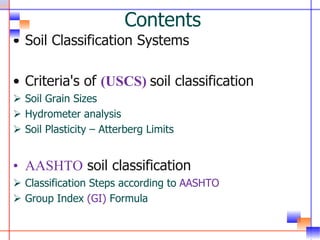
Contents
• Soil Classification Systems
• Criteria's of (USCS) soil classification
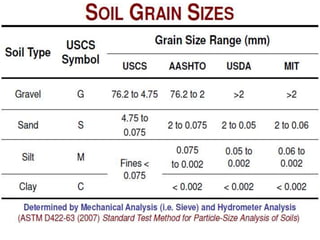
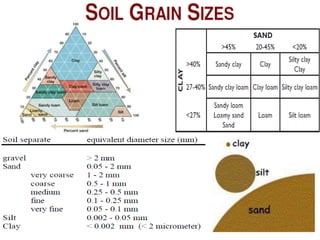
 Soil Grain Sizes
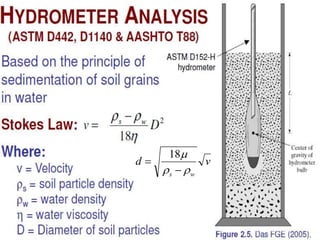
 Hydrometer analysis
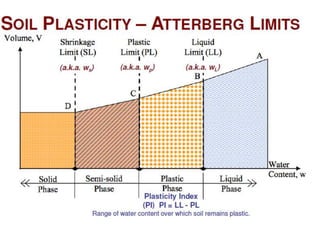
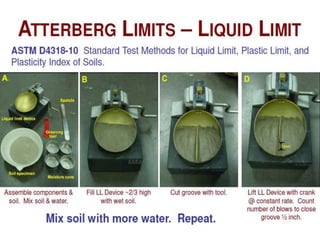
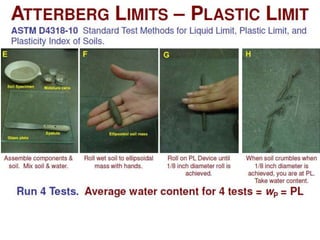
 Soil Plasticity – Atterberg Limits
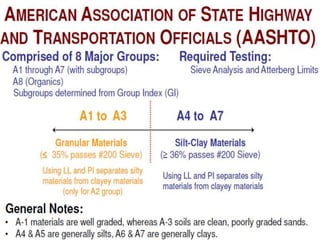
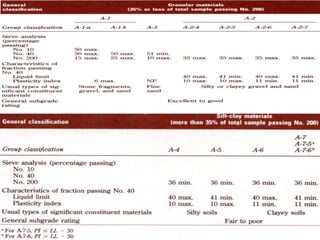
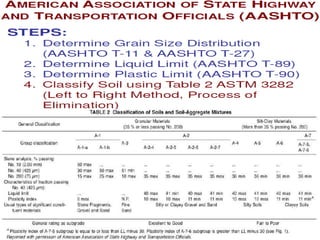
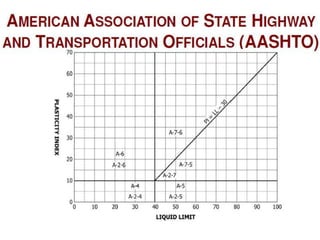
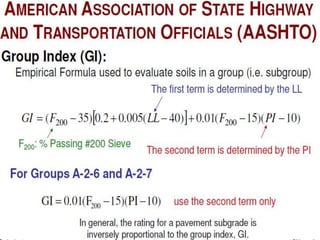
• AASHTO soil classification
 Classification Steps according to AASHTO
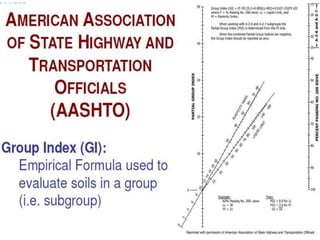
 Group Index (GI) Formula
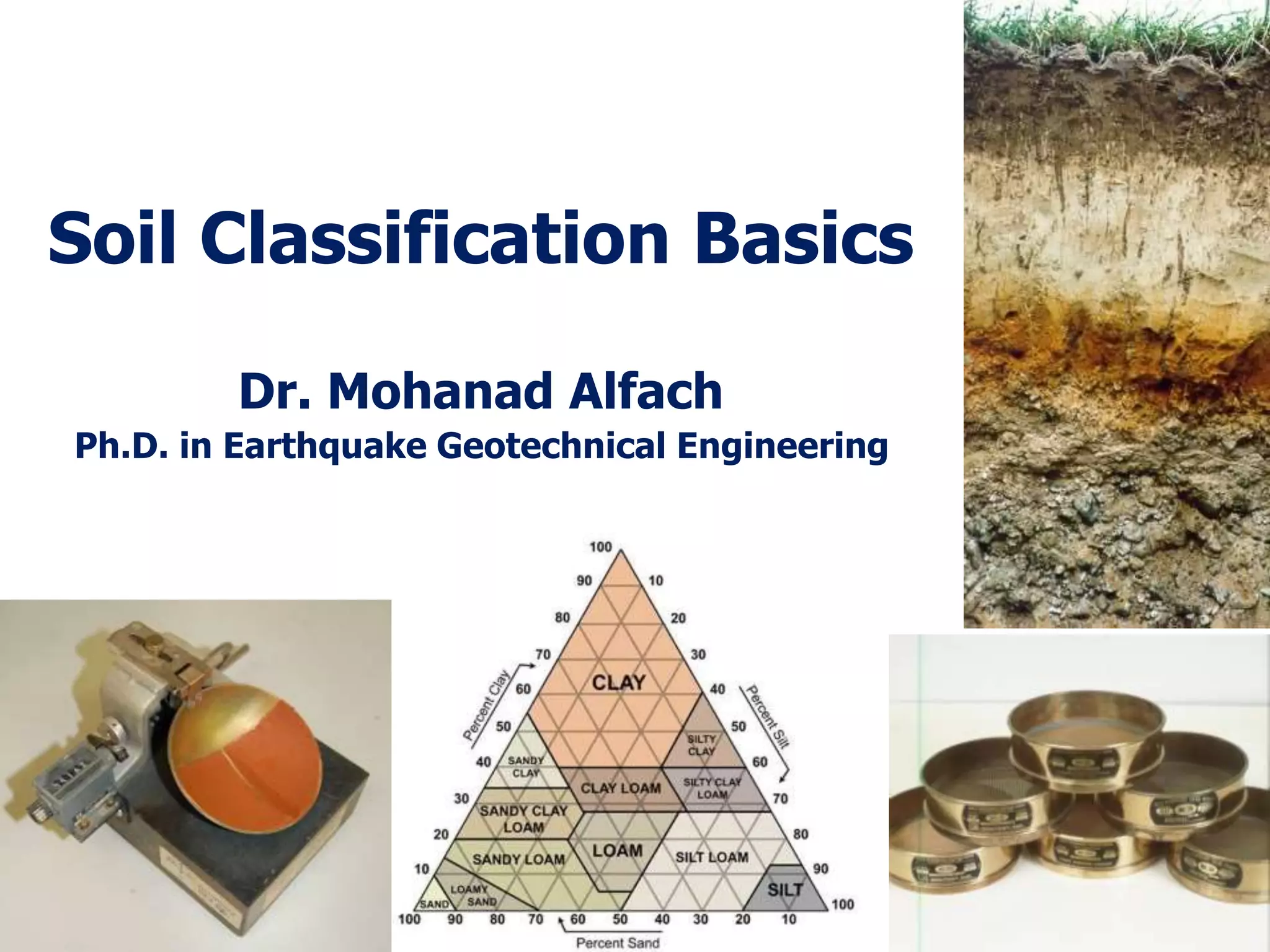
Soil classification usually based on grain size and soil consistency.
Several classification systems exist :
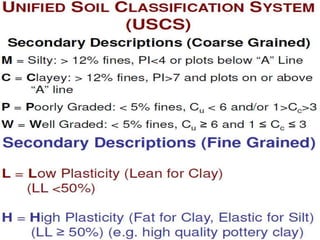
1- Unified Soil Classification System (USCS) according
to (ASTM D2487-11)
2- American Association of State Highway and
Transportation Officials AASHTO according to
(ASTM D3282-09)
3-U.S. Department of Agriculture (USDA).
4- Burmister Soil Identification System.
5-Massachusetts Institute of Technology (MIT)
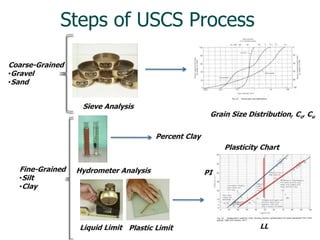
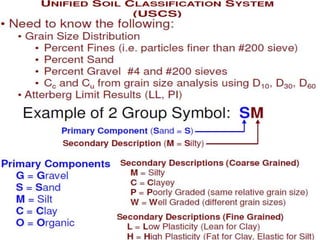
Sieve Analysis
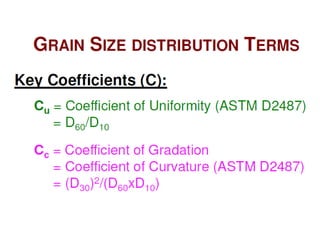
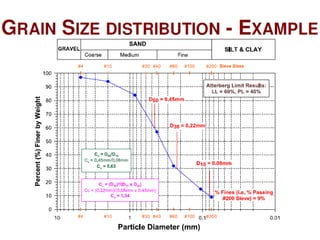
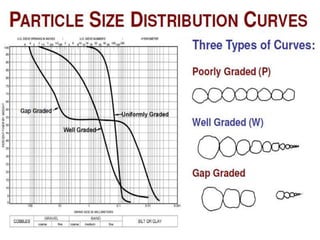
Grain Size Distribution, Cc, Cu
Hydrometer Analysis
Percent Clay
(% < 2mm)
Liquid Limit Plastic Limit
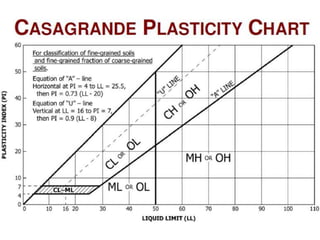
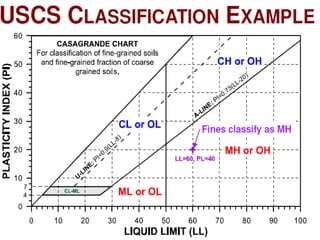
Plasticity Chart
PI
LL
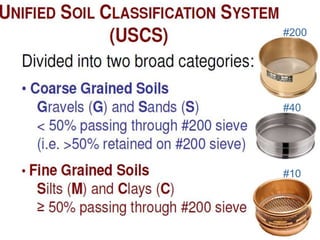
Coarse-Grained
•Gravel
•Sand
Fine-Grained
•Silt
•Clay
Sieve Analysis
Hydrometer Analysis
Liquid Limit
Plastic Limit
Grain Size Distribution, Cc, Cu
Percent Clay
(% < 2mm) Plasticity Chart
PI
LL
Steps of USCS Process
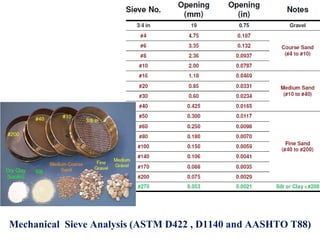
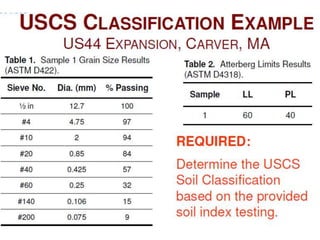
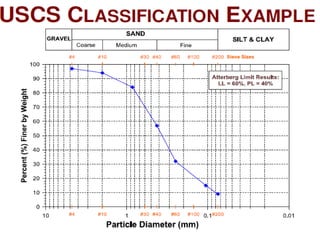
Mechanical Sieve Analysis (ASTM D422 , D1140 and AASHTO T88)
v
d
w
s 

m


18
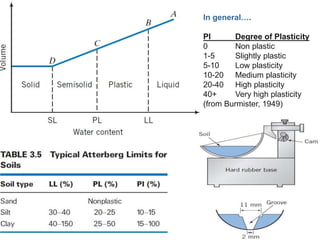
In general….
PI Degree of Plasticity
0 Non plastic
1-5 Slightly plastic
5-10 Low plasticity
10-20 Medium plasticity
20-40 High plasticity
40+ Very high plasticity
(from Burmister, 1949)
#200
#40
#10
Questions?
Thanks for your time and
attention!
Soil_Classification_Basics.ppt

Soil_Classification_Basics.ppt

  • 1.
    Soil Classification Basics Dr.Mohanad Alfach Ph.D. in Earthquake Geotechnical Engineering
  • 2.
    Contents • Soil ClassificationSystems • Criteria's of (USCS) soil classification  Soil Grain Sizes  Hydrometer analysis  Soil Plasticity – Atterberg Limits • AASHTO soil classification  Classification Steps according to AASHTO  Group Index (GI) Formula
  • 3.
    Soil classification usuallybased on grain size and soil consistency. Several classification systems exist : 1- Unified Soil Classification System (USCS) according to (ASTM D2487-11) 2- American Association of State Highway and Transportation Officials AASHTO according to (ASTM D3282-09) 3-U.S. Department of Agriculture (USDA). 4- Burmister Soil Identification System. 5-Massachusetts Institute of Technology (MIT)
  • 4.
    Sieve Analysis Grain SizeDistribution, Cc, Cu Hydrometer Analysis Percent Clay (% < 2mm) Liquid Limit Plastic Limit Plasticity Chart PI LL Coarse-Grained •Gravel •Sand Fine-Grained •Silt •Clay Sieve Analysis Hydrometer Analysis Liquid Limit Plastic Limit Grain Size Distribution, Cc, Cu Percent Clay (% < 2mm) Plasticity Chart PI LL Steps of USCS Process
  • 7.
    Mechanical Sieve Analysis(ASTM D422 , D1140 and AASHTO T88)
  • 8.
  • 13.
    In general…. PI Degreeof Plasticity 0 Non plastic 1-5 Slightly plastic 5-10 Low plasticity 10-20 Medium plasticity 20-40 High plasticity 40+ Very high plasticity (from Burmister, 1949)
  • 16.
  • 29.
    Questions? Thanks for yourtime and attention!