Dr. Parveen Sharma
Associate Professor (Vegetable Science)
Himachal Pradesh Agricultural University, Palampur
ops suitable for protected cultivation according
rea, climate and maintenance of climate factors
POTENTIAL CROPS FOR PROTECTED
CULTIVATION
Capsicum
Tomato
Cucumber
Lettuce/ French beans/ Peas (Filler crops)
Vegetable nursery
Flower crops
Ornamental plants
Private Seed Companies
Advantages of Hybrids
Plastic low tunnel for nursery production
Hardening of seedlings
Removable Structures
Preparation of Sand, Soil and FYM mixture
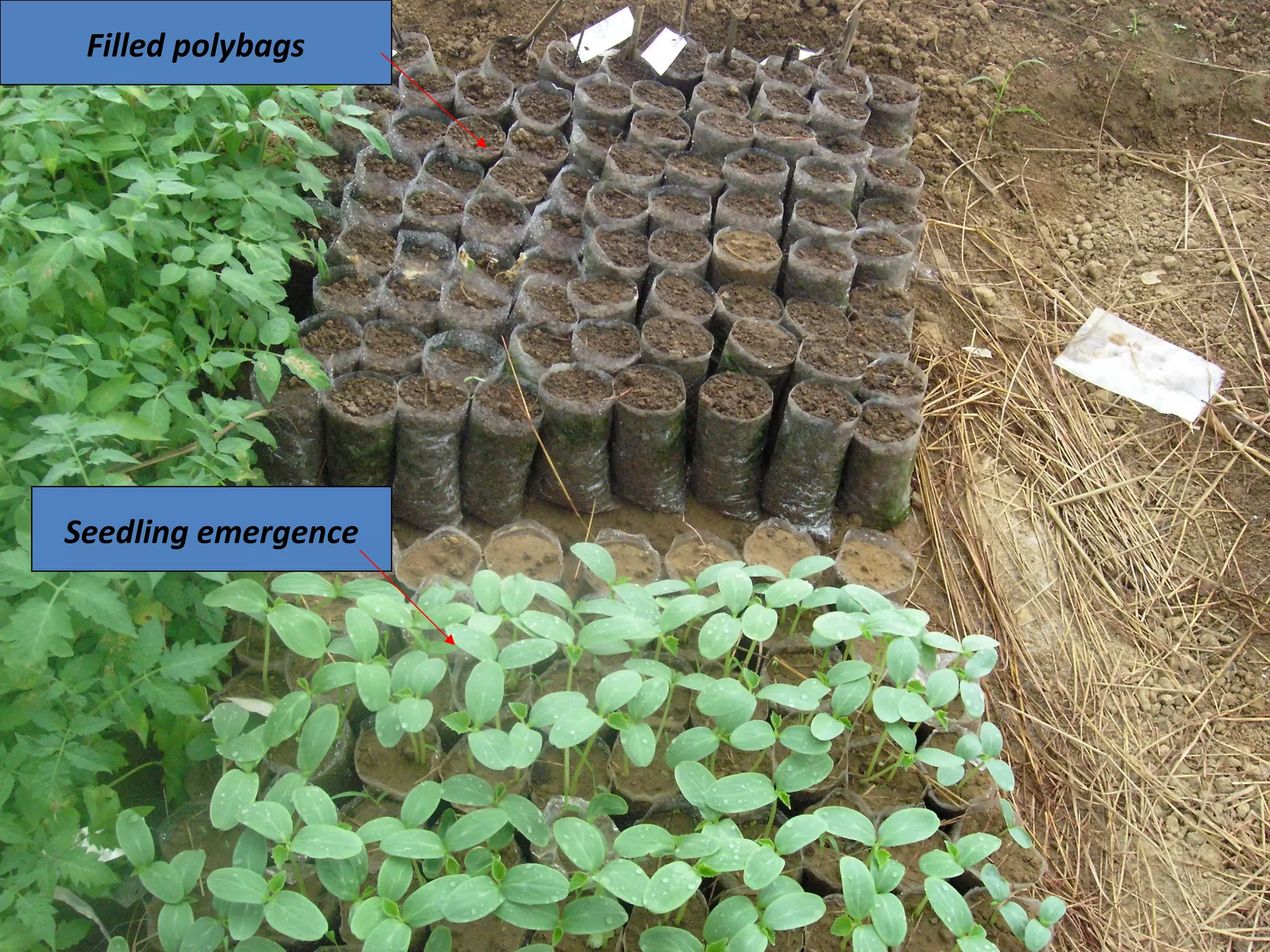
Filled polybags
Seedling emergence
Coco peat
•Coco peat also known as coir pith, coir fibre pith, coir dust, or
simply coir, is made from coconut husks, which are byproducts
of other industries that use coconuts.
• Raw coconuts are washed, heat-treated, screened and graded
before being processed into coco peat products of various
granularity and denseness, which are then used for horticultural
and agricultural applications and as industrial absorbent.
Coco-Peat
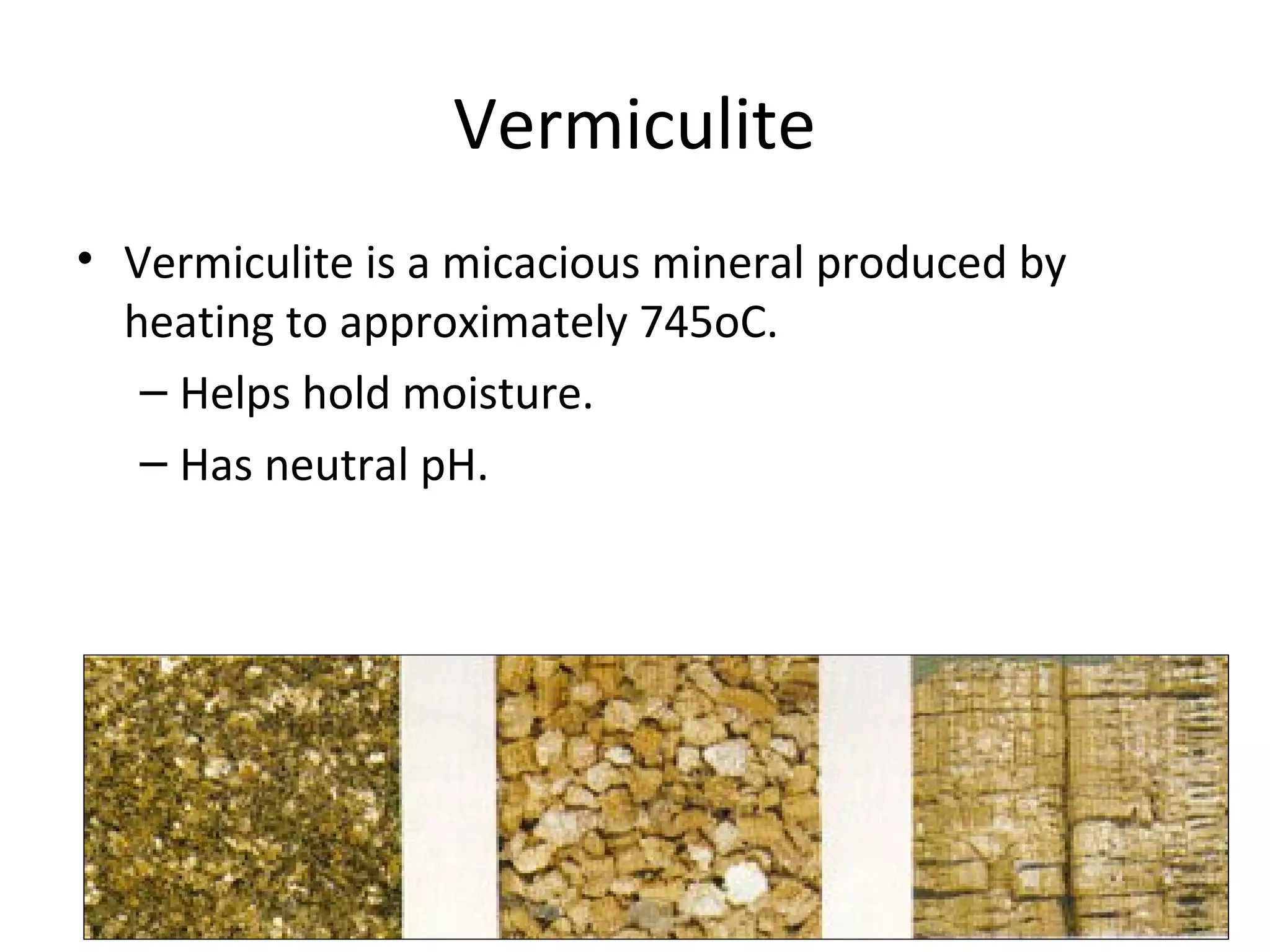
Vermiculite
• Vermiculite is a micacious mineral produced by
heating to approximately 745oC.
– Helps hold moisture.
– Has neutral pH.
Vermiculite
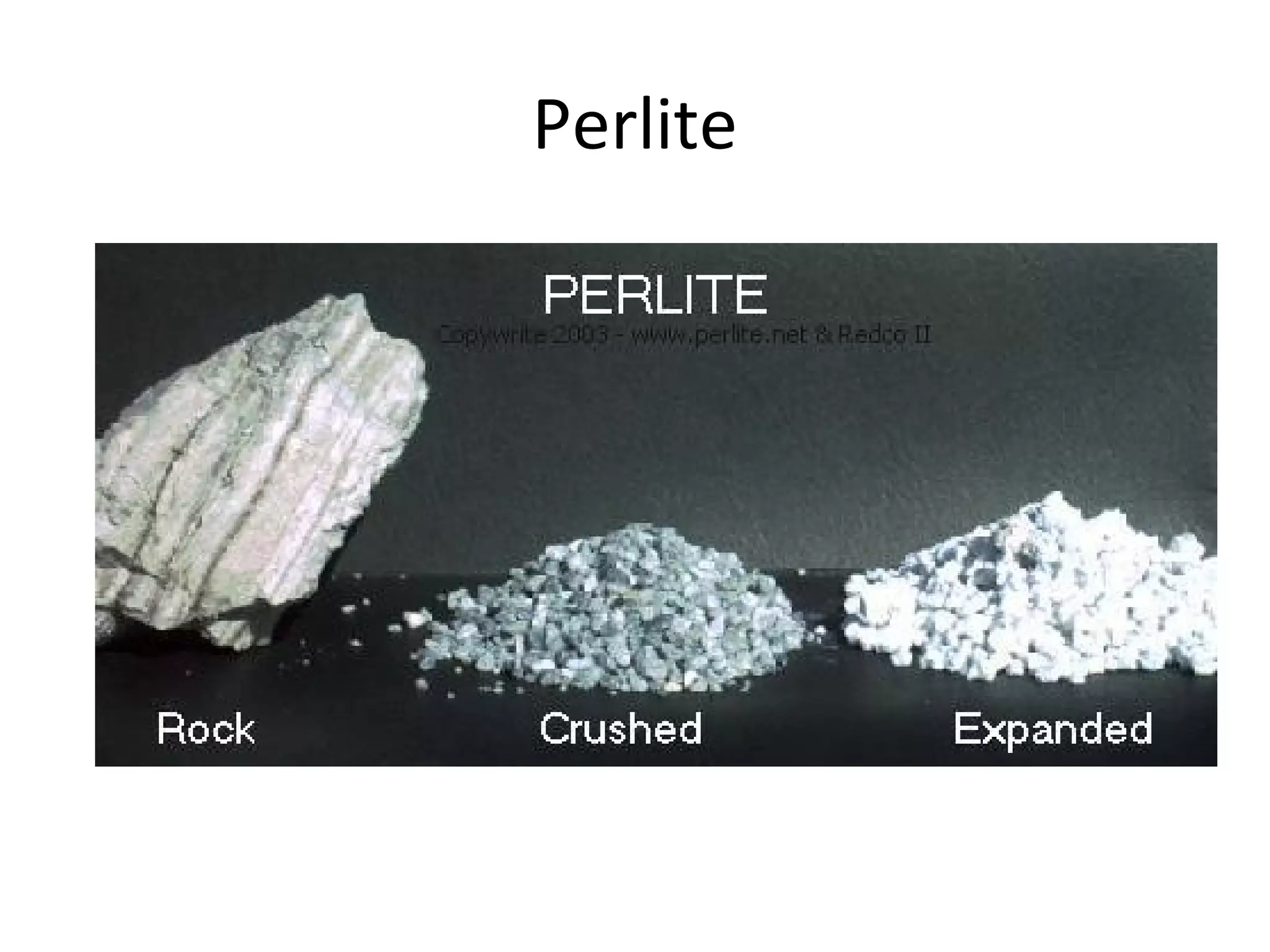
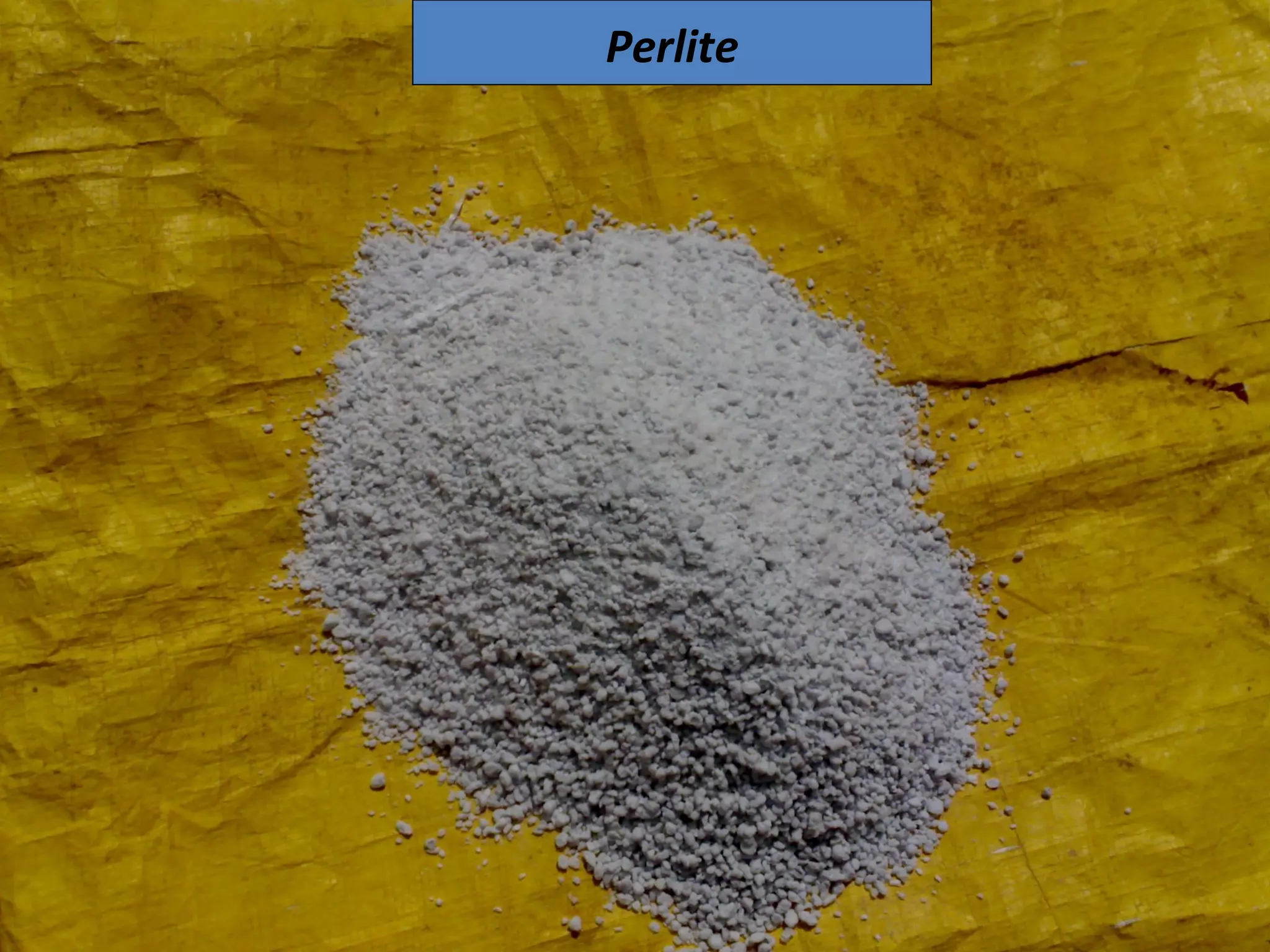
Perlite
Perlite
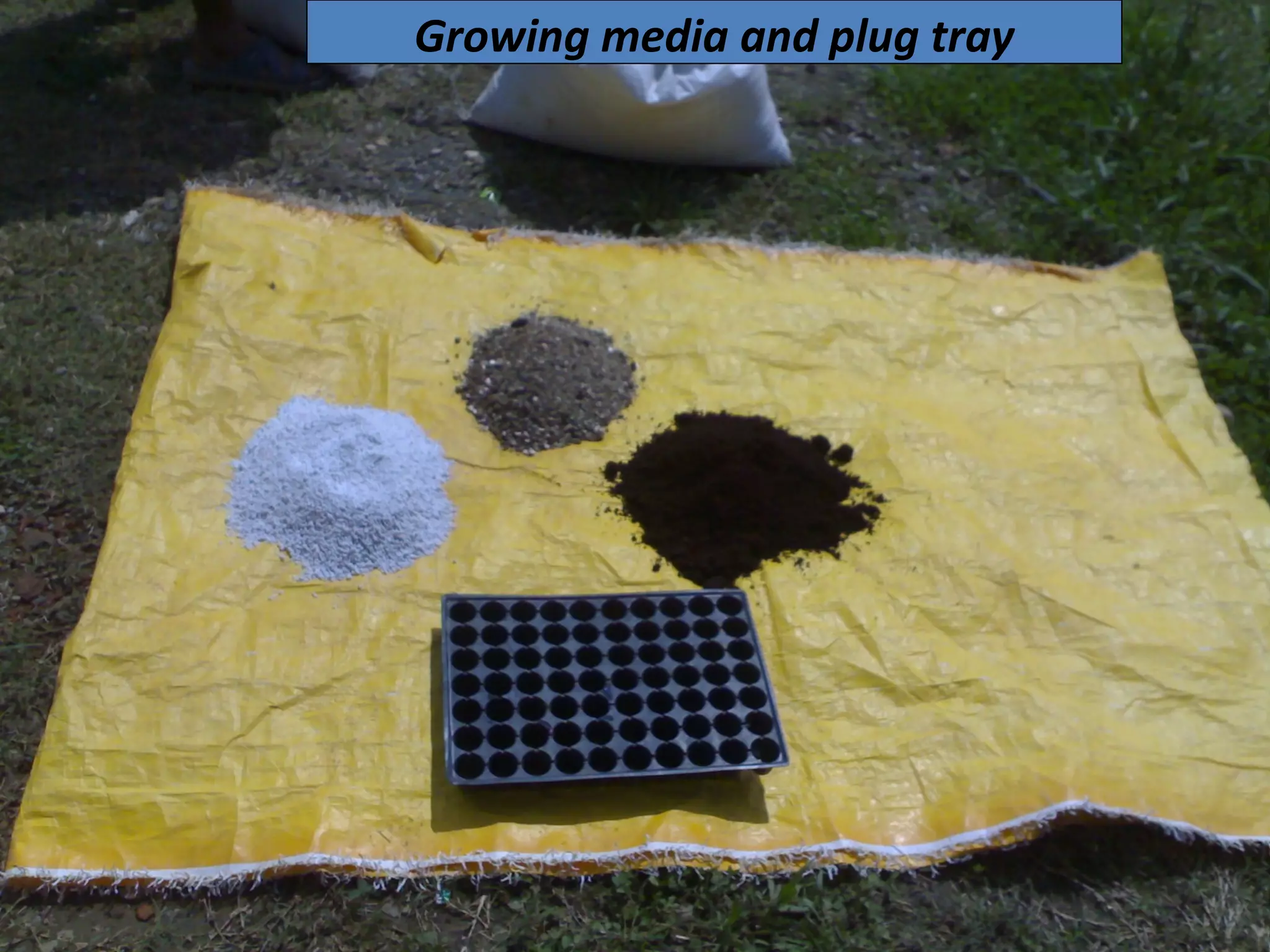
Growing media and plug tray
Mixing of growing media
Sowing of seeds in plug-trays
Healthy nursery of potential crops for protected cultivation
cucumber Tomato
capsicum
Fibrous root growth
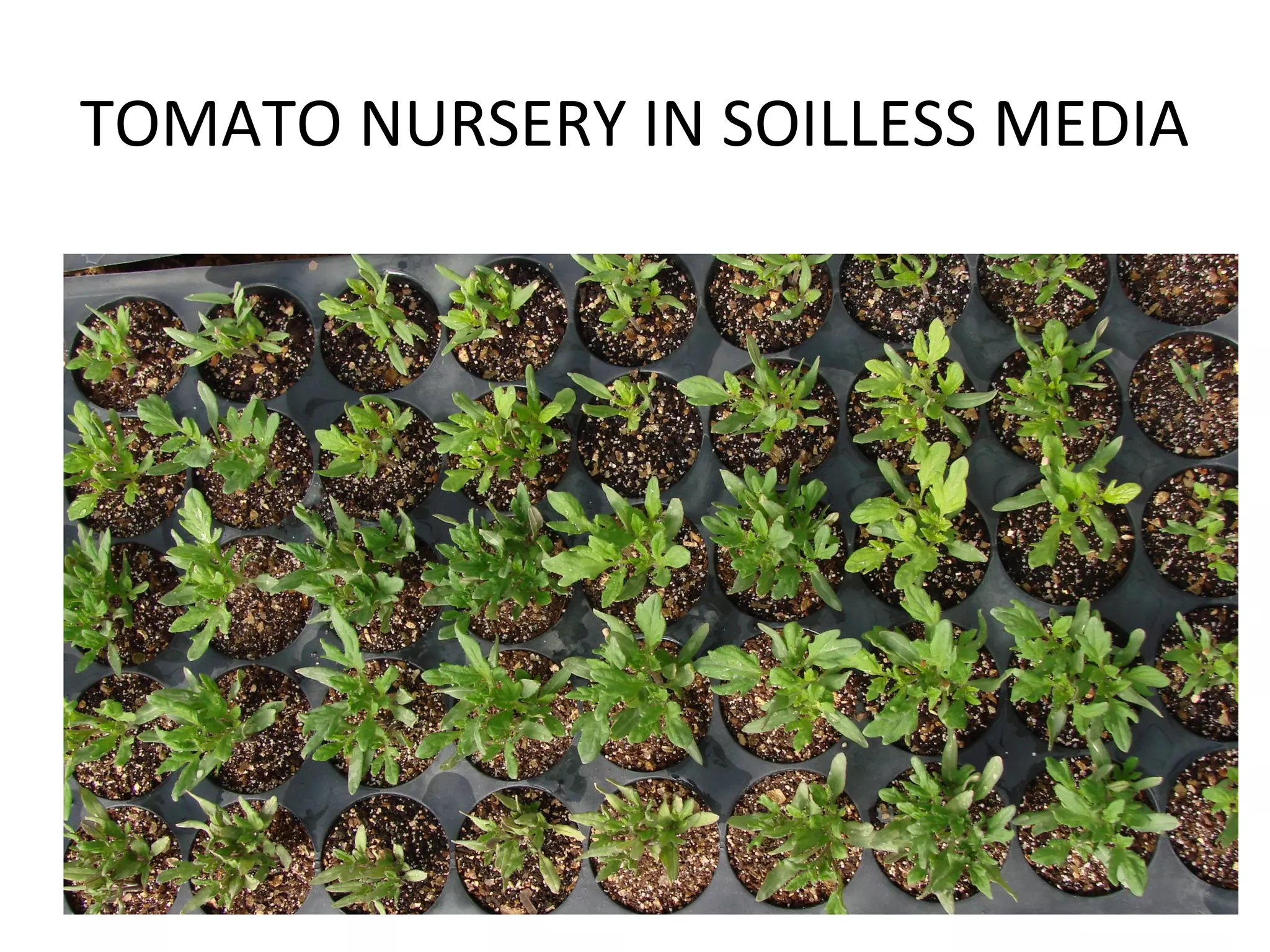
TOMATO NURSERY IN SOILLESS MEDIA
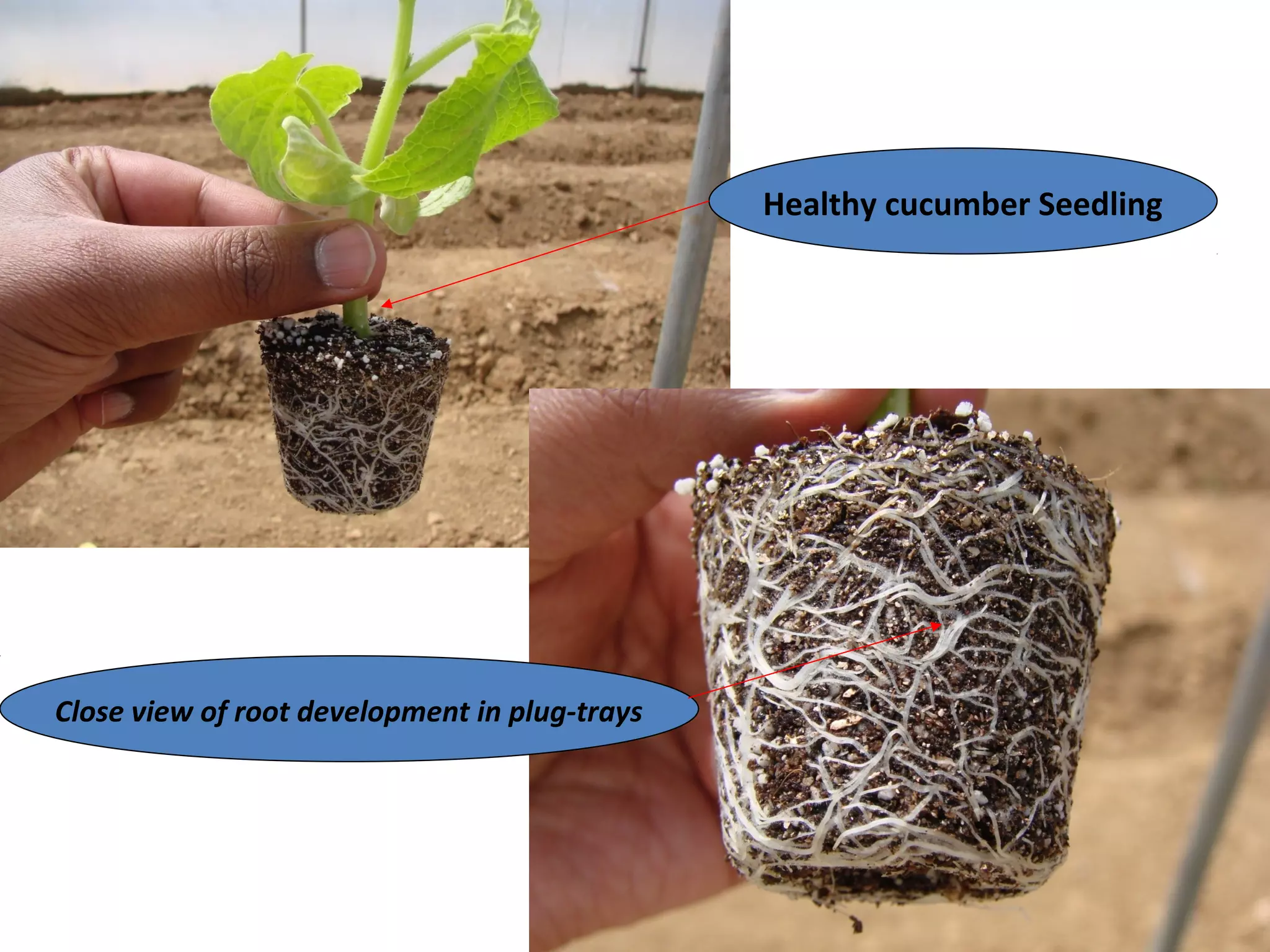
Healthy cucumber Seedling
Close view of root development in plug-trays
A View of Hi-Tech nursery at Namdhari Seeds
Potential Hybrids o Tomato For Greenhouse
Cultivation
• 1. Avtar (7711)
• 2. Rakshita
• 3. Naveen 2000+
• 4. BWT-3
• 5. Surya
Hybrids from Private Sector for protected cultivation
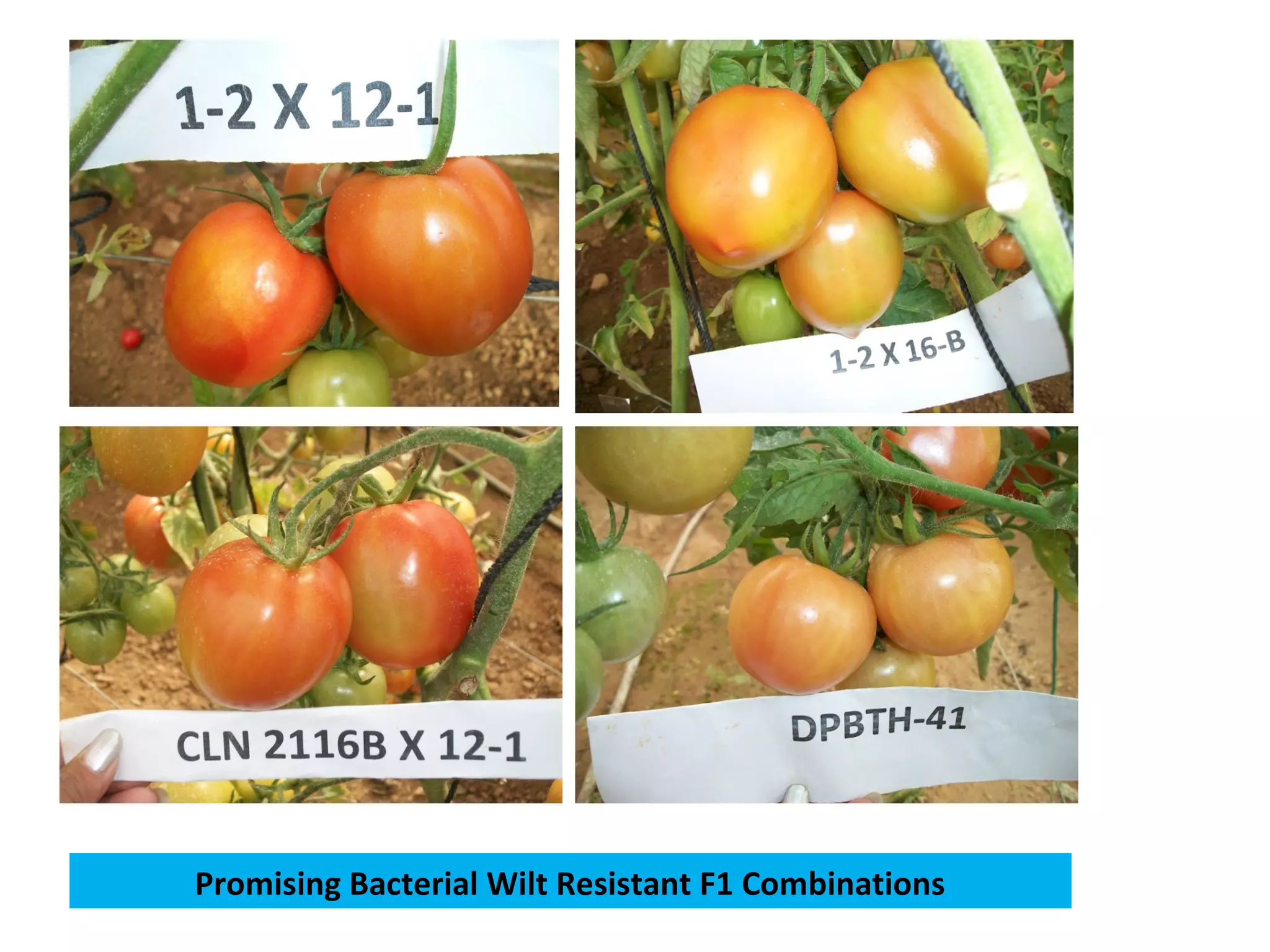
Promising Bacterial Wilt Resistant F1 Combinations
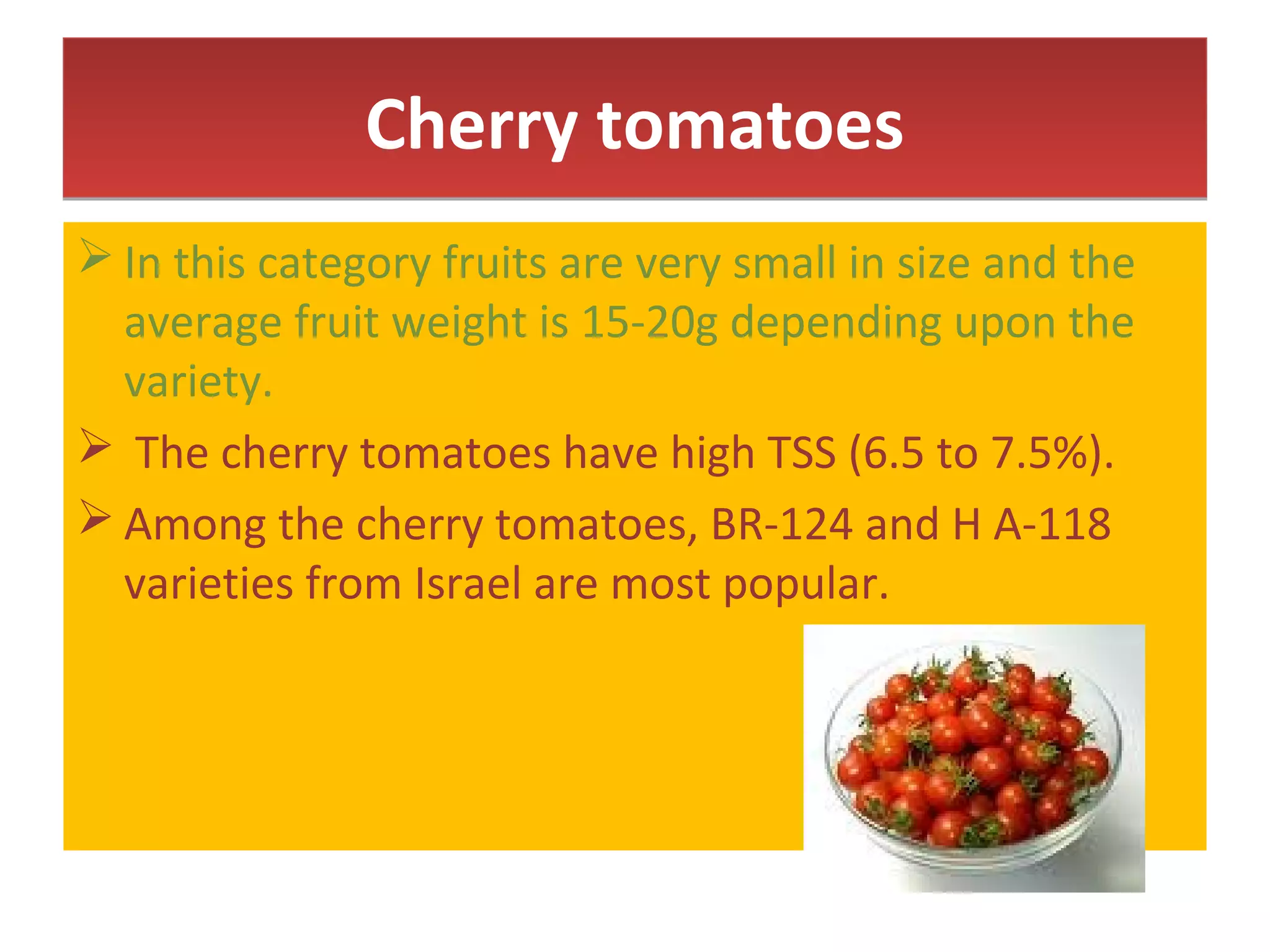
Cherry tomatoesCherry tomatoes
 In this category fruits are very small in size and the
average fruit weight is 15-20g depending upon the
variety.
 The cherry tomatoes have high TSS (6.5 to 7.5%).
 Among the cherry tomatoes, BR-124 and H A-118
varieties from Israel are most popular.
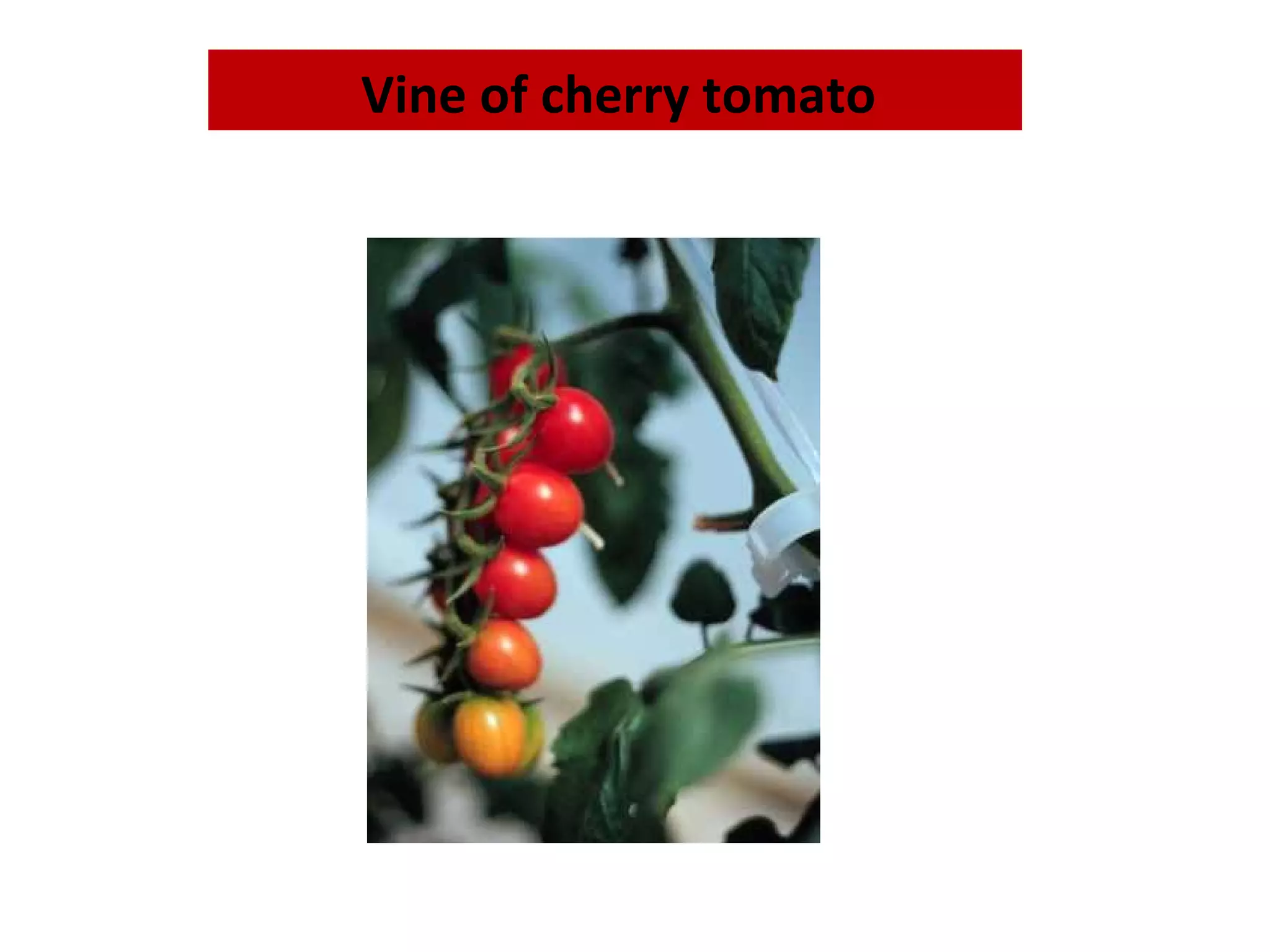
Vine of cherry tomato
Factors affecting greenhouse
tomato production
1. Temperature and humidity control
Night temperature should not be allowed to drop below 15 0
C.
2. Carbon-dioxide level in the green house
350 ppm to 1000 ppm
 3. Light Reducing light levels from 10,000 to 2,500 lux
(approximately 100 to 25 W/m2
) has been shown to delay flower
initiation
4. Air movement
5. Disease and insect control
6. Nutritional management
Planting Time
 In north Indian, the tomato crop is planted from first
August to second week of September under
polyhouse conditions.
 This crop is continued up to June or July under
climate controlled greenhouse.
 If the greenhouse is naturally ventilated then the
crop can be grown up to April or May months.
 In H P we take two crops from naturally ventilated
polyhouse.
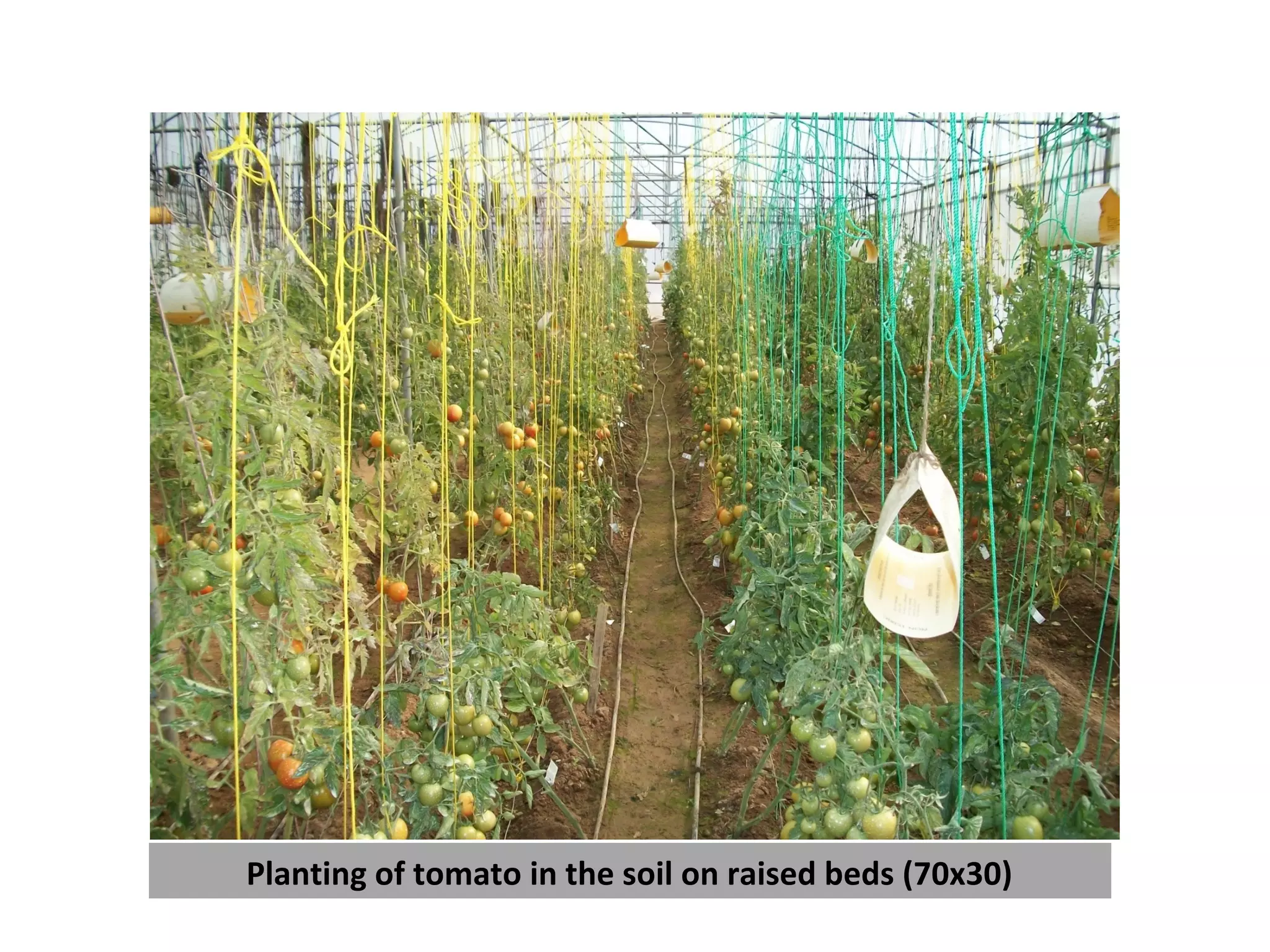
BED PREPARATION IN TOMATO
Spacing = 70x30cm
Path=60cm
Bed width= 90cm
Planting of tomato in the soil on raised beds (70x30)
Fertigation
Basal doze of 50 kg NPK per hectare with straight
fertilizers and fertigation at 150 kg NPK per ha with water soluble
fertilizer (Polyfeed/Haileaf 19:19:19).
Fertilizer application with irrigation in liquid form is called
fertigation and it is done once or twice a week depending upon
soil fertility, variety, and stage of crop growth.
Generally drip system of irrigation is followed for green house
tomato so as to maintain constant growth.
Irrigation should be given at weekly or bi-weekly interval
depending upon the season and location
N : P : K solution in ratio of 19:19:19 is prepared and applied
through drip starting from 3rd
Week after transplanting or
initiation of fruit set and terminating 15 days prior to harvest.
Training
Single or two stems .
In early stage the shoots should remove by
snapping them off.
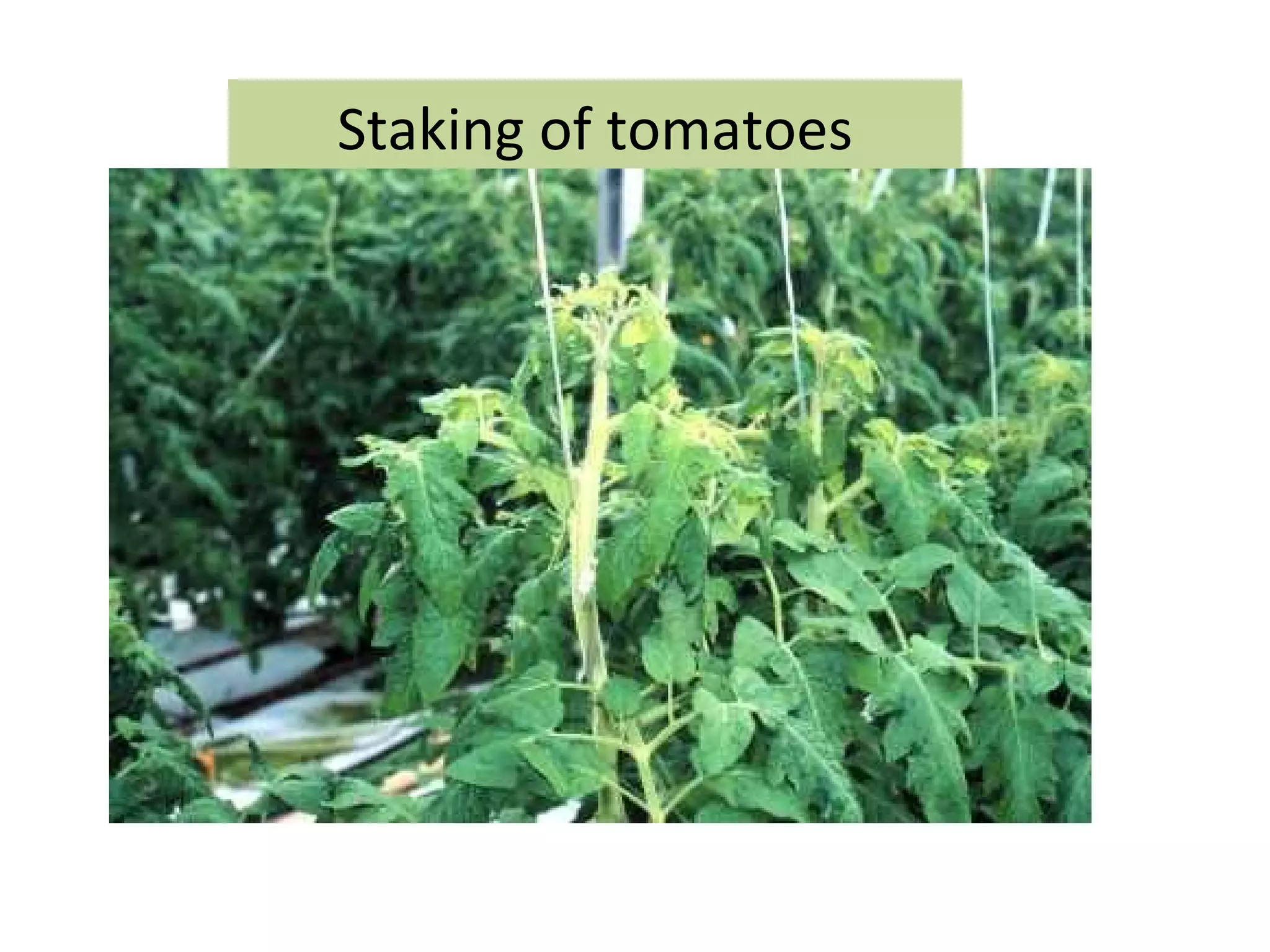
 Plants are supported by plastic twine, loosely
anchored on the base of plants .
The twine is not wrapped around the growing
tip otherwise the tip may break.
The plants must be pruned regular basis for
10-11 months life cycle of the tomato crop.
This will provide air circulation, which helps to
reduce the incidence of the diseases .
Staking of tomatoes
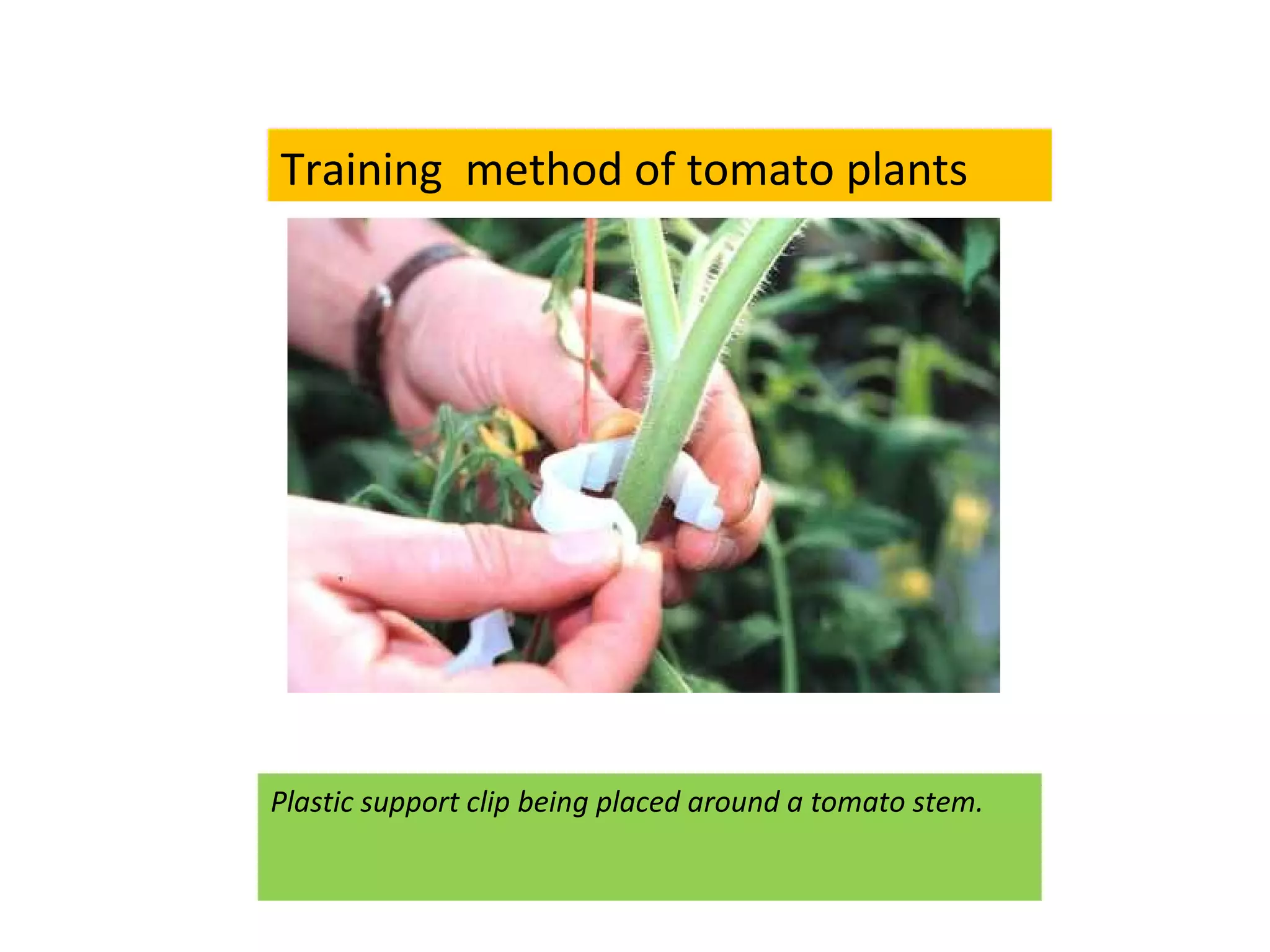
Training method of tomato plants
Plastic support clip being placed around a tomato stem.
PRUNNING
These tomatoes require pruning of all lateral branches.
 Pruning must be done on a frequent schedule (every 3
to 4 days) .
Prunning is done early in the day when plants are turgid
but dry.
Care should be taken to remove only suckers and not
the main terminal bud.
 The pruning time should be used to inspect plants for
obvious problems such as disease, nutritional
deficiencies, insects etc.
All pruned plant material should be placed in a
container and removed from the greenhouse.
Flowering
Flowering is a prerequisite to fruit development and delays
in flowering generally result in delayed fruit
production.
The environment of the polyhouse can have a significant
effect on the number of flowers that are initiated on
an inflorescence .
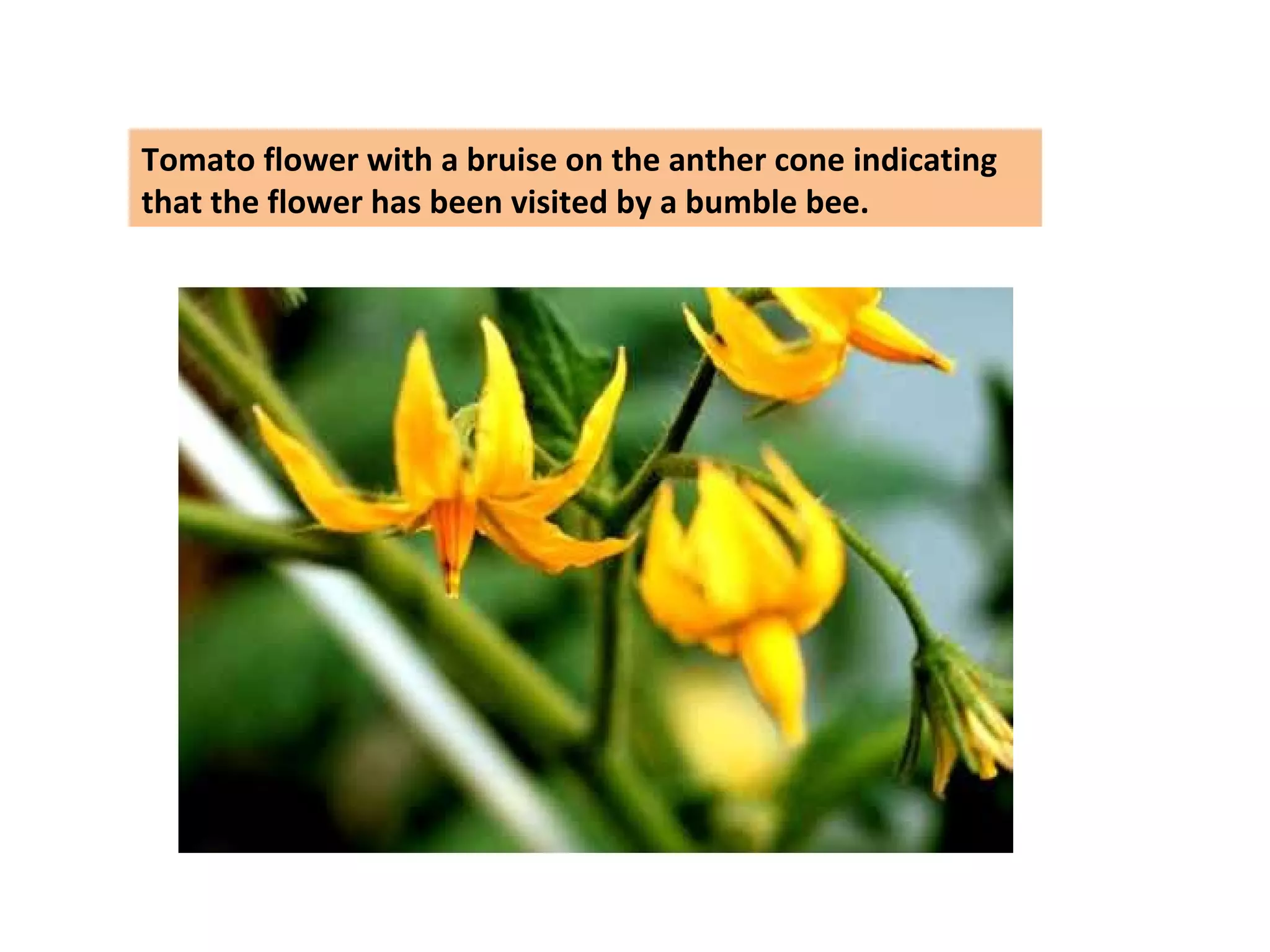
Tomato flower with a bruise on the anther cone indicating
that the flower has been visited by a bumble bee.
PLANT PROTECTION
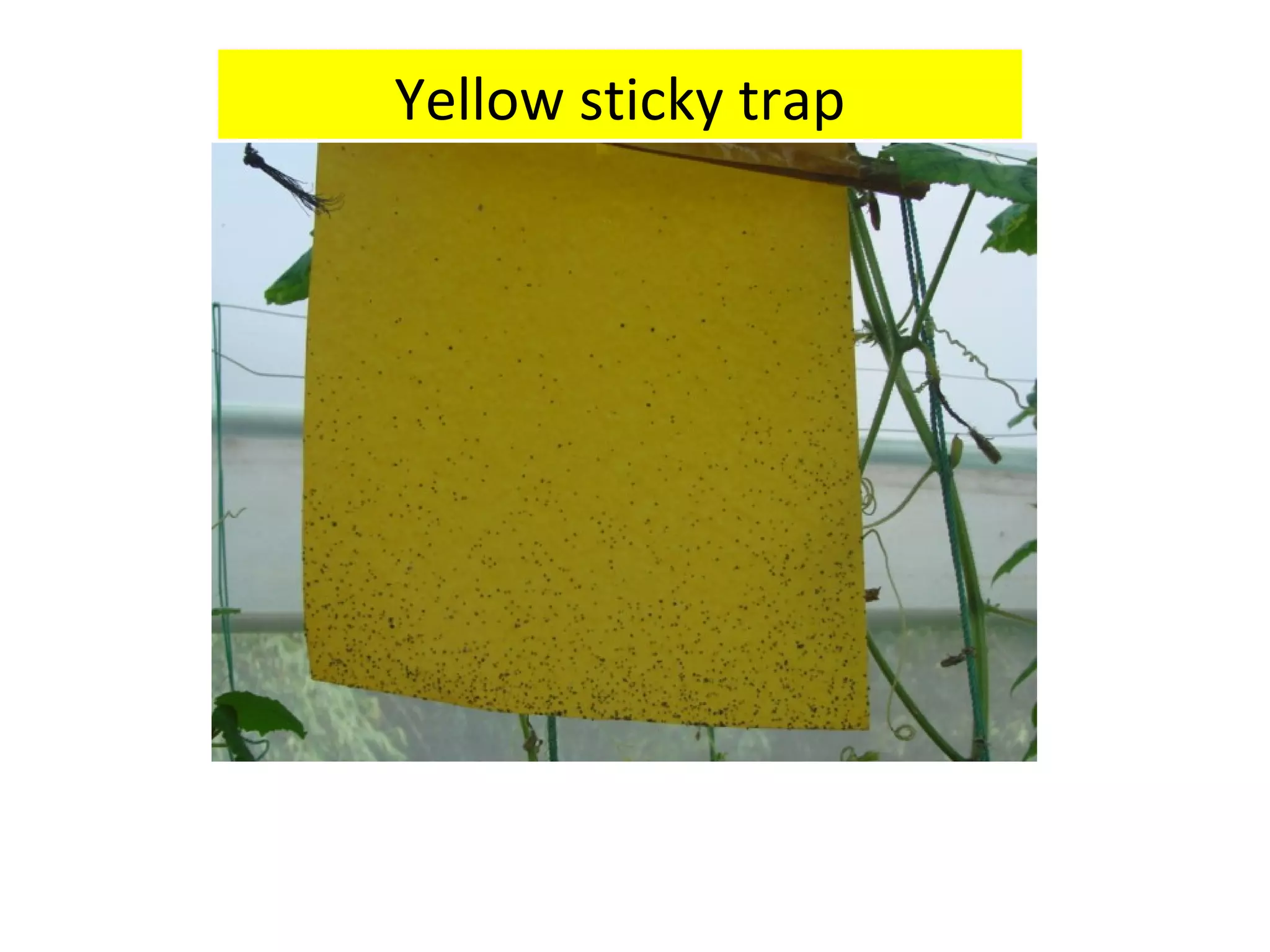
• Prefer biological control (yellow sticky traps,
pheromone/light traps, predators/parasitoids
• Grow resistant varieties only
• Use safe insecticides
• Keep strict and constant vigil against pest and
diseases
• Follow timely plant protection measures
• Prefer biological control (yellow sticky traps,
pheromone/light traps, predators/parasitoids
• Grow resistant varieties only
• Use safe insecticides
• Keep strict and constant vigil against pest and
diseases
• Follow timely plant protection measures
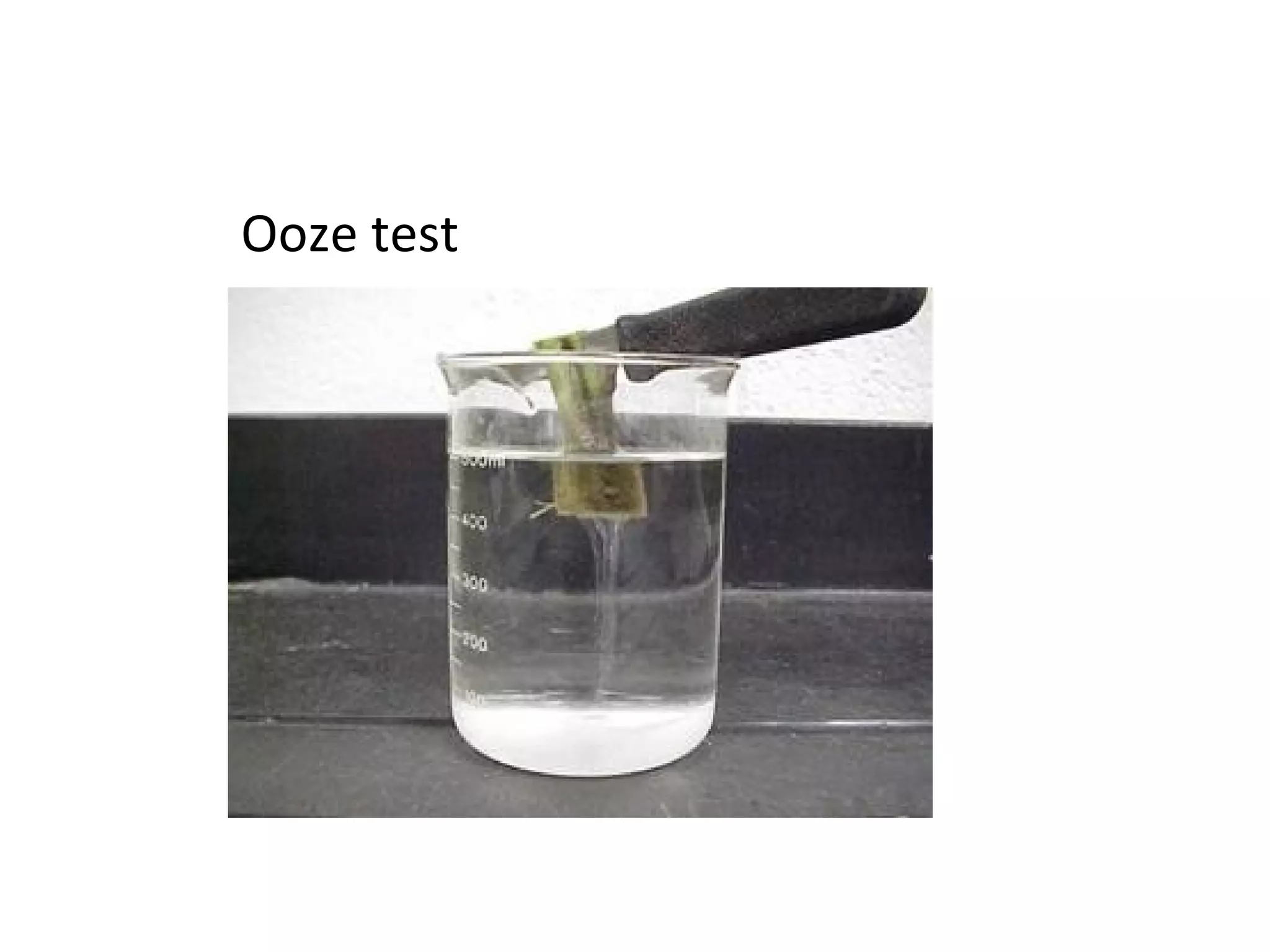
Ooze test
Powdery mildew
Attack of white fly
Yellow sticky trap
Cucumber Production Under Hi- Tech Polyhouse
Type of Cucumber Varieties
On the bases of flowering habit:
1.Gynoecious:- Which produces only female flowers.
2.Pre-dominantly gynoecious :-Also bears some male
flowers.
3.Monoecious:- Which produces both male and
female flowers.
The first two types produce fruits parthenocarpically ,whereas, monoecious types require
pollination
Monoecious varieties
Monoecious varieties can be grown inside the greenhouses,
but pollination is required for fruit setting which are:
1)Japnese Long Green
2)Pusa Sanyog
3)Priya
4)Poinsett
5)Malini Hybrid
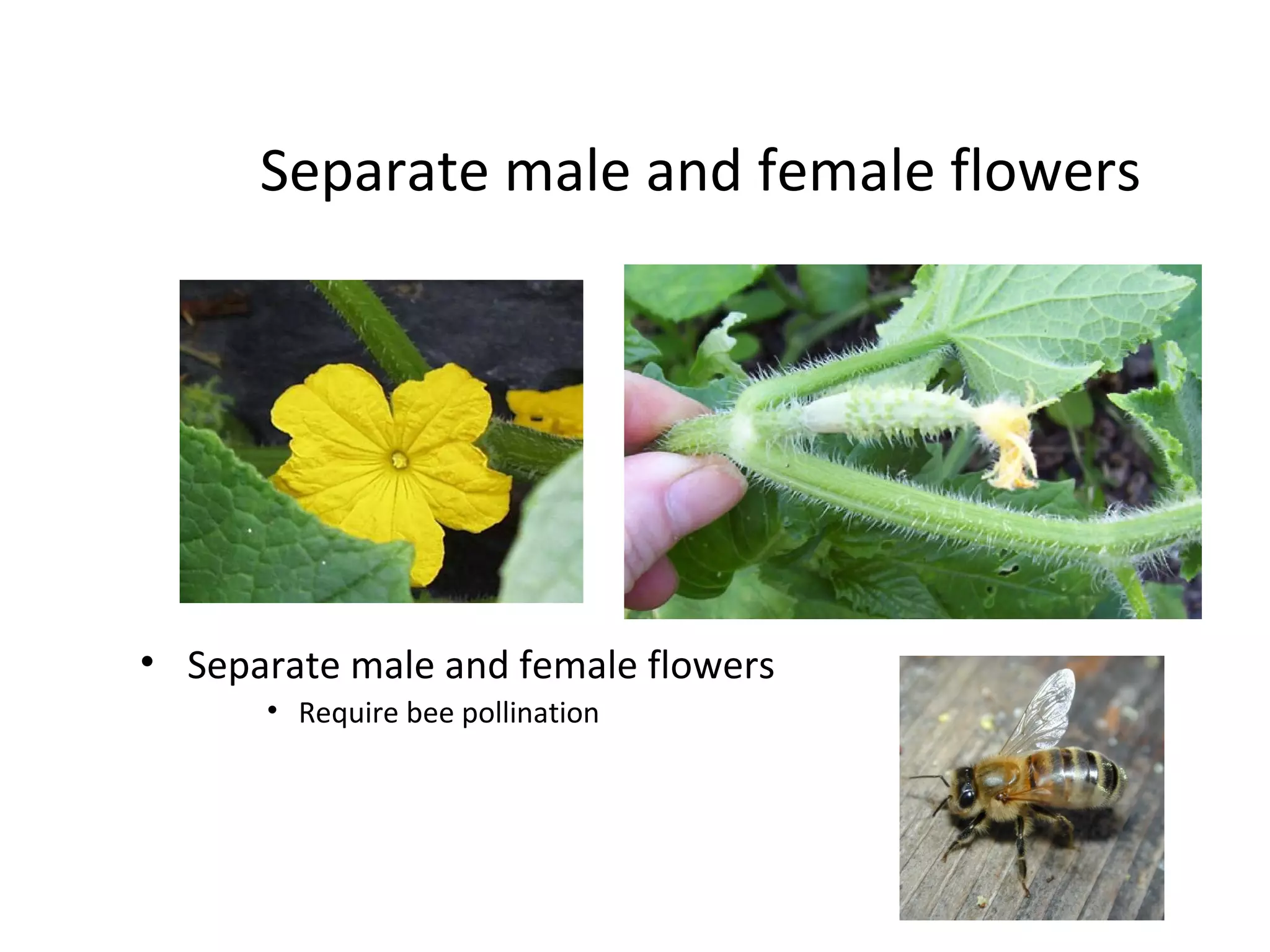
Separate male and female flowers
• Separate male and female flowers
• Require bee pollination
Cucumber-greenhouse pollinations
Pollination and fruit setting in monoecious
cucumbers under polyhouse conditions
Parthenocarpic cucumber
The parthenocarpic cucumber is a type of cucumber vine that
produces only female flowers and produces cucumbers without
the need of pollination.
The seed for parthenocarpic cucumbers costs more than
ordinary cucumber seed but the germination or sprouting
rate is higher and the chance for disease or pest problems
is greatly less.
 If pollination does occur, the fruit will form seeds, the
shape ofthe fruit will be distorted and a bitter tasting fruit will
develop. It is therefore essential to prevent bees and
other pollinators from entering the greenhouse and carrying
pollen from outdoor gardens
Parthenocarpic Varieties
The important parthenocarpic varieties available in
India are:
i. Satis
ii.HILLTON
iii.Nun-9729
iv.Clodia
v.Kian
vi.Mansour
A few important parthenocarpic varieties of cucumber from
Europe and Israel are:
Hasan and Sarig (for summer crop),
Muhasan and Dinar (for winter season),
 Mustang and Bronco (for spring crop),
Parthenocarpic Cucumber
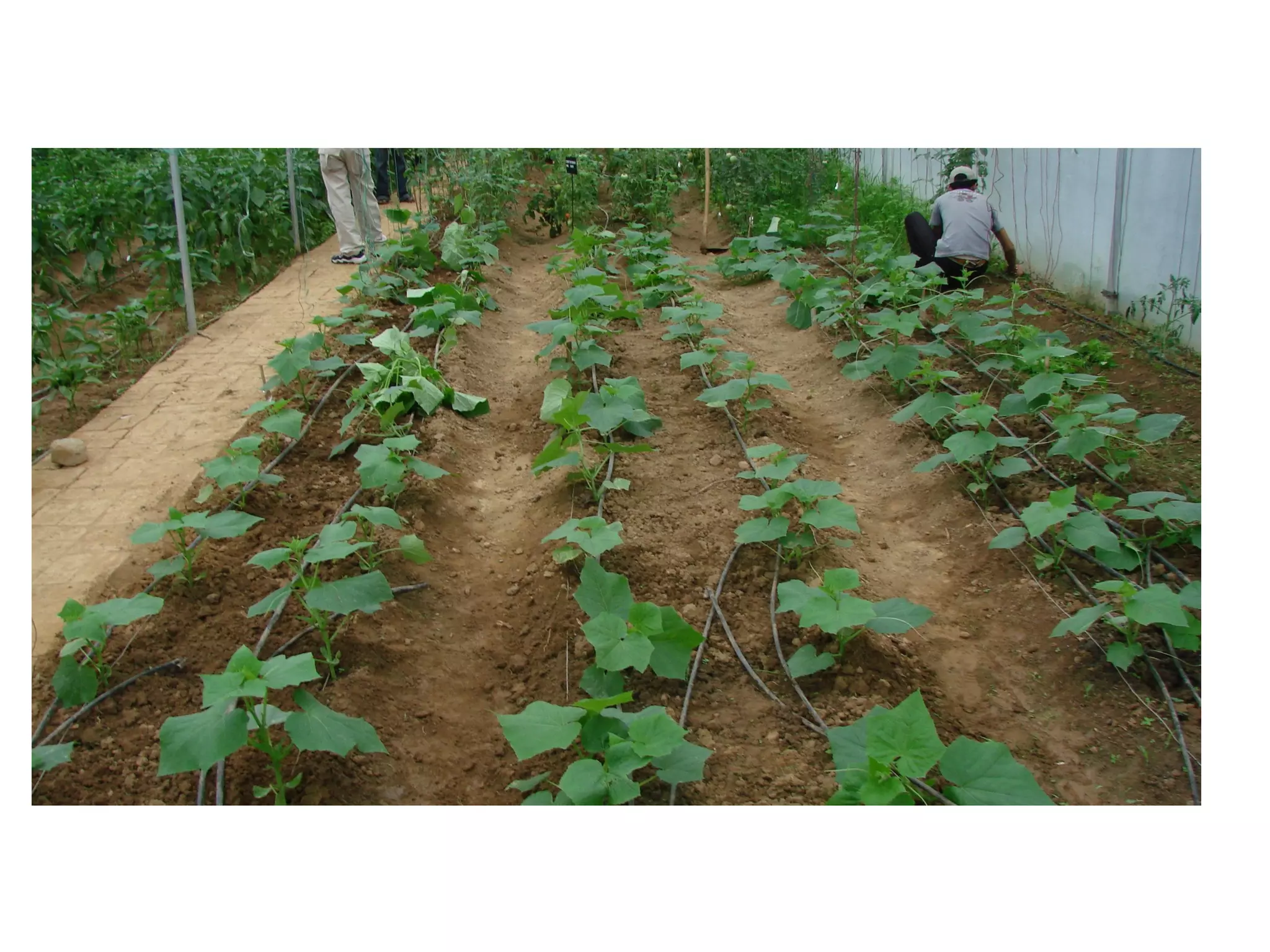
Plant geometry
•The cucumber seedlings are planted on the raised beds with two
rows in a bed with row to row spacing of 70 cm and plant to plant
spacing of 30 cm.
•In single stem training , female flowers should be removed or
pinched up to 5th
node to ensure sufficient vegetative growth of
the plants to sustain the fruit load.
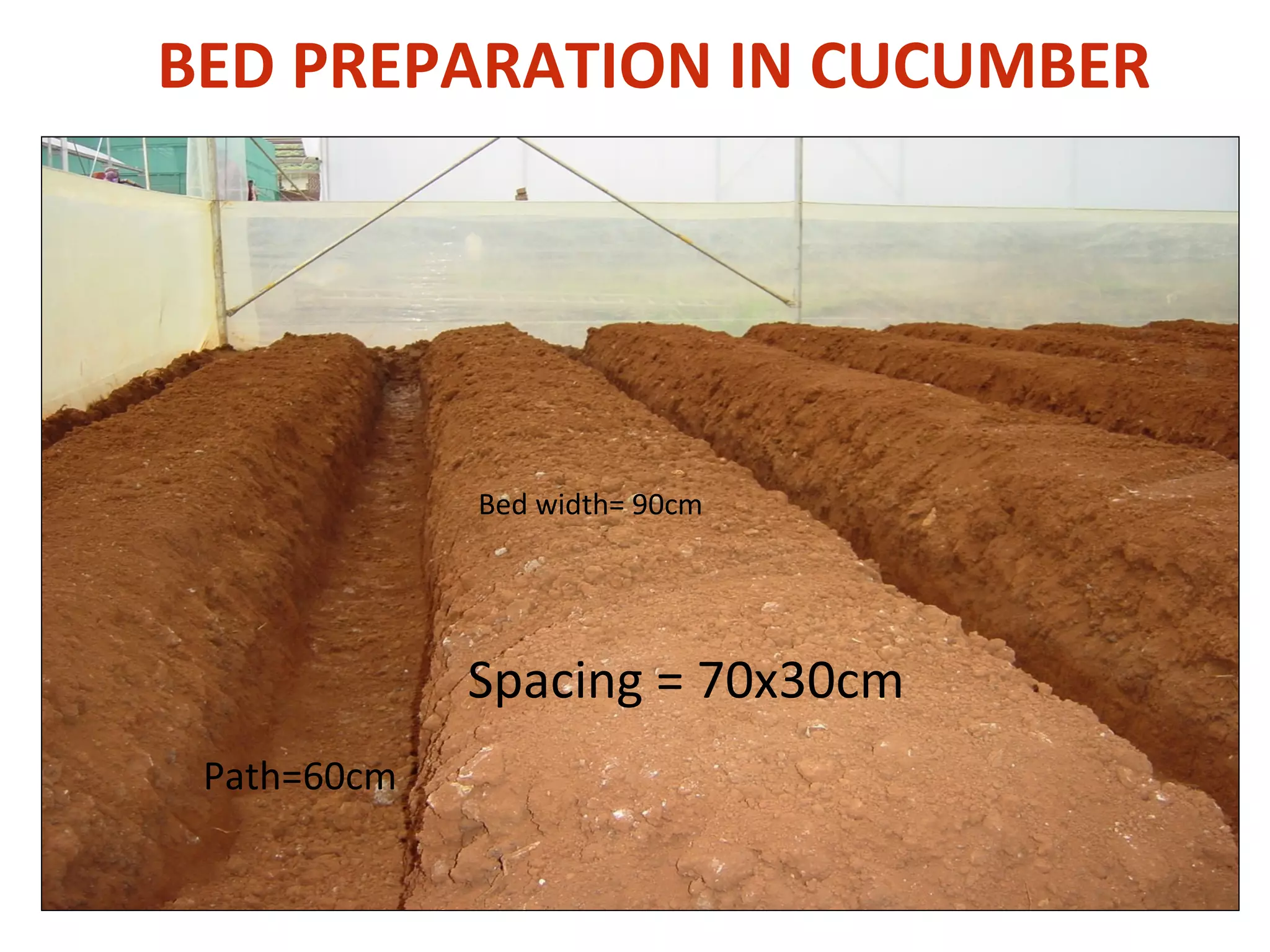
BED PREPARATION IN CUCUMBER
Spacing = 70x30cm
Path=60cm
Bed width= 90cm
Staking of parthenocarpic cucumber on single stem at 70x30cm spacing
Fertigation
Basal doze of 50 kg NPK per hectare with straight
fertilizers and fertigation at 450 kg NPK per ha with water
soluble fertilizer (Polyfeed/Haileaf 19:19:19).
Fertigation should be done once or twice a week depending
upon soil fertility, variety, and stage of crop growth.
Cucumber is heavy feeder crop.
Irrigation should be given at weekly or bi-weekly interval
depending upon the season and location
N : P : K solution in ratio of 19:19:19 is prepared and applied
through drip starting from 3rd
Week after transplanting or
initiation of fruit set and terminating 15 days prior to
harvest.
Training of Cucumber
• REMOVE FEMALE FLOWERS UPTO 5TH
NODE
• ONE OR TWO VINES
• RETAIN ONE FRUIT PER NODE
• DE-SHOOTING
Fig 1 (a) Fig 1 (b) Fig 1 (c)
Training systems in cucumber
DIFFERENT GROWTH STAGES OF CUCUMBER
To harvest cucumbers, cut (don't pull) them from the vine.
Pulling or yanking can damage the brittle vines.
Day neutral
More sensitive to changing environment than
tomato.
Optimum temperature for germination: 20-25 0
C.
Optimum temperature for quality fruit production:
18-21 0
C( 20-21 C).
Less than 18 0
C: adverse effect on growth and yield.
Low night temperature: parthenocarpic fruits.
Climatic Requirements
• Four lobed preferred for metropolitan cities and
other high markets.
• Others for local market
• Red, yellow, orange and purple varieties
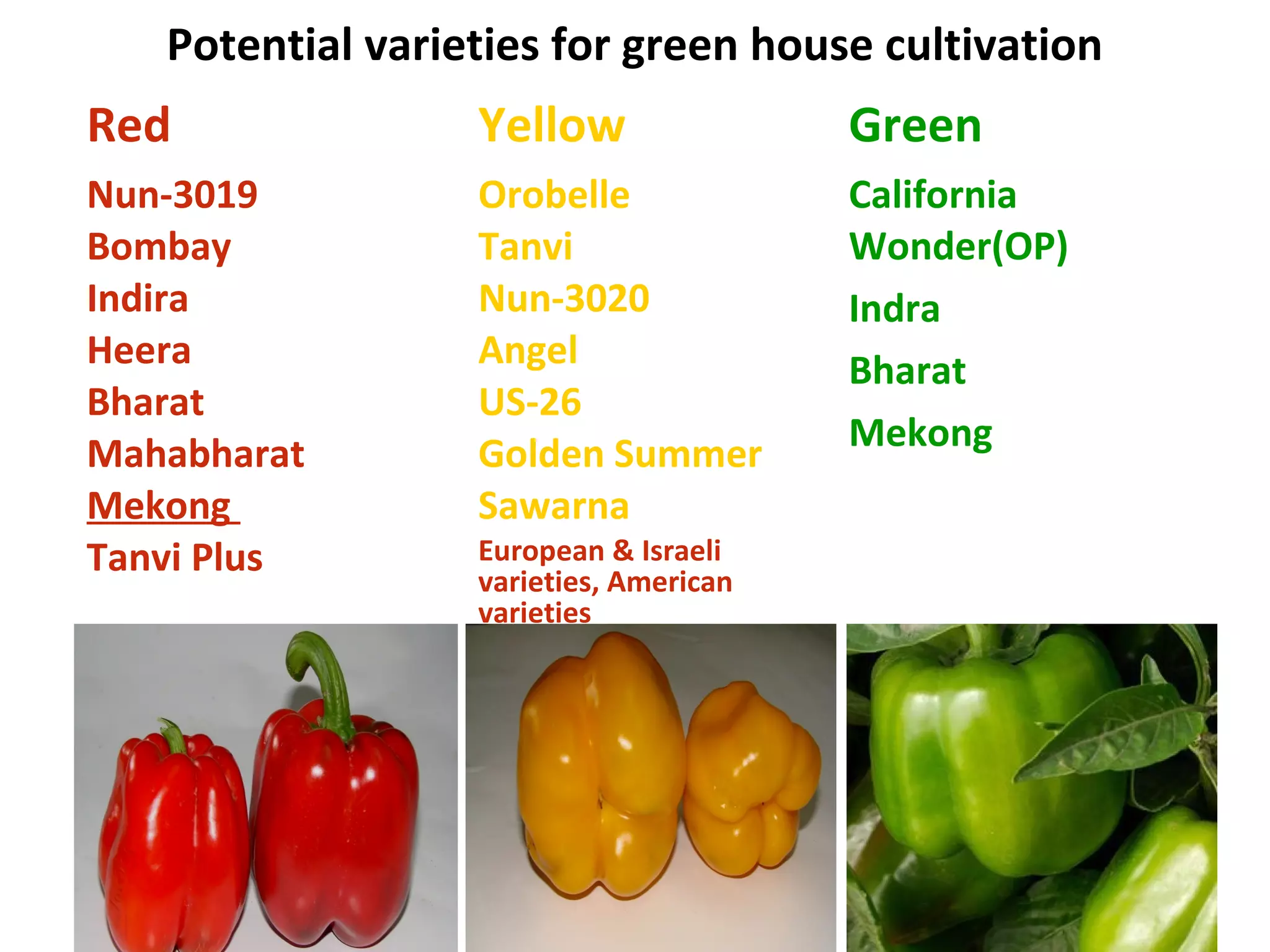
Varieties
Red Yellow Green
Nun-3019
Bombay
Indira
Heera
Bharat
Mahabharat
Mekong
Tanvi Plus
Orobelle
Tanvi
Nun-3020
Angel
US-26
Golden Summer
Sawarna
European & Israeli
varieties, American
varieties
California
Wonder(OP)
Indra
Bharat
Mekong
Potential varieties for green house cultivation
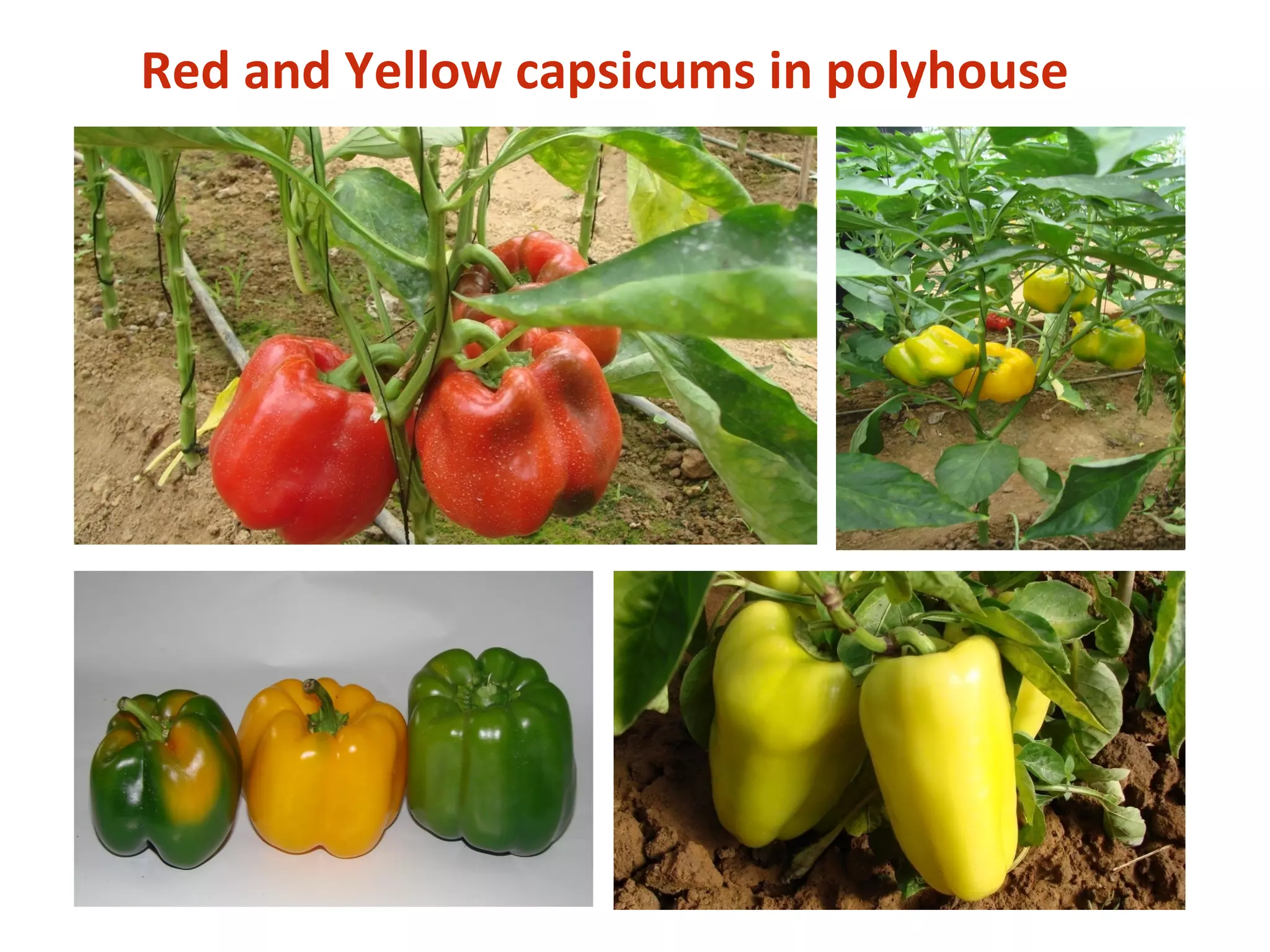
Red and Yellow capsicums in polyhouse
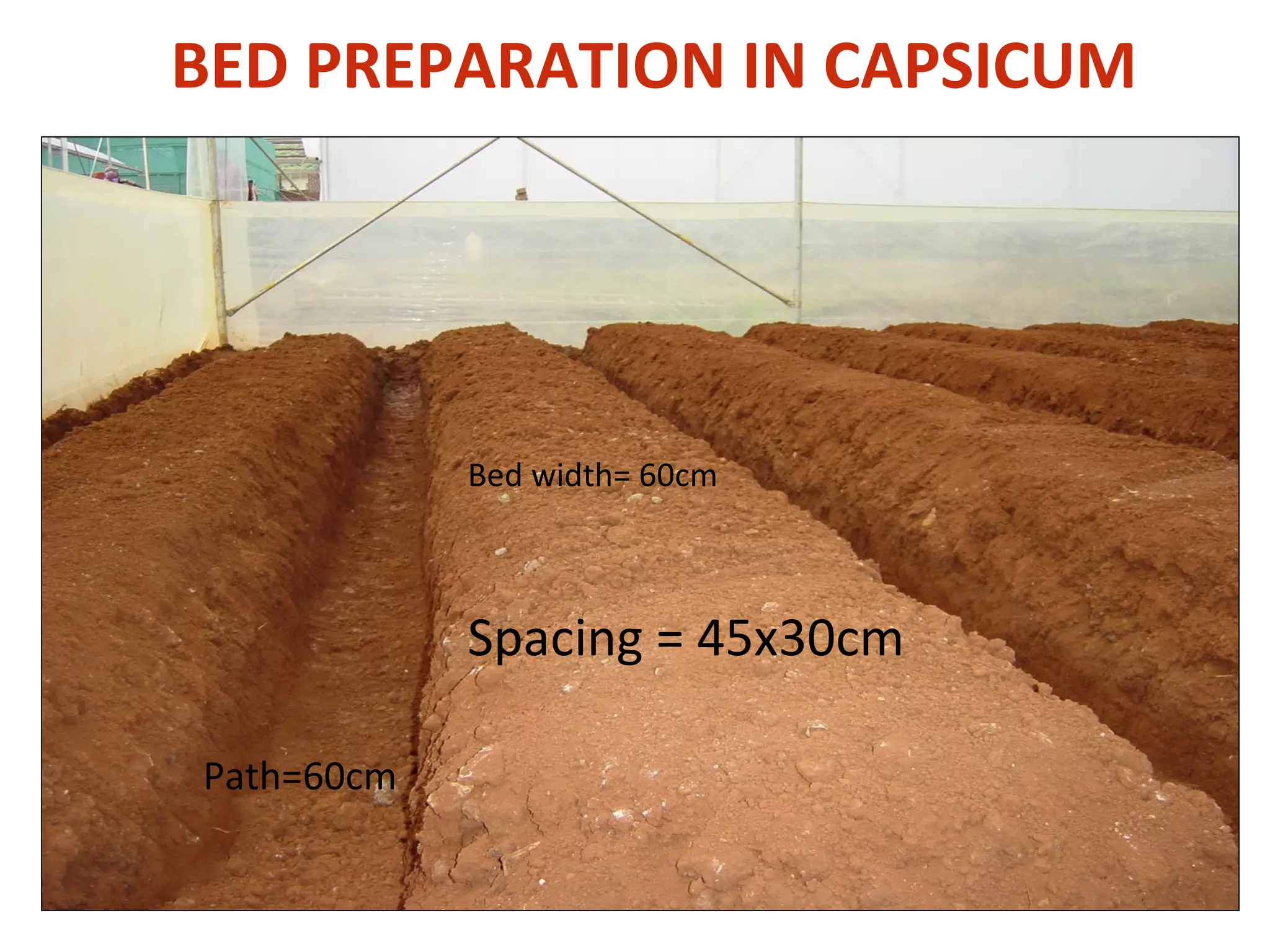
BED PREPARATION IN CAPSICUM
Spacing = 45x30cm
Path=60cm
Bed width= 60cm
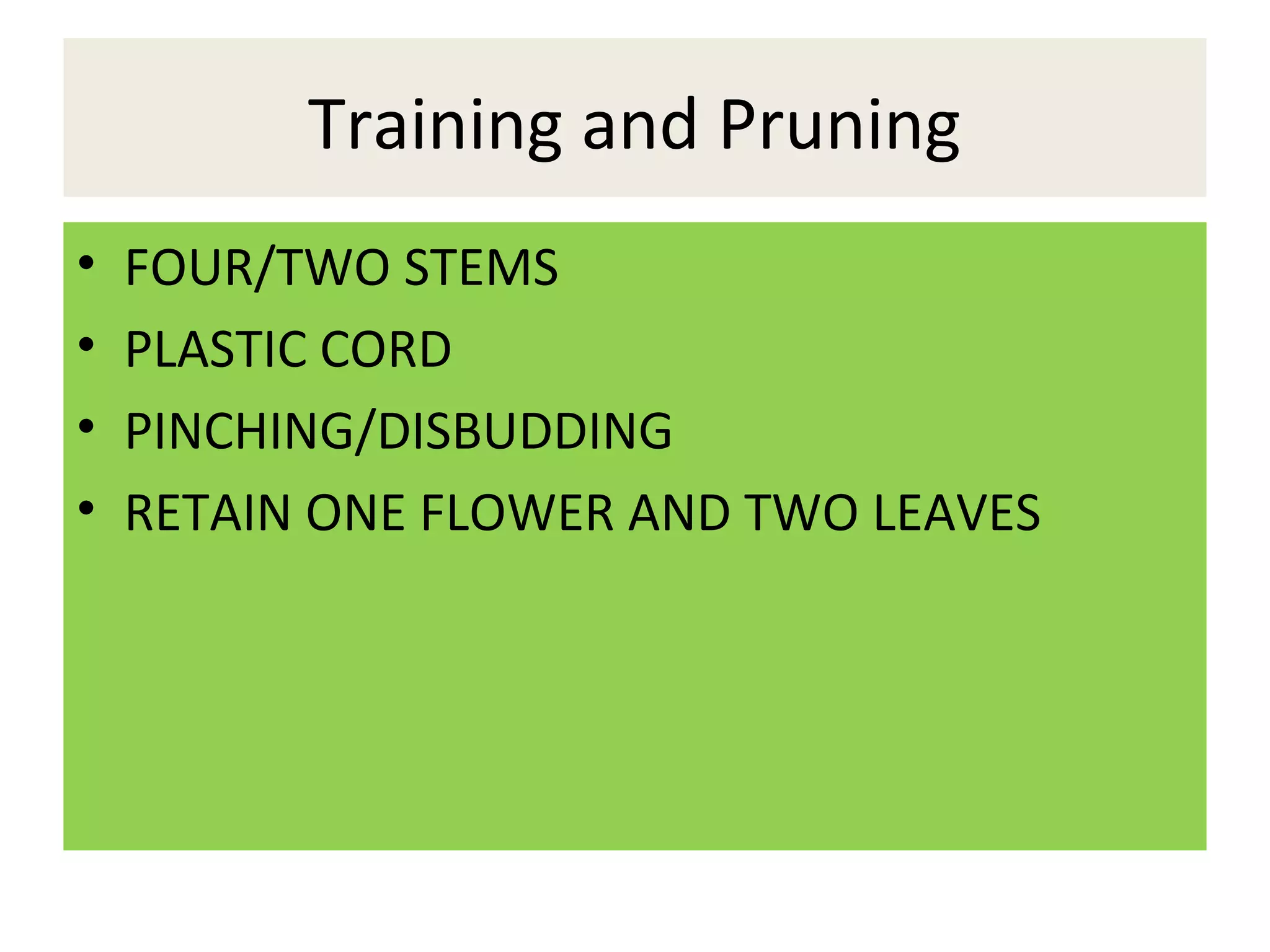
Training and Pruning
• FOUR/TWO STEMS
• PLASTIC CORD
• PINCHING/DISBUDDING
• RETAIN ONE FLOWER AND TWO LEAVES
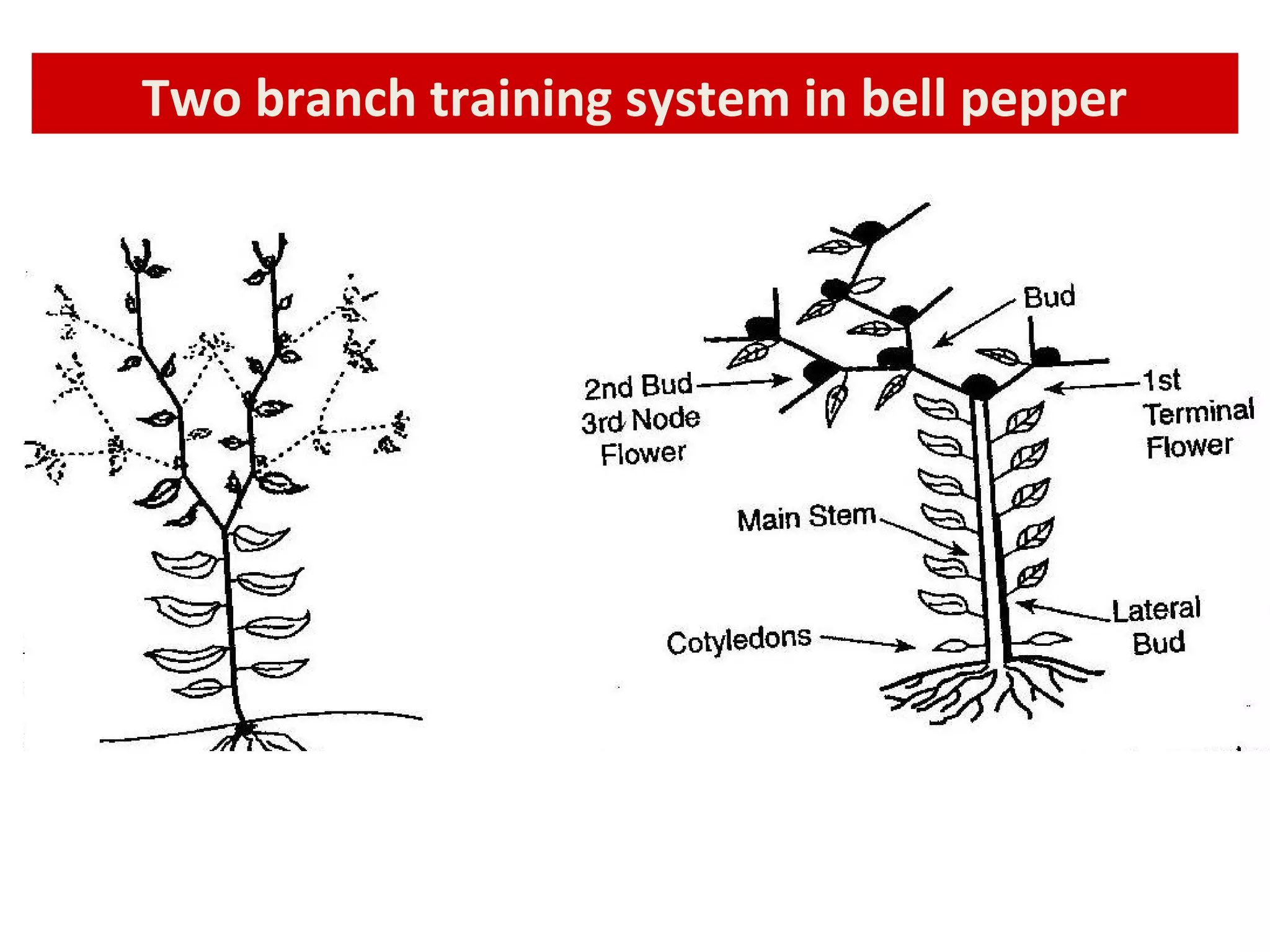
Two branch training system in bell pepper
Diff. Between Four & Two Leaders
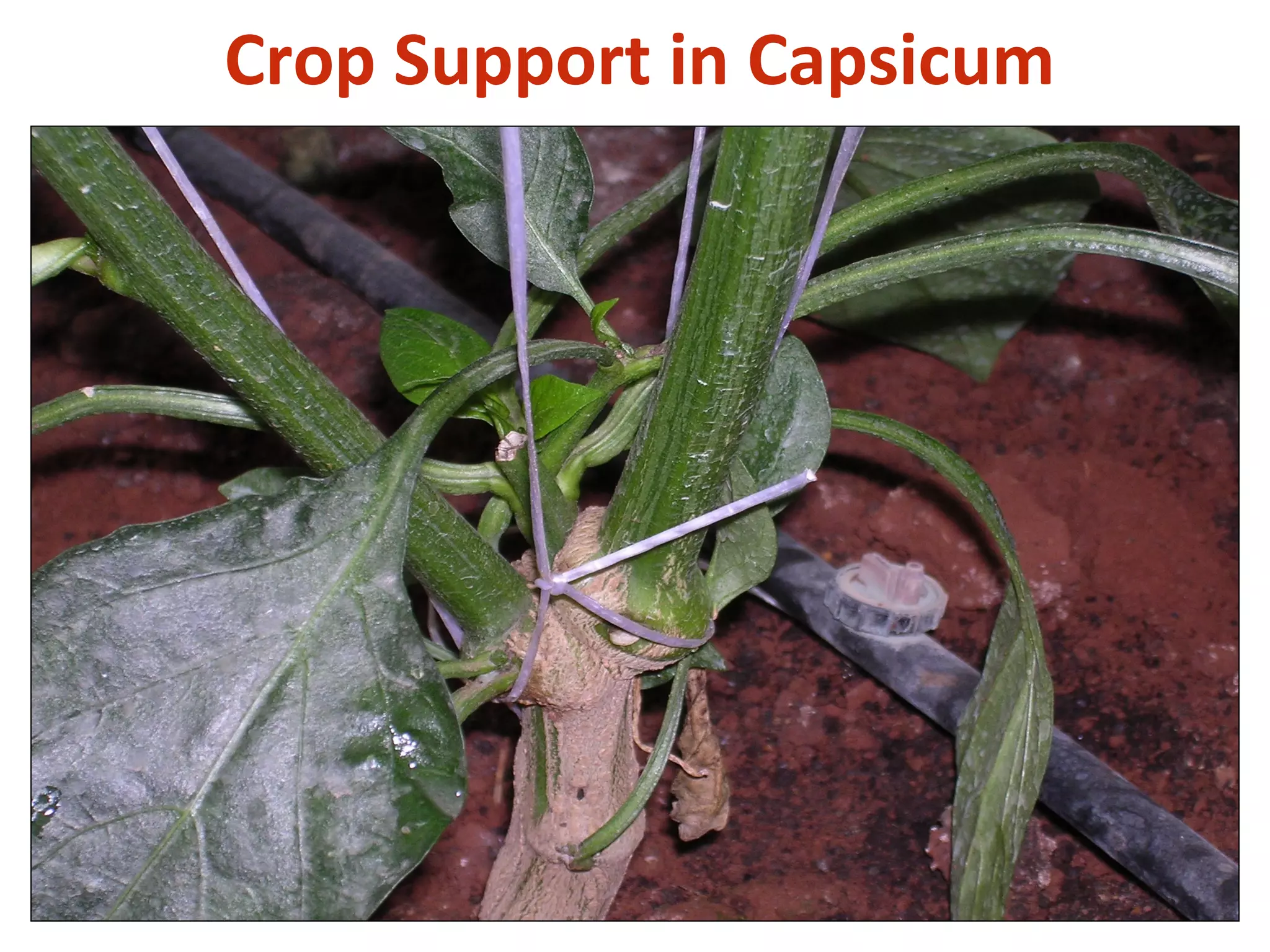
Crop Support in Capsicum
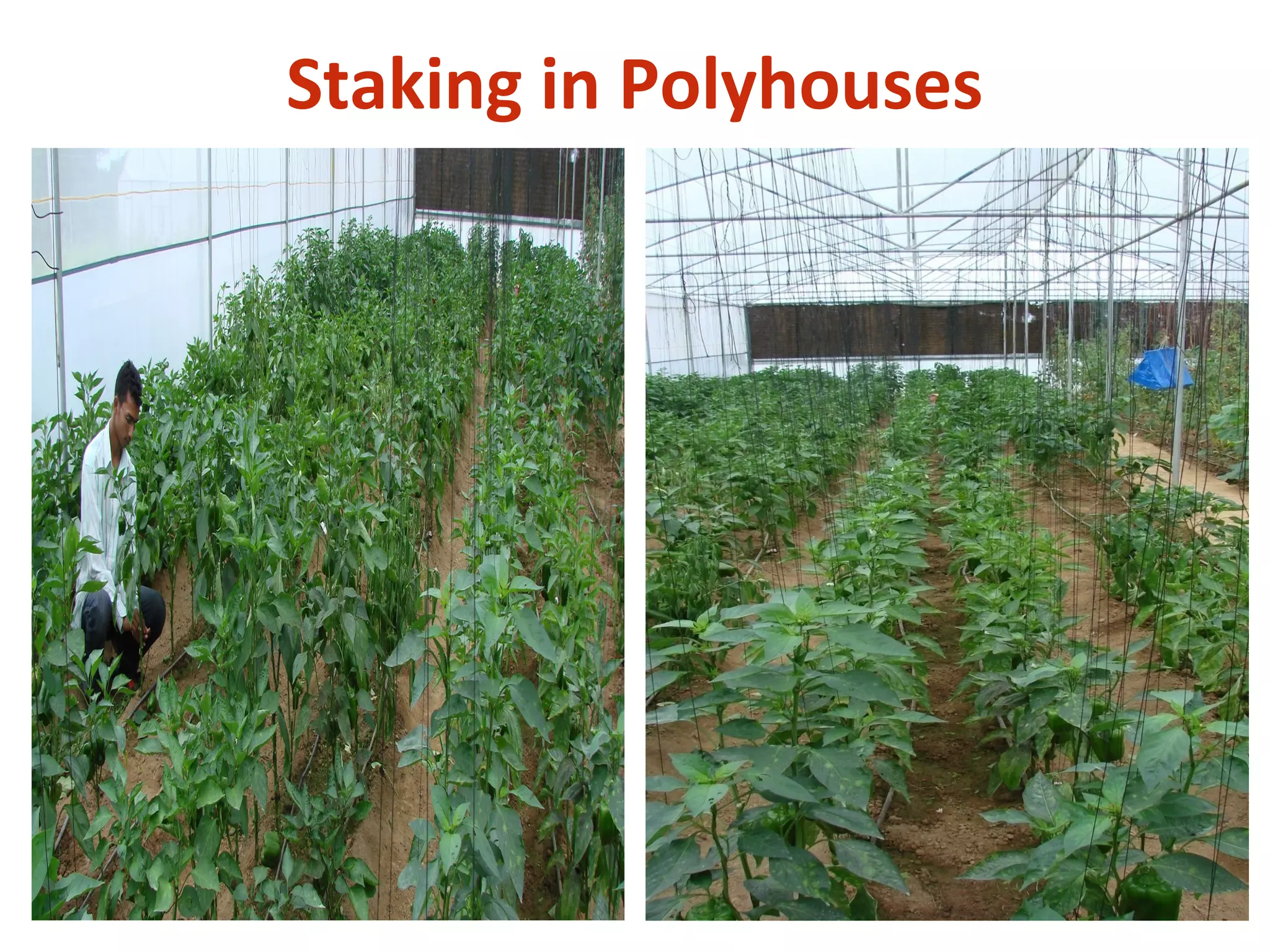
Staking in Polyhouses
Fertigation
Basal doze of 50 kg NPK per hectare with straight
fertilizers and fertigation at 150 kg NPK per ha with water soluble
fertilizer (Polyfeed/Haileaf 19:19:19).
Fertilizer application with irrigation in liquid form is called
fertigation and it is done once or twice a week depending upon
soil fertility, variety, and stage of crop growth.
Capsicum is heavy feeder of macro and micro-nutrients
Generally drip system of irrigation is followed for green house
bell pepper so as to maintain constant growth.
Irrigation should be given at weekly or bi-weekly interval
depending upon the season and location
N : P : K solution in ratio of 19:19:19 is prepared and applied
through drip starting from 3rd
Week after transplanting or
initiation of fruit set and terminating 15 days prior to harvest.
Yield
Coloured fruits 60-70 tonnes/ha
Green fruits 120 tonnes/ha
Although, yield directly depends upon the location,
variety, climatic conditions and crop management
practices(plant geometry, irrig and fertilizer mgmt).
Average weight of quality colored four lobbed fruit is 180
to 220g.
Greenhouse production problems in Capsicum
Bacterial wilt
Powdery mildew
Collar rot
Aphid
Mites?
Caterpillars ?
Eco friendly techniques for control of greenhouse insect
pests
THANKS

Crops for Protected Cultivation

  • 1.
    Dr. Parveen Sharma AssociateProfessor (Vegetable Science) Himachal Pradesh Agricultural University, Palampur ops suitable for protected cultivation according rea, climate and maintenance of climate factors
  • 2.
    POTENTIAL CROPS FORPROTECTED CULTIVATION Capsicum Tomato Cucumber Lettuce/ French beans/ Peas (Filler crops) Vegetable nursery Flower crops Ornamental plants
  • 3.
  • 4.
  • 5.
    Plastic low tunnelfor nursery production
  • 6.
  • 7.
  • 8.
    Preparation of Sand,Soil and FYM mixture
  • 9.
  • 10.
    Coco peat •Coco peatalso known as coir pith, coir fibre pith, coir dust, or simply coir, is made from coconut husks, which are byproducts of other industries that use coconuts. • Raw coconuts are washed, heat-treated, screened and graded before being processed into coco peat products of various granularity and denseness, which are then used for horticultural and agricultural applications and as industrial absorbent.
  • 11.
  • 12.
    Vermiculite • Vermiculite isa micacious mineral produced by heating to approximately 745oC. – Helps hold moisture. – Has neutral pH.
  • 13.
  • 14.
  • 15.
  • 16.
  • 17.
  • 18.
    Sowing of seedsin plug-trays
  • 19.
    Healthy nursery ofpotential crops for protected cultivation cucumber Tomato capsicum Fibrous root growth
  • 20.
    TOMATO NURSERY INSOILLESS MEDIA
  • 21.
    Healthy cucumber Seedling Closeview of root development in plug-trays
  • 22.
    A View ofHi-Tech nursery at Namdhari Seeds
  • 23.
    Potential Hybrids oTomato For Greenhouse Cultivation • 1. Avtar (7711) • 2. Rakshita • 3. Naveen 2000+ • 4. BWT-3 • 5. Surya
  • 24.
    Hybrids from PrivateSector for protected cultivation
  • 25.
    Promising Bacterial WiltResistant F1 Combinations
  • 26.
    Cherry tomatoesCherry tomatoes In this category fruits are very small in size and the average fruit weight is 15-20g depending upon the variety.  The cherry tomatoes have high TSS (6.5 to 7.5%).  Among the cherry tomatoes, BR-124 and H A-118 varieties from Israel are most popular.
  • 27.
  • 28.
    Factors affecting greenhouse tomatoproduction 1. Temperature and humidity control Night temperature should not be allowed to drop below 15 0 C. 2. Carbon-dioxide level in the green house 350 ppm to 1000 ppm  3. Light Reducing light levels from 10,000 to 2,500 lux (approximately 100 to 25 W/m2 ) has been shown to delay flower initiation 4. Air movement 5. Disease and insect control 6. Nutritional management
  • 29.
    Planting Time  Innorth Indian, the tomato crop is planted from first August to second week of September under polyhouse conditions.  This crop is continued up to June or July under climate controlled greenhouse.  If the greenhouse is naturally ventilated then the crop can be grown up to April or May months.  In H P we take two crops from naturally ventilated polyhouse.
  • 30.
    BED PREPARATION INTOMATO Spacing = 70x30cm Path=60cm Bed width= 90cm
  • 31.
    Planting of tomatoin the soil on raised beds (70x30)
  • 32.
    Fertigation Basal doze of50 kg NPK per hectare with straight fertilizers and fertigation at 150 kg NPK per ha with water soluble fertilizer (Polyfeed/Haileaf 19:19:19). Fertilizer application with irrigation in liquid form is called fertigation and it is done once or twice a week depending upon soil fertility, variety, and stage of crop growth. Generally drip system of irrigation is followed for green house tomato so as to maintain constant growth. Irrigation should be given at weekly or bi-weekly interval depending upon the season and location N : P : K solution in ratio of 19:19:19 is prepared and applied through drip starting from 3rd Week after transplanting or initiation of fruit set and terminating 15 days prior to harvest.
  • 33.
    Training Single or twostems . In early stage the shoots should remove by snapping them off.  Plants are supported by plastic twine, loosely anchored on the base of plants . The twine is not wrapped around the growing tip otherwise the tip may break. The plants must be pruned regular basis for 10-11 months life cycle of the tomato crop. This will provide air circulation, which helps to reduce the incidence of the diseases .
  • 34.
  • 35.
    Training method oftomato plants Plastic support clip being placed around a tomato stem.
  • 36.
    PRUNNING These tomatoes requirepruning of all lateral branches.  Pruning must be done on a frequent schedule (every 3 to 4 days) . Prunning is done early in the day when plants are turgid but dry. Care should be taken to remove only suckers and not the main terminal bud.  The pruning time should be used to inspect plants for obvious problems such as disease, nutritional deficiencies, insects etc. All pruned plant material should be placed in a container and removed from the greenhouse.
  • 37.
    Flowering Flowering is aprerequisite to fruit development and delays in flowering generally result in delayed fruit production. The environment of the polyhouse can have a significant effect on the number of flowers that are initiated on an inflorescence .
  • 38.
    Tomato flower witha bruise on the anther cone indicating that the flower has been visited by a bumble bee.
  • 39.
    PLANT PROTECTION • Preferbiological control (yellow sticky traps, pheromone/light traps, predators/parasitoids • Grow resistant varieties only • Use safe insecticides • Keep strict and constant vigil against pest and diseases • Follow timely plant protection measures • Prefer biological control (yellow sticky traps, pheromone/light traps, predators/parasitoids • Grow resistant varieties only • Use safe insecticides • Keep strict and constant vigil against pest and diseases • Follow timely plant protection measures
  • 40.
  • 41.
  • 42.
  • 43.
  • 44.
    Cucumber Production UnderHi- Tech Polyhouse
  • 45.
    Type of CucumberVarieties On the bases of flowering habit: 1.Gynoecious:- Which produces only female flowers. 2.Pre-dominantly gynoecious :-Also bears some male flowers. 3.Monoecious:- Which produces both male and female flowers. The first two types produce fruits parthenocarpically ,whereas, monoecious types require pollination
  • 46.
    Monoecious varieties Monoecious varietiescan be grown inside the greenhouses, but pollination is required for fruit setting which are: 1)Japnese Long Green 2)Pusa Sanyog 3)Priya 4)Poinsett 5)Malini Hybrid
  • 47.
    Separate male andfemale flowers • Separate male and female flowers • Require bee pollination
  • 48.
  • 49.
    Pollination and fruitsetting in monoecious cucumbers under polyhouse conditions
  • 51.
    Parthenocarpic cucumber The parthenocarpiccucumber is a type of cucumber vine that produces only female flowers and produces cucumbers without the need of pollination. The seed for parthenocarpic cucumbers costs more than ordinary cucumber seed but the germination or sprouting rate is higher and the chance for disease or pest problems is greatly less.  If pollination does occur, the fruit will form seeds, the shape ofthe fruit will be distorted and a bitter tasting fruit will develop. It is therefore essential to prevent bees and other pollinators from entering the greenhouse and carrying pollen from outdoor gardens
  • 52.
    Parthenocarpic Varieties The importantparthenocarpic varieties available in India are: i. Satis ii.HILLTON iii.Nun-9729 iv.Clodia v.Kian vi.Mansour A few important parthenocarpic varieties of cucumber from Europe and Israel are: Hasan and Sarig (for summer crop), Muhasan and Dinar (for winter season),  Mustang and Bronco (for spring crop),
  • 53.
  • 54.
    Plant geometry •The cucumberseedlings are planted on the raised beds with two rows in a bed with row to row spacing of 70 cm and plant to plant spacing of 30 cm. •In single stem training , female flowers should be removed or pinched up to 5th node to ensure sufficient vegetative growth of the plants to sustain the fruit load.
  • 55.
    BED PREPARATION INCUCUMBER Spacing = 70x30cm Path=60cm Bed width= 90cm
  • 57.
    Staking of parthenocarpiccucumber on single stem at 70x30cm spacing
  • 58.
    Fertigation Basal doze of50 kg NPK per hectare with straight fertilizers and fertigation at 450 kg NPK per ha with water soluble fertilizer (Polyfeed/Haileaf 19:19:19). Fertigation should be done once or twice a week depending upon soil fertility, variety, and stage of crop growth. Cucumber is heavy feeder crop. Irrigation should be given at weekly or bi-weekly interval depending upon the season and location N : P : K solution in ratio of 19:19:19 is prepared and applied through drip starting from 3rd Week after transplanting or initiation of fruit set and terminating 15 days prior to harvest.
  • 59.
    Training of Cucumber •REMOVE FEMALE FLOWERS UPTO 5TH NODE • ONE OR TWO VINES • RETAIN ONE FRUIT PER NODE • DE-SHOOTING
  • 60.
    Fig 1 (a)Fig 1 (b) Fig 1 (c) Training systems in cucumber
  • 61.
  • 62.
    To harvest cucumbers,cut (don't pull) them from the vine. Pulling or yanking can damage the brittle vines.
  • 63.
    Day neutral More sensitiveto changing environment than tomato. Optimum temperature for germination: 20-25 0 C. Optimum temperature for quality fruit production: 18-21 0 C( 20-21 C). Less than 18 0 C: adverse effect on growth and yield. Low night temperature: parthenocarpic fruits. Climatic Requirements
  • 64.
    • Four lobedpreferred for metropolitan cities and other high markets. • Others for local market • Red, yellow, orange and purple varieties Varieties
  • 65.
    Red Yellow Green Nun-3019 Bombay Indira Heera Bharat Mahabharat Mekong TanviPlus Orobelle Tanvi Nun-3020 Angel US-26 Golden Summer Sawarna European & Israeli varieties, American varieties California Wonder(OP) Indra Bharat Mekong Potential varieties for green house cultivation
  • 66.
    Red and Yellowcapsicums in polyhouse
  • 67.
    BED PREPARATION INCAPSICUM Spacing = 45x30cm Path=60cm Bed width= 60cm
  • 68.
    Training and Pruning •FOUR/TWO STEMS • PLASTIC CORD • PINCHING/DISBUDDING • RETAIN ONE FLOWER AND TWO LEAVES
  • 69.
    Two branch trainingsystem in bell pepper
  • 70.
    Diff. Between Four& Two Leaders
  • 71.
  • 72.
  • 73.
    Fertigation Basal doze of50 kg NPK per hectare with straight fertilizers and fertigation at 150 kg NPK per ha with water soluble fertilizer (Polyfeed/Haileaf 19:19:19). Fertilizer application with irrigation in liquid form is called fertigation and it is done once or twice a week depending upon soil fertility, variety, and stage of crop growth. Capsicum is heavy feeder of macro and micro-nutrients Generally drip system of irrigation is followed for green house bell pepper so as to maintain constant growth. Irrigation should be given at weekly or bi-weekly interval depending upon the season and location N : P : K solution in ratio of 19:19:19 is prepared and applied through drip starting from 3rd Week after transplanting or initiation of fruit set and terminating 15 days prior to harvest.
  • 74.
    Yield Coloured fruits 60-70tonnes/ha Green fruits 120 tonnes/ha Although, yield directly depends upon the location, variety, climatic conditions and crop management practices(plant geometry, irrig and fertilizer mgmt). Average weight of quality colored four lobbed fruit is 180 to 220g.
  • 75.
    Greenhouse production problemsin Capsicum Bacterial wilt Powdery mildew Collar rot Aphid Mites? Caterpillars ?
  • 76.
    Eco friendly techniquesfor control of greenhouse insect pests
  • 77.