Soil profile
Soil
• Soil is a combination of minerals, water, air and organic matter. On average
there is
• 45% mineral matter
• 25% water
• 25% air
• 5 % organic matter
• Minerals come from rock that have been weathered
• Water and air from the atmosphere
• Organic matter from the biosphere
How is soil profile made
Horizon O
Partially decomposed organic
matter
Horizon A top soil
Contains humus living creatures and mineral matter from rocks
Horizon B subsoil
Rich in minerals and clay particles leached down from A. Roots of
large plants are found here
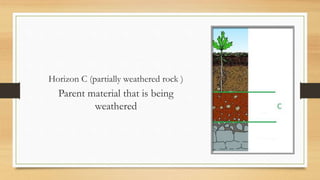
Horizon C (partially weathered rock )
Parent material that is being
weathered
Horizon D Bedrock
Parent material that has not
been affected by weathering
Questions
• Which type of weathering leads to the build up of humus. ?
• Write one characteristic of subsoil that would make it good for plant growth.
• Write characteristics of subsoil that makes it inappropriate for plant growth.

Soil profile

  • 1.
  • 2.
    Soil • Soil isa combination of minerals, water, air and organic matter. On average there is • 45% mineral matter • 25% water • 25% air • 5 % organic matter
  • 3.
    • Minerals comefrom rock that have been weathered • Water and air from the atmosphere • Organic matter from the biosphere
  • 6.
    How is soilprofile made
  • 8.
  • 9.
    Horizon A topsoil Contains humus living creatures and mineral matter from rocks
  • 10.
    Horizon B subsoil Richin minerals and clay particles leached down from A. Roots of large plants are found here
  • 11.
    Horizon C (partiallyweathered rock ) Parent material that is being weathered
  • 12.
    Horizon D Bedrock Parentmaterial that has not been affected by weathering
  • 13.
    Questions • Which typeof weathering leads to the build up of humus. ? • Write one characteristic of subsoil that would make it good for plant growth. • Write characteristics of subsoil that makes it inappropriate for plant growth.

Editor's Notes

  • #5 Cracks appear water enter cracks and expand when it freezes forcing the rocks apart
  • #7 An example of chemical biological weathering is when certain mosses, lichens, algae, fungi and even the smallest bacteria, will form on a rock, and will produce chemicals which (depending on the rock type) will eat away at the rock, giving the plant nutrients but also weathering at the same time.