a square forensics
SOIL
INTRODUCTION
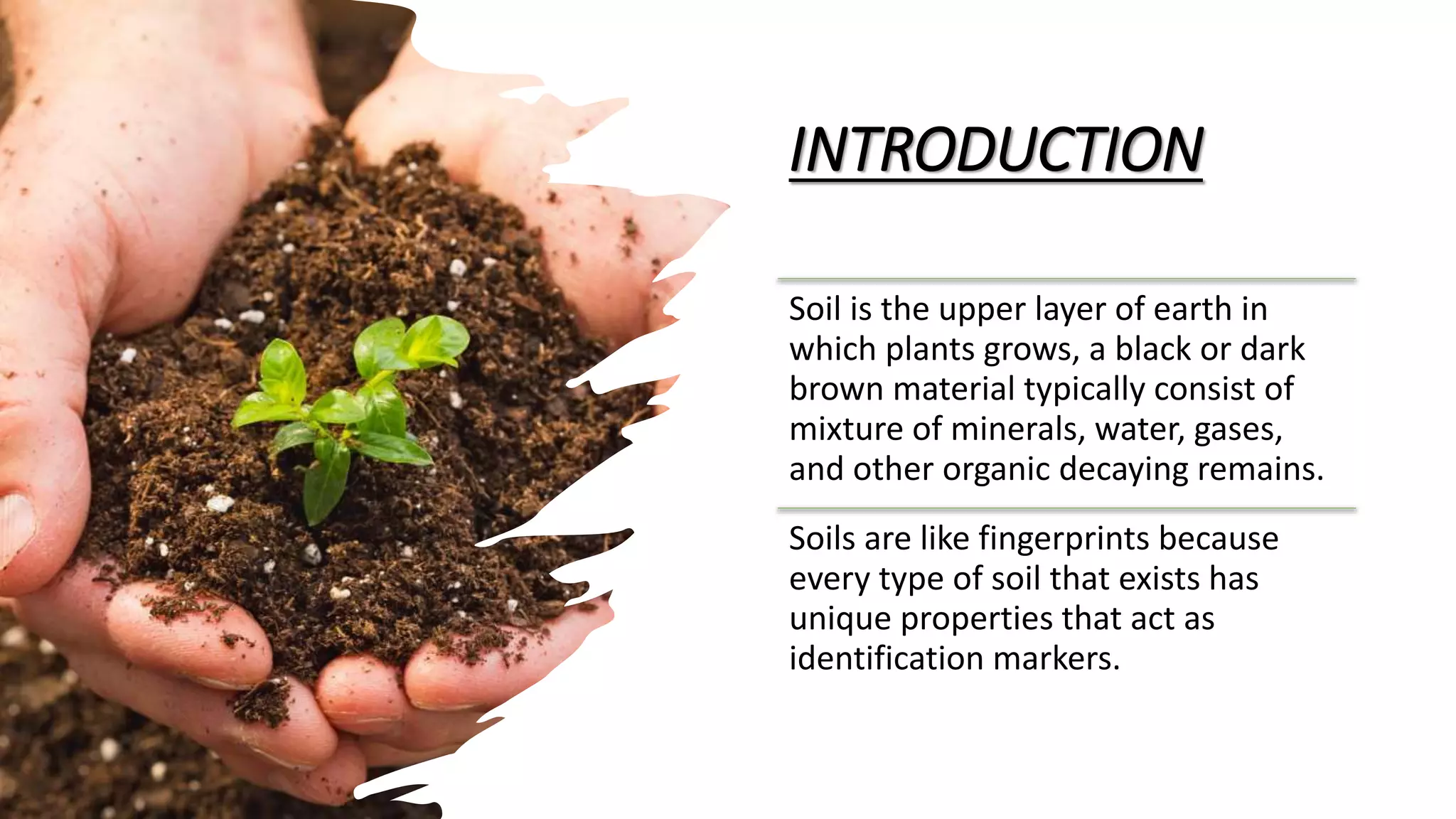
Soil is the upper layer of earth in
which plants grows, a black or dark
brown material typically consist of
mixture of minerals, water, gases,
and other organic decaying remains.
Soils are like fingerprints because
every type of soil that exists has
unique properties that act as
identification markers.
FORMATION
OF SOIL
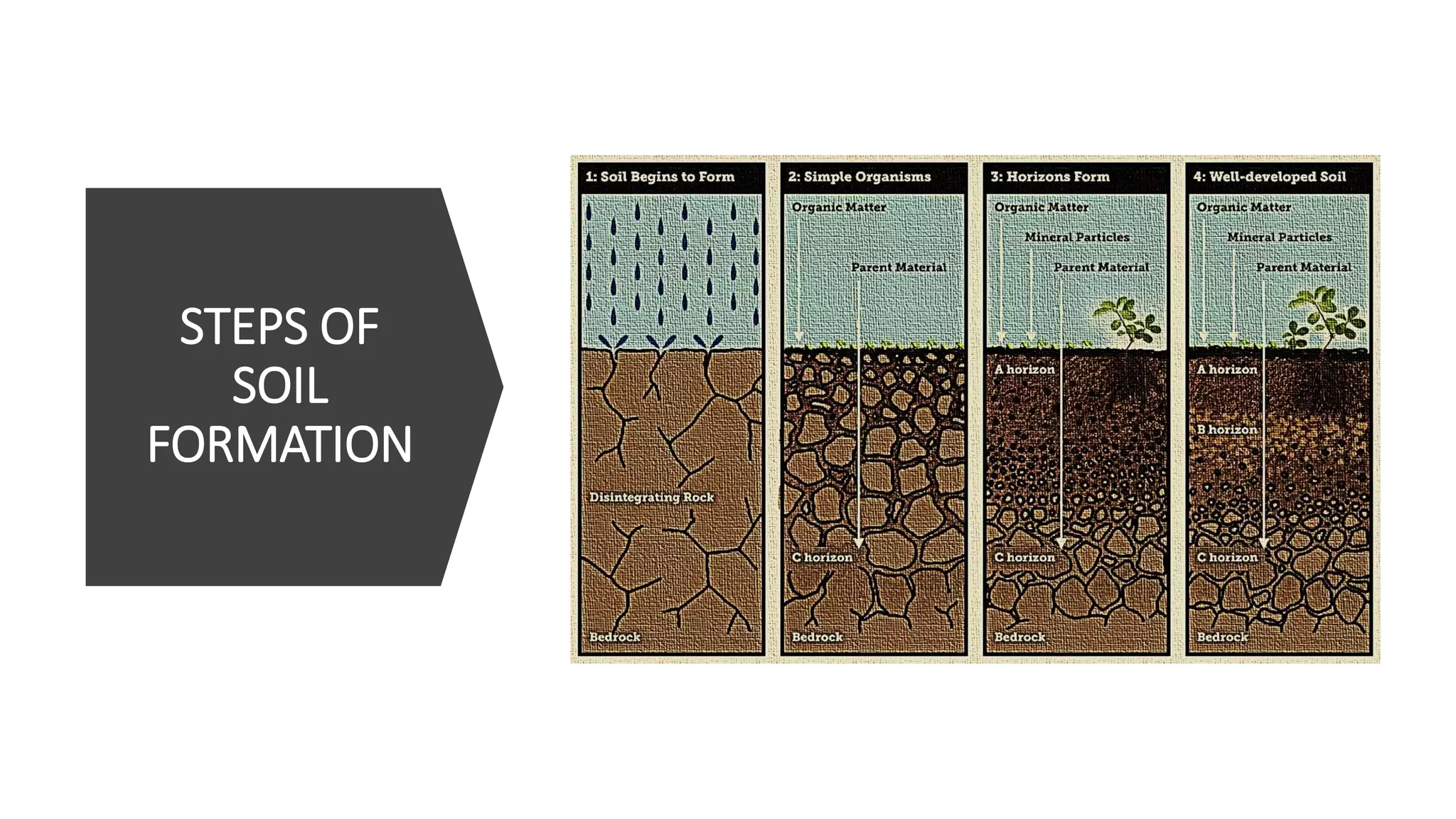
Weathering is the mechanical or chemical process by
which rocks are broken down into smaller pieces.
As rocks are broken down, they mix with organic
materials, which are those materials that originate
from living organisms.
For example, plants and animals die and
decompose, releasing nutrients back into the soil.
Soil is highly heterogeneous in nature and varies
widely from place to place due to the effects of
wind, water, living organisms, mining and
agriculture. Thus, Soil from different places will have
different individual characteristics.
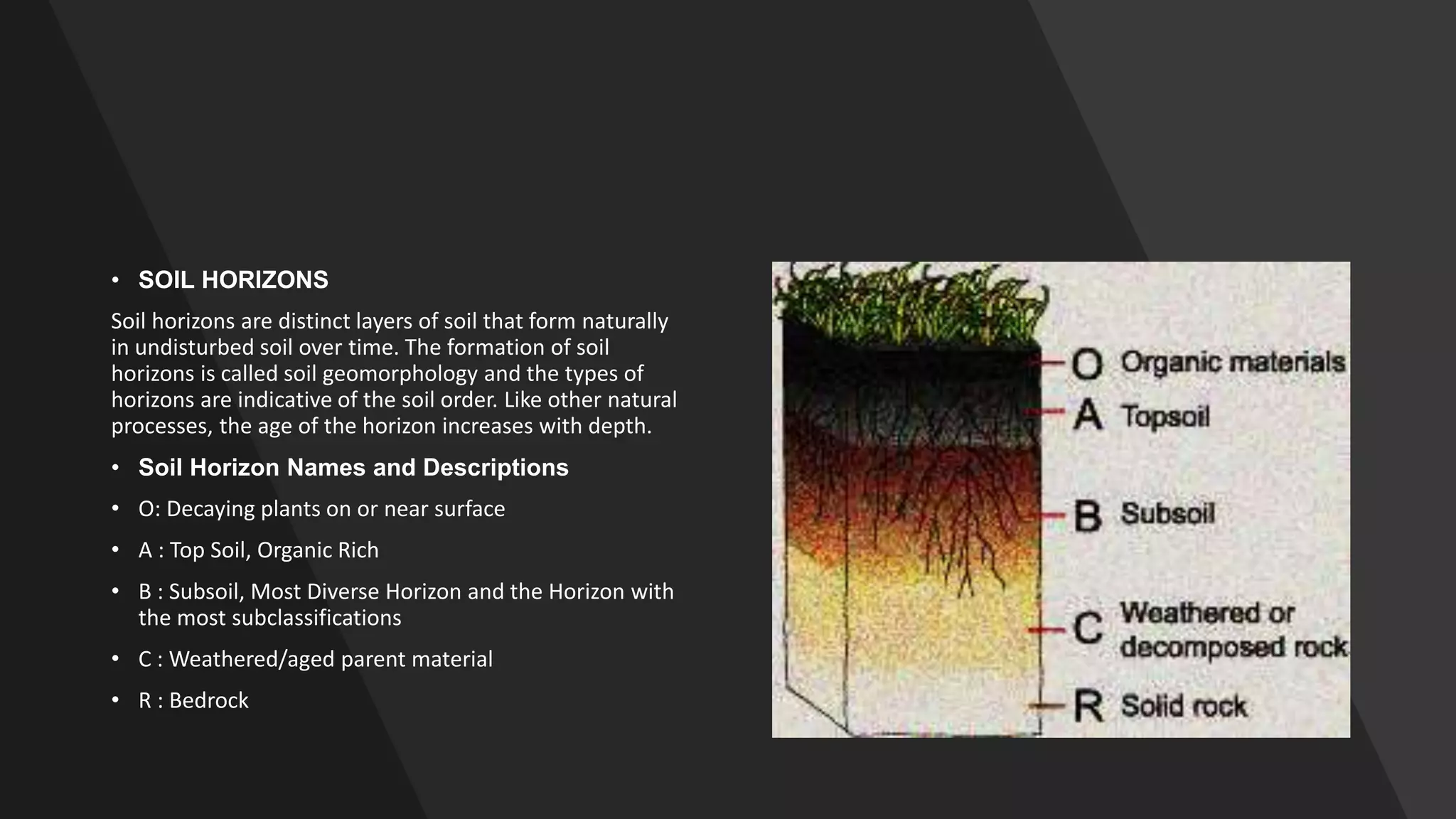
• SOIL HORIZONS
Soil horizons are distinct layers of soil that form naturally
in undisturbed soil over time. The formation of soil
horizons is called soil geomorphology and the types of
horizons are indicative of the soil order. Like other natural
processes, the age of the horizon increases with depth.
• Soil Horizon Names and Descriptions
• O: Decaying plants on or near surface
• A : Top Soil, Organic Rich
• B : Subsoil, Most Diverse Horizon and the Horizon with
the most subclassifications
• C : Weathered/aged parent material
• R : Bedrock
STEPS OF
SOIL
FORMATION
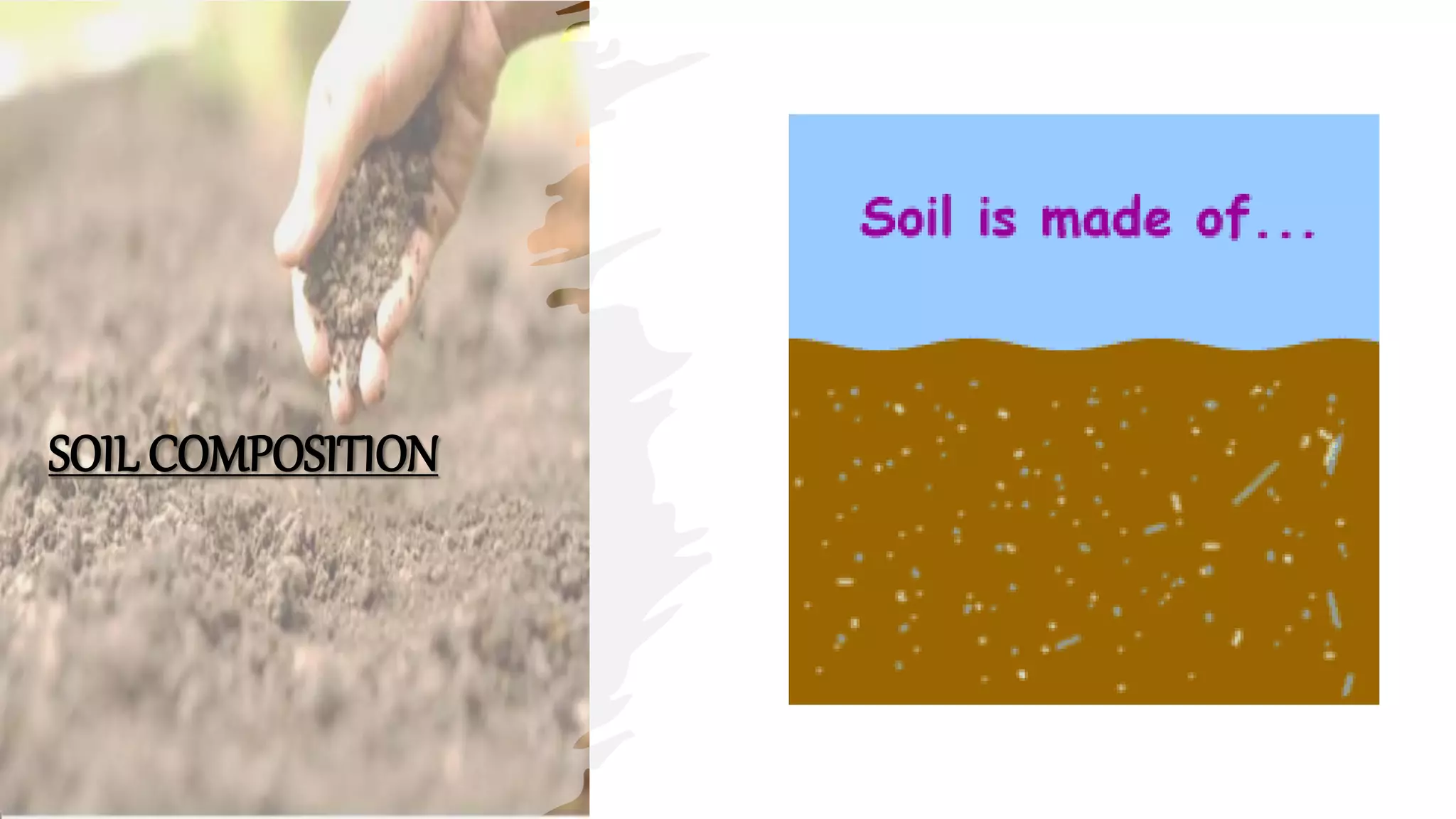
SOIL COMPOSITION
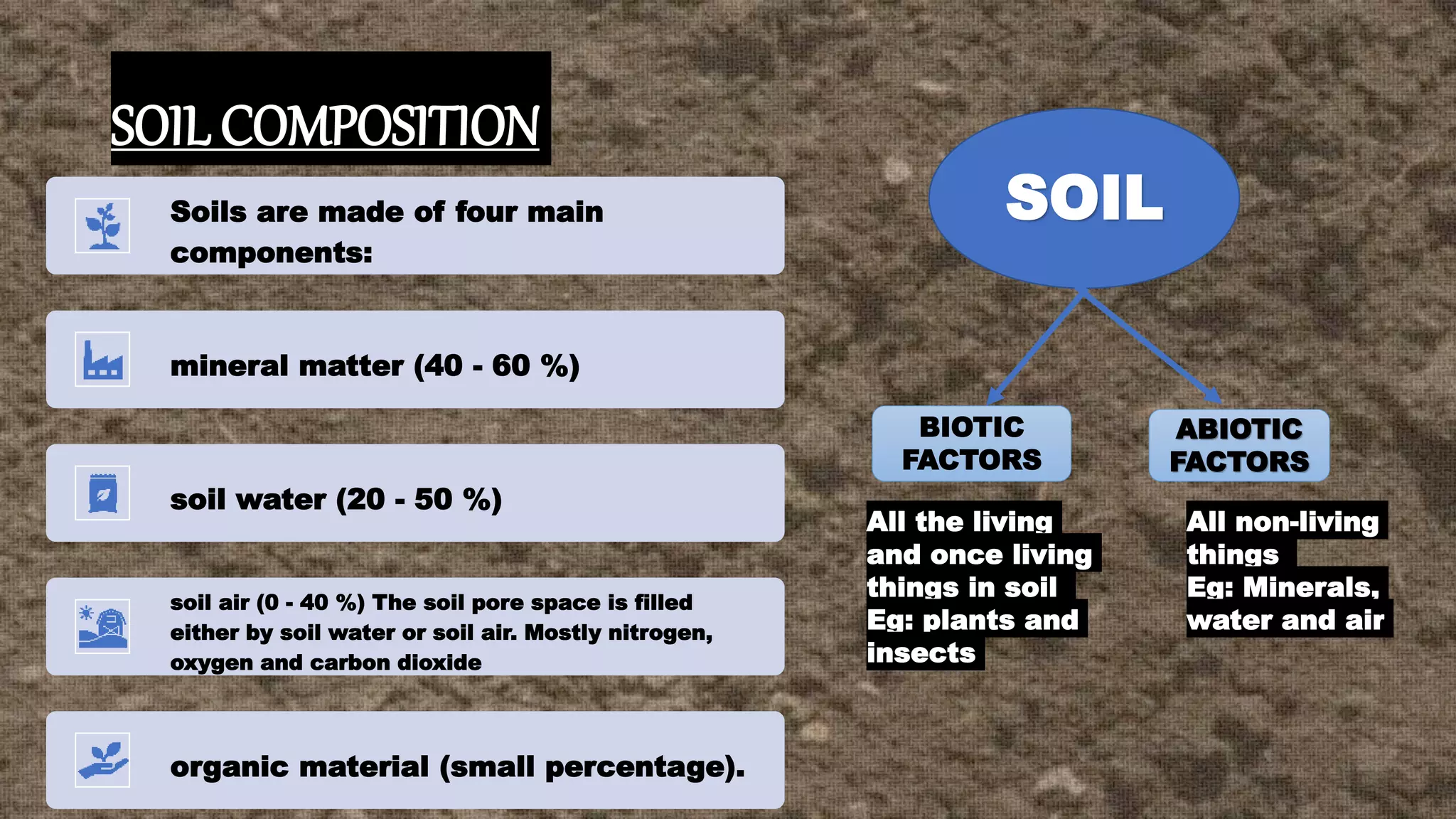
SOIL COMPOSITION
Soils are made of four main
components:
mineral matter (40 - 60 %)
soil water (20 - 50 %)
soil air (0 - 40 %) The soil pore space is filled
either by soil water or soil air. Mostly nitrogen,
oxygen and carbon dioxide
organic material (small percentage).
SOIL
BIOTIC
FACTORS
ABIOTIC
FACTORS
All the living
and once living
things in soil
Eg: plants and
insects
All non-living
things
Eg: Minerals,
water and air
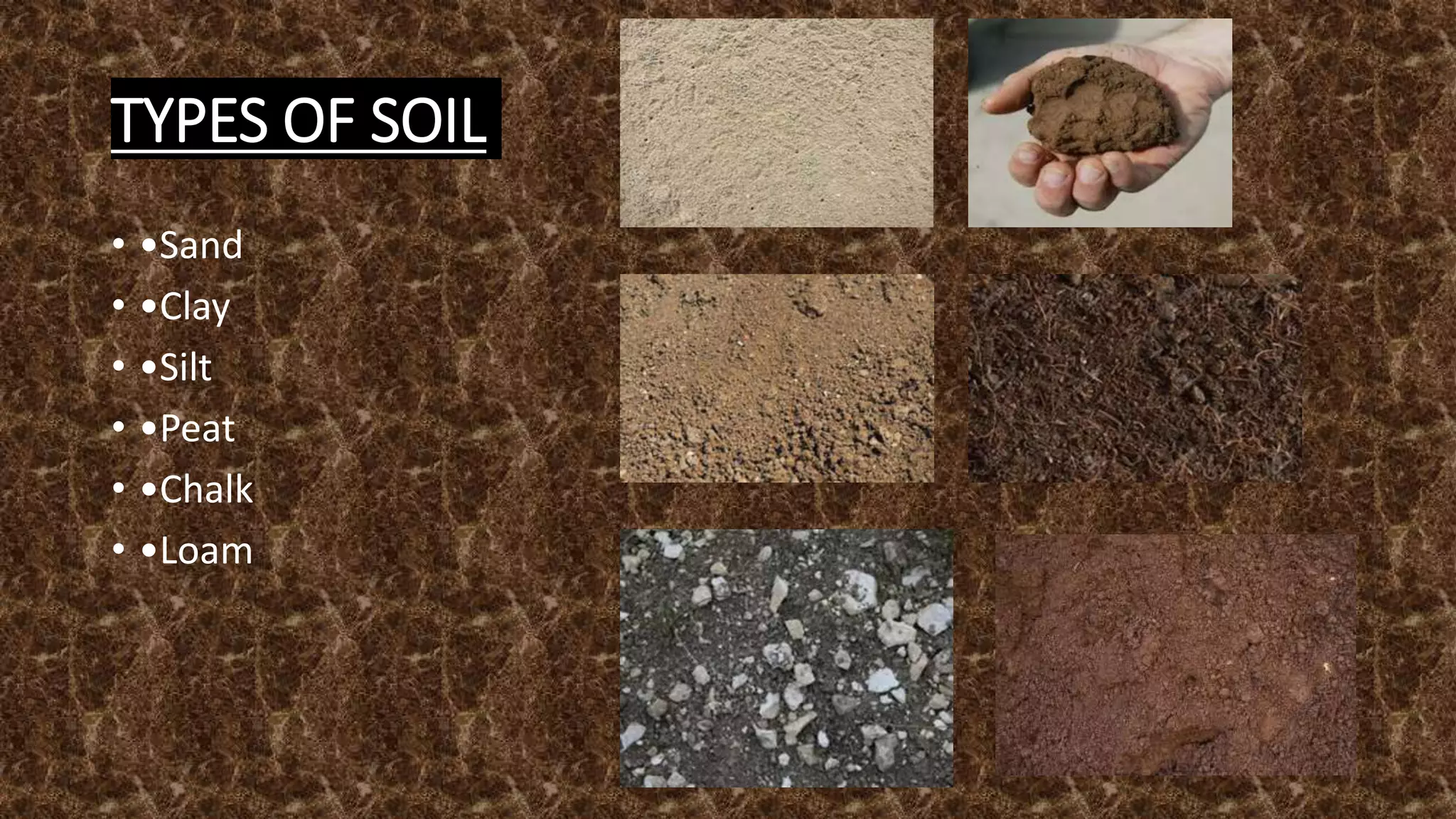
TYPES OF SOIL
• •Sand
• •Clay
• •Silt
• •Peat
• •Chalk
• •Loam
CHARACTERISTICS OF SOIL
1. Color
Indicates its history as well as the compounds present in the soil.
2. Sediment
The original solid particles that were weathered and transported. This
could be in the form of a grain of rock that breaks off of the larger
parent material (larger version of rock). Soils can develop on these
sediments due to physical and chemical alteration.
3. Structure
Indicates whether a soil is composed of a single grain particle or not.
This is determined by the presence of peds (clumps).
4. Soil Texture
Texture is determined according to the relative proportions of sand, silt, and
clay in the soil
5. Soil pH
Soil pH is a measure of soil acidity or alkalinity.
It is an important indicator of soil health
Natural soil pH reflects the combined effects of soil-forming factors:
parent material,
Time
relief or topography
climate
organisms
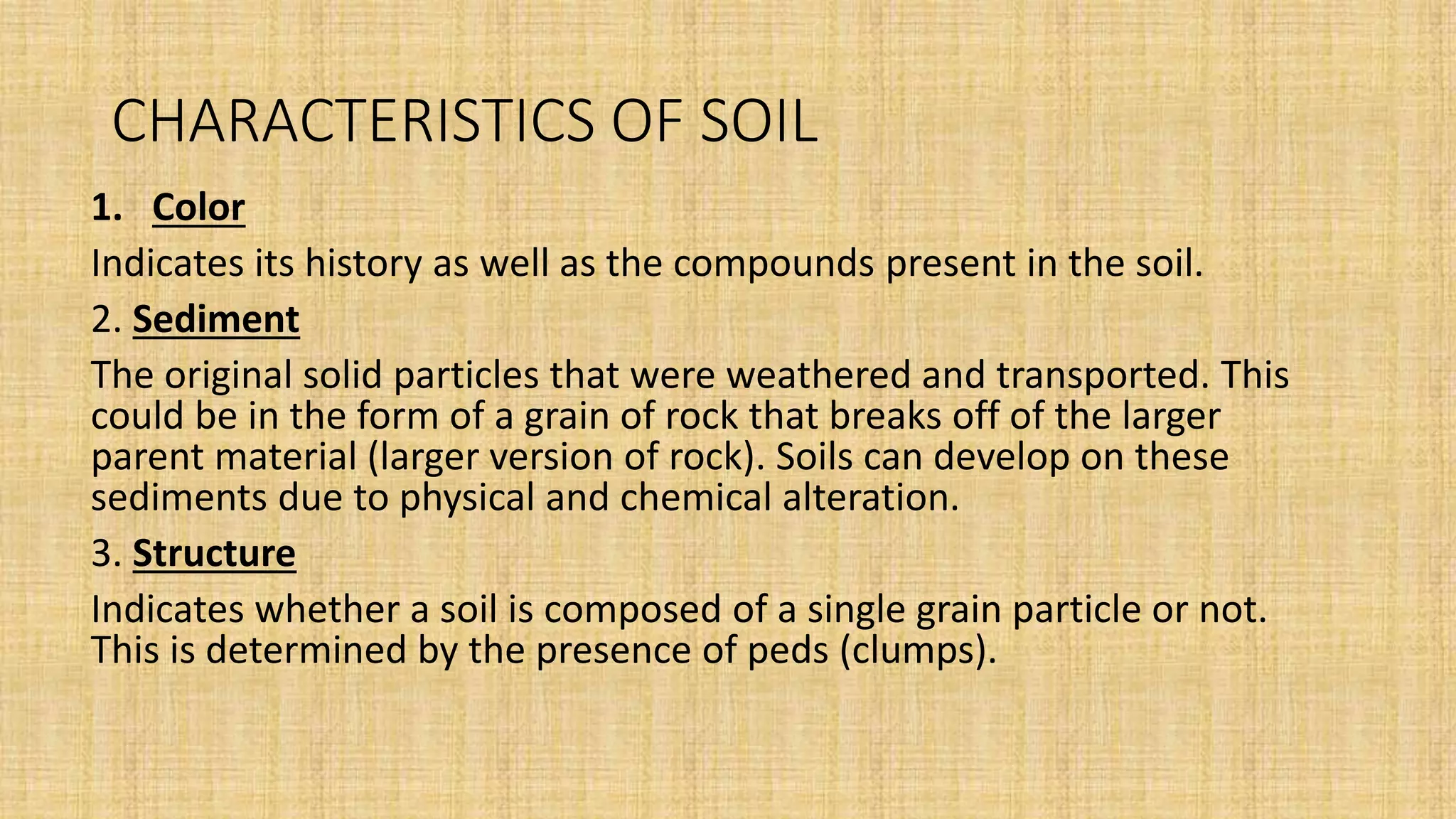
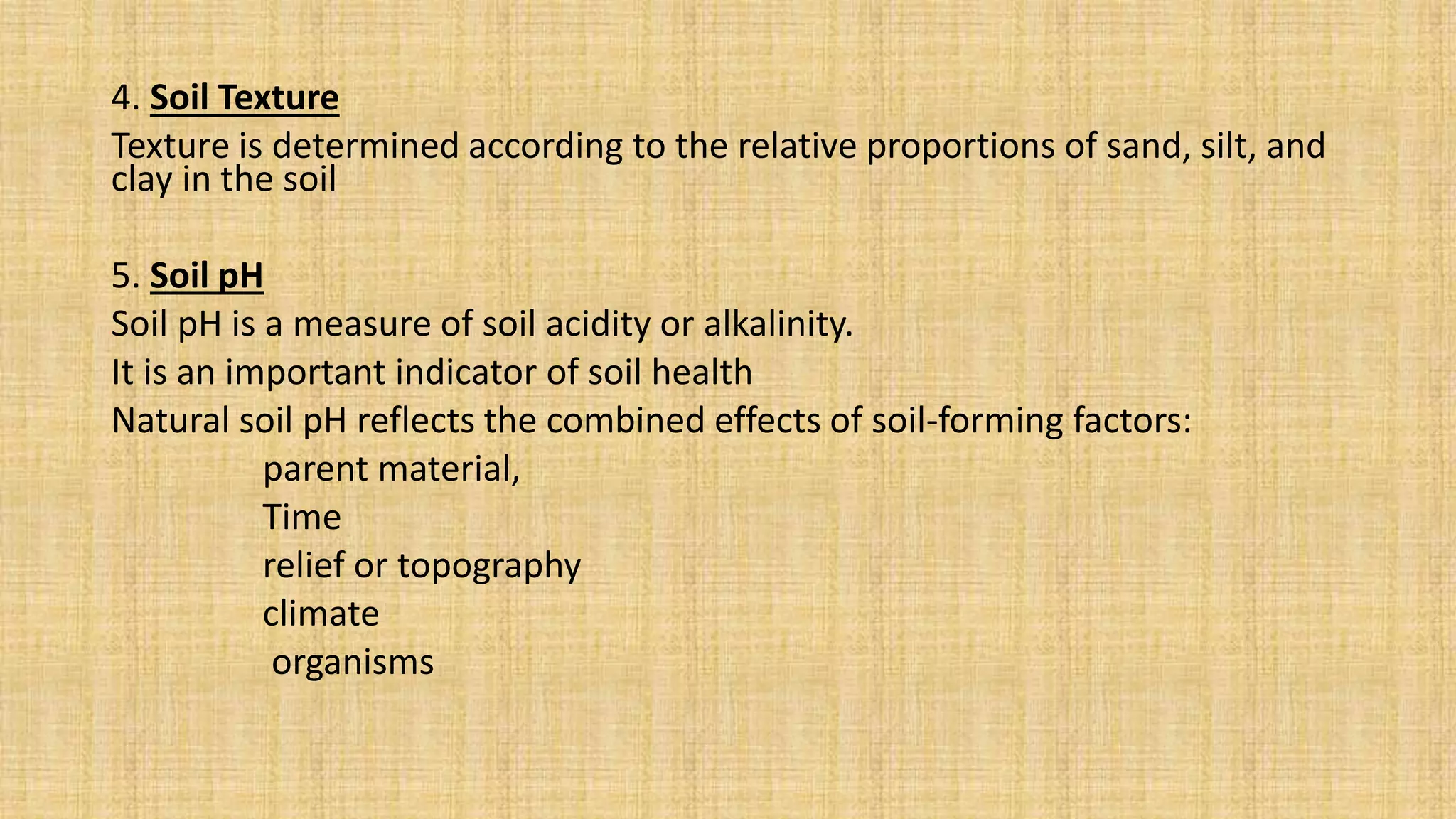
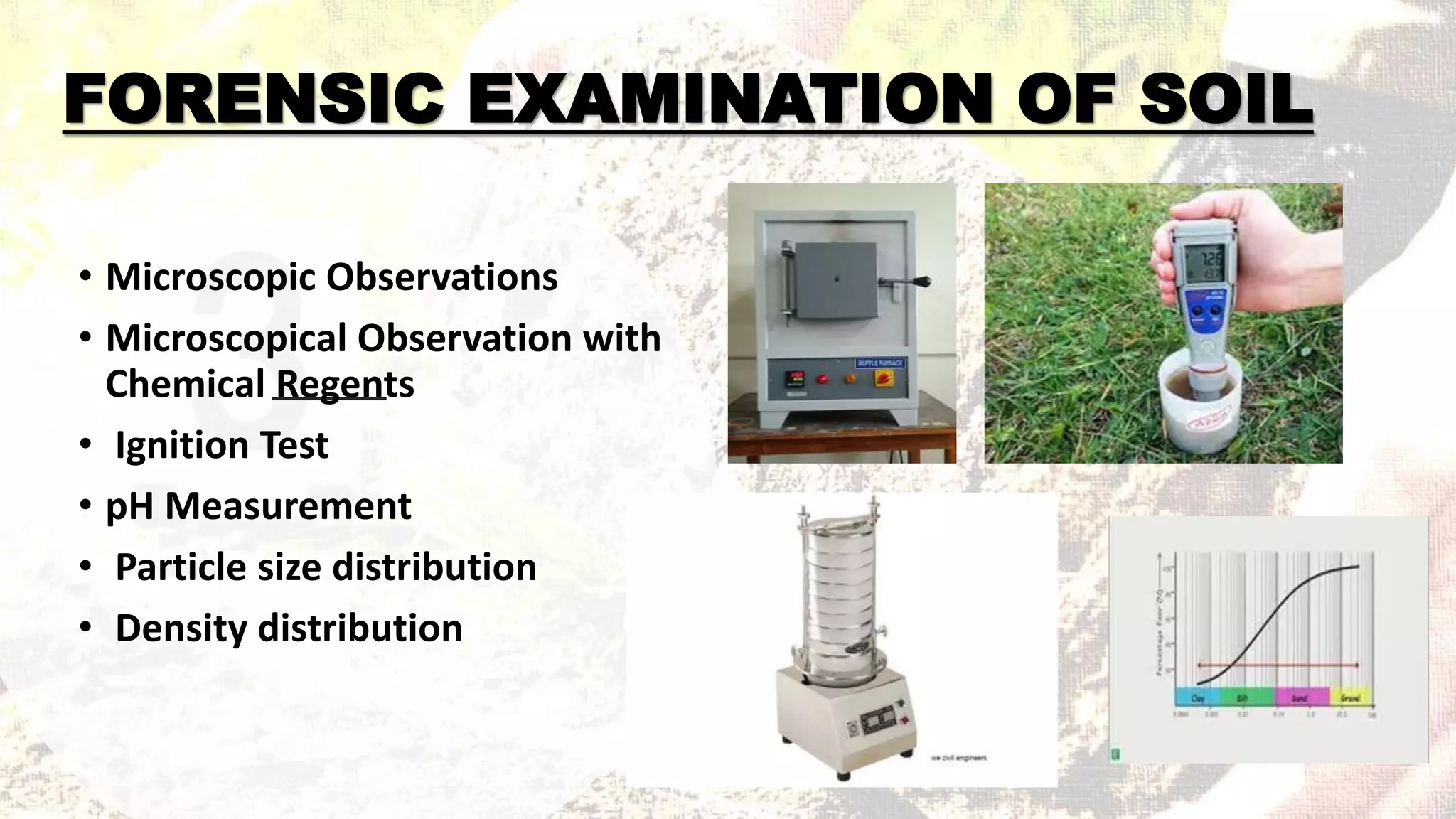
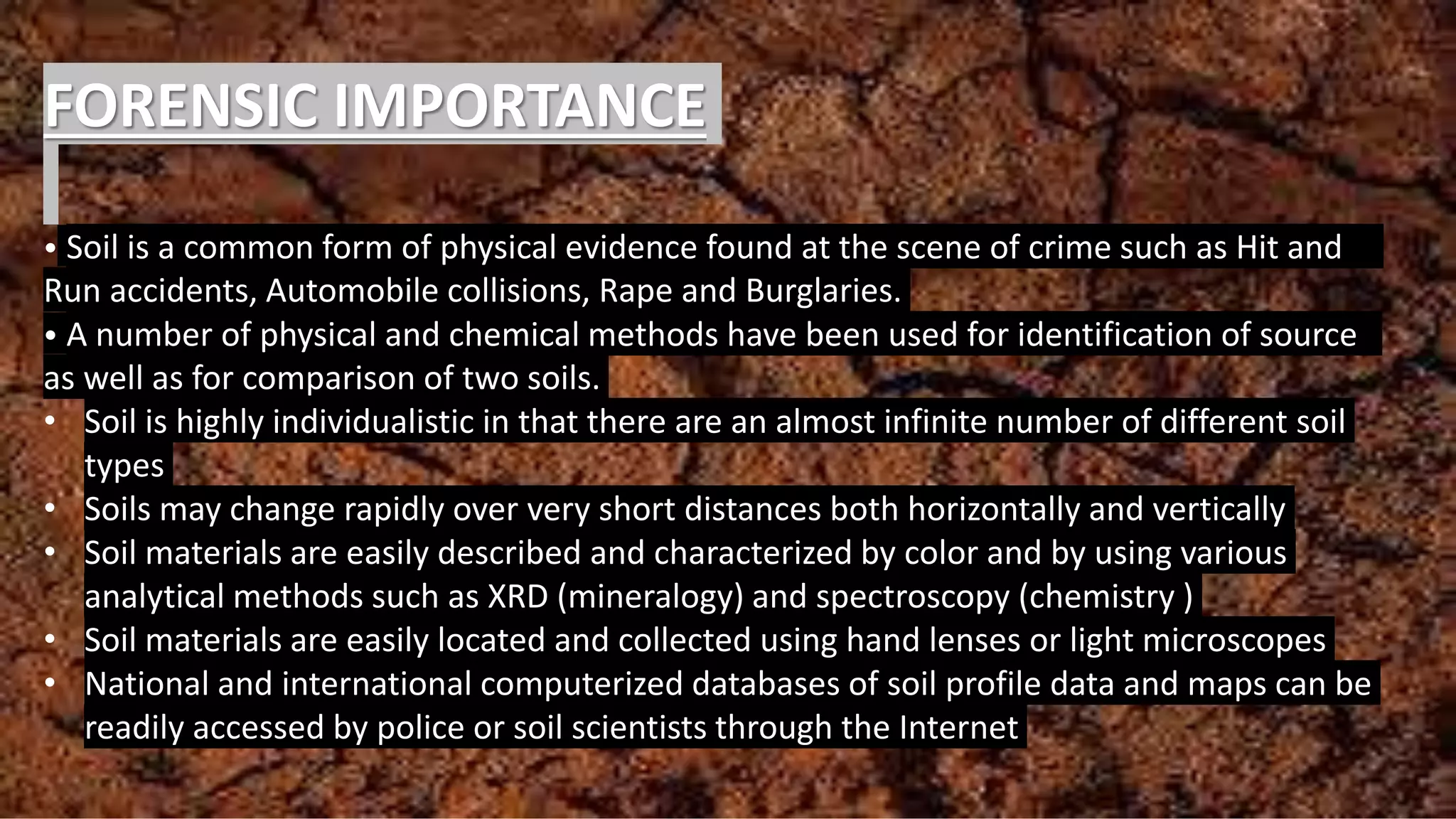
FORENSIC EXAMINATION OF SOIL
• Microscopic Observations
• Microscopical Observation with
Chemical Regents
• Ignition Test
• pH Measurement
• Particle size distribution
• Density distribution
FORENSIC IMPORTANCE
• Soil is a common form of physical evidence found at the scene of crime such as Hit and
Run accidents, Automobile collisions, Rape and Burglaries.
• A number of physical and chemical methods have been used for identification of source
as well as for comparison of two soils.
• Soil is highly individualistic in that there are an almost infinite number of different soil
types
• Soils may change rapidly over very short distances both horizontally and vertically
• Soil materials are easily described and characterized by color and by using various
analytical methods such as XRD (mineralogy) and spectroscopy (chemistry )
• Soil materials are easily located and collected using hand lenses or light microscopes
• National and international computerized databases of soil profile data and maps can be
readily accessed by police or soil scientists through the Internet

Forensic importance of soil

  • 1.
  • 2.
    INTRODUCTION Soil is theupper layer of earth in which plants grows, a black or dark brown material typically consist of mixture of minerals, water, gases, and other organic decaying remains. Soils are like fingerprints because every type of soil that exists has unique properties that act as identification markers.
  • 3.
    FORMATION OF SOIL Weathering isthe mechanical or chemical process by which rocks are broken down into smaller pieces. As rocks are broken down, they mix with organic materials, which are those materials that originate from living organisms. For example, plants and animals die and decompose, releasing nutrients back into the soil. Soil is highly heterogeneous in nature and varies widely from place to place due to the effects of wind, water, living organisms, mining and agriculture. Thus, Soil from different places will have different individual characteristics.
  • 4.
    • SOIL HORIZONS Soilhorizons are distinct layers of soil that form naturally in undisturbed soil over time. The formation of soil horizons is called soil geomorphology and the types of horizons are indicative of the soil order. Like other natural processes, the age of the horizon increases with depth. • Soil Horizon Names and Descriptions • O: Decaying plants on or near surface • A : Top Soil, Organic Rich • B : Subsoil, Most Diverse Horizon and the Horizon with the most subclassifications • C : Weathered/aged parent material • R : Bedrock
  • 5.
  • 6.
  • 7.
    SOIL COMPOSITION Soils aremade of four main components: mineral matter (40 - 60 %) soil water (20 - 50 %) soil air (0 - 40 %) The soil pore space is filled either by soil water or soil air. Mostly nitrogen, oxygen and carbon dioxide organic material (small percentage). SOIL BIOTIC FACTORS ABIOTIC FACTORS All the living and once living things in soil Eg: plants and insects All non-living things Eg: Minerals, water and air
  • 8.
    TYPES OF SOIL ••Sand • •Clay • •Silt • •Peat • •Chalk • •Loam
  • 9.
    CHARACTERISTICS OF SOIL 1.Color Indicates its history as well as the compounds present in the soil. 2. Sediment The original solid particles that were weathered and transported. This could be in the form of a grain of rock that breaks off of the larger parent material (larger version of rock). Soils can develop on these sediments due to physical and chemical alteration. 3. Structure Indicates whether a soil is composed of a single grain particle or not. This is determined by the presence of peds (clumps).
  • 10.
    4. Soil Texture Textureis determined according to the relative proportions of sand, silt, and clay in the soil 5. Soil pH Soil pH is a measure of soil acidity or alkalinity. It is an important indicator of soil health Natural soil pH reflects the combined effects of soil-forming factors: parent material, Time relief or topography climate organisms
  • 11.
    FORENSIC EXAMINATION OFSOIL • Microscopic Observations • Microscopical Observation with Chemical Regents • Ignition Test • pH Measurement • Particle size distribution • Density distribution
  • 12.
    FORENSIC IMPORTANCE • Soilis a common form of physical evidence found at the scene of crime such as Hit and Run accidents, Automobile collisions, Rape and Burglaries. • A number of physical and chemical methods have been used for identification of source as well as for comparison of two soils. • Soil is highly individualistic in that there are an almost infinite number of different soil types • Soils may change rapidly over very short distances both horizontally and vertically • Soil materials are easily described and characterized by color and by using various analytical methods such as XRD (mineralogy) and spectroscopy (chemistry ) • Soil materials are easily located and collected using hand lenses or light microscopes • National and international computerized databases of soil profile data and maps can be readily accessed by police or soil scientists through the Internet