Software Validation
Software Project Management
Asztalos Robert AES I
2012
Purpose:
• The purpose of a the software validation process
  is to check if a certain software was created by
  the developers according to the customers
  specifications.


• The software validation process actually includes
  test software development with the help of which
  the actual validation is done.
Resources:
• Human Resources:
 ▫ Tester 1
 ▫ Tester 2
 ▫ Developer


• Material Resources:
 ▫ Software Licenses
 ▫ Miscellaneous Equipment
Constraints:

• Limited resources being assigned for the testing
  process, it is important for the project not to run
  late and try to keep the costs between the
  project's budget.
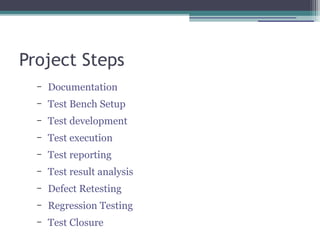
Project Steps
  –   Documentation
  –   Test Bench Setup
  –   Test development
  –   Test execution
  –   Test reporting
  –   Test result analysis
  –   Defect Retesting
  –   Regression Testing
  –   Test Closure
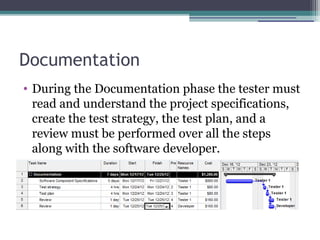
Documentation
• During the Documentation phase the tester must
  read and understand the project specifications,
  create the test strategy, the test plan, and a
  review must be performed over all the steps
  along with the software developer.
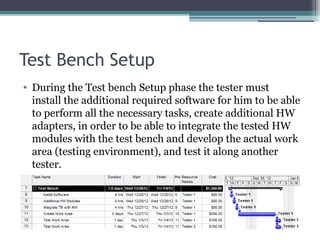
Test Bench Setup
• During the Test bench Setup phase the tester must
  install the additional required software for him to be able
  to perform all the necessary tasks, create additional HW
  adapters, in order to be able to integrate the tested HW
  modules with the test bench and develop the actual work
  area (testing environment), and test it along another
  tester.
Test Development
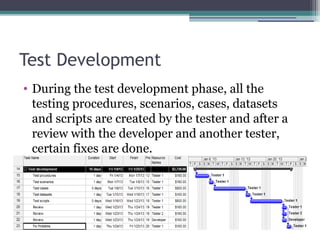
• During the test development phase, all the
  testing procedures, scenarios, cases, datasets
  and scripts are created by the tester and after a
  review with the developer and another tester,
  certain fixes are done.
Test Execution

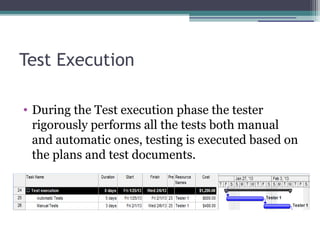
• During the Test execution phase the tester
  rigorously performs all the tests both manual
  and automatic ones, testing is executed based on
  the plans and test documents.
Test Reporting

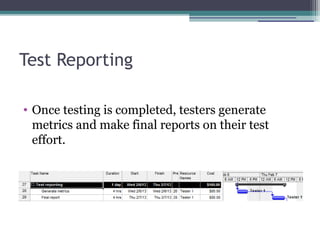
• Once testing is completed, testers generate
  metrics and make final reports on their test
  effort.
Test Result Analysis

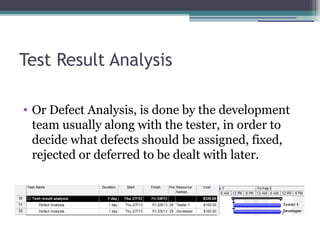
• Or Defect Analysis, is done by the development
  team usually along with the tester, in order to
  decide what defects should be assigned, fixed,
  rejected or deferred to be dealt with later.
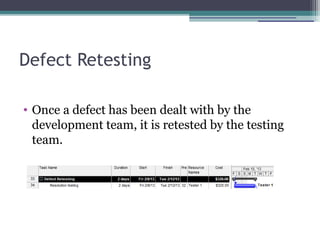
Defect Retesting

• Once a defect has been dealt with by the
  development team, it is retested by the testing
  team.
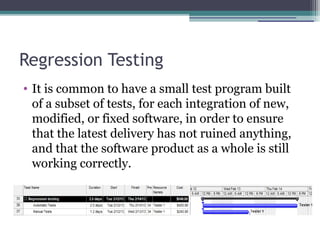
Regression Testing
• It is common to have a small test program built
  of a subset of tests, for each integration of new,
  modified, or fixed software, in order to ensure
  that the latest delivery has not ruined anything,
  and that the software product as a whole is still
  working correctly.
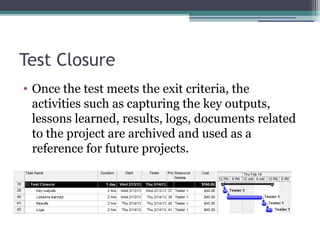
Test Closure
• Once the test meets the exit criteria, the
  activities such as capturing the key outputs,
  lessons learned, results, logs, documents related
  to the project are archived and used as a
  reference for future projects.
Conclusions:

• In order for a good testing method to be
  achieved with a maximized performance, in a
  minimum time interval and with a minimum
  amount of risks, all people who are involved in
  the project must know what to do, and when to
  do it, thus Microsoft Project is a must when
  managing projects.

Software validation

  • 1.
    Software Validation Software ProjectManagement Asztalos Robert AES I 2012
  • 2.
    Purpose: • The purposeof a the software validation process is to check if a certain software was created by the developers according to the customers specifications. • The software validation process actually includes test software development with the help of which the actual validation is done.
  • 3.
    Resources: • Human Resources: ▫ Tester 1 ▫ Tester 2 ▫ Developer • Material Resources: ▫ Software Licenses ▫ Miscellaneous Equipment
  • 4.
    Constraints: • Limited resourcesbeing assigned for the testing process, it is important for the project not to run late and try to keep the costs between the project's budget.
  • 5.
    Project Steps – Documentation – Test Bench Setup – Test development – Test execution – Test reporting – Test result analysis – Defect Retesting – Regression Testing – Test Closure
  • 6.
    Documentation • During theDocumentation phase the tester must read and understand the project specifications, create the test strategy, the test plan, and a review must be performed over all the steps along with the software developer.
  • 7.
    Test Bench Setup •During the Test bench Setup phase the tester must install the additional required software for him to be able to perform all the necessary tasks, create additional HW adapters, in order to be able to integrate the tested HW modules with the test bench and develop the actual work area (testing environment), and test it along another tester.
  • 8.
    Test Development • Duringthe test development phase, all the testing procedures, scenarios, cases, datasets and scripts are created by the tester and after a review with the developer and another tester, certain fixes are done.
  • 9.
    Test Execution • Duringthe Test execution phase the tester rigorously performs all the tests both manual and automatic ones, testing is executed based on the plans and test documents.
  • 10.
    Test Reporting • Oncetesting is completed, testers generate metrics and make final reports on their test effort.
  • 11.
    Test Result Analysis •Or Defect Analysis, is done by the development team usually along with the tester, in order to decide what defects should be assigned, fixed, rejected or deferred to be dealt with later.
  • 12.
    Defect Retesting • Oncea defect has been dealt with by the development team, it is retested by the testing team.
  • 13.
    Regression Testing • Itis common to have a small test program built of a subset of tests, for each integration of new, modified, or fixed software, in order to ensure that the latest delivery has not ruined anything, and that the software product as a whole is still working correctly.
  • 14.
    Test Closure • Oncethe test meets the exit criteria, the activities such as capturing the key outputs, lessons learned, results, logs, documents related to the project are archived and used as a reference for future projects.
  • 15.
    Conclusions: • In orderfor a good testing method to be achieved with a maximized performance, in a minimum time interval and with a minimum amount of risks, all people who are involved in the project must know what to do, and when to do it, thus Microsoft Project is a must when managing projects.