GROUP MEMBERS
 ABEER EHSAN RASHID
 FARAZ ASAD
 USAMA KHAN
 TAMOOR AHMED
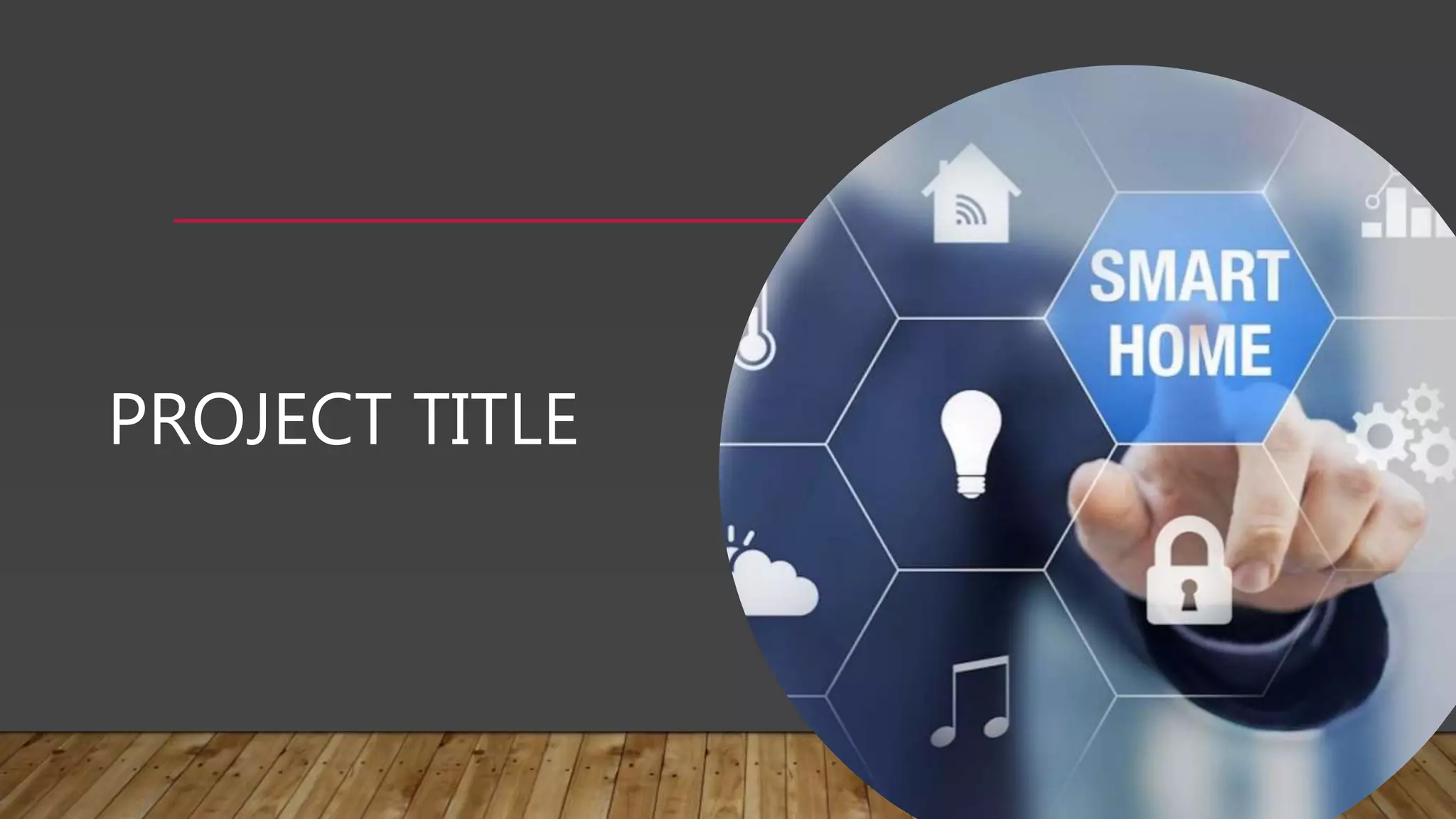
PROJECT TITLE
INTRODUCTION
The basic purpose of smart home is to make the life comfortable by applying automation to
devices and different house hold, which provide assistance and help.This project involve
different appliances like TVs, Computers, A&V devices, security functionalities and other
minor functions, heating, lighting, air conditioning.
PURPOSE & GOALS
The Purpose of this project is to implement a reliable and scalable home
automation system that can be used to remotely access any house hold appliance,
using a microcontroller.
• To keep the house secure
• Make everything remotely controlled
• Make life easy and safe time
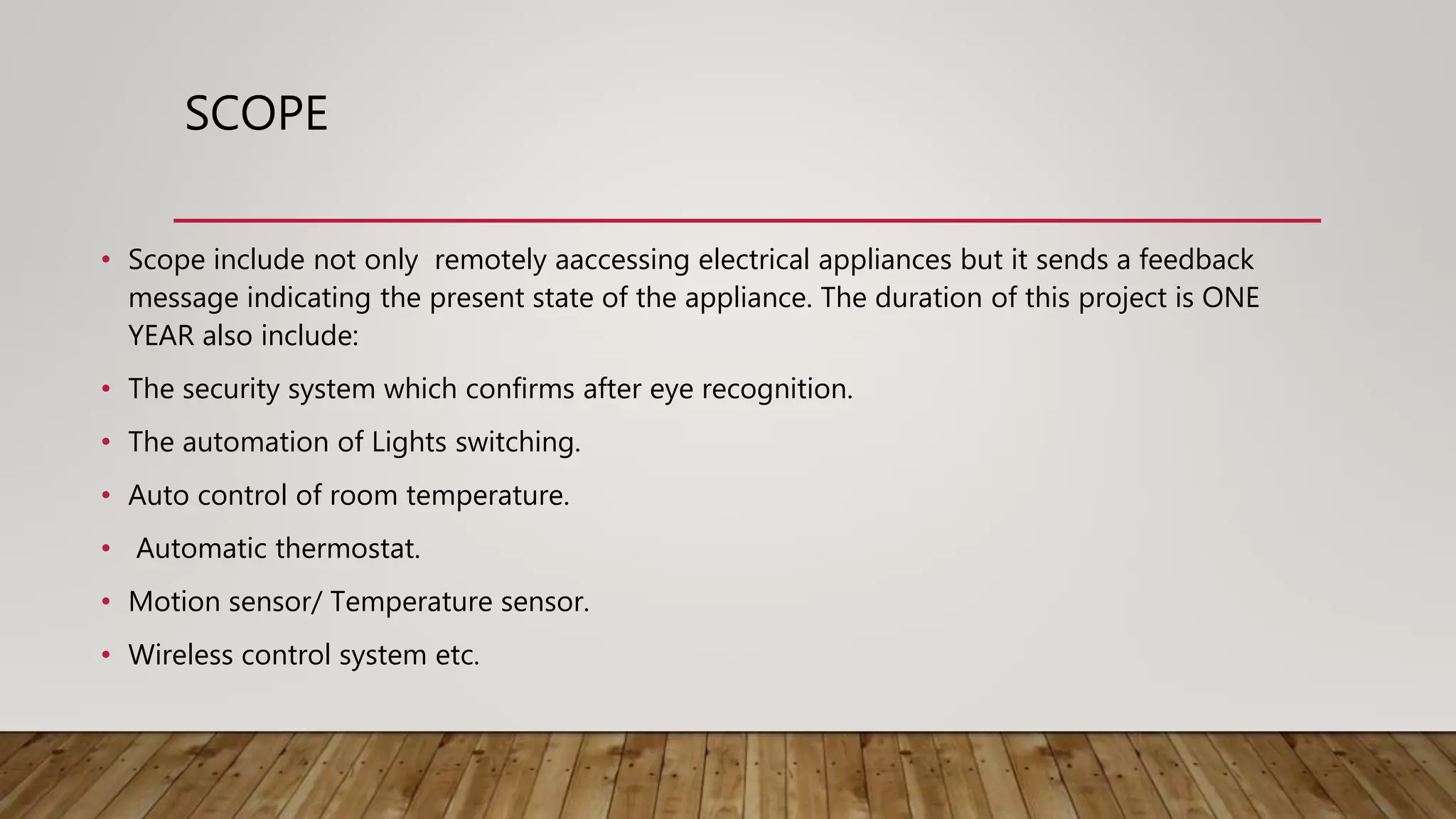
SCOPE
• Scope include not only remotely aaccessing electrical appliances but it sends a feedback
message indicating the present state of the appliance. The duration of this project is ONE
YEAR also include:
• The security system which confirms after eye recognition.
• The automation of Lights switching.
• Auto control of room temperature.
• Automatic thermostat.
• Motion sensor/ Temperature sensor.
• Wireless control system etc.
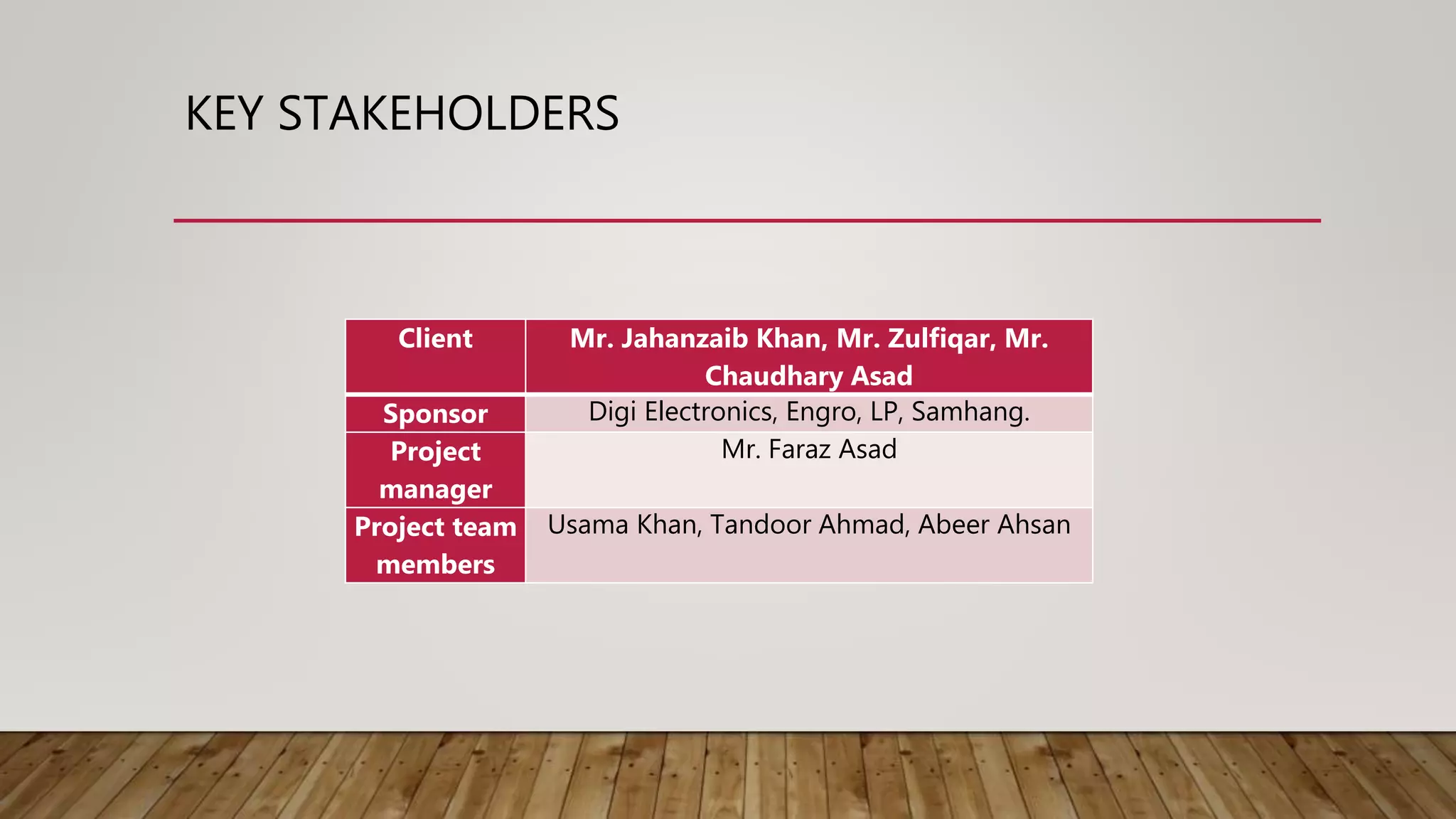
KEY STAKEHOLDERS
Client Mr. Jahanzaib Khan, Mr. Zulfiqar, Mr.
Chaudhary Asad
Sponsor Digi Electronics, Engro, LP, Samhang.
Project
manager
Mr. Faraz Asad
Project team
members
Usama Khan, Tandoor Ahmad, Abeer Ahsan
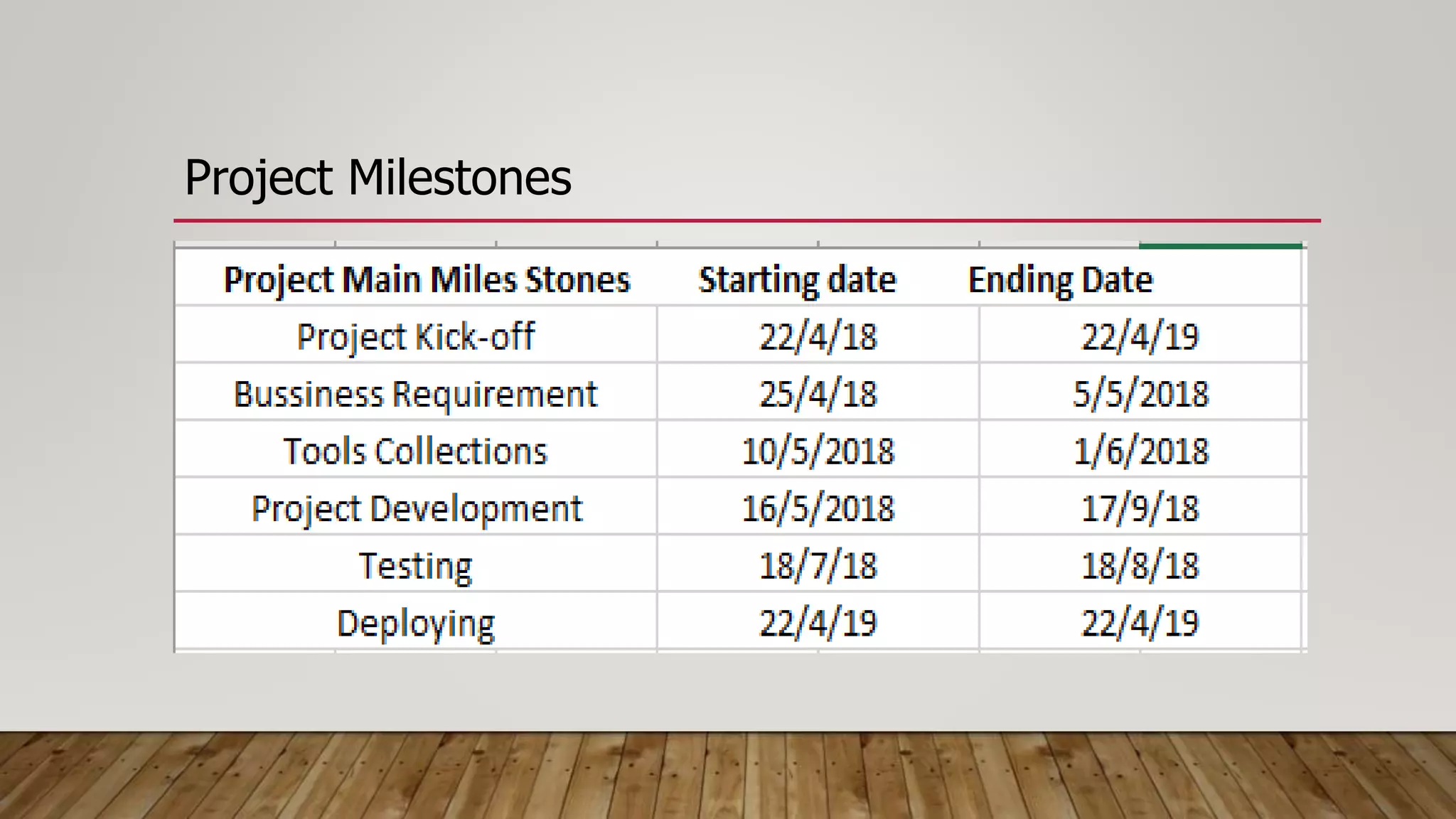
Project Milestones
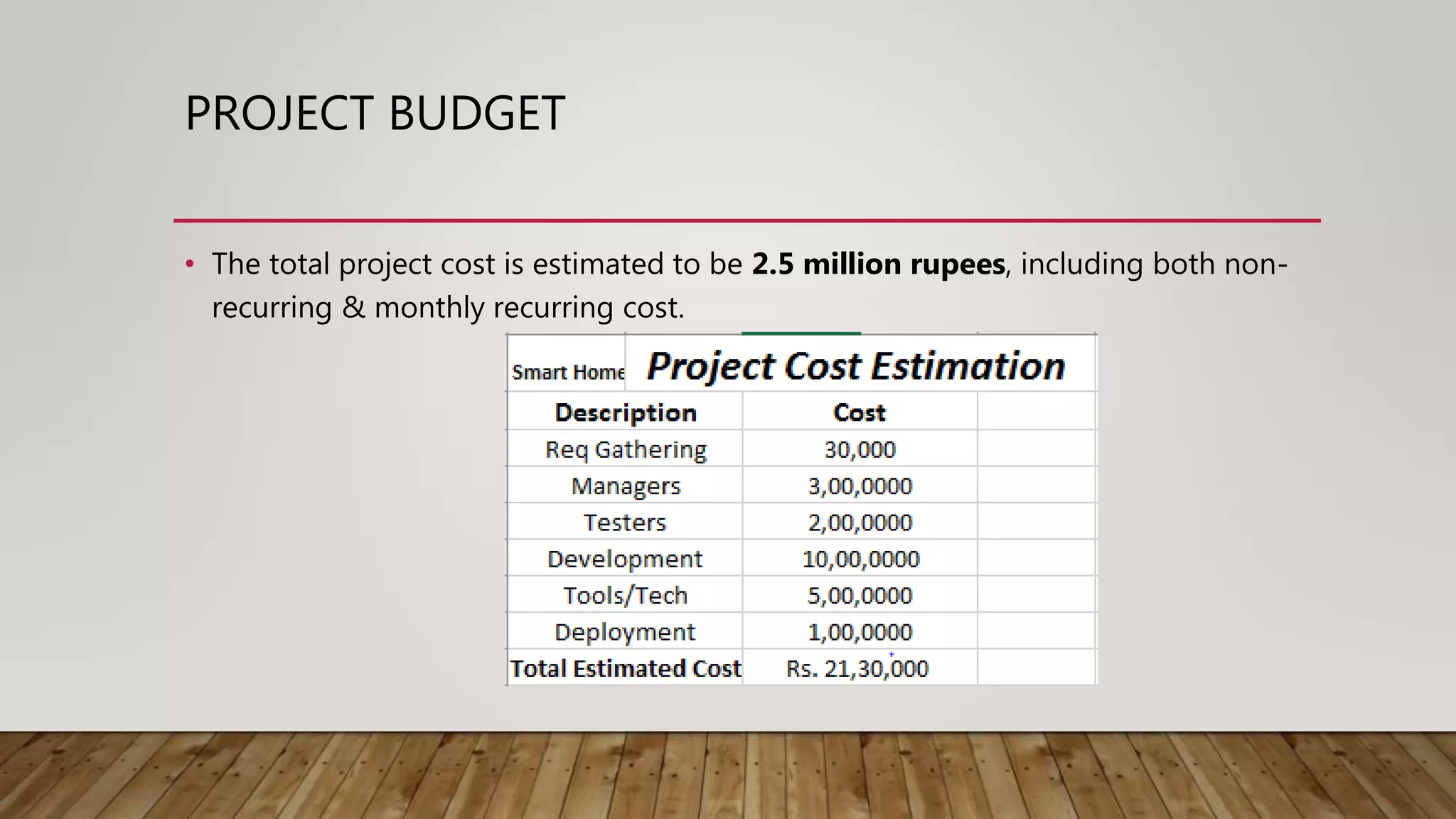
PROJECT BUDGET
• The total project cost is estimated to be 2.5 million rupees, including both non-
recurring & monthly recurring cost.
CONSTRAINTS, ASSUMPTIONS, RISKS AND
DEPENDENCIES
• Electricity consumption is major constraints.
• Energy consumption that has doubled in the last 20 years.
• This challenge can be addressed by adoption of smart-home agents, allowing
adaptive scheduling of electronic devices.
• A smart home is dependent on your internet connection. If your connection
drops you’ll be left with a lot of smart products that won’t work.
• Wireless signals can be interrupted by other electronics in your home
CONSTRAINTS, ASSUMPTIONS, RISKS AND
DEPENDENCIES
• The system won’t show any response when it will be out of internet connection.
• The command could be given using our smart phone application or making
scheduled.
• Security system will check and recognize the person before letting him/her in the
house.
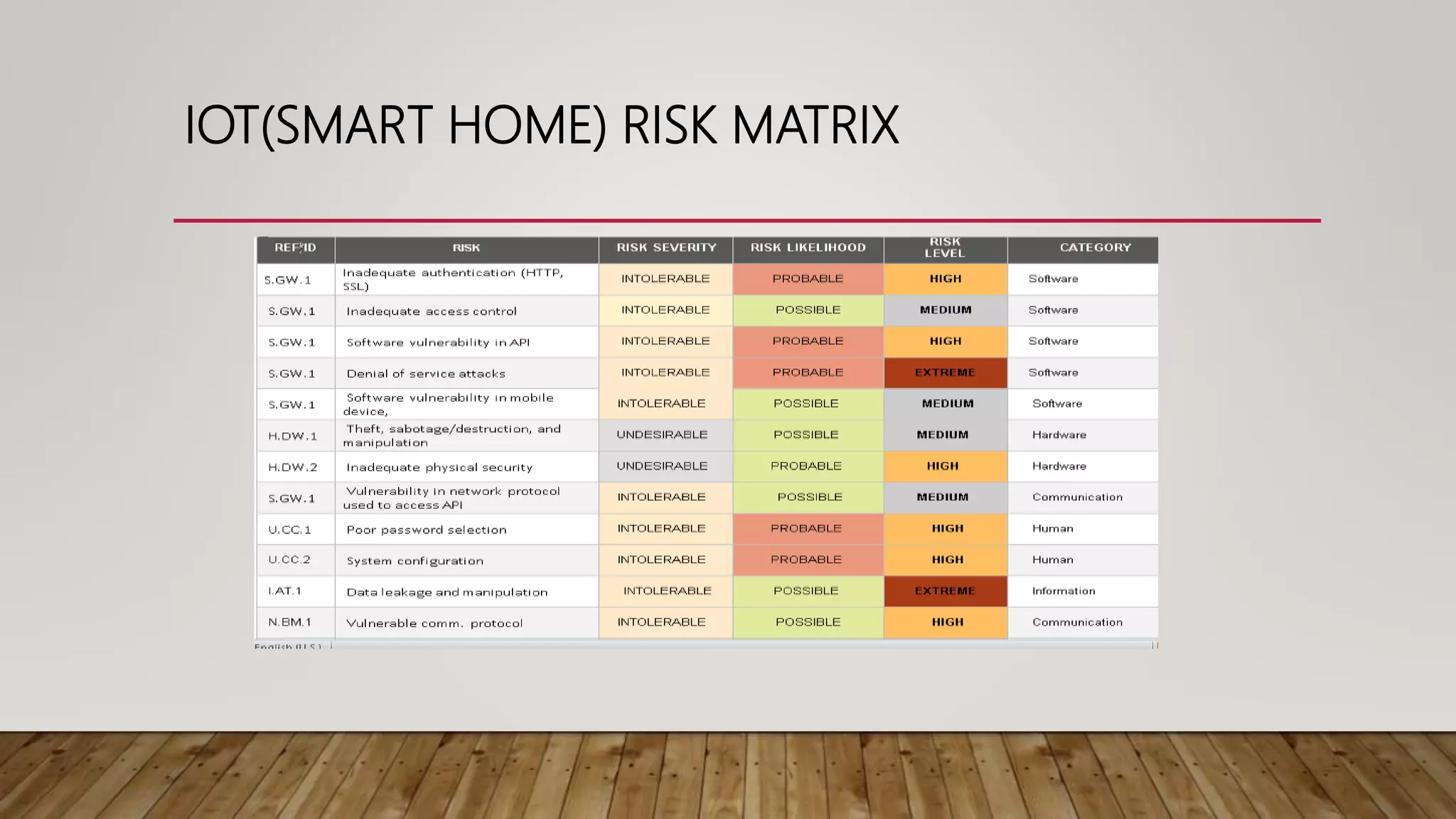
IOT(SMART HOME) RISK MATRIX
ANY QUESTIONS???

Software Project Management

  • 1.
    GROUP MEMBERS  ABEEREHSAN RASHID  FARAZ ASAD  USAMA KHAN  TAMOOR AHMED
  • 2.
  • 3.
    INTRODUCTION The basic purposeof smart home is to make the life comfortable by applying automation to devices and different house hold, which provide assistance and help.This project involve different appliances like TVs, Computers, A&V devices, security functionalities and other minor functions, heating, lighting, air conditioning.
  • 4.
    PURPOSE & GOALS ThePurpose of this project is to implement a reliable and scalable home automation system that can be used to remotely access any house hold appliance, using a microcontroller. • To keep the house secure • Make everything remotely controlled • Make life easy and safe time
  • 5.
    SCOPE • Scope includenot only remotely aaccessing electrical appliances but it sends a feedback message indicating the present state of the appliance. The duration of this project is ONE YEAR also include: • The security system which confirms after eye recognition. • The automation of Lights switching. • Auto control of room temperature. • Automatic thermostat. • Motion sensor/ Temperature sensor. • Wireless control system etc.
  • 6.
    KEY STAKEHOLDERS Client Mr.Jahanzaib Khan, Mr. Zulfiqar, Mr. Chaudhary Asad Sponsor Digi Electronics, Engro, LP, Samhang. Project manager Mr. Faraz Asad Project team members Usama Khan, Tandoor Ahmad, Abeer Ahsan
  • 7.
  • 8.
    PROJECT BUDGET • Thetotal project cost is estimated to be 2.5 million rupees, including both non- recurring & monthly recurring cost.
  • 9.
    CONSTRAINTS, ASSUMPTIONS, RISKSAND DEPENDENCIES • Electricity consumption is major constraints. • Energy consumption that has doubled in the last 20 years. • This challenge can be addressed by adoption of smart-home agents, allowing adaptive scheduling of electronic devices. • A smart home is dependent on your internet connection. If your connection drops you’ll be left with a lot of smart products that won’t work. • Wireless signals can be interrupted by other electronics in your home
  • 10.
    CONSTRAINTS, ASSUMPTIONS, RISKSAND DEPENDENCIES • The system won’t show any response when it will be out of internet connection. • The command could be given using our smart phone application or making scheduled. • Security system will check and recognize the person before letting him/her in the house.
  • 12.
  • 13.