Mata Kuliah Rekayasa Perangkat Lunak – Magister Ilmu Komputer Universitas Budi Luhur
Unified Process
Nugroho Budiarto
Eryk Budi Pratama
Sigit Wijanarko
Agenda
Pengertian Unified Process
Tahapan / Fase Unified Process
Penerapan Unified Process (OpenUP)
01
02
03
Pengertian
Unified Process
01
Unified Process
Metode proses pengembangan
sistem yang bersifat use-case-driven
atau menggunakan use case sebagai
alur untuk membangun sebuah
sistem informasi
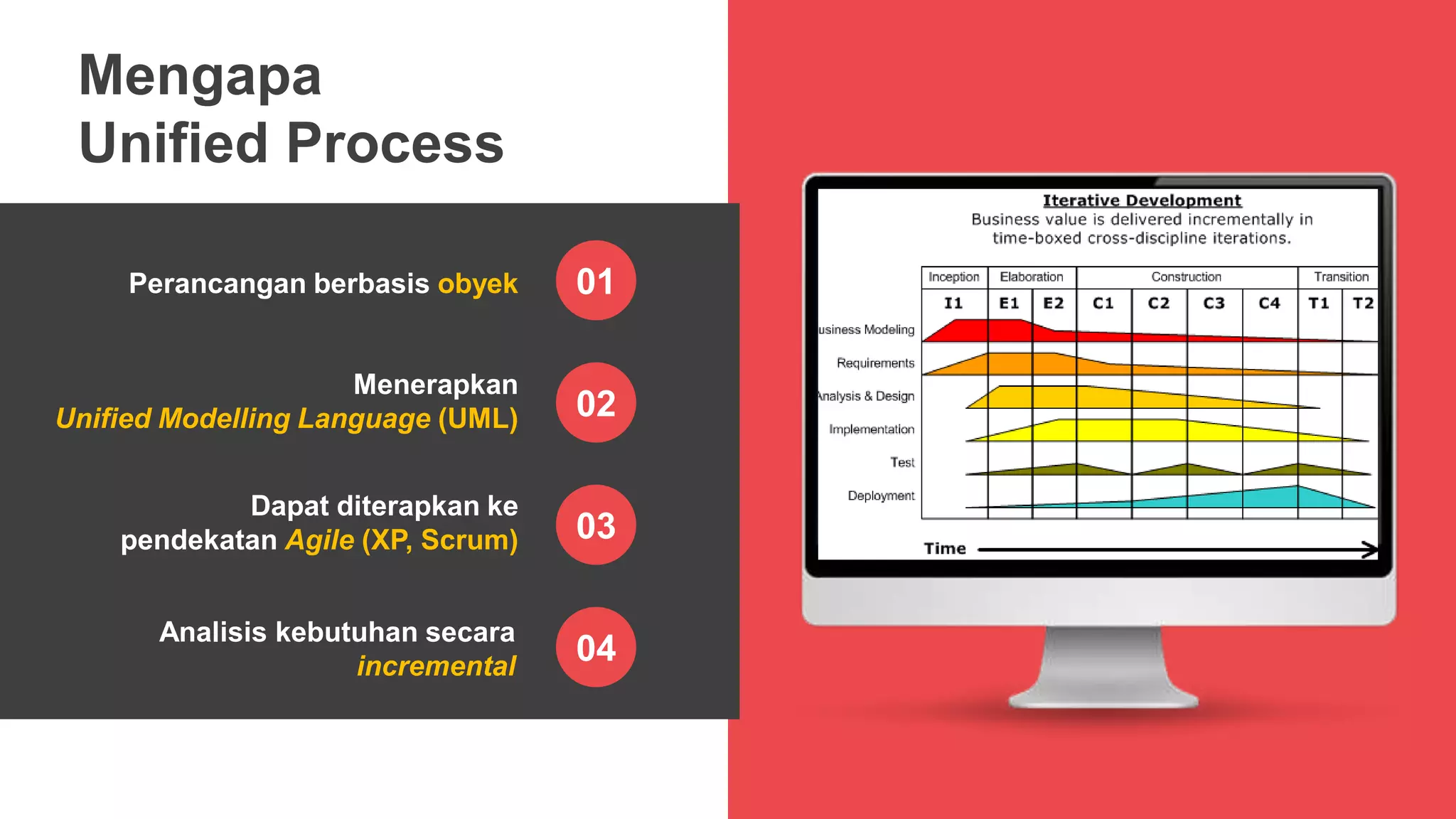
Perancangan berbasis obyek
Menerapkan
Unified Modelling Language (UML)
Dapat diterapkan ke
pendekatan Agile (XP, Scrum)
Analisis kebutuhan secara
incremental
01
02
03
04
Mengapa
Unified Process
Kelebihan dan
Kekurangan
• Metodologi ini hanya dapat
digunakan pada
pengembangan perangkat
lunak yang berorientasi objek
dengan berfokus pada UML
(Unified Modeling Language)
• Membutuhkan waktu yang
cukup lama
KEKURANGAN
• Menyediakan akses yang mudah
terhadap pengetahuan dasar
bagi anggota tim
• Menyediakan petunjuk
bagaimana menggunakan UML
secara efektif.
• Mendukung proses pengulangan
dalam pengembangan software
• Memungkinkan adanya
penambahan-penambahan pada
proses.
• Memungkinkan untuk secara
sistematis mengontrol
perubahan- perubahan yang
terjadi pada software selama
proses pengembangannya.
KELEBIHAN
Tahapan / Fase
Unified Process
02
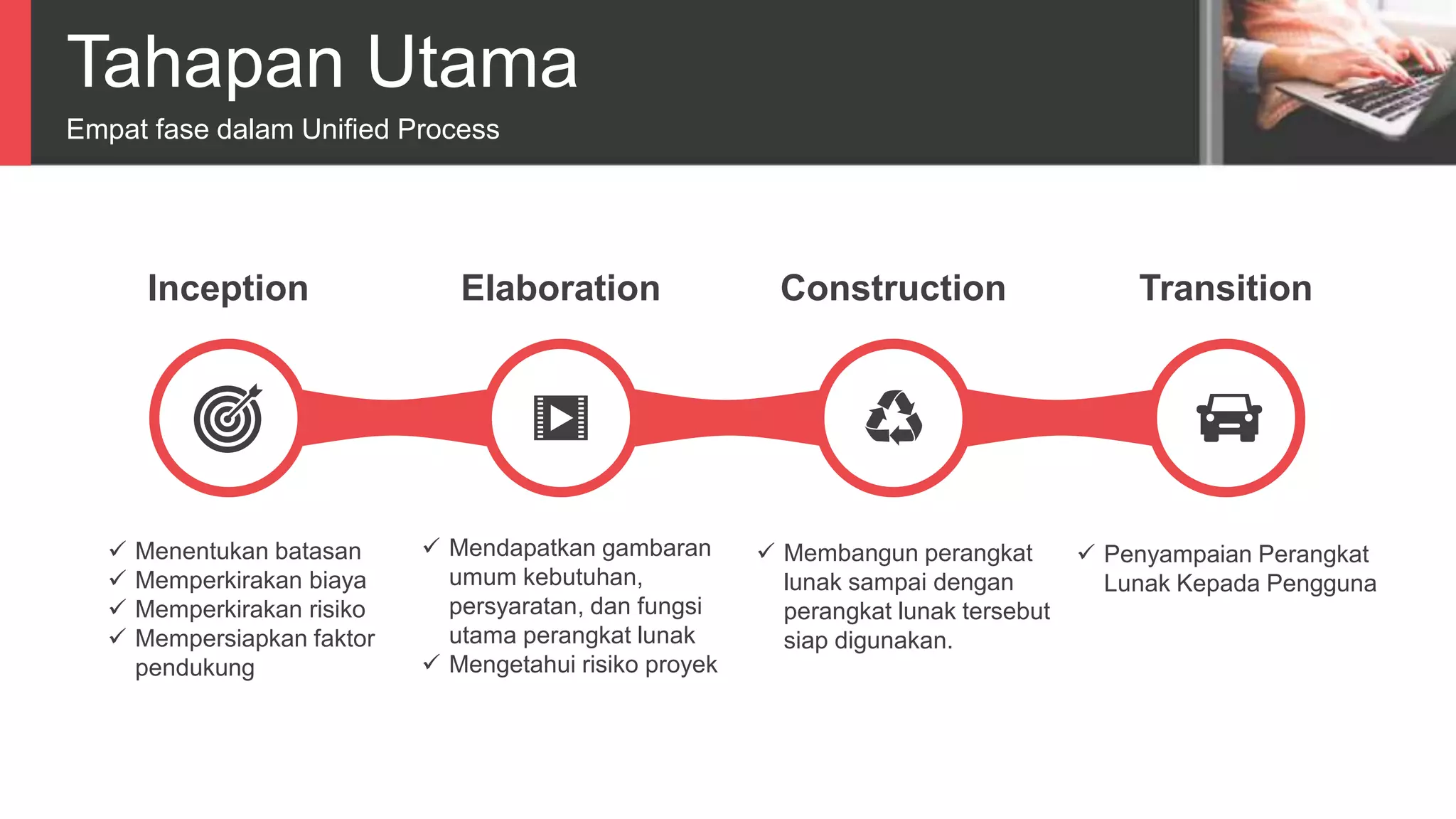
Tahapan Utama
Empat fase dalam Unified Process
Inception Elaboration Construction Transition
 Menentukan batasan
 Memperkirakan biaya
 Memperkirakan risiko
 Mempersiapkan faktor
pendukung
 Mendapatkan gambaran
umum kebutuhan,
persyaratan, dan fungsi
utama perangkat lunak
 Mengetahui risiko proyek
 Membangun perangkat
lunak sampai dengan
perangkat lunak tersebut
siap digunakan.
 Penyampaian Perangkat
Lunak Kepada Pengguna
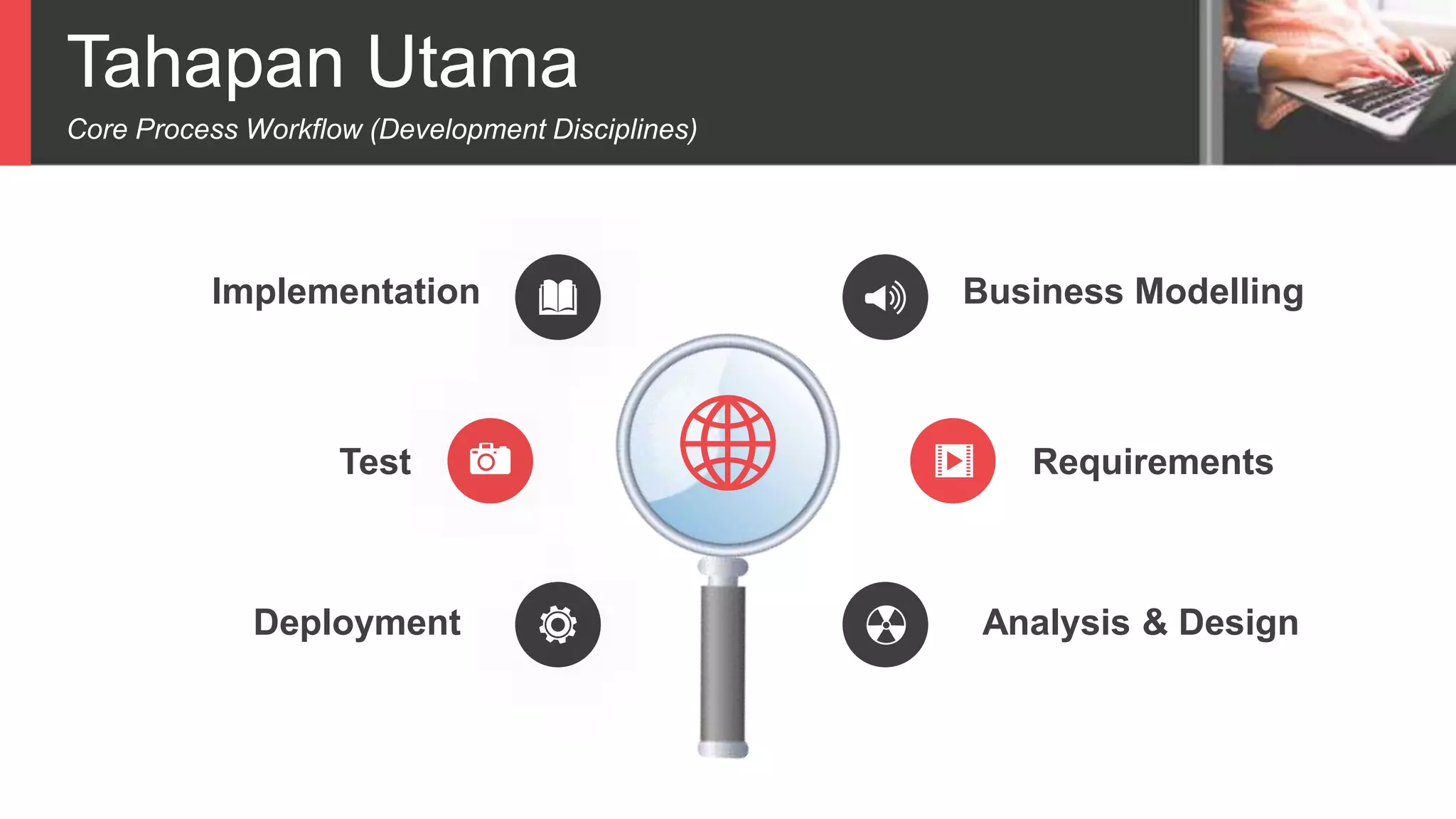
Tahapan Utama
Core Process Workflow (Development Disciplines)
Business Modelling
Analysis & Design
Requirements
Implementation
Deployment
Test
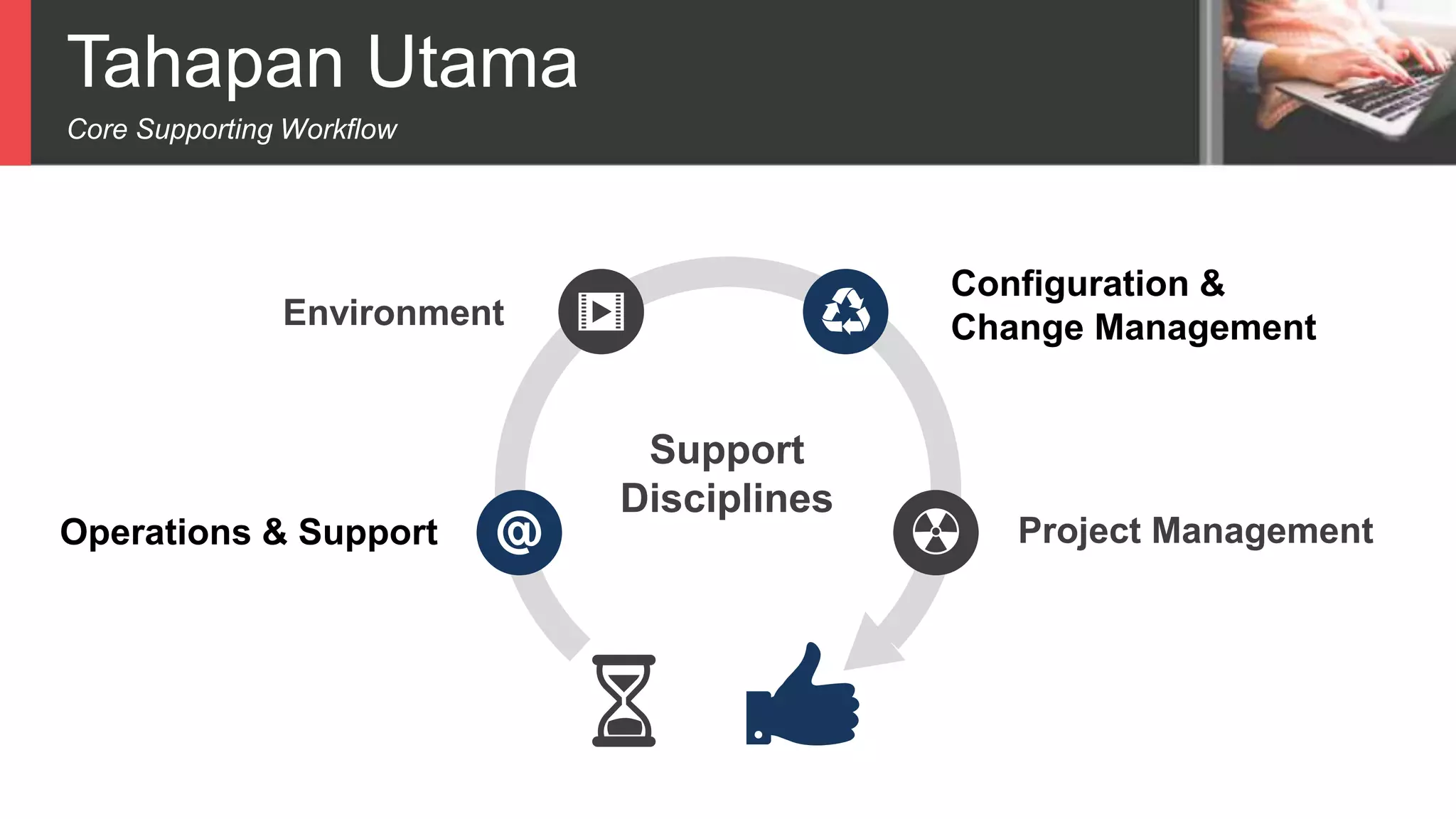
Tahapan Utama
Core Supporting Workflow
Configuration &
Change Management
Project Management
Environment
Operations & Support
Support
Disciplines
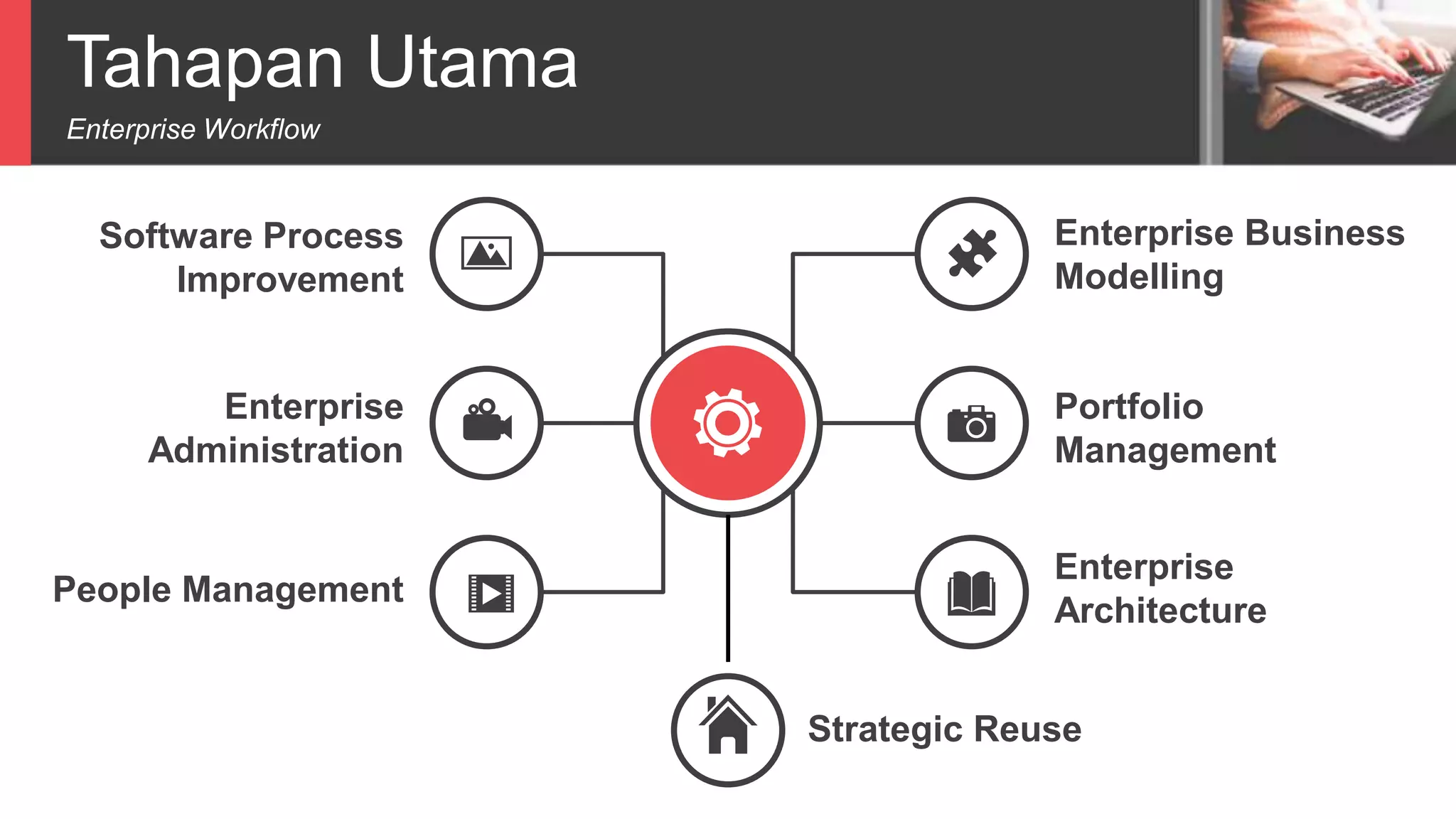
Tahapan Utama
Enterprise Workflow
Software Process
Improvement
Enterprise
Administration
People Management
Enterprise Business
Modelling
Portfolio
Management
Enterprise
Architecture
Strategic Reuse
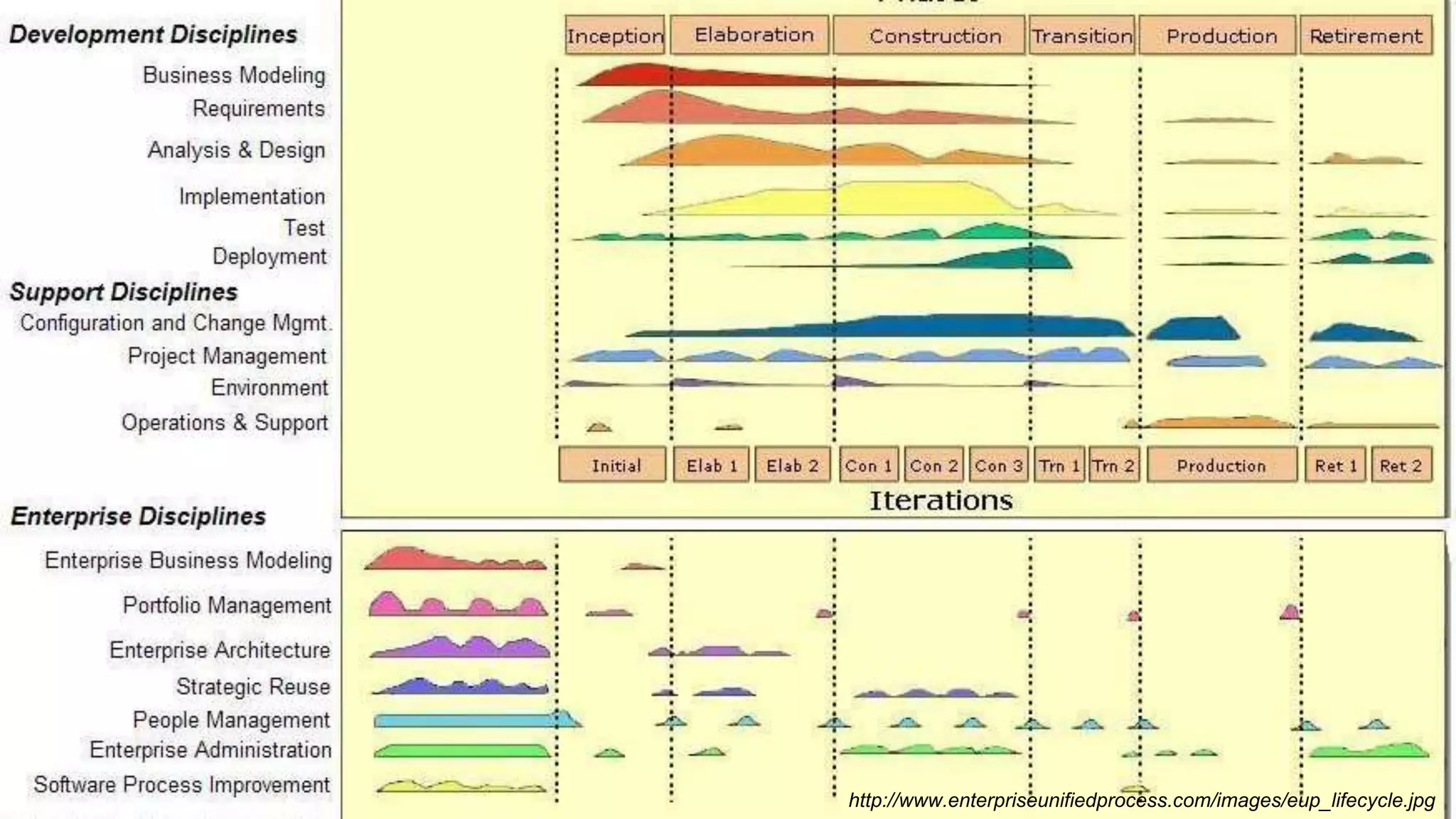
http://www.enterpriseunifiedprocess.com/images/eup_lifecycle.jpg
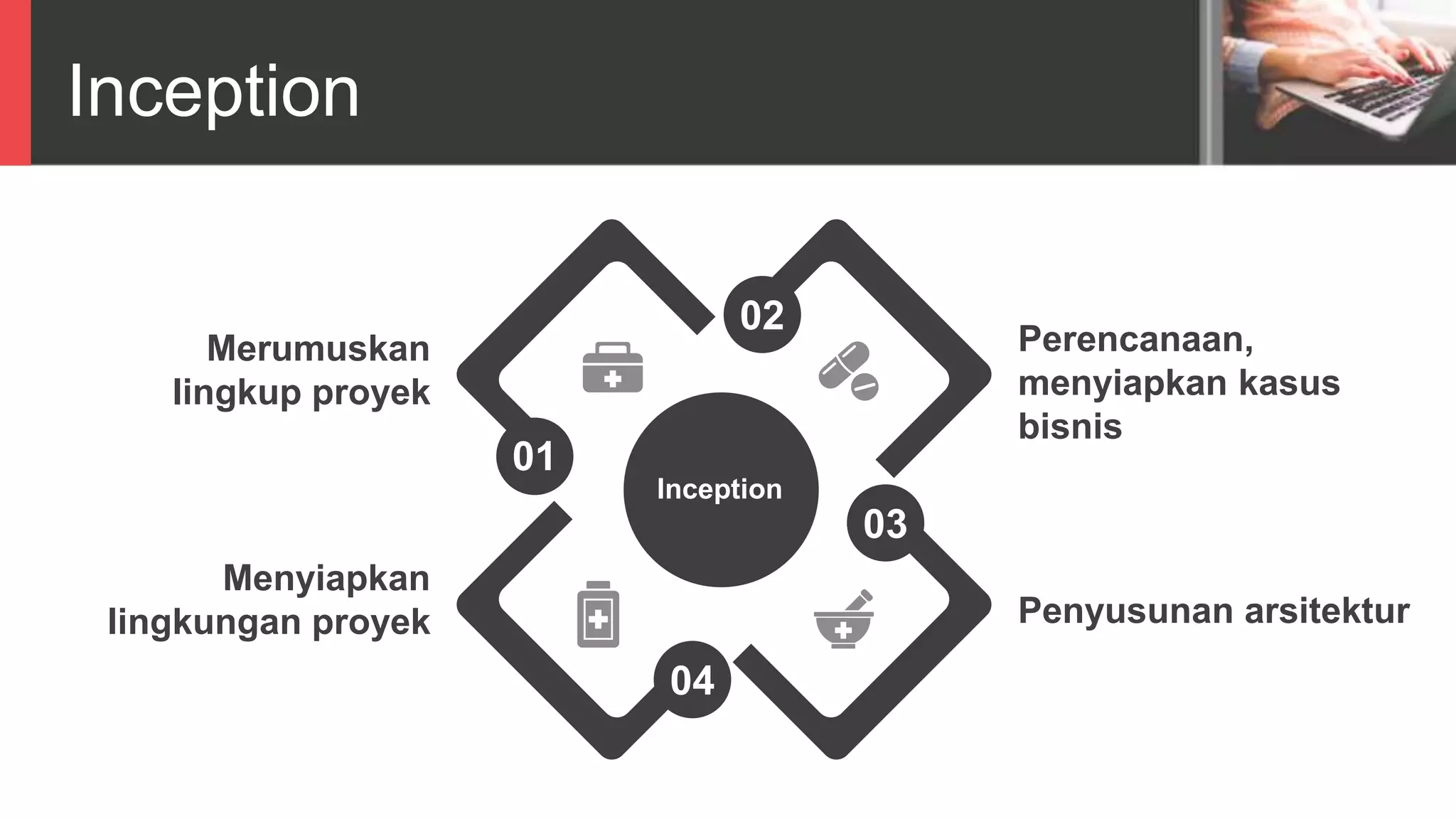
Inception
01
02
03
04
Inception
Perencanaan,
menyiapkan kasus
bisnis
Penyusunan arsitektur
Merumuskan
lingkup proyek
Menyiapkan
lingkungan proyek
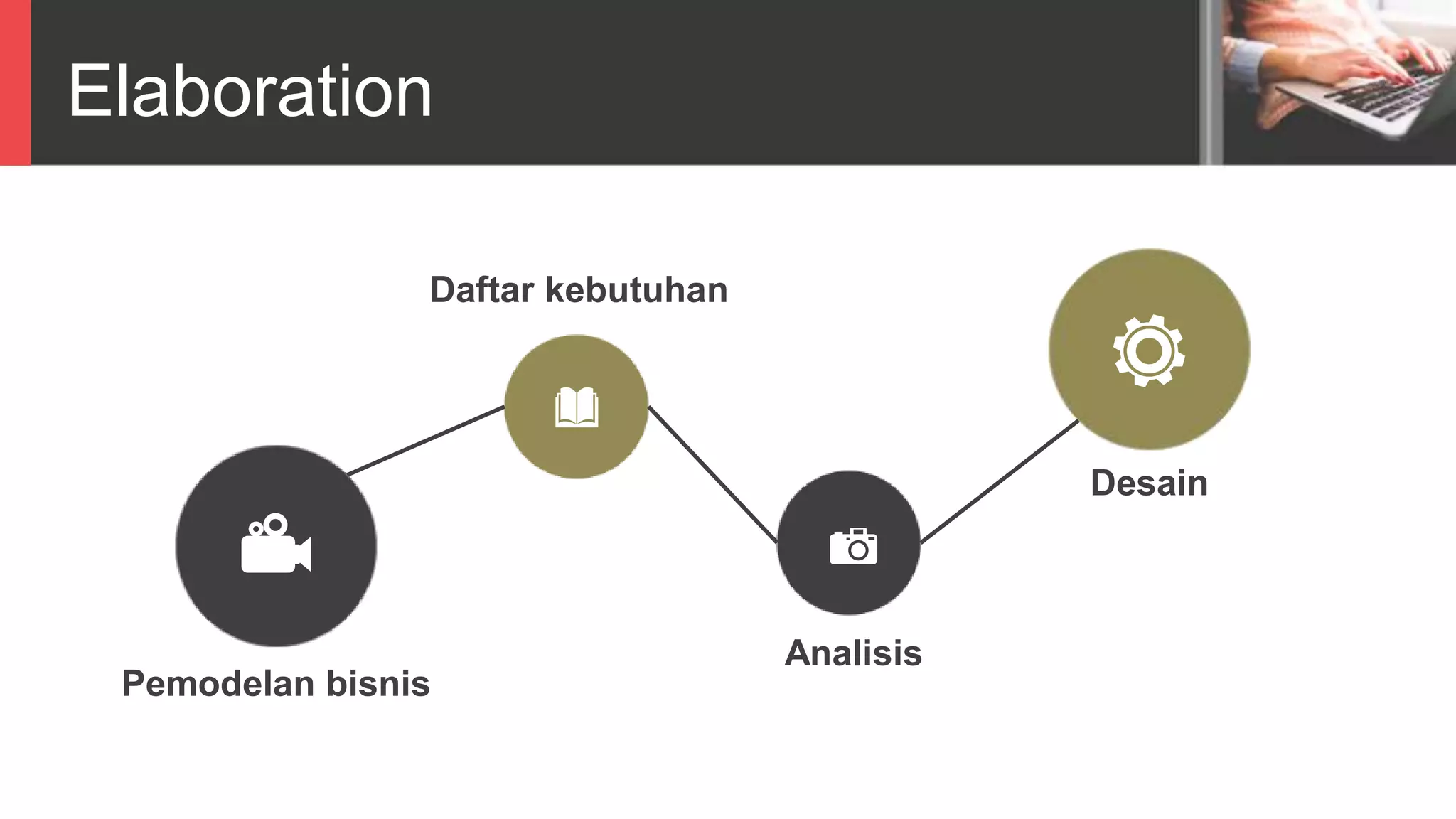
Elaboration
Pemodelan bisnis
Analisis
Daftar kebutuhan
Desain
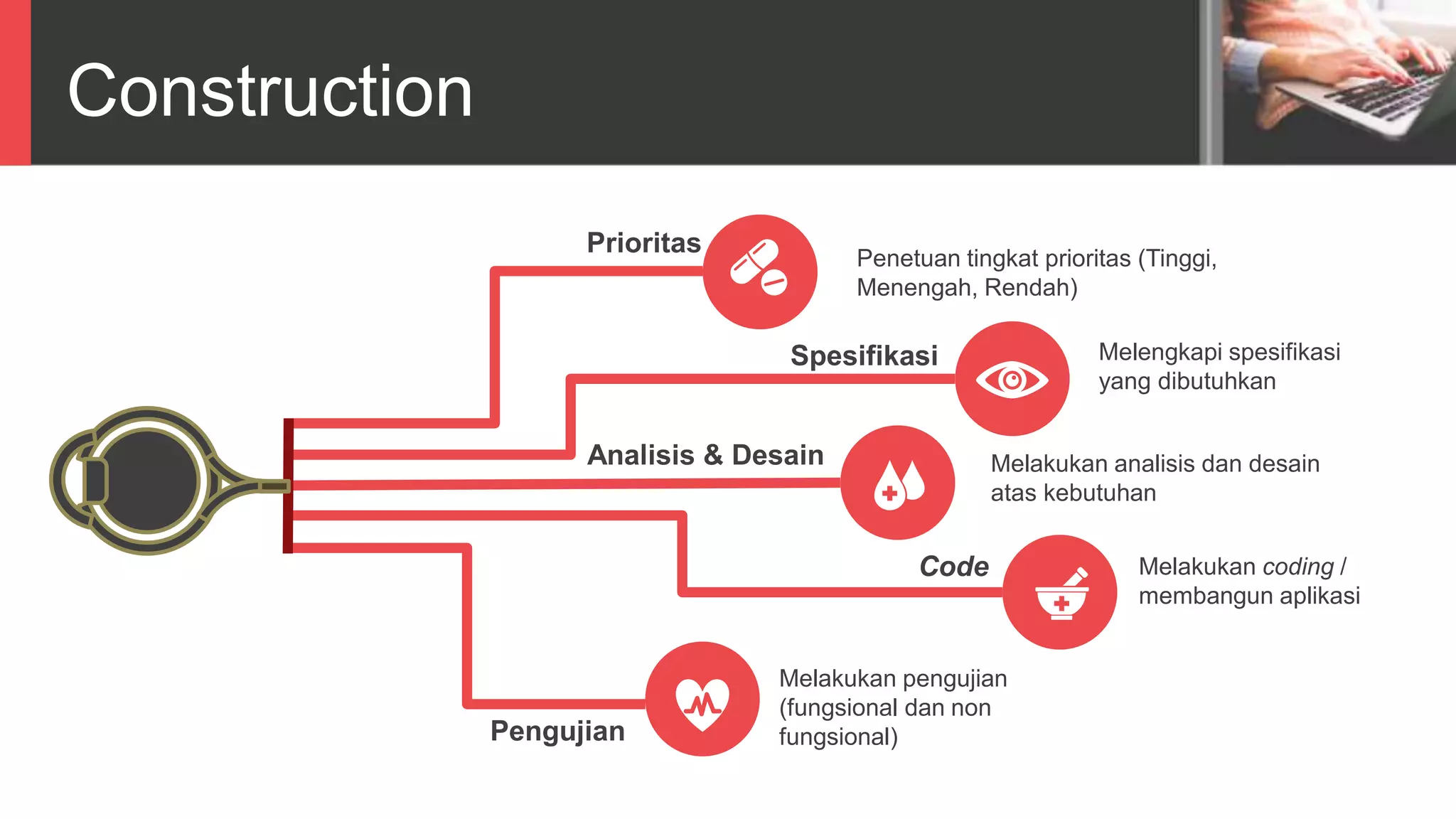
Construction
Prioritas
Spesifikasi
Analisis & Desain
Code
Pengujian
Penetuan tingkat prioritas (Tinggi,
Menengah, Rendah)
Melengkapi spesifikasi
yang dibutuhkan
Melakukan analisis dan desain
atas kebutuhan
Melakukan coding /
membangun aplikasi
Melakukan pengujian
(fungsional dan non
fungsional)
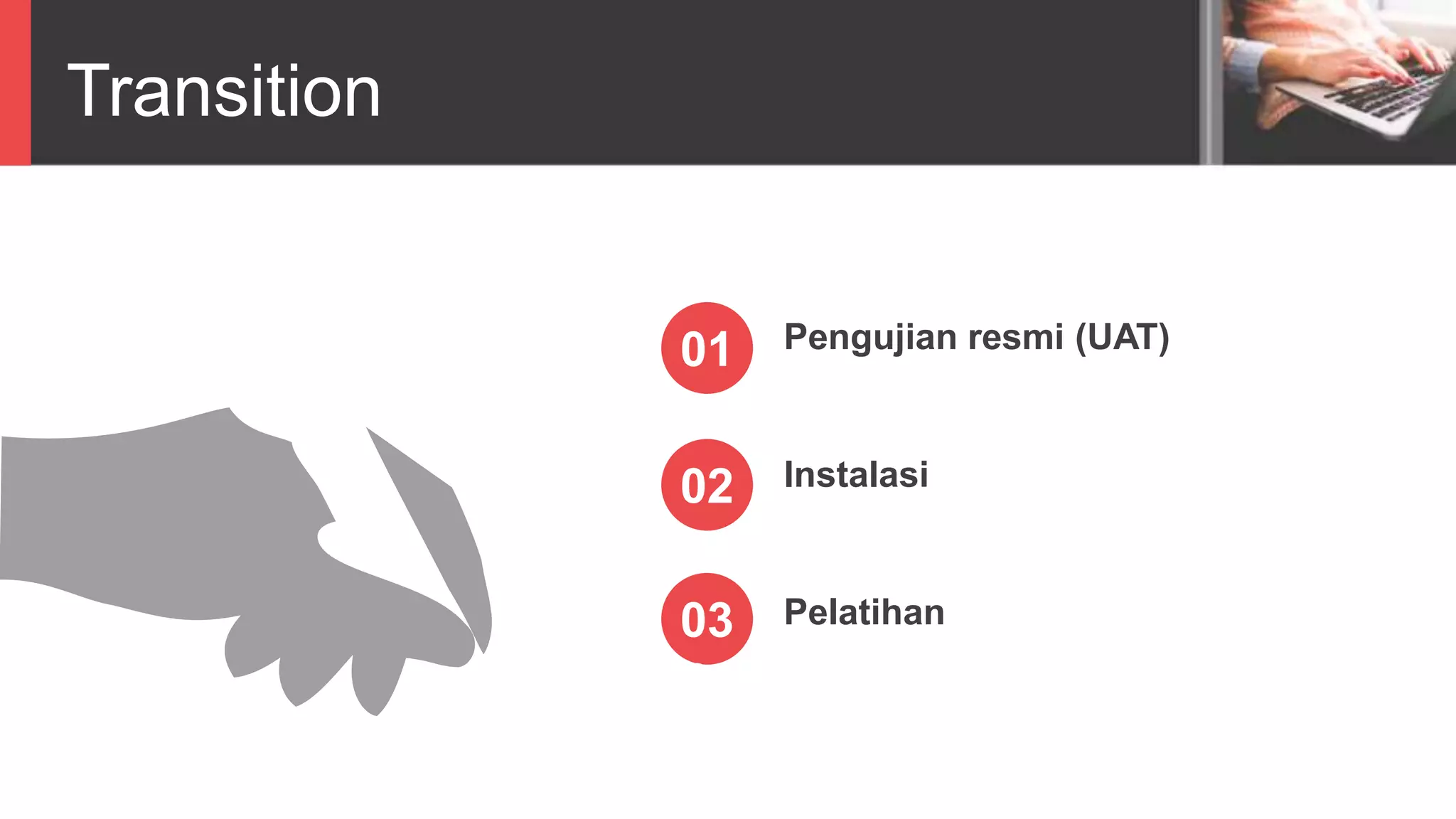
Transition
Pengujian resmi (UAT)
Instalasi
Pelatihan
01
02
03
04
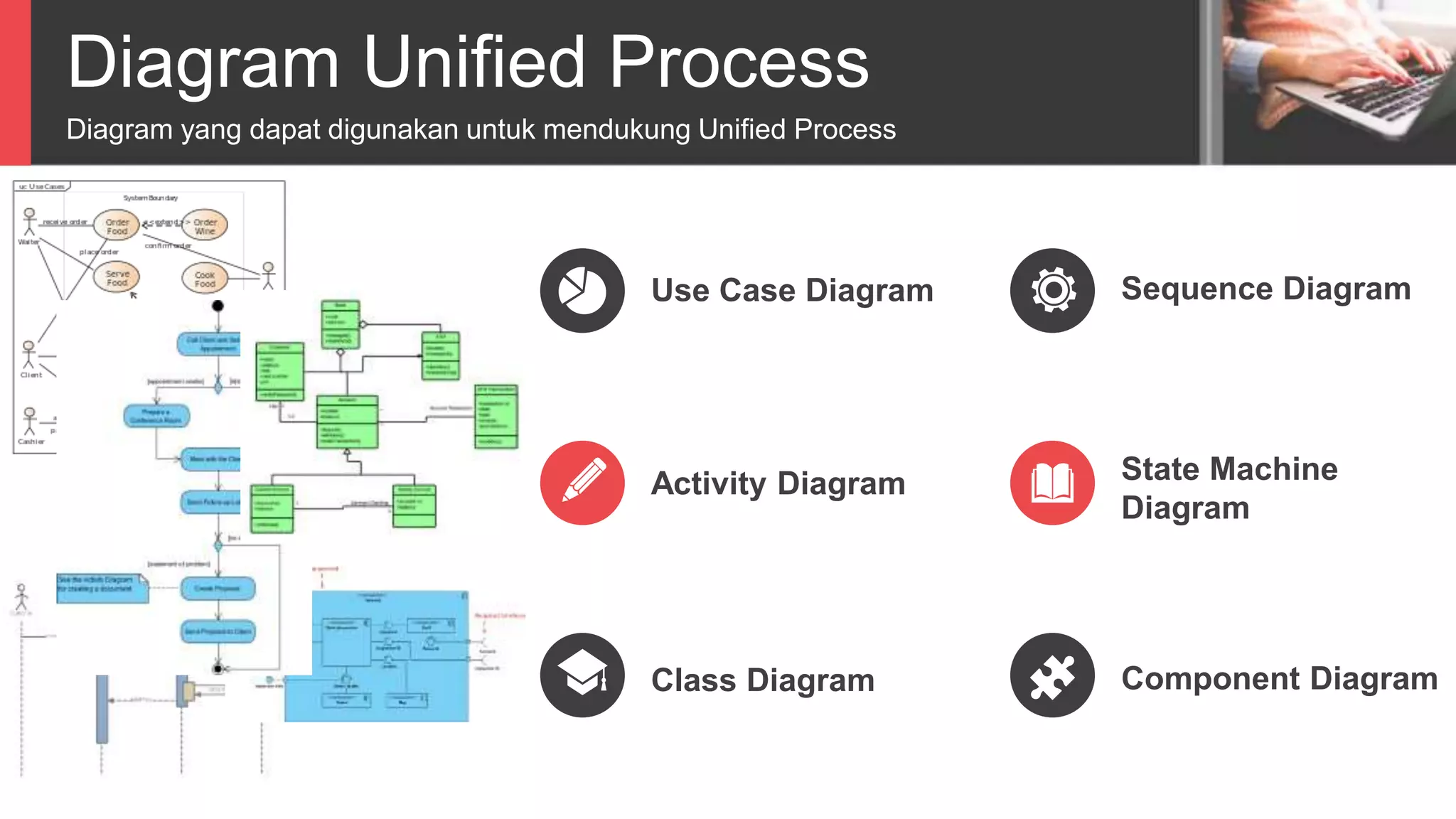
Diagram Unified Process
Diagram yang dapat digunakan untuk mendukung Unified Process
Use Case Diagram
Class Diagram
Activity Diagram
Sequence Diagram
Component Diagram
State Machine
Diagram
Penerapan
Unified Process
03
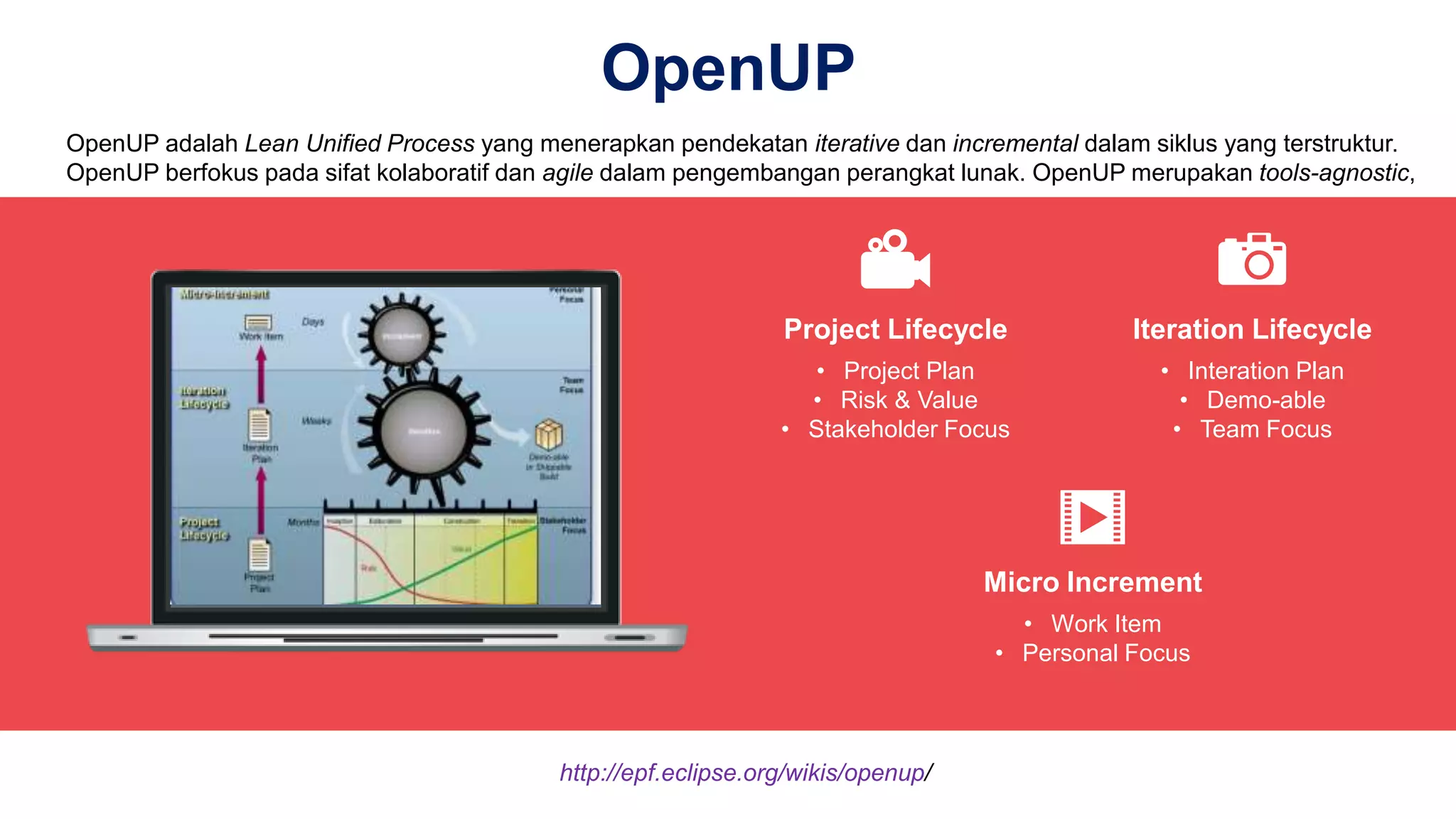
OpenUP
• Project Plan
• Risk & Value
• Stakeholder Focus
Project Lifecycle
• Interation Plan
• Demo-able
• Team Focus
Iteration Lifecycle
• Work Item
• Personal Focus
Micro Increment
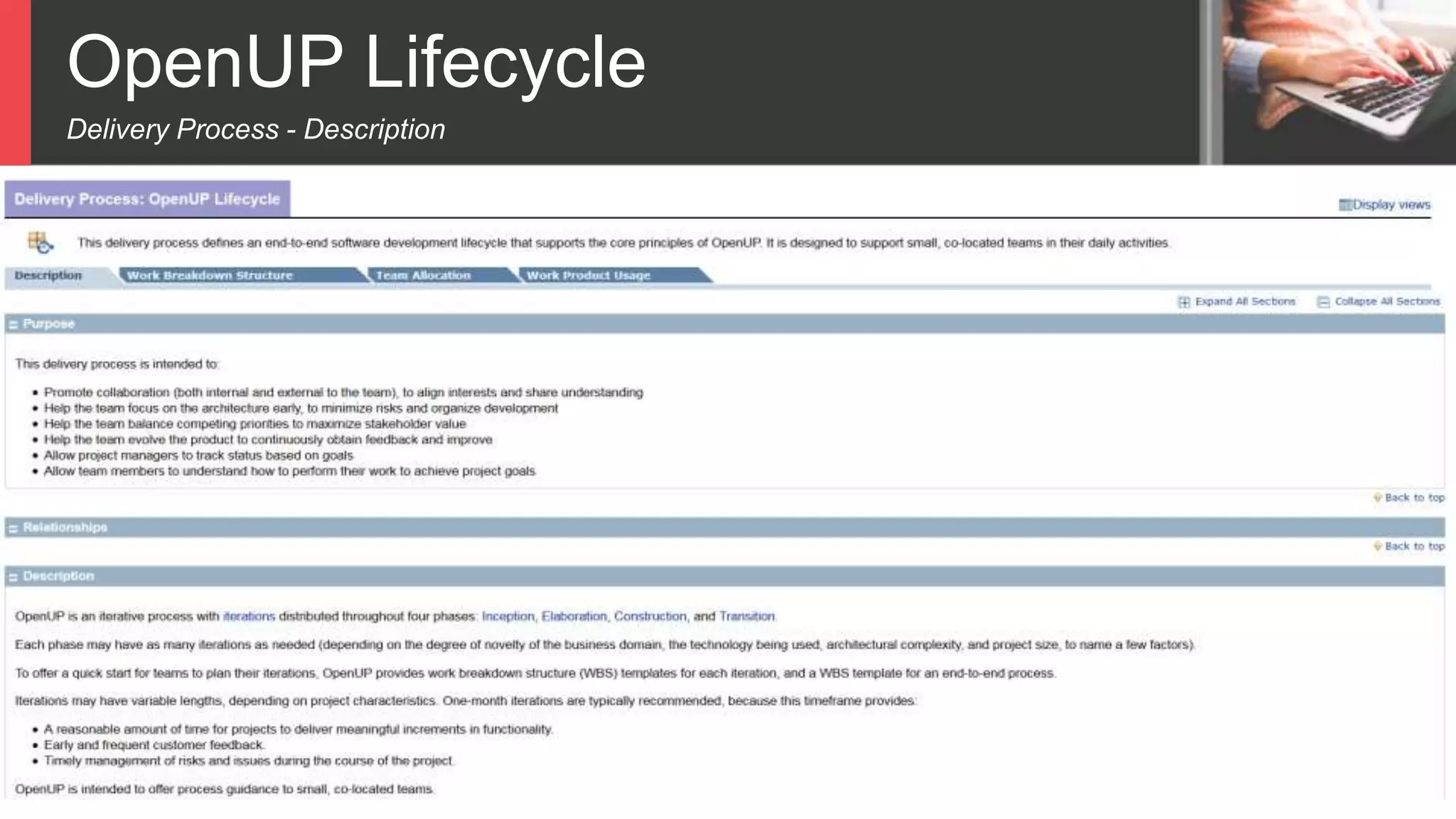
OpenUP adalah Lean Unified Process yang menerapkan pendekatan iterative dan incremental dalam siklus yang terstruktur.
OpenUP berfokus pada sifat kolaboratif dan agile dalam pengembangan perangkat lunak. OpenUP merupakan tools-agnostic,
http://epf.eclipse.org/wikis/openup/
OpenUP Lifecycle
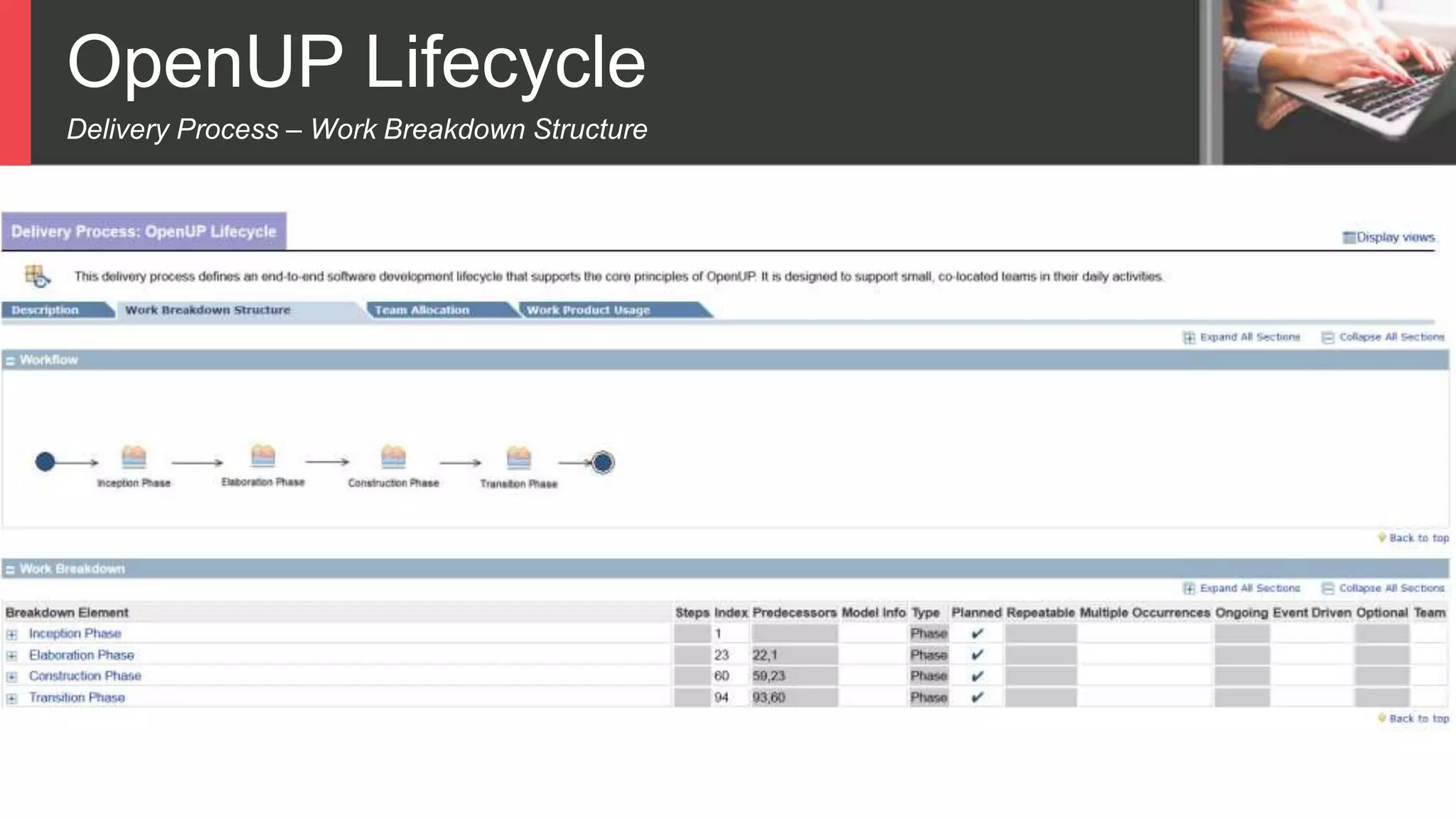
Work Breakdown Structure
Inception
• Inisiasi proyek
• Perencanaan dan
pengelolaan
iterasi
• Identifikasi dan
perbaikan
kebutuhan
• Persetujuan
pendekatan
teknis
Elaboration
• Perencanaan dan
pengelolaan
iterasi
• Identifikasi dan
perbaikan
kebutuhan
• Pengembangan
arsitektur
• Pengembangan
solution increment
• Pengujian solusi
Construction
• Perencanaan dan
pengelolaan
iterasi
• Identifikasi dan
perbaikan
kebutuhan
• Pengembangan
solution increment
• Pengujian solusi
• Pengembangan
aplikasi
• Pengembangan
dokumentasi dan
training aplikasi
Transition
• Perencanaan dan
pengelolaan
iterasi
• Pengembangan
solution increment
• Pengujian solusi
• Finalisasi
dokumentasi dan
training
• Persiapan release
• Melakukan
training
• Deployment ke
production
OpenUP Lifecycle
Delivery Process - Description
OpenUP Lifecycle
Delivery Process – Work Breakdown Structure
OpenUP Lifecycle
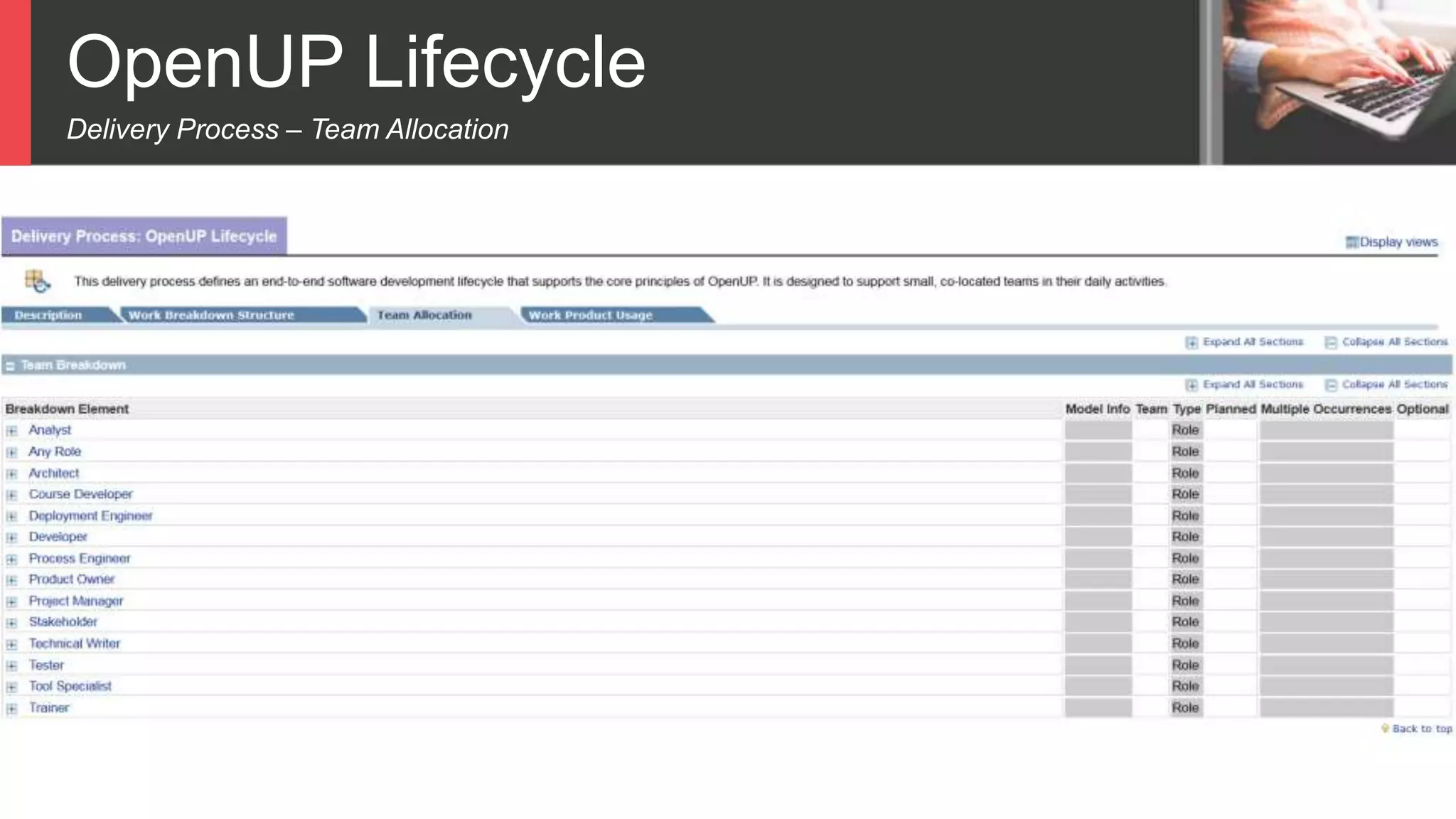
Delivery Process – Team Allocation
OpenUP Lifecycle
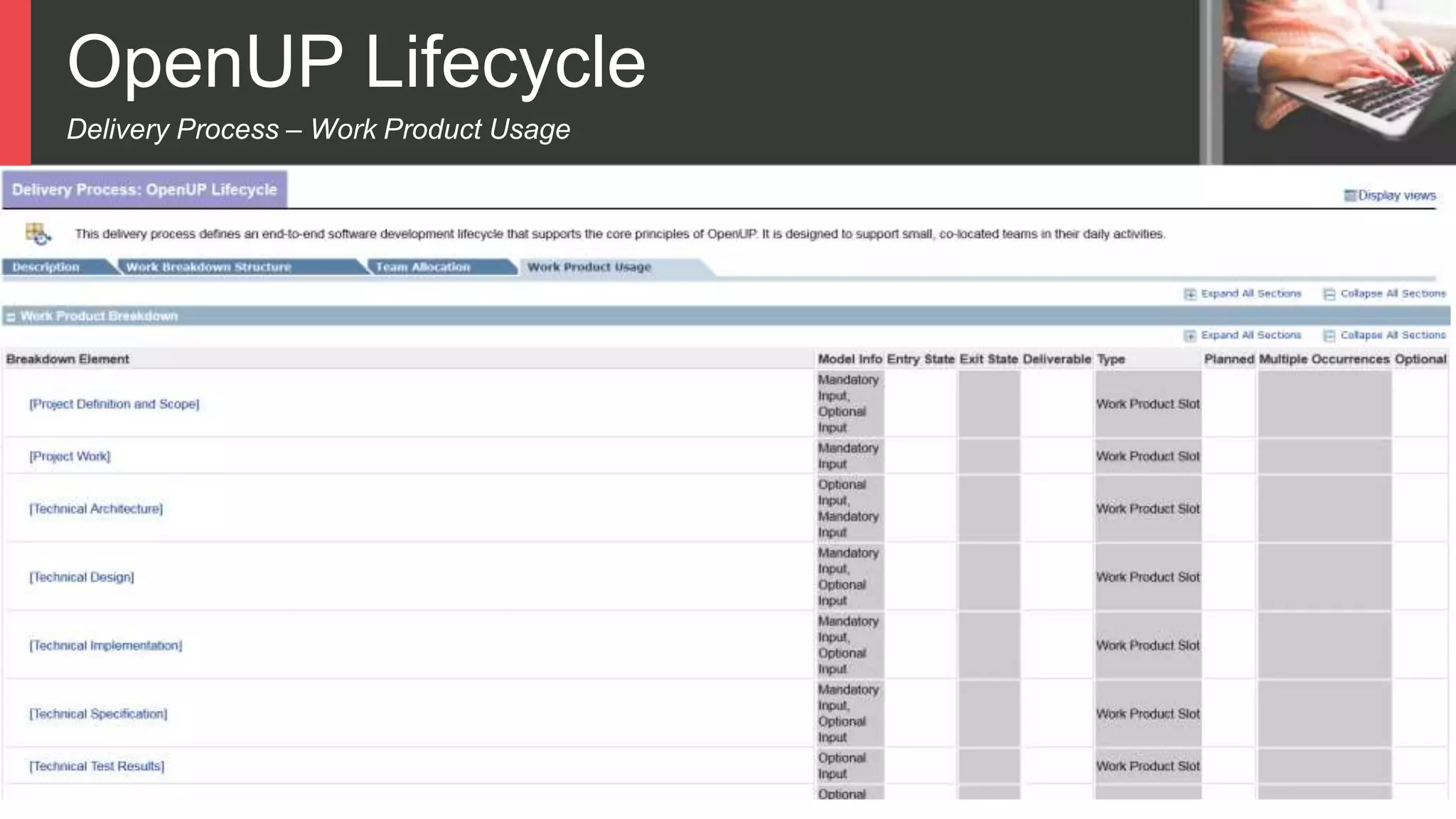
Delivery Process – Work Product Usage
Terima Kasih

Software Development Methodology - Unified Process

Editor's Notes

  • #9 RUP is comprised of low-level activities (such as finding classes), which are combined together into work-flows (describes how one activity feeds into another) Flows are organized into iterations, where each iteration identifies some aspect of a system to be considered Iterations are organized into phases. Phases focus on design process aspects (i.e. requirements, analysis, design, implementation) Phases can be grouped into cycles. Cycles focus on releases of system (v. 1.0, v.1.1) This process is iterative&incremental and is adaptive (responsive to changes in business or user requirements or feedback from users)
  • #13 Two dimensions:  the humps showing the various emphasis and intensity of each workflow at each iteration Horizontal  Time expressed in terms of cycles, phases, iterations, and milestones. 4 consecutive phases concluded with a milestone Inception: defines scope of the project / establishes feasibility of the requirements Elaboration: analyse problem domain, build plan for system architecture, develop project plan and try to eliminate highest risks Construction: components, application features are developed and integrated into the product  tests Transition: moves system into users environment  deployment/maintenance                 Disciplines/Workflows Vertical  Static aspect of the process, described in terms of activities, artifacts, workers and workflows.    Engineering workflows Business modelling  context of system and shape of the organisation. Key artefacts: objectives of the development/ functions of the new system/ describing how to achieve objectives Requirements  establish requirements, boundaries, costs for system with stakeholders Analysis and design  convert requirements into implementation specification Implementation  convert designs into an implementation Test  test and verify the intended use and requirements Deployment  several activities for testing/training and installing Supporting workflows Configuration and Change Management  make sure integrity of project is maintained Project management  framework for managing projects and risks Environment  enabling the project with the necessary resources from the organisational environment Models + various Tools to support these processes Iterative and incremental progression