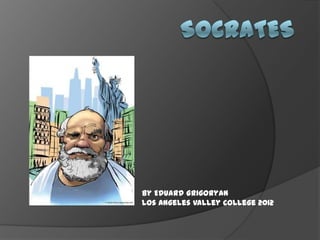
By Eduard Grigoryan
Los Angeles Valley College 2012
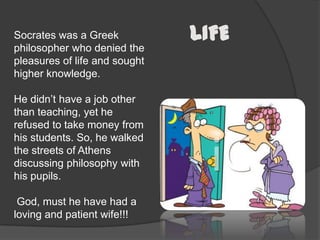
Socrates was a Greek           LIFE
philosopher who denied the
pleasures of life and sought
higher knowledge.

He didn’t have a job other
than teaching, yet he
refused to take money from
his students. So, he walked
the streets of Athens
discussing philosophy with
his pupils.

 God, must he have had a
loving and patient wife!!!
PHILOSOPHY


   Socrates never wrote
     anything in his life.
His method of philosophical
    inquiry consisted in
 questioning people on the
 position they asserted and
   working them through
questions into contradiction.
   That method is called
         elenchus.
Socrates himself claimed to know nothing at all
        except that he knows nothing.
                  WHAT???
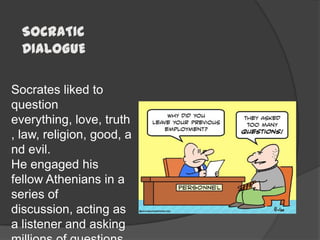
SOCRATIC
  DIALOGUE

Socrates liked to
question
everything, love, truth
, law, religion, good, a
nd evil.
He engaged his
fellow Athenians in a
series of
discussion, acting as
a listener and asking
One of his most famous arguments is described by his
student, Plato, in his work Euthyphro. In the
Euthyphro, Socrates asks his opponent, are things good
because gods like them or gods like them because they
are good? Yes, Socrates now questions piety and
morality.
But some people didn’t like Socrates for asking too many
  questions. In the end, he was accused of corrupting the
youth, atheism, and attacking traditional institutions. He was
      brought to trial where he had to defend himself.
DEATH


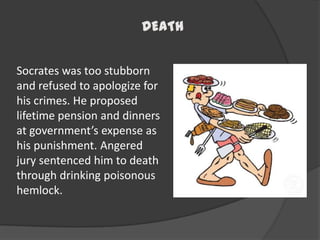
Socrates was too stubborn
and refused to apologize for
his crimes. He proposed
lifetime pension and dinners
at government’s expense as
his punishment. Angered
jury sentenced him to death
through drinking poisonous
hemlock.
Before taking poison, Socrates
famously says: I am not afraid to die;
if my spirit lives after death, then I
will just go and have conversations
with smart people who died before
me; if death is like a never ending
sleep, well, I like to sleep.
He takes the poison and dies.
Socrates’ teachings and philosophy long outlived their creator.
    Socrates’ student, Plato, will write The Republic, find the
   Academy, and develop the dialectic method of philosophy.
Plato’s student Aristotle will become the father of rhetoric, and
     a mentor to Alexander the Great. And we all know what
       Alexander did. Besides, Socrates was one of the first
  philosophers to boldly question the religion and meaning of
  life. His significance is so great that in modern-day scholars
 divides Ancient Greek philosophy into pre and post Socratic.


                         THE END
REFERENCES
 1. Communicating Critical Thinking. Jack Sterk, Jim
    Marteney, 2008. pp 22-23.
 2. Marx for Beginners. Rius. 1997, New York. pp. 45-46
 3. Socrates. A Man of Our Times. Paul Johnson, 2011.
    pp. 23-26
 4. Euthyphro. Plato.
    http://classics.mit.edu/Plato/euthyfro.html


Disclaimer: all photo material used in this presentation and rights on it belong to
their respective authors. The author of this presentation does not claim any right
                        of possession of the hereinabove.

Socrates

  • 1.
    By Eduard Grigoryan LosAngeles Valley College 2012
  • 2.
    Socrates was aGreek LIFE philosopher who denied the pleasures of life and sought higher knowledge. He didn’t have a job other than teaching, yet he refused to take money from his students. So, he walked the streets of Athens discussing philosophy with his pupils. God, must he have had a loving and patient wife!!!
  • 3.
    PHILOSOPHY Socrates never wrote anything in his life. His method of philosophical inquiry consisted in questioning people on the position they asserted and working them through questions into contradiction. That method is called elenchus.
  • 4.
    Socrates himself claimedto know nothing at all except that he knows nothing. WHAT???
  • 5.
    SOCRATIC DIALOGUE Socratesliked to question everything, love, truth , law, religion, good, a nd evil. He engaged his fellow Athenians in a series of discussion, acting as a listener and asking
  • 6.
    One of hismost famous arguments is described by his student, Plato, in his work Euthyphro. In the Euthyphro, Socrates asks his opponent, are things good because gods like them or gods like them because they are good? Yes, Socrates now questions piety and morality.
  • 7.
    But some peopledidn’t like Socrates for asking too many questions. In the end, he was accused of corrupting the youth, atheism, and attacking traditional institutions. He was brought to trial where he had to defend himself.
  • 8.
    DEATH Socrates was toostubborn and refused to apologize for his crimes. He proposed lifetime pension and dinners at government’s expense as his punishment. Angered jury sentenced him to death through drinking poisonous hemlock.
  • 9.
    Before taking poison,Socrates famously says: I am not afraid to die; if my spirit lives after death, then I will just go and have conversations with smart people who died before me; if death is like a never ending sleep, well, I like to sleep. He takes the poison and dies.
  • 10.
    Socrates’ teachings andphilosophy long outlived their creator. Socrates’ student, Plato, will write The Republic, find the Academy, and develop the dialectic method of philosophy. Plato’s student Aristotle will become the father of rhetoric, and a mentor to Alexander the Great. And we all know what Alexander did. Besides, Socrates was one of the first philosophers to boldly question the religion and meaning of life. His significance is so great that in modern-day scholars divides Ancient Greek philosophy into pre and post Socratic. THE END
  • 11.
    REFERENCES 1. CommunicatingCritical Thinking. Jack Sterk, Jim Marteney, 2008. pp 22-23. 2. Marx for Beginners. Rius. 1997, New York. pp. 45-46 3. Socrates. A Man of Our Times. Paul Johnson, 2011. pp. 23-26 4. Euthyphro. Plato. http://classics.mit.edu/Plato/euthyfro.html Disclaimer: all photo material used in this presentation and rights on it belong to their respective authors. The author of this presentation does not claim any right of possession of the hereinabove.