Socio Political Structure
of
Benguet & Bontoc
BENGUET
Benguet
Kankana-ey
Social Classes:
• Amam-a(Dakay)- Elders, power elites
• Kadangyan- the richest and wisest among the rich.
• Baknang/Babaknang- the rich
• Abiteg- Poor
Benguet
Kankana-ey
Leadership:
• An individual with the most prestigious
feast( Mankayan).
• Ownership of land(Bakun).
• Animal ownership( Buguias).
Benguet
Kankanaey
Prestige:
- A baknang acquires prestige through a
series of feasts which begins with a three pig
pedit and progressing to higher numbers.
( kibungan and Bakun)
Benguet
Kankanaey
The role of the Baknang & Kadangyan:
-The Babaknang shared the functions of
administration and the control of the resources.
-The Kadangyan was the acknowledged leader.
Benguet
Kankanaey
The role of the Amam-a
-their functions includes directing, restraining, and
advising the heads of the family as well as
prescribing the holding of feasts when necessary.
Some of the old men who constituted the agom or
jury were known to be mansapit.
Benguet
Ibaloi
Kaising & kalon
• Kaising- Parental betrothal that aims to stratify
social status.
• Kalon- when both partners are of marriageable
age.
Benguet
Ibaloi
Pachit or Peshet, the rich man’s feast
- A feast by the kadangyan or babaknang to gain or
to prove their prestige.
- Only those who finished the saveng are qualified
to perform the peshet.
- The capacity to serve rice, particularly kintoman
added further prestige to the affair.
Benguet
Ibaloi
Estancia, the cattle ranch( 1700’s)
- it solidifies the social status of the baknang.
Pastol ( Benguet Cowboy)
- The right hand man of the baknang in keeping the
necessity of the Estancia.
Benguet
Ibaloi
Bagaen
- Slave trade introduced the bagaen into ibaloi
society.
- They where spoils of inter- tribal warfare or
purchased from the lowland as part of gold trade.
- They and their children will be slaves for the rest
of their lives.
BONTOC
BONTOC
SOCIAL CLASSES:
• Kachangyan: Traditional rich
• Waday ngachan na: Middle class
• Pusillawa: Poor
BONTOC
Kadangyan’s wealth and prestige is defined by
the rice fields they have inherited, the
possession of akon( ceremonial jewelry), their
sponsorship of a feast, and position of
authority.
BONTOC
Chono, the Kadangyan’s feast
• A thanksgiving feast
• Must be approved by the elders
Mangisegfat
• richest family who leads the chono.
BONTOC
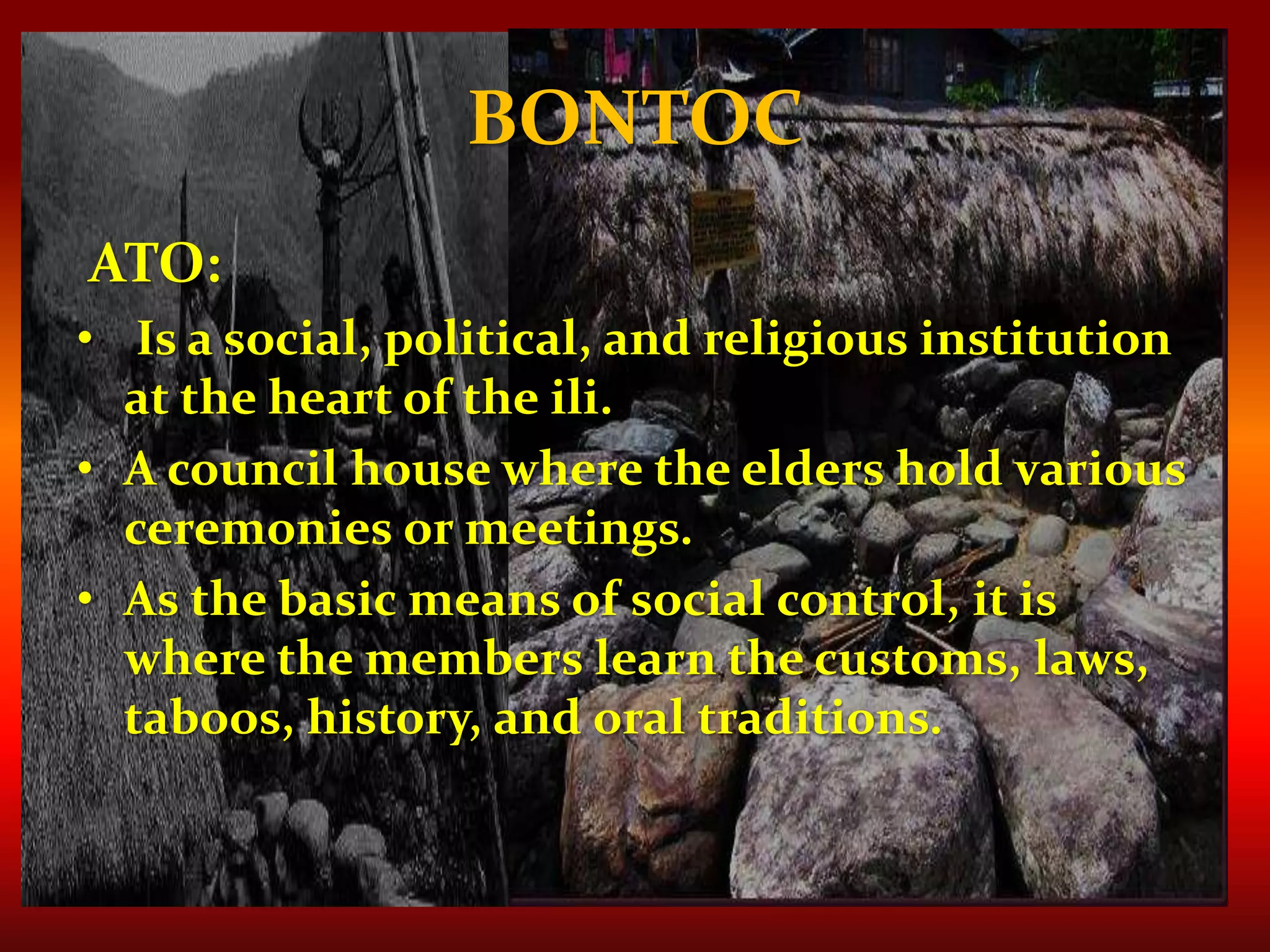
ATO:
• Is a social, political, and religious institution
at the heart of the ili.
• A council house where the elders hold various
ceremonies or meetings.
• As the basic means of social control, it is
where the members learn the customs, laws,
taboos, history, and oral traditions.
BONTOC
Intugtukan
• Male council of elders
• Each Ato has the intugtukan, which allows
the Ato members to discuss community issues
before decisions are made.
BONTOC
Pechen (peace pact)
• Inter village relations are determined by the
pechen.
• Pechen is forged through a ritual conducted
by the two villages’ council of elders.
BONTOC
Retribution, Ifontok’s way of justice
• male relatives of a murder victim is morally
obligated to avenge his death.
Head taking
• Is also a religious dimension.
- a beheaded man’s spirit became a pinteg, a diety
to which the people pray for good luck,
identification of thieves, and recovery of stolen
objects.
BONTOC
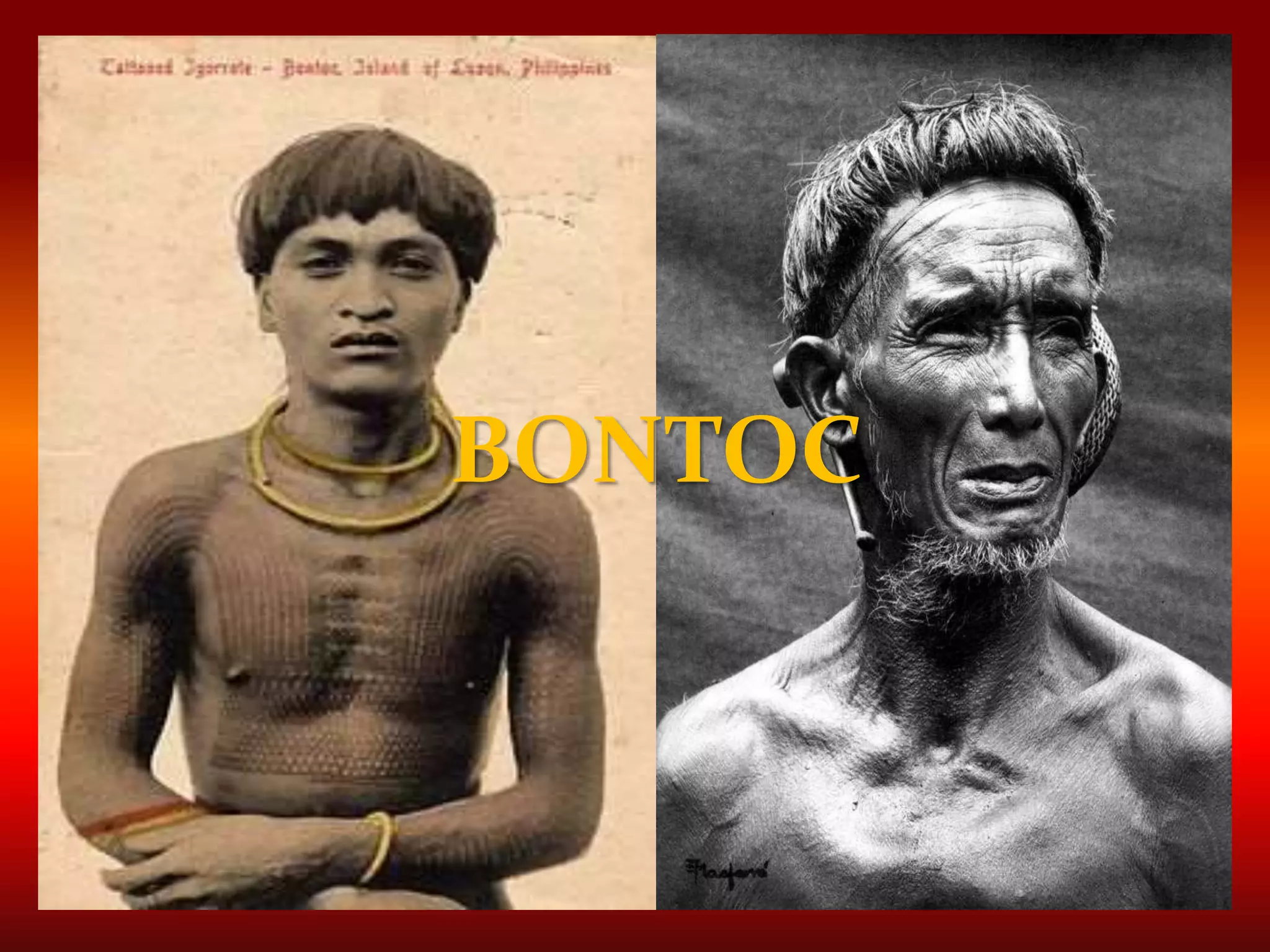
Fatek, once a symbol of prestige
• Chaklag -breast tattoo of the head hunter.
• Pongo- arm tattoo usually worn by women but
can be worn by both.
OTHER POINTS
OF INTEREST
Physical structure of the Ato
• Pabafunan- Physical structure consisting
of a larger hut and an open court where
people gather to perform their rituals.
• Fawi - where the council of elders meet. An
open court of the ato, where human skulls
used to be stored.
Other social and economic
structures
• Ulog- women’s( babalasang) dormitory,
where courtship takes place.
• Afong- family residence
• Fayu- rich people’s house
• Katyufong- poor’s house
• Kol-lob- residence of a widow or unmarried
old woman.
Other social and economic
structures
• Al-lang: where food supplies, jewelry, wine
jars are stored.
• Akhamang- rice granary
• Falinto-og- pig pens
• Pachipad- a seal of twigs and leaves
knotted together.
Ayuuuuuhhhaaaaaayyy!!!!

Socio political structure (Bontoc and Benguet)

  • 1.
  • 2.
  • 3.
    Benguet Kankana-ey Social Classes: • Amam-a(Dakay)-Elders, power elites • Kadangyan- the richest and wisest among the rich. • Baknang/Babaknang- the rich • Abiteg- Poor
  • 4.
    Benguet Kankana-ey Leadership: • An individualwith the most prestigious feast( Mankayan). • Ownership of land(Bakun). • Animal ownership( Buguias).
  • 5.
    Benguet Kankanaey Prestige: - A baknangacquires prestige through a series of feasts which begins with a three pig pedit and progressing to higher numbers. ( kibungan and Bakun)
  • 6.
    Benguet Kankanaey The role ofthe Baknang & Kadangyan: -The Babaknang shared the functions of administration and the control of the resources. -The Kadangyan was the acknowledged leader.
  • 7.
    Benguet Kankanaey The role ofthe Amam-a -their functions includes directing, restraining, and advising the heads of the family as well as prescribing the holding of feasts when necessary. Some of the old men who constituted the agom or jury were known to be mansapit.
  • 8.
    Benguet Ibaloi Kaising & kalon •Kaising- Parental betrothal that aims to stratify social status. • Kalon- when both partners are of marriageable age.
  • 9.
    Benguet Ibaloi Pachit or Peshet,the rich man’s feast - A feast by the kadangyan or babaknang to gain or to prove their prestige. - Only those who finished the saveng are qualified to perform the peshet. - The capacity to serve rice, particularly kintoman added further prestige to the affair.
  • 10.
    Benguet Ibaloi Estancia, the cattleranch( 1700’s) - it solidifies the social status of the baknang. Pastol ( Benguet Cowboy) - The right hand man of the baknang in keeping the necessity of the Estancia.
  • 11.
    Benguet Ibaloi Bagaen - Slave tradeintroduced the bagaen into ibaloi society. - They where spoils of inter- tribal warfare or purchased from the lowland as part of gold trade. - They and their children will be slaves for the rest of their lives.
  • 12.
  • 13.
    BONTOC SOCIAL CLASSES: • Kachangyan:Traditional rich • Waday ngachan na: Middle class • Pusillawa: Poor
  • 14.
    BONTOC Kadangyan’s wealth andprestige is defined by the rice fields they have inherited, the possession of akon( ceremonial jewelry), their sponsorship of a feast, and position of authority.
  • 15.
    BONTOC Chono, the Kadangyan’sfeast • A thanksgiving feast • Must be approved by the elders Mangisegfat • richest family who leads the chono.
  • 16.
    BONTOC ATO: • Is asocial, political, and religious institution at the heart of the ili. • A council house where the elders hold various ceremonies or meetings. • As the basic means of social control, it is where the members learn the customs, laws, taboos, history, and oral traditions.
  • 17.
    BONTOC Intugtukan • Male councilof elders • Each Ato has the intugtukan, which allows the Ato members to discuss community issues before decisions are made.
  • 18.
    BONTOC Pechen (peace pact) •Inter village relations are determined by the pechen. • Pechen is forged through a ritual conducted by the two villages’ council of elders.
  • 19.
    BONTOC Retribution, Ifontok’s wayof justice • male relatives of a murder victim is morally obligated to avenge his death. Head taking • Is also a religious dimension. - a beheaded man’s spirit became a pinteg, a diety to which the people pray for good luck, identification of thieves, and recovery of stolen objects.
  • 20.
    BONTOC Fatek, once asymbol of prestige • Chaklag -breast tattoo of the head hunter. • Pongo- arm tattoo usually worn by women but can be worn by both.
  • 21.
  • 22.
    Physical structure ofthe Ato • Pabafunan- Physical structure consisting of a larger hut and an open court where people gather to perform their rituals. • Fawi - where the council of elders meet. An open court of the ato, where human skulls used to be stored.
  • 23.
    Other social andeconomic structures • Ulog- women’s( babalasang) dormitory, where courtship takes place. • Afong- family residence • Fayu- rich people’s house • Katyufong- poor’s house • Kol-lob- residence of a widow or unmarried old woman.
  • 24.
    Other social andeconomic structures • Al-lang: where food supplies, jewelry, wine jars are stored. • Akhamang- rice granary • Falinto-og- pig pens • Pachipad- a seal of twigs and leaves knotted together.
  • 25.