Social Learning Theory:
Albert Bandura
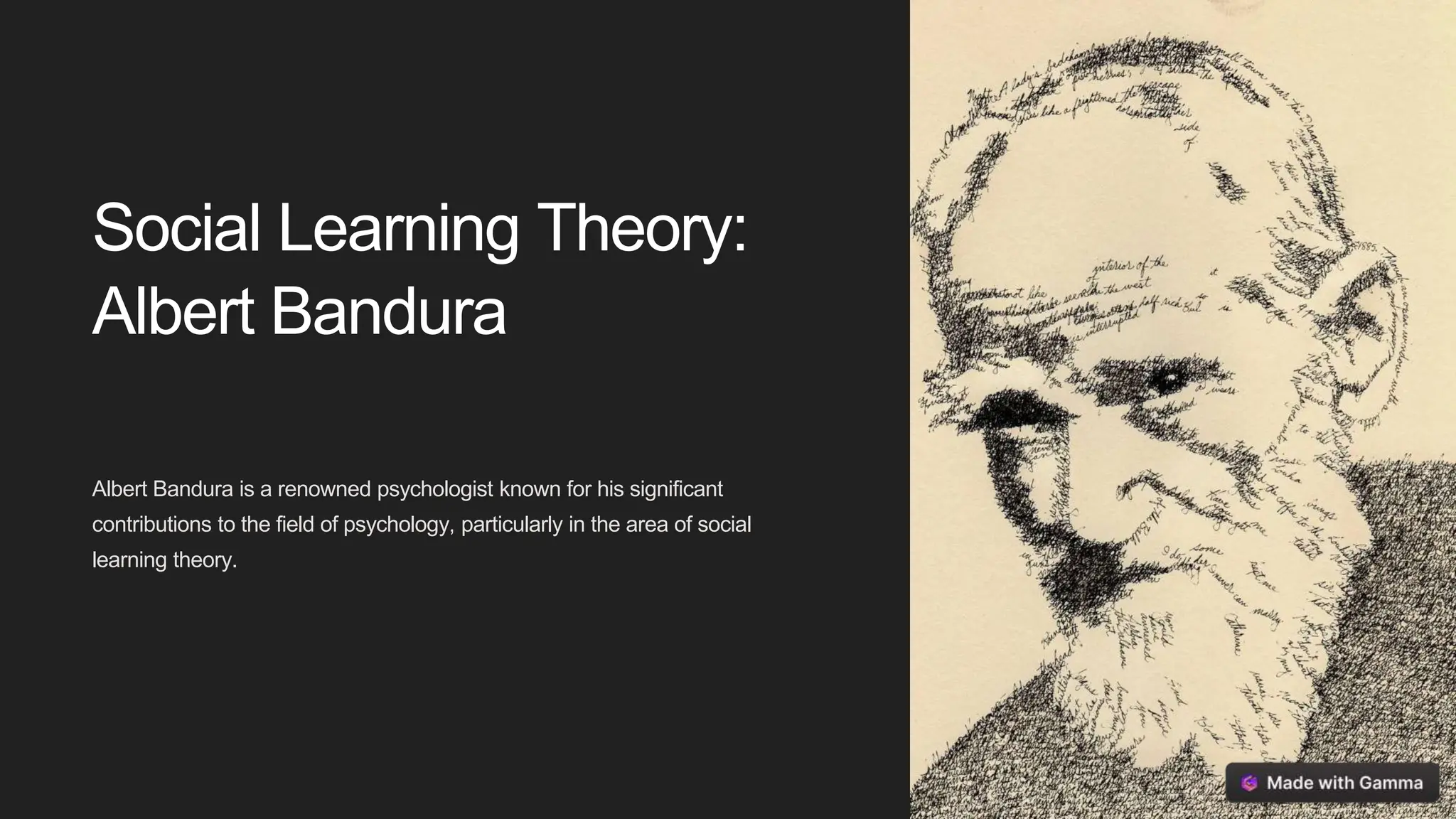
Albert Bandura is a renowned psychologist known for his significant
contributions to the field of psychology, particularly in the area of social
learning theory.
Albert Bandura
Early Life
Albert Bandura was born on
December 4, in Mundare,
northern Alberta, Canada. He
pursued his studies at the
University of British Columbia
and the University of Iowa.
Academic Achievements
In 1949, Bandura received his
B.A. degree from the University
of British Columbia, followed by
an M.A. from the University of
Iowa in 1951. He completed his
Ph.D. at the University of Iowa
in 1952, under the direction of
Arthur Benton.
Contributions
Bandura is famously known as
the Father of the Cognitive
Theory and was elected
president of the American
Psychological Association in
1974. He is renowned for his
research on social learning
theories.
Basic Social Learning Concepts
1 Observational Learning
People can learn through observation.
Bandura's "Bobo doll" studies
demonstrated that children imitate
behaviors they have observed in
others.
2 Intrinsic Reinforcement
Mental states are important for
learning. Bandura emphasized
intrinsic reinforcement as a form of
internal reward, connecting learning
theories to cognitive developmental
theories.
3 Modeling Process
Learning does not necessarily lead to a change in behavior. Observational learning
shows that people can learn new information without demonstrating new behaviors.
Observational Learning
Definition
Observational Learning: People learn by observing
the behaviors of others and the outcomes of those
behaviors. Bandura's "Bobo doll" studies are a
famous example of this.
Models
Bandura identified three basic models of
observational learning: live model, verbal
instructional model, and symbolic model.
Intrinsic Reinforcement
Internal Reward
Bandura noted that external reinforcement was not the only factor influencing learning and behavior. He
emphasized intrinsic reinforcement as a form of internal reward.
Modeling Process
1 Learning vs. Behavior
Learning does not necessarily lead to a change in behavior. Observational
learning demonstrates that people can learn new information without
demonstrating new behaviors.
Live Model
Actual Demonstration
Live model involves an actual individual demonstrating or acting out behavior.
Verbal Instructional Model
Descriptions and Explanations
Verbal instructional model involves descriptions and explanations of behaviors.
Symbolic Model
Real or Fictional Characters
Symbolic model involves real or fictional characters displaying behaviors in
various media.
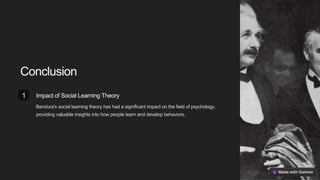
Conclusion
1 Impact of Social Learning Theory
Bandura's social learning theory has had a significant impact on the field of psychology,
providing valuable insights into how people learn and develop behaviors.

Social-Learning-Theory-Albert-Bandura.pptx

  • 1.
    Social Learning Theory: AlbertBandura Albert Bandura is a renowned psychologist known for his significant contributions to the field of psychology, particularly in the area of social learning theory.
  • 2.
    Albert Bandura Early Life AlbertBandura was born on December 4, in Mundare, northern Alberta, Canada. He pursued his studies at the University of British Columbia and the University of Iowa. Academic Achievements In 1949, Bandura received his B.A. degree from the University of British Columbia, followed by an M.A. from the University of Iowa in 1951. He completed his Ph.D. at the University of Iowa in 1952, under the direction of Arthur Benton. Contributions Bandura is famously known as the Father of the Cognitive Theory and was elected president of the American Psychological Association in 1974. He is renowned for his research on social learning theories.
  • 3.
    Basic Social LearningConcepts 1 Observational Learning People can learn through observation. Bandura's "Bobo doll" studies demonstrated that children imitate behaviors they have observed in others. 2 Intrinsic Reinforcement Mental states are important for learning. Bandura emphasized intrinsic reinforcement as a form of internal reward, connecting learning theories to cognitive developmental theories. 3 Modeling Process Learning does not necessarily lead to a change in behavior. Observational learning shows that people can learn new information without demonstrating new behaviors.
  • 4.
    Observational Learning Definition Observational Learning:People learn by observing the behaviors of others and the outcomes of those behaviors. Bandura's "Bobo doll" studies are a famous example of this. Models Bandura identified three basic models of observational learning: live model, verbal instructional model, and symbolic model.
  • 5.
    Intrinsic Reinforcement Internal Reward Banduranoted that external reinforcement was not the only factor influencing learning and behavior. He emphasized intrinsic reinforcement as a form of internal reward.
  • 6.
    Modeling Process 1 Learningvs. Behavior Learning does not necessarily lead to a change in behavior. Observational learning demonstrates that people can learn new information without demonstrating new behaviors.
  • 7.
    Live Model Actual Demonstration Livemodel involves an actual individual demonstrating or acting out behavior.
  • 8.
    Verbal Instructional Model Descriptionsand Explanations Verbal instructional model involves descriptions and explanations of behaviors.
  • 9.
    Symbolic Model Real orFictional Characters Symbolic model involves real or fictional characters displaying behaviors in various media.
  • 10.
    Conclusion 1 Impact ofSocial Learning Theory Bandura's social learning theory has had a significant impact on the field of psychology, providing valuable insights into how people learn and develop behaviors.