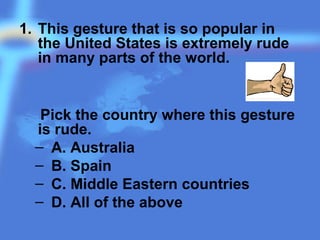
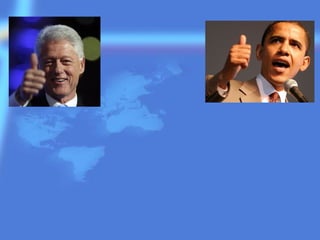
1. This gesture that is so popular in
the United States is extremely rude
in many parts of the world.
Pick the country where this gesture
is rude.
– A. Australia
– B. Spain
– C. Middle Eastern countries
– D. All of the above
2. True or false: Asians may
show disagreement by
squinting and sucking air
through their teeth.
True
False
True. Many Asians find it
difficult to actually say the
word no, and instead more
comfortably indicate their
displeasure or disagreement
with a gesture.
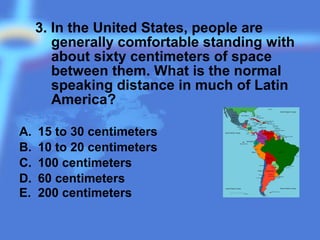
3. In the United States, people are
generally comfortable standing with
about sixty centimeters of space
between them. What is the normal
speaking distance in much of Latin
America?
A. 15 to 30 centimeters
B. 10 to 20 centimeters
C. 100 centimeters
D. 60 centimeters
E. 200 centimeters
In Latin America, many people
stand approximately fifteen
centimeters away from each
other when speaking.
4. True or false: In Japan,
tapping one's finger repeatedly
on the table signifies
agreement and support of a
speaker's statement.
True
False
True. This type of "mini-
applause" was reportedly
started in one of the courts of
a Japanese emperor.
5. A British professor was a guest
lecturer at a university in an
Islamic country. During his
address, he unthinkingly insulted
the audience by displaying a part
of his body. What did he show the
audience that was so offensive?
– A. His teeth
– B. His left hand
– C. The sole of his foot
C. The professor's failure to
respect Muslim decorum
resulted in a student protest
and newspaper headlines
denouncing British arrogance.

Social taboos

  • 1.
    1. This gesturethat is so popular in the United States is extremely rude in many parts of the world. Pick the country where this gesture is rude. – A. Australia – B. Spain – C. Middle Eastern countries – D. All of the above
  • 3.
    2. True orfalse: Asians may show disagreement by squinting and sucking air through their teeth. True False
  • 4.
    True. Many Asiansfind it difficult to actually say the word no, and instead more comfortably indicate their displeasure or disagreement with a gesture.
  • 5.
    3. In theUnited States, people are generally comfortable standing with about sixty centimeters of space between them. What is the normal speaking distance in much of Latin America? A. 15 to 30 centimeters B. 10 to 20 centimeters C. 100 centimeters D. 60 centimeters E. 200 centimeters
  • 6.
    In Latin America,many people stand approximately fifteen centimeters away from each other when speaking.
  • 7.
    4. True orfalse: In Japan, tapping one's finger repeatedly on the table signifies agreement and support of a speaker's statement. True False
  • 8.
    True. This typeof "mini- applause" was reportedly started in one of the courts of a Japanese emperor.
  • 9.
    5. A Britishprofessor was a guest lecturer at a university in an Islamic country. During his address, he unthinkingly insulted the audience by displaying a part of his body. What did he show the audience that was so offensive? – A. His teeth – B. His left hand – C. The sole of his foot
  • 10.
    C. The professor'sfailure to respect Muslim decorum resulted in a student protest and newspaper headlines denouncing British arrogance.