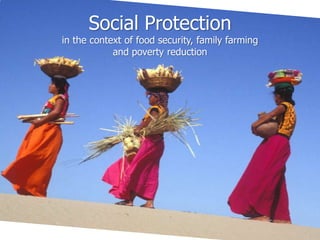
Social Protection 
in the context of food security, family farming 
and poverty reduction
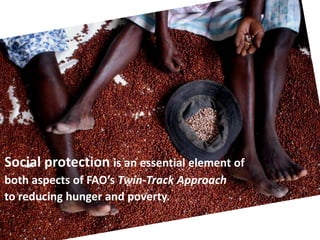
Social protection is an essential element of 
both aspects of FAO’s Twin-Track Approach 
to reducing hunger and poverty.
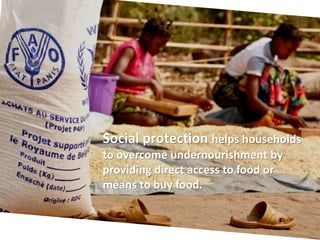
Social protection helps households 
to overcome undernourishment by 
providing direct access to food or 
means to buy food. 
Underlying causes of malnutrition 
can be addressed through promotive and transformative policy 
instruments strengthening access to markets, productive resources, 
their better management, and investments in human capital.
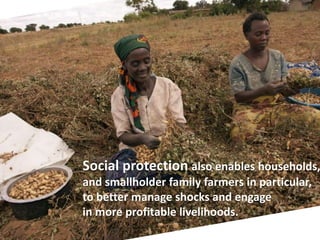
Social protection also enables households, 
and smallholder family farmers in particular, 
to better manage shocks and engage 
in more profitable livelihoods.
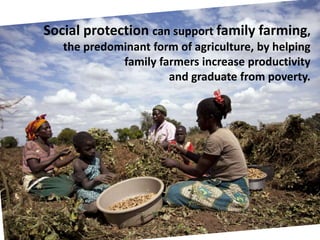
Social protection can support family farming, 
the predominant form of agriculture, by helping 
family farmers increase productivity 
and graduate from poverty.
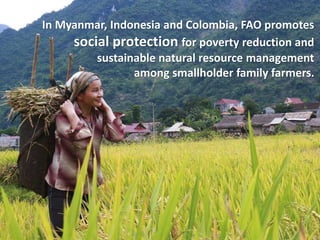
In Myanmar, Indonesia and Colombia, FAO promotes 
social protection for poverty reduction and 
sustainable natural resource management 
among smallholder family farmers.
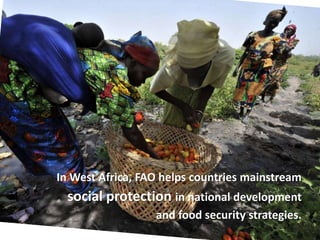
In West Africa, FAO helps countries mainstream 
social protection in national development 
and food security strategies.
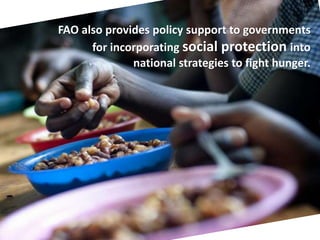
FAO also provides policy support to governments 
for incorporating social protection into 
national strategies to fight hunger.
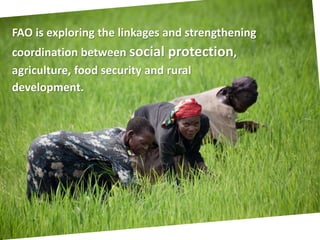
FAO is exploring the linkages and strengthening 
coordination between social protection, 
agriculture, food security and rural 
development.
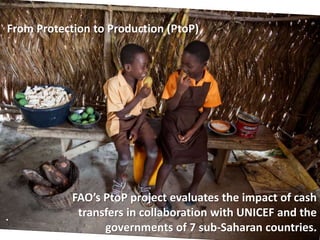
From Protection to Production (PtoP) 
. 
FAO’s PtoP project evaluates the impact of cash 
transfers in collaboration with UNICEF and the 
governments of 7 sub-Saharan countries.
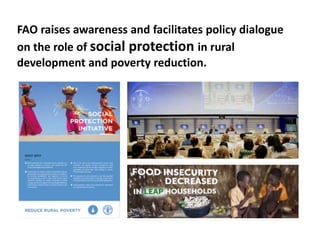
FAO raises awareness and facilitates policy dialogue 
on the role of social protection in rural 
development and poverty reduction.
Social Protection in the context of food security, family farming and poverty reduction

Social Protection in the context of food security, family farming and poverty reduction

  • 1.
    Social Protection inthe context of food security, family farming and poverty reduction
  • 2.
    Social protection isan essential element of both aspects of FAO’s Twin-Track Approach to reducing hunger and poverty.
  • 3.
    Social protection helpshouseholds to overcome undernourishment by providing direct access to food or means to buy food. Underlying causes of malnutrition can be addressed through promotive and transformative policy instruments strengthening access to markets, productive resources, their better management, and investments in human capital.
  • 4.
    Social protection alsoenables households, and smallholder family farmers in particular, to better manage shocks and engage in more profitable livelihoods.
  • 5.
    Social protection cansupport family farming, the predominant form of agriculture, by helping family farmers increase productivity and graduate from poverty.
  • 6.
    In Myanmar, Indonesiaand Colombia, FAO promotes social protection for poverty reduction and sustainable natural resource management among smallholder family farmers.
  • 7.
    In West Africa,FAO helps countries mainstream social protection in national development and food security strategies.
  • 8.
    FAO also providespolicy support to governments for incorporating social protection into national strategies to fight hunger.
  • 9.
    FAO is exploringthe linkages and strengthening coordination between social protection, agriculture, food security and rural development.
  • 10.
    From Protection toProduction (PtoP) . FAO’s PtoP project evaluates the impact of cash transfers in collaboration with UNICEF and the governments of 7 sub-Saharan countries.
  • 11.
    FAO raises awarenessand facilitates policy dialogue on the role of social protection in rural development and poverty reduction.