It’s All about YOUth! Internet Safety and Responsible Use
November 2008 Session Outline Pic Source:www.montclair.k12.nj.us Questionnaire New technology – Web 2.0 Key issues for Social Networking Cyberbullying Open discussion Evaluation
E-Safety in Highland www.highlandesafety.wordpress.com
What do you think the benefits are? Keeping in touch with friends / family old and new Learning, researching and self-expression Vital information sometimes inaccessible in rural areas Homework! Learning collaboratively Keeping up with perspectives on the news, global events  Commercial opportunities Games, hobbies, leisure and belonging Quickness of communication, emails SHOPPING, Music, Television (Iplayer) Benefits of the Internet
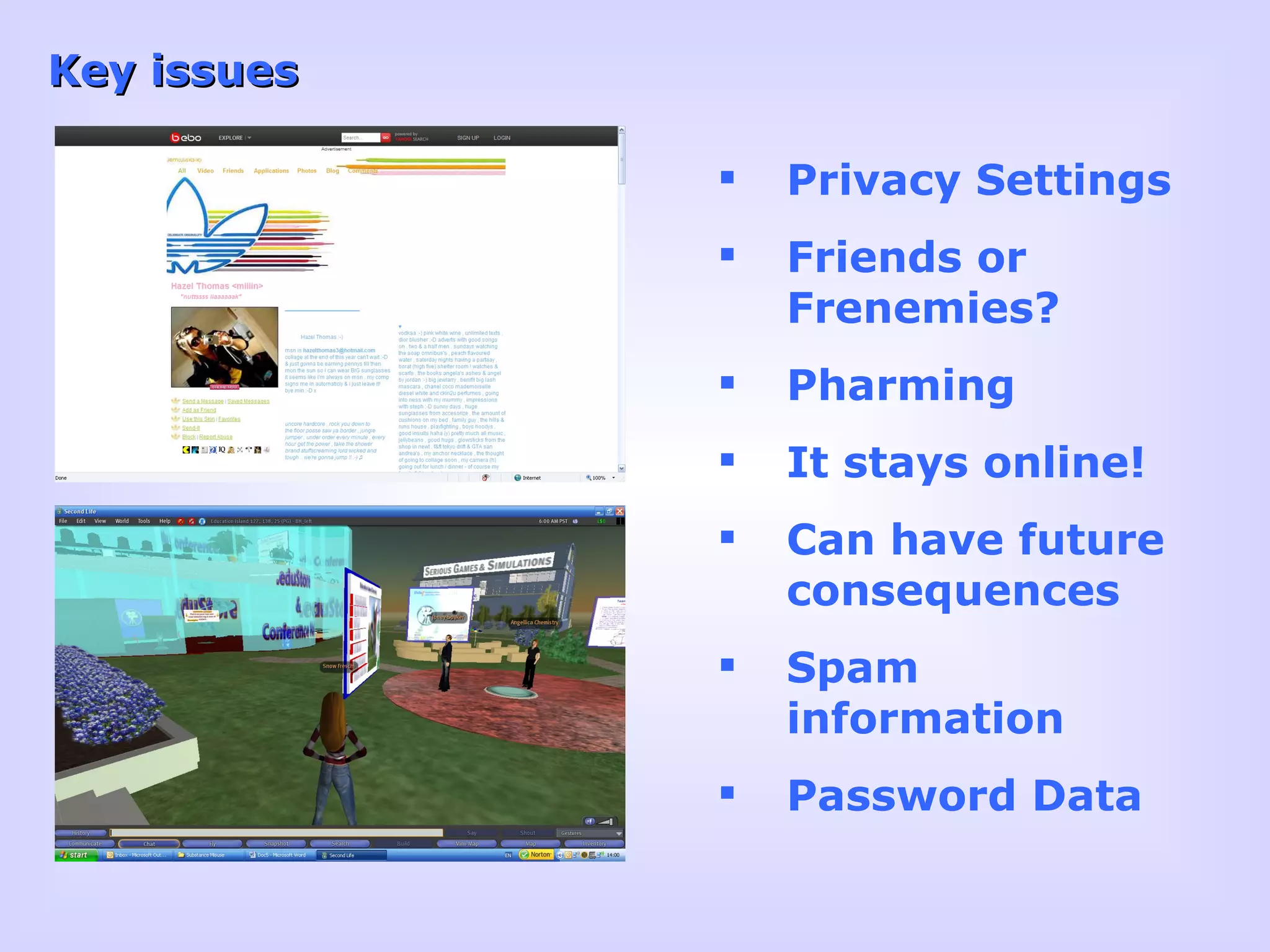
Key issues Privacy Settings Friends or Frenemies? Pharming It stays online! Can have future consequences Spam information Password Data
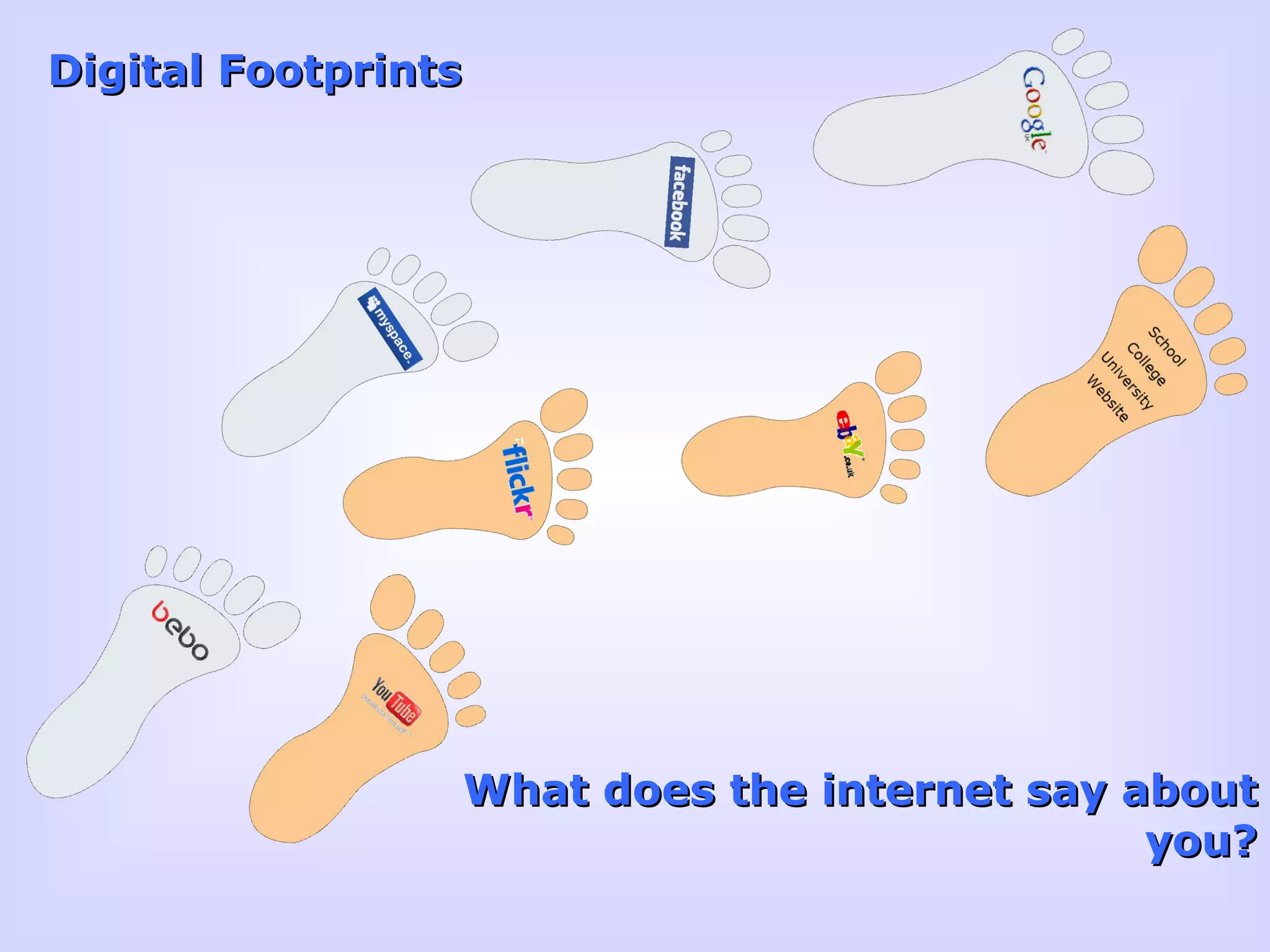
Digital Footprints What does the internet say about you?
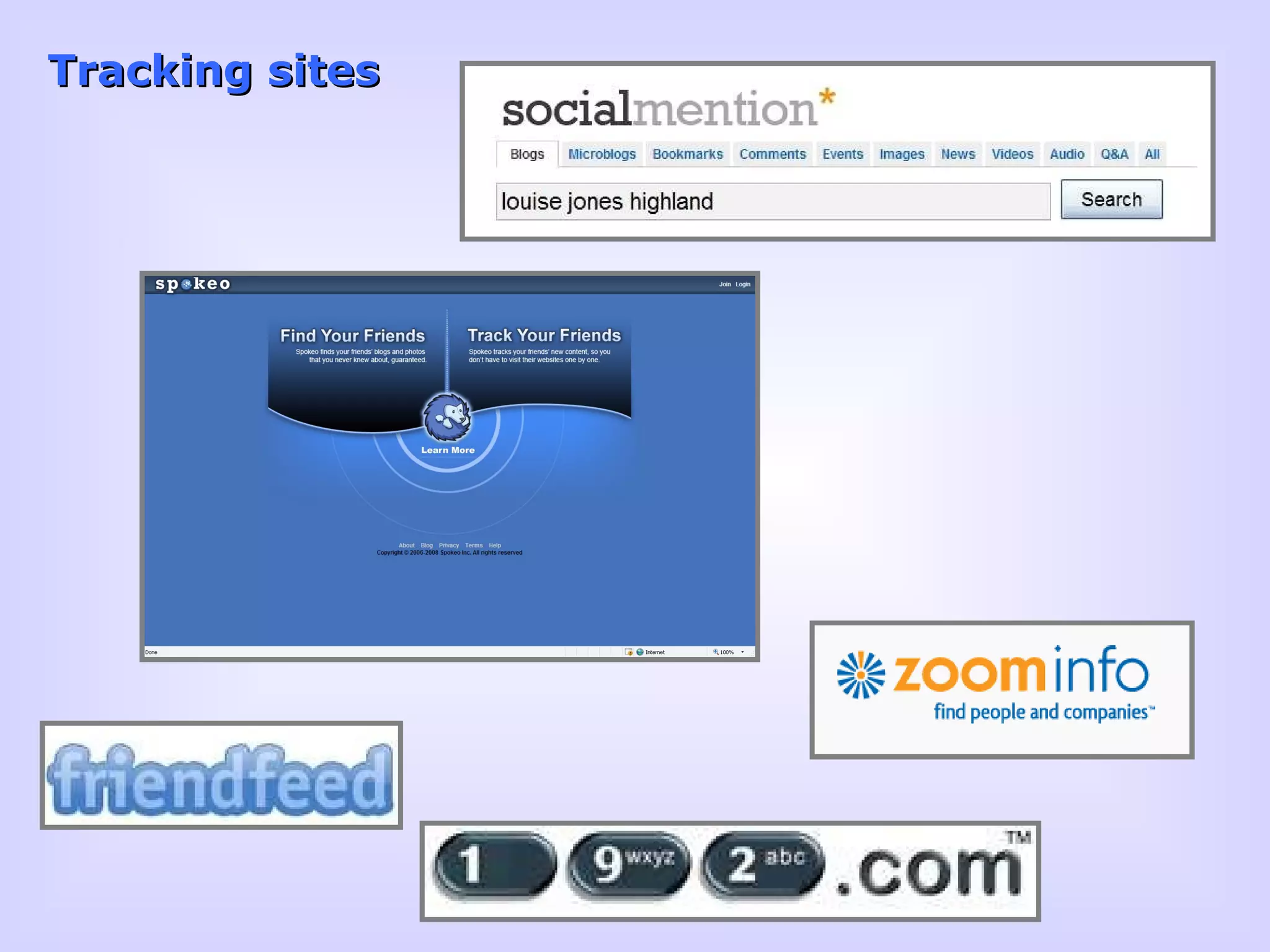
Tracking sites
Cyberbullying
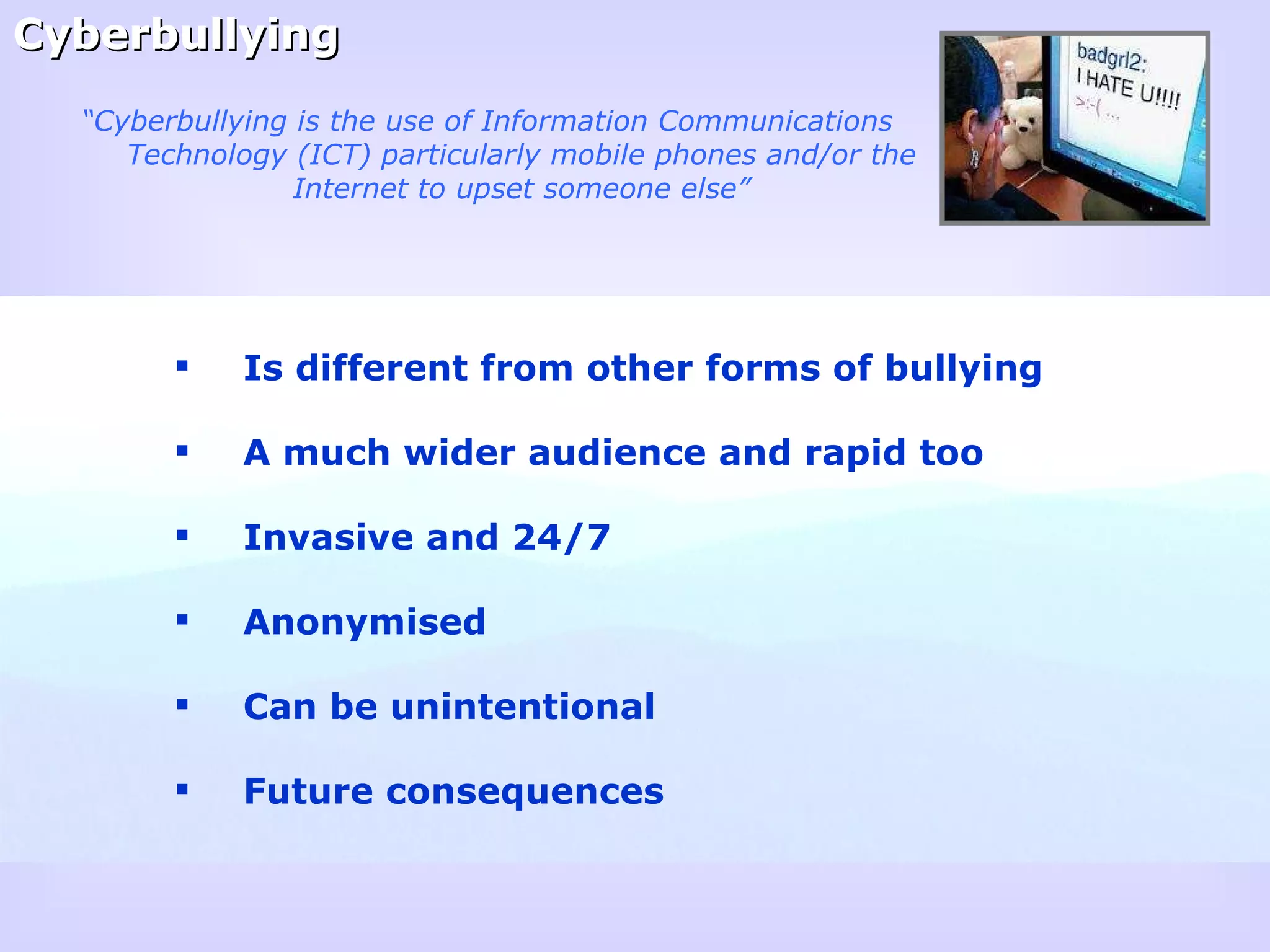
Cyberbullying Is different from other forms of bullying A much wider audience and rapid too Invasive and 24/7 Anonymised Can be unintentional Future consequences “ Cyberbullying is the use of Information Communications Technology (ICT) particularly mobile phones and/or the Internet to upset someone else”
Cyberbullying  ‘ What the research is telling us’ 32% of young people have experienced one of the  following forms of online harassment, also called  “cyberbullying” 15% of young people reported having private material (IM,  txt, email) forwarded without  permission 13% had received threatening messages 13% said someone had spread a rumour about them  online 6% had someone post an embarrassing picture of  them online without permission Source:  Pew (US) www.pewinternet.org
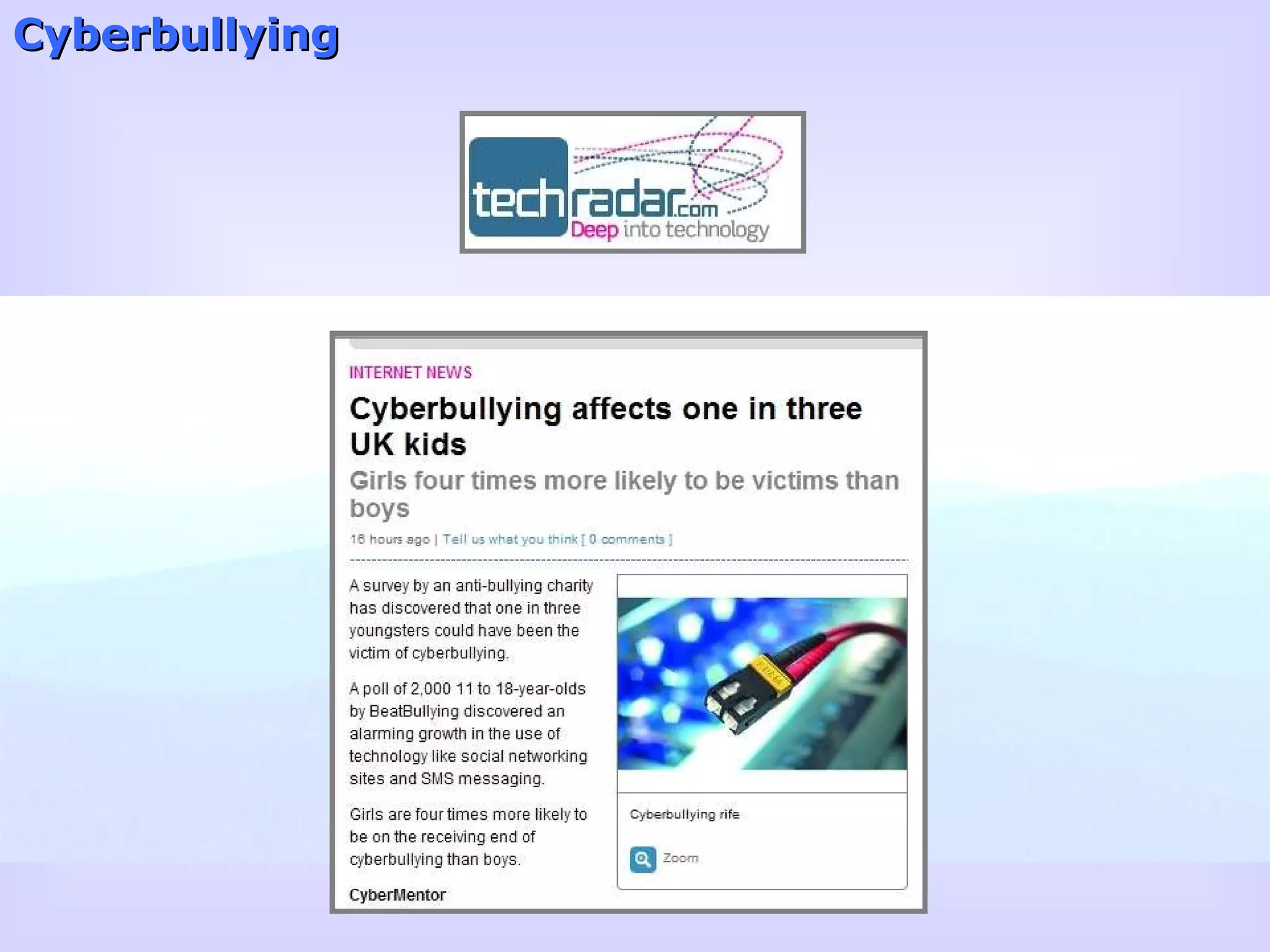
Cyberbullying  Source: www.technology.timesonline.co.uk
Cyberbullying
Cyberbullying – Future Consequences
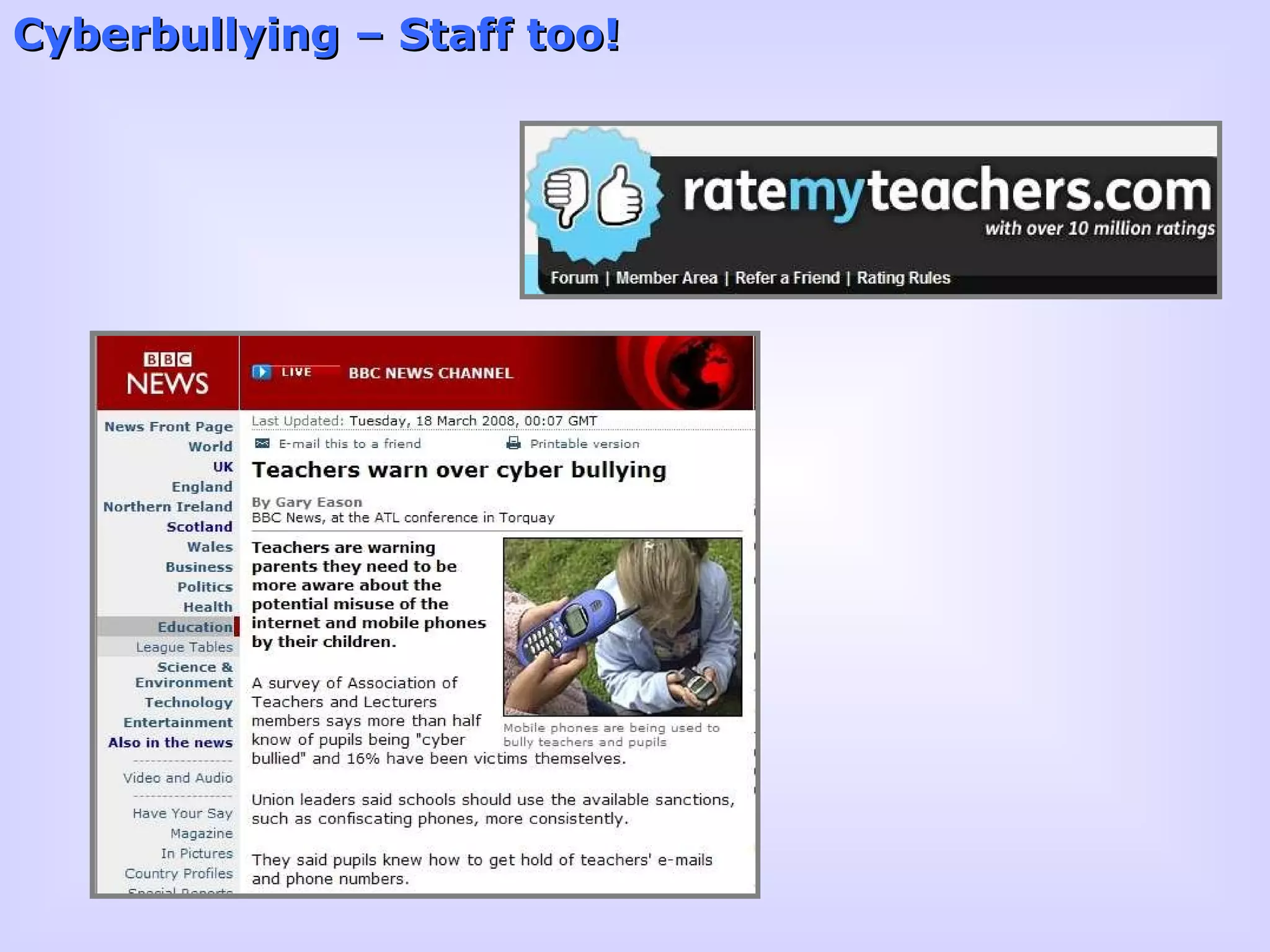
Cyberbullying – Staff too!
Meet Joe…..
 
Cyberbullying – Creating Safer Online Communities Whole school community issue Understanding and talking about it The Highland Council Guidance & Facility Making reporting easier, advertising report routes Promoting the positive use of technology Evaluating impact of anti-bullying strategies
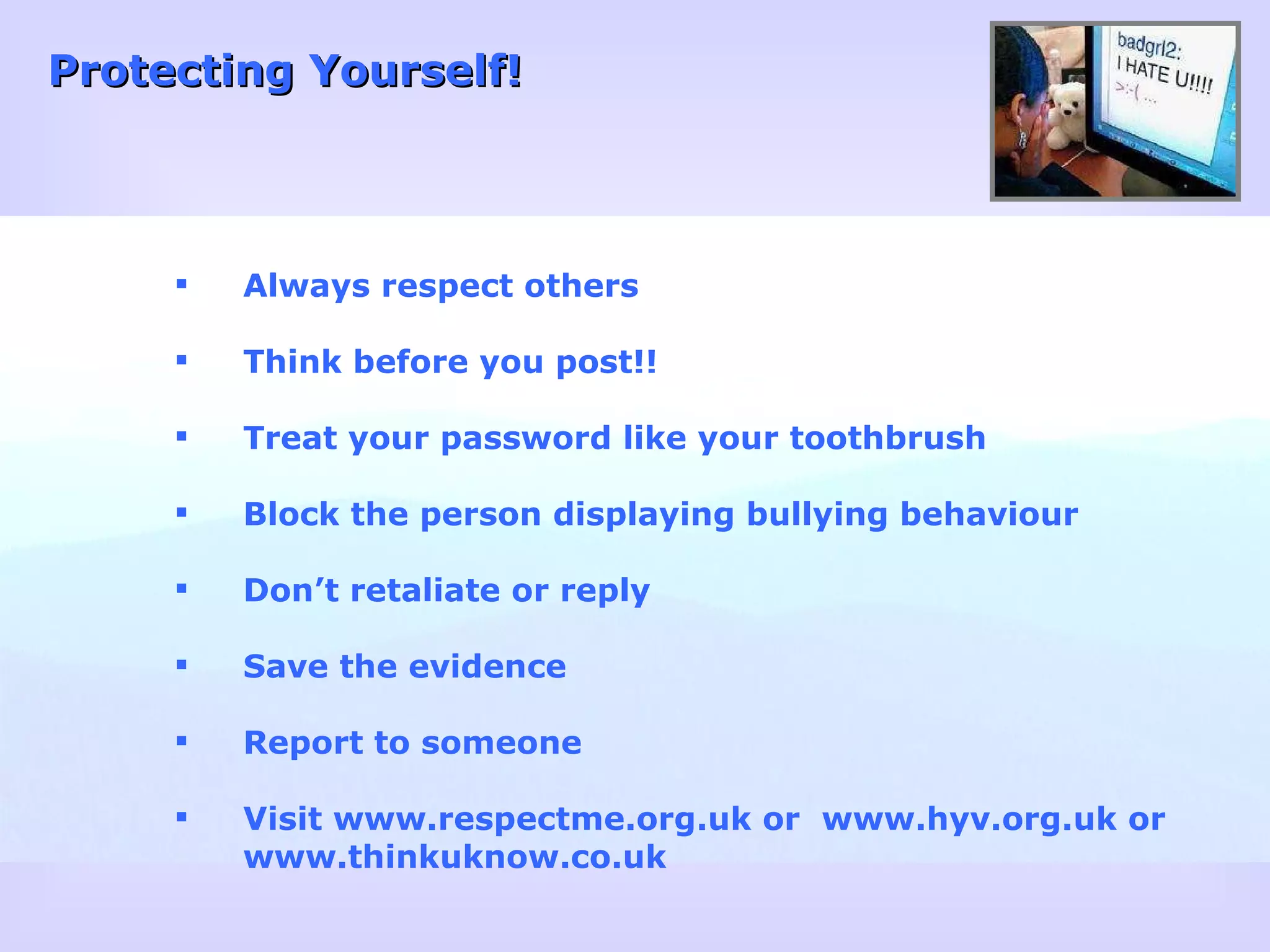
Protecting Yourself! Always respect others Think before you post!! Treat your password like your toothbrush Block the person displaying bullying behaviour Don’t retaliate or reply Save the evidence Report to someone Visit www.respectme.org.uk or  www.hyv.org.uk or www.thinkuknow.co.uk
Evaluation Have you learnt something today? Will you think more about your online safety as a result of today? Would you now know where to report something of concern? What more can we do to educate young people in Highland and Sardinia? Any other thoughts / ideas?
Thank you, any questions? Louise Jones

Social Networking and Cyberbullying

  • 1.
    It’s All aboutYOUth! Internet Safety and Responsible Use
  • 2.
    November 2008 SessionOutline Pic Source:www.montclair.k12.nj.us Questionnaire New technology – Web 2.0 Key issues for Social Networking Cyberbullying Open discussion Evaluation
  • 3.
    E-Safety in Highlandwww.highlandesafety.wordpress.com
  • 4.
    What do youthink the benefits are? Keeping in touch with friends / family old and new Learning, researching and self-expression Vital information sometimes inaccessible in rural areas Homework! Learning collaboratively Keeping up with perspectives on the news, global events Commercial opportunities Games, hobbies, leisure and belonging Quickness of communication, emails SHOPPING, Music, Television (Iplayer) Benefits of the Internet
  • 5.
    Key issues PrivacySettings Friends or Frenemies? Pharming It stays online! Can have future consequences Spam information Password Data
  • 6.
    Digital Footprints Whatdoes the internet say about you?
  • 7.
  • 8.
  • 9.
    Cyberbullying Is differentfrom other forms of bullying A much wider audience and rapid too Invasive and 24/7 Anonymised Can be unintentional Future consequences “ Cyberbullying is the use of Information Communications Technology (ICT) particularly mobile phones and/or the Internet to upset someone else”
  • 10.
    Cyberbullying ‘What the research is telling us’ 32% of young people have experienced one of the following forms of online harassment, also called “cyberbullying” 15% of young people reported having private material (IM, txt, email) forwarded without permission 13% had received threatening messages 13% said someone had spread a rumour about them online 6% had someone post an embarrassing picture of them online without permission Source: Pew (US) www.pewinternet.org
  • 11.
    Cyberbullying Source:www.technology.timesonline.co.uk
  • 12.
  • 13.
  • 14.
  • 15.
  • 16.
  • 17.
    Cyberbullying – CreatingSafer Online Communities Whole school community issue Understanding and talking about it The Highland Council Guidance & Facility Making reporting easier, advertising report routes Promoting the positive use of technology Evaluating impact of anti-bullying strategies
  • 18.
    Protecting Yourself! Alwaysrespect others Think before you post!! Treat your password like your toothbrush Block the person displaying bullying behaviour Don’t retaliate or reply Save the evidence Report to someone Visit www.respectme.org.uk or www.hyv.org.uk or www.thinkuknow.co.uk
  • 19.
    Evaluation Have youlearnt something today? Will you think more about your online safety as a result of today? Would you now know where to report something of concern? What more can we do to educate young people in Highland and Sardinia? Any other thoughts / ideas?
  • 20.
    Thank you, anyquestions? Louise Jones