Social Media for Magazines Cindy Royal, Ph.D Associate Professor Texas State University School of Journalism and Mass Communication [email_address] www.cindyroyal.com www.onthatnote.com tech.cindyroyal.net twitter.com/cindyroyal facebook.com/cindyroyal linkedin.com/in/cindyroyal
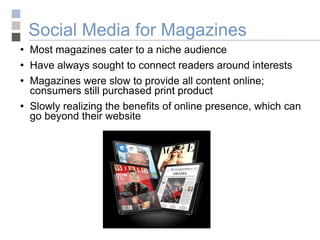
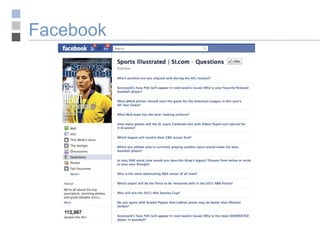
Social Media for Magazines Most magazines cater to a niche audience Have always sought to connect readers around interests Magazines were slow to provide all content online; consumers still purchased print product Slowly realizing the benefits of online presence, which can go beyond their website
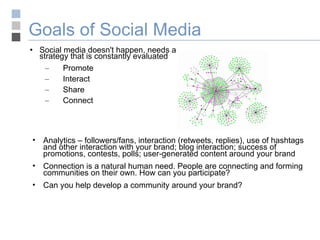
Goals of Social Media Social media doesn't happen, needs a strategy that is constantly evaluated Promote Interact Share Connect Analytics – followers/fans, interaction (retweets, replies), use of hashtags and other interaction with your brand; blog interaction; success of promotions, contests, polls; user-generated content around your brand Connection is a natural human need. People are connecting and forming communities on their own. How can you participate?  Can you help develop a community around your brand?
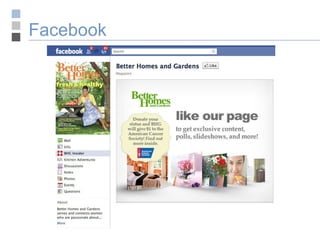
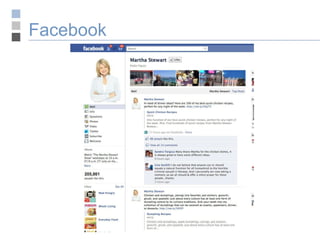
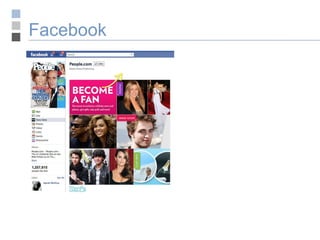
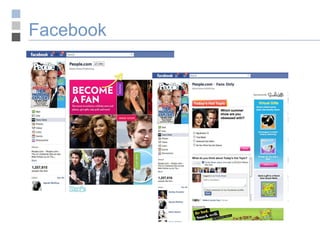
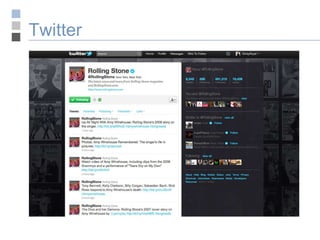
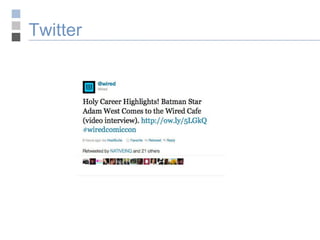
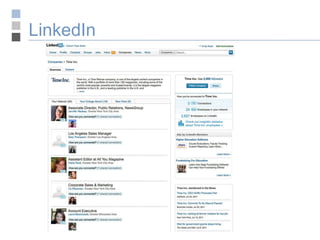
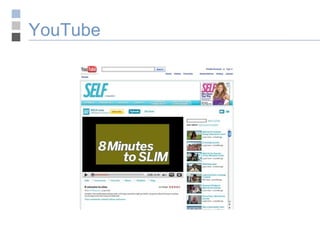
Social Media for Magazines Websites still important – hub of online presence Big 3: Facebook, Twitter, LinkedIn Google+ developing strategy for brands Mobile apps Blogs – can be integrated in website; also important to engage user or professional blogs on topic, have interaction in comments Video – YouTube and live streaming Branded social networks
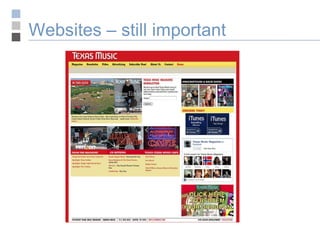
Websites – still important
Facebook
Facebook
Facebook
Facebook
Facebook
Twitter
Twitter
Twitter
Twitter
LinkedIn
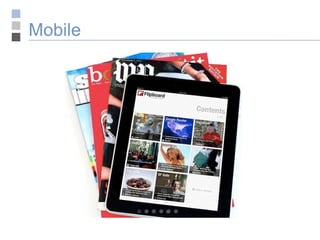
Mobile
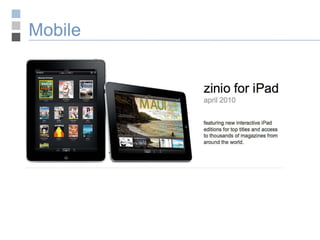
Mobile
Mobile
Mobile
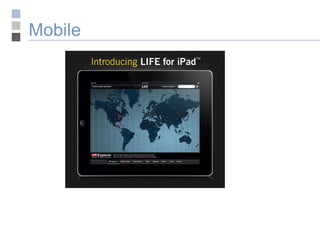
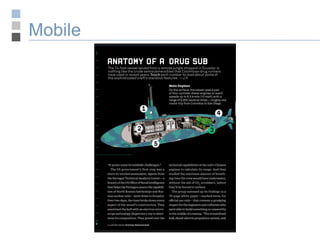
Challenges for iPad apps Walled gardens; seek to simulate print experience Apple-controlled marketplace/censorship Will consumers pay per issue or annual subscription? Limits the audience for your content; sharing and interaction? Constant upgrades and maintenance Changing technologies, ie HTML5 Multimedia/Programming expertise Competition from online/free services
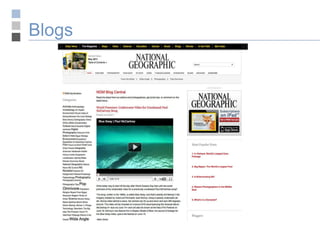
Blogs
YouTube
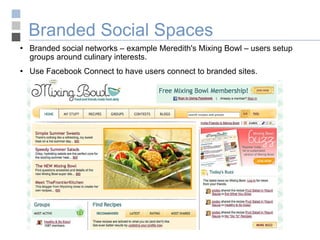
Branded Social Spaces Branded social networks – example Meredith's Mixing Bowl – users setup groups around culinary interests. Use Facebook Connect to have users connect to branded sites.
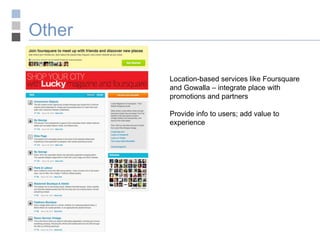
Other Location-based services like Foursquare and Gowalla – integrate place with promotions and partners Provide info to users; add value to experience
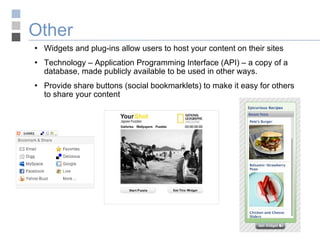
Other Widgets and plug-ins allow users to host your content on their sites Technology – Application Programming Interface (API) – a copy of a database, made publicly available to be used in other ways. Provide share buttons (social bookmarklets) to make it easy for others to share your content
Where's the Money? Revenue streams likely to come from a variety of sources, rather than one or two Paid content Micro-targeted content via the groups on the site and in Facebook Local opportunity with groups that have a geographic emphasis Sponsorships Brand advocacy/build reputation Charge for iPad apps – per issue or annually General value in engagement with brand – loyalty, word of mouth, etc. From:  http://www.youtube.com/watch?v=H5MZ-fXrOtw
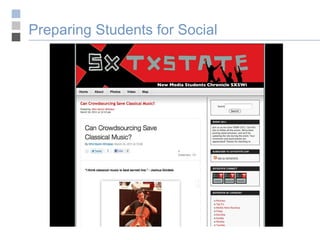
Preparing Students for Social  Social Media at Work course - cindyroyal.com/social In order to be prepared, students must use and experiment Students must become familiar with the personal brand concept Creating content online via a blog or website – provides a portfolio of work in a job seeking situation Use of Facebook, Twitter, YouTube in a professional manner – extends networking to benefit a job search Interaction with new topics and concepts and an enthusiasm for the space Use of social media for events and campus activities (see sxtxstate.com and txstatemcweek.com)
Preparing Students for Social
Search Engine Optimization Most important thing – get others to link to you Google Page Rank algorithm Link to others, they are more likely to link to you Participate on comments, forums – tactfully include links to your content Write meaningful headlines – different than print Write strong teasers – not necessarily your lead Use phrases (keywords) frequently that you think people will be using to search for relevant content Fresh content – update regularly and often Use keywords in URLs Consistently use alt tags for images and videos; put content on video/slideshow pages Pages should have meaningful titles Use social media to spread your content, allow users to share Monitor your search standings and traffic – Google Analytics or other services
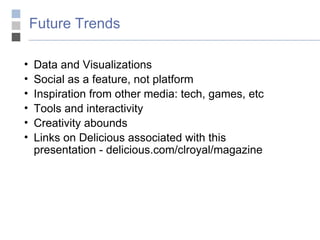
Future Trends Data and Visualizations Social as a feature, not platform Inspiration from other media: tech, games, etc Tools and interactivity Creativity abounds Links on Delicious associated with this presentation - delicious.com/clroyal/magazine

Social Media for Magazines - AEJMC 2011

  • 1.
    Social Media forMagazines Cindy Royal, Ph.D Associate Professor Texas State University School of Journalism and Mass Communication [email_address] www.cindyroyal.com www.onthatnote.com tech.cindyroyal.net twitter.com/cindyroyal facebook.com/cindyroyal linkedin.com/in/cindyroyal
  • 2.
    Social Media forMagazines Most magazines cater to a niche audience Have always sought to connect readers around interests Magazines were slow to provide all content online; consumers still purchased print product Slowly realizing the benefits of online presence, which can go beyond their website
  • 3.
    Goals of SocialMedia Social media doesn't happen, needs a strategy that is constantly evaluated Promote Interact Share Connect Analytics – followers/fans, interaction (retweets, replies), use of hashtags and other interaction with your brand; blog interaction; success of promotions, contests, polls; user-generated content around your brand Connection is a natural human need. People are connecting and forming communities on their own. How can you participate? Can you help develop a community around your brand?
  • 4.
    Social Media forMagazines Websites still important – hub of online presence Big 3: Facebook, Twitter, LinkedIn Google+ developing strategy for brands Mobile apps Blogs – can be integrated in website; also important to engage user or professional blogs on topic, have interaction in comments Video – YouTube and live streaming Branded social networks
  • 5.
  • 6.
  • 7.
  • 8.
  • 9.
  • 10.
  • 11.
  • 12.
  • 13.
  • 14.
  • 15.
  • 16.
  • 17.
  • 18.
  • 19.
  • 20.
    Challenges for iPadapps Walled gardens; seek to simulate print experience Apple-controlled marketplace/censorship Will consumers pay per issue or annual subscription? Limits the audience for your content; sharing and interaction? Constant upgrades and maintenance Changing technologies, ie HTML5 Multimedia/Programming expertise Competition from online/free services
  • 21.
  • 22.
  • 23.
    Branded Social SpacesBranded social networks – example Meredith's Mixing Bowl – users setup groups around culinary interests. Use Facebook Connect to have users connect to branded sites.
  • 24.
    Other Location-based serviceslike Foursquare and Gowalla – integrate place with promotions and partners Provide info to users; add value to experience
  • 25.
    Other Widgets andplug-ins allow users to host your content on their sites Technology – Application Programming Interface (API) – a copy of a database, made publicly available to be used in other ways. Provide share buttons (social bookmarklets) to make it easy for others to share your content
  • 26.
    Where's the Money?Revenue streams likely to come from a variety of sources, rather than one or two Paid content Micro-targeted content via the groups on the site and in Facebook Local opportunity with groups that have a geographic emphasis Sponsorships Brand advocacy/build reputation Charge for iPad apps – per issue or annually General value in engagement with brand – loyalty, word of mouth, etc. From: http://www.youtube.com/watch?v=H5MZ-fXrOtw
  • 27.
    Preparing Students forSocial Social Media at Work course - cindyroyal.com/social In order to be prepared, students must use and experiment Students must become familiar with the personal brand concept Creating content online via a blog or website – provides a portfolio of work in a job seeking situation Use of Facebook, Twitter, YouTube in a professional manner – extends networking to benefit a job search Interaction with new topics and concepts and an enthusiasm for the space Use of social media for events and campus activities (see sxtxstate.com and txstatemcweek.com)
  • 28.
  • 29.
    Search Engine OptimizationMost important thing – get others to link to you Google Page Rank algorithm Link to others, they are more likely to link to you Participate on comments, forums – tactfully include links to your content Write meaningful headlines – different than print Write strong teasers – not necessarily your lead Use phrases (keywords) frequently that you think people will be using to search for relevant content Fresh content – update regularly and often Use keywords in URLs Consistently use alt tags for images and videos; put content on video/slideshow pages Pages should have meaningful titles Use social media to spread your content, allow users to share Monitor your search standings and traffic – Google Analytics or other services
  • 30.
    Future Trends Dataand Visualizations Social as a feature, not platform Inspiration from other media: tech, games, etc Tools and interactivity Creativity abounds Links on Delicious associated with this presentation - delicious.com/clroyal/magazine

Editor's Notes

  • #31 Web 2.0 - technologies that encourage online collaboration mashup - a website or web application that combines content from more than one source Blogging with content taken on cell phone or other mobile device A wiki is a website that allows visitors to add, remove, and otherwise edit and change content, typically without the need for registration.