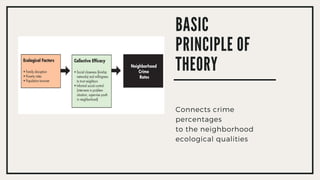
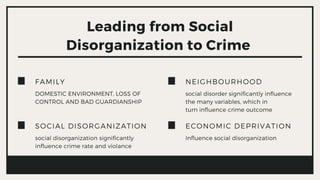
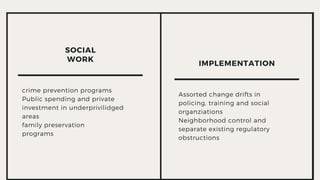
Social disorganization theory, proposed by Clifford Shaw and Henry McKay in 1942, links crime rates to neighborhood ecological qualities and emphasizes the impact of family disruption on crime and violence. The theory remains relevant in criminological studies, advocating for public and private investment in family preservation programs and underprivileged areas to mitigate crime. Overall, it identifies social disorganization as a significant predictor of crime, calling for strategic interventions to address these challenges.