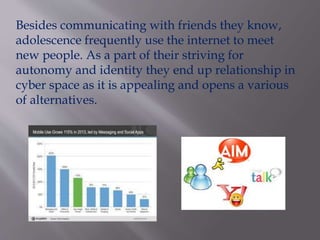
This document discusses the impact of media like television and computers on social learning and development in children and adolescents. It notes that television exposure is universal, with most homes having at least one TV, and time spent watching being similar across developed and developing nations. While educational TV can be beneficial, commercial content often contains stereotypes and promotes aggression and consumerism. Computer games also commonly emphasize violence and role-playing aggression. The internet allows teens to socialize through instant messaging but can expose them to risks when meeting strangers online. Social intelligence involves understanding oneself and others through social skills, interactions, and perspective-taking abilities. It differs from general intelligence and can be measured through tests, with higher scores relating to stronger interpersonal skills.















![+Game dev vs traditional software engineering [recovered]](https://cdn.slidesharecdn.com/ss_thumbnails/gamedevvstraditionalsoftwareengineeringrecovered-161026235746-thumbnail.jpg?width=640&height=640&fit=bounds)


