CHILD
DEVELOPMENT
Child development
•Change is the law of nature
•Change is inevitable, dynamic, Process
•The biological, psychological, and emotional changes.
•Sequence of Physical, Language, Thought Processbrtu8W,
and emotional changes that occur in a child from birth to
the beginning of adulthood.
Biological Development
The progressive changes in size, shape, and
function during the life of an organism by
which its genetic potentials (genotype) are
translated into functioning mature
systems (phenotype)
Biological Development
• Heredity/Genes
• Gender
• Chromosomes
• Hormones: Control body function Physiology
• The prenatal or the perinatal stage can affect
linguistic development.
Cognitive Development
•The process of growing and changing mental
abilities : reasoning, thinking, and understanding.
• It's how children organize their thoughts, ideas, and
mind to understand the world around them.
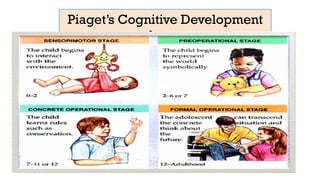
Stages of Cognitive Development
Piaget- Cognitive Development theory
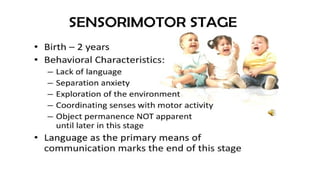
• Birth – 2 months: Babies have an optical focal length of about 10
inches.
• 2-6 Months: Babies explore their bodies through touch and
sight, which helps them understand cause and effect and
themselves
• 6-12 Months: Toddlers develop object permanence and look for
objects.
• 12-18 Months: Motor skills improve, making it easier for children
to reach, grasp, and release objects
•18 months to 2 years: Children's memory and processing
skills improve, and they start to imagine outcomes
without physical manipulation.
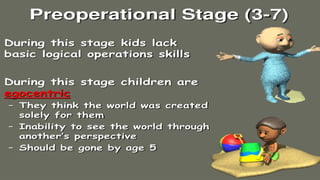
•2-5 Years: Children in preschool may engage in magical
and wishful thinking.
•6-12 Years: Children develop scientific reasoning and an
understanding of physical laws.
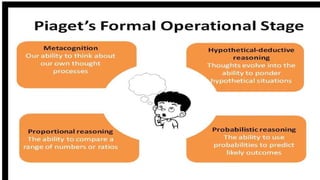
•12 Years and older: Adolescents can think logically and
systematically.
Socio-Emotional Development(SED)
•Man is a Social Animal
•The process by which children learn to understand and
manage their emotions, and how to interact with others.
•It's a gradual process that starts at birth and continues
throughout life.
• SED is important for a child's mental health and
influences all other areas of development.
Factors- SED
• Relationships: The quality of a child's relationships with
their primary caregivers has a significant impact on their
SED
• Early experiences: Positive and nurturing early experiences
help a child's brain develop and influence how they feel
about themselves and others.
• Self-awareness: The ability to understand who you are.
• Self-regulation: SED gives children the foundation
skills they need to learn and succeed in life.
• Social awareness: SED includes the ability to create
and maintain positive relationships with others.
• Empathy: SED includes the ability to demonstrate
empathy for others.
• Responsible Decision Making: Ability to make
responsible decisions.
Moral Development
• Concept: The ways people choose between right and wrong as they
mature. Influenced by social and cultural norms, as well as
established laws.
• It is a complex process that's best taught at a young
age.
• Educators can help children develop moral
development: Promoting empathy and compassion,
Encouraging respect and inclusivity, Integrating social
justice topics into the curriculum, and Teaching children
to stand up against unfair practices.
Significance of Moral Development
1. Character building: Moral development helps children
develop a strong character and a foundation for their
moral beliefs.
2. Social engagement: Moral development helps
adolescents become engaged in society
3. Health: Sound mind in a Sound Body.
4.Social change: Moral reasoning can help individuals
combat prejudices and other attitudes, and protest
unfair practices
5.Understanding right and wrong: Moral development
helps people learn to distinguish between right and
wrong.
6.Knowing when to speak: Moral development helps
people learn when it's appropriate to speak.
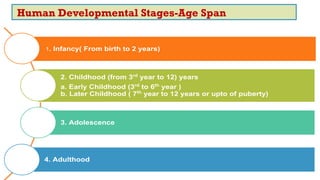
Human Developmental Stages-Age Span
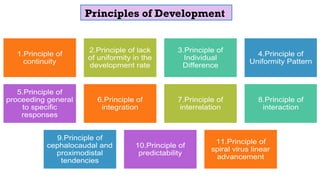
Principles of Development
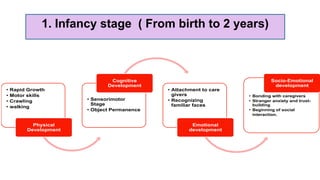
1. Infancy stage ( From birth to 2 years)
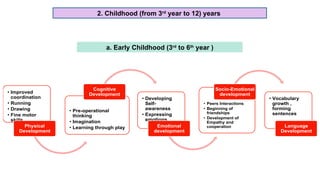
2. Childhood (from 3rd
year to 12) years
a. Early Childhood (3rd
to 6th
year )
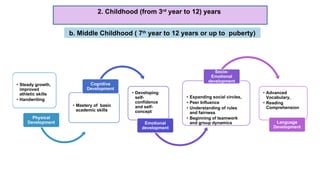
b. Middle Childhood ( 7th
year to 12 years or up to puberty)
2. Childhood (from 3rd
year to 12) years
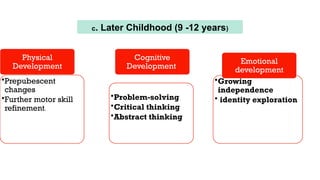
•Prepubescent
changes
•Further motor skill
refinement.
Physical
Development
•Problem-solving
•Critical thinking
•Abstract thinking
Cognitive
Development
•Growing
independence
• identity exploration
Emotional
development
c. Later Childhood (9 -12 years)
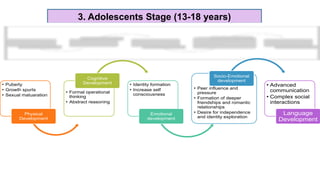
3. Adolescents Stage (13-18 years)
Piaget’s Cognitive Development
theory
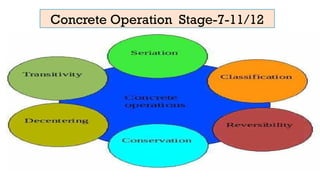
Concrete Operation Stage-7-11/12
Educational Implications
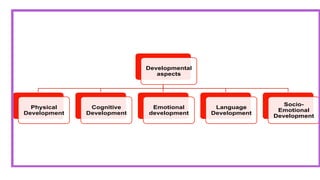
• G&D: Encompass the ways and means of Physical, Cognitive,
Social and Emotional development-Learning Process.
• Support and Assist Teacher Educator/Teachers in creating
effective learning environments tailored to students' needs.
• To help educators and parents plan children's
education and learning.
• Policy Making depending the Biological and Psychological
Development.
Cognitive development
Problem-solving, decision-making, thought
processing.
It also affects memory, attention, and thinking.
Social and emotional development
Children learn to manage and understand emotions and to
communicate and learn effectively.
• Socio-economic factors
Socio-economic factors, such as family income, employment status,
and educational level, can impact a child's education.
• Economic status
Economic status is strongly related to educational status. People
with a low economic status are more likely to have a lower
educational status.
• To gain a better understanding of one’s own life experiences. This
can help people personally reach an understanding of what
childhood events shaped their adulthood.
• To gain knowledge of how social context impacts development. This
knowledge can be invaluable for professionals like teachers as they
gain a deeper understanding of their students.
• To help others understand and contextualize the ups and downs of
life. This helps therapists and psychologists better aid their clients in
self-discovery.
• To understand how societal change can support growth and development.
This understanding helps decision-makers in schools change the educational
culture for the better.
• To become a more effective research, teacher, or leaderExternal link:
open_in_new in many different industries. Understanding human
development deeply and in context has many professional benefits that can
lead to greater insight.
• To support the physical and mental health of individuals throughout their
life span. Professionals like doctors, nurses, and therapists must understand
human growth and development to better support their clients


Child Development and Psychology - PPT.pptx

  • 1.
  • 2.
    Child development •Change isthe law of nature •Change is inevitable, dynamic, Process •The biological, psychological, and emotional changes. •Sequence of Physical, Language, Thought Processbrtu8W, and emotional changes that occur in a child from birth to the beginning of adulthood.
  • 3.
    Biological Development The progressivechanges in size, shape, and function during the life of an organism by which its genetic potentials (genotype) are translated into functioning mature systems (phenotype)
  • 4.
    Biological Development • Heredity/Genes •Gender • Chromosomes • Hormones: Control body function Physiology • The prenatal or the perinatal stage can affect linguistic development.
  • 5.
    Cognitive Development •The processof growing and changing mental abilities : reasoning, thinking, and understanding. • It's how children organize their thoughts, ideas, and mind to understand the world around them.
  • 6.
    Stages of CognitiveDevelopment Piaget- Cognitive Development theory • Birth – 2 months: Babies have an optical focal length of about 10 inches. • 2-6 Months: Babies explore their bodies through touch and sight, which helps them understand cause and effect and themselves • 6-12 Months: Toddlers develop object permanence and look for objects. • 12-18 Months: Motor skills improve, making it easier for children to reach, grasp, and release objects
  • 7.
    •18 months to2 years: Children's memory and processing skills improve, and they start to imagine outcomes without physical manipulation. •2-5 Years: Children in preschool may engage in magical and wishful thinking. •6-12 Years: Children develop scientific reasoning and an understanding of physical laws. •12 Years and older: Adolescents can think logically and systematically.
  • 8.
    Socio-Emotional Development(SED) •Man isa Social Animal •The process by which children learn to understand and manage their emotions, and how to interact with others. •It's a gradual process that starts at birth and continues throughout life. • SED is important for a child's mental health and influences all other areas of development.
  • 9.
    Factors- SED • Relationships:The quality of a child's relationships with their primary caregivers has a significant impact on their SED • Early experiences: Positive and nurturing early experiences help a child's brain develop and influence how they feel about themselves and others. • Self-awareness: The ability to understand who you are.
  • 10.
    • Self-regulation: SEDgives children the foundation skills they need to learn and succeed in life. • Social awareness: SED includes the ability to create and maintain positive relationships with others. • Empathy: SED includes the ability to demonstrate empathy for others. • Responsible Decision Making: Ability to make responsible decisions.
  • 11.
    Moral Development • Concept:The ways people choose between right and wrong as they mature. Influenced by social and cultural norms, as well as established laws. • It is a complex process that's best taught at a young age. • Educators can help children develop moral development: Promoting empathy and compassion, Encouraging respect and inclusivity, Integrating social justice topics into the curriculum, and Teaching children to stand up against unfair practices.
  • 12.
    Significance of MoralDevelopment 1. Character building: Moral development helps children develop a strong character and a foundation for their moral beliefs. 2. Social engagement: Moral development helps adolescents become engaged in society 3. Health: Sound mind in a Sound Body.
  • 13.
    4.Social change: Moralreasoning can help individuals combat prejudices and other attitudes, and protest unfair practices 5.Understanding right and wrong: Moral development helps people learn to distinguish between right and wrong. 6.Knowing when to speak: Moral development helps people learn when it's appropriate to speak.
  • 14.
  • 15.
  • 17.
    1. Infancy stage( From birth to 2 years)
  • 18.
    2. Childhood (from3rd year to 12) years a. Early Childhood (3rd to 6th year )
  • 19.
    b. Middle Childhood( 7th year to 12 years or up to puberty) 2. Childhood (from 3rd year to 12) years
  • 20.
    •Prepubescent changes •Further motor skill refinement. Physical Development •Problem-solving •Criticalthinking •Abstract thinking Cognitive Development •Growing independence • identity exploration Emotional development c. Later Childhood (9 -12 years)
  • 21.
    3. Adolescents Stage(13-18 years)
  • 22.
  • 25.
  • 27.
  • 28.
    • G&D: Encompassthe ways and means of Physical, Cognitive, Social and Emotional development-Learning Process. • Support and Assist Teacher Educator/Teachers in creating effective learning environments tailored to students' needs. • To help educators and parents plan children's education and learning. • Policy Making depending the Biological and Psychological Development.
  • 29.
    Cognitive development Problem-solving, decision-making,thought processing. It also affects memory, attention, and thinking. Social and emotional development Children learn to manage and understand emotions and to communicate and learn effectively.
  • 30.
    • Socio-economic factors Socio-economicfactors, such as family income, employment status, and educational level, can impact a child's education. • Economic status Economic status is strongly related to educational status. People with a low economic status are more likely to have a lower educational status.
  • 31.
    • To gaina better understanding of one’s own life experiences. This can help people personally reach an understanding of what childhood events shaped their adulthood. • To gain knowledge of how social context impacts development. This knowledge can be invaluable for professionals like teachers as they gain a deeper understanding of their students. • To help others understand and contextualize the ups and downs of life. This helps therapists and psychologists better aid their clients in self-discovery.
  • 32.
    • To understandhow societal change can support growth and development. This understanding helps decision-makers in schools change the educational culture for the better. • To become a more effective research, teacher, or leaderExternal link: open_in_new in many different industries. Understanding human development deeply and in context has many professional benefits that can lead to greater insight. • To support the physical and mental health of individuals throughout their life span. Professionals like doctors, nurses, and therapists must understand human growth and development to better support their clients