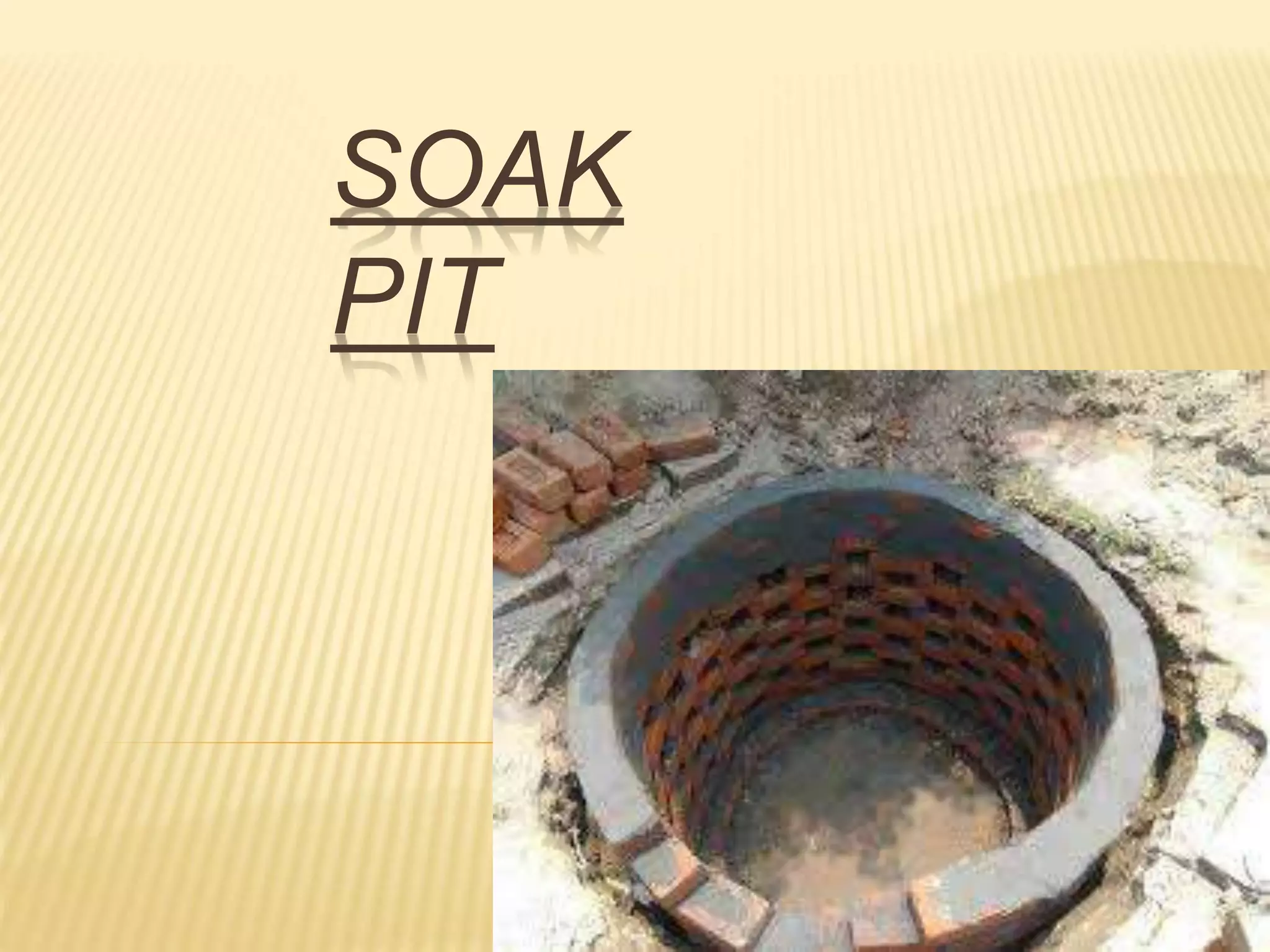
SOAK
PIT
CONTENTS
 intoduction
 Meaning
 Design consideration
 Working principle
 Health aspects
 Operation and maintainance
 Advantages
 disadvantages
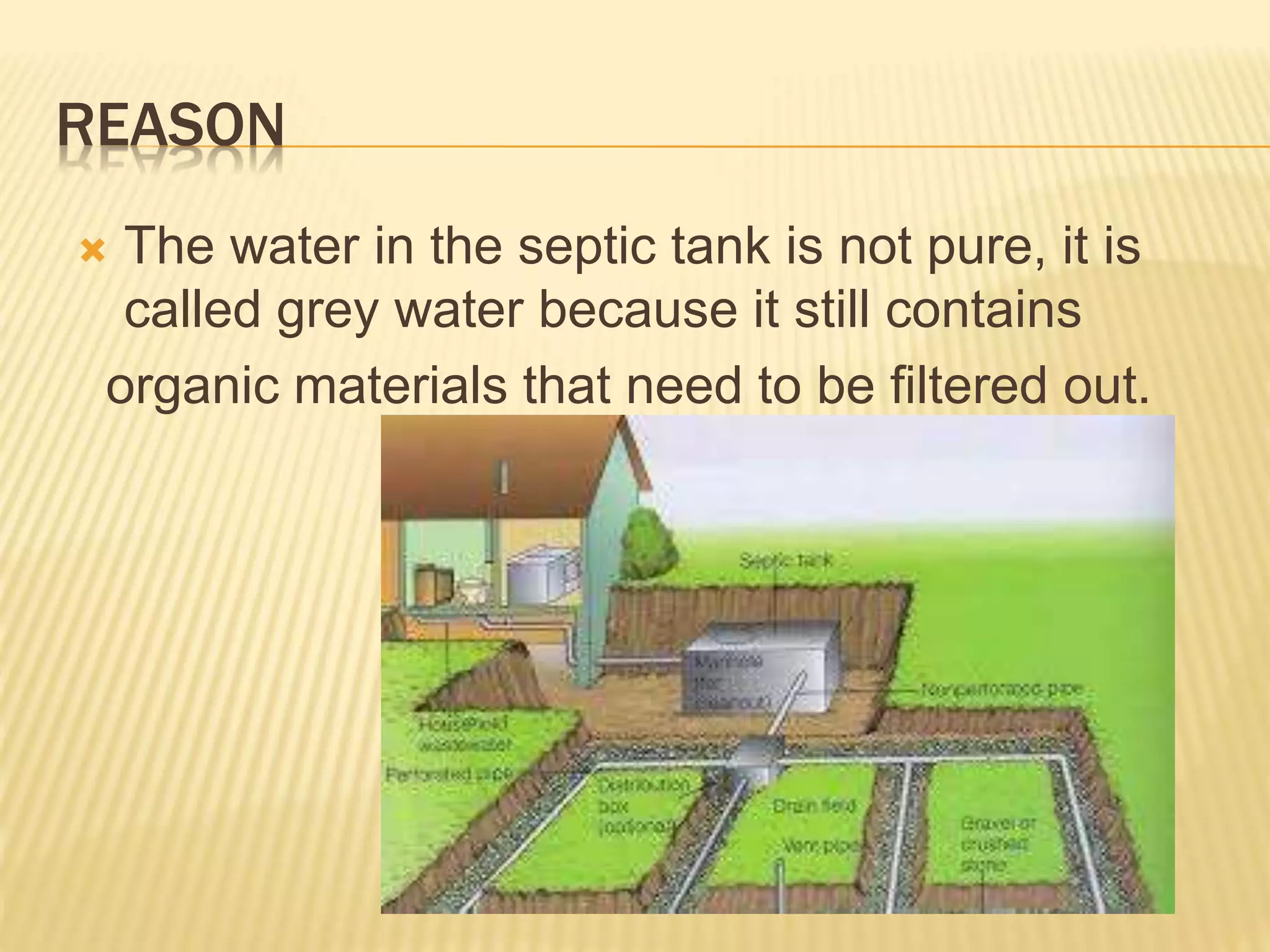
REASON
 The water in the septic tank is not pure, it is
called grey water because it still contains
organic materials that need to be filtered out.
INTRODUCTION
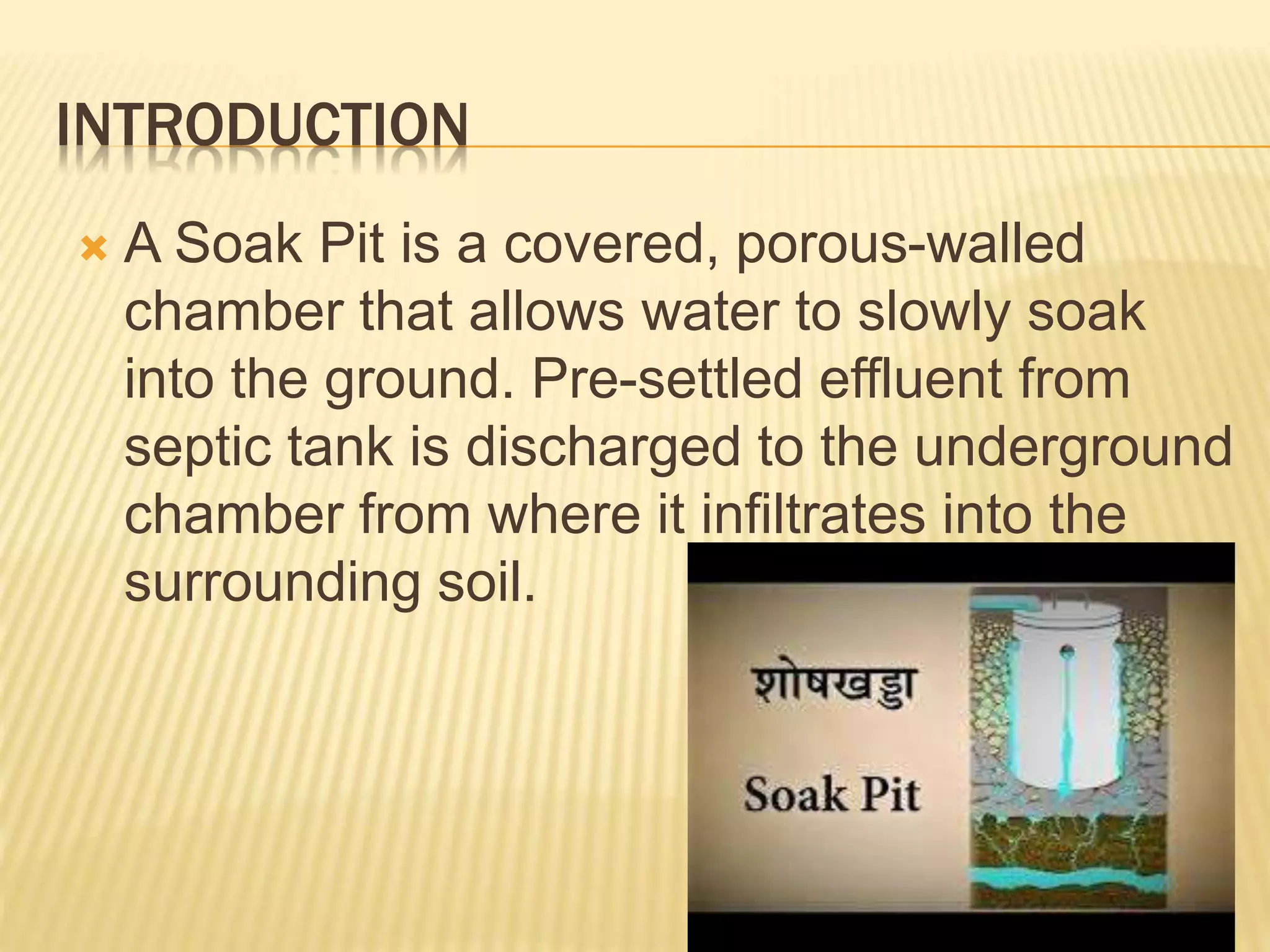
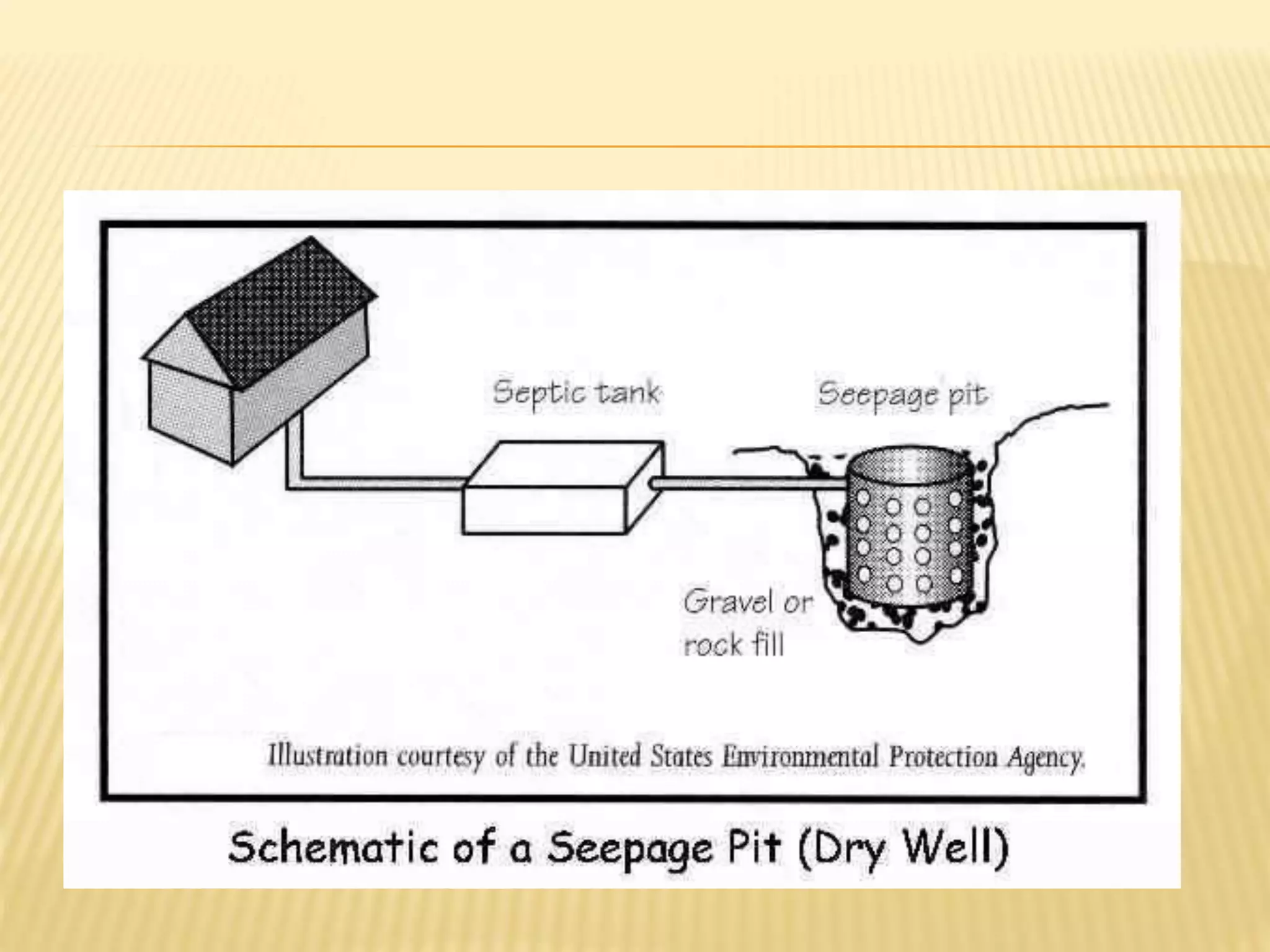
 A Soak Pit is a covered, porous-walled
chamber that allows water to slowly soak
into the ground. Pre-settled effluent from
septic tank is discharged to the underground
chamber from where it infiltrates into the
surrounding soil.
DESIGN
 A layer of sand and fine gravel is spread
across the bottom to help disperse the flow.
 Depth should be between 1.5 and 4m
deep,
but never less than 1.5m above the ground
water table.
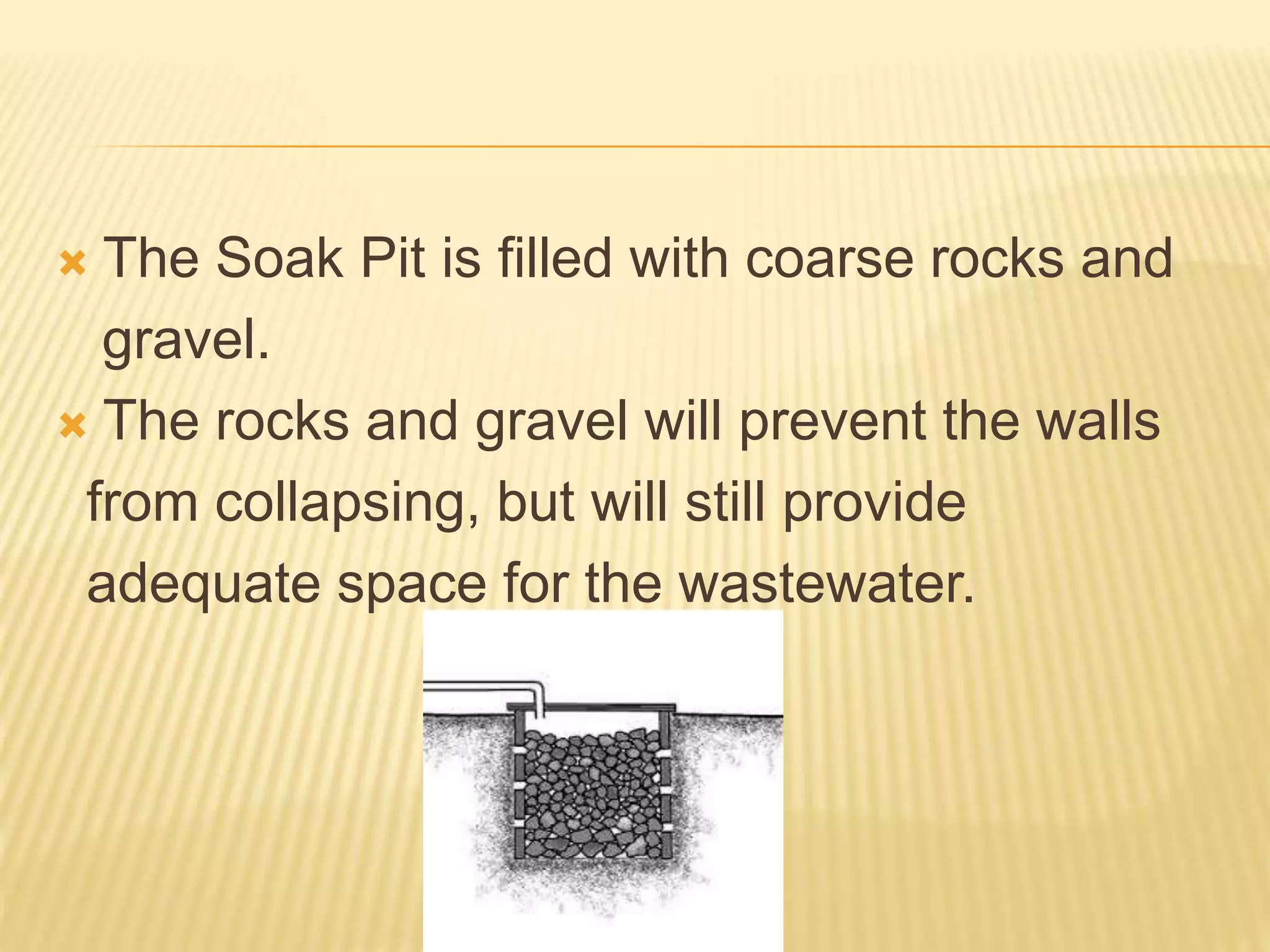
A-MASONRY RING
B-STONE OR BRICK AGGREGATE
C-BRICK CHAMBER
D-30CM THICK OUTER CASING
WITH COARSE SAND
E-EFFLUENT FROM SEPTIC TANK
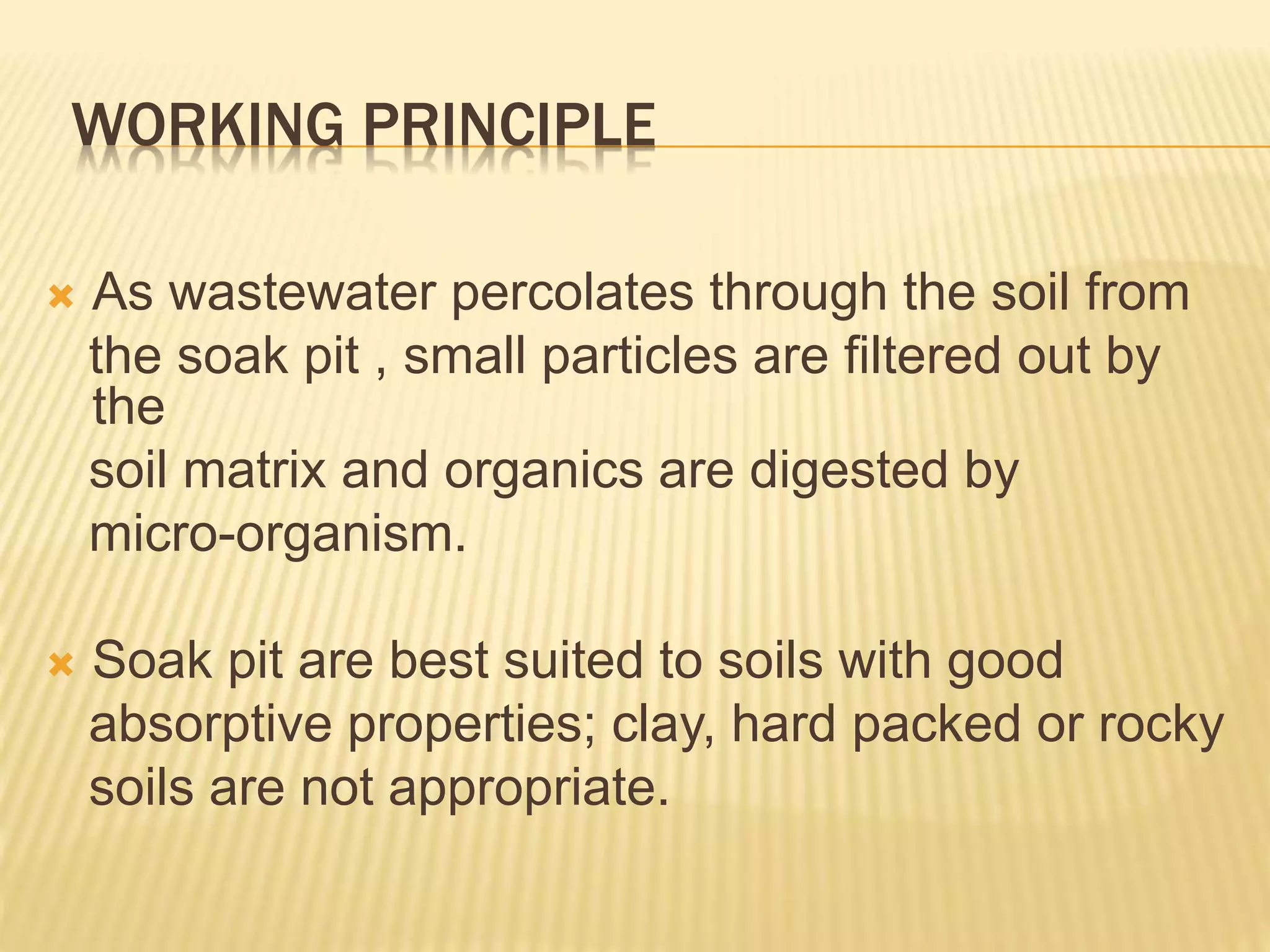
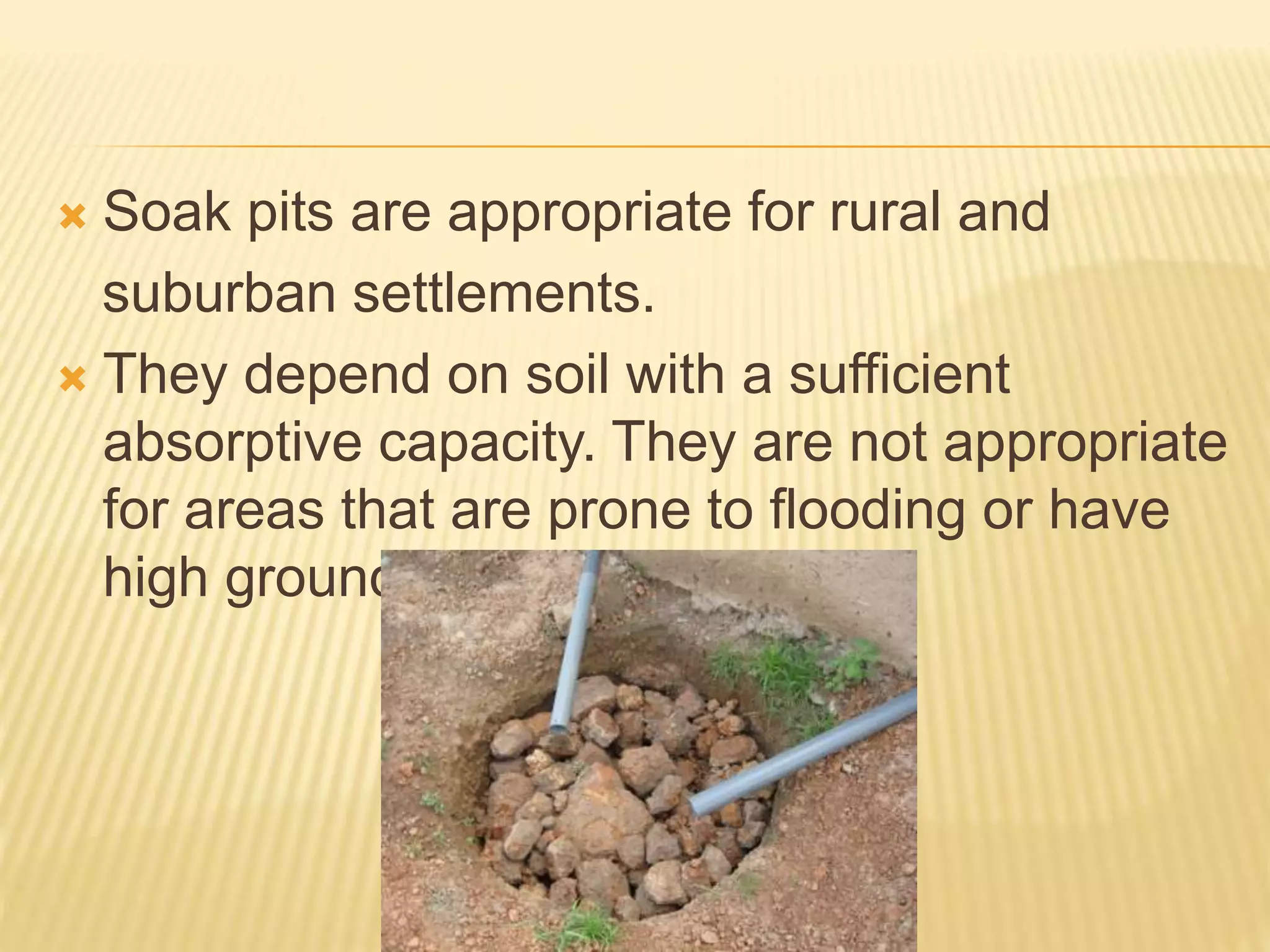
 The Soak Pit is filled with coarse rocks and
gravel.
 The rocks and gravel will prevent the walls
from collapsing, but will still provide
adequate space for the wastewater.
WORKING PRINCIPLE
 As wastewater percolates through the soil from
the soak pit , small particles are filtered out by
the
soil matrix and organics are digested by
micro-organism.
 Soak pit are best suited to soils with good
absorptive properties; clay, hard packed or rocky
soils are not appropriate.
ADEQUACY
 A Soak Pit does not provide adequate
treatment for raw wastewater and the pit will
clog quickly.
 A Soak Pit should be used for discharging
pre
settled black water or grey water .
 Soak pits are appropriate for rural and
suburban settlements.
 They depend on soil with a sufficient
absorptive capacity. They are not appropriate
for areas that are prone to flooding or have
high groundwater tables.
HEALTH ASPECTS
 The technology is located underground and
thus, humans and animals should have no
contact with the effluent.
 The Soak Pit is located a safe distance from
a
drinking water source (ideally 30m).
 The Soak Pit is odourless and not visible.
MAINTENANCE
 the effluent should be clarified or filtered well
to prevent excessive build up of solids.
 The Soak Pit should be kept away from high-
traffic areas.
 Particles and biomass will clog the pit so
need to be cleaned or moved.
 For future access a removable lid should be
used to seal the pit.
ADVANTAGES
 Can be built and repaired with locally
available
materials.
 Small land area required.
 Power conservative.
 Can be built and maintained with locally
available materials.
 Simple technique for all users.
DISADVANTAGES
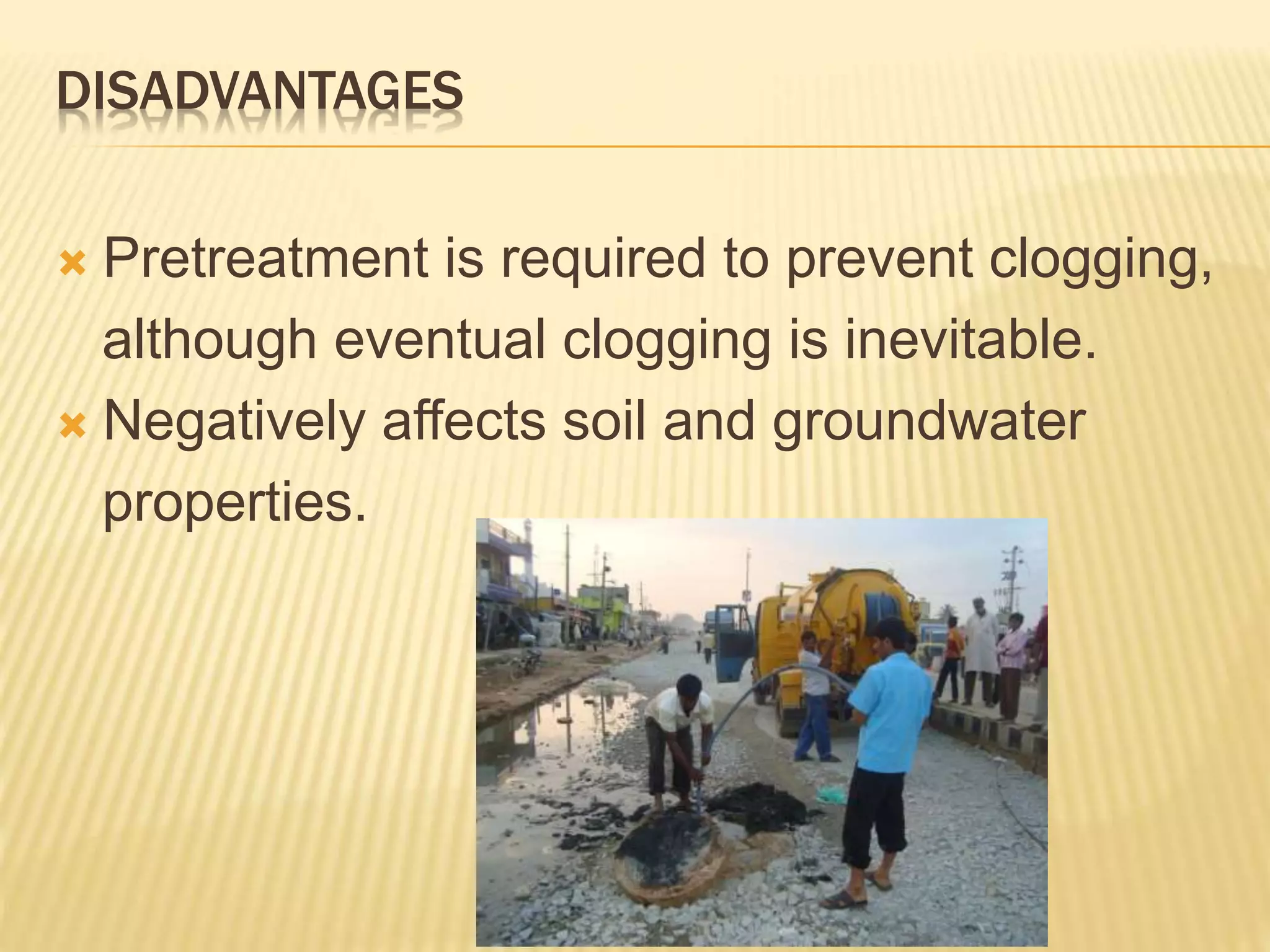
 Pretreatment is required to prevent clogging,
although eventual clogging is inevitable.
 Negatively affects soil and groundwater
properties.

soak pit

  • 1.
  • 2.
    CONTENTS  intoduction  Meaning Design consideration  Working principle  Health aspects  Operation and maintainance  Advantages  disadvantages
  • 3.
    REASON  The waterin the septic tank is not pure, it is called grey water because it still contains organic materials that need to be filtered out.
  • 4.
    INTRODUCTION  A SoakPit is a covered, porous-walled chamber that allows water to slowly soak into the ground. Pre-settled effluent from septic tank is discharged to the underground chamber from where it infiltrates into the surrounding soil.
  • 5.
    DESIGN  A layerof sand and fine gravel is spread across the bottom to help disperse the flow.  Depth should be between 1.5 and 4m deep, but never less than 1.5m above the ground water table.
  • 6.
    A-MASONRY RING B-STONE ORBRICK AGGREGATE C-BRICK CHAMBER D-30CM THICK OUTER CASING WITH COARSE SAND E-EFFLUENT FROM SEPTIC TANK
  • 7.
     The SoakPit is filled with coarse rocks and gravel.  The rocks and gravel will prevent the walls from collapsing, but will still provide adequate space for the wastewater.
  • 8.
    WORKING PRINCIPLE  Aswastewater percolates through the soil from the soak pit , small particles are filtered out by the soil matrix and organics are digested by micro-organism.  Soak pit are best suited to soils with good absorptive properties; clay, hard packed or rocky soils are not appropriate.
  • 10.
    ADEQUACY  A SoakPit does not provide adequate treatment for raw wastewater and the pit will clog quickly.  A Soak Pit should be used for discharging pre settled black water or grey water .
  • 11.
     Soak pitsare appropriate for rural and suburban settlements.  They depend on soil with a sufficient absorptive capacity. They are not appropriate for areas that are prone to flooding or have high groundwater tables.
  • 12.
    HEALTH ASPECTS  Thetechnology is located underground and thus, humans and animals should have no contact with the effluent.  The Soak Pit is located a safe distance from a drinking water source (ideally 30m).  The Soak Pit is odourless and not visible.
  • 13.
    MAINTENANCE  the effluentshould be clarified or filtered well to prevent excessive build up of solids.  The Soak Pit should be kept away from high- traffic areas.  Particles and biomass will clog the pit so need to be cleaned or moved.  For future access a removable lid should be used to seal the pit.
  • 14.
    ADVANTAGES  Can bebuilt and repaired with locally available materials.  Small land area required.  Power conservative.  Can be built and maintained with locally available materials.  Simple technique for all users.
  • 15.
    DISADVANTAGES  Pretreatment isrequired to prevent clogging, although eventual clogging is inevitable.  Negatively affects soil and groundwater properties.